Rolls-Royce To lead EU’s New Clean Aviation project UNIFIED To Transform And Decarbonise Aviation
The title of this post the same as that of this press release from Rolls-Royce.
These two opening paragraphs add a few details.
Rolls-Royce has been selected by the European Union’s Clean Aviation programme to lead one of 12 groundbreaking new projects aiming to decarbonise aviation. These initiatives, which include new aircraft concepts and innovative propulsion technologies, will receive funding of about €945 million.
The Clean Aviation Joint Undertaking (CAJU) is the European Union’s leading research and innovation programme for transforming aviation towards a sustainable and climate neutral future.
I asked Google AI about the European Union’s Clean Aviation programme and received this reply.
The European Union’s Clean Aviation programme, part of the Horizon Europe research initiative, is a public-private partnership aimed at developing disruptive, climate-neutral aviation technologies, including hydrogen-powered, hybrid-electric, and ultra-efficient aircraft, to achieve net-zero emissions by 2050. Launched in 2022, it has a budget of €4.1 billion (€1.7 billion from the EU, €2.4 billion from private partners) and focuses on technologies that will be integrated into a new generation of short- to medium-range aircraft with a target entry into service by 2035. Key goals include a 30% reduction in CO2 emissions and energy efficiency compared to 2020 standards for new aircraft by 2030, with a long-term objective of climate-neutral aviation by 2050.
Note.
- Only someone like Trump would think that the key goals in the last sentence were not worthwhile.
- €4.1 billion in the right place could be a very good start.
- There is a Clean Aviation web site.
The press release says this about the UNIFIED project.
UNIFIED – Ultra Novel and Innovative Fully Integrated Engine Demonstrations
The UNIFIED consortium is led by Rolls-Royce and contains key industrial, academic and research partners across France, Germany, the Netherlands, Norway, Spain and the United Kingdom. Subject to successful completion of grant preparation, the project will enable ground testing of an UltraFan® technology demonstrator at a short to medium range thrust class for future narrowbody aircraft and also enable the preparation of key activities towards future flight test of the UltraFan architecture.
I am not surprised Ultrafan is mentioned.
The Wikipedia entry for the Rolls-Royce Trent has a section about the UltraFan, which starts with these two paragraphs.
The UltraFan is a geared turbofan with a variable pitch fan system that promises at least 25% efficiency improvement. The UltraFan aims for a 15:1 bypass ratio and 70:1 overall pressure ratio.
The Ultrafan keeps the Advance core, but also contains a geared turbofan architecture with variable-pitch fan blades. The fan varies pitch to optimise for each flight phase, eliminating the need for a thrust reverser. Rolls-Royce planned to use carbon composite fan blades instead of its usual hollow titanium blades. The combination was expected to reduce weight by 340 kg (750 lb) per engine.
Note.
- 25 % is a very good efficiency improvement.
- No thrust reverser.
- A saving of 340 kg. in weight per engine.
It should also be noted that October 2028, will see the hundredth anniversary of Henry Royce sketching the R-type engine in the sand on the beach in Sussex.
The R-type was the engine that won the Schneider Trophy outright and enabled Rolls-Royce’s engineers to design the unrivalled Merlin engine that powered Hurricanes, Spitfires, Mosquitos, Mustangs and Lancasters in World War Two.
MoU Signed To Develop Scottish Highlands As Offshore Wind And Renewables Hub
The title of this post, is the same as that of this article on offshoreWIND.biz.
This is the sub-heading.
The Inverness and Cromarty Firth Green Freeport (ICFGF) has signed a Memorandum of Understanding (MoU) with the UK and Scottish governments and The Highland Council, creating a formal framework for cooperation in developing the Highlands as a major international hub for the offshore wind and renewable energy sector
This is the first paragraph.
The agreement is said to unlock GBP 25 million (approximately EUR 29 million) in funding from the UK government, which ICFGF plans to use to support the delivery of significant infrastructure projects and its partner ports.
These are some points from the rest of the article.
- Inverness and Cromarty Firth Green Freeport aims to bring up to 11,300 jobs to the Highlands.
- Significant investments we’ve already include the Sumitomo subsea cable plant at Nigg and the Haventus energy transition facility at Ardersier.
- Over the next 25 years, ICFGF is expected to attract over GBP 6.5 billion of investment.
- The Green Freeport includes three tax sites: Cromarty Firth, which includes Port of Nigg, Port of Cromarty Firth, and Highland Deephaven.
- Ardersier Energy Transition Facility has secured a GBP 100 million joint credit facility to create nationally significant infrastructure for industrial-scale deployment of fixed and floating offshore wind.
- It has placed contracts with more than 110 local firms as part of the development.
These investments will setup the long-term future of Inverness and the Highlands of Scotland.
The Inverness and Cromarty Firth Green Freeport (ICFGF) has this web site, with these messages on the home page.
Europe’s strategic hub for renewable energy
Transforming the Highland economy and delivering national energy security
Conclusion
This area will become one of the most vibrant places in Europe.
How Will The UK Power All These Proposed Data Centres?
On Wednesday, a cardiologist friend asked me if we have enough power to do Trump’s UK AI, so I felt this post might be a good idea.
Artificial Intelligence Gave This Answer
I first asked Google AI, the title of this post and received this reply.
The UK will power proposed data centres using a mix of grid-supplied low-carbon electricity from sources like offshore wind and through on-site renewable generation, such as rooftop solar panels. Data centre operators are also exploring behind-the-meter options, including battery storage and potential future nuclear power, to meet their significant and growing energy demands. However, the UK’s grid infrastructure and high energy prices present challenges, with industry calls for grid reform and inclusion in energy-intensive industry support schemes to facilitate sustainable growth.
Google also pointed me at the article on the BBC, which is entitled Data Centres To Be Expanded Across UK As Concerns Mount.
This is the sub-heading.
The number of data centres in the UK is set to increase by almost a fifth, according to figures shared with BBC News.
These are the first three paragraphs.
Data centres are giant warehouses full of powerful computers used to run digital services from movie streaming to online banking – there are currently an estimated 477 of them in the UK.
Construction researchers Barbour ABI have analysed planning documents and say that number is set to jump by almost 100, as the growth in artificial intelligence (AI) increases the need for processing power.
The majority are due to be built in the next five years. However, there are concerns about the huge amount of energy and water the new data centres will consume.
Where Are The Data Centres To Be Built?
The BBC article gives this summary of the locations.
More than half of the new data centres would be in London and neighbouring counties.
Many are privately funded by US tech giants such as Google and Microsoft and major investment firms.
A further nine are planned in Wales, one in Scotland, five in Greater Manchester and a handful in other parts of the UK, the data shows.
While the new data centres are mostly due for completion by 2030, the biggest single one planned would come later – a £10bn AI data centre in Blyth, near Newcastle, for the American private investment and wealth management company Blackstone Group.
It would involve building 10 giant buildings covering 540,000 square metres – the size of several large shopping centres – on the site of the former Blyth Power Station.
Work is set to begin in 2031 and last for more than three years.
Microsoft is planning four new data centres in the UK at a total cost of £330m, with an estimated completion between 2027 and 2029 – two in the Leeds area, one near Newport in Wales, and a five-storey site in Acton, north-west London.
And Google is building a data centre in Hertfordshire, an investment worth £740m, which it says will use air to cool its servers rather than water.
There is a map of the UK, with dots showing data centres everywhere.
One will certainly be coming to a suitable space near you.
Concerns Over Energy Needs
These three paragraphs from the BBC article, talk about the concerns about energy needs.
According to the National Energy System Operator, NESO, the projected growth of data centres in Great Britain could “add up to 71 TWh of electricity demand” in the next 25 years, which it says redoubles the need for clean power – such as offshore wind.
Bruce Owen, regional president of data centre operator Equinix, said the UK’s high energy costs, as well as concerns around lengthy planning processes, were prompting some operators to consider building elsewhere.
“If I want to build a new data centre here within the UK, we’re talking five to seven years before I even have planning permission or access to power in order to do that,” he told BBC Radio 4’s Today programme.
But in Renewable Power By 2030 In The UK, I calculated that by 2030 we will add these yearly additions of offshore wind power.
- 2025 – 1,235 MW
- 2026 – 4,807 MW
- 2027 – 5,350 MW
- 2028 – 4,998 MW
- 2029 – 9,631 MW
- 2030 – 15,263 MW
Note.
- I have used pessimistic dates.
- There are likely to be more announcements of offshore wind power in the sea around the UK, in the coming months.
- As an example in Cerulean Winds Submits 1 GW Aspen Offshore Wind Project In Scotland (UK), I talk about 3 GW of offshore wind, that is not included in my yearly totals.
- The yearly totals add up to a total of 58,897 MW.
For solar power, I just asked Google AI and received this answer.
The UK government aims to have between 45 and 47 gigawatts (GW) of solar power capacity by 2030. This goal is set out in the Solar Roadmap and aims to reduce energy bills and support the UK’s clean power objectives. The roadmap includes measures like installing solar on new homes and buildings, exploring solar carports, and improving access to rooftop solar for renters.
Let’s assume that we only achieve the lowest value of 45 GW.
But that will still give us at least 100 GW of renewable zero-carbon power.
What will happen if the wind doesn’t blow and the sun doesn’t shine?
I have also written about nuclear developments, that were announced during Trump’s visit.
- Centrica And X-energy Agree To Deploy UK’s First Advanced Modular Reactors
- Is Last Energy The Artemis Of Energy?
- National Grid And Emerald AI Announce Strategic Partnership To Demonstrate AI Power Flexibility In The UK
- Nuclear Plan For Decommissioned Coal Power Station
- Raft Of US-UK Nuclear Deals Ahead Of Trump Visit
- Rolls-Royce Welcomes Action From UK And US Governments To Usher In New ‘Golden Age’ Of Nuclear Energy
This is an impressive array of nuclear power, that should be able to fill in most of the weather-induced gaps.
In Renewable Power By 2030 In The UK, I also summarise energy storage.
For pumped storage hydro, I asked Google AI and received this answer.
The UK’s pumped storage hydro (PSH) capacity is projected to more than double by 2030, with six projects in Scotland, including Coire Glas and Cruachan 2, potentially increasing capacity to around 7.7 GW from the current approximately 3 GW. This would be a significant step towards meeting the National Grid’s required 13 GW of new energy storage by 2030, though achieving this depends on policy support and investment.
There will also be smaller lithium-ion batteries and long duration energy storage from companies like Highview Power.
But I believe there will be another source of energy that will ensure that the UK achieves energy security.
SSE’s Next Generation Power Stations
So far two of these power stations have been proposed.
Note.
- Both power stations are being designed so they can run on natural gas, 100 % hydrogen or a blend of natural gas and hydrogen.
- Keadby will share a site with three natural gas-powered power stations and be connected to the hydrogen storage at Aldbrough, so both fuels will be available.
- Ferrybridge will be the first gas/hydrogen power station on the Ferrybridge site and will have its own natural gas connection.
- How Ferrybridge will receive hydrogen has still to be decided.
- In Hydrogen Milestone: UK’s First Hydrogen-to-Power Trial At Brigg Energy Park, I describe how Centrica tested Brigg gas-fired power station on a hydrogen blend.
- The power stations will initially run on natural gas and then gradually switch over to lower carbon fuels, once delivery of the hydrogen has been solved for each site.
On Thursday, I went to see SSE’s consultation at Knottingley for the Ferrybridge power station, which I wrote about in Visiting The Consultation For Ferrybridge Next Generation Power Station At Knottingley.
In the related post, I proposed using special trains to deliver the hydrogen from where it is produced to where it is needed.
Could HiiROC Be Used At Ferrybridge?
Consider.
- HiiROC use a process called thermal plasma electrolysis to split any hydrocarbon gas into hydrogen and carbon black.
- Typical input gases are chemical plant off gas, biomethane and natural gas.
- Carbon black has uses in manufacturing and agriculture.
- HiiROC uses less energy than traditional electrolysis.
- There is an independent power source at Ferrybridge from burning waste, which could be used to ower a HiiROC system to generate the hydrogen.
It might be possible to not have a separate hydrogen feed and still get worthwhile carbon emission savings.
Conclusion
I believe we will have enough electricity to power all the data centres, that will be built in the next few years in the UK.
Some of the new power stations, that are proposed to be built, like some of the SMRs and SSE’s Next Generation power stations could even be co-located with data centres or other high energy users.
In Nuclear Plan For Decommissioned Coal Power Station, I describe how at the former site of Cottam coal-fired power station, it is proposed that two Holtec SMR-300 SMRs will be installed to power advanced data centres. If the locals are objecting to nuclear stations, I’m sure that an SSE Next Generation power station, that was burning clean hydrogen, would be more acceptable.
Visiting The Consultation For Ferrybridge Next Generation Power Station At Knottingley
Yesterday, I visited the first meeting for the consultation on Ferrybridge Next Generation Power Station, which was held in the old town hall at Knottingley.
This Google Map shows the power station in relation to Knottingley.
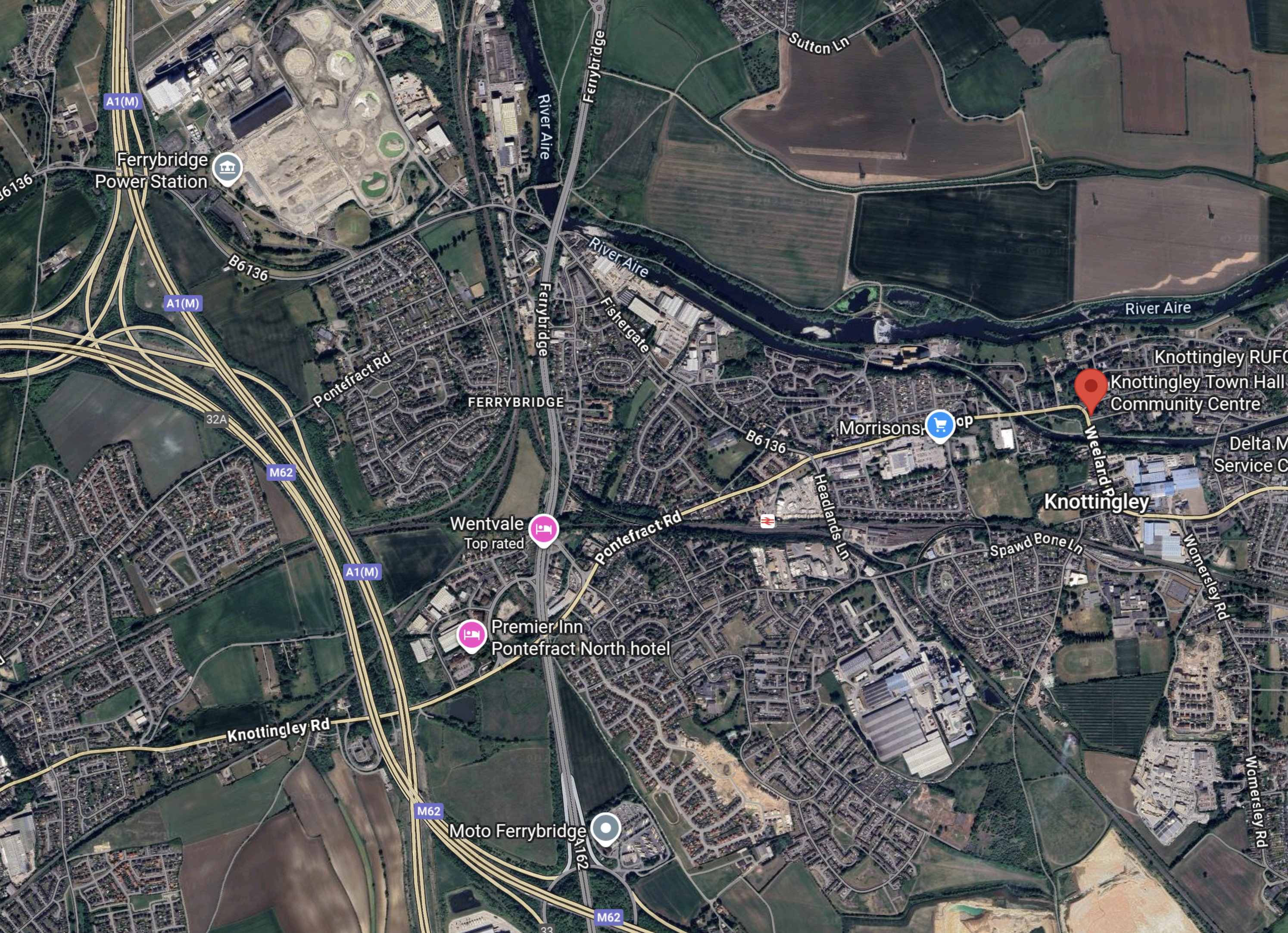
Note.
- The meeting was held in the Knottingley Town Tall Community Centre, which is marked by the red arrow.
- I had arrived by train from Wakefield at Knottingley station and I was lucky enough to be able to get a taxi to the Town Hall.
- Knottingley station is marked on the map about a twenty-minute walk to the West of the Town Hall.
- The Ferrybridge power station site is in the North-West corner of the map and appears to be bordered by the B6136 road.
- The A1 (M) and the M 62 motorways run North-South past the power station site.
- The A (M) motorway continues North-South to Newcastle and Scotland, and London respectively.
- The M62 motorway continues West-East to Liverpool and Manchester, and Hull respectively.
- The well-appointed Moto Ferrybridge services is accessible from both motorways.
This OpenRailwayMap shows the rail lines in the area.

Note.
- The A 62 and A 1(M) motorways running down the West side of the map.
- Knottingley station is on the Pontefract Line, and is marked by a blue arrow.
- The Pontefract Line could have connections from both East and West to the Ferrybridge power station site via Ferrybridge Power Station junction.
- The loop, where the merry-go-round coal trains turned, appears to be still intact at the North of the power station site.
Will these rail lines be any use in the building and operation of the new power station?
These are my thoughts.
Fuel For The Power Station
The brochure for the consultation says this about the fuel for the Ferrybridge Next Generation Power Station.
Ferrybridge Next Generation Power Station will be designed to run on 100% hydrogen, natural gas or a
blend of natural gas and hydrogen.
The brochure has an informative section, which is entitled Natural Gas Pipeline Corridors.
Additionally, I should say, that I lived within a couple of hundred metres of a major gas pipeline in Suffolk, for over twenty years and it was the most unobtrusive of neighbours.
The brochure also says this about hydrogen safety.
As with all of our sites, appropriate measures will be
in place to ensure safe operation. Hydrogen is not
inherently more dangerous than other fuel sources.Hydrogen is flammable and must be handled with care,
just like other flammable fuels. To ignite, hydrogen
must be combined with an additional oxidising agent,
such as air or pure oxygen, in a specific concentration
and with an ignition source (a spark).
It is nearly sixty years ago now, since I worked as an Instrument Engineer, in ICI’s Castner-Kellner works at Runcorn, where hydrogen, chlorine and caustic soda were produced by the electrolysis of brine.
The plant was an unhealthy one, as it used a lot of mercury and my main task, was to design instruments to detect mercury in air and operators’ urine.
The Wikipedia entry for the Castner-Kellner process is a fascinating read and explains why it is being replaced by much better modern mercury-free processes.
I asked Google AI, if the Castner-Kellner process is still used and received this reply.
No, the Castner-Kellner process, a type of mercury cell for producing chlorine and caustic soda, is now largely obsolete due to occupational health and mercury pollution concerns, though a few plants may still operate globally. Modern chlor-alkali processes primarily use safer diaphragm cell and membrane cell technologies to produce chlorine and other chemicals from brine electrolysis.
I suspect that countries, where life is cheap, still use this process, which is very dangerous to those that work on the plant.
INEOS now own ICI in Cheshire and they still produce a large proportion of the hydrogen, chlorine and caustic soda, that the UK needs, but in a much safer way.
The question has to be asked about how hydrogen will be delivered to the Ferrybridge site.
Consider.
- SSE are developing a large hydrogen store at Aldbrough.
- Centrica are developing a large hydrogen store at Brough.
- Both of these stores could be connected to the German AquaVentus system, as the Germans are short of hydrogen storage.
- There is an East Coast Hydrogen Delivery Plan, which could probably have an extension pipeline to the Ferrybridge site.
- The East Coast Hydrogen Delivery Plan, talks of a hydrogen capacity of 4.4 GW.
I don’t feel, that this is the sort of project, that will be delivered until the mid-2030s, at the earliest.
There is also one other important development, that will require hydrogen at Ferrybridge.
I asked Google AI, if there will be hydrogen-powered coaches by 2030 and received this reply.
Yes, there will be hydrogen-powered coaches and buses by 2030, particularly in the UK and EU, with government strategies and funding promoting their deployment, especially for routes requiring high range and quick refueling where battery-electric models may be less suitable. For example, the EU’s CoacHyfied project is developing fuel cell coaches, and the UK government envisions hydrogen playing a role in its transport decarbonization by 2030, with potential to accelerate its zero-emission bus goals.
The nearest you can get to a hydrogen-powered coach in England, is to take an upmarket Wrightbus upmarket hydrogen-powered bus between Sutton station and Gatwick Airport.
- It is mouse quiet and vibration-free.
- It handles the hills with alacrity.
- I wrote about my journey in Sutton Station To Gatwick Airport By Hydrogen-Powered Bus.
That journey convinced me of the superiority in many ways of a hydrogen bus or coach over its diesel cousins.
I believe that this superiority will see large growth in hydrogen-powered long-distance coaches in the next few years.
But I also feel that some specialist transport, like horse transport, will go the hydrogen route.
As there are services at Ferrybridge, where two important motorways cross, I can envisage that the services will need to be able to refuel passing hydrogen buses, coaches trucks and other heavy vehicles, as well as the occasional car.
So would it be possible to supply hydrogen for the motorway services, by the same route as the power station?
I believe that the hydrogen could come from Saltend to the East of Hull, so I gave Google AI the phrase “Saltend zero-carbon hydrogen” and received this reply.
Saltend is home to several initiatives for producing and utilizing zero-carbon hydrogen, most notably the H2H Saltend project by Equinor, which aims to build the world’s largest hydrogen production plant with carbon capture capabilities by 2026 to supply industrial users at the Saltend Chemicals Park. Additionally, a new green hydrogen facility is planned for the park by Meld Energy with a target operation in early 2027, and a separate low-carbon hydrogen plant by ABP, HiiROC, and px Group is also being developed to meet local industrial demand. These projects collectively contribute to the broader Zero Carbon Humber initiative, which seeks to significantly reduce industrial emissions in the region.
Note.
- Saltend will certainly have enough zero-carbon hydrogen for everybody who wants it.
- Delivery dates in a couple of years are being talked about.
- Local industrial demand could be satisfield using specialised trucks, just as ICI used in the 1960s.
- As the Germans want to connect their AquaVentus system to Humberside, any excess hydrogen, could always be sold across the North Sea.
- OpenRailwayMap shows that Saltend is rail-connected.
But how do you get hydrogen between Saltend and Ferrybridge?
I am sure, that hydrogen could be delivered by truck from Saltend to Ferrybridge, but would the locals allow a stream of hydrogen trucks on the roads.
On the other hand, both Saltend and Ferrybridge are both rail-connected, so would it be possible to deliver the hydrogen by rail?
Google AI says this about railway wagons for hydrogen.
Railway wagons for hydrogen transport include liquid hydrogen tank cars (tankers) for transporting cryogenic liquid hydrogen and compressed gas tank cars for carrying hydrogen in its gaseous state or bound within carrier mediums like ammonia or methanol. Hydrogen fuel cell technology is also being developed for use on trains themselves, with a hydrogen fuel cell generator wagon providing power for main-line, non-electrified freight routes.
I believe that it will be possible to develop trains of an appropriate length to shuttle hydrogen between where it is produced and where it is used.
Such a specially-designed shuttle train would be ideal for moving hydrogen between Saltend and Ferrybridge.
- Once at Ferrybridge, the train would be connected to the local hydrogen system feeding the power station, the motorway services and any local businesses that needed hydrogen.
- The trains could be hydrogen fuel cell powered, so they could use any convenient route.
- Like hydrogen powered buses, I suspect they could be mouse quiet.
- The trains would be sized to perhaps deliver a day’s hydrogen at a time.
- There could only be minor changes needed to the rail system.
- If required, the trains could could deliver their cargo in the dead of night.
It could even be based on the contept of the TruckTrain, which I wrote about in The TruckTrain.
Consultation Opens For Ferrybridge Next Generation Power Station
The title of this post, is the same as that of this press release from SSE.
These three bullet points act as sub-headings.
- Ferrybridge Next Generation sets out plans for continuing the legacy of power generation at the site, with the potential to bring significant investment to the region.
- Statutory consultation phase launched, inviting communities and stakeholders to have their say on project proposals.
- Hydrogen-enabled project could support the security of supply and offer a clear route to decarbonisation.
These three paragraphs add more detail.
Members of the public are being invited to have their say on plans for a proposed new power station in development, Ferrybridge Next Generation Power Station.
The station is being designed so that it can run on hydrogen, as a lower-carbon alternative to natural gas. It would also be able to operate using natural gas or a blend of hydrogen and natural gas until a technically and commercially viable hydrogen supply becomes available to the site.
With a proposed capacity of up to 1.2GW, Ferrybridge Next Generation Power Station could play an important role in supporting the UK’s energy system in the short term – providing reliable flexible back-up power during periods of peak demand and balancing the system when the wind doesn’t blow or the sun doesn’t shine, while delivering a route to decarbonised power generation in the longer term.
Note.
- A 150 MW/300 MWh Battery Electric Storage System is being developed on the site, which I wrote about in SSE Renewables Announces Construction Of Second Utility-Scale Battery Storage System.
- The last Ferrybridge power station; C had a capacity of just over 2 GW.
- This will be SSE Renewable’s second hydrogen-fired power station after Keadby, which I wrote about in Consultation On Plans For Keadby Hydrogen Power Station To Begin.
- As the press releases says, Ferrybridge Hydrogen-Fired Power Station will be West Yorkshire’s backup for when the wind doesn’t blow and the sun doesn’t shine.
How similar will the two hydrogen-fired power stations be?
Will SSE Be Building Any More In The First Wave Of Hydrogen-Fired Power Station?
This is a paragraph from SSE’s press release.
The station is being designed so that it can run on hydrogen, as a lower-carbon alternative to natural gas. It would also be able to operate using natural gas or a blend of hydrogen and natural gas until a technically and commercially viable hydrogen supply becomes available to the site.
It would appear that the availability of the hydrogen fuel may be a problem.
But places like Aberdeen, Bradford, Brighton, Humberside and Merseyside, do seem to be planning for hydrogen, so all is not lost.
Hydrogen Milestone: UK’s First Hydrogen-to-Power Trial At Brigg Energy Park
The title of this post, is the same as that of this press release from Centrica.
This is the sub-heading.
Centrica and HiiROC, supported by the Net Zero Technology Centre (NZTC), have successfully demonstrated the injection of hydrogen into a gas-fired peak power plant at Centrica’s Brigg Energy Park, North Lincolnshire. The trial that took place last Thursday (11 September) marks a UK first in using hydrogen to decarbonise peak power generation supplying power directly to the electricity grid.
These three opening paragraphs add detail.
HiiROC’s modular hydrogen production technology, using Thermal Plasma Electrolysis (TPE), produced hydrogen on site which was then blended at a 3% ratio for the purposes of a one-hour trial.
The trial marks a further step forward in Centrica’s ongoing efforts to advance innovative solutions for the decarbonisation of its portfolio of gas plants, demonstrating that existing gas infrastructure can operate on a hydrogen blend to provide reliable, low carbon electricity to UK homes and businesses. More broadly, the trial shows a viable route for delivering on decarbonisation readiness obligations for peaker generation as part of the UK’s journey to net zero.
It is also a key milestone in HiiROC’s journey, demonstrating the effectiveness and affordability of HiiROC’s TPE process, which produces hydrogen without CO2 emissions, making it compliant with the UK’s Low Carbon Hydrogen Standard (LCHS). By leveraging the existing gas network and co-locating hydrogen production where it is needed, operators can decarbonise without costly new infrastructure.
Note.
- This test was only at a low level of hydrogen.
- Brigg power station is a 240 MW power station, which is fuelled by natural gas.
A long journey starts with a single step.
Centrica And X-energy Agree To Deploy UK’s First Advanced Modular Reactors
The title of this post, is the same as that of this press release from Centrica.
This is the sub-heading.
Centrica and X-Energy, LLC, a wholly-owned subsidiary of X-Energy Reactor Company, LLC, today announced their entry into a Joint Development Agreement (JDA) to deploy X-energy’s Xe-100 Advanced Modular Reactors (“AMR”) in the United Kingdom.
These three paragraphs add more details.
The companies have identified EDF and Centrica’s Hartlepool site as the preferred first site for a planned U.K. fleet of up to 6 gigawatts.
The agreement represents the first stage in a new trans-Atlantic alliance which could ultimately mobilise at least £40 billion in economic value to bring clean, safe and affordable power to thousands of homes and industries across the country and substantive work for the domestic and global supply chain.
A 12-unit Xe-100 deployment at Hartlepool could add up to 960 megawatts (“MW”) of new capacity, enough clean power for 1.5 million homes and over £12 billion in lifetime economic value. It would be developed at a site adjacent to Hartlepool’s existing nuclear power station which is currently scheduled to cease generating electricity in 2028. Following its decommissioning, new reactors would accelerate opportunities for the site and its skilled workforce. The site is already designated for new nuclear under the Government’s National Policy Statement and a new plant would also play a critical role in generating high-temperature heat that could support Teesside’s heavy industries.
This is no toe-in-the-water project, but a bold deployment of a fleet of small modular reactors to provide the power for the North-East of England for the foreseeable future.
These are my thoughts.
The Reactor Design
The Wikipedia entry for X-energy has a section called Reactor Design, where this is said.
The Xe-100 is a proposed pebble bed high-temperature gas-cooled nuclear reactor design that is planned to be smaller, simpler and safer when compared to conventional nuclear designs. Pebble bed high temperature gas-cooled reactors were first proposed in 1944. Each reactor is planned to generate 200 MWt and approximately 76 MWe. The fuel for the Xe-100 is a spherical fuel element, or pebble, that utilizes the tristructural isotropic (TRISO) particle nuclear fuel design, with high-assay LEU (HALEU) uranium fuel enriched to 20%, to allow for longer periods between refueling. X-energy claims that TRISO fuel will make nuclear meltdowns virtually impossible.
Note.
- It is not a conventional design.
- Each reactor is only about 76 MW.
- This fits with “12-unit Xe-100 deployment at Hartlepool could add up to 960 megawatts (“MW”) of new capacity” in the Centrica press release.
- The 960 MW proposed for Hartlepool is roughly twice the size of the Rolls-Rpoyce SMR, which is 470 MW .
- Safety seems to be at the forefront of the design.
- I would assume, that the modular nature of the design, makes expansion easier.
I have no reason to believe that it is not a well-designed reactor.
Will Hartlepool Be The First Site?
No!
This page on the X-energy web site, describes their site in Texas, which appears will be a 320 MW power station providing power for Dow’s large site.
There appear to be similarities between the Texas and Hartlepool sites.
- Both are supporting industry clustered close to the power station.
- Both power stations appear to be supplying heat as well as electricity, which is common practice on large industrial sites.
- Both use a fleet of small modular reactors.
But Hartlepool will use twelve reactors, as opposed to the four in Texas.
How Will The New Power Station Compare With The Current Hartlepool Nuclear Power Station?
Consider.
- The current Hartlepool nuclear power station has two units with a total capacity of 1,185 MW.
- The proposed Hartlepool nuclear power station will have twelve units with a total capacity of 960 MW.
- My instinct as a Control Engineer gives me the feeling, that more units means higher reliability.
- I suspect that offshore wind will make up the difference between the power output of the current and proposed power stations.
As the current Hartlepool nuclear power station is effectively being replaced with a slightly smaller station new station, if they get the project management right, it could be a painless exercise.
Will This Be The First Of Several Projects?
The press release has this paragraph.
Centrica will provide initial project capital for development with the goal of initiating full-scale activities in 2026. Subject to regulatory approval, the first electricity generation would be expected in the mid-2030s. Centrica and X-energy are already in discussions with additional potential equity partners, as well as leading global engineering and construction companies, with the goal of establishing a UK-based development company to develop this first and subsequent projects.
This approach is very similar to the approach being taken by Rolls-Royce for their small modular reactors.
Will Centrica Use An X-energy Fleet Of Advanced Modular Reactors At The Grain LNG Terminal?
This press release from Centrica is entitled Investment In Grain LNG Terminal.
This is one of the key highlights of the press release.
Opportunities for efficiencies to create additional near-term value, and future development options including a combined heat and power plant, bunkering, hydrogen and ammonia.
Note.
- Bunkering would be provided for ships powered by LNG, hydrogen or ammonia.
- Heat would be needed from the combined heat and power plant to gasify the LNG.
- Power would be needed from the combined heat and power plant to generate the hydrogen and ammonia and compress and/or liquify gases.
Currently, the heat and power is provided by the 1,275 MW Grain CHP gas-fired power station, but a new nuclear power station would help to decarbonise the terminal.
Replacement Of Heysham 1 Nuclear Power Station
Heysham 1 nuclear power station is part-owned by Centrica and EdF, as is Hartlepool nuclear power station.
Heysham 1 nuclear power station is a 3,000 MW nuclear power station, which is due to be decommissioned in 2028.
I don’t see why this power station can’t be replaced in the same manner as Hartlepool nuclear power station.
Replacement Of Heysham 2 Nuclear Power Station
Heysham 2 nuclear power station is part-owned by Centrica and EdF, as is Hartlepool nuclear power station.
Heysham 2 nuclear power station is a 3,100 MW nuclear power station, which is due to be decommissioned in 2030.
I don’t see why this power station can’t be replaced in the same manner as Hartlepool nuclear power station.
Replacement Of Torness Nuclear Power Station
Torness nuclear power station is part-owned by Centrica and EdF, as is Hartlepool nuclear power station.
Torness nuclear power station is a 1,290 MW nuclear power station, which is due to be decommissioned in 2030.
I don’t see why this power station can’t be replaced in the same manner as Hartlepool nuclear power station.
But the Scottish Nationalist Party may have other ideas?
What Would Be The Size Of Centrica’s And X-energy’s Fleet Of Advanced Modular Reactors?
Suppose.
- Hartlepool, Grain CHP and Torness power stations were to be replaced by identical 960 MW ADRs.
- Heysham 1 and Heysham 2 power stations were to be replaced by identical 1,500 MW ADRs.
This would give a total fleet size of 5,880 MW.
A paragraph in Centrica’s press release says this.
The companies have identified EDF and Centrica’s Hartlepool site as the preferred first site for a planned U.K. fleet of up to 6 gigawatts.
This fleet is only 120 MW short.
Hydrogen Coaches? Setra Begins Testing Of A Technology Carrier With Cellcentric Fuel Cell Module
The title of this post, is the same as that of this article on Sustainable Bus.
This paragraph introduces the article.
Daimler Buses has started test drives of its first Setra coach equipped with a hydrogen fuel cell drive, named the technology carrier “H2 Coach.” The 13.9-meter high-decker, model S 517 HD, combines two hydrogen tanks with a total capacity of 46 kilograms and a fuel cell module capable of as many as 300 kW, developed.
Dailmler have also said this about the interim approval for the H2 Coach.
This approval allows test drives both on Daimler Buses’ internal testing grounds and on public roads. The vehicle is intended to offer a zero-emission alternative to diesel-powered coaches, with lower noise, higher range, and shorter refueling times compared with battery-electric vehicles, contributing to improved air quality in cities and holiday regions.
I’ll go along with that.
As Wrightbus and others are developing hydrogen coaches, I believe this could be the first big hydrogen application in road transport.
Which Companies Are Developing Hydrogen-Powered Coaches?
Google AI gave me this answer.
Companies actively developing or deploying hydrogen-powered coaches include Wrightbus (UK), partnering with Symbio, and Temsa and Caetanobus (Turkey). Toyota is converting used coaches with fuel cell modules, while Daimler Buses is road-testing its H2 Coach precursor. Other companies in the broader hydrogen transport space with relevant technology are Hyundai, Volvo, and Tata Motors.
As Symbio’s Wikipedia entry is in French, I am fairly certain, that Symbio is a French company in Grenoble.
This press release from Symbio is entitled Symbio And Wrightbus Unveil TThe Successful Outcome Of Their UK Government-Funded Partnership At CENEX EXPO 2024: A 300 kW Hydrogen-Powered Demonstrator Coach.
This is the sub-heading.
A partnership to develop a 300 kW, zero-emission demonstrator fuel cell coach and future 75 kW city bus applications.
These two introductory paragraphs add more details.
Symbio and Wrightbus signed a partnership to develop and demonstrate a zero-emission, hydrogen fuel cell coach designed for on-road public transportation in the UK. The joint project started in January 2024 with the delivery by Symbio to Wrightbus of four 75 kW StackPack™ fuel cell systems, forming a 300-kW power unit that Wrightbus integrated and tested into one of its single-deckers. The tests enabled the innovation teams on both sides to adjust and define the optimal settings for the vehicle’s powertrain. Having successfully completed this objective, the demonstrator is displayed for the first time at the Cenex Expo, starting Sept. 4, and will be operational and hit the road shortly.
This successful project sets the basis for future development of hydrogen-powered city buses equipped with Symbio 75 kW StackPack™ fuel cell systems, specifically designed for bus applications.
Symbio’s approach is different.
- Many drivers of my generation had a Ford XR3i hatchback.
- This sporty car had an 80 kW engine, a top speed of 115 mph and an acceleration time of 0-60 mph, of under 9 seconds.
- It was also great fun!
I do wonder if one of Symbio’s 75 kW StackPack™ fuel cell systems could be developed and fitted into a small hatchback, to create an afffordable zero-carbon runabout.
Already the press release says that Wrightbus and Symbio are co-operating with each other on 75 kW city bus applications.
Lord Bamford’s company ; JCB found Hyperdrive Innovation to develop batteries for their diggers. These batteries are now used in Hitachi’s Battery Intercity Express Trains.
Now, it looks like his son’s company have found Symbio to develop the fuel-cells needed for their innovative buses and coaches. Would one or two 75kW fuel cells be idea for smaller tractors and diggers?
The Monster That Is AquaVentus Is Waking Up
I have written about AquaVentus for some time, but inh the last couple of days, ten references have been found to the project by my Google Alert.
What Is AquaVentus?
AquaVentus has a web page on the RWE web site, from where I clipped this image.
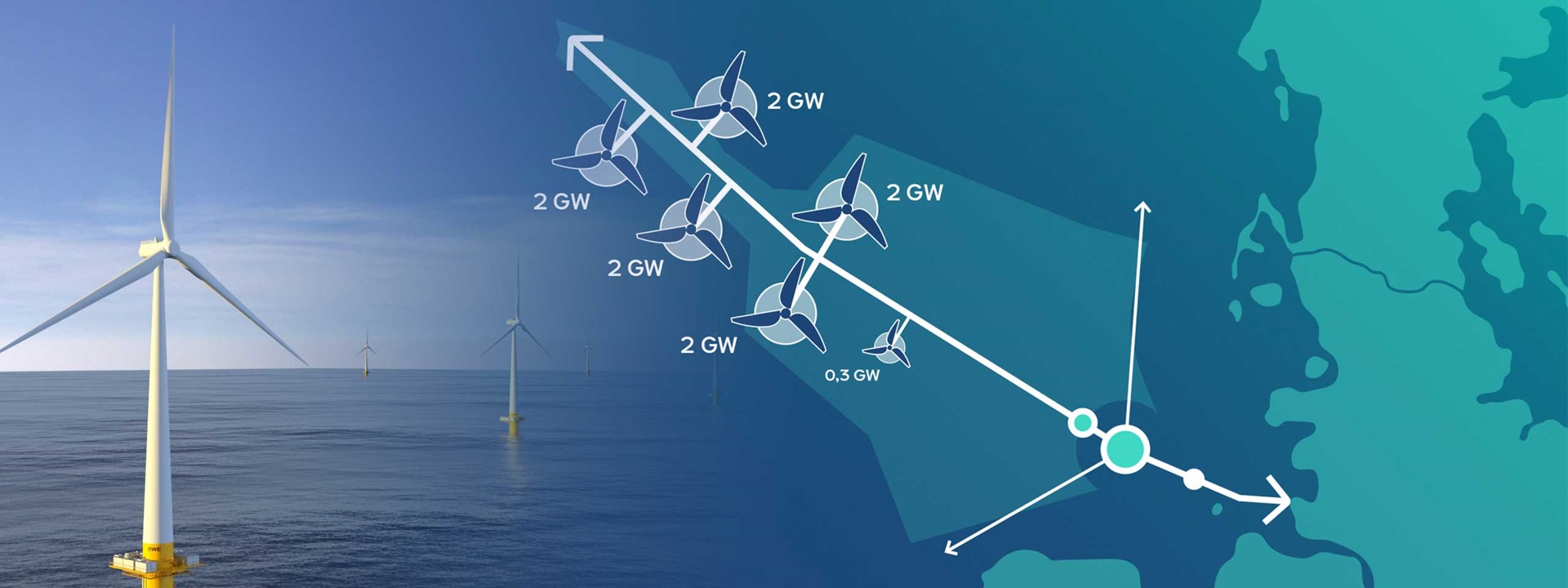
Note.
- The spine of AquaVentus is a pipeline called AquaDuctus to bring hydrogen to Germany.
- This image shows 10.3 GW of hydrogen will be generated and brought to near Wilhelmshaven in North-West Germany.
These two paragraphs introduce AquaVentus.
Hydrogen is considered the great hope of decarbonisation in all sectors that cannot be electrified, e.g. industrial manufacturing, aviation and shipping. Massive investments in the expansion of renewable energy are needed to enable carbon-neutral hydrogen production. After all, wind, solar and hydroelectric power form the basis of climate-friendly hydrogen.
In its quest for climate-friendly hydrogen production, the AquaVentus initiative has set its sights on one renewable energy generation technology: offshore wind. The initiative aims to use electricity from offshore wind farms to operate electrolysers also installed at sea on an industrial scale. Plans envisage setting up electrolysis units in the North Sea with a total capacity of 10 gigawatts, enough to produce 1 million metric tons of green hydrogen.
It is not an unambitious project.
North Sea Hydrogen Co-operation: AquaVentus And Hydrogen Scotland
The title of this section is the same as that of this page on the Hydrogen Scotland web site.
This is the introduction.
Hydrogen Scotland signed a comprehensive Memorandum of Understanding (MoU) with AquaVentus at Offshore Europe in Aberdeen. The partnership aims to unlock the North Sea’s vast potential for hydrogen production and establish Scotland as a key supplier to European markets through the development of shared infrastructure.
Both partners are committed to intensifying research activities and advocating for the rapid scale-up of a European hydrogen economy.
By joining forces, members of AquaVentus and Hydrogen Scotland can help advance the development and deployment of technologies along the entire value chain – from production through transport and storage to the use of hydrogen for decarbonising the energy system. In addition, both organisations intend to intensify their supporting activities and jointly advocate for the accelerated ramp-up of a European hydrogen economy.
This map of the North Sea, which I downloaded from the Hydrogen Scotland web site, shows the co-operation.
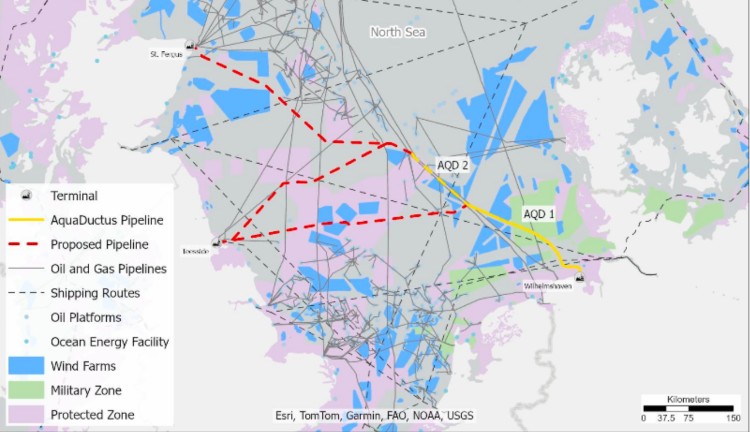
Note.
- The yellow AquaDuctus pipeline connected to the German coast near Wilhelmshaven.
- There appear to be two AquaDuctus sections ; AQD 1 and AQD 2.
- There are appear to be three proposed pipelines, which are shown in a dotted red, that connect the UK to AquaDuctus.
- The Northern proposed pipeline appears to connect to the St. Fergus gas terminal on the North-East tip of Scotland.
- The two Southern proposed pipelines appear to connect to the Easington gas terminal in East Yorkshire.
- Easington gas terminal is within easy reach of the massive gas stores, which are being converted to hold hydrogen at Aldbrough and Rough.
- The blue areas are offshore wind farms.
- The blue area straddling the Southernmost proposed pipe line is the Dogger Bank wind farm, is the world’s largest offshore wind farm and could evebtually total over 6 GW.
- RWE are developing 7.2 GW of wind farms between Dogger Bank and Norfolk in UK waters, which could generate hydrogen for AquaDuctus.
This cooperation seems to be getting the hydrogen Germany needs to its industry.
These five paragraphs outline a position paper by AquaVentus.
This opportunity for German-British cooperation on hydrogen is highlighted in a position paper presented by AquaVentus alongside the signing of the MoU. This paper addresses how the requirements of German-British cooperation – as outlined, for example, in the July 2025 Kensington Treaty between the UK and Germany and the European Commission’s Common Understanding published in May 2025 – can be met.
The position paper highlights the significant potential of hydrogen production in Scotland, the necessity of imports for Germany, and references transport infrastructure already under planning. It thus lays the foundation for cross-border hydrogen trade between Germany and the United Kingdom, and for deeper European cooperation in the hydrogen sector, with three essential prerequisites:
Firstly, the networking of producers and consumers across national borders is critical for a successful market ramp-up
Secondly, beyond this synchronised production and transport infrastructure, regulatory frameworks must also be harmonised. Hybrid connection concepts (pipes & wires) that integrate both electricity and hydrogen networks provide the necessary flexibility for future energy needs, enable efficient use of renewable energy and ensure cost-effective grid expansion
Thirdly, the development from a national core network to a European Hydrogen Backbone is emphasised. Projects such as AquaDuctus can serve as a nucleus for building a pan-European hydrogen network that will shape Europe’s energy infrastructure in the long term. For the authors, strengthened cooperation with the United Kingdom is not only a sound energy policy and economic decision, but also a key contribution to European energy resilience.
Note.
I’m Getting A New Hydrogen-Ready Boiler
The pump in my current nine-year-old boiler has died and it needs to be replaced.
The plumber gave me two solutions.
- Put a new pump in the old boiler.
- Replace the boiler with the current version of the old boiler.
Note.
- The plumber said the new boiler would be hydrogen-ready.
- I seem to remember the same pump failed before.
- The pump had failed because of a water-leak into its electrics.
- Was the previous failure of the pump caused by the same water-leak?
- Fitting a heat pump in my house would probably cost more than I could afford.
- The new boiler would come with a ten-year guarantee.
As an engineer, I can see the following scenarios for heating my house and providing hot water.
1. Keeping Calm And Carrying On
This means that the current arrangements for energy continue.
- There would be no compulsory heat pumps.
- There would be no change to any of my hardware, after installing the new boiler.
- I would continue to get gas for heating and hot water delivered through the mains.
The new boiler solution should give me ten years of reasonably trouble free-running, so long as the gas was natural gas, hydrogen blend or hydrogen.
2. Keeping Calm And Carrying On But My Energy Supplier Switches My Gas To 20 % Hydrogen-Blend
This means that the current arrangements for energy continue.
- There would be no compulsory heat pumps.
- There would be no change to any of my hardware, after installing the new boiler.
- I would continue to get gas for heating and hot water delivered through the mains.
- The gas pipe into my house would have to be checked for compatibility with hydrogen-blend. But then I encountered no problems when switched from coal-gas to North Sea Gas around 1970.
The new boiler solution should give me ten years of reasonably trouble free-running, so long as the gas was natural gas, hydrogen-blend or hydrogen.
3. Keeping Calm And Carrying On But My Energy Supplier Switches My Gas To 100 % Hydrogen
This means that the current arrangements for energy continue.
- There would be no compulsory heat pumps.
- There would be no change to any of my hardware, after installing the new boiler.
- I would continue to get gas for heating and hot water delivered through the mains.
- The gas pipe into my house would have to be checked for compatibility with hydrogen.
The new boiler solution should give me ten years of reasonably trouble free-running, so long as the gas was natural gas, hydrogen blend or hydrogen.
4. Switching To Some Form Of Heat Pump
- This would mean that I would go all electric.
- My house is a concrete lump and a guy I trust, said it would be difficult to fit a heat pump.
- I am suspicious of scientific and technical solutions proposed by politicians.
I’m not saying, I’d never use a heat pump, but I will take a lot of convincing.
5. Switching To Some New Form Of Electric Heating
I have seen two companies, which use the excess heat from a data centre to heat water for central heating and/or hot water for domestic needs.
- heata is a spin out from Centrica, that provides hot water and saves you money on your utility bill.
- thermify is a startup from Wales, that replaces the gas boiler, with an electric one.
There are probably other similar systems under development.
From my knowledge of computing and electrical engineering, I believe devices like this could be new form of cost-efficient electric heating.
Because my house has three-bedrooms, I would need a thermify, for both heating and hot water, but a heata working in tandem with my gas boiler could probably keep me in hot water.
I would feel that large blocks of flats or offices could have a data centre in the basement to provide heat for the building.
I would also suspect, that there are other devices out there, that work on different principles.
My Decision
I’m fitting a new boiler, as that should give me ten years’guarantee-backed and trouble free running and future-proof me for all possible government decisions, except saying that everybody must fit a heat pump.
When, this new boiler pops its clogs, i would hope, that some clever engineers have come up with a plug-compatible electric replacement for the new boiler I am about to have fitted.
 The Anonymous Widower