Cummins To Cease New Electrolyser Activity Amid Worsening Market
The title of this post, is the same as that of this article on Renewables Now.
These are the first three paragraphs.
Cummins Inc has decided to stop new commercial activity in the electrolysers space following a strategic review of the segment launched last year, citing deteriorating market conditions and weakening customer demand.
The decision is linked to USD 458 million (EUR 388.4m) of charges for the full-year 2025 related to the electrolyser business within the company’s zero-emission technologies arm, Accelera, of which USD 415 million were non-cash charges.
The company noted that it will continue to fulfil existing customer commitments before winding down new commercial activity in the segment.
Although, I am in favour of using hydrogen as a fuel, I recognise, that traditional electrolysis is not the most efficient process.
These methods are more efficient.
HiiROC
- HiiROC use a process, that they call Thermal Plasma Electrolysis to split any hydrocarbon gas into hydrogen and carbon black.
- HiiROC originated in the University of Hull.
- Typical gases that can be used are chemical plant off-gas, biomethane and methane.
- I like the ability to use chemical plant off-gas, as some of this is particularly nasty and HiiROC may offer safe disposal.
But the big advantage is that the HiiROC process is five times more energy efficient than traditional electrolysis.
The carbon black is no useless by-product, but has several valuable uses in its own right, which are detailed in its Wikipedia entry.
These two paragraphs from Wikipedia, give a summary of the more common uses of carbon black.
The most common use (70%) of carbon black is as a reinforcing phase in automobile tires. Carbon black also helps conduct heat away from the tread and belt area of the tire, reducing thermal damage and increasing tire life. Its low cost makes it a common addition to cathodes and anodes and is considered a safe replacement to lithium metal in lithium-ion batteries. About 20% of world production goes into belts, hoses, and other non-tire rubber goods. The remaining 10% use of carbon black comes from pigment in inks, coatings, and plastics, as well as being used as a conductive additive in lithium-ion batteries.
Carbon black is added to polypropylene because it absorbs ultraviolet radiation, which otherwise causes the material to degrade. Carbon black particles are also employed in some radar absorbent materials, in photocopier and laser printer toner, and in other inks and paints. The high tinting strength and stability of carbon black has also provided use in coloring of resins and films. Carbon black has been used in various applications for electronics. A good conductor of electricity, carbon black is used as a filler mixed in plastics, elastomer, films, adhesives, and paints. It is used as an antistatic additive agent in automobile fuel caps and pipes.
It can also be used as a soil improver in agriculture.
HiiROC would appear to be five times more energy efficient than traditional electrolysis.
I would also rate the range of their investors as a particular strength.
Google AI lists these companies as investors.
HiiROC, a UK-based developer of plasma torch technology for “turquoise” hydrogen production, is backed by a consortium of industrial and strategic investors. Key investors include Centrica, Melrose Industries, Hyundai Motor Company, Kia, HydrogenOne Capital, CEMEX Ventures, Wintershall Dea, and VNG.
Note.
- CEMEX must be going to decarbonise cement making.
- Melrose describe themselves as an industry-leading aerospace technology provider.
- Will we be seeing hydrogen cars from Korean manufacturers?
- Wintershall Dea is Europe’s leading independent gas and oil company.
HiiROC has an impressive list of investors.
Bloom Energy
I wrote about Bloom Energy’s process in Westinghouse And Bloom Energy To Team Up For Pink Hydrogen.
This method also looks promising.
- Westinghouse Electric Company is an American builder of nuclear power stations.
- Bloom Energy Corporation make a solid-oxide electrolyser.
- Pink hydrogen is green hydrogen produced using nuclear power.
It uses electrolysis at a higher temperature, which speeds it up.
Desert Bloom
This is an Australian process, that I wrote about in 10GW Green Hydrogen Project Aims To Electrolyze Water Drawn From Desert Air.
Conclusion
You can understand, why Cummins are getting jumpy!
But you have to remember that when I worked in a hydrogen plant in the 1960s, the hydrogen was an unwanted by-product and it was mixed with coal gas and sent down the power station to raise steam, so that it could be used to do something useful.
FEV And Daimler Buses Create Hydrogen Coach Demonstrator
The title of this post is the same as that of this article on Automotive World.
This is the sub-heading.
Daimler Buses and engineering firm FEV have developed a hydrogen fuel cell-powered Setra coach, marking the first hydrogen demonstrator vehicle in the coach segment for the Daimler Truck subsidiary. The H₂ Coach technology demonstrator, which was handed over to Daimler Buses in summer 2025 following approximately two years of development and approval by German technical inspection authority TÜV, offers a range of at least 800 kilometres per tank filling and is intended for testing purposes.
The article also has a picture, which shows.
- A typical modern coach design with three axles.
- Setra H2 Coach branding.
- A Slogan of “Travelling Towards a Sustainable Future”
It looks very similar to images of Wrightbus’s three-axle Contour design. But that would mean, they could fit similar infrastructure.
But when I asked Google AI, when the Wrightbus three-axle hydrogen coach would enter passenger service, I received this answer.
Wrightbus’s three-axle hydrogen fuel cell electric coach is planned for launch in 2026. The company, which is developing the vehicle in Ballymena, Northern Ireland, has confirmed the project is aimed at decarbonising long-distance travel, with a projected range of up to 1,000 km.
It would appear that Wrightbus are ahead on range and timescale.
University Of Alberta Partners With City of Edmonton And Diesel Tech Industries To Pilot Hydrogen-Diesel Bus Retrofits
The title of this post, is the same as that of this article on Pulse 2.0.
These two paragraphs introduce what is a comprehensive practical approach to decarbonising a fleet of diesel buses.
The University of Alberta is partnering with the City of Edmonton and Diesel Tech Industries to cut carbon emissions from Edmonton’s fleet of diesel-powered buses by integrating hydrogen fuel into existing combustion engines.
The initiative focuses on developing a practical retrofit approach to help transit agencies and other vehicle operators reduce emissions quickly without waiting for full fleet replacement. Project leaders say that if the pilot succeeds, the work could translate into a deployable solution for operators across Canada seeking near-term carbon reductions while maintaining current diesel assets.
Note.
- The City of Edmonton has around a thousand buses.
- Many of Edmonton’s buses have Cummins engines.
- Cummins are decarbonising the company and have developed hydrogen-conversions for some of their diesel engines.
- I am sure that this technique could be used to convert London’s thousand new Routemaster buses, with their Cummins engines.
This project seems to have a lot of possibilities to get very much larger.
‘Mobilising EUR 1 Trillion in Investments’ | North Sea Countries, Industry, TSOs to Ink Offshore Wind Pact
The title of this post, is the same as that of this article on offshoreWIND.biz.
This is the sub-heading.
Government officials from Belgium, Denmark, France, Germany, Ireland, Luxembourg, the Netherlands, Norway and the UK are set to sign a declaration confirming the ambition to build 300 GW of offshore wind in the North Seas by 2050, and an investment pact with the offshore wind industry and transmission system operators (TSOs) that is said to mobilise EUR 1 trillion in economic activity.
These three paragraphs add a lot of powerful detail.
Under the Offshore Wind Investment Pact for the North Seas, to be signed today (26 January) at the North Sea Summit in Hamburg, governments of the nine North Sea countries will commit to building 15 GW of offshore wind per year from 2031 to 2040.
The heads of state and energy ministers will also vow to de-risk offshore wind investments through a commitment to provide two-sided Contracts for Difference (CfDs) as the standard for offshore wind auction design. The pact also commits governments to remove any regulatory obstacles to power purchase agreements (PPAs), according to WindEurope, which will sign the pact on behalf of the industry.
On the industry’s side, the commitment is to drive down the costs of offshore wind by 30 per cent towards 2040, mobilise EUR 1 trillion of economic activity for Europe, create 91,000 additional jobs and invest EUR 9.5 billion in manufacturing, port infrastructure and vessels.
These two paragraphs say something about cost reductions.
The cost reduction of offshore wind is planned to be achieved through scale effects, lower costs of capital and further industrialisation supported by clarity and visibility on the project pipeline.
The transmission system operators (TSOs) will identify cost-effective cooperation projects in the North Sea, including 20 GW of promising cross-border projects by 2027 for deployment in the 2030s.
I hope there is a project management system, that can step into this frenzy, just as Artemis did in the 1970s with North Sea Oil and Gas.
The BBC has reported the story under a title of UK To Join Major Wind Farm Project With Nine European Countries.
this is the sub-title.
The UK is set to back a vast new fleet of offshore wind projects in the North Sea alongside nine other European countries including Norway, Germany and the Netherlands.
These six paragraphs add more detail.
The government says the deal will strengthen energy security by offering an escape from what it calls the “fossil fuel rollercoaster”.
For the first time, some of the new wind farms will be linked to multiple countries through undersea cables known as interconnectors, which supporters say should lower prices across the region.
But it could prove controversial as wind farm operators would be able to shop around between countries to sell power to the highest bidder – potentially driving up electricity prices when supply is tight.
Energy Secretary Ed Miliband will sign a declaration on Monday at a meeting on the future of the North Sea in the German city of Hamburg, committing to complete the scheme by 2050.
Jane Cooper, deputy CEO of industry body RenewableUK, said the deal would “drive down costs for billpayers” as well as increasing “the energy security of the UK and the whole of the North Sea region significantly”.
But Claire Countinho, shadow energy secretary, warned “we cannot escape the fact that the rush to build wind farms at breakneck speed is pushing up everybody’s energy bills.”
Claire Coutinho, as an outsider at present and a member of a party out of Government had to say something negative, but her negotiations when she was UK Energy Minister with her German opposite number, which I wrote about in UK And Germany Boost Offshore Renewables Ties, seem very much a precursor to today’s agreement.
Legal Challenge Against Gatwick Airport’s Second Runway To Begin
The title of this post is the same as that of this article on ITVX.
These four paragraphs add more details.
Plans to challenge a second runway at Gatwick Airport will be heard in the High Court next week.
The campaign and environmental group Communities Against Gatwick Noise Emissions (CAGNE) opposes Transport Secretary Heidi Alexander’s decision to grant development consent for the project.
In the hearing, which will run from 20 to 23 January 2026, CAGNE’s argues that the climate change impacts of the extra runway have not been properly assessed.
The planned expansion would see the repurposing of Gatwick Airport’s emergency runway for use as a second operational runway. The extra capacity is expected to lead to more than 100,000 more flights per year.
These two paragraphs give CAGNE’s case.
CAGNE says that this decision was flawed, arguing that there are numerous gaps in the environmental assessment of the airport expansion. These include a failure to adequately assess inbound flight emissions, the climate impact of non-carbon dioxide emissions, the handling of additional sewage, and noise pollution.
The group also argues that the second runway plans rely too heavily on the UK’s Jet Zero Strategy (JZS), which assumes ambitious improvements in the aviation industry in areas such as fuel efficiency.
My feelings are as follows.
- We need more runway capacity.
- Eventually all aircraft will be powered by electricity, hydrogen or sustainable aviation fuel (SAF).
- Because of the need for large amounts of renewable electricity to make hydrogen and SAF, the runway will need to be near offshore wind farms.
Only Doncaster Sheffield, Gatwick, Liverpool, Stansted and some Scottish airports are near the sea or could be connected to the coast by an easy-to-build cable or pipeline.
CAGNE may well win their case, but I fell Nimbys will also stop Heathrow getting a third runway.
Development Consent Decision On 3 GW Dogger Bank South Project Postponed
The title of this post, is the same as that of this article on offshoreWIND.biz.
This is the sub-heading.
The UK Secretary of State for Energy Security and Net Zero has set a new deadline for the decision on the Development Consent Order (DCO) for Dogger Bank South, a 3 GW offshore wind project developed by RWE, which the company owns in partnership with Masdar.
These two paragraphs add more detail to the project.
The statutory deadline for the decision on the project was 10 January 2026. This has now been moved to 30 April.
According to a statement from the Minister for Energy Consumers, Martin McCluskey, the extension will allow time to request further information that was not provided for consideration during the examination period and to give all interested parties the opportunity to review and comment on such information.
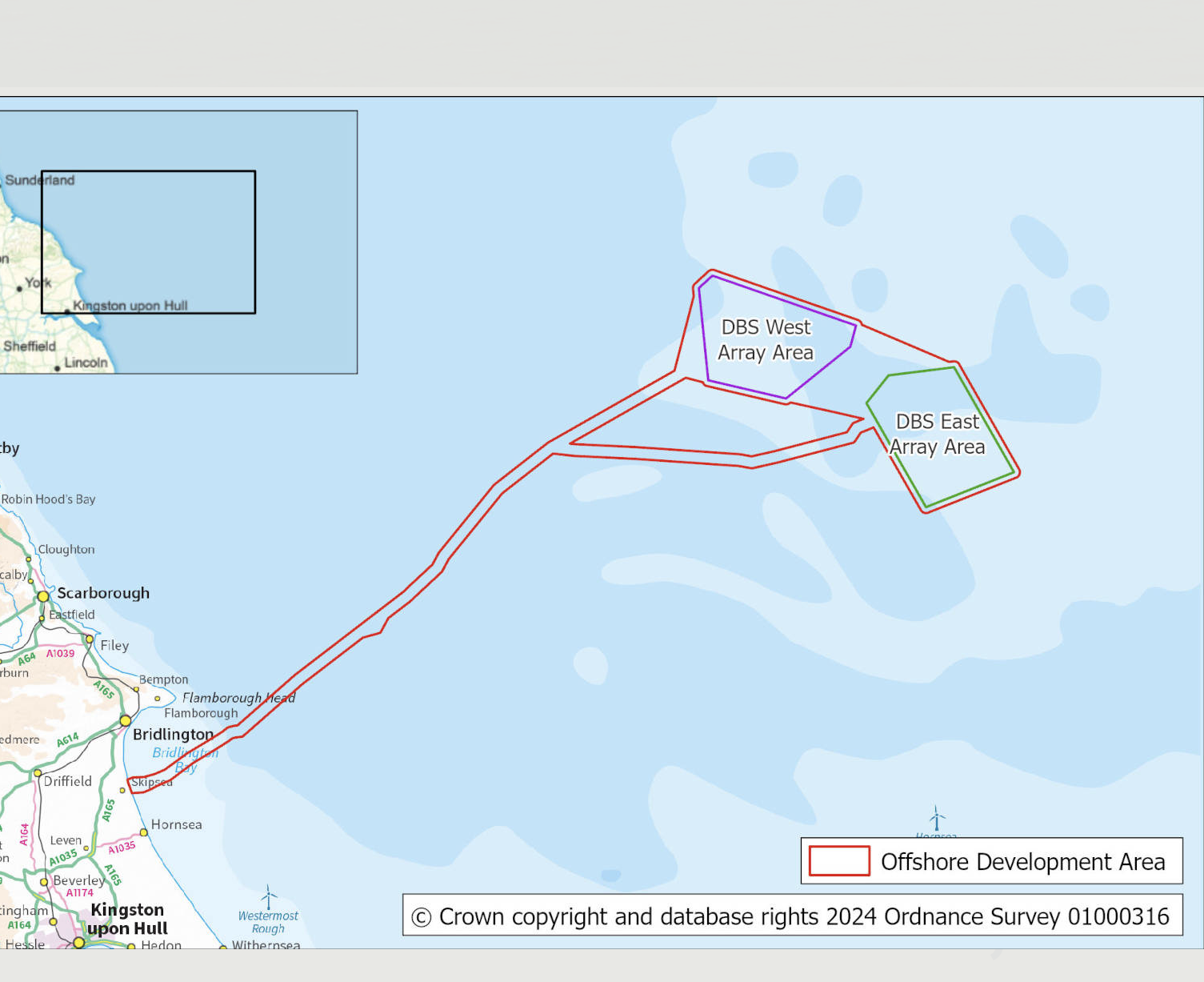
I clipped this map from the Dogger Bank South web site.
Note.
- Bridlington, Kingston-Upon-Hull and Scarborough can be picked out on the coast of East Yorkshire.
- The two wind farms and the route of the cables to the shore can be clearly seen.
I just wonder, whether the nature of the project is changing.
Consider.
- Three GW is a lot of power to move across Yorkshire to where it can be connected to the grid.
- In Consultation On Offshore Wind Reform: Hydrogen Sector Calls For Hybrid Connection Concepts And Warns Of Compensation Risks, German companies involved in the AquaVentus project are calling for more hydrogen to be produced offshore and piped to the shore.
- Could hydrogen produced in the Dogger Bank Wind farms be piped to the Northern end of the AquaVentus pipeline on the German sector of the Dogger Bank?
- A pipeline or cable could still bring energy to Yorkshire.
- The hydrogen could go to the hydrogen stores at Aldbrough and Rough.
- SSE and Centrica could play hydrogen-bankers to the Germans, as Germany is short of hydrogen storage.
- East Yorkshire is building two hydrogen power stations at Keadby and Ferrybridge.
- Support for the Dogger Bank South wind farms will probably be from RWE’S Grimsby hub.
Is this the Anglo-German co-operation, I talked about in UK And Germany Boost Offshore Renewables Ties at work?
I can see benefits for this arrangement for the UK.
- Hydrogen production is offshore.
- A lot of the onshore employment is in the UK.
- There will be a hydrogen pipeline between Germany and the vast hydrogen storage of Humberside via the German Dogger Bank and Dogger Bank South wind farms.
- Will there be a hydrogen pipeline between the North of Scotland and Humberside via the AquaVentus pipeline?
- There will also be a substantial cash flow to the UK Treasury because of all the hydrogen production in UK waters.
RWE may also be able to use a standard hydrogen production platform in German and UK waters.
This is the sort of plan, that the money men will like.
Direct London Trains ‘Could Start In 2026’
The title of this post, is the same as that of this article on the BBC.
This is the sub-heading.
A new train company is hoping its proposals for new daily services from Shropshire to London Euston could begin towards the end of 2026.
Wrexham, Shropshire and Midlands Railway (WSMR), which is led by international rail firm Alstom, submitted a new bid at the end of last year to provide four daily trains.
These two paragraphs add detail to the story.
The county has not had a direct train link to the capital since Avanti West Coast stopped its single daily service in 2024 because of low passenger numbers.
The move has been welcomed by regular commuter Charlotte Foster, who lives on the Welsh border. She said a direct service would save her the stress of missing a connection or catching a train elsewhere.
These are my thoughts on this proposal.
I wonder If Alstom Will Be Using This route To Trial Hydrogen-Powered Trains?
Consider.
- The route was a failure for Virgin Trains.
- Perhaps the curiosity value of hydrogen-trains will generate sufficient traffic.
- Hydrogen-electric trains will be very quiet. Those in Germany are hydrogen-electro-mechanical and very noisy.
- The trains will be based on the proven Aventra platform.
- I reported on Alstom’s hydrogen trains for the UK in Alstom Plans To Operate Its Own Passenger Train Service In The UK For The First Time.
- Perhaps Alstom feel that an extended test will convince passengers that the trains are a good idea.
- An extended test would give proper costings for Great British Railways and prospective open access operators.
The map downloaded from the BBC article shows the route.

Note.
- There are eight intermediate stops.
- Euston and Wolverhampton is 124.9 miles and fully electrified.
- Wolverhampton and Wrexham General is 59.9 miles and is not electrified.
- The section of the route without electrification at 120 miles return might need some new electrification for battery-electric trains, but from their experience in Germany, I suspect that Alstom, will know how to cover the route using hydrogen-hybrid trains, which would use the existing electrification between Euston and Wolverhampton.
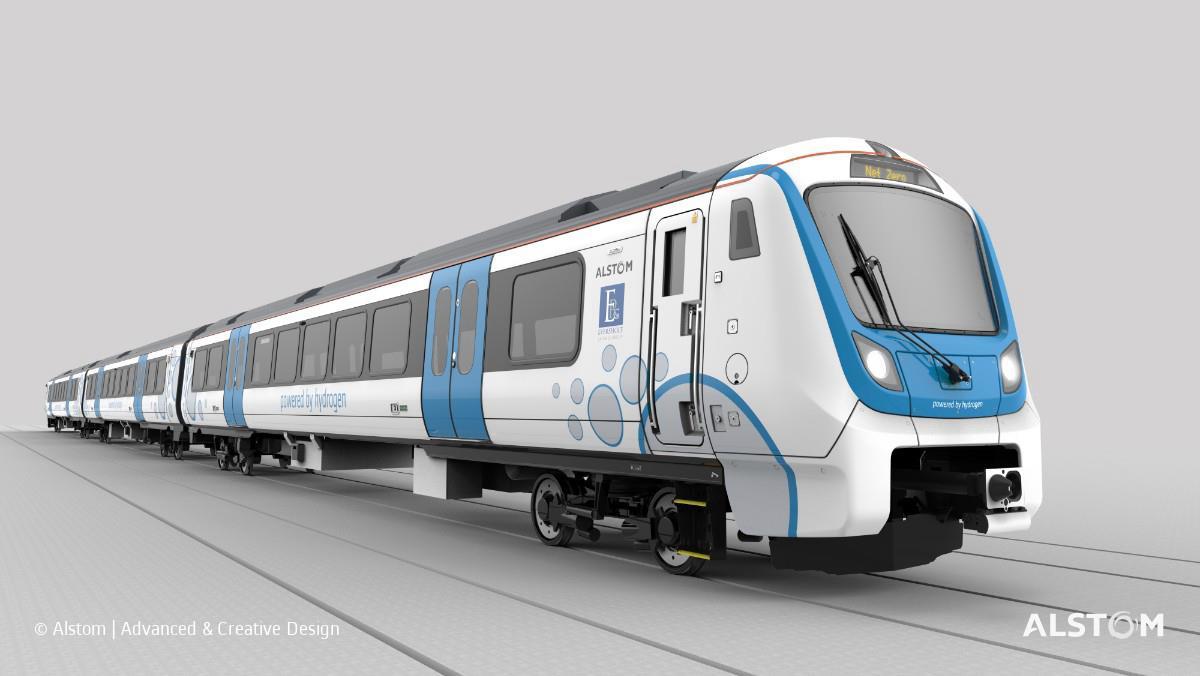
This picture shows a visualisation of a possible Alston hydrogen train, which would probably be built in Derby on an Aventra platform.
Note.
- It could be up to five-cars long.
- I suspect Alstom could give the train a 125 mph cruising speed, so it could mix it with all the express trains between Euston and Wolverhampton.
- The trains would have a very long range on hydrogen.
- Hydrogen trains could certainly handle a round trip between Wolverhampton and Holyhead on a single fuelling.
- Hydrogen fuelling is likely to be setup at Cemex at Wrexham and the Port of Holyhead.
I think it could be an ideal trial route for hydrogen trains.
But also it could bring growth to the towns and cities between Wolverhampton and Holyhead.
Would Alstom’s Hydrogen-Hybrid Trains Be Suitable For Other Routes?
Most Certainly!
In the first place, the route could be extended to Holyhead, which would surely bring growth to the towns and cities between Wolverhampton and Holyhead.
This would create a zero-carbon route between London and the Island of Ireland.
But around the UK, there would be other routes.
I can envisage these routes being run by hydrogen-hybrid trains.
- London Waterloo and Exeter – Third-rail operation
- London Bridge and Uckfield – Third-rail operation
- London Bridge and Hoo – Third-rail operation
- East Coastway and Marshlink Lines – Third-rail operation
- Scotland – Replacement of Inter7City trains and filling in the gaps in electrification.
Note.
- Some areas already have or have plans for hydrogen supply networks.
- With the exception of supplying hydrogen, very little infrastructure would be needed.
- Hydrogen trains should be fairly quiet.
- Hydrogen trains don’t create much disruption, when they are installed.
Aventras have been fairly well received and can be between three and nine cars.
Consultation On Offshore Wind Reform: Hydrogen Sector Calls For Hybrid Connection Concepts And Warns Of Compensation Risks
The title of this post, is the same as that of this article on the AquaVentus web site.
There is this statement on the home page.
Berlin, January 02 2026. In the context of the consultation launched by the Federal Ministry for Economic Affairs and Energy (BMWE) on the reform of the Wind Energy at Sea Act (WindSeeG), the hydrogen initiative AquaVentus is calling for clear legislative action to enable a cost-efficient and system-friendly development of offshore wind energy. At the heart of its position is the timely legal establishment of hybrid connection concepts, allowing offshore wind farms to be connected via both electricity cables and hydrogen pipelines.
Note.
- I’ve always felt that copying proven technologies from the offshore oil and gas industry is good practice.
- It may be easier to recycle infrastructure like pipelines, platforms and storage by creating the hydrogen offshore.
- In the UK, Centrica and SSE are already re-purposing natural gas storage for hydrogen.
It may feel safer to some for the hydrogen to be produced a distance offshore.
Could Doncaster Sheffield Airport Become A Hydrogen Airport?
I asked Google AI, what is the current status of Doncaster Sheffield Airport and received this reply.
Doncaster Sheffield Airport (DSA) is currently in a state of active, public-funded redevelopment after closing in late 2022 due to financial issues, with plans to reopen for passenger flights by late 2027 or 2028, following significant funding (around £160m) secured by the South Yorkshire Mayoral Combined Authority (SYMCA) for the City of Doncaster Council to take over operations and rebuild commercial viability, with freight and general aviation potentially returning sooner.
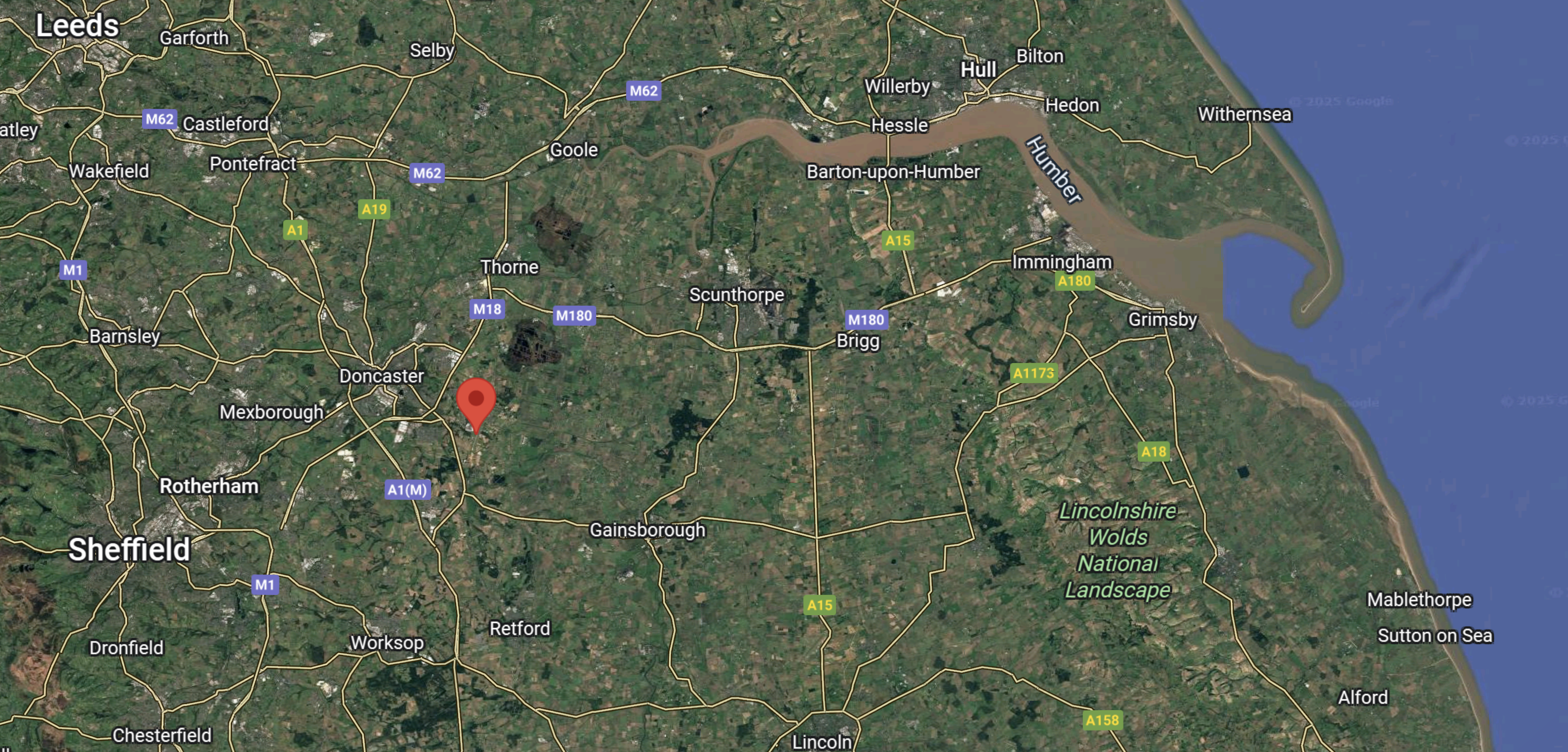
This Google Map shows the location of the airport.
Note.
- The distinctive mouth of the River Humber can be picked out towards the North-East corner of the map.
- Hull and Grimsby sit in the mouth of the Humber.
- The red arrow indicates Doncaster Sheffield Airport.
- Leeds is in the North-West corner of the map.
- The towns and city of Doncaster, Rotherham and Sheffield can be picked out to the West of the airport.
This second Google Map shows a close-up of the airport.

On my visit to NASA in the 1980s, where an Artemis system was used to project manage the turnround of the Space Shuttle, I was asked questions by one of NASA’s support people about RAF Finningley. Nothing too technical, but things like what is Doncaster like.
When I asked why, they said there’s a high chance that a Space Shuttle could land at RAF Finningley, as it has one of the best runways for a very heavy aircraft in Europe.
Looking at the runway, it is a long and wide runway that was built for heavy RAF nuclear bombers like Valiants, Victors and Vulcans.
I believe that we will eventually see hydrogen- and/or nuclear-powered airliners flying very long routes across the globe, just as a nuclear-powered example, attempted to do in the first episode of the TV series Thunderbirds, which was called Trapped in the Sky and has this Wikipedia entry.
Just as the Space Shuttle did, these airliners and their air-cargo siblings will need a large runway.
Doncaster Sheffield Airport already has such a runway.
These hydrogen- and nuclear-powered aircraft will make Airbus A 380s look small and will need runways like the one at Finningley.
But I don’t think we’ll ever see nuclear-powered aircraft in the near future, so the aircraft will likely be hydrogen.
Other things in favour of making Doncaster Sheffield Airport, an airport for long range hydrogen aircraft include.
- The airport is close to the massive hydrogen production and storage facilities being developed on Humberside at Aldbrough and Rough.
- The airport could be connected to the Sheffield Supertram.
- The airport could be connected to the trains at Doncaster station, which has 173 express trains per day to all over the country.
- The airport would fit well with my thoughts on hydrogen-powered coaches, that I wrote about inFirstGroup Adds Leeds-based J&B Travel To Growing Coach Portfolio
- The airport might even be able to accept the next generation of supersonic aircraft.
- The airport could certainly accept the largest hydrogen-powered cargo aircraft.
- The Airport isn’t far from Doncaster iPort railfreight terminal.
Did I read too much science fiction?
I have some further thoughts.
Do Electric Aircraft Have A Future?
I asked Google AI this question and received this answer.
Yes, electric aircraft absolutely have a future, especially for short-haul, regional, and urban air mobility (UAM), promising quieter, zero-emission flights, but battery limitations mean long-haul flights will rely more on hydrogen-electric or Sustainable Aviation Fuels (SAF) for the foreseeable future. Expect to see battery-electric planes for shorter trips by the late 2020s, while hybrid or hydrogen solutions tackle longer distances, with a significant shift towards alternative propulsion by 2050.
That doesn’t seem very promising, so I asked Google AI what range can be elected from electric aircraft by 2035 and received this answer.
By 2035, fully electric aircraft ranges are expected to be around 200-400 km (125-250 miles) for small commuter planes, while hybrid-electric models could reach 800-1,000 km (500-620 miles), focusing on short-haul routes due to battery limitations; larger, long-range electric flight remains decades away, with hydrogen propulsion targeting 1,000-2,000 km ranges for that timeframe.
Note.
- I doubt that many prospective passengers would want to use small commuter planes for up to 250 miles from Doncaster Sheffield airport with hundreds of express trains per day going all over the UK mainland from Doncaster station.
- But Belfast City (212 miles), Dublin (215 miles) and Ostend (227 miles), Ronaldsway on the Isle of Man (154 miles) and Rotterdam(251 miles) and Schipol 340 miles) may be another matter, as there is water to cross.
It looks like it will be after 2035 before zero-carbon aircraft will be travelling further than 620 miles.
My bets would be on these aircraft being hydrogen hybrid aircraft.
What Will The Range Of Hydrogen-Powered Aircraft In 2040?
I asked Google AI this question and received this answer.
By 2040, hydrogen-powered commercial aircraft are projected to have a range that covers short- to medium-haul flights, likely up to 7,000 kilometers (approximately 3,780 nautical miles), with some models potentially achieving longer ranges as technology and infrastructure mature.
The range of these aircraft will vary depending on the specific technology used (hydrogen fuel cells versus hydrogen combustion in modified gas turbines) and aircraft size.
It looks like we’ll be getting there.
This Wikipedia entry is a list of large aircraft and there are some very large aircraft, like the Antonov An-225, which was destroyed in the Ukraine War.
A future long-range hydrogen-powered airline must be able to match the range of current aircraft that will need to be replaced.
I asked Google AI what airliner has the longest range and received this reply.
The longest-range airliner in service is the Airbus A350-900ULR (Ultra Long Range), specifically configured for airlines like Singapore Airlines to fly extremely long distances, reaching around 9,700 nautical miles (18,000 km) for routes like Singapore to New York. While the A350-900ULR holds records for current operations, the upcoming Boeing 777-8X aims to compete, and the Boeing 777-200LR was previously known for its exceptional range.
I believe that based on the technology of current successful aircraft, that an aircraft could be built, that would be able to have the required range and payload to be economic, with the first version probably being a high-capacity cargo version.
What Would An Ultra Long Range Hydrogen-Powered Airliner Look Like?
Whatever the aircraft looks like it will need to be powered. Rolls-Royce, appear to be destining a future turbofan for aircraft called the Ultrafan, which has this Wikipedia entry.
I asked Google AI, if Rolls-Royce will produce an Ultrafan for hydrogen and received this answer.
Rolls-Royce is actively developing the UltraFan architecture to be compatible with hydrogen fuel in the future, but the current UltraFan demonstrator runs on Sustainable Aviation Fuel (SAF). The company has a research program dedicated to developing hydrogen-powered engines for future aircraft, aiming for entry into service in the mid-2030s.
I asked Google AI, if Rolls-Royce have had major difficulties converting engines to hydrogen and received this answer.
Rolls-Royce has not encountered insurmountable difficulties but faces significant engineering and logistical challenges in converting engines to run on hydrogen. The company has made substantial progress in testing both stationary and aero engines using pure hydrogen, confirming its technical feasibility.
Given the company’s success in developing engines in the past, like the R Type, Merlin, RB 211, Pegasus, Trent, mtu 4000 and others, I suspect there’s a high chance of a successful hydrogen-powered Ultrafan.
If you look at a history of large passenger and cargo aircraft over the last sixty years, there has been a lot of the following.
- Conversion of one type of aircraft to a totally different type.
- Fitting new engines to a particular type.
- Fitting new avionics to a particular type.
Examples include.
- Fitting new CFM-56 engines to DC-8s.
- The first two Nimrods were converted from unsold Comet 4Cs.
- Converting Victor bombers to RAF tanker aircraft.
- Converting BA Tristars to RAF tanker aircraft.
- Converting DC-8s to cargo aircraft.
- Airbus converted five Airbus A 300-600 into Belugas, which have this Wikipedia entry.
- Airbus converted six Airbus A 330-200F into BelugaXLs, which have this Wikipedia entry.
- Converting two Boeing-747s to carry Space Shuttles ; one from American Airlines and one from Japan Airlines, which have this Wikipedia entry.
Note.
- Most of these examples have been successful.
- The last three examples have been very successful.
- Most of these applications do not have a human cargo.
This picture shows an Emirates Air Lines’s Airbus A 380 on finals at Heathrow.

Note.
- The aircraft was landing on Runway 27 L.
- The four engines and the vertical oval cross-section of the fuselage are clearly visible.
- The Wikipedia entry for the Airbus A 380 shows two floors across the fuselage; the upper floor with eight seats in 2-4-2 and the lower floor with ten seats in 3-4-3, and a pair of LD3 cargo containers in the basement.
I’d be interested to know, how much hydrogen could be put in the basement and how far it could take the plane with a full load of passengers!
This link to the Wikipedia entry, shows the cross section in detail.
Note
I wouldn’t be surprised that the first application of large hydrogen aircraft will be for cargo and it could be an Airbus Beluga or perhaps an Airbus A 380 freighter?


