Man In Seat 61: My Nail-Biting Journey To Orkney By Train And Ferry
The title of this post is the same as that of this article in The Times.
This is the heading.
Now the Caledonian Sleeper connects the Midlands to Scotland in style. Mark Smith travels to the UK’s most northerly rail station and beyond
These are the first two paragraphs.
In January the Caledonian Sleeper added Birmingham to its route from London to Scotland — its first new stop in 30 years. With a ticket for one of the first departures and a bucket-list desire to see the historic naval anchorage that is Scapa Flow, I would ride the sleeper to Inverness, take Scotland’s scenic Far North Line to Britain’s northernmost station and then sail across the Pentland Firth to Stromness. I could leave my Buckinghamshire home in the evening and reach Orkney 24 hours later without setting foot on a plane. It sounded like a plan.
The Highland sleeper (which travels to the Highlands; there is also a Lowland sleeper that travels to Edinburgh and Glasgow) rolled into Birmingham International at 10.42pm on the dot. I was greeted at the door by a steward with a friendly Scottish accent and my room key. He jotted down my breakfast reservation and I headed for room 4 in car L. The Cal Sleeper is rightly proud of its Scottish-made mattresses and fluffy duvets and I drifted off to sleep in my cosy berth to the sound of steel wheel on steel rail.
I feel adding a Birmingham International stop is a masterstroke, as it gives so many travel options.
- You could of course still join in London.
- I might go to Birmingham on Chiltern, as I prefer the trains to Avanti West Coast.
- There are lots of shows and exhibitions in Birmingham.
- If you had a relative in Scotland and you lived in the far South-East of England and Wales, half of the journey would be in a comfortable bed.
- Birmingham International has regular connections to Aberystwyth, Bournemouth, Pwllheli, Shrewsbury and Wrexham General.
- Some journeys might be easier with a change between plane and sleeper train at Birmingham International.
The list is endless and will grow as travellers have other ideas.
More imagination needs to be added to train journeys.
My first thoughts are.
There needs to be a Lumo-style service between Birmingham and Scotland and a sleeper between Birmingham and Penzance.
Could High Speed Two Finish At Lichfield?
I wrote this post before Rishi Sunak made his speech.
I went to Manchester and Liverpool yesterday by train.
I took the 10:33 from Euston and this a summary of my journey.
- The train left Euston half a minute early.
- It arrived at Stafford (133.5 miles) at 11:50 and left at 11:52.
- It arrived at Crewe (158.0 miles) at 12:08 and left at 12.10.
- It arrived at Wilmslow (176.9 miles) at 12:25 and left at 12:27.
- It arrived at Stockport (183.0 miles) at 12:35 and left at 12:37.
- It arrived in Manchester Piccadilly (188.9 miles) at 12:46.
- It was two minutes late into Manchester and more or less on time at the other stops.
Note.
- The route was via the Trent Valley Line and the train passed through Nuneaton, Tamworth, Lichfield Trent Valley, Colwich and Stafford.
- Euston and Manchester had been timetabled at two hours and eleven minutes.
- This is an average speed of 86.5 mph.
- The Wikipedia entry for High Speed Two gives the fastest time before High Speed Two opens as one hour and fifty-four minutes.
- This will be an average speed of 99.4 mph.
Coming home, I took the 18:48 from Liverpool Lime Street and this a summary of my journey.
- The train left Liverpool on time.
- It arrived at Runcorn (13.2 miles) at 18:58 and left at 19:02.
- It arrived at Crewe (35.8 miles) at 19:26 and left at 19:28.
- It arrived at Milton Keynes (143.8 miles) at 20:27 and left at 20:29.
- It arrived in Euston (183.6 miles) at 21:00.
- It was five minutes late into Crewe and two minutes early at Euston.
Note.
- The route was via the Trent Valley Line and the train passed through Stafford, Colwich, Lichfield Trent Valley, Tamworth and Nuneaton.
- Liverpool and Euston had been timetabled at two hours and twenty minutes.
- This is an average speed of 78.7 mph.
- The Wikipedia entry for High Speed Two gives the fastest time before High Speed Two opens as two hours and three minutes.
- This will be an average speed of 89.6 mph.
This map clipped from the High Speed Two web site, shows the junction North of Lichfield, where High Speed Two connects to the Trent Valley Line through Stafford.

Note.
- High Speed Two runs North-South across the map.
- After the Junction by Fradley South, High Speed Two to Crewe and the North, is the branch to the East.
- The other branch connects to the Trent Valley Line at Handsacre junction.
- Trent Valley Line can be picked out North of Lichfield, where it passes through Lichfield Trent Valley station.
The Trent Valley Line is no Victorian double-track slow-speed bottleneck.
- The route between Rugby and Crewe is generally three or four tracks, with only one short stretch of double track, through Shugborough tunnel.
- The speed limit is generally 110 mph, with 90 mph at Shugborough.
- I wouldn’t be surprised to see Avanti West Coast’s Class 390 and Class 807 trains could be running at up to 140 mph on the route, if digital signalling were to be installed.
- This speed would probably be attained by High Speed Two trains.
London Euston and Stafford would only have under twenty miles of slower line and that could be 140 mph, so High Speed Two times on the route could be very fast.
This second map clipped from the High Speed Two web site, shows between High Speed Two’s two Birmingham stations and Lichfield.
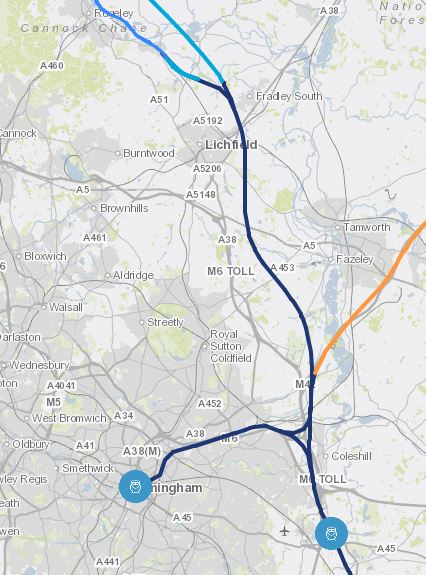
Note.
- High Speed Two Phases 1 and 2a are shown in blue.
- High Speed Two Phase 2b is shown in orange.
- At the top of the map, can be seen the junction, where High Speed Two to the North splits, that was shown in the previous map.
- The large blue dot in the West at the bottom of the map, is Birmingham Curzon Street station.
- The other large blue dot is Birmingham International station.
- The three sections of High Speed Two to London, Birmingham Curzon Street and the North meet at a triangular junction between the two Birmingham stations.
- High Speed Two to the East Midlands, branches off to the East North of the triangular junction.
This third map clipped from the High Speed Two web site, shows between Lichfield and Crewe.
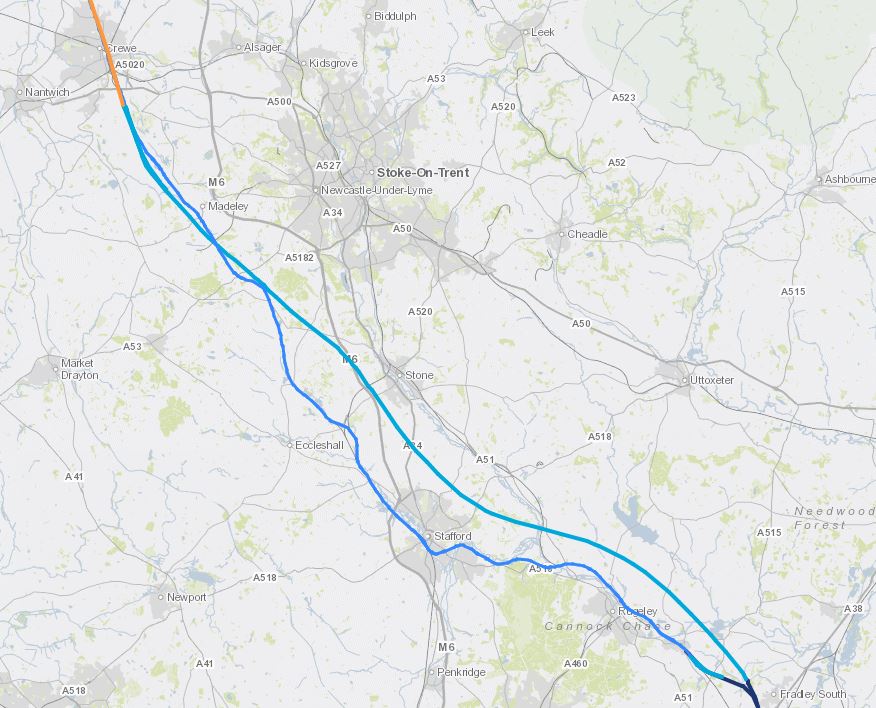
Note.
- High Speed Two Phase 2a is shown in blue.
- High Speed Two Phase 2b is shown in orange.
- Crewe is in the North-West corner of the map, where at the South end of the orange section.
- The junction at Lichfield is in the South-East corner of the map.
- The lighter blue route to the East, between the Lichfield junction and Crewe is the new tracks of High Speed Two.
- The darker blue route to the West, between the Lichfield junction and Crewe is the existing route of the Trent Valley Line and the West Coast Main Line.
- The Trent Valley Line joins the West Coast Main Line at Stafford.
These are a few thoughts and questions.
How Will Trains Go Between Birmingham Curzon Street And London?
Trains will use the triangular junction shown in the second map to go between the two Birmingham stations and then head South,
How Will Trains Go Between Birmingham Curzon Street And The North?
Trains will use the triangular junction shown in the second map to turn North and then take one of the two routes to the North; High Speed Two or Trent Valley Line/West Coast Main Line.
How Will Trains Go Between Birmingham Curzon Street And The North If High Speed Two Between Birmingham And The North Is Scrapped?
If High Speed Two is scrapped from the Northern point of the triangular junction to the North, there will be no way that trains could go North from Birmingham Curzon Street.
- The overcrowded Birmingham New Street station will still be the link to the North of England and Scotland for Birmingham.
- How would trains connect to the future branch to East Midlands Parkway, which connects just North of the triangular junction?
I suspect that a short stub will be built North of the triangular junction to connect to the Trent Valley Line, which is currently, the main route of trains between London and the North through the West Midlands, for trains that don’t go through Birmingham.
Trains Between London And Stafford
Currently, Avanti West Coast trains take around one hour and seventeen minutes between London and Stafford.
The Wikipedia entry for High Speed Two gives these times between London and Stafford.
- Fastest time before High Speed Two – one hour and seventeen minutes.
- Time after Phase 2a of High Speed Two opens – fifty-five minutes.
Note.
That is a time saving of twenty-two minutes.
High Speed Two Trains will use the link between the junction at Lichfield and the Trent Valley Line.
How Many Avanti West Coast Services Use The Trent Valley Line?
These trains use the Trent Valley Line.
- London and Holyhead – 8 tpd
- London and Liverpool Lime Street – 1 tph, which is planned to increase to 2 tph
- London and Manchester Piccadilly – 2 tph
- London and Blackpool North – 1 tpd
- London and Glasgow – 1 tph
Note.
- tpd is trains per day
- tph is trains per hour
This is roughly six tph.
Would It Be Possible To Finish High Speed Two At The Lichfield Junction And Connect It To The Trent Valley Line?
This is a repeat of the first map.
Note.
- High Speed Two runs North-South across the map.
- After the Junction by Fradley South, High Speed Two to Crewe and the North, is the branch to the East.
- The other branch connects to the Trent Valley Line at Handsacre junction.
- Trent Valley Line can be picked out North of Lichfield, where it passes through Lichfield Trent Valley station.
If the Eastern branch North from the junction were to be scrapped, all trains between London and North would go via Stafford.
As all these tracks are planned and must be at an advanced stage, that is ready for construction, I feel the route would be feasible.
It would have these benefits.
- Birmingham Curzon Street services and the North-West of England and the West of Scotland would be possible.
- Services between London and Stafford will be twenty-two minutes faster, than they are now.
- Time savings will also apply to services from London to Liverpool, Macclesfield, Manchester, Stoke-on-Trent and all stations between Crewe and Glasgow.
The capacity of the Trent Valley Line would be the limiting factor.
Time Savings Between Crewe And Preston
According to the Wikipedia entry for High Speed Two, after Phase 2a of High Speed Two opens, these will be the fastest times to Crewe and Preston.
- Crewe – 0:56
- Preston 1:18
Note.
- The fastest Preston service runs non-stop between Euston and Preston.
- Crewe and Preston are 51 miles apart.
A time of 22 minutes between Crewe and Preston, means the average speed is 139 mph.
Does this mean that High Speed Two will improve between Crewe and Preston to allow 140 mph non-stop running?
But 22 minutes is certainly an improvement on the current time between Crewe and Preston for Scottish trains of 40 minutes.
Time Savings Between Crewe And Liverpool
The upgrading of the line between might save another couple of minutes between Crewe and Weaver junction.
What Times Would Be Possible Via High Speed Two And The Trent Valley Line?
These times are based on the following.
- The twenty-two minute saving to Stafford, as all High Speed Two services to the North-West of England and the West of Scotland will go via Phase 1 of High Speed Two and Stafford.
- A saving of eighteen minutes will be applied to Scottish services because of savings between Crewe and Preston.
This would give these times in hours:minutes.
- Blackpool – 2:10
- Carlisle – 2:35
- Chester – 1:28
- Crewe – 1:08
- Glasgow – 3:50
- Holyhead – 3:10
- Lancaster – 2:03
- Liverpool Lime Street – 1:41
- Llandudno Junction – 2:24
- Macclesfield – 1:30
- Manchester Piccadilly via Crewe – 1:52
- Oxenholme – 1:54
- Preston – 1:46
- Runcorn 1:31
- Stafford – 0:55
- Stockport – 1:35
- Stoke-on-Trent – 1:10
- Warrington – 1:22
- Wigan 1:33
- Wilmslow – 1:25
I have calculated extra services to Blackpool and North Wales.
Adding The Lichfield And Crewe Section
Consider.
- My calculations indicate that London and Crewe will take 1:08.
- The Wikipedia entry for High Speed Two, after Phase 2a of High Speed Two opens, gives the fastest time to Crewe as 0:56.
This indicates that adding the section of High Speed Two between Lichfield and Crewe will save a further twelve minutes.
Conclusion
I strongly believe that an upgraded Trent Valley Line linked to a shortened High Speed Two at Lichfield could improve journey times between London, Birmingham and the North.
There are certainly savings to be made.
See Also
Birmingham Plays The Green Card
This article in The Times today is entitled Birmingham Airport Set For Hydrogen Take-Off.
These two paragraphs introduce the article.
Birmingham Airport aims to become the first in Britain to operate commercial zero-emission hydrogen-fuelled flights — and by as early as 2025.
The ambitious goal follows the signing of a partnership with the British start-up ZeroAvia whose first trial flight of a 19-seater passenger aircraft powered by hydrogen fuel cells took place last month.
Other points from the article include.
- ZeroAvia is also working with Rotterdam Airport.
- Initially, it is likely that the hydrogen-powered aircraft will be used for cargo.
- The government wants all UK domestic flights to be zero-carbon by 2040.
- Birmingham wants to be zero-carbon by 2033.
- ZeroAvia has received upwards of £20 million of matched-taxpayer funding.
- It has some big backers and well-known airlines, who have placed orders.
These are my thoughts.
ZeroAvia’s Airliners
This paragraph from The Times article describes their first two aircraft.
ZeroAvia is retrofitting turboprops, 19-seater Dornier and in future 80-seater De Havilland Canada Dash 8-400s, with tanks of hydrogen which is converted by fuel cell stacks to energy taken to electric motors that power the propellers. The only emission is water. It is talking to potential new-entrant airframe makers to build all-new hydrogen aircraft of the future.
Note.
- The Dornier 228 is a 19-seater airliner of which over three hundred have been built.
- The de Havilland Canada Dash 8-400 is an 80-seater airliner of which over six hundred have been ordered and over 1200 of all marques of Dash 8s have been built.
Both are workhorses of the smaller airlines all over the world.
As the paragraph from The Times indicates the power system is not conventional, but then most of this new breed of small electric/hydrogen/hybrid airliners have electric propulsion. I suspect that there’s been a marked improvement in the design and efficiency of electric motors.
Electric propulsion should have a substantial noise advantage over turboprops.
ZeroAvia are also retrofitting their two chosen airliners.
This offers advantages in the certifying of the airliners. Providing the changes made to the airframe are not significant, the various certifying authorities in the UK, US and EU will allow previous certification to be carried over.
This means that ZeroAvia only have to thoroughly test and certify the powerplant and its integration into the aircraft.
One of their competitors, the Eviation Alice is a completely new airframe with battery-electric power, so I suspect this aircraft will take longer to certify.
I think ZeroAvia have used this shorter certification time to aim to get their airliners in service first.
Those that don’t win, don’t get the same fame.
Hydrogen At Birmingham Airport
Hydrogen will be needed at Birmingham Airport to refuel ZeroAvia’s airliners.
But will hydrogen also be used on the airside to power some of the heavy vehicles you see on airports.
Look at this page on the Hawaii Technology Development Corporation, which shows a Hydrogen Fuel Cell U-30 Aircraft Tow Tractor. The specification indicates, that it can tow a C-17 or a Boeing 747.
I wouldn’t be surprised to see Birmingham Airport build their own electrolyser nearby both to supply hydrogen-powered aircraft and decarbonise the airside.
To And From Birmingham Airport
Consider.
- Birmingham Airport is connected to Birmingham International station by a free AirRail Link.
- Birmingham International station has an impressive number of services, many of which are electric.
- There will be a people mover to connect to Birmingham Interchange for High Speed Two.
- Birmingham Interchange will have five trains per hour (tph) to and from London, taking under forty minutes.
- There are plans to extend the West Midlands Metro to the airport, with journeys taking thirty minutes from the City Centre.
- Birmingham Airport is at the centre of the UK’s motorway network.
Most public transport to Birmingham Airport will be zero-carbon and the percentage that is will increase.
A Green Air Bridge To Ireland
Currently the fastest services between London and Birmingham International station take a few minutes over the hour.
But after High Speed Two opens, the service will improve.
- High Speed Two will take under forty minutes.
- There will be five tph.
- High Speed Two will connect to the Elizabeth Line and the London Overground at Old Oak Common station.
- Euston station will have better connectivity to the Underground.
This diagram shows High Speed Two services.
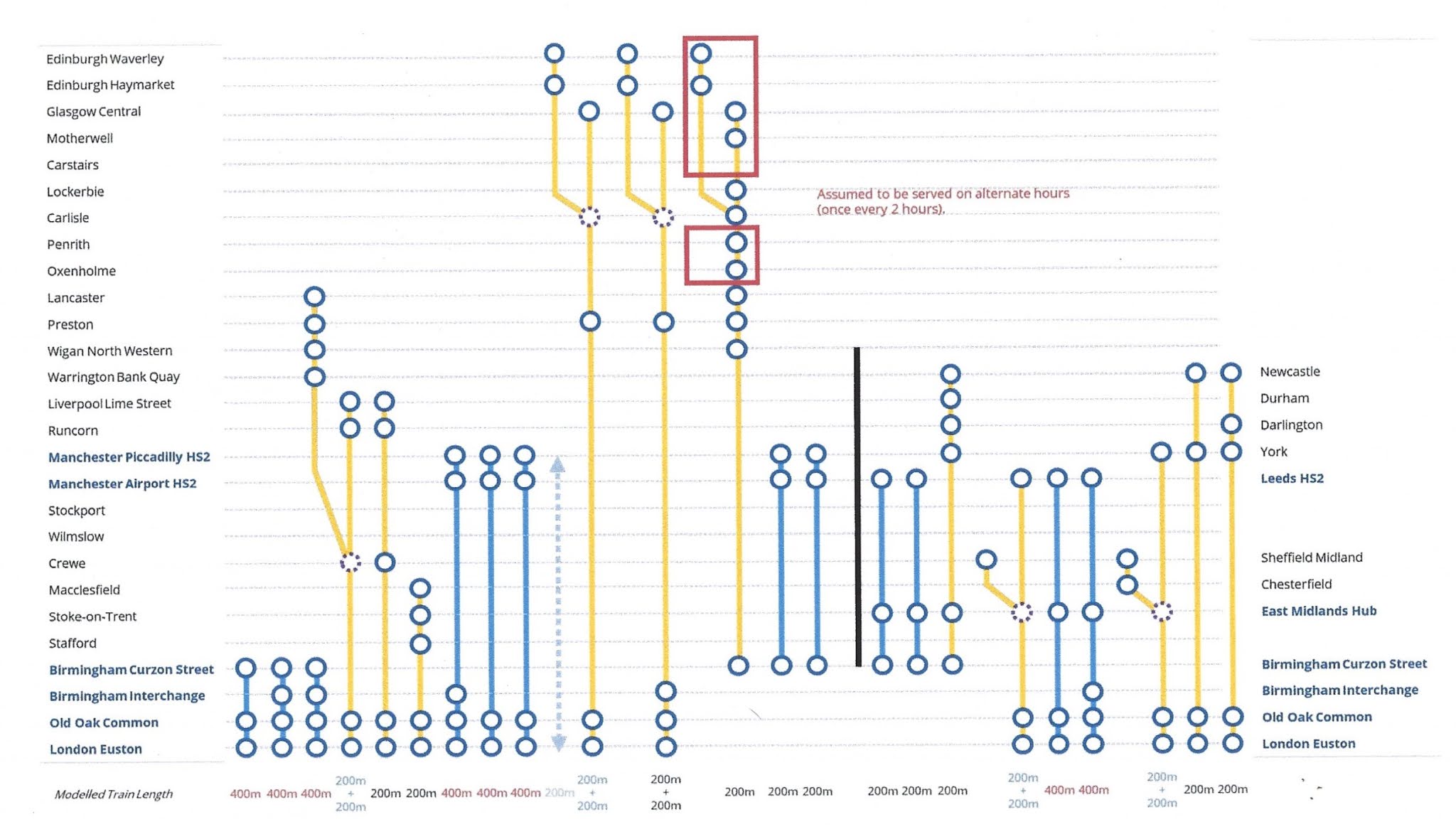
Consider.
- Birmingham Interchange has good connections in the North.
- I can see that Birmingham Airport could start to attract lots of passengers going between the islands of Great Britain and Ireland.
- And don’t forget Cardiff, Swansea, Exeter, Isle of Man and New Quay.
- Could Birmingham-Dublin and Birmingham-Belfast be run as frequent shuttles?
- Will there be AirRail tickets between Euston and Belfast and Dublin?
I also wonder if zero-carbon travel will attract passengers?
Zero-Carbon Air Cargo At Birmingham Airport
This article on Railway Gazette is entitled Varamis Rail Launches Regular Express Light Freight Service.
These three paragraphs outline the service from Varamis Rail.
Varamis Rail has launched a 160 km/h express freight service between Glasgow and Birmingham International using a converted electric multiple-unit.
The service is targeted at express parcels and third-party delivery companies seeking next day delivery of consumer goods.
Consignments arriving at the Glasgow hub by 17.30 from Monday to Friday can reach Birmingham at 23.00, with northbound freight arriving at the Birmingham site by 23.00 reaching Glasgow at 05.30 the next morning.
I think this service would interface well with cargo planes operating overnight from Birmingham Airport.
It seems to me, that Spokes at Speke could be reborn at Birmingham.
Conclusion
Birmingham Airport seems to be positioning itself to take advantage of aviation’s new breed of planes.
Birmingham Airport Connectivity
On the Midlands Connect web site, they have a page, which is entitled Birmingham Airport Connectivity.
This is the introductory paragraph.
By using capacity released by HS2 and investing in new track south of Birmingham Airport, we can improve connections from the south of England, East Midlands, Yorkshire and the North East.
The page contains this helpful map.
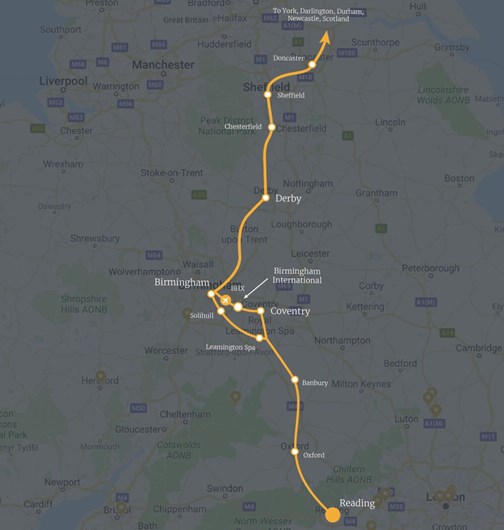
It looks like Midlands Connect are thinking about improving the Reading and Newcastle service.
Points made on the page and related articles, like this one on Rail News include.
- Birmingham Airport has plans to increase passenger numbers to 18 million by 2033.
- Coventry and Leamington Spa via Kenilworth will be double-tracked.
- High Speed Two will release capacity in the area.
- It will open up rail capacity between Birmingham and Solihull.
- There will be a new service between Birmingham Moor Street and Oxford via Solihull and Warwick Parkway.
- It will improve local connections to Birmingham Airport.
- Birmingham and Reading services will be increased to two trains per hour (tph)
- The Government is being asked to chip in £20 million.
These are my thoughts.
Birmingham Airport
Birmingham Airport can become a true Heart of England Airport.
I feel that the future of aviation will be very different to the past.
- COVID-19 and the future pandemics, that we will endure from the East and the Americas, will mean that flying will be a very different experience with hygiene and social distancing to the fore.
- Smaller aircraft, for flights up to 500 miles, will be odd-looking zero-carbon machines with exotic power systems.
- Larger aircraft will be energy efficient planes powered by aviation biofuels produced from household and industrial waste, and biomass.
- Boeing 747s and Airbus A380s will only be talked about in tales from older people to the young.
- Airports will be important rail hubs to more than just the local area.
Wikipedia also says this about expansion of Birmingham Airport.
Plans for a second runway (a third when demand requires) on the other side of the M42 and a new terminal complex and business park have been published, and they could help to create around 250,000 jobs. It has been estimated that if these plans went ahead, the airport could handle around 70,000,000 passengers annually, and around 500,000 aircraft movements.
This Google Map shows the Airport.
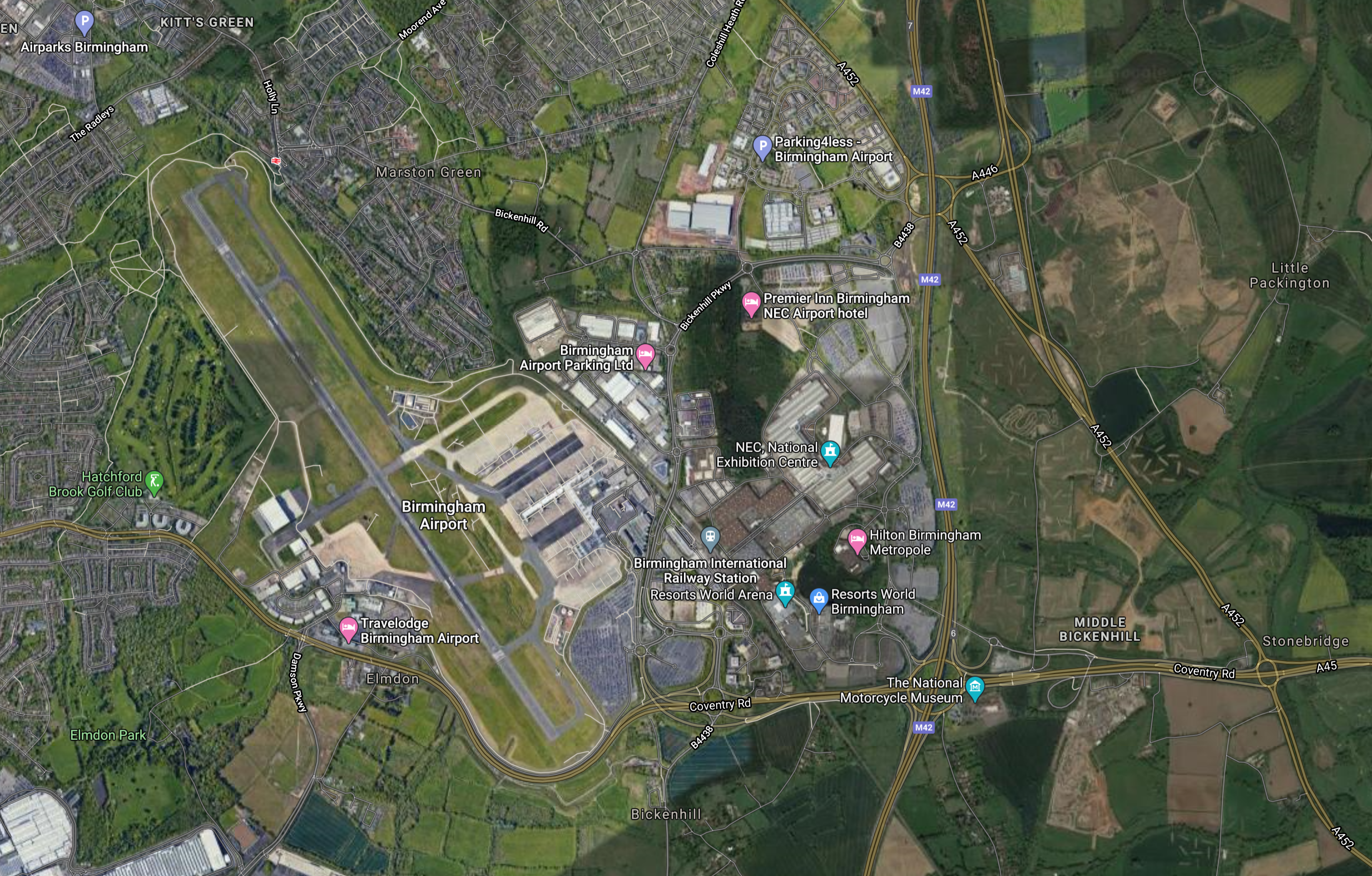
Note the M42 motorway passing North-South to the East of the Airport.
Could Birmingham Airport develop towards Birmingham Interchange and High Speed Two?
It is worth looking at the distance to other airports.
- Aberdeen – 328 miles
- Amsterdam – 280 miles
- Dublin – 199 miles
- Frankfurt – 478 miles
- Geneva – 558 miles
- Paris – 304 miles
All could be within range of an electric aircraft like the under-development Eviation Alice.
I believe that large airports will develop low-noise zero-carbon secondary runways.
Birmingham Airport is well-situated to take advantage.
Adding A Second Track Between Leamington Spa And Coventry
This section of track is about ten miles long, with probably under half only single-track.
This Google Map shows the single-track through the new Kenilworth station.

And these are pictures I took soon after the station opened.



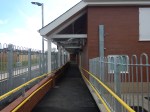
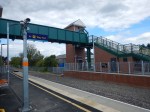
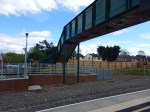
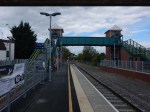
It is certainly one of the best of the current crop of new small stations.
I don’t think that adding a second track will be the most challenging of projects.
It should be noted that the Leamington Spa and Nuneaton service could be a candidate for a battery electric train.
- The route is twenty miles long
- Nuneaton and Coventry stations are fully electrified.
- There might be possibilities to extend this service at either or both ends.
- Nuneaton and Leicester are nineteen miles apart and a new Nuneaton Parkway station is proposed for the route. I wrote about this station in New Railway Station Between Hinckley And Nuneaton Receives Backing.
- Leamington Spa and Stratford-upon-Avon are fifteen miles apart and would need a reverse at Leamington Spa.
A battery electric train might give a faster and more passenger-friendly service, if the passenger numbers and forecasts would support an extended service.
A Birmingham Moor Street And Oxford Service
This Google Map shows Birmingham Moor Street station.
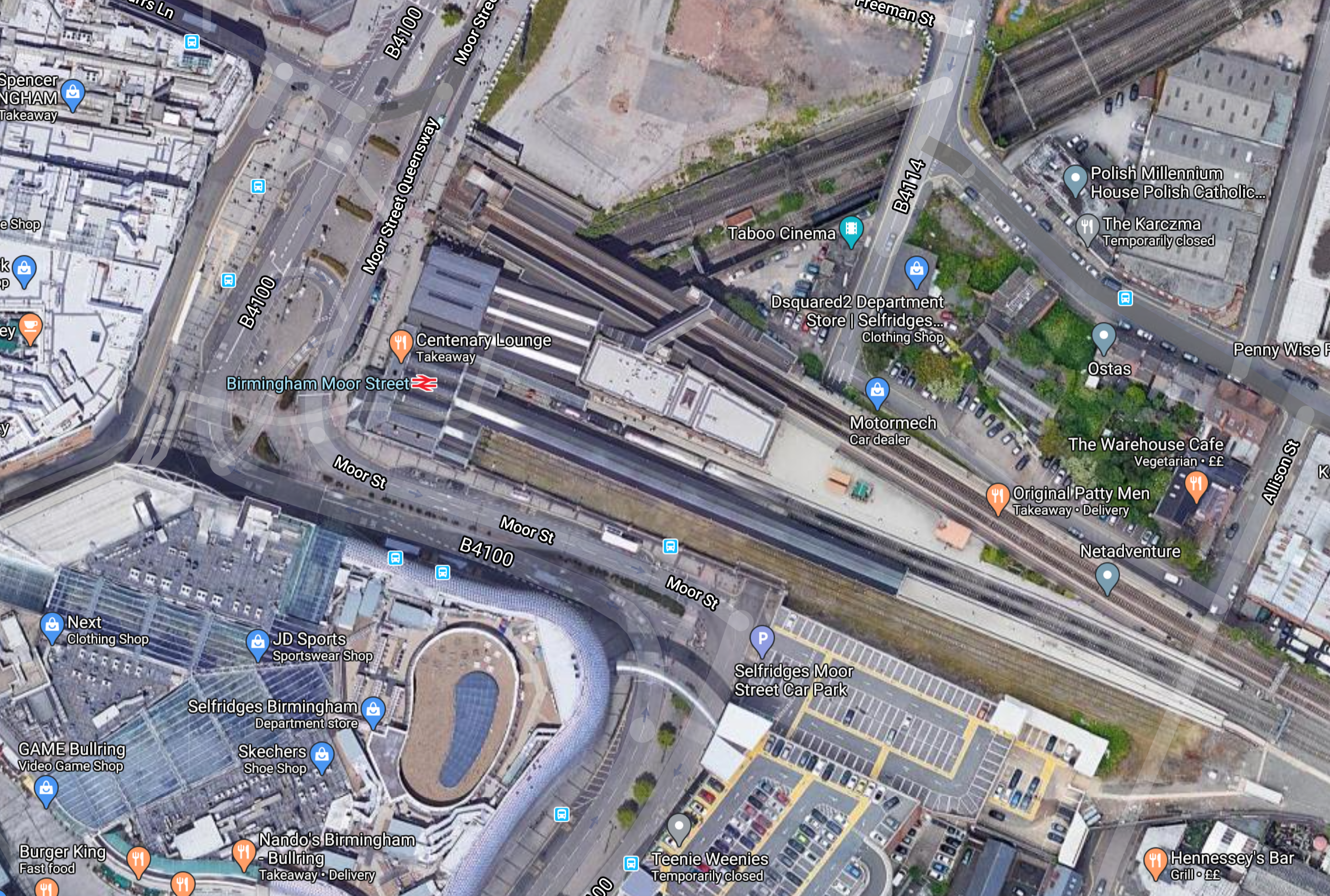
Note.
- The two Northern through platforms on the Snow Hill Lines, that continue under Birmingham to Birmingham Snow Hill station.
- At least two, but possibly three bay platforms, that can take Chiltern Railway’s longest trains.
- There is more space for possibly another two bay platforms to be reinstated or built.
Birmingham Moor Street station will also be a short walk from High Speed Two’s Birmingham Curzon Street station.
This Google Map shows Oxford station.
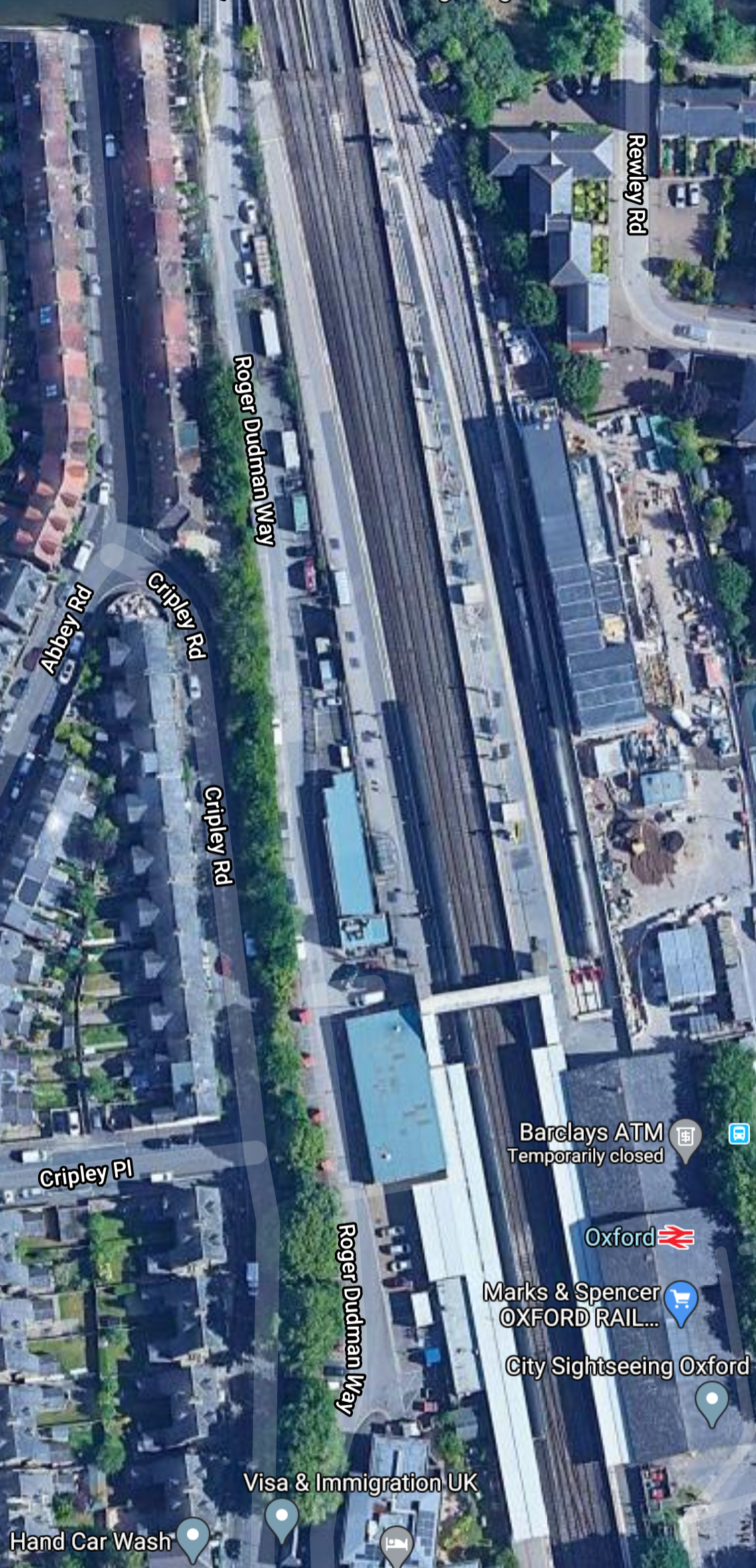
Note.
- Birmingham Moor Street station is to the North via Banbury and Warwick Parkway stations.
- The two long through platforms capable of taking a nine-car train.
- There are two bay platforms to the East of the two through platforms, at the Northern end of the station.
- The bay platforms handle Chiltern’s services from London Marylebone and could also handle the proposed service to Birmingham Moor Street.
Consider this about the proposed Birmingham Moor Street and Oxford service.
- The service could stop at Solihull, Warwick Parkway, Warwick, Leamington Spar and Banbury, as was thought necessary.
- I estimate that Birmingham Moor Street and Oxford are 66 miles apart and that a 100 mph train would take around 66 minutes.
- Birmingham Moor Street and Banbury are 43 miles apart.
- Oxford and Banbury are 23 miles apart.
With these timings and a few minutes to reverse at each end of the route, I would estimate that a 2.5 hour round trip would be possible.
But, I also think, that with charging facilities or short lengths of electrification at Birmingham Moor Street, Banbury and Oxford stations, this service could be run by battery electric trains.
- A three hour round trip should be possible.
- Three trains would be needed to provide an hourly service.
- Oxford, Banbury, Leamington Spa and Warwick would have a direct connection to High Speed Two.
It should also be noted
- Birmingham Moor Street and Stratford-upon-Avon stations are only 25 miles apart and the journey rakes 46 minutes
- Banbury and Stratford-upon-Avon are 35 miles apart. and the journey takes 57 minutes.
- Leamington Spa and Nuneaton are 20 miles apart and the journey takes 36 minutes.
There would appear to be tremendous potential for battery electric services between Birmingham and Oxford.
How many tourists would a Birmingham and Oxford service via Stratford-upon-Avon attract?
Improving The Reading And Newcastle Service
Currently, this is a one tph service between Reading and Newcastle stations.
- It is run by CrossCountry.
- Intermediate stops include Oxford, Banbury, Leamington Spa, Birmingham New Street, Derby, Sheffield, Doncaster, York, Darlington and Durham.
- It appears that the full journey takes four-and-a-half hours.
It looks like to run a two tph service would need as many as twenty trains.
There is an alternative route after High Speed Two opens.
- High Speed Two – Newcastle and Birmingham Curzon Street – 118 minutes
- Walk – Curzon Street and New Street – 10 minutes
- CrossCountry – Birmingham New Street and Reading – 90 minutes
This saves about forty-five minutes.
You could even do a double change.
- High Speed Two – Newcastle and East Midlands Hub – 96 minutes
- High Speed Two – East Midlands Hub and Birmingham Interchange – 17 minutes
- Walk – Birmingham Interchange and Birmingham International – 10 minutes
- CrossCountry – Birmingham International and Reading – 78 minutes
This gives a time of around three hours and twenty minutes.
High Speed Two certainly saves time.
But look at this map clipped from the High Speed Two web site.
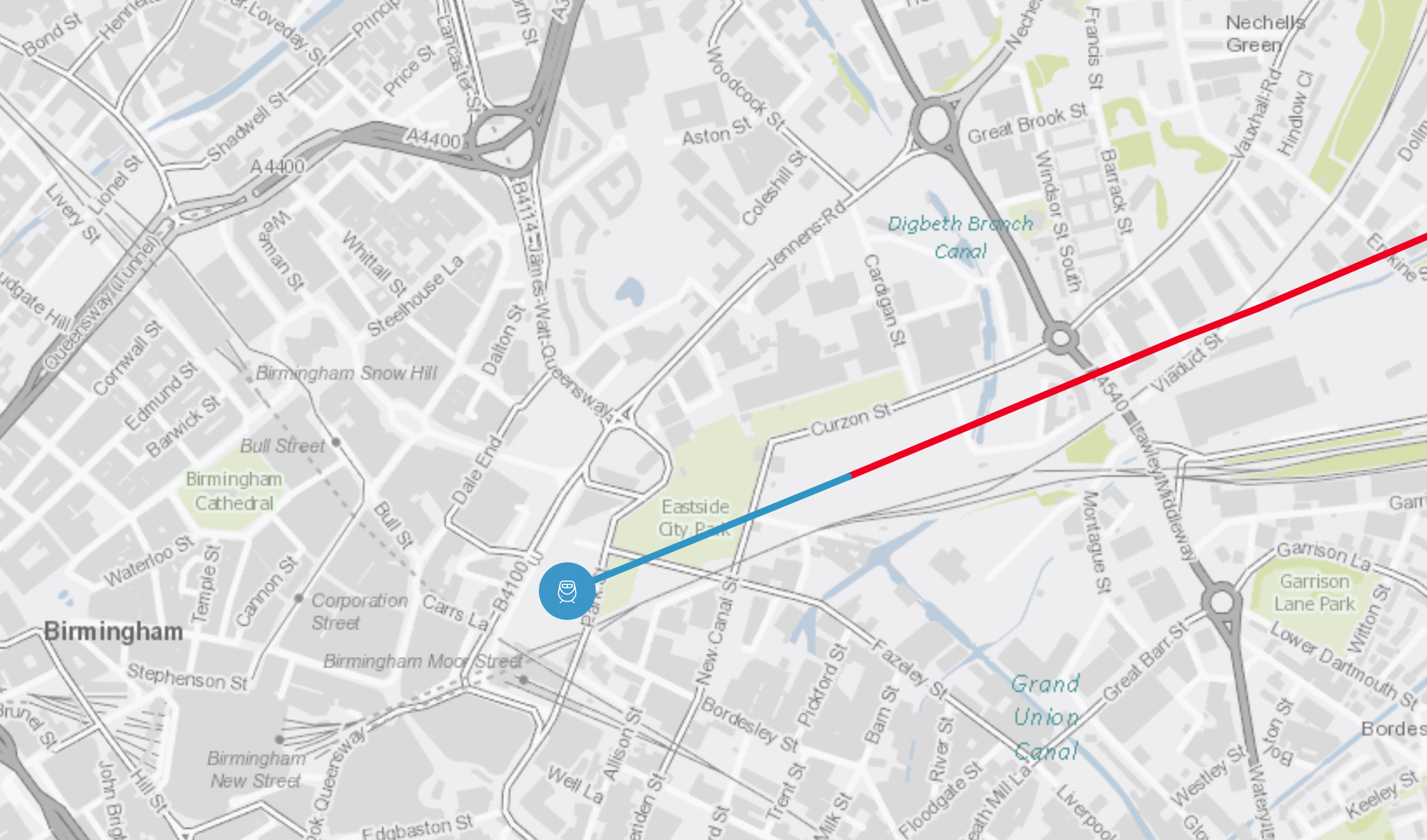
Note.
- The blue dot shows the location of Curzon Street station.
The West Coast Main Line running into New Street station, is just to the South of Curzon Street station.
New Street station can be picked out to the West of Curzon Street station.
This Google Map shows a close-up of the current Curzon Street station site.
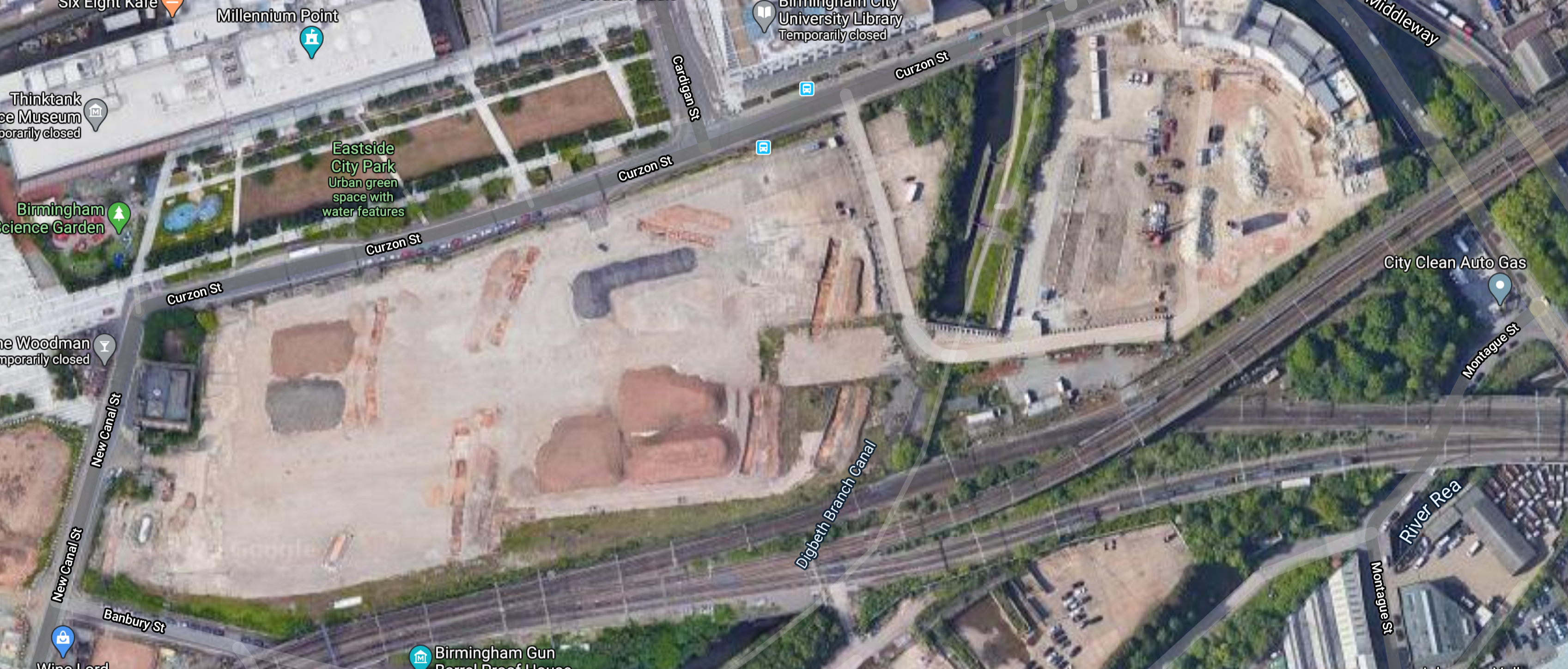
The same pattern of rail lines going past the Curzon Street site into New Street station can be picked out.
Surely, a connection could be made to allow trains from a couple of platforms in Curzon Street station to terminate trains from the West Coast Main Line.
To improve services between Newcastle and Reading, trains would do the following.
- Run on the current East Coast Main Line infrastructure between Newcastle and York. Station stops could be Durham, Darlington and York.
- Switch to new High Speed Two infrastructure South of York.
- Run on High Speed Two infrastructure to Birmingham Curzon Street station. Station stops could be Sheffield, Chesterfield and East Midlands Hub.
- The train would reverse at Birmingham Curzon Street station.
- Switch to the West Coast Main Line outside Birmingham Curzon Street station.
- Run on the West Coast Main Line to Birmingham International station.
- Take the route currently used by CrossCountry between Birmingham International and Reading. Station stops could be Leamington Spa, Warwick Parkway, Banbury and Oxford stations.
Timings would be as follows.
- Newcastle and Birmingham Curzon Street – 118 minutes – From High Speed Two web site.
- Birmingham Curzon Street and Reading – 90 minutes – Current CrossCountry timing.
Note.
- This saves about an hour over the current CrossCountry timings.
- It could use classic-compatible High Speed Two trains.
- Between Birmingham Curzon Street and Newcastle, it follows the same route as one of the current proposed High Speed Two services.
- The service could be extended to Edinburgh from Newcastle.
- The service could be extended to Southampton from Reading
- As there are only twelve tph planned to be running on the Eastern leg of High Speed Two, against a total capacity of eighteen tph, it should be possible to accommodate the extra service or services.
This would surely be a very useful High Speed Two service.
Conclusion
It is a comprehensive package of measures, some of which could have a high cost benefit ratio.
Electrifying Wales
I would not be surprised to learn that Wales wants to decarbonise their railways.
At present, Wales only has the following electrified railways either in operation or under construction.
- The South Wales Main Line between the Severn Tunnel and Cardiff.
- The South Wales Metro based on local railways around Cardiff and Newport is being created and will be run by electric trains.
There is no more electrification planned in the future.
Hitachi’s Specification For Battery Electric Trains
Recently, Hitachi have released this infographic for their Regional Battery Train.

This gives all the information about the train and a definitive range of 90 km or 56 miles.
The Welsh Rail Network
If you look at the network of services that are run by Transport for Wales Rail Services, they connect a series of hub stations.
Major hubs include the following stations.
- Cardiff Central – Electrified
- Chester
- Hereford
- Shrewsbury
- Swansea
Smaller hubs and termini include the following stations.
- Aberystwyth
- Birmingham International – Electrified
- Birmingham New Street – Electrified
- Blaenau Ffestiniog
- Carmarthen
- Crewe – Electrified
- Fishguard Harbour
- Hereford
- Holyhead
- Llandudno Junction
- Manchester Airport – Electrified
- Manchester Piccadilly – Electrified
- Machynlleth
- Milford Haven
- Newport – Electrified
- Pembroke Dock
Running Welsh Routes With Electric Trains
These routes make up the Welsh rail network.
Chester And Crewe
Consider.
- The route between Chester and Crewe is without electrification.
- Crewe and Chester are 21 miles apart.
I believe that if a battery-electric train, with a range of 56 miles, can leave Chester and Crewe with full batteries, that it will be possible to run between Chester and Crewe stations.
Chester And Holyhead via Llandudno Junction
Consider.
- All services between Llandudno Junction and England call at Chester.
- All services running to and from Holyhead call at Llandudno Junction.
- The route between Chester and Holyhead is without electrification.
- Chester and Llandudno Junction are 54 miles apart.
- Llandudno Junction and Holyhead are 40 miles apart.
I believe that if a battery-electric train with a range of 56 miles can leave Chester, Llandudno Junction and Holyhead with full batteries, that it will be possible to run between Chester and Holyhead stations.
Chester And Liverpool Lime Street
Consider.
- The route between Runcorn and Liverpool Lime Street is electrified.
- The route between Chester and Runcorn is without electrification.
- Chester and Runcorn are 14 miles apart.
I believe that if a battery-electric train, with a range of 56 miles, can leave Chester and Runcorn with full batteries, that it will be possible to run between Chester and Liverpool Lime Street stations.
Chester And Manchester Airport
Consider.
- The route between Warrington Bank Quay and Manchester Airport is electrified.
- The route between Chester and Warrington Bank Quay is without electrification.
- Chester and Warrington Bank Quay are 18 miles apart.
I believe that if a battery-electric train, with a range of 56 miles, can leave Chester and Warrington Bank Quay with full batteries, that it will be possible to run between Chester and Manchester Airport stations.
Chester And Shrewsbury
Consider.
- The route between Chester and Shrewsbury is without electrification.
- Chester and Shrewsbury are 42 miles apart.
I believe that if a battery-electric train with a range of 56 miles, can leave Shrewsbury and Chester with full batteries, that it will be possible to run between Chester and Shrewsbury stations.
Llandudno And Blaenau Ffestiniog
Consider.
- The route between Llandudno and Blaenau Ffestiniog is without electrification.
- Llandudno and Blaenau Ffestiniog are 31 miles apart.
I believe that if a battery-electric train with a range of 56 miles, can leave Llandudno and Blaenau Ffestiniog with full batteries, that it will be possible to run between Llandudno and Blaenau Ffestiniog stations.
Machynlleth And Aberystwyth
Consider.
- The route between Machynlleth and Aberystwyth is without electrification.
- Machynlleth and Aberystwyth are 21 miles apart.
I believe that if a battery-electric train with a range of 56 miles, can leave Machynlleth and Aberystwyth with full batteries, that it will be possible to run between Machynlleth and Aberystwyth stations.
Machynlleth And Pwllheli
Consider.
- The route between Machynlleth and Pwllheli is without electrification.
- Machynlleth and Pwllheli are 58 miles apart.
I believe that if a battery-electric train with a range of upwards of 58 miles, can leave Machynlleth and Pwllheli with full batteries, that it will be possible to run between Machynlleth and Pwllheli stations.
Machynlleth And Shrewsbury
Consider.
- The route between Machynlleth and Shrewsbury is without electrification.
- Machynlleth and Shrewsbury are 61 miles apart.
I believe that if a battery-electric train with a range of upwards of 61 miles, can leave Machynlleth and Shrewsbury with full batteries, that it will be possible to run between Machynlleth and Shrewsbury stations.
Shrewsbury and Birmingham International
Consider.
- The route between Birmingham International and Wolverhampton is electrified.
- The route between Shrewsbury and Wolverhampton is without electrification.
- Shrewsbury and Wolverhampton are 30 miles apart.
I believe that if a battery-electric train, with a range of 56 miles, can leave Shrewsbury and Wolverhampton with full batteries, that it will be possible to run between Shrewsbury and Birmingham International stations.
Shrewsbury And Cardiff Central via Hereford
Consider.
- All services between Cardiff Central and Shrewsbury call at Hereford.
- The route between Cardiff Central and Newport is electrified.
- The route between Newport and Shrewsbury is without electrification.
- Shrewsbury and Hereford are 51 miles apart.
- Hereford and Newport are 44 miles apart.
I believe that if a battery-electric train, with a range of 56 miles, can leave Shrewsbury, Hereford and Newport with full batteries, that it will be possible to run between Shrewsbury and Cardiff Central stations.
Shrewsbury And Crewe
- The route between Shrewsbury and Crewe is without electrification.
- Shrewsbury and Crewe are 33 miles apart.
I believe that if a battery-electric train with a range of upwards of 61 miles, can leave Shrewsbury and Crewe with full batteries, that it will be possible to run between Shrewsbury and Crewe stations.
Shrewsbury and Swansea
Consider.
- The Heart of Wales Line between Shrewsbury and Swansea is without electrification.
- Shrewsbury and Swansea are 122 miles apart.
- Trains cross at Llandrindod and wait for up to eleven minutes, so there could be time for a charge.
- Shrewsbury and Llandrindod are 52 miles apart.
- Swansea and Llandrindod are 70 miles apart.
It appears that another charging station between Swansea and Llandrindod is needed
I believe that if a battery-electric train, with a range of 56 miles, can leave Shrewsbury, Swansea and the other charging station, with full batteries, that it will be possible to run between Shrewsbury and Swansea stations.
Swansea And Cardiff Central
Consider.
- The route between Swansea and Cardiff Central is without electrification.
- Swansea and Cardiff Central are 46 miles apart.
I believe that if a battery-electric train, with a range of 56 miles, can leave Swansea and Cardiff Central with full batteries, that it will be possible to run between Swansea and Cardiff Central stations.
Swansea And Carmarthen
Consider.
- The route between Swansea and Carmarthen is without electrification.
- Swansea and Carmarthen are 31 miles apart.
I believe that if a battery-electric train, with a range of 56 miles, can leave Swansea and Carmarthen with full batteries, that it will be possible to run between Swansea and Carmarthen stations.
Swansea And Fishguard Harbour
Consider.
- The route between Swansea and Fishguard Harbour is without electrification.
- Swansea and Fishguard Harbour are 73 miles apart.
- Tramins could top up the batteries during the reverse at Carmathen.
- Swansea and Carmarthen are 31 miles apart.
- Carmarthen and Fishguard Harbour are 42 miles apart.
I believe that if a battery-electric train, with a range of 56 miles, can leave Swansea, Carmathen and Fishguard Harbour with full batteries, that it will be possible to run between Swansea and Fishguard Harbour stations.
Swansea And Milford Haven
Consider.
- The route between Swansea and Milford Haven is without electrification.
- Swansea and Milford Haven are 72 miles apart.
- Tramins could top up the batteries during the reverse at Carmathen.
- Swansea and Carmarthen are 31 miles apart.
- Carmarthen and Milford Haven are 41 miles apart.
I believe that if a battery-electric train, with a range of 56 miles, can leave Swansea, Carmathen and Milford Haven with full batteries, that it will be possible to run between Swansea and Milford Haven stations.
Swansea And Pembroke Dock
Consider.
- The route between Swansea and Pembroke Dock is without electrification.
- Swansea and Pembroke Dock are 73 miles apart.
- Tramins could top up the batteries during the reverse at Carmathen.
- Swansea and Carmarthen are 31 miles apart.
- Carmarthen and Pembroke Dock are 42 miles apart.
I believe that if a battery-electric train, with a range of 56 miles, can leave Swansea, Carmathen and Pembroke Dock with full batteries, that it will be possible to run between Swansea and Pembroke Dock stations.
Other Routes
I have not covered these routes.
- Borderlands Line
- Cardiff Valley Lines, that will be part of the South Wales Metro
- Routes on the electrified South Wales Main Line, that are to the East of Cardiff.
The first will run between Chester and the electrified Merseyrail system and the others will be electrified, except for short stretches.
Stations Where Trains Would Be Charged
These stations will need charging facilities.
Aberystwyth
Aberystwyth station only has a single terminal platform.
I’ve not been to the station, but looking at pictures on the Internet, I suspect that fitting a charging facility into the station, wouldn’t be the most difficult of engineering problems.
Birmingham International
Birmingham International station is fully-electrified and ready for battery-electric trains.
Blaenau Fflestiniog
Blaenau Ffestiniog station has a single terminal platform.
My comments would be similar to what, I said for Aberystwyth station. I would hope a standard solution can be developed.
Cardiff
Cardiff station is fully-electrified and ready for battery-electric trains.
Chester
Chester station has two through platforms and one bay platform, that are used by Trains for Wales.
- The through platforms are bi-directional.
- The bay platform is used by services from Liverpool Lime Street and Manchester Airport and Piccadilly.
- The station is a terminus for Merseyrail’s electric trains, which use 750 VDC third-rail electrification.
- Some through services stop for up to seven minutes in the station.
This Google Map shows the station.
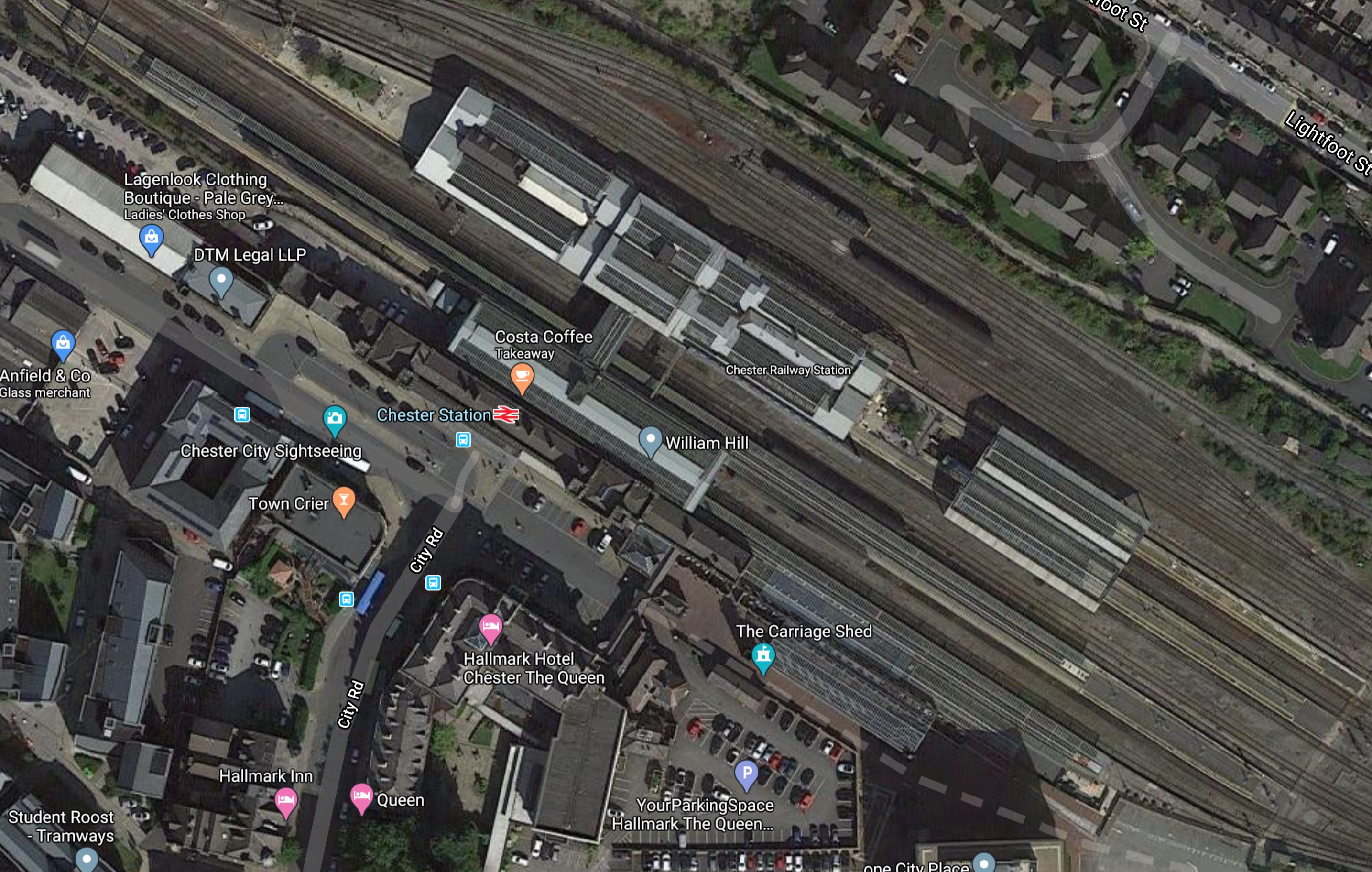
There is plenty of space.
The simplest way to charge trains at Chester would be to electrify the two through platforms 3 and 4 and the bay platform 1.
I would use 750 VDC third-rail, rather than 25 KVAC overhead electrification.
- I’m an engineer, who deals in scientifically-correct solutions, not politically-correct ones, devised by jobsworths.
- Maintenance staff at the station will be familiar with the technology.
- Station staff and passengers will know about the dangers of third-rail electrification.
- Trains connect and disconnect automatically to third-rail electrification.
- Trains don’t have to stop to connect and disconnect, so passing trains can be topped-up.
- Hitachi with the Class 395 train and Alstom with the Class 373 train, have shown even trains capable of 140 mph can be fitted with third-rail shoes to work safely at slower speeds on lines electrified using third-rail.
- Modern control systems can control the electricity to the third-rail, so it is only switched on, when the train completes the circuit.
I have a vague recollection, that there is an avoiding line at Chester station, so trains can go straight through. Perhaps that should be electrified too.
Carmarthen
Carmarthen station is a two platform station, with a rather unusual layout, that I wrote about in Changing Trains At Carmarthen Station.
I took these pictures when I passed through in 2016.



Note the unusual step-free crossing of the tracks.
This Google Map shows the layout at the station.
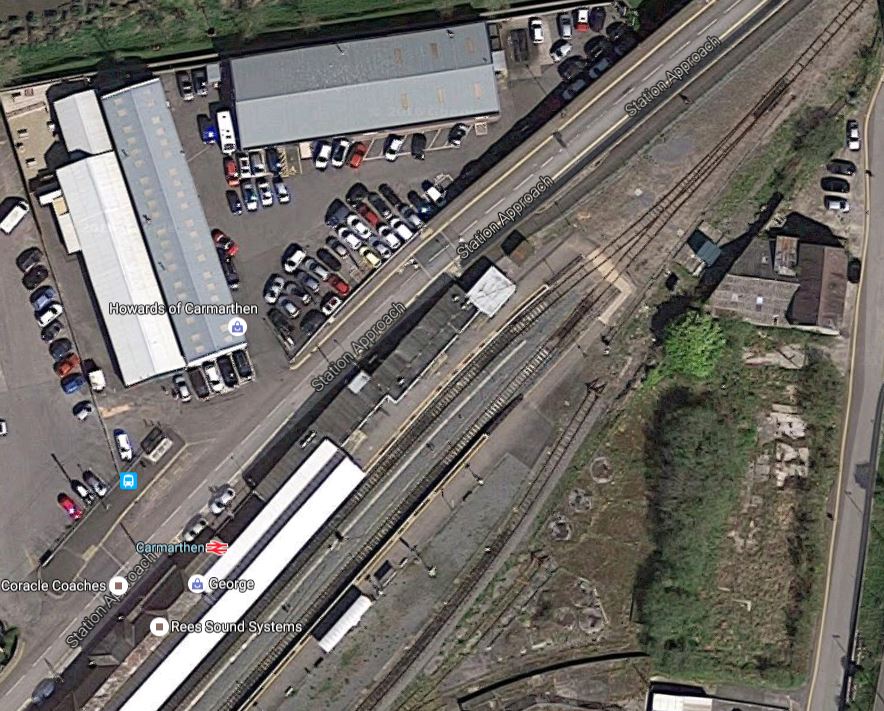
I believe it is another station, where third-rail electrification could be the solution.
- Most trains seem to reverse at the station, which gives time for a full charge.
- Others terminate here.
but would they still allow passengers to cross the line as they do now, whilst trains are being charged?
Crewe
Crewe station is fully-electrified.
- Trains for Wales seem to use Platform 6 for through trains and the bay Platform 9 for terminating trains.
- Both platforms appear to be electrified.
- Terminating trains appear to wait at least 9-11 minutes before leaving.
It does appear that Crewe station is ready for battery-electric trains.
Fishguard Harbour
Fishguard Harbour station only has a single terminal platform.
My comments would be similar to what, I said for Aberystwyth station. I would hope a standard solution can be developed.
Hereford
Hereford station has four through platforms.
This Google Map shows the station.
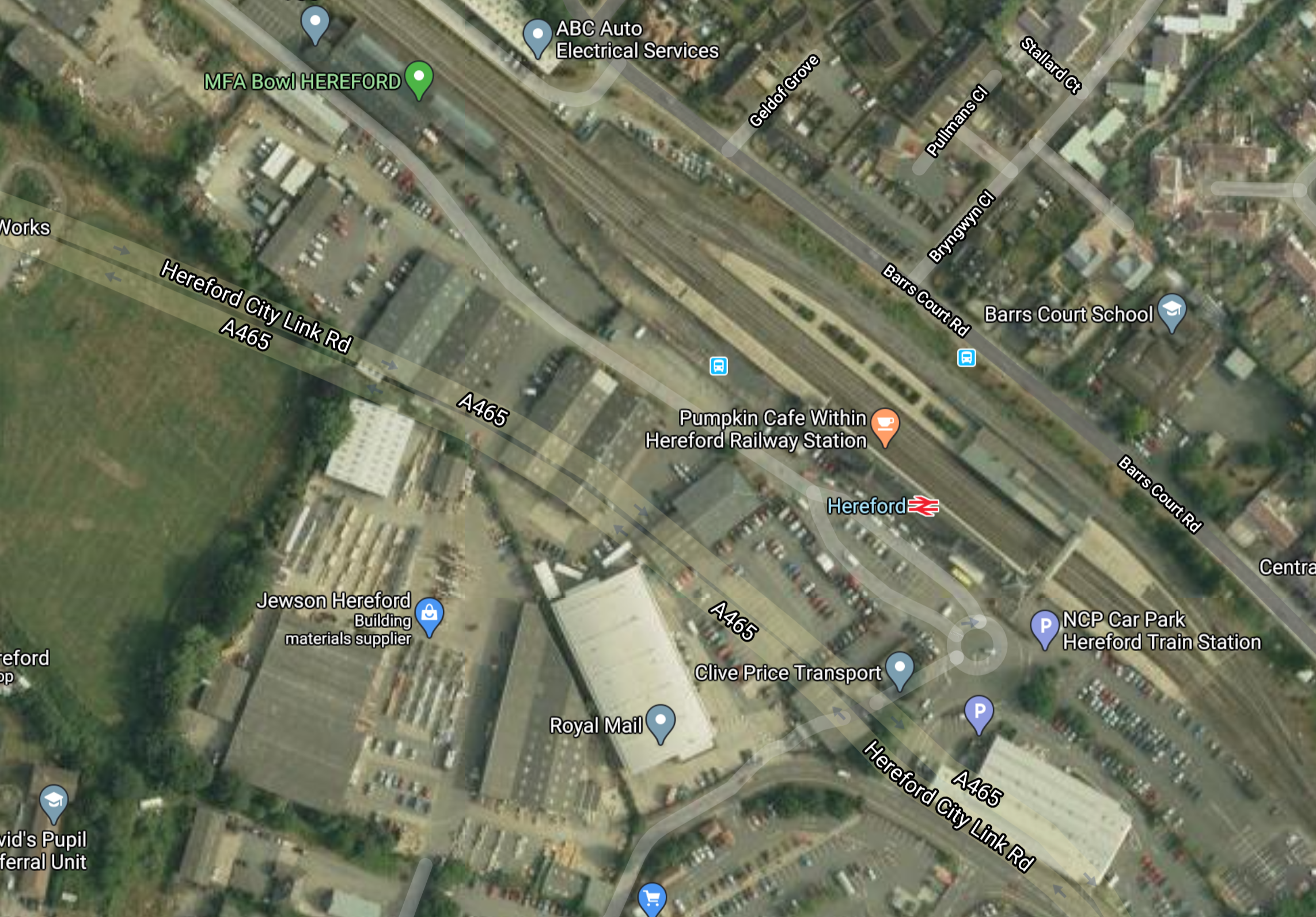
There is plenty of space.
As with Chester, I would electrify this station with 750 VDC third-rail equipment.
But the electrification wouldn’t be just for train services in Wales.
- West Midlands Trains, run an hourly service to Birmingham New Street and there is only a forty-one mile gap in the electrification between Hereford and Bromsgrove.
- Great Western Railway’s service to London, has a massive ninety-six mile run to the electrification at Didcot Junction, which could be bridged by installing charging facilities at Worcestershire Parkway and/or Honeybourne stations.
Both services have generous turnround times at Hereford, so would be able to leave fully-charged.
Distances from Hereford station are as follows.
- Abergavenny – 24 miles
- Bromsgrove – 41 miles
- Great Malvern – 21 miles
- Honeybourne – 48 miles
- Ludlow – 13 miles
- Newport – 44 miles
- Shrewsbury – 51 miles
- Worcester Parkway – 33 miles
Hereford station could be a serious battery-electric train hub.
Holyhead
Holyhead station has three terminals platforms.
My comments would be similar to what, I said for Aberystwyth station. I would hope a standard solution can be developed.
Liverpool Lime Street
Liverpool Lime Street station is fully-electrified and ready for battery-electric trains.
Llandrindod
Llandrindod station has two through platforms.
I took these pictures at the station as I passed through in 2016.



The Heart of Wales Line is certainly a route, that would benefit from larger trains. Zero-carbon battery-electric trains would surely fit well in the area.
This Google Map shows the station.
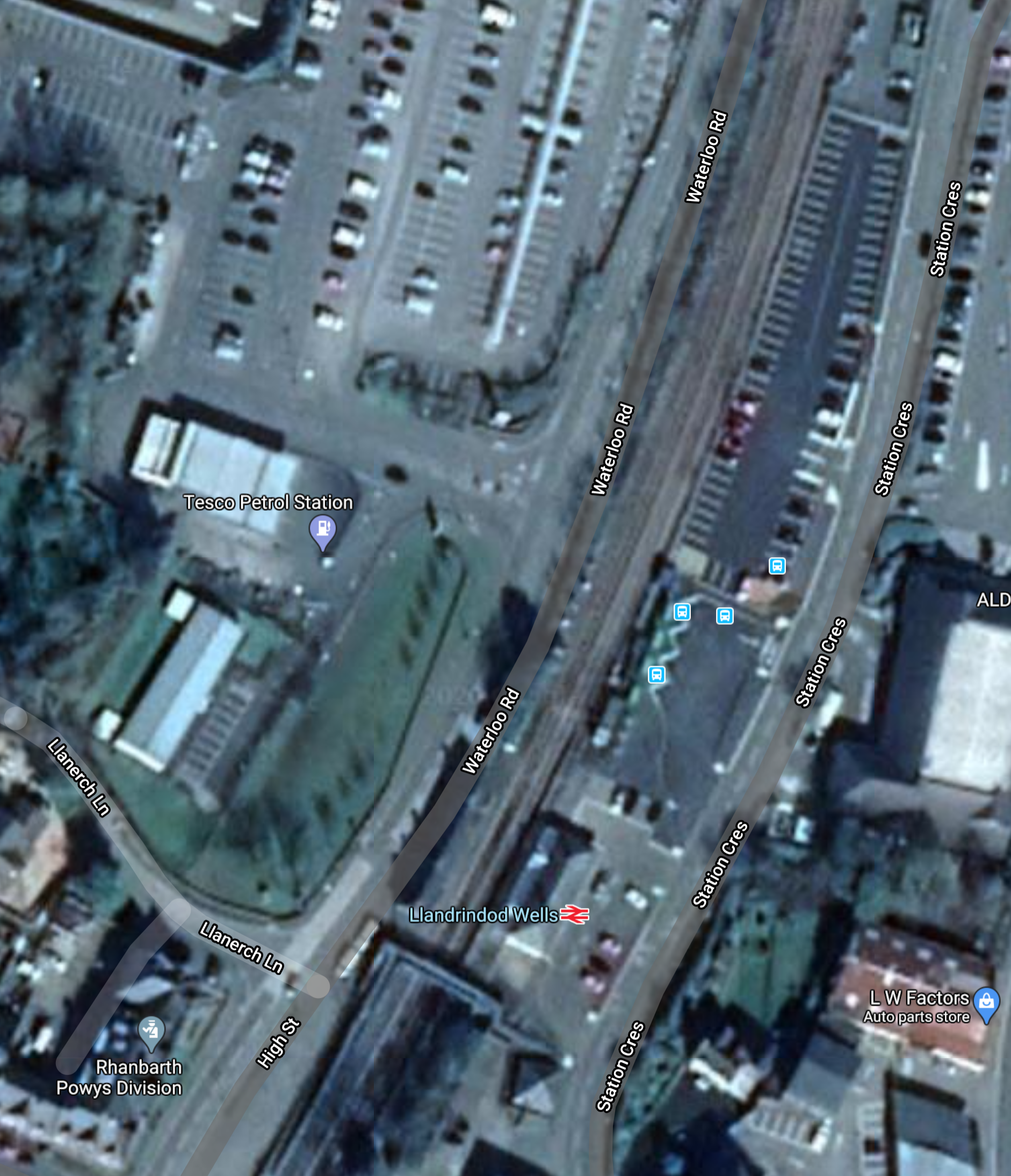
It would appear that, it is another station, that could be fitted with third-rail electrification to charge the trains.
Distances from Llandrindod station are as follows.
- Shrewsbury – 52 miles
- Llandovery – 27 miles
- Llanelli – 59 miles
- Swansea – 70 miles
It would appear that a second station with charging facilities or bigger batteries are needed.
Llandudno Junction
Llandudno Junction station has four platforms.
This Google Map shows the station.
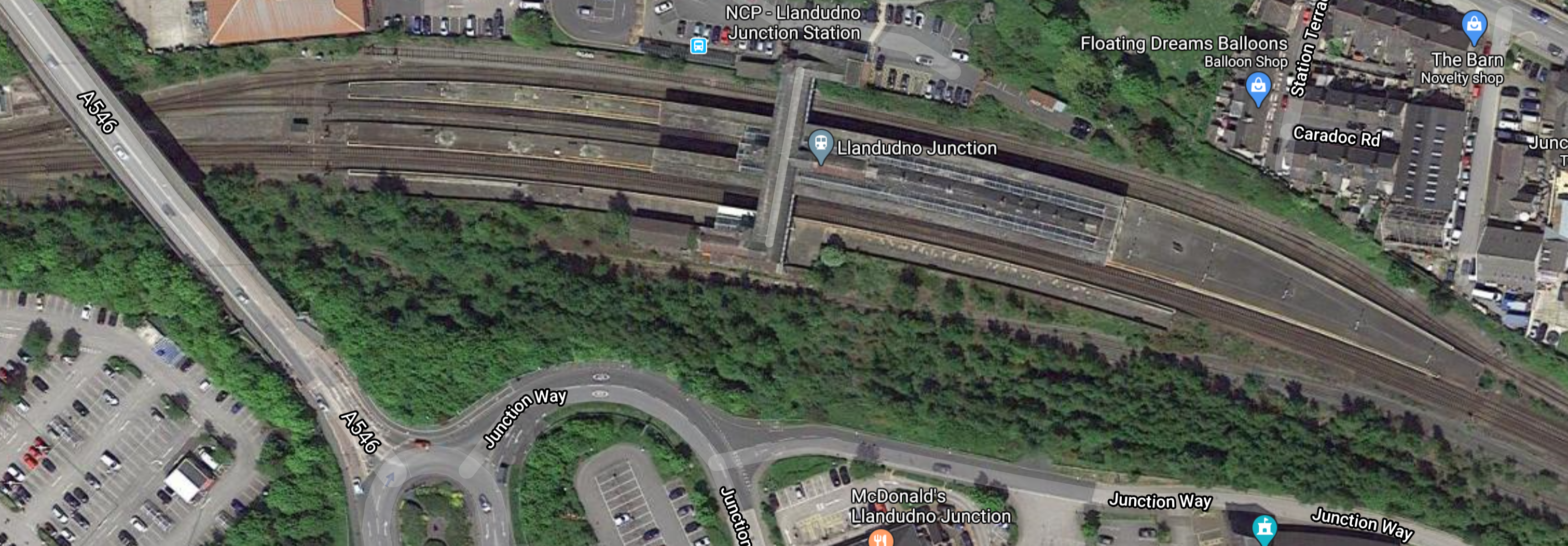
There is plenty of space.
As at Chester, the simple solution would be to electrify the platforms used by trains, that will need charging.
Butb there may also be a wider plan.
Llandudno Junction station is at the Western end of a string of five closely-spaced stations with Prestatyn station in the East.
- Llandudno Junction and Prestatyn are eight miles apart.
- Trains take twenty-three minutes to pass through this section.
- Some trains do a detour to Llandudno station before continuing.
- For part of the route, the railway lies between the dual-carriageway A55 road and the sea.
So why not electrify this section of railway between Llandudno Junction and Prestatyn stations?
- Either 750 VDC this-rail or 25 KVAC overhead electrification could be used.
- Prestatyn and Chester are 46 miles apart.
- Llandudno Junction and Holyhead are 40 miles apart.
If third-rail electrification were to be used, it might be advantageous to electrify to Llandudno station.
- It would be less intrusive.
- It would be quieter in an urban area.
- It would give the trains to Blaenau Ffestiniog trains a good charge.
But above all third-rail electrification might cost a bit less and cause less disruption to install.
Machynlleth
Machynlleth station is where the Aberystwyth and Pwllheli services split and join.
This Google Map shows the station.
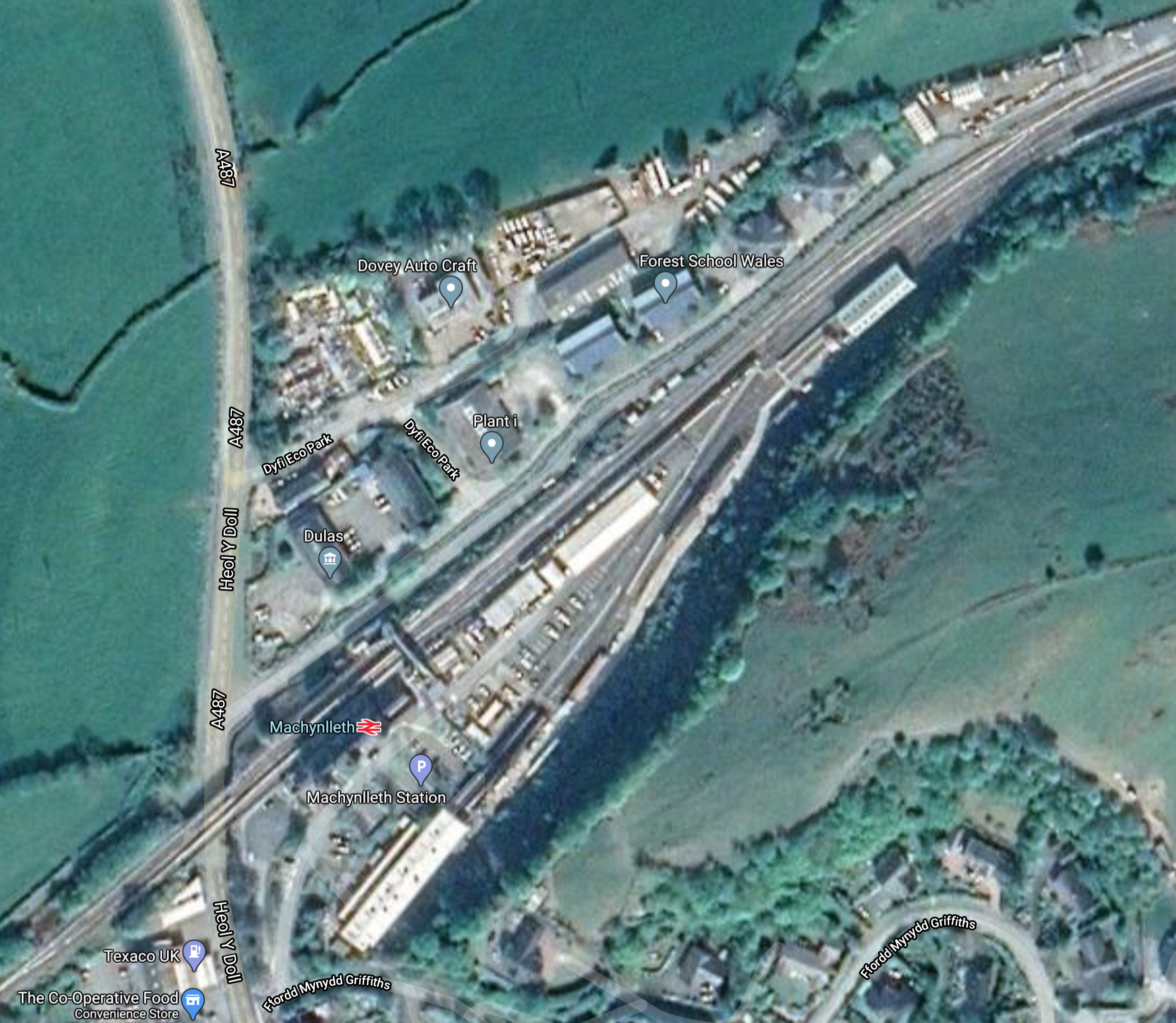
Consider.
- There is a train depot by the station.
- Will there be a good power supply at the station to charge the trains?
- Machnylleth and Pwllhelli are 58 miles apart.
- Machynlleth and Shrewsbury are 61 miles apart.
I think that Machynlleth might be pushing things too far, without extra stations with charging facilities.
One solution might be to develop the Riding Sunbeams concept and electrify the route between Newtown and Dovey Junction via Machynlleth, using third-rail technology powered-by solar or wind power.
Another solution would be batteries with a larger capacity.
Manchester Airport
Manchester Airport station is fully-electrified and ready for battery-electric trains.
Manchester Piccadilly
Manchester Piccadilly station is fully-electrified and ready for battery-electric trains.
Milford Haven
Milford Haven station only has a single terminal platform.
My comments would be similar to what, I said for Aberystwyth station. I would hope a standard solution can be developed.
Pembroke Dock
Pembroke Dock station only has a single terminal platform.
My comments would be similar to what, I said for Aberystwyth station. I would hope a standard solution can be developed.
Pwllheli
Pwhelli station is a only has a single terminal platform.
This Google Map shows the location of the station.
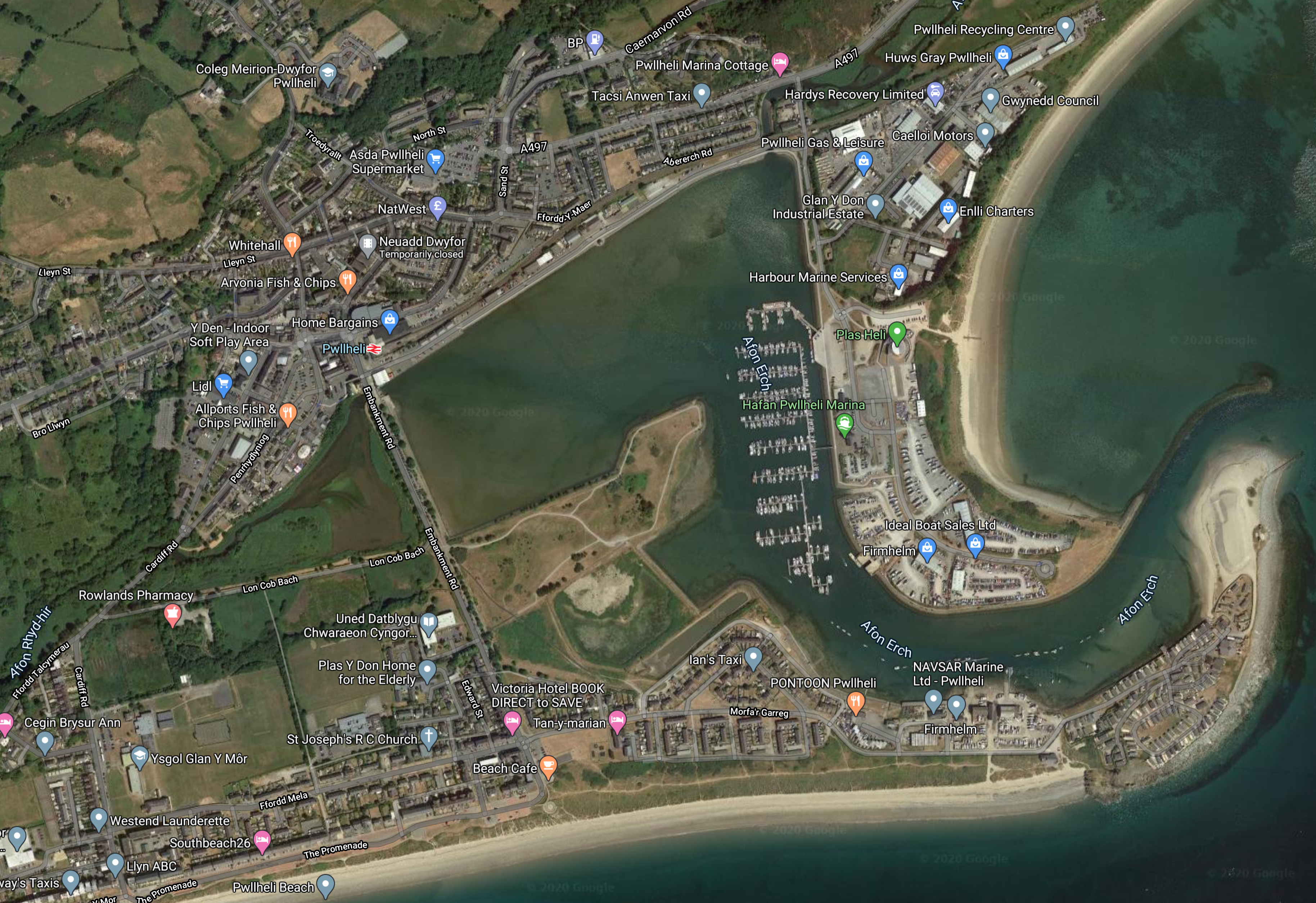
The stsation is at the North West corner of the bay.
My first reaction, when I saw this was that I have to go.
So I took a closer look at the station instead.

I suspect that fitting a charging facility into the station, wouldn’t be the most difficult of engineering problems. Although, there might be a problem getting a good enough connection to the National Grid.
Shewsbury
Shrewsbury station is a five-platform station.
This Google Map shows the station’s unusual location over the River Severn.
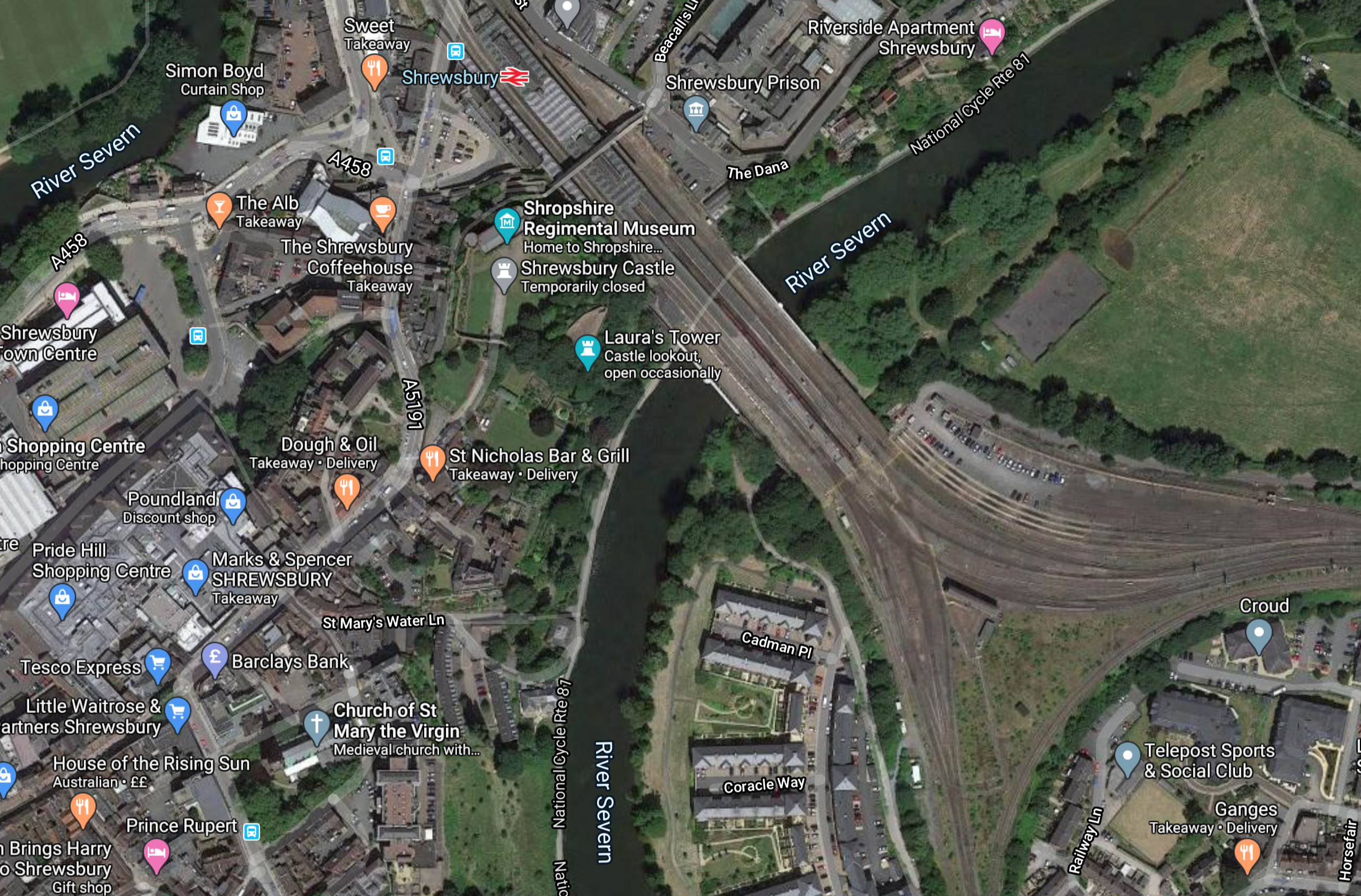
It must be one of few stations in the world, where trains enter the station from three different directions.
- From Crewe and Chester to the North.
- From Hereford and Wales to the South.
- From Birmingham and Wolverhampton in the East.
Adding electrification to all or selected platforms should allow trains to recharge and be on their way.
- Under current timetables, dwell times in Shrewsbury are up to eight minutes.
- I would suspect the train times could be adjusted, so that trains left the station with full batteries.
With battery-electric services to Aberystwyth, Birmingham International, Birmingham New Street, Cardiff Central, Chester, Crewe, Hereford, Holyhead, London Euston, Manchester, Pwllheli and Swansea, it will be a very important station.
Swansea
Swansea station has four terminal platforms.
A charging facility could be added to an appropriate number of platforms.
Or perhaps, the last few miles of track into the station should be electrified, so trains could charge on the way in, charge in the station and charge on the way out.
Third Rail Electrification
I have suggested in this post, that 750 VDC third-rail electrification could be used in several places.
I will repeat what I said earlier, when discussing Chester station.
- I’m an engineer, who deals in scientifically-correct solutions, not politically-correct ones, devised by jobsworths.
- Maintenance staff at the station will be familiar with the technology.
- Station staff and passengers will know about the dangers of third-rail electrification.
- Trains connect and disconnect automatically to third-rail electrification.
- Trains don’t have to stop to connect and disconnect, so passing trains can be topped-up.
- Hitachi with the Class 395 train and Alstom with the Class 373 train, have shown even trains capable of 140 mph can be fitted with third-rail shoes to work safely at slower speeds on lines electrified using third-rail.
- Modern control systems can control the electricity to the third-rail, so it is only switched on, when the train completes the circuit.
Third-rail electrification should be seriously considered.
A Standardised Terminal Solution
In this post, I mentioned that the following stations could be powered by a scandalised solution, as they are all one platform, terminal stations.
- Aberystwyth
- Blaenau Ffestiniog
- Fishguard Harbour
- Holyhead
- Milford Haven
- Pembroke Dock
- Pwllheli
The system might also be applicable at Carmarthen and Swansea.
My view is that Vivarail’s Fast Track charging based on third-rail technology would be ideal. I discussed this technology in Vivarail Unveils Fast Charging System For Class 230 Battery Trains.
Conclusion
With a bit of ingenuity, all train services run by Transport for Wales, can be run with battery-electric trains.
Birmingham-Black Country-Shrewsbury
On the Midlands Connect web site, they have a page, which is entitled Birmingham-Black Country-Shrewsbury.
This is the introductory paragraph.
We’re examining the case to increase services from three to four per hour, made possible by capacity released post-HS2.
They then give the outline of their plans, which can be summed up as follows.
- Services on the corridor are slow and unreliable.
- Network Rail say the service is in danger of acute overcrowding.
- Services will be increased from three trains per hour (tph) to four.
- A direct hourly service from Shrewsbury, Wellington and Telford to London will be introduced.
- Services to Birmingham International will be doubled.
- The economic case will be examined for speeding up services between Shrewsbury and Birmingham from 56 to 45 minutes, via track upgrades and possible electrification.
It seems a safe, and not overly ambitious plan.
These are my thoughts.
Shrewsbury’s Unique Position
These are distances and times from important stations.
- Birmingham International – 51 miles and 83 minutes
- Birmingham New Street – 42.5 miles and 71 minutes
- Chester – 42.5 miles and 53 minutes
- Crewe – 33 miles and 53 minutes
- Hereford – 51 miles and 59 minutes
- Telford – 14 miles and 21 minutes
- Wellington – 10 miles and 13 minutes
- Welshpool – 20 miles and 25 minutes
- Wolverhampton – 30 miles and 50 minutes
In Sparking A Revolution, I quoted this Hitachi-specification for a battery-electric train.
- Range – 55-65 miles
- Performance – 90-100 mph
- Recharge – 10 minutes when static
- Routes – Suburban near electrified lines
- Battery Life – 8-10 years
I can’t see any problem, for a train with this specification being able to reach Shrewsbury from Birmingham International, Birmingham New Street and Crewe on battery power.
In Hitachi Trains For Avanti, I quote an article with the same title in the January 2020 Edition of Modern Railways as saying this.
Hitachi told Modern Railways it was unable to confirm the rating of the diesel engines on the bi-modes, but said these would be replaceable by batteries in future if specified.
I wouldn’t be surprised to see Shrewsbury served from Birmingham and Crewe by fast electric trains, that used battery power. Avanti West Coast certainly seem to have that thought in mind.
Zero Carbon Trains Between Shrewsbury And Wales
It will be a formidable challenge to run battery trains from Shrewsbury to the Welsh destinations.
- Aberystwyth – 81.5 miles
- Cardiff – 107 miles
- Carmarthen – 185 miles
- Holyhead – 133 miles
- Milford Haven – 225 miles
- Swansea – 121.5 miles
Note.
- These are challenging distances for battery-electric trains.
- South Wales destinations served via Newport and Cardiff could use the electrification on the South Wales Main Line.
- Many of these services start from East of Shrewsbury and can use the electrified lines that connects to Birmingham New Street and Manchester Piccadilly.
Unless someone like Riding Sunbeams, makes a breakthrough, I can’t see battery-electric trains running to Welsh destinations from Shrewsbury.
Transport for Wales New Trains
Transport for Wales have ordered seventy-seven new Class 197 trains, and these diesel trains will be used for services through Shrewsbury, mainly on services to Birmingham New Street and Birmingham International stations.
- If these trains are similar to Northern’s Class 195 trains, they will be diesel multiple units with a noisy mechanical transmission.
- I was surprised in these days of global warming that Transport for Wales didn’t buy something more eco-friendly, as they have for South Wales and the services around Chester.
- The transmission of the Class 197 trains has not been disclosed.
Perhaps, CAF are going to do something innovative.
- The CAF Civity is a modular train, with either electric or diesel power options.
- The diesel-powered options use MTU engines.
- A logical development would be to use an MTU Hybrid PowerPack to reduce diesel consumption and emissions.
- This PowerPack would also reduce noise, as it has an electric transmission.
- I wonder, if CAF can raid their parts bin and fit a pantograph, so where 25 KVAC overhead electrification is available, it can be used.
- If CAF can convert a bog standard diesel multiple unit into a hybrid diesel-electric-battery multiple unit, by performing a heart transplant, it is a neat way of keeping new diesel Civities running until a later date.
- Remember that Northern and West Modlands Trains have another seventy-four similar new diesel Civities in operation or on order. With trains having a forty year life, they don’t fit with an early phasing out of diesel.
I have no idea, what is actually happening, but my engineer’s nose tells me to expect a surprise from CAF.
Increasing Birmingham And Shrewsbury Services From Three Trains Per Hour To Four
Four trains per hour or one train every fifteen minutes seems to be a preferred frequency on several UK suburban lines.
These services seem to provide four tph or better on most, if not all of their routes.
- Birmingham Cross-City Line
- London Overground
- Merseyrail
- Tyne and Wear Metro
Four tph seems to be a very handy Turn-Up-And-Go frequency that encourages people to use rail services.
So I am not surprised to see Midlands Connect wanting four tph between Birmingham and Shrewsbury.
Currently, the following services seem to operate between Shrewsbury and Birmingham.
- Avanti West Coast – 2 trains per day (tpd) – Shrewsbury and London Euston via Birmingham New Street and Birmingham International.
- Trains for Wales – 1 train per two hours (tp2h) – Holyhead and Birmingham International via Birmingham New Street.
- Trains for Wales 1 tph – Aberystwyth/Pwllheli and Birmingham International via Birmingham New Street
- West Midlands Trains – 2 tph – Shrewsbury and Birmingham New Street – One semi-fast and one stopper.
Note.
- All services call at Wolverhampton, Telford and Wellington.
- Shrewsbury and Birmingham New Street is a 3.5 tph service.
- Shrewsbury and Birmingham International is a 1.5 tph service.
It relies heavily on services from Trains for Wales, who probably don’t put Shrewsbury and Birmingham services at the top of their priorities.
I remember, when local services in the North-East of London were run by Greater Anglia from Norwich. Moving some services to Transport for London, brought about a large improvement
Quite frankly, the current service is best described as pathetic.
Should Trains for Wales Services Terminate As Shrewsbury?
I suspect some local politicians in Shrewsbury and Birmingham, think it would be best to adopt this sort of strategy.
- All Welsh services terminate at Shrewsbury.
- Birmingham and Shrewsbury mandate West Midlands Trains and Avanti West Coast to provide a frequent service between Shrewsbury and Birmingham.
It might be the way to go, but many travellers from the Marches, would probably want direct connections to Birmingham, Birmingham Airport and in the future High Speed Two.
Introducing A Direct Hourly Service From Shrewsbury, Wellington And Telford To London
On the face of it, it looks like a much needed service to and from Shrewsbury.
- It will be hourly.
- Initially it will use Class 221 diesel multiple units, but these will be replaced with bi-mode Class 805 trains.
- The current infrequent service calls at Watford Junction, Rugby, Coventry, Birmingham International, Birmingham New Street, Sandwell and Dudley, Wolverhampton, Telford Central and Wellington.
- There are also six other stations between Shrewsbury and Wolverhampton, which might like an improved service.
- The service will be run by Avanti West Coast.
There might also be the possibility of using battery power between Wolverhampton and Shrewsbury, which is only thirty miles each way.
But there are other collateral benefits.
- The service increases the frequency between Shrewsbury and Birmingham New Street stations by one tph to 4.5 tph
- The service increases the frequency between Shrewsbury and Birmingham International by one tph to 2.5 tph.
- The service increases the frequency between Wolverhampton and London Euston by one tph.
- The service increases the frequency between Sandwell and Dudley and London Euston by one tph
- The service increases the frequency between Birmingham New Street and London Euston by one tph.
- The service increases the frequency between Birmingham International and London Euston by one tph.
- The new service will provide an hourly quality connection to High Speed Two at Birmingham International for stations between Shrewsbury and Coventry.
- It appears that the Class 390 trains to Birmingham New Street and being replaced by new Class 807 trains, so Birmingham will have three out of four tph, run by new trains.
- The new Shrewsbury service , has a similar calling pattern to that of the current Scottish service through Birmingham. Will it replace that service, when High Speed Two opens?
Note.
- Midlands Connect’s objective of four tph between Shrewsbury and Birmingham has been met.
- Several stations get a better direct service to London.
- Connectivity to High Speed Two is improved.
- Birmingham New Street and London is now a Turn-Up-And-Go frequency of four tph.
- The Class 805 train will also mean that Avanti West Coast could be zero-carbon in Birmingham. Especially, if it used battery power between Wolverhampton and Shrewsbury stations.
The hourly direct service between Shrewsbury and London will make a lot of difference to train services between Shrewsbury and Birmingham.
Avanti’s London Euston and Birmingham New Street Service
Consider.
- There are two tph that terminate in Birmingham New Street station, that take 88-89 minutes, from London Euston
- There is one tph that goes through Birmingham New Street station to Edinburgh, Glasgow, Preston, or Shrewsbury, that takes 82-84 minutes, from London Euston.
- Currently, the two terminating trains are Class 390 trains, whereas the through train can be a Class 221 train as well.
- Through trains are allowed 5-10 minutes to pass through Birmingham New Street.
- Trains that terminate at Birmingham New Street station are allowed 20-30 minutes to arrive and leave.
- Avanti West Coast have said, that they will be running Class 807 trains between London and Birmingham New Street.
It doesn’t seem to be the best use of scarce platform resources in a busy station to park a train there for half-an-hour.
In Will Avanti West Coast’s New Trains Be Able To Achieve London Euston and Liverpool Lime Street In Two Hours?, I came to the conclusion that the Class 807 trains have been designed as simple, fast, lightweight all-electric trains with no heavy batteries, diesel engines or tilt mechanism.
- I think they’ll be able to shave a few minutes on the timings between London Euston and Birmingham New Street station.
- I would suspect that they will match the 82-84 minutes of the through trains
- The ultimate would be if they could do a round trip between London Euston and Birmingham New Street in three hours.
- Two tph run by what would effectively be a London-Birmingham shuttle would need just six trains.
It might mean new methods of manning the trains, to reduce turnround times.
Doubling Of Services Between Shrewsbury And Birmingham International
The hourly direct London and Shrewsbury Avanti West Coast service will raise the current 1.5 tph service between Shrewsbury and Birmingham International to 2.5 tph, so will be a good start.
- Perhaps Trains for Wales could find the missing 0.5 tph.
- West Midlands Trains might be able to squeeze in another train.
But I suspect that the crowded line between Birmingham New Street and Birmingham International is the problem.
Shrewsbury And Birmingham In Forty-Five Minutes
This is the last objective and saving eleven minutes on this route would suggest that the best way would surely be to fully electrify the route.
- Between Wolverhampton and Birmingham International stations is fully electrified.
- Electric trains have faster acceleration and deceleration, so would probably achieve the required savings if they stopped more than five times.
- From my virtual helicopter it doesn’t appear to be the most challenging of routes to electrify.
- Only about thirty miles of double track would need to be electrified between Wolverhampton and Shrewsbury stations.
- Both Trains for Wales and West Midlands Trains would have to obtain new electric trains.
- Avanti West Coast have already got bi-mode Class 805 trains, that could use the electrification.
But will Trains for Wales go along with Midlands Connect, when they tell them to get electric or bi-mode trains to work between Shrewsbury and Birmingham International stations?
It is because of dilemmas like this, that I feel that electric trains using battery or hydrogen power, when away from electrification can be a very good alternative.
- There is no major disruption raising bridges for the electrification.
- Stations don’t need to be closed for electrification.
- The trains have all the comfort and performance of electric trains.
- Costs and timescales can be reduced.
- When running on battery or hydrogen power, these trains are very quiet, as there is no pantograph noise.
To run battery-electric trains between Shrewsbury and Wolverhampton, the only infrastructure needed would be a method of charging the train at Shrewsbury station.
This Google Map shows the Southern end of Shrewsbury station.

Note.
- The platforms are built over the River Severn.
- The five-car Class 221 train in Virgin livery sitting in Platform 5.
- When this train leaves it will turn left or to the East for Wolverhampton and Birmingham.
- Trains can turn right for Wales.
It is a very unusual station layout.
- Platform 5 is one of a pair of bay platforms; 5 & 6, that can access either Wales or Birmingham.
- Outside of the bay platforms are a pair of through platforms; 4 & 7, that can also access Wales or Birmingham, but they can also access Chester by going through the station.
- The 115 metre long Class 221 train fits easily in the bay platform 5.
- The 130 metre long Class 805 train would probably need to use Platform 4 or 7.
But with well-planned electrification, it would be ideal for charging electric trains as they pass through or turned back!
Once the train reaches Wolverhampton, it will connect to electrification again.
Shrewsbury And High Speed Two
Currently, Shrewsbury has three connections to stations, where it would be convenient to take a High Speed Two train.
- Birmingham International, which is 51 miles and 83 minutes away. Plus a ride on a people mover for High Speed Two.
- Birmingham New Street, which is 42.5 miles and 71 minutes away. Plus a walk to Birmingham Curzon Street for High Speed Two.
- Crewe, which is 33 miles and 55 minutes away.
Passengers will make their own choice.
Could Shrewsbury Have A Classic-Compatible High Speed Two Service To Manchester Piccadilly?
London To Shrewsbury, Now And Post-High Speed Two
Travel On Monday
If I want to go to Shrewsbury next Monday, one fast journey is taking the 09:10 from Euston and changing at Crewe, which gives a journey time of two hours and thirty-two minutes.
I can also get a train with a change at Birmingham International that takes seven minutes longer.
Travel On High Speed Two
After High Speed Two opens to Birmingham Curzon Street and Interchange in Phase 1 what sort of times to Shrewsbury can be expected?
I estimate the following.
- Travelling via Birmingham Curzon Street could produce a time of around one hour and fifty minutes, if you’re lucky with the trains.
- Travelling via Crewe could produce a time of one hour and thirty minutes, if you’re lucky with the trains.
- Travelling via Interchange could produce a time of around one hour and fifty-five minutes. or forty-four minutes faster.
If I was going to Shrewsbury after High Speed Two has opened, I would probably change at Birmingham Curzon Street, if the walk to New Street station was still within my capabilities, as there will be a Turn-Up-And-Go frequency of four tph between Birmingham New Street and Shrewsbury stations.
Looking at the Midlands Connect objectives, these help with linking Shrewsbury with London.
- Increasing services between Birmingham and Shrewsbury to four tph, as it’s Turn-Up-And-Go!
- The direct hourly service to London from Shrewsbury, Wellington and Telford might be the quickest way to London by changing at Birmingham New Street/Curzon Street or Interchange.
- Doubling the service between Shrewsbury and Birmingham International, may be a good move, as Interchange, which will be connected to Birmingham International by a high capacity people mover, will have five tph between London Euston and Old Oak Common stations.
- Saving eleven minutes between Shrewsbury and Birmingham will certainly help.
Travelling between London and Telford, Wellington and Shrewsbury will be much improved.
Should Phase One Of High Speed Two Go To Birmingham Or Crewe?
The important Crewe station is currently planned to be reached from London in Phase 2a of High Speed Two, with the first train scheduled for 2027, according to Wikipedia.
There have been changes over the years and the delivery of the line at Crewe was brought forward by a few years, so that now it is just twelve months after the line opened to Birmingham.
So is it better that Phase 1 of High Speed Two goes to Birmingham or Crewe?
The Route Of High Speed Two Between Birmingham And Crewe
This map clipped from the High Speed Two web site, shows the route between Birmingham and Crewe.
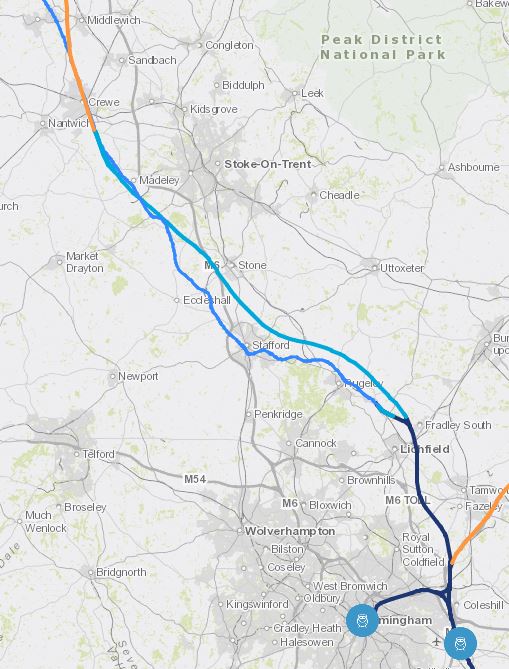
Note.
- Phase 1 is shown in dark blue
- Phase 2a is shown in a lighter blue.
- Phase 2b is shown in orange.
- Crewe is in the North-West corner of the map.
- Of the two routes in the middle Phase 2a is to the East with the West Coast Main Line to the West.
- Birmingham is in the South-East Corner of the map, where two stations are shown; Birmingham Curzon Street in the West and Birmingham Interchange slightly to the South.
This second map, shows High Speed Two to the East of Birmingham.
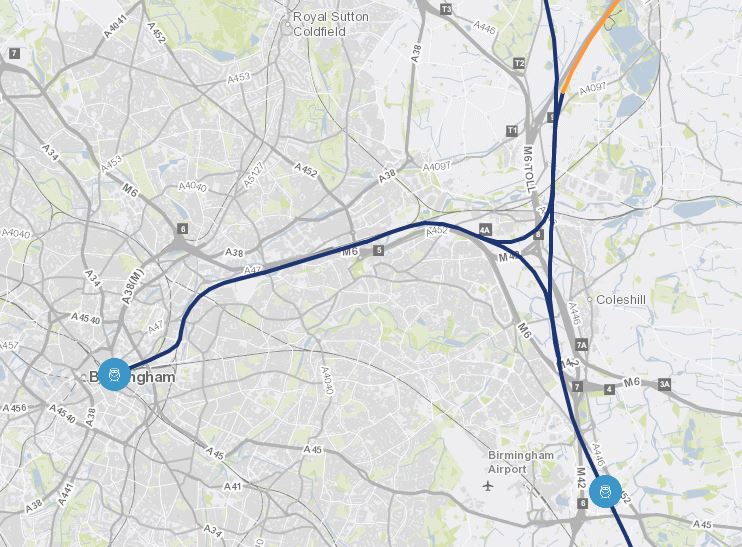
Note.
- The colours are the same.
- The Eastern leg to Nottingham and Leeds, which is shown in orange, goes off to the North-East.
This third map shows the route around Lichfield.

Note.
- Phase 1 is shown in dark blue
- Phase 2a to Crewe is the branch going North and is shown in a lighter blue.
- The other branch going to the North West is the existing West Coast Main Line.
This fourth map shows the routes between Lichfield and Crewe
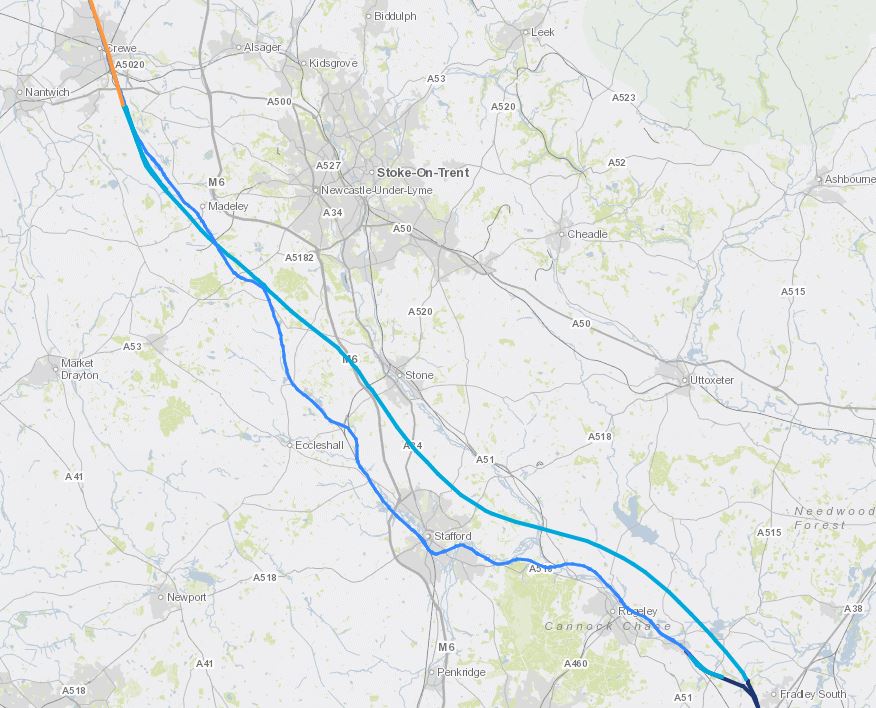
Note
- The colours are the same.
- Phase 2a of High Speed Two is the straighter route to the East.
- The more curvy route is the existing West Coast Main Line.
This fifth map shows the section of the route through Crewe.

Note.
- At the North of the map, the blue line is the West Coast Main Line and the orange line is the High Speed Two route to Manchester.
- Through Crewe the two lines share a route and may even share tracks.
- At the South of the map the High Speed Two route is on the East, with the West Coast Main Line to the West.
Click here to access High Speed Two’s interactive map, that I used to obtain these maps.
Phase One Services
Currently the following services are planned for Phase One of High Speed Two.
- Three trains per hour (tph) – Birmingham Curzon Street, via Old Oak Common (OOC) and Birmingham Interchange.
- Three tph – Birmingham Interchange via OOC.
- Two tph – Liverpool Lime Street via OOC, Stafford (1tph), Crewe (1tph) and Runcorn
- Three tph – Manchester Piccadilly via OOC, Wilmslow (1tph) and Stockport
- One tph – Preston via OOC, Crewe, Warrington Bank Quay and Wigan North Western
- One tph – Glasgow Central via OOC and Preston
Summing these up, the following totals are calculated.
- 6 tph – Birmingham Interchange
- 2 tph – Crewe
- 2 tph – Preston
Most other stations get two tph or less.
Birmingham Or Crewe?
In the following sections I will discuss various points.
Service Between Euston And Stafford
There is an interesting point shown up by the maps and the proposed services for Phase One.
Trains using High Speed Two won’t be able to call at Stafford unless they take a diversion along the West Coast Main Line. So after Phase 2a has been built between Lichfield and Crewe, Stafford could lose its High Speed Two service, unless they use the classic route.
Birmingham Interchange Station
Birmingham Interchange station will be unaffected by the decision of the terminus of Phase 1 of High Speed Two.
- It will be a Parkway station, with probably lots of parking.
- It will be connected to the National Exhibition Centre, Birmingham International station and Birmingham Airport by means of a people mover.
- All High Speed Two services go through the station and six tph are proposed to stop in Phase 1.
- The West Midlands Metro could serve the station.
- It will be thirty-eight minutes from London. Stansted Airport is fifty and Gatwick is around thirty!
I suspect that the time to and from London and a four-hundred metre long train every ten minutes, will mean that this will be a very busy station.
- Will Londoners treat Birmingham Airport, as a London Airport?
- Motorways to the East of Birmingham could mean the West Midlands treats the station as a Park-and-Ride station for London.
- Birmingham International station is a well-connected station with five platforms.
This station could become the busiest in the UK.
Birmingham Curzon Street Station
Birmingham Curzon Street station will be an unusual station for the UK, in that will be a city-centre terminal station running East-West, with services going both North and South, using a junction with the main High Speed Two.
- It will have seven platforms.
- It will be a short walk to Birmingham Moor Street station.
- It will have a stop on the West Midlands Metro line between Digbeth and Grand Central
Birmingham are hoping the station will be a catalyst for redevelopment of the area around the station.
After Phase 2 of High Speed Two services to the South are planned to include.
- Three tph – Euston via Birmingham Interchange and OOC.
- One tph – Birmingham Interchange direct
The hourly shuttle between the two stations makes up the service between them to a Turn-Up-And-Go frequency of four tph.
After Phase 2 of High Speed Two services to the North are planned to include.
- One tph – Stafford or Crewe direct
- One tph – Manchester Piccadilly via Crewe and Manchester Interchange
- Two trains per day – Preston via Crewe, Manchester Interchange and Wigan North Western
- Two trains per day – Carlisle via Manchester Interchange, Wigan North Western and Preston.
- One tph – Glasgow via Warrington Bank Quay, Wigan North Western, Preston and Carlisle.
- One tph – Edinburgh via Crewe, Warrington Bank Quay, Wigan North Western, Preston and Carlisle.
- One tph – Leeds via East Midlands Hub
- One tph – York via East Midlands Hub and Sheffield
- One tph – Newcastle via York
Summing up four tph go via the Western leg and Crewe to the North and three tph go via the Eastern leg and East Midlands Hub.
I suspect it is all about balancing the services between the three legs of High Speed Two.
- London and Birmingham
- Birmingham and North West England and Scotland
- Birmingham and North East England.
High Speed Two has been designed for fifteen tph running into Euston, so if all parts of the route can handle that number of trains, there must be a lot of scope to add extra services.
Birmingham Curzon Street with its seven platforms would balance all the services and probably help to sort things out in times of disruption.
Between Birmingham International Station And Lichfield
The maps show that this section must be built to connect High Speed Two to the West Coast Main Line just to the North of Lichfield Trent Valley station on the Trent Valley Line, as there is no other possible connection between the two routes.
This map clipped from the High Speed Two map, shows where the two lines join.
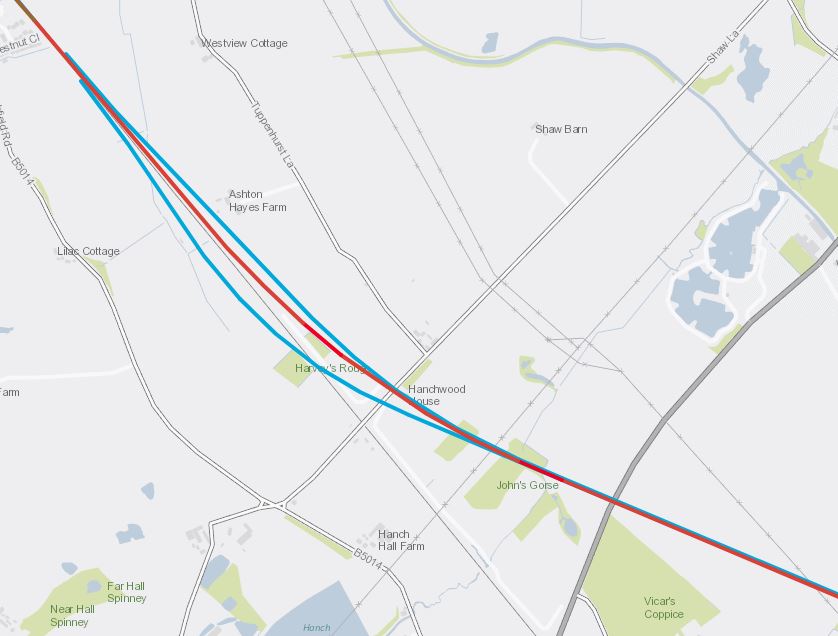
It is obviously designed for speed.
I estimate that the distance between Birmingham Interchange and this junction is not far short of twenty miles.
Between Lichfield And Crewe Station
Along the West Coast Main Line, the distance is around forty-two miles, but the straighter route proposed for High Speed Two could be a few miles shorter and several minutes faster.
If Phase 1 of High Speed Two were not to be built, trains would have to share the West Coast Main Line through Stafford station.
Currently, Stafford station can have as many as fifteen tph through the station.
Phase 1 of High Speed Two will have these trains going North of Birmingham Interchange station.
- Two tph – Liverpool Lime Street
- Three tph – Manchester Piccadilly
- One tph – Preston
- One tph – Glasgow Central
Which is a total of seven tph, with one tph stopping at Stafford.
I doubt they could all be squeezed through Stafford.
There would certainly be no space for any trains starting at Birmingham Curzon Street.
This is a very simple example of the capacity problems on the West Coast Main Line, which can only be solved by extra tracks to the North.
Crewe Station
Consider these points about Crewe station.
- It is not of a design that reflects its status.
- Currently, it handles 23 tph, that go all over the North West and much further.
- Phase 1 of High Speed Two would add another seven tph
- New services are planned.
- A rebuilding of the station would surely improve both capacity and operational efficiency.
- Looking at the fifth of the maps, it appears that the West Coast Main Line and High Speed Two share a corridor , if not tracks, through Crewe station.
For all these reasons, I am convinced that if High Speed Two passes through, then the station will need a rebuild.
So it looks like whether High Speed Two goes ahead or not, Crewe station will need an expensive rebuild.
Extra High Speed Two Services Through Crewe
Once Phase 2a has been completed, this will allow some extra Phase 2 services to be run along the route from Euston.
- Two tph from one tph – Glasgow Central via OOC, Birmingham Interchange (1tph), Preston and Carstairs
- Two tph – Edinburgh via OOC, Birmingham Interchange (1tph), Preston, Carstairs and Edinburgh Haymarket
I suspect these might run as a pair of trains as far as Carstairs and split and join there.
There will also be extra services between Birmingham Curzon Street, Crewe and Stafford to Edinburgh, Glasgow, Liverpool Lime Street, Manchester Piccadilly and Preston.
It is worth noting, that when all the services going North from Birmingham are summarised, you get the following.
- Four tph – Manchester Piccadilly
- Three tph – Liverpool Lime Street
- One tph – Preston
- Four tph – Glasgow/Edinburgh
- One tph – Stafford or Crewe
It looks a bit complicated North of Crewe, but it will create a frequent service between Crewe and Scotland.
High Speed To Chester
It should also be noted, that if between Crewe and Chester were to electrified, High Speed Two trains could serve Chester.
- Chester is a major rail interchange for the Border areas between England and Wales, North Wales and the Wirral.
- It is also connected to Merseyrail.
- Chester is an important tourist destination, with the city centre close to the station.
Electrification might also allow battery-electric versions of Avanti’s new Hitachi trains to serve some of their routes, without using diesel.
This simple example of Chester, says to me that opening High Speed Two to Crewe could allow extra services to be developed.
Conclusion
It appears from this analysis, that the only advantage of not building Phase 2a is that about forty miles of line between Lichfield and Crewe can be pushed back for a few years.
A Glimpse Of 2035
Today, I was on the first direct train between London and Dublin.
I arrived at Euston early for the eight o’clock departure time and took my seat in First Class of the train built by Spanish company Talgo at Longannet in Fife.
The train appeared to be little different to the High Speed Two trains, that I have ridden extensively since they started running in 2029.
What differences there were, were in the decor and colour schemes, with the train wrapped in a rainbow of colours reflecting the red, white and blue of the UK and the orange, white and green of the Irish Republic.
We left on time and after a brief stop at Old Oak Common to pick up passengers we were soon speeding towards Birmingham whilst eating breakfast. I had requested a gluten-free Full English and the quality showed how far railway food has come in the two decades.
Birmingham at 08:40
Running at 225 mph, the spectacular Birmingham International station was reached on time at 08:40 and there were quite a few passengers who both left and joined.
Birmingham International
Since Heathrow’s plans for a third runway crashed in the planning process and the opening of Gatwick’s second runway, High Speed Two has enabled long distance travellers to use Birmingham Airport, which since the opening of High Speed Two in 2029 and its subsequent extensions to Manchester and Leeds, has grown at a fast pace.
As a jokey advert shown around the world by Visit Britain said, London now has three main airports; London South (Gatwick), London West (Heathrow) and London North (Birmingham).
On a recent trip to the Gambia, I used Birmingham Airport for both flights and coming back, I was in my house in East London, around an hour after I set foot in the terminal at the Airport.
High Speed Two and the expanded Birmingham Airport have certainly improved the economics of Birmingham and the wider West Midlands.
Crewe Before 09:00
Next stop was Crewe station, which from today has been renamed Crewe International, to indicate that you can get trains to England, Scotland, Wales and now Ireland.
The station is unrecognisable from the tired Victorian station, I first passed through in 1965 on my way to Liverpool University for the first time.
Like Birmingham and the West Midlands, the area around Crewe has benefited immensely from the arrival of High Speed Two in 2030 and the continuing expansion of Manchester Airport.
From today, Crewe is now served by these trains in both directions, in each hour.
- London – Belfast and Dublin
- London – Glasgow (2 trains)
- London – Liverpool (2 trains)
- London – Lancaster
The ticketing and capacity is such, that Crewe now has a genuine turn-up and-go service to the capital, which is just under an hour away.
Preston At 09:20
The train was now on the upgraded West Coast Main Line and the train was limited to 140 mph, but Preston was reached on time, just eighty minutes from London.
When High Speed Two opened to Crewe in 2030, the journey time was a few minutes longer, but improvements to trains, tracks and signalling in the intervening years, had reduced the time.
On the journey from Crewe, the train had passed the massive construction site of the new Central Lancashire station, or as Scouse comedians have dubbed it – Wigan International.
This new station will be a hub linking the following.
- The West Coast Main Line
- High Speed Three between Liverpool and Manchester.
- The M6 and M62 motorways
- Manchester Metrolink
- Merseyrail
The station should have probably been built years earlier, when High Speed Three opened in 2029, but all forecasts of the number of passengers who would use the new High Speed Lines, were much lower than they were in practice.
Preston station like Crewe is a station that has been rebuilt to handle two of the 200 metre long trains running as a pair.
These long platforms are now used at Preston to join and split some services, to give Blackpool, Blackburn and Burnley three fast services per day to and from London, in under two hours.
Carlisle At 10:20
We sped through the Lake District at 140 mph, to reach Carlisle in under two and a half hours from London.
It should be noted that timings North of Crewe have improved over the last couple of decades.
- All passenger trains running on the fast lines North of Crewe are capable of matching the speed of the High Speed Two trains
- Some of these trains used for services between Liverpool/Manchester and Glasgow/Edinburgh were built by Talgo to High Speed Two standards.
- The few freight trains running in the day are now hauled by 125 mph electric locomotives.
- The continuous upgrading of the Cumbrian Coast, Settle-Carlisle and Tyne Valley Lines has also allowed some trains to divert away from the West Coast Main Line.
Effectively, the West Coast Main Line North of Crewe has become a high-capacity 140 mph line.
Belfast At 11:30
When I saw that it was planned that trains would reach Belfast from London in the same time that it takes to go between London and Glasgow, I didn’t believe it would be possible.
But we arrived at the Belfast Parkway station on the outskirts of the City on time.
The journey between where we left the now-electrified Glasgow and South Western Line just to the West of Gretna to the bridge across the North Channel had been nearly all at 140 mph and there was little interruption before we ventured onto the bridge to Northern Ireland.
A few minutes later we were waiting to continue our journey at Belfast Parkway.
There had been political arguments about the gauge of the tracks on the thirty mile section between Scotland and Belfast.
But in the end the engineers got their way.
- There is a standard gauge line as far as Belfast Parkway.
- From Belfast Parkway, there is Irish gauge for the rest of the journey.
There would be no change of train at Belfast Parkway, as the Talgo High Speed Trains have had the ability to change gauge at a slow speed for thirty years.
Dublin At 13:30
This has been the slowest part of the journey, but we pulled into Dublin on time to a lot of celebrations.
Conclusion
This route has been a long time coming, since it was first seriously proposed in 2018.
There will be improvement in the next few years.
- A service between Edinburgh and Dublin via Glasgow and Belfast starts next year.
- The West Coast Main Line North of Crewe will allow faster and more trains.
- The EU are funding and building a High Speed Line from the Irish border to Dublin.
- This Irish High Speed Line will be linked to a new deep water port at Shannon.
I can see London to Belfast in three hours and London to Dublin in four.
Birmingham International Station Set For £286m Revamp
The title of this post, is the same as that, of this article on Railway Technology Magazine.
This paragraph, explains the objectives of the revamp.
The plans would see the existing station be transformed into a multi-modal transport exchange, bringing together existing rail, future high speed rail, air, trams, buses, rapid transit, private vehicles, taxis, bicycles by 2025.
Birmingham seems to be growing in ambition.
This Google Map shows Birmingham Airport, the National Exhibition Centre and Birmingham International station in the middle.

Transport hubs based around an international airport will become increasingly common.
- Heathrow Airport is improving rail access with Crossrail and a possible Western rail access.
- Gatwick Airport is improving rail access as I wrote about in The Rise Of Gatwick Airport.
- Manchester Airport is improving, rail and tram access.
But we still need more.
To get to many airports, the only convenient way is to drive. Which in these days is not acceptable.
 The Anonymous Widower