London To Glasgow Train Journey Record Bid Fails By Just 21 Seconds
The title of this post, is the same as that of this article on ITV.com.
These are the first three paragraphs.
An attempt to break the 36-year-old record for the fastest train journey between London and Glasgow has failed.
Avanti West Coast’s Royal Scot train arrived at Glasgow Central 21 seconds behind the record of three hours, 52 minutes and 40 seconds set by British Rail in December 1984, according to rail expert Mark Smith, who was onboard.
Mr Smith, founder of Seat61.com, wrote on Twitter that a temporary speed limit on the track in Carstairs, South Lanarkshire, “cost us 90 seconds”.
It appears to be a valiant attempt that failed by a small margin.
I have a few thoughts.
The Trains
The British Rail 1984 record was set by an Advanced Passenger Train (APT) and today’s run was by a nine-car Class 390 train.
- The design speed of the APT was 155 mph and that of a Class 390 train is 140 mph.
- Service speed of both trains was and is 125 mph.
- Record speed of the APT was 162 mph and that of a Class 390 train is 145 mph.
- Both trains employ similar tilt technology to go faster.
At a brief look the performance of these two trains is very similar.
The InterCity 225
The InterCity 225 train is the ringer in this race to the North.
- The design speed is 140 mph.
- The service speed is 125 mph
- The record speed of an InterCity 225 is 161.7 mph.
- The train doesn’t use tilting technology.
- The train was built after the APT around 1990.
- The train holds the record between London Kings Cross and Edinburgh at thirty seconds under three-and-a-half hours.
- To rub things in, one of these trains, even holds the London Euston and Manchester Piccadilly record.
But there can’t be much wrong with the InterCity 225 trains as a few are being brought back into service, whilst LNER are waiting for ten new bi-mode trains to be delivered.
Hitachi Class 80x Trains

The various variants of Class 800 trains run to Edinburgh and I’m sure they will run to Glasgow.
- The design speed is 140 mph.
- The service speed is 125 mph
If an InterCity 225 can go between Edinburgh and London in around three-and-a-half hours, I can’t see why these trains can’t.
Especially, as Hitachi seem to be able to produce versions like the Class 803 and Class 807 trains, which appear to be lighter and more efficient, as they don’t have any diesel engines.
A Small Margin
I said earlier that it was only a small margin between the times of the APT and the Class 390 train. But why was the InterCity 225 able to run between Kings Cross and Edinburgh at thirty seconds under three-and-a-half hours?
This section in the Wikipedia entry for the Class 91 locomotive is entitled Speed Record. This is the first paragraph.
A Class 91, 91010 (now 91110), holds the British locomotive speed record at 161.7 mph (260.2 km/h), set on 17 September 1989, just south of Little Bytham on a test run down Stoke Bank with the DVT leading. Although Class 370s, Class 373s and Class 374s have run faster, all are EMUs which means that the Electra is officially the fastest locomotive in Britain. Another loco (91031, now 91131), hauling five Mk4s and a DVT on a test run, ran between London King’s Cross and Edinburgh Waverley in 3 hours, 29 minutes and 30 seconds on 26 September 1991. This is still the current record. The set covered the route in an average speed of 112.5 mph (181.1 km/h) and reached the full 140 mph (225 km/h) several times during the run.
It looks from the last sentence of this extract, that the record run of the InterCity 225 train ran up to 140 mph in places, whereas the record run of the APT and today’s run by a Class 390 train were limited to 125 mph.
The Signalling
In the Wikipedia entry for the InterCity 225 train, the following is said.
Thus, except on High Speed 1, which is equipped with cab signalling, British signalling does not allow any train, including the InterCity 225, to exceed 125 mph (201 km/h) in regular service, due to the impracticality of correctly observing lineside signals at high speed.
Note.
- I have regularly flown my Cessna 340 safely at altitude, with a ground speed of around two hundred miles per hour.
- High Speed One has an operating speed of 186 mph.
- Grant Schapps, who is Secretary of State for Transport has a pilot’s licence. So he would understand flight instruments and avionics.
So why hasn’t a system been developed in the thirty years since trains capable of running at 140 mph started running in the UK, to allow them to do it?
It is a ridiculous situation.
We are installing full digital ERTMS in-cab signalling on the East Coast Main Line, but surely a system based on aviation technology could be developed until ERTMS is ready. Or we could install the same system as on High Speed One.
After all, all we need is a system, to make sure the drivers don’t misread the signals.
But then the EU says that all member nations must use ERTMS signalling.
Didn’t we just leave the EU?
Conclusion
By developing our own in-cab digital signalling we could run trains between London and Scotland in around three-and-a-half hours.
The Japanese could even have an off-the-shelf system!
ERTMS sounds like a closed shop to give work to big European companies, who have lobbied the European Commission.
What Is Possible On The East Coast Main Line?
In the Wikipedia entry for the Class 91 locomotive, there is an amazing story.
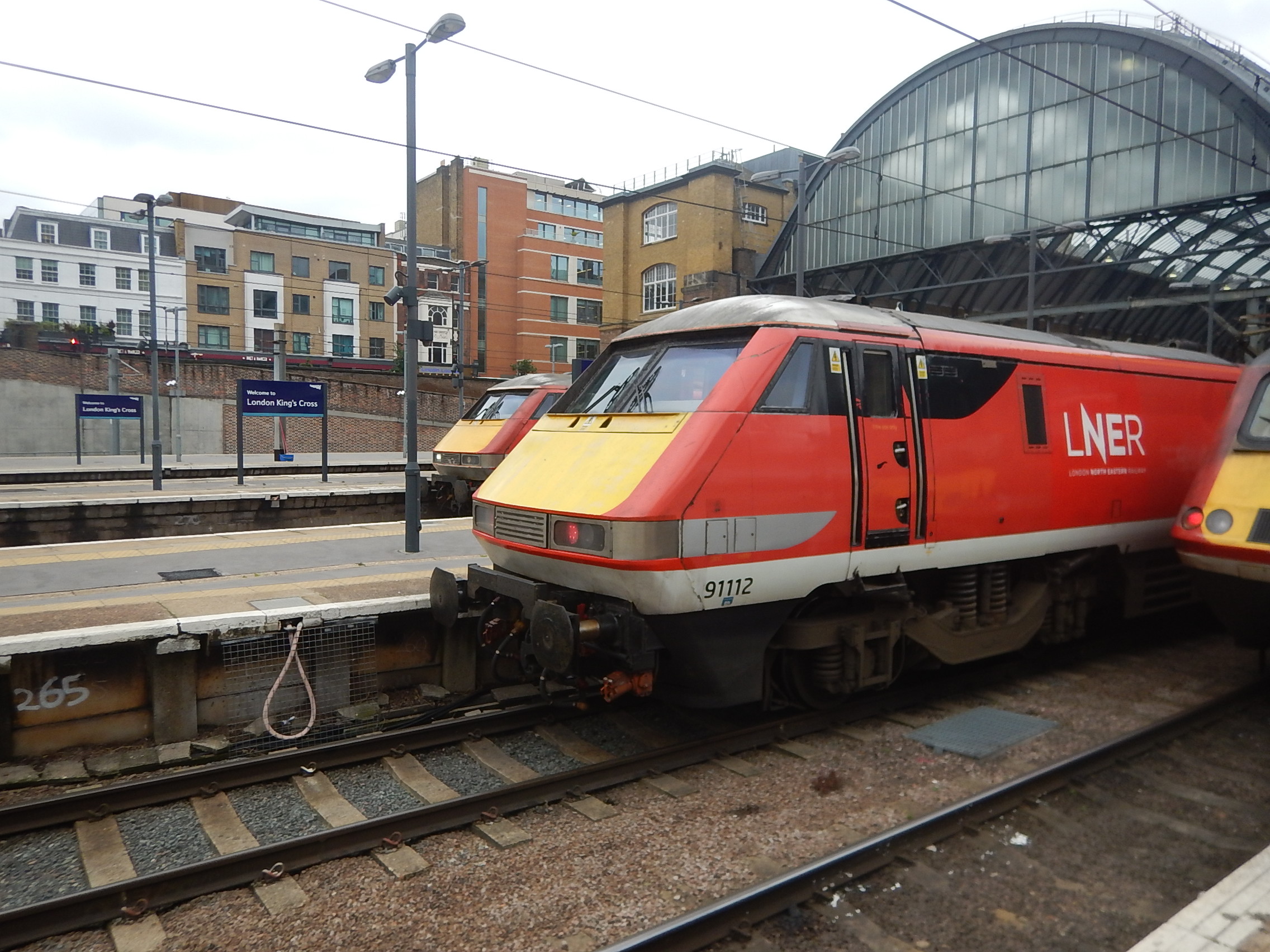
This picture shows one of these locomotives at Kings Cross.
Note.
- They have a design speed of 140 mph.
- They have a power output of 4.8 MW.
- They were built around 1990 by British Rail at Crewe.
They were designed to run services between London King’s Cross and Edinburgh as fast as possible, as the motive power of the InterCity 225 trains.
This section in the Wikipedia entry for the Class 91 locomotive is entitled Speed Record. This is the first paragraph.
A Class 91, 91010 (now 91110), holds the British locomotive speed record at 161.7 mph (260.2 km/h), set on 17 September 1989, just south of Little Bytham on a test run down Stoke Bank with the DVT leading. Although Class 370s, Class 373s and Class 374s have run faster, all are EMUs which means that the Electra is officially the fastest locomotive in Britain. Another loco (91031, now 91131), hauling five Mk4s and a DVT on a test run, ran between London King’s Cross and Edinburgh Waverley in 3 hours, 29 minutes and 30 seconds on 26 September 1991. This is still the current record. The set covered the route in an average speed of 112.5 mph (181.1 km/h) and reached the full 140 mph (225 km/h) several times during the run.
Note.
- For the British locomotive speed record, locomotive was actually pushing the train and going backwards, as the driving van trailer (DVT) was leading.
- How many speed records of any sort, where the direction isn’t part of the record, have been set going backwards?
- I feel that this record could stand for many years, as it is not very likely anybody will build another 140 mph locomotive in the foreseeable future. Unless a maverick idea for a high speed freight locomotive is proposed.
I have a few general thoughts on the record run between Kings Cross and Edinburgh in three-and-a-half hours.
- I would assume that as in normal operation of these trains, the Class 91 locomotive was leading on the run to the North.
- For various reasons, they would surely have had at least two of British Rail’s most experienced drivers in the cab.
- At that time, 125 mph InterCity 125 trains had been the workhorse of East Coast Main Line for well over ten years, so British Rail wouldn’t have been short of experienced high speed drivers.
- It was a Thursday, so they must have been running amongst normal traffic.
- On Monday, a typical run between Kings Cross and Edinburgh is timetabled to take four hours and twenty minutes.
- High Speed Two are predicting a time of three hours and forty-eight minutes between Euston and Edinburgh via High Speed Two and the West Coast Main Line.
The more you look at it, a sub-three-and-and-a-half hour time, by 1980s-technology on a less-than-perfect railway was truly remarkable.
So how did they do it?
Superb Timetabling
In Norwich-In-Ninety Is A Lot More Than Passengers Think!, I talk about how Network Rail and Greater Anglia created a fast service between Liverpool Street and Norwich.
I suspect that British Rail put their best timetablers on the project, so that the test train could speed through unhindered.
Just as they did for Norwich-in-Ninety and probably will be doing to the East Coast Main Line to increase services and decrease journey times.
A Good As ERTMS Signalling
Obviously in 1991, there was no modern digital in-cab signalling and I don’t know the standard of communication between the drivers and the signallers.
On the tricky sections like Digswell Viaduct, through Hitchin and the Newark Crossing were other trains stopped well clear of any difficult area, as modern digital signalling can anticipate and take action?
I would expect the test train got a signalling service as good as any modern train, even if parts of it like driver to signaller communication may have been a bit experimental.
There may even have been a back-up driver in the cab with the latest mobile phone.
It must have been about 1991, when I did a pre-arranged airways join in my Cessna 340 on the ground at Ipswich Airport before take-off on a direct flight to Rome. Air Traffic Control had suggested it to avoid an intermediate stop at say Southend.
The technology was arriving and did it help the drivers on that memorable run North ensure a safe and fast passage of the train?
It would be interesting to know, what other equipment was being tested by this test train.
A Possible Plan
I suspect that the plan in 1991 was to use a plan not unlike one that would be used by Lewis Hamilton, or in those days Stirling Moss to win a race.
Drive a steady race not taking any chances and where the track allows speed up.
So did British Rail drive a steady 125 mph sticking to the standard timetable between Kings Cross and Edinburgh?
Then as the Wikipedia extract indicated, at several times during the journey did they increase the speed of the train to 140 mph.
And the rest as they say was an historic time of 3 hours, 29 minutes and 30 seconds. Call it three-and-a-half-hours.
This represented a start-to-stop average speed of 112.5 mph over the 393 miles of the East Coast Main Line.
Can The Current Trains Achieve Three-And-A-Half-Hours Be Possible Today?
Consider.
- The best four hours and twenty minutes timings of the Class 801 trains, represents an average speed of 90.7 mph.
- The Class 801 trains and the InterCity 225 trains have similar performance.
- There have been improvements to the route like the Hitchin Flyover.
- Full ERTMS in-cab signalling is being installed South of Doncaster.
- I believe ERTMS and ETC could solve the Newark Crossing problem! See Could ERTMS And ETCS Solve The Newark Crossing Problem?
- I am a trained Control Engineer and I believe if ERTMS and ETC can solve the Newark Crossing problem, I suspect they can solve the Digswell Viaduct problem.
- The Werrington Dive Under is being built.
- The approaches to Kings Cross are being remodelled.
I can’t quite say easy-peasy. but I’m fairly certain the Kings Cross and Edinburgh record is under serious threat.
- A massive power supply upgrade to the North of Doncaster is continuing. See this page on the Network Rail web site.
- ERTMS and ETC probably needs to be installed all the way between Kings Cross and Edinburgh.
- There may be a need to minimise the number of slower passenger trains on the East Coast Main Line.
- The Northumberland Line and the Leamside Line may be needed to take some trains from the East Coast Main Line.
Recent Developments Concerning the Hitachi Trains
There have been several developments since the Hitachi Class 800 and Class 801 trains were ordered.
- Serious engineers and commentators like Roger Ford of Modern Railways have criticised the lugging of heavy diesel engines around the country.
- Network Rail have upgraded the power supply South of Doncaster and have recently started to upgrade it between Doncaster and Edinburgh. Will this extensive upgrade cut the need to use the diesel power-packs?
- Hitachi and their operators must have collected extensive in-service statistics about the detailed performance of the trains and the use of the diesel power-packs.
- Hitachi have signed an agreement with Hyperdrive Innovation of Sunderland to produce battery-packs for the trains and two new versions of the trains have been announced; a Regional Battery Train and an Intercity Tri-Mode Battery Train.
- East Coast Trains have ordered five five-car Class 803 trains, each of which will have a small battery for emergency use and no diesel power-packs.
- Avanti West Coast have ordered ten seven-car Class 807 trains, each of which have no battery or diesel power-packs.
And these are just the ones we know about.
The Class 807 Trains And Liverpool
I find Avanti West Coast’s Class 807 trains the most interesting development.
- They have been partly financed by Rock Rail, who seem to organise train finance, so that the train operator, the train manufacturer all get the best value, by finding good technical solutions.
- I believe that these trains have been designed so they can run between Euston and Liverpool Lime Street stations in under two hours.
- Does the absence of battery or diesel power-packs save weight and improve performance?
- Euston and Liverpool Lime Street in two hours would be an average of only 96.8 mph.
- If the Class 807 trains could achieve the same start-stop average of 112.5 mph achieved by the InterCity 225 test run between Kings Cross and Edinburgh, that would mean a Euston and Liverpool Lime Street time of one hour and forty-three minutes.
- Does Thunderbird provision on the West Coast Main Line for the Class 390 trains mean that the Class 807 trains don’t need emergency power?
- Have diesel power-packs been rarely used in emergency by the Hitachi trains?
I believe the mathematics show that excellent sub-two hour times between Euston and Liverpool Lime Street are possible by Avanti West Coast’s new Class 807 trains.
The Class 803 Trains And Edinburgh
East Coast Trains ordered their Class 803 trains in March 2019, nine months before Avanti West Coast ordered their Class 807 trains.
In Trains Ordered For 2021 Launch Of ‘High-Quality, Low Fare’ London – Edinburgh Service, I outlined brief details of the trains and the proposed service.
- FirstGroup is targeting the two-thirds of passengers, who fly between London and Edinburgh.
- They are also targeting business passengers, as the first train arrives in Edinburgh at 10:00.
- The trains are five-cars.
- The trains are one class with onboard catering, air-conditioning, power sockets and free wi-fi.
- Stops will be five trains per day with stops at Stevenage, Newcastle and Morpeth.
- The trains will take around four hours.
- The service will start in Autumn 2021.
I also thought it would be a successful service
As I know Edinburgh, Liverpool and London well, I believe there are similarities between the Euston-Liverpool Lime Street and Kings Cross-Edinburgh routes.
- Both routes are between two cities known all over the world.
- Both routes are fully-electrified.
- Both routes have the potential to attract passengers from other transport modes.
The two services could even be run at similar speeds.
- Euston-Liverpool Lime Street in two hours will be at 96.8 mph
- Kings Cross-Edinburgh in four hours will be at 98.3 mph.
Does this explain the similar lightweight trains?
Could Lightweight Trains Help LNER?
There is one important factor, I haven’t talked about in detail in this post. Batteries and diesel power-packs on the Hitachi trains.
I have only mentioned them in the following circumstances.
- When trains are not fitted with battery and/or diesel power-packs.
- When battery developments are being undertaken.
Let’s consider the LNER fleet.
- LNER has thirteen nine-car Class 800 trains, each of which has five diesel power-packs
- LNER has ten five-car Class 800 trains, each of which has three diesel power-packs
- LNER has thirty nine-car Class 801 trains, each of which has one diesel power-pack
- LNER has twelve five-car Class 801 trains, each of which has one diesel power-pack
There are sixty-five trains, 497 coaches and 137 diesel power-packs.
And look at their destinations.
- Aberdeen – No Electrification from Edinburgh
- Alnmouth – Fully Electrified
- Berwick-upon-Tweed – Fully Electrified
- Bradford Forster Square – Fully Electrified
- Darlington – Fully Electrified
- Doncaster – Fully Electrified
- Durham – Fully Electrified
- Edinburgh – Fully Electrified
- Glasgow – Fully Electrified
- Grantham – Fully Electrified
- Harrogate – No Electrification from Leeds – Possible Battery Destination
- Huddersfield – No Electrification from Leeds – Possible Battery Destination – Probable Electrification
- Hull – No Electrification from Temple Hirst Junction – Possible Battery Destination
- Inverness – No Electrification from Stirling
- Leeds – Fully Electrified
- Lincoln – No Electrification from Newark North Gate – Possible Battery Destination
- Middlesbrough – No Electrification from Northallerton – Possible Battery Destination
- Newcastle – Fully Electrified
- Newark North Gate – Fully Electrified
- Northallerton – Fully Electrified
- Peterborough – Fully Electrified
- Skipton – Fully Electrified
- Retford – Fully Electrified
- Stevenage – Fully Electrified
- Stirling – Fully Electrified
- Sunderland – No Electrification from Northallerton – Possible Battery Destination
- Wakefield Westgate – Fully Electrified
- York – Fully Electrified
The destinations can be summarised as followed.
- Not Electrified – 2
- Possible Battery Destination – 6
- Fully Electrified – 20
This gives a total of 28.
Could the trains be matched better to the destinations?
- Some routes like Edinburgh, Glasgow, Newcastle and Stirling could possibly be beneficially handled by lightweight trains without any diesel or battery power-packs.
- Only Aberdeen and Inverness can’t be reached by all-electric or battery-electric trains.
- In LNER Seeks 10 More Bi-Modes, I proposed a hydrogen-electric flagship train, that would use hydrogen North of the existing electrification.
There certainly appear to be possibilities.
Example Journey Times To Edinburgh
This table shows the various time for particular start-stop average speeds between Kings Cross and Edinburgh.
- 80 mph – 4:54
- 85 mph – 4:37
- 90 mph – 4:12
- 98.2 mph – 4:00
- 100 mph – 3:56
- 110 mph – 3:34
- 120 mph – 3:16
- 125 mph – 3:08
Note.
- Times are given in h:mm.
- A few mph increase in average speed reduces journey time by a considerable amount.
The figures certainly show the value of high speed trains and of removing bottlenecks, as average speed is so important.
Decarbonisation Of LNER
LNER Seeks 10 More Bi-Modes was based on an article in the December 2020 Edition of Modern Railways, with the same title. These are the first two paragraphs of the article.
LNER has launched the procurement of at least 10 new trains to supplement its Azuma fleet on East Coast main line services.
In a Prior Information Notice published on 27 October, the operator states it is seeking trains capable of operating under 25kW overhead power with ‘significant self-power capability’ for operation away from overhead wires. ‘On-board Energy Storage for traction will be specified as a mandatory requirement to reduce, and wherever practical eliminate, diesel usage where it would otherwise be necessary, although LNER anticipates some degree of diesel traction may be required to meet some self-power requirements. Suppliers tendering are asked to detail their experience of designing and manufacturing a fleet of multi-mode trains with a range of traction options including battery-electric, diesel-electric, hydrogen-electric, battery-diesel, dual fuel and tri-mode.
From this, LNER would appear to be serious about decarbonisation and from the destination list I published earlier, most services South of the Scottish Central Belt can be decarbonised by replacing diesel-power packs with battery power-packs.
That last bit, sounds like a call for innovation to provide a solution to the difficult routes to Aberdeen and Inverness. It also looks as if it has been carefully worded not to rule anybody out.
This press release from Hitachi is entitled Hitachi And Eversholt Rail To Develop GWR Intercity Battery Hybrid Train – Offering Fuel Savings Of More Than 20%.
It announces the Hitachi Intercity Tri-mode Battery Train, which is described in this Hitachi infographic.

As the Hitachi press release is dated the 15th of December 2020, which is after the publication of the magazine, it strikes me that LNER and Hitachi had been talking.
At no point have Hitachi stated what the range of the train is on battery power.
To serve the North of Scotland these gaps must be bridged.
- Aberdeen and Edinburgh Haymarket – 130 miles
- Inverness and Stirling – 146 miles
It should also be noted that distances in Scotland are such, that if these gaps could be bridged by battery technology, then probably all of the North of Scotland’s railways could be decarbonised. As Hitachi are the major supplier of Scotland’s local and regional electric trains, was the original Prior Information Notice, written to make sure Hitachi responded?
LNER run nine-car Class 800 trains on the two long routes to Aberdeen and Inverness.
- These trains have five diesel power-packs under coaches 2,3, 5, 7 and 8.
- As five-car Class 800 trains have diesel power-packs under coaches 2, 3 and 4, does this mean that Hitachi can fit diesel power-packs under all cars except for the driver cars?
- As the diesel and battery power-packs appear to be interchangeable, does this mean that Hitachi could theoretically build some very unusual trains?
- Hitachi’s trains can be up to twelve-cars in normal mode and twenty-four cars in rescue mode.
- LNER would probably prefer an all Azuma fleet, even if a few trains were a bit longer.
Imagine a ten-car train with two driver and eight intermediate cars, with all of the intermediate cars having maximum-size battery-packs.
Supposing, one or two of the battery power-packs were to be replaced with a diesel power-pack.
There are a lot of possibilities and I suspect LNER, Hitachi and Hyperdrive Innovation are working on a train capable of running to and from the North of Scotland.
Conclusion
I started by asking what is possible on The East Coast Main Line?
As the time of three-and-a-half hours was achieved by a short-formation InterCity 225 train in 1991 before Covids, Hitchin, Kings Cross Remodelling, Power Upgrades, Werrington and lots of other work, I believe that some journeys between Kings Cross and Edinburgh could be around this time within perhaps five years.
To some, that might seem an extraordinary claim, but when you consider that the InterCity 225 train in 1991 did it with only a few sections of 140 mph running, I very much think it is a certainly at some point.
As to the ultimate time, earlier I showed that an average of 120 mph between King’s Cross and Edinburgh gives a time of 3:16 minutes.
Surely, an increase of fourteen minutes in thirty years is possible?
Would A Mutant Many-Parent Child Help To Solve London’s Transport Problems?
London needs to increase the capacity of its public transport system, as the City continues to get larger and larger.
Current Major Projects
There are only three major rail projects ongoing in London at the present time.
The Bank Station Upgrade
The Bank Station Upgrade appears to be progressing well, albeit perhaps it’s a bit late due to the pandemic.
It is a complex project and from what I have heard and observed, it has been well designed and planned.
The Barking Riverside Extension
As with the Bank Station Upgrade the Overground extension to the new Barking Riverside station, appears to be going reasonably well.
But compared to that project, it is a relatively simple project, built mainly in the open air, with no tunneling.
Crossrail
Crossrail is in trouble, after what many believe was a very good tunnelling phase of the project.
But then tunnels under London usually seem to go well. I can remember the Victoria Line tunnelling and many other under London since the 1960s and all of these tunnels seem to have been dug without trouble. As I write, there don’t seem to be any tunneling problems with the Thames Tideway Tunnel.
Crossrail now has been reduced to a series of station builds and rebuilds, some of which are as large as the Bank Station Upgrade, with other ongoing projects like the testing of trains and systems.
So why are some of these stations running late in their delivery?
If you walk along the route of Crossrail in the City of London and through Clerkenwell and the West End, it is one massive building side as developers raise massive clusters of new developments around and above the Crossrail stations.
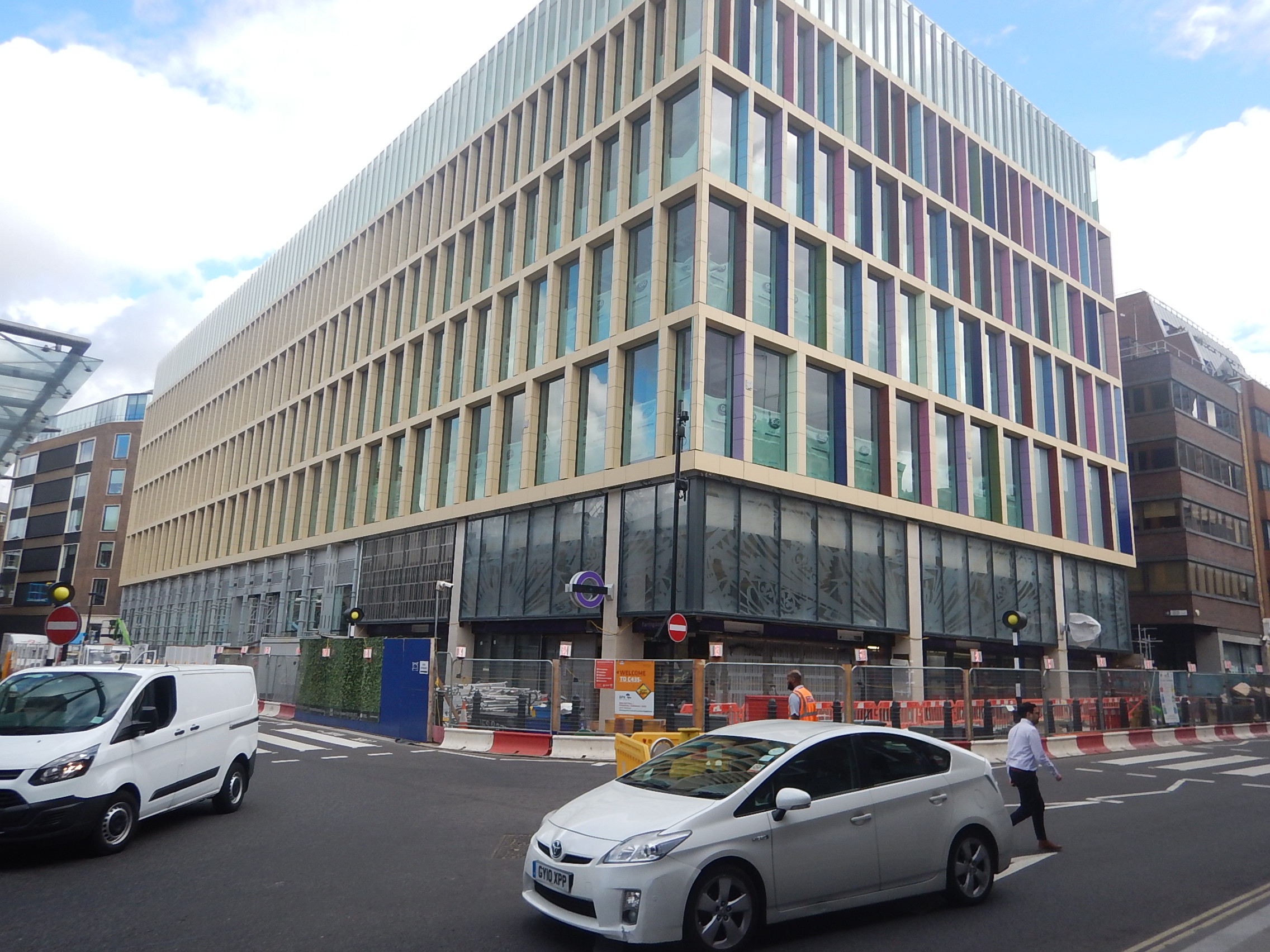
The picture shows Farrington station’s Eastern entrance, with a new development on top.
This one wasn’t a big one, but it went up in record time.
These buildings are often funded by Sovereign Wealth Funds, who want their buildings finished ASAP and as they have bottomless pockets, they are prepared to pay more to get the builders and tradesmen they need.
And where did they get the workers from? Other projects, including Crossrail.
This problem happened in Aberdeen at the height of the oil boom in the last century.
I also think that Brexit worsened the problem, as workers from mainland EU moved to large projects closer to home, like Stuttgart 21 and the new Berlin Brandenburg airport, that were both very much in trouble and could have been offering premium salaries as well!
The solution would have been to phase developments so that the limited pool of workers was not exhausted.
But that probably wouldn’t have suited the developers and politicians for all sorts of reasons.
- An uncompleted building doesn’t bring in money and jobs.
- Early completion must improve chances of letting the building.
- Delaying the building would probably have meant fewer holidays for politicians in exotic locations.
Hopefully, a comprehensive enquiry into the lateness of Crossrail will provide answers.
High Speed Two
High Speed Two is to my mind a London local project. But only in a secondary way!
- Rebuilding Euston station will improve Underground connections and interchange at Euston and Euston Square stations.
- It is claimed by High Speed Two, that the rebuilt Euston station will create 16000 jobs and 2200 homes.
- High Speed Two will enable massive development at Old Oak Common, with tens of thousands of homes and jobs.
- Old Oak Common station will be a very important rail hub in North-West London.
With seventeen trains per hour (tph) between Euston and Old Oak Common will High Speed Two attract local traffic?
- I suspect High Speed Two between Manchester Airport and Manchester Piccadilly and between Birmingham Interchange and Birmingham Curzon Street will also attract local traffic.
- I’ve used TGVs between Nice and Antibes.
- Tourists might visit, just like they did and still do at the Olympic Park.
- Many Londoners will join High Speed Two at Old Oak Common.
Some wag will suggest putting it on the Tube Map. But is it such a stupid idea?
Where Does London Need More Rail Services?
Having lived in London on and off for over seventy years, I feel the worst areas for rail links are probably.
- North West London
- South East London
- South Central London between Wimbledon and Croydon.
- South West London
Note.
- Over the years, there is no doubt that East and North London have improved considerably, with the development of the East London, North London and Gospel Oak to Barking Lines.
- Thameslink has been improved in North London and now it is being supported with improvements to the Northern City Line. Both routes now have new Siemens trains, which give a whole new dimension to using ironing-boards as seats.
- Crossrail will produce major improvements in West, East and South East London.
- Building of a new Penge Interchange station, which I wrote about in Penge Interchange could improve routes to and from South East London.
- Hopefully the work in recent years at Waterloo will improve suburban services out of Waterloo. In An Analysis Of Waterloo Suburban Services Proposed To Move To Crossrail 2, I showed that four tph could be run to Chessington South, Epsom, Hampton Court and Shepperton stations.
It looks like North West and South Central London are missing out.
How Can Services Be Improved In North West London?
There are radial routes from the centre of London to the suburbs.
Starting from the North and going to the West, there are the following lines.
- The High Barnet branch of the Northern Line
- The Mill Hill East branch of the Northern Line
- The Midland Main Line to St. Albans, Luton, Bedford and the East Midlands.
- The Edgware branch of the Northern Line
- The Jubilee Line to Stanmore
- The West Coast Main Line to Watford, Milton Keynes, the West Midlands, the North West of England and West Scotland.
- The Bakerloo Line to Harrow & Wealdstone.
- The Watford DC Line of the London Overground
- The Amersham, Chesham and Watford branches of the Metropolitan Line
- The Chiltern Route to Aylesbury.
- The Chiltern Main Line to High Wycombe, Banbury, Bicester, Birmingham and Oxford.
- The West Ruislip branch of the Central Line.
- The Uxbridge branch of the Metropolitan and Piccadilly Lines
When I used to live at Cockfosters as a child, to visit my many cousins in North West London, there was no alternative but to use a bus and take well over an hour each way.
There are now some circular rail routes in London but nothing in the North West of the capital.
The Dudding Hill Line And The West London Orbital Railway
But there is the little-used freight route called Dudding Hill Line.
- It runs between Cricklewood on the Midland Main Line and Acton Central on the North London Line.
- It is four miles of double-track railway.
This YouTube video shows a cab ride from Acton to Cricklewood.
Plans exist to turn it into the West London Orbital Railway, which will run two services.
- West Hampstead and Hounslow via Cricklewood, Neasden, Harlesden, Old Oak Common Lane, Acton Central, South Acton, Lionel Road, Brentford, Syon Lane and Isleworth
- Hendon and Kew Bridge via Brent Cross West, Neasden, Harlesden, Old Oak Common Lane, Acton Central, South Acton
Note.
- The proposed frequency of both services is four tph.
- There would be some stations to be built, but the track exists.
- There would be no new tunnels.
- The route is technically feasible.
- The route would connect West London to High Speed Two.
- There would be little disruption whilst it was built.
- The services could be run by dual-voltage battery-electric trains charged on the electrification at both ends of the route.
- The scheme represents a high value for money, with a benefit-cost ratio (BCR) of 2.2.
On the other hand, the scheme has two serious problems, as far as the current London Mayor is concerned.
- Transport for London has no money, partly because of London’s Fare Freeze.
- The project is not in South London.
This important and value-for-money project will not be built, whilst Sadiq Khan is still Mayor of London.
Harlesden Interchange
I believe that if we get the interchanges right on the West London Orbital Railway correct we can do things like.
- Increase the benefit cost ratio.
- Link the route to South London to make the Mayor a bit happier about the North London Scheme.
This Google Map shows Harlesden station.
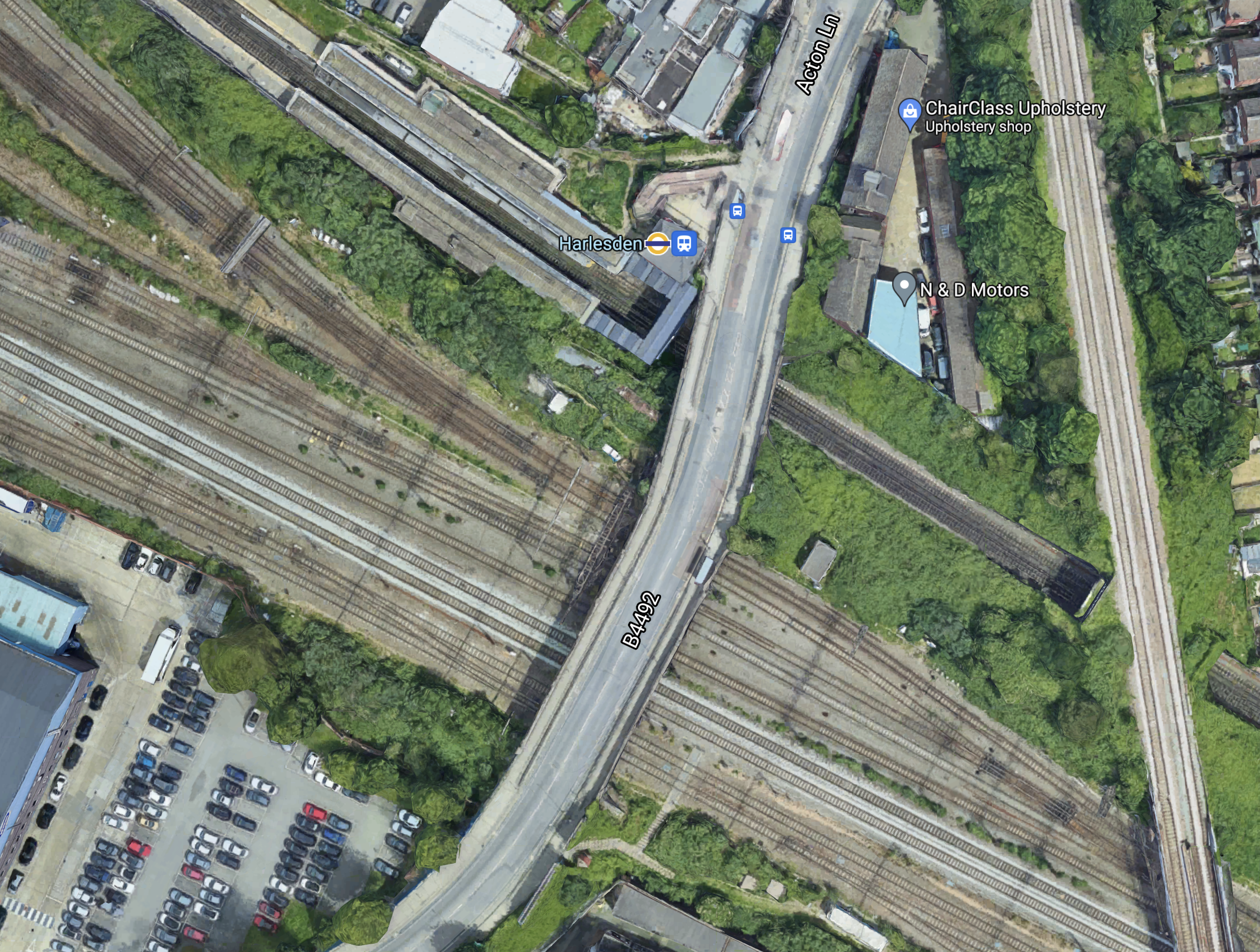
Note.
- The Bakerloo Line/Watford DC Line running North-West/South-East through Harlesden station.
- The West Coast Main Line in the Southern section of the map.
- The Dudding Hill Line running North-South across the map.
Platforms will be built on the Dudding Hill Line to connect that would probably be new or extended platforms in the current Harlesden station to enable interchange between the West London Orbital and the Watford DC Lines.
I also think there is a possibility that platforms could be added to the slow tracks of the West Coast Main Line, so that suburban services into London Euston can also connect to the West London Orbital Line.
It would also enable a connection between Southern’s Clapham Junction and Milton Keynes service and the West London Orbital Railway.
Looking at this from various angles, I think that an architect good at designing three-dimensional structures could develop a quality Harlesden Interchange station.
Neasden Interchange
Like Harlesden, Neasden is another possibility for a comprehensive interchange.
This Google Map shows Neasden station.
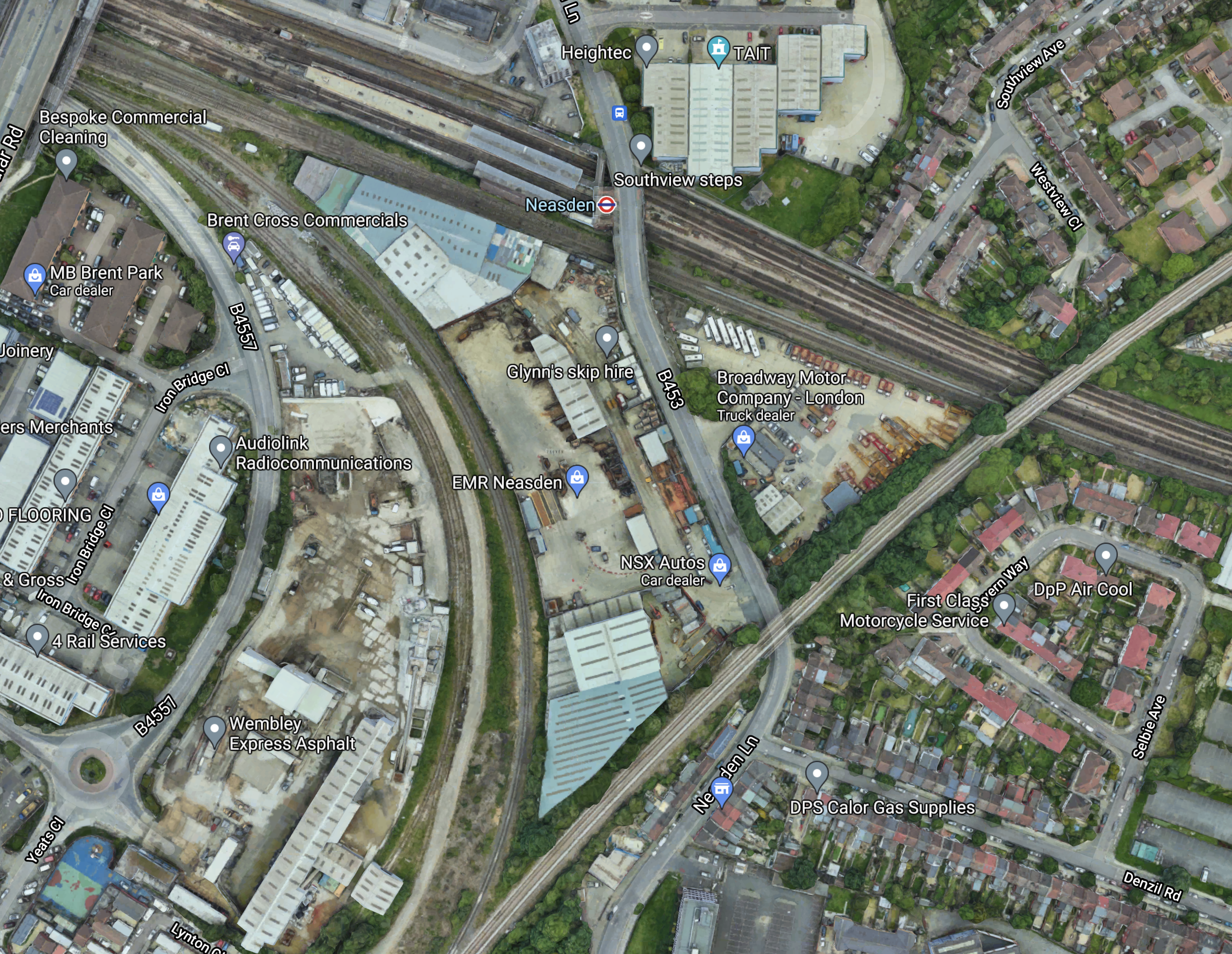
Note.
- There are a lot of lines going through Neasden station.
- The Dudding Hill Line goes across the South-East corner of the map.
- There is plenty of space in the area.
This map from cartometro.com shows the lines in the area.
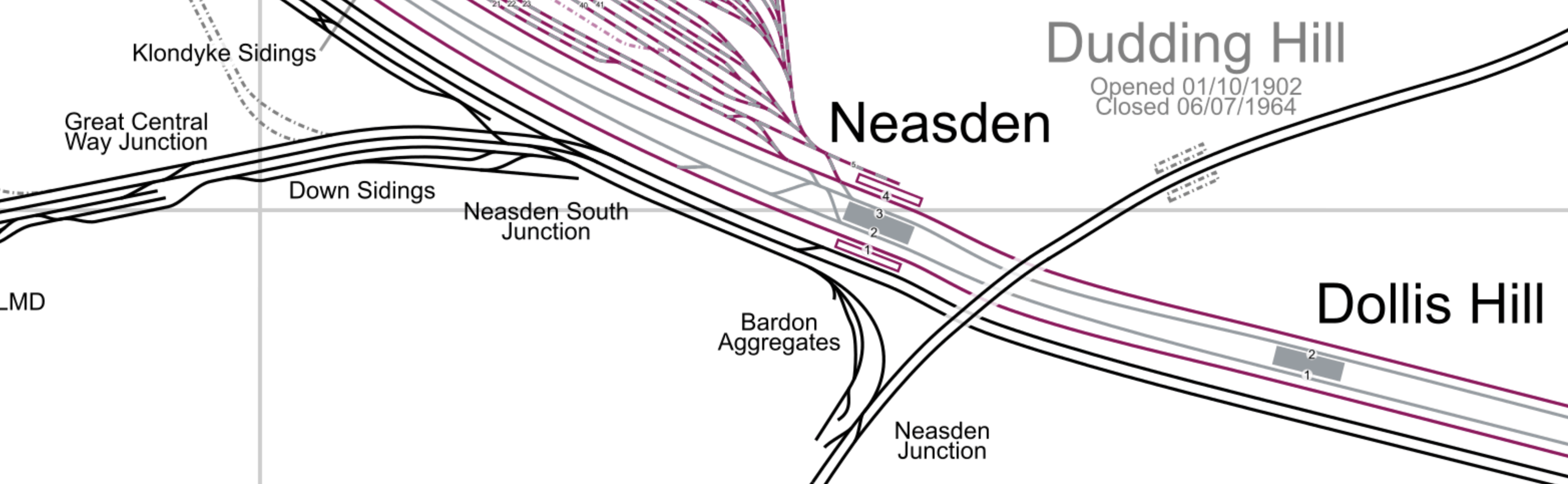
Note.
- The Dudding Hill Line is indicated by the former Dudding Hill station.
- The red tracks are Metropolitan Line tracks.
- The silver tracks are Jubilee Line tracks.
- The Southerly pair of lines through Neasden and Dollis Hill stations are Chiltern’s lines into Marylebone.
- The Chiltern tracks divide to the West of Neasden station, with the Aylesbury line following the other tracks and the Chiltern Main Line diverging to the West.
- London’s largest Underground Depot at Neasden, lies to the North-West in an area of London noted for few merits with the North Circular Road passing through.
I wonder, if the station and the depot offers a unique opportunity to offer large scale additions to London’s housing stock over the top of a rebuilt station and depot.
This Google Map shows the wider area.
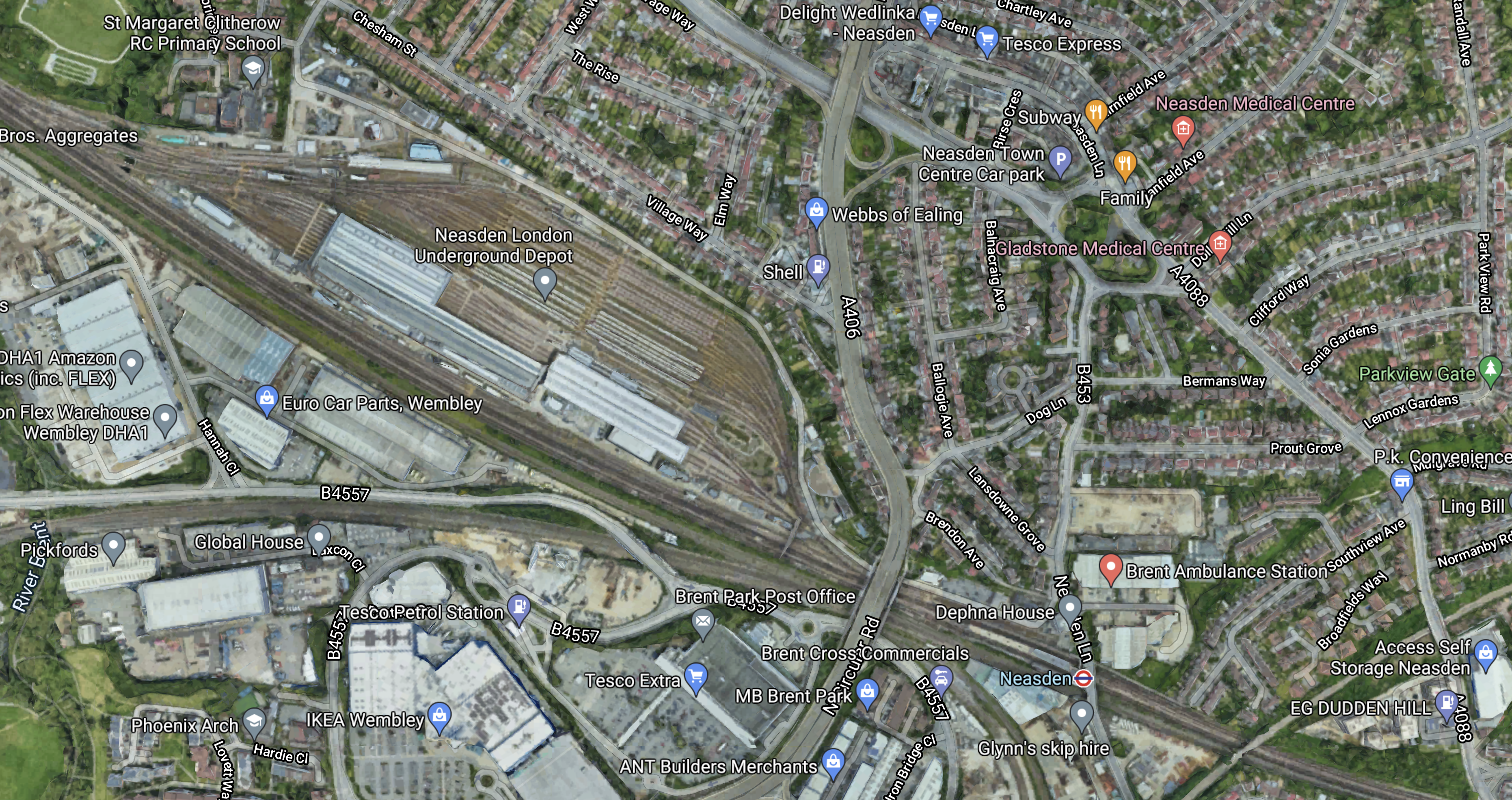
Note.
- Much of the depot appears to be open-air stabling for trains.
- The North Circular Road passes North-South between the depot and Neasden station.
- The Dudding Hill Line cuts across the South-East corner of the map.
- This corner of the map is labelled as Dudden Hill.
- According to Wikipedia, Dudding Hill is considered a more genteel spelling of Dudden Hill and could be as old as 1544.
It looks as if it would be relatively easy to develop over the top of the depot to create housing, industrial or commercial properties.
But why stop there and cover both the North Circular Road and the six tracks through Neasden station?
Neasden station could be rebuilt into a station with platforms on the following lines.
- Metropolitan Line
- Jubilee Line
- Chiltern Lines
- Dudding Hill Lines
Note.
- I estimate that Chiltern has a train about every six minutes, so some could stop.
- There might be space for a bay platform for Chiltern.
Neasden could be a major housing and transport hub.
- There could be large amounts of parking.
- Road access would be good.
- It would have good rail connections.
- It could have a bus interchange.
- London needs housing.
It might even be an alternative to Chiltern’s plan for a West Hampstead Interchange.
The Mayor of London, Transport for London and the Borough of Brent need to be bold!
Improvements To Chiltern’s Routes
Chiltern Railways have some plans that could improve services in North West London.
Using The Acton-Northolt Line
Wikipedia says this about using the Acton-Northolt Line to access new platforms at Old Oak Common station.
Upgrading the Acton–Northolt line (formerly the “New North Main Line”) to new platforms at Old Oak Common. This upgrade will also extend to London Paddington to increase capacity on the Chiltern Main Line as there is no room to expand the station at Marylebone.
This scheme has merit.
- The platforms would be connected to the Chiltern Main Line along the route of a partly-disused railway.
- The route could be double-tracked.
- There must be space for at least two new platforms.
- The new platforms could easily handle four tph.
- There may be a case for some new stations.
The scheme could add valuable extra capacity for Chiltern.
A Chiltern Metro
Wikipedia says this about a proposed metro service between Marylebone and West Ruislip stations.
- The Metro would have a frequency of four tph.
- It would call at Wembley Stadium, Sudbury & Harrow Road, Sudbury Hill Harrow, Northolt Park and South Ruislip.
- The service would require a reversing facility at West Ruislip.
- There would need to be passing loops at Sudbury Hill Harrow, and Wembley Stadium.
Given that the Chiltern Metro was first proposed over a decade ago, perhaps the concept could be increased in scope.
- Housing and other developments along the route may suggest that a station further out like High Wycombe might be a better terminal.
- ERTMS in-cab digital signalling is likely to be installed at some time, which would decrease headways between trains and allow more services.
- Electrification is likely in some form before 2040 and this will improve train performance.
- If Neasden station were to be rebuilt, as a comprehensive transport and residential development, I believe that this Metro service should also call at Neasden, as it would complement the West London Orbital Railway.
I believe that a review of the Chiltern Metro may mean, that an improved version is worth building.
Improvements To The Milton Keynes And Clapham Junction Service
I feel that this service could be key in improving services between North London and South London via the West London Line and High Speed Two’s station at Old Oak Common.
Currently, this service is as follows.
- It runs between Milton Keynes and Clapham Junction stations.
- It has a frequency of one tph.
- It calls at Bletchley, Leighton Buzzard, Tring, Berkhamsted, Hemel Hempstead, Watford Junction, Harrow & Wealdstone, Wembley Central, Shepherd’s Bush, Kensington (Olympia), West Brompton and Imperial Wharf stations.
- The service used to extend to South Croydon via Wandsworth Common, Balham, Streatham Common, Norbury, Thornton Heath, Selhurst and East Croydon.
- It uses Class 377 trains.
- It shares parts of the route with the London Overground.
I also think it has various issues and questions with respect to the future.
- The Class 377 trains are only 100 mph units, whereas the outer suburban trains on the West Coast Main Line are 110 mph Class 350 trains, which will soon be replaced by 110 mph Class 730 trains. Do the slower trains cause timetabling problems?
- Is one tph enough?
- The route doesn’t serve High Speed Two at Old Oak Common station.
- Is the service run by the right operator?
- What is the ideal Southern terminal?
These are my thoughts on the various issues.
The Service As A North-South Link
A friend, who lives in South London has told me, that if you go to an event at Wembley stadium the route is busy.
On the other hand, I’ve used it at midday on a Tuesday and found the trains empty.
But developed properly it could connect the following.
- Milton Keynes Central
- Bletchley for the East West Rail Link
- Watford for the West Coast Main Line to the North
- Wembley Central for Wembley Stadium and other entertainments
- Willesden Junction for the North London Line
- Hythe Road for High Speed Two, Crossrail and the Great Western Railway
- Shepherd’s Bush for the shopping.
- Clapham Junction for most of South London and the South of England
It would be a very useful cross-London route to complement Thameslink and the East London Line.
The Frequency
The current Milton Keynes and Clapham Junction has a frequency of one tph.
This may be enough for some parts of the route, as other services also provide services.
But many would argue, that perhaps South of Watford Junction, the service needs to be increased to connect the area to Old Oak Common and Clapham Junction.
I feel that High Speed Two, Crossrail and the Great Western Railway give so much connectivity, that between Clapham Junction and Willesden Junction needs a frequency of at least eight tph.
As the North London Line and the Watford DC Line are working at a frequency of four tph, this could indicate that a four tph direct service Watford Junction and Clapham Junction be ideal. Perhaps, it could continue North to Milton Keynes with a frequency of two tph.
The Trains
I am absolutely certain, that the full service needs to be operated by dual voltage trains, that are capable of running at 110 mph.
The Class 350/1 trains of West Midlands Trains would probably be ideal for the full service.
- They are dual voltage trains.
- They are 110 mph trains.
- They have a long distance interior.
They are being replaced with new Class 730 trains, so would be available.
If some services were running only as far North as Watford Junction, these could be either Class 378 or Class 710 trains of the London Overground.
The Connection To The West London Line And High Speed Two
This map from Wikipedia by Cnbrb shows the latest iteration of the lines at Old Oak Common station.
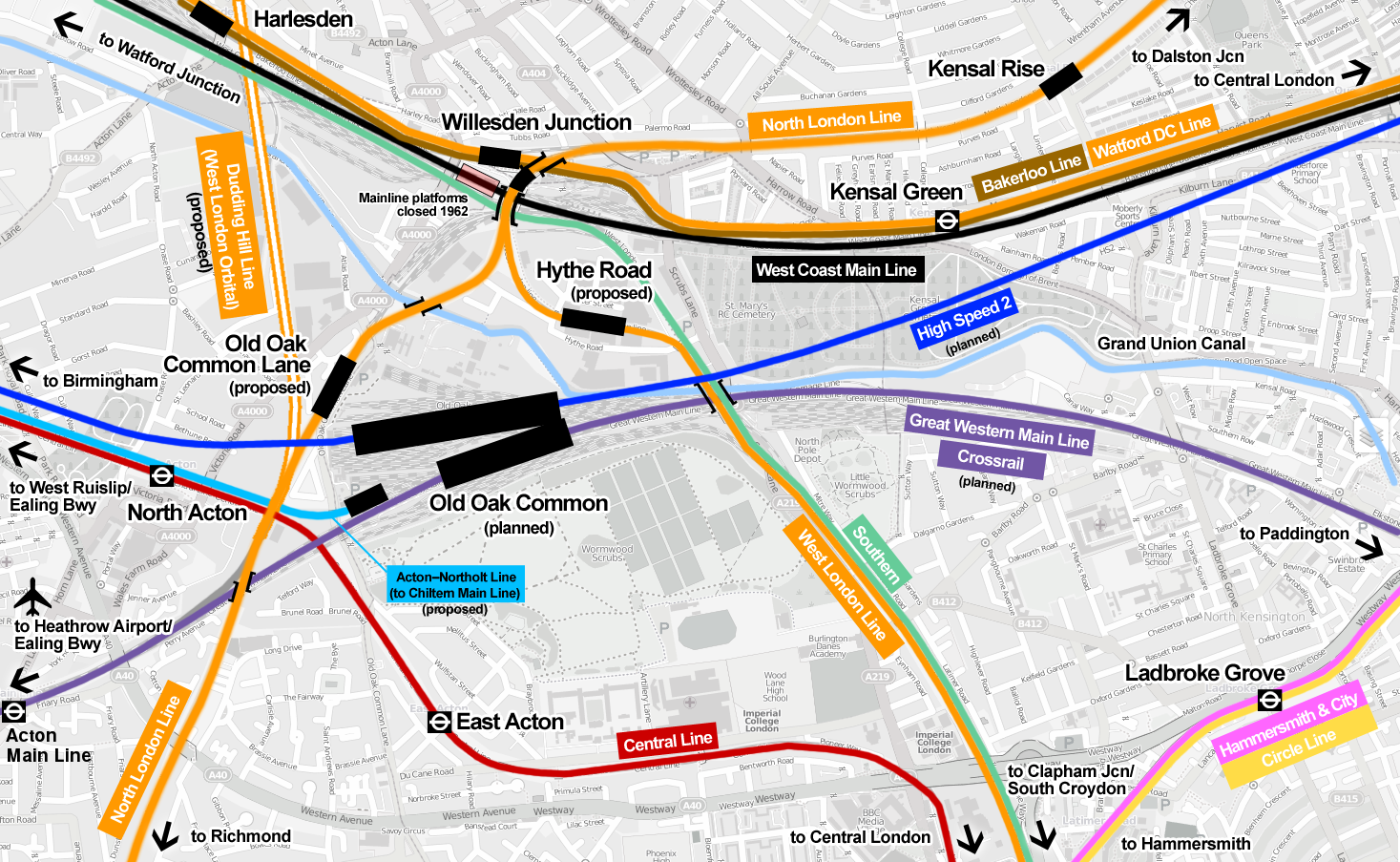
Note.
- The green route is taken by the Milton Keynes and Clapham Junction trains.
- The bright blue is High Speed Two.
- The purple is Crossrail.
- The orange is the Overground
- Hythe Road station is proposed for the West London Line to connect to Old Oak Common station for High Speed Two.
- Hythe Road station will have a bay platform to turn trains from the South.
- Old Oak Common Lane station is proposed for the North London Line to connect to Old Oak Common station for High Speed Two.
But where is the connection between the Milton Keynes and Clapham Junction service and Old Oak Common station for High Speed Two?
- Access from the South is not a problem as the Overground can be used to Hythe Road station.
- Extra services from the South can be run to and from the bay platform at Hythe Road station.
- Access from the East is not a problem as the Overground can be used to Hythe Road station.
- How do passengers go between say Wembley Central and Heathrow?
In addition for access from the West is the Overground can be used to Old Oak Common Lane station.
But as things stand at the moment the Milton Keynes and Clapham Junction service bypasses Hythe Road station and the only ways to go from Milton Keynes to Old Oak Common station for either High Speed Two, Crossrail or the Great Western is to do one of the following.
- Change to the Watford DC Line at Watford Junction, Harrow & Wealdstone or Wembley Central and then change to the Overground at Willesden Junction for either Old Oak Common Lane or Hythe Road station.
- Continue South to Shepherd’s Bush station, cross over to the other platform and then come back to Hythe Road station.
- Go via Euston station. OK for High Speed Two, but not for Crossrail or the Great Western.
They cannot be serious!
I hope that there is a cunning plan to enable the Milton Keynes and Clapham Junction service to connect.
Whilst on the subject of connections at Old Oak Common, where is the promised connection of Crossrail to the West Coast Main Line?
Were all these connections just kicked into the long grass and quietly forgotten, as they were deemed too difficult and/or expensive?
I think serious questions need to be asked about the design of Crossrail and High Speed Two at Old Oak Common.
Why weren’t Crossrail and High Speed Two designed to connect directly to the London Overground at Willesden Junction station perhaps by the use of a North South people mover serving the following lines?
- Bakerloo, Watford DC, West Coast Main and West London Orbital Lines at a rebuilt Harlesden station.
- London Overground at the high-level Willesden Junction station.
- High Speed Two
- Crossrail and the Great Western Railway
- The new Chiltern platforms.
- Central Line at East Acton station.
Note.
- Hythe Road and Old Oak Common stations would not be needed.
- The Milton Keynes and Clapham Junction service would call additionally at the rebuilt Harlesden station.
The current design of Old Oak Common stinks like a horse designed by a committee!
The Northern Terminal
I suggested earlier that some trains use Watford Junction and others use Milton Keynes Central.
Both stations have the capacity and the connectivity.
The Southern Terminal
In the last ten years, South Croydon, East Croydon and Clapham Junction have been used as the Southern terminal.
Thameslink seems to have chosen its various terminals to satisfaction of the travelling public, so perhaps the same method or personnel should be used.
The Operator
The Gibb Report said that this service should be transferred to the London Overground and I wrote about this proposal in Gibb Report – East Croydon – Milton Keynes Route Should Be Transferred To London Overground.
This is one suggestion, but I do wonder, if it should be transferred to West Midlands Trains and run in conjunction with their West Coast Main Line services.
- The service needs 110 mph trains.
- Timetabling and operation should be easier.
- London Overground trains don’t have a long-distance interior.
On the other hand, trains running between Watford Junction and Clapham Junction would probably be better if they were London Overground trains.
Conclusion
I believe that by using the current network and some modern trains and signalling, the passenger services to the West of the capital can be substantially improved.
The New Step-Free Entrance At Euston Square Station
This map from cartometro.com shows the Underground Lines in the Euston station area.
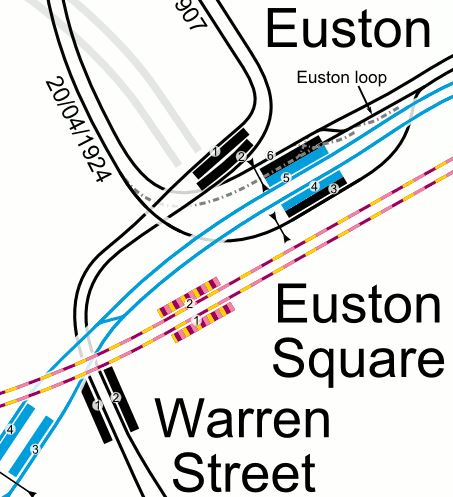
Note.
- The Northern Line is shown in black.
- The Victoria Line is shown in light blue.
- The sub-surface lines are shown in yellow and mauve.
- The Northern and Victoria Lines are deep underneath the station, whereas the sub-surface lines are under Euston Road.
This Google Map shows the area and the positions of the station entrances.
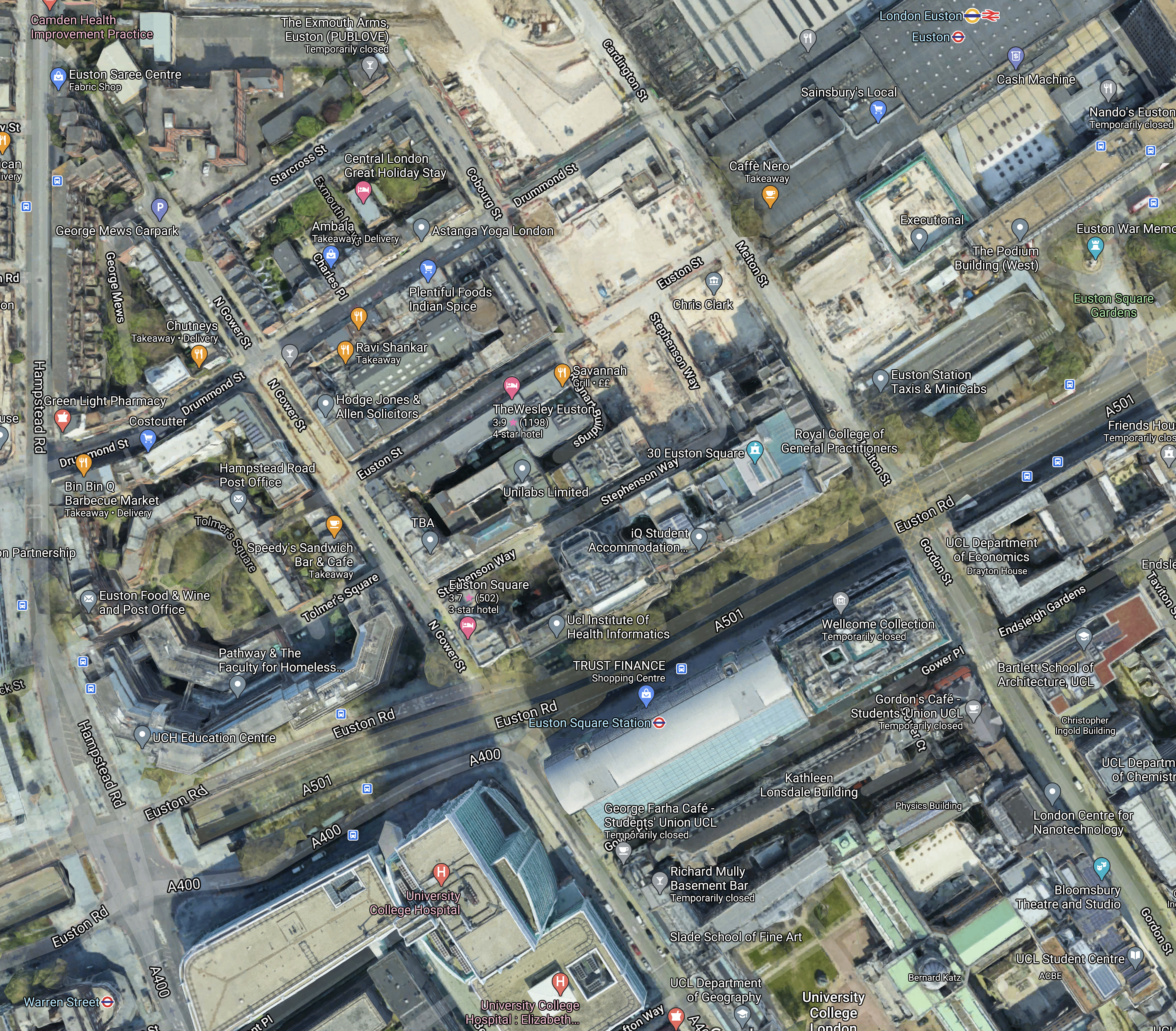
Note.
- Warren Street station in the South West corner of the map at the Northern end of Tottenham Court Road.
- Euston Road running South-West to North-East across the map.
- University College Hospital is on the South side of Euston Road between Tottenham Court Road and Gower Street.
- There is a subway under Euston Road almost in line with Gower Street, that gives access to the Western ends of the platforms at Euston Square station.
- There is a lift to the station from the South side of Euston Road on the Eastern side of Gower Street.
- The Western end of the platforms at Euston Square are probably just to the East of Gower Street.
The next road across Euston Road is Gordon Street, where the entrance to a new subway under Euston Road to Euston station will be located.
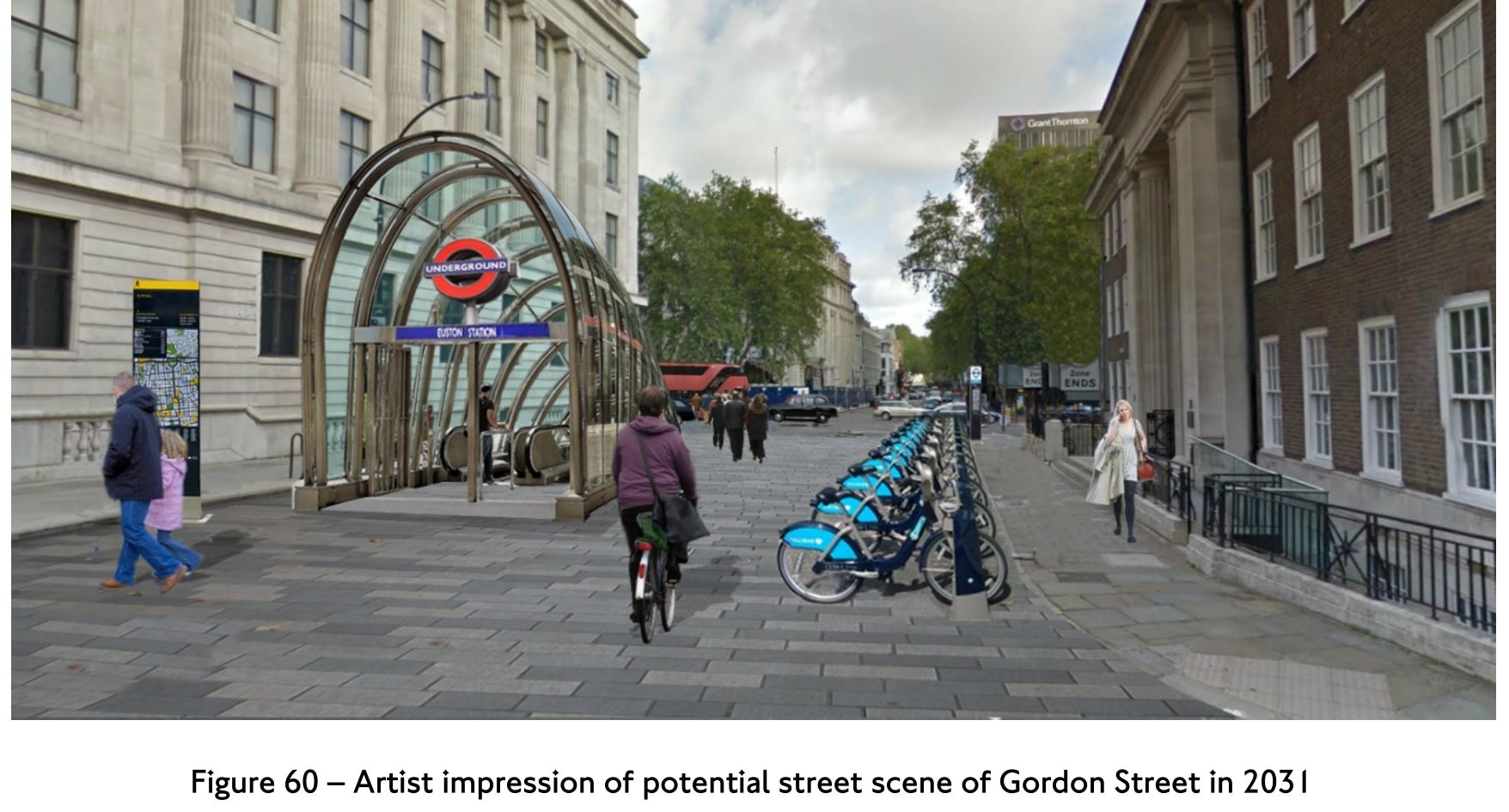
This Transport for London visualisation shows the entrance to the subway looking towards Euston station.
This diagram of the subway. is from Ian Visits,
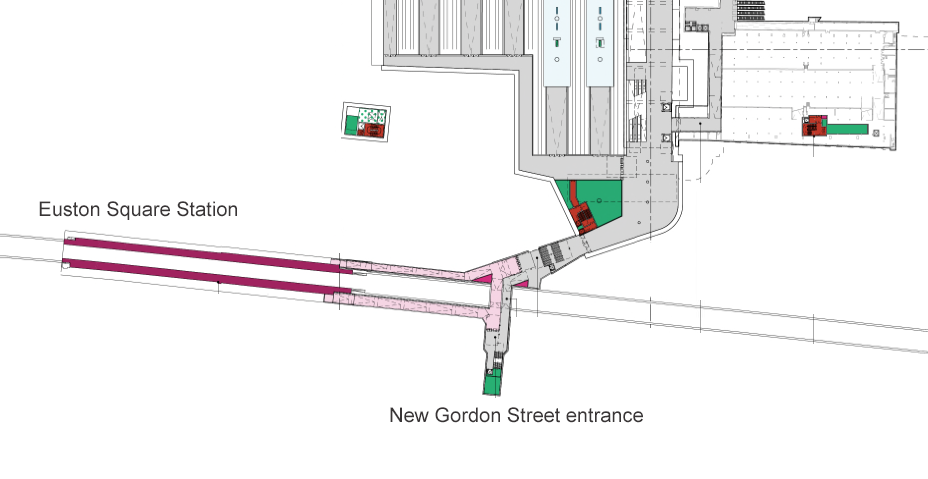 Note the platforms at Euston Square station appear to be shown in red and end to the West of Gordon Street.
I took these pictures at the Eastern end of Euston Square station.
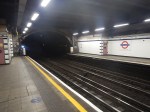
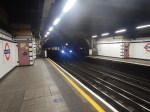
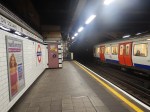
Note what look like bricked off areas at the end of the platforms for electrical and other gubbins. I suspect they could be removed to create more space.
Conclusion
I don’t think that connecting the platforms to the subway will be the most challenging of projects, if they can dig easily behind and over the walls of the Victorian tunnel and behind the platforms.
London Will Still Need Crossrail 2 To Deal With HS2 Influx, London Mayor Predicts
The title of this post, is the same as that of this article on Building.
This is the first paragraph.
Sadiq Khan says he expects mothballed scheme will eventually get built.
I don’t disagree that it will eventually get built, but it will be long after both Sadiq Khan and myself have gone.
You might think, that as I live in Dalston, I would be very much in favour of Crossrail 2 being built as soon as possible.
But then, I’m a duck-and-diver and there will always be a quick route to get to Euston.
I currently use four routes regularly and coming home, if it’s late or I want to get home quickly to cook supper say, I can take a taxi for a reasonable price.
The easiest way is actually to walk about two hundred metres and get a 73 bus to directly outside Euston station.
I very much feel we need to improve access in London to High Speed Two and that this can be done by making sure several smaller projects are completed before High Speed Two opens.
Improved Underground Connections At Euston Station
This page on the High Speed Two web site, says this about the station layout and Underground connections at the rebuilt station.
HS2 will deliver eleven new 400m long platforms, a new concourse and improved connections to Euston and Euston Square Underground stations. Our design teams are also looking at the opportunity to create a new northerly entrance facing Camden Town as well as new east-west links across the whole station site.
I would suspect that connection to the Underground will have step-free options.
I wrote about Underground connections at Euston station in Ian Publishes Details Of Future Developments At Euston And Euston Square Underground Stations.
The developments certainly look comprehensive and include a new entrance in Gordon Street on the South side of Euston Road.
Note.
- The view is looking North.
- A tunnel from this entrance will lead to the Eastern ends of the platforms at Euston Square station, where it appears there will be at least escalator access.
- The tunnel will also lead into Euston station.
- It is a simple improvement, that shouldn’t be too challenging.
This diagram shows the layout of the tunnel.
It looks to me to be a neat design, that could be installed between Gordon Street and Euston Square stations without disturbing the traffic on the busy Euston Road.
Once the subway and the Gordon Street entrance were built, there would have these benefits.
- There would be a step-free route between Euston and Euston Square stations.
- It would be a shorter walk in an air-conditioned tunnel, rather than currently along the very polluted Euston Road.
- It would be the fastest way to transfer between Euston and Kings Cross or St. Pancras stations.
- It would give excellent access to the other London terminal stations of Liverpool Street, Moorgate and Paddington.
- It would give step-free access to Crossrail at Farrington, Liverpool Street, Moorgate, Paddington and Whitechapel
- With a change at Farringdon or Liverpool Street to Crossrail, it would offer the fastest route to Canary Wharf.
- The Gordon Street entrance would improve walking routes between Euston station and University College London and other buildings on the South side of Euston Road.
I also suspect that as this project is part of the rebuilding of Euston station for High Speed Two, that it will be completed before Euston station opens for High Speed Two.
If possible, it should be built much sooner to improve access between Euston station and the sub-surface lines.
Once open, even without other improvements at Euston station, this subway would improve access to Euston station by a very substantial amount.
Camden Town Station Upgrade
In 2015, I went to see an exhibition about the proposed expansion of Camden Town station and wrote The Camden Town Station Upgrade Exhibition.
I believe this upgrade should be delivered before High Speed Two opens around the end of this decade.
But due to the financial problems of Transport for London, this project has now been kicked into the long grass.
The Wikipedia entry for Camden Town station, states that upgrading the station will take four years.
Northern Line Split
The completion of the Camden Town Station Upgrade will enable the splitting of the Northern Line into two separate lines, after the completion of the Northern Line Extension to Battersea and the Bank Station Upgrade.
- Northern Line West – Edgware to Battersea Power Station via Camden Town, Euston, Charing Cross and Waterloo.
- Northern Line East – High Barnet to Morden via Camden Town, Euston, Kings Cross, Moorgate, Bank and London Bridge.
Each branch will be running at least 24 trains per hour (tph) and will significantly increase capacity between High Speed Two and other terminal stations and the City of London.
The Northern Line should be split into two lines by the time High Speed Two opens, but with no start date in sight for the Camden Town Station Upgrade, this might not be possible.
Victoria Line Improvements
The Victoria Line or Dear Old Vicky probably won’t be able to help much, but I do think it would be feasible to improve the three most inadequate stations on the line.
- Oxford Circus station needs more capacity and step-free access.
- Highbury & Islington station needs step-free access to the deep lines to complete the station, which was only half-built in the 1960s.
- Walthamstow Central station needs to be double-ended and have step-free access.
I doubt the money can be found to carry out these improvement projects, that are essential, but very much smaller than the Camden Town Station Upgrade.
Sub-Surface Lines Improvements
The big project on the Circle, District, Hammersmith & City and Metropolitan Lines is the Four Lines Modernisation (4LM) project.
- It is an upgrade of the trains, track, electrical supply, and signalling systems.
- This will add 27 % more capacity in the Peak.
- As anybody will know, who has been to a major event at Wembley Stadium, the new S8 Stock trains, that have been running for a few years now, have an almost infinite capacity.
- Incidentally, the S8 Stock trains hold 1350 passengers, which is not far short of the 1500 that each Crossrail Class 345 train can hold.
- Euston Square station will have a step-free connection from the rebuilt Euston station complex.
Most of the Modernisation will be completed by 2023.
I believe that the sub-surface lines will become the main method to get to and from the upgraded Euston station, until Crossrail 2 is built.
- There will be direct trains to around seventy stations from Euston Square station.
- With a change at Paddington to Crossrail, there is a route to Heathrow Airport and Reading.
- With a change at Farringdon or Liverpool Street to Crossrail, there is a route to East London, Canary Wharf and South East London.
- With a change at Farringdon to Thameslink, there are routes to over a hundred stations.
- With a change at Whitechapel to the East London Line, there are routes to North, East and South London.
When you consider that the Metropolitan Line opened in 1863 and was the first passenger-carrying underground railway in the world, hasn’t it done well?
When the Euston Square station upgrade is complete, I will probably use that route to get home from Euston, changing on to a bus at Moorgate, which stops close to my house.
Old Oak Common Station
High Speed Two’s Old Oak Common station is introduced like this on this page on the High Speed Two web site.
Old Oak Common is a new super hub set to be the best connected rail station in the UK.
This map from Transport for London shows the various lines at the station.
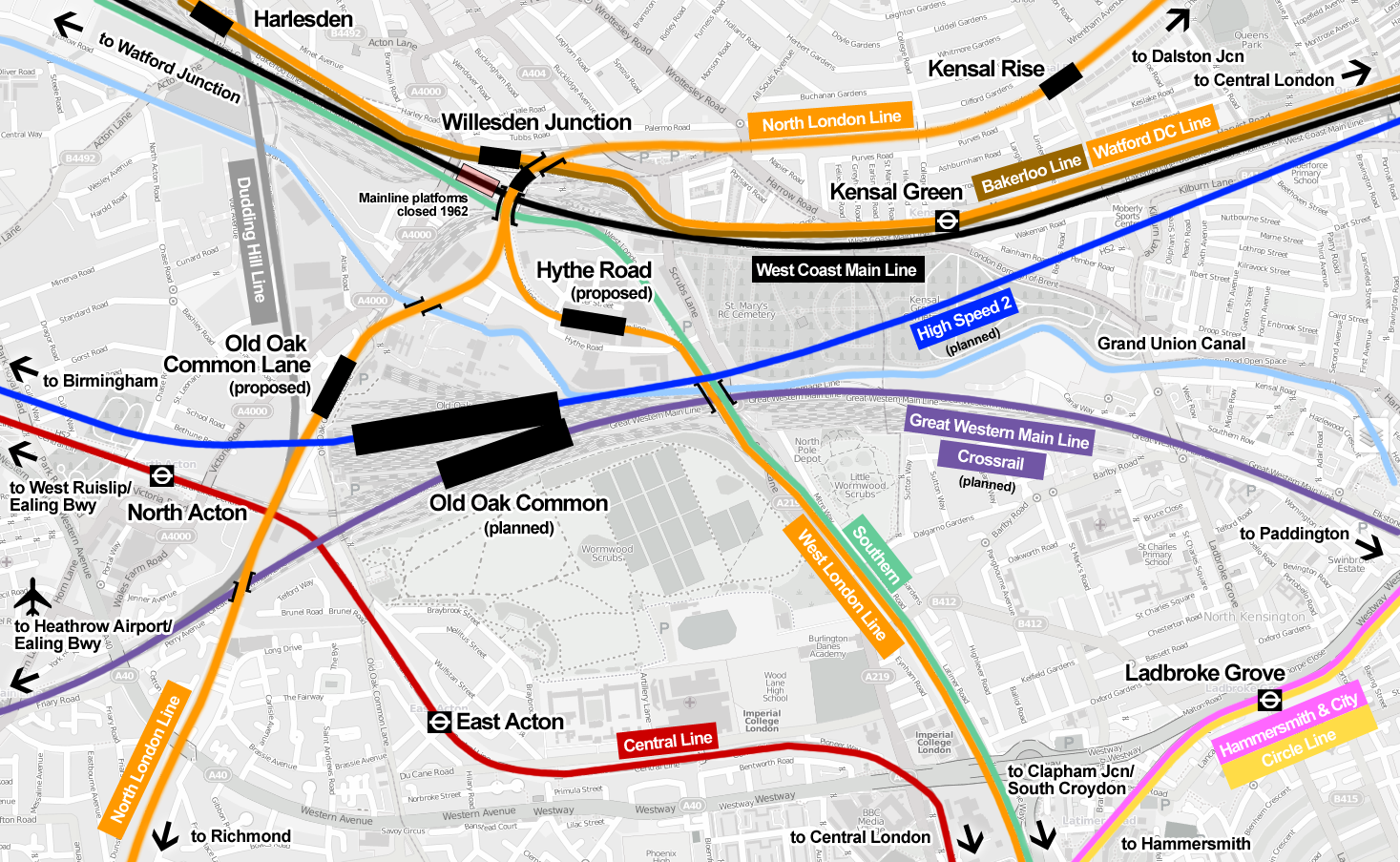
Note.
- The bright blue line is High Speed Two.
- The purple line is the Great Western Main Line and Crossrail.
- I suspect that the interchange between these three lines will be a good one.
- Will all Great Western services stop at Old Oak Common station?
- The orange lines are London Overground services, with two new stations; Old Oak Common Lane and Hythe Road close to the main Old Oak Common station.
- The green line is the Southern service between Milton Keynes and South Croydon.
- The red line is the Central Line and it could be joined to the main station.
- There are plans for a West London Orbital Railway, from Brent Cross and West Hampstead in the North to Hounslow and Kew Bridge in the West, that would call at the main Old Oak Common station.
Old Oak Common station could be well connected to most of London, through its Crossrail. London Overground and West London Orbital connections.
It is my view that these three smaller projects must be completed before the opening of High Speed Two.
- Hythe Road station
- Old Oak Common Lane station
- West London Orbital Railway.
None of these three projects would be very challenging.
Chiltern Railways And High Speed Two
Chiltern Railways already have a London Marylebone and Birmingham Moor Street service
Birmingham Moor Street station will be close to High Speed Two’s Birmingham Curzon Street station.
Plans exist for a second London terminus for Chiltern Railways close to the main Old Oak Common station.
- Could Chiltern Railways become a partner for High Speed Two on routes like between Leeds and Banbury?
- They could certainly bring passengers to Old Oak Common from Buckinghamshire, Oxfordshire and Warwickshire.
- One of my principles on High Speed Two, is that it should be a One-Nation railway.
Old Oak Common would be a very different station to Marylebone with its very useful Crossrail. London Overground and West London Orbital connections.
The terminal for Chiltern Railways at Old Oak Common is another project that should be completed before the opening of High Speed Two.
The Duality Of Euston and Old Oak Common Stations
Euston and Old Oak Common stations could almost be considered to be one station.
- All High Speed Two trains terminating or starting at Euston also call at Old Oak Common station.
- They will be just five minutes apart.
- Both stations have comprehensive networks of connections.
- Taken together the connections from both stations cover most of London and the South East.
There could be advantages for both operators and passengers.
- Would a ticket to and from London Terminals be usable at both stations?
- For some London destinations, passengers might prefer to use one terminal or the other.
- By changing at Old Oak Common to Crossrail will probably be the fastest way to Heathrow, the West End, the City, Canary Wharf and other places.
- Passengers could make the decision about the London terminal to use en route.
- Operators sometimes put the cleaning crew on the train at the last station before the terminal to save time in the turnround. The closeness of the two stations would enable this.
I think the London end of High Speed Two has been designed to make it easy for the operator and passengers.
The Losers If Crossrail 2 Isn’t Built
Crossrail 2 will provide better access to High Speed Two and the London terminals of Euston, Kings Cross, St. Pancras and Victoria for parts of London and the South East.
Victoria Line Passengers
The Victoria Line will have interchanges with Crossrail 2 at the following stations.
- Tottenham Hale
- Euston and Kings Cross St. Pancras on the Victoria Line and Euston St. Pancras on Crossrail 2
- Victoria
Note.
- Crossrail 2 will relieve capacity on the Victoria Line between Tottenham Hale and Victoria
- There will be a very comprehensive interchange at Euston St. Pancras to serve High Speed Two, Eurostar and classic lines out of Euston, Kings Cross and St. Pancras.
From what has been disclosed about the connrection between Euston and Euston Square stations transfer between Euston and Kings Cross and St. Pancras will be a lot easier than it is now.
This reworking of the poor connection to Euston Square station might take some pressure off the Victoria Line.
It might also might be possible to squeeze more trains down Dear Old Vicky.
Passengers On The Suburban Lines Into Waterloo
The suburban lines into Waterloo will go into tunnel at Wimbledon and connect directly to Victoria, Euston, St. Pancras and Kings Cross.
This will be superb access for South West London to four major London terminals.
Without Crossrail 2, passengers will have to use one of these routes to get to and from Euston.
- Change at Waterloo to the Northern Line.
- Change at Waterloo to the Bakerloo Line and then at Oxford Circus to the Victoria Line.
- Change at Vauxhall to the Victoria Line.
Could it be, that the Northern Line Extension should be extended to Clapham Junction station, as it is an aspiration over a safeguarded route under Battersea Park?
In An Analysis Of Waterloo Suburban Services Proposed To Move To Crossrail 2, I showed it was possible to run a Crossrail 2 schedule of four tph into Waterloo station, if the following were done.
- More platform capacity in Waterloo.
- Modern high-performance 100 mph trains like Class 707 trains or Aventras.
- Some improvements to track and signals between Waterloo and Wimbledon stations.
- Wimbledon station would only need minor modifications.
- A measure of ATC between Waterloo and Wimbledon stations.
This would not be a large project
Passengers In Balham And/Or Tooting
Crossrail 2 is planned to run between Wimbledon and Victoria via the following stations.
Note.
- Crossrail 2 should take pressure off the Northern Line.
- Public Opinion is against King’s Road Chelsea station. How will their cleaners, cooks and nannies get to work? Especially, as the roads in the area are already jammed by Chelsea tractors.
- The original route favoured Balham to give an interchange with National Rail. Tooting Broadway also has geological problems for the tunneling.
- On the other hand, Sadiq Khan supports the route through Tooting Broadway, which better serves his former constituency.
This Map from cartometro.com shows the rail lines in the area.
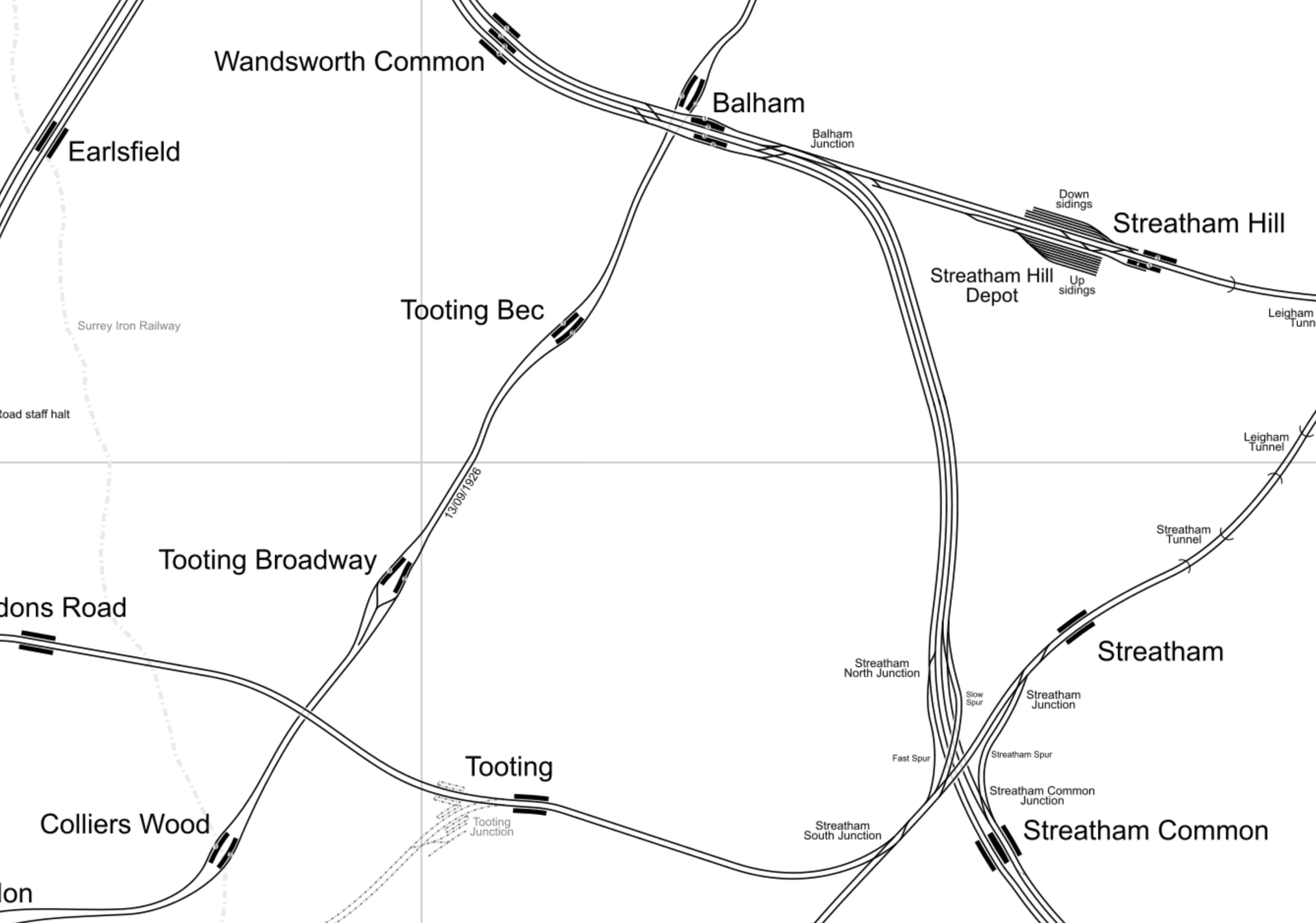
Note.
- Balham station in the North is an interchange station between the Northern Line and National Rail, with a possible four National Rail platforms.
- Tooting Broadway is a simple through station on the Northern Line.
- The next station after Wandsworth Common towards London is Clapham Junction.
- Transport for London have been advocating a new Streatham Common station, that would be an interchange between the lines through Streatham Common and those through Streatham.
- Streatham and Tooting stations are on the Wimbledon Loop Line, which only carries two tph in both directions.
Since I have been writing this blog, there have been several ideas to make better use of the National Rail lines in this area.
There was even a plan that I wrote about in 2016 called The Streatham Virtual Tube.
- Trains would run through Streatham Common, Streatham, Streatham, Hill, Balham, Wandsworth Common, Clapham Junction and into Victoria.
- Trains could also go North from Clapham Junction to Old Oak Common for High Speed Two.
- The Streatham Common Interchange would be built. This would give a useful interchange to the Wimbledon Loop Line.
- There would be four tracks through Streatham.
- A tunnel would be build to allow trains to go through both Streatham and Streatham Hill stations.
- It would have an interchange at Balham with the Northern Line.
- It could have an interchange at Clapham Junction with an extended Battersea Branch of the Northern Line.
- Suppose it had a frequency of perhaps six or even ten tph.
I think it might work, but it shows what can be done, with a bit of out-of-the-box thinking.
Passengers In Dalston And Hackney
One of the entrances to the proposed massive double-ended Crossrail 2 station at Dalston will be at the end of my road and very close to where my mother used to work and where her mother was actually born.
East London had not had major rail improvements since the 1950s and 1960s, when most of the lines into Liverpool Street were electrified and the Southbury Loop was reopened.
But since the creation of the Overground in 2007 from the remains of the ill-performing Silverlink, with the addition of new trains and ticketing and a good clean, there has been a series of smaller projects that have been completed, in and around East and North London.
- 2009 – North London Line starts running to new platforms at Stratford.
- 2009 – Stratford International station opens on High Speed One.
- 2010 – East London Line opens with services to Crystal Palace, New Cross, New Cross Gate and West Croydon stations.
- 2011 – A substantially rebuilt Stratford station opens for the Olympics
- 2012 – South London Line opens with services between Dalston Junction and Clapham Junction stations.
- 2012 – The Docklands Light Railway is extended to Stratford and Stratford International stations.
- 2014 – Hampstead Heath station gets an upgrade.
- 2015 – The Lea Valley Lines between Liverpool Street and Cheshunt, Chingford and Enfield Town stations were moved to the Overground.
- 2015 – TfL Rail begins operation between Liverpool Street and Shenfield, using new Class 345 trains.
- 2016 – Lea Bridge station reopened.
- 2016 – Second entrance to Ilford station in York Road reopened.
- 2018 – Northumberland Park station was rebuilt.
- 2019 – The Gospel Oak to Barking Line was electrified and equipped with new Class 710 trains.
- 2019 – West Hampstead station was rebuilt.
- 2019 – The new Meridian Water station opened.
- 2019 – The rebuilt White Hart Lane station opened.
- 2020 – Tottenham Hale station was rebuilt.
- 2020 – The new Class 710 trains were rolled out on the Lea Valley Lines.
Note.
- There have also numerous smaller upgrades like the addition of lifts to several stations.
- Stations between Stratford and Shenfield have been upgraded for Crossrail.
- There has also been considerable upgrades to the electrification, which in some places was not in the best of condition.
- Most lines have a frequency of four tph or more.
Some may feel that East London has done well with rail improvements in the last few years.
I would agree in some ways, but would counter by saying that before the Overground was created, East London’s were in a terrible state and their state today is a excellent example of what can be achieved by good design, planning and execution, without spending vast sums.
East London and the boroughs of Enfield, Hackney, Haringey, Newham and Waltham Forest in particular, now have a good rail network, that is going to get a lot better with the addition of Crossrail.
- The North London Line is about half a mile to the North of where I live and can walk to two stations or get a bus to another three.
- Crossrail will be a couple of miles to the South with station entrances at Moorgate, Liverpool Street, Whitechapel and Stratford.
- There are four electrified railway lines with new trains, which run North-South with connections to the two East-West lines.
- Although my quickest way to Crossrail will be a bus from close to my house to outside Moorgate station.
- I suspect that everybody in the Borough of Hackney and the Eastern part of Islington will be able to get to a Crossrail station in well under thirty minutes.
- In addition, from where I live the Gospel Oak to Barking Line runs a couple of miles North of the North London Line.
I believe that Dalston’s success over the last decade has been a collateral benefit of its comprehensive rail system, supported by lots of shiny new buses.
Does Dalston want Crossrail 2? Probably, Yes!
Does Dalston need Crossrail 2? Possibly, No!
Do other areas of large cities need Dalstonisation of their railway and bus systems? Absolutely!
I certainly don’t regret moving to Dalston!
Note that one of the reasons I’m so keen on the West London Orbital Railway is that it could do the same for North West London, as the Overground and the Lea Valley Lines have done for North East London.
Passengers Along The Lea Valley
Crossrail 2 will connect the Lea Valley Lines to Dalston and on to Central London.
It will involve the following changes to the West Anglia Main Line.
- Four-tracking of the route at least as far as Broxbourne.
- A junction South of Tottenham Hale station will connect the route to a tunnel to Dalston.
- Level crossings at Brimsdown, Enfield Lock and Cheshunt will be removed.
- Like Crossrail, stations would be substantially step-free.
- The signalling will be upgraded to full in-cab digital ERTMS signalling, that is used by Crossrail and Thameslink under London.
This would enable 10-15 tph running between Tottenham Hale and Broxbourne stations.
With all the development going on around Cambridge and possible expansion of Stansted Airport, I believe that even if Crossrail 2 is not build, then there will be pressure to four-track the West Anglia Main Line, remove the level crossings and improve the stations and signalling.
If this were to be done, then there is an interim plan that could be implemented that I wrote about, four years ago in Could A Lea Valley Metro Be Created?
I envisaged the following.
- Updating the West Anglia Main Line to four-tracks and a standard suitable for Crossrail 2.
- Using the double-track loop at Stratford as the Southern terminal, for some of the trains.
- Updating the Victoria Line stations. The major interchange at Tottenham Hale station has already been improved substantially.
- Providing an appropriate service between Stratford and Broxbourne stations.
- Terminating some Stansted and Cambridge services in the Stratford Loop, as Stratford has better connections to South London and Kent than Liverpool Street.
- Integrating Lea Valley Metro, London Overground and Greater Anglia services to Bishops Stortford, Cambridge and Hertford North stations.
Note.
- All services connect to Crossrail and the Central Line at the Southern end.
- Services to Liverpool Street connect to National Rail services, the Lea Valley Lines of the London Overground and the Circle, District and Metropolitan Lines.
- Services to Stratford connect to National Rail services, the North London Line of the London Overground and the Jubilee Line.
- Could alternate trains serve Liverpool Street and Stratford?
- Could splitting services between Liverpool Street and Stratford mean that the largest proportion of routes have just a single change?
As Transport for London and the train operating companies know where passengers want to go and actually go, I’m sure that a service pattern, that is acceptable to all could be created.
Conclusion
Crossrail 2 is quoted as being a £33 billion project.
I believe that with a good review lots of money could be saved and other smaller projects could be planned and executed to handle the expected increase in the number of passengers.
I would do the following.
- Camden Town station – Upgrade
- Chiltern Railways – Build their connection to Old Oak Common station
- Euston Station – Improve connections to Euston and Euston Square Underground stations.
- Northern Line – Extend the Battersea branch to Clapham Junction
- Northern Line – Split Into Two Lines
- Overground – Build Old Oak Common Lane and Hythe Road stations
- Southern – Build the new Streatham Common station and implement The Streatham Virtual Tube.
- South Western Railway – Run four tph on all proposed Crossrail 2 routes into Waterloo station
- Victoria Line – Upgrade Highbury & Islington, Oxford Circus and Walthamstow Central stations and increase the frequency if possible
- West Anglia Main Line – Upgrade ready for Crossrail 2 and develop the Lea Valley Metro
All of these projects would have their own benefits, whether Crossrail 2 is built or not!
Only when the needs of all passengers have been assessed in a few years, should we make a decision about Crossrail 2.
London Euston Cat-Astrophe Averted For Train-Surfing Puss
The title of this post, is the same as that of this article on the BBC.
Except for the headline, the BBC resisted the urge to use more feline puns in the story.
Is The Eastern Leg Of High Speed Two Under Threat?
This page on the High Speed Two web site is entitled HS2 Phase 2b Eastern Leg.
These are the opening three paragraphs.
Earlier this year the government made clear in its response to the Oakervee Review its commitment to Phase 2b of HS2, ensuring we boost capacity, improve connectivity between our regions and share prosperity.
As part of this, the government plans to present an Integrated Rail Plan for the North and Midlands by the end of the year, informed by an assessment from the National Infrastructure Commission, which will look at how to deliver HS2 Phase 2b, Northern Powerhouse Rail, Midlands Rail Hub and other rail programmes better and more effectively.
In the meantime, the government has asked HS2 Ltd to pause work on the Eastern Leg. We recognise that this causes uncertainty and our Eastern Leg community engagement teams remain in place to support you.
The page then says that the work on the Western Leg should proceed, with the aim of a Western Leg Bill in early 2022.
In Northern Powerhouse Rail – Significant Upgrades Of The East Coast Main Line From Leeds To Newcastle (Via York And Darlington) And Restoration Of The Leamside Line, I showed that the current and future upgrades to the East Coast Main Line, required by the East Coast Main Line, Northern Powerhouse Rail and High Speed Two, will greatly reduce the times on services from London Kings Cross to Doncaster, Yorkshire, the North East and Scotland.
I said this on timings on the East Coast Main Line.
- London Kings Cross and Doncaster could be around an hour.
- London Kings Cross and Leeds could be around one hour and thirty minutes, using the current Doncaster and Leeds time, as against the one hour and twenty-one minutes for High Speed Two.
- London Kings Cross and York could be around one hour and twenty-three minutes, using the current Doncaster and York time, as against the one hour and twenty-four minutes for High Speed Two.
- Timings between York and Newcastle would be the same fifty-two minutes as High Speed Two, as the track will be the limitation for both services.
- High Speed Two’s timing for York and Newcastle is given as fifty-two minutes, with York and Darlington as twenty-five minutes.
- London Kings Cross and Darlington could be around one hour and forty-nine minutes
- London Kings Cross and Newcastle could be around two hours and sixteen minutes.
- London Kings Cross and Edinburgh would be under three-and-a-half hours, as against the proposed three hours and forty-eight minutes for High Speed Two.
LNER’s Azuma cavalry will hold the fort for as long as is needed.
I’ll now look at how various stations, will be affected if the Eastern Leg of High Speed Two is not built, until a couple of decades in the future.
Leeds
Current Long Distance Services At Leeds Station
Leeds station has the following long distance services in trains per hour (tph)
- CrossCountry – 1
- LNER – 2
- TransPennine Express – 5
It is a bit thin compared to say Birmingham or Manchester.
Northern Powerhouse Rail And Leeds
Northern Powerhouse Rail has plans for Leeds with these services to other Northern cities.
- Hull – two tph in 38 minutes
- Manchester – six tph in 25 minutes
- Newcastle – four tph in 58 minutes
- Sheffield – four tph in 28 minutes.
From what they have written, the following could also be possible.
- Bradford – six tph in a few minutes
- Liverpool – four or more tph in 51 minutes
- Manchester Airport – four or more tph in 35 minutes
It is an ambitious plan.
High Speed Two And Leeds
High Speed Two is planning to run the following trains to Leeds in every hour.
- Birmingham Curzon Street and Leeds – 200 metre train
- Birmingham Curzon Street and Leeds via East Midlands Hub – 200 metre train
- London Euston and Leeds via Old Oak Common and East Midlands Hub – 200 metre train
- London Euston and Leeds via Old Oak Common and East Midlands Hub – 400 metre train
- London Euston and Leeds via Old Oak Common, Birmingham Interchange and East Midlands Hub – 400 metre train
Timings will be as follows.
- Birmingham Curzon Street and Leeds – 49 minutes.
- London Euston and Leeds – One hour and 21 minutes.
There will be about 1000 seats per hour between Birmingham Curzon Street and Leeds and 2500 seats per hour Between London Euston and Leeds.
High Speed Two And Leeds Via Manchester
This report on the Transport for the North web site, is entitled At A Glance – Northern Powerhouse Rail.
This map shows Transport for the North’s ideas for connections in the West linking Crewe, Liverpool, Manchester, Manchester Airport, Warrington and Wigan.

A black line goes East from Manchester to link it to Leeds via Huddersfield and Bradford.
- This is proposed as a route shared between High Speed Two and Northern Powerhouse Rail.
- High Speed Two are promising that London Euston and Manchester will be timed at one hour and eleven minutes.
- London Euston and Manchester will have a frequency of three tph and will all be 400 metre High Speed Two Full Size trains, with about a thousand seats.
- Northern Powerhouse Rail have an objective of a twenty-five minute journey time between Manchester and Leeds.
I would also build the Manchester and Leeds route with the following characteristics.
- As a full-size tunnel capable of taking High Speed Two Full Size trains and the largest freight trains.
- Intermediate and underground stations at Huddersfield and Bradford.
- It could be built as a base tunnel, like the similarly-sized Gotthard base tunnel in Switzerland.
- The Swiss tunnel has a maximum operating speed for passenger trains of 125 mph.
If it can be built for a reasonable cost and in a reasonable time-scale, it could be a way of doing the following.
- Creating a straight 150 mph plus route across the Pennines, with a capacity of 18 tph.
- Running high-capacity fast trains between London Euston and Leeds via Manchester Airport and Manchester.
- Running freight trains between the two sides of the Pennines.
- Creating a high frequency route between Liverpool and Hull via Manchester Airport, Manchester, Huddersfield and Bradford and Leeds.
The passenger service between Liverpool and Hull could be the world’s first high speed metro.
If the London Euston and Manchester trains, were to be extended to Leeds, London Euston and Leeds would take one hour and thirty-six minutes, which would only be fifteen minutes slower, than is promised for the route going via the Eastern Leg of High Speed Two.
London Kings Cross And Leeds
When the in-cab digital signalling is complete between London Kings Cross and Leeds, I am fairly confident that with a few other improvements and more zoom from the Azumas, that a London Kings Cross and Leeds time of one hour and fifty minutes will be possible.
But will two nine-car or pairs of five-car trains per hour (tph), be enough capacity? Especially, as pairs of five-car trains will split and join to serve a wider catchment area, which will harvest more passengers.
LNER will in a couple of years have an extra path every hour into Kings Cross.
I would feel that best use of this path would be to run between London Kings Cross and Edinburgh via Leeds and Newcastle.
- Leeds and Newcastle could be the only intermediate stops.
- Leeds would be the ideal place to change to Northern Powerhouse Rail for anywhere in the North of England.
- My estimates, say it could run between London Kings Cross and Edinburgh in around three-and-a-half hours.
- It would run non-stop between London Kings Cross and Leeds, Leeds and Newcastle and Newcastle and Edinburgh.
It would increase capacity, between the four major destinations on the route; London Kings Cross, Leeds, Newcastle and Edinburgh.
It could start running, once the digital signalling and current improvements to the East Coast Main Line are complete.
London St. Pancras And Leeds
I discussed, Northern Powerhouse Rail’s plan for Sheffield and Leeds in Northern Powerhouse Rail – Connecting Sheffield To HS2 And On To Leeds.
This could see the following new infrastructure.
- Electrification between Clay Cross North Junction and Sheffield station of the route shared by the Midland Main Line and High Speed Two.
- Electrification through Sheffield and on to Leeds, via the Wakefield Line
- New stations for High Speed trains at Rotherham and Barnsley Dearne Valley.
I could see East Midlands Railway taking advantage of this route, with their new Class 810 trains and running a regular Leeds and St. Pancras service.
- It would call at Wakefield Westgate, Barnsley Dearne Valley, Rotherham and Meadowhall. between Leeds and Sheffield stations.
- It would take twenty-eight minutes between Leeds and Sheffield, if it met Northern Powerhouse Rail’s objective.
- Perhaps one of the two tph between London St. Pancras and Sheffield could be extended to Leeds.
As the current time between London St. Pancras and Sheffield, is a few minutes under two hours, I can see a time of comfortably under two-and-a-half hours between London St. Pancras and Leeds.
A Summary Of Journey Times Between London And Leeds
I can summarise my estimates, between London and Leeds.
- High Speed Two – Direct via Eastern Leg – One hour and twenty-one minutes.
- High Speed Two – via Manchester – One hour and thirty-six minutes.
- East Coast Main Line – via Doncaster – One hour and thirty minutes.
- Midland Main Line – via Derby and Sheffield – Two hours and twenty minutes.
The direct High Speed Two route is the fastest., but others could be viable alternatives for some passengers.
Bradford
Consider.
- Under current plans Bradford won’t be getting any high speed service from High Speed Two.
- The best it can get under current plans is several direct services per day, between Bradford Forster Square and London Kings Cross in perhaps two hours.
- The layout of the city and its two stations doesn’t give good connectivity.
Bradford, Harrogate, Huddersfield and Skipton could probably be served by trains to and from London Kings Cross that join and split at Leeds.
But if Northern Powerhouse Rail goes for a tunnel between Manchester and Leeds with Bradford as an underground station, it could be served by High Speed Two services going between London Euston and Leeds via Manchester.
I would estimate that if London Euston and Leeds via Manchester took around one hour and thirty-six minutes, London Euston and Bradford could take around an hour-and-a-half.
Darlington
I can summarise my estimates, between London and Darlington.
- High Speed Two – Direct via Eastern Leg – One hour and forty-nine minutes.
- High Speed Two – via Manchester and Leeds – Two hours and six minutes.
- East Coast Main Line – via Doncaster – One hour and forty-nine minutes.
Improvements on the East Coast Main Line, needed to enable and speed-up High Speed Two services to York, Darlington and Newcastle; will speed up East Coast Main Line services to Darlington.
Edinburgh
I can summarise my estimates, between London and Edinburgh.
- High Speed Two – Direct via Western Leg – Three hours and forty minutes.
- High Speed Two – via Manchester and Leeds – Three hours and forty-eight minutes.
- East Coast Main Line – via Doncaster – Three hours and thirty minutes.
Improvements on the East Coast Main Line, needed to enable and speed-up High Speed Two services to York, Darlington and Newcastle; will speed up East Coast Main Line services to Newcastle.
Harrogate
Consider.
- Under current plans Harrogate won’t be getting any high speed service from High Speed Two.
- The best it can get under current plans is several direct services per day, between Harrogate and London Kings Cross in perhaps two hours.
Bradford, Harrogate, Huddersfield and Skipton could possibly be served by trains to and from London Kings Cross that join and split at Leeds.
Huddersfield
- If Huddersfield is served by underground platforms beneath the current Huddersfield station, a lot of what I said for Bradford would apply to Huddersfield.
- The timings would probably be around an-hour-and-a-half from London Euston.
Bradford, Harrogate, Huddersfield and Skipton could possibly be served by trains to and from London Kings Cross that join and split at Leeds.
Hull
Hull is an interesting destination.
- Reaching Hull from the current High Speed Two network will need a change at Leeds or another station.
- Using Northern Powerhouse Rail’s objectives on timings, London Euston and Hull via Manchester on High Speed Two, would be a few minutes under two-and-a-half hours.
- I strongly feel, that London Kings Cross and Hull via Selby could be reduced to below two hours.
Hull would also make a superb Eastern terminal station for both Northern Powerhouse Rail and a High Speed Two service from London via Manchester and Leeds.
You pays your money and takes your choice.
Middlesbrough
Reaching Middlesbrough from the proposed High Speed Two network will need a change at York or another station.
But a time of two hours and twenty minutes, should be possible using the East Coast Main Line via Doncaster.
Improvements on the East Coast Main Line, needed to enable and speed-up High Speed Two services to York, Darlington and Newcastle, will speed up East Coast Main Line services to Middlesbrough.
Newcastle
I can summarise my estimates, between London and Newcastle.
- High Speed Two – Direct via Eastern Leg – Two hours and seventeen minutes.
- High Speed Two – via Manchester and Leeds – Two hours and thirty-four minutes.
- East Coast Main Line – via Doncaster – Two hours and sixteen minutes.
Improvements on the East Coast Main Line, needed to enable and speed-up High Speed Two services to York, Darlington and Newcastle; will speed up East Coast Main Line services to Newcastle.
Nottingham
I will compare average speeds on the Midland Main Line between London St. Pancras and Nottingham and on the East Coast Main Line, between London Kings Cross and Leeds.
Currently.
- London St. Pancras and Nottingham services, over the 126 mile route, take one hour and fifty minutes. which is an average speed of 69 mph.
- London Kings Cross and Leeds services, over the 186 mile route, take two hours and thirteen minutes, which is an average speed of 94 mph.
Note.
- The two routes are of similar character and are fairly straight with large sections of 125 mph running and quadruple tracks.
- The East Coast Main Line to Leeds is fully electrified, whereas the Midland Main Line is only partially electrified.
- Both routes have a small number of stops.
- In a few years time, services on both routes will be run by different members of the Hitachi AT-300 train family.
I don’t feel it would be unreasonable to assume that a London St. Pancras and Nottingham service could be run at an average speed of 94 mph, if the Midland Main Line were upgraded to the same standard as the East Coast Main Line.
This could mean a time of around one hour and twenty-one minutes between London St. Pancras and Nottingham, or a saving of twenty-nine minutes.
Is that possible?
- The new Class 810 trains, will have four engines instead of the normal three for a five-car AT-300 train. Will they be able to be closer to the 125 mph line-speed on diesel power, where it is available on the Midland Main Line.
- The trains will be able to use electrification between London St. Pancras and Market Harborough.
- There have been hints, that more electrification may be installed on the Midland Main Line.
- Hitachi have announced a battery electric version of the AT-300 train called an Intercity Tri-Mode Battery Train, where one or more of the diesel engines are replaced by battery packs.
- The new trains will be ready to accept in-cab ERTMS digital signalling, so they could be able to run at up to 140 mph, if the track were to be upgraded.
I certainly feel, that substantial time savings could be possible between London St. Pancras and Nottingham.
Eighty-one minutes would be very convenient, as it would comfortably allow a three hour round trip, which would mean just six trains or more likely pairs of trains would be needed for the current two tph service.
Eighty-one minutes would not be the fifty-two minute service promised by High Speed Two!
But!
- The new trains are planned to be introduced from 2023.
- Who knows, when High Speed Two will arrive at the East Midlands Hub station?
- They won’t need any new substantial infrastructure to replace the current trains.
I also suspect the new trains will have more seats, but, the capacity of the Class 810 train, has not been published.
Nottingham could also be served by a high speed service from London Kings Cross via Grantham, which I estimate would take about one hour and twenty minutes.
Sheffield
A lot of what I said for Nottingham can be applied to Sheffield.
- Currently, London St. Pancras and Sheffield services, over the 165 mile route, take two hours, which is an average speed of 82.5 mph.
- High Speed Two is promising a journey time of one hour and twenty-seven minutes.
- An average speed of 90 mph, would mean a journey time of one hour and fifty minutes.
- This would allow a four hour round trip, which would mean just eight trains or more likely pairs of trains would be needed for the current two tph service.
It would be very convenient for the operator.
It looks like if pairs of trains were to be run on both the Nottingham and Sheffield routes, that twenty-eight trains would be needed to run both services.
This fits well with a fleet size of thirty-three trains.
The only caveat, is that to get the required journey times, it might be necessary to rebuild and electrify the tracks, between Sheffield and Clay Cross North Junction.
- These tracks will be shared with the future Sheffield Branch of High Speed Two.
- It would only be 15.5 miles of double-track to rebuild and electrify.
- It could be rebuilt to allow 140 mph running. Several minutes could be saved!
The electrification could allow Hitachi’s Intercity Tri-Mode Battery trains to be able to run the Sheffield service.
These trains would certainly be a way of avoiding the tricky electrification of the Derby and Clay Cross section of the route, which goes through the World Heritage Site of the Derwent Valley Mills.
Sheffield could also be served by a high speed service from London Kings Cross via Doncaster, which I estimate would take about one hour and thirty minutes.
Skipton
Consider.
- Under current plans Skipton won’t be getting any high speed service from High Speed Two.
- The best it can get under current plans is several direct services per day, between Skipton and London Kings Cross in perhaps two hours.
Bradford, Harrogate, Huddersfield and Skipton could possibly be served by trains to and from London Kings Cross that join and split at Leeds.
Sunderland
Reaching Sunderland from the proposed High Speed Two network will need a change at York or another station.
But a time of two hours and thirty minutes, should be possible using the East Coast Main Line via Doncaster.
Improvements on the East Coast Main Line, needed to enable and speed-up High Speed Two services to York, Darlington and Newcastle, will speed up East Coast Main Line services to Sunderland.
York
I can summarise my estimates, between London and York.
- High Speed Two – Direct via Eastern Leg – One hour and twenty-four minutes.
- High Speed Two – via Manchester and Leeds – One hour and forty-two minutes.
- East Coast Main Line – via Doncaster – One hour and twenty-four minutes.
Improvements on the East Coast Main Line, needed to enable and speed-up High Speed Two services to York, Darlington and Newcastle; will speed up East Coast Main Line services to York.
I believe strongly, that York would be about as fast from London, by either of the direct routes, but both would serve different intermediate destinations.
Conclusion
My first conclusion is a surprising one, but the promised timings from High Speed Two and the current timings in the timetable make it clear.
To achieve the required timings for High Speed Two, major improvements must be made to existing track and these improvements will mean that existing services will be competitive with High Speed Two on time.
These improvements fall into this category.
- Improving the East Coast Main Line between York and Newcastle, will make East Coast Main Line services to York, Darlington, Durham and Newcastle competitive with High Speed Two services.
- Improving the East Coast Main Line between York and Newcastle, may also mean that London Kings Cross and Edinburgh will be faster than the High Speed Two service between London Euston and Edinburgh.
- Electrifying the route shared between Sheffield and Clay Cross North Junction, will speed up London St. Pancras and Sheffield services and make them more competitive with High Speed Two.
I suspect there may be similar mutual improvements on the Western leg of High Speed Two.
Other smaller conclusions from my analysis of the improvements include.
- These improvements will create some extra capacity on the East Coast and Midland Main Lines, by removing bottlenecks and improving line speeds.
- Electrification, even if it is only partial or discontinuous, will improve services on the Midland Main Line.
- Some places like Harrogate, Middlesbrough and Skipton will never be served directly by High Speed Two, but are easily served by East Coast Main Line services from London Kings Cross.
- Northern Powerhouse Rail is very much part of the North-South capacity for England.
- In-cab ERTMS signalling will play a large part in increasing capacity and line speeds.
Perhaps in our planning of High Speed Two, we should plan all the routes in the North and Midlands in a much more holistic way.
If we look at the capacity between London and the North, I feel that with the addition of Phase 1 of High Speed Two to Birmingham in 2029-2033 and hopefully Phase 2a soon afterwards, that Phase 2b will not be needed for reasons of speed and capacity until years later.
So, I would pause most construction of the Eastern Leg of High Speed Two until Phase 1 and Phase 2a are complete.
I would make exceptions for the following.
- Improvements to the shared section of the East Coast Main Line and High Speed Two, between York and Newcastle.
- Building a high speed connection between Leeds and York for the use of Northern Powerhouse Rail and the East Coast Main Line.
- Rebuilding and electrification of the shared section of the Midland Main Line and High Speed Two, between Clay Cross North Junction and Sheffield.
- Improve and electrify the route between Sheffield and Leeds.
But I would continue with the design, as I feel that East of Leeds is very much sub-optimal at the present time.
The route of the Eastern leg of High Speed Two would be safeguarded.
But the biggest problem with the Eastern Leg of High Speed Two to Leeds, is that however it is built travellers to and from Leeds, York and further North will not see any improvements for some years, but improving the East Coast Main Line wouldn’t exactly see jam tomorrow, but tons of it by 2024.
Macclesfield Station And High Speed Two
Today, I went to Macclesfield station.
In the latest iteration of High Speed Two, two new destinations were added to the High Speed Two Network; Macclesfield and Lancaster.
These pictures show Macclesfield station.

It is a modern station, with three through platforms, two bridges and some Modernist architecture from the 1970s, that could be improved.
This Google Map shows the layout of the station.
Note.
- Platform 1 is in the West and is used by trains to Stockport and Manchester Piccadilly.
- Platform 2 is in the middle and is used by trains going to Stoke, London and the South.
- Platform 3 is in the East and appears to be used a couple of times per day.
- It also appears there might have been a fourth platform.
All platforms appear capable of handling an eleven-car Class 390 train, which are over two hundred and sixty metres in length.
Is the plan to use Macclesfield as a High Speed Two terminal feasible?
Which Trains Will High Speed Two Use On Macclesfield Services?
It appears that High Speed Two will have two types of trains.
- Trains built to the European loading gauge, that will only be able to work on high lines like High Speed One and High Speed Two. Examples would be Eurostar’s Class 373 and Class 374 trains.
- Trains built to the UK loading gauge, that could also work on existing UK 125 mph routes like the East Coast, Great Western, Midland and West Coast Main Lines. Examples would be Class 800. Class 801, Class 802, Class 390 and Class 745 trains.
The second type, which are referred to, as class-compatible trains will be used to Macclesfield, as these services will share track with Class 390 and other trains, that have been or will be built to the smaller UK loading gauge.
Will Classic-Compatible High Speed Two Trains Fit Into Macclesfield Station?
Currently, every hour, one eleven-car Class 390 train calls in Macclesfield station in both directions, as they provide one of Avanti \west Coast’s three trains per hour (tph) between London Euston and Manchester Piccadilly stations.
The current trains are sixty metres longer than the proposed classic-compatible High Speed Two trains, that could be terminating in Macclesfield station.
How Would Passengers Who Started And Finished Their Journeys In Macclesfield, Connect to Manchester?
Currently, these hourly services connect Manchester Piccadilly and Stoke stations.
- Avanti West Cost – Manchester Piccadilly and London Euston.
- CrossCountry – Manchester Piccadilly and Bournemouth
- CrossCountry – Manchester Piccadilly and Bristol
- Northern – Manchester Piccadilly and Stoke, which stops at all stations.
The characteristics would be common to all these four trains.
- Services call at Stockport, Macclesfield and Stoke stations.
- As services share tracks with a High Speed Two service, they must be reasonably fast.
- All except the Northern service are 125 mph trains.
- The Northern service is run by a 90 mph Class 323 electric train.
- As Manchester Piccadilly and Stoke via Stockport is a fully-electrified route, the trains should probably be able to take advantage.
In an ideal world should the frequency be six tph or one train every ten minutes in each direction?
Which Platforms Would Be Used To Terminate High Speed Two Services?
Trains built to the UK loading gauge could probably terminate in any of the three platforms.
But it might be advantageous to terminate all services in the same platform.
Platform 3 would be the obvious choice.
- It shares an island platform with classic services going South between Manchester Piccadilly and Stoke.
- Passengers starting their journeys in Manchester Piccadilly or Stockport could just walk across from their connecting train to the High Speed Two train.
It must surely be a possibility to make Platform 2 able to operate bi-directionally, so that all trains between Manchester Piccadilly and Stoke stations in both directions, stop in Platform 2, alongside the High Speed Two train for London and the South, that is waiting in Platform 3. The combined frequency would be eight tph. All passengers would just walk across the island platform to change trains.
Could A North-Facing Bay Platform Be Fitted Into The Northern End Of The Island Platform 2/3?
If you are going to provide a High Speed Two service to and from Macclesfield station, it needs to have superb and comprehensive connections to as many places as possible.
The station currently has four tph to Manchester Piccadilly, Stockport and Stoke, but would a North-facing bay platform with level access to the High Speed Two platform make any of the following feasible?
- Run a second local stopping service between Manchester Piccadilly and Macclesfield to give all intermediate stations two tph to High Speed Two.
- Run hourly services to places that don’t have good connections to high speed services to London and the South.
- The Stockport and Stalybridge Line could be used to connect Stalybridge and Huddersfield to High Speed Two.
- There might even be a way of creating a link between Macclesfield and Manchester Airport.
Note.
- Looking at the platform layout at Macclesfield station, fitting in a bay platform would appear to be feasible.
- The important Stockport station, which seems to have been forgotten by High Speed Two would probably have at least six tph to High Speed Two at Macclesfield station.
- The local train could be timed to arrive at Macclesfield station, a convenient time before the High Speed Two train is scheduled to depart.
The bay platform could even be part of Platform 3, if it was decided that trains stopping in Platform 3, never used the platform as a through platform. It would be Macclesfield’s version of the Clapham Kiss.
I suspect more space could be found, by moving the signal box at the end of the station.
\remember that these days most signalling is controlled from centralised Rail Operation Centres.
Could High Speed Two Trains Run Between Macclesfield And Manchester Piccadilly?
As I said earlier, High Speed Two’s classic-compatible trains will be the same cross-section and shorter, than an eleven-car Class 390 train.
So the answer to my question must be yes!
- This would enable a stop at Stockport station.
- No platform lengthening would be required at Manchester Piccadilly and Stockport stations.
High Speed Two must have good reasons for using Macclesfield as a terminal.
- There are capacity issues between Macclesfield and Manchester Piccadilly stations.
- Macclesfield offers opportunities to connect to places, that are difficult to reach from Manchester Piccadilly station.
But these problems could probably be overcome by digital signalling or extension of the Manchester Metrolink.
Could More High Speed Two Services Run Between Macclesfield Station and The South?
Consider.
- I believe that Macclesfield station could handle more than an hourly High Speed Two train.
- It is a general principle, that on a metro like the London Overground or Merseyrail, that a single platform can handle up to four or even six tph.
- Four tph would surely be too high, but Macclesfield could easily handle a second classic-compatible train to and from Birmingham Curzon Street via Stoke and Stafford.
- During the inevitable works at Manchester Piccadilly station to sccomodate High Speed Two, Macclesfield could offer an alternative route, between London and Manchester.
Using Macclesfield station, as an alternative terminal for Manchester Piccadilly, builds in extra capacity for the future and offers a valuable alternative route during construction and upgrade works.
Rationalisation Between Cross Country And High Speed Two
Consider.
- In a lot of locations North of Birmingham, CrossCountry and High Speed Two seem to provide similar services between the same stations.
- Using currently proposed connections between High Speed Two and the classic network, CrossCountry’s services could run faster.
- CrossCountry’s new fleet of trains will probably be multi-mode trains, that will be very similar to the classic-compatible High Speed Two trains.
- Some of the routes used by CrossCountry’s services will have a substantial upgrade to allow higher speeds and more trains, to speed up High Speed Two services.
There must be a case for rationalisation of services.
Conclusion
The more I look at High Speed Two terminating at Macclesfield station, the more I like it.
I can see these services running from the station in the future.
- High Speed Two – Macclesfield and London Euston – One tph – This service would additionally call at Birmingham Interchange to link up with CrossCountry to the South.
- High Speed Two – Macclesfield and Birmingham Curzon Street – One tph
- CrossCountry – Macclesfield and Bournemouth, Plymouth or Reading – One tph.
- Northern and others – Macclesfield and Manchester Piccadilly via Stockport – Four-six tph
- Northern – Macclesfield and Huddersfield via Stockport and Stalybridge – Two tph
- Northern – Macclesfield and Manchester Airport – Two tph.
Obviously, this is all speculation, but Macclesfield will develop into an important rail hub to the South-East of Manchester.
Environmental Humour On Euston Road
I took this picture on the Euston Road outside Euston station.

It’s an area, where I don’t walk very often, so I don’t know how long it’s been there.
Euston Station – 8th May, 2020
I had walked to Euston station from Kings Cross along the back roads, which is a much better route than along the polluted Euston Road.






Note, that the train part of the station seemed to be functioning normally.

