The Mathematics Of A Hydrogen-Powered Freight Locomotive
If we are going to decarbonise the railways in the UK and in many countries of the world, there is a need to replace diesel locomotives with a zero-carbon alternative.
In looking at Airbus’s proposal for hydrogen powered aircraft in ZEROe – Towards The World’s First Zero-Emission Commercial Aircraft, it opened my eyes to the possibilities of powering freight locomotives using gas-turbine engines running on liquid hydrogen.
A Hydrogen-Powered Equivalent Of A Class 68 Locomotive
The Class 68 Locomotive is a modern diesel locomotive used on UK railways.
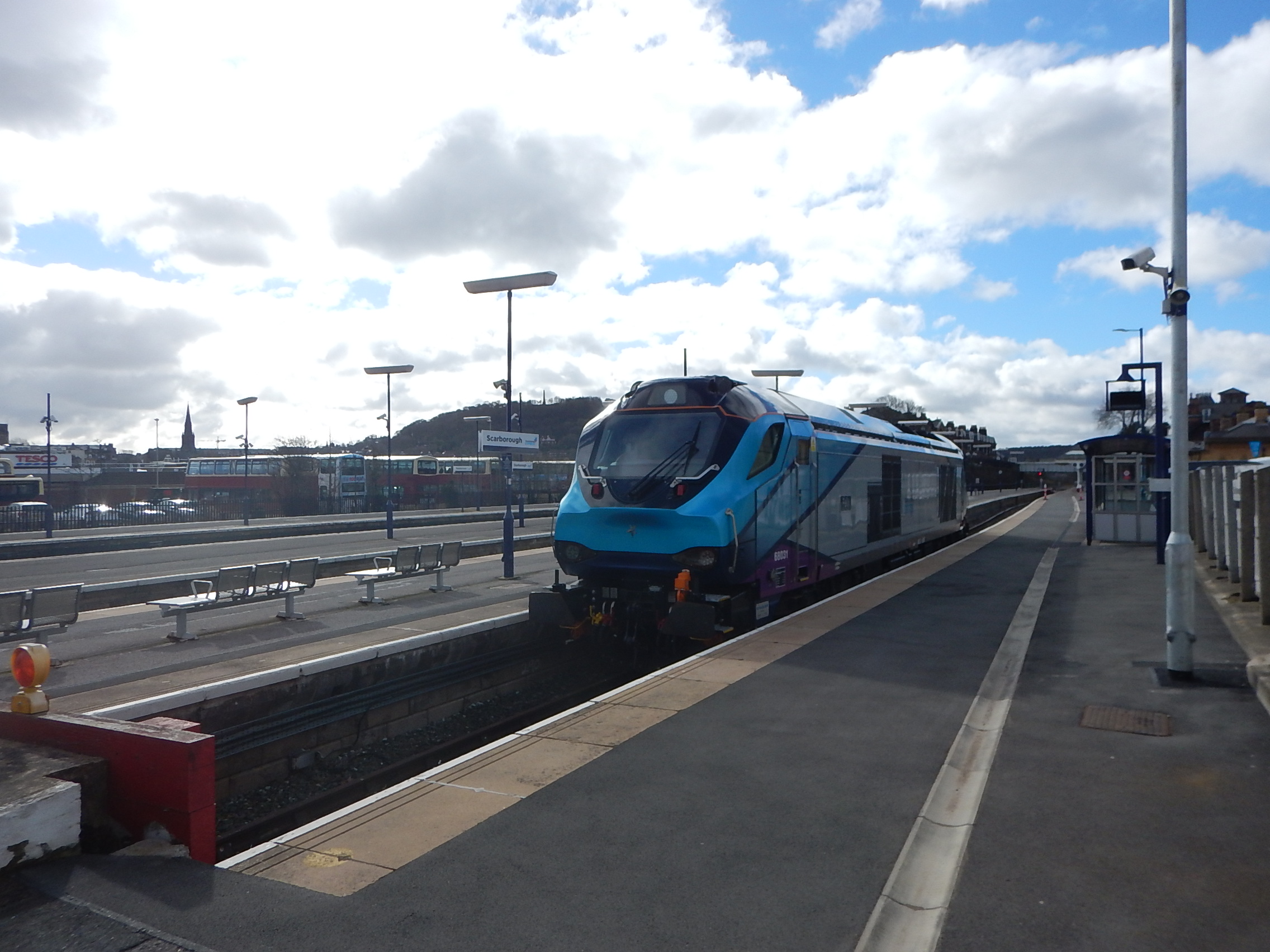
This is a brief specification
- It can pull both passenger and freight trains.
- It has an operating speed of 100 mph.
- The diesel engine is rated at 2.8 MW
- It has an electric transmission.
- It has a 5,000 litre diesel tank.
- It weighs 85 tonnes.
- It is 20.5 metres long.
There are thirty-four of these locomotives in service, where some haul passenger trains for Chiltern Railways and TransPennine Express.
Rolls-Royce’s Staggering Development
Staggering is not my word, but that of Paul Stein, who is Rolls-Royce’s Chief Technology Officer.
He used the word in a press release, which I discuss in Our Sustainability Journey.
To electrify aviation, Rolls-Royce has developed a 2.5 MW generator, based on a small gas-turbine engine, which Paul Stein describes like this.
Amongst the many great achievements from E-Fan X has been the generator – about the same size as a beer keg – but producing a staggering 2.5 MW. That’s enough power to supply 2,500 homes and fully represents the pioneering spirit on this project.
This generator is designed for flight and the data sheet for the gas-turbine engine is available on the Internet.
- It has a weight of under a couple of tonnes compared to the thirteen tonnes of the diesel engine and generator in a Class 68 locomotive.
- It is almost as powerful as the diesel.
- It looks to be as frugal, if not more so!
- Rolls-Royce haven’t said if this gas-turbine can run on aviation biofuel, but as many of Rolls-Royce’s large engines can, I would be very surprised if it couldn’t!
Rolls-Royce’s German subsidiary; MTU is a large producer of rail and maritime diesel engines, so the company has the expertise to customise the generator for rail applications.
Could this generator be modified to run on liquid hydrogen and used to power a Class 68-sized locomotive?
- The size of the generator must be an advantage.
- Most gas-turbine engines can be modified to run on natural gas and hydrogen.
- Its power output is electricity.
- There’s probably space to fit two engines in a Class 68 locomotive.
In addition, a battery could be added to the transmission to enable regenerative braking to battery, which would increase the efficiency of the locomotive.
Storing Enough Hydrogen
I believe that the hydrogen-powered locomotive should carry as much energy as a Class 68 locomotive.
- A Class 68 locomotive has a capacity of 5,000 litres of diesel fuel.
- This will have a mass of 4.19 tonnes.
- Each kilogram of diesel can produce 47 Mega Joules of energy.
- This means that full fuel tanks contain 196,695 Mega Joules of energy.
- Each litre of liquid hydrogen can produce 10.273 Mega Joules of energy
This means that to carry the same amount of energy will need 19,147 litres or 19.15 cubic metres of liquid hydrogen.
- This could be contained in a cylindrical tank with a diameter of 2 metres and a length of 6 metres.
- It would also weigh 1.38 tonnes.
The E-Fan-X aircraft project must have worked out how to store, similar amounts of liquid hydrogen.
Note that I used this Energy And Fuel Data Sheet from Birmingham University.
Running On Electrification
As the locomotive would have an electric transmission, there is no reason, why it could not run using both 25 KVAC overhead and 750 VDC third-rail electrification.
This would enable the locomotive to haul trains efficiently on partially electrified routes like between Felixstowe and Leeds.
Hydrogen-Powered Reciprocating Engines
When it comes to diesel engines to power railway locomotives and big trucks, there are few companies bigger than Cummins, which in 2018, turned over nearly 24 billion dollars.
- A large proportion of this revenue could be at risk, if governments around the world, get serious about decarbonisation.
- Cummins have not let the worst just happen and in 2019, they acquired Hydrogenics, who are a hydrogen power company, that they now own in an 81/19 partnership with Air Liquide.
- Could all this expertise and Cummins research combine to produce powerful hydrogen-powered reciprocating engines?
- Other companies, like ABC and ULEMCo are going this route, to modify existing diesel engines to run on hydrogen or a mixture of hydrogen and diesel.
I believe it is very likely, that Cummins or another company comes up with a solution to decarbonise rail locomotives, based on a conversion of an existing diesel engine.
Refuelling Hydrogen-Powered Rail Locomotives
One of problems with hydrogen-powered trucks and cars, is that there is no nationwide refuelling network providing hydrogen. But railway locomotives and trains usually return to depots at the end of the day for servicing and can be fuelled there.
Conclusion
I feel that there are several routes to a hydrogen-powered railway locomotive and all the components could be fitted into the body of a diesel locomotive the size of a Class 68 locomotive.
Consider.
- Decarbonising railway locomotives and ships could be a large market.
- It offers the opportunities of substantial carbon reductions.
- The small size of the Rolls-Royce 2.5 MW generator must offer advantages.
- Some current diesel-electric locomotives might be convertible to hydrogen power.
I very much feel that companies like Rolls-Royce and Cummins (and Caterpillar!), will move in and attempt to claim this lucrative worldwide market.
East Coast Main Line Northern Power Supply Works Funded
The title of this post, is the same as that of this article on Railway Gazette.
This is the introductory paragraph.
As part of its £1·2bn East Coast Upgrade programme, Network Rail has awarded a £216·2m contract to the Rail Electrification Alliance for the long-awaited strengthening of the 25 kV 50 Hz traction power supplies on the northern section of the East Coast Main Line between Doncaster and Edinburgh.
It is much-needed. if the planned extra electric services are to be run on the route.
These could include.
- East Coast Train‘s new London and Edinburgh service.
- Extra TransPennine Express services and some services converting from diesel traction.
- Extra LNER services to Middlesbrough and other destinations.
- Conversion of Grand Central services to electric or bi-mode traction.
Will Freightliner use some of its new fleet of thirteen Class 90 locomotives on the route?
Will News Of The Upgrade Bring Forth Train And Locomotive Orders?
I wonder if this could happen.
Freight operators need to decarbonise, but surely there’s a bit of a chicken-and-egg situation on the East Coast Main Line, as there’s no point in ordering electric locomotives for the route, until you have a date, from when they can be used.
Conclusion
This upgrade will have some very good xonsequences.
High Speed Train Seats Used To Deliver Fresh Fish
The title of this post, is the same as that of this article on Railway Gazette.
This is the introductory paragraph.
East Japan Railway is testing the use of high speed passenger trains to move fresh fish from Sendai to Tokyo.
The last paragraph explains the title.
These services do not use passenger accommodation, unlike JR East’s latest test programme where the No 1 car is closed to passengers so that the seats can be used to transport the containers of fish.
But then the idea isn’t new as Great Western Railway ran a trial in 2015, with the fish travelling in the back of the locomotive on an Intercity 125. That story is also in Railway Gazette.
Freight Tram-Train To Be Tested In Karlsruhe
The title of this post is the same as that of this article on Railway Gazette.
This is the introductory paragraph.
Trials with a prototype freight tram or tram-train are to start in Karlsruhe and the surrounding area in 2022. The concept is being drawn up with a view to improving urban life by reducing road traffic and the emissions it generates.
There are other cargo trams in Germany, like the CarGoTram in Dresden and I think it is a concept, we’ll see in other places.
In High Speed Urban Freight Logistics By Rail, I wrote about Rail Operations Group’s plans to run freight services between London Gateway and Liverpool Street station.
It may be different technology, but it has similar objectives.
Westbury Station – 30th July 2020
I went to Westbury station today and took these pictures.
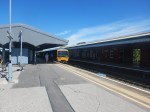


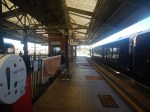
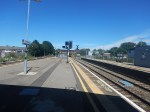
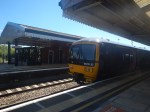

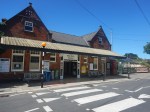


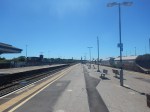
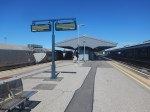
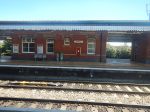
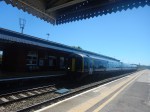
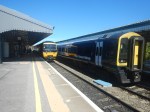
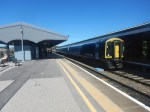

I found Westbury station to be a station in extremely good condition.
It also had a buffet, where I was able to purchase a delicious ice cream.
Passenger Services Through Westbury Station
I was at the station for about an hour and several trains passed through.
Great Western Railway services through the station include.
- One train per two hour (tp2h) – London Paddington and Exeter St. Davids – Stops
- One tp2h – London Paddington and Penzance – Passes through
- One tp2h – London Paddington and Plymouth – Passes through
- One train per hour (tph) – Cardiff Central and Portsmouth Harbour – Stops
- One tp2h – Great Malvern and Westbury
- One tp2h – Gloucester and Weymouth – Stops
- One tp2h – Swindon and Westbury
Train classes included Class 800 trains and Class 166 trains.
South Western Railway services through the station include.
- Five trains per day – Salisbury and Bristol Temple Meads – Stops
Train classes include Class 159 trains.
Battery Trains Through Westbury
Hitachi’s Class 800 train with a battery electric capability or Regional Battery Train, is described in this infographic from the company.

The proposed 90 km or 56 mile range could even be sufficient take a train between Westbury and Bristol Temple Meads stations on a return trip.
Many of the trains through Westbury go to the same stations.
Distances are as follows.
- Bristol Temple Meads – 28 miles
- Newbury – 42 miles
- Salisbury – 24 miles
- Swindon – 32.5 miles
- Taunton – 47 miles
It looks like all of these places should be in range of an electric train with a battery capability, providing there is a charging facility at the other end.
An Electrification Island At Westbury Station
I have been advocating an island of electrification around Westbury station for some time and feel about a dozen miles of electrification through the station would be sufficient for Class 800 trains with a battery capability to bridge the gap.
- At Newbury, trains would access the current electrification into London Paddington.
- Between Exeter and Taunton, the rail route runs alongside the M5, so why not electrify this stretch, as the wires will not be so noticeable?
Looking at Westbury, to my untrained eye, it would appear that a short section of electrification around the station, would not be the most challenging of projects.
I believe that discontinuous electrification between Newbury and Exeter would be possible and could gradually be extended across Devon and Cornwall.
It should also be noted that one of Hitachi’s Regional Battery Trains has a range of 56 miles, so that these places from Westbury could be an return trip on batteries, with a well-driven train with excellent energy management.
- Bath Spa – 17 miles
- Bradford-on-Avon – 7 miles
- Bristol Temple Meads – 28 miles
- Chippenham – 16 miles
- Frome – 6 miles
- Salisbury – 24 miles
- Trowbridge – 4 miles
- Warminster – 9 miles
Obviously, the number of stops and the terrain will play a part.
Freight Might Drive Full Electrification Through Westbury Station
As the pictures show, there are heavy freight trains going through the area, which bring long and weighty loads of stone from the Mendips to London.
- There are regularly two or three stone trains in an average hour of the day.
- Like in the picture, I suspect they are usually hauled by a noisy, smelly, polluting and carbon-dioxide emitting Class 66 Locomotive. Not all of these, are as clean and well-maintained, as the one in the picture.
- Some trains start at Merehead Quarry, which is about fifteen miles from Westbury station.
I believe that we must decarbonise freight trains.
But freight and electric haulage is not a simple subject.
- I once had extensive talks with a Senior Crane Driver at the Port of Felixstowe during an Ipswich Town Away match. Ports don’t like overhead wires, as containers do get dropped and fall off rail wagons.
- Suppose a historic line without electrification, like the Settle and Carlisle has a serious land-slip, which it did a couple of years ago. How do you haul in the materials for repair?
- Because freight can be of a random and unpredictable nature, to electrify freight, you probably need to electrify the whole rail network.
For these and other reasons, we need independently-powered freight locomotives and I feel that a new freight locomotive will develop, that will be needed by the rail industry all over the world.
There are several solutions.
Biodiesel
Biodiesel is the simplest solution and would mean that the current diesel locomotives could be used.
In Grant Shapps Announcement On Friday, I talked about Government support for an industrial process, that has been developed by Oxford University and their spin-off company; Velocys, from the the Fischer-Tropsch Process, which can produce, the following fuels from household and industrial waste.
- Aviation biofuel.
- Biodiesel.
A plant to process 500,000 tonnes per year of Lincolnshire finest waste is now being built at Immingham to create 50,000,000 litres of fuel, by Altalto, which is a partnership between Velocys, British Airways and Shell.
If nothing else, waste-to-fuel is the interim solution to the decarbonisation of tricky sectors like heavy rail freight, rail construction, large diesel-powered machines, ships or long-distance aviation.
This fuel could be ideal to haul the heavy stone trains from the Mendips.
Hydrogen
I did think, it would be hydrogen powered, but I’m not so sure now, as hydrogen trains and locomotives seem to have a slow development cycle.
Although, there is one factor, that might influence the use of hydrogen as a fuel, which I wrote about in Thirsty High-Rollers … Mining’s Heavy Haulers Prime Candidates For Hydrogen Conversion.
Mining and quarrying don’t have a good green image, but converting mines and quarries to hydrogen power, would surely have operational and good public relational advantages.
It would also ensure a plentiful and convenient supply of hydrogen, for any hydrogen-powered locomotives.
Hydrogen-powered locomotives, with their electric transmissions, would probably be able to use electrification for traction power, so they would put pressure on the Government to electrify between Westbury and Newbury stations, so that there was a fully-electrified route between the Mendips and London.
Rolls-Royce’s Staggering Development
Staggering is not my word, but that of Paul Stein, who is Rolls-Royce’s Chief Technology Officer.
He used the word in a press release, which I discuss in Our Sustainability Journey.
To electrify aviation, Rolls-Royce has developed a 2.5 MW generator, based on a small gas-turbine engine, which Paul Stein describes like this.
Amongst the many great achievements from E-Fan X has been the generator – about the same size as a beer keg – but producing a staggering 2.5 MW. That’s enough power to supply 2,500 homes and fully represents the pioneering spirit on this project.
This generator is designed for flight and the data sheet for the gas-turbine engine is available on the Internet.
- It has a weight of under a couple of tonnes compared to the thirteen tonnes of the diesel engine and generator in a Class 68 locomotive.
- It is also more powerful than the diesel.
- It looks to be as frugal, if not more so!
- Rolls-Royce haven’t said if this gas-turbine can run on aviation biofuel, but as many of Rolls-Royce’s large engines can, I would be very surprised if it couldn’t!
Rolls-Royce’s German subsidiary is a large producer of rail and maritime diesel engines, so the company has the expertise to customise the generator for rail applications.
I can see this generator ending up in a high-powered heavy independently-powered electric locomotive for hauling stone and inter-modal container trains.
As with hydrogen-powered locomotives, this new breed of gas-turbine locomotive with its electric transmission, will be able to use electrification, where it exists.
So would locomotive developments drive the electrification through Westbury and especially between Westbury and Newbury?
I would rate is likely, that in the future, increasingly rail locomotives will have sophisticated electric transmissions, between their prime motive power of diesel, hydrogen, gas-turbine or whatever and their traction system. All of these locomotives will have pantographs and/or third-rail shoes to access electrification, where it exists.
These locomotives will surely add to pressure to electrify between Westbury and Newbury.
Biodiesel is surely the interim freight solution, if one is needed.
Future Zero-Carbon Passenger Services
Passenger services through Westbury can be divided into three groups.
Great Western Railway’s Services Between London Paddington And Devon And Cornwall
From Beeching Reversal projects put forward over the last few months, it looks like these services will increase and stop at several new and refurbished stations.
I can see discontinuous electrification being used to create a series of electrification islands to allow Class 800 trains, with a battery capability reach the Far South West of Cornwall.
Electrification islands could be at places like
- Around Westbury station.
- Between Taunton and Exeter St. Davids stations alongside the M5.
- Between Plymouth station and the Royal Albert bridge.
- Around Bodmin Parkway station
- Around Truro station
- At Newquay station
- At Penzance station
Obviously, the number and type of the various installations will depend on the methods used and the engineering required.
I do believe that with Hitachi trains, that meet their specification, that trains will be able to travel between Paddington and Penzance without touching a drop of diesel.
Great Western Railway’s Cardiff Central And Portsmouth Harbour Service
The service can be split into the following legs.
- Cardiff Central and Filton Junction – 33 miles – Electrified
- Filton Junction and Bristol Temple Meads – 5 miles – Not Electrified
- Bristol Temple Meads and Westbury – 28 miles – Not Electrified
- Westbury and Salisbury – 24 miles – Not Electrified
- Salisbury and Southampton Central – 15 miles – Not Electrified
- Southampton Central and Portsmouth Harbour – 26 miles – Electrified
It would appear that a train with the performance and range on batteries of Hitachi’s Regional Battery Train should be able to handle the route, provided the following conditions are met.
- It can leave the Great Western Main Line at Filton Junction with a full battery.
- It can leave the electrification at Westbury station with a full battery.
- It can leave Southampton Central station with a full battery.
- Third-rail shoes are fitted for working between Southampton Central and Portsmouth Harbour stations.
Recharging batteries at Bristol Temple Meads and Salisbury stations, although probably welcome, are not necessary.
I can envisage Hitachi Class 800 and Class 385 trains being able to fulfil this role, along with Bombardier Electrostars and Aventras and Siemens Desiros.
As Great Western Railway have forty-five Class 387 trains, conversion of some of these to battery electric operation must be a possibility.
Great Western Railway’s Gloucester and Weymouth Service
The service can be split into the following legs.
- Gloucester and Bristol Temple Meads – 39 miles – Not Electrified
- Bristol Temple Meads and Westbury – 28 miles – Not Electrifield
- Westbury and Dorchester Junction – 52 miles – Not Electrified
- Dorchester Junction and Weymouth – 4 miles – Electrified
It would appear that a train with the performance and range on batteries of Hitachi’s Regional Battery Train should be able to handle the route, provided the following conditions are met.
- It can leave Gloucester station with a full battery.
- It can leave Bristol Temple Meads with a full battery.
- It can leave Westbury with a full battery.
- It can leave the South Western Main Line at Dorchester Junction with a full battery.
It would be a tight trip for a battery electric train and I suspect, that there would be some extra electrification between Westbury and Dorchester Junction or perhaps charging facilities at Frome or Yeovil Pen Mill stations.
The alternative would be to fit larger batteries on the train.
As to the train to be used, a Class 387 train with a battery capability would surely be ideal.
Great Western Railway’s Swindon and Westbury Service
The service can be split into the following legs.
- Swindon and Chippenham – 16 miles – Electrified
- Chippenham and Westbury- 16 miles – Not Electrified
It would appear that a train with the performance and range on batteries of Hitachi’s Regional Battery Train should be able to handle the route, provided the following conditions are met.
- It can leave Chippenham station with a full battery.
This would have sufficient charge to do the thirty-two mile round trip from Chippenham to Westbury and back.
As to the train to be used, a Class 387 train with a battery capability would surely be ideal.
South Western Railway’s Bristol Temple Meads and Salisbury Service
The service can be split into the following legs.
- Bristol Temple Meads and Westbury – 28 miles – Not Electrified
- Westbury and Salisbury- 24 miles – Not Electrified
t would appear that a train with the performance and range on batteries of Hitachi’s Regional Battery Train should be able to handle the route, provided the following conditions are met.
- It can leave Bristol Temple Meads station with a full battery.
- It can leave Westbury with a full battery.
- It can leave Salisbury with a full battery.
But, I do wonder, if with a slightly larger battery, a well-driven train could work the route with only charging the battery at Westbury station?
Conclusion
Could Westbury station develop into a zero-carbon rail transport hub for Wiltshire?
- It has an hourly train service between London Paddington and Exeter St. Davids.
- It has an hourly service between Bristol Temple Meads and Weymouth.
- There are hourly services to stations like Bath Spa, Bradford-on-Avon, Bristol Temple Meads, Chippenham, Dorchester, Frome, Swindon, Taunton, Trowbridge and Yeovil
It could be electrified to charge battery electric trains as they pass through.
BNSF And Wabtec Prepare To Test Battery-Electric Locomotive
The title of this post, is the same as that of this article on Railway Gazette.
Some points from the article.
- It is a 4,400 hp or 3.3 MW locomotive.
- The battery is formed from 20,000 cells.
- The locomotive uses regenerative braking.
- Testing will be on a 560 km route in California.
But what I find interesting, is that the locomotive is designed to work commonly with a diesel locomotive and this is discussed in detail.
I have this feeling, that running two different locomotives as a pair might be more efficient and I wrote Could A Battery- Or Hydrogen-Powered Freight Locomotive Borrow A Feature Of A Steam Locomotive?, where I examined the concept.
In the article, they say that when a train hauled by a diesel and a battery locomotive, slows, the batteries are recharged. This would seem to make the combination more efficient.
I’ll be interested to see the results of the tests performed by BNSF and Wabtec.
Grant Shapps Announcement On Friday
I listened to Grant Shapps announcement on Friday, when he gave the daily COVID-19 Press Conference.
This article on the Velocys web site is entitled Government Announces Jet Zero Council And Confirms Support For Velocys Waste-To-Jet-Fuel Project.
The article shows a video of the speech and this summary paragraph.
At this afternoon’s COVID-19 press conference, Secretary of State for Transport, Grant Shapps, announced the establishment of a new Jet Zero Council and confirmed Government support for Velocys.
So who are the company with the strange name of Velocys?
This is a quote from the Velocys CEO; Henrik Wareborn.
Today’s announcement on the formation of a Jet Zero Council shows that a new era of net zero carbon flying is on a credible path, at a time when we need it more than ever. This follows news earlier today that our Altalto waste-to-jet fuel facility – the first of its kind in the UK – has received additional funding from Government and formally received planning permission, meaning it could be producing sustainable aviation fuel in commercial scale by the middle of this decade.
Is a new era of net zero carbon flying a possibility or is this a dream too far?
The AltAlto Project
Yhe project is called AltAlto and it has its own web site.
It is backed by British Airways and Shell, and uses technology from Velocys.
This description of the project is on the home page.
Altalto turns household and commercial waste into clean-burning fuels with reduced greenhouse gas emissions for air and road transport.
A page called Technology describes how it is done.
This is the initial summary.
Our process can accept a wide variety of waste, while delivering a clean product. There are very limited emissions to atmosphere from the plant except water and carbon dioxide. Components of the waste which do not get turned into fuel, such as metals and stones, are recycled; a small amount of it (less than 3%) goes to landfill.
This diagram from the Velocys web site illustrates the process.
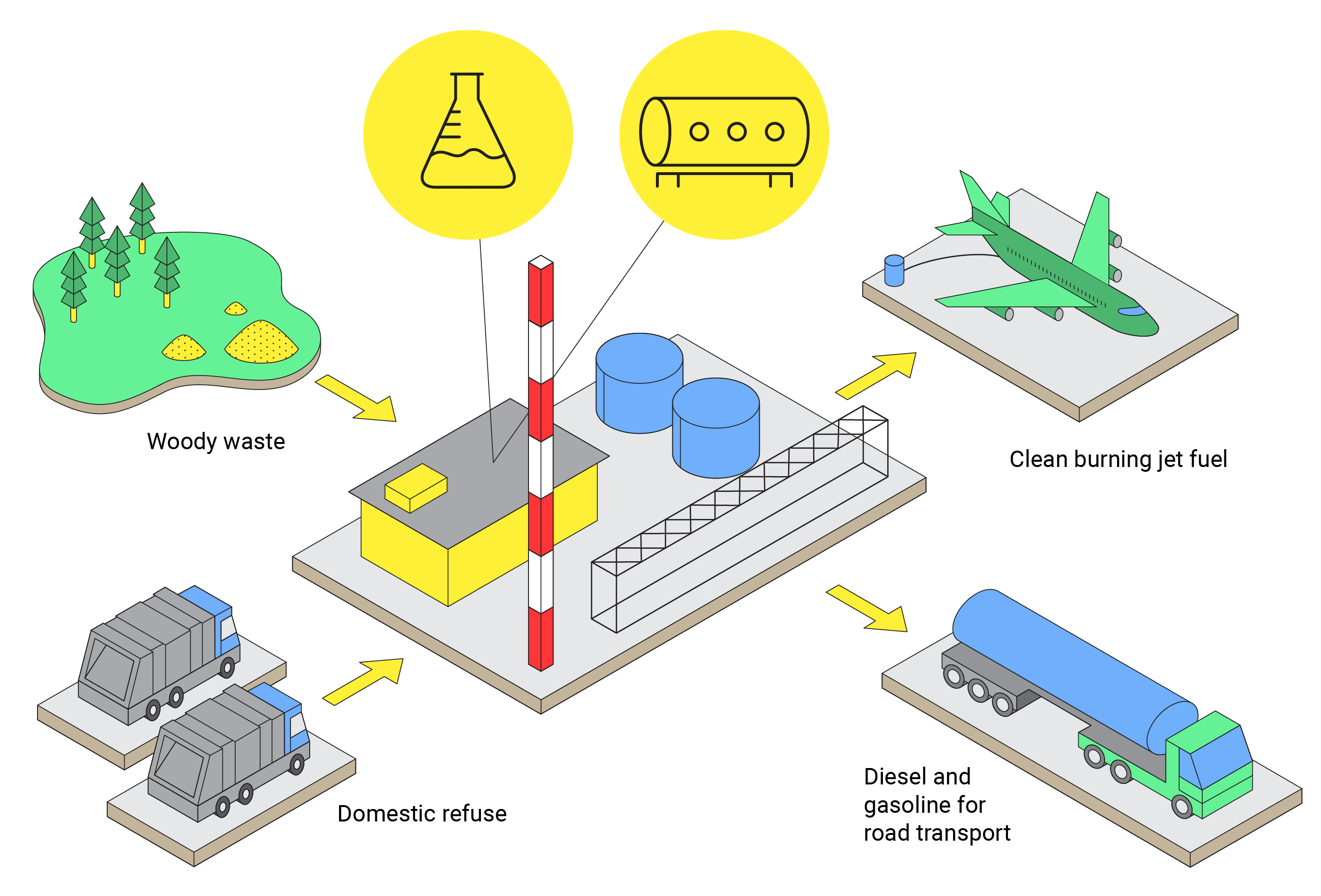
The then goes through the stages of the process.
- Stage 1 – Preparation – First the waste is treceived, sorted and prepared.
- Stage 2 – Gasification – Next the solid waste is gasified; heated to a high temperature to break it down and convert it into synthesis gas or syngas (carbon monoxide and hydrogen).
- Stage 3 – Synthesis – After cleaning, the syngas is used to synthesis hydrocarbons using the Fischer-Tropsch technology provided by Velocys.
- Stage 4 – Finishing – These hydrocarbons are then refined into the final products; renewable jet fuel (in the form of SPK) and naphtha.
They add this final summary.
The process is fundamentally different to incineration: instead of being burnt, the carbon in the waste is converted into a fuel for use in aircraft or vehicles.
There are many clean ways of making electricity, but it is really difficult to make sustainable jet fuel – this is one of the very few economic ways of doing so. It’s therefore a far better use of household waste than incineration, creating a much more valuable and environmentally beneficial product.
Could the process be considered a sophisticated waste incineration process, where the actual incineration is performed in the turbofan engine in the aircraft or the diesel engine in the truck to provide power?
I have a few questions.
What is Fischer-Tropsch Technology?
This is the first sentence for the Wikipedia entry for the Fischer-Tropsch Process.
The Fischer-Tropsch process is a collection of chemical reactions that converts a mixture of carbon monoxide and hydrogen into liquid hydrocarbons. These reactions occur in the presence of metal catalysts, typically at temperatures of 150-300 °C (302-572 °F) and pressures of one to several tens of atmospheres. The process was first developed by Franz Fischer and Hans Tropsch at the Kaiser-Wilhelm-Institut fur Kohlenforschung in Mulheim an der Ruhr, Germany, in 1925.
One of the companies involved in using the Fischer-Tropsch process is the South African company; Sasol. Wikipedia gives this summary about Sasol’s use of the process.
Another large scale implementation of Fischer-Tropsch technology is a series of plants operated by Sasol in South Africa, a country with large coal reserves, but little oil. The first commercial plant opened in 1952. Sasol uses coal and now natural gas as feedstocks and produces a variety of synthetic petroleum products, including most of the country’s diesel fuel.
The involvement with the apartheid regime in South Africa probably wasn’t the best of publicity for the process.
But have Oxford University and Velocys created a way of making net zero carbon aviation and diesel fuels?
What Is SPK?
SPK is Synthetic Paraffinic Kerosene and it is an aviation biofuel.
The Wikipedia entry for aviation biofuel has a sub-section called FT-SPK, where this is said.
The second route involves processing solid biomass using pyrolysis to produce pyrolysis oil or gasification to produce a syngas which is then processed into FT SPK (Fischer-Tropsch Synthetic Paraffinic Kerosene)
This sounds like the Velocys process.
What Are The Environmental Effects?
In the Wikipedia entry for aviation biofuel, there is a section called Environmental Effects. This is the first sentence.
A life cycle assessment by the Yale School of Forestry on jatropha, one source of potential biofuels, estimated using it could reduce greenhouse gas emissions by up to 85% if former agro-pastoral land is used, or increase emissions by up to 60% if natural woodland is converted to use. In addition, biofuels do not contain sulphur compounds and thus do not emit sulphur dioxide.
As Velocys produce their SPK from household waste, their fuel will have a different and more positive effect on greenhouse gas emissions.
This press release on the Velocys web site is entitled Plans Submitted For The First Waste To Jet Fuel Plant In The UK And Europe.
This is a paragraph.
The proposed plant will take hundreds of thousands of tonnes of household and commercial solid waste and turn it into clean burning sustainable aviation fuel, reducing net greenhouse gases by 70% compared to the fossil fuel equivalent – equal to taking up to 40,000 cars per year off the road.
Earlier, I quoted this about the process.
There are very limited emissions to atmosphere from the plant except water and carbon dioxide.
A lot depends on where the carbon dioxide is produced, but if it is produced by a well-designed process plant, it should be possible to capture it for storage.
There are also possibilities to reuse carbon-dioxide in the Fischer-Tropsch process.
Could Diesel Be Produced By The Process?
In the United States, Velocys are developing a project called Bayou Fuels.
This is said on the home page.
We are developing a plant in Mississippi that will create diesel fuel for road transportation in the U.S. It will process waste from the paper and lumber industries – woody biomass forest residue that would otherwise rot on the forest floor or contribute to forest fires.
It should be noted that this is said in the Wikipedia entry for the Port of Immingham.
In 2013 ABP began the development of the “Immingham Renewable Fuels Terminal” on the Humber International Terminal site, as part of a 15-year contract with Drax Power Station to supply biomass (wood pellet) to the powerplant. ABP’s total investment in biomass handling facilities, including installations at Hull and Goole was to be around £100 million.
As Velocys’s new plant will be at Immingham, close to the biomass port, I suspect the answer is yes.
Where Is The Plant Located?
This Google Map shows Immingham Port and the area to the South.
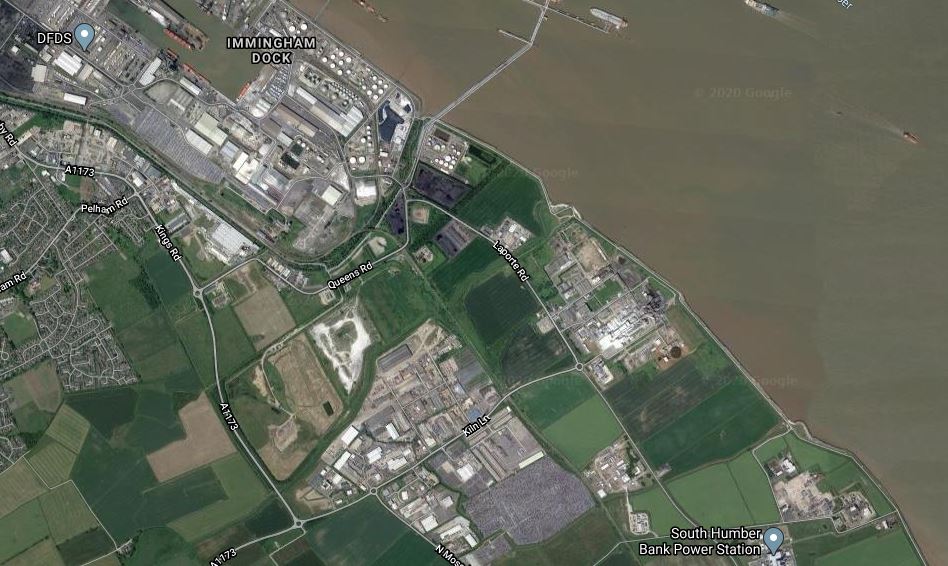
Note.
- Immingham Port is towards the North West corner of the map.
- South Humber Bank Power Station is towards the South East corner of the map.
It would appear that the Altalto plant, will be located on an 80 acre site between the port and the power station.
There would also appear from Google Maps that the Barton Line runs through the area, which would surely be handy for bringing in the waste and taking out the fuel.
This picture from the Altalto web site, shows a visualisation of the plant, looking North East.
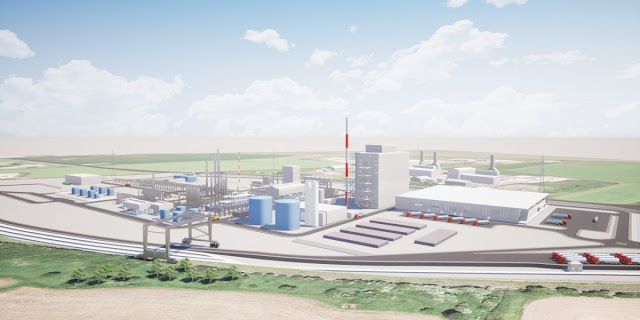
INote, what looks to be the railway, through the site in the foreground.
There are also a couple of informative videos, including one from the BBC, on this page of the Velocys web site.
t looks to be the ideal site.
How Much Fuel Will The Plant Produce?
According to the video on the web site, the plant will convert 500,000 tonnes of waste into 60,000,000 litres of fuel. I estimate that would be about 48,000 tonnes of jet fuel.
Could The Diesel Fuel Be Used To Decarbonise The Railways In The UK?
I believe that a substantial amount of the use of diesel on the UK’s railways will be cut by the use of battery and hydrogen power in multiple units and locomotives.
But some services like the heavy stone trains moving aggregates from the Mendips and the Peak District to London will be difficult to decarbonise, unless a locomotive manufacturer produces a hydrogen-powered locomotive with upwards of five megawatts of power. And that is a tough design challenge.
Low sulpur diesel produced from waste would be one way to reduce the carbon footprint.
Conclusion
It sounds a crazy idea to create aviation fuel and diesel from household waste!
Will It Work?
Consider.
- It appears that most of the technology used to produce this fuel has been around for decades.
- Sasol opened their first commercial plant in South Africa, using the Fischer-Tropsch process in 1952 and still use the technique today.
- Oxford University have added magic ingredients to the Fischer-Tropsch process.
- Velocys seem to have put in a lot of serious thought to get the Altalto project ticking all the right boxes.
The project could be late, but I feel it will deliver the main objective of converting household and commercial waste to jet fuel and diesel.
Class 88 Locomotive Heads On To The East Coast Main Line
The title of this post, is the same as that of this article on Rail Advent.
This is the first three paragraphs.
Direct Rail Services has confirmed that one of its Class 88 broke new ground last week when it ran the length of the East Coast Main Line.
Last weekend, freight operator, DRS, ran a new diversionary route to enable the Class 88 locomotives to run almost the length of the ECML on electric power, as well as feeder routes that link up Daventry and Mossend.
The route normally follows the West Coast Main Line, but engineering work last weekend required a diversion.
That makes a second Class 88 locomotive story, where the locomotives are serving new routes, after ’88’ Makes Sizewell Debut.
Could it be that with new electrification coming on stream and more being planned, Direct Rail Services are researching what these locomotives can do?
The Route
As the Rail Advent article says, the route is electric all the way from Mossend to Daventry.
Mossend to Edinburgh via the Shotts Line.
- Edinburgh to Stevenage via the East Coast Main Line.
- Stevenage to Alexandra Palace via the Hertford Loop Line.
- Alexandra Palace to Camden Road Central Junction via the East Coast Main Line.
- Xamden Road Central Junction to Camden Junction via the North London Line.
- Camden Junction to Daventry via the West Coast Main Line.
But it does go round the houses!
Note.
- The journey took fifteen hours and it arrived about two-and-a-half hours late.
- Edinburgh to Stevenage was timed to take seven hours, whereas passengers can do that journey in four-and-a half hours with a change.
With some strategic electrification would the train be able to cut across from the East Coast Main Line to reach Daventry?
The Future Of Direct Rail Services
Direct Rail Services have a mixed fleet of locomotives.
- 23 x Class 37 diesel locomotives, which were built in the 1960s.
- 21 x Class 57 diesel locomotives, which were built in the 1960s.
- 19 x Class 66 diesel locomotives
- 34 x Class 68 diesel locomotives
- 10 x Class 88 electro-diesel locomotives
Only the last two types are modern locomotives, that are capable of hauling trains at 100 mph.
The Wikipedia entry also says this.
In September 2017, Direct Rail Services issued a tender for ten brand new diesel-electric locomotives.
Consider.
- As Government policy is a zero-carbon UK by 2050, is that likely to change the tender to electro-diesel locomotives?
- Direct Rail Services is owned by the Government,
- The order from Rail Operations Group for Class 93 locomotives seems to have stalled.
- Rail Operations Group have some ambitious plans for the use of the tri-mode 110 mph Class 93 locomotives, which I wrote about in Rail Operations Group Gets Serious About Thunderbirds Etc.
- As any locomotives delivered in the next few years, will probably still be running in 2060, surely this conflicts with Government policy.
Perhaps, all three parties are working on a cunning plan to jointly order a common design.
’88’ Makes Sizewell Debut
The title of this post, is the same as that of a news snippet in the June 2020 Edition of Modern Railways.
There is a picture of the electro-diesel Class 88 locomotive moving a nuclear flask from Sizewell on the closed Aldeburgh branch line to Crewe.
Note that is about 27-28 miles from the electrification at Ipswich East Suffolk Junction and the siding close to the power station, where flasks are loaded.
This is a classic use of an electric locomotive, that has a Last Mile-capability using an on-board diesel engine.
Many ports in the UK, like these examples are a few miles from the electrified network.
- Felixstowe – 16 miles
- Liverpool – 5 miles
- London Gateway – 4 miles
- Southampton – 2 miles
How many trains could be hauled to and from these and other ports using a Class 88 locomotive or their similar, but more powerful sibling; the Class 93 locomotive?
Conclusion
I suspect there are a number of routes that could be handled by electro-diesel locomotives.
I would like to see a serious analysis of all duties performed by diesel locomotives, like for example; Classes 66, 67, 68 and 70 locomotives, to see how many could be performed by suitably-sized electro-diesel locomotives.
If there is a gap in the market, then a rolling stock leasing company, should fill it!
Just like Beacon Rail Leasing and Clayton Equipment appear to have done with a diesel shunter, which I wrote about in UK Diesel-Battery Hybrid Locomotive Lease Fleet Ordered.
As Beacon Rail Leasing seem to be heavily involved in the leasing of electro-diesel locomotives, perhaps, they’re working on it?
Railfuture On The Castlefield Problem
This report on the railfuture web site is entitled The Castlefield Problem – A Great Opportunity For Freight.
This is the introduction to the report.
Railfuture believes that railways should be the transport mode of choice if we are to balance the needs of the economy with those of tackling the Climate Emergency and campaigns for a bigger and better railway capable of carrying more freight as well as providing for ever increasing passenger demand.
Manchester’s Castlefield corridor is a bottleneck and has become a byword for unreliability. It is expected to carry 12 passenger services and one freight train in each direction every hour. This report recommends some medium to long term interventions aimed in particular at expanding the freight offering, since movement of goods by road is the most difficult to decarbonise.
It then goes on to describe the problem in detail. This is an important paragraph.
Meanwhile, the increase in intermodal freight traffic between Trafford Park and the southern ports has seen all the available freight capacity (known as signalling paths) taken up, with each freight train using the equivalent of two passenger paths.
The report then makes these points about the freight services to and from Trafford Park Rail Freight Terminal.
- Freight has no choice but to use the Castlefield route.
- There is no access to Trafford Park is from the West Coast Main Line (WCML) other than via Castlefield.
- As freight doesn’t complain on social media when it is late or cancelled, it is a popular target for politicians looking for a solution.
The report says that the ideal solution would be to access Trafford Park from the western end.
The report then asks, the fundamental question, as to whether the Trafford Park terminal is fit for purpose and details these points.
Operation is not very efficient.
It only has a limited number of sidings with gantries.
Can Trafford Park handle the growth of rail freight to and from Manchester?
This map shows the Trafford Park terminal.
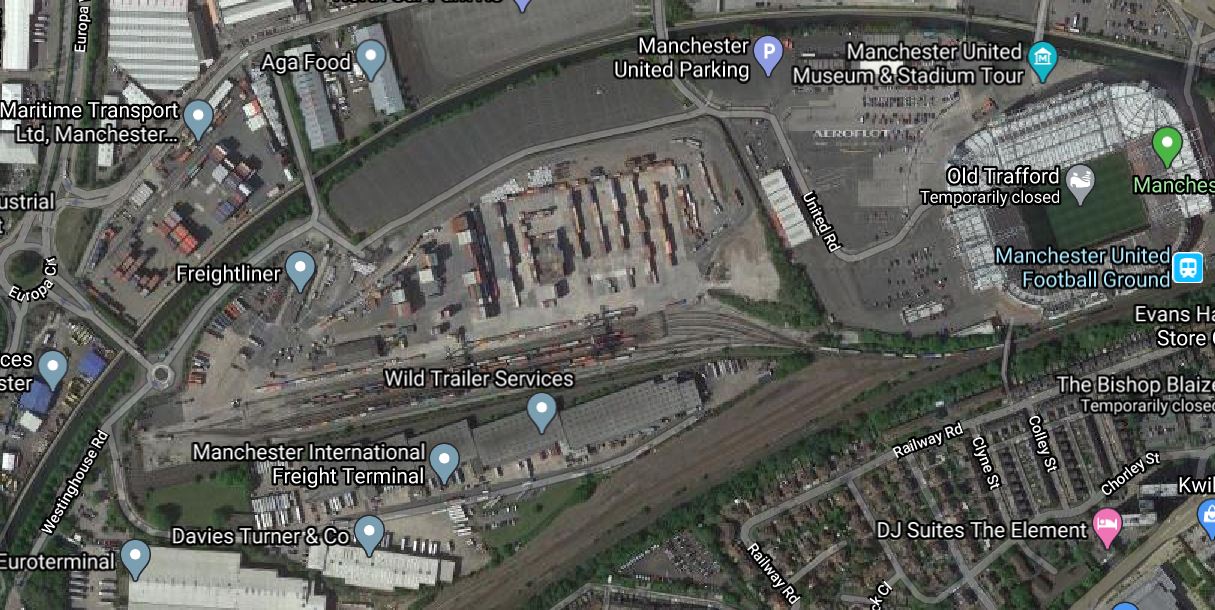
There doesn’t appear to be much space to expand.
railfuture’s Solution
railfuture are proposing that a second rail freight terminal be built in the Borough of Trafford at Carrington Park, which is described by this paragraph in the report.
This brownfield site, once the Shell chemical works, lies to the south west of Manchester but still within Trafford Borough. Until its closure it enjoyed rail access via the former line between Stockport and the Warrington Central (CLC) line at Glazebrook. It is currently a Business Park, although the lorry parking facility in the area we are interested in could easily be relocated to another part of this vast and mostly empty site.
This Google Map shows the site.
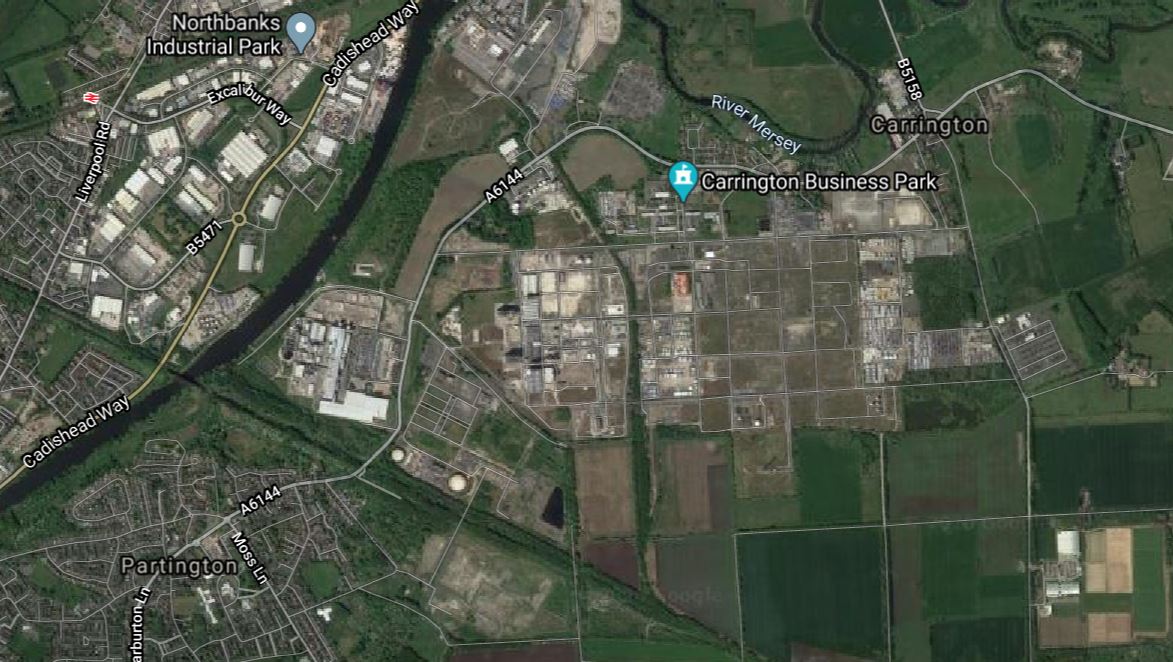
Note.
- The blue arrow indicating the centre of Carrington Business Park.
- Irlam station on the route between Liverpool and Manchester line via Warrington is in the North West corner of the map.
- The Manchester Ship Canal running across the North-West corner of the map.
- The route of the former Glazebrook East Junction–Skelton Junction line, runs diagonally across the bottom of the map.
- Another railway used to run up the middle of the site.
railfuture’s plan for Carrington Park is as follows.
- Build a Rail Freight Terminal North-South along the route of the disused railway indicated in 5.
- Reinstate the Glazebrook East Junction–Skelton Junction line, so that freight trains can go between Carrington Park and the East.
- I doubt, it’s possible to connect to the Liverpool and Manchester line via Warrington, as there is Carrington power station in the way.
- But it would link Carrington Park and Trafford Park.
Once at Skelton Junction, trains can go East to connect with the Manchester branch of the West Coast Main Line between Stockport and Cheadle Hulme stations.
I have followed the line to the East in my helicopter.
It is double track until it splits from the route to Stockport and Manchester under Junction 4 of the M60.
It continues as single-track under the Styal Line, before turning South.
It then passes under the Manchester branch of the West Coast Main Line.
This Google Map shows where we have arrived.
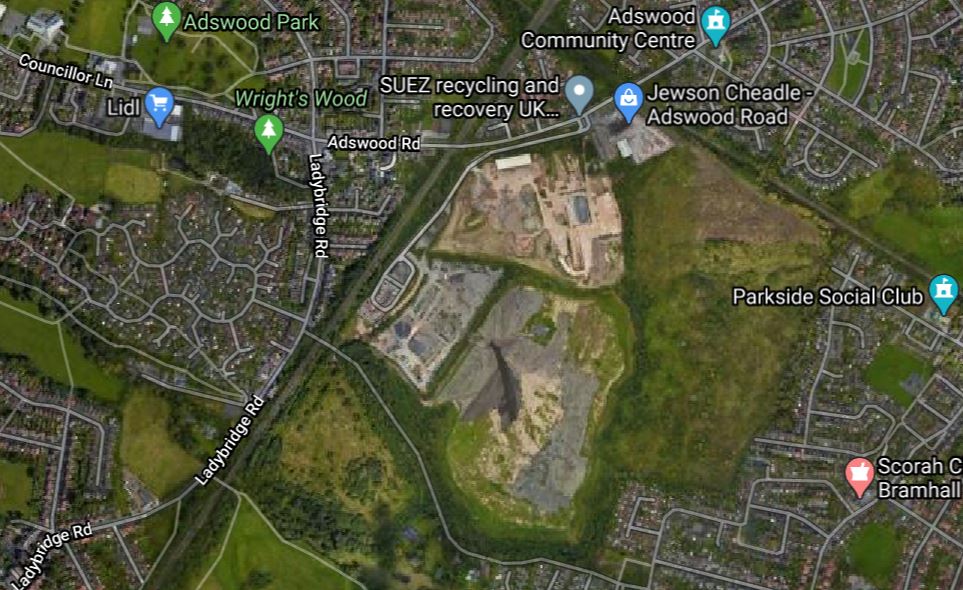
Note.
- The Manchester branch of the West Coast Main Line going diagonally North-South across the map.
- Stockport and Manchester are to the North.
- Cheadle Hulme station is just off the map to the South.
- The line, I’ve been following crossing the Manchester branch in an East-West direction.
Conveniently, the large block of land lying to the South-East of where the two rail lines cross, is a landfill site that closed in 1985.
railfuture’s plan is to use this space to create a new Adswood junction between the two lines.
They recommend building a double-track junction.
- Trains could go between Manchester and the South via Wilmslow or Stoke.
- Trains via Stoke would avoid the busy lines through Crewe.
The report, then goes on to list a load of other benefits that could be built into the scheme.
- Adswood junction could be built, so that stone trains between the Peak District and the South could use a simpler route.
- The route through Carrington Park could be extended to Trafford Park.
- Passenger services could be run on the new route.
- There could be possibilities to combine parts of the scheme with High Speed Two.
- A new route to the North East is thought possible.
The report says this about the costs and benefit cost ratio of the proposed scheme.
Benchmarking against the outturn prices of similar projects undertaken elsewhere and allowing for inflation, we expect the costs to come in under £300m. This does not include potential third party investment or assume any release value of eventual redevelopment at Trafford Park. Adding the connection at Flixton would probably add a further £100m, still giving an overall BCR of over 2:1.
This scheme needs serious consideration.
 The Anonymous Widower