Reform Declares War On County’s Net-Zero Projects
The title of this post, is the same as that of this article on the BBC.
This is the sub-heading.
Reform UK leaders in Lincolnshire say they have “declared war” on green energy projects.
These three paragraphs outline their policies.
Boston and Skegness MP Richard Tice, Greater Lincolnshire’s mayor Dame Andrea Jenkyns and Councillor Sean Matthews, who leads the county council, launched a campaign at a press conference held in Boston earlier.
They said they opposed wind and solar farms and battery storage facilities, with Tice adding: “It is an absolute outrage what the madness of net stupid zero is doing to our county, as well as to our country.”
The government said green energy was vital in delivering energy security, while Labour MP Melanie Onn argued Reform’s stance posed a risk to thousands of jobs.
It should be noted that Lincolnshire has a lot of projects, that will be concerned with renewable energy.
Lincolnshire is one of the UK counties, with the highest level of wind power.
- There are over 7 GW of wind farms, that already do or will land their electricity in the county including 5.5 GW from the world’s largest offshore wind farm; Hornsea.
- There is approaching 300 MW of onshore wind in the county, which includes England’s largest onshore wind farm at Keadby, which is 68 MW.
I asked Google how much solar there was in the county and I got this AI Overview.
Lincolnshire has a significant amount of solar power capacity, with several large solar farms and numerous smaller installations. The county is a major location for solar energy development, with some projects aiming to power tens or even hundreds of thousands of homes.
In the real world of wind and solar energy, all of this renewable energy will need backup and the county has it in hundreds of megawatts.
- Keadby One is a 732 MW gas-fired power station owned by SSE Thermal.
- Keadby Two is a 849 MW gas-fired power station owned by SSE Thermal.
- Keadby Three will be a 910 gas-fired power station, fitted with carbon capture, that is being developed by SSE Thermal.
- Keadby Next Generation Power Station is a 1800 MW hydrogen-powered power station, that is being developed by Equinor and SSE Thermal. I wrote about it in Consultation On Plans For Keadby Hydrogen Power Station To Begin and it will generate 900 MW of zero-carbon electricity.
Now that it what I call backup.
Conclusion
Lincolnshire generates a lot of renewable energy and Reform UK want to throw it all away.
As I showed in US Gov’t Withdraws All Offshore Wind Energy Areas, Trump’s policies against renewable energy and wind in particular are not good for investment and employment.
We don’t want Trump’s policies in the UK.
And especially in Lincolnshire, where all this energy can attract jobs.
Grand Central To Submit Application For Direct Services Between Lincolnshire And London
The title of this post, is the same as that of this news item from Grand Central.
These three bullet points act as sub-headings.
- Grand Central has today launched an application process for direct services between Cleethorpes, Grimsby, Habrough, Scunthorpe and London – plans to bring significant benefits to underserved areas.
- The application will be welcomed by communities, businesses, and organisations, who have been actively campaigning for the introduction of direct rail links to London.
- If approved, the new services could unlock £30.1 million annually for the region.
These three paragraphs add more details.
Grand Central has today notified Network Rail of its plans to operate new direct services between Lincolnshire and London that, if approved by the rail regulator (the ORR), will bring significant benefits to underserved areas across Lincolnshire and the wider region.
Under the proposals, direct services to London will be provided from Cleethorpes, Grimsby, Habrough, and Scunthorpe, with Grand Central planning to operate the services from as early as December 2026.
The plan makes best use of capacity on the rail network by running trains from the proposed new stops before connecting into existing Grand Central services at Doncaster.
The service seems very similar to the proposed King’s Cross and Cleethorpes service described in the this section of the Grand Central Wikipedia entry, where this is said.
In December 2017, Grand Central announced plans to bid for a service from London King’s Cross to Cleethorpes in early 2018 for a date in 2020. It would involve the existing Bradford Interchange service extended to ten coaches from London to Doncaster then dividing with five coaches going to Cleethorpes via Scunthorpe, Barnetby, Habrough and Grimsby. The other five coaches would be the existing service to Bradford Interchange. This proposal would require permission for a split of trains as it has not been used on the East Coast Main Line before. In February 2018, Grand Central announced plans for an additional call at Crow The company planned to operate four trains per day from 2020. However, in July 2018, the Office of Rail and Road announced new access charges which would affect the business case for the new service, leading to Grand Central announcing that it would delay bidding until 2019.
Note.
- It appears that the service is not calling at Crow.
- By splitting and joining at Doncaster, Grand Central will be getting more coaches and passengers, up and down a single path between King’s Cross and Doncaster stations.
- Grand Central run four trains per day (tpd) between King’s Cross and Bradford Interchange, so as four tpd will be running between King’s Cross and Doncaster stations, it appears Grand Central will be running a full service.
It appears that open access applications come to those who wait eight years.
I have some further thoughts.
What Class Of Trains Do Grand Central Currently Use?
According to Real Time Trains on Friday the 21st of March 2025, two Class 180 trains and two Class 221 trains each ran a service between King’s Cross and Bradford Interchange stations.
Both type of train appear to be able to run as a pair of trains.
As Bradford is the UK City of Culture in 2025, that could prove useful.
What Trains Will Grand Central Use For The New Service?
It would appear that either type of train type could run the service,
So it would probably come down to factors like reliability, comfort and what is available.
I Was Mildly Surprised When I Saw This Application Had Gone In
But, circumstances change.
- Grand Central now run two Class 221 trains, in addition to the Class 180 trains.
- There are more Class 221 trains in store, if needed.
- The UK has had several changes of government since the original application in 2017 and track-access charges may have been reduced.
- Cleethorpes station has been refurbished.
Cleethorpes Station – 28th June 2023 shows the station in 2023.
But a new problem has arisen. The new Transport Secretary doesn’t seem keen on open access services, from some of the things she’s said.
Perhaps, she has had a change of heart or as she looks to be a good doer, someone has bought her a decent meal of fish and chips in Cleethorpes? My meal in the town is described in Lunch On The Pier In Cleethorpes.
But would Grand Central put in an application, if they knew they were wasting their money?
Or could this be an application funded by all the open access operators to get a definitive view on the government’s policy?
Could The Cleethorpes Service Be Run By Battery-Electric Trains?
Consider.
- Doncaster and Cleethorpes are 52.1 miles apart.
- Surprisingly Doncaster and Bradford Interchange are 52.1 miles apart.
- King’s Cross and Doncaster are 155.9 miles apart and fully-electrified.
- A battery that had enough capacity to do the return trips from Doncaster to either Cleethorpes or Bradford Interchange, would be easily recharged on the way to and from London.
With careful calculation of the battery size and good capacity management, I also suspect a battery-electric train could be able to take the GNGE Diversion via Lincoln.
Could The Cleethorpes Service Be Run By Hydrogen-Electric Trains?
Consider the daily services will be made up of these runs.
- Eight runs between London and Bradford Interchange each consisting of 155.9 miles on wires and 52.1 miles on hydrogen.
- Eight runs between London and Cleethorpes each consisting of 155.9 miles on wires and 52.1 miles on hydrogen.
Which means there are 833.6 miles per day run on hydrogen.
If there are four trains running the service as now, that is 208.4 miles per train per day on hydrogen.
A hydrogen-powered train with this daily range is very much a possibility.
The German Dimension To Grand Central Trains
Consider.
- Grand Central are owned by Arriva.
- Arriva are owned by Deutche Bahn.
- Siemens have a train factory at Goole close to Doncaster.
- Siemens have built quite a few electric multiple units for various UK railways.
- Siemens have designs for battery-electric and hydrogen-electric multiple units, that would be suitable for Grand Central Trains.
- Jürgen Maier was senior in Siemens UK, when the train factory at Goole was built and is now chair of Great British Energy.
I believe that Siemens at Goole could build trains, that would do nicely for Grand Central Trains.
- It would surely be handy for Grand Central Trains to have their fleet stabled in easy reach of the factory.
- In addition, hydrogen will soon be readily-available in the Doncaster area.
Grand Central trains could do a lot worse than buy trains built or assembled at Siemen’s factory at Goole.
Norway’s Sovereign Wealth Fund Acquires Stake In 573 MW Race Bank Offshore Wind Farm
The title of this post, is the same as that of this article on offshoreWIND.biz.
This is the sub-heading.
A consortium made up of investment funds belonging to Australia-headquartered Macquarie Asset Management and Spring Infrastructure Capital has reached an agreement to divest a 37.5 per cent stake in the 573 MW Race Bank offshore wind farm in the UK to Norges Bank Investment Management.
These four paragraphs give more details of the deal.
The stake was sold to the Norwegian sovereign wealth fund for approximately GBP 330 million (about EUR 390.6 million).
According to Norges Bank Investment Management, the fund acquired Macquarie European Infrastructure Fund 5’s 25 per cent stake and Spring Infrastructure 1 Investment Limited Partnership’s 12.5 per cent interest in the Race Bank offshore wind farm.
A Macquarie Capital and Macquarie European Infrastructure Fund 5 consortium acquired a 50 per cent stake in Race Bank during the construction phase in 2016. Macquarie Capital divested its 25 per cent stake in the wind farm in 2017.
With the deal, Arjun Infrastructure Partners will remain co-investor for 12.5 per cent of the wind farm and Ørsted will remain a 50 per cent owner and operator of Race Bank.
These are my thoughts.
The Location of Race Bank Wind Farm
This map from the Outer Dowsing Web Site, shows Race Bank and all the other wind farms off the South Yorkshire, Lincolnshire and Norfolk coasts.
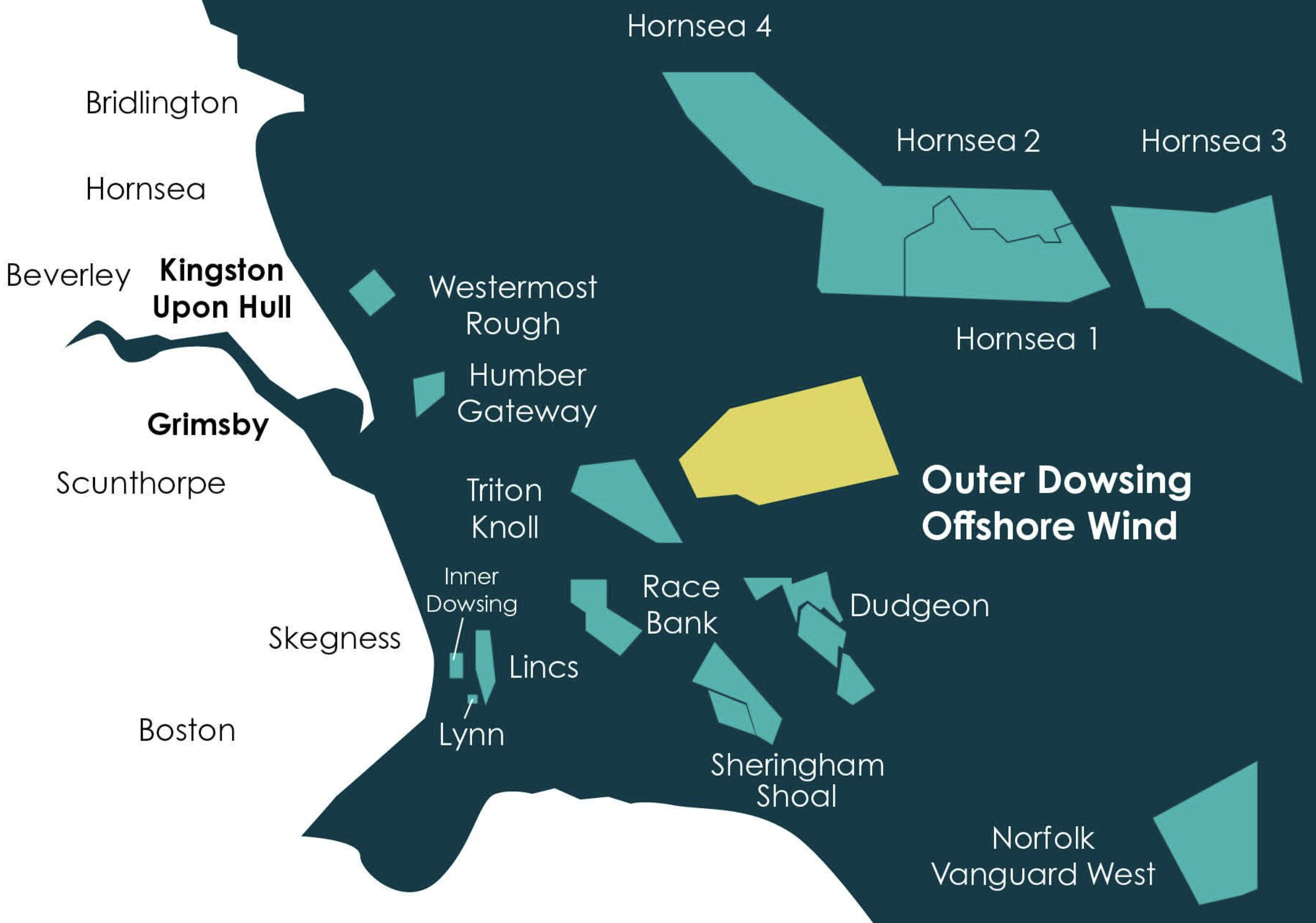
From North to South, wind farm sizes and owners are as follows.
- Hornsea 1 – 1218 MW – Ørsted, Global Infrastructure Partners
- Hornsea 2 – 1386 MW – Ørsted,Global Infrastructure Partners
- Hornsea 3 – 2852 MW – Ørsted
- Hornsea 4 – 2600 MW – Ørsted
- Westernmost Rough – 210 MW – Ørsted and Partners
- Humber Gateway – 219 MW – E.ON
- Triton Knoll – 857 MW – RWE
- Outer Dowsing – 1500 MW – Corio Generation, TotalEnergies
- Race Bank – 573 MW – Ørsted,
- Dudgeon – 402 MW – Equinor, Statkraft
- Lincs – 270 MW – Centrica, Siemens, Ørsted
- Lynn and Inner Dowsing – 194 MW – Centrica, TCW
- Sheringham Shoal – 317 MW – Equinor, Statkraft
- Norfolk Vanguard West – 1380 MW – RWE
Note.
- There is certainly a large amount of wind power on the map.
- Hornsea 1, 2 and 3 supply Humberside.
- Hornsea 4 will supply Norwich and North Norfolk.
- Norfolk Vanguard West would probably act with the other two wind farms in RWE’ Norfolk cluster.
- Ignoring Hornsea and Norfolk Vanguard West gives a total around 4.5 GW.
- There are also two 2 GW interconnectors to Scotland (Eastern Green Link 3 and Eastern Green Link 4) and the 1.4 GW Viking Link to Denmark.
I wouldn’t be surprised to see a large offshore electrolyser being built in the East Lincolnshire/West Norfolk area.
The primary purpose would be to mop up any spare wind electricity to avoid curtailing the wind turbines.
The hydrogen would have these uses.
- Provide hydrogen for small, backup and peaker power stations.
- Provide hydrogen for local industry, transport and agriculture,
- Provide hydrogen for off-gas-grid heating.
- Provide methanol for coastal shipping.
Any spare hydrogen would be exported by coastal tanker to Germany to feed H2ercules.
Do We Need Wind-Driven Hydrogen Electrolysers About Every Fifty Miles Or so Along The Coast?
I can certainly see a string along the East Coast between Humberside and Kent.
- Humberside – Being planned by SSE
- East Lincolnshire/West Norfolk – See above
- North-East Norfolk – See RWE Goes For An Additional 10 GW Of Offshore Wind In UK Waters In 2030.
- Dogger Bank – See RWE Goes For An Additional 10 GW Of Offshore Wind In UK Waters In 2030.
- Sizewell – See Sizewell C And Hydrogen.
- Herne Bay – Under construction
I can see others at possibly Freeport East and London Gateway.
National Grid Shares Proposals For Green Electricity Projects In Lincolnshire And West Norfolk, Needed To Boost Home-Grown Energy Supplies And Progress Towards Net Zero
The title of this post, is the same as that of this press release from National Grid.
These four bullet points, act as sub-headings.
- National Grid is inviting communities in East Lindsey, Boston and South Holland in Lincolnshire, and King’s Lynn and West Norfolk, to view proposals for two new primarily offshore electricity infrastructure projects.
- National Grid will consult communities from 23 April – 17 June to introduce the proposed project and ask for local peoples’ opinions.
- Eastern Green Link 3 (EGL 3) and Eastern Green Link 4 (EGL 4) will be able to transport enough clean energy generated in Scotland to power up to four million homes in the Midlands and South of England.
- The projects form part of The Great Grid Upgrade, the largest overhaul of the grid in generations, with new infrastructure across England and Wales helping the UK to meet its net zero ambitions, reduce its reliance on fossil fuels and contribute to lower energy bills over the long-term.
These five paragraphs outline the two projects.
National Grid is inviting communities to comment on early proposals for two green electricity infrastructure projects which will help deliver the UK’s energy security strategy and net zero targets.
The eight-week initial consultation, which begins on 23 April, shares proposals for Eastern Green Link 3 (EGL 3) and Eastern Green Link 4 (EGL 4) projects – two new, primarily subsea high voltage direct current (HVDC) electricity links, with associated infrastructure, between Scotland and England.
National Grid Electricity Transmission (NGET) is jointly developing EGL 3 with SSEN Transmission (SSEN) and EGL 4 with SP Energy Networks (SPEN).
EGL 3 would run from Peterhead, Aberdeenshire, under the North Sea via marine cables to a potential landfall location on the Lincolnshire coastline, either at Theddlethorpe or Anderby Creek. EGL 4 would run from Westfield, Fife, also via marine cables under the North Sea to the same landfall location as EGL 3.
After making landfall, both projects’ cables will run underground for approximately 100km to two proposed converter stations in the Walpole, King’s Lynn and West Norfolk, area. Underground cables would then connect the converter stations to the transmission network via a new proposed substation, also within the Walpole area.
Note.
- These would appear to be early proposals.
- National Grid appear to be planning and consulting on two interconnectors at once.
- There would appear to be a lot of underground cable on land. But then the cables will be dug into good Fenland soil.
- All the electrical gubbins seem to be in the Walpole area.
These paragraphs invite people to comment.
Throughout our initial consultation, we are holding a series of face-to-face events to consult on the electrical infrastructure required in England.
Our consultation events are being held across the project area. Information about our proposals will be on display and copies of maps and technical documents will be available to view. Members of the project team will be available to talk through our proposals and answer any questions.
National Grid have also announced dates of when public information events are being held.
- Tuesday 30 April 2024 – 2pm-7pm – Dunes Complex, Central Promenade, Mablethorpe, LN12 1RG
- Wednesday 1 May 2024 – 2pm-7pm – Anderby Village Hall, Sea Road, Anderby, Skegness, PE24 5YD
- Thursday 9 May 2024 – 12:30pm – 6pm – Alford Corn Exchange, 9 Market Place, Alford, LN13 9EB
- Monday 13 May 2024 – 2pm-7pm – Leverington Village Hall, Gorefield Rd, Leverington, Wisbech, PE13 5AT
- Wednesday 15 May 2024 – 2pm-7pm – Eastville, Midville and New Leake Village Hall, Station Rd, Eastville, PE22 8LS
- Thursday 16 May 2024 – 2pm-7pm – Poachers Country Hotel, Swineshead Road, Kirton Holme, PE20 1SQ
- Monday 20 May 2024 – 2pm-7pm – Walpole Community Centre, Summer Close, Walpole St Andrew, PE14 7JW
- Wednesday 29 May 2024 – 2pm-7pm – The Holbeach Hub, Boston Rd South, Holbeach, PE12 7LR
- Wednesday 5 June 2024 – 2pm-7pm – Burgh le Marsh Village Hall, Jacksons Lane, Burgh le Marsh, Skegness, PE24 5LA
I would have hoped, that some of the venues would have been easier to get to by public transport.
I have some thoughts and observations.
What Will Be The Capacity Of Green Link 3 And Green Link 4?
I can find references to the capacity of Eastern Green Links 1-4 and it appears that all four have a capacity of 2 GW.
A Map Of Green Link 3 And Green Link 4
I have found this map of Green Link 3 and Green Link 4.

National Grid are going to be busy, as they’re also building Green Link 1 and Green Link 2.
Will Green Link 3 And Green Link 4 Share A Route Between The Coast And Walpole?
There is only one green HVDC onshore cable on the map. But surely laying two 2 GW cables in the same trench will cost less, than digging two cable routes.
Looking at the three converter stations would appear to confirm that Green Link 3 and Green Link 4 share a route.
Will Landfall Be At Theddlethorpe Or Anderby Creek?
This Google Map shows the coast between Theddlethorpe and Anderby Creek.
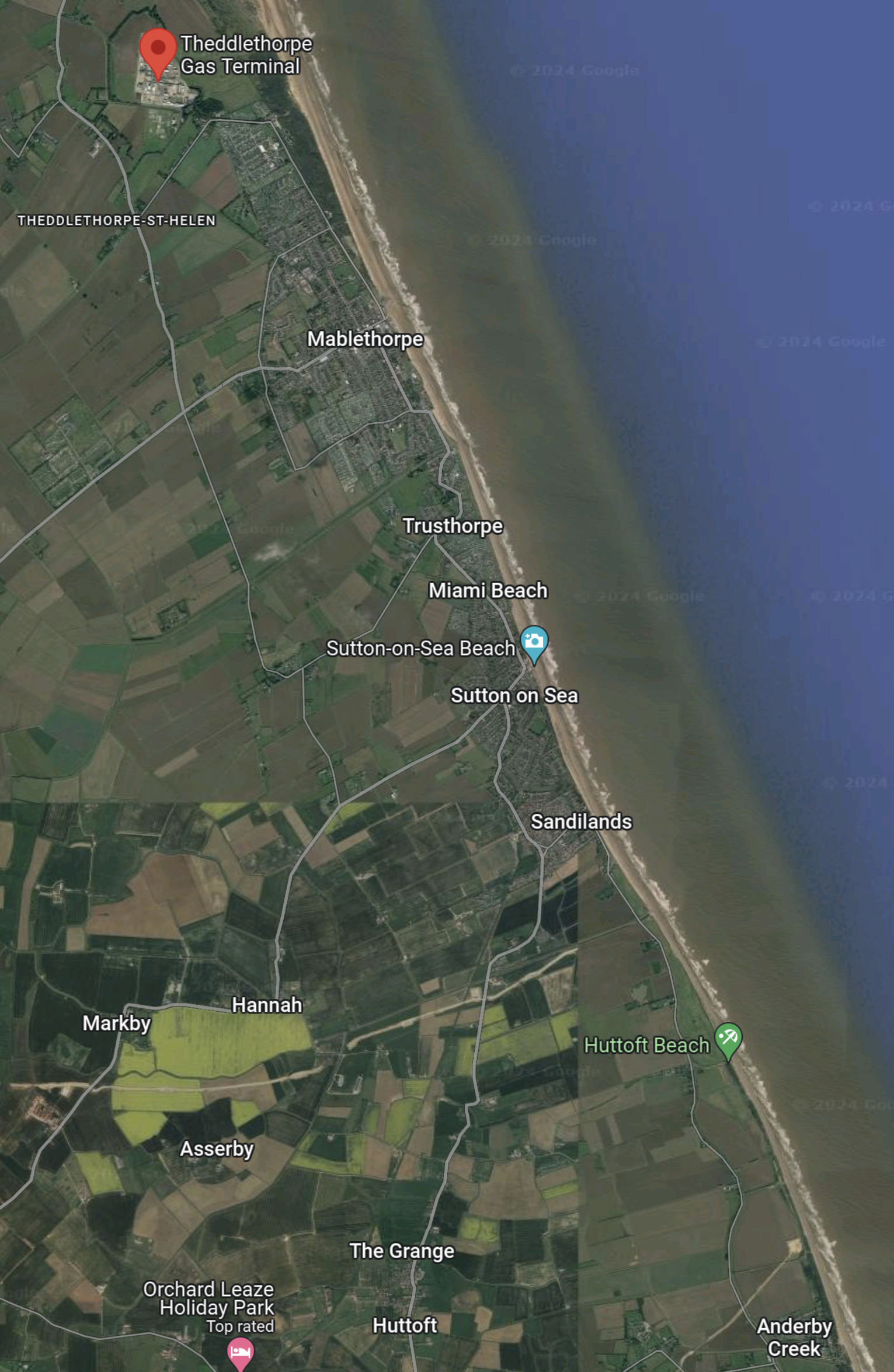
Note.
- The decommissioned Theddlethorpe gas terminal is indicated by the red arrow.
- The seaside resort of Mablethorpe lies between the two possible landing sites.
- Anderby Creek is in the South-East corner of the map.
This second Google Map shows the Theddlethorpe Gas Terminal and the North of Mablethorpe.
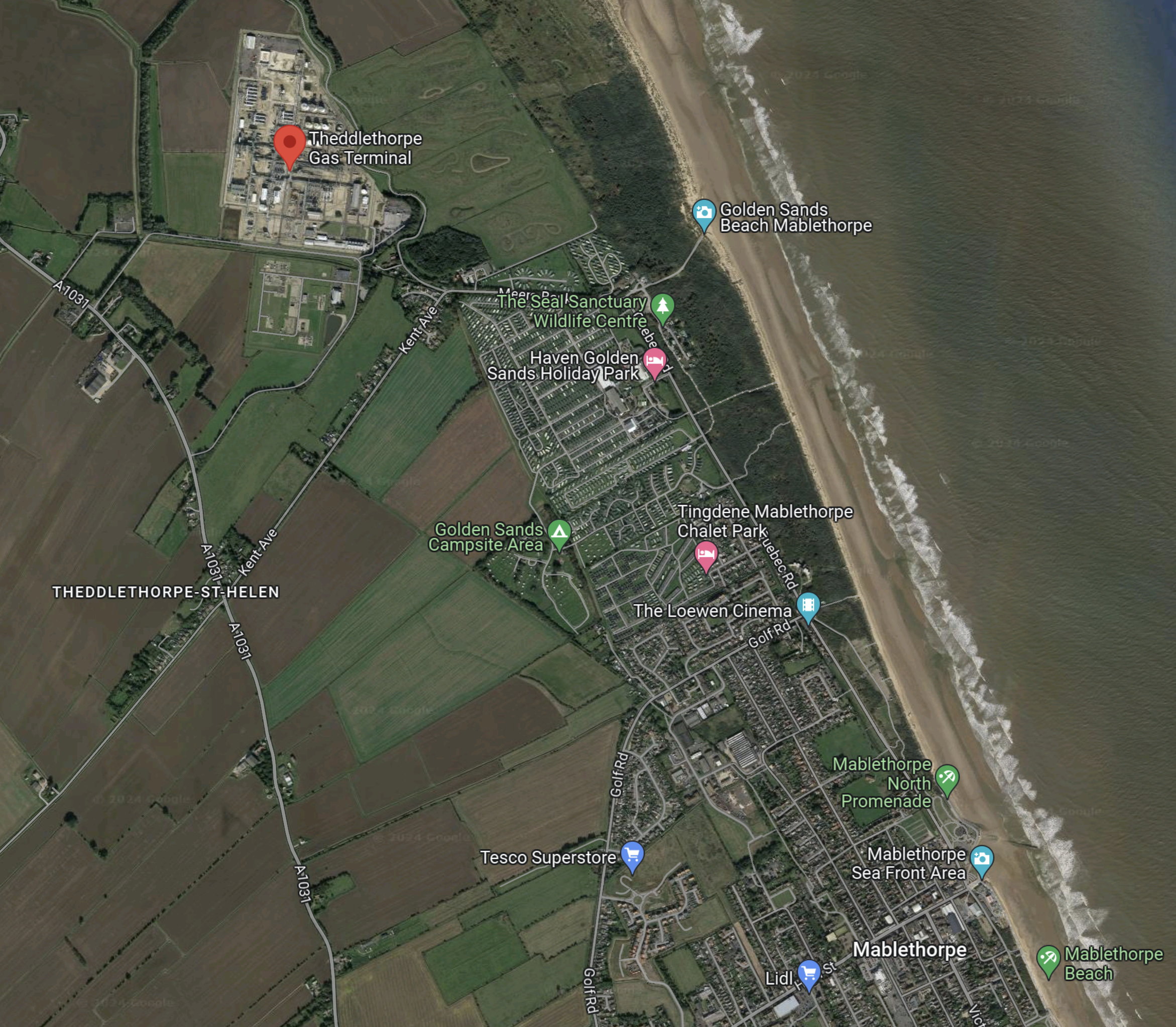
Note.
- The decommissioned Theddlethorpe gas terminal is indicated by the red arrow.
- Mablethorpe beach appears to be on a high quality.
Both sites would appear to be strong possibilities.
Both sites have plenty of space, but the Theddlethorpe gas terminal is a large brownfield site.
The Anderby Creek site would probably be a shorter underground cable across Lincolnshire.
The Triton Knoll Wind Farm
The Wikipedia entry for the Triton Knoll wind farm starts with these two paragraphs.
Triton Knoll Wind Farm is an 857 MW round 2 offshore wind farm 33 kilometres (21 mi) off the coast of Lincolnshire, in the North Sea, England.
RWE Npower Renewables were awarded the lease to the development area in 2003. The offshore elements of the wind farm of up to 1200MW power gained planning consent in 2013; RWE reduced the scope of the wind farm to 900MW or under in 2014, to reduce cost per MW.
Note.
- The wind farm was commissioned in January 2022.
- The wind farm cables make landfall at Anderby Creek.
- They then travel underground to Bicker Fen substation.
This Google Map shows Bicker Fen and Anderby Creek.
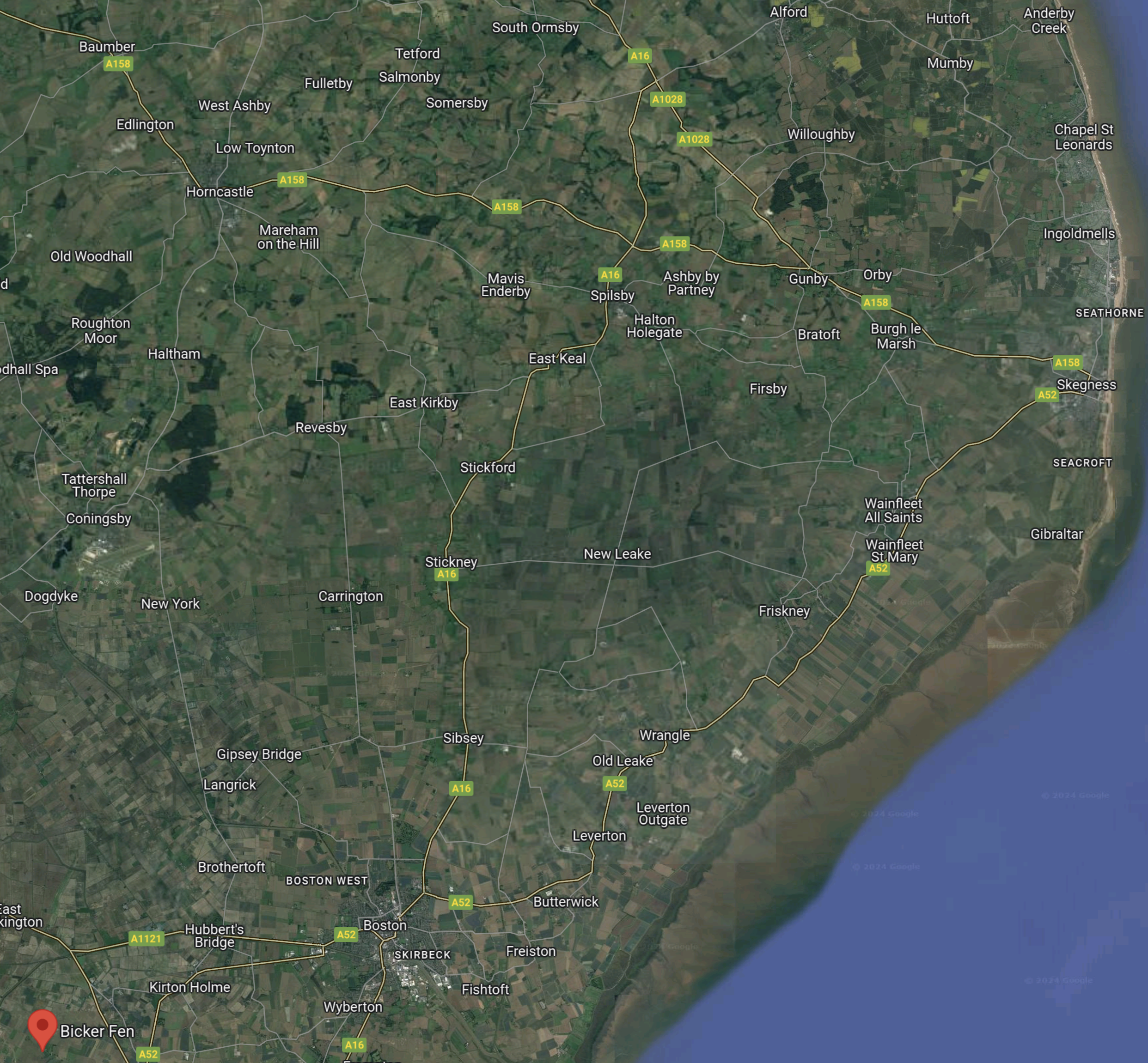
Note.
- Bicker Fen substation is in the South-West corner of the map and is indicated by a red arrow.
- Anderby Creek is in the North-East corner of the map.
- The cable is underground.
- This page on the Murphy Group website, describes the work the company did to install the cables.
- It appears from the Murphy document, that there are six cables between Anderby Creek and Bicker Fen.
This Google Map shows Anderby Creek.
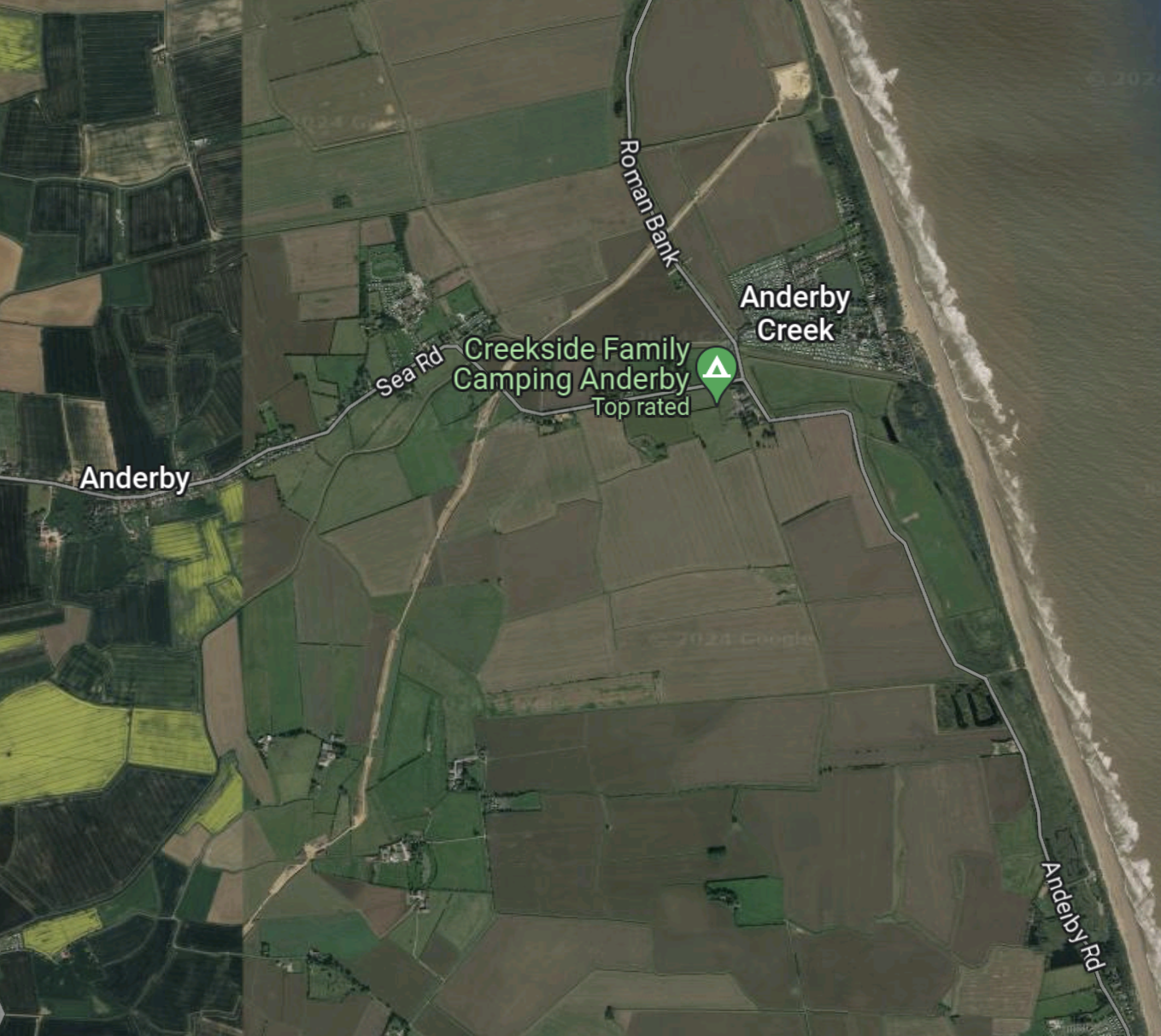
Could the scar across the land to the West of Anderby Creek, be the connection to the offshore Triton Knoll wind farm?
I think it is! And I also think that it can carry more than just the 857 MW Triton Knoll wind farm!
I am suspicious, that one of Baldrick’s ancestors has been at work and the Triton Knoll export cable system could be used to connect Green Link 3 and Green Link 4 to Bicker Fen and Walpole substations.
This would surely allow Scottish wind power to be sold to Denmark and then sold onward to Germany.
The VikingCCS Project
The VikingCCS project is a carbon capture and storage project, that is proposed to be based at the decommissioned Theddlethorpe gas terminal.
The VikingCCS project has a web site.
Would the use of the Theddlethorpe gas terminal mean that it is more likely that Green Link 3 and Green Link 4 will make a Southern landfall at Anderby Creek?
Will There Be A Connection To Viking Link?
The Viking Link is a 1400 MW at 525 KV electricity interconnector between Bicker Fen in Lincolnshire and Revsing in Jutland, Denmark.
This Google Map, shows the location of Bicker Fen, about halfway between Boston and Sleaford.

This second map shows the position of the current Walpole substation with respect to the Wash.
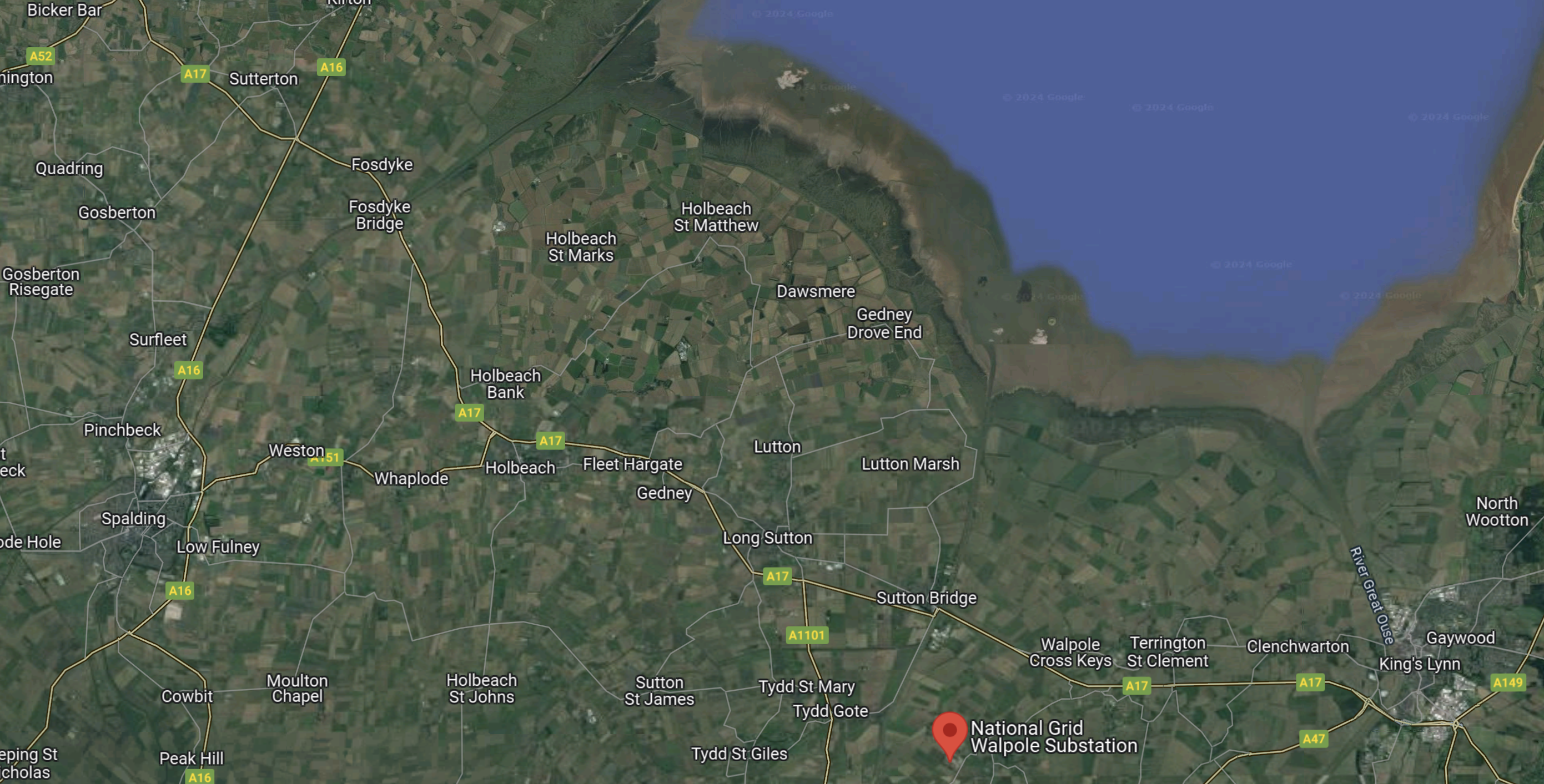
Note.
- Bicker Fen is in the North-West corner of the map.
- The current Walpole substation is marked by the red arrow.
- King’s Lynn is in the South-East corner of the map.
I suspect, if National Grid wanted to connect Green Link 3 and Green Link 4 to the Viking Link, then this would be possible.
If the Viking Link were to be connected to Green Link 3 and Green Link 4, this would allow surplus Scottish renewable energy to be sent to Denmark and on to Germany.
Green Link 3, Green Link 4 And Viking Link Appear To Be Underground In Lincolnshire
I can’t find any trace of overhead cables for the Viking Line in Lincolnshire and the press release says this about Green Link 3 and Green Link 4.
After making landfall, both projects’ cables will run underground for approximately 100km to two proposed converter stations in the Walpole, King’s Lynn and West Norfolk, area.
The connection to the Triton Knoll wuind farm is also underground.
It does appear that National Grid, are going for a Nimby-friendly approach for cables between Walpole and the coast.
Hopefully putting the cables underground will save money in legal arguments and fees.
The Lincolnshire Wind Powerhouse
In August 2022, reports started to appear about the Outer Dowsing Wind Farm, like this article on offshoreWIND.biz, which is entitled Corio, Total Submit Scoping Report For 1.5 GW Outer Dowsing Offshore Wind Project.
There is now a web site.
- Outer Dowsing Offshore Wind is a 1.5GW project located approximately 54km off the Lincolnshire coast.
- It is a joint project between TotalEnergies and Corio Generation.
This map from the Outer Dowsing Wind Farm web site, shows the location of the wind farm.
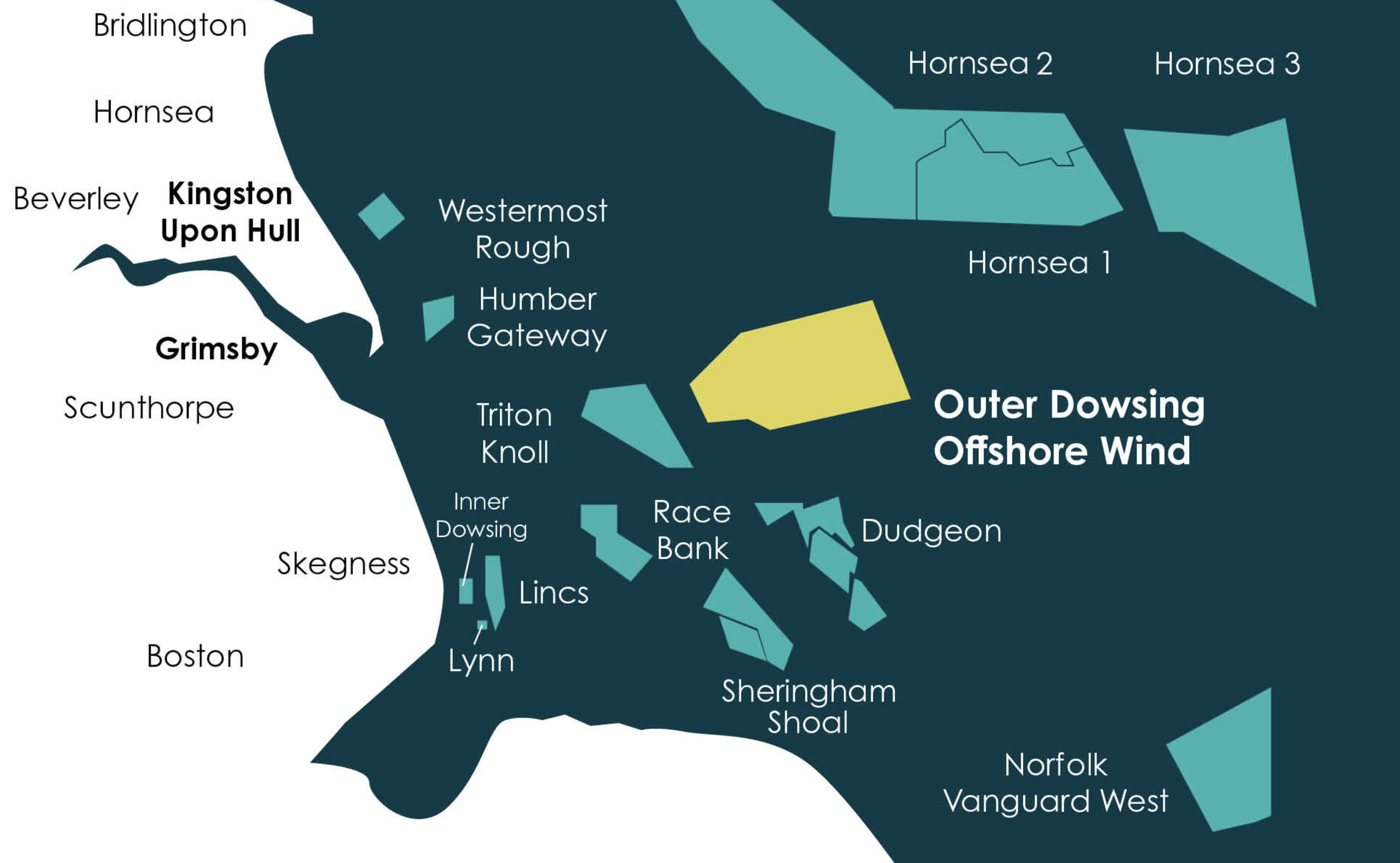
These are the sizes of the various windfarms, that are shown on the map.
- Dudgeon – 402 MW
- Hornsea 1 – 1218 MW
- Hornsea 2 – 1386 MW
- Hornsea 3 – 2852 MW
- Hornsea 4 – 1000 MW – Not shown on map.
- Humber Gateway – 219 MW
- Lincs – 270 MW
- Lynn and Inner Dowsing – 194 MW
- Norfolk Vanguard West – No information, but Norfolk Vanguard is 1800 MW
- Outer Dowsing – 1500 MW
- Race Bank – 580 MW
- Sheringham Shoal – 317 MW
- Sheringham Shoal and Dudgeon Extensions – 719 MW
- Triton Knoll – 857 MW
- Westernmost Rough – 210 MW
Note that these total up to 11724 MW, but with Norfolk Vanguard the total is 135224 MW.
Gas-Fired Power Stations
There are also several active gas-fired power stations.
- Immingham – 1240 MW
- Keadby – 734 MW
- Keadby 2 – 893 MW
- Keadby 3 – 910 MW – Planned to be fitted with carbon capture.
- Saltend – 1200 MW
- South Humber Bank – 1365 MW
- Spalding – 860 MW
- Sutton Bridge – 819 MW
Note that these total up to 8021 MW.
Viking Link
The Viking Link is a 1.4 GW interconnector, that links Bicker Fen in Lincolnshire and Denmark, that should be operational at the end of 2023.
Gas Storage
There are two major gas storage facilities in the rea.
- Aldbrough Gas Storage is formed of salt caverns to the North of the Humber.
- Rough Gas Storage is to the East of the Humber in a depleted gas field.
Both will eventually be converted to store hydrogen, which could be used by local industrial users or the proposed hydrogen power station at Keadby.
Significant Step Forward For Keadby 3 Carbon Capture Power Station
The title of this post, is the same as that of this press release from SSE.
These three paragraphs outline the project.
A landmark project in the Humber which could become the UK’s first power station equipped with carbon capture technology has taken a major leap forward following an announcement by the UK Government today.
Keadby 3 Carbon Capture Power Station, which is being jointly developed by SSE Thermal and Equinor, has been selected to be taken forward to the due diligence stage by the Department for Business, Energy and Industry Strategy (BEIS) as part of its Cluster Sequencing Process.
This process will give the project the opportunity to receive government support, allowing it to deploy cutting edge carbon capture technology, and to connect to the shared CO2 pipelines being developed through the East Coast Cluster, with its emissions safely stored under the Southern North Sea. The common infrastructure will also supply low-carbon hydrogen to potential users across the region.
The press release also says this about the power station.
- Keadby 3 power station could have a generating capacity of up to 910MW.
- It could be operational by 2027.
- It would capture up to one and a half million tonnes of CO2 a year.
It would provide low-carbon, flexible power to back-up renewable generation.
The H2H Saltend Project
The press release also says this about the H2H Saltend project.
Equinor’s H2H Saltend project, the ‘kick-starter’ for the wider Zero Carbon Humber ambition, has also been taken to the next stage of the process by BEIS. The planned hydrogen production facility could provide a hydrogen supply to Triton Power’s Saltend Power Station as well as other local industrial users. In June, SSE Thermal and Equinor entered into an agreement to acquire the Triton Power portfolio.
I wrote about H2H Saltend and the acquisition of Triton Power in SSE Thermal And Equinor To Acquire Triton Power In Acceleration Of Low-Carbon Ambitions.
In the related post, I added up all the power stations and wind farms, that are owned by SSE Thermal and it came to a massive 9.1 GW, which should all be available by 2027.
Collaboration Between SSE Thermal And Equinor
The press release also says this about collaboration between SSE Thermal and Equinor.
The two companies are also collaborating on major hydrogen projects in the Humber. Keadby Hydrogen Power Station could be one of the world’s first 100% hydrogen-fuelled power stations, while Aldbrough Hydrogen Storage could be one of the world’s largest hydrogen storage facilities. In addition, they are developing Peterhead Carbon Capture Power Station in Aberdeenshire, which would be a major contributor to decarbonising the Scottish Cluster.
This collaboration doesn’t lack ambition.
I also think, that there will expansion of their ambitions.
Horticulture
Lincolnshire is about horticulture and it is a generally flat county, which makes it ideal for greenhouses.
I wouldn’t be surprised to see a large acreage of greenhouses built close to the Humber carbon dioxide system, so that flowers, salad vegetables, soft fruit, tomatoes and other plants can be grown to absorb the carbon dioxide.
It should also be noted that one of the ingredients of Quorn is carbon dioxide from a fertiliser plant, that also feeds a large tomato greenhouse.
We would have our carbon dioxide and eat it.
Other Uses Of Carbon Dioxide
Storing carbon dioxide in depleted gas fields in the North Sea will probably work, but it’s a bit like putting your rubbish in the shed.
Eventually, you run out of space.
The idea I like comes from an Australian company called Mineral Carbonation International.
- I wrote about their success at COP26 in Mineral Carbonation International Win COP26 Clean Energy Pitch Battle.
- The company has developed the technology to convert carbon dioxide into building products like blocks and plasterboard.
- Their mission is to remove a billion tonnes of CO2 by 2040 safely and permanently.
We would have our carbon dioxide and live in it.
I also think other major uses will be developed.
A Large Battery
There is the hydrogen storage at Aldbrough, but that is indirect energy storage.
There needs to be a large battery to smooth everything out.
In Highview Power’s Second Commercial System In Yorkshire, I talk about Highview Power’s proposal for a 200MW/2.5GWh CRYOBattery.
This technology would be ideal, as would several other technologies.
Conclusion
Humberside will get a giant zero-carbon power station.
A Trip To Skegness
Last Thursday, I took a trip to Skegness to get out of the heat.
I took these pictures on the way.
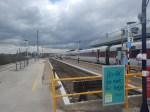
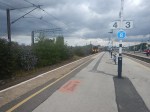


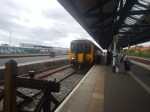





















These are my observations and thoughts.
Changing At Grantham
A few minutes after getting off the LNER Azuma, the East Midlands Railway Class 156 train arrived at the opposite face of the wide platform.
Unlike some changes you get on trains in the UK, it was all rather painless and unhurried.
The change coming home was a bit slower, but there is a bar on the London platform, that serves a good selection of good beers.
Grantham To Skegness
The journey to Skegness took around an hour and a half and I arrived at 13:51.
Skegness Station
Skegness station is not the grandest, but it does have six platforms, which is probably a lot for just an hourly service from Nottingham and Grantham.
Skegness
I didn’t stay long, as it was surprisingly too cold and I hadn’t brought a coat.
Skegness To Grantham
The return trip was better, as the train was a more modern Class 170 train.
Surely, when East Midland Railways get their full quota of Class 170 trains, then the Poacher Line between Nottingham and Skegness will be one of the routes, where they will be used.
I also suspect that with 100 mph trains always running the service, as opposed to the Class 156 trains, which are only 75 mph units, there could be speed improvements on the line.
- Grantham and Skegness is 58 miles.
- There are a large number of level crossings.
An hour service between Grantham and Skegness could be possible and might generate more passengers.
Rolls-Royce MTU Hybrid PowerPacks
I wonder if this route could be improved by fitting the Class 170 trains with Rolls-Royce MTU Hybrid PowerPacks?
- The hybrid technology would have a lower fuel consumption and allow electric operation in stations.
- The prototype hybrid is already working on Chiltern Railways in a Class 168 train.
- The Class 168 train is an earlier version of the Class 170 train and they are members of the Turbostar family.
- Rolls-Royce are developing versions of these hybrid transmissions, that will work with sustainable fuels.
- As we have a total of 207 Turbostar trainsets, these could be a convenient way of cutting carbon emissions on long rural lines.
- As Rolls-Royce MTU are also developing the technology, so their diesel engines can run on hydrogen, it is not outrageous to believe that they could be on a route to complete decarbonisation of this type of train.
I believe that we could see hydrogen-hybrid Class 170 trains, with a Rolls-Royce badge on the side.
The Massive Greenhouse
I found that this was owned by Fountain Plants.
Is Lincolnshire going to grow the UK’s greens? Or at least give them a good start in life?
More greenhouses like this will enable the UK to create our carbon dioxide and eat it!
Connecting East Lincolnshire
The title of this post, is the same as that of this study by Greengauge 21.
The study goes through all the transport options in East Lincolnshire, comes to some interesting general conclusions, in addition to those specific to East Lincolnshire and then makes this recommendation.
We recommend putting in hand the studies to compare and select the best of the two ways identified here to use electrified net zero carbon public transport to meet East Lincolnshire’s future connectivity needs.
The two ways are.
Reopening the East Lincolnshire Railway
Reopening the East Lincolnshire Railway between Louth and Firsby and running these services.
- Skegness–Wainfleet–Boston–Sleaford–Grantham–Nottingham
- Louth–Wlloughby–Alford–Firsby–Boston–Donington–Spalding–Peterborough (and
thence potentially, London KX).
Note.
- There would be a mini-hub at Boston.
- There would be good connections to Lincolnshire’s InterConnect bus links.
I wrote about reinstating the East Lincolnshire Railway inBeeching Reversal – Firsby And Louth.
An Express Interurban Bus Alternative
The study describes this option like this.
A Louth–Boston–Spalding express bus, interchanging with the east west Nottingham–Skegness trains with timed
connections at a multi-modal hub at Boston and an improved hourly interval rail service onwards
from Spalding southwards.
One of their suggestions is to extend Thameslink to Spalding.
LNER To Serve Cleethorpes
Under the proposed new LNER timetable, which will start in May 2022, there will be a new train service between London Kings Cross and Cleethorpes.
According to this article on the Lincolnite, which is entitled Direct Cleethorpes To London Rail Link ‘Close’ To Getting Go Ahead, there will be one service per day.
It will leave Cleethorpes at 06:24 and Grimsby Town at 06:32 before arriving at King’s Cross at 09:25.
The return will leave King’s Cross at 16:10 and arrive in Grimsby Town at 19:05 and Cleethorpes at 19:20.
The August 2021 Edition of Modern Railways makes these points about the service.
- The larger Azuma fleet makes this extension possible.
- ,A more regular service would require additional trains.
- LNER is examining whether other intermediate stations east of Lincoln could be served.
I would have thought, that Market Rasen station could be a possibility for an intermediate stop.
I have a few thoughts.
Extra Services
This single service is ideal for though living in Lincolnshire, but it doesn’t suit those people, who perhaps need to go to the area from London for business or family reasons.
- Lincoln appears to get around five or six trains per day in each direction to and from King’s Cross.
- Services are roughly one train per two hours.
- I suspect the Lincoln service can be run by a single train, that shuttles between King’s Cross and Lincoln stations.
I believe, that Cleethorpes needs at least a pair of services to and from London, so that travellers can spend a day in North-East Lincolnshire.
- This would probably need more trains.
- Services would go via Lincoln and Lincoln may get extra services to London.
- Selected services could stop at intermediate stations, like Market Rasen.
There are surely possibilities for a integrated timetable between King’s Cross and Lincoln, Market Rasen, Grimsby Town and Cleethorpes.
Battery-Electric Operation
Consider.
- LNER’s Class 800 trains are prime candidates for conversion to Hitachi Intercity Tri-Mode Battery Trains, so they can run away from the overhead wires of the East Coast Main Line to places like Lincoln, by the use of battery power.
- These battery trains could charge using the electrification between King’s Cross and Newark North Gate stations.
- The distance between Lincoln Central station and the East Coast Main Line is 16.6 miles.
- In Plans To Introduce Battery Powered Trains In Scotland, I quote Hitachi, as saying they expect a sixty mile range for battery trains.
I am sure, that these trains would have sufficient range on battery to be able to work King’s Cross and Lincoln services without using diesel.
But could the Hitachi trains reach Cleethorpes with some well-positioned charging?
- The distance between Lincoln and Cleethorpes stations is 47.2 miles.
- In Solving The Electrification Conundrum, I describe Hitachi’s solution to running battery-electric trains, by using well-placed short lengths of 25 KVAC overhead electrification controlled by an intelligent power system.
With a range of sixty miles on batteries and charging at Lincoln and Cleethorpes stations, it would appear that battery electric operation of Class 800 trains between King’s Cross and Cleethorpes is a distinct possibility.
Lincoln Station
Lincoln station has three operational through platforms and I suspect all would need to be electrified, so that trains could be charged as they passed through.
These are distances from Lincoln station.
- Cleethorpes – 47.2 miles
- Doncaster – 36.9 miles
- Nottingham – 33.9 miles
- Peterborough – 56.9 miles
- Sheffield – 48.5 miles
It does appear that if Lincoln station were to be electrified, most services from the city could be run using battery-electric trains.
Cleethorpes Station
This picture shows Cleethorpes station with two TransPennine Express Class 185 trains in the station.
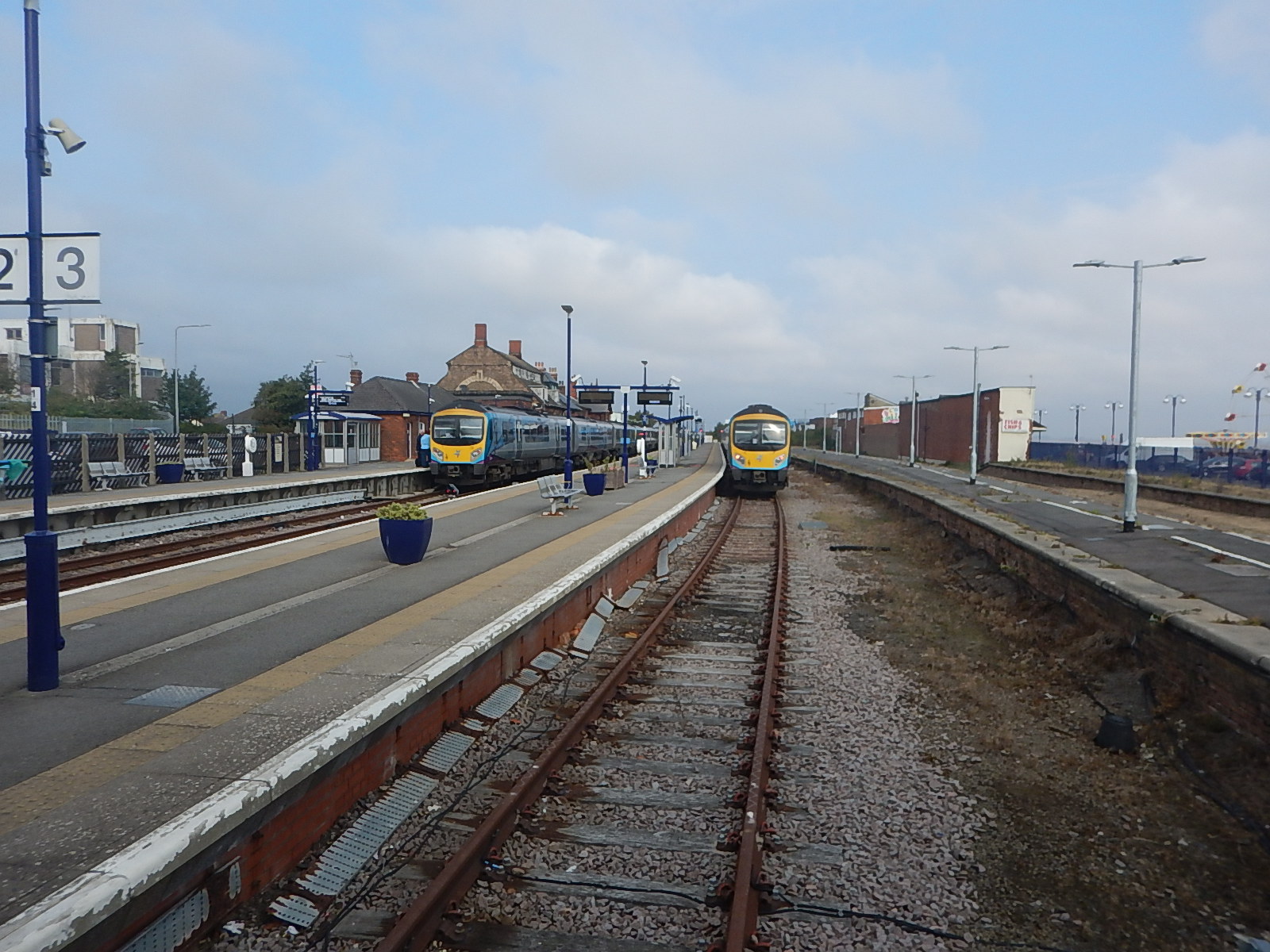
Note.
- The Class 185 trains are diesel, but could be replaced by Hitachi Class 802 trains, which could be converted to battery-electric operation.
- Cleethorpes and Doncaster are 52.1 miles apart, which could be in range of Hitachi’s battery-electric trains.
- It doesn’t look to be too challenging to electrify a couple of platforms to charge the battery-electric trains.
- Cleethorpes station could surely charge both the LNER and the TransPennine Express trains.
- The Cleethorpes and Barton-on-Humber service which is under fifty miles for a round trip could also be replaced with battery-electric trains.
Cleethorpes station could be totally served by battery-electric trains.
Battery-Electric Trains For Lincolnshire
At the present time, there is a surplus of good redundant electrical multiple units and the rolling stock leasing companies are looking for places where they can be used.
Porterbrook are already looking to convert their fleet of Class 350 trains to battery-electric operation and I am certain, that now that Hitachi and others have solved the charging problem, a lot more trains will be converted.
Most would appear to be four-car 100 mph trains, which will be very convenient and should fit most platforms.
Conclusion
Running battery-electric Class 800 trains to Lincoln, Grimsby Town and Cleethorpes could be the start of decarbonisation of Lincolnshire’s railways.
What would battery-electric trains do for the economy of Lincolnshire?
Are Kraft Heinz Up To Something?
This article on The Times, is entitled Ketchup On Its Way Back To Britain As Kraft Heinz Invests In UK Site.
This is the first two paragraphs.
Heinz tomato ketchup will be made in Britain again after its owner announced plans for a £140 million upgrade of a site on the outskirts of Wigan.
Europe’s largest food manufacturing facility is set to start making the sauces of Kraft Heinz, which also include mayonnaise and salad cream, in a move designed to meet demand in the UK.
I wrote about Kraft recently in Kraft Heinz And Freight Innovation, where they were experimenting with Network Rail to get goods to their Wigan site faster and with less carbon emissions.
I think the two stories might fit together.
have just looked at my 435 gram bottle of Heinz tomato ketchup. It states on the bottle that every 100 grams of the sauce is made from 174 grams of tomatoes. I suspect leaving in the pips and the skins would make a rather lumpy sauce!
But this means that for every tonne of sauce, there is a need for 1.74 tonnes of tomatoes.
Could this be a reason why Kraft Heinz ran an experiment a couple of months ago with bringing in goods to the site at Wigan by rail?
There could be TomatoLiner trains all the way from Spain or Italy.
Or perhaps, they could link Wigan to Lincolnshire or South Yorkshire, where tomatoes could be grown in large automated greenhouses, heated by the waste heat from all the power stations. Carbon dioxide from gas-fired power stations could also be used to make the tomatoes grow big and strong.
Why shouldn’t we eat the carbon dioxide we produce?
The more I look at Google Maps of Lincolnshire and South Yorkshire, the more I think that cost-competitive UK-produced tomatoes could be one of the reasons for this move.
I have found companies like Yorkshire Grown Produce, who grow the speciality varieties of tomatoes for supermarkets. and CambridgeHOK, who design and build the automated greenhouses.
But the problem, all growers of fruit and vegetables face, is the lack of people to do the harvesting, at an affordable price.
- As a Control Engineer, who has worked on automation, it is my view that robot or automatic harvesting is needed.
- After all robots don’t get drunk at the weekend and not turn up on Mondays.
I haven’t found a robot that would pick tomatoes yet, but I suspect there’s a company out there working on it.
Yorkshire Grown Produce are in Brough, a few files to the South-West of Hull. and say they can provide quality tomatoes from March to November.
So could a company provide affordable tomatoes to Kraft Heinz’s specification for 9-10 months of the year?
- Looking at bottles of Ketchup, it appears they have a shelf life of at least a year, so the month’s without tomatoes could be bridged by a warehouse.
- I also suspect that automated greenhouses could turn out guaranteed Organic tomatoes.
- The tomatoes would arrive in Wigan the day they are picked.
- It probably wouldn’t be a large train every day and the line at Wigan is not electrified, so it wouldn’t necessarily be a zero-carbon trip across the Pennines.
I can see an efficient system for the production of tomato ketchup, which could be labelled organic and 100 % British.
How many tonnes of carbon emissions would be saved? Probably not many! But it’s the thought that counts.
If this isn’t technology-aided marketing, I don’t know what is?
Conclusion
How many other production and delivery processes can be simplified by the use of rail?
 The Anonymous Widower