Battery Power Lined Up For ‘755s’
In Issue 888 of Rail Magazine, there is a short article, which is entitled Battery Power Lined Up For ‘755s.‘
This is said.
Class 755s could be fitted with battery power when they undergo their first overhaul.
Stadler built the trains with diesel and electric power.
The Swiss manufacturer believes batteries to be the alternative power source for rail of the future, and is to build tri-mode trains for Transport for Wales, with these entering traffic in 2023.
Rock Rail owns the Greater Anglia fleet. Chief Operating Office Mike Kean told RAIL on September 4 it was possible that when a four-car ‘755/4’ requires an overhaul, one of its four diesel engines will be removed and replaced by a battery.
These are some thoughts.
What Is The Capacity Of A Single Battery?
This picture shows the PowerPack of a Class 755 train.

Note the two ventilated doors on the side. Currently, a diesel engine is behind each!
The PowerPack has four slots,; two on either side of the central corridor.
Each of the slots could take.
- A V8 16-litre Deutz diesel that can produce 478 kW and weighs 1.3 tonnes.
- A battery of a similar physical size.
- Possibly a hydrogen fuel-cell!
I would assume that the battery module is plug-compatible, the same physical size and similar weight to the diesel engine module, as this would make the design and dynamics of the train easier.
A 1.2 tonnes battery would hold around 120 kWh.
Kinetic Energy Of The Train
I will use my standard calculation.
- The basic train weight is 114.3 tonnes.
- If each of the 229 passengers weighs 90 kg with Baggage, bikes and buggies, this gives a passenger weight of 20.34 tonnes.
- This gives a total weight of 134.64 tonnes.
Using Omni’s Kinetic Energy Calculator gives these figures for the Kinetic energy.
- 50 mph – 9.34 kWh
- 60 mph – 13.5 kWh
- 75 mph – 21 kWh
- 90 mph – 30.3 kWh
- 100 mph – 37.4 kWh
- 125 mph – 58.4 kWh
Note.
- Class 755 trains will not be able to run at 125 mph, but I have been told by someone who should know, that the trains have probably been designed, to enable this in other versions of the trains in the future.
- The kinetic energy of the train at typical Greater Anglia service speeds is not very high.
These amounts of kinetic energy can be easily handled in a 120 kWh battery under regenerative braking, to improve the efficiency of the trains.
Range On Battery Power
Assuming that the train uses 3 kWh per vehicle mile (SeeHow Much Power Is Needed To Run A Train At 125 mph?) , this would give.
- A four-car train a range of ten miles.
- A three-car train a range of 13.3 miles.
This probably isn’t long enough given that these are Greater Anglia’s electrification gaps.
- Ely and Peterborough – 30 miles
- Ipswich and Cambridge – 41 miles
- Ipswich and Ely – 37 miles
- Ipswich and Felixstowe – 14 miles
- Ipswich and Lowestoft – 45 miles
- Marks Tey and Sudbury – 12 miles
- Norwich and Ely – 50 miles
- Norwich and Great Yarmouth – 18 miles
- Norwich and Lowestoft – 20 miles
- Norwich and Sheringham – 30 miles
It would appear that more battery capacity is needed, as the required range is around sixty miles on some routes.
In the July 2018 Edition of Modern Railways, there is an article entitled KeolisAmey Wins Welsh Franchise.
This is said about the Stadler Tri-Mode Flirts on the South Wales Metro.
The units will be able to run for 40 miles between charging, thanks to their three large batteries.
So does this mean that these Flirts have just one Deutz diesel engine of 478 kW and three batteries in the four slots of the power-pack?
Assuming that the Flirts use 3 kWh per vehicle mile, this gives these ranges.
- A four-car train a range of thirty miles.
- A three-car train a range of forty miles.
These ranges might give enough range for many the of East Anglian routes. Improvements in train efficiency and battery storage would only increase these ranges.
Class 755 Trains In Electric Mode
Being able to do this, is important, as if the Class 755 trains are to use battery power, then they will need to use 25 KVAC overhead electrification in the various electric islands around East Anglia to charge the batteries.
The article in Issue 888 of Rail Magazine, says this about running in electric mode.
GA Joint Project Manage Steve Mitchell told RAIL that the ‘755s’ can already operate on electric power between Norwich and London, but they must carry out Electro Magnetic Current testing on the Ely-Cambridge route.
When that is complete, they will operate Notwich-Ely in diesel mode, and Ely-Cambridge in electric.
At least it appears that the Northern bay platforms at Cambridge are electrified.
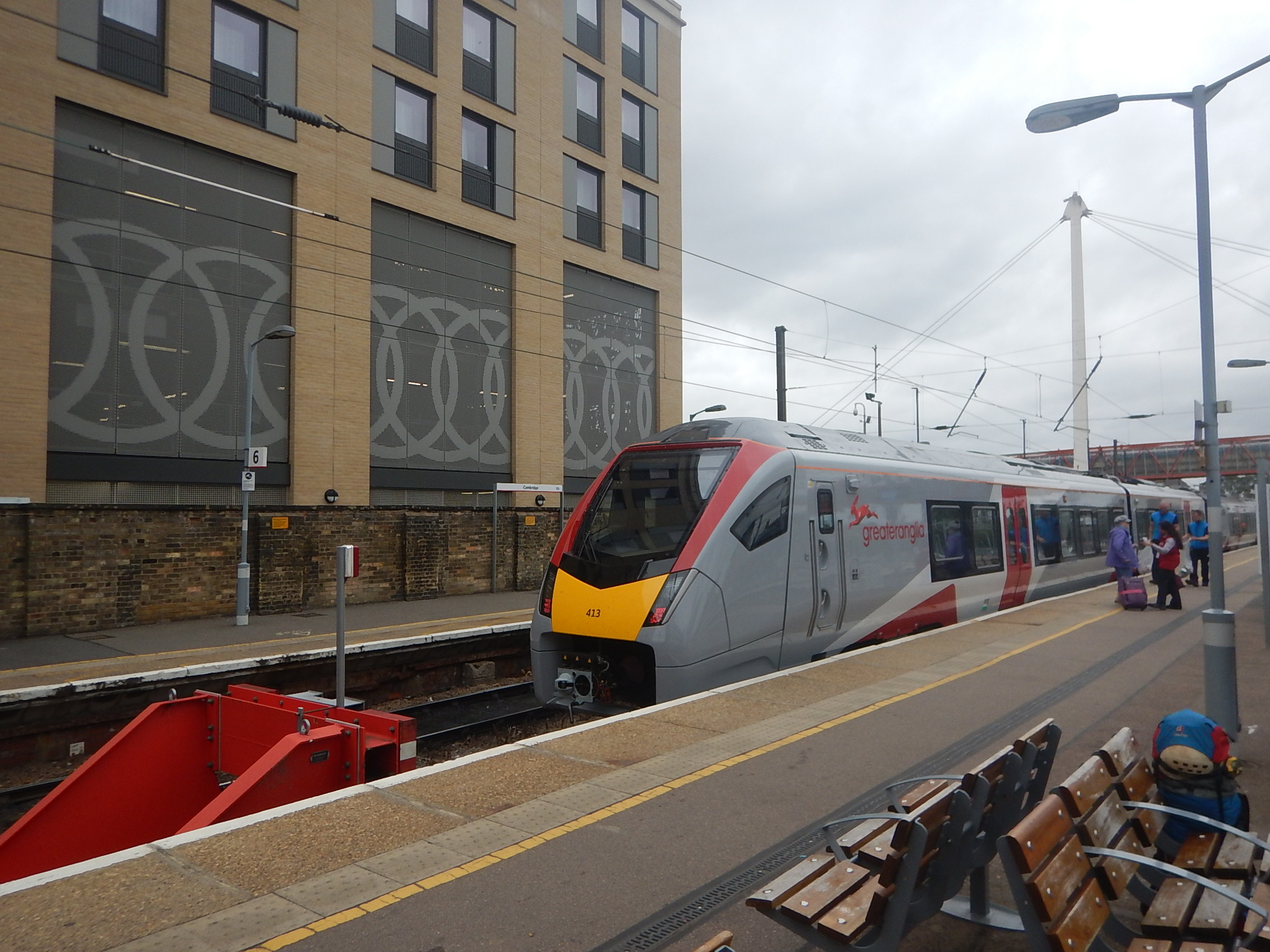
This would probably mean that no new infrastructure is needed.
As both Ipswich and Norwich stations are fully electrified, charging the batteries on hourly shuttles between the three stations, wouldn’t be a problem, if and when the trains are fitted with enough battery capacity to bridge the fifty mile gaps in the electrification on the routes.
Three-Car Trains And Batteries
The two short Southern routes; Coclester Town and Sudbury and Ipswich and Felixstowe will probably be run by three-car Class 755 trains, which have two diesel engines and two spare slots in the PowerPack.
Battery modules in both spare slots would give a twenty-seven mile range, which could enable the following.
- Running a return trip between Marks Tey and Sudbury, after charging the batteries on the main line between Colchester Town and Marks Tey.
- Running a return trip between Ipswich and Felixstowe, provided enough charge can be taken on at Ipswich.
The article in Issue 888 of Rail Magazine, also says this about the new Class 755 trains entering service.
The last line to receive them will be Sudbury-Marks Tey, will exclusively be operated by three-car Class 755/3s due to infrastructure restraints on the branch. No date has been given.
It should also be noted that the three-car trains are going to be the last to be delivered.
I feel that Stadler and Greater Anglia are following a cautious and very professional route.
Consider.
- They introduced the new trains on the Wherry Lines, which are close to the Crown Point Depot.
- Services between Norwich and Sheringham and Norwich and Cambridge were introduced next.
- All the initial services have used four-car trains
- Greater Anglia held on to the standby train of two Class 37 locomotives and Mark 2 coaches until last week.
- They have stated that training of Ipswich drivers is starting, ahead of services from the town to Cambridge, Felixstowe, Lowestoft and Peterborough.
- All the Ipswich cervices can be run using four-car trains.
- As I said earlier, the only service that needs a three-car train is Sudbury and Marks Tey.
- A three-car train could probably be thoroughly tested on one of the Norwich routes before deplayment to Sudbury.
- It should also be noted that a three-car train is only a four-car train with two less diesel engines and one less trailer car.
So far everything seems to have gone very well, with no adverse reports in the media.
Stadler have orders for further bi-mode trains for South Wales and other places in Europe. At least one of these orders, that for the South Wales Metro, includes a number of diesel/electric/battery versions.
Given the problems, that Bombardier and others have had with getting the complex software of these trains to work correctly, if I was Stadler’s Project Manager on multi-mode Flirts, I would be testing the trains and their software morning, noon and night!
So could the planned later arrival of the three-car Class 755 trains, be partly to enable Stadler to fully investigate the characteristics of a multi-mode Flirt?
After all, Greater Anglia only need a couple of three-car trains to start the service between Sudbury and Marks Tey, of the fourteen on order. And they have twenty-four four-car trains on order for the other routes.
They are also replacing twenty-four assorted diesel multiple units with thirty-eight longer new bi-mode multiple units.
I do wonder, if there is a cunning plan being hatched between Greater Anglia and Stadler.
- Stadler finalises the design and the software for a PowerPack, that contains both diesel and battery modules.
- Stadler thoroughly tests the design using a Greater Anglia three-car train in Switzerland.
- Stadler shows the concept to other prospective customers.
- Greater Anglia certifies the three-car Class 755 bi-mode train in the UK.
- Greater Anglia runs three-car 755 trains between Colchester Town and Sudbury, using the electrification between Marks Tey and Colchester Town, as they have planned for some time.
- When ready, Class 755 trains with batteries are introduced between Sudbury and Colchester Town.
Greater Anglia would be running the first battery-electric service using bi-mode battery-electric trains in the UK.
Protests After Claim That Hitachi Has Lost T&W Contract
The title of this post is the same as that of this article on Railnews.
This is the introductory paragraphs.
There have been protests in north east England after a report claimed that Hitachi has been ruled out of the three-way contest to build a £500 million fleet for Tyne & Wear Metro.
The other contenders are CAF and Stadler, and the source of the claims says ‘insiders’ at Nexus have been told that Hitachi will be ‘overlooked’.
It should be noted that the two other bidders have orders for similar trains in the pipeline.
CAF
In TfL Awards Contract For New DLR Fleet To Replace 30-year-old Trains , I wrote about how CAF had been awarded the contract for new trains for the Docklands Light Railway.
I also said this about the possibility of CAF being awarded the contract for the new trains for the Tyne and Wear Metro.
In Bombardier Transportation Consortium Preferred Bidder In $4.5B Cairo Monorail, I indicated that as the trains on the Tyne and Wear Metro and the trains on the Docklands Light Railway, are of a similar height and width, it might be possible to use the same same car bodies on both trains.
So now that CAF have got the first order for the Docklands Light Railway, they must be in prime position to obtain the Tyne and Wear Metro order!
A second order would fit well with the first and could probably be built substantially in their South Wales factory.
Stadler
Stadler seem to be targeting the North, with new Class 777 trains for Merseyrail and Class 399 tram-trains for Sheffield and bids in for tram-trains and and new trains for the Tyne and Wear Metro.
Their trains are both quirky, accessible and quality and built to fit niche markets like a glove.
Only Stadler would produce a replacement for a diesel multiple unit fleet with a bi-mode Class 755 train, with the engine in the middle, that is rumoured to be capable of running at 125 mph.

Note the full step-free access between train and platform, which is also a feature of the Merseyrail trains.
Does the Tyre and Wear Metro want to have access like this? It’s already got it with the existing trains, as this picture at South Shields station shows.
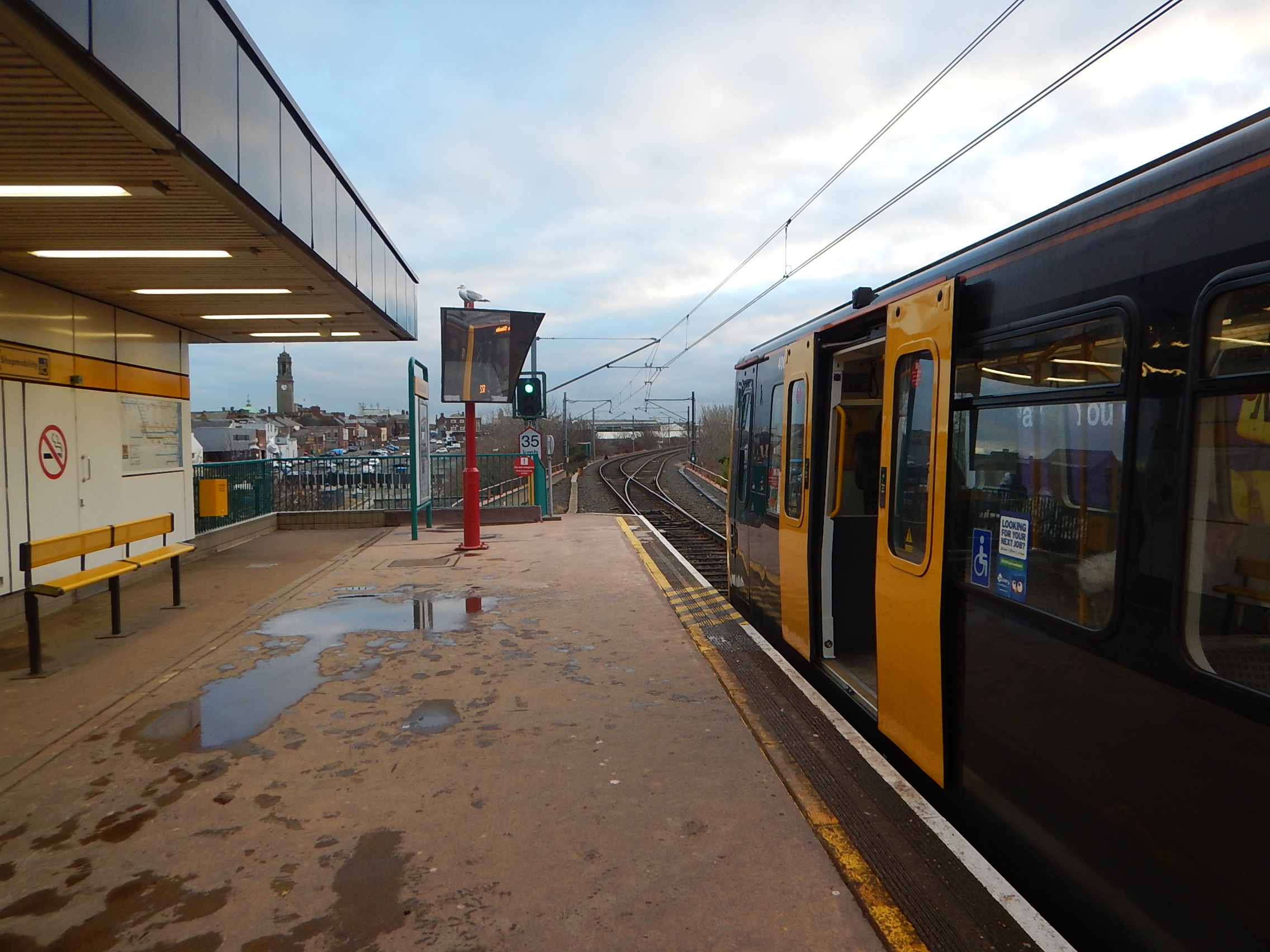
Stadler’s engineering in this area, would fit their philosophy
I first thought that Stadler would propose a version of their Class 399 tram-trains. for the Tyne and Wear Metro and wrote Comparing Stadler Citylink Metro Vehicles With Tyne And Wear Metro’s Class 994 Trains.
This was my conclusion.
I am led to the conclusion, that a version of the Stadler Citylink Metro Vehicle similar to those of the South Waes Metro, could be developed for the Tyne and Wear Metro.
My specification would include.
- Length of two current Class 994 trains, which would be around 111 metres.
- Walk through design with longitudinal seating.
- Level access between platform and train at all stations.
- A well-designed cab with large windows at each end.
- Ability to use overhead electrification at any voltage between 750 and 1500 VDC.
- Ability to use overhead electrification at 25 KVAC.
- Pantographs would handle all voltages.
- A second pantograph might be provided for reasons of reliable operation.
- Ability to use onboard battery power.
- Regenerative braking would use the batteries on the vehicle.
Note.
- Many of these features are already in service in Germany, Spain or Sheffield.
- The train would be designed, so that no unnecessary platform lengthening is required.
- As in Cardiff, the specification would allow street-running in the future.
- Could battery range be sufficient to allow new routes to be developed without electrification?
I also feel that the specification should allow the new trains to work on the current network, whilst the current trains are still running.
But since I wrote that comparison in June 2018, Merseyrail’s new trains have started to be delivered and Liverpudlians have started to do what they do best; imagine!
The Tyne and Wear Metro has similar ambitions to expand the network and would a version of the Class 777 train fit those ambitions better?
Conclusion
I wouldn’t be surprised if Hitachi misses out, as the experience of the Docklands Light Railway or Merseyrail fed into the expansion of the Tyne and Wear Metro could be the clincher of the deal.
They would also be the first UK customer for the Hitachi trains.
Could Merseyrail’s Class 777 Trains Run As Tram-Trains On The Manchester Metrolink?
Look at the main dimensions of the Stadler Class 777 train destined for Merseyrail and the current M5000 tram of the Manchester Metrolink. I have also added the dimensions of the Stadler Class 399 tram-train, that is running on the Sheffield Supertram network.
Class 777 train
- Width – 2.82 metres
- Height – 3.82 metres
- Floor Height – 0.96 metres
- Overall Length – 64.98 metres
- Capacity – 190 seats and 302 standing – 492 total
- Operating Speed – 75 mph
M5000
- Width – 2.65 metres
- Height – 3.67 metres
- Floor Height – 0.90 metres
- Overall Length – 28.4 metres
- Double Length – 56.8 ,metres
- Capacity – 60 or 66 seats and 146 standing – 206 or 212 total
- Operating Speed – 50 mph
Class 399 tram-train
- Width – 2.65 metres
- Height – 3.72 metres
- Floor Height – 0.425 metres
- Overall Length – 37.2 metres
- Capacity – 96 seats and 140 standing – 236 total
- Operating Speed – 62 mph
Note.
- Vehicle width and height could probably be incorporated on the same track
- The floor heights of the Class 777 train and the M5000 are surprisingly close,
- The floor height of the low-floor Class 399 tram-train is lower and wouldn’t allow step-free access from platform to tram on the Metrolink network.
- A double M5000 and a Class 777 train have similar lengths.
- A double M5000 has 86% of the capacity of a Class 777 train.
A Class 777 train looks to be able to go anywhere that a double M5000 tram can go and be able to give the same quality of passenger access.
Can double M5000 trams use the whole of the Metrolink network?
Power Supply
Around Manchester and Liverpool there are the following types of electrification.
- 25 KVAC overhead – Connecting major cities and on the West Coast Main Line.
- 750 VDC overhead – Manchester Metrolink
- 750 VDC third-rail – Merseyrail
In the future it is intended that Class 777 trains will be able to handle.
- 25 KVAC overhead
- 750 VDC third-rail
It should also be noted that Class 399 tram-trains, which are also built by Stadler can handle.
- 25 KVAC overhead
- 750 VDC overhead
I wouldn’t be surprised to find, that Stadler can produce a Class 777 train, that could handle these voltages.
- 25 KVAC overhead
- 750 VDC overhead
- 750 VDC third-rail
It’s all about the electrical systems on the train, but Stadler probably have the solutions in their boxes of tricks.
I very much feel it would possible for a version of a Class 777 train with an additional battery to do the following.
- Run as a train on the Merseyrail network. using 750 VDC third-rail.
- Run as a train between Otmskirk and Preston using a mixture of battery power and 25 KVAC overhead.
- Run as a train between Kirkby and Wigan using the battery.
- Run as a double tram on the Manchester Metrolink using 750 VDC overhead.
- Run as a tram-train to extend the Manchester Metrolink using a mixture of battery power and 25 KVAC overhead.
Class 777 trains might even be able to run on the Sheffield Supertram network. But they might be too long and would not be able to provide step-free access from platform to tram, without modification of trains and/or platforms.
Poasible Routes
Just about anywhere a Manchester Metrolink M5000 tram or a four-car electric or diesel multiple unit can run.
Thjis article on Railway Gazette is entitled Battery Trial Planned For New EMU Fleet.
This is the first sentence.
The sixth of the 52 four-car 750 V DC third rail electric multiple-units which Stadler is to supply for Merseyrail services around Liverpool is to be fitted with a 5 tonne battery to test the business case for energy storage.
A five tonne battery will soon be able to have a capacity of 500 kWh, which should be able to give the train a range of fifty miles on battery power.
This would more than cover the thirty miles without electrification between Altrincham and Chester, where the battery could be recharged.
Conclusion
I am in no doubt that Merseyrail’s Class 777 trains, could run as tram-trains on the Manchester Metrolink.
But then, Stadler don’t do ordinary and obvious!.
Why should they?
There must also be an advantage to Manchester Metrolink and Merseyrail, if they were using the same or similar vehicles for their public transport networks.
My First Rides In A Class 755 Train
Today, I had my first rides in a Class 755 train. I use rides, as it was three separate timetabled journeys.
- 12:36 – Norwich to Great Yarmouth
- 13:17 – Great Yarmouth to Norwich
- 14:05 – Norwich to Lowestoft
But it was only one train!
Although, I did see at least one other train in service.
These are my observations.
The Overall Style
These are a few pictures of the outside of the train.
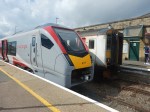
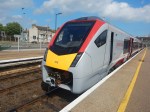
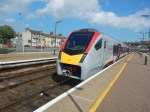
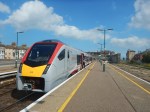
The train certainly looks impressive from the front, but then it has a similar profile to a Bombardier Aventra or a member of Hitachi’s Class 800 family of trains.
The open nose is reminiscent of front-engined Formula One racing cars of the 1950s, with an added sloping front to apply downforce.
I would suspect that the similarity of the trains is driven by good aerodynamic design.
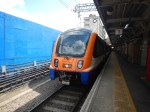
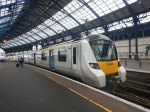
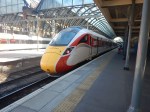

If all the current Formula One cars were painted the same colour, could you tell the apart?
Trains seem to be going the same way. Only Siemens Class 700/707/717 design doesn’t seem to be rounded and smooth.
The PowerPack
The unique feature of these bi-mode trains is the diesel PowerPack in the middle of the train.
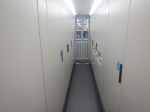
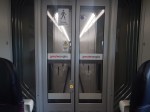
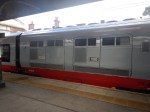
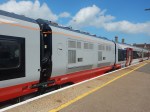
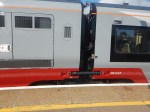
Stadler first used a PowerPack in the GTW, which I described in The Train Station At The Northern End Of The Netherlands.
- GTWs date from 1998.
- Over five hundred GTWs have been built.
- You see GTWs in several countries in Europe.
- GTWs have a maximum speed of between 115 and 140 kph.
The concept of the train with a PowerPack is certainly well-proven.
I have deliberately ridden for perhaps twenty seconds in the corridor through the PowerPack on both trains! Although I didn’t measure it with a sound meter, I’m fairly certain, that the more modern Class 755 train is better insulated against the noise of the engines.
But you would expect that with progress!
There could be another significant difference between the bi-mode Flirt and the GTW. This picture shows the connection between the PowerPack and the next car.
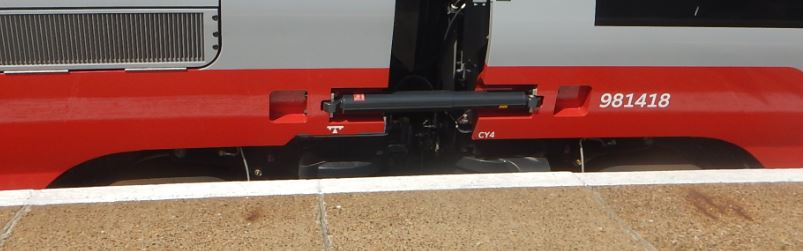
It looks like it could be a damper to improve the performance of the train on curves. It is not visible on this picture of a GTW PowerPack.
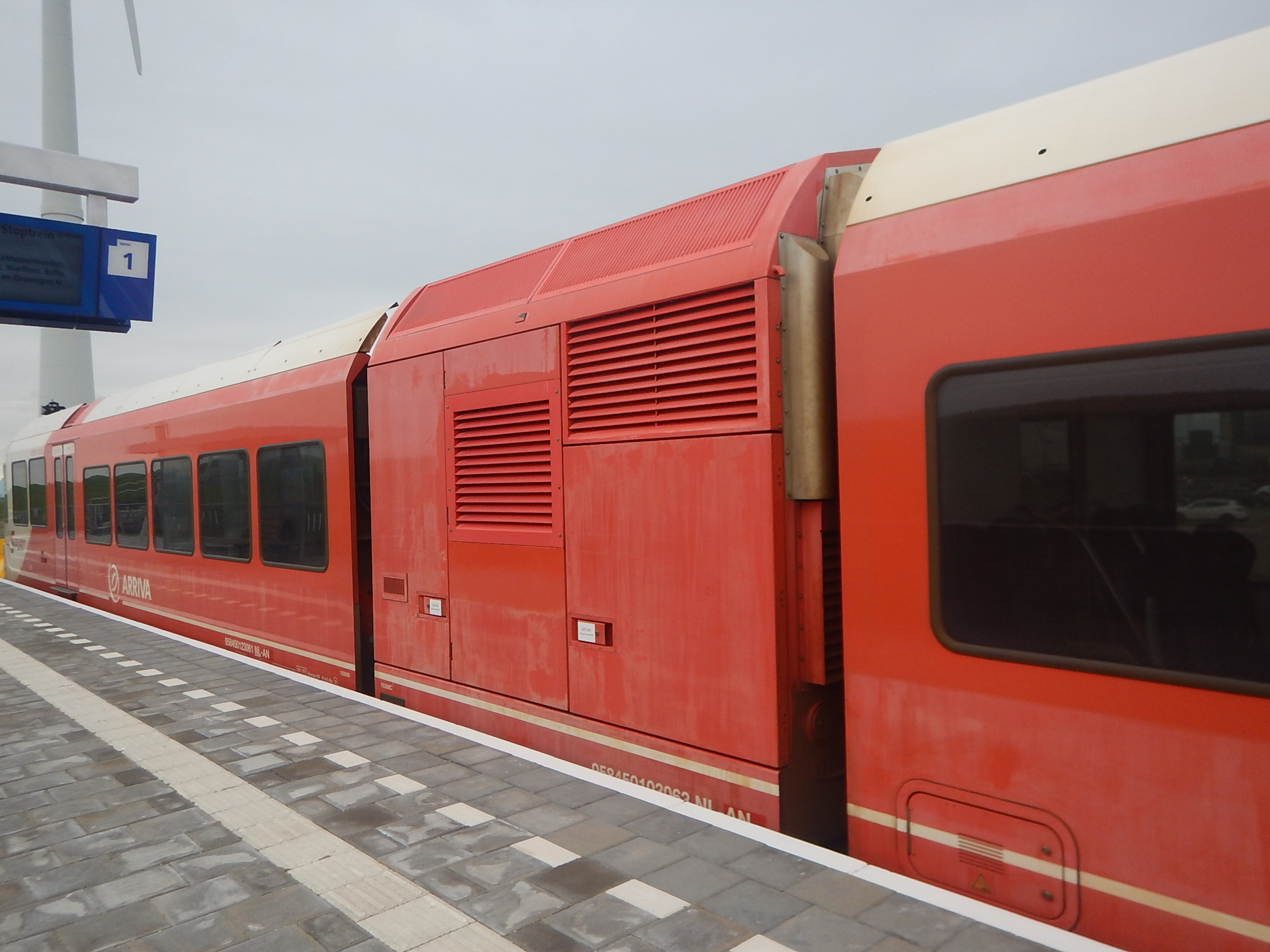
As an engineer, this says to me, that Stadler have taken tremendous care to make the unusual concept of the PowerPack work perfectly.
Train Power On Diesel
Consider.
- This four-car Class 755 train has installed diesel power of 1920 kW.
- At 100 mph, the train will travel a mile in thirty-six seconds.
- In that time, 19.2 kWh would be generated by the engines at full-power.
This means that a maximum power of 4.6 kWh per vehicle mile is available, when running on diesel power.
In How Much Power Is Needed To Run A Train At 125 mph?, I answered the question in the title of the post.
This was my conclusion in that post.
I know this was a rather rough and ready calculation, but I can draw two conclusions.
- Trains running at 125 mph seem to need between three and five kWh per vehicle mile.
- The forty year old InterCity 125 has an efficient energy use, even if the engines are working flat out to maintain full speed.
The only explanation for the latter is that Terry Miller and his team, got the aerodynamics, dynamics and structures of the InterCity 125 almost perfect. And this was all before computer-aided-design became commonplace.
In future for the energy use of a train running at 125 mph, I shall use a figure of three kWh per vehicle mile.
These figures leave me convinced that the design of the Class 755 train can deliver enough power to sustain the train at 125 mph, when running on diesel power
Obviously, as the maximum speed in East Anglia, is only the 100 mph of the Great Eastern Main Line, they won’t be doing these speeds in the service of Greater Anglia.
I also had a quick word with a driver and one of my questions, was could the train design be good for 125 mph? He didn’t say no!
This 125 mph capability could be useful for Greater Anglia’s sister company; Abellio East Midlands Trains, where 125 mph running is possible, on some routes with and without electrification.
With respect to the Greater Anglia application, I wonder how many engines will be used on various routes? Many of the routes without electrification are almost without gradients, so I can see for large sections of the routes, some engines will just be heavy passengers.
I’ve read somewhere, that the train’s computer evens out use between engines, so I suspect, it gives the driver the power he requires, in the most efficient way possible.
Remember that these Greater Anglia Class 755 trains, are the first bi-mode Stadler Flirts to go into service, so the most efficient operating philosophy has probably not been fully developed.
Train Weight
These pictures show the plates on the train giving the details of each car.
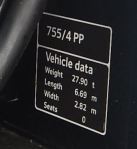
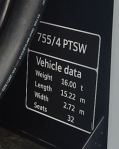
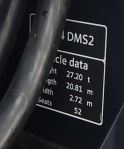
I only photographed one side of the train and I will assume that the other two cars are similar. They won’t be exactly the same, as this intermediate car has a fully-accessible toilet.
The weight of each car is as follows.
- PowerPack – PP – 27.9 tonnes
- Intermediate Car – PTSW – 16.0 tonnes
- Driving Car – DMS2 – 27.2 tonnes
Adding these up gives a train weight of 114.3 tonnes.
Note that the formation of the train is DMS+PTS+PP+PYSW+DMS2, which means that heavier and lighter cars alternate along the train.
Train Length
The previous pictures give the length of each car is as follows.
- PowerPack – PP – 6.69 metres
- Intermediate Car – PTSW – 15.22 metres
- Driving Car – DMS2 – 20.81 metres
Adding these up gives a train length of 78.75 metres.
This is very convenient as it fits within British Rail’s traditional limit for a four-car multiple unit like a Class 319 train.
Train Width
The previous pictures give the width of each car is as follows.
- PowerPack – PP – 2.82 metres
- Intermediate Car – PTSW – 2.72 metres
- Driving Car – DMS2 – 2.72 metres
The PowerPack is wider than the other cars and it is actually wider than the 2.69 metres of the Class 170 train, that the Class 755 train will replace. However, Greater Anglia’s electric Class 321 trains also have a width of 2.82 metres.
It looks to me, that Stadler have designed the PowerPack to the largest size that the UK rail network can accept.
The other cars are narrower by ten centimetres, which is probably a compromise between fitting platforms, aerodynamics and the needs of articulation.
Seats
The previous pictures give the number of seats in each car as follows.
- PowerPack – PP – 0
- Intermediate Car – PTSW – 32
- Driving Car – DMS2 – 52
This gives a total of 168 seats. Wikipedia gives 229.
Perhaps the car without the toilet has more or Wikipedia’s figure includes standees.
Kinetic Energy Of The Train
I will use my standard calculation.
The basic train weight is 114.3 tonnes.
If each of the 229 passengers weighs 90 kg with Baggage, bikes and buggies, this gives a passenger weight of 20.34 tonnes.
This gives a total weight of 134.64 tonnes.
Using Omni’s Kinetic Energy Calculator gives these figures for the Kinetic energy.
- 60 mph – 13.5 kWh
- 100 mph – 37.4 kWh
- 125 mph – 58.4 kWh
If we are talking about the Greater Anglia C;lass 755 train, which will be limited to 100 mph, this leads me to believe, that by replacing one diesel engine with a plug compatible battery of sufficient size, the following is possible.
- On all routes, regenerative braking will be available under both diesel and electric power.
- Some shorter routes could be run on battery power, with charging using existing electrification.
- Depot and other short movements could be performed under battery power.
The South Wales Metro has already ordered tri-mode Flirts, that look like Class 755 trains.
InterCity Quality For Rural Routes
The title of this section is a quote from the Managing Director of Greater Anglia; Jamie Burles about the Class 755 trains in this article on Rail Magazine.
This is the complete paragraph.
Burles said of the Class 755s: “These will be the most reliable regional train in the UK by a country mile – they had better be. They will be InterCity quality for rural routes, and will exceed expectations.”
I shall bear that quote in mind in the next few sections.
Seats And Tables
The seats are better than some I could name.
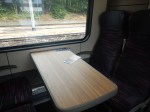
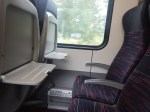
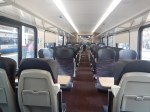
The seats are actually on two levels, as some are over the bogies. However |Stadler seem to managed to keep the floor flat and you step-up into the seats, as you do in some seats on a London New Routemaster bus.
Seat-Back Tables
I particular liked the seat-back tables, which weren’t the usual flimsy plastic, but something a lot more solid.
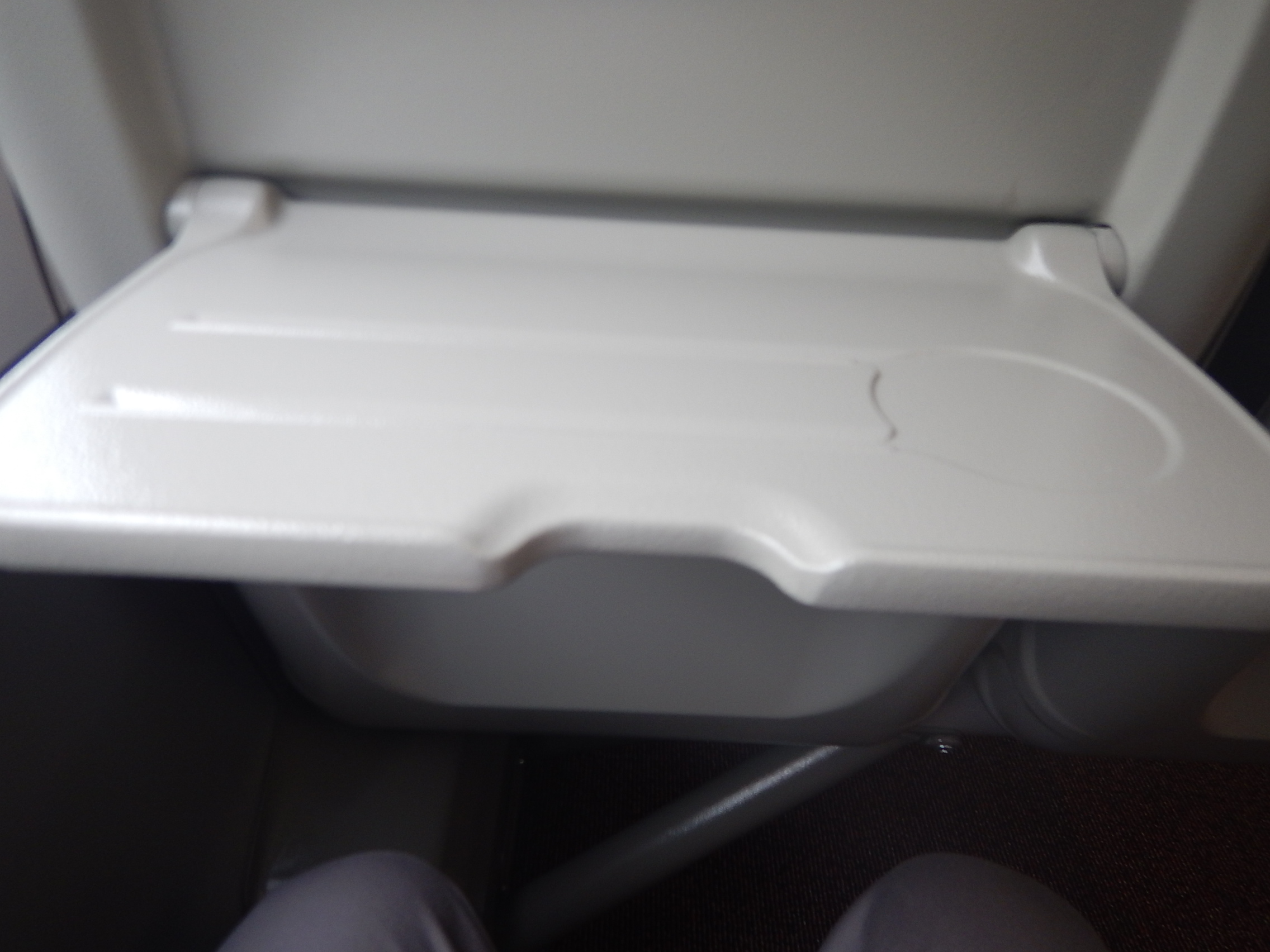
They are possibly made out of aluminium or a high class engineering plastic. You’d certainly be able to put a coffee on them, without getting it dumped in your lap.
It is the sort of quality you might get on an airliner, flown by an airline with a reputation for good customer service.
Step-Free Access
Stadler are the experts, when it comes to getting between the train and the platform, without a step. As I travel around Europe, you see little gap fillers emerge from trains built by Stadler, which have now arrived in East Anglia.

There was a slight problem at Great Yarmouth with a wheelchair, but it was probably something that can be easily sorted.
Some platforms may need to be adjusted.
Big Windows
The train has been designed with large windows, that are generally aligned with the seats.
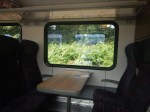
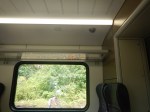
There is no excuse for windows not aligning with most of the seats, as you find on some fleets of trains.
Low Flat Floor
The train has been designed around a low, flat floor.
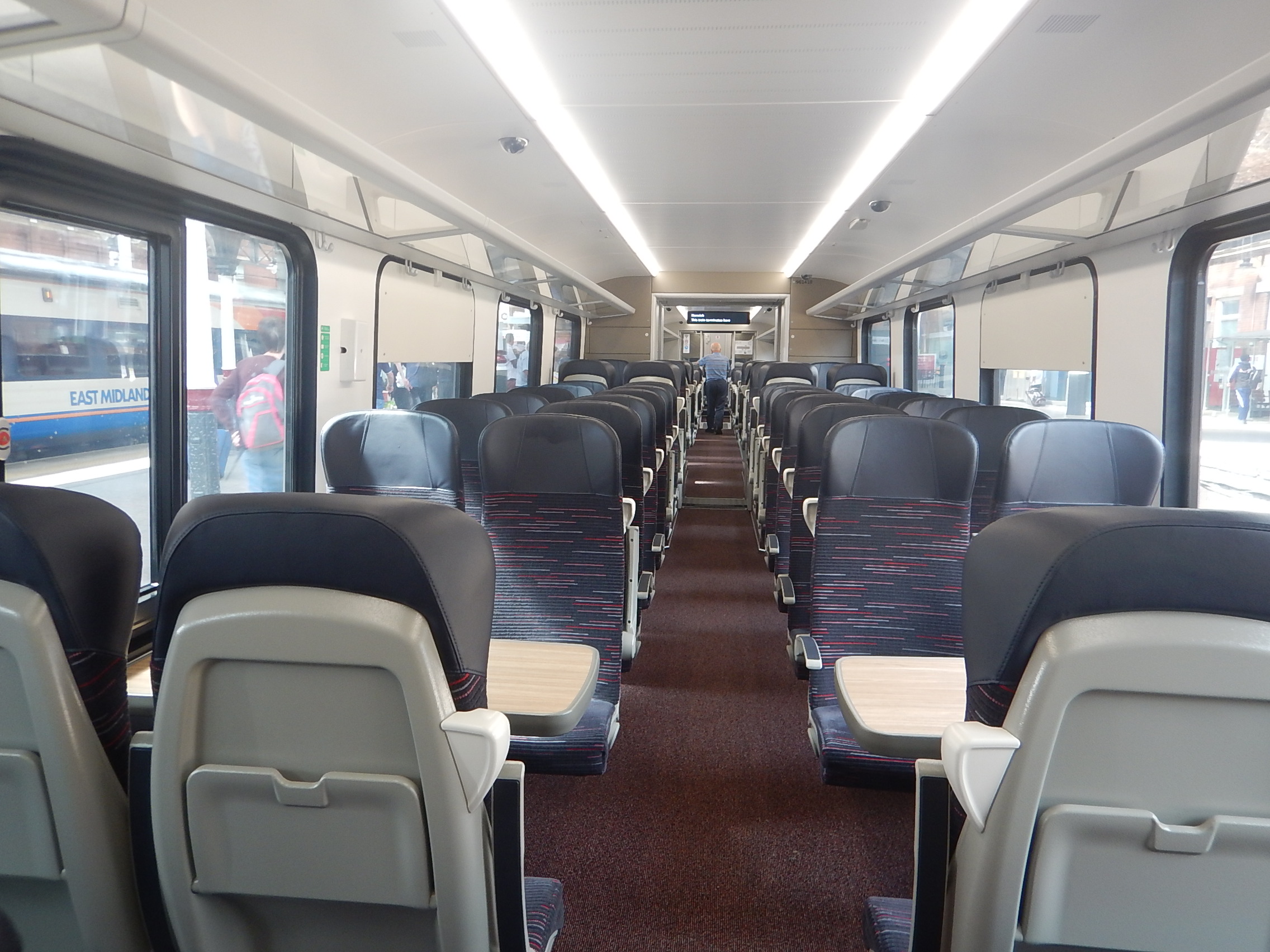
The floor also improves the step-free access and gives more usable height inside the train.
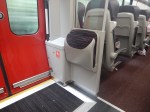
Litter Bins
The train has well-engineered litter bins in between the seats and in the lobbies.
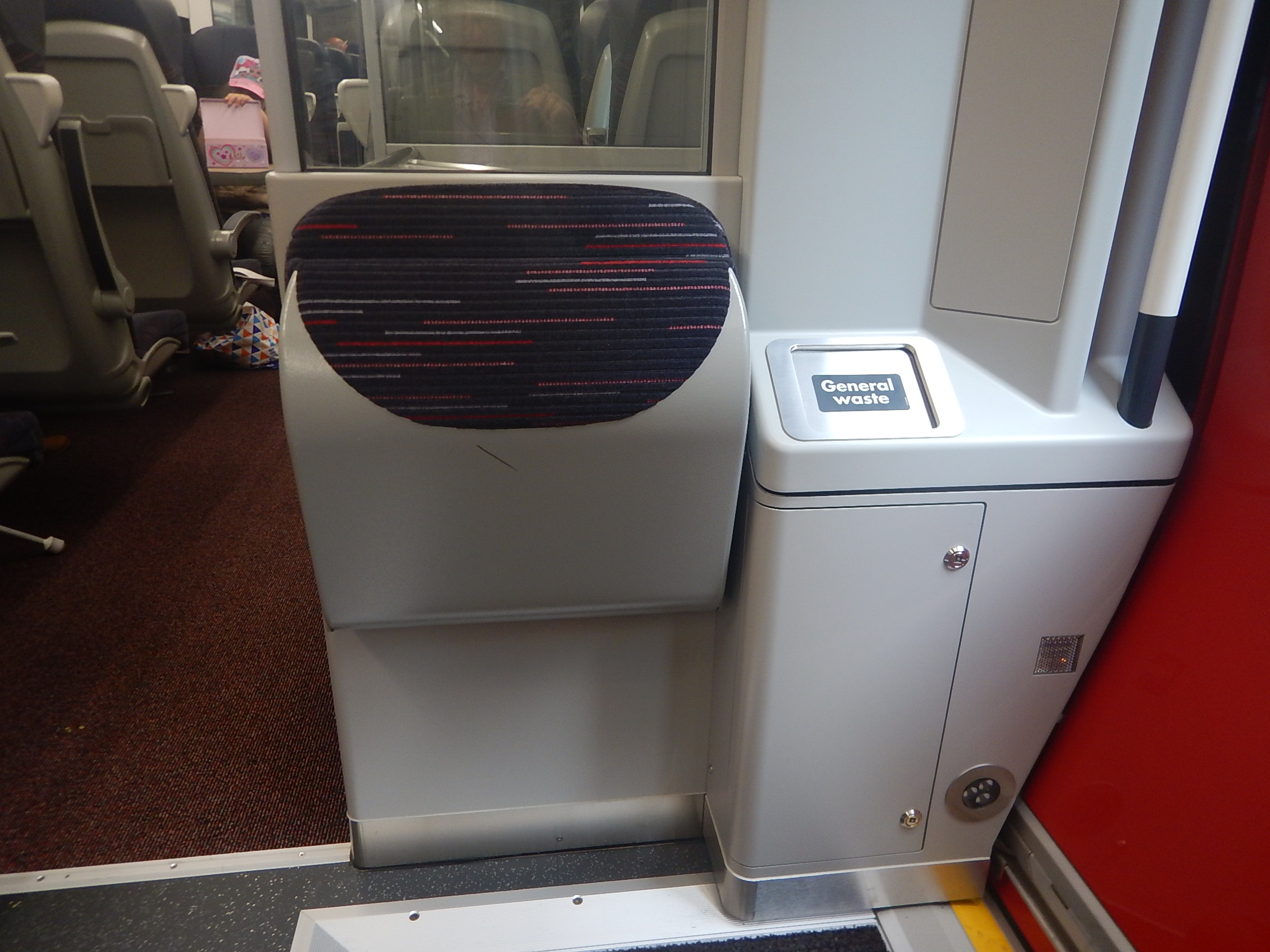
This bin is in the lobby, next to a comfortable tip-up seat.
Too many trains seem to be built without bins these days and the litter just gets thrown on the floor.
Conclusion
It is certainly a better class of rural train and I think it fulfils Jamie Burles’ ambition of InterCity Quality For Rural Routes.
But then services between Cambridge, Ipswich and Norwich are as important to East Anglia, as services between Hull, Leeds and Sheffield are to Yorkshire.
They are all services that can take a substantial part of an hour, so treating passengers well, might lure them out of their cars and off crowded roads.
In My First Ride In A Class 331 Train, I wrote about Northern’s new Class 331 trains.
If I was going to give the Greater Anglia train a score of eight out of ten, I’d give the Class 331 train, no more than two out of ten.
Could A Battery- Or Hydrogen-Powered Freight Locomotive Borrow A Feature Of A Steam Locomotive?
Look at these pictures of the steam locomotive; Oliver Cromwell at Kings Cross station.
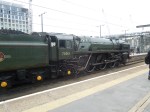
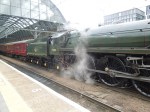
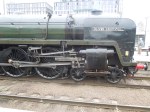

Unlike a diesel or electric locomotive, most powerful steam locomotives have a tender behind, to carry all the coal and water.
The Hydrogen Tank Problem
One of the problems with hydrogen trains for the UK’s small loading gauge is that it is difficult to find a place for the hydrogen tank.
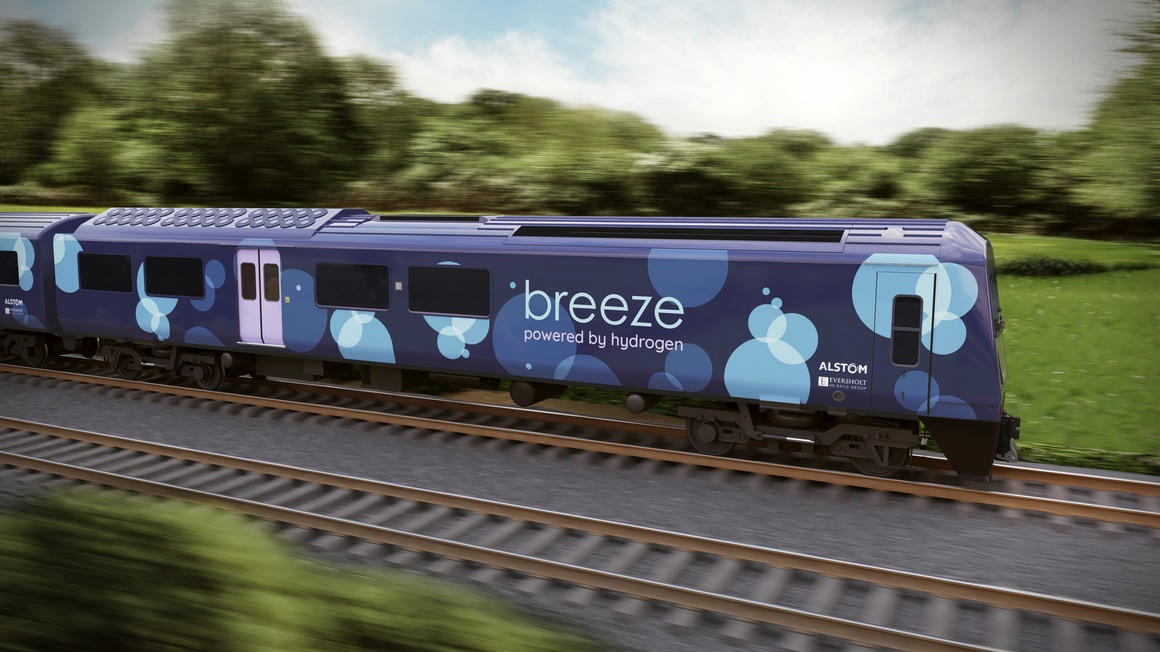
The picture is a visualisation of the proposed Alstom Breeze conversion of a Class 321 train.
- There is a large hydrogen tank between the driving compartment and the passengers.
- The passenger capacity has been substantially reduced.
- The train will have a range of several hundred miles on a full load of hydrogen.
The Alstom Breeze may or may not be a success, but it does illustrate the problem of where to put the large hydrogen tank needed.
In fact the problem is worse than the location and size of the hydrogen tank, as the hydrogen fuel cells and the batteries are also sizeable components.
An Ideal Freight Locomotive
The Class 88 locomotive, which has recently been introduced into the UK, is a successful modern locomotive with these power sources.
- 4 MW using overhead 25 KVAC overhead electrication.
- 0.7 MW using an onboard diesel engine.
Stadler are now developing the Class 93 locomotive, which adds batteries to the power mix.
The ubiquitous Class 66 locomotive has a power of nearly 2.5 MW.
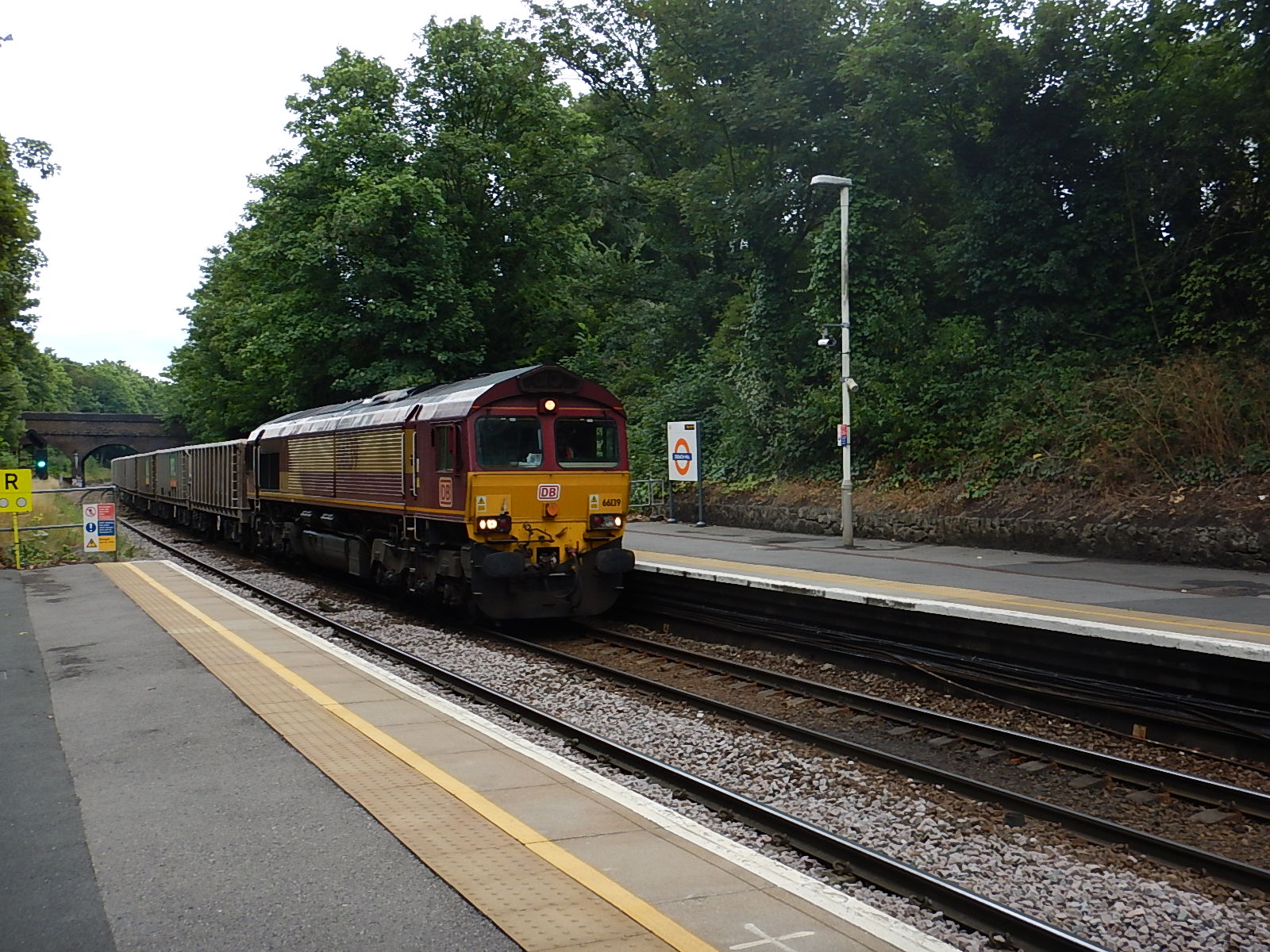
But as everybody knows, Class 66 locomotives come with a lot of noise, pollution, smell and a substantial carbon footprint.
To my mind, an ideal locomotive must be able to handle these freight tasks.
- An intermodal freight train between Felixstowe and Manchester.
- An intermodal freight train between Southampton and Leeds.
- A work train for Network Rail
- A stone train between the Mendips and London.
The latter is probably the most challenging, as West of Newbury, there is no electrification.
I also think, that locomotives must be able to run for two hours or perhaps three, on an independent power source.
- Independent power sources could be battery, diesel, hydrogen, or a hybrid design
- This would enable bridging the many significant electrification gaps on major freight routes.
I feel that an ideal locomotive would need to meet the following.
- 4 MW when running on a line electrified with either 25 KVAC overhead or 750 VDC third-rail.
- 4 MW for two hours, when running on an independent power source.
- Ability to change from electric to independent power source at speed.
- 110 mph operating speed.
This would preferably be without diesel.
Electric-Only Version
Even running without the independent power source, this locomotive should be able to haul a heavy intermodal freight train between London and Glasgow on the fully-electrified West Coast Main Line.
I regularly see freight trains pass along the North London Line, that could be electric-hauled, but there is a polluting Class 66 on the front.
Is this because there is a shortage of quality electric locomotives? Or electric locomotives with a Last Mile capability, that can handle the routes that need it?
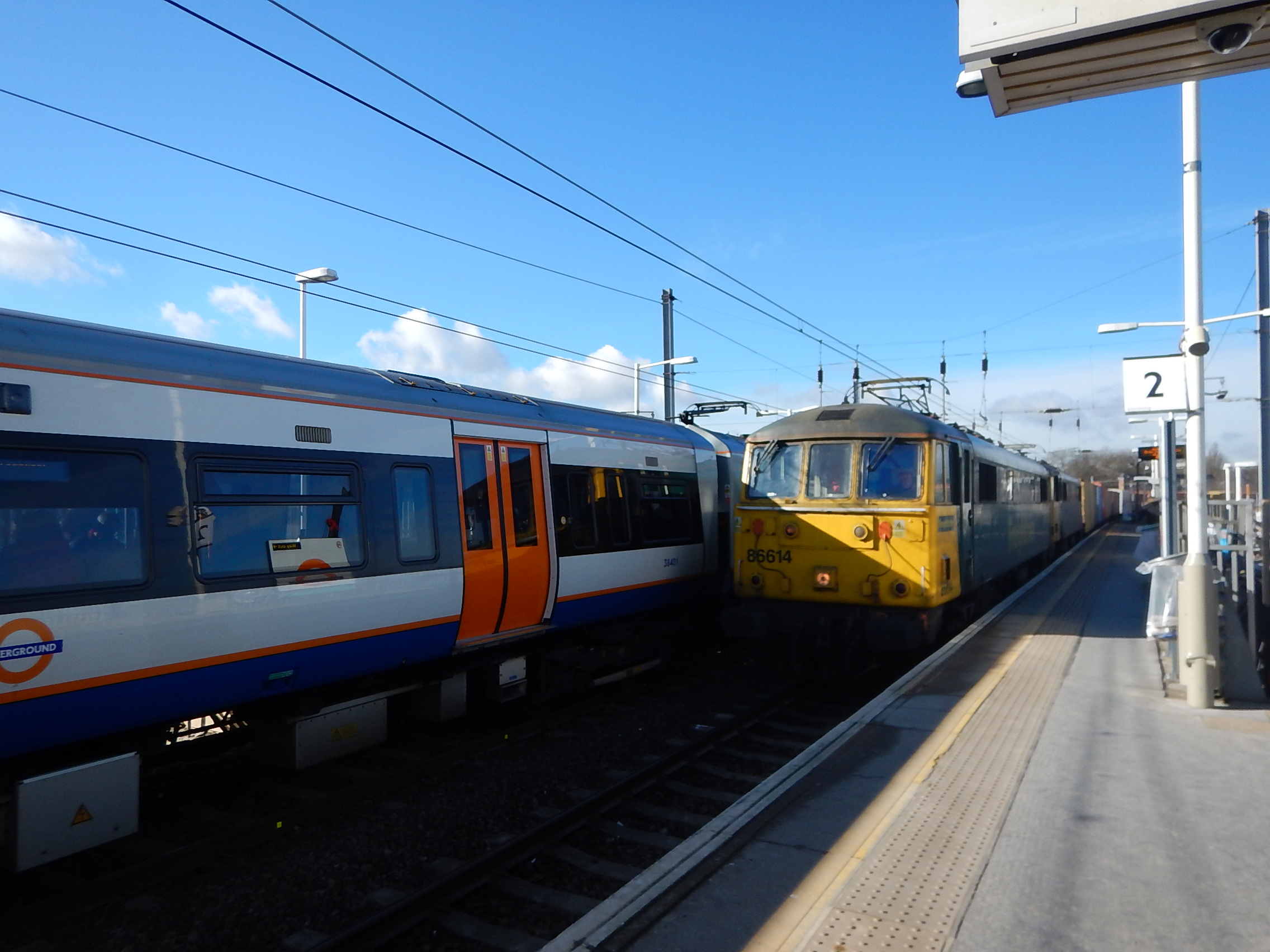
If we have to use pairs of fifty-year-old Class 86 locomotives, then I suspect there are not enough electric freight locomotives.
Batteries For Last Mile Operation
Stadler have shown, in the design of the Class 88 locomotive, that in a 4 MW electric locomotive, there is still space to fit a heavy diesel engine.
I wonder how much battery capacity could be installed in a UK-sized 4 MW electric locomotive, based on Stadler’s UK Light design.
Would it be enough to give the locomotive a useful Last Mile capability?
In Thoughts On A Battery Electric Class 88 Locomotive On TransPennine Routes, I estimated that a Class 88 locomotive could replace the diesel engine with a battery with a battery capacity of between 700 kWh and 1 MWh.
This would give about fifteen minutes at full power.
Would this be a useful range?
Probably not for heavy freight services, if you consider that a freight train leaving the Port of Felixstowe takes half-an-hour to reach the electrification at Ipswich.
But it would certainly be enough power to bring the heaviest freight train out of Felixstowe Port to Trimley.
If the Felixstowe Branch Line were to be at least partially electrified, then I’m sure a Class 88 locomotive with a battery instead of the diesel engine could bring the heaviest train to the Great Eastern Main Line.
- Electrifying between Trimley and the Great Eastern Main Line should be reasonably easy, as much of the route has recently been rebuilt.
- Electrifying Felixstowe Port would be very disruptive to the operation of the port.
- Cranes and overhead wires don’t mix!
I wonder how many services to and from Felixstowe could be handled by an electric locomotive with a Last Five Miles-capability, if the Great Eastern Main Line electrification was extended a few miles along the Felixstowe Branch Line.
As an aside here, how many of the ports and freight interchanges are accessible to within perhaps five miles by electric haulage?
I believe that if we are going to decarbonise UK railways by 2040, then we should create electrified routes to within a few miles of all ports and freight interchanges.
Batteries For Traction
If batteries are to provide 4 MW power for two hours, they will need to have a capacity of 8 MWh.
In Thoughts On A Battery Electric Class 88 Locomotive On TransPennine Routes, I said this.
Traction batteries seem to have an energy/weight ratio of about 0.1kWh/Kg, which is increasing with time, as battery technology improves.
This means that a one tonne battery holds about 100 kWh.
So to hold 8 MWh or 8,000 kWh, there would be a need to be an 80 tonne battery using today’s technology.
A Stadler Class 88 locomotive weighs 86 tonnes and has a 21.5 tonne axle load, so the battery would almost double the weight of the locomotive.
So to carry this amount of battery power, the batteries must be carried in a second vehicle, just like some steam locomotives have a tender.
But suppose Stadler developed another version of their UK Light locomotive, which was a four-axle locomotive that held the largest battery possible in the standard body.
- It would effectively be a large battery locomotive.
- It would share a lot of components with the Class 88 locomotive or preferably the faster Class 93 locomotive, which is capable of 110 mph.
- It would have cabs on both ends.
- It might have a traction power of perhaps 2-2.5 MW on the battery.
- It would have a pantograph for charging the battery if required and running under electrification.
- It might be fitted with third rail equipment.
It could work independently or electrically-connected to the proposed 4 MW electric locomotive.
I obviously don’t know all the practicalities and economics of designing such a pair of locomotives, but I do believe that the mathematics say that a 4 MW electric locomotive can be paired with a locomotive that has a large battery.
- It would have 4 MW, when running on electrified lines.
- It would have up to 4 MW, when running on battery power for at least an hour.
- ,It could use battery-power to bridge the gaps in the UK’s electrification network and for Last Mile operation.
A very formidable zero-carbon locomotive-pair could be possible.
The battery locomotive could also work independently as a 2 MW battery-electric locomotive.
Hydrogen Power
I don’t see why a 4 MW electric locomotive , probably with up to 1,000 kWh of batteries couldn’t be paired with a second vehicle, that contained a hydrogen tank, a hydrogen fuel-cell.and some more batteries.
It’s all a question of design and mathematics.
It should also be noted, that over time the following will happen.
- Hydrogen tanks will be able to store hydrogen at a greater pressure.
- Fuel cells will have a higher power to weight ratio.
- Batteries will have a higher power storage density.
These improvements will all help to make a viable hydrogen-powered generator or locomotive possible.
I also feel that the same hydrogen technology could be used to create a hydrogen-powered locomotive with this specfication.
- Ability to use 25 KVAC overhead or 750 VDC third-rail electrification.
- 2 MW on electrification.
- 1.5 MW on hydrogen/battery power.
- 100 mph capability.
- Regenerative braking to batteries.
- Ability to pull a rake of five or six coaches.
This could be a very useful lower-powered locomotive.
What About The Extra Length?
A Class 66 locomotive is 21.4 metres long and a Class 68 locomotive is 20.3 metres long. Network Rail is moving towards a maximum freight train length of 775 metres, so it would appear that another twenty metre long vehicle wouldn’t be large in the grand scheme of things.
Conclusion
My instinct says to be that it would be possible to design a family of locomotives or an electric locomotive with a second vehicle containing batteries or a hydrogen-powered electricity generator, that could haul freight trains on some of the partially-electrified routes in the UK.
First Stadler FLIRT Train Receives Approval To Enter UK Service
The title of this post is the same as that of this article on Global Railway Review.
This is the first paragraph.
The British railway regulatory authority, the Office of Rail and Road (ORR), has granted Stadler approval for the 24 four-car bimodal FLIRT (BMU) for Greater Anglia. For Stadler, this is an important milestone in the project. It is the first FLIRT in the UK to receive an authorisation for placing the train into service (APIS). The test runs with the train for use in the UK only began at the beginning of 2019. Thanks to the excellent cooperation between Greater Anglia, Abellio, Rock Rail, Stadler and the authorities, the approval was obtained in record time.
It does make a change for a train to be able to enter service without too much trouble.
I do think that Stadler, Abellio and Greater Anglia have had a few advantages.
- These are the second fleet of Stadler bi-more FLIRTs, but could be the first to enter service.
- The electrified route between Norwich and Diss has been able to be used as a dedicated 100 mph test rtrack during the night, when no scheduled services are running.
- The trains are based at Crown Point depot, close to the Northern end of the test route.
- Abellio run fleets of FLIRTs in The Netherlands.
There also doesn’t appear to have been any major problems to delay the testing.
From reports in the local daily newspapers, it also appears that staff are fully behind these new trains and enthusiastic about their arrival.
Could A Modular Family Of Freight Locomotives Be Created?
In Thoughts On A Battery/Electric Replacement For A Class 66 Locomotive, I looked at the possibility of creating a battery/electric locomotive with the performance of a Class 66 locomotive.
- I felt that the locomotive would need to be able to provide 2,500 kW for two hours on battery, to bridge the gaps in the UK electrification.
- This would need a 5,000 kWh battery which would weigh about fifty tonnes.
- It would be able to use both 25 KVAC overhead and 750 VDC third-rail electrification.
- It would have a power of 4,000 kW, when working on electrification.
- Ideally, the locomotive would have a 110 mph operating speed.
It would be a tough ask to design a battery/electric locomotive with this specification.
The Stadler Class 88 Locomotive
Suppose I start with a Stadler Class 88 locomotive.
- It is a Bo-Bo locomotive with a weight of 86.1 tonnes and an axle loading of 21.5 tonnes.
- It has a rating on electricity of 4,000 kW.
- It is a genuine 100 mph locomotive when working from 25 KVAC overhead electrification.
- The locomotive has regenerative braking, when working using electrification.
- It would appear the weight of the diesel engine is around seven tonnes
- The closely-related Class 68 locomotive has a 5,600 litre fuel tank and full of diesel would weight nearly five tonnes.
In Thoughts On A Battery Electric Class 88 Locomotive On TransPennine Routes, I said this about replacing the diesel-engine with a battery.
Supposing the seven tonne diesel engine of the Class 88 locomotive were to be replaced by a battery of a similar total weight.
Traction batteries seem to have an energy/weight ratio of about 0.1kWh/Kg, which is increasing with time, as battery technology improves.
A crude estimate based on this energy/weight ratio would mean that at least a 700 kWh battery could be fitted into a Class 88 train and not make the locomotive any heavier. Given that lots of equipment like the alternator and the fuel tank would not be needed, I suspect that a 1,000 kWh battery could be fitted into a Class 88 locomotive, provided it just wasn’t too big.
This would be a 4,000 kWh electric locomotive with perhaps a twenty minute running time at a Class 66 rating on battery power.
The Stadler Class 68 Locomotive
The Stadler Class 68 locomotive shares a lot of components with the Class 88 locomotive.
- It is a Bo-Bo locomotive with a weight of 85 tonnes and an axle loading of 21.2 tonnes.
- It has a rating on diesel of 2,800 kW.
- It is a genuine 100 mph locomotive.
- The locomotive has regenerative braking to a rheostat.
- It has a 5,600 litre fuel tank and full of diesel would weight nearly five tonnes.
They are a locomotive with a growing reputation.
A Double Bo-Bo Locomotive
My devious engineering mind, thinks about what sort of locomotive would be created if a Class 68 and a Class-88-based battery/electric locomotive were integrated together.
- It would be a double Bo-Bo locomotive with an axle loading of 21.5 tonnes.
- It has a rating on electricity of 4,000 kW.
- It has a rating on diesel of 2,800 kW.
- Battery power can be used to boost the power on diesel as in the Stadler Class 93 locomotive.
- It would be nice to see regenerative braking to the batteries.
Effectively, it would be a diesel and a battery/electric locomotive working together.
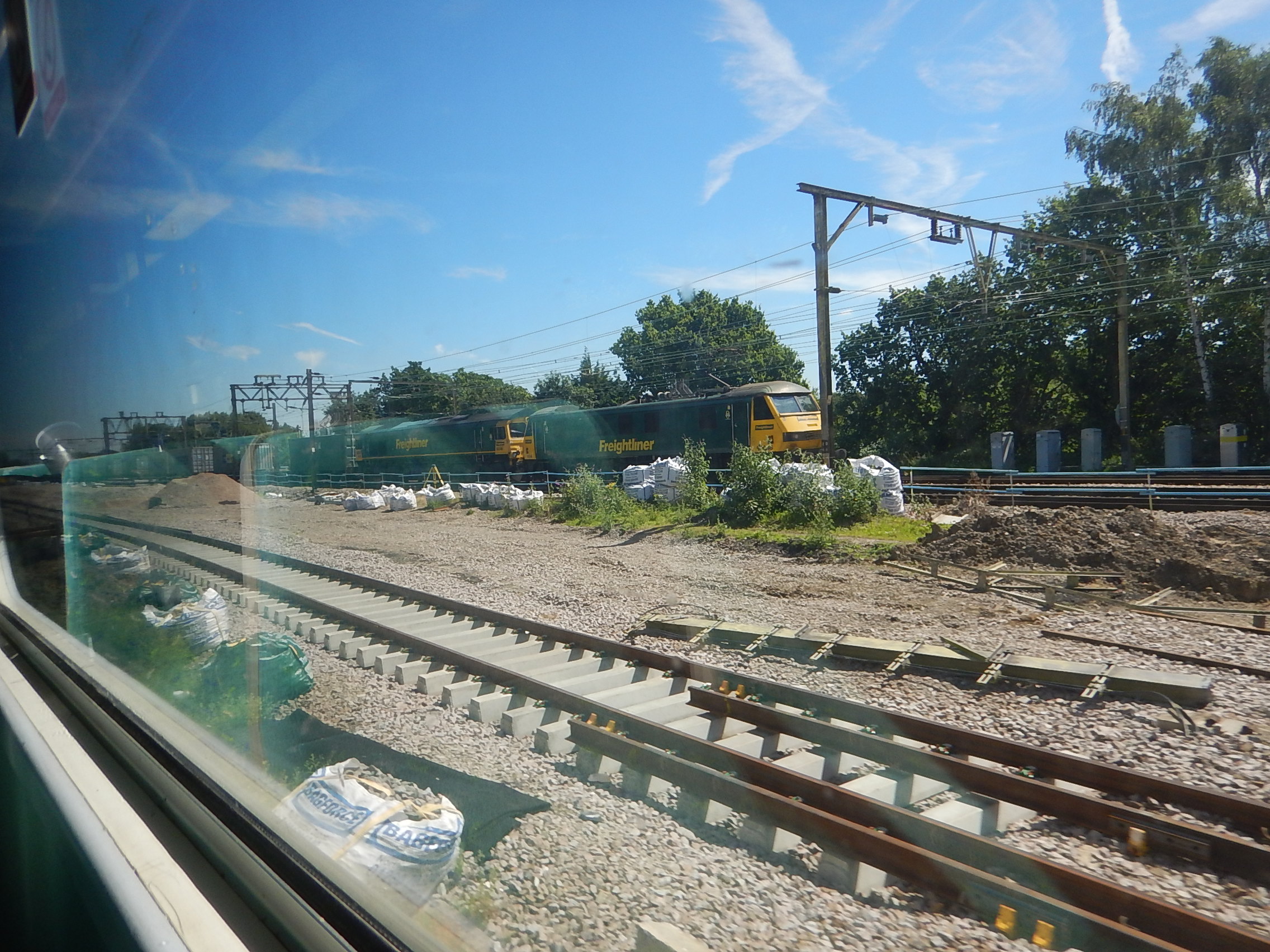
This picture shows a Class 90 electric locomotive and a Class 66 diesel locomotive pulling a heavy freight train at Shenfield.
If this can be done with a diesel and an electric locomotive, surely a company like Stadler have the expertise to create a double locomotive, where one half is a diesel locomotive and the other is a battery/electric locomotive.
A Control Engineer’s Dream
I am a life-expired Control Engineer, but I can still see the possibilities of creating an sdvanced control system to use the optimal power strategy, that blends electric, battery and diesel power, depending on what is available.
I feel that at most times, the locomotive could have a power of up to 4,000 kW.
The Ultimate Family Of Locomotives
I have used a diesel Class 68 and a Class 88-based battery/electric locomotive,, to create this example locomotive.
In the ultimate family, each half would be able to work independently.
In time, other members of the family would be created.
A hydrogen-powered locomotive is surely a possibility.
The Control System on the master locomotive, would determine what locomotives were coupled together and allocate power accordingly.
Conclusion
I have used Stadler’s locomotives to create this example locomotive.
I suspect they are working on concepts to create more powerful environmentally-friendly locomotives.
As are probably, all the other locomotive manufacturers.
Someone will revolutionise haulage of heavy freight trains and we’ll all benefit.
Hydrogen Trains To Be Trialled On The Midland Main Line
This article on Railway Gazette is entitled Bimode And Hydrogen Trains As Abellio Wins Next East Midlands Franchise.
Abellio will be taking over the franchise in August this year and although bi-mode trains were certain to be introduced in a couple of years, the trialling of hydrogen-powered trains is a surprise to me and possibly others.
This is all that is said in the article.
Abellio will also trial hydrogen fuel cell trains on the Midland Main Line.
It also says, that the new fleet will not be announced until the orders are finalised.
In this post, I’m assuming that the hydrogen trial will be performed using the main line trains.
Trains for the Midland Main Line will need to have the following properties
- 125 mph on electric power
- 125 mph on diesel power
- Ability to go at up to 140 mph, when idigital n-cab signalling is installed and the track is improved.
- UK gauge
- Ability to run on hydrogen at a future date.
I think there could be three types of train.
- A traditional bi-mode multiple unit, with underfloor engines like the Hitachi Class 800 series, is obviously a possibility.
- An electrical multiple unit, where one driving car is replaced by a bi-mode locomotive with appropriate power.
- Stadler or another manufacturer might opt for a train with a power pack in the middle.
The second option would effectively be a modern InterCity 225.
- South of Kettering, electricity would be used.
- North of Kettering, diesel would be used
- Hydrogen power could replace diesel power at some future date.
- Design could probably make the two cabs and their driving desks identical.
- The locomotive would be interchangeable with a driver car.
Bi-modes would work most services, with electric versions working to Corby at 125 mph.
Which manufacturer has a design for a 125 mph, hydrogen-powered train?
Alstom
Alstom have no 125 mph UK multiple unit and their Class 321 Hydogen train, is certainly not a 125 mph train and probably will still be under development.
Bombardier
In Mathematics Of A Bi-Mode Aventra With Batteries, I compared diesel and hydrogen-power on bi-mode Aventras and felt that hydrogen could be feasible.
In that post, I wrote a section called Diesel Or Hydrogen Power?, where I said this.
Could the better ambience be, because the train doesn’t use noisy and polluting diesel power, but clean hydrogen?
It’s a possibility, especially as Bombardier are Canadian, as are Ballard, who produce hydrogen fuel-cells with output between 100-200 kW.
Ballard’s fuel cells power some of London’s hydrogen buses.
The New Routemaster hybrid bus is powered by a 138 kW Cummins ISBe diesel engine and uses a 75 kWh lithium-ion battery, with the bus being driven by an electric motor.
If you sit in the back of one of these buses, you can sometimes hear the engine stop and start.
In the following calculations, I’m going to assume that the bi-mode |Aventra with batteries has a power source, that can provide up to 200 kW, in a fully-controlled manner
Ballard can do this power output with hydrogen and I’m sure that to do it with a diesel engine and alternator is not the most difficult problem in the world.
So are Bombardier designing the Bi-Mode Aventra With Batteries, so that at a later date it can be changed from diesel to hydrogen power?
All an Aventra needs to run is electricity and the train, the onboard staff and passengers don’t care whether it comes from overhead wires, third-rail, batteries, diesel or hydrogen.
Bombardier also have the technology for my proposed locomotive-based solution, where one driver-car of an Aventra is replaced by what is effectively a locomotive.
If Bombardier have a problem, it is that they have no small diesel train to replace Abellio’s small diesel trains. Could the longer services use the bi-mode Aventras and the shorter ones Aventras with battery power?
CAF
CAF probably have the technology, but there would be a lot of development work to do.
Hitachi
Hitachi have the bi-mode trains in the Class 802 trains, but haven’t as yet disclosed a hydrogen train.
Siemens
They’ve made a few noises, but I can’t see them producing a bi-mode train for 2022.
Stadler
In a few weeks time, I will be having a ride in a Stadler-built Class 755 train, run by Abellio Greater Anglia.
The Class 755 train is a bi-mode 100 mph train, from Stadler’s Flirt family.
Could it be stretched to a 125 mph train?
- Stadler have built 125 mph electric Flirts.
- It is my view, that Stadler have the knowledge to make 125 mph trains work.
- Flirts are available in any reasonable length.
- I’ve read that bi-mode and electric Flirts are very similar for drivers and operators.
These could work the Midland Main Line.
If the mainline version is possible, then Abellio could replace all their smaller diesel trains with appropriate Class 755 trains, just as they will be doing in East Anglia.
Stadler with the launch of the Class 93 locomotive, certainly have the technology for a locomotive-based solution.
East Midlands Railway would be an all-Stadler Flirt fleet.
As to hydrogen, Stadler are supplying hydrogen-powered trains for the Zillertalbahn, as I wrote in Zillertalbahn Orders Stadler Hydrogen-Powered Trains.
Talgo
Talgo could be the joker in the pack. They have the technology to build 125 mph bi-mode trains and are building a factory in Scotland.
My Selection
I think it comes down to a straight choice between Bombardier and Stadler.
It should also be noted, that Abellio has bought large fleets from both manufacturers for their franchises in the UK.
Zero-Carbon Pilots At Six Stations
This promise is stated in the franchise.
Once the electrification reaches Market Harborough in a couple of years, with new bi-mode trains, running on electricity, the following stations will not see any passenger trains, running their diesel engines.
- St. Pancras
- Luton Airport Parkway
- Luton
- Bedford
- Wellingborough
- Kettering
- Corby
- Market Harborough
These are not pilots, as they have been planned to happen, since the go-ahead for the wires to Market Harborough.
Other main line stations include.
- Beeston
- Chesterfield
- Derby
- East Midlands Parkway
- Leicester
- Long Eaaton
- Loughborough
- Nottingham
- Sheffield
Could these stations be ones, where East Midlands Railway will not be emitting any CO2?
For a bi-mode train to be compliant, it must be able to pass through the station using battery power alone.
- As the train decelerates, it charges the onboard batteries, using regernerative braking.
- Battery power is used whilst the train is in the station.
- Battery power is used to take the train out of the station.
Diesel power would only be used well outside of stations.
How would the trains for the secondary routes be emission-friendly?
- For the long Norwich to Derby and Nottingham to Liverpool routes, these would surely be run by shorter versions of the main line trains.
- For Stadler, if secondary routes were to be run using Class 755 trains, the battery option would be added, so that there was no need to run the diesel engines in stations.
- For Bombardier, they may offer battery Aventras or shortened bi-modes for the secondary routes, which could also be emission-free in stations.
- There is also the joker of Porterbrook’s battery-enhaced Class 350 train or BatteryFLEX.
I think that with the right rolling-stock, East Midlands Railway, could be able to avoid running diesel engines in all the stations, where they call.
Why Are Abellio Running A Hydrogen Trial?
This is a question that some might will ask, so I’m adding a few reasons.
A Train Manufacturer Wants To Test A Planned Hydrogen Train
I think that it could be likely, that a train manufacturer wants to trial a hydrogen-powered variant of a high-speed train.
Consider.
- The Midland Main Line is about 160 miles long.
- A lot of the route is quadruple-track.
- It is a 125 mph railway for a proportion of the route.
- It has only a few stops.
- It is reasonably straight with gentle curves.
- Part of the route is electrified.
- It is connected to London at one end.
In my view the Midland Main Line is an ideal test track for bi-mode high speed trains.
A Train Manufacturer Wants To Sell A Fleet Of High Speed Trains
If a train manufacturer said to Abellio, that the fleet of diesel bi-mode trains they are buying could be updated to zero-carbon hydrogen bi-modes in a few years, this could clinch the sale.
Helping with a trial, as Abellio did at Manningtree with Bombardier’s battery Class 379 train in 2015, is probably mutually-beneficial.
The Midland Main Line Will Never Be Fully Electrified
I believe that the Midland Main Line will never be fully-electrified.
- The line North of Derby runs through the Derwent Valley Mills World Heritage Site. Would UNESCO allow electrification?
- I have been told by drivers, that immediately South of Leicester station, there is a section, that would be very difficult to electrify.
- Some secondary routes like Corby to Leicester via Oakham might be left without electrification.
But on the other hand some sections will almost certainly be electrified.
- Around Toton, where High Speed Two crosses the Midland Main Line and the two routes will share East Midlands Hub station.
- Between Clay Cross North Junction and Sheffield, where the route will be shared with the Sheffield Spur of High Speed Two.
- The Erewash Valley Line, if High Speed Two trains use that route to Sheffield.
The Midland Main Line will continue to need bi-mode trains and in 2040, when the Government has said, that diesel will not be used on UK railways,
It is my view, that to run after 2040, there are only two current methods of zero-carbon propulsion; on the sections without overhead electrification battery or hydrogen power.
So we should run trials for both!
Abellio Know About Hydrogen
Abellio is Dutch and after my trip to the Netherlands last week, I wrote The Dutch Plan For Hydrogen, which describes how the Dutch are developing a green hydrogen economy, where the hydrogen is produced by electricity generated from wind power.
So by helping with the trial of hydrogen bi-mode trains on the Midland Main Line, are Abellio increasing their knowledge of the strengths and weaknesses of hydrogen-powered trains.
In Thoughts On Eurostar To North Netherlands And North West Germany, I proposed running bi-mode trains on the partially-electrified route between Amsterdam and Hamburg via Groningen and Bremen, which would be timed to connect to Eurostar’s services between London and Amsterdam. These could use diesel, hydrogen or battery power on the sections without electrification.
If hydrogen or battery power were to be used on the European bi-mode train, It would be possible to go between Sheffield and Hamburg on a zero-carbon basis, if all electric power to the route were to be provided from renewable sources.
Abellio Sees The PR Value In Running Zero-Carbon Trains
In My First Ride In An Alstom Coradia iLint, I talked about running hydrogen-powered trains on a hundred mile lines at 60 mph over the flat German countrside
The Midland Main Line is a real high speed railway, where trains go at up to 125 mph between two major cities, that are one-hundred-and-sixty miles apart.
Powered by hydrogen, this could be one of the world’s great railway journeys.
If hydrogen-power is successful, Abellio’s bottom line would benefit.
Conclusion
This franchise will be a big improvement in terms of carbon emissions.
As I said the choice of trains probably lies between Bombardier and Stadler.
But be prepared for a surprise.
Is This Stadler’s Plan For A Multi-Mode Future?
We have not seen any of Stadler’s bi-mode Flirts in service yet although Greater Anglia’a Class 755 trains have been rumoured to be speeding between London and Norwich in ninety minutes from this May!
Today, I rode on one of Stadler’s diesel GTWs between Groningen and Eemshaven in the Netherlands, which I wrote about in The Train Station At The Northern End Of The Netherlands.
GTWs are a diesel electric train with a power-pack car in the middle of the three car train. The diesel electric Flirts are a later train with a similar layout to the GTW.
So are the diesel GTWs and Flirts just a bi-mode without a pantograph? Or more likely the bi-mode is a diesel electric train with the addition of a pantograph and extra electrical gubbins.
Looking at the visualisations on Wikipedia of the bi-mode Class 755 train and the all-electric Class 745 train, it appears that the next-to-end car has the pantograph.
Are these cars with the pantograph identical on both the bi-mode and the all-electric versions? It would certainly be sensible from a engine erring point of view.
So could it be that all that is needed to convert a diesel electric Flirt into a bi-mode Flirt is to add the pantograph car and swap the power pack car for a bi-mode one? The old power pack car could then be converted into another bi-mode power pack car to convert another train.
But the power pack cars are not as simple as they look. They have four slots for diesel engines. Three-car and four-car Class 755 trains have two and four engines respectively.
I believe that one or more of the slots can be filled with a battery to create Flirts like the tri-mode ones proposed for South Wales.
So could we see some of the Greater Anglia Flirts converted in this way? Surely, Colchester Town to Sudbury could be a service that could benefit from battery power West of Marks Tey?
Today, I had a chat with a GTW driver, who said that the train he’d been driving was diesel-electric and that he had heard that batteries or hydrogen power could be used on the eoute.
The lines around Groningen seem to employ quite a few GTWs and distances are not overly long. So could some be converted to 1500 VDC electric/diesel/battery tri-modes? There is electrification at Groningen station and some of the bay platforms used by GTWs already have wires.
If the conversion is successful, then Stadler could be on a Swiss roll, as there are a lot of GTWs and Flirts out there, many of which are diesel-electric, like the one I rode today.
Would a train operator prefer to upgrade a diesel electric train that works well or buy a new bi-mode from another train manufacturer?
Could also an electric Flirt be converted into a bi-mode, by splitting the train and sticking a power pack car in the middle. Engineering common sense says that the passenger cars must be very similar to those of diesel Flirts to simplify manufacture of the trains.
We already know, that four-car Flirts are only three-car trains with an extra passenger car. Stadler could mix-and-match passenger, pantograph and power pack cars to give operators what they need.
Intelligent computer software would choose which power option to be used and the driver would just monitor, that the train was behaving as needed.
Looking at my route yesterday between Groningen and Eemshaven, it is a route of just under forty kilometres or twenty-five miles. Adrian Shooter is talking of ranges of sixty miles with battery versions of Class 230 trains. So I don’t find it impossible to create a tri-mode GTW or Flirt for this lonely route at the very North of the Netherlands.
Conclusion
Stadler seem to have created a very imitative modular train concept.
As some Flirts can travel at 125 mph, could they be serious bidders to provide the new trains for the Midland Main Line?
 The Anonymous Widower