An Excursion To Retford And Worksop
Today’s excursion was designed to be simple.
- Take an LNER train or a Hull Train to Retford station.
- Travel to Worksop station, have a look and take a few pictures.
- Travel back to Retford and take the first train back to London.
- In one if my two visits to Retford, have a look and take a few pictures.
- Talk to passengers and railway staff about what they felt about FirstGroup’s Proposed Sheffield Service, that I wrote about in FirstGroup Applies To Run New London To Sheffield Rail Service.
These were my thoughts and observations.
LNER’s Improved Ticketing
These pictures show the tickets that I bought.

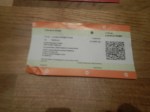
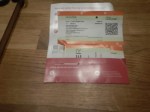
Note.
- I bought my ticket to Retford from the Ticket Office at King’s Cross station.
- The ticket seller gave me a well-designed folder for the tickets.
- I was also able to buy my return ticket between Retford and Worksop on the LNER train to Retford. I’ve tried doing that before and it wasn’t allowed.
Making ticketing easier must be a good thing for passengers, staff and LNER.
£24.75 With A Railcard From King’s Cross to Retford
- The second picture shows my ticket to Retford.
- It cost me just £24,75 with my Senior Railcard.
- I also bought it about half-an-hour before the train left.
- I bought the ticket in the Ticket Office.
- I got a forward-facing window seat with an unrestricted view.
How much would the 145 mile and nearly three-hour journey have cost in a car?
I Missed My Connection At Retford Station
These pictures show my train to Worksop station in Platform 3 at Retford station, as I approached from the South.

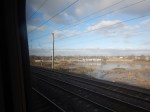
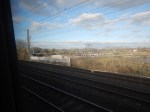
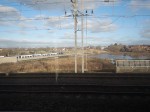
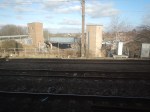
Note.
The Northern Trains’s Class 195 train arriving on Platform 3 on the Sheffield and Lincoln Line.
- I arrived in Platform 2 at Retford station at 12:50
- There were three lifts or sets of stairs to negotiate between Platform 2 and Platform 3.
- It must take at least five minutes between the two platforms.
- One of the lifts was out of order and was being serviced by an engineer.
- There was no way, I could have caught the connection, which left at 12:51.
- At least one other passenger, had to wait the one hour and fifteen minutes I waited for the next train, which arrived at 14:03.
I feel that there needs to be a timetable adjustment here, so that as many passengers as possible avoid the long wait.
Retford Station
At least the long wait allowed me to take a lot of pictures and have a cup of coffee in the Costa Coffee on Platform 1.
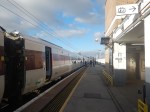
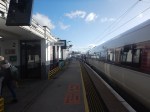

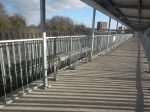
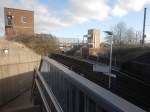



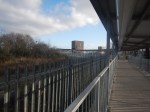
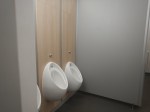
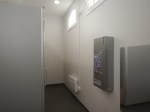
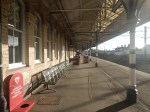


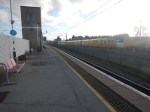
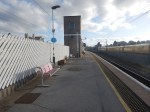
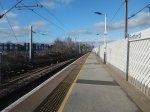
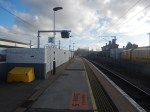
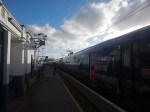
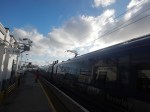
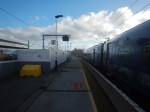
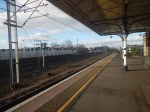
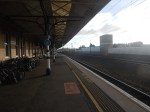
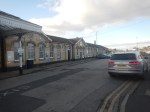
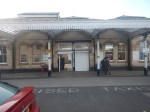

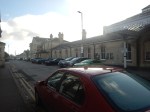
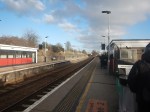
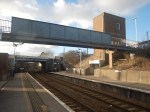
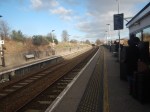
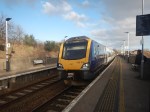
Note.
- The toilets were immaculate.
- The Costa Coffee had friendly and professional staff, but only rudimentary gluten-free options.
- The station is fully step-free with four lifts.
- Platforms 1 and 2 on the East Coast Main Line can take a pair of five-car Class 802 trains, as Hull Train demonstrated.
- The Hull Train in Platform 2 was using the electrification.
- The station is in very good condition.
- The station is Grade II Listed.
This Google Map shows the station.
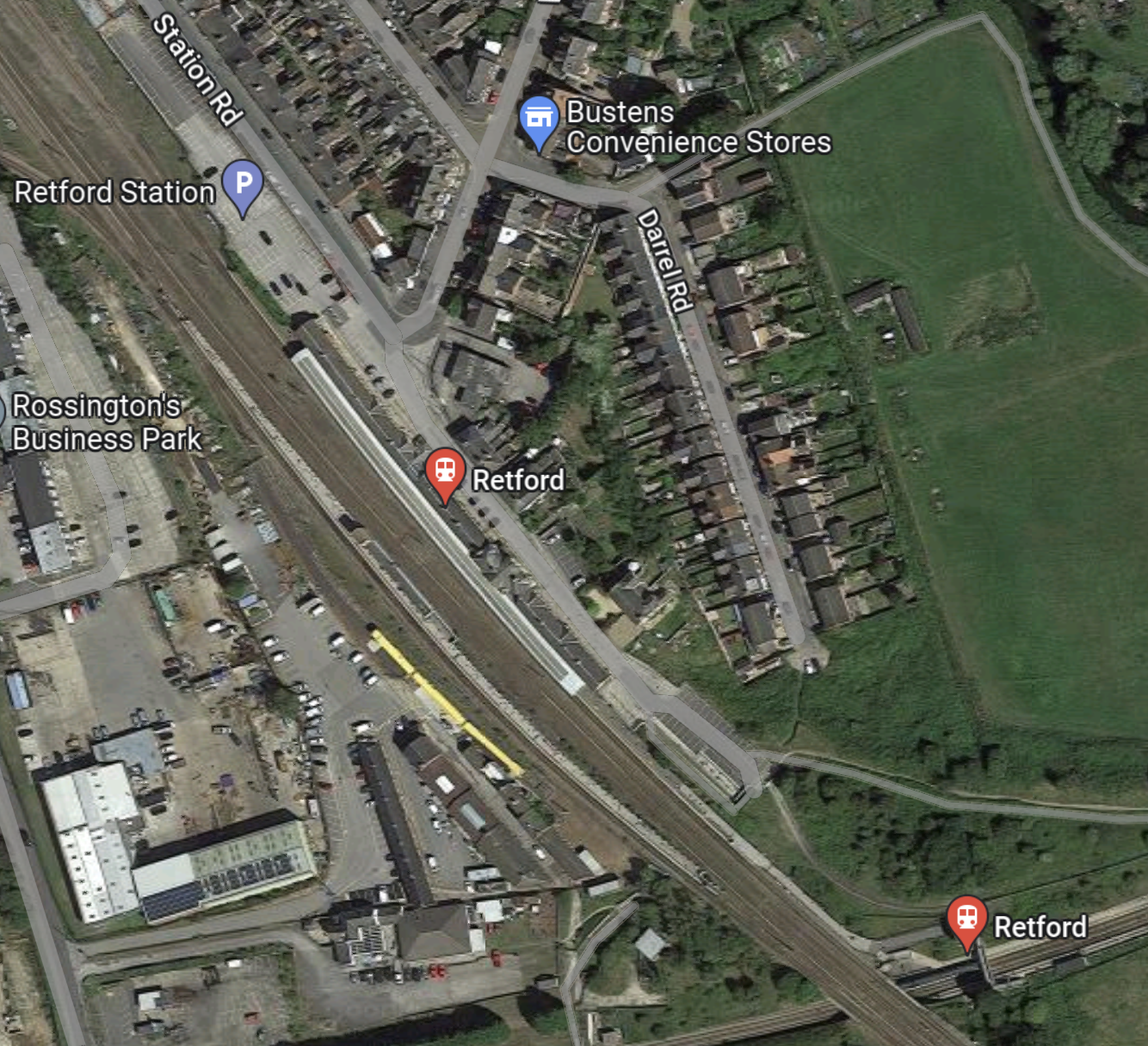
Note.
- The red arrow in the South-East corner are the low-level Platforms 3 and 4.
- The red arrow in the middle marks the low-level Platforms 1 and 2.
- Network Rail’s yellow Mobile Maintenance Train is visible in the siding opposite Platform 2.
- There is space around the platforms.
The station may have development possibilities. Especially, as there are signs of To Let over some of the buildings.
Ambitious Renewable Energy
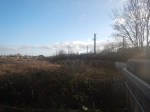
Retford and Worksop are only eleven minutes away but there were a large wind farm and solar farms between the two stations.




Note.
- I was a bit slow on the uptake and missed the large wind farm.
- The strong sun was reflecting on the windows.
- They weren’t the best of photographs.
I had intended to take more and better pictures on the way back, but circumstances intervened.
This Google Map shows the wind and solar farms.

Note.
- The Sheffield and Lincoln Line going across the map.
- There are solar panels North and South of the railway.
- This is the Walkers Wood Solar Farm, which has a nameplate capacity of 27 MW.
- H M Prison Ranby is at the top of the map.
- The scars of the wind turbines are to the West of Babworth and the crematorium.
- At the moment, I can’t find any reference to the wind farm.
These wind and solar farms are probably a classic place to position a battery.
Prisons And Recycling
Worksop Station
I took these pictures during the time I spent at Worksop station.
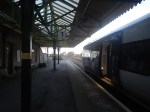
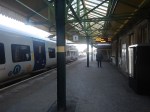
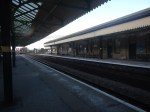
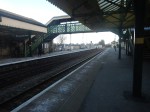
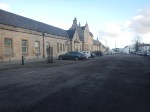
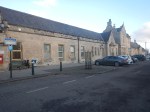
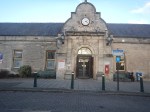
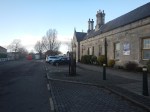
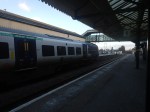
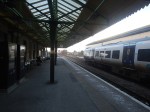
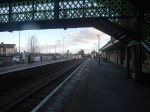
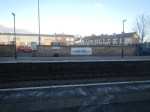
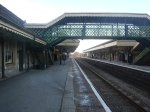
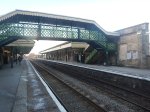
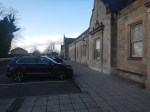


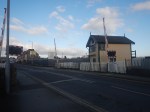
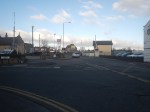

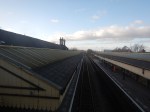
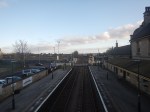
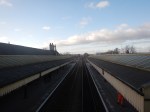
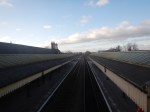


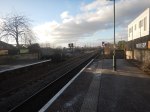
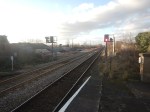
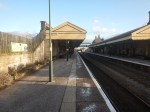
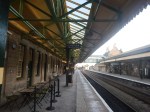
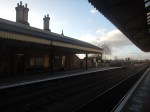
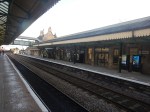
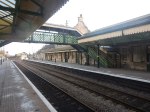
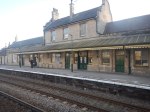

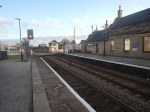
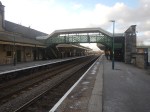
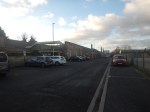
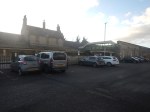
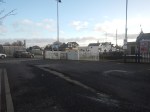
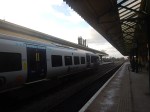
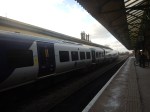
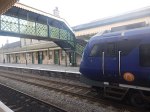
Note.
- The station is not step-free, although you can cross the tracks using the level-crossing.
- The station has a pub and a cafe.
- There are train services to Leeds, Lincoln, Nottingham and Sheffield.
- The station is in very good condition.
- The station is Grade II Listed.
- The platforms are long enough to handle a Class 802 train without any modification.
- Hull Trains could run their Sheffield service to Worksop station without any new infrastructure.
- Lidl are developing a site on the other side of the level crossing.
- There are 100 car parking spaces.
The station may have development possibilities.
Worksop Station Cafe
These pictures show the Worksop station cafe.


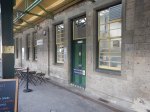
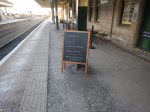



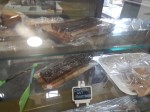

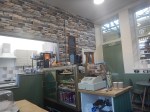

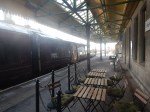
Note.
- It is run by two ladies; Jo and Lyndsey.
- As one is coeliac, there were lots of gluten-free cakes.
- It was cosy and warm on a cold day.
This is definitely one of the better station cafes.
A Double Incident
My journey back to the capital was I suspect untypical.
- I’d arrived at Worksop at 14:14 and finally left at 16:38 on a train for Retford and Lincoln.
- The delay was because someone had been hit by a train between Barnsley and Sheffield, which resulted in cancelled trains.
- When I arrived at Retford at 16:49, there was an LNER train in the platform.
- It was the 15:15 from Leeds and I was told by LNER staff to catch it and get my ticket on the train.
- The train finally left Retford for London 69 minutes late at 17:07.
- We arrived in Peterborough at 19:27, where the train was now 170 minutes late.
- The delay was because someone had been hit by a train at Newark, which results in delays everywhere.
- LNER decided to give up on the train and all passengers were put on other trains.
- I got on the 14:30 from Edinburgh, which arrived in King’s Cross at 20:22, which was 96 minutes late.
Worse things happen at sea.
I am adding this a day after my trip to the North.
This article on the BBC is entitled ‘Major Disruption’ After Person Hit By A Train.
These are the first three paragraphs.
Train services on the East Coast Main Line have been seriously disrupted after a person was hit by a train in North Yorkshire.
Network Rail said the incident happened just before 07:00 GMT between York and Thirsk, with emergency services attending the scene shortly afterwards.
The line was blocked, resulting in delays and cancellations.
Three in two days us three too many.
What Will Be The Power Unit In LNER’s New CAF Tri-Mode Trains?
There is a short article in the January 2024 Edition of Modern Railways, that is entitled New LNER Fleet To Have Joint Line Capability.
This is said about the diesel engines in the new CAF tri-mode trains.
CAF will supply 10×10-car trains with overhead electric, battery and diesel capability, financed by Porterbrook. The inclusion of diesel engines as part of the winning bid, rather than a straightforward battery-electric unit, has surprised some observers, but LNER’s specification was that the fleet should have sufficient self-powered capability to cover the length of the joint line, which is approximately 90 miles. This is currently to be considered to be beyond the scope of battery-power alone, although as the technology evolves diesel engines could be replaced by batteries. The configuration of diesel engines and batteries within the sets has yet to be decided.
As the paragraph says that the diesel engines can be replaced by batteries and the trains are from CAF’s modular Civity family, it sounds like CAF are using a modular power system.
The CAF Class 195, 196 and 197 diesel multiple units, that are used in the UK, use mtu Railcar Power Packs, which are shown on this web page.
mtu are a Rolls-Royce subsidiary.
mtu also make a Hybrid Power Pack, which is shown on this web page.
This is the sub-title on the web page.
Individual hybrid drive with a modular design
Underneath is this sub-heading.
It takes revolutionary thinking to develop a smart rail drive system like the Hybrid PowerPack. Find out what makes mtu different, and why our Hybrid PowerPack brings added value to operators while benefiting passengers and the environment alike.
These paragraphs describe the mtu Hybrid PowerPack.
The Hybrid PowerPack was developed from the successful mtu underfloor drives: Tried and tested mtu PowerPacks were modified and equipped with additional components and functionalities in order to integrate hybrid technology. The mtu hybrid concept consists of a modular kit with a variety of drive elements. It satisfies all existing railway standards and can be arranged according to customer specifications.
Thanks to its compact design and the use of power-dense electrical machines, the Hybrid PowerPack can be easily integrated in the existing installation space under the floor, both in new rail vehicles or for repowering. mtu EnergyPacks – the energy storage – can be positioned at various places in the vehicle: on the roof or underfloor. The modular design creates great flexibility for operators who are planning new diesel hybrid vehicles or want to convert existing vehicles.
Based on specifications for the hybrid train and the profile of the planned routes, mtu can simulate the lifecycle costs (capital, maintenance and operating costs) of specific projects. This means that a variety of drive options can be defined even before the design stage. Together with you, we then determine an optimal concept based on your needs.
Note.
- mtu Hybrid PowerPacks can be used in new rail vehicles or for repowering.
- It looks to me, that the total of 161 of Class 195, 196 and 197 trains, that will soon be all in service in the UK may well have been designed to be converted to hybrid power using mtu Hybrid PowerPacks.
- In Would You Buy A Battery Energy Storage System From Rolls-Royce?, I talk about how mtu EnergyPacks are also used for battery storage.
- In fact, mtu EnergyPacks could be the secret ingredient to both systems.
This looks like a typical Rolls-Royce product, that pushes the design to the full.
I will be very surprised if LNER’s new CAF tri-mode trains are not powered by mtu Hybrid PowerPacks.
I have a few thoughts.
CAF Are Going For A Proven Solution
CAF are going for a proven power solution, that they will also need for 161 trains in the UK.
Integration of systems like these can be difficult but CAF are using another company to combine diesel, electric and battery power in an efficient way.
I also feel that mtu Hybrid PowerPacks have a big future and Rolls Royce mtu will do what it takes to make sure they dominate the market.
Decarbonising The Trains
I suspect given Rolls-Royce’s philosophy, that the diesel engines will run on sustainable fuels from delivery.
But as the extract from the Modern Railways article says, the space used by diesel engines can be used for batteries.
Follow The Money
Consider.
- Porterbrook and Rolls-Royce are both based in Derby.
- Porterbrook are a rolling stock leasing company, who own a lot of rolling stock, that could be converted to hybrid trains, using mtu Hybrid PowerPacks.
- Porterbrook are financing LNER’s new CAF tri-mode trains.
I wouldn’t be surprised if Porterbrook and Rolls-Royce have done a lot of due diligence on these trains.
Other Train Operators Will Follow
LNER’s new CAF tri-mode trains may be a bespoke design for LNER, but other train operators will need a similar train.
- CrossCountry need a replacement low-carbon fleet.
- ScotRail need a replacement fleet for their Inter7City services.
- Great Western Railway need a replacement fleet for their GWR Castles.
- Grand Central need a replacement low-carbon fleet.
- TransPennine Express need new trains.
- Open Access Operator Grand Union Trains will need trains.
I think CAF are gong to be busy.
Conclusion
The more I read about Rolls-Royce and its engineering, the more I’m impressed.
Do Rolls-Royce mtu Have A Plan To Decarbonise Their Diesel Engines For Rail Applications?
Data Sheets For Rolls-Royce mtu Diesel Engines For Trains
These are data sheets for various Rolls-Royce mtu diesel engines that can be used in rail applications.
Rolls-Royce Releases mtu Rail Engines For Sustainable Fuels
The title of this section, is the same as that of this press release from Rolls-Royce.
These four bullet points, act as sub-headings.
- mtu Series 1300, 1500 and 1800 engines already released; Series 1600 and 4000 to follow shortly
- Up to 90% CO2 savings by operating existing engines with Hydrotreated Vegetable Oil (HVO/renewable diesel)
- Locally emission-free operation possible in combination with mtu Hybrid PowerPack
- Field tests with DB Cargo and RDC Autozug Sylt
This is the first paragraph.
Rolls-Royce is taking a significant step towards even more climate-friendly rail transport with the release of mtu rail engines for use with sustainable fuels. With synthetic diesel fuels of the EN15940 standard, CO2 emissions can be reduced by up to 100 percent compared to fossil diesel. Hydrotreated Vegetable Oil (HVO or renewable diesel), which is already commercially available today, reduces CO2 emissions by up to 90 percent. If the fuels are produced with the help of renewable energy and green hydrogen – through what is termed a Power-to-X process – existing rail vehicles can be operated in a completely CO2-neutral manner. The mtu Series 1800 engines which are used in mtu PowerPacks, as well as Series 1300 and 1500 for locomotives and multi-purpose vehicles, are already approved for use with synthetic fuels such as HVO. Series 1600 and versions of Series 4000 engines will follow in the near future. The release of engines for climate-friendly fuels requires a series of tests and trials and Rolls-Royce has found strong partners for this activity. DB Cargo and RDC Autozug Sylt have already tested or are currently testing mtu Series 4000 engines with HVO in their locomotives.
How Does That Fit With The UK’s Population Of Rolls-Royce mtu Diesel Engines?
These classes of train have Rolls-Royce mtu engines.
- Class 43 power cars – 6V 4000 R41R
- Class 168 train – 6R 183 TD 13H
- Class 170 train – 6R 183 TD 13H
- Class 172 train – 12V 1800 R83
- Class 195 train – 12V 1800 R85L
- Class 196 train – 12V 1600 R85L
- Class 197 train – 12V 1600 R85L
- Class 800 train – 12V 1600 R80L
- Class 801 train – 12V 1600 R80L
- Class 802 train – 12V 1600 R80L
- Class 805 train – 12V 1600 R80L
- Class 810 train – 12V 1600 R80L
Note.
- Class 168 and 170 trains seem to be powered by older model Rolls Royce mtu engines.
- Class 180, 220,221 and 222 trains are powered by Cummins engines.
- I can’t find what engines power Class 805 and 810 trains, but it is reasonable to assume they have the same engines as the other Hitachi trains.
- As CAF are building LNER’s new tri-mode trains, I suspect these trains will also have Rolls Royce mtu engines.
It would appear that all the Rolls-Royce mtu rolling stock in the UK, with the possible exception of the Class 168 and 170 trains will be able to run on sustainable fuels.
Rolls Royce mtu And Hydrogen
This press release from Rolls-Royce is entitled Rolls-Royce Successfully Tests mtu Engines With Pure Hydrogen.
This is the first paragraph.
Rolls-Royce today announces that it has conducted successful tests of a 12-cylinder gas variant of the mtu Series 4000 L64 engine running on 100% hydrogen fuel. The tests, carried out by the Power Systems business unit, showed very good characteristics in terms of efficiency, performance, emissions and combustion. These tests mark another important step towards the commercial introduction of hydrogen solutions to meet the demand of customers for more sustainable energy.
Engines of mtu’s 4000 family are used in Class 43 power cars, so surely these developments could lead to hydrogen-powered freight locomotives.
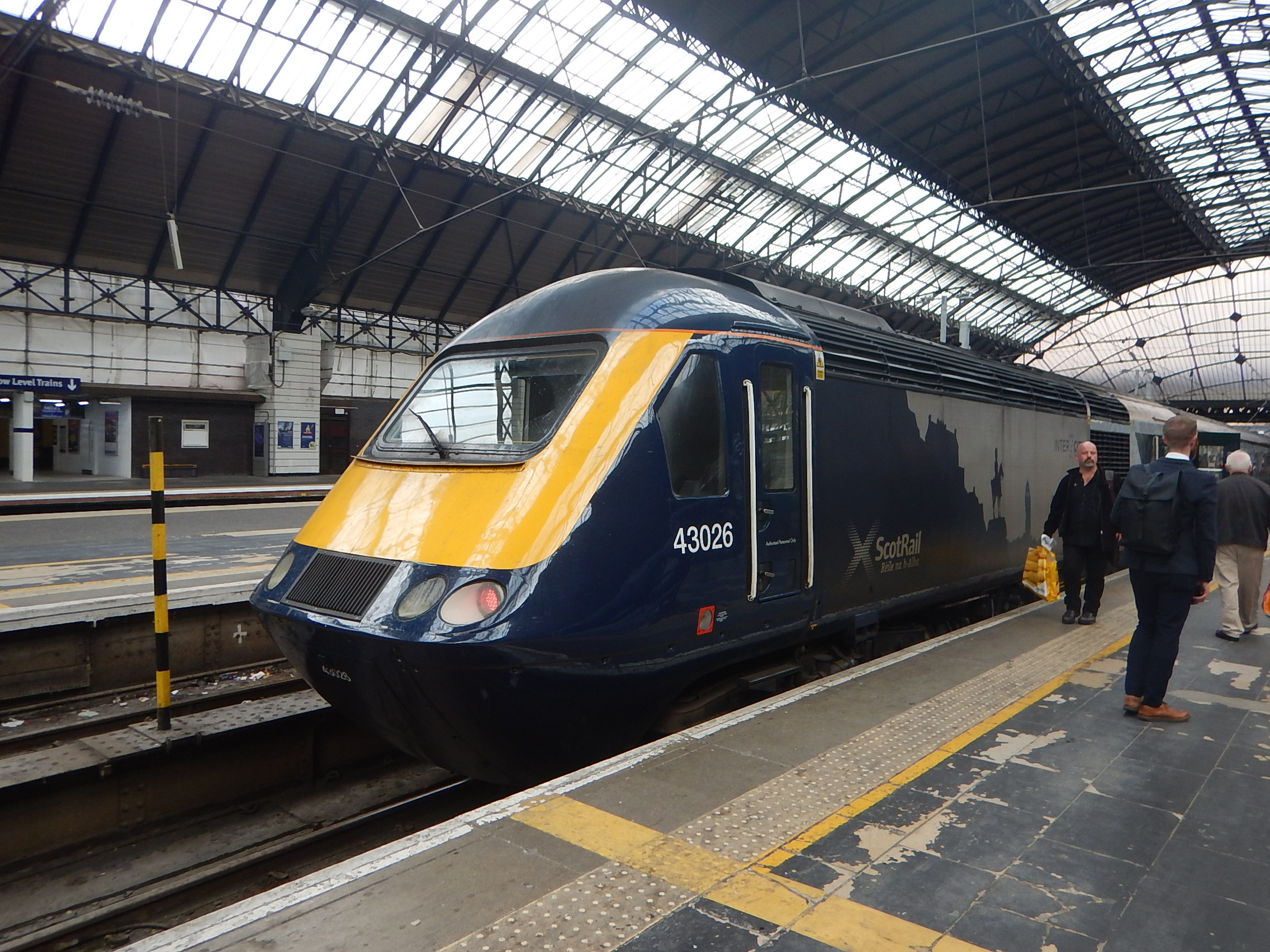
The picture shows a Class 43 power car at Glasgow Queen Street station.
Could Rolls-Royce mtu hydrogen power keep these iconic trains running for a few more years?
In ‘Spirit of Innovation’ Stakes Claim To Be The World’s Fastest All-Electric Vehicle, I look at Rolls-Royce’s Spirit of Innovation, which set the record for an electric vehicle at 555.9 km/hour.
As the InterCity125 already holds the record for the fastest diesel train, perhaps Rolls-Royce will attempt to set a record for the fastest hydrogen-powered train?
Decarbarbonising The CAF Class 195, 196 And 197 Trains
If Rolls-Royce mtu develop a hydrogen version of the 1800 diesel engine, then this could be used to fully decarbonise the CAF trains.
The operators may consider it’s not worth it and continue with using sustainable fuels.
But the possibility is surely there.
There must also be the possibility of developing a fuel cell replacement for the 1800 diesel, that can be slotted into the train.
Decarbarbonising The Hitachi Class 80x Trains
Hitachi are developing battery packs and the data sheet can be downloaded from this page on the Hitachi web site.
Decarbarbonising The CAF Tri-Mode Trains
I feel that as CAF usually use Rolls-Royce mtu engines, I suspect these trains will be designed, so they can be converted to hydrogen.
Conclusion
Rolls-Royce mtu appear to be on a path to decarbonise all their diesel engines.
Carew Castle Express Unveiled In Carmarthen
The title of this post, is the same as that of this article on Rail UK.
These are the first two paragraphs.
The ‘Carew Castle Express’ has been unveiled to mark the introduction of brand-new Transport for Wales (TfW) trains between Swansea and Carmarthen.
Named as part of TfW’s Magnificent Train Journey competition, the name ‘Carew Castle Express’ was chosen by year 5 pupil Rhys Protheroe from Johnstown Primary School in Carmarthen.
But perhaps, this extract is the most significant statement in the article.
Soon every service west of Carmarthen will be on one of the brand-new trains.
Alexia Course, chief commercial officer for TfW, said: “We’re excited to be running our brand-new trains in West Wales and we’re adding more to our network every few weeks.
CAF and TfW don’t seem to be hanging about in getting these new trains into service.
But then, I suspect some of the trains they replace, will be going to the scrapyard in Newport.
How Will These Trains Be Decarbonised?
My one worry is that these Class 197 trains and the similar Class 195 trains at Northern and the Class 196 trains at West Midlands Trains are diesel powered.
Nothing has been said about how these 141 trains will be decarbonised.
But all three fleets have the same Rolls-Royce mtu 6H 1800 R85L engines, so at least one solution will fit all!
A Thought About LNER’s New Trains
These trains appear to have been delivered quickly.
Did this influence the decision of LNER to buy CAF trains for their fleet expansion?
Could Class 777 Trains Create A Metro Centred On Preston?
Preston station is a major station on the West Coast Main Line, that will be served by High Speed Two.
- Electric long distance services to and from Birmingham, Carlisle, Liverpool, London Euston, Manchester, Edinburgh and Glasgow serve the station.
- Electric and diesel local services fan out from the station to Barrow-in-Furness, Blackburn, Blackpool, Burnley, Colne, Liverpool, Manchester and Ormskirk.
- Other local services could be developed.
Could the local services be turned into a zero-carbon Metro centred on Preston station, that would possibly use a version of Merseyrail’s Class 777 trains?
The Routes
These routes could be part of the Metro.
Preston And Barrow-in-Furness
Consider.
- This route is 55.8 miles long.
- The service calls at Lancaster, Carnforth, Silverdale, Arnside, Grange-over-Sands, Kents Bank, Cark, Ulverston, Dalton and Roose
- The route is electrified between Preston and Carnforth.
- 28.1 miles of the route are without electrification.
Northern use Class 195 diesel trains on this route.
Preston And Blackpool North
Consider.
- This route is 17.5 miles long.
- The service calls at Kirkham & Wesham, Poulton-le-Fylde and Layton
- The route is fully-electrified.
Northern use Class 195, 319 and 331 trains on this route.
Preston And Blackpool South
Consider.
- This route is 19.9 miles long.
- The service calls at Salwick, Kirkham & Wesham, Moss Side, Lytham, Ansdell & Fairhaven, St Annes-on-the-Sea, Squires Gate and Blackpool Pleasure Beach
- The route is electrified between Preston and Kirkham & Wesham
- 12.1 miles of the route are without electrification.
Northern use diesel trains on this route.
Preston And Colne
Consider.
- This route is 29.1 miles long.
- The service calls at Lostock Hall, Bamber Bridge, Pleasington, Cherry Tree, Mill Hill, Blackburn, Rishton, Church & Oswaldtwistle, Accrington, Huncoat, Hapton, Rose Grove, Burnley Barracks, Burnley Central, Brierfield and Nelson.
- Colne is 165 metres above sea level.
- The route is not electrified.
Northern use diesel trains on this route.
This route could also be extended to Skipton in Yorkshire, which is something that was promised by Government a few years ago.
The extension to Skipton could be another 15 miles.
Preston And Fleetwood
Consider.
- This route is 20.9 miles long.
- The service could call at Salwick, Kirkham & Wesham and Poulton-le-Fylde
- The route is electrified between Preston and Poulton-le-Fylde
- This route would need to be reinstated.
6.6 miles of the route are without electrification.
Preston And Liverpool Lime Street via St. Helens
Consider.
- This route is 35.2 miles long.
- The service calls at Huyton, St Helens Central, Wigan North Western, Euxton Balshaw Lane and Leyland
- The route is fully-electrified.
Northern use Class 319 and 331 trains on this route.
Preston And Manchester Airport
Consider.
- This route is 35.2 miles long.
- The service calls at Heald Green, Manchester Piccadilly, Manchester Oxford Road, Deansgate, Salford Crescent, Bolton, Lostock, Horwich Parkway, Blackrod, Adlington (1tph), Chorley, Buckshaw Parkway and Leyland
- The route is fully-electrified.
Northern use Class 195 and 331 trains on this route.
Preston And Ormskirk
Consider.
- This route is 15.3 miles long.
- The service calls at Burscough Junction, Rufford and Croston.
- The route is not electrified.
Merseyrail have their eyes on this route.
Preston And Windermere
Consider.
- This route is 50.3 miles long.
- The service calls at Lancaster, Carnforth, Oxenholme Lake District, Kendal, Burneside and Staveley
- The route is electrified between Preston and Oxenholme Lake District.
- 10.2 miles of the route are without electrification.
Northern use Class 195 diesel trains on this route.
Class 777 Trains
Consider.
- According to Stadler’s specification for the Class 777 IPEMU, the battery-equipped Class 777 trains have a range of 55 km or 34.2 miles.
- But, according to New Merseyrail Train Runs 135km On Battery, these trains have done 135 km or 83.9 miles.
- As there is no third-rail electrification at Preston, but lots of 25 KVAC overhead electrification, the version of the Class 777 train for 25 KVAC overhead will need to be used.
- There is no way that any third-rail electrification can be installed.
One comment to my post; The Stadler Data Sheet For A Class 777 IPEMU, suggests that batteries can’t be used with the 25 KVAC variant of the Class 777 due to lack of space.
I will use a starting point for the Class 777 IPEMU, that can access 25 KVAC has a range of 40 miles, which is just under half of the demonstrated maximum range of the current trains.
Class 331 Trains With Batteries
CAF have proposed a battery-electric version of their Class 331 train.
The closely-related Class 195 diesel trains and Class 331 trains already work some of the routes through Preston.
In Thoughts On CAF’s Battery-Electric Class 331 Trains, I estimated the range of these trains and reckoned that they would be between 35 and 70 miles.
The South Wales Valley Lines Solution
In The Greening Of The Valleys, I describe how the South Wales Metro will use a mix of trains.
- Stadler Citylink tram-trains for local routes.
- Stadler FLIRTs for routes on the main lines.
So could a Metro centred on Preston be based on the same principle?
I’ll look at each line in order.
Preston And Barrow-in-Furness
Consider.
- This route is 55.8 miles long.
- 28.1 miles of the route are without electrification.
- Northern use Class 195 diesel trains on this route.
A Class 331 with a battery range of sixty miles could work this route, charging the batteries between Preston and Carnforth.
Preston And Blackpool North
Any train that could use 25 KVAC electrification could use this route.
Preston And Blackpool South
Consider.
- This route is 19.9 miles long.
- 12.1 miles of the route are without electrification.
- Northern use diesel trains on this route.
A Class 777 with a battery range of 24.2 miles could work this route, charging the batteries between Preston and Kirkham & Wesham.
Preston And Colne
Consider.
- This route is 29.1 miles long.
- Colne is 165 metres above sea level.
- The route is not electrified.
- Northern use diesel trains on this route.
A Class 777 with a battery range of 30 miles could work this route, charging the batteries at Preston and Colne.
It might be prudent to electrify the single track line between Gannow Junction and Colne, so that trains have enough power to climb the hill to Colne and reach Colne with a full battery.
The extension to Skipton would require a range of 30 miles or just fifteen miles, if the 25 KVAC at Skipton was used to recharge the trains.
Preston And Fleetwood
Consider.
- This route is 20.9 miles long.
- 6.6 miles of the route are without electrification.
A Class 777 with a battery range of 13.2 miles could work this route, charging the batteries between Preston and Poulton-le-Fylde.
Preston And Liverpool Lime Street via St. Helens
Any train that could use 25 KVAC electrification could use this route.
Preston And Manchester Airport
Any train that could use 25 KVAC electrification could use this route.
Preston And Ormskirk
Consider.
- This route is 15.3 miles long.
- The route is not electrified.
A Class 777 with a battery range of 30.6 miles could work this route.
Trains would charge on their home network.
Preston And Windermere
Consider.
- This route is 50.3 miles long.
- 10.2 miles of the route are without electrification.
- Northern use Class 195 diesel trains on this route.
A Class 331 with a battery range of 20.4 miles could work this route, charging the batteries between Preston and Oxenholme Lake District.
Electrification Between Preston and Skipton Via Colne
Earlier when discussing the service to Colne and Slopton, I said this.
It might be prudent to electrify the single track line between Gannow Junction and Colne.
But surely, as this would mean, that virtually the whole route between The West Coast Main Line at Preston and the East Coast Main Line would be electrified, it would be sensible to electrify between Preston and Gannow Junction.
If this electrification were to be made continuous, this would mean the following.
- There would be a fully-electrified line between Blackpool and Leeds, which could be worked by Class 331 trains.
- There could be a valuable diversion route to help, whilst the main transPennine routes were upgraded.
- Class 777 trains with batteries would only be needed on the Blackpool South and Fleetwood routes from Preston.
The battery range needed would be just 24.2 miles to handle the longer Blackpool South route.
Rolls-Royce Releases mtu Rail Engines For Sustainable Fuels
The title of this post, is the same as that of this press release from Rolls-Royce.
The press release starts with these bullet points.
- mtu Series 1300, 1500 and 1800 engines already released; Series 1600 and 4000 to follow shortly
- Up to 90% CO2 savings by operating existing engines with Hydrotreated Vegetable Oil (HVO/renewable diesel)
- Locally emission-free operation possible in combination with mtu Hybrid PowerPack
- Field tests with DB Cargo and RDC Autozug Sylt
Note.
- Hitachi Class 800, 802, 805 and Class 810 trains appear to use Series 1600 engines.
- CAF Class 195, 196 and Class 197 trains appear to use Series 1800 engines.
- Class 43 power cars, as used in InterCity 125 trains appear to use Series 4000 engines.
It would appear that many of the UK’s new diesel trains and the remaining Class 43 power-cars can be converted to run on HVO.
This paragraph from the press release gives more details.
Rolls-Royce is taking a significant step towards even more climate-friendly rail transport with the release of mtu rail engines for use with sustainable fuels. With synthetic diesel fuels of the EN15940 standard, CO2 emissions can be reduced by up to 100 percent compared to fossil diesel. Hydrotreated Vegetable Oil (HVO or renewable diesel), which is already commercially available today, reduces CO2 emissions by up to 90 percent. If the fuels are produced with the help of renewable energy and green hydrogen – through what is termed a Power-to-X process – existing rail vehicles can be operated in a completely CO2-neutral manner. The mtu Series 1800 engines which are used in mtu PowerPacks, as well as Series 1300 and 1500 for locomotives and multi-purpose vehicles, are already approved for use with synthetic fuels such as HVO. Series 1600 and versions of Series 4000 engines will follow in the near future. The release of engines for climate-friendly fuels requires a series of tests and trials and Rolls-Royce has found strong partners for this activity. DB Cargo and RDC Autozug Sylt have already tested or are currently testing mtu Series 4000 engines with HVO in their locomotives.
Rolls-Royce mtu seem to have covered all issues.
This is a very significant statement in the paragraph.
If the fuels are produced with the help of renewable energy and green hydrogen – through what is termed a Power-to-X process – existing rail vehicles can be operated in a completely CO2-neutral manner.
This must be the most affordable way to make your diesel trains zero carbon.
Conclusion
Rolls-Royce and Cummins seem to be doing a thoroughly professional job in decarbonising the diesel engines they have made in recent years.
It now needs someone to take small diesel engines down the conversion route, just as Rolls-Royce mtu and Cummins are cleaning up their large engines.
UK’s First 100mph Battery-Diesel Hybrid Train Enters Passenger Service
The title of this post, is the same as that of this article on ITV.
These are the first three paragraphs.
The UK’s first 100mph battery-diesel hybrid train is entering passenger service to cut carbon emissions and boost air quality.
It was developed by adding a powerful battery to a 20-year-old diesel train to reduce fuel consumption and CO2 emissions by 25%, according to owner Porterbrook.
The firm added that the two-carriage train, named HybridFLEX, also provides a 75% decrease in noise and a 70% decrease in nitrogen oxide.
The battery-diesel hybrid transmission is from MTU, who are a Rolls-Royce company and they go further with this press release which is entitled World Premiere: MTU Hybrid PowerPack From Rolls-Royce Enters Passenger Service.
This is the first paragraph.
Rolls-Royce, Porterbrook and Chiltern Railways are making rail history together with a climate-friendly world premiere: A hybrid diesel-battery-electric train that reduces CO2 emissions by up to 25% entered passenger service in the UK today for the first time. The so-called HybridFLEX train is powered by two mtu Hybrid PowerPacks and is operated by Chiltern Railways on the route between London Marylebone and Aylesbury. Together with the leasing company Porterbrook and Chiltern Railways, Rolls-Royce has converted a Class 168 DMU into the HybridFLEX train. The partners are proving that existing rail vehicles can be used in a climate-friendly way without the need to install complex and expensive new infrastructure. It is the world’s first regular passenger operation with mtu Hybrid PowerPacks, of which 13 have already been ordered.
This is significant for the railways of the UK.
The train that has been converted is a Class 168 train, which itself had been converted from a Class 170 train, when it transferred to Chiltern Railways in 2016.
I think this means that all Bombardier Turbostars in Classes 168, 170, 171 and 172 can probably be fitted with MTU Hybrid PowerPacks.
That is the following numbers of trains and cars.
- Class 168 – 28 trains – 86 cars
- Class 170 – 139 trains – 372 cars
- Class 171 – 20 trains – 56 cars
- Class 172 – 39 trains – 93 cars
Note.
- This totals to 226 trains and 607 cars.
- As each car has an engine, this will be an order of 607 PowerPacks, if all trains were to be converted.
This could certainly help to meet the Government’s aim of getting rid of all diesel only trains by 2040.
Can The CAF Civities Be Converted?
There are three Classes of CAF Civity diesel multiple units; 195, 196 and 197, all of which have Rolls-Royce MTU engines.
Could these be converted to hybrid operation by the swapping of the current diesel engines for MTU Hybrid PowerPacks?
I would suspect they could, as the CAF Civity trains might have been designed after MTU disclosed plans of the MTU Hybrid PowerPack to train builders prior to its announcement in September 2018.
Conclusion
MTU Hybrid PowerPacks could go a long way to eliminating diesel-only trains on UK railways. They could even run the diesels on Hydrotreated Vegetable Oil (HVO) to lower their carbon-footprint further.
Northern Seeks Battery-Hybrid Class 195 Variant
The title of this post, is the same as that of this article on Railway Gazette.
This is the introduction to the article.
Northern Trains is seeking to introduce a battery-diesel hybrid version of its CAF Class 195 diesel multiple-units.
The article makes these points.
- The trains will be used on the lines modernised under the TransPennine Upgrade.
- Offers for trains with finance is being requested.
- Technology similar to Chiltern Rail’s Class 165 Hydrive train from Magtec would be ideal.
But I am not sure that this is the right train.
In How Much Electrification Will There Be In The TransPennine Route Upgrade?, I came to this conclusion.
By electrifying all the lines in the TransPennine Upgrade, it would allow all the stopping and slower services to be run by battery-electric trains.
I also said that battery-electric trains from both Hitachi and CAF had enough range to work all the TransPennine routes.
Given that I had my first ride in a battery-electric train in 2015, they have certainly been a long time coming.
It’s almost, as if the Men from the Ministry believe that battery trains will be inferior to diesel.
What Will Happen To Northern’s Class 195 Trains?
Northern’s Class 195 trains could be a problem in the future.
- They are diesel multiple units.
- There are twenty-five two-car trains and thirty-three three-car trains.
- All cars have a Rolls-Royce MTU 6H1800R85L diesel engine, that drives the train through a ZF EcoLife 6-speed transmission.
- They are 100 mph trains, which is adequate for the routes they serve.
- According to Wikipedia, the trains are designed for a lifespan of thirty-five years, which takes the trains past the date, when it is intended that all trains should be zero-carbon.
It looks to me, that a plan will be needed to decarbonise these trains, as they are probably too new and costly to scrap.
These are possibilities to upgrade them to zero-carbon.
Rebuild as Class 331 Electric Trains
The design of the Class 195 trains is based on the same platform as that of the Class 331 trains.
I would expect that it could be possible to rebuild the Class 195 trains as Class 331 trains.
But it would be an expensive and disruptive process and would require a lot of electrification.
Some battery-electric versions could be created to cut the need for electrification.
Run The Trains On Net-Zero Hydrogenated Vegetable Oil Or Other Fuels
In Powered By HVO, I wrote about research going on into the use of Hydrogenated Vegetable Oil or HVO.
There is also ongoing research into other net-zero fuels that can be used in a diesel engine.
The process used by Velocys to create sustainable aviation fuel can also be used to produce diesel from various sources like disposable nappies, household waste and scrap wood.
Run The Trains On A Dual Fuel Basis With Hydrogen
In Grand Central DMU To Be Used For Dual-Fuel Trial, I talk about how Grand Central in collaboration with a company called G-volution are running experiments with dual-fuelling a Class 180 train. G-volution state that they could dual fuel with hydrogen using their technology.
The Class 180 trains have Cummins engines, but I suspect G-volution’s technology or something similar could be applied to the Rolls-Royce MTU engines in the Class 195 trains.
This could be a very promising route.
Convert The Diesel Engines To Run On Hydrogen
Cummins and JCB have developed internal combustion engines, that can run on hydrogen. I would be very surprised if Rolls-Royce MTU are not developing this technology.
Conclusion
There are options to convert the Class 195 trains into low or zero-carbon trains.
.
 The Anonymous Widower