Centrica Secures Investment Stake In Gasrec Helping Boost UK Bio-LNG Ambitions
The title of this post, is the same as that of this press release from Centrica.
This is the sub-heading.
Centrica has secured a minority stake in Gasrec, the UK’s largest dual provider of bio-LNG (bio-Liquified Natural Gas) and bio-CNG (bio-Compressed Natural Gas) to the road transport sector,
These first two paragraphs give more details.
Gasrec says the investment will drive the next phase of its infrastructure ambitions, with plans to open a UK wide network of open-access refuelling stations supplying renewable bio-LNG for the decarbonisation of heavy goods vehicles.
Centrica is taking a 16% stake and becomes one of three major shareholders in Gasrec, alongside global integrated energy company bp and private family office 44 North.
I have some thoughts.
Does Running A Truck On bio-LNG or bio-CNG. Reduce Carbon Emissions?
This paragraph from the press release, gives the thoughts of Chris O’Shea, who is Group Chief Executive, Centrica.
Chris O’Shea, Group Chief Executive, Centrica plc, said: “Demand for bio-LNG for transport is growing fast as more HGV operators make the switch – drawn by a clean, ready-to-use fuel which slashes CO2 emissions by up to 85 per cent in comparison to diesel*. This investment in Gasrec enhances our collaboration with the leading company in the sector, and puts us in a strong position to energise a vital sector of the industry on its journey to net zero.”
As Centrica is a public company, with shareholders, who would take a dim view of Mr. O’Shea telling porkies, I suspect we can assume that the following is true.
Drawn by a clean, ready-to-use fuel which slashes CO2 emissions by up to 85 per cent in comparison to diesel.
The asterisk in the full quote, refers to this note.
Low Carbon Vehicle Partnership, Innovate UK and Office for Low Emission Vehicles, Low Emission Freight & Logistics Trial (LEFT), Key Findings, November 2020. Using specific feedstocks CO2 reductions of 200% are achievable.
Centrica could be being conservative with their claims.
Decarbonising Buses, Locomotives And Trucks
Despite what Elon Musk, would have us believe, electric trucks will not dominate the future of freight transport.
An electric truck would be the vehicle equivalent of asking Usain Bolt to run a hundred metres with a large refrigerator on his back.
Trucks are going to need a fuel without a weight penalty and with a long range.
I asked Google for information about Cummins diesel, natural gas and hydrogen engines and received this AI Overview.
Cummins offers engines powered by diesel, natural gas, and hydrogen. While diesel engines are well-established, Cummins is also developing both natural gas and hydrogen engines, particularly focusing on hydrogen as a pathway to zero-carbon solutions for various applications. Cummins utilizes a fuel-agnostic platform, meaning a common base engine can be adapted for different fuel types, including diesel, natural gas, and hydrogen.
Recently, GB Railfreight purchased thirty Class 99 locomotives from Stadler.
- They can use electrification, where it exists.
- Where electrification doesn’t exist, they can use an onboard Cummins diesel engine, which is built in Darlington.
- In electric-mode, they have 6.2 MW of power, and are the most powerful locomotives ever to run on UK railways.
- In diesel-mode, they have 1.8 MW of power, which is more than enough to haul a large container train in and out of Felixstowe.
I had thought that at some future date, Cummins would convert these locomotives to electro-hydrogen.
But now that Gasrec is providing bio-LNG and bio-CNG, GB Railfreight, have the option of converting both hydrogen and biomethane.
Similar logic can be applied to Wrightbus’s Streetdeck Ultroliner, one version of which is fitted with a Cummins engine, that can be converted to electric, hydrogen or natural gas, which of course includes biomethane. This page on the Wrightbus web site describes the bus.
Wrightbus are also going back into coach manufacture, as I wrote about in Wrightbus Goes Back To The Future As It Relaunches The Contour Coach. As with the Streetdeck Ultroliner, Cummins seem to be providing one of the power units.
It seems to me, that the zero- and low-carbon revolution in transport will generate a need for the availability of biomethane, hydrogen and natural gas fuel for transport all over the country.
Gasrec with around twenty biomethane fuelling points around the country, seem well-placed to supply the biomethane in bio-LNG or bio-CNG form.
Could Gasrec Deliver Hydrogen?
Various bus companies in the UK, have had difficulty getting the fuel for their hydrogen buses.
I believe that delivering hydrogen would be very similar to delivering LNG and if Gasrec can deliver LNG successfully and safely, they probably have the technology to do the same for hydrogen.
Centrica Seem To Be Assembling An Interesting Consortium
These are some deals, that I have reported on this blog, that involve Centrica.
- Centrica, along with Hyundai, Kia, Siemens and others have backed Hull-based hydrogen start-up; HiiROC, who can produce affordable hydrogen from any hydrocarbon gas including natural gas, where it is needed.
- Centrica have invested in Sizewell C. Will they be using their share of the electricity to make affordable pink hydrogen using HiiROC?
- In Centrica And Ryze Agree To Develop Hydrogen Pathway, I talked about how Centrica and Ryse were aiming to bring hydrogen to the masses.
- In Recurrent Energy’s Middle Road Project Sold To Centrica, I talked about a Centrica investment in solar power.
- In Aberdeen’s Exceed Secures Centrica Rough Contract, I talked about how Centrica were redeveloping the Rough gas storage site for hydrogen.
- In Lhyfe And Centrica To Develop Offshore Renewable Green Hydrogen In The UK, I talked about developing offshore hydrogen.
- In Centrica Announces Hydrogen Ready Combined Heat And Power Partnership With 2G, the title says it all.
- In Centrica Signs UK Biomethane Agreement With Yorkshire Water And SGN Commercial Services, Centrica appear to be sourcing biomethane from Yorkshire Water.
- In Centrica Invests In Renewable Energy Storage Capabilities To Boost UK’s Energy Security And Accelerate Transition To Net Zero, I talk about Centrica, Goldman Sachs and others, investment in liquid-air energy storage company; Highview Power.
- In British Gas Owner Mulls Mini-Nuke Challenge To Rolls-Royce, I talk about rumours that Centrica might invest in SMRs.
Note.
- A lot of these deals are are about hydrogen production.
- Some of these deals are about biomethane production.
- None of these deals talk about getting hydrogen and biomethane to customers.
It appears to me, that Gasrec have a model that works to get hydrogen, methane and biomethane from production and storage to the end customers.
Developing A Rural Hydrogen Network
In Developing A Rural Hydrogen Network, I talked about supplying all those millions of off-gas grid properties with hydrogen for heating, agricultural and industrial purposes, in the countryside of the UK.
Gasrec have the technology to decarbonise the countryside.
Conclusion
Gasrec would appear to be a very useful partner for Centrica.
Inside A Class 99 – The UK’s Most Powerful Locomotive
The title of this post, is the same as the title of this YouTube video.
This locomotive and its siblings, which can run on both electrification and diesel is the future of rail freight in the UK and GB Railfreight have ordered thirty of them.
Hopefully, by the end of the year, I’ll see one of these locomotives running along the North London Line, through Highbury & Islington and Dalston Kingsland stations.
At the present time, there are 480 Class 66 diesel freight locomotives in the UK. A substantial amount of carbon emissions would be saved, if as many as possible of Class 66 locomotives as possible were replaced by Class 99 locomotives.
These Class 99 locomotives will literally turn the rail freight business upside down.
Can These Locomotives Be Converted from Diesel To Hydrogen Power?
Stadler or Cummins have not said, but Cummins are decarbonising the company.
Already, large American trucks fitted with the latest Cummins engines can be converted to hydrogen. I write about this in Cummins Debuts Integrated HELM Drivetrain At IAA.
Cummins are also supplying Wrightbus with engines for the next generation of low-emission bus, as I wrote about in Wrightbus StreetDeck Ultroliner Next-Gen To Get Cummins Power.
Did Stadler fit a Cummins diesel engine in a Class 99 locomotive, as they know that every Class 99 locomotive or similar locomotives for other markets can be converted to hydrogen?
It is strange but very heartening, that when we have an American President, who thinks that climate change is fake news, one of the United States, largest and most iconic companies is leading the charge to decarbonisation.
Universal Hydrogen And Railway Locomotives
On the product page of the Universal Hydrogen web site, there is a section, which is entitled Other Transportation Applications, where this is said.
Our lightweight, aviation-grade modular hydrogen capsules can be used in a wide range of transportation applications where weight, safety, and speed of refueling are important. We are working with partners in automotive, heavy equipment, maritime, and railroad domains. If you have an application that can benefit from our global modular green hydrogen distribution network, please get in touch!
I believe that the railway locomotive of the future will be hydrogen-electric. And so do some of the UK’s rail freight companies, judging, by some of their press releases.
- It would have an electric transmission. like most locomotives today, such as the UK’s Class 66, Class 68, Class 70, Class 88, Class 93 and the upcoming Class 99 locomotives.
- It will be able to use 25 KVAC overhead electrification, where it exists.
- Hydrogen-power will be used, where there is no electrification.
The lowest-carbon of the locomotives, that I listed, will probably be the Class 99 locomotive.
- Thirty have been ordered by GB Railfreight, from Swiss company; Stadler.
- The locomotives will be built at Valencia in Spain.
- It will have up to 6 MW, when running using electrification.
- It will have up to 1.6 MW, when running using a Cummins diesel, with a rating of 2,150 hp.
- Because a proportion of UK freight routes are electrified, it is likely that these locomotives will substantially reduce carbon emissions for many locomotive-hauled operations.
It should be noted that Cummins are heavily into hydrogen and their philosophy seems to embrace families of engines, which are identical below the cylinder head gasket, but with appropriate cylinder heads and fuel systems, they can run on diesel, natural gas or hydrogen.
I wouldn’t be surprised to find out that the Class 99 locomotive will have a diesel engine, that has a hydrogen-powered sibling under development at Cummins.
With perhaps a power on hydrogen of about 2.5 MW, these zero-carbon locomotives would be able to handle upwards of ninety percent of all heavy freight trains in the UK.
These are further thoughts.
Alternatives To Cummins Hydrogen Internal Combustion Engines
There are two main alternatives, in addition to similar engines from companies like Caterpillar, JCB, Rolls-Royce mtu and others.
- Fuel cells
- Gas-turbine engines.
Note.
- Universal Hydrogen and others have fuel cells, that can probably deliver 2.5 MW.
- Universal Hydrogen use Plug Power fuel cells.
- Rolls-Royce have developed a 2.5 MW electrical generator, based on the engine in a Super Hercules, that is about the size of a typical beer-keg. I wrote about this generator in What Does 2.5 MW Look Like?.
Cummins may be in the pole position with Stadler, but there are interesting ideas out there!
Cummins have also indicated, they will build hydrogen internal combustion engines at Darlington in the UK.
Would One Of Universal Hydrogen’s Hydrogen Capsules Fit In A Railway Locomotive?
These are various widths.
- Class 66 locomotive – 2.63 metres.
- ATR72 airliner – 2.57 metres.
- DHC Dash-8 airliner – 2.52 metres
- Class 43 power car – 2.74 metres
I suspect that even if it was a bit smaller a hydrogen capsule could be made for a UK locomotive.
How Big Is The Market?
The UK has around five hundred diesel railway locomotives.
A Heavy Load From Felixstowe To Manchester
As I waited for my train at Canonbury station this morning, this very long train went through.
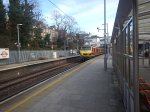
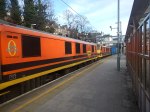
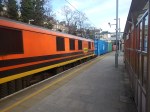

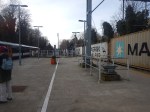
After I got home, I found that it was going from the Port of Felixstowe to Trafford Park Freightliner Terminal.
The journey will take around nine-and-a-half hours.
- This time includes a sixty-five minute stop at Ipswich to change the diesel locomotive or locomotives used to haul the train out of the Port of Felixstowe for the pair of Class 90 electric locomotives for the rest of the journey to the North-West.
- The two locomotives together have a power output of about 7.5 MW.
- The train will pick up the West Coast Main Line at Primrose Hill and then take the Trent Valley Line between Rugby and Stafford before approaching Trafford Park, using the Castlefield Corridor through Manchester Piccadilly and Oxford Road stations.
- As I write this, the train is on time as it approaches Tamworth.
The train has done well as at Watford, it was running twenty minutes late. The train crew have used the 7.5 MW well to claw back the time.
Did it help the crew to regain the schedule, that they had 7.5 MW on hand, as opposed to the less than 3 MW from the UK’s largest diesel locomotive?
To my mind, this illustrates one of the reasons, why long distance trains are best run by powerful electric locomotives.
In Do Cummins And Stadler Have a Cunning Plan?, I describe the new Class 99 locomotive.
- It is an electro-diesel locomotive.
- It has 6 MW available on 25 KVAC overhead electrification.
- It has a 1.8 MW Cummins diesel engine, which may be powerful enough to haul the largest trains in and out of the Port of Felixstowe, where the route is not electrified.
Thirty of these locomotives have been ordered by GB Railfreight.
I believe that one of these locomotives could handle a very heavy freight train between the Port of Felixstowe and Trafford Park Freightliner Terminal.
- The locomotive working alone could handle the train on the unelectrified line between Felixstowe and Ipswich.
- There would be no need to electrify the lines in the Port of Felixstowe.
- There would be no need for a prolonged stop in Ipswich.
- An hour on the journey could be saved.
- There might be a saving in the number of crew.
The Class 99 locomotive seems to be well-designed for handling freight trains out of Felixstowe.
Were Freightliner experimenting with what they needed from an electro-diesel locomotive, when I took this picture at Shenfield?
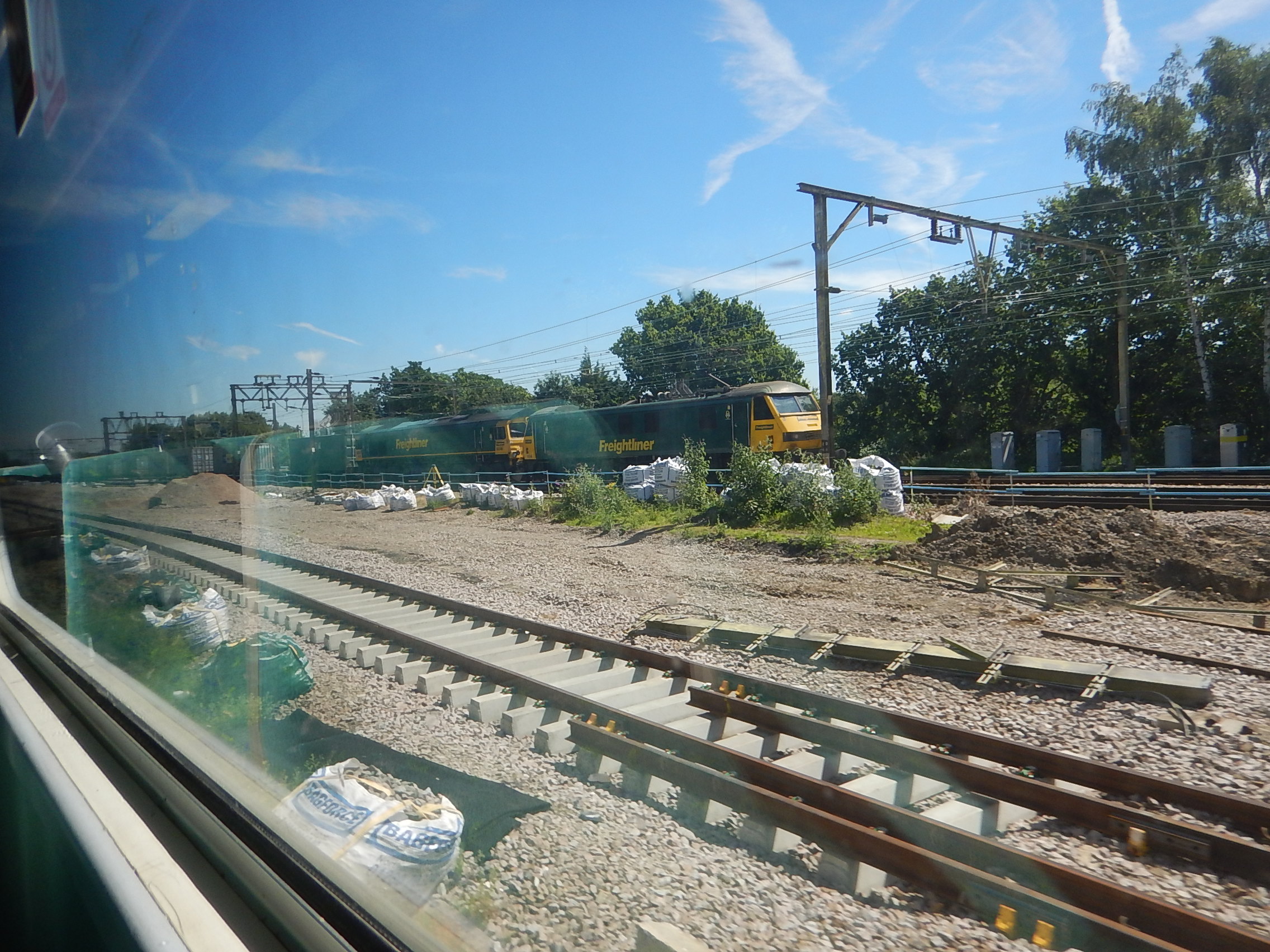
Note.
- The Class 90 electric locomotive has 3.7 MW of power.
- The Class 66 diesel locomotive has 2.4 MW of power.
Was what I saw an affordable electro-diesel locomotive?
Do Cummins And Stadler Have a Cunning Plan?
Roger Ford in the December 2022 Edition of Modern Railways has written an article called Traction à la mode.
The article is a series of small sections, with the last section but one, labelled Monster.
Roger says this.
Finally, we come to the mighty Class 99, which is not at all flakey. In the past I have often commented on the UK railways’ prejudice against Co-Co bogies.
But with the ’99’ six axles will give 6MW (8,000 hp) at the rail, with contact patches to use all its 113 tonnes. Plus the extra axles mean it can accommodate the weight of a 2,400 hp Cummins diesel.
At the recent Rail Freight Group conference, Ross Shepherd, Chief Technical Officer of Beacon Rail, which has 30 locomotives on order for GB Railfreight, revealed a computer simulation which showed a Class 99 would save 36 minutes on a run timed for 1 hr 40 minutes for diesel traction. To quote Mr Shepherd:’It’s a monster and it’s coming.’
I have been doing some digging around the Internet and have found this bulletin from Cummins, which is entitled QSK60 For Rail.
The Class 99 locomotive appears to have a QSK50, which appears to be a less powerful version.
The bulletin describes a Stadler locomotive with a Cummins QSK60 engine, which Stadler are delivering to Bolivia.
This paragraph introduces the locomotives.
Stadler and the Bolivian Ferroviaria Andina (Andean
Railway) FCA have signed a contract for the supply of the first three state-of-the art South American Light
Loco (SALi) locomotives, which will feature the
Cummins QSK60 engine.
The bulletin gives these details.
- Locomotive type – diesel-electric
- Track gauge – one metre
- Axle load – 18 ton/axle
- Power – 1865 kW – 2500 hp
- Diesel engine – QSK60
- Maximum Speed – 100 km/h
- Starting Tractive Effort – 415 kN
- Coupling – AAR
- Fuel Tank – Up to 6000 litres
The bulletin is marked as Printed in UK, so does that mean that the engines will come from Darlington.
The weight of this locomotive is 98 tonnes and Roger says that the Class 99 locomotive is 113 tonnes. But the Class 99 locomotive is an electro-diesel locomotive with 6 MW available when running on 25 KVAC overhead electrification.
It looks to me that Stadler have arranged the substantial electrical gubbins around the Cummins QSK50 diesel engine to create Beacon Rail’s monster.
Cummins And Hydrogen
Cummins is a company, that is big in hydrogen.
- They own hydrogen fuel cell and electrolysis company; Hydrogenics.
- They supply the fuel cells for Alstom’s hydrogen-powered Coradia iLint.
In Werner Enterprises Signs Letter Of Intent Planning To Secure 500 X15H Engines From Cummins, I said this.
More details of the X15H engine are given in this earlier press release, which is entitled Cummins Inc. Debuts 15-Litre Hydrogen Engine At ACT Expo, which has this first paragraph.
Today, Cummins Inc. debuted its 15-liter hydrogen engine at ACT Expo in Long Beach, California. This engine is built on Cummins’ new fuel-agnostic platform, where below the head gasket each fuel type’s engine has largely similar components, and above the head gasket, each has different components for different fuel types. This version, with expected full production in 2027, pairs with clean, zero-carbon hydrogen fuel, a key enabler of Cummins’ strategy to go further faster to help customers reduce greenhouse gas (GHG) emissions.
I certainly like the concept of a fuel-agnostic platform, where below the head gasket, everything is similar, and above the head gasket, there are appropriate components.
Could This Philosophy Be Used To Create An Electro-Hydrogen Locomotive?
It looks to me that if Stadler use the Cummins QSK diesel engine in their locomotives, then if Cummins develop a hydrogen version of the QSK, Stadler can convert the locomotives to hydrogen, if Cummins follow their philosophy of a fuel-agnostic platform, with everything identical below the cylinder head gasket.
Over twenty years ago, I did a small data analysis task for Cummins in Darlington. One of their engineers explained to me how they would rearrange the components of diesel engines, so they fitted with the customer’s application. It looks to me that they have taken this philosophy a step further, so that the customer can have diesel or hydrogen engines in the same application, depending on what the end user wants.
In the case of the order from Beacon Rail for thirty Class 99 locomotives, they will be delivered as electro-diesel locomotives, but at some point in the future, when Cummins has developed the hydrogen engine, they will be able to be converted to electro-hydrogen locomotives.
These locomotives could be in front-line service for over forty years!
The Very Long Range Electro-Hydrogen Locomotive
Hydrogen surely has the power and range to move freight trains across continents.
But can everything be fitted in a standard locomotive body?
Alstom have come up with an innovative solution, which I described in From 2025, Nestlé Waters France Will Use The First Hydrogen-Powered Freight Train Through An Innovative Solution Developed by Alstom and ENGIE
I would also suspect a simple tender containing a tank full of hydrogen will also work.
Collateral Benefits Of A Electro-Hydrogen Locomotive
These are possible benefits of electro-hydrogen locomotives.
- Staff in ports and freight depots get all the clean-air benefits of working with zero-carbon and low-pollution locomotives.
- Ports are becoming hydrogen hubs to fuel ships and ground-handling equipment, so electro-hydrogen locomotives could be easily-fueled.
- Ports and freight depots don’t like electrification, as containers occasionally get dropped.
- Electro-hydrogen locomotives will be able to do their own shunting.
- Electro-hydrogen locomotives will not need all tracks to ports and freight depots to be electrified, but won’t mind if they are.
These benefits would allow Network Rail and the operators of ports and freight depots to develop the best solutions for their operations.
A Hydrogen-Electric Class 99 Locomotive
In GB Railfreight Plans Order For Future-Proofed Bi-Mode Locomotives, I introduced the Class 99 locomotive, for which the first order was announced by Stadler and GB Railfreight yesterday.
This was the start of that post, which I wrote in early March 2022.
The title of this post, is the same as that of this article on Railway Gazette.
This is the introductory paragraph.
GB Railfreight is planning to order a fleet of main line electro-diesel locomotives with a modular design which would facilitate future replacement of the diesel engine with a battery or hydrogen fuel cell module.
In this post, I will look at the design of a Class 99 locomotive running on hydrogen.
These are my thoughts.
Using Hydrogen Fuel Cells
The Railway Gazette article suggests that hydrogen fuel-cells will be used to create a hydrogen-electric Class 99 locomotive.
A typical hydrogen fuel-cell transmission will have the following elements, which will replace the diesel-electric generator.
- A hydrogen fuel tank
- A appropriately-sized hydrogen fuel-cell which generates electricity from hydrogen.
- A battery to store electricity.
- Regenerative braking will also be used to charge the battery.
- The locomotive will have an electric transmission.
The various components will be fitted into the space, that was occupied by the diesel engine.
This Alstom video promotes the Alstom Coradia iLint and explains how it works.
Most hydrogen fuel-cell trains and trucks , work as the train does in this video.
Using A Reciprocating Engine Running On Hydrogen
This press release from Caterpillar is entitled Caterpillar to Expand Hydrogen-Powered Solutions to Customers.
It describes how Caterpillar will develop versions of their reciprocating engines, that will run on 100 % hydrogen.
This would be an alternative way of developing a zero-carbon Class 99 locomotive.
Note that Cummins, JCB and Rolls-Royce mtu have also converted diesel engines to run on hydrogen.
This method of conversion has advantages.
A Battery-Electric Class 99 Locomotive
In GB Railfreight Plans Order For Future-Proofed Bi-Mode Locomotives, I introduced the Class 99 locomotive, for which the first order was announced by Stadler and GB Railfreight today.
This was the start of that post, which I wrote in early March 2022.
The title of this post, is the same as that of this article on Railway Gazette.
This is the introductory paragraph.
GB Railfreight is planning to order a fleet of main line electro-diesel locomotives with a modular design which would facilitate future replacement of the diesel engine with a battery or hydrogen fuel cell module.
The rest of the article gives clues to the deal and the specification of the locomotives.
- Negotiations appear to have started with Stadler for locomotives to be built at their Valencia plant.
- Twenty locomotives could be ordered initially, with options for thirty.
- The locomotive will be Co-Co bi-modes.
- The diesel engine will be for heavy main line freight and not just last-mile operations.
- They would be capable of hauling freight trains between Ipswich and Felixstowe, within two minutes of the times of a Class 66 locomotive.
- They will be of a modular design, so that in the future, the diesel engine might be replaced by a battery or fuel cells as required and possible.
They have provisionally been called Class 99 locomotives.
Note the introductory paragraph of the Railway Gazette article.
GB Railfreight is planning to order a fleet of main line electro-diesel locomotives with a modular design which would facilitate future replacement of the diesel engine with a battery or hydrogen fuel cell module.
What sort of range and performance will this give to a Class 99 locomotive?
In Class 99 Electro-Diesel Locomotive Order Confirmed, I came to this conclusion.
It does appear that a design based around the latest version of a Caterpillar C175-16 diesel engine will be possible.
The easiest way to create a battery-electric Class 99 locomotive would be to replace the Caterpillar C175-16 diesel engine with the largest and most efficient batteries possible, add regenerative braking to battery and the best control system for the locomotive and the batteries, that engineers can devise.
These are my thoughts.
Range Of A Euro Dual On Diesel
Consider.
- A Euro Dual locomotive has a 3,500 litre fuel tank.
- A Euro Dual locomotive has a fuel consumption of 1039.3 L/hr.
This should allow the locomotive to run for about three hours and twenty minutes or about 250 miles.
Obviously, any electrification on the route, will increase the range.
Weight Of The Diesel Engine
This data sheet for the Caterpillar C175-16 diesel engine gives a weight of over twenty tonnes, which is certainly a lot of weight.
You’ve also got the weight of the fuel tank, which could also contain in the Euro Dual hold nearly three tonnes of diesel.
I will assume that the weight of a Caterpillar C175-16 diesel engine and the associated gubbins could be as high as 25 tonnes.
How Much Energy Could A Twenty Tonne Battery Hold?
In Innolith Claims It’s On Path To 1,000 Wh/kg Battery Energy Density, which was written two years ago.
This was my conclusion of that post.
I am led to believe these statements are true.
- Tesla already has an energy density of 250 Wh/Kg.
- Tesla will increase this figure.
- By 2025, the energy density of lithium-ion batteries will be much closer to 1 KWh/Kg.
- Innolith might achieve this figure. But they are only one of several companies aiming to meet this magic figure.
These figures will revolutionise the use of lithium-ion batteries.
I feel it is reasonable to go along with Tesla’s figure of 250 Wh/Kg, which gives a 5 MWh battery could replace the C175-16 diesel engine, if it had a total weight of 20 tonnes.
If the battery could have a total weight of 25 tonnes, the battery would have a capacity of 6.25 MWh.
It does look like the Caterpillar C175-16 diesel engine and the associated gubbins could be replaced by a substantial battery.
As the years go by, the capacity of the batteries will only grow.
Will Battery-Electric Class 99 Locomotives Have Regenerative Braking?
According to Wikipedia, Stadler Euro Dual locomotives do have regenerative braking, so it would seem likely, that this could be used to recharge the batteries, in addition to 25 KVAC overhead electrification, where it is available.
I will assume that battery-electric Class 99 locomotives will have regenerative braking.
How Long Could A Battery-Electric Class 99 Locomotive Run On Batteries?
Consider.
- To have the performance of a Class 99 locomotive on diesel, the locomotive would need to output 2,800 kW.
Without regenerative braking this would give these figures.
- A 5 MWh battery would run for at least one hours and 47 minutes.
- A 6.25 MWh battery would run for at least two hours and 13 minutes.
Add in regenerative braking and short strategic lengths of electrification and large parts of the UK network would be opened up to electrified trains.
Conclusion
Stadler have probably done extensive simulations of the UK network with battery-electric Class 99 locomotives, so they would know the true potential of these locomotives.
GB Railfreight Names Locomotive For Ukraine
The title of this post is the same as that of this article on Railnews.
This is the first paragraph.
GB Railfreight has unveiled a Class 66 locomotive bearing the nameplates ‘Glory to Ukraine’, and painted in a special livery using the Ukrainan colours. GBRf said it ‘stands with Ukraine, and this newly painted locomotive honours the people affected by the conflict as they continue to courageously defend their homeland’.
Perhaps not in the same class as this article from the Guardian, which is entitled Lithuania Names Road Leading To Russian Embassy ‘Ukrainian Heroes’ Street’.
But every little bit helps!
Dual-Fuel Class 37 And 66 Locomotive Concepts Unveiled
The title of this post, is the same as that of this article on Railway Gazette.
This is the first paragraph.
G-volution and SBL-Rail have produced design concepts for dual-fuel versions of Class 37 and 66 locomotives, which would be able to run on diesel with biomethane, biopropane or hydrogen.
Note.
- There are about sixty Class 37 locomotives in service or stored.
- 480 Class 66 locomotives were originally produced and over 300 must still be in service.
- Both locomotives have electric transmissions.
- G-volution are developing a dual-fuel Class 180 train, that I wrote about in Grand Central DMU To Be Used For Dual-Fuel Trial.
- Two of the design concepts involve replacing the current diesel engines with modern Cummins engines, that meet current emission regulations.
- Fuel savings of ten percent are mentioned for one engine conversion.
This is said about the dual-fuel conversions.
Biomethane and biopropane dual fuel engines would offer significant carbon and cost savings verses diesel. Hydrogen has the potential to do so if produced from renewable sources, but would need to be ‘much cheaper’ than it is today.
The article then gives a table, which shows the various savings.
The article comes to these conclusions.
- Biomethane and biopropane prices are expected to fall, as production increases.
- Green hydrogen is too expensive, but costs will come down.
- More rises in the price of diesel, will tilt costs towards alternative fuels.
I feel that to get the emissions and costs down, there would need to be a bit of cheating.
Look at this picture of a Class 66 locomotive under 25 KVAC electrification.

I wonder, if a pantograph and all the electrical gubbins could be fitted to a Class 66 locomotive to create a genuine electro-diesel locomotive.
- It would use electrification, where it exists.
- It would use the existing electric transmission.
- I do suspect though that the Class 37 locomotive may be more difficult to convert because of its age.
It should be noted that in GB Railfreight Plans Order For Future-Proofed Bi-Mode Locomotives, I talk about how GB Railfreight are proposing to purchase a fleet of new electro-diesel freight locomotives, that appears will have Class 66 locomotive performance on both electrification and diesel.
The Involvement Of Cummins
Cummins, who are one of the world’s largest manufacturers of diesel engines, could have a lot to lose from the move to zero-carbon.
- But they have adopted an if-you-can’t-them-join-them philosophy to hydrogen.
- They have bought up hydrogen companies like Hydrogenics.
- They are developing internal combustion engines that can run on hydrogen.
- Cummins have claimed to me, that they will try to fill any niche market with their engines, so it would be likely, they would apply that philosohy to hydrogen.
I believe that Cummins will not give up their market share without a fight.
I would expect, Cummins will actively support G-volution’s plans, if it would sell upwards of fifty large engines.
Conclusion
I have four main conclusions.
- I believe that this study could lead to a very significant and worthwhile updating of a Class 66 locomotive.
- The locomotive would need to be modified so it could use electrification.
- But I am more dubious, that this could be done with the Class 37 locomotive.
- I also believe that Cummins will be part of the solution.
In the wider world, I also believe that to retain their turnover and market share, Cummins and the other big diesel engine manufacturers will come up with increasingly innovative solutions.
Caterpillar, Cummins, Deutz, JCB, MTU and others will not give up multi-billion businesses without a fight.
Wagons Ordered For Growing Freight Traffic
The title of this post, is the same as that of this article on Railway Gazette.
This is the first paragraph.
GB Railfreight and leasing company Porterbrook have placed an order for Greenbrier Europe to supply 50 JNA 60 m3 capacity four-axle box wagons for transporting construction materials.
Other points from the article.
- The wagons will be built in Romania.
- They will be delivered in the Autumn.
- Porterbrook research is indicating a possible increase of 35 % in construction sector traffic between now and 2034.
Certainly, judging by the number of posts about freight, the sector seems to be innovating and running more trains.
 The Anonymous Widower