A Trip To Grantham Station – 4th November 2020
I hadn’t intended to go to Grantham station, but that’s what I did on the last day before lockdown.
Over the last couple of weeks, I’ve been talking to a guy in Lincolnshire, who read Energy In North-East Lincolnshire, on this blog.
Last week, we both realised that we’d worked together in the 1970s, when he worked at a bank in the City, and I did some data analysis for the section, where he worked.
He is unwell with cancer at the moment and suggested I come down and see him in Skegness, where he now lives with his wife.
So I arrived at Grantham and found that the connecting train was running nearly an hour late and even then it was terminating at Boston.
After a quick exchange of texts, I told him the bad news and he gave me the good news, that his condition had improved and would be able to see me after Christmas and/or lockdown.
Luckily, I was able to change my ticket and took the next train back to London, after taking these pictures of the station.
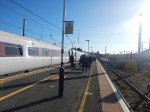
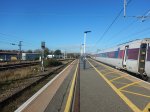
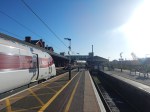
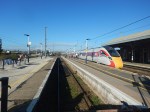
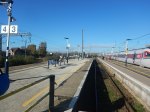
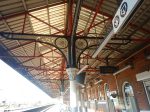
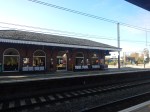
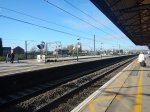
I just had time to have a last drink of Aspall cyder before lockdown, in the station bar.
These are some thoughts.
Platform Layout At Grantham
The Wikipedia entry for Grantham station says this about the platforms.
It is composed of four platforms; platforms 1 and 2 are on the East Coast Main Line and are responsible for express services between London and Scotland. Platform 1 serves exclusively London King’s Cross via Peterborough and Stevenage; Platform 2 serves cities of northern England and Edinburgh. Platform 2, 3 and 4 are formed from a large island platform structure. Platform 3 is a bay platform at the northern end of the station that is used to allow local trains to reverse, while Platform 4 is a two-way platform that is used by East Midlands Railway. Only Platform 1 has amenities, including toilets, refreshments and a buffet.
This Google Map shows the station.
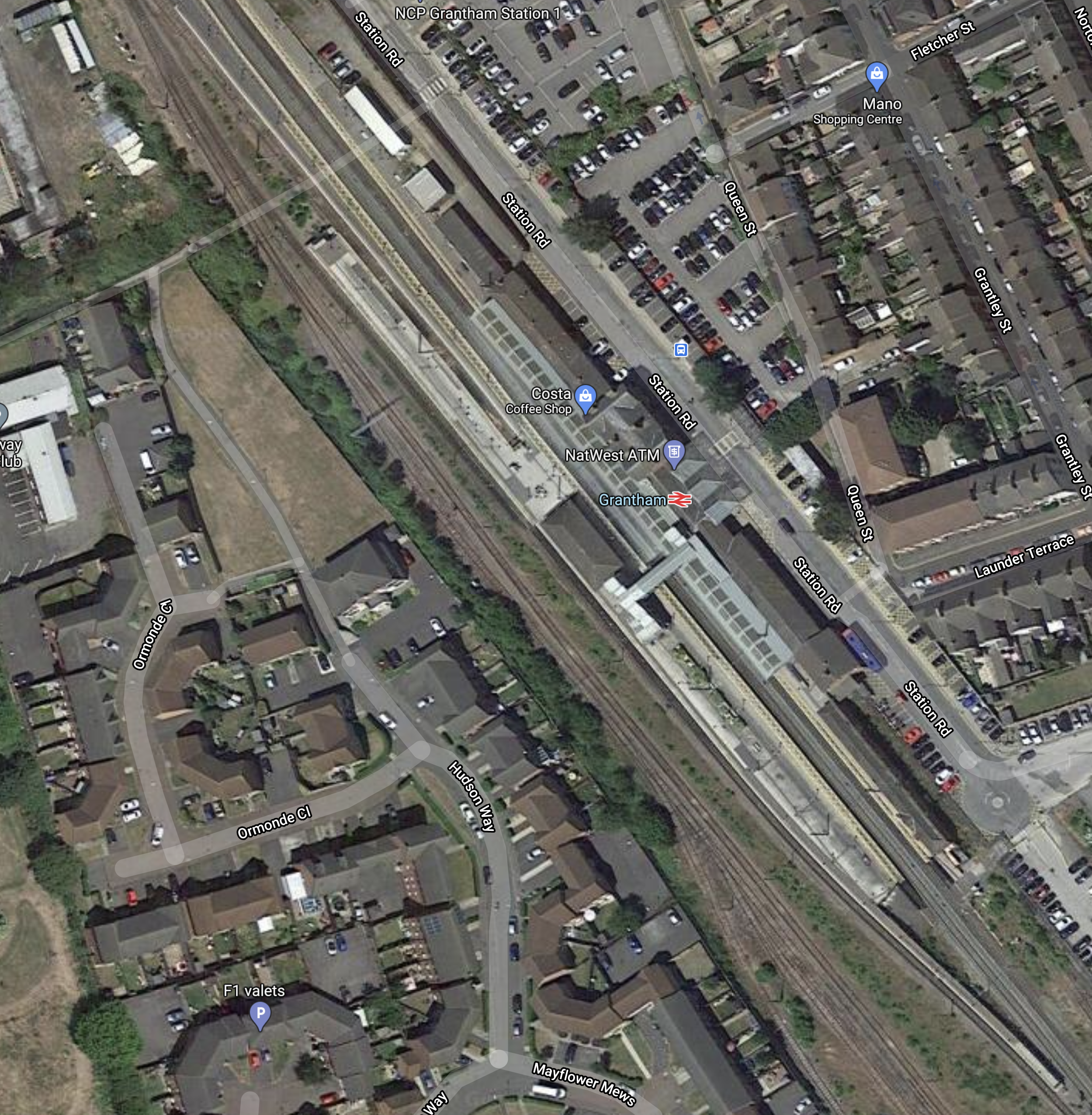
Note.
- Platforms are numbered 1 to 4 from East to West.
- Platforms 1 and 2 are long enough to take two five-car Class 800 trains working as a pair.
- Platform 4 may be long enough for these pairs of trains or could be made so.
- All trains to and from Nottingham call in Platform 4.
- Trains from Nottingham to Peterborough call in Platform 4 before crossing over to the down lines.
- There would appear to be no easy way for a Southbound train on the East Coast Main Line to access Platform 4.
- Platform 3 didn’t get much use on the day I visited.
There is also an avoiding line to allow freight and other passing trains to avoid going through the platforms.
Services Through Grantham Station
Services stopping at Grantham are as follows.
- LNER – One tp2h – London Kings Cross and Harrogate via Stevenage, Grantham, Doncaster, Wakefield Westgate, Leeds
- LNER – One tp2h – London Kings Cross and Bradford Forster Square via Stevenage, Grantham, Doncaster, Wakefield Westgate, Leeds
- LNER – One tp2h – London Kings Cross and Lincoln via Stevenage, Peterborough, Grantham and Newark North Gate
- LNER – One tp2h – London Kings Cross and York via Stevenage, Peterborough, Grantham, Newark North Gate, Retford and Doncaster.
- Hull Trains – Five tpd – London Kings Cross and Hull via Stevenage, Grantham, Retford, Doncaster, Selby, Howden and Brough
- Hull Trains – Two tpd – London Kings Cross and Beverley via Stevenage, Grantham, Retford, Doncaster, Selby, Howden, Brough, Hull and Cottingham.
- East Midlands Railway – One tph – Liverpool Lime Street and Horwich via Peterborough and Nottingham
- East Midlands Railway – One tph – Nottingham and Skegness
Note.
- tph is trains per hour
- tp2h is trains per two hours.
- tpd is trains per day.
Adding the services together, there is a frequent service between Stevenage, Peterborough, Grantham and Newark North Gate.
Train Timings Between London Kings Cross and Grantham
The fastest trains take 67 minutes between London Kings Cross and Grantham.
- The distance is 105.5 miles
- This would be an average speed of 94.5 mph.
- The East Coast Main Line is being upgraded with in-cab digital ERTMS signalling, which will allow 140 mph running.
- The works at Kings Cross station will have increased the station’s capacity.
I wouldn’t be surprised to see a time between London Kings Cross and Grantham, of under an hour, time-tabled in the near future.
Could There Be A London Kings Cross and Nottingham Service Via Grantham?
On this page on UK Rail Forums, this was posted in 2010.
According to today’s East Midlands news on BBC1, Network Rail is considering inviting tenders to run a faster service from Nottingham to London King’s Cross via Grantham, from 2014. The present service of around 1hr 45m is considered too slow by passengers.
How would this new service be reconciled with the much-publicised capacity constraints at Welwyn and at King’s Cross itself? Will the proposed possible service be diesel-powered under the wires from Grantham, or will the Grantham-Nottingham stretch be electrified? Interesting times.
Technology has changed since 2010 and the East Coast Main Line has improved.
- King;s Cross station is being sorted.
- Digital ERMTS signalling is coming to the East Coast Main Line
- Hatachi’s new Class 800 trains have arrived and could go between Grantham and Nottingham on diesel power.
- Grantham and Nottingham takes 35 minutes on a service with three stops, that’s timed for a Class 153 train.
- Grantham and Nottingham is just over twenty miles.
As I said earlier, that I believe Grantham and London could be inside an hour, I wouldn’t be surprised to see a Nottingham and London Kings Cross service in under an-hour-and-a-half.
But it could be better than that?
Hitachi’s Regional Battery Train
This is the train that could unlock the potential of a London Kings Cross and Nottingham service.
This Hitachi infographic gives details of the train.

Note that the train has a range of 90 kilometres or 56 miles, at speeds of up to 100 mph.
The trains would be ideal for a London Kings Cross and Nottingham service.
- They would charge the batteries, whilst using the electrification on the East Coast Main Line.
- The battery range is such, that it would not need any charging between leaving Grantham and returning there from Nottingham.
- They could travel at speeds of up to 140 mph on the East Coast Main Line, once the digital ERTMS signalling is installed.
- Stops could be at Stevenage, Peterborough and Grantham.
LNER’s five-car Class 800 trains, which are branded Azumas can be turned into Regional Battery Trains, by replacing the three diesel engines with battery packs.
I would suspect that times of around eighty minutes, between London Kings Cross and Nottingham, could be in order.
A Park-And-Ride For Nottingham And London
Nottingham has several Park-and-Ride sites, that are served by the trams. of the Nottingham Express Transit, which already calls at Nottingham station.
Would another site on the rail line between Grantham and Nottingham be useful?
This map shows. where the rail line crosses the A46, near its junction with the A52.
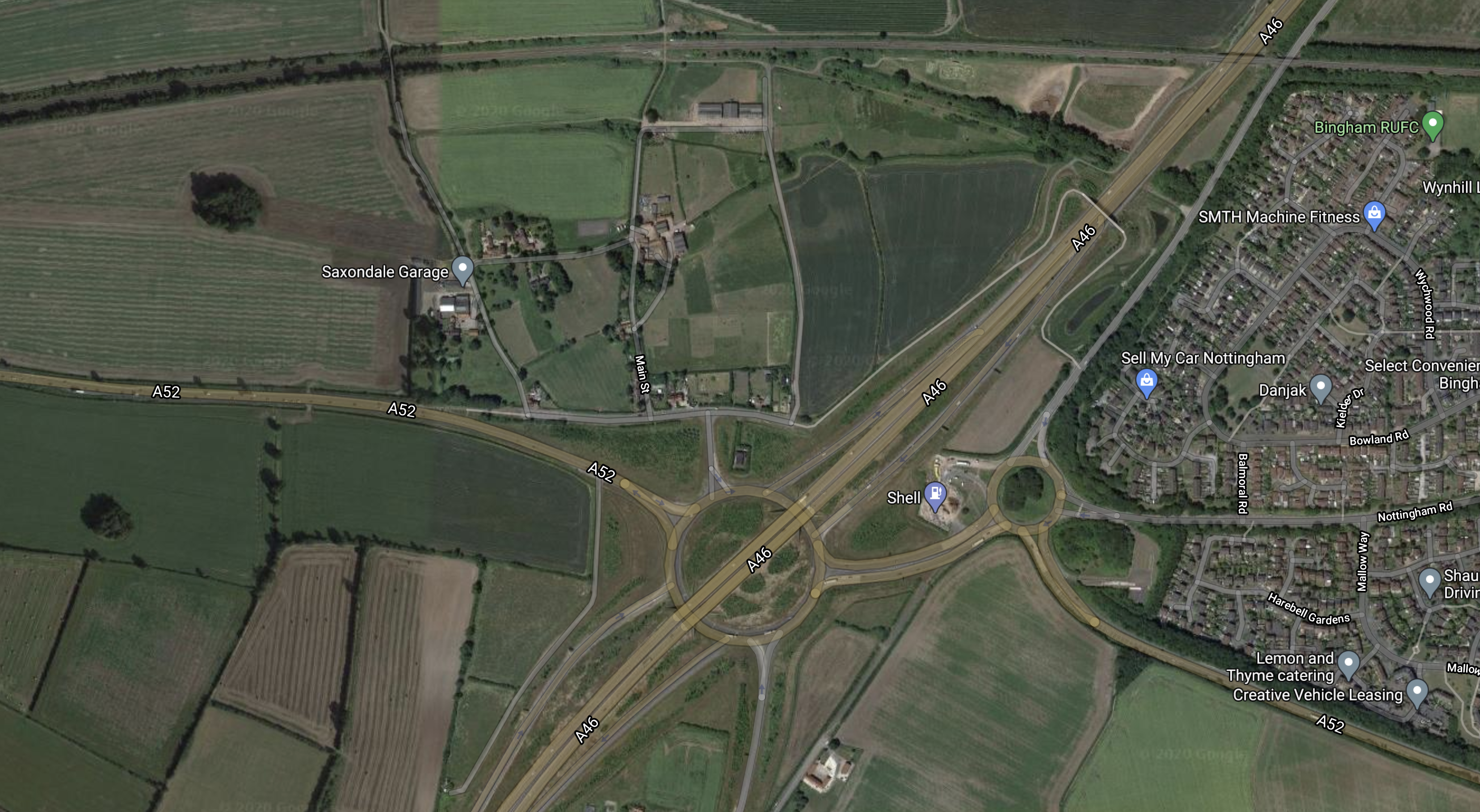
Note the Grantham and Nottingham line running across the top of the map and the big junction between the A52 and the A46.
It looks to be a good place for a Park-and-Ride station, if it was decided one needed to be built.
There might also be sites further in towards Nottingham, close to the racecourse or the Holme Pierpoint National Watersports Centre.
A Combined Nottinghamshire And Lincolnshire Service
I originally called this section a Combined Nottingham And Lincoln Service, but I don’t see why it can’t serve most of both counties.
Consider.
- Birmingham, Brighton, Cambridge, Oxford and Southend get two services from the capital by different routes.
- Hitachi’s Class 800 trains can Split/Join in around two minutes.
- Running five-car Class 800 trains all the way between London Kings Cross and Lincoln is not a good use of a valuable train path on the East Coast Main Line.
- Lincoln is just 16.5 miles and 24 minutes from the East Coast Main Line.
- Nottingham is 22 miles and could be 20 minutes from the East Coast Main Line.
- Both Lincoln and Nottingham would be in battery range for a return trip from the East Coast Main Line.
- Platforms 1, 2 and 4, at Grantham are long enough to handle two Class 800 trains, running as a pair and regularly pairs call in Platforms 1 and 2.
I believe it would be possible for a pair of Regional Battery Trains to do the following.
- Leave London Kings Cross and run to Grantham in an hour, stopping at Stevenage and Peterborough.
- Stop in Platform 4 at Grantham station, where the trains would split.
- One train would continue on the East Coast Main Line to Newark North Gate station, where it would leave the East Coast Main Line and go to Lincoln.
- The other train would continue to Nottingham.
Note.
- Coming back, the process would be reversed with trains joining in Platform 1 or Platform 4 at Grantham.
- There may need to be some track and signalling modifications, but nothing too serious or challenging.
Connections to other parts of Nottinghamshire and Lincolnshire would be as follows.
- Nottingham and Nottinghamshire would be connected using the Nottingham Express Transit and the Robin Hood and Maid Marian Lines from Nottingham station.
- All stations between Grantham and Nottingham would be reached from either Grantham or Nottingham.
- All stations to Boston and Skegness would be reached from Grantham.
- All stations between Newark and Lincoln would be reached from either Lincoln or Newark.
- All stations between Doncaster and Lincoln would be reached from either Doncaster or Lincoln.
- All stations between Peterborough and Lincoln would be reached from either Lincoln or Peterborough.
- All stations to Market Rasen, Grimsby Town and Cleethorpes would be reached from Lincoln.
Note.
- I feel that some Lincoln services could be extended to Cleethorpes via Market Rasen and Grimsby Town.
- Hopefully, a timetable could be developed, so that no connection was overly long.
Most of the distances are not unduly long and I would hope that most secondary services could be battery electric trains, which would be charged in the larger stations like Boston, Cleethorpes, Doncaster, Grantham, Lincoln, Mansfield, Nottingham, Peterborough, Sleaford, Spalding and Worksop.
Doncaster, Grantham and Peterborough already have 25 KVAC overhead electrification and this could be used to charge the trains, with possibly some small extensions.
The other stations will need a number of systems to charge the trains, as they pass through.
Some stations will be suitable for the installation of the standard 25 KVAC overhead electrification, but others will need specialised charging systems.
It appears that Adrian Shooter of Vivarail has just announced a One-Size-Fits-All Fast Charge system, that has been given interim approval by Network Rail.
I discuss this charger in Vivarail’s Plans For Zero-Emission Trains, which is based on a video on the Modern Railways web site.
There is more about Vivarail’s plans in the November 2020 Print Edition of the magazine, where this is said on page 69.
‘Network Rail has granted interim approval for the fast charge system and wants it to be the UK’s standard battery charging system’ says Mr. Shooter. ‘We believe it could have worldwide implications.’
Vivarail’s Fast Charge system must surely be a front-runner for installation.
What frequency of the Combined Nottinghamshire And Lincolnshire service would be needed and could be run?
Consider.
- Currently, Lincoln is served with one tp2h with a five-car Class 800 train running the service.
- The Lincoln service alternates with a one tp2h service to York, which also calls at Retford and Doncaster.
- Work is progressing on increasing the number of high speed paths on the East Coast Main Line.
Obviously, an hourly service to both Nottingham and Lincoln would be ideal and would give most of the two counties an hourly service to and from London Kings Cross with a single change at either Doncaster, Grantham. Lincoln, Newark, Nottingham or Peterborough.
- An hourly service might be difficult to timetable because of the York service.
- But I don’t believe it would be impossible to setup.
Especially if after, the Eastern leg of High Speed Two opens, East Coast Main Line services from London Kings Cross to North of York are replaced in part, by High Speed Two services.
The Effect Of High Speed Two
High Speed Two will build a new station at Toton called East Midlands Hub station.
- The station will be situated about halfway between Nottingham and Derby, with frequent connections to both cities.
- There will be frequent services to Birmingham, Leeds, London, Newcastle and Sheffield.
- I wouldn’t be surprised to see a direct service to Edinburgh and Glasgow from the station.
- There will be a lot of economic growth around the station.
I very much feel, that a lot of passengers were travel to East Midlands Hub station for both long distance trains and to access the Derby-Nottingham area.
A Cambridge And Birmingham Service
In How Many Trains Are Needed To Run A Full Service On High Speed Two?, I proposed a Cambridge and Birmingham Curzon Street service.
This is what I said.
The obvious one is surely Cambridge and Birmingham
- It would run via Peterborough, Grantham, Nottingham and East Midlands Hub.
- It would connect the three big science, engineering and medical centres in the Midlands and the East.
- It would use High Speed Two between Birmingham Curzon Street and East Midlands Hub.
- It could be run by High Speed Two Classic-Compatible trains.
It might even be a replacement for CrossCountry’s Stansted Airport and Birmingham service.
Timings for the various legs could be.
- Cambridge and Peterborough – CrossCountry – 49 minutes
- Peterborough and Grantham – LNER – 19 minutes
- Grantham and Nottingham -Best Estimate – 20 minutes
- Nottingham and Birmingham Curzon Street – Midlands Rail Engine – 33 minutes
Note.
- This totals to two hours and one minute.
- The current service takes two hours and forty-four minutes.
- The Ely and Peterborough and Grantham and Nottingham legs are not electrified.
If the route were to be fully electrified or the trains were to be fitted with batteries, the time via High Speed Two, would surely be several minutes under two hours.
Conclusion
These objectives are possible.
- An hourly service between London Kings Cross and Grantham, Lincoln, Newark and Nottingham.
- A very much more comprehensive train service for Nottingham and Lincolnshire.
- A two hour service between Cambridge and Birmingham.
Most of the services would be zero carbon.
No major infrastructure would be needed, except possibly completing the electrification between Nottingham and Ely, some of which is probably needed for freight trains anyway.
Alternatively, the High Speed Two Classic-Compatible trains could be fitted with batteries.
Middlesbrough Station – 20th October 2020
I took These pictures at Middlesbrough station on my trip to Teesside.
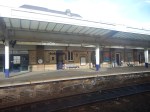
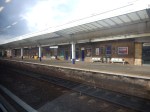
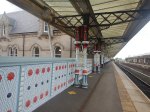
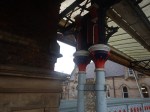
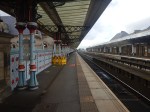
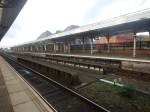
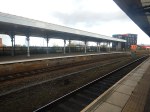
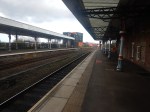
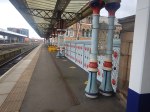

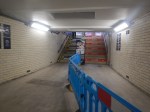


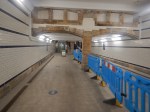
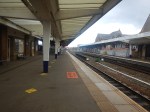
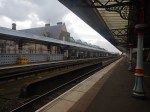
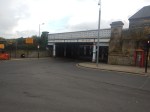
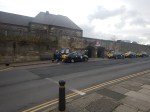
These are my thoughts on the station.
Station Track Layout
This Google Map shows the layout of the station.
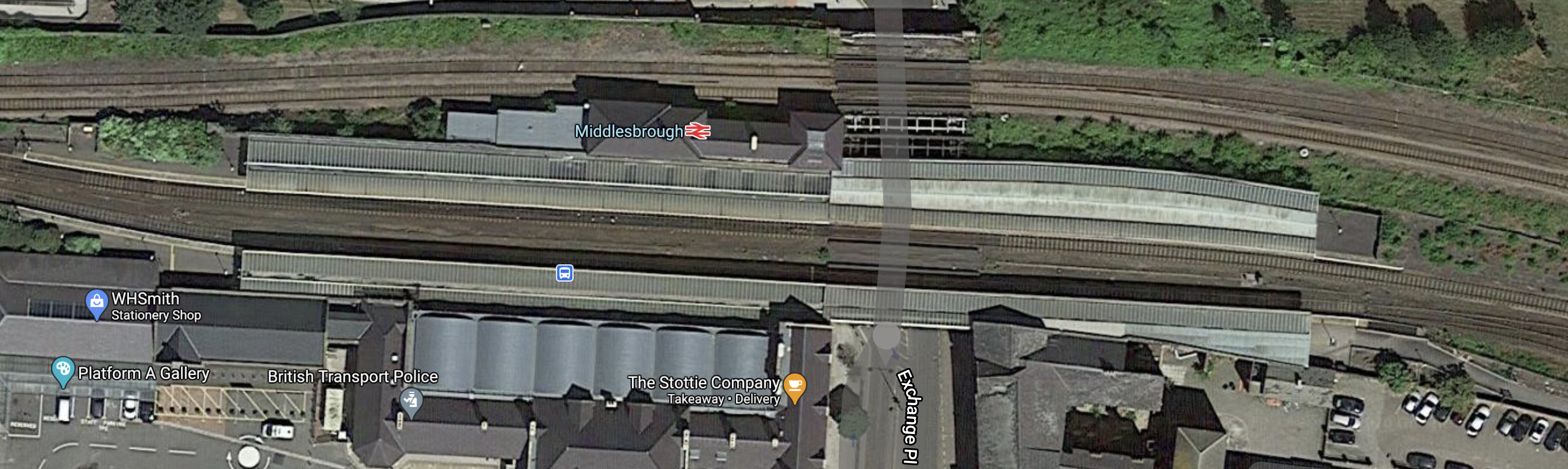
Note.
- The pair of freight lines passing around the North side of the station.
- Platform 1 is the Westbound platform on the South side of the tracks.
- Platform 2 is the Eastbound platform on the North side of the tracks.
Both platforms would appear to be about 150 metres long, which is long enough for a five-car Class 80x train, but not for a 234 metre long nine-car train.
Period Features
The station has a lot of period features, like cast-iron columns and brackets, and good Victorian stonework.
Much seems to have received good TLC.
Northern Entrance
I have seen comments about improving the Northern entrance on various web sites.
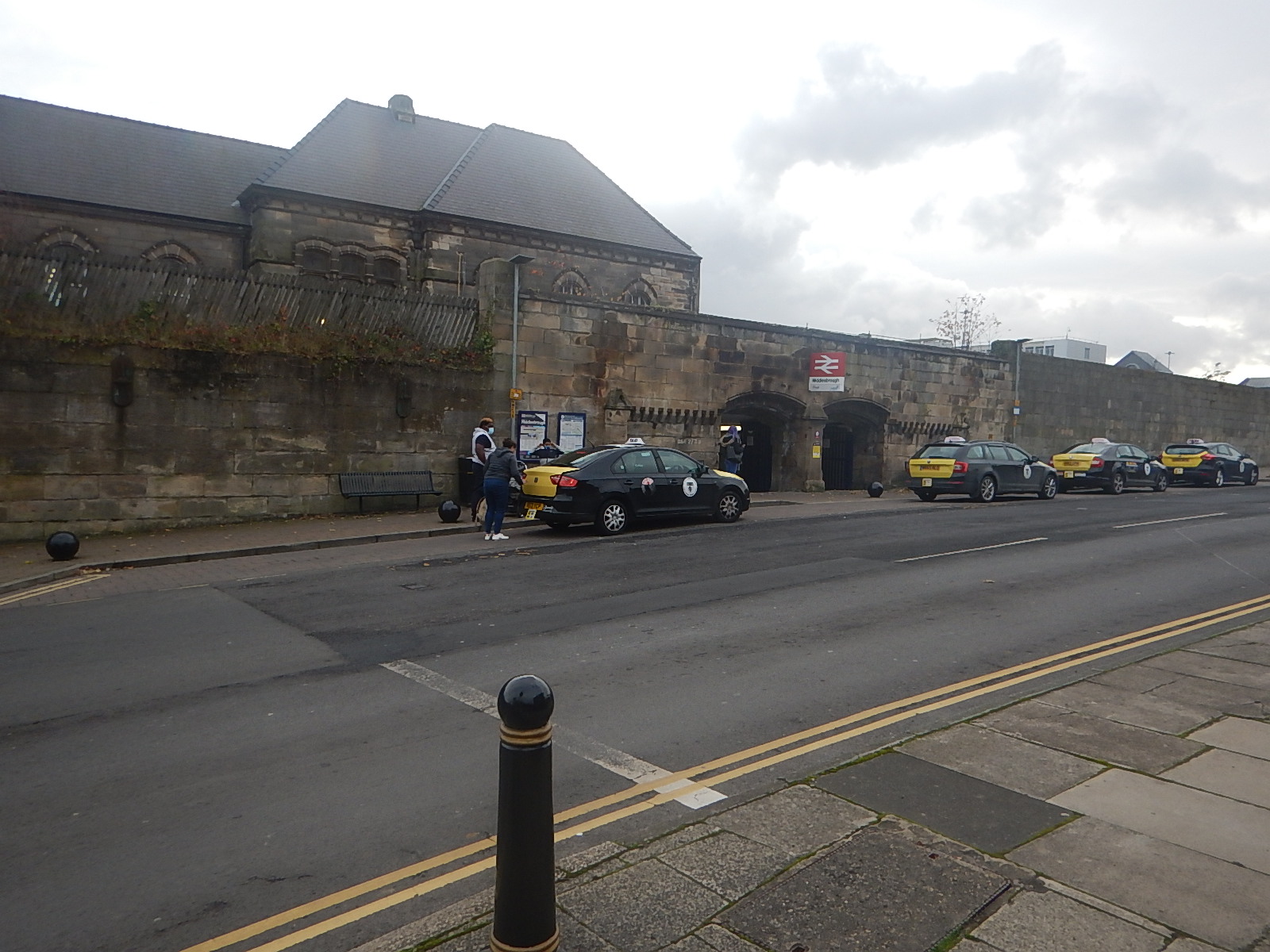
It certainly, isn’t in bad condition.
Improving The Station
In £35m Station Transformation Launched By Tees Valley Mayor, I wrote about the current plans to transform the station. I started with these paragraphs.
The title of this post, is the same as that of this article on Rail Technology Magazine.
This is the introductory paragraph.
Tees Valley Mayor Ben Houchen has announced (June 9th) a £35m transformation of Middlesbrough Station to transport more train services to the town, including the first direct rail link to London in decades.
The Rail Technology Magazine article indicates that Platform 2 at Middlesbrough station will be extended to handle Azuma trains. As the current platform looks to be around 150 metres long and this would be long enough for a five-car train, does this mean that in the future nine-car and ten-car Azumas will be able to run services to Middlesbrough?
Having seen since I wrote the related post, that Hull station has handled some nine-car Azumas, I feel that although five-car Azumas could probably use Middlesbrough station, it would seem prudent to make it possible for the longer trains to call.
Let’s suppose Middlesbrough, were playing a big London club in an important post-pandemic FA Cup match. LNER might want to run a nine-car Azuma to Middlesbrough to accommodate extra passengers.
Charging Battery Trains
LNER and TransPennine Express could be running battery electric Class 800 and Class 802 trains to Middlesbrough and/or Redcar Central stations.
This Hitachi infographic describes their Regional Battery Train, which can be created by adding batteries to the current trains.
With a range of 90 km. or 56 miles, these trains could be able to reach Middlesbrough from the electrification on the East Coast Main Line at Northallerton.
With most journeys, they should have sufficient energy in the battery to return without trouble.
But it would probably be prudent to have charging at Middlesbrough and/or Redcar Central to ensure a safe return.
These pictures were taken from the Eastern end of Platform 2, which is down to be lengthened.

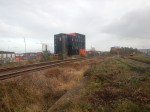

Note.
- The freight lines behind Platform 2.
- There is plenty of space beyond the end of Platform 2.
- There appears to be space for a reversing siding with a charger.
I am sure that a suitable form of charging can be provided on Platform 2 at Middlesbrough station.
Conclusion
Middlesbrough station could be turned into a big asset for the town.
£100m Station Revamp Could Double Local Train Services
The title of this post, is the same as that of this article on the Northern Echo.
This is the opening paragraph.
Officials behind plans for a £100m-plus transformation of Darlington’s Bank Top Station have confirmed it will remain the only one on the East Coast Mainline without a platform specifically for the London to Scotland service.
Darlington station has made various appearances in my life, all of which have been pleasurable ones.
I went several times to ICI’s Wilton site on Teesside in the 1970s, when the route to London was worked by the iconic Class 55 locomotives or Deltics.
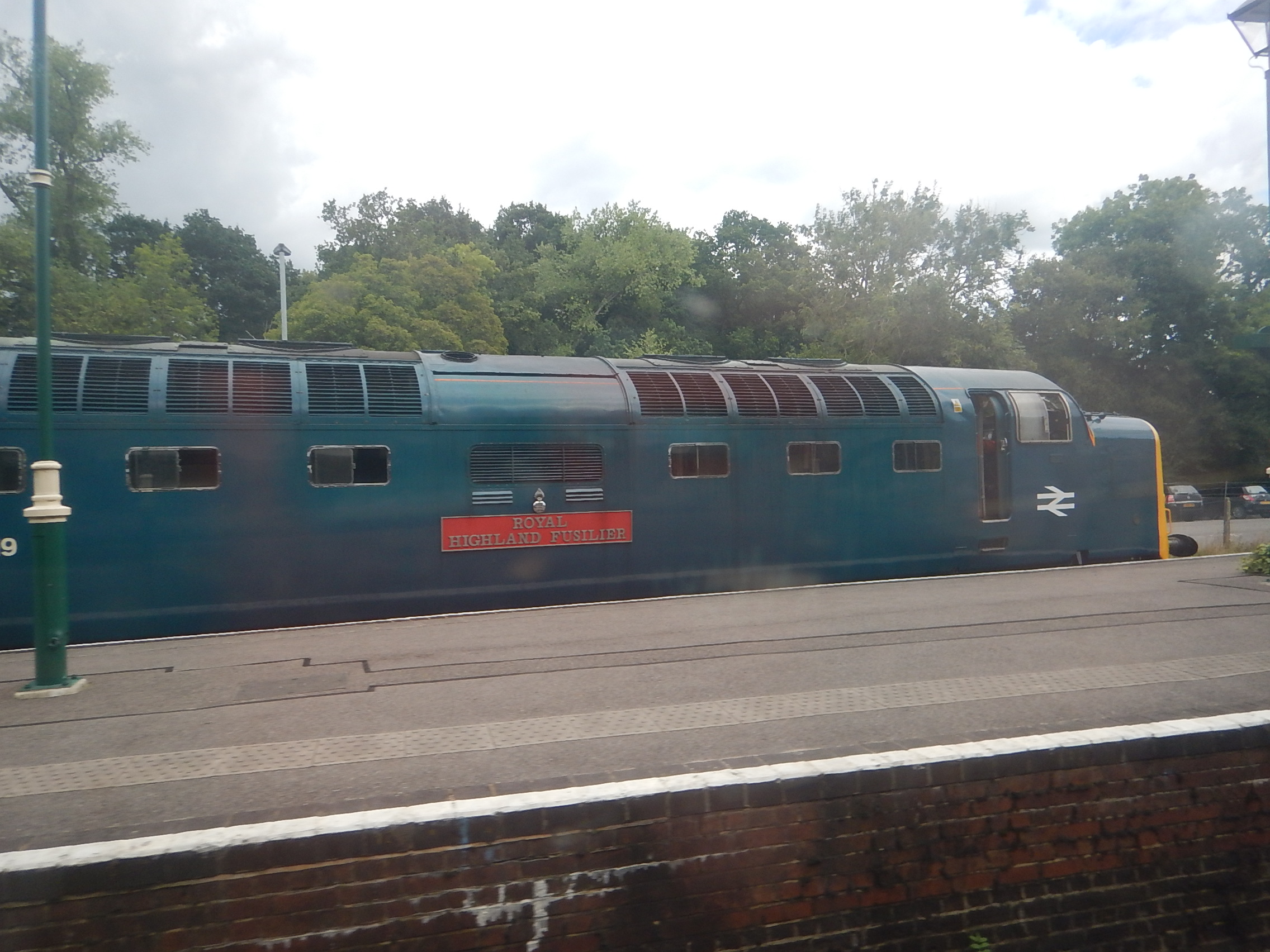
I wrote about one memorable trip home from Darlington in The Thunder of Three-Thousand Three-Hundred Horses.
Over the years, I also seem to have had several clients for my computing skills in the area, including the use of my data analysis software; Daisy at Cummins Engines in the town.
And lately, it’s been for football at Middlesbrough to see Ipswich play, where I’ve changed trains. Sometimes, Town even won.
The improvements planned for the station are two-fold.
Improvement Of Local Services
This paragraph from Wikipedia, sums up the local train services on the Tees Valley Line between Saltburn and Bishop Auckland via Darlington, Middlesbrough and Redcar.
Northern run their Tees Valley line trains twice hourly to Middlesbrough, Redcar and Saltburn (hourly on Sundays), whilst the Bishop Auckland branch has a service every hour (including Sundays). The company also operates two Sundays-only direct trains to/from Stockton and Hartlepool.
If ever a route needed improvement it is this one.
This paragraph from the Northern Echo article, outlines the plans for Darlington station.
The meeting was also told the overhaul, which will see new platforms, a new station building, parking and an interchange for passengers, alongside other improvements, would also double capacity on Tees Valley and Bishop Auckland lines, meaning four trains an hour on the former and two trains an hour on the latter.
I also believe that the route is a shoe-in for zero-carbon services; hydrogen or battery electric.
Hydrogen Trains On Teesside
In Fuelling The Change On Teesside Rails, I discuss using hydrogen powered trains for the lines in the area and they could certainly provide services on more than just the Tees Valley Line.
- Teesside certainly has big plans for hydrogen to fuel its chemical industry.
- Hydrogen powered transport in the area has been backed by the Government, as I wrote about in Tees Valley Wins £1.3million Project To Bring Hydrogen Vehicles To The Region.
- Plans are advancing for a depot for hydrogen-powered trains at Lackenby.
The hydrogen powered trains would probably be this Alstom Breeze.
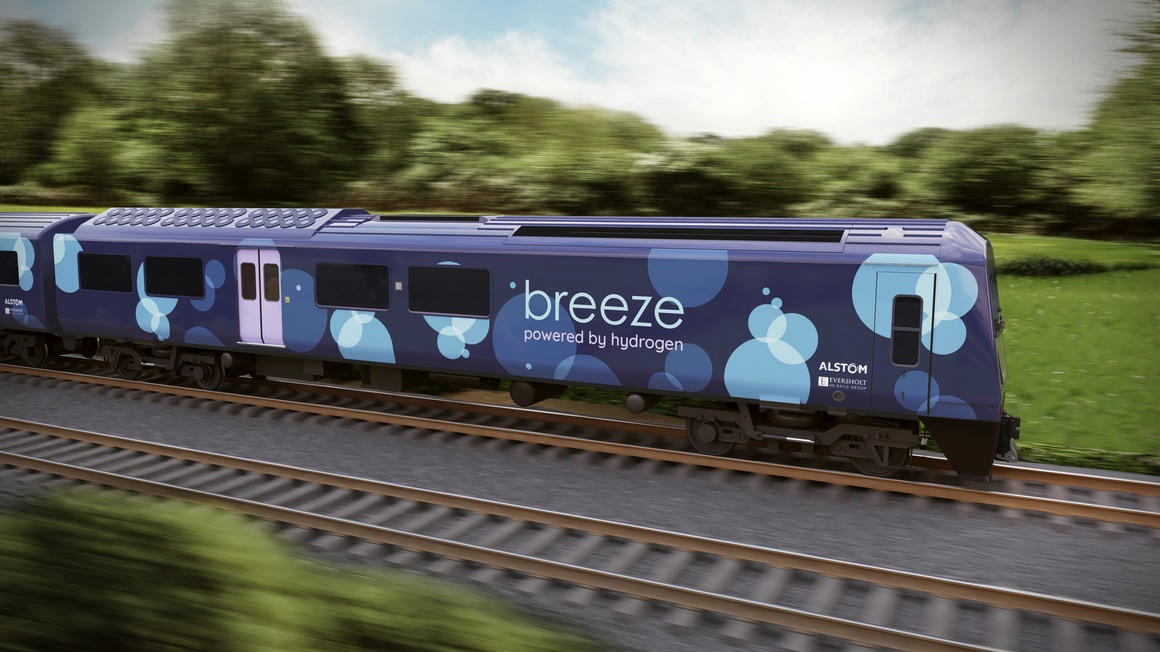
They would appear to be in pole position to change the image of Teesside’s trains.
Battery Electric Trains On Teesside
But I suspect. that an Anglo-Japanese partnership, based in the North-East could have other ideas.
- Hitachi have a train factory at Newton Aycliffe on the Tees Valley Line.
- Hyperdrive Innovation design and produce battery packs for transport and mobile applications in Sunderland.
The two companies have launched the Regional Battery Train, which is described in this Hitachi infographic.
Note than 90 kilometres is 56 miles, so the train has a very useful range.
Hitachi have talked about fitting batteries to their express trains to serve places like Middlesbrough, Redcar and Sunderland with zero-carbon electric services.
But their technology can also be fitted to their Class 385 trains and I’m sure that Scotland will order some battery-equipped Class 385 trains to expand their vigorous electric train network.
Both Scotland and Teesside will need to charge their battery trains.
Example distances on Teesside include.
- Darlington and Saltburn – 28 miles
- Darlington and Whitby – 47 miles
- Darlington and Bishop Auckland – 12 miles
The last route would be possible on a full battery, but the first two would need a quick battery top-up before return.
So there will need to be strategically-placed battery chargers around the North-East of England. These could include.
- Hexham
- Nunthorpe
- Redcar or Saltburn – This would also be used by TransPennine Express’s Class 802 trains, if they were to be fitted with batteries.
- Whitby
If Grand Central did the right thing and ran battery electric between London and Sunderland, there would probably be a need for a battery charger at Sunderland.
It appears that Adrian Shooter of Vivarail has just announced a One-Size-Fits-All Fast Charge system, that has been given interim approval by Network Rail.
I discuss this charger in Vivarail’s Plans For Zero-Emission Trains, which is based on a video on the Modern Railways web site.
There is more about Vivarail’s plans in the November 2020 Print Edition of the magazine, where this is said on page 69.
‘Network Rail has granted interim approval for the fast charge system and wants it to be the UK’s standard battery charging system’ says Mr. Shooter. ‘We believe it could have worldwide implications.’
I believe that Hitachi and Hyperdrive Innovation, with a little bit of help from friends in Seaham, can build a battery-electric train network in the North-East.
The Choice Between Hydrogen And Battery Electric
Consider.
- The hydrogen trains would need a refuelling system.
- The battery electric trains would need a charging structure, which could also be used by other battery electric services to and from the North-East.
- No new electrification or other infrastructure would be needed.
- If a depot is needed for the battery electric trains, they could probably use the site at Lackenby, that has been identified as a base for the hydrogen trains.
Which train would I choose?
I think the decision will come down to politics, money and to a certain extent design, capacity and fuel.
- The Japanese have just signed a post-Brexit trade deal and France or rather the EU hasn’t.
- The best leasing deal might count for a lot.
- Vivarail have stated that batteries for a battery electric train, could be leased on a per mile basis.
- The Hitachi train will be a new one and the Alstom train will be a conversion of a thirty year old British Rail train.
- The Hitachi train may well have a higher passenger capacity, as there is no need for the large hydrogen tank.
- Some people will worry about sharing the train with a large hydrogen tank.
- The green credentials of both trains is not a deal-breaker, but will provoke discussion.
I feel that as this is a passenger train, that I’m leaning towards a battery electric train built on the route.
An Avoiding Line Through Darlington
The Northern Echo also says this about track changes at the station.
A meeting of Darlington Borough Council’s communities and local services scrutiny committee was told a bus lane-style route off the mainline at the station would enable operators to run more high-speed services.
Councillors heard that the proposed track changes would enable very fast approaches to Darlington and allow other trains to pass as East Coast Mainline passengers boarded.
Some councillors seem to be unhappy about some trains passing through the station without stopping.
Are their fears justified?
This Google Map shows Darlington station.
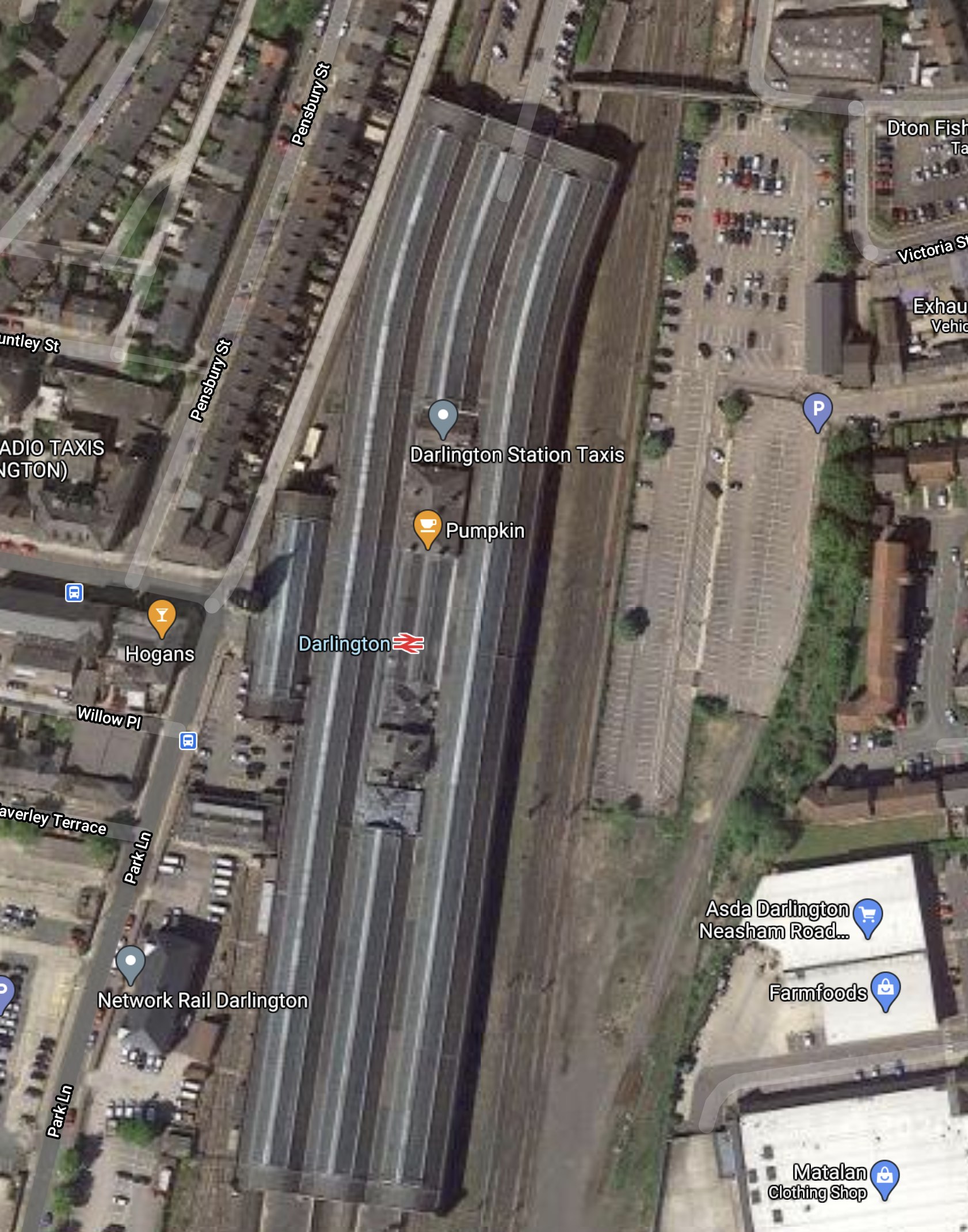
Note.
- The station has two long platforms and two South-facing bay platforms.
- There is plenty of space.
- There already appear to be a pair of electrified avoiding lines on the Eastern side of the station.
Wikipedia also says this about how Darlington station will be changed by High Speed Two.
The new high speed rail project in the UK, High Speed 2, is planned to run through Darlington once Phase 2b is complete and will run on the existing East Coast Main Line from York and Newcastle. Darlington Station will have two new platforms built for the HS2 trains on the Main Line, as the station is built just off the ECML to allow for freight services to pass through.
This would appear to suggest that the two current avoiding lines will be turned into high speed platforms.
Current High Speed Services At Darlington
The current high speed services at Darlington are as follows.
- LNER – two trains per hour (tph) – London Kings Cross and Edinburgh
- Cross Country – one tph – Plymouth and Edinburgh or Glasgow
- Cross Country – one tph – Southampton and Newcastle
- TransPennine Express – one tph – Liverpool and Edinburgh
- TransPennine Express – one tph – Manchester Airport and Newcastle
Northbound, this gives eight tph to Newcastle and four tph to Edinburgh
East Coast Trains
East Coast Trains‘s services are not planned to stop at Darlington.
High Speed Two Trains
Darlington is planned to be served by these High Speed Two trains.
- 1 tph – Birmingham Curzon Street and Newcastle via East Midlands Hub, York and Durham
- 1 tph – London Euston and Newcastle via Old Oak Common and York.
Both will be 200 metre High Speed Two Classic-Compatible trains
Northbound, this gives ten tph to Newcastle and four tph to Edinburgh.
As the Eastern Leg of High Speed Two has some spare capacity, I suspect there could be other services through Darlington.
Improvements To The East Coast Main Line
If you look at the East Coast Main Line between Doncaster and Newcastle, the route is a mixture of two and four-track railway.
- Between Doncaster and York, there are two tracks
- Between York and Northallerton, there are four tracks
- Between Northallerton and Darlington, there are two tracks
- North of Darlington, the route is mainly two tracks.
I have flown my virtual helicopter along much of the route and I can say this about it.
- Much of the route is through agricultural land, and where absolutely necessary extra tracks could possibly be added.
- The track is more-or-less straight for large sections of the route.
- Routes through some towns and cities, are tightly hemmed in by houses.
I also believe that the following developments will happen to the whole of the East Coast Main Line before High Speed Two opens.
- Full ERTMS in-cab digital signalling will be used on all trains on the route.
- The trains will be driven automatically, with the driver watching everything. Just like a pilot in an airliner!
- All the Hitachi Class 80x trains used by operators on the route, will be able to operate at up to 140 mph, once this signalling and some other improvements have been completed.
- All level crossings will have been removed.
- High Speed Two is being built using slab track, as I stated in HS2 Slab Track Contract Awarded. I suspect some sections of the East Coast Main Line, that are used by High Speed Two services, will be upgraded with slab track to increase performance and reduce lifetime costs.
Much of the East Coast Main Line could become a 140 mph high speed line, as against High Speed Two, which will be a 225 mph high speed line.
This will mean that all high speed trains will approach Darlington and most other stations on the route, at 140 mph.
Trains will take around a minute to decelerate from or accelerate to 140 mph and if the station stop took a minute, the trains will be up to speed again in just three minutes. In this time, the train would have travelled two-and-a-half miles.
Conclusion
I think that this will happen.
- The Tees Valley Line trains will be greatly improved by this project.
- Trains will generally run at up to 140 mph on the East Coast Main Line, under full digital control, like a slower High Speed Two.
- There will be two high speed platforms to the East of the current station, where most if not all of the High Speed Two, LNER and other fast services will stop.
- There could be up to 15 tph on the high speed lines.
With full step-free access between the high speed and the local platforms in the current station, this will be a great improvement.
Interview: Hitachi’s Nick Hughes On Driving Innovation In Rail Propulsion
The title of this post is the same as that of this article on The Engineer.
As with the article I discuss in Hydrogen On The Line, it is another well-written and informative article from The Engineer, where those at the sharp end of innovative rail technologies give their views.
This is the introductory paragraph.
As part of a series of articles exploring the propulsion technologies that will shape the future of key transport sectors The Engineer spoke to Hitachi Rail’s Nick Hughes about the innovations that will propel the rail sector into a low carbon future.
The Engineer asked these questions.
- What propulsion innovations will help power the rail sector towards net zero?
- Can you outline some of your organisation’s own key activities in this area?
- What are the key obstacles and challenges to developments in this area?
- What is your vision for the long-term future of propulsion in your sector?
I find the answer to the last question most interesting.
Rail is going to become increasingly digitised and integrated into other sectors involved in smart cities, mobility-as-a-service and flexible green grid. Therefore, Hitachi Rail won’t be able to stay at the forefront of innovation by its self. This is why we are focused on building partnerships with other like-minded, innovative, clean tech companies like Hyperdrive Innovation, Perpetuum and Hitachi group companies such as Hitachi ABB.
Hyperdrive Innovation is going to apply its knowledge and expertise from the automotive sector, to develop a market leading battery for Hitachi trains. Perpetuum predictive analytics improve reliability and availability of existing trains. Meanwhile, Hitachi ABB’s experience of the power sector allows our battery train solution to incorporate charging, storage and grid management. These partnerships creates an entry point into the rail market for our partners, potentially leading to future growth and jobs.
However, it is important to recognise that the established technologies of today – battery trains, discontinuous electrification and high-speed trains – are the technologies will help achieve the 2050 net zero emission target.
I would very much agree with all that is said.
Hull Station
On my recent visit to Hull station I took these pictures.
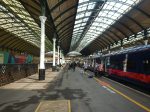
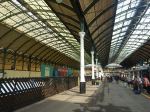
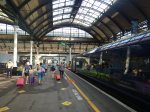
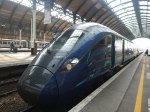

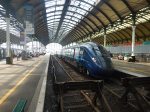

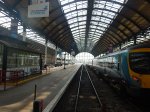




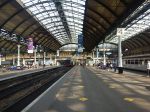
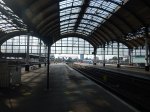
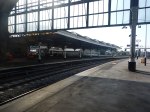
This Google Map shows the station.
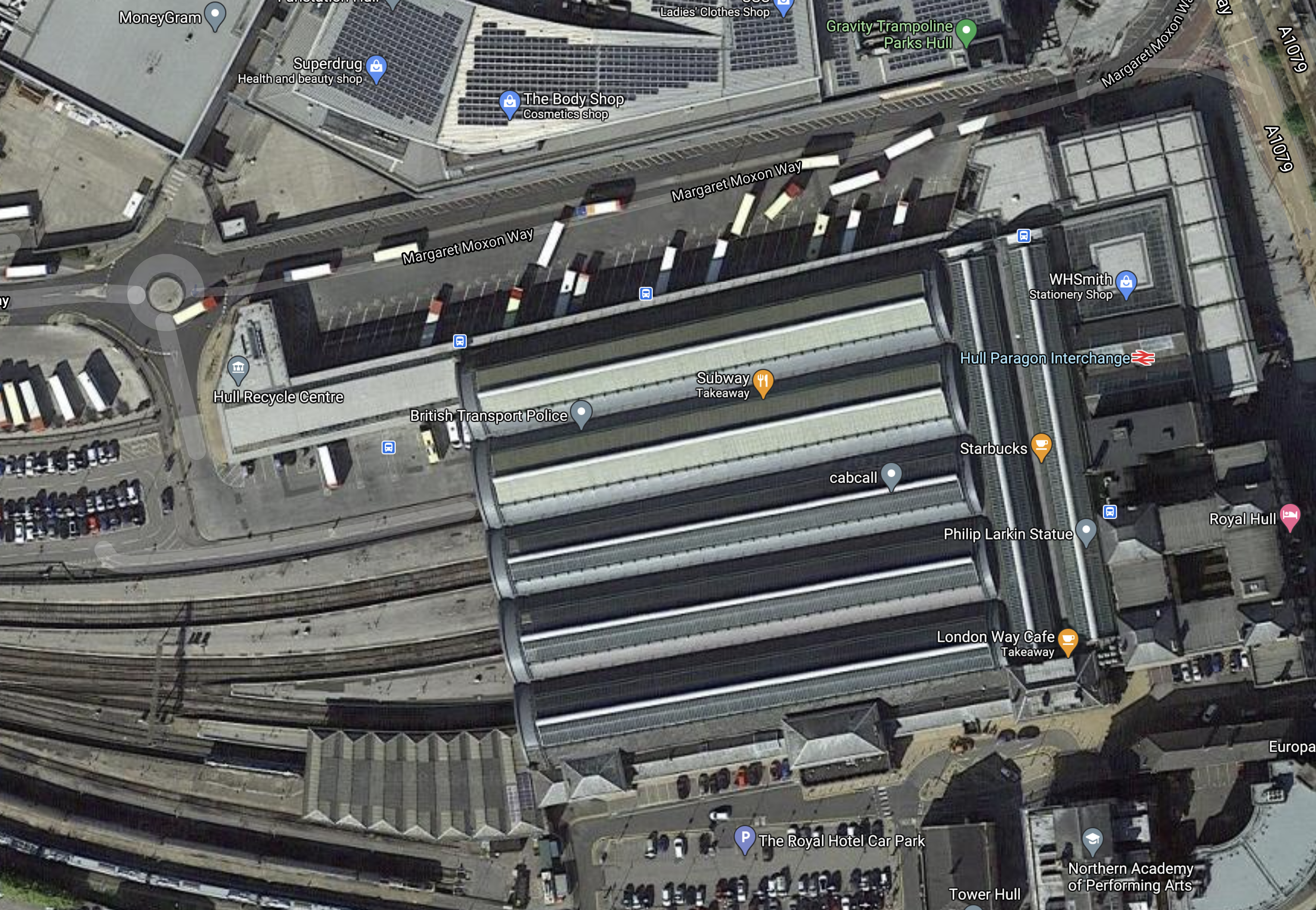
These are my thoughts on the station .
Platforms
Consider.
- The station has seven platforms, which are numbers 1 to 7 from South to North.
- My Hull Trains service from London arrived in the Northernmost platform, which is numbered 7.
- Most Hull Trains services seem to use this platform.
- LNER services also seem to use Platform 7.
- Platforms 4, 5 and 6 seem to be the same length as Platform 7
- A friendly station guy told me, that LNER have run nine-car Class 800 trains into the station. These trains are 234 metres long.
- My pictures show that Platform 7 is more than adequate for Hull Train’s five-car Class 802 train, which is 130 metres long.
- The platforms are wide.
This second Google Map shows the Western platform ends.
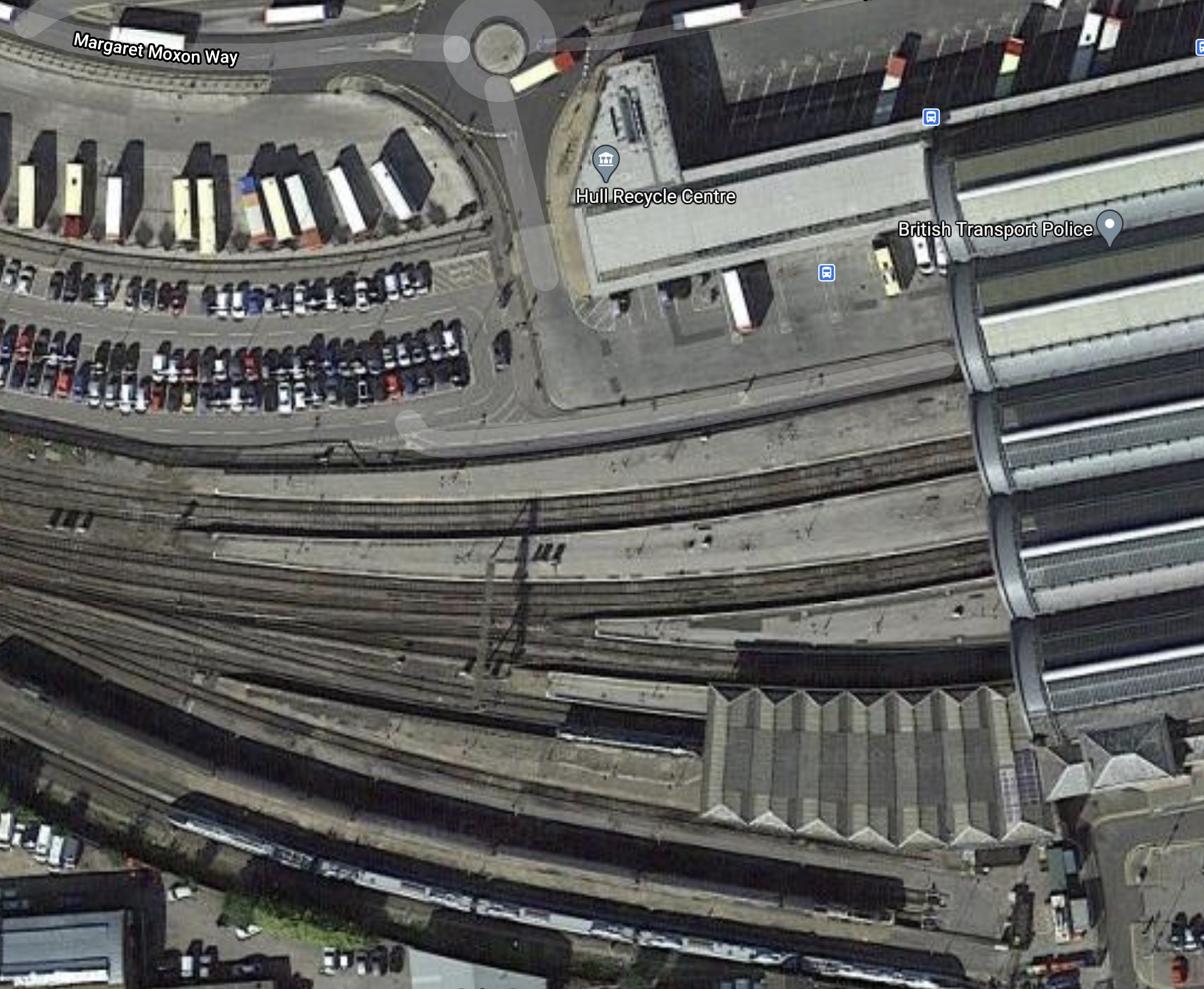
It looks to me, that the station should be capable of updating to have at least four platforms capable of taking trains, that are 200 metres long.
Current Long Distance Services To Hull Station
There are currently, two long distance services that terminate at Hull station.
- One train per hour (tph) – Manchester Piccadilly – two hours
- Eight trains per day (tpd) – London Kings Cross – two hours and forty-four minutes
Both services are run by modern trains.
Improvements To The Current London And Hull Service
I believe Hull Trains and LNER will run between London Kings Cross and Hull using battery-equipped versions of their Hitachi trains, within the next three years.
The trains will also be upgraded to make use of the digital in-cab signalling, that is being installed South of Doncaster, which will allow 140 mph running.
In Thoughts On Digital Signalling On The East Coast Main Line, I estimated that this could enable a two hours and thirty minute time between London Kings Cross and Hull.
It is very likely that the service will be hourly.
Hull Station As A High Speed Station
Plans for High Speed Two are still fluid, but as I said in Changes Signalled For HS2 Route In North, there is a possibility, that High Speed Two could be extended from Manchester Airport and Manchester Piccadilly to Leeds and ultimately to Newcastle and Hull.
In that post, I felt that services across the Pennines could be something like.
- High Speed Two – Two tph between London and Hull via Manchester Airport, Manchester Piccadilly and Leeds
- High Speed Two – One tph between London and Edinburgh via Manchester Airport, Manchester Piccadilly, Leeds, York and Newcastle.
- Northern Powerhouse Rail – One tph between Liverpool and Edinburgh via Manchester Airport, Manchester Piccadilly, Leeds, York and Newcastle.
- Northern Powerhouse Rail – Two tph between Liverpool and Sheffield via Manchester Airport and Manchester Piccadilly
- Northern Powerhouse Rail – Two tph between Liverpool and Hull via Manchester Airport, Manchester Piccadilly and Leeds
There would be four tph between Manchester Airport and Hull via Manchester Piccadilly, Leeds and other intermediate stations.
I estimate that the following timings would be possible.
- London Euston and Hull – two hours and 10 minutes – Currently two hours and forty-four minutes to London Kings Cross
- Liverpool and Hull – one hour and thirty minutes – No direct service
- Manchester and Hull – one hour and three minutes – Currently two hours
As I said earlier London Kings Cross and Hull could be only twenty minutes longer by the classic route on the East Coast Main Line.
I think it will be likely, that both High Speed Two and Northern Powerhouse Rail will use similar High Speed Two Classic-Compatible trains, which will have the following characteristics.
- Two hundred metres long
- Ability to run in pairs
- 225 mph on High Speed Two
- 125 mph and up to 140 mph on Classic High Speed Lines like East Coast Main Line, Midland Main Line and West Coast Main Line and sections of Northern Powerhouse Rail.
It would appear that as Hull station can already handle a nine-car Class 800 train, which is 234 metre long, it could probably handle the proposed High Speed Two Classic-Compatible trains.
I could see the following numbers of high speed trains terminating at Hull in a typical hour would be as follows.
- Two High Speed Two trains from London Euston
- Two Northern Powerhouse Trains from Liverpool Lime Street
- One Hull Trains/LNER train from London Kings Cross
As Hull already has four platforms, that can accept 200 metre long trains, I don’t think the station will have any capacity problems.
Charging Battery Trains At Hull Station
If Hull Trains, LNER and TransPennine Express, decide to convert their Class 800 and Class 802 trains, that run to and from Hull to Hitachi Regional Battery Trains, they will need charging at Hull station, to be able to reach the electrification of the East Coast Main Line at Temple Hirst Junction.
In Thoughts On The Design Of Hitachi’s Battery Electric Trains, I said this about having a simple charger in a station.
At stations like Hull and Scarborough, this charger could be as simple as perhaps forty metres of 25 KVAC overhead electrification.
-
- The train would stop in the station at the appropriate place.
- The driver would raise the pantograph.
- Charging would start.
- When the battery is fully-charged, the driver would lower the pantograph.
This procedure could be easily automated and the overhead wire could be made electrically dead, if no train is connected.
Platforms 4 to 7 could be fitted out in this manner, to obtain maximum operational flexibility.
Full Electrification Of Hull Station
Full electrification of Hull station would also allow charging of any battery electric trains.
I would hope, that any partial electrification carried out to be able to charge trains would be expandable to a full electrification for the station and the connecting rail lines.
A Full Refurbishment
The station would need a full refurbishment and a possible sorting out of the approaches to the station.
But this type of project has been performed at Kings Cross and Liverpool Lime Street in recent years, so the expertise is certainly available.
These pictures are of Liverpool Lime Street station.


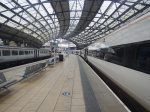

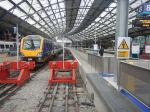
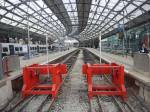

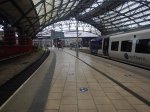

I could see Hull station being refurbished to this standard.
Conclusion
It is my belief that Hull would make a superb terminal station for both High Speed Two and Northern Powerhouse Rail
In the interim, it could be quickly developed as a modern terminal for long-distance battery electric trains to make services across the Pennines and to London zero carbon.
The work could also be organised as a series of smaller work packages, without interrupting train services to and from Hull.
Thoughts On The Design Of Hitachi’s Battery Electric Trains
If you look at a Class 800 or Class 802 train, they have underfloor diesel engines. Their powertrain is described like this in its own section in Wikipedia.
Despite being underfloor, the generator units (GU) have diesel engines of V12 formation. The Class 801 has one GU for a five to nine-car set. These provide emergency power for limited traction and auxiliaries if the power supply from the overhead line fails. The Class 800 and Class 802 bi-mode has three GU per five-car set and five GU per nine-car set. A five-car set has a GU situated under vehicles 2/3/4 and a nine-car set has a GU situated under vehicles 2/3/5/7/8.
There have been rumours of overheating.
Hitachi’s Regional Battery Train
Hitachi have teamed up with Hyperdrive Innovation to create a Regional Battery Train. There is this Press Release on the Hyperdrive Information web site, which is entitled Hitachi Rail And Hyperdrive Agreement P[ens Way For Battery Trains Across Britain.
This Hitachi infographic gives the specification.
Note, that this is a 100 mph train, with a range of 56 miles.
Typical routes would include a route like Norwich and Stansted Airport via Cambridge.
- It is 93 miles.
- There are thirty-nine miles of electrification at the Stansted Airport end.
- Norwich station is fully-electrified.
- There is just 53 miles between the Trowse swing-bridge and Ely station, that is not electrified.
Trains would charge the batteries at both ends of the route and use battery power, where no electrification exists.
There are many similar routes like this in the UK.
Hitachi have also produced this video.
My thoughts lead me to a few questions.
Are The Battery Modules Simulated Diesel Engines?
At the age of sixteen, for a vacation job, I worked in the Electronics Laboratory at Enfield Rolling Mills.
It was the early sixties and one of their tasks was at the time replacing electronic valve-based automation systems with new transistor-based systems.
The new equipment had to be compatible to that which it replaced, but as some were installed in dozens of places around the works, they had to be able to be plug-compatible, so that they could be quickly changed. Occasionally, the new ones suffered infant-mortality and the old equipment could just be plugged back in, if there wasn’t a spare of the new equipment.
Stadler have three very similar trains, that are destined for the UK.
- Class 755 trains for Greater Anglia are already in service.
- Class 231 trains for Transport for Wales are on order.
- Class 756 trains for Transport for Wales are on order.
All share the same PowerPack-in-the-Middle design, which is shown in this picture.

There are four slots in the PowerPack, with two on either side and they can all hold, either a diesel engine or a battery. Only, the Class 756 trains, are planned to have batteries at present, to make the trains tri-mode and capable of being powered by overhead electric, on-board batteries or a diesel generator.
If I was designing the battery modules to slot into the PowerPack, I and many other engineers would make the battery module deliver similar characteristics and plug compatibility to the diesel module.
The train’s control computer, would be simpler to program and debug and would use modules appropriately to drive the train according to the driver’s instructions.
This interchangeability would also give the operator lots of flexibility, in how they configured and used the trains.
So will Hyperdrive Innovation use an approach for Hitachi, where the battery module has similar characteristics and plug compatibility to the current diesel module?
I wouldn’t be surprised if they did, as it allows modules to be quickly swapped as operational needs change and the train’s computer sorts out the train’s formation and acts accordingly.
On An Hitachi Regional Battery Train Will All Diesel Engines Be Replaced With Battery Modules?
If the computer is well-programmed, it should handle any combination of diesel engines and battery modules.
Perhaps for various routes different combinations might apply.
- For maximum battery range, all modules would be batteries.
- For maximum power, all modules would be diesel engines.
- To handle some out and back routes, there might be three battery modules and a diesel engine to charge the batteries before return.
- Could perhaps one or two battery modules be fitted to avoid using the diesel engines in stations and in sensitive areas?
On some routes all diesel engines will be replaced with batteries on Battery Regional Trains, but on others there could be a mixture of both battery and diesel engines.
It should be noted that Stadler achieve the same flexibility with their PowerPack-in-the-Middle design.
Operators will like this flexibility.
What Is The Capacity Of A Battery Module?
In How Much Power Is Needed To Run A Train At 125 mph?, I calculated that an all-electric Class 801 train uses 3.42 kWh per vehicle mile.
I can do a simple estimate based on this figure.
When running on batteries the train will need less energy due to less air resistance, because it is going at 100 mph, rather than 125 mph.
- If the energy use is proportional to the speed, then at 100 mph, the energy use will be 2.73 kWh per vehicle mile.
- But if the energy use is proportional to the square of the speed, the energy use will be 2.19 kWh per vehicle mile.
I will compromise and use 2.5 kWh per vehicle mile.
Total energy needed to move a five-car train 56 miles would be 5 x 56 x 2.5 or 700 kWh, which could be three batteries of 233 kWh.
These are not outrageous sizes and the batteries could probably be of a comparable weight to the current diesel engines. So replacement wouldn’t affect the handling of the train.
In addition, the batteries would need to be large enough to hold all the regenerated by braking during a stop.
- The weight of a Class 800 train is 243 tonnes.
- It can carry 326 passengers, who probably weigh 80 Kg with baggage, bikes and buggies.
- This gives a total train weight of 269 tonnes.
- Using Omni’s Kinetic Energy Calculator, the kinetic energy at 100 mph is just 75 kWh.
- For completeness, at 125 mph, the kinetic energy is 117 kWh and at 140 mph, the kinetic energy is 146 kWh.
All these figures are small compared to the battery size needed for traction.
Will East Coast Train’s Class 803 trains Use The Same Technology?
On East Coast Trains‘s Class 803 trains, batteries will be fitted to maintain onboard services, in case of a power failure.
Have these batteries been designed by Hyperdrive Innovation, with perhaps less capacity?
As East Coast Trains’s route between London Kings Cross and Edinburgh is fully electrified, the trains probably won’t need any auxiliary traction power.
But would increasing the battery size make this possible?
Where Do Avanti West Coast Class 807 Trains Fit In?
Avanti West Coast‘s Class 807 trains are also members of the same Hitachi A-Train family.
In the January 2020 Edition of Modern Railways, there is an article, which is entitled Hitachi Trains For Avanti.
This is said about the ten all-electric AT-300 trains for Birmingham, Blackpool and Liverpool services, which have now been numbered as Class 807 trains.
The electric trains will be fully reliant on the overhead wire, with no diesel auxiliary engines or batteries.
It may go against Hitachi’s original design philosophy, but not carrying excess weight around, must improve train performance, because of better acceleration.
It may also have the wiring for a diesel engine or a battery module, should operational experience indicate one is needed.
Will All Cars Be Wired Ready For A Diesel Or Battery Module?
A five-car Class 802 train currently has a diesel engine in cars 2, 3 and 4.
The Hitachi infographic says that a Regional Battery Train has a range of 56 miles on batteries.
Let’s assume that this range applies to a Class 802 train, that has been fitted with three battery modules.
If we take Hull Trains as an example, their Class 802 trains do the following sections using their diesel engines
- Temple Hirst Junction and Beverley – 44.34 miles or 87 miles round trip
- Temple Hirst Junction and Hull – 36 miles or 72 miles round trip
These distances mean that with a 56 mile range, there needs to be some form of changing at Hull and/or Beverley.
But supposing all cars are wired to accept batteries or diesel engines. This could mean the following.
- A train with three batteries and a range of 56 miles, could fit a standard diesel engine as a range extender, which could also be used to charge the batteries at Hull or Beverley.
- A train with four batteries, could have a range of 75 miles, which with regenerative braking and precise energy-saving driving could be able to go between Temple Hirst Junction and Hull and back on battery power.
- A train with four batteries and a diesel engine,, could have a range of 75 miles on battery power. The diesel energy could be used as a range extender or to charge the batteries at Hull and/or Beverley.
- Could a train with five batteries, which could have a range of 90 miles, be able to reach Beverley and return to Temple Hirst Junction?
Note.
- I have assumed that battery range is proportional to the number of batteries.
- There must also be scope for running slower to cut the amount of energy used.
In addition, all Hull Trains schedules seem to spend fifteen minutes or more in Hull station. This would be enough time to recharge the batteries.
I’m fairly certain, that if all cars were wired for batteries or diesel engines, it would give the operators a lot of flexibility.
Running With Batteries And A Range Extender Diesel Engine
The LEVC TX taxi is described as a plug-in hybrid range extender electric vehicle, where a small petrol engine, can also be used to generate electricity to power the vehicle.
Suppose a Class 802 train was fitted with two battery modules and a diesel engine. Could the diesel act as a range extender, in the same way as the petrol engine does on the LEVC TX?
The diesel engines fitted to a Class 802 train are 700 kW, so if I’m right about the train having total battery capacity of 700 kWh, one engine would take an hour to charge the batteries.
Returning to my Hull Trains example, drivers could probably ensure that the train didn’t get stranded by judicial use of the a single diesel engine to charge the batteries, whilst running in rural areas along the route.
As there would only be one diesel engine rather than three, the noise would be much lower.
I suspect too, that a simple charger in Hull station could charge a train, as it passes through, to make sure it doesn’t get stranded in the countryside.
I suspect that a mix of batteries and diesel engines could be part of an elegant solution on some routes.
- Edinburgh and Aberdeen
- Edinburgh and Inverness
- London Kings Cross and Hull
- London Paddington and Swansea
- London St. Pancras and Sheffield.
- London St. Pancras and Nottingham
It might also be a useful configuration on some TransPennine routes.
Charging Battery Trains
Having a charger in a terminal station would open up a lot of routes to Hitachi’s battery electric trains.
At stations like Hull and Scarborough, this charger could be as simple as perhaps forty metres of 25 KVAC overhead electrification.
- The train would stop in the station at the appropriate place.
- The driver would raise the pantograph.
- Charging would start.
- When the battery is fully-charged, the driver would lower the pantograph.
This procedure could be easily automated and the overhead wire could be made electrically dead, if no train is connected.
It should be noted that Hitachi have recently acquired ABB’s power grid business, as announced in this Hitachi press release which is entitled Hitachi Completes Acquisition of ABB’s Power Grids Business; Hitachi ABB Power Grids Begins Operation.
Rail is not mentioned, but mobility is. So will this move by Hitachi, strengthen their offering to customers, by also providing the systems in stations and sidings to charge the trains.
This Google Map shows Hull station, with its large roof.
Could an integrated solution involving solar panels over the station be used to power electrification to charge the trains and dome electric buses next door?
Integrated solutions powered by renewable energy would appeal to a lot of municipalities seeking to improve their carbon profile.
Conclusion
These trains will transform a lot of rail services in the UK and abroad.
Hitachi Targets Export Opportunities From Newton Aycliffe
The title of this post, is the same as that of this article on Rail Magazine.
This is the introductory paragraph.
Very High Speed Trains (VHSTs) built in Britain could be exported to Europe and even further afield from Hitachi’s Newton Aycliffe factory.
The article would appear to confirm, that the AT-300 family of trains is now a family with a very wide reach.
Trains in the family include.
Very High Speed Trains (VHST)
The article states that VHST trains will form part of the AT-300 family.
The big order to be handed out in the UK, is for 54 Classic-Compatible trains for High Speed Two.
The Classic-Compatible trains are described in this section in Wikipedia, by this sentence.
The classic-compatible trains, capable of high speed but built to a British loading gauge, permitting them to leave the high speed track to join conventional routes such as the West Coast Main Line, Midland Main Line and East Coast Main Line. Such trains would allow running of HS2 services to the north of England and Scotland, although these non-tilting trains would run slower than existing tilting trains on conventional track. HS2 Ltd has stated that, because these trains must be specifically designed for the British network and cannot be bought “off-the-shelf”, these conventional trains were expected to be around 50% more expensive, costing around £40 million per train rather than £27 million for the captive stock.
The trains will have the same characteristics as the full-size High Speed Two trains.
- Maximum speed of 225 mph.
- Cruising speed of 205 mph on High Speed Two.
- Length of 200 metres.
- Ability to work in pairs.
- A passenger capacity around 500-600 passengers.
A seven-car Class 807 train with twenty-six metre long cars would appear to be a partial match and tick all the boxes, except for the following.
- The train’s maximum and cruising speeds are well below what is needed.
- The train is only 182 metres long.
- The train has a passenger capacity of 453.
Would a train with eight twenty-five metre long cars be a better fit?
- The train length would be 200 metres.
- Twenty-five metre cars would not cause a problem!
- I estimate the passenger capacity would be 498 seats.
The trains or members of the same family have already shown.
- They can run on the East Coast, Great Western, Midland and West Coast Main Lines.
- They can run on High Speed One.
- They can split and join automatically.
- When needed they can run on local lines.
If I was Avanti West Coast’s train-Czar, I would be seriously interested in a Classic-Compatible High Speed Two train, that was very similar to one I already had in service. Provided, of course it did what it promised in the specification.
By adjusting the car-length and the number of cars, the Classic-Compatible High Speed Two train can probably made to fit any operators needs.
High Speed Trains (HST)
There are several fleets of these in service.
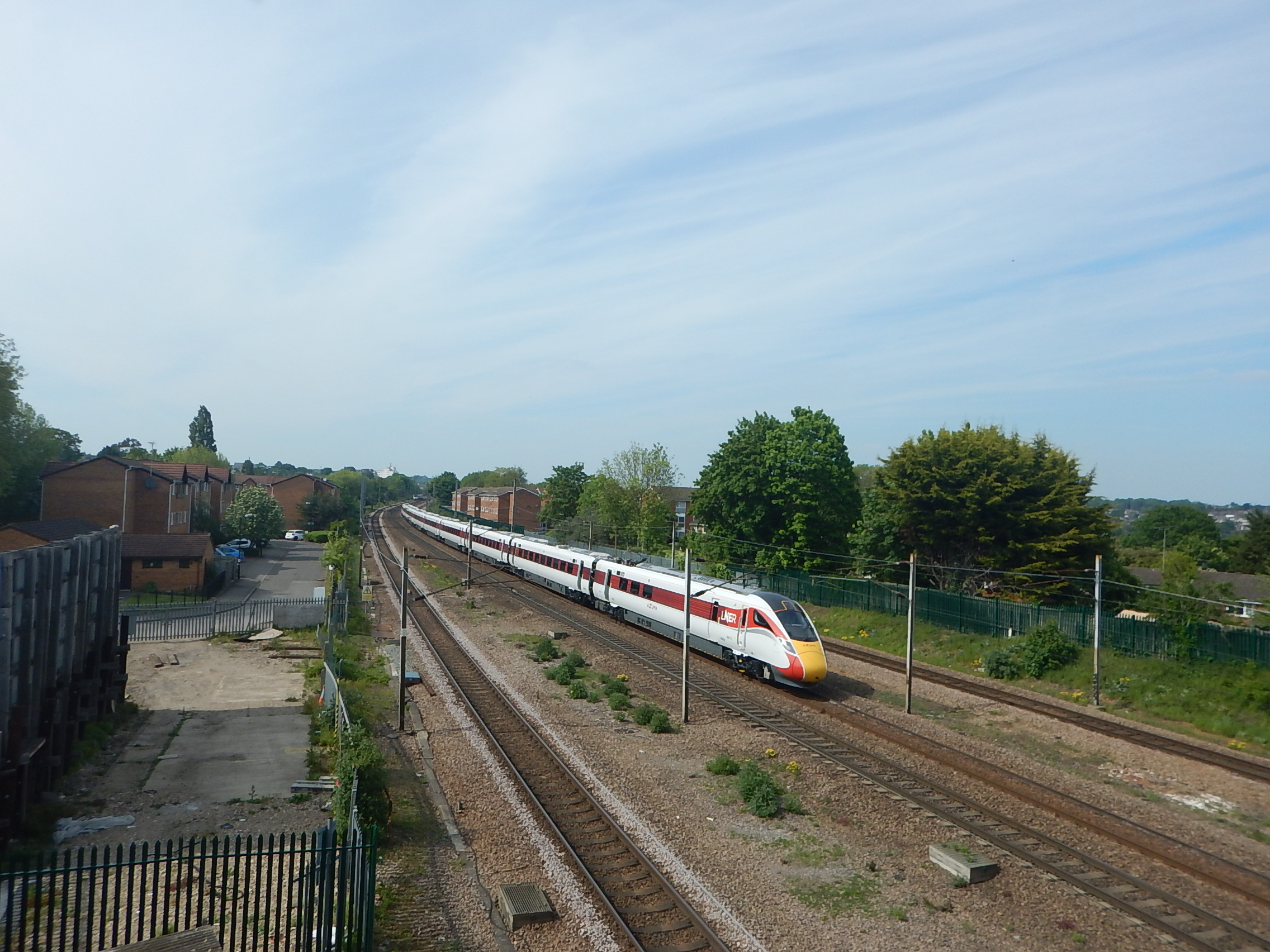
The picture shows one of LNER’s Hitachi trains going through Oakleigh Park station.
It would appear that the trains can be configured to the customers needs.
- Trains have been ordered in lengths of five, seven or nine cars, with a maximum length of up to twelve or more cars.
- Cars have been ordered in lengths of 24 and 26 metres.
- Some fleets will be fitted with diesel engines for bi-mode operation.
Operating speeds will be as follows.
- 100 mph operating speed on diesel.
- 125 mph operating speed on electric power
- 140 mph operating speed on electric power with in-cab signalling.
The signalling required for 140 mph running, is currently being installed between London Kings Cross and Doncaster.
High Speed Commuter Trains
As high speed lines proliferate, there will be a need for faster commuter trains.
In a few years time, the following lines out of London will see High Speed Trains like those made by Hitachi sharing tracks with commuter trains.
- East Coast Main Line
- Midland Main Line
- West Coast Main Line
- Great Western Main Line
Already on the Great Western Main Line services to Bedwyn and Oxford are run by Class 800 or Class 802 trains, so these trains could be considered to be High Speed Commuter Trains.
- Their 125 mph operating speed allows them to mix it, with the other High Speed Trains running into and out of London Paddington.
- Digital in-cab signalling may allow running of both expresses and High Speed Commuter trains at 140 mph.
Other routes, where they could be used, would include.
- London Kings Cross and Ely via Cambridge.
- London Paddington and Cheltenham
- London Paddington and Westbury
- London St. Pancras and Corby.
- Liverpool And Blackpool
- Liverpool And Crewe
The trains would only be doing the same as already happens on High Speed One.
As more and more High Speed Trains run in the UK on existing 125 mph routes, there will be a greater need to increase the operating speed of commuter trains sharing the routes.
Regional Battery Trains
I described these trains in Hyperdrive Innovation And Hitachi Rail To Develop Battery Tech For Trains.
Their specification is given in this Hitachi infographic.
A Regional Battery Train has the following capabilities on battery power.
- 100 mph operating speed.
- Ability to run for 56 miles.
It appears that all AT-300 based trains could be converted into either Regional Battery Trains or AT-300 trains fitted with batteries.
If you take one of Great Western Railway’s Class 802 trains, it will have the following specification.
- 125 mph operating speed on electric power
- 140 mph operating speed on electric power with in-cab signalling.
These speeds will be unaffected by fitting batteries, as when running using electrification, the batteries will effectively be more passengers, just as any diesel engines are today.
I also believe that the trains could be Plug-and-Play, with interchangeable diesel engines and battery packs. The train’s operating system would determine how much power was available and drive the car accordingly.
I also believe that Hitachi are being economical with the truth on range on battery power and that if every car was fitted with an intelligent battery pack, on some routes the range could be much greater in a few years.
As an example of their use, Harrogate is eighteen miles from electrification at Leeds. With a range of 56 miles, a Regional Battery Train could do the following.
- Travel from London Kings Cross to Leeds using the existing electrification.
- Travel from Leeds to Harrogate and back on battery power.
- Travel back to London Kings Cross from Leeds using the existing electrification.
Note.
- Trains would charge their batteries on the run up from London Kings Cross.
- Trains would be travelling at up to 125 mph between London Kings Cross and Leeds.
- Once in-cab signalling is installed between London and Doncaster, this section could be run at up to 140 mph.
This battery train is no glorified milk-float!
There are other services off high speed lines , that could be handled
- Bedwyn – 13 miles
- Harrogate – 18 miles
- Henley – 4.5 miles
- Huddersfield – 17 miles
- Lincoln – 16.5 miles
- Oxford – 10.5 miles
These are just a few of many examples, which are probably increased by a factor of two or three if you have charging at both ends of route without electrification.
Conclusion
Hitachi have developed a family of high speed trains, that can handle anything from fast commuter trains to very high speed trains.
They also probably have battery options to fit all of them.
Hopes Rekindled Of Full Midland Main Line Electrification
The title of this post, is the same as that of this article on Rail Magazine.
This is the key section of the article.
During a House of Commons debate on transport on September 17, HS2 Minister Andrew Stephenson said in response to a question from Alex Norris (Labour/Co-op, Nottingham North): “We are currently delivering the Midland Main Line upgrade, which includes electrification from London to Kettering, with additional electrification to Market Harborough being developed.
“Further electrification of the MML is currently at an early stage, but it is being examined by Network Rail.”
Stephenson said the DfT will continue to work closely with NR on the development of a proposal that would include approaches to advancing the delivery of electrification across the route.
The title of the article, probably sums it up well.
Electrification Of The Midland Main Line
Having read lots of stories about electrification of Midland Main Line, I think the following must be born in mind.
- Electrification on the line will reach as far North as Market Harborough station.
- The route between Sheffield station and Clay Cross North Junction will be shared with High Speed Two. It will obviously need to be electrified for High Speed Two.
- The section of the Midland Main Line between Derby and Clay Cross North Junction, runs through the World Heritage Site of the Derwent Valley Mills. The Heritage Taliban will love the electrification, with a vengeance.
- Electrification through Leicester station could be tricky, as the station building and the A6 road are over the tracks and there is limited clearance. Electrification could involve major disruption to the trains for some time.
These are some of the distances involved of sections of the route that are not electrified.
- Market Harborough and Derby are 54 miles apart.
- Market Harborough and Clay Cross North Junction are 67 miles apart.
- Market Harborough and Chesterfield are 70 miles apart.
- Market Harborough and Nottingham are 44 miles apart
- Market Harborough and Leicester are 16 miles apart.
- Derby and Clay Cross North Junction are 21 miles apart.
Since 2017, when electrification for the full route was originally abandoned, there have been big changes in rolling stock technology.
The biggest change has been the development of battery trains.
Hitachi’s Regional Battery Trains
This infographic from Hitachi gives the specification for their Regional Battery Train.
Note.
- The trains have a range of 56 miles on battery power.
- The trains can cruise at 100 mph on battery power.
- Hitachi have said that all of their AT-300 trains can be converted into Regional Battery Trains.
- Trains are converted by removing the diesel engines and replacing them with battery packs.
- I suspect these battery packs look like a diesel engine in terms of control inputs and performance to the driver and the train’s computer.
It is extremely likely, that the bi-mode Class 810 trains, which are a version of the AT-300 train, that have been ordered for the Midland Main Line can be converted into Regional Battery Trains.
These trains have four diesel engines, as opposed to the Class 800 and Class 802 trains, which only have three.
These are reasons, why the trains could need four engines.
- The trains need more power to work the Midland Main Line. I think this is unlikely.
- Four engine positions gives ,more flexibility when converting to Regional Battery Trains.
- Four battery packs could give a longer range of up to 120 kilometres or 75 miles.
It could just be, that Hitachi are just being conservative, as engines can easily be removed or replaced. The fifth-car might even be fitted with all the wiring and other gubbins, so that a fifth-engine or battery pack can be added.
I suspect the train’s computer works on a Plug-And-Play principle, so when the train is started, it looks round each car to see how many diesel engines and battery packs are available and it then controls the train according to what power is available.
London St. Pancras And Sheffield By Battery Electric Train
Any battery electric train going between London St. Pancras and Sheffield will need to be charged, at both ends of the route.
- At the London end, it will use the electrification currently being erected as far as Market Harborough station.
- At the Sheffield end, the easiest way to charge the trains, would be to bring forward the electrification and updating between Sheffield station and Clay Cross North Junction, that is needed for High Speed Two.
This will leave a 67 mile gap in the electrification between Market Harborough station and Clay Cross North junction.
It looks to me, the Class 810 trains should be able to run between London St. Pancras and Sheffield, after the following projects are undertaken.
- Class 810 trains are given four battery packs and a battery range of 75 miles.
- Electrification is installed between Sheffield station and Clay Cross North Junction.
Trains would need to leave Market Harborough station going North and Clay Cross Junction going South with full batteries.
Note.
- Trains currently take over an hour to go between Chesterfield to Sheffield and then back to Chesterfield, which would be more than enough to fully charge the batteries.
- Trains currently take around an hour to go between London St. Pancras and Market Harborough, which would be more than enough to fully charge the batteries.
- Chesterfield station is only three miles further, so if power changeover, needed to be in a station, it could be performed there.
- Leeds and Sheffield are under fifty miles apart and as both stations would be electrified, London St. Pancras and Sheffield services could be extended to start and finish at Leeds.
London St. Pancras and Sheffield can be run by battery electric trains.
London St. Pancras And Nottingham By Battery Electric Train
Could a battery electric train go from Market Harborough to Nottingham and back, after being fully-charged on the hour-long trip from London?
- The trip is 44 miles each way or 88 miles for a round trip.
- Services have either three or eight stops, of which two or three respectively are at stations without electrification.
- Trains seem to take over thirty minutes to turnback at Nottingham station.
Extra power North of Market Harborough will also be needed.
- To provide hotel power for the train, during turnback at Nottingham station.
- To compensate for power losses at station stops.
If 75 miles is the maximum battery range, I doubt that a round trip is possible.
I also believe, that Hitachi must be developing a practical solution to charging a train during turnback, at a station like Nottingham, where trains take nearly thirty minutes to turnback.
If the Class 810 trains have a battery range of 75 miles, they would be able to handle the London St. Pancras and Nottingham service, with charging at Nottingham.
Conclusion
It appears that both the Nottingham and Sheffield services can be run using battery electric Class 810 trains.
- All four diesel engines in the Class 810 trains would need to be replaced with batteries.
- The route between Clay Cross North Junction and Sheffield station, which will be shared with High Speed Two, will need to be electrified.
- Charging facilities for the battery electric trains will need to be provided at Nottingham.
On the other hand using battery electric trains mean the two tricky sections of the Derwent Valley Mills and Leicester station and possibly others, won’t need to be electrified to enable electric trains to run on the East Midlands Railway network.
Will it be the first main line service in the world, run by battery electric trains?
Cleethorpes Station – 16th September 2020
On Wednesday, I took a trip on the South Humberside Main Line from Doncaster to Cleethorpes and back.
Cleethorpes station is a terminal station on the beach, with cafes not far away.


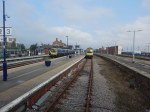
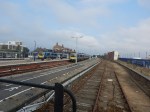

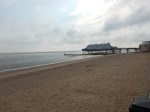
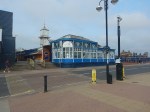
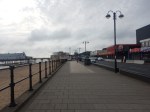
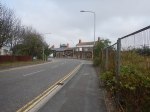
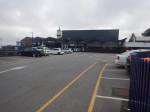

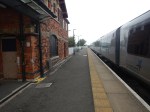
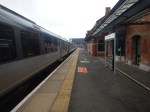
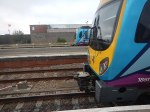
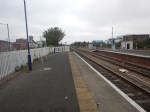
This Google Map shows the station and its position on the sea-front and the beach.
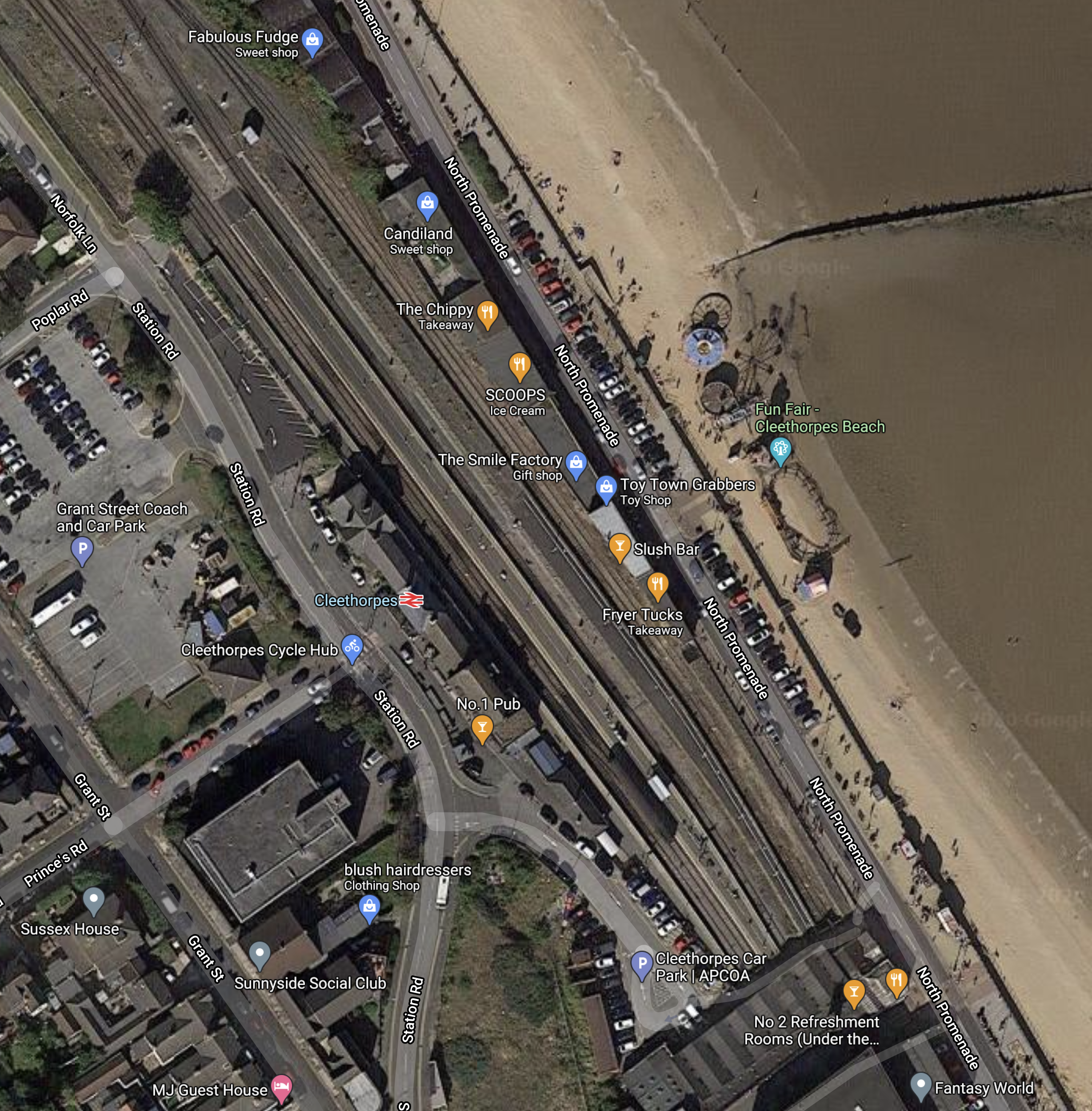
The station organisation was a bit shambolic at present, probably more to do with COVID-19 than anything else, but the station and the train services could be developed into something much better, when the good times return, as they surely will.
Improving The Station Facilities
The original station building is Grade II Listed and although it is only only a three-platform station, there used to be more platforms.
Five platforms or even six would be possible, if there were to be a need.
But as the station has wide platforms, is fully step-free and has most facilities passengers need, most of the improvements would involve restoring the original station building for a productive use.
The Current Train Service
The main train service is an hourly TransPennine Express service between Cleethorpes and Manchester Airport stations via Grimsby Town, Scunthorpe, Doncaster, Sheffield and Manchester Piccadilly.
The trains are Class 185 trains, which are modern diesel multiple units, which entered service in 2006.
There is also a two-hourly service along the Barton Line to Barton-upon-Humber station.
It should be noted that all services to and from Cleethorpes, call at Grimsby Town station.
Could The TransPennine Service Be Run By Battery Electric Trains?
The route between Cleethorpes and Manchester Airport can be split into the following legs.
- Cleethorpes and Grimsby Town – Not Electrified – 3,25 miles – 8 minutes
- Grimsby Town and Habrough – Not Electrified – 8 miles – 12 minutes
- Habrough and Doncaster – Not Electrified – 41 miles – 56 minutes
- Doncaster and Sheffield – Not Electrified – 19 miles – 29 minutes
- Sheffield and Stockport – Not Electrified – 37 miles – 41 minutes
- Stockport and Manchester Piccadilly – Electrified – 6 miles – 10 minutes
- Manchester Piccadilly and Manchester Airport – Electrified – 11 miles – 12 minutes
Note.
- At the Manchester end of the route, trains are connected to the electrification for at least 44 minutes.
- The longest non-electrified leg is the 52 miles between Cleethorpes and Doncaster stations.
- Doncaster is a fully-electrified station.
This infographic shows the specification of a Hitachi Regional Battery Train.
TransPennine Express has a fleet of nineteen Class 802 trains, which can have their diesel engines replaced with battery packs to have a train with the following performance.
- 125 mph operating speed, where electrification exists.
- 56 mile range at up to 100 mph on battery power.
- 15 minute battery charge time.
- Regenerative braking to battery.
- They are a true zero-carbon train.
What infrastructure would be needed, so they could travel between Cleethorpes and Manchester Airport stations?
- If between Cleethorpes and Habrough stations were to be electrified, this would give at least 20 minutes of charging time, plus the time taken to turn the train at Cleethorpes. This would surely mean that a train would leave for Manchester, with a full load of electricity on board and sufficient range to get to Doncaster and full electrification.
- If between Doncaster and Sheffield were to be electrified, this would give at least 25 minutes of charging time, which would be enough time to fully-charge the batteries, so that Grimsby Town in the East or Stockport in the West could be reached.
I suspect that Doncaster and Sheffield could be an early candidate for electrification for other reasons, like the extension of the Sheffield tram-train from Rotherham to Doncaster.
Could The Cleethorpes And Barton-on-Humber Service Be Run By Battery Electric Trains?
Cleethorpes And Barton-on-Humber stations are just 23 miles apart.
This is probably a short enough route to be handled on and out and back basis, with charging at one end by a battery electric train. Vivarail are claiming a sixty mile range for their battery electric Class 230 trains on this page of their web site.
If between Cleethorpes and Grimsby Town stations were to be electrified, this would mean that a range of only forty miles would be needed and the batteries would be charged by the electrification.
A full hourly service, which is surely needed, would need just two trains for the service and probably a spare.
Cleethorpes And London King’s Cross Via Grimsby Town, Market Rasen, Lincoln Central And Newark North Gate
The Wikipedia entry for Cleethorpes station has references to this service.
This is the historical perspective.
In the 1970s Cleethorpes had a twice daily return service to London King’s Cross, typically hauled by a Class 55 Deltic.
That must have been an impressive sight.
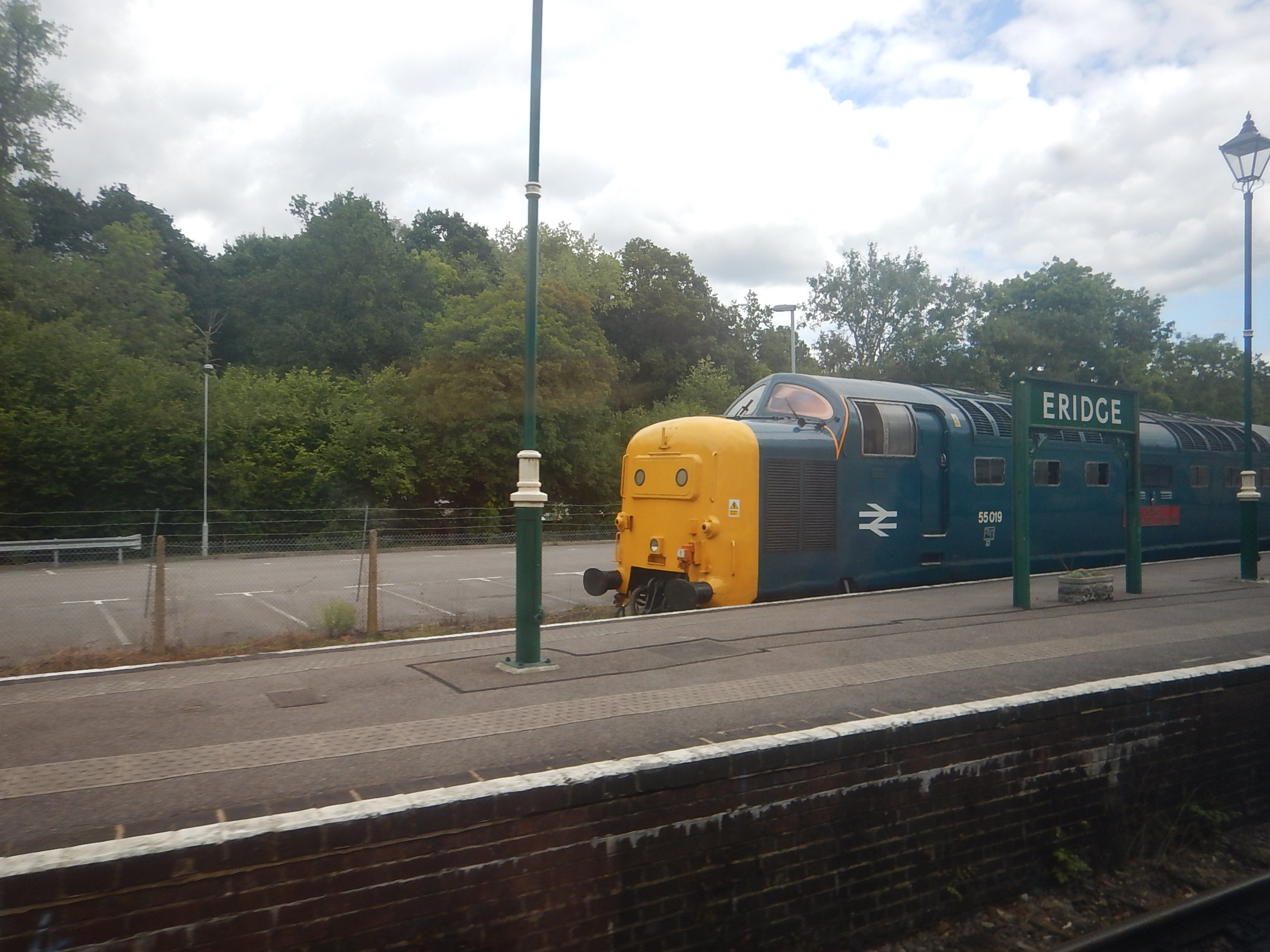
And this was National Express East Coast’s plan.
In August 2007, after National Express East Coast was awarded the InterCity East Coast franchise, it proposed to start services between Lincoln and London King’s Cross from December 2010 with one morning service and one evening service extending from Lincoln to Cleethorpes giving Cleethorpes a link to London and calling at Grimsby Town and Market Rasen. These services were to be operated using the Class 180s but was never introduced. These services were scrapped when East Coast took over the franchise.
It came to nothing, but LNER have been running up to five trains per day (tpd) between London King’s Cross and Lincoln.
I will split the route into legs.
- London King’s Cross and Newark North Gate- Electrified – 120 miles
- Newark North Gate and Lincoln Central – Not Electrified – 16,5 miles
- Lincoln Central and Market Rasen – Not Electrified – 15 miles
- Market Rasen and Habrough – Not Electrified – 21 miles
- Habrough and Grimsby Town – Not Electrified – 8 miles
- Grimsby Town and Cleethorpes – Not Electrified – 3.25 miles
Note that a round trip between Newark North Gate and Lincoln Central is thirty-three miles.
This means it would be possible for one of LNER’s Class 800 trains, that had been fitted with a battery pack and converted into one of Hitachi’s Regional Battery trains, would be able to run a London King’s Cross and Lincoln Central service without using a drop of diesel or needing a charge at Lincoln Central station.
Would it be possible to extend this service to Grimsby Town on battery power?
I suggested earlier that between Cleethorpes and Habrough should be electrified.
As Newark North Gate and Habrough stations are 52.5 miles apart, it would be rather tight for a battery electric train to cover the whole route without an extra charge somewhere.
Possible solutions could be.
- Fit a bigger battery in the trains.
- Extend the electrification at Newark North Gate station.
- Extend the electrification at Habrough station.
I;m sure that there is a solution, that is easy to install.
Conclusion
If between Habrough and Cleethorpes station were to be electrified, these services could be run by battery electric trains.
- Cleethorpes and Manchester Piccadilly
- Cleethorpes and Barton-on-Humber
- Cleethorpes and London King’s Cross
Note.
- The Manchester and London services would be run by Hitachi Regional Battery Trains converted from Class 800 and Class 802 trains.
- The Barton service could be run by a Vivarail Class 230 train or similar.
The first two services would be hourly, with the London service perhaps 1 or 2 tpd.
Cleethorpes would be well and truly on the rail network.
Overhauls for LNER’s Remaining Class 91s And Mk 4s
The title of this post, is the same as that of this article on Rail Magazine.
This is the introductory paragraph.
Eversholt Rail, which owns the trains, has confirmed that 12 London North Eastern Railway Class 91s and the remaining Mk 4 coaches will undergo overhauls at Wabtec Rail, Doncaster.
It had been expected, that LNER would purchase more trains, as I wrote about in More New Trains On LNER Wish List.
The article gives more details of the trains to be retained.
- Twelve Class 91 locomotives, seven rakes of Mark 4 coaches and two spare coaches will be retained.
- They will be confined to routes between London Kings Cross and Bradford, Leeds, Skipton and York.
How many trains will be needed to cover these routes?
- Trains take two hours and fifteen minutes between London Kings Cross and Leeds and run at a frequency of two trains per hour (tph)
- Trains take two hours and twenty-one minutes between London Kings Cross and York and run hourly.
- I suspect that a round trip to Leeds or York can be five hours.
So a crude analysis says, that will mean fifteen trains will be needed,
But some of these trains will be extended past Leeds.
These are, electrification status and the times and distances between Leeds and the final destinations.
- Bradford – Electrified – 22 minutes – 13.5 miles
- Harrogate – Not Electrified – 40 minutes – 18 miles
- Huddersfield – Not Electrified – 33 minutes – 17 miles
- Skipton – Electrified – 45 minutes – 26 miles
It appears that the following is true.
- Trains serving Harrogate and Huddersfield must be worked by bi-mode Class 800 trains.
- Trains serving Bradford and Skipton could be worked by InterCity 225 trains or an all-electric nine-car Class 801 train.
Note.
- Some times are those taken by LNER services and some are estimates from TransPennine Express.
- I have assumed 8-10 minutes for the Split-and-Join at Leeds and included it in the times.
- Class 800 trains seem to take around ten minutes to turnround at Harrogate.
- Times between London Kings Cross and Doncaster will decrease by a few minutes, with the addition of digital in-cab signalling on the route, which will allow 140 mph running by InterCity 225s, Class 800 trains and Class 801 trains.
I estimate that it will be possible for an InterCity 225, Class 800 train or Class 801 train to do a round trip between London Kings Cross and Bradford, Harrogate, Huddersfield or Skipton in six hours.
The round trip between London Kings Cross and York will be the five hours, I estimated earlier.
Wikipedia also says this.
LNER expects to introduce two-hourly services to Bradford and a daily service to Huddersfield in May 2020 when more Azuma trains have been introduced.
So would the pattern of trains to Leeds/York be as follows?
- One tph – One pair of five-car Class 800 trains to Leeds, of which some or all split and join at Leeds, with one train going to and from Harrogate and the other going to and from Huddersfield.
- One tph per two hours (tp2h) – An InterCity 225 or nine-car Class 801 train to Leeds, of which some or all are extended to Bradford.
- One tp2h – An InterCity 225 or nine-car Class 801 train to Leeds, of which some or all are extended to Skipton.
- One tph – An InterCity 225 or nine-car Class 801 train to York.
I estimate that it will be possible for an InterCity 225, Class 800 train or Class 801 train to do a round trip between London Kings Cross and Bradford, Harrogate, Huddersfield or Skipton in six hours.
This would need the following trains.
- Six pairs of five-car Class 800 trains for the Harrogate and Huddersfield services.
- Six full size all electric trains, which could be an InterCity 225, a nine-car Class 801 train or a pair of five Class 801 trains, for Bradford and Skipton services.
- Five full size all electric trains, which could be an InterCity 225, a nine-car Class 801 train or a pair of Class 801 trains, for York services.
So why have LNER changed their mind and are retaining the InterCity 225?
Are InterCity 225 Trains Already Certified For 140 mph Running?
I wouldn’t be surprised, if a large part of the certification work for this had been done for 140 mph running and for it to be allowed, it needs digital in-cab signalling to be installed on the East Coast Main Line.
The Wikipedia entry for the InterCity 225 says this about the train’s performance.
The InterCity 225 has a top service speed of 140 mph (225 km/h); during a test run in 1989 on Stoke Bank between Peterborough and Grantham an InterCity 225 reached 162 mph (260.7 km/h). However, except on High Speed 1, which is equipped with cab signalling, British signalling does not allow trains to exceed 125 mph (201 km/h) in regular service, due to the impracticality of correctly observing lineside signals at high speed.
The Wikipedia entry for the East Coast Main Line says this about the future signalling.
A new Rail operating centre (ROC), with training facilities, opened in early 2014 at the “Engineer’s Triangle” in York. The ROC will enable signalling and day-to-day operations of the route to be undertaken in a single location. Signalling control/traffic management using ERTMS is scheduled to be introduced from 2020 on the ECML between London King’s Cross and Doncaster – managed from the York ROC.
A small fleet of InterCity 225 trains could be the ideal test fleet to find all the glitches in the new signalling.
Are InterCity 225 trains Already Certified To Run To Bradford and Skipton?
If they are, then that is another problem already solved.
A Fleet Of Seven Trains Would Cover Bradford And Skipton Services
Six trains are needed to run a one tp2h service to both Bradford and Skipton, so they could fully cover one tp2h to Bradford and occasional trains to Skipton with a spare train and one in maintenance.
Using InterCity 225s To Bradford and Skipton Would Not Require A Split-And-Join At Leeds
The number of trains that would Split-and-Join at Leeds would be only two tph instead of four tph, which would be simpler with less to go wrong.
Not Enough Five-Car Bi-Mode Class 800 Trains
LNER’s full fleet of Azumas will be as follows.
- 13 – Nine-car bi-mode Class 800 trains.
- 10 – Five-car bi-mode Class 800 trains.
- 30 – Nine-car electric Class 801 trains.
- 12 – Five-car electric Class 801 trains.
This would appear to be a major problem, if Harrogate and Huddersfield were to be served hourly by Class 800 trains, existing services are to be maintained or even increased to Hull and Lincoln and extra services are to be added to Middlesbrough and perhaps Nottingham and other destinations.
The InterCity 225s only help indirectly, if they provided the London Kings Cross and Bradford and Skipton services.
Conversion Of Class 800 and Class 801 Trains To Regional Battery Trains
Hitachi have launched the Regional Battery Train, which is described in this Hitachi infographic.
For LNER, they will be useful for any Journey under about 90 kilometres or 56 miles.
The trains should be able to serve these routes.
- Leeds and Harrogate and back – 36 miles
- Leeds and Huddersfield and back – 34 miles
- Newark and Lincoln and back – 33 miles
- Northallerton and Middlesbrough and back – 42 miles
Whilst Class 800 trains and Class 801 trains are converted, the InterCity 225 trains would act as valuable cover on services like London to Leeds and York.
Conclusion
I think it is a good plan.
 The Anonymous Widower