Class 777 Train Update
This news story on the MerseyTravel web site is entitled New Trains Programme Update.
This is the first paragraph.
Merseytravel has confirmed that the phased introduction into service of the new fleet of trains for the Merseyrail network will not begin this year due to ongoing challenges as a result of the Coronavirus pandemic.
As the story is dated the 17th December 2020, the news isn’t as bad as it first appears.
An Encore From The Team That Developed The Covid-19 Vaccine
This article on the Guardian is entitled Team Behind Oxford Covid Jab Start Final Stage Of Malaria Vaccine Trials.
This is the first two paragraphs.
The Oxford team that has produced a successful coronavirus vaccine is about to enter the final stage of human trials in its quest for an inoculation against malaria.
The Jenner Institute director, Prof Adrian Hill, said the malaria vaccine would be tested on 4,800 children in Africa next year after early trials yielded promising results.
This is obviously good news for those, who live in areas affected by malaria, where in Africa a child under five dies every two minutes.
But surely, if the Jenner Institute can crack malaria, they should have the expertise to modify the current Cobid-19 vaccine to handle any new variants.
Conclusion
In my view, this is doubly good news!
Shooter Urges Caution On Hydrogen Hubris
The title of this post is the same as that of an article in the January 2021 Edition of Modern Railways.
This is the first paragraph.
Vivarail Chairman Adrian Shooter has urges caution about the widespread enthusiasm for hydrogen technology. In his keynote speech to the Golden Spanner Awards on 27 November, Mr. Shooter said the process to create ‘green hydrogen’ by electrolysis is ‘a wasteful use of electricity’ and was skeptical about using electricity to create hydrogen to then use a fuel cell to power a train, rather than charging batteries to power a train. ‘What you will discover is that a hydrogen train uses 3.5 times as much electricity because of inefficiencies in the electrolysis process and also in the fuel cells’ said Mr. Shooter. He also noted the energy density of hydrogen at 350 bar is only one-tenth of a similar quantity of diesel fuel, severely limiting the range of a hydrogen-powered train between refuelling.
Mr. Shooter then made the following points.
- The complexity of delivering hydrogen to the railway depots.
- The shorter range available from the amount of hydrogen that can be stored on a train compared to the range of a diesel train.
- He points out limitations with the design of the Alstom Breeze train.
This is the last paragraph.
Whilst this may have seemed like a challenge designed purely to promote the battery alternatives that Vivarail is developing, and which he believes to be more efficient, Mr. Shooter explained: ‘I think that hydrogen fuel cell trains could work in this country, but people just need to remember that there are downsides. I’m sure we’ll see some, and in fact we should because competition improves the breed.’
i think Mr. Shooter may have made several good points.
These are my thoughts.
Creating Green Hydrogen
I haven’t done an analysis of the costs of creating green hydrogen from electrolysis, but I have a feeling, that electrolysis won’t be the only way to create large amounts of carbon-free hydrogen, in a few years.
These methods are currently available or under development or construction.
- The hydrogen tram-buses in Pau have a personal electrolyser, that provides hydrogen at 350 bar.
- London’s hydrogen buses will be provided with hydrogen from an electrolyser at Herne Bay by truck. Will the trucks be hydrogen-powered?
Some industrial processes like the Castner-Kellner process create hydrogen as a by-product.
In Shell Process To Make Blue Hydrogen Production Affordable, I describe the Shell Blue Hydrogen Process, which appears to be a way of making massive amounts of carbon-free hydrogen for processes like steel-making and cement production. Surely some could be piped or transported by truck to the rail depot.
In ITM Power and Ørsted: Wind Turbine Electrolyser Integration, I describe how ITM Power and Ørsted plan to create the hydrogen off shore and bring it by pipeline to the shore.
Note.
- The last two methods could offer savings in the cost of production of carbon-free hydrogen.
- Surely, the delivery trucks if used, must be hydrogen-powered.
- The Shell Blue Hydrogen Process uses natural gas as a feedstock and converts it to hydrogen using a newly-developed catalyst. The carbon-dioxide is captured and used or stored.
- If the local gas network has been converted to hydrogen, the hydrogen can be delivered to the depot or filling station through that gas network.
I very much feel that affordable hydrogen can be supplied to bus, train, tram or transport depot. For remote or difficult locations. personal electrolysers, powered by renewable electricity, can be used, as at Pau.
Hydrogen Storage On Trains
Liquid hydrogen could be the answer and Airbus are developing methods of storing large quantities on aircraft.
In What Size Of Hydrogen Tank Will Be Needed On A ZEROe Turbofan?, I calculated how much liquid hydrogen would be needed for this ZEROe Turbofan.

I calculate that to carry the equivalent amount of fuel to an Airbus A320neo would need a liquid hydrogen tank with a near 100 cubic metre capacity. This sized tank would fit in the rear fuselage.
I feel that in a few years, a hydrogen train will be able to carry enough liquid hydrogen in a fuel tank, but the fuel tank will be large.
In The Mathematics Of A Hydrogen-Powered Freight Locomotive, I calculated how much liquid hydrogen would be needed to provide the same amount of energy as that carried in a full diesel tank on a Class 68 locomotive.
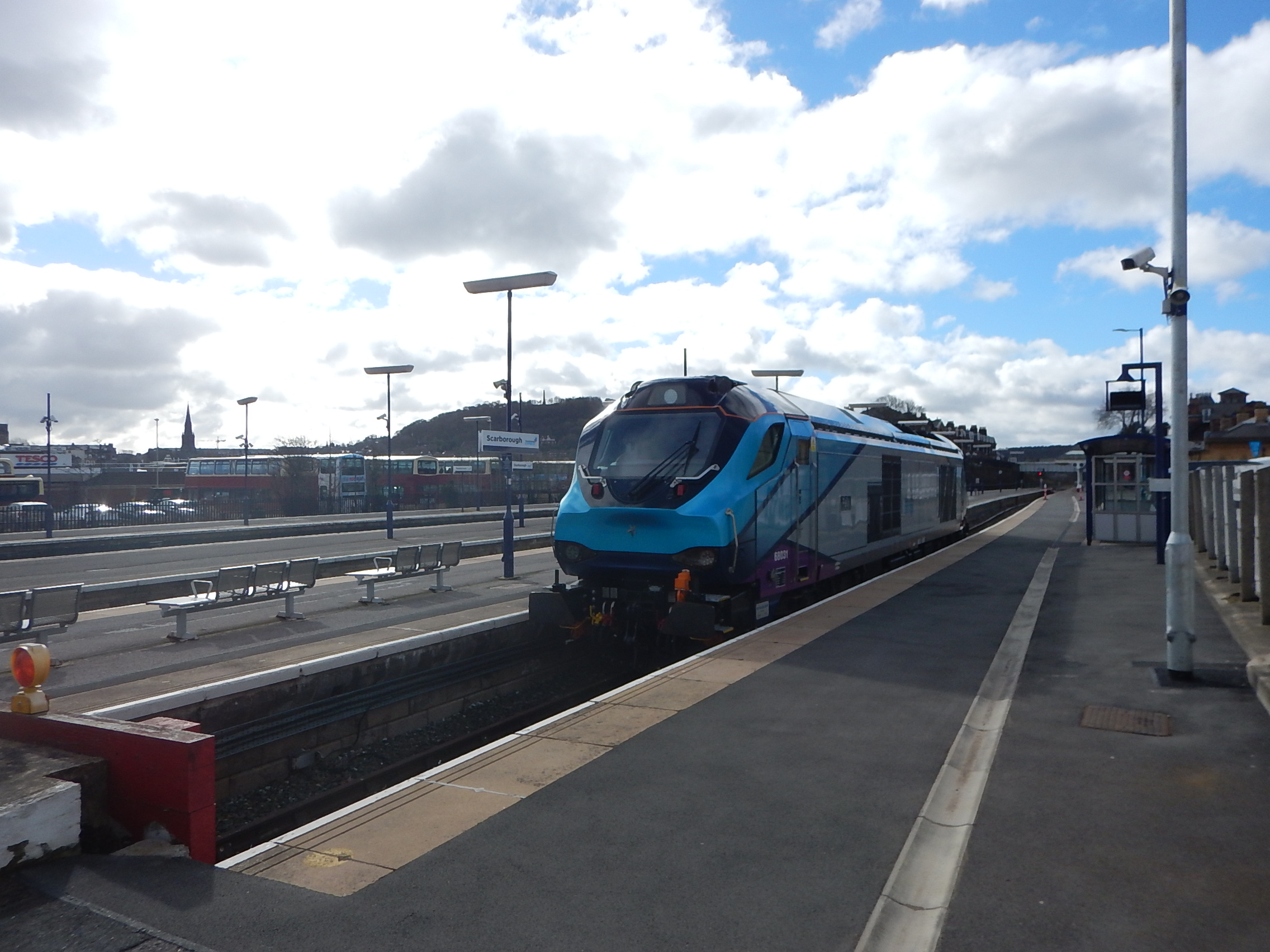
The locomotive would need 19,147 litres or 19.15 cubic metres of liquid hydrogen, which could be contained in a cylindrical tank with a diameter of 2 metres and a length of 6 metres.
Hydrogen Locomotives Or Multiple Units?
We have only seen first generation hydrogen trains so far.
This picture shows the Alstom Coradia iLint, which is a conversion of a Coradia Lint.

It is a so-so train and works reasonably well, but the design means there is a lot of transmission noise.
This is a visualisation of an Alstom Breeze or Class 600 train.
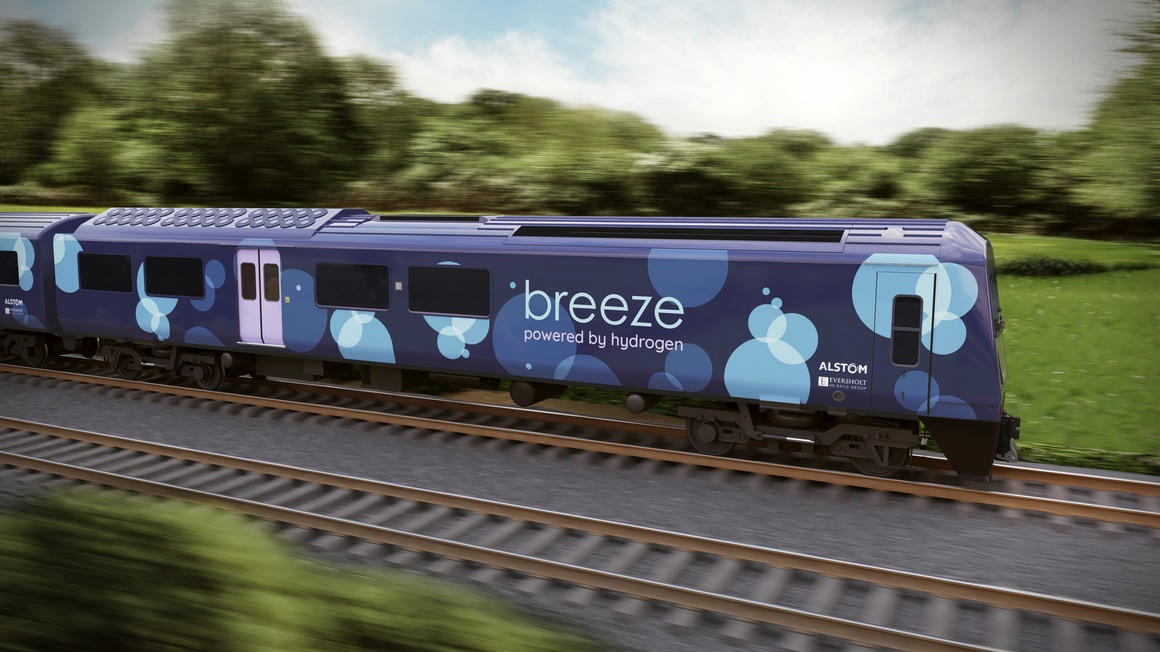
Note that the front half of the first car of the train, is taken up with a large hydrogen tank. It will be the same at the other end of the train.
As Mr. Shooter said, Alstom are converting a three-car train into a two-car train. Not all conversions live up to the hype of their proposers.
I would hope that the next generation of a hydrogen train designed from scratch, will be a better design.
I haven’t done any calculations, but I wonder if a lighter weight vehicle may be better.
Hydrogen Locomotives
I do wonder, if hydrogen locomotives are a better bet and easier to design!
- There is a great need all over the world for zero-carbon locomotives to haul freight trains.
- Powerful small gas-turbine engines, that can run on liquid hydrogen are becoming available.
- Rolls-Royce have developed a 2.5 MW gas-turbine generator, that is the size of a beer-keg.
In The Mathematics Of A Hydrogen-Powered Freight Locomotive, I wondered if the Rolls-Royce generator could power a locomotive, the size of a Class 68 locomotive.
This was my conclusion.
I feel that there are several routes to a hydrogen-powered railway locomotive and all the components could be fitted into the body of a diesel locomotive the size of a Class 68 locomotive.
Consider.
- Decarbonising railway locomotives and ships could be a large market.
- It offers the opportunities of substantial carbon reductions.
- The small size of the Rolls-Royce 2.5 MW generator must offer advantages.
- Some current diesel-electric locomotives might be convertible to hydrogen power.
I very much feel that companies like Rolls-Royce and Cummins (and Caterpillar!), will move in and attempt to claim this lucrative worldwide market.
In the UK, it might be possible to convert some existing locomotives to zero-carbon, using either liquid hydrogen, biodiesel or aviation biofuel.
Perhaps, hydrogen locomotives could replace Chiltern Railways eight Class 68 locomotives.
- A refuelling strategy would need to be developed.
- Emissions and noise, would be reduced in Marylebone and Birmingham Moor Street stations.
- The rakes of carriages would not need any modifications to use existing stations.
It could be a way to decarbonise Chiltern Railways without full electrification.
It looks to me that a hydrogen-powered locomotive has several advantages over a hydrogen-powered multiple unit.
- It can carry more fuel.
- It can be as powerful as required.
- Locomotives could work in pairs for more power.
- It is probably easier to accommodate the hydrogen tank.
- Passenger capacity can be increased, if required by adding more coaches.
It should also be noted that both hydrogen locomotives and multiple units can build heavily on technology being developed for zero-carbon aviation.
The Upward Curve Of Battery Power
Sparking A Revolution is the title an article in Issue 898 of Rail Magazine, which is mainly an interview with Andrew Barr of Hitachi Rail.
The article contains a box, called Costs And Power, where this is said.
The costs of batteries are expected to halve in the next years, before dropping further again by 2030.
Hitachi cites research by Bloomberg New Energy Finance (BNEF) which expects costs to fall from £135/kWh at the pack level today to £67/kWh in 2030 and £47/kWh in 3030.
United Kingdom Research and Innovation (UKRI) are predicting that battery energy density will double in the next 15 years, from 700 Wh/l to 1400 Wh/l in 2-35, while power density (fast charging) is likely to increase four times in the same period from 3 kW/kg to 12 kW/kg in 2035.
These are impressive improvements that can only increase the performance and reduce the cost of batteries in all applications.
Hitachi’s Regional Battery Train
This infographic gives the specification of Hitachi Regional Battery Train, which they are creating in partnership with Hyperdrive Innovation.
Note that Hitachi are promising a battery life of 8-10 years.
Financing Batteries
This paragraph is from this page on BuyaCar, which is entitled Electric Car Battery Leasing: Should I Lease Or Buy The Batteries?
When you finance or buy a petrol or diesel car it’s pretty simple; the car will be fitted with an engine. However, with some electric cars you have the choice to finance or buy the whole car, or to pay for the car and lease the batteries separately.
I suspect that battery train manufacturers, will offer similar finance models for their products.
This paragraph is from this page on the Hyperdrive Innovation web site.
With a standardised design, our modular product range provides a flexible and scalable battery energy storage solution. Combining a high-performance lithium-ion NMC battery pack with a built in Battery Management System (BMS) our intelligent systems are designed for rapid deployment and volume manufacture, supplying you with class leading energy density and performance.
I can envisage that as a battery train ages, every few years or so, the batteries will get bigger electrically, but still be the same physical size, due to the improvements in battery technology, design and manufacture.
I have been involved in the finance industry both as a part-owner of a small finance company and as a modeller of the dynamics of their lending. It looks to me, that train batteries could be a very suitable asset for financing by a fund. But given the success of energy storage funds like Gore Street and Gresham House, this is not surprising.
I can envisage that battery electric trains will be very operator friendly, as they are likely to get better with age and they will be very finance-friendly.
Charging Battery Trains
I must say something about the charging of battery trains.
Battery trains will need to be charged and various methods are emerging.
Using Existing Electrification
This will probably be one of the most common methods used, as many battery electric services will be run on partly on electrified routes.
Take a typical route for a battery electric train like London Paddington and Oxford.
- The route is electrified between London Paddington and Didcot Junction.
- There is no electrification on the 10.4 miles of track between Didcot Junction and Oxford.
If a full battery on the train has sufficient charge to take the train from Didcot Junction to Oxford and back, charging on the main line between London Paddington and Didcot Junction, will be all that will be needed to run the service.
I would expect that in the UK, we’ll be seeing battery trains using both 25 KVAC overhead and 750 VDC third rail electrification.
Short Lengths Of New Strategic Electrification
I think that Great Western Railway would like to run either of Hitachi’s two proposed battery electric trains to Swansea.
As there is 45.7 miles pf track without .electrification, some form of charging in Swansea station, will probably be necessary.
The easiest way would probably be to electrify Swansea station and perhaps for a short distance to the North.
This Google Map shows Swansea station and the railway leading North.
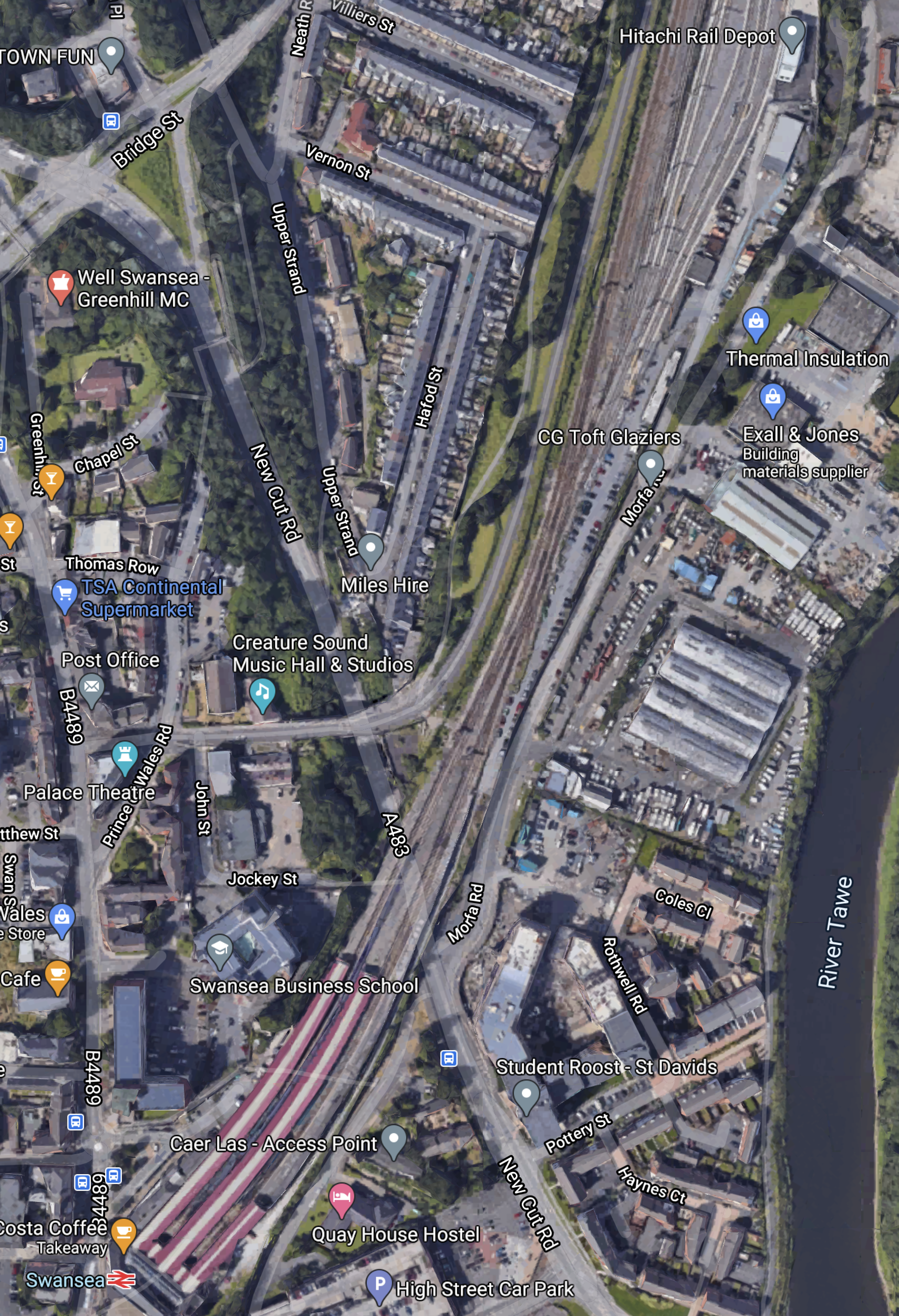
Note.
- There is a Hitachi Rail Depot at the Northern edge of the map.
- Swansea station is in South-West corner of the map.
- Swansea station has four platforms.
Swansea station would probably make an excellent battery train hub, as trains typically spend enough time in the station to fully charge the batteries before continuing.
There are other tracks and stations of the UK, that I would electrify to enable the running of battery electric trains.
- Leeds and York, which would enable carbon-free London and Edinburgh services via Leeds and help TransPennine services. This is partially underway.
- Leicester and East Midlands Parkway and Clay Cross North Junction and Sheffield – These two sections would enable EMR InterCity services to go battery electric.
- Sheffield and Leeds via Meadowhall, Barnsley Dearne Valley and the Wakefield Line, which would enable four trains per hour (tph) between Sheffield and Leeds and an extension of EMR InterCity services to Leeds.
- Hull and Brough, would enable battery electric services to Hull and Beverley.
- Scarborough and Seamer, would enable electric services services to Scarborough and between Hull and Scarborough.
- Middlesbrough and Redcar, would enable electric services services to Teesside.
- Crewe and Chester and around Llandudno Junction station – These two sections would enable Avanti West Coast service to Holyhead to go battery electric.
- Shrewsbury station – This could become a battery train hub, as I talked about for Swansea.
- Taunton and Exeter and around Penzance, Plymouth and Westbury stations – These three sections would enable Great Western Railway to cut a substantial amount of carbon emissions.
- Exeter, Yeovil Junction and Salisbury stations. – Electrifying these three stations would enable South Western Railway to run between London and Exeter using Hitachi Regional Battery Trains, as I wrote in Bi-Modes Offered To Solve Waterloo-Exeter Constraints.
We will also need fast chargers for intermediate stations, so that a train can charge the batteries on a long route.
I know of two fast chargers under development.
- Opbrid at Furrer + Frey
- Vivarail’s Fast Charge, which I wrote about in Vivarail’s Plans For Zero-Emission Trains.
I believe it should be possible to battery-electrify a route by doing the following.
- Add short lengths of electrification and fast charging systems as required.
- Improve the track, so that trains can use their full performance.
- Add ERTMS signalling.
- Add some suitable trains.
Note.
- I feel ERTMS signalling with a degree of automatic train control could be used with automatic charging systems, to make station stops more efficient.
- In my view, there is no point in installing better modern trains, unless the track is up to their performance.
Brexit: Duty-Free Makes A Come-Back For Travellers Returning From Britain
The title of this post, is the same as that of this article on the Irish Times.
This is the first two paragraphs.
For the first time in more than 20 years people travelling to the State from British ports and airports will be able to load their luggage or their cars with tax-free tobacco, alcohol, perfumes and so-called luxury items once the new year bells chime in less than a week.
Duty-free between Ireland and Britain was abolished 21 years ago as it was not considered compatible with the emerging single market. However with the UK now leaving the EU and its single market from the start next year the old rules are set to revert.
As someone, who never buys anything in duty-free, I can’t say I’m bothered.
A Reason To Be Cheerful
I have a good reason to be cheerful.
When my wife died in 2007, I had the problem of what to do, with the money from the sale of her Porsche.
Peer-to-peer lending was just starting, so as a trained control engineer and mathematical modeller, I gave them a good check out!
I then put the money into an automatic peer-to-peer lender, where you deposit the money, forget it and the computer lends it out. Some of my family and friends, including my accountant were horrified.
Then came 2008 and the banking crisis. Like a Flower-Class corvette in the teeth of an Atlantic gale, it bounced safely through the crisis.
Since, then it has earned more than the stock market and grown.
And it repeated a similar safe passage through the Covid-19 crisis.
It does seem that there are always people with a good credit ratings that want to borrow money.
How much of the money borrowed in 2020 was for home improvements to cater for a home office or home schooling?
Conclusion
I blame my mother! I got my skill with and feel for numbers, from her genes and the tutoring she gave me,
She had won a scholarship to Dame Alice Owen’s School, but was unable to go to University, due to lack of funds, so she became a comptometer operator in the Account’s Department at Reeves, who used to make artist’s materials and were based just round the corner from where I now live.
That was probably, the only sort of job a mathematically bright young lady could do in the 1920s.
Activists Cheer As ‘Sexist’ Tampon Tax Is Scrapped
The title of this post, is the same as that of this article on the BBC.
This is the first two paragraphs.
The 5% rate of VAT on sanitary products – referred to as the “tampon tax” – will be abolished in the UK from 1 January.
EU law required members to tax tampons and sanitary towels at 5%, treating period products as non-essential.
My late wife; C had very strong views about this and I suspect that my late mother and my granddaughter would share C’s views.
Is this a glimpse of the future, where when we feel European Union policy is wrong, we can diverge?
It would certainly be a good test of unfair policy by the UK government, if the EU objected and tried to stop us removing the tax.
At least smugglers, who decided to switch from smuggling drugs and other nasties to sanitary products would be doing something that caused less harm!
Top Reasons Many Researchers Prefer Hydrogen Fuel Vehicles Over EVs
The title of this post, is the same as that of this article on Hydrogen Fuel News.
This is the introductory paragraph.
Despite the fact that EVs have experienced far more widespread adoption than hydrogen fuel vehicles, many researchers, engineers and environmentalists – as well as drivers – find the latter option more appealing.
These reasons are given.
- No substantial lifestyle changes are required.
- H2 powered cars place less strain on the electric grid.
- They have a larger range
- Practicality for a larger range of vehicles
If I was thinking of buying an electric vehicle, I;d look at hydrogen before I decided on the vehicle, I would buy.
I don’t drive, but if I wanted to, I suspect I could get my licence back.
- I have a garage, that opens onto the street.
- There is no nearby hydrogen station.
- If I went any distance over about twenty miles, I’d probably use public transport.
I’d probably choose an electric vehicle.
Arcola Energy, Consortium Of Rail Industry Leaders To Deliver First Scottish Hydrogen-Powered Train
The title of this post, is the same as that of this article on seanews.
The article describes the project to create a demonstrator hydrogen train for Scotland out of an old Class 314 train.

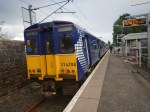
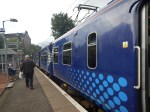
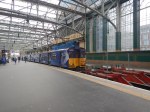
Note.
- Work will be needed on the interior.
- Is a three-car train long enough?
- Will the train still be able to use its pantograph?
The trains may be over forty years old, but they can probably made to look good, as they are closely related to these Class 508 trains, that are in superb condition on Merseyrail.
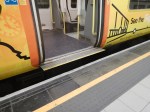
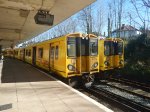
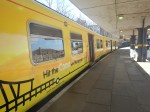
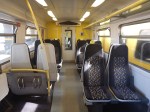
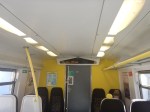
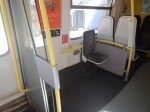
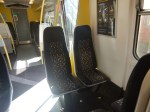
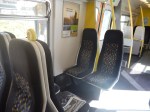
These trains were built in 1979 and are one of the oldest trains on the UK’s mainland network.
Wikipedia says this about the conversion to hydrogen.
In February 2020, ScotRail announced plans to convert one of the two remaining units, 314209, to run on hydrogen. This is a feasibility study running alongside ScotRail’s commitment to run no diesel trains by 2035.
The train will be displayed at the COP26 Climate Change Summit in Glasgow in 2021.
Possible Destinations For An Intercity Tri-Mode Battery Train
Currently, the following routes are run or are planned to be run by Hitachi’s Class 800, 802, 805 and 810 trains, where most of the route is electrified and sections do not have any electrification.
- Avanti West Coast – Euston and Chester – 21 miles
- Avanti West Coast – Euston and Shewsbury – 29.6 miles
- Avanti West Coast – Euston and Wrexham General – 33 miles
- Grand Central – Kings Cross and Sunderland – 47 miles
- GWR – Paddington and Bedwyn – 13.3 miles
- GWR – Paddington and Bristol Temple Meads- 24.5 miles
- GWR – Paddington and Cheltenham – 43.3 miles
- GWR – Paddington and Great Malvern – 76 miles
- GWR – Paddington and Oxford – 10.4 miles
- GWR – Paddington and Penzance – 252 miles
- GWR – Paddington and Swansea – 45.7 miles
- Hull Trains – Kings Cross and Hull – 36 miles
- LNER – Kings Cross and Harrogate – 18.5 miles
- LNER – Kings Cross and Huddersfield – 17 miles
- LNER – Kings Cross and Hull – 36 miles
- LNER – Kings Cross and Lincoln – 16.5 miles
- LNER – Kings Cross and Middlesbrough – 21 miles
- LNER – Kings Cross and Sunderland – 47 miles
Note.
- The distance is the length of line on the route without electrification.
- Five of these routes are under twenty miles
- Many of these routes have very few stops on the section without electrification.
I suspect that Avanti West Coast, Grand Central, GWR and LNER have plans for other destinations.
A Battery Electric Train With A Range of 56 Miles
Hitachi’s Regional Battery Train is deescribed in this infographic.

The battery range is given as 90 kilometres or 56 miles.
This battery range would mean that of the fifteen destinations I proposed, the following could could be achieved on a full battery.
- Chester
- Shewsbury
- Wrexham General
- Bedwyn
- Bristol Temple Meads
- Cheltenham
- Oxford
- Swansea
- Hull
- Harrogate
- Huddersfield
- Lincoln
- Middlesbrough
Of these a return trip could probably be achieved without charging to Chester, Shrewsbury, Bedwyn, Bristol Temple Meads, Oxford, Harrogate, Huddersfield, Lincoln and Middlesbrough.
- 86.7 % of destinations could be reached, if the train started with a full battery
- 60 % of destinations could be reached on an out and back basis, without charging at the destination.
Only just over a quarter of the routes would need, the trains to be charged at the destination.
Conclusion
It looks to me, that Hitachi have done some analysis to determine the best battery size. But that is obviously to be expected.
Students Design ‘Mitt’ Prosthetic Limb For Children
The title of this post, is the same as this article on the BBC.
This was the good news story of the day, which started with these two paragraphs.
Even the most up-to-date prosthetic limbs can often be too heavy, or hard for young children to use with ease.
But now, a group of Imperial College engineering students has created a new, lighter one.
There is a video in the BBC article, which shows how it works.
- It looks like it doesn’t have any power, so there are no heavy batteries.
- Tools are attached by a powerful magnet.
- As the name suggests, it is worn like a glove.
- Judging by the look on the little girl’s face, as she used it to do simple tasks, it has found a satisfied customer!
What puzzles me, is that it is such a simple idea, that it hasn’t been thought off before.
Could The Mitt Have Other Applications?
I have a feeling it could.
I recently cut the back of my hand badly.

The picture shows it soon afterwards.
I don’t work or do many dirty tasks around the house, but could the students use their design principles for someone, who has perhaps damaged their hand and needs some protection.

This second picture shows how well it healed in the end.
I think the principle behind the Mitt has legs.
 The Anonymous Widower