Railway Lines Through East Midlands Hub Station
This Google Map shows the position of High Speed Two‘s East Midland Hub station to the West of Nottingham.
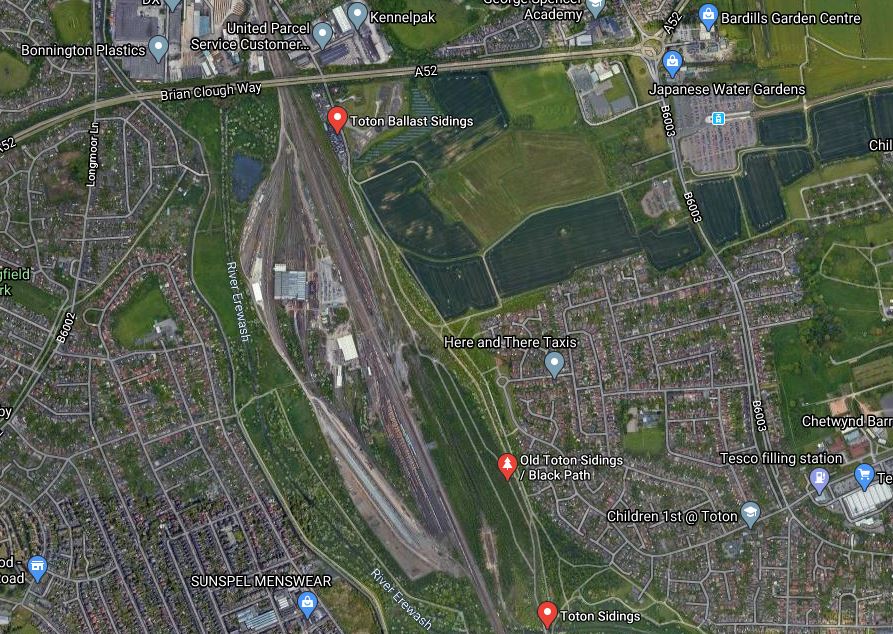
Note.
- In the North East Corner of the map, is a label saying Japanese Water Garden. Below that is a blue dot, which marks the Toton Lane tram stop.
- Three red arrows relate to Toton Ballast Sidings, Old Toton Sidings (Black Path) and Toton Sidings from North to South.
- Running to the West of the arrows is a double-track railway and beyond that are a large number of sidings.
This second Google Map shows some of the sidings.

The double track main line is the Erewash Valley Line.
- This line goes North to Ilkeston, Langley Mill, Alfreton, Clay Cross North Junction, Chesterfield and Sheffield.
- Going South, the route splits with one branch going East through Attenborough and Beeston to Nottingham station.
- The other branch turns to the West and then splits again at the massive Trent Junction.
- One branch goes West through Long Eaton station, under the M1, through Spondon station and on to Derby station.
- The second branch goes South over the River Trent to join up with the Midland Main Line and pass through East Midlands Parkway station.
- There is also a chord across the Trent Junction to allow trains to go between Long Eaton and East Midlands Parkway stations.
It is sounds complicated this map from High Speed Two may help.

Note.
- High Speed Two is shown in orange, with the blue dot indicating the East Midlands Hub station.
- Nottingham station is to the North East.
- Attenborough station can be picked out on the line going to Nottingham station.
- The water is in the Trent Valley.
- Trent Junction is the large triangular junction to the West of High Speed Two.
- Two rail lines lead to the West from Trent junction; the northerly one goes to Derby by Long Eaton and the other is a freight line to Castle Donington and East Midlands Gateway.
It is worth looking at how the various passenger services go through the area.
- CrossCountry – Cardiff and Nottingham goes via Derby, Long Eaton, Attenborough, Beeston and Nottingham
- CrossCountry – Birmingham and Nottingham goes via Derby, Long Eaton, Attenborough, Beeston and Nottingham
- East Midlands Railway – Leicester and Lincoln goes via East Midlands Parkway, Attenborough, Beeston and Nottingham
- East Midlands Railway – Liverpool and Norwich goes via Alfreton, Langley Mill, Ilkeston and Nottingham
- East Midlands Railway – Matlock and Newark Castle goes via Derby, Long Eaton, Attenborough, Beeston and Nottingham
- East Midlands Railway – St. Pancras and Sheffield goes via East Midlands Parkway, Long Eaton and Derby
- East Midlands Railway – St. Pancras and Nottingham goes via East Midlands Parkway, Attenborough, Beeston and Nottingham
- Northern – Leeds and Nottingham goes via Alfreton, Langley Mill, Ilkeston and Nottingham.
Note.
- Not one service goes past the site of the new East Midlands Hub station.
- Most services to and from Nottingham seem to use the Attenborough and Beeston route
- Services between Derby and Nottingham go via the Long Eaton, Attenborough and Derby route.
- Services from the North use the Erewash Valley Line and turn East at Trowell for Nottingham.
It is fairly obvious that there needs to be a sort-out of services to fit in with the location of the new East Midlands Parkway station.
Classic-Compatible High Speed Two Trains At East Midlands Hub Station
This article on Rail News, is entitled £2.7bn East Midlands Plan Unveiled For HS2 Links.
This is the first two paragraphs.
A bold plan costed at £2.7 billion for the area around the HS2 hub in the East Midlands has been published by a group of councils, transport bodies and East Midlands Airport.
The core of the scheme is the future East Midlands Hub at Toton, and the plan proposes direct access to the Hub from more than 20 cities, towns and villages in the East Midlands.
If you want to read the original report by Midlands Connect, there’s a download link on this page of their web site.
The original report has a section entitled Midlands Engine Rail, where this is said.
This project is fully integrated with Midlands Engine Rail, a rail improvement plan developed by Midlands Connect to revolutionise connectivity, mobility and productivity across the region. Midlands Engine Rail includes plans for two new HS2 classic-compatible services on an electrified Midland Main Line that will run direct from:
- Bedford and Leeds via Leicester and East Midlands Hub
- Nottingham and Birmingham Curzon Street via East Midlands Hub
These services can run on both electrified and high speed tracks, and would join the HS2 network at Toton, the HS2 East Midlands Hub, meaning that Nottingham and Leicester city centres are directly linked to HS2 without the need to change trains.
These improved connections will more than halve current journey times, with Leicester to Leeds dropping from 120 minutes to 46 minutes and Nottingham to Birmingham falling from 72 minutes to 33 minutes.
Note.
- Between Bedford and East Midland Hub stations, the Midland Main Line is or soon will be an almost a complete 125 mph rail line.
- It is likely, that with digital in-cab signalling, that faster running up to 140 mph may be permitted in places.
- Between Birmingham Curzon Street and East Midlands Hub stations, trains will use High Speed Two at up to 205 mph.
- Between Leeds and East Midlands Hub stations, trains will use High Speed Two at up to 205 mph.
- Leeds and Birmingham Curzon Street station will be new stations for High Speed Two.
The Classic-Compatible Trains
These are described in this section in Wikipedia, by this sentence.
The classic-compatible trains, capable of high speed but built to a British loading gauge, permitting them to leave the high speed track to join conventional routes such as the West Coast Main Line, Midland Main Line and East Coast Main Line. Such trains would allow running of HS2 services to the north of England and Scotland, although these non-tilting trains would run slower than existing tilting trains on conventional track. HS2 Ltd has stated that, because these trains must be specifically designed for the British network and cannot be bought “off-the-shelf”, these conventional trains were expected to be around 50% more expensive, costing around £40 million per train rather than £27 million for the captive stock.
The trains will have the same characteristics as the full-size trains.
- Maximum speed of 225 mph.
- Cruising speed of 205 mph on High Speed Two.
- Length of 200 metres.
- Ability to work in pairs.
- A passenger capacity around 500-600 passengers.
It should be noted that one of these trains will be shorter than a pair of East Midlands Railway’s five-car Class 810 trains, which should avoid any serious platform lengthening on existing lines.
Bedford and Leeds via Leicester and East Midlands Hub
A few facts and thoughts.
- The service is shown as stopping at Wellingborough, Kettering, Market Harborough, Leicester, Loughborough and East Midlands Hub.
- The service frequency could be hourly, but two trains per hour (tph) would be better.
- This service could be more important, than it appears, as by the time High Speed Two opens to Leeds, the East West Railway will be open through Bedford.
- Would a terminal platform need to be added at Bedford station? As the station could be rebuilt for the East West Railway, this shouldn’t be a problem.
- Leeds will have a new High Speed Two station or at least new platforms in the existing station.
- The Bedford and Leeds service would join High Speed Two at East Midlands Hub and go North.
- The Leeds and Bedford service would leave High Speed Two at East Midlands Hub and go South.
Leeds and Leicester will take 46 minutes, with High Speed Two’s journey time calculator, indicating twenty-seven minutes between East Midlands Hub and Leeds stations.
According to an article in the June 2020 Edition of Modern Railways High Speed Two is planning to run the following services on the Eastern leg of High Speed Two between East Midlands Hub and Leeds.
- Two tph – Birmingham Curzon Street and Leeds
- Three tph – London Euston and Leeds
There will be a Turn-Up-And-Go six tph service between East Midlands Hub and Leeds stations.
If the Bedford and Leeds service was an hourly service, when added to the current East Midlands Railway Inter-City services, it would give the following calling frequencies.
- Wellingborough – 2 tph
- Kettering – 2 tph
- Market Harborough – 3 tph
- Leicester – 5 tph
- Loughborough – 3 tph
- East Midlands Parkway – 2 tph
The calling pattern can be adjusted to the number of passengers.
Nottingham and Birmingham Curzon Street via East Midlands Hub
A few facts and thoughts.
- The service is shown as only stopping at East Midlands Hub.
- The service frequency could be hourly.
- The service would go between East Midlands Hub and Nottingham using the Trowell Curve route, which I discussed in Access To Toton – Scheme 6 – Trowell Curve.
- Nottingham station has long terminal platforms that take a full-length Inter-City 125.
- Birmingham Curzon Street will be a new High Speed Two station.
- The Nottingham and Birmingham Curzon Street service would join High Speed Two at East Midlands Hub and go South.
- The Birmingham Curzon Street and Nottingham service would leave High Speed Two at East Midlands Hub and go North.
Nottingham and Birmingham Curzon Street will take 33 minutes, with High Speed Two’s journey time calculator, indicating twenty minutes, between Birmingham Curzon Street and East Midlands Hub stations.
According to an article in the June 2020 Edition of Modern Railways High Speed Two is planning to run the following services on the Eastern leg of High Speed Two from Birmingham Curzon Street.
- Two tph – East Midlands Hub and Leeds
- One tph – East Midlands Hub, York, Darlington, Durham and Newcastle.
There will be a Turn-Up-And-Go four tph service between East Midlands Hub and Birmingham Curzon Street stations.
Midland Main Line Electrification
Midlands Connect is calling for full electrification of the Midland Main Line.
The problem is electrification through Leicester station, where there is a low bridge over the track.
In Discontinuous Electrification Through Leicester Station, I showed how the problem might be solved by discontinuous electrification and battery-equipped trains.
The Shared High Speed Two Path
If you look at the two previous sections you’ll see the following.
- The Birmingham Curzon Street and Nottingham service would leave High Speed Two at East Midlands Hub and go North.
- The Bedford and Leeds service would join High Speed Two at East Midlands Hub and go North.
- The Leeds and Bedford service would leave High Speed Two at East Midlands Hub and go South.
- The Nottingham and Birmingham Curzon Street service would join High Speed Two at East Midlands Hub and go South.
The two services are using the same path on High Speed Two.
I would design the East Midlands Hub, so that High Speed Two and classic services going in the same direction shared an island platform.
Southbound services would behave like this.
- The Nottingham to Birmingham Curzon Street train would arrive in the High Speed Two face of the platform.
- The Leeds to Bedford train would arrive in the classic face of the platform.
- Passengers who needed to change would walk across the platform.
- When ready both trains would go on their way.
Northbound services would do something similar.
It would be an efficient way to organise interchange between services.
- Train design would have to ensure, that all trains using the island platform had similar and preferably step-free access.
- If Greater Anglia and Merseyrail, can do step-free access, then no train designer has an excuse not to.
- Surely every High Speed Two train that arrives at East Midlands Hub, should be paired with a Midland Main Line service, if the timetable allows it.
The money being spent on High Speed Two means that the British public, won’t accept anything less than perfect.
Are There Any Other Possible Destinations For Classic-Compatible High Speed Two Trains From East Midlands Hub Station?
I will put these in alphabetical order.
Bedford
Consider.
- Bedford is already planned to have one classic-compatible service to and from Leeds.
- One of East Midlands Railway’s St. Pancras services calls at Bedford.
- Bedford has a four tph Thameslink service to a large proportion of Central London and the South East of England.
- Bedford has direct services to Gatwick Airport.
- Bedford station will be expanded to accommodate the East West Railway.
- In a few years, Bedford will be connected to Milton Keynes, Oxford and Reading by the East West Railway.
- When the East Midlands Hub station opens, Bedford will be connected to Cambridge, Ipswich and Norwich by the East West Railway.
I feel there is a need for a Turn-Up-And-Go four tph service between Bedford and East Midlands Hub stations.
I estimate that between Bedford and East Midlands Parkway stations will have a journey time of around 60 minutes.
Cambridge
I believe that the East West Railway should be built to the same standard as the East Coast, Great Western, Midland and West Coast Main Lines.
- Digitally signalled
- 125 mph-capable
- Electrified
This would enable classic-compatible services to be extended from Bedford to the UK’s Technology Powerhouse; Cambridge.
As Bedford and East Midlands Parkway could be 60 minutes, timings depend on the times of the East West Railway, between Bedford and Cambridge.
Edinburgh
Consider.
- Edinburgh is an important city; financially and politically.
- Edinburgh is planned to have a classic-compatible service from London via the West Coast Main Line.
- Newcastle is planned to have a classic-compatible service from East Midlands Hub
The city must be a possibility for a classic compatible service from East Midlands Hub.
I estimate that Edinburgh and East Midlands Parkway will have a journey time of a few minutes over two hours
Hull
This clip of a map from the Transport for the North report shows a schematic of the rail links in Yorkshire.
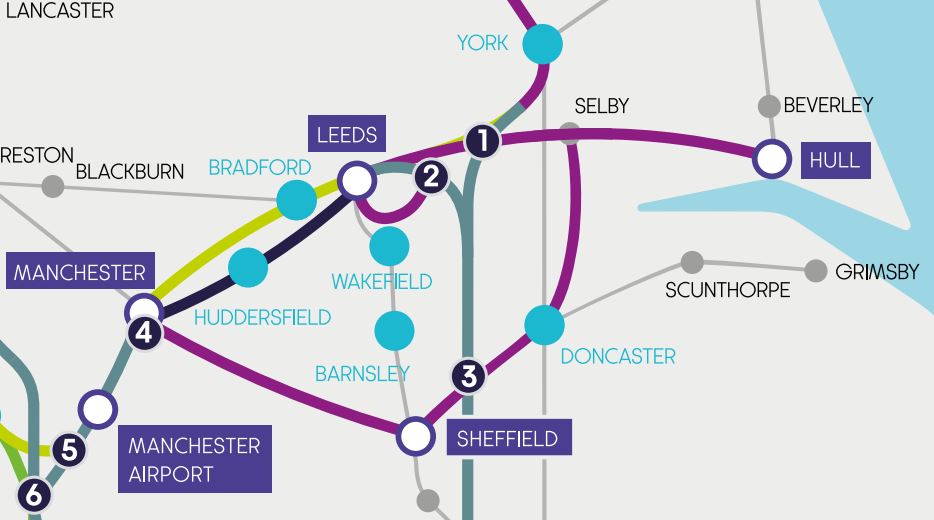
Hull is important for various reasons.
- It is large city.
- It is the Eastern terminus of an increasing number of routes.
- It is becoming a manufacturing centre for North Sea wind.
- The city will be the terminus of Northern Powerhouse Rail across the Pennines from Liverpool, Manchester and Leeds.
- Some reports have shown the city as a terminus of the Western leg of High Speed Two.
For these reasons, I will add Hull to the list.
I estimate that Hull and East Midlands Parkway will have a journey time of under an hour.
Lincoln
Looking forward to 2040, I wouldn’t bet against Lincoln being a very important city in the UK.
- It has history.
- It is becoming an important higher education centre.
- It has lots of space.
- Train operating companies like LNER and East Midlands Railway are improving services to the city.
But most importantly, as Aberdeen became Scotland’s centre for North Sea Oil and Gas, I believe that Lincoln could become England’s centre for North Sea renewable electricity and hydrogen.
I estimate that Lincoln and East Midlands Parkway will have a journey time of around an hour.
Milton Keynes
As I said for Cambridge, I believe that the East West Railway should be built to the same standard as the East Coast, Great Western, Midland and West Coast Main Lines.
This would enable classic-compatible services to be extended from Bedford to Milton Keynes.
As Bedford and East Midlands Parkway could be 60 minutes, timings depend on the times of the East West Railway, between Bedford and Milton Keynes.
Newcastle
As Newcastle already has a direct High Speed Two classic-compatible connection to and from East Midlands Hub station, this must be a possibility.
According to High Speed Two’s journey time calculator<, trains between Newcastle and East Midland Hub stations will take 96 minutes.
Northern Powerhouse Rail
The map I showed with Hull could indicate that a train could take High Speed Two to Leeds and then power its way across the Pennines calling at Leeds, Huddersfield, Manchester Piccadilly, Manchester Airport and Liverpool.
East Midlands Railway would have found a replacement for the Western part of their Liverpool and Norwich service, which is one of the worst railway services in the UK.
Oxford And Reading
As I said for Cambridge, I believe that the East West Railway should be built to the same standard as the East Coast, Great Western, Midland and West Coast Main Lines.
This would enable classic-compatible services to be extended from Bedford to Oxford and Reading.
As Bedford and East Midlands Parkway could be 60 minutes, timings depend on the times of the East West Railway, between Bedford and Oxford and Reading.
Peterborough
I think Peterborough could be an interesting possibility.
- It is the gateway to the East of England.
- It is a fully-electrified station.
- It has seven platforms with space for more.
- Most platforms could take a two hundred metre long train.
East Midlands Railway’s Liverpool and Norwich service, links Peterborough with Nottingham.
- That section of the route is 52 miles long.
- 29 miles of the route on the East Coast Main Line are electrified.
- The 100 mph Class 158 trains take 67 minutes and 30 minutes to travel between the two stops at Grantham and Peterborough.
- Some of LNER’s 125 mph electric Class 800 trains are timetabled to travel between the two stops at Grantham and Peterborough as fast as 18 minutes.
What time will be achievable on this short length of electrified track, when digital signalling is fully-deployed and 140 mph running is possible?
I can certainly see a bi-mode Class 801 train going between Peterborough and Nottingham in under an hour.
I also think that they could equal East Midlands Railway’s times to Nottingham going from Kings Cross via Grantham.
In Access To Toton – Scheme 6 – Trowell Curve, I advocated the following electrification, to allow battery-electric trains to work the Nottingham and Skegness service.
- The Allington Chord between Bottesford and Ancaster stations.
- The line linking the chord to Grantham station.
As Nottingham station will surely be electrified to allow classic-compatible High Speed Two trains to run between the station and Birmingham using High Speed Two, there will only be sixteen miles of double-track between Bottesford and Nottingham station without electrification.
I have just flown my helicopter along the route and there are one or two bridges and Netherfield station, that will need a rebuild, but it wouldn’t be the most challenging of electrifications.
Especially, as there is High Speed Two and the East Coast Main Line to provide power at both ends of the route.
But as it is only sixteen miles would they use battery-electric high-speed trains.
Surely, that is a crazy idea?
In Will High Speed Two’s Classic-Compatible Trains Have Battery Operation?, I explain why you would use such a concept to create an efficient train.
- The batteries drive the train and they are charged from the electrification and regenerative braking.
- Batteries would give a train recovery capability in case of overhead catenary failure.
- Batteries would be used for depot movements.
In Will The Trains On High Speed Two Have Batteries For Regenerative Braking?, I do a calculation for the battery size needed for a 250 mph Spanish high speed train and the batteries are surprisingly small, at 100 kWh per carriage.
I firmly believe, that the mathematics say it is possible for a high speed train to use on-board battery power to perhaps do thirty miles at say 90 mph on a line without electrification.
Sheffield
As Sheffield station will have a direct High Speed Two connection to and from East Midlands Hub station, this must be a possibility.
According to High Speed Two’s journey time calculator, trains between Sheffield and East Midland Hub stations will take 27 minutes.
Note.
- An article in the June 2020 Edition of Modern Railways shows that the Eastern leg of High Speed Two is planned to have nine tph, against a theoretical limit of 18 tph.
- The Leeds-Bedford and Nottingham-Birmingham Curzon Street will use another path.
- Not all services would need to be hourly.
- Could some CrossCountry services be replaced with classic-compatible services?
I feel there is plenty of scope to develop more classic-compatible services along the Eastern leg of High Speed Two.
Access To Toton – Scheme 6 – Trowell Curve
In £2.7bn East Midlands Plan Unveiled For HS2 Links, a series of schemes are given, which improve access to the High Speed Two East Midlands Hub station.
Scheme 6 is defined like this.
The implementation of a minimum of four direct rail services per hour linking the HS2 East Midlands Hub station to Derby, Nottingham and Leicester stations, as well as Loughborough, Matlock, Mansfield, Newark, Alfreton and Grantham, made possible by the building of a new piece of infrastructure, the Trowell Curve, which will link to the Midland Mainline. These additional connections will also create direct links to Stoke-on-Trent, Crewe, Newark and Lincoln, by extending services on existing routes.
That is a comprehensive set of connections.
The Trowell Curve
This Google Map shows the location of the village of Trowell.
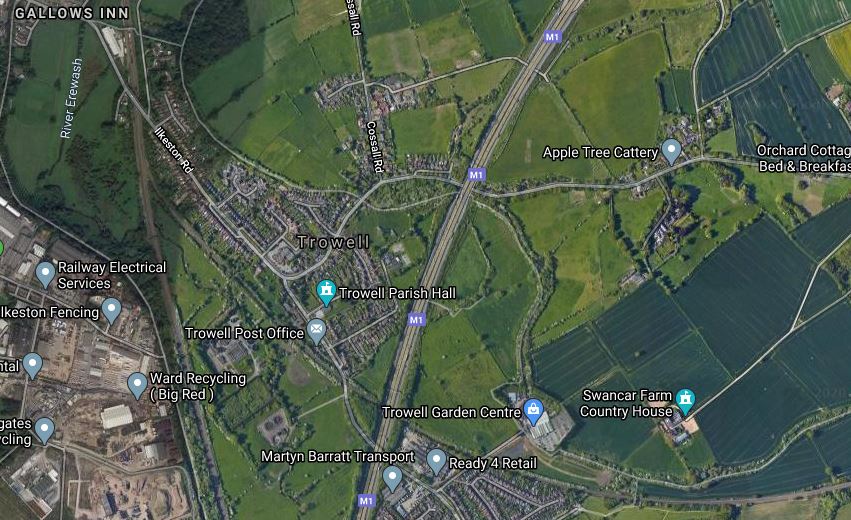
Note.
- The M1 Motorway running North-South up the map.
- The village of Trowell on the Western side of the motorway.
- Many people will have stopped at Trowell services on the motorway, which are just to the North of the top edge of the map.
- The North-South railway line to the West of the village is the Erewash Valley Line, that runs North from the East Midlands Hub station at Toton to Ilkeston, Langley Mill, Alfreton, Clay Cross North Junction, Chesterfield and Sheffield.
There is also another railway line, that runs on the South Western side of the village and across the bottom of the map, that connects the Erewash Valley Line to Nottingham station.
Trains can go between Nottingham and the North, but there is no connection to go between Nottingham and the South.
It looks like the proposed Trowell Curve will add extra connectivity to the junction, so that all these directions are possible.
- Nottingham to Ilkeston and the North.
- Ilkeston and the North to Nottingham.
- Nottingham to East Midlands Hub Station and the South.
- East Midlands Hub Station and the South to Nottingham
The Trowell Chord will be double-track or bi-directional and must certainly improve connectivity.
East Midlands Hub Station
The East Midlands Hub station will link various bus, tram and train services to High Speed Two.
According to the latest reports in the June 2020 Edition of Modern Railways there will be nine high-speed trains per hour (tph) through the station of which seven tph will stop.
Destinations served would be.
- Birmingham Interchange – 1 tph
- Birmingham Curzon Street – 3 tph
- Chesterfield – 1 tph
- Darlington – 1 tph
- Durham – 1 tph
- Leeds – 5 tph
- London Euston – 4 tph
- Newcastle – 1 tph
- Old Oak Common – 4 tph
- Sheffield – 2 tph
- York – 2 tph
As the capacity of High Speed Two has been said to be 18 tph, there must be the possibility for extra services to run on this leg of High Speed Two.
As four tph is considered by many to be a good Turn-Up-And-Go frequency and two tph a sensible minimum frequency, I can see another train between Birmingham Curzon Street and Newcastle with stops at East Midlands Hub, Leeds, Darlington and Durham.
The design has certainly left enough capacity for those that follow us!
Especially, as Wikipedia says that the new East Midlands Hub station will have eight platforms.
- It would need a minimum of two through platforms for High Speed Two services
- Would it need a terminating platform for High Speed Two services? Not for the currently proposed timetable.
- It would need a minimum of two through platforms for East Midlands Railway’s Inter-City services.
- Would it need a terminating platform for East Midlands Railway’s Inter-City services? Not for the currently proposed timetable.
- There would probably be a need for two through platforms for local services.
On this crude look, eight platforms would appear to be more than enough.
Current Services Through The Area
In Railway Lines Through East Midlands Hub Station, I detailed where the new East Midlands Hub station is to be built and the rail services in the area.
After listing all the services I said this.
Note.
- Not one service goes past the site of the new East Midlands Hub station.
- Most services to and from Nottingham seem to use the Attenborough and Beeston route
- Services between Derby and Nottingham go via the Long Eaton, Attenborough and Derby route.
- Services from the North use the Erewash Valley Line and turn East at Trowell for Nottingham.
It is fairly obvious that there needs to be a sort-out of services to fit in with the location of the new East Midlands Parkway station.
So will the new Trowell Curve give the new station, the rail access it needs?
The Splitting Of The Norwich and Liverpool Service
I wrote about this in Abellio’s Plans For Norwich And Liverpool, where I said this about the basic plan.
Early in the new franchise the Liverpool – Nottingham section will transfer to another operator, which will enable the two halves of the service to better meet the needs of customers.
It will become two services.
- Norwich and Derby via Nottingham, Trowell Curve, East Midland Hub and Long Eaton.
- Nottingham and Crewe via Trowell Curve, East Midland Hub, Long Eaton and Derby.
The second service will go to another operator.
I said earlier, this change is for the needs of customers.
It will also have other effects.
- It will add an extra service between Nottingham and Derby
- It will remove the Norwich and Liverpool service from the Erewash Valley Line.
Has this change being driven by the need to provide good connections to High Speed Two?
Train Services To East Midlands Hub Station
The following sub-sections detail the service between various stations and the East Midlands Hub station.
Alfreton Station
Alfreton station on the Erewash Valley Line, is going through major changes to train services.
Currently, there are these two hourly services.
- East Midlands Railway’s Liverpool and Norwich service.
- Northern’s Leeds and Nottingham service.
Neither service currently goes through the site of East Midlands Hub station and East Midlands Railway will split the Liverpool and Norwich service, so it won’t go anywhere near Alfreton.
Consider.
- Alfreton station probably needs at least a two tph service to East Midlands Hub station.
- The Northern service might be able to go via East Midlands Hub station.
- Both Alfreton and the East Midlands Hub station are on the Erewash Valley Line.
- Trains could run between Alfreton and Nottingham via Langley Mill, Ilkeston, East Midlands Hub, Attenborough and Beeston.
- Trains could run between Alfreton and Derby via Langley Mill, Ilkeston, East Midlands Hub, Long Eaton and Spndon.
Or would it be best to put in a bay platform at Alfreton station and run a shuttle service between Alfreton and the East Midlands Hub stations?
- The minimum frequency would be two tph.
- Up to four tph could probably be easily run.
- Trains would call at all stations.
- Extra stations could be added.
- The distance between Alfreton and East Midlands Hub stations is around twenty miles, so a battery-electric train could be possible.
This Google Map shows Alfreton station.
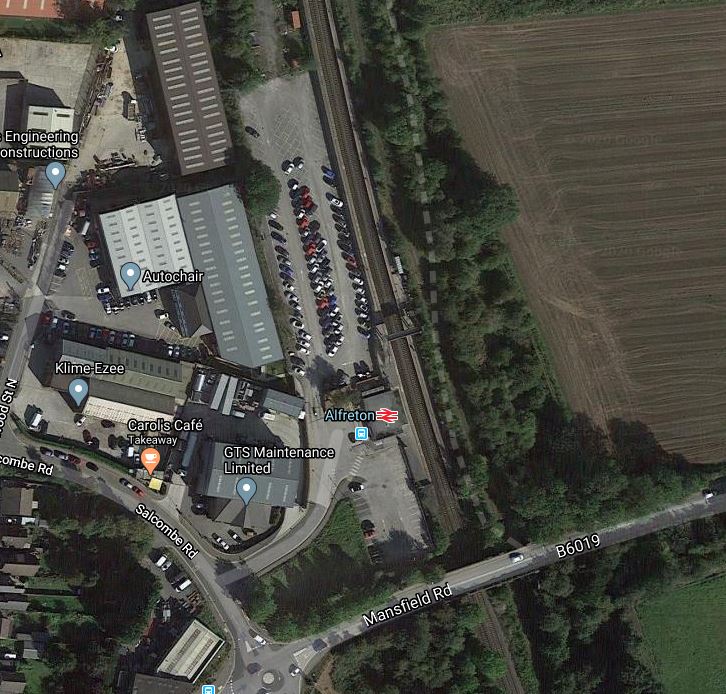
I suspect a bay platform could be added. Or failing that, there could be a turnback siding to the North of the station.
Surely, a local train solution would be a spur to development in the area, especially if it connected to High Speed Two at East Midlands Hub station for High Speed Two.
Derby Station
Consider.
- The current half-hourly East Midlands Railway services between St. Pancras and Sheffield, could not call at both the East Midlands Hub and Derby stations, unless it performed a reverse at East Midlands Hub station.
- Two hourly CrossCountry services, that call at both Derby and Nottingham could use a route via Long Eaton, East Midlands Hub and Trowell Curve.
- An hourly East Midlands Railway service between Newark Castle and Matlock could use a route via Long Eaton, East Midlands Hub and Trowell Curve
- The split service between Liverpool and Norwich would run two tph between Nottingham and Derby, via Long Eaton, East Midlands Hub and Trowell Curve, in both directions.
Six tph can be provided by existing services calling at the new East Midlands Hub station.
Grantham Station
Consider.
- The current hourly East Midlands Railway service between Norwich and Liverpool, calls at Grantham station and could call at the East Midlands Hub, if it used the Trowell Curve route.
- After the service has been split, the two sections will probably both go between Nottingham and Derby via long Eaton, East Midlands Hub and Trowell Curve.
- The current hourly East Midlands Railway service between Nottingham and Skegness calls at Grantham station, but doesn’t pass the site of the East Midlands Hub station.
- This service could be extended to the East Midlands Hub station using the Trowell Curve or the Beeston/Attenborough route, where it would terminate.
It appears relatively easy to give Grantham a two tph service to the East Midlands Hub station.
Ilkeston Station
Ilkeston station would be a stop on all services between the East Midlands Hub and Alfreton and Mansfield stations, so would have a frequent service to the East Midlands Hub station.
Langley Mill Station
Langley Mill station would be a stop on all services between the East Midlands Hub and Alfreton and Mansfield stations, so would have a frequent service to the East Midlands Hub station.
Leicester Station
Consider.
- The current half-hourly East Midlands Railway services between St, Pancras and Nottingham, could call at both the East Midlands Hub and Leicester stations, if the trains used the Trowell Curve.
- Any Ivanhoe Line services between Lincoln and Leicester, could call at both the East Midlands Hub and Leicester stations, if the trains used the Towell Curve.
Leicester would get a frequent train service from the East Midlands Hub station.
Lincoln Station
Lincoln is the Eastern terminal of Ivanhoe Line services. Currently, they run as far as Leicester, but by the time the East Midlands Hub station opens, the services will probably terminate at Burton-on-Trent. I wrote about this project, which is being promoted by the Restoring Your Railway Fund in Reinstatement Of The Ivanhoe Line.
I can see two tph between Lincoln and Burton-on-Trent.
- Stations served could be Newark, Nottingham, East Midlands Hub, East Midlands Parkway, Loughborough, Leicester, Coalville and Ashby-de-la-Zouch.
- The services would use the proposed Trowell Curve.
- Services could be extended to Grimsby and Cleethorpes at the Lincoln end of the service.
- Services would co-ordinate with East Midlands Railway’s Inter-City services to and from London with easy interchange at Leicester and or East Midlands Hub stations.
- Trains could be five-car Class 810 trains to take full advantage of the 125+ mph running between Leicester and Trowell.
- These trains have a shorter dwell time than many and timings could benefit.
Effectively, East Midlands Railway would have a second main line.
Loughborough Station
Consider.
- East Midlands Railway currently has two Inter-City and one Ivanhoe Line service, that stop in Loughborough station and could stop at the East Midlands Hub station.
With another service, Loughborough could have four tph to and from the East Midlands Hub station.
Mansfield Station
This is where Maid Marion flashes her lashes and gets the engineers to reopen her line for passenger trains between North of the former Pye Corner station on the Erewash Valley Line and Kirkby-in-Ashfield station on the Robin Hood Line.
This Google Map shows the route.
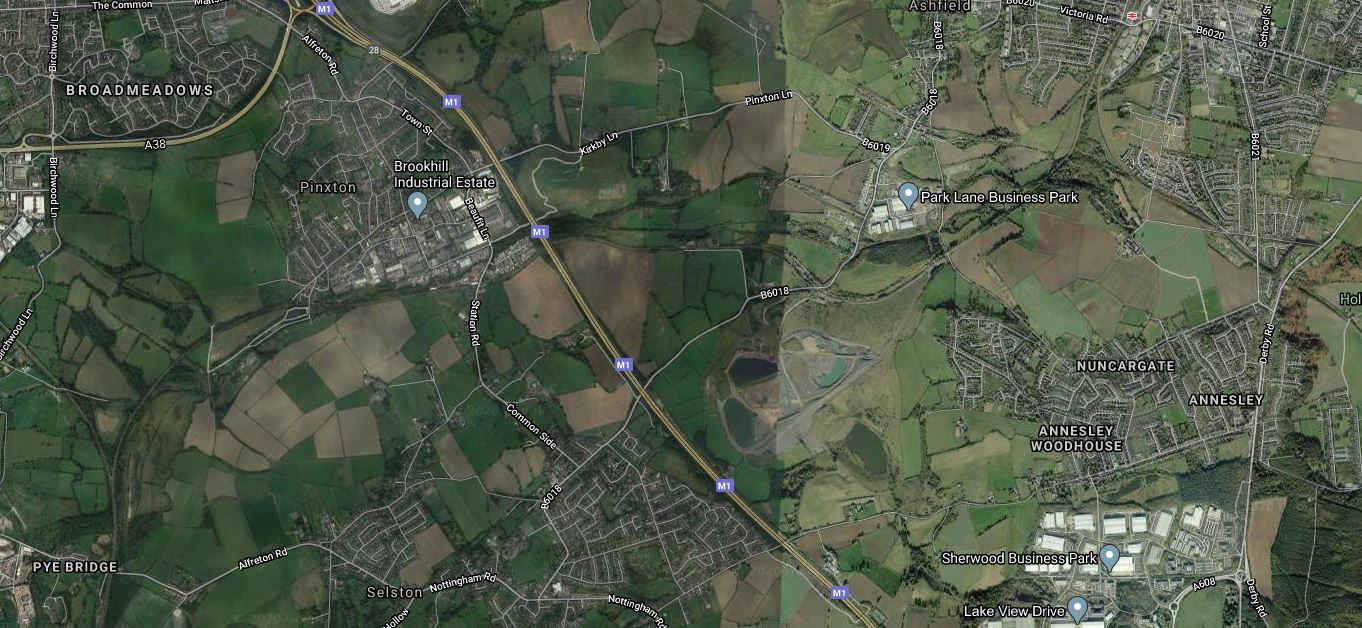
Note.
- The M1 Motorway crossing the map from North-West to South-East.
- Pye Corner is in the South-West corner of the map.
- The Erewash Valley Line runs North-South through Pye Corner.
- Kirkby-in-Ashfield is the urban area in the North-East corner of the map.
- Kirkby-in-Ashfield station is shown by the usual red symbol.
- The Robin Hood Line runs North-South through Kirkby-in-Ashfeld station.
On a high-resolution screen, it’s possible to pick out the freight line, that will become the Maid Marian Line.
- The Maid Marian Line is double-track.
- According to Real Time Trains, the distance between Kirkby-in-Ashfield and Langley Mill stations is around nine miles.
- A freight train took twenty-two minutes between the two stations.
- As there are two tph on the Robin Hood Line, I think it would be reasonable to have a similar frequency on the Maid Marian Line.
- Trains between the East Midlands Hub and Mansfield stations would pass Ilkeston, Langley Mill, Kirkby-in-Ashfield and Sutton Parkway stations.
- Trains could terminate at Nottingham using the Attenborough route.
- Trains could terminate at Derby using the Long Eaton route.
The Maid Marian Line could improve services from Derby, Mansfield, Nottingham and Worksop stations to the new East Midlands Hub station.
Matlock Station
Consider.
- Matlock is currently served by an hourly service between Matlock and Newark Castle via Derby, Spondon, Long Eaton, Attenborough, Beeston, Nottingham and several other smaller stations, which is a service that goes past the site of the East Midlands Hub station.
If this service were to call at the East Midlands Hub station and be doubled in frequency, it would be a very valuable connecting service to and from the East Midlands Hub station.
To call at East Midlands Hub station, it would need to use the Trowell Curve.
Newark Station
Consider.
- Newark is a calling point on the Ivanhoe Line service between Lincoln and Leicester.
- Newark is currently served by an hourly service between Matlock and Newark Castle via Derby, Spondon, Long Eaton, Attenborough, Beeston, Nottingham and several other smaller stations, which is a service that goes past the site of the East Midlands Hub station.
Both services could be increased to two tph, so Newark might end up with a four tph service to Nottingham and East Midlands Hub stations with a two tph service to Derby and Lincoln.
Nottingham Station
Consider.
- The current half-hourly East Midlands Railway services between St. Pancras and Nottingham could use the Trowell Chord route, as this would allow a call at the East Midlands Hub station.
- Ivanhoe Line services between Lincoln and Leicester could also use the Trowell Chord route, which with a change at the hub station, would give Lincolnshire a faster service to and from London and Birmingham.
- In Reinstatement Of The Ivanhoe Line, I wrote about plans to extend the Ivanhoe Line to Burton on Trent.
- The split service between Liverpool and Norwich would run two tph between Nottingham and Derby, via Long Eaton and East Midlands Hub stations, in both directions.
- If the Nottingham and Skegness service, were to be extended to East Midlands Hub, this would add extra services between Nottingham and East Midlands Hub stations.
The required four tph between the East Midlands Hub and Nottingham station could be provided by the diversion of existing services to call at the East Midlands Hub station and using the Trowell Curve.
Stoke-on-Trent And Crewe Stations
Consider.
- Currently, there is an hourly East Midlands Railway service between Crewe and Derby, that calls at nine stations including Kidsgrove, Stoke-on-Trent and Uttoxeter.
- There are also plans to split the Liverpool and Norwich service into two, with the Western half possibly becoming a Crewe and Nottingham service via Derby, East Midlands Hub and Long Eaton.
These two services could be arranged to give a two tph service between Nottingham, Long Eaton, East Midlands Hub and Derby in the South and Stoke-on-Trent and Crewe in the North.
Back-To-Back Services At East Midlands Hub Station
Running services through a station is always more efficient as terminating services in a station will need a bay platform or turnback facility of some sort.
In my analysis, I have proposed that these services might terminate at East Midlands Hub Station.
- A possible shuttle service between East Midlands Hub and Alfreton stations.
- The Maid Marian Line service between East Midlands Hub and Mansfield and Worksop stations.
- The Nottingham and Skegness service could be extended to East Midlands Hub station.
- The Crewe and Derby service could be extended to Nottingham via East Midlands Hub station.
Note.
- The splitting of the Liverpool and Norwich service will result in an overlap between Nottingham and Derby.
- Matlock and Newark services already run back-to-back through the area.
So would it be logical to join some services back-to-back through East Midlands Hub station?
s an example, the Maid Marian Line and Skegness services could be joined into one service.
Other services could follow the precedent of the splitting of the Liverpool and Norwich service.
- Trains coming and going from the East terminate at Derby.
- Trains coming and going from the West terminate at Nottingham.
If the following were arranged.
- Grantham and Mansfield were back-to-back.
- Alfreton and Crewe services terminated at Nottingham.
- Norwich services terminated at Derby.
There would be seven tph between Nottingham and Derby via Long Eaton and East Midlands Hub stations.
Battery-Electric Operation
Consider.
- Hitachi are claiming, that the battery-electric versions of their AT-300 trains, like the Class 810 trains will have a battery range of 55-65 miles and take ten minutes to recharge.
- Nottingham and Derby are sixteen miles away and trains between the two cities, take as long as thirty minutes for the trip.
- There will be high quality electrification at East Midlands Hub station.
In addition, station distances from the East Midlands Hub station are as follows.
- Alfreton – 17 miles
- Crewe – 55 miles – 35 miles without electrification (Derby and Stoke Junction)
- Derby – 6 miles
- Grantham – 20 miles
- Ilkeston – 7 miles
- Langley Mill – 10 miles
- Lincoln – 43 miles
- Mansfield – 23 miles
- Matlock – 23 miles
- Newark Castle – 26 miles
- Nottingham – 10 miles
- Skegness – 80 miles
- Stoke-on-Trent – 42 miles – 35 miles without electrification (Derby and Stoke Junction)
I think the following would be possible on battery power.
- Return journeys to Alfreton, Grantham, Ilkeston, Langley Mill, Mansfield, Matlock and Newark Castle.
- Return journeys to Lincoln with a charge at the destination.
- Return journeys to Crewe and Stoke using the electrification between Stoke Junction and Crewe.
Running battery-electric trains between East Midlands Hub and Skegness station would need a bit of ingenuity.
The building of the Allington Chord in 2005, may have opened up a way for battery-electric trains to be able to run between Nottingham and Skegness.
Consider.
- Bottesford station is the station nearest to Grantham on the Western side of the East Coast Main Line and it is 15.3 miles from Nottingham.
- Ancaster station is the station nearest to Grantham on the Eastern side of the East Coast Main Line and it is 28 miles from Nottingham.
- The original route between Bottesford and Ancaster station caused delays on the main line, so it was replaced by two routes.
- A modified version of the original route allows trains to call at Grantham station, where they reverse before continuing. The distance is 18.7 miles and typically takes 33 minutes
- A double-track short cut under the East Coast Main Line is about 12.7 miles and typically takes 17 minutes.
- The distance between Ancaster and Skegness is 46.7 miles.
- The East Coast Main Line is electrified.
I wonder, if it were possibly to electrify the following tracks.
- The direct double track between Ancaster and Bottesford stations.
- The access lines from the Allington Chord into Grantham station.
Hopefully, as the tracks, were built in 2005, they shouldn’t be too challenging to electrify.
This would enable a train from East Midlands Hub to Skegness to use the following procedure.
- Use the electrified line between East Midlands Hub and Nottingham stations, charging the battery en route.
- Call at Nottingham station and lower the pantograph.
- Leave Nottingham with a full battery.
- Run between Nottingham and Bottesford stations on battery power.
- Call at Bottesford station and raise the pantograph.
- Use either of the electrified routes between Bottesford and Ancaster stations, charging the battery en route.
- Call at Ancaster station and lower the paragraph.
- Run between Ancaster and Skegness stations on battery power.
After charging the train at Skegness, the return would use the following procedure.
- Leave Skegness with a full battery.
- Run between Skegness and Ancaster on battery power.
- Call at Ancaster and raise the paragraph.
- Use either of the electrified routes between Ancaster and Bottesford stations, charging the battery en route.
- Call at Bottesford station and lower the pantograph.
- Run between Bottesford and Nottingham on battery power.
- Call at Nottingham station and raise the pantograph.
- Use the electrified line between Nottingham and East Midlands Hub stations, charging the battery en route.
It’s almost as if, the Allington Chord was designed for battery-electric trains.
Conclusion
The Trowell Curve with a little bit of help from a few friends can create a battery-electric network of local lines based on the three important stations of Nottingham, East Midlands Hub and Derby.
I
£2.7bn East Midlands Plan Unveiled For HS2 Links
The title of this post, is the same as that of this article on Rail News.
This is the first two paragraphs.
A bold plan costed at £2.7 billion for the area around the HS2 hub in the East Midlands has been published by a group of councils, transport bodies and East Midlands Airport.
The core of the scheme is the future East Midlands Hub at Toton, and the plan proposes direct access to the Hub from more than 20 cities, towns and villages in the East Midlands.
If you want to read the original report by Midlands Connect, there’s a download link on this page of their web site.
The project is in three phases.
Phase One
Phase One is to be operational within ten years.
- Scheme 1 – The extension of the Nottingham tram system (Nottingham Express Transit or NET light rail system) from the Toton Lane Park and Ride site to Long Eaton via two new stops at the planned Innovation Campus development and HS2 East Midlands Hub station.
- Scheme 2 – New bus services between the HS2 East Midlands Hub and Amber Valley, West Bridgford and Clifton.
- Scheme 3 – Bus Rapid Transit between the HS2 East Midlands Hub and Derby city centre via Pride Park and Derby railway station.
- Scheme 4 – Extension of the HS2 East Midlands Hub A52 highway access route to the A6005 Derby Road in Long Eaton.
- Scheme 5 – Capacity enhancements to M1 Junction 25, increasing road capacity and improving access to the HS2 East Midlands Hub station and Innovation Campus site.
- Scheme 6 – The implementation of a minimum of four direct rail services per hour linking the HS2 East Midlands Hub station to Derby, Nottingham and Leicester stations, as well as Loughborough, Matlock, Mansfield, Newark, Alfreton and Grantham, made possible by the building of a new piece of infrastructure, the Trowell Curve, which will link to the Midland Mainline.
- Scheme 7 – New rail service between Mansfield, Derby and Leicester with stops at Ilkeston, Langley Mill, Kirkby in Ashfield, Sutton Parkway and HS2 East Midlands Hub via the Kirkby Freight Line (Maid Marian line).
Note.
- These schemes will be built before the HS2 East Midlands Hub station opens.
- I discussed Scheme 7 – The Maid Marian Line in After The Robin Hood Line Will Nottingham See The Maid Marian Line?.
The most important part of Phase One is that all these seven schemes will be built before High Speed Two reaches the East Midlands. So hopefully, there will be a continuous stream of improvements in the East Midlands.
Phase Two
Phase Two will be operational within twenty years.
- Scheme 8 – Extension of the NET light rail system or enhanced Bus Rapid Transit from the HS2 East Midlands Hub station to Derby.
- Scheme 9 – The construction of a railway station at East Midlands Airport, connected to the Midland Mainline via a spur to the south of Kegworth village, allowing new direct rail services to the airport from Derby, Nottingham, Leicester and Mansfield as well as some intermediate stations including HS2 East Midlands Hub and East Midlands Parkway. This intervention will vastly improve public transport access to East Midlands Airport for passengers and staff.
Phase Three
Phase Three will be operational within twenty-five years.
- Scheme 10 – A new rail line between East Midlands Airport (opened during Phase 2) and Derby via the South Derby Growth Zone residential and employment developments and the Rolls Royce site, designed to support local housing and employment growth.
- Scheme 11 – A tram-train service connecting into the NET light rail network (Phase 1) to a proposed development site (11,000 houses and other associated development) to the west of East Midlands Airport. This scheme would also serve stops within the Ratcliffeon-Soar power station development site and could also serve Kegworth village and the East Midlands Gateway Logistics Park.
It is comprehensive project and I will discuss the various schemes in separate posts.
Reopening Meir Railway Station Between Stoke-On-Trent And North Staffordshire
This is one of the successful bids in the First Round of the Restoring Your Railway Fund.
Meir station was on the Crewe-Derby Line in the area of Meir.
This Google Map shows the railway line running through the area.
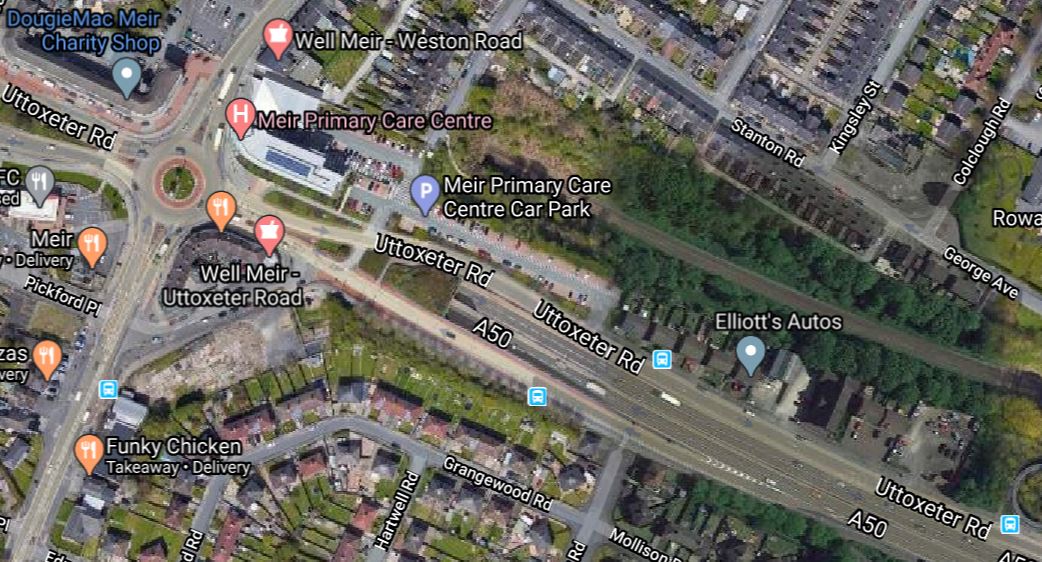
Note.
- The railway is double track and looks to be in a cutting.
- The railway runs in a 744 metre long tunnel under Meir.
- The Eastern portal of the rail tunnel is just above the label indicating the Meir Primary Care Centre Car Park.
- There is also a road tunnel taking the A50 under the roundabout.
The original station was to the East of the tunnel portal.
If you look at this area in higher definition on Google Maps, it looks like space is at a premium and the Primary Care Centre has a parking problem.
I wonder, if the tentative plans for reopening, incorporate innovative ideas to improve the car parking and extend the Primary Care Centre.
The Train Service
These are my thoughts on the train service.
- Currently, the service is an hourly train in both directions and it is run by elderly diesel multiple units.
- The trains will be replaced by more modern Class 170 trains in the near future.
- These faster trains may be able to double the service frequency.
I estimate, the service will take about nine minutes to and from Stoke.
Link To High Speed Two
Stoke will have an hourly high speed service between London and Manchester, when High Speed Two opens. If the high speed and local services connected ay Stoke-on-Trent station, that could be very convenient.
Electric Trains Between Derby And Crewe
The Crewe-Derby Line is not fully-electrified, but the Northern section between Crewe and Stoke is electrified to give more flexibility to trains on the West Coast Main Line, when there is engineering work or other problems.
If a new station is being built at Meir, it would be likely that, the following works will be done at the same time.
- Meir station will be made electrification ready.
- The nearby Meir tunnel will be given a full service and made electrification ready.
Could the electrification be extended to Meir or even Blythe Bridge stations?
Consider.
- The distance between Crewe and Derby is fifty miles.
- Between Crewe and Stoke is fully-electrified and the two stations are fifteen miles apart.
- Extending the electrification to Blythe Bridge station would increase the electrified part of the line to twenty miles.
- Derby station was recently upgraded with extra platforms and other goodies.
- Was Derby station prepared for electrification? If so, charging for battery trains could be installed!
- Hitachi have stated that battery-electric versions of their AT-300 trains will have a range of 55-65 miles on battery power and can be charged in ten minutes.
- Both Avanti West Coast and East Midlands Railway will have trains that could be fitted with batteries
There must come a point, where a battery-electric train could work these services on the Crewe-Derby Line.
- Manchester Piccadilly and Derby via Uttoxeter, Stoke, Crewe and Manchester Airport.
- London St. Pancras and Stoke via Derby and Uttoxeter.
It would also open up valuable diversion routes.
Conclusion
I think this station reopening, has the potential to be very worthwhile.
It does appear to me, that this could be a very convenient project for Network Rail to do some other projects, whilst the new station is built.
Railfuture On The Castlefield Problem
This report on the railfuture web site is entitled The Castlefield Problem – A Great Opportunity For Freight.
This is the introduction to the report.
Railfuture believes that railways should be the transport mode of choice if we are to balance the needs of the economy with those of tackling the Climate Emergency and campaigns for a bigger and better railway capable of carrying more freight as well as providing for ever increasing passenger demand.
Manchester’s Castlefield corridor is a bottleneck and has become a byword for unreliability. It is expected to carry 12 passenger services and one freight train in each direction every hour. This report recommends some medium to long term interventions aimed in particular at expanding the freight offering, since movement of goods by road is the most difficult to decarbonise.
It then goes on to describe the problem in detail. This is an important paragraph.
Meanwhile, the increase in intermodal freight traffic between Trafford Park and the southern ports has seen all the available freight capacity (known as signalling paths) taken up, with each freight train using the equivalent of two passenger paths.
The report then makes these points about the freight services to and from Trafford Park Rail Freight Terminal.
- Freight has no choice but to use the Castlefield route.
- There is no access to Trafford Park is from the West Coast Main Line (WCML) other than via Castlefield.
- As freight doesn’t complain on social media when it is late or cancelled, it is a popular target for politicians looking for a solution.
The report says that the ideal solution would be to access Trafford Park from the western end.
The report then asks, the fundamental question, as to whether the Trafford Park terminal is fit for purpose and details these points.
Operation is not very efficient.
It only has a limited number of sidings with gantries.
Can Trafford Park handle the growth of rail freight to and from Manchester?
This map shows the Trafford Park terminal.
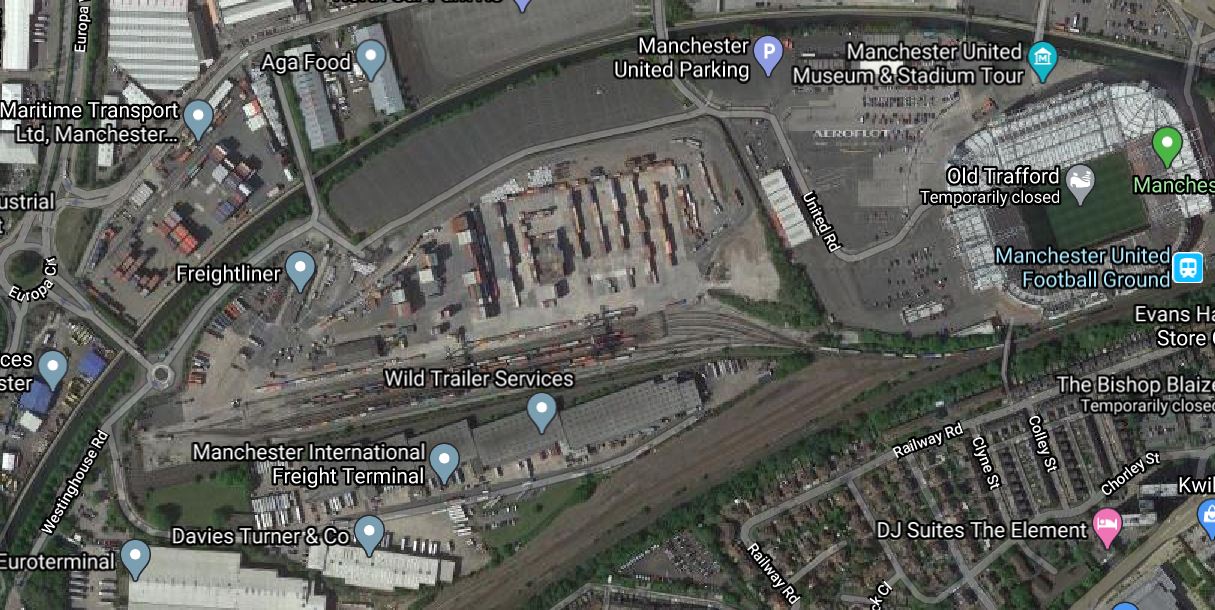
There doesn’t appear to be much space to expand.
railfuture’s Solution
railfuture are proposing that a second rail freight terminal be built in the Borough of Trafford at Carrington Park, which is described by this paragraph in the report.
This brownfield site, once the Shell chemical works, lies to the south west of Manchester but still within Trafford Borough. Until its closure it enjoyed rail access via the former line between Stockport and the Warrington Central (CLC) line at Glazebrook. It is currently a Business Park, although the lorry parking facility in the area we are interested in could easily be relocated to another part of this vast and mostly empty site.
This Google Map shows the site.
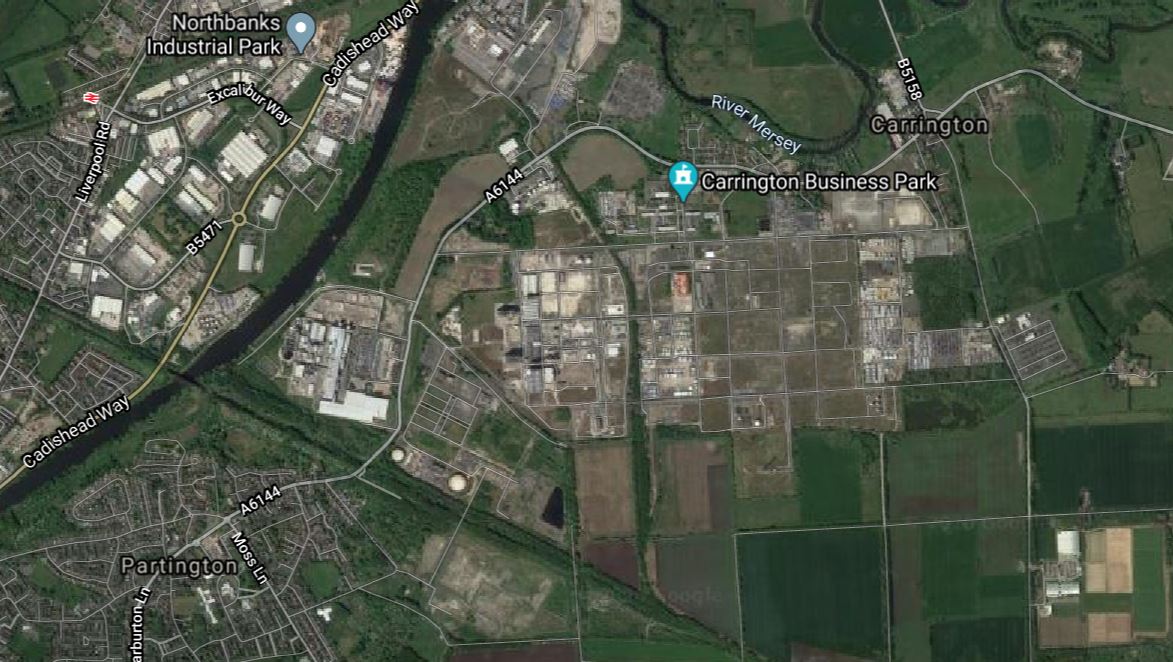
Note.
- The blue arrow indicating the centre of Carrington Business Park.
- Irlam station on the route between Liverpool and Manchester line via Warrington is in the North West corner of the map.
- The Manchester Ship Canal running across the North-West corner of the map.
- The route of the former Glazebrook East Junction–Skelton Junction line, runs diagonally across the bottom of the map.
- Another railway used to run up the middle of the site.
railfuture’s plan for Carrington Park is as follows.
- Build a Rail Freight Terminal North-South along the route of the disused railway indicated in 5.
- Reinstate the Glazebrook East Junction–Skelton Junction line, so that freight trains can go between Carrington Park and the East.
- I doubt, it’s possible to connect to the Liverpool and Manchester line via Warrington, as there is Carrington power station in the way.
- But it would link Carrington Park and Trafford Park.
Once at Skelton Junction, trains can go East to connect with the Manchester branch of the West Coast Main Line between Stockport and Cheadle Hulme stations.
I have followed the line to the East in my helicopter.
It is double track until it splits from the route to Stockport and Manchester under Junction 4 of the M60.
It continues as single-track under the Styal Line, before turning South.
It then passes under the Manchester branch of the West Coast Main Line.
This Google Map shows where we have arrived.
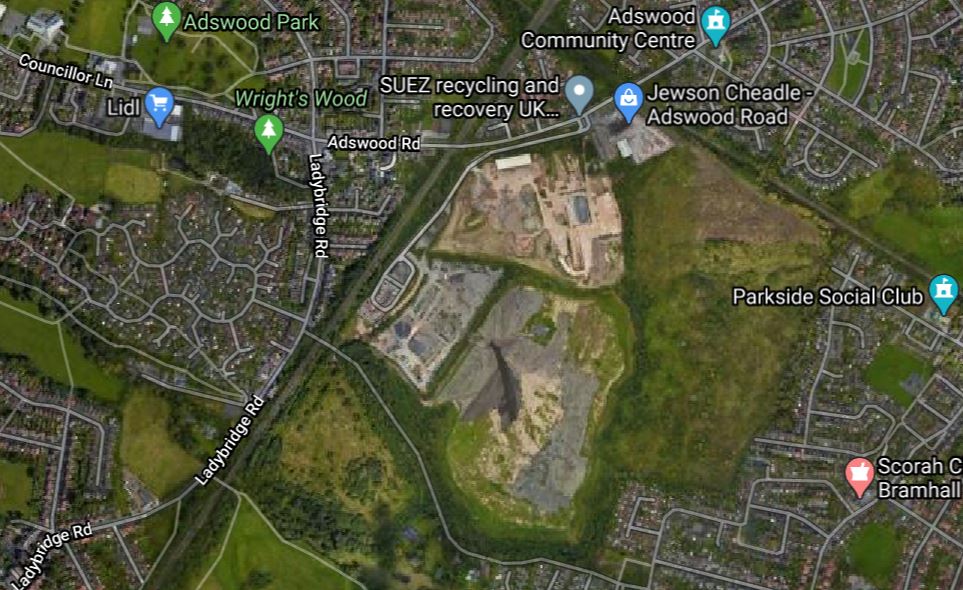
Note.
- The Manchester branch of the West Coast Main Line going diagonally North-South across the map.
- Stockport and Manchester are to the North.
- Cheadle Hulme station is just off the map to the South.
- The line, I’ve been following crossing the Manchester branch in an East-West direction.
Conveniently, the large block of land lying to the South-East of where the two rail lines cross, is a landfill site that closed in 1985.
railfuture’s plan is to use this space to create a new Adswood junction between the two lines.
They recommend building a double-track junction.
- Trains could go between Manchester and the South via Wilmslow or Stoke.
- Trains via Stoke would avoid the busy lines through Crewe.
The report, then goes on to list a load of other benefits that could be built into the scheme.
- Adswood junction could be built, so that stone trains between the Peak District and the South could use a simpler route.
- The route through Carrington Park could be extended to Trafford Park.
- Passenger services could be run on the new route.
- There could be possibilities to combine parts of the scheme with High Speed Two.
- A new route to the North East is thought possible.
The report says this about the costs and benefit cost ratio of the proposed scheme.
Benchmarking against the outturn prices of similar projects undertaken elsewhere and allowing for inflation, we expect the costs to come in under £300m. This does not include potential third party investment or assume any release value of eventual redevelopment at Trafford Park. Adding the connection at Flixton would probably add a further £100m, still giving an overall BCR of over 2:1.
This scheme needs serious consideration.
Euston Station – 8th May, 2020
I had walked to Euston station from Kings Cross along the back roads, which is a much better route than along the polluted Euston Road.


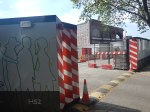

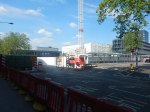

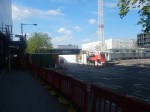
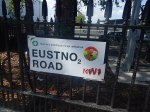

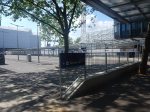
Note, that the train part of the station seemed to be functioning normally.
The Abandoned Tube Entrance At Euston
These pictures show the abandoned tube entrance at Euston station.

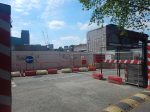
The station was built to serve the Charing Cross, Euston and Hampstead Railway, which is now part of the Northern Line.
- It opened in 1907.
- The building will now be demolished to make way for High Speed Two.
- I can’t ever remember using the entrance.
It looks to be a station, which are typical of many, that were created by Leslie Green.
- Wikipedia has a list of over forty stations, that were designed by Leslie Green.
- Many are Grade II Listed
- His designs inspired the look of the fictional Walford East Underground station in EastEnders.
I would reckon, the one I use most is Oxford Circus.
Manchester Piccadilly ‘Super Hub’ Proposed
The title of this post is the same as that of this article on Rail Technology Magazine.
This is the introductory sentence.
A Manchester Piccadilly ‘super hub’ has been proposed as part of the High Speed North rail project.
And these two paragraphs lay out the proposed design.
To create the super hub, the report suggests a new tunnel from Ordsall into Manchester Piccadilly from the west, which could connect to High Speed 2 (HS2) and Northern Powerhouse Rail (NPR).
Fast trains from Chester and North Wales, Liverpool, Blackpool, Barrow and Glasgow could travel through the super hub with services emerging eastwards and across the Pennines to Leeds/Bradford, Sheffield, Hull, York and Newcastle.
Five years ago, I wrote Whither HS2 And HS3?, which argued for greater integration of the two routes and more tunnelled stations under major cities to build High Speed Two and Northern Powerhouse Rail with less disruption.
Part of that post was deliberately over the top, but it seems that others have been thinking in a similar way.
Last year, I wrote Changes Signalled For HS2 Route In North, which was an attempt to add detail to this report on the Transport for the North web site, which is entitled At A Glance – Northern Powerhouse Rail.
The proposed Manchester Piccadilly ‘Super Hub’ fits very well with the Transport for the North report.
- The station, could have entrances and exits were all over Manchester City Centre
- The main platforms could be long East-West through platforms, that would have direct tunnelled approaches from both directions.
- There could also be terminating platforms to take services from North Wales, Blackpool, Barrow and Glasgow.
- According to the Wikipedia entry for High Speed Two, the Western tunnel would be 7.5 miles long and link Manchester Piccadilly and Manchester Airport stations at speeds of up to 142 mph.
- As a High Speed Two size tunnel will be needed on the Eastern approach, if High Speed Two trains eventually use the route, could this tunnel extend for perhaps five miles with speeds of up to 142 mph, to speed up journey times?
- Journey times between Manchester Piccadilly and Manchester Airport stations could be under four minutes.
The Manchester Piccadilly ‘Super Hub’, High Speed Two And Liverpool
This clip of a map from the Transport for the North report shows a schematic of the current and possible rail links in the area.

High Speed Two would appear to come North and split into two routes.
- One continues North to join the existing West Coast Main Line just South of Wigan.
- Another goes through Crewe station.
North of Crewe, the two routes join and then split into three at the Junction labelled 6.
- To Warrington and Liverpool
- To Wigan, Preston and Scotland
- To Manchester Airport and Manchester.
A second Junction labelled 5, allows Northern Powerhouse Rail trains to run Liverpool-Warrington-Manchester Airport-Manchester.
The Transport for the North report, also says the following.
- There could be a new Warrington South Parkway station.
- Six trains per hour (tph) between Liverpool and Manchester via Warrington are planned.
- Journey times will be 26 minutes.
Will a Liverpool and Manchester time of 26 minutes be possible with two stops?
- I estimate Liverpool and Manchester will be a distance of 43 miles.
- As the will be a newly-built railway high speed railway, I suspect it will be at least a 125 mph line between Liverpool and Manchester Airport.
- But it is perfected feasible, that this section could be designed for speeds up to 140 mph or even the High Speed Two speed of 186 mph.
- TransPennine Express‘s current Class 802 trains, can run at up to 140 mph, so could take advantage of the higher speed.
- In addition, the Wikipedia entry for High Speed Two says that trains will use the Manchester Airport to Manchester City Centre tunnel at speeds of up to 142 mph.
Calculating journey times for various average speeds, including the two stops at Warrington South Parkway and Manchester Airport stations gives the following.
- 100 mph – 26 minutes
- 125 mph – 21 minutes
- 140 mph – 18 minutes
If the Liverpool and Manchester Airport section were to be built to High Speed Two standards, I can see a very comfortable Liverpool and Manchester time of under twenty minutes.
The Twenty-First Century will finally get a modern and fast Liverpool and Manchester Railway.
Going East From The Manchester Piccadilly ‘Super Hub’
The principle long-distance destinations to the East of Manchester Piccadilly station use one of two routes.
The Huddersfield Line to Leeds and beyond.
The Hope Valley Line to Sheffield and beyond.
Both routes leave the Manchester Branch of the West Coast Man Line out of Manchester Piccadilly station at Ardwick Junction.
This Google Map shows Ardwick Junction, Ardwick station and the Siemens Train Care Facility.
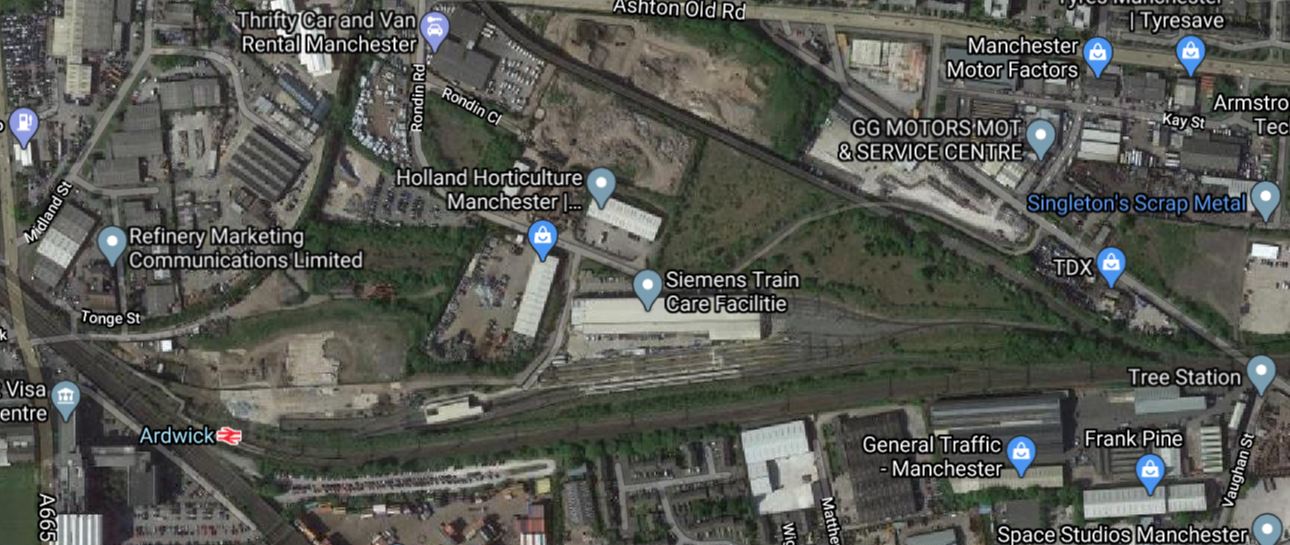
It would appear that the Eastern portal of the tunnels that lead to the proposed underground platforms of the Manchester Piccadilly ‘Super-Hub’ could emerge in this area.
Note.
- Ardwick station is about a mile from Manchester Piccadilly station.
- The Sheffield and Leeds routes split about a mile to the East of Ardwick station.
- The large site of the Train Care Facility, could surely be used for the tunnel portal.
The Transport for the North report says this about the services to the East from Manchester.
- Sic tph between Manchester and Leeds are planned.
- Four tph between Manchester and Sheffield are planned.
Ten tph through the underground platforms is surely possible, when Crossrail will handle 24 tph with full digital signalling.
A Manchester And Leeds High Speed Line
This clip of a map from the Transport for the North report shows a schematic of the rail links to the East of Manchester.
Two alternative routes are proposed between Manchester and Leeds.
- The black route would be created by upgrading the Huddersfield Line.
- The yellow route would be a new route via Bradford.
The Transport for the North report says this about the Leeds-Manchester service.
- There will be six tph.
- The journey will take 25 minutes.
In Is There Going To Be Full Electrification Between Leeds And Huddersfield?, I detailed Network Rail’s £2.9 billion proposal to upgrade the existing route between Huddersfield and Leeds. This is the black route.
If this project results in the full electrification between Leeds and Hudderfield, the Leeds and Manchester route will have these characteristics.
- It will be about forty-two miles long
- All except the sixteen mile section between Stalybridge and Huddersfield is electrified or is planned to be so.
- Network Rail have published plans to upgrade Huddersfield station.
- The section between Huddersfield and Dewbury will be upgraded to four tracks.
- The approach to the underground platforms at Manchester Piccadilly station could be in a two-mile 100 mph tunnel.
- Twenty-five minutes between Leeds and Manchester will need an average speed of 100 mph.
I don’t think it is unreasonable to assume that with a few other improvements, that the twenty-five minute time between Leeds and Manchester is possible.
New 140 mph Trains Will Be Needed
Consider a Blackpool and Leeds service via Preston, Wigan North Western, Warrington, Manchester Airport, Manchester and Huddersfield.
- It could be a fully-electrified route, if between Stalybridge and Huddersfield were to be electrified.
- Much of the route would be cleared for at least 140 mph running including the West Coast Main Line and the new route between Warrington and Manchester Piccadilly via Manchester Airport.
- Some sections of the route would allow more than 140 mph, but most would be 140 mph or less.
Without doubt, trains capable of running at 140 mph would be needed to make full use of the operating speeds available.
HS2 Phase One Given The Green Light
The title of this post is the same as that as this article on Rail Magazine.
This is the two introductory paragraphs.
Government confirmed today (April 15) that work can now start on building Phase 1 of HS2 from London to Birmingham.
Until now, only preparatory work had been carried out. But the Department for Transport has now given approval for HS2 Ltd to issue Notice to Proceed (NtP) to the four main works civils contractors, to commence full detailed design and construction of the railway.
The article also gives this quote from the Chief Executive of HS2 Ltd; Mark Thurston.
In these difficult times, today’s announcement represents both an immediate boost to the construction industry and the many millions of UK jobs that the industry supports, and an important investment in Britain’s future – levelling up the country, improving our transport network, and changing the way we travel to help bring down carbon emissions and improve air quality for the next generation.
Perhaps, we should give the go-ahead for more big infrastructure projects, to create the employment we need.
It would only be enacting one of the principles of Franklin D. Roosevelt‘s New Deal.
There is a section called Public Works in the Wikipedia entry for the New Deal.
This is said.
To prime the pump and cut unemployment, the NIRA created the Public Works Administration (PWA), a major program of public works, which organized and provided funds for the building of useful works such as government buildings, airports, hospitals, schools, roads, bridges and dams. From 1933 to 1935 PWA spent $3.3 billion with private companies to build 34,599 projects, many of them quite large.
Under Roosevelt, many unemployed persons were put to work on a wide range of government-financed public works projects, building bridges, airports, dams, post offices, hospitals and hundreds of thousands of miles of road. Through reforestation and flood control, they reclaimed millions of hectares of soil from erosion and devastation. As noted by one authority, Roosevelt’s New Deal “was literally stamped on the American landscape”
Wouldn’t this be good for the UK to offset the damage caused by COVID-19?
The current government has already flagged up several suitable projects, since they were elected.
- High Speed Two
- Northern Powerhouse Rail
- East-West Rail
- City Light Rail Systems
- Decarbonisation of the Rail Industry
- Offshore Wind Farms
- Energy Storage
- Reversal of the Beeching Cuts
- Improvements to and decarbonisation of bus services
- Flood relief schemes
There are many more.
One difference to the United States in the 1930s, is that some of these projects can be funded by financial institutions like Pension Funds and Insurance Companies. In World’s Largest Wind Farm Attracts Huge Backing From Insurance Giant, I talk about how Aviva will have invested a billion pounds in offshore wind by the end of 2018, to fund pensions and insurance.
 The Anonymous Widower