The Concept Of Remote Island Wind
This document from the Department of Business, Industry and Industrial Strategy lists all the Contracts for Difference Allocation Round 4 results for the supply of zero-carbon electricity that were announced yesterday.
The contracts have also introduced a concept that is new to me, called Remote Island Wind. All have got the same strike price of £46.39 per MWh.
Two of the projects on Orkney are community projects of around 30 MW, run by local trusts. This is surely, a model that will work in many places.
There is more on Orkney’s Community Wind Farm Project on this page of the Orkney Islands Council web site.
It could even have an electrolyser to provide hydrogen for zero-carbon fuel, when there is more electricity than is needed. Companies like ITM Power and others already build filling stations with an electrolyser, that can be powered by wind-generated electricity.
The other Remote Island Wind projects are larger with two wind farms of over 200 MW.
It does look to me, that the Department of BEIS is nudging wind farm developers in remote places to a model, that all stakeholders will embrace.
The Viking Wind Farm
I wrote about this wind farm in Shetland’s Viking Wind Farm.
There are more details in this press release from SSE enewables, which is entitled CfD Contract Secured For Viking Energy Wind Farm.
These introductory paragraphs, give a good explanation of the finances of this farm.
SSE Renewables has been successful in the UK’s fourth Contract for Difference (CfD) Allocation Round, announced today, and has secured a low-carbon power contract for 220MW for its wholly-owned Viking Energy Wind Farm (Viking) project, currently being constructed in Shetland.
Viking’s success in securing a contract follows a competitive auction process in Allocation Round 4 (AR4) where it competed within Pot 2 of the allocation round set aside for ‘less established’ technologies including Remote Island Wind.
The 443MW Viking project, which SSE Renewables is currently building in the Shetland Islands, has secured a CfD for 220MW (50% of its total capacity) at a strike price of £46.39/MWh for the 2026/27 delivery year.
The successful project will receive its guaranteed strike price, set on 2012 prices but annually indexed for CPI inflation, for the contracted low carbon electricity it will generate for a 15-year period. Securing a CfD for Viking stabilises the revenue from the project whilst also delivering price security for bill payers.
It’s very professional and open to explain the capacity, the contract and the finances in detail.
The press release also has this paragraph, which details progress.
Viking is progressing through construction with over 50 per cent of turbine foundation bases poured. When complete in 2024, Viking Energy Wind Farm will be the UK’s most productive onshore wind farm in terms of annual electricity output, with the project also contributing to Shetland’s security of supply by underpinning the HVDC transmission link that will connect the islands to the mainland for the first time.
SSE also released this press release, which is entitled Major Milestone Reached As First Subsea Cable Installation Begins On Shetland HVDC Link, where this is the first paragraph.
The first phase of cable laying as part of the SSEN Transmission Shetland High-Voltage Direct Current (HVDC) Link began this week off the coast of Caithness, marking a major milestone in the £660M project.
SSE seem to be advancing on all fronts on the two projects!
The Stornoway Wind Farm
This press release from EDF Renewables is entitled EDF Renewables UK Welcomes Contract for Difference Success, where these are the first two paragraphs.
Two EDF Renewables UK projects bid into the Contract for Difference (CfD) auction round held by the UK Government’s BEIS department have been successful.
The projects are the Stornoway wind farm on the Isle of Lewis and Stranoch wind farm in Dumfries and Galloway. Together these onshore wind farms will provide 300 MW of low carbon electricity which is an important contribution to reaching net zero.
The press release also gives this information about the contract and completion of the Stornoway wind farm.
Stornoway Wind Farm on the Isle of Lewis is a joint venture with Wood. The project has won a CfD for 200 MW capacity, the strike price was £46.39, the target commissioning date is 31 March 2027.
This page on the Lewis Wind Power web site, gives these details of the Stornoway Wind Farm.
The Stornoway Wind Farm would be located to the west of the town of Stornoway in an area close to the three existing wind farm sites.
The project has planning consent for up to 36 turbines and is sited on land owned by the Stornoway Trust, a publicly elected body which manages the Stornoway Trust Estate on behalf of the local community.
The local community stands to benefit as follows:
- Community benefit payments currently estimated at £900,000 per annum, which would go to an independent trust to distribute to local projects and organisations
- Annual rental payments to local crofters and the Stornoway Trust – which we estimate could total more than £1.3m, depending on the CfD Strike Price secured and the wind farm’s energy output
- Stornoway Wind Farm is the largest of the three consented wind farm projects with a grid connection in place and is therefore key to the needs case for a new grid connection with the mainland. Indeed, the UK energy regulator Ofgem has stated that it will support the delivery of a new 450MW cable if the Stornoway and Uisenis projects are successful in this year’s Contract for Difference allocation round.
Note the last point, where only the Stornoway wind farm was successful.
The Uisenis Wind Farm
This press release from EDF Energy is entitled Lewis Wind Power Buys Uisenis Wind Farm, gives these details of the sale.
Lewis Wind Power (LWP), a joint venture between Amec Foster Wheeler and EDF Energy Renewables has bought the Uisenis Wind Farm project on the Isle of Lewis. The wind farm has planning consent for the development of 45 turbines with a maximum capacity of 162 MW. This would be enough to power 124,000 homes and would be the biggest renewable energy development on the Western Isles.
LWP owns the Stornoway Wind Farm project located around 20km to the north of Uisenis which has planning consent to develop 36 turbines to a maximum capacity of 180 MW – enough to power 135,000 homes.
This would bring Stornoway and Uisenis wind farms under the similar ownership structures.
This is a significant paragraph in the press release.
On behalf of Eishken Limited, the owner of the site where the Uisenis Wind Farm will be located, Nick Oppenheim said: “I am delighted that LWP are taking forward the wind farm. The resources available on the Eishken estate, and the Western Isles in general, means that it is an excellent location for renewable energy projects and, as such, the company is also developing a 300MW pumped storage hydro project immediately adjacent to the Uisenis wind farm. With such potential for renewables and the positive effect they will have on the local community, economy, and the UK as a whole I am are looking forward to positive news on both support for remote island projects and the interconnector.”
Note the mention of pumped storage.
This article on the BBC is entitled Pumped Storage Hydro Scheme Planned For Lewis, where this paragraph introduces the scheme.
A pumped storage hydro scheme using sea water rather than the usual method of drawing on freshwater from inland lochs has been proposed for Lewis.
The only other information is that it will provide 300 MW of power, but nothing is said about the storage capacity.
It looks like Lewis will have a world-class power system.
Mossy Hill And Beaw Field Wind Farms
Mossy Hill near Lerwick and Beaw Field in Yell are two Shetland wind farms being developed by Peel L & P.
This press release from Peel L & P is entitled Government Support For Two Shetland Wind Farms, where these are the first two paragraphs.
Plans for two onshore wind farms on the Shetland Islands which would help meet Scotland’s targets for renewable energy production are a step closer to being delivered after receiving long-term Government support.
Clean energy specialists Peel NRE has been successful in two bids in the Department for Business, Energy and Industrial Strategy’s (BEIS) Contracts for Difference (CfD) scheme; one for its Mossy Hill wind farm near Lerwick and the other for Beaw Field wind farm in Yell.
It looks like the two wind farms will power 130,000 houses and are planned to be operational in 2027.
Conclusion
I must admit that I like the concept. Especially, when like some of the schemes, it is linked to community involvement and improvement.
Only time will tell, if the concept of Remote Island Wind works well.
Air Products Partners Up On Hydrogen Production In The UK
The title of this post, is the same as that of this article on Upstream.
These three paragraphs explain the project.
Air Products has joined with power generator VPI to push forward a hydrogen hub on the south bank of the Humber Estuary in the UK, primarily meant to decarbonise VPI’s power production in Immingham.
The companies said they will develop an 800-megawatt production facility called the Humber Hydrogen Hub (H3) that would include carbon capture and storage and aim to capture up to 2 million tonnes per annum of carbon dioxide.
Hydrogen produced at the facility will first substitute fuel for VPI’s existing third gas turbine power train.
Note.
- VPI is a UK-based power company, providing energy to the National Grid.
- Immingham Power station is currently a 730 MW gas-fired power station, which is being expanded to 1240 MW.
- It looks like that expansion will use hydrogen.
It is all part of HumberZero.
Shell To Start Building Europe’s Largest Renewable Hydrogen Plant
The title of this post, is the same as that of this press release from Shell.
This is the first paragraph.
Shell Nederland B.V. and Shell Overseas Investments B.V., subsidiaries of Shell plc, have taken the final investment decision to build Holland Hydrogen I, which will be Europe’s largest renewable hydrogen plant once operational in 2025.
Theconstruction timeline for Holland Hydrogen 1 is not a long one.
The next paragraph describes the size and hydrogen production capacity.
The 200MW electrolyser will be constructed on the Tweede Maasvlakte in the port of Rotterdam and will produce up to 60,000 kilograms of renewable hydrogen per day.
200 MW is large!
The next paragraph details the source of the power.
The renewable power for the electrolyser will come from the offshore wind farm Hollandse Kust (noord), which is partly owned by Shell.
These are my thoughts.
Refhyne
Refhyne is a joint project between Shell and ITM Power, with backing from the European Commission, that has created a 10 MW electrolyser in Cologne.
The 1300 tonnes of hydrogen produced by this plant will be integrated into refinery processes.
Refhyne seems to have been very much a prototype for Holland Hydrogen 1.
World’s Largest Green Hydrogen Project – With 100MW Electrolyser – Set To Be Built In Egypt
The sub-title is the title, of this article on Recharge.
It looks like Holland Hydrogen 1, is double the current largest plant under construction.
Shell is certainly going large!
Will ITM Power Be Working Again With Shell?
Refhyne has probably given Shell a large knowledge base about ITM Power’s electrolysers.
But Refhyne is only 10 MW and Holland Hydrogen 1 is twenty times that size.
This press release from ITM Power is entitled UK Government Award £9.3 m For Gigastack Testing.
This is the first paragraph.
ITM Power (AIM: ITM), the energy storage and clean fuel company, announces that the Company has been awarded a contract by The Department for Business, Energy and Industrial Strategy (BEIS), under its Net Zero Innovation Portfolio Low Carbon Hydrogen Supply 2 Competition, to accelerate the commercial deployment of ITM Power’s 5 MW Gigastack platform and its manufacture. The award for the Gigatest project is for £9.3m and follows initial designs developed through previous BEIS funding competitions.
Note.
- The Gigastack is 2.5 times bigger, than ITM Power’s previously largest electrolyser.
- Forty working in parallel, in much the same way that the ancient Egyptians built the pyramids, will be needed for Holland Hydrogen 1.
- ITM Power have the world’s largest electrolyser factory, with a capacity of one GW. They have plans to create a second factory.
ITM Power would probably be Shell’s low-risk choice.
My company dealt with Shell a lot in the 1970s, with respect to project management software and we felt, that if Shell liked you, they kept giving you orders.
The Hollandse Kust Noord Wind Farm
This wind farm is well described on its web site, where this is the introduction on the home page.
CrossWind, a joint-venture between Shell and Eneco, develops and will operate the Hollandse Kust Noord subsidy-free offshore wind project.
Hollandse Kust Noord is located 18.5 kilometers off the west coast of the Netherlands near the town of Egmond aan Zee.
CrossWind plans to have Hollandse Kust Noord operational in 2023 with an installed capacity of 759 MW, generating at least 3.3 TWh per year.
This Google Map shows the location of Egmond aan Zee.

Note that the red arrow points to Egmond aan Zee.
Will The Electrolyser Be Operational In 2025?
If Shell choose ITM Power to deliver the electrolysers, I don’t think Shell are being that ambitious.
I would suspect that connecting up an electrolyser is not the most complicated of construction tasks.
- Build the foundations.
- Fix the electrolyser in place.
- Connect power to one end.
- Connect gas pipes to the other.
- Switch on and test.
Note.
- If ITM Power deliver electrolysers that work, then the installation is the sort of task performed on chemical plants all over the world.
- ITM Power appear to have tapped the UK Government for money to fund thorough testing of the 5 MW Gigastack electrolyser.
- Enough wind power from Hollandse Kust Noord, should be generated by 2025.
I feel it is very much a low risk project.
Shell’s Offshore Electrolyser Feasibility Study
This is mentioned in this article in The Times, which describes Holland Hydrogen 1, where this is said.
Shell is also still involved in a feasibility study to deploy electrolysers offshore alongside the offshore wind farm. It has suggested this could enable more efficient use of cabling infrastructure.
I very much feel this is the way to go.
Postscript
I found this article on the Dutch Government web site, which is entitled Speech By Prime Minister Mark Rutte At An Event Announcing The Construction Of Holland Hydrogen 1.
This is an extract.
By building Holland Hydrogen 1, Shell will give the Dutch hydrogen market a real boost.
So congratulations are in order.
And this is only the beginning.
Because countless companies and knowledge institutions are working now to generate the hydrogen economy of tomorrow.
The government is supporting this process by investing in infrastructure, and by granting subsidies.
Because we want to achieve our climate goals, though the war in Ukraine won’t make it any easier.
We want to reduce our dependence on Russian gas.
We want the Netherlands to lead the way in the European energy transition.
And all these ambitions are combined in the Holland Hydrogen 1 project.
Mark Rutte seems to believe in hydrogen.
Conclusion
This is a very good example of the sort of large electrolyser, we’ll be seeing all over the world.
In fact, if this one works well, how many 200 MW electrolysers will Shell need all over the world?
Will they all be identical?
Essex Firm’s Hydrogen Lorry On Show In Stoneleigh
The title of this post, is the same as that of this article on the BBC.
These paragraphs describe the truck.
Tevva, the maker in Tilbury, Essex, says it is the first hydrogen fuel cell-supported truck to be designed, built and mass produced in the UK.
The company adds the vehicle has a range of up to 310 miles (500 km) via the tech, with hydrogen tanks able to be refilled in 10 minutes.
It says it wants to help the transport industry adapt to a “post-fossil fuel future”.
To that end, it developed a fuel cell to top up electric battery-powered trucks, giving them a longer range while reducing the size of the electric battery needed.
I think that this truck is a superb example of disruptive innovation.
- Tevva have looked at the 7.5 tonne truck market and have developed a truck that fits it.
- Using hydrogen as a range extender up to to 500 km. is probably a good fit for the use of these vehicles.
- So many local delivery companies will look at these trucks, so they can tell their customers, that they now offer zero-carbon deliveries.
- They will also be useful to go into cities, that charge diesel vehicles.
I also suspect, that a lot of parts follow the route pioneered by the great Colin Chapman – Borrow from other manufacturers.
I wouldn’t be surprised to see other companies following Tevva’s route all over the world.
SSE Thermal And Equinor To Acquire Triton Power In Acceleration Of Low-Carbon Ambitions
The title of this post, is the same as that as this press release from SSE.
These are the first three paragraphs.
SSE Thermal and Equinor have entered into an agreement to acquire Triton Power Holdings Ltd from Energy Capital Partners for a total consideration of £341m shared equally between the partners.
The transaction represents another step forward for the two companies’ existing collaboration, supporting the long-term decarbonisation of the UK’s power system whilst contributing to security of supply and grid stability through flexible power generation in the shorter term.
Triton Power operates Saltend Power Station which is 1.2GW CCGT (Combined Cycle Gas Turbine) and CHP (Combined Heat & Power) power station located on the north of the Humber Estuary in East Yorkshire.
This deal is more complicated than it looks and these are my thoughts.
What About The Triton Power Workers?
The press release says this.
The 82 existing employees will continue to be employed by Triton Power. In line with just transition principles, the joint venture is committed to transitioning the assets for the net zero world through responsible ownership and operation, and in consultation with the local workforce and representatives.
It does sound that they are following the right principles.
Saltend Power Station
Saltend power station is no tired ancient asset and is described like this in Wikipedia.
The station is run on gas using single shaft 3 × Mitsubishi 701F gas Turbines machines with Alstom 400 MWe generators. The station has a total output of 1,200 MW; of that 100 MW is allocated to supply BP Chemicals. Each gas turbine has a Babcock Borsig Power (BBP) heat recovery steam generator, which all lead to one steam turbine per unit (single shaft machine means Gas turbine and Steam Turbine are on the same shaft). The waste product of electricity generation is steam at the rate of about 120 tonnes/h which is sold to BP Chemicals to use in their process. This makes Salt End one of the most efficient[clarification needed] power stations in the UK. The plant is scheduled to use hydrogen from steam reformed natural gas for 30% of its power.
Note.
- It was commissioned in 2000.
- It appears there are seven CCGT power stations in England that are larger than Saltend.
- The power station seems to have had at least four owners.
The press release says this about SSE and Equinor’s plans for Saltend power station.
The transaction underscores SSE Thermal and Equinor’s shared ambition to decarbonise the Humber, which is the UK’s most carbon-intensive industrial region, as well as the UK more widely. Initial steps to decarbonise Saltend Power Station are already underway, targeting partial abatement by 2027 through blending up to 30% of low-carbon hydrogen. In addition, carbon capture provides an additional valuable option for the site. SSE Thermal and Equinor will continue to work towards 100% abatement.
Note.
- It appears that initially, Saltend power station will move to running on a mixture of 30 % hydrogen and 70 % natural gas.
- Carbon capture will also be applied.
- It looks like that in the future all carbon-dioxide emitted by the power station will be captured and either stored or used.
The press release says this about the source of the hydrogen.
Saltend Power Station is a potential primary offtaker to Equinor’s H2H Saltend hydrogen production project. H2H Saltend is expected to kick-start the wider decarbonisation of the Humber region as part of the East Coast Cluster, one of the UK’s first carbon capture, usage and storage clusters.
H2H Saltend is described in this page on the Equinor web site, which has a title of The First Step To A Zero Carbon Humber, where this is said.
This project represents a bold but practical first step towards delivering the world’s first net zero industrial cluster by 2040. This unparalleled project can play a leading role in the UK’s journey to net zero by 2050, renew the UK’s largest industrial cluster, and unlock technology that will put the UK at the forefront of a global hydrogen economy.
There is also a video.
SSE Thermal And Equinor Low-Carbon Thermal Partnership
This is a section in the press release, where after giving their policy about the workers, it says this about the acquisition of Triton Power.
This acquisition strengthens SSE Thermal and Equinor’s portfolio of joint projects, which bring together expertise in power, natural gas, hydrogen and carbon capture and storage. This portfolio includes three development projects within the Humber region:
- Keadby 3 Carbon Capture Power Station, which could be the UK’s first flexible power station equipped with carbon capture.
- Keadby Hydrogen Power Station, which could be one of the world’s first 100% hydrogen-fuelled power stations.
- Aldbrough Hydrogen Storage, located in East Yorkshire, which could be one of the world’s largest hydrogen storage facilities.
The two companies are also developing Peterhead Carbon Capture Power Station, situated on the Aberdeenshire coast in Scotland and there are further opportunities for hydrogen blending across SSE’s generation portfolio, including at Keadby 2.
Note.
- There is no mention of the three Dogger Bank Wind Farms, each of which will be 1200 MW, that are owned by SSE Renewables and Equinor.
- I wrote about Aldbrough Gas Storage in The Massive Hydrogen Project, That Appears To Be Under The Radar.
- According to this press release from Equinor, which is entitled SSE Thermal And Equinor Join Forces On Plans For First-Of-A-Kind Hydrogen And Carbon Capture Projects In The Humber, Keadby Hydrogen power station will have a capacity of 1800 MW.
The Complete System
The system has the following power sources.
- Dogger Bank A – 1200 MW – Expected commissioning in 2023/24
- Dogger Bank B – 1200 MW – Expected commissioning in 2024/25
- Dogger Bank C – 1200 MW – Expected commissioning in 2024/25
- Keadby power station – 735 MW
- Keadby 2 power station – 893 MW – Could be Part-Hydrogen
- Keadby 3 power station – 910 MW – Carbon Capture
- Keadby Hydrogen power station – 1800 MW – Hydrogen
- Saltend power station – 1200 MW – Part-Hydrogen
That totals up to 9138 MW.
Fuel will come from three sources.
- The God of the winds.
- Natural gas
- Hydrogen
Hydrogen will be sourced from.
- Blue hydrogen from H2H Saltend
- Green Hydrogen could come from electrolysers driven by wind power.
Hydrogen would be stored in Aldbrough Gas Storage.
I am by training a Control Engineer and controlling these power sources is either a wonderful dream or your most entwined and complicated nightmare.
Conclusion
I suspect on an average day, this cluster of power stations and sources could reliably supply as much zero-carbon power as two large nuclear stations.
Rolls-Royce To Develop mtu Hydrogen Electrolyser And Invest In Hoeller Electrolyser
The title of this post, is the same as that of this press release from Rolls-Royce.
These are the three main points in the press release.
- Holdings in start-up companies in northern Germany secure Rolls-Royce Power Systems access to key green hydrogen production technology.
- Electrolysis systems for several megawatts of power.
- First demonstrator in 2023 using a Hoeller stack.
This is the introductory paragraph to the deal.
Rolls-Royce is entering the hydrogen production market and acquiring a 54% majority stake in electrolysis stack specialist Hoeller Electrolyzer, whose innovative technology will form the basis of a new range of mtu electrolyzer products from its Power Systems division. Hoeller Electrolyzer, based in Wismar, Germany, is an early-stage technology company that is developing highly efficient polymer electrolyte membrane (PEM) stacks, under the brand name Prometheus, for the cost-effective production of hydrogen.
This page on the Hoeller Electrolysis web site gives details of Prometheus.
- Hoeller are planning small, medium and large electrolyser modules, the largest of which is rated at 1.4 MW.
- Load changes of between 0 and 100 % within seconds.
- Cold start capability.
- It will produce 635 Kg/day.
- They are talking of a cost of 4€/Kg.
It all sounds good to me.
This paragraph is from the press release.
Founded in 2016, Hoeller Electrolyzer has positioned itself, with Prometheus, as one of the few highly specialized expert players in the field of high-efficiency PEM electrolysis stacks. Its founder, Stefan Höller, has more than a quarter of a century’s experience of developing electrolysis technology and has already registered 14 patents connected with Prometheus. Particularly high efficiency is promised by special surface technologies for the bipolar plates which significantly reduce the use of expensive precious metals platinum and iridium as catalysts, as well as increased output pressure.
I know a small amount about electrolysis and feel that Rolls-Royce may have got themselves a high-class deal.
Rolls-Royce’s large German presence in companies like mtu, will also help to smooth any doubts about the deal.
This paragraph indicates a shared belief.
Rolls-Royce and Hoeller Electrolyzer are united by a shared belief in the opportunity of zero-carbon energy – both for power supply and the propulsion of heavy vehicles. With decades of experience and systems expertise, Rolls-Royce is going to develop a complete electrolyzer system and has a global sales and service network, which opens up the potential for significant worldwide sales.
But perhaps, this is the most significant paragraph of the press release.
Armin Fürderer, who heads up the Net Zero Solutions business unit of Power Systems, said: “We’re going to launch electrolyzers with several megawatts of power right from the start. A total output of over 100 megawatts is conceivable by combining several electrolyzers.”
A quick search of the Internet, indicates that 100 MW is the size of the world’s largest electrolysers.
Applications
I can see applications for these large electrolysers.
Rolls-Royce Power Systems
This is a sentence from the press release.
Hoeller Electrolyzer, whose innovative technology will form the basis of a new range of mtu electrolyzer products from its Power Systems division.
The Rolls-Royce Power Systems web site, has this mission statement.
The Power Systems Business Unit of Rolls-Royce is focused on creating sustainable, climate neutral solutions for drive, propulsion and power generation.
In Rolls-Royce Makes Duisburg Container Terminal Climate Neutral With MTU Hydrogen Technology, I describe one of Rolls-Royce Power Systems projects.
The title of this post, is the same as this press release from Rolls-Royce.
This is the first sentence.
Rolls-Royce will ensure a climate-neutral energy supply at the container terminal currently under construction at the Port of Duisburg, Germany.
There is also this Rolls-Royce graphic, which shows the energy sources.

It would appear batteries, combined heap and power (CHP), grid electricity, hydrogen electrolyser, hydrogen storage and renewable electricity are being brought together to create a climate-neutral energy system.
Note.
- The system uses a large hydrogen electrolyser.
- I suspect the hydrogen will be generated by off-peak electricity and local renewables.
- Hydrogen will probably power the container handling machines, ships, trucks, vehicles and other equipment in the port.
Hydrogen appears to be used as a means of storing energy and also for providing motive power.
I would suspect, the ultimate aim is that the port will not emit any carbon dioxide.
Other ports like Felixstowe and Holyhead seem to be going the hydrogen route.
Refuelling Hydrogen Buses and Charging Electric Buses
If you look at the Duisburg system, I can imagine a similar smaller system being used to refuel hydrogen buses and charge electric ones.
- The hydrogen electrolyser would be sized to create enough hydrogen for a day or so’s work.
- Hydrogen would be generated by off-peak electricity and local renewables.
- If an operator bought more buses, I’m certain that the architecture of the electrolyser would allow expansion.
- Hydrogen fuel cells would boost the electricity supply, when lots of buses needed to be charged.
- Any spare hydrogen could be sold to those who have hydrogen-powered vehicles.
- Any spare electricity could be sold back to the grid.
It should be noted that manufacturers like Wrightbus have developed a range of hydrogen and electric buses that use the same components. So will we see more mixed fleets of buses, where the best bus is assigned to each route?
I have used buses as an example, but the concept would apply to fleets of cars, trucks and vans.
Green Hydrogen
Large efficient electrolysers will surely be the key to producing large quantities of green hydrogen in the future.
It appears that about 55 MWh is needed to produce a tonne of green hydrogen using existing electrolysers.
The Hoeller electrolyser appears to be about 53 MWh, so it is more efficient.
Green Hydrogen From An Onshore Wind Farm
If you look at the average size of an onshore wind farm in the UK, a quick estimate gives a figure of 62 MW. I shouldn’t expect the figure for much of the world is very different, where you ignore the gigafarms, as these will distort the numbers.
An appropriately-sized electrolyser could be added to onshore wind farms to provide a local source of hydrogen for transport, an industrial process or a domestic gas supply for a new housing estate.
A single 5 MW wind turbine with a capacity factor of around 30 % would produce around 680 Kg of green hydrogen per day.
Green Hydrogen From An Offshore Wind Farm
There are basic methods to do this.
Put the electrolyser onshore or put the electrolyser offshore and pipe the hydrogen to the shore.
I think we will see some innovative configurations.
In ScotWind N3 Offshore Wind Farm, I described how Magnora ASA are developing the ScotWind N3 wind farm.
The floating turbines surround a concrete floater, which in the future could contain an electrolyser and tankage for hydrogen.
The ScotWind N3 wind farm is designed to be a wind farm rated at 500 MW.
I can see an electrolyser on the floater, of an optimal size to make sure all electricity is used.
Pink Hydrogen
Pink hydrogen, is zero-carbon hydrogen produced using nuclear-generated electricity.
There are industrial processes, like the making of zero-carbon chemicals, concrete and steel, that will require large quantities of zero-carbon green or pink hydrogen.
Rolls-Royce are developing the Rolls-Royce SMR, which will be a 470 MW small modular nuclear reactor.
One of these placed near to a steel works and coupled to one or more 100 MW electrolysers could provide enough zero-carbon electricity and hydrogen to produce large quantities of zero-carbon green steel.
Manufacturing
Rolls-Royce and their subsidiaries like mtu, seem to be extensive users of advanced manufacturing techniques and I would expect that they can improve Hoeller’s manufacturing.
Research And Development
The press release says this about the founder of Hoeller.
Its founder, Stefan Höller, has more than a quarter of a century’s experience of developing electrolysis technology and has already registered 14 patents connected with Prometheus.
If Rolls-Royce can develop and support Stefan Höller and his team, development could easily go to a higher level.
Conclusion
I think that Rolls-Royce have taken over a company, that will in the end, will design excellent efficient electrolysers.
Siemens Bags First Fleet Order For Hydrogen Trains In Berlin-Brandenburg Region
The title of this post, is the same as that of this article on RailTech.com.
This is the first paragraph.
Niederbarnimer Eisenbahn (NEB) has ordered seven Mireo Plus H hydrogen trains from Siemens Mobility. Delivery is set for autumn 2024, with first operations on the Heidekrautbahn (RB27) network planned in December the same year.
It is a detailed article. about the Mireo Plus H.
Ricardo Repowers Double Decker Diesel Bus With Hydrogen Fuel Cells
The title of this post, is the same as that of this press release from Ricardo.
Ricardo, a global strategic, environmental, and engineering consulting company, in partnership with Stagecoach North East, has repowered a diesel, double decker bus with a hydrogen fuel cell propulsion system. Delivering zero tailpipe emissions, Ricardo is now seeking to secure customers to invest in the production of a fleet of passenger vehicles fit for the future of sustainable shared mobility.
The project, part funded by the Department of Transport, through its Hydrogen Transport Hub Demonstration competition, saw Ricardo, working with Stagecoach North East to retro-fitted hydrogen fuel cell technology into an existing double decker bus. It created a zero emissions demonstrator that is now undergoing a ten-week test and demonstration programme around the Tees Valley and Brighton and Hove. Feedback and data from the trials will support the team to explore future market opportunities and applications with bus operators and other partners across the UK and beyond.
Given that there are around 38,000 existing buses in the UK, many of which still have a few years of life left, this surely must be an affordable way of creating more zero-carbon hydrogen buses.
It appears that Ricardo are aiming to have an initial batch of 150 buses in service from late 2024.
Could Rolls-Royce SMRs Be The Solution To Europe’s Gas Shortage?
Of all the offshore wind farms, that I’ve looked at recently, I find Magnora’s ScotWind N3 wind farm the most interesting.
I wrote about it in ScotWind N3 Offshore Wind Farm.
I said this.
In any design competition, there is usually at least one design, that is not look like any of the others.
In the successful bids for the ScotWind leases, the bid from Magnora ASA stands out.
- The company has an unusual home page on its offshore wind web site.
- This page on their web site outlines their project.
- It will be technology agnostic, with 15MW turbines and a total capacity of 500MW
- It will use floating offshore wind with a concrete floater
- It is estimated, that it will have a capacity factor of 56 %.
- The water depth will be an astonishing 106-125m
- The construction and operation will use local facilities at Stornoway and Kishorn Ports.
- The floater will have local and Scottish content.
- The project will use UK operated vessels.
- Hydrogen is mentioned.
- Consent is planned for 2026, with construction starting in 2028 and completion in 2030.
This project could serve as a model for wind farms all round the world with a 500 MW power station, hydrogen production and local involvement and construction.
I very much like the idea of a concrete floater, which contains a huge electrolyser and gas storage, that is surrounded by an armada of giant floating wind turbines.
These are my thoughts.
Floating Concrete Structures
To many, they may have appear to have all the buoyancy of a lead balloon, but semi-submersible platforms made from concrete have been used in the oil and gas industry for several decades.
Kishorn Yard in Scotland was used to build the 600,000-tonne concrete Ninian Central Platform,in 1978. The Ninian Central Platform still holds the record as the largest movable object ever created by man.
The Ninian Central Platform sits on the sea floor, but there is no reason why a semi-submersible structure can’t be used.
Electrolysers
There is no reason, why a large electrolyser, such as those made by Cummins, ITM Power or others can’t be used, but others are on the way.
- Bloom Energy are working on high temperature electrolysis, which promises to be more efficient.
- Torvex Energy are developing electrolysis technology that used sea water, rather than more expensive purified water.
High Temperature Electrolysis
High temperature electrolysis needs a heat source to work efficiently and in Westinghouse And Bloom Energy To Team Up For Pink Hydrogen, I described how Bloom Energy propose to use steam from a large nuclear power station.
Offshore Nuclear Power
I’ve never heard of offshore nuclear power, but it is not a new idea.
In 1970, a company called Offshore Power Systems was created and it is introduced in its Wikipedia entry like this.
Offshore Power Systems (OPS) was a 1970 joint venture between Westinghouse Electric Company, which constructed nuclear generating plants, and Newport News Shipbuilding and Drydock, which had recently merged with Tenneco, to create floating nuclear power plants at Jacksonville, Florida.
Westinghouse’s reactor was a 1.150 MW unit, which was typical of the time, and is very similar in size to Sizewell B.
The project was cancelled before the reactors were towed into position.
Nuclear Knowledge Has Improved
Consider.
- In the fifty years since Offshore Power Systems dabbed their toes in the water of offshore nuclear power, our knowledge of nuclear systems and engineering has improved greatly.
- The offshore oil and gas industry has also shown what works impeccably.
- The floating offshore wind industry looks like it might push the envelop further.
- There has been only one nuclear accident at Fukushima, where the sea was part of the problem and that disaster taught us a lot.
- There have been a large number of nuclear submarines built and most reached the planned end of their lives.
- Would a small modular nuclear reactor, be safer than a large nuclear power plant of several GW?
I would suggest we now have the knowledge to safely build and operate a nuclear reactor on a proven semi-submersible platform, built from non-rusting concrete.
An Offshore Wind Farm/Small Modular Reactor Combination Producing Hydrogen
Consider.
- A typical floating offshore wind farm is between one and two gigawatts.
- A Rolls-Royce small modular reactor is sized to produce nearly 0.5 GW.
- The high temperature electrolyser will need some heat to achieve an optimum working temperature.
- Spare electricity can be used to produce hydrogen.
- Hydrogen can be stored platform.
- Hydrogen can be sent ashore using existing gas pipes.
- Hydrogen could even be blended with natural gas produced offshore to create a lower-carbon fuel.
- It would also be possible to decarbonise nearby offshore infrastructure.
A balance between wind and nuclear power can be obtained, which would provide a steady output of energy.
Conclusion
There are a large numbers of possibilities, to locate a Rolls-Royce small modular reactor close to a wind farm to use high temperature electrolysis to create green hydrogen, which can be used in the UK or exported through the gas network.
News Of The Day From Rolls-Royce
This press release from Rolls-Royce is entitled Rolls-Royce Advances Hybrid-Electric Flight With New Technology To Lead The Way In Advanced Air Mobility.
This is the introductory paragraph.
Rolls-Royce is officially announcing the development of turbogenerator technology, which includes a new small engine designed for hybrid-electric applications. The system will be an on-board power source with scalable power offerings and will complement the Rolls-Royce Electrical propulsion portfolio, enabling extended range on sustainable aviation fuels and later as it comes available through hydrogen combustion.
This paragraph outlines the use of the new small engine.
Current battery technology means all-electric propulsion will enable eVTOL and fixed wing commuter aircraft for short flights in and between cities and island-hopping in locations like Norway and the Scottish Isles. By developing turbogenerator technology, that will be scaled to serve a power range between 500 kW and 1200 kW, we can open up new longer routes that our electric battery powered aircraft can also support.
There is also a video in the press release, which gives more information.
- The turbogenerator is compatible to their electric power and propulsion offering.
- The turbogenerator has a power of 500-1200 kW to serve different aircraft platforms.
- The system is modular and can be tailored to different applications.
- The turbogenerator can either power the aircraft directly or charge the batteries.
- The system can be configured to provide primary power for other applications.
- Rolls-Royce are designing all the components; the turbogenerator, the gas turbine, the generator, the power electronics, so they all fit together in a compact and lightweight solution.
- Rolls-Royce intend to manufacture all components themselves and not rely on bought-in modules.
- Every gram of weight saved is important.
I suspect that one of the keys to making this all work is a very comprehensive and clever control system.
I have a few thoughts.
Weight Is Key
Rolls-Royce emphasise weight saving in the video. Obviously, this is important with any form of flying machine.
An Example System
Let’s suppose you want an electric power system to power a railway locomotive or one of those large mining trucks.
- The locomotive or truck has an electric transmission.
- Power of 2 MW is needed.
- A battery is needed.
- Fuel will be Sustainable Aviation Fuel (SAF) or hydrogen.
A series hybrid-electric power unit will be created from available modules, which could be very fuel efficient.
What Will Rolls-Royce’s System Be Able to Power?
Although the system is aimed at the next generation of electric flying machines, these systems will be used in any application that wants an efficient zero- or low-carbon power source.
Consider.
- Some large trucks have diesel engines with a power of almost 500 kW.
- A Class 68 bi-mode locomotive has a 700 kW diesel engine.
- A Class 802 train has three 700 kW diesel engines.
- Rolls-Royce subsidiary MTU are a large supplier of diesel engines for rail, road and water.
It looks to me that Rolls-Royce have sized the system to hoover up applications and they have MTU’s experience to engineer the applications.
Class 43 Power Cars
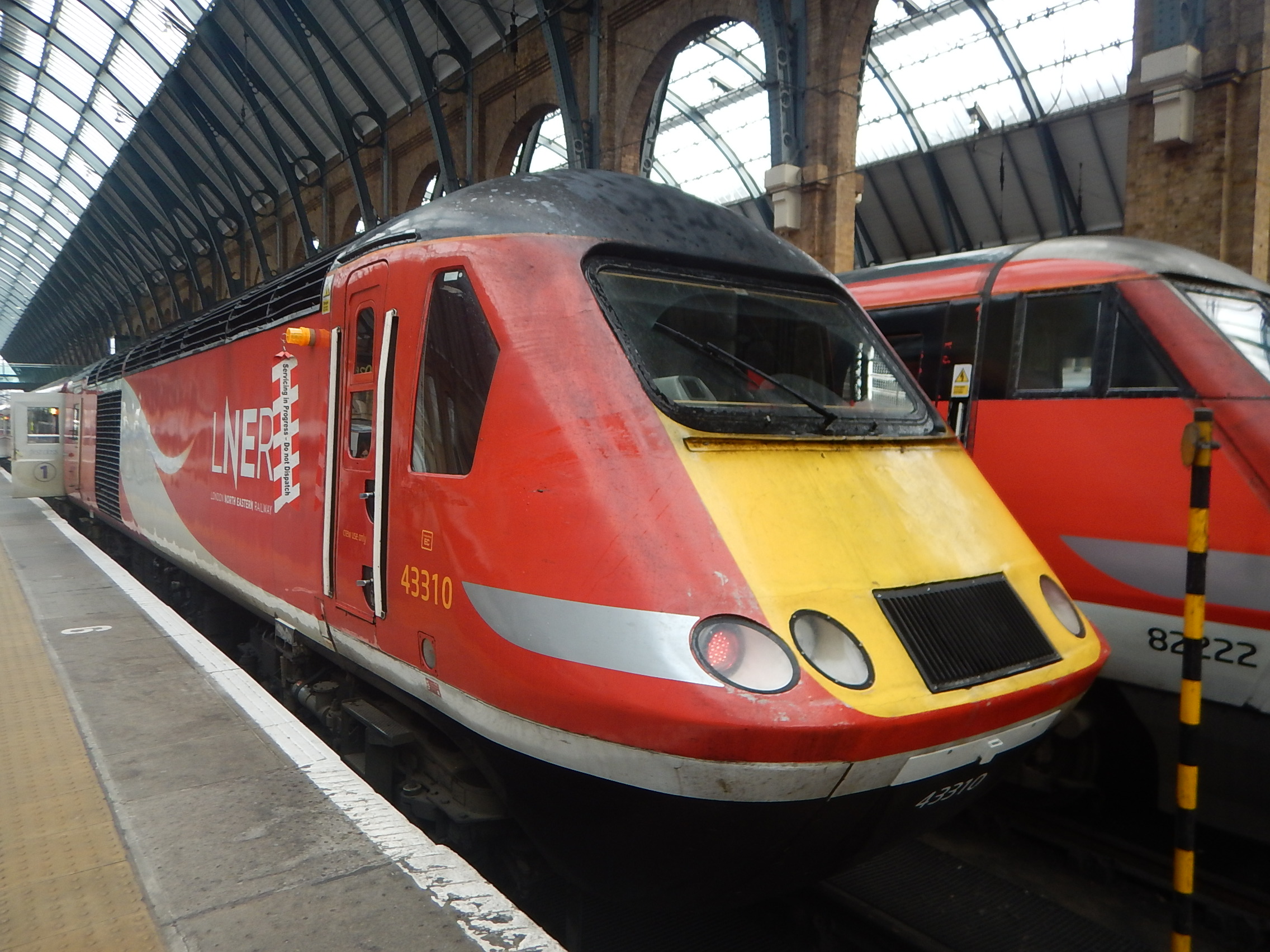
The iconic Class 43 power cars running on UK railways are an interesting possibility for powering with Rolls-Royce’s new system.
- Despite being over forty-years old, there are over a hundred and twenty still in service.
- They were upgraded with new 1.7 MW MTU diesel engines in the early part of this century.
- Rolls-Royce is based in Derby.
- The Class 43 power cars were developed in Derby.
- Hydrogen-powered Class 43 power cars, hauling GWR Castles or ScotRail Inter7Cities would be tourist attractions.
- The Class 43 power cars need to be either decarbonised or replaced in the next few years.
Decarbonisation using Rolls-Royce’s new system would probably be more affordable.
This all sounds like a project designed in a pub in Derby, with large amounts of real ale involved.
But I wouldn’t be surprised if it happened.
Will The System Be Upgradable From Sustainable Aviation Fuel To Hydrogen?
This is an except from the introductory paragraph.
The system will be an on-board power source with scalable power offerings and will complement the Rolls-Royce Electrical propulsion portfolio, enabling extended range on sustainable aviation fuels and later as it comes available through hydrogen combustion.
This would appear that if used in aviation, it will be possible to upgrade the system from sustainable aviation fuel to hydrogen, when a suitable hydrogen supply becomes available.
But all applications could be upgraded.

A truck, like the one shown in the picture could be delivered as one running on sustainable aviation fuel and converted to hydrogen later.
Conclusion
Rolls-Royce have put together a modular system, that will have lots of applications.
 The Anonymous Widower