FIRST TO THE FUTURE: Lumo Owner Bids To Turbo-Charge UK Rail With New Routes
The title of this post, is the same as that of this press release from First Group.
These first three paragraphs introduce FirstGroup’s application for the first phase of three separate applications to the Office of Rail and Road (ORR) for new and extended open access rail services.
FirstGroup plc plans to expand its open access rail operations through its successful Lumo business, boosting connectivity, improving UK productivity and passenger choice across the UK.
The expansion aims to replicate the success of Lumo’s Edinburgh to London service in driving material growth on the East Coast Main Line. Lumo operates without government subsidy and contributes more per train mile to infrastructure investment than any other long-distance operator – delivering growth on the railway and connectivity to local communities, at a substantial benefit to the taxpayer.
FirstGroup has submitted the first phase of three separate applications to the Office of Rail and Road (ORR) for new and extended open access rail services, which are described in these bullet points.
- A revised application to run new services between Rochdale and London Euston via Manchester Victoria from December 2028;
- An extension to Lumo’s current Stirling to London Euston track access agreement to operate services beyond 2030;
- A new route between Cardiff and York via Birmingham, Derby, and Sheffield from December 2028; and
- Purchase of new trains meaning continued investment in UK manufacturing of c.£300 million, and long-term jobs.
This paragraph from the press release describes the philosophy of the rolling stock.
Should these applications be successful, FirstGroup will make use of its option to commit further investment in new Hitachi trains built in County Durham. This investment will include five battery electric trains for the Stirling route and three battery electric trains for Rochdale, supporting jobs at Hitachi’s Newton Aycliffe plant. For the services between Cardiff and York, it will deploy refurbished Class 222s.
Note.
- The Class 222 trains will run the Euston and Stirling service until the future Hitachi trains are delivered in 2028.
- The Class 222 trains will run the Cardiff and York service from 2028.
- The Class 222 trains have a maximum speed of 125 mph
- Avanti West Coast’s Class 390 trains have a maximum speed of 125 mph.
- Avanti West Coast’s Class 805 trains have a maximum speed of 125 mph on electrification.
- Avanti West Coast’s Class 807 trains have a maximum speed of 125 mph.
- Grand Central Trains’s future Hitachi trains have a maximum speed of 125 mph.
- Hull Trains’s Class 802 trains have a maximum speed of 125 mph.
- Lumo’s current Class 803 trains have a maximum speed of 125 mph.
- LNER’s current Class 800 and 801 trains have a maximum speed of 125 mph.
- LNER’s current InterCity 225 trains have a maximum speed of 125 mph.
- LNER’s future Class 897 trains have a maximum speed of 125 mph.
- All of the trains, with the exception of the Class 222 trains are electric and have been designed for 140 mph running and can do this if there is appropriate 140 mph signalling.
If the Class 222 trains don’t run on the East and West Coast Main Lines, then these lines could introduce 140 mph running in stages to speed up rail travel between London and the North of England and Scotland.
Rochdale And London
These three paragraphs from the press release describe the proposed Rochdale and London service.
The new Lumo service will operate the first direct service since 2000 between Rochdale and London. Services will call at Manchester Victoria, Eccles, Newton-le-Willows and Warrington Bank Quay. Eccles station connects other parts of the city of Salford, including the fast-growing MediaCity area, via the nearby interchange with Metrolink. Services to Newton-le-Willows will deliver greater rail connectivity for St Helens.
There will be three new return services on weekdays and Sundays, and four return services on Saturdays, which will provide 1.6 million people in the north-west with a convenient and competitively priced direct rail service to London, encouraging people to switch from cars to train as well as providing additional rail capacity. It will also deliver material economic benefits for the communities along the route, including regeneration areas such as Atom Valley and the Liverpool City Region Freeport scheme.
The application has been revised to address the ORR’s concerns about network capacity set out in its letter of July 2025 rejecting FirstGroup’s original application. Supported by extensive modelling, the company has identified sufficient space on the network to accommodate the proposed services. Services will also make use of the Government’s recent investment in power supply for the West Coast Mainline (WCML).
In FirstGroup’s Lumo Seeks To Launch Rochdale – London Open Access Service, I gave my thoughts for Lumo’s application last year.
Differences between the two applications include.
- The service will be run by Lumo’s standard battery-electric Hitachi trains.
- The original application was for six return journeys per day, whereas the new application is for three return services on weekdays and Sundays, and four return services on Saturdays.
Note.
- The battery-electric trains will be able bridge the 10.4 mile gap between Manchester Victoria and Rochdale, and return after charging on the West Coast Main Line.
- The battery-electric trains could be useful during engineering works or other disruptions.
- The trains would be ready for 140 mph running on the West Coast Main Line, when the digital signalling is installed.
- Is the extra return service on a Saturday to cater for football and rugby fans?
I still feel, that with Lumo’s battery-electric trains one or more services could extend across the Pennines to Hebden Bridge, Bradford Interchange or Leeds. Trains would be recharged for return at Leeds.
Stirling And London
This paragraph from the press release describes the proposed Stirling and London service.
Stirling has a wide catchment area, with an estimated three million people living within an hour’s drive. Extending the current track access agreement for the Stirling route from May 2030 will support the shift from car to rail, and investment in the city, as well as in the service’s intermediate stations which include Larbert, Greenfaulds and Whifflet, thanks to greater connectivity to London. The four return services weekdays and Saturdays, and three on Sundays, on the new route are expected to start early in the company’s 2027 financial year.
In Lumo To Expand Scotland’s Rail Network With New London-Stirling Rail Route From Spring 2026, I gave my thoughts for Lumo’s application in June 2025.
Differences between the two applications include.
- The service will only be run initially by Class 222 trains.
- The service will be run by Lumo’s standard battery-electric Hitachi trains after 2028.
- The original application was for five return journeys per day, whereas the new application is for four return services on weekdays and Saturdays, and three return services on Sundays.
- In the original application, Lumo’s new route was to link London Euston directly to Stirling, also calling at Milton Keynes, Nuneaton, Crewe, Preston, Carlisle, Lockerbie, Motherwell, Whifflet (serving Coatbridge), Greenfaulds (serving Cumbernauld) and Larbert.
Note.
- The battery-electric trains could be useful during engineering works or other disruptions.
- The trains would be ready for 140 mph running on the West Coast Main Line, when the digital signalling is installed.
- Is the extra return service on a Saturday to cater for football and rugby fans?
It should be noted that there are always more return services per day going to Stirling, than Rochdale.
Could The Rochdale and Stirling Services Share A Path?
Consider.
- The two services use the West Coast Main Line South of Warrington Bank Quay station.
- Pairs of Class 803 trains can split and join.
- A pair of Class 803 trains are shorter than an 11-car Class 390 train.
- An 11-car Class 390 train can call in Warrington Bank Quay or Crewe stations.
I believe that the Rochdale and Stiring services could share a path.
- One Weekday service per day would be a single train.
- Going South, the trains would join at Warrington Bank Quay or Crewe stations.
- Going North, the trains would split at Warrington Bank Quay or Crewe stations.
- The pair of trains would share a platform at Euston station.
Operating like this would increase the connectivity and attractiveness of the services, and probably increase the ridership and profitability.
Cardiff And York via Birmingham, Derby And Sheffield
These four paragraphs from the press release describe the proposed Cardiff and York service.
Lumo’s new route between Cardiff and York will join up the entire Great British Railway network, connecting all four main lines from the Great Western Main Line to the East Coast Main Line. The plans will also deliver more capacity and drive passenger demand on a previously underserved corridor.
The application proposes six return services each weekday – a significant increase from the current single weekly service.
Bringing Lumo’s popular low-cost model to the corridor will support local communities between Cardiff, Birmingham, Derby, Sheffield, and York. These cities alone have a combined population of more than 2.5 million people. The new services will give local communities access to jobs and services along the route, in support of significant investment that has already been committed by the Government and private sector. This investment includes the Cardiff Capital Regional Investment Zone, the £140million proposed refurbishment at Cardiff Central station, the West Midlands Investment Zone which is expected to create £5.5 billion of growth and 30,000 new jobs, as well as investment plans in Derby, Sheffield and York.
The ORR will now carry out a consultation exercise as well as discuss the applications with Network Rail to secure the required approvals.
Note.
- Only minimal details are given of the route.
- The TransPennine Upgrade will create a new electrified route across the Pennines between York and Huddersfield via Church Fenton, Leeds and Dewsbury.
- The Penistone Line is being upgraded, so that it will handle two trains per hour.
- In the 1980s, the Penistone Line took InterCity 125s to Barnsley.
- The connection with the Penistone Line at Huddersfield has been upgraded.
I am reasonably certain, that FirstGroup intend to route the York and Cardiff service over this partially electrified route.
Sections of the route will be as follows.
- Cardiff and Westerleigh junction – 38 miles – Electrified
- Westerleigh junction and Bromsgrove – 65.2 miles – Not Electrified
- Bromsgrove and Proof House junction – 15 miles – Electrified
- Proof House junction and Derby – 40.6 miles – Not Electrified
- Derby and Sheffield – 36.4 miles – Not Electrified
- Sheffield and Huddersfield – 36.4 miles – Not Electrified
- Huddersfield and York – 41.9 miles – Electrified
There are only two sections of track, that is not electrified.
- Westerleigh junction and Bromsgrove – 65.2 miles
- Proof House junction and Huddersfield – 113.4 miles
Out of a total of 273.5 miles, I believe in a few years, with a small amount of extra electrification or more powerful batteries, Hitachi’s battery-electric high-speed trains will have this route cracked and the Class 222 trains can be sent elsewhere to develop another route.
Times Of Avanti West Coast Trains Between London Euston And Crewe
This table shows the first few Avanti West Coast trains between London Euston and Crewe on the 17th March 2025.
- 390119 – IS37 – Glasgow – 11 cars – 05:31 – 07:29 – 2 stops – 118 mins – 80.3 mph.
- 390155 – IH61 – Manchester Piccadilly – 11 cars – 06:29 – 08:08 – 2 stops – 99 mins – 95.7 mph.
- 807007 – IF11 – Liverpool Lime Street – 7 cars – 06:36 – 08:23 – 2 stops – 107 mins – 88.6 mph.
- 390104 – IS42 – Glasgow – 11 cars – 07:29 – 08:59 – 0 stops – 90 mins – 105.3 mph
- 390010 – IH62 – Manchester Piccadilly – 9 cars – 07:33 – 09:10 – 1 stop – 97 mins – 97.7 mph.
- 390044 – IF12 – Liverpool Lime Street – 9 cars – 07:43 – 09:18 – 2 stops – 95 mins – 99.7 mph.
- 390118 – IS45 – Glasgow – 11 cars – 08:30 – 10:01 – 0 stops – 91 mins – 104.2 mph
- 390040 – IH63 – Manchester Piccadilly – 11 cars – 08:33 – 10:19 – 1 stop – 106 mins – 89.4 mph.
- 807001 – IF14 – Liverpool Lime Street – 7 cars – 08:43 – 10:28 – 1 stop – 95 mins – 99.7 mph.
- 805001/805011 – ID83 – Holyhead – 10 cars – 09:02 – 10:51 – 1 stop – 109 mins – 86.9 mph.
- 390136 – IS48 – Glasgow – 11 cars – 09:30 – 11:02 – 0 stops – 92 mins – 103.0 mph
- 390040 – IH64 – Manchester Piccadilly – 9 cars – 09:33 – 11:08 – 1 stop – 95 mins – 99.7 mph.
- 390154 – IF16 – Liverpool Lime Street – 11 cars – 09:43 – 11:31 – 1 stop – 108 mins – 87.7 mph.
- 805012/805003 – ID84 – Chester – 10 cars – 10:10 – 11:53 – 1 stop – 103 mins – 92.0 mph.
- 390130 – IS52 – Glasgow – 11 cars – 10:30 – 12:00 – 0 stops – 90 mins – 105.3 mph
- 390151 – IH65 – Manchester Piccadilly – 11 cars – 10:35 – 12:09 – 1 stop – 94 mins – 100.8 mph.
- 807008 – IF18 – Liverpool Lime Street – 7 cars – 10:43 – 12:30 – 1 stop – 107 mins – 88.6 mph.
- 805009 – ID85 – Chester – 5 cars – 11:00 – 11:46 – 1 stop – 106 mins – 89.4 mph.
Note.
- All trains shown, go through Crewe.
- Some trains were delayed, hence their slow average speed.
- The Glasgow trains, which run non-stop from Euston to Warrington Bank Quay were the fastest, with four trains over 100 mph.
I have a few other thoughts.
The Class 805 Trains Are Crying Out For Batteries
In The Data Sheet For Hitachi Battery Electric Trains, I said this on how the Hitachi Class 80x trains will perform on batteries.
These are my conclusions about Hitachi’s battery packs for Class 80x trains.
- The battery pack has a capacity of 750 kWh.
- A five-car train needs three battery-packs to travel 100 miles.
- A nine-car train needs five battery-packs to travel 100 miles.
- The maximum range of a five-car train with three batteries is 117 miles.
- The maximum range of a nine-car train with five batteries is 121 miles.
Holyhead and Crewe is only 105.5 miles.
As battery technology gets better, these distances will increase.
The Fast Glasgow Train Appears To Be Leading A Convoy
The non-stop to Warrington Bank Quay Glasgow trains, also appear to be leading one Manchester Piccadilly, a Liverpool Lime Street and a Chester/North Wales train in a convoy, through Milton Keynes Central and the Trent Valley.
This convoy could grow as other services are added to the West Coast Main Line.
The Open Access Services Might Have Their Own Convoy
It would seem to me, that it might be possible to run a second convoy every hour, out of phase with the current one following the Glasgow service.
It also might be more virtual than real and under the control of the digital signalling, that will be installed on the line.
Thoughts On Tram-Trains In Manchester
The State Of Public Transport In the North
Over the last few years plans have been put in place to improv the state of the public transport of the major cities of the North and progress has started to happen, with new trains, trams and light rail systems being planned and in some cases coming into service.
Birmingham, Coventry And The West Midlands
A lot of investment has been made and it is continuing.
- Birmingham New Street station has been rebuilt.
- Coventry and Wolverhampton stations have been remodelled.
- Two new stations were built in Birmingham for the Commonwealth Games.
- A large number of new Class 730 local trains are being brought into service.
- Birmingham stations are being updated for High Speed Two.
- The West Midland Metro has been extended at both ends and a second line is under construction.
Transport in the wider West Midlands has been greatly improved.
Derby, Nottingham, Sheffield And The East Midlands
The major investment in this area is the electrification of the Midland Main Line and the provision of new Hitachi electric Class 810 trains.
In addition the following has been done.
- The Hope Valley line between Manchester and Sheffield has been improved.
- Derby station has been improved.
- The local trains have been refurbished.
- The power supply has been improved.
- An application for an Open Access service to Sheffield has been made.
The improvements in the East Midlands, will not be on the same scale as in the West Midlands, but they will make a difference.
Leeds, Bradford And West Yorkshire
For decades, West Yorkshire and especially Bradford has lagged behind the rest of the North.
But at least things are stirring.
- Plans have been laid to create a through station in Bradford.
- Leeds station has been refurbished.
- An extra platform is being added at Bradford Forster Square station.
- The TransPennine Upgrade is underway to electrify between Huddersfield and York.
- Hitachi have developed a battery-electric high speed train for the TransPennine route.
- Bradford is installing a hydrogen electrolyser, so that the city can have hydrogen buses to cope with the hills.
- Plans are now being developed to create a metro for Leeds and Bradford.
West Yorkshire is closing the gap to the rest of the North.
Liverpool And Merseyside
Again, a lot of investment has been made.
- The approaches to Liverpool Lime Street station have finally been sorted, with more tracks and new signalling.
- Liverpool Lime Street station has been improved and is now one of the finest stations in Europe.
- Trains are now approaching High Speed Two times between Crewe and Liverpool.
- More services between London and Liverpool can now be planned, with the arrival of new Class 807 trains.
- Some new stations have been built and more are planned.
- A large number of new Class 777 local trains are being brought into service.
Transport in the wider Merseyside has been greatly improved.
Newcastle, Tyneside And Northumberland
The area is getting investment, but not as much in proportion as others.
- The Metro trains are being replaced and the Metro itself, is getting a major update.
- The East Coast Main Line has received improvements to power supplies, signalling and some bottlenecks.
- The Northumberland Line to Ashington is being brought back into operation.
It’s a start, but if the Northumberland Line is a success, I can see a call for more line re openings.
Manchester And Greater Manchester
If you look at each of the areas, they generally have one or more large projects.
- Birmingham, Coventry And The West Midlands – Birmingham New Street station, Class 730 Trains, High Speed Two, West Midland Metro
- Derby, Nottingham, Sheffield And The East Midlands – Midland Main Line, Class 810 Trains, Hope Valley Line, Open Access To Sheffield
- Leeds, Bradford And West Yorkshire – Leeds station, Bradford improvements, TransPennine Upgrade, Battery-Ekectric Trains, Leeds Metro
- Liverpool And Merseyside – Liverpool Lime Street Improvements, Class 807 Trains, Class 777 Trains
- Newcastle, Tyneside And Northumberland – Metro upgrade with New Trains, Northumberland Line
So what improvements are in the pipeline for Greater Manchester?
This Wikipedia entry is entitled Proposed Developments Of Manchester Metrolink.
The proposed developments include in the Wikipedia order.
- New Metrolink Stop: Stop to serve new housing development proposed at Elton Reservoir on the Bury Line.
- New Metrolink Stop: Stop to serve new housing development proposed at Sandhills on the Bury Line.
- New Metrolink Stop: Stop to serve new housing development proposed at Cop Road on the Oldham and Rochdale Line.
- Airport Line extension to Terminal 2: A short extension of the Airport Line from the current Manchester Airport station to the site of the expanded Terminal 2.
- Airport Line extension to Davenport Green: An extension of the Airport Line from Roundthorn to the site of the proposed Manchester Airport High Speed station on the HS2 high speed network.
- Oldham–Heywood via Rochdale tram-train pathfinder: A tram-train service utilising the heavy rail Calder Valley line to connect Oldham to Heywood through Rochdale railway station.
- Manchester Airport–Wilmslow via Styal tram-train pathfinder: A tram-train service operating on the southern section of the heavy rail Styal Line between Manchester Airport and Wilmslow in Cheshire.
- South Manchester–Hale via Altrincham tram-train pathfinder: An extension of Metrolink’s Altrincham Line using tram-train to reach Hale on the heavy rail Mid-Cheshire line.
- Improved Metrolink frequency between Piccadilly and Victoria stations: Increasing capacity to provide a direct service from Rochdale and Oldham to Manchester Piccadilly.
- Interventions to improve Metrolink capacity and reliability: Includes improvements to turnback facilities and double-tracking currently single-track sections.
- Further interventions to improve Metrolink capacity and reliability: Includes longer vehicles, a third depot and double-tracking currently single-track sections.
- Manchester–Stalybridge extension: An extension of the East Manchester Line from Ashton-under-Lyne to Stalybridge.
- Manchester–Middleton extension: A proposed spur from the Bury Line connecting to the town of Middleton.
- Oldham–Middleton extension: A spur from Oldham to Middleton.
- MediaCityUK–Salford Crescent: A line connecting the MediaCityUK tram stop to the Salford Crescent railway station interchange. Further new Metrolink.
- Connections between Salford Crescent, Inner Salford and the City Centre: Extension of the MediaCityUK–Salford Crescent line into the regional centre.
- Completion of the Airport Line (Wythenshawe Loop): Completion of the Wythenshawe Loop by connecting the Metrolink lines between the Davenport Green and Manchester Airport Terminal 2 extensions.
- Port Salford/Salford Stadium extension: Extending the Trafford Park Line from the Trafford Centre to a proposed container terminal at Port Salford.
- Glossop tram-train: A tram-train service utilising the Glossop line between Manchester and Glossop in Derbyshire.
- Marple tram-train: A tram-train service utilising the Hope Valley line branches north of Marple towards Manchester.
- Manchester–Wigan via Atherton tram-train: A tram-train service utilising the Atherton section of the Manchester–Southport line between Manchester and Wigan.
- Manchester–Warrington tram-train: A tram-train service utilising the southern route of the Liverpool–Manchester lines between Manchester and Warrington.
- Stockport–Hazel Grove tram-train: A tram-train service between Stockport and the suburb of Hazel Grove.
- Stockport–Manchester Airport tram-train: A tram-train service between Stockport and Manchester Airport.
- Rochdale–Bury via Heywood tram-train: Extension of the Oldham–Heywood tram-train pathfinder from Heywood to Bury.
- Manchester Airport–Mid Cheshire tram-train: A tram-train service from Manchester Airport using a proposed Western Link rail line to the Mid-Cheshire line.
- Stockport–Ashton via Denton and Reddish tram-train: A tram-train service utilising the Stockport–Stalybridge line from Stockport to Ashton.
- Cornbrook–Manchester Airport via Timperley tram-train: A tram-train service from Cornbrook using the Altrincham line to Timperley, the Mid Cheshire line to Baguley, then the Wythenshawe Loop to Manchester Airport.
- Regional centre metro tunnel: Providing capacity for more services on the network.
- Oldham–Greenfield via Grotton extension: A Metrolink spur from Oldham town centre to Greenfield railway station on the Huddersfield line.
- Oldham–Royton extension: A Metrolink spur from the Oldham and Rochdale line to the town of Royton.
Note.
- The number of times that tram-trains are mentioned.
- But with its numerous rail and tram lines, Greater Manchester is ideally suited for conversion to tram-trains.
- There are three pathfinder routes for tram-trains, which will be converted first to prove the technology.
These are my detailed thoughts on tram-trains in Greater Manchester,
All Routes Could Be Run By Identical Tram-Trains
If this can be arranged, it is surely preferable from the operator, staff and passengers point-of-view.
Tram-Trains Can Run On Secondary Routes Like The Calder And Hope Valley Lines
In Manchester, this would enable some routes to be swapped from the rail to the tram network.
It would also allow trams to run between networks, so you could have a direct tram service between say Stockport and Sheffield on the Hope Valley Line.
Tram-Trains Can Be Faster
Tram-trains can be faster, when running on rail lines, so they don’t hold up expresses.
What Do Tram-Trains Look Like?
This is one of Sheffield’s Class 399 tram-trains at Rotherham Parkgate.
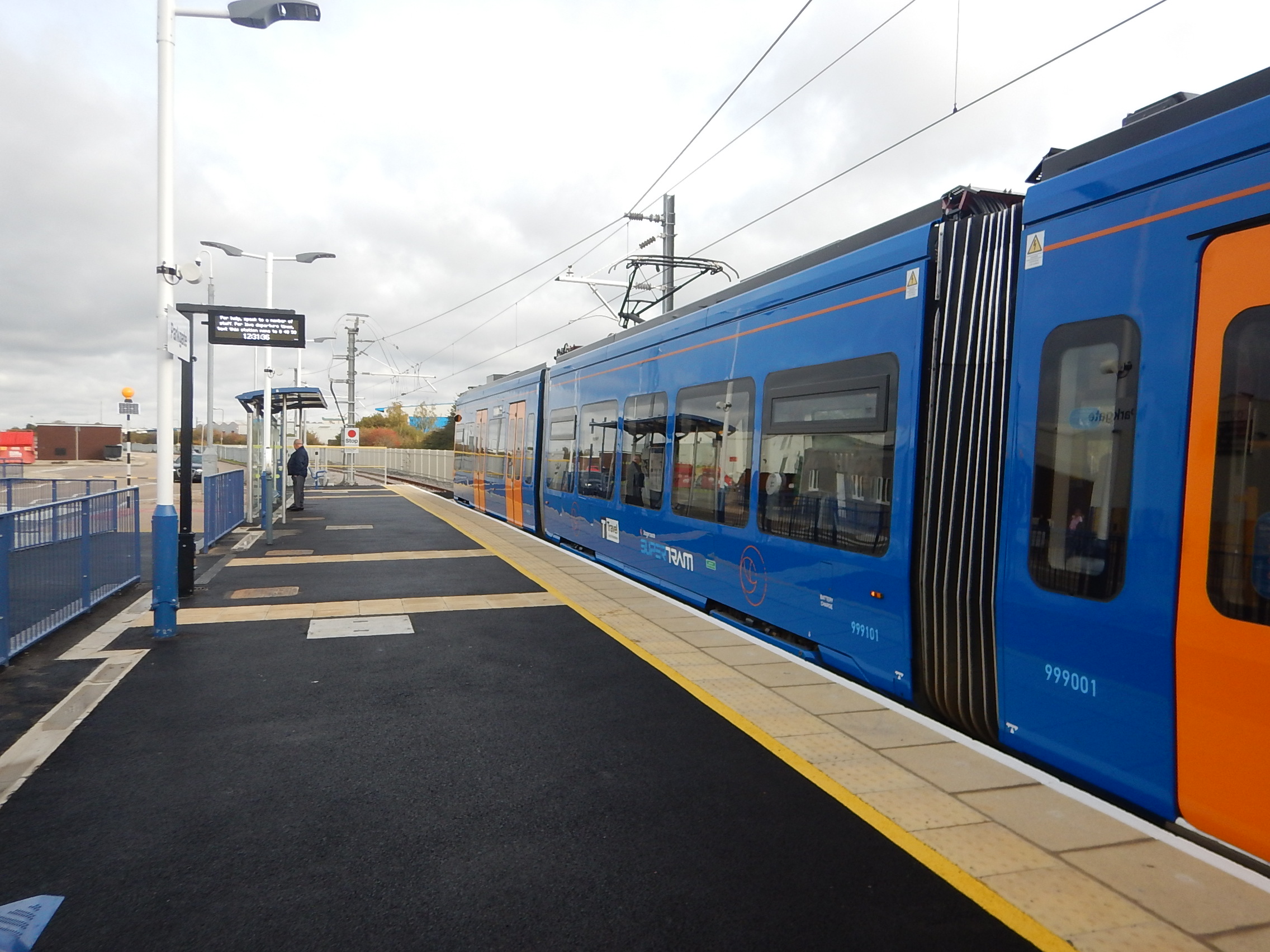
Note.
- This tram-train is a member of the Stadler Citylink family.
- this version can be powered by either 750 VDC or 25 KVAC.
- The Welsh version will also have battery-power.
- It is a three-car tram train.
- There is step-free access.
The Wikipedia entry for the Stadler Citylink has lots more details.
Stadler have just launched a new smaller one- or two-car tram-train.
This image from the press release shows the prototype hydrogen-powered one-car RS ZERO.
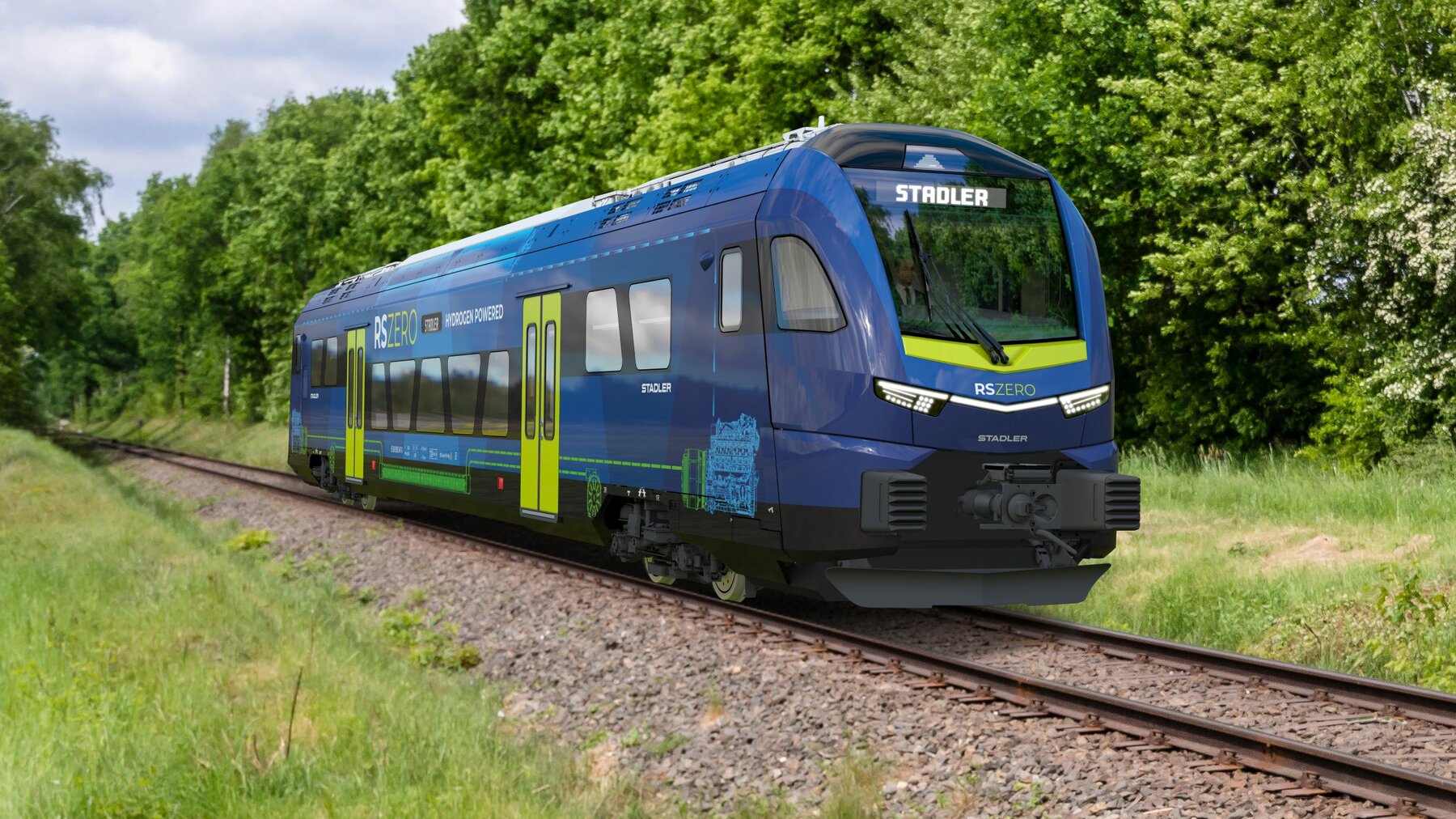
Note.
- The Regio-Shuttles can run as up to seven car trains.
- These RS ZERO are powered by overhead electrification, battery or hydrogen power.
- They can carry 170 passengers at 75 mph.
- They can run as train-trams using the Chemnitz model on compatible tram networks.
- The interiors are very flexible.
- An RS ZERO can be fitted with toilets for the posher parts of Manchester.
- Typically, a one-car RS ZERO handles a similar passenger load to a one-car Metrolink vehicle.
The more I compare the RS ZERO with the Metrolink’s trams, the more it looks like Stadler’s design has a Metrolink order firmly in its sights.
A Simple Tram-Train Example
The Altrincham Line of the Metrolink, runs between Altrincham and Deansgate-Castlefield in Central Manchester.
- Tram-trains would be capable of sharing the tracks with the current trams.
- Initially, they would run an identical service to the same destinations in the North.
- At either Navigation Road or Altrincham stations, they would switch to the heavy rail track.
- They would then travel to Hale or whatever station is determined to be the terminus.
Tram-trains would be a simple way of extending a tram service along a heavy eail line.
The Range Of The RS ZERO
This article on the Railway Gazette is entitled Prototype RS Zero Hydrogen Or Battery Railcar For Secondary Lines Unveiled At InnoTrans, has this paragraph.
The hydrogen powered RS Zero has a range of more than 700 km in the single car version, and a two-car version would offer more than 1 000 km. Battery trains will offer ranges of 80 to 110 km or 90 to 180 km. The maximum speed is 120 km/h.
As Chester and Manchester is only 45 miles or 72.4 kilometres, ways and means of running the battery versions on the route should be possible.
In fact, as Stockport and Manchester Piccadilly is already electrified at 25 KVAC and a return trip to Manchester Piccadilly from Stockport probably takes about twenty-five minutes, I would envisage that an RS ZERO would leave Stockport for Chester with a full battery. As Stockport and Chester is only 39.2 miles or 63 kilometres, the RS ZERO should do the trip if it started with a full battery and had a short length of electrification at Chester to top up the battery, if needed.
Other Possible Tram-Train Routes From Stockport
It is indicated the Metrolink would like to run other tram-train routes from Stockport.
- Ashton – Not sure of the route
- Buxton – 31.8 km
- Hazel Grove – 5 km – Electrified
- Manchester Piccadilly – 9 km – Electrified
- Manchester Airport – Not sure of the route
- Sheffield – 59 km – Will be electrified at Sheffield
Note.
- This would speed up Sheffield services.
- Buxton would be an interesting route and would probably use Newton’s friend to help on the return.
I suspect that nearly all local services from Manchester through Stockport could be run by battery-electric or hydrogen tram-trains.
The Glossop Line Could Be Converted To Tram-Train
It’s already electrified so why not?
Conclusion
It strikes me, that a lot of Manchester’s suburban rail network could be converted to RS ZERO tram-trains.
The RS ZERO tram-trains could also be used on existing tram routes to convert them to tram-train operation and extend them.
As a bonus Manchester’s trains would be substantially decarbonised.
Avanti West Coast Increases Liverpool – London Services With Launch Of Electric Evero Trains
The title of this post, is the same as that of this article on Railway Gazette.
This is the sub-heading.
Avanti West Coast officially launched the Class 807 electric only-version of its Hitachi-built Evero trainsets into service on November 11. This enables the operator to offer an additional weekday return service between Liverpool Lime Street and London Euston.
On the 14th of November 2024, these services were run by new Class 807 trains.
- 3F79 – 807001 – 2100 – Northampton to Liverpool Lime Street
- 3F80 – 807001 – 0023 – Liverpool Lime Street to Edge Hill Depot
- 5A99 – 807001 – 0836 – Edge Hill Depot to Liverpool Lime Street
- 1A99 – 807001 – 0901 – Liverpool Lime Street to London Euston – 02:40
- 1F12 – 807003 – 0743 – London Euston to Liverpool Lime Street – 03:07
- 1A28 – 807003 – 1043 – Liverpool Lime Street to London Euston – 02:20
Note,
- I have shown all Class 807 movements that happened. Some possibly didn’t!
- There appear to be extra services, which I’ve marked with their times.
- Time seems to be available to go to Edge Hill Depot if needed.
- I suspect an open return ticket can be used on any train, that’s running.
Services seem to be slow, but they can be booked.
Avanti Are Ramping Up The Service
I suspect that as they add more trains, times will come down and a stop at Liverpool South Parkway will be added.
The Class 390 trains currently used on the Liverpool route are too long for Liverpool South Parkway station.
But seven-car Class 807 trains would fit easily.
The shorter and lighter seven-car Class 807 trains may well have faster acceleration and deceleration than the nine- or eleven-car Class 390 trains with their heavy tilting mechanism.
Could this extra performance mean that the Class 807 trains could still meet the timetable with extra stops?
In Is Liverpool Going To Get High Speed One-Point-Five?, I discussed various options for the London and Liverpool service.
I believe that a practical timetable like this could work.
- Eleven-car Class 390 train – one tph – Non-stop or perhaps a single stop in the Midlands – Under two hours
- Seven-car Class 807 train – one tph – Stopping at Nuneaton, Stafford, Crewe, Runcorn and Liverpool South Parkway – Current time or better
Note.
- An hourly service between London and Liverpool in under two hours would surely be a passenger magnet.
- Two tph would be a 43 % hourly increase in the number of seats between London and Liverpool.
- There would be better connections between Liverpool Lime Street and the East Midlands.
The Railway Gazette article also says this.
From the December timetable change AWC will supplement the current hourly Liverpool – London service with an extra two trains each way every weekday and a third service on Saturdays.
In the short term, AWC will not be delivering the long-standing plan for a half-hourly service on the route, but further services are to be introduced over the next year.
One constraint relates to the power supply. Network Rail has identified two locations where additional electric services cannot currently be accommodated, and discussions over a resolution are ongoing.
A fast service could also be applied to one of the London and Manchester services.
It should be noted, that the two hours and eight minutes record between Manchester and London Euston was set by an InterCity 225 in 1992, so perhaps a seven-car Class 807 could do better than a Class 390 train.
Could A Pair Of Class 807 Trains Leave Euston For Liverpool And Manchester, And Split At Crewe?
Train lengths are as follows.
- Seven-car Class 807 train – 182 metres.
- Fourteen-car Class 807 train – 364 metres.
- Nine-car Class 390 train – 217.5 metres.
- Eleven-car Class 390 train – 365.3 metres.
- Caledonian Sleeper – 374 metres.
I suspect with perhaps a small amount of platform lengthening, a pair of Class 807 could be fitted into all stations, where they would need to call.
This might be a way of adding extra capacity and faster services to Manchester, without needing an extra path on the West Coast Main Line.
Could A Single Class 807 Train Call At Manchester Airport Station?
The platforms at Manchester Airport station are 192 metres long, so a single Class 807 train should fit.
This would allow an hourly service from Manchester Airport to the South, without a change at Manchester Piccadilly or Crewe.
To save paths, it could split and join with the second Liverpool service at Crewe.
Conclusion
The new Class 807 trains could increase performance to between London Euston and both Liverpool Lime Street and Manchester Piccadilly.
Could Liverpool Develop A Massive Zero-Carbon Data Centre?
There is an article in The Sunday Times today, which is entitled Google Signs Nuclear Deal To Power AI Data Centres.
These are the first three paragraphs of the article.
Google has struck a deal with a nuclear power start-up to provide low-carbon energy for its data centres and AI operations, marking a world-first in the tech industry.
The California-based company said the agreement to buy energy from multiple small modular reactors developed by Kairos Power could help spur a nuclear revival in America.
The first reactor is scheduled to come online in America by 2030, followed by additional deployments through 2035.
I am not against nuclear-powered data centres, but could Liverpool build a massive zero-carbon data centre?
This Google Map shows Liverpool Bay, which is a vast expanse of water that stretches along the North Wales coast to Anglesey and all the way to the Isle of Man.
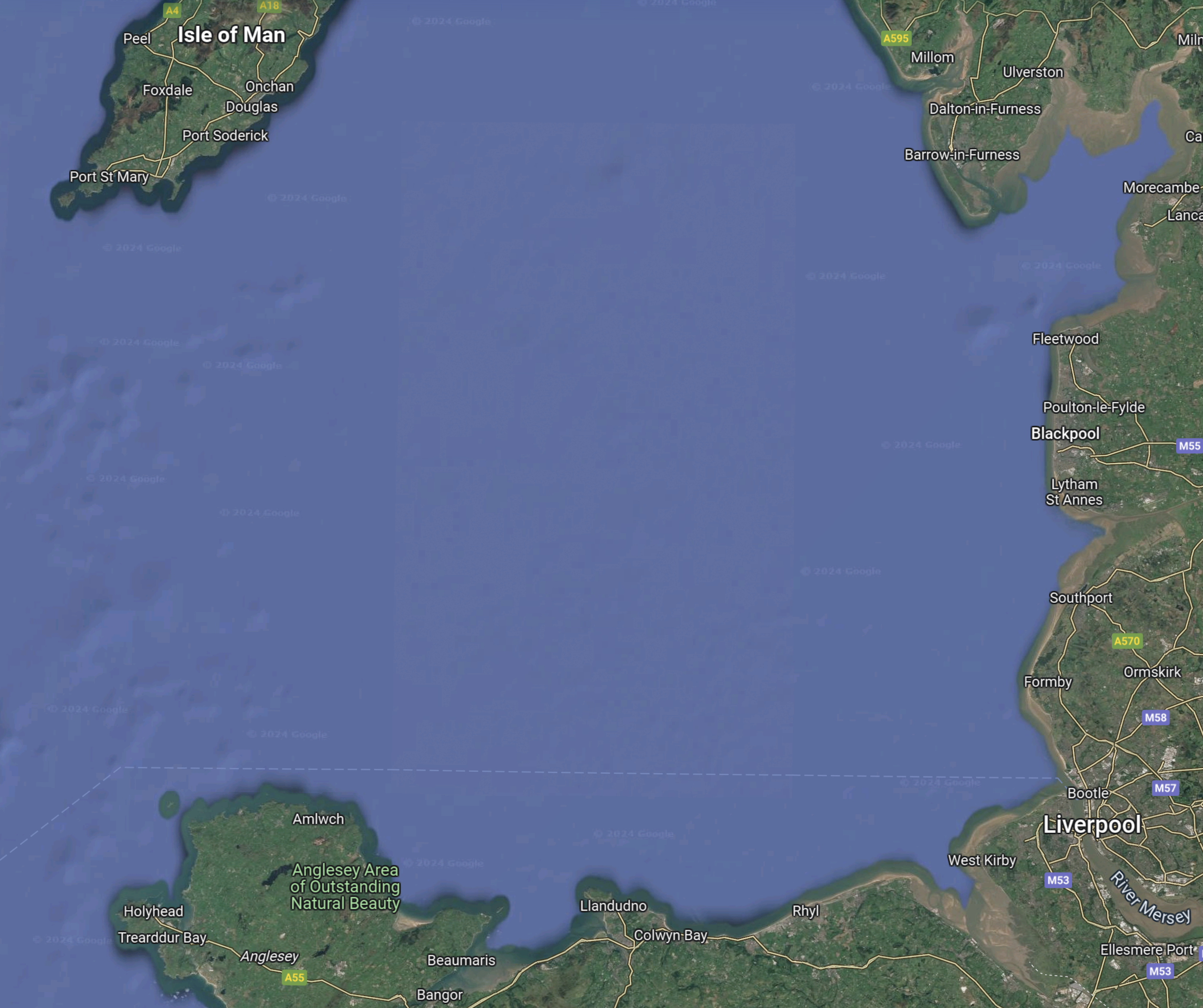
Note.
- The Isle of Man in the North-West corner.
- Liverpool, Birkenhead and the River Mersey in the South-East corner.
- Anglesey in the South-West corner.
- Blackpool with Morecambe Bay to its North in the North-East corner.
Liverpool Bay could be one of Europe’s zero-carbon energy powerhouses.
Wind Farms In Liverpool Bay
At the present time, these wind farms are producing electricity or planned in Liverpool Bay.
- Barrow – 90 MW – Commissioned in 2006
- Burbo Bank – 90 MW – Commissioned in 2007
- Burbo Bank Extension – 258 MW – Commissioned in 2017
- Gwynt y Môr – 576 MW – Commissioned in 2015
- North Hoyle – 60 MW – Commissioned in 2003
- Ormonde – 150 MW – Commissioned in 2012
- Rhyl Flats – 90 MW – Commissioned in 2009
- Walney – 367 MW – Commissioned in 2010
- Walney Extension – 659 MW – Commissioned in 2018
- West if Duddon Sands – 389 MW – Commissioned in 2014
- Awel y Môr – 500 MW – Planned
- Morecambe – 480 MW – Planned
- Mona – 1500 MW – Planned
- Morgan – 1500 MW – Planned
Note.
- 2509 MW has been commissioned.
- 3980 MW is being planned.
- That is a total of 6489 MW
I suspect more space in Liverpool Bay could be developed with wind farms.
Mersey Tidal Power
The Mersey Tidal Power project has a web site.
If it is built, it will probably be built by the South Korean company; K-Water and use some of the design principles of the Sihwa Lake Tidal Power Station.
It will likely have an output of around 1 GW and take ten years to build.
In the 1970s, I did some project management consultancy for Frederick Snow and Partners, and they showed me their plans for a Severn Barrage.
Their futuristic vision for the Severn Estuary was never built, as the Prime Minister of the time; Harold Wilson, felt coal was the future. See Last Of The Many!
I suspect that the Mersey Tidal Power project will be another variation on a proven theme.
Morecambe Bay Bridge And Tidal Barrage Proposal
In the Wikipedia entry for Morecambe Bay, there is a proposal for a bridge and tidal barrage across the bay, where this is said.
In 2004, a proposal was made to build a bridge across the bay flanked by wind turbines and using tidal power. Proposals from Northern Tidal Power Gateways in 2019 outlined a tidal barrage with a road running along on top.
If the Mersey Tidal Power project is a success, then why wouldn’t one across Morecambe Bay, be one too?
500 MW of zero-carbon tidal power would do nicely!
Nuclear Sites At Calder Hall, Heysham And Wylfa
These three nuclear stations have supplied electricity to the North-West of England.
- Calder Hall was the original Magnox site, which the Wikipedia entry says had a nameplate capacity of 240 MW and was decommissioned in 2003, after running for 47 years.
- Heysham is a powerful site which the Wikipedia entry says has a nameplate capacity of 2452 MW and will be decommissioned in 2028.
- Wylfa is an older, smaller Magnox site which the Wikipedia entry says had a nameplate capacity of 1190MW and was decommissioned in 2015.
As the sites are cleared, I am sure that we’ll see more nuclear power stations built on the sites.
How Much Electricity Does A Data Centre Use?
I found this paragraph in an NESO document.
Regardless of this, if we were to use existing market data and modelling projections, this could point to annual data centre electricity consumptions of between 3.6 TWh in 2020 to as much as 35 TWh by 2050.
Dividing by the hours in a year, indicates that an individual data centre could use between 0.4 and 4 GW of electricity.
Using my rough figures here from wind, tidal and nuclear, I suspect that the power on the Mersey will generate enough power for at least one data centre.
Liverpool Is On The Right Side Of The Country For Cables To North America
Cables will go straight out of Liverpool Bay, pass to the North of Ireland and across the Atlantic to somewhere like Puget Sound.
Liverpool has a superb location for a Transatlantic data centre, that connects to networks on both sides of the pond.
Could Underwater Data Centres Be Developed In Liverpool Bay?
This page on the Microsoft web site is entitled Microsoft Finds Underwater Datacenters Are Reliable, Practical And Use Energy Sustainably
These three paragraphs detail the research.
Earlier this summer, marine specialists reeled up a shipping-container-size datacenter coated in algae, barnacles and sea anemones from the seafloor off Scotland’s Orkney Islands.
The retrieval launched the final phase of a years-long effort that proved the concept of underwater datacenters is feasible, as well as logistically, environmentally and economically practical.
Microsoft’s Project Natick team deployed the Northern Isles datacenter 117 feet deep to the seafloor in spring 2018. For the next two years, team members tested and monitored the performance and reliability of the datacenter’s servers.
I would assume that Microsoft have continued the research, as with something like this you can’t be too careful.
But it would appear, that data centres and their servers could be submerged under the waters of Liverpool Bay.
London And Liverpool Will Be Under Two Hours By Train Within A Year
New Class 807 trains, which will be delivered within a year, will improve the train service between the two cities.
- Train times will be brought to around or even below two hours.
- , The extra trains will allow a second hourly service to be added.
- The extra service will additionally stop at Liverpool South Parkway station, for the airport.
- High Speed Two is claiming one hour and fifty minutes, between London and Liverpool.
Liverpool already has one of the best rail terminals in the North of England, as these pictures show.







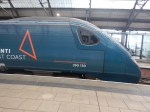

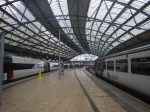
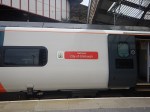
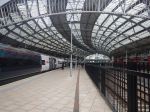
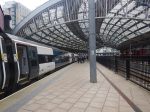
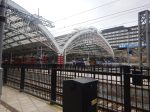
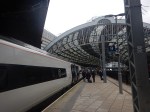

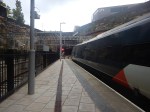

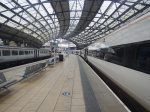

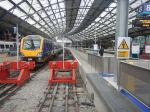

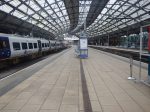
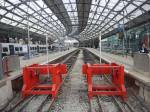

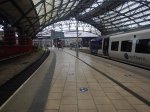

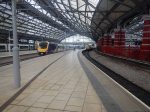


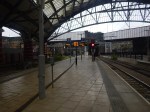
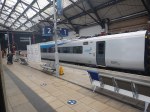
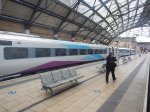
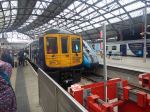
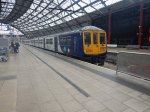



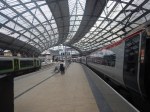
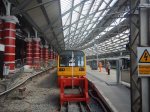

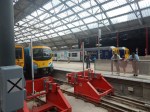
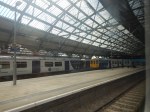
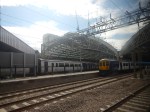
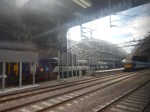
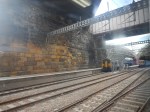

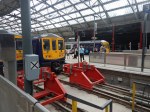


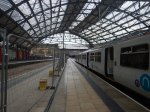
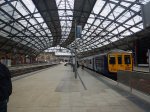
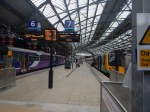
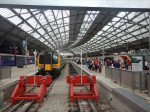
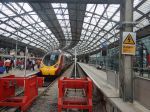
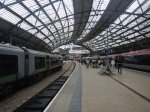
With these service improvements, it will have a service to London and the South, that will be second to no other Northern station.
Liverpool Has A Refurbished Partly-Underground Suburban Railway With New Trains
Liverpool’s Metro is one of the best in Europe for a medium-sized city.
The Metro is also expanding with new routes and stations.
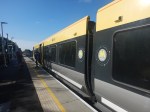

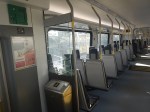

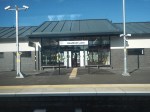

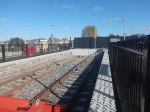

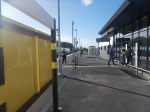
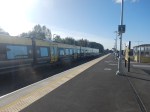

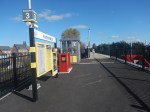

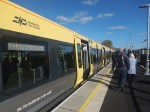
These pictures show the new Headbolt Lane station, which is swerved by the UK’s first battery-electric trains.
Liverpool Has Easy Access To Two International Airports
There are two international airports close by; Liverpool John Lennon and Manchester International.
- For Liverpool Airport, it’s a bus from Liverpool South Parkway station or an express bus from Liverpool city centre.
- For Manchester Airport, it’s a train from Lime Street station.
I am fairly sure, that a hydrofoil could connect Liverpool’s Waterfront and the Tidal Barrier to the airport.
North-West England Has A Rich University Tradition
Liverpool, Manchester and the surrounding area has several world-class universities and research establishments.
Some like The Pandemic Institute would be able to find uses for all the computing power and artificial intelligence on offer at a powerful data centre.
Liverpool Is A World City
Liverpool is a World City, where there is plenty of sport, entertainment and things to do.
Conclusion
Liverpool is installing the power infrastructure for a very large data centre, that will be able to handle the world’s largest and most difficult problems.
3rd October 2024 – A Day In Liverpool
A Three-Leg Journey North
This is the second time, I’ve bought one of there journeys North and they are a pain, unless you want to guarantee seats.
I suppose, I should buy my tickets earlier, but if I can buy my rickets on the day on other train companies, I would prefer to do it on Avanti West Coast.
Avanti West Coast’s problem is that they haven’t got their new Class 807 trains into service yet, which will double the services to Liverpool.
T arrived at Warrington Bank Quay on time and the transfer to Newton-le-Willows went smoothly, but then, I waited thirty minutes for my train to Liverpool Lime Street.
This OpenRailwayMap shows the route I took.
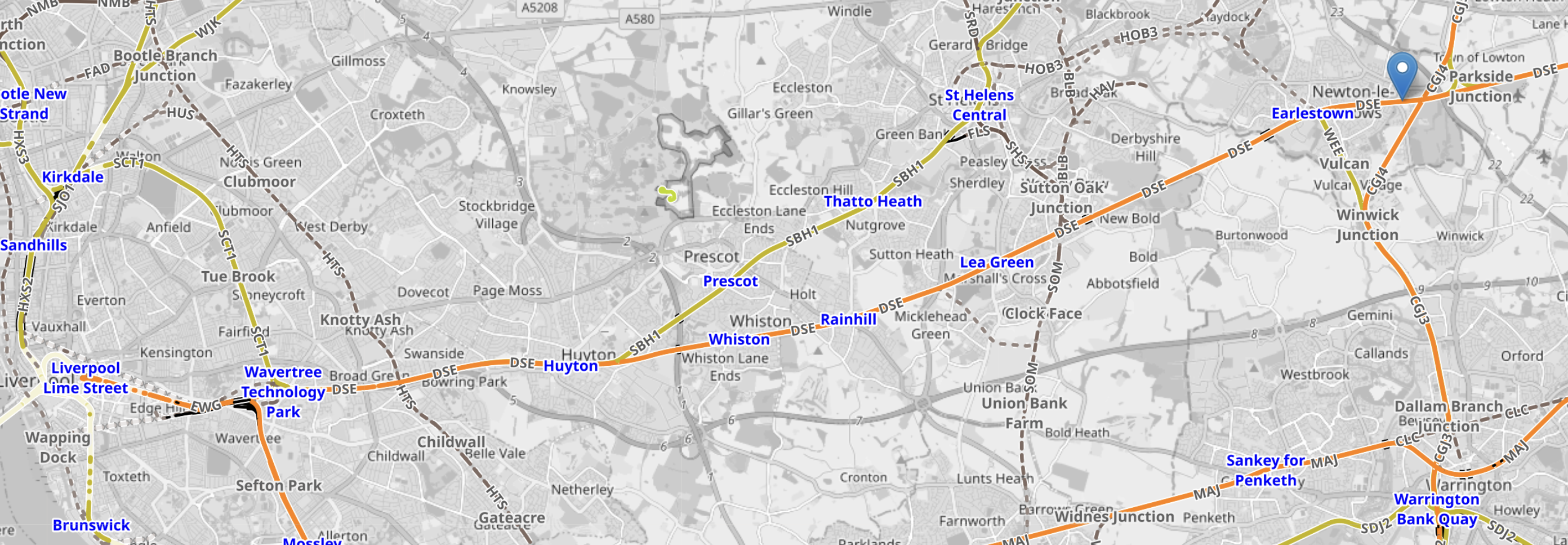
Note.
- Liverpool Lime Street station is at the Western side of the map.
- Newton-le-Willows station is marked by the blue arrow in the top right corner of the map.
- Warrington Bank Quay station is in the bottom right corner of the map.
It does seem a round about route, But I got there. Although, I was late.
Hopefully, in a couple of years, you’ll be able to take a local train between Liverpool Lime Street and Newton-le-Willows stations to link up with FirstGroup’s low-cost Lumo Open Access service between Euston and Rochdale.
A Single Journey Home
I was booked home on the 18:43 train from Lime Street, but as you can often do, I asked and was allowed to board the 17:43.
A Crowded And Crazy Euston
I arrived back at Euston at 20:00, but it was crowded, as the station is very much a building site for High Speed Two.
I felt I would treat myself to a taxi, but I couldn’t find any.
So I took a 205 bus along Euston Road to King’s Cross, where I jumped on the the Circle Line for Moorgate.
From there I took my usual 141 bus home.
A friendly station guy at Moorgate, indicated, there might not be any taxis at Euston.
I’d also found earlier, that there were no escalators to the Underground.
Perhaps more than ever, care should be taken at Euston, when getting to and from the station.
It Looks To Me That High Speed Two Has Got Their Planning Wrong At Euston
The big problem at Euston is getting to and from the National Rail station from East or West,
Compare Euston in this respect with Liverpool Street, King’s Cross, St. Pancras or Paddington.
In The New Step-Free Entrance At Euston Square Station, I show the plans for step-free access to the sub-surface lines.
This new entrance to Euston station, should be built first.
All the dithering about High Speed Two seems to have delayed it!
Lumo Carbon Data Shows Its Trains Are 22 Times Greener Than Flying
The title of this post, is the same as that of this article on Rail Advent.
These paragraphs detail how the figures were obtained.
To mark the second anniversary of its branding as ‘Lumo’, the operator commissioned consultancy firm Arup to provide an independent report about all direct emissions from its operations; emissions from the grid-supplied energy it uses; and other emissions in its supply chain.
Scope 1: Direct emissions from operations that are owned and controlled by Lumo;
Scope 2: Emissions from the use of grid-supplied electricity, heat, steam and/or cooling by Lumo;
Scope 3: All other emissions that occur in the value chain of Lumo.In the last two years, Lumo has carried over two million passengers. The figures reveal that, per passenger, emissions from a London-to-Edinburgh journey are twenty-two times the level for flying (149 kgCO2e) than for using Lumo (6.8kgCO2e).
I have a few thoughts.
Carbon Savings With LNER
LNER’s Class 801 trains are similar to Lumo’s Class 803 trains.
The main difference, is that the LNER have emergency diesel engines, whereas Lumo have emergency batteries to run the trains systems, if the catenary goes down.
So LNER on balance will generate a bit more carbon than Lumo.
But the difference will be marginal.
Carbon Savings With Avanti West Coast
Avanti’s Class 390 trains to Scotland, are all-electric, so there will be a carbon-saving.
Probably about the same as with LNER.
Avanti West Coast’s New Class 807 Trains
If the Class 807 trains were cars, they would be Lotuses.
- They are electric only and have no heavy diesel engines or traction batteries.
- They don’t even have emergency batteries for when the catenary fails.
- They have a redesigned nose. Is it more aerodynamic?
- The heavy tilt mechanism is history.
- As with all the other Hitachi high speed trains, they are capable of 125 mph, or 140 mph if the signalling permits.
These trains will undoubtedly have faster acceleration and deceleration and could probably knock minutes off the timings at all the stops.
Tucked away beside the Grand Union Sets Out Stirling Ambitions article in the December 2022 Edition of Modern Railways is a report on Avanti West Coast’s application for a second service between Euston and Liverpool.
This is said.
Avanti West Coast has applied for access rights for its second hourly Euston to Liverpool service, starting from December 2023, although a phased introduction of the new service is likely. This would make use of Avanti’s new fleet of 10×7-car Class 807 Hitachi EMUs, which are expected to enter service from Autumn 2023. The ‘807s’ would be deployed on the current hourly Liverpool service, on which a call at Liverpool South Parkway would be added. (provision is made for this in the December 2022 timetable.).
Pendolinos would then operate the second service each hour, calling at Lichfield Trent Valley and Tamworth.
A linespeed project is in progress to raise the permissible speed for non-tilting trains on the West Coast Main Line, and Avanti’s new Hitachi trains will take advantage of this.
I can’t wait to go to Liverpool in one of these trains.
Their carbon emissions should be in line with Lumo.
Avanti West Coast’s New Class 805 Trains
These are equivalent to the Class 802 trains, but with probably Class 807 train interiors and looks.
I wonder how long these trains will keep their diesel engines before battery power is the most affordable option.
Once they go battery-electric, their carbon emissions should be in line with Lumo.
Conclusion
I can’t see any other mantra than.
Electric good, diesel bad
Especially, if like most computers, it’s just plug and play.
Could The High Speed Two Link Between Lichfield And Crewe Still Be Built?
The original plan for High Speed Two included two routes between Lichfield and Crewe.
This map clipped from the High Speed Two web site, shows the two routes.
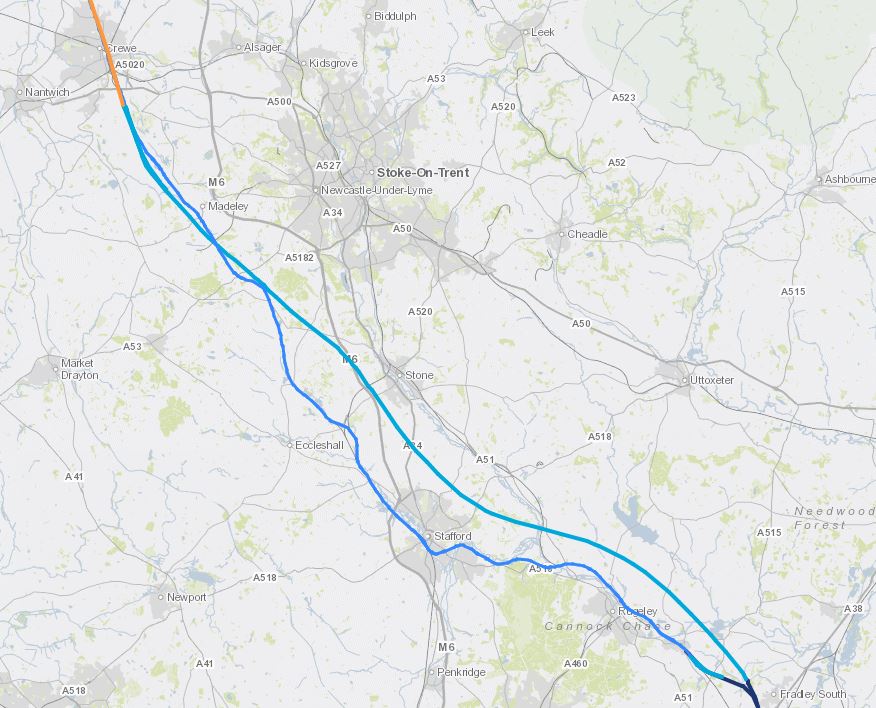
Note.
- High Speed Two Phase 2a is shown in blue.
- High Speed Two Phase 2b is shown in orange.
- Crewe is in the North-West corner of the map, at the Southern end of the orange section.
- The junction at Lichfield is in the South-East corner of the map.
- The lighter blue route to the East, between the Lichfield junction and Crewe is the proposed new tracks of High Speed Two.
- The darker blue route to the West, between the Lichfield junction and Crewe is the existing route of the Trent Valley Line and the West Coast Main Line.
- The Trent Valley Line joins the West Coast Main Line at Stafford.
This second map clipped from the High Speed Two web site, shows the junction North of Lichfield, where High Speed Two connects to the Trent Valley Line through Stafford.

Note.
- High Speed Two runs North-South across the map.
- After the Junction by Fradley South, High Speed Two to Crewe and the North, is the branch to the East.
- The other branch connects to the Trent Valley Line at Handsacre junction.
- Trent Valley Line can be picked out North of Lichfield, where it passes through Lichfield Trent Valley station.
The Trent Valley Line is no Victorian double-track slow-speed bottleneck.
- The route between Rugby and Crewe is generally three or four tracks, with only one short stretch of double track, through Shugborough tunnel.
- The speed limit is generally 110 mph, with 90 mph at Shugborough.
- I wouldn’t be surprised to see Avanti West Coast’s Class 390 and Class 807 trains could be running at up to 140 mph on the route, if digital signalling were to be installed.
- This speed would probably be attained by High Speed Two trains.
London Euston and Stafford would only have under twenty miles of slower line and that could be 140 mph, so High Speed Two times on the route could be very fast.
Trains Between London And Stafford Before And After High Speed Two To Lichfield
Currently, Avanti West Coast trains take around one hour and seventeen minutes between London and Stafford.
The Wikipedia entry for High Speed Two gives these times between London and Stafford.
- Fastest time before High Speed Two – one hour and seventeen minutes.
- Time after Phase 2a of High Speed Two opens – fifty-five minutes.
Note.
- That is a time saving of twenty-two minutes.
- High Speed Two Trains will use the link between the junction at Lichfield and the Trent Valley Line.
- High Speed Two will also add eighteen trains per hour (tph) to the capacity between London and Lichfield.
This would seem to mean that any trains going to or through Stafford will be twenty-two minutes faster, if they use High Speed Two between London and Lichfield.
Trains Between London And Crewe Before And After High Speed Two To Crewe
Currently, Avanti West Coast trains take around one hour and thirty minutes between London and Crewe.
The Wikipedia entry for High Speed Two gives these times between London and Crewe.
- Fastest time before High Speed Two – one hour and thirty minutes.
- Time after Phase 2a of High Speed Two opens – fifty-six minutes.
Note.
- That is a time saving of thirty-four minutes.
- High Speed Two Trains will use the direct line between Lichfield and Crewe.
- High Speed Two will also add eighteen tph to the capacity between London and Crewe.
This would seem to mean that any trains going to or through Crewe will be thirty-four minutes faster, if they use High Speed Two between London and Crewe.
High Speed Two Between Lichfield And Crewe Only Saves An Extra Twelve Minutes
It appears that extending High Speed Two to Crewe only saves an extra twelve minutes.
But it will also have these benefits.
High Speed Two Full-Size trains will be able to run to Crewe.
High Speed Two will also add eighteen tph to the capacity between London and Crewe.
Savings From Scrapping High Speed Two Between Lichfield And Crewe
In addition to the savings of the scrapping of the line, I suspect that any modifications to Crewe station will be much simpler.
I wonder how much will be saved by not building High Speed Two to Crewe.
Could The High Speed Two Link Between Lichfield And Crewe Still Be Built?
This is the question I asked in the title.
We know the benefits of building High Speed Two and as time progresses we’ll know the costs and the disruption the building will cause with an increasing accuracy.
I also believe that even High Speed Two Lite will be a rip-roaring success, and other places will want their own High Speed Two service, which will need an increase in capacity North of Lichfield.
So there will come a point, when there is an overwhelming case to build the High Speed Two Link Between Lichfield and Crewe.
Because of that we must make sure, that any sales of land or properties, doesn’t compromise building the High Speed Two Link Between Lichfield and Crewe.
Conclusion
There will come a point, when the amount of traffic, will mean that it is worth building the High Speed Two Link Between Lichfield and Crewe.
My other conclusion is important and the route of the originally proposed High Speed Two Link Between Lichfield and Crewe, must not be compromised.
Could High Speed Two Finish At Lichfield?
I wrote this post before Rishi Sunak made his speech.
I went to Manchester and Liverpool yesterday by train.
I took the 10:33 from Euston and this a summary of my journey.
- The train left Euston half a minute early.
- It arrived at Stafford (133.5 miles) at 11:50 and left at 11:52.
- It arrived at Crewe (158.0 miles) at 12:08 and left at 12.10.
- It arrived at Wilmslow (176.9 miles) at 12:25 and left at 12:27.
- It arrived at Stockport (183.0 miles) at 12:35 and left at 12:37.
- It arrived in Manchester Piccadilly (188.9 miles) at 12:46.
- It was two minutes late into Manchester and more or less on time at the other stops.
Note.
- The route was via the Trent Valley Line and the train passed through Nuneaton, Tamworth, Lichfield Trent Valley, Colwich and Stafford.
- Euston and Manchester had been timetabled at two hours and eleven minutes.
- This is an average speed of 86.5 mph.
- The Wikipedia entry for High Speed Two gives the fastest time before High Speed Two opens as one hour and fifty-four minutes.
- This will be an average speed of 99.4 mph.
Coming home, I took the 18:48 from Liverpool Lime Street and this a summary of my journey.
- The train left Liverpool on time.
- It arrived at Runcorn (13.2 miles) at 18:58 and left at 19:02.
- It arrived at Crewe (35.8 miles) at 19:26 and left at 19:28.
- It arrived at Milton Keynes (143.8 miles) at 20:27 and left at 20:29.
- It arrived in Euston (183.6 miles) at 21:00.
- It was five minutes late into Crewe and two minutes early at Euston.
Note.
- The route was via the Trent Valley Line and the train passed through Stafford, Colwich, Lichfield Trent Valley, Tamworth and Nuneaton.
- Liverpool and Euston had been timetabled at two hours and twenty minutes.
- This is an average speed of 78.7 mph.
- The Wikipedia entry for High Speed Two gives the fastest time before High Speed Two opens as two hours and three minutes.
- This will be an average speed of 89.6 mph.
This map clipped from the High Speed Two web site, shows the junction North of Lichfield, where High Speed Two connects to the Trent Valley Line through Stafford.
Note.
- High Speed Two runs North-South across the map.
- After the Junction by Fradley South, High Speed Two to Crewe and the North, is the branch to the East.
- The other branch connects to the Trent Valley Line at Handsacre junction.
- Trent Valley Line can be picked out North of Lichfield, where it passes through Lichfield Trent Valley station.
The Trent Valley Line is no Victorian double-track slow-speed bottleneck.
- The route between Rugby and Crewe is generally three or four tracks, with only one short stretch of double track, through Shugborough tunnel.
- The speed limit is generally 110 mph, with 90 mph at Shugborough.
- I wouldn’t be surprised to see Avanti West Coast’s Class 390 and Class 807 trains could be running at up to 140 mph on the route, if digital signalling were to be installed.
- This speed would probably be attained by High Speed Two trains.
London Euston and Stafford would only have under twenty miles of slower line and that could be 140 mph, so High Speed Two times on the route could be very fast.
This second map clipped from the High Speed Two web site, shows between High Speed Two’s two Birmingham stations and Lichfield.
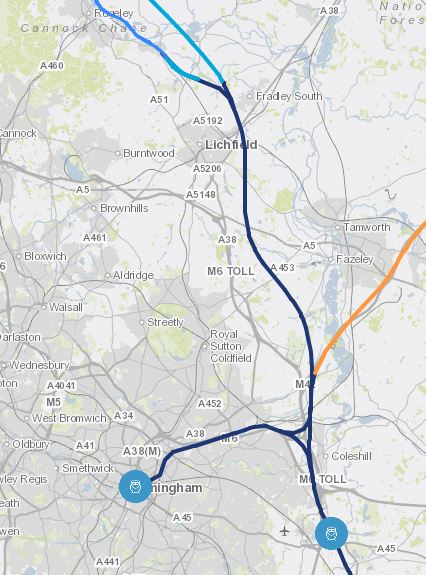
Note.
- High Speed Two Phases 1 and 2a are shown in blue.
- High Speed Two Phase 2b is shown in orange.
- At the top of the map, can be seen the junction, where High Speed Two to the North splits, that was shown in the previous map.
- The large blue dot in the West at the bottom of the map, is Birmingham Curzon Street station.
- The other large blue dot is Birmingham International station.
- The three sections of High Speed Two to London, Birmingham Curzon Street and the North meet at a triangular junction between the two Birmingham stations.
- High Speed Two to the East Midlands, branches off to the East North of the triangular junction.
This third map clipped from the High Speed Two web site, shows between Lichfield and Crewe.
Note.
- High Speed Two Phase 2a is shown in blue.
- High Speed Two Phase 2b is shown in orange.
- Crewe is in the North-West corner of the map, where at the South end of the orange section.
- The junction at Lichfield is in the South-East corner of the map.
- The lighter blue route to the East, between the Lichfield junction and Crewe is the new tracks of High Speed Two.
- The darker blue route to the West, between the Lichfield junction and Crewe is the existing route of the Trent Valley Line and the West Coast Main Line.
- The Trent Valley Line joins the West Coast Main Line at Stafford.
These are a few thoughts and questions.
How Will Trains Go Between Birmingham Curzon Street And London?
Trains will use the triangular junction shown in the second map to go between the two Birmingham stations and then head South,
How Will Trains Go Between Birmingham Curzon Street And The North?
Trains will use the triangular junction shown in the second map to turn North and then take one of the two routes to the North; High Speed Two or Trent Valley Line/West Coast Main Line.
How Will Trains Go Between Birmingham Curzon Street And The North If High Speed Two Between Birmingham And The North Is Scrapped?
If High Speed Two is scrapped from the Northern point of the triangular junction to the North, there will be no way that trains could go North from Birmingham Curzon Street.
- The overcrowded Birmingham New Street station will still be the link to the North of England and Scotland for Birmingham.
- How would trains connect to the future branch to East Midlands Parkway, which connects just North of the triangular junction?
I suspect that a short stub will be built North of the triangular junction to connect to the Trent Valley Line, which is currently, the main route of trains between London and the North through the West Midlands, for trains that don’t go through Birmingham.
Trains Between London And Stafford
Currently, Avanti West Coast trains take around one hour and seventeen minutes between London and Stafford.
The Wikipedia entry for High Speed Two gives these times between London and Stafford.
- Fastest time before High Speed Two – one hour and seventeen minutes.
- Time after Phase 2a of High Speed Two opens – fifty-five minutes.
Note.
That is a time saving of twenty-two minutes.
High Speed Two Trains will use the link between the junction at Lichfield and the Trent Valley Line.
How Many Avanti West Coast Services Use The Trent Valley Line?
These trains use the Trent Valley Line.
- London and Holyhead – 8 tpd
- London and Liverpool Lime Street – 1 tph, which is planned to increase to 2 tph
- London and Manchester Piccadilly – 2 tph
- London and Blackpool North – 1 tpd
- London and Glasgow – 1 tph
Note.
- tpd is trains per day
- tph is trains per hour
This is roughly six tph.
Would It Be Possible To Finish High Speed Two At The Lichfield Junction And Connect It To The Trent Valley Line?
This is a repeat of the first map.
Note.
- High Speed Two runs North-South across the map.
- After the Junction by Fradley South, High Speed Two to Crewe and the North, is the branch to the East.
- The other branch connects to the Trent Valley Line at Handsacre junction.
- Trent Valley Line can be picked out North of Lichfield, where it passes through Lichfield Trent Valley station.
If the Eastern branch North from the junction were to be scrapped, all trains between London and North would go via Stafford.
As all these tracks are planned and must be at an advanced stage, that is ready for construction, I feel the route would be feasible.
It would have these benefits.
- Birmingham Curzon Street services and the North-West of England and the West of Scotland would be possible.
- Services between London and Stafford will be twenty-two minutes faster, than they are now.
- Time savings will also apply to services from London to Liverpool, Macclesfield, Manchester, Stoke-on-Trent and all stations between Crewe and Glasgow.
The capacity of the Trent Valley Line would be the limiting factor.
Time Savings Between Crewe And Preston
According to the Wikipedia entry for High Speed Two, after Phase 2a of High Speed Two opens, these will be the fastest times to Crewe and Preston.
- Crewe – 0:56
- Preston 1:18
Note.
- The fastest Preston service runs non-stop between Euston and Preston.
- Crewe and Preston are 51 miles apart.
A time of 22 minutes between Crewe and Preston, means the average speed is 139 mph.
Does this mean that High Speed Two will improve between Crewe and Preston to allow 140 mph non-stop running?
But 22 minutes is certainly an improvement on the current time between Crewe and Preston for Scottish trains of 40 minutes.
Time Savings Between Crewe And Liverpool
The upgrading of the line between might save another couple of minutes between Crewe and Weaver junction.
What Times Would Be Possible Via High Speed Two And The Trent Valley Line?
These times are based on the following.
- The twenty-two minute saving to Stafford, as all High Speed Two services to the North-West of England and the West of Scotland will go via Phase 1 of High Speed Two and Stafford.
- A saving of eighteen minutes will be applied to Scottish services because of savings between Crewe and Preston.
This would give these times in hours:minutes.
- Blackpool – 2:10
- Carlisle – 2:35
- Chester – 1:28
- Crewe – 1:08
- Glasgow – 3:50
- Holyhead – 3:10
- Lancaster – 2:03
- Liverpool Lime Street – 1:41
- Llandudno Junction – 2:24
- Macclesfield – 1:30
- Manchester Piccadilly via Crewe – 1:52
- Oxenholme – 1:54
- Preston – 1:46
- Runcorn 1:31
- Stafford – 0:55
- Stockport – 1:35
- Stoke-on-Trent – 1:10
- Warrington – 1:22
- Wigan 1:33
- Wilmslow – 1:25
I have calculated extra services to Blackpool and North Wales.
Adding The Lichfield And Crewe Section
Consider.
- My calculations indicate that London and Crewe will take 1:08.
- The Wikipedia entry for High Speed Two, after Phase 2a of High Speed Two opens, gives the fastest time to Crewe as 0:56.
This indicates that adding the section of High Speed Two between Lichfield and Crewe will save a further twelve minutes.
Conclusion
I strongly believe that an upgraded Trent Valley Line linked to a shortened High Speed Two at Lichfield could improve journey times between London, Birmingham and the North.
There are certainly savings to be made.
See Also
High Speed Two To Crewe
There has been a lot of speculation about the Northern end of High Speed Two, so I might as well add sort out a few facts and add a bit of speculation of my own.
Sample Times Between London And Crewe
These are selected times from the 27th September 2023.
- 07:30 – Glasgow Non-Stop – 1:29
- 07:33 – Manchester Piccadilly – 1:37 – Stops at Stafford
- 07:43 – Liverpool Lime Street – 1:40 – Stops at Milton Keynes
- 08:30 – Glasgow Non-Stop – 1:29
- 08:33 – Manchester Piccadilly – 1:37 – Stops at Stafford
- 08:43 – Liverpool Lime Street – 1:40 – Stops at Milton Keynes
- 09:02 – Holyhead – 1:40 – Stop at Stafford
- 15:02 – Chester – 1:40 – Stops at Tamworth, Lichfield Trent Valley and Stafford
Note.
- The 07:30 and 08:30 Glasgow services appears to be pathed for one of the Class 390 Pendolino electric trains and were run by Pendolinos.
- The 07:33 and 08:33 Manchester services appears to be pathed for one of the Pendolino electric trains and were run by Pendolinos.
- The 07:43 and 08:43 Liverpool services appears to be pathed for one of the new Class 807 electric trains, but were run by Pendolinos.
- The 15:02 Chester service appears to be pathed for one of the new Class 805 bi-mode trains.
- All services except the Glasgow services stop at Crewe.
- As London Euston and Crewe is 158 miles, the non-stop Glasgow services average 107 mph, the one-stop Manchester service averages 98 mph and the one-stop Liverpool service averages 95 mph.
I have some further thoughts.
How Long Does A Stop Take?
I’ve looked at some stops of Glasgow, Liverpool and Manchester services
Crewe
Looking at timings between Weaver Junction and Norton Bridge, I have found the following times.
- Glasgow-Euston – 23 minutes
- Liverpool-Euston – 28 minutes
Note.
- Manchester services don’t go through Weaver Junction.
- Weaver Junction and Norton Bridge are respectively North and South of Crewe.
- The Liverpool service stops at Crewe, where it has a dwell time of two minutes.
- The Glasgow service goes straight through Crewe.
The Crewe stop takes a total of 5 minutes of which 3 minutes are deceleration and acceleration to and from linespeed.
Stafford
Looking at timings between Norton Bridge and Colwich, I have found the following times.
- Glasgow-Euston – 7½ minutes
- Liverpool-Euston – 7½ minutes
- Manchester -Euston – 14 minutes
Note.
- Norton Bridge and Colwich are respectively North and South of Stafford.
- The Manchester service stops at Stafford, where it has a dwell time of two minutes.
- The Glasgow and Liverpool services go straight through Stafford.
The Stafford stop takes a total of 6½ minutes of which 4½ minutes are deceleration and acceleration to and from linespeed.
Milton Keynes
Looking at timings between Weedon and Bletchley, I have found the following times.
- Glasgow-Euston – 11½ minutes
- Liverpool-Euston – 16 minutes
- Manchester -Euston – 12½ minutes
Note.
- Weedon and Bletchley are respectively North and South of Milton Keynes.
- The Liverpool service stops at Milton Keynes, where it has a dwell time of one minute.
- The Glasgow and Manchester services go straight through Milton Keynes.
The Milton Keynes stop takes a total of 4 minutes of which 3 minutes are deceleration and acceleration to and from linespeed.
Average Speeds Between Crewe And London
London Ruston and Crewe is 158 miles according to Real Time Trains.
So what would times would various average speeds deliver?
- 100 mph – 95 minutes
- 110 mph – 86 minutes
- 120 mph – 79 minutes
- 125 mph – 76 minutes
- 130 mph – 73 minutes
- 140 mph – 68 minutes
Obviously, any average speed with over 125 mph running, will need full digital signalling.
Liverpool And London In Two Hours
Tucked away beside the Grand Union Sets Out Stirling Ambitions article in the December 2022 Edition of Modern Railways is a report on Avanti West Coast’s application for a second service between Euston and Liverpool.
This is said.
Avanti West Coast has applied for access rights for its second hourly Euston to Liverpool service, starting from December 2023, although a phased introduction of the new service is likely. This would make use of Avanti’s new fleet of 10×7-car Class 807 Hitachi EMUs, which are expected to enter service from Autumn 2023. The ‘807s’ would be deployed on the current hourly Liverpool service, on which a call at Liverpool South Parkway would be added. (provision is made for this in the December 2022 timetable.).
Pendolinos would then operate the second service each hour, calling at Lichfield Trent Valley and Tamworth.
A linespeed project is in progress to raise the permissible speed for non-tilting trains on the West Coast Main Line, and Avanti’s new Hitachi trains will take advantage of this.
I’ll take a quick look at the Crewe and Runcorn section.
- It is 22.5 miles.
- It takes 19 minutes.
- That is an average speed of 71 mph.
- Crewe and Weaver Junction has a speed limit of at least 110 mph
- Runcorn and Weaver Junction has a speed limit of at least 90 mph for most of the way.
- If with their superior performance, the new Class 807 trains could average 90 mph between Crewe and Runcorn, they would take 15 minutes.
- Achieving the 90 mph average may need a bit of track realignment and some signaling changes.
The four minutes saved would be enough to handle the extra stop at Liverpool South Parkway.
Consider.
- Currently, Pendolino trains do Liverpool and Crewe in 38 minutes, which includes the stop at Runcorn.
- My calculation with the Class 807 trains, shows that with a bit of extra signalling, the new trains could do Liverpool and Crewe in 38 minutes with the two stops.
- The stop at Crewe will subtract 5 minutes from the base journey time.
- The stop at Milton Keynes will subtract 4 minutes from the base journey time.
This means the base journey time between Crewe and London will be 73 minutes.
This would indicate that the trains would be running at 130 mph to achieve the two hours.
But there are five accelerations and five decelerations on a journey between London and Liverpool and the new Class 807 trains are the Lotuses of Hitachi’s family of AT-300 trains; lightweight and powerful.
Suppose they could save thirty seconds for each acceleration and deceleration.
The base journey time between Crewe and London will be 78 minutes.
This would indicate that the trains would be running at over 120 mph to achieve the two hours.
I certainly feel, that Liverpool and London in two hours is certainly possible using the new Class 807 trains.
London and Crewe with two stops would be times at one hour and twelve minutes.
But what about the Pendolinos?
- My last return trip from Liverpool did a practice call at Liverpool South Parkway and still arrived in London a few minutes early.
- The Pendolinos will still benefit from any improvements, between Crewe and Runcorn, which could reduce the Liverpool and Crewe time from 38 minutes to 34 minutes.
- The stop at Crewe will subtract 5 minutes from the base journey time.
- The stops at Lichfield Trent Valley and Tamworth will both subtract 4 minutes from the base journey time.
This means the base journey time between Crewe and London will be 73 minutes, which is the same as for the Class 807 trains.
This would indicate that the trains would be running at 130 mph to achieve the two hours.
Could this average speed be achieved by the selective application of full digital signalling, perhaps on the Trent Valley Line?
But it does appear to me, that the Pendolinos can get very close to two hours between London and Liverpool.
London and Crewe with three stops would be times at one hour and sixteen minutes.
Crewe And London Non-Stop
Consider.
- Pendolinos between London and Glasgow, go non-stop between London and Crewe.
- I have calculated that Pendolinos between London and Liverpool, will take one hour and sixteen minutes with three stops between London and Crewe.
- The three stops take a total of thirteen minutes.
I wouldn’t be surprised to see London and Glasgow Pendolinos take one hour and three minutes between London and Crewe.
This would knock twenty-six minutes off journey times between London and Glasgow.
Conclusion
I believe that with relatively minor improvements on the West Coast Main Line and the Liverpool branch, the following can be achieved.
- Liverpool and London can be around two hours with new Class 807 trains or Pendolinos.
- Liverpool and London services can increase their calls in the Midlands.
- London and Glasgow services can be nearly half-an-hour faster.
- The fastest London and Crewe services could be just over an hour using Pendolinos.
I also believe that the only serious infrastructure needed is some track realignment and some updated signalling.
See Also
Could High Speed Two Finish At Lichfield?
 The Anonymous Widower