London King’s Cross Station To Glasgow Central Station For £64.35
My plan on Friday, was to see if it was possible to get to Glasgow using the historic route of the Midland Railway’s Thames-Clyde Expresses.
I used two tickets and four trains.
My first ticket was from King’s Cross to Bradford Forster Square, which cost me just £24.55 with my Senior Railcard.
- I left on the 11:40, which was a nine-car train.
- The train reversed at Leeds.
- The train was eight minutes late into Bradford Forster Square station.
I took these pictures on my route North.
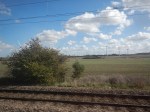
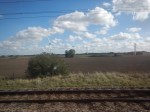

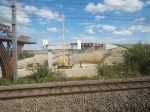
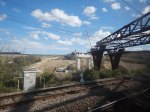
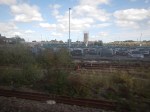
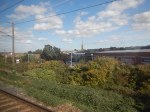
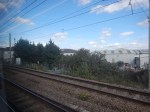
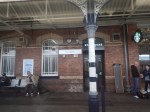
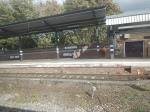
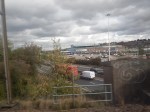
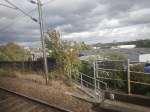
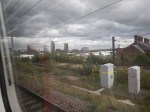
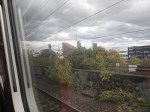
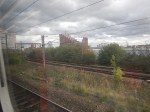
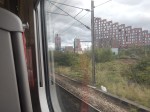
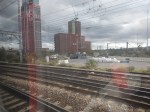
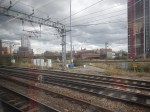
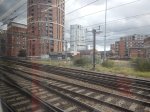



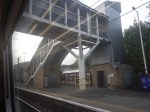
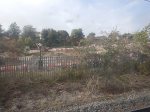
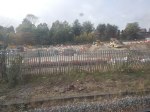
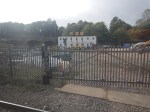
Note.
- The Biggleswade Wind Farm Is Only 20 MW.
- The new A 421 Extension Will Run between Black Cat and Caxton Gibbet.
- A large number of new buildings are going up on the approach to Leeds station.
- The train reversed at Leeds station.
- The reverse took ten minutes.
- The £100 million Shipley Traincare Centre is under construction.
- This page gives more details of the Shipley Traincare Centre.
- Bradford Forster Square station has been designed and build with four long platforms.
Have Network Rail designed the station, so that it can handle ten-car Leeds and Scotland services with a reverse?
- At Bradford Forster Square station, I bought a ticket to Glasgow Central/Queen Street stations for £39.80 with a Railcard.
- So that was my total expenditure of £64.35, as the coffee was free.
- My route would take me to Carlisle over the Settle and Carlisle Line.
- From Carlisle, I would take any of a number of trains to Glasgow Central station.
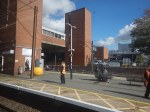
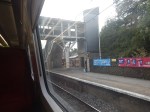
But first I would have to change trains at Shipley, where I took these pictures.
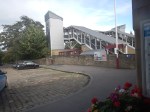
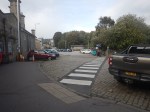
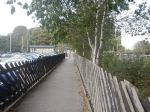
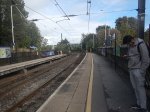
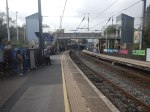
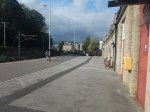
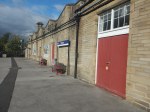
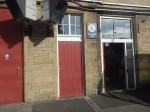
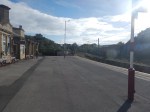
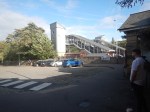
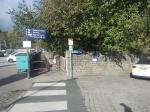
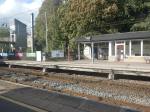
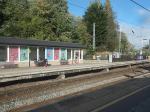
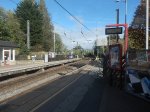
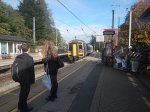
Note.
- Shipley station is built in the middle of a triangular junction.
- It has two footbridges.
- The station appears to have been improved greatly in recent years.
- The toilets are some of the best, I’ve seen in a railway station in England.
There are many worse stations to change trains.
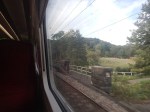
From Shipley, I was a passenger in a very crowded Class 168 British Rail-era train.
But I did manage to take these pictures.
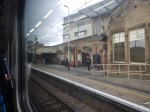
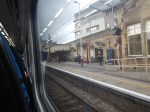
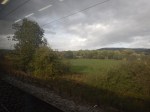





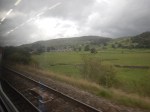
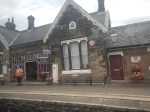
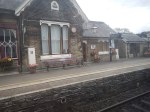
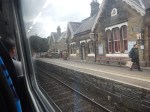
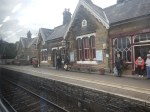
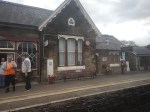
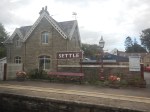
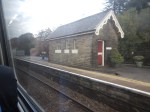

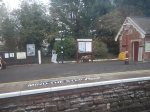
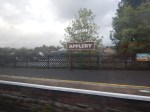
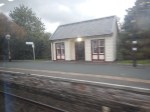
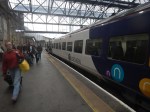

Note.
- The route is electrified as far North as Skipton station.
- Carlisle is electrified.
- It is a very scenic line.
- Several of the stations looked to be worth an extended visit.
- It would appear that the distance between the electrification at Skipton and Carlisle is about 90 miles.
- The maximum speed between Skipton and Carlisle is generally 60 mph.
Hitachi IETs (Intercity Express Trains) have regularly used the route on diesel, when there are engineering works.
I have a few questions and observations.
Could Zero-Carbon Trains Go Between Leeds/Bradford and Carlisle?
Consider.
- To run between Skipton and Carlisle, which is not electrified would mean running for 90 miles without electrification.
- Leeds and Skipton via Bradford Forster Square is electrified for charging at the Southern end.
- Trains can run into an electrified platform at Carlisle for charging at Carlisle.
- I have estimated that the battery-electric Hitachi IETs have a range of 120 miles away from the wires.
- Hitachi confirmed my figures.
- CAF have said that their Class 897 tri-mode trains have a similar range.
- Examining the UK rail network, it appears to me, that no stretch of main line has a longer stretch longer than 120 miles without electrification.
Are Network Rail and the train manfacturers working to the same 120 mile limit for unelectrified track?
If they are, then we can decarbonise passenger train journeys in the UK.
I believe three types of trains could run express services between London and Carlisle/Glasgow via Leeds and Bradford.
- A battery-electric Hitachi IET.
- A tri-mode CAF Class 897 train.
- A hydrogen-hybrid train.
Note.
- All would be 125 mph trains.
- All would be ten-car trains.
- All would have a range away from electrification of 120 miles.
- The hydrogen-hybrid would be mouse-quiet.
- The hydrogen-hybrid would be refuelled once per day.
- All trains would be able to handle the Glasgow and South-Western route via Dumfries and Kilmarnock.
The Thames-Clyde Express can be recreated.
Could There Be Better Transport Connections Between Leeds/Bradford and Glasgow/Edinburgh?
I shall start this post with eleven questions, that I will ask Google AI.
How Many People Live In the Greater Leeds/Bradford Area?
I received this answer from Google AI.
The greater Leeds-Bradford urban and larger urban zone has an estimated population of about 1.65 million to 2.4 million people. The core combined Leeds-Bradford continuous built-up area holds roughly 1.66 million people, while the wider Leeds City Region and Larger Urban Zone reaches approximately 2.4 million.
How Many People Live In the Greater Glasgow Area?
I received this answer from Google AI.
The Greater Glasgow urban area has an estimated population of over 1 million people. Depending on how the boundaries are drawn, the wider NHS health board region contains about 1.2 million, and the broader Glasgow City Region counts roughly 1.8 million residents.
How Many People Live In the Greater Edinburgh Area?
I received this answer from Google AI.
The greater Edinburgh metropolitan or wider city region has an estimated population of approximately 912,000 to 1.35 million, depending on the regional boundary used. The City of Edinburgh council area itself holds 531,370 residents.
How Many Sheduled Air Services Are There Between Leeds/Bradford and Glasgow Airports?
I received this answer from Google AI.
There are currently zero direct, scheduled non-stop air services operating between Leeds Bradford Airport (LBA) and Glasgow Airport (GLA).
How Many Scheduled Air Services Are There Between Leeds/Bradford and Edinburgh Airports?
I received this answer from Google AI.
There are currently zero direct, scheduled non-stop air services operating between Leeds Bradford Airport (LBA) and Edinburgh Airport (EDI).
How Many Scheduled Direct Rail Services Are There Between Leeds or Bradford and Glasgow?
I received this answer from Google AI.
There is typically only 1 scheduled direct train service per day in each direction between Leeds and Glasgow (operated via CrossCountry), and n0 direct scheduled services between Bradford and Glasgow.
How Many Sheduled Direct Rail Services Are There Between Leeds or Bradford and Edinburgh?
I received this answer from Google AI.
There are typically only 1 to 2 scheduled direct train services per day running from Leeds to Edinburgh (usually operated by CrossCountry or via select extensions), taking roughly 3 hours. Bradford has zero regular scheduled direct rail services to Edinburgh; journeys from Bradford require at least one change (commonly transferring at Leeds).
How Long Does It Take To Drive Between Leeds And Glasgow?
I received this answer from Google AI.
Driving between Leeds and Glasgow takes about 3 hours and 50 minutes to 4 hours and 15 minutes under normal conditions, covering a distance of roughly 210 to 222 miles via the A1(M) and M74.
How Long Does It Take To Drive Between Leeds And Edinburgh?
I received this answer from Google AI.
Driving between Bradford and Glasgow takes about 3.5 to 4 hours under normal conditions. The total distance is roughly 200 miles (322 km), mostly following the A1(M) or M6 motorways depending on your chosen route.
How Long Does It Take To Drive Between Bradford And Glasgow?
I received this answer from Google AI.
Driving between Leeds and Glasgow takes about 3 hours and 50 minutes to 4 hours and 15 minutes under normal conditions, covering a distance of roughly 210 to 222 miles via the A1(M) and M74.
How Long Does It Take To Drive Between Bradford And Edinburgh?
I received this answer from Google AI.
Driving between Bradford and Edinburgh takes about 4 hours to 4.5 hours under normal traffic conditions. The total driving distance is roughly 196 to 202 miles, primarily heading north via the A1(M) or M1 and A69/M74 routes.
But I do think that Northern England and Scotland could be getting closer together in the next few years.
Consider.
- LNER stopped running between King’s Cross and Glasgow a couple of years ago.
- No airlines fly between Leeds/Bradford and Glasgow or Edinburgh Airports.
- TransPennine Express run direct rail services between both Liverpool and Manchester, and Glasgow.
- There are only occasional direct rail services between Leeds or Bradford, and Glasgow or Edinburgh.
- Driving is not an easy or quick option.
- Lumo run a few limited rail services between Glasgow and Stirling, and London.
There is a big gap in rail and air services between the 1.5 million people in Leeds/Bradford and nearly 2 million in Central Scotland.
But.
- Between Bradford and Carlisle is the Settle and Carlisle Line.
- The Settle and Carlisle is one of the most scenic lines in Europe, if not the world.
- The Settle and Carlisle is not electrified.
- Until 1974, it was used by the Thames-Clyde Express between London St. Pancras and Glasgow.
- Avanti have used the route for engineering diversions, using their new five-car Class 805 trains in pairs.
- Bradford Forster Square station has been updated so that ten-car trains on the route can call at both Leeds and Bradford Forster Square stations
- I believe that in a couple of years, LNER will have CAF tri-mode trains and Hitachi battery-electric trains, that will be able to bridge the gap in the electrification between Skipton and Carlisle.
Selected Kings Cross and Bradford Forster Square services could be extended to Skipton, Settle, Carlisle, Dumfries, Kilmarnock and Glasgow.
There will be three major benefits.
- Several towns and cities will gain a London service.
- The extra services will help to take on the airlines between London and Glasgow.
- Leeds and Bradford will be connected to Glasgow.
No major infrastructure would need to be created.
I have other thoughts.
Can Ten-Car Trains Use The Settle And Carlisle?
This article on the BBC is entitled Rail Operator Crosses Picturesque Line.
There is a picture in the article of two Avanti five-car Class 805 trains crossing the Ribblehead Viaduct on the Settle and Carlisle Line.
If they can do it, I suspect that a new 10-car CAF Class 897 train can also run on the line.
Could High-Class Food Be Served Between London And Glasgow?
Google AI gives this history of Pullman Dining on current GWR services.
Great Western Railway (GWR) has been running Pullman Dining on its Intercity Express Trains (Class 800 and sister Class 802 units) for about seven years, since the new Hitachi-built fleets rolled out fine-dining menus around 2017 to 2018 to replace the legacy High Speed Train (HST) sets.
In On The 10:45 From Paddington, I describe one of the best simple meals I’ve ever had.
I’m sure there are a few Scottish chefs, who could create a Scottish-themed menu for services to Scotland via the Settle and Carlisle.
Passengers Would Have A Choice Between London And Glasgow
These would be the options.
- Fast – Ryanair and lose a lot of brownie points.
- All-Electric Semi-Fast – Avanti or Lumo.
- Slower, but enjoying the scenery and why not a meal – LNER via Settle and Carlisle.
Five trains per day each way would add 3,000 seats per day, which would be around 15 of Ryanair’s 737s per day.
Will Leeds/Bradford Airport Have A Glasgow Or Edinburgh Flight Some Time Soon?
Consider.
- Between Leeds-Bradford and Glasgow airports is 177.4 miles.
- Between Leeds-Bradford and Edinburgh airports is 159.5 miles.
- The all-electric Eviation Alice has a range of 250 miles with 10 passengers.
- The all-electric Heart Aviation ES-30 has a range of 220 miles with 30 passengers.
Google AI gives this view on when the Heart Aviation ES-30 will enter service.
The Heart Aerospace ES-30 hybrid-electric airplane is scheduled to enter commercial service in 2028, though some industry analysis and program updates suggest development adjustments could stretch the timeline closer to 2029 or 2031.
The Eviation Alice doesn’t give a date at present.
Given the option, I suspect some travellers would prefer to fly.
Do LNER Have Some Cunning Plans For The Serenzas?
Along with some others, I was surprised, when LNER ordered a fleet of new trains in 2023, to run alongside the Azumas, that it wasn’t some more Azumas.
I wrote about the order in First Tri-Mode Long Distance Trains For The East Coast Main Line.
Why Didn’t LNER Just Order More Azumas?
I asked Google AI, the question in the title of this section and received this reply.
When London North Eastern Railway (LNER) needed additional trains for the East Coast Main Line, they chose to order 10 new “tri-mode” (electric, diesel, and battery) trains from Spanish manufacturer CAF in November 2023 rather than buying more Hitachi Azumas.
Why LNER Didn’t Order More Azumas?
Desire for New Technology: LNER wanted cutting-edge “tri-mode” capability—incorporating battery technology alongside electric and diesel power—to reduce carbon emissions and future-proof the fleet. Hitachi’s corresponding tri-mode platform was centered in Italy, making CAF a more ready and accessible option with an established UK manufacturing platform in Newport, Wales.
Procurement and Pricing: Industry discussions and reports noted varying challenges with Hitachi regarding pricing and availability for small add-on batches, prompting a competitive procurement process where CAF ultimately won the contract to replace remaining older InterCity 225 sets.
Operational Resilience: The new CAF battery-hybrid trains provide unique operational flexibility for diversions on un-electrified routes (such as the Joint Line) that standard electric Azumas cannot traverse under their own power without external help.
These are my current thoughts on LNER’s plans for the Serenzas.
Will The Serenzas Run To Harrogate?
As the seven trains per day to Harrogate use diesel between Leeds and Harrogate, I suspect the new trains will take over Harrogate services and run silently on batteries North of Leeds, which is less than 40 miles out and back.
How will the lack of noise affect ridership? London Kings Cross and Harrogate will be an interesting test case, as it looks like from the in service date of the trains of 2028, that they could be one of the first battery-electric train services, run over a distance of over two hundred miles.
So it will be an interesting test route in several ways for the new Serenzas.
Could The Serenzas Go Further Than Harrogate?
This OpenRailwayMap shows the electrification in Yorkshire between Bradford, Harrogate, Leeds and York.

Note.
- Electrified lines are shown in red.
- Unelectrified lines are shown in black.
- Lines in the process of being electrified are shown in dotted red and black.
- The City of Bradford is in the South-West corner of the map.
- The electrification entering the city from the North goes to Bradford Forster Square station, where LNER services from London terminate.
- On the opposite side of the city centre is Bradford Interchange station, where Grand Central services from London terminate.
- North of Bradford is the electrified triangular junction at Shipley station
- Trains go West from Shipley junction to Skipton, where the electrification ends and the iconic Settle and Carlisle line to Carlisle and eventually Glasgow.
- Trains go North from Shipley junction on an electrified line to Ilkley station.
- Trains go East from Shipley junction on an electrified line to Leeds station.
- From the Leeds area an unelectrified line leads to the North and Harrogate station, which is marked by a blue arrow.
- The City of York is in the North-East corner of the map.
- A partially-electrified line leads from Leeds to York.
- The Leeds and York line is being fully-electrified so that electric trains can reach Neville Hill depot in Leeds.
- Harrogate and York are connected by an unelectrified line, that goes via Knaresborough.
Between Bradford, Harrogate, Leeds and York, there are a coomprehensive layout of lines many oy of which are electrified.
Could The Serenzas Go On From Harrogate To York?
Consider.
- Leeds and York is only 38.8 miles via Harrogate, so I suspect that this is possible using battery power.
- Harrogate has seven trains per day (tpd) from London Kings Cross via Leeds, at a frequency of one train per two hours (tp2h).
- York has six tpd from London Kings Cross, at a frequency of one tp2h.
Could LNER be thinking of a train, that does a Grand Tour of Yorkshire from London Kings Cross?
- It could call at Stevenage, Newark Northgate, Doncaster, Wakefield Westgate, Leeds, Horsforth, Harrogate, Knaresborough, York, Doncaster, Retford and Peterborough.
- It is the sort of concept, that is made possible by using a tri-mode train, that can go anywhere, there’s a railway.
- Was an idea like this, thought up by CAF to sell trains?
It is certainly possible.
Could The Serenzas Go On From Bradford Forster Square To Glasgow?
Consider.
- Until 1974, there used to be a Thames-Clyde Express, which has this Wikipedia entry.
- The route was between London St. Pancras and Glasgow Central.
- Intermediate stops were Luton, Kettering, Leicester, Nottingham, Derby, Chesterfield, Sheffield, Wakefield, Leeds, Skipton, Settle, Carlisle, Dumfries and Kilmarnock.
- LNER gave up serving Glasgow in 2024.
- Currently, Leeds and Bradford have no direct train service to Glasgow.
- The Settle and Carlisle route is one of the most scenic railway lines in Europe, if not the world.
- Do any airlines fly Leeds/Bradford and Glasgow? No according to Google AI!
Remember, that the Rail Minister; Lord Hendy, is an Economic Geography graduate of Leeds University, so he must know something about Yorkshire and its people.
I believe a modern-day Thames-Clyde Express could be run, by extending a number of LNER’s London and Bradford Forster Square services.
- The route would be between London Kings Cross and Glasgow Central.
- Intermediate stops would be Stevenage, Newark Northgate, Doncaster, Wakefield Westgate, Leeds, Shipley, Bradford Forster Square, Skipton, Settle, Carlisle, Dumfries and Kilmarnock.
- The route is now substantially electrified.
- It would take on the airlines on the London and Glasgow route.
- Class 805 bi-mode trains have used the Settle and Carlisle.
This could become one of the great railway journeys of Europe.
Calls Grow For Direct Trains To New Universal Park
The title of this post, is the same as that of this article on the BBC.
This is the sub-heading
There are growing calls for more train services to run directly to Universal’s planned UK theme park.
These two paragraphs add more details.
West Northamptonshire Council said it had written to the secretary of state for transport to ask that Northampton be included in passenger service plans for East West Rail.
It comes after Northampton South’s Labour MP Mike Reader raised the issue in the House of Commons, warning the current plans meant the town could “miss out on the opportunities” the park brings.
How Will Universal United Kingdom Resort Connect To The Rail System?
I asked Google AI the question above and received this answer.
The proposed Universal United Kingdom Resort near Bedford will connect to the rail system via two primary railway stations:
Wixams Station (Midland Main Line): A two-platform station currently under construction to the east of the site. Universal plans to expand this to four platforms to accommodate high visitor volume, connecting passengers directly to Thameslink services in about 45 minutes from Central London. A dedicated fleet of resort shuttle buses will run between Wixams and the park entrance.
East West Rail Station (Stewartby): A dedicated, purpose-built station is planned directly adjacent to the resort on the western side of the park. This will replace the older Kempston Hardwick station, providing high-capacity, five-carriage trains running between Oxford and Cambridge.
Together, these stations and surrounding road networks—such as the upcoming dedicated slip roads off the A421—will form the East and West Gateway Zones for the resort.
This OpenRailwayMap shows the railways in the are of the Universal United Kingdom Resort.
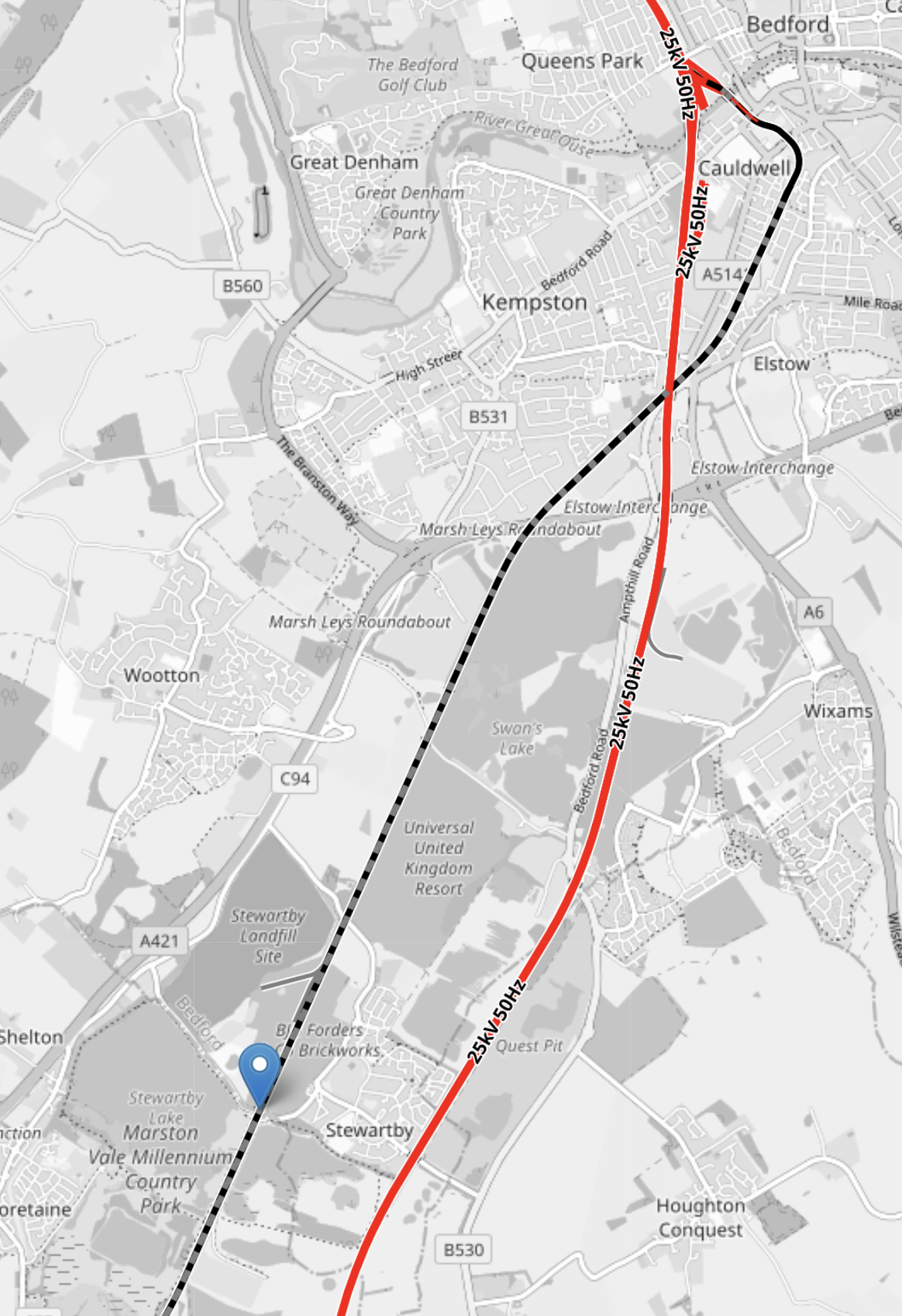
Note.
- The red track is the Midland Main Line between St. Pancras and Leicester, Derby, Nottingham and Sheffield.
- The black track is the East-West Rail between Bedford and Oxford when it opens.
- This section of the East-West Rail is shown dashed as it is not finalised yet
- The East-West Rail should eventually connect Oxford and Cambridge.
- The blue arrow indicates Stewartby station.
- The village of Wixams is at the right edge of the map.
If you read the Wikipedia entry for the new Wixams station, you get the impression, that a lot of groups and organisations don’t agree on lots of things about the railway, the theme park and Wixams station.
This second OpenRailwayMap shows the railways between Northampton and Bedford.
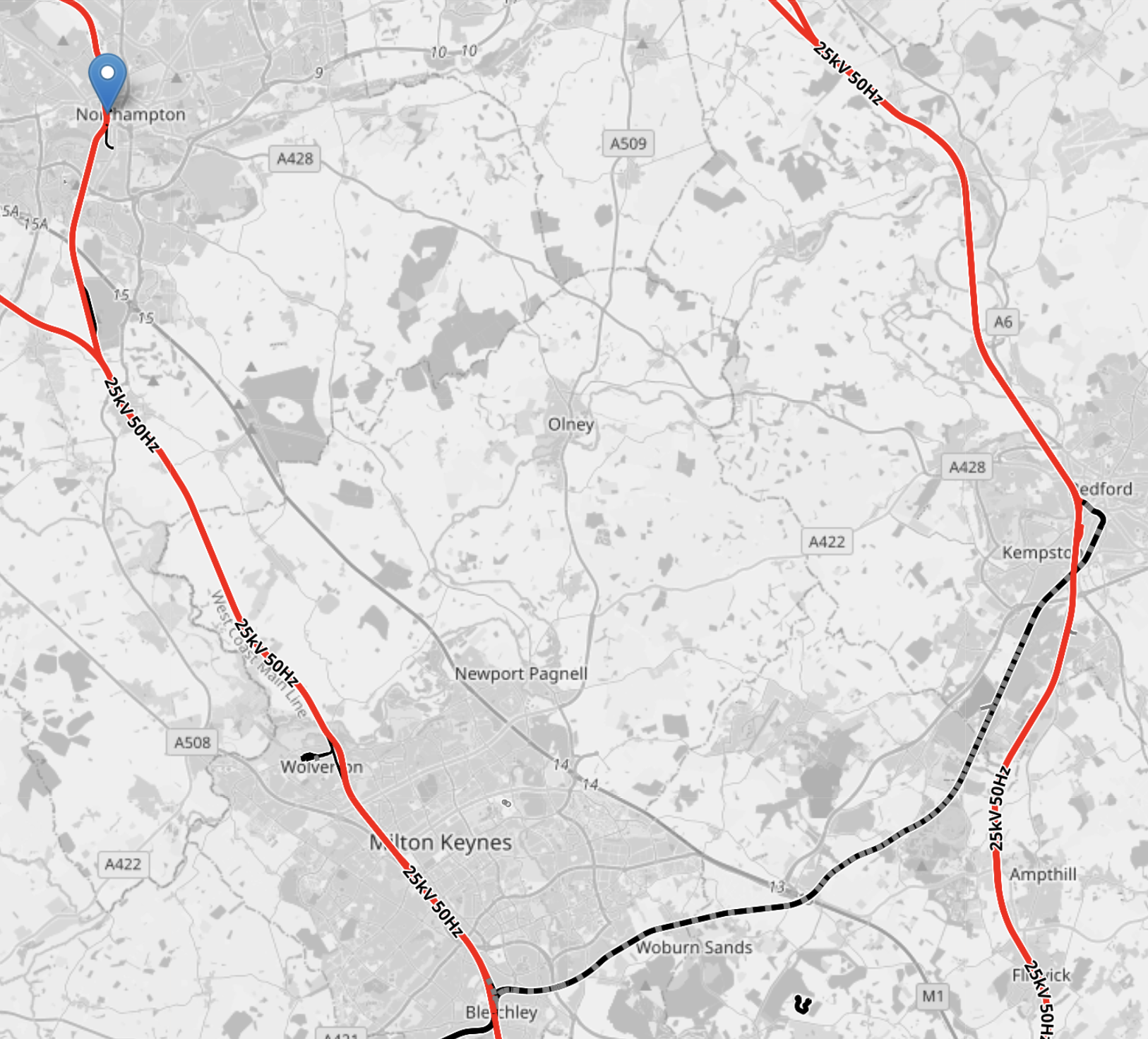
Note.
- The red tracks at the left are the West Coast Main Line between Euston and the North.
- The blue arrow indicates Northampton station.
- The red tracks at the right are the Midland Main Line between St. Pancras and the Midlands
- The black tracks connecting the two main lines are East-West Rail.
- The Western end of this section is at Bletchley, where the East-West Rail crosses the West Coast Main Line and also connects to it.
- The Eastern end of this section is at Bedford, where the East-West Rail joins the Midland Main Line through Bedford.
- Milton Keynes station is on the West Coast Main Line, just a few miles North of Bletchley station.
It looks to me, that a train could run between Northampton and Bedford stations, which could stop at Stewartby.
Are Universal United Kingdom Resort Going To Encourage Visitors To Use Rail?
I asked Google AI the question above and received this answer.
Yes, the Universal United Kingdom resort is making extensive plans to encourage and accommodate visitor travel by rail. The upcoming destination near Bedford is heavily integrating public transit into its infrastructure to manage the expected 8.5 million annual visitors.
The resort’s focus on railway accessibility includes several key features:
Dedicated Resort Station: Land has been explicitly reserved for a dedicated railway station directly at the resort on the East West Rail line, which connects Oxford and Cambridge.
Increased Train Frequency: To ensure seamless transportation, the East West Rail service plans to run up to five trains per hour during peak times specifically to cater to theme park visitors once it is fully operational.
Wixams Station Upgrades: A significant portion of a £1.3 billion government investment package is being utilized to construct and expand the nearby Wixams Railway Station, creating robust links along the Midland Mainline.
Initial Bus & Marston Vale Services: For the opening window of the park, Universal is setting up dedicated bus connections (such as from Milton Keynes) alongside existing local Marston Vale line options as full East West Rail expansions are completed.
Note how this question got slightly different answers to my original question, but they don’t conflict with each other.
I do find though with AI, that the more questions you ask and the more you refine those questions, the better answers you obtain.
But surely that is to be expected. Or at least hoped for!
Will Universal United Kingdom Resort Be Attracting Overseas Visitors?
I asked Google AI the question above and received this answer.
Yes, the Universal United Kingdom Resort will be a major draw for international tourists. Projections estimate that the park will attract well over one million overseas visitors annually, serving as a catalyst to boost Britain’s global visitor economy.
The resort’s target demographic is explicitly designed to tap into international travel markets:
International Forecasts: Tourism officials and developers project that up to one-third (30%) of all visitors in its opening year will be from overseas, with projections shifting toward a 40% to 50% international mix as the resort matures.
Global Location: As the only Universal-branded theme park in Europe, it will be highly accessible to travelers arriving through London’s major international airports and rail hubs.
Economic Boost: Because of this anticipated influx, the UK Government is backing the Universal United Kingdom Resort with £1.3 billion for strategic road and rail upgrades. This includes enhancing connectivity on the A421 and at Wixams train station to seamlessly transport international visitors directly to the Bedfordshire site.
Will Universal United Kingdom Resort Be Attracting Visitors From Scotland?
I asked Google AI the question above and received this answer.
Yes, the Universal United Kingdom Resort in Bedfordshire is expected to be a major draw for visitors from Scotland. As the first Universal-branded theme park in Europe, it is designed as a destination resort meant to attract millions of tourists annually from across the UK and the wider continent.
The projected 8.5 million annual visitors will be drawn from all over, driven by several key factors:
High-Speed Connectivity: Situated in Kempston, Bedfordshire, the resort is roughly 50 miles north of London. Scottish travelers can easily access it by taking direct train routes (e.g., LNER or Avanti West Coast) from Edinburgh and Glasgow to London Kings Cross or St Pancras, then catching connecting trains to Bedford in under an hour. Alternatively, direct flights into London Luton Airport place visitors within a very short distance of the park.
National Draw: Because it is the only destination of its kind in the UK, it is being positioned as a “must-visit” national tourist attraction, capturing a large domestic market extending well beyond the southeast of England.
I believe that travelling between Universal United Kingdom Resort and Scotland by rail could be improved significantly, if the following were to be done.
- Fit batteries to the Class 810 trains run by East Midlands Railway, so they could run between St. Pancras and Sheffield stations without using diesel. This in itself, would probably attract more passengers.
- I believe that little or no electrification would need to be added, so that Sheffield could be an all electric and probably faster, trip from London or Universal United Kingdom Resort.
- The battery-electric trains would need to be charged at Sheffield, but why not do this at Doncaster station, which is a station with copious electrification.
- Extending the Sheffield services to Doncaster would also allow LNER passengers between Aberdeen, Edinburgh or Newcastle and Derby or Universal United Kingdom Resort, to do the trip with a single cross-platform change at Doncaster between two almost identical Hitachi trains.
- Sadly, the Midland Main Line has suffered a tragic accident this week. Were passengers going between Scotland and say Luton Airport inconvenienced? I believe that linking the two London services together at Doncaster, would have advantages for passengers, operators and Network Rail. Especially, when engineering works are scheduled!
I talk about using battery-electric trains to fully electrify the Midland Main Line in Could Electric Trains Run Between St. Pancras International and Sheffield Stations With No More Electrification?
Does The UK Need More Passenger Train Capacity Between London And Scotland?
I went from London Euston to Wigan North Western and Blackpool North stations on Wednesday.
Just after the Bank Holiday, the train to the North, which was going to Glasgow Central, seemed fairly busy, but I suspect that a few more souls could have been squeezed in.
Coming South in the early evening, there was a lot more space, but those that had gone to Scotland for the Bank Holiday weekend had probably returned.
At the moment, I am getting a lot of adverts like this, when I read The Times on-line.

It looks to me, that Avanti West Coast, are ecouraging travellers to use trains to travel to and from Glasgow.
How Many Anglo-Scottish Trains Are There?
- Avanti West Coast – 6 tpd – London Euston to Edinburgh Waverley via Birmingham New Street
- Avanti West Coast – 6 tpd – London Euston to Glasgow Central via Birmingham New Street
- Avanti West Coast – 1 tph – London Euston to Glasgow Central via Trent Valley
- CrossCountry – 1 tph – Plymouth to Edinburgh Waverley
- LNER – 2 tph – London King’s Cross to Edinburgh Waverley
- Lumo – 6 tpd – London King’s Cross to Edinburgh Waverley and Glasgow Queen Street
- Lumo – 4 tpd – London Euston to Stirling
- TransPennine Express – 1 tp2h – Manchester Airport to Glasgow Central
- TransPennine Express – 1 tp2h – Manchester Airport to Edinburgh Waverley
- TransPennine Express – 4 tpd – Liverpool Lime Street to Glasgow Central
Note.
- tpd is trains per day.
- tph is trains per hour.
- tp2h is trains per two hours.
- The two Avanti West Coast services via Birmingham New Street alternate.
- The Avanti West Coast London Euston to Glasgow Central via Trent Valley service runs 15 tpd.
- The two TransPennine Express services from Manchester Airport to Scotland alternate.
My initial estimate is that there are 5 x 15 tph +16 tpd or 91 tpd.
How Many Anglo-Scottish Trains Are There On HS2?
In the original design for HS2, this was the service pattern.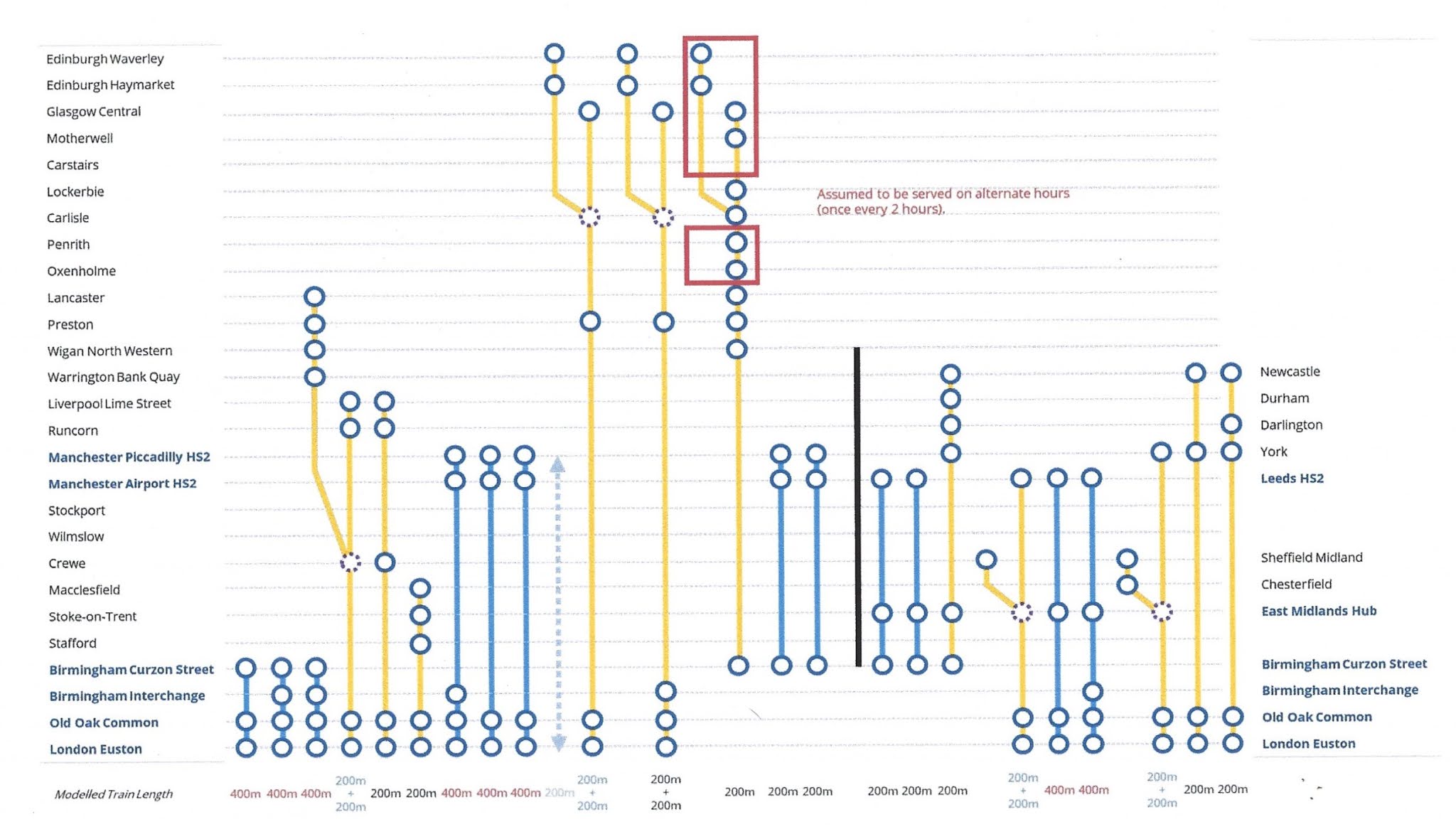
Note.
- Train 10 runs hourly between London and Scotland via Old Oak Common and Preston and splits at Carlisle with one train serving Edinburgh Waverley and the other Glasgow Central.
- Train 11 runs hourly between London and Scotland via Old Oak Common, Birmingham Interchange and Preston and splits at Carlisle with one train serving Edinburgh Waverley and the other Glasgow Central.
- Train 12 runs hourly between Birmingham Curzon Street and Scotland and serves Edinburgh Waverley and Glasgow Central alternatively.
It looks like HS2 contributes 5 tph between England and Scotland or 75 tpd.
But as HS2 is currently configured, these Anglo-Scottish trains will still run.
- CrossCountry – 1 tph – Plymouth to Edinburgh Waverley
- LNER – 2 tph – London King’s Cross to Edinburgh Waverley
- Lumo – 6 tpd – London King’s Cross to Edinburgh Waverley and Glasgow Queen Street
- Lumo – 4 tpd – London Euston to Stirling
- TransPennine Express – 1 tp2h – Manchester Airport to Glasgow Central
- TransPennine Express – 1 tp2h – Manchester Airport to Edinburgh Waverley
- TransPennine Express – 4 tpd – Liverpool Lime Street to Glasgow Central
If these trains continue to run my estimate is that there will be 4 x 15 tph +14 tpd or 74 tpd by classic routes.
This will mean 149 Anglo-Scottish tpd in total.
How Do You Get Between Leeds, Bradford, Sheffield and Hull, and Scotland?
If you look at the diagram, which shows the service pattern for HS2, note the following.
- HS2 does not provide a service between Leeds, York, Durham, Darlington and Newcastle, and Scotland.
- HS2 doesn’t connect to Bradford.
- HS2 doesn’t go past Leeds, but the current LNER services also serve Bradford Forster Square, Harrogate, Shipley and Skipton stations.
There is also no direct trains from the Leeds/Bradford area to Glasgow.
But Consider.
- The Settle and Carlisle Line runs between Skipton and Carlisle and used to host the Thames-Clyde Expresses that were run by the London Midland & Scottish Railway.
- The Wikipedia entry for the Thames-Clyde Express is an interesting read.
- Bradford Forster Square station was recently extended with two platforms , that can handle 10-car trains.
- Bradford Forster Square station has seven trains per day from London via Leeds.
- With a reverse at Bradford Forster Square station trains can call at Leeds, Bradford Forster Square and Skipton stations before taking the Settle and Carlisle Line to Carlisle.
- The Thames-Clyde Express used to take the Glasgow South Western Line to Glasgow Central calling at Dumfries and Kilmarnock.
- LNER’s Class 897 tri-mode trains will probably be able to handle the Settle and Carlisle and the Glasgow South Western Line, without using the diesel engines.
- East Midlands Railway’s Class 810 trains, when fitted with batteries, should probably be able to do the same.
There are a lot of possibilities of how the Settle and Carlisle Line can be used to increase zero-carbon connectivity between Glasgow and London.
The route wouldn’t be the fastest route, but it could be one of the most scenic.
‘I Get To Work On The Most Scenic Railway Line In The World’
The title of this post, is the same as that of this article on the BBC. It is a quote from someone in the BBC article.
This is the sub-heading.
Have you heard the one about the railway line that was threatened with closure, so lots of people started using it and it was saved?
These three opening paragraphs add some detail to the story.
Welcome to the Settle to Carlisle line, the quirky steel road through some of Britain’s most magnificent countryside.
The line starts in Leeds and passes through Shipley and Skipton, but it is the section between North Yorkshire and Cumbria that is world-famous for its views.
Heading north from Settle, the peak of Pen-y-Ghent soon looms large, with Whernside and Ingleborough following a few miles later.
The saving of the line in the 1980s, is one of those classic British tales of a fight against bureaucracy, which like all these tales involved a dog, who gets a heroic mention in the BBC article.
In the next few sections, I will detail how improvements to the rail infrastructure between Bradford, Carlisle, Lancaster, Leeds have gradually developed the rail infrastructure, so that the Settle and Carlisle Line can play an increasing part in improving the economic outlook for a large area of England.
Is The Settle And Carlisle Line In Good Condition?
Google AI gives this answer to the question in the title of this section.
Yes, the Settle-Carlisle line is in good, operational condition and is considered a vital, well-maintained part of the National Rail network.
Despite a history of threatened closures and past structural issues, major investments have secured its future, and it currently carries over 1.2 million passengers a year.
Here is the current status of the line as of early 2026:
Infrastructure Condition: Following significant repairs, including a major £2.1 million project on the Ribblehead Viaduct completed in 2021 and extensive work at Eden Brows (2017), the line’s 14 tunnels and 22 viaducts are in good condition.
Active Usage: It is regularly used by Northern passenger services and is a designated diversionary route for mainline express trains when the West Coast Main Line is closed.
Operational Status: The line is fully operational, featuring regular commuter services, tourist trains, and steam heritage charter trains.
Safety & Upgrades: While it is a historic line, the infrastructure is deemed safe.
Occasional, isolated issues (like the 2022 freight derailment near Carlisle) have been managed with swift repairs.As of early 2026, the line is heavily used, with special passenger services and 150th-anniversary celebrations planned.
It’s probably in better condition, than many houses in the UK.
What Is The Operating Speed Of The Settle And Carlisle Line?
Google AI gives this answer to the question in the title of this section.
The Settle and Carlisle Line generally operates at a maximum speed of 60 mph/97 km/h.
While historically faster, this 60 mph limit is standard for modern passenger and freight services on the route.
Usage Examples and ContextPassenger Services: Northern Rail and various chartered services, including the scenic “Staycation Express” HST 125, operate along the route.
Freight: The line is used for heavy freight, including oil, timber, and cement trains.
Diversions: The line is frequently used as a, albeit slower, alternative route (approx. 2.5 hours for Leeds-Carlisle) during major West Coast Main Line (WCML) closures.
Scenic Tourism: The line is renowned as one of England’s most scenic, carrying over a million travelers annually, with notable sights like the Ribblehead Viaduct.
The Settle And Carlisle Line Is Well Connected To The Rail Network At The Northern End
This OpenRailwayMap shows how the line connects to the West Coast Main Line and the Tyne Valley Line, to the South of Carlisle.
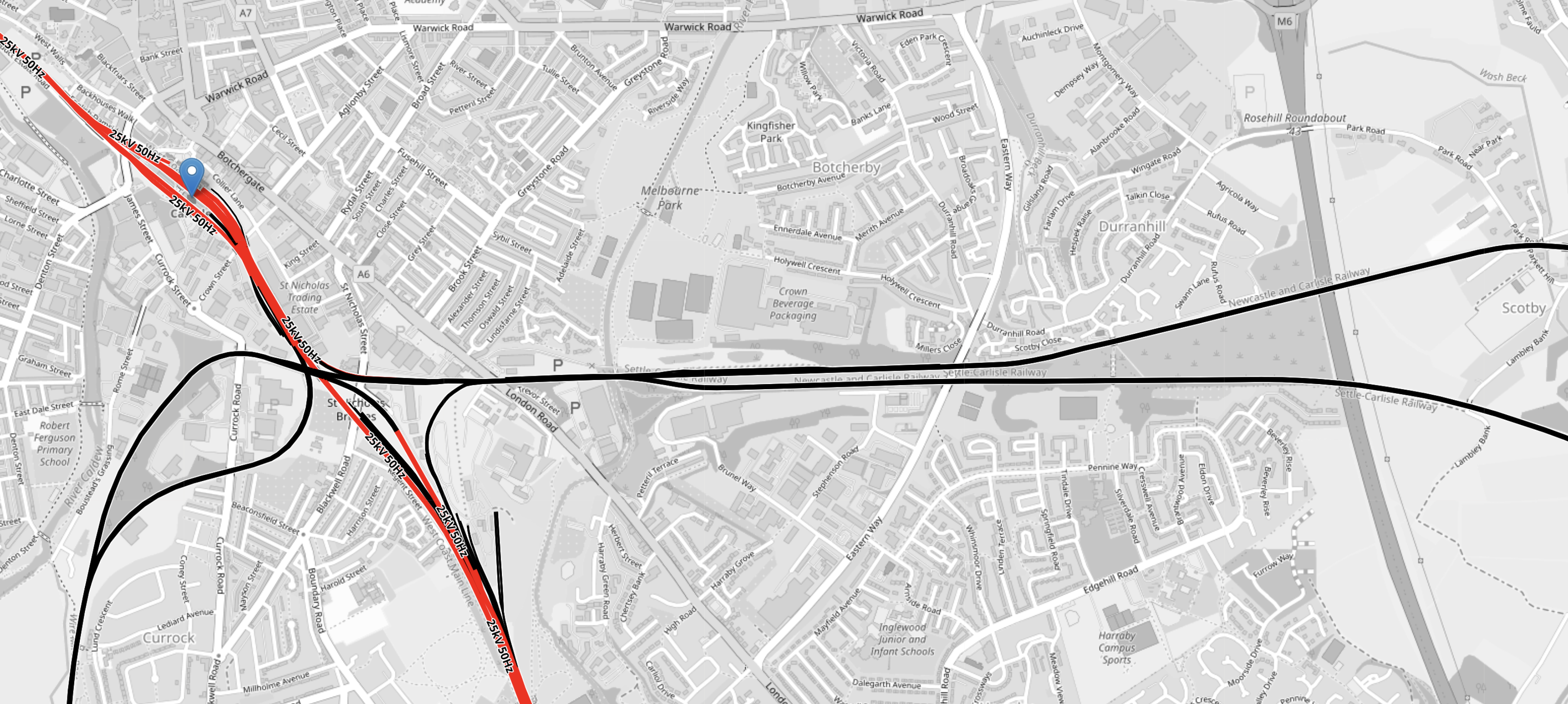
Note.
- Electrified lines are shown in red and lines shown in black are not electrified.
- The electrified West Coast Main Line runs diagonally across the South-West corner of the map.
- The blue arrow on this line, indicates Carlisle station.
- The Northernmost of the two black cross lines is the Tyne Valley Line between Carlisle and Newcastle.
- The Southernmost of the two black cross lines is the Settle And Carlisle Line, which goes South to Settle, Bradford Forster Square, Leeds and Settle stations.
- The line going South-West joins the Cumbrian Coast Line, which joins the West Coast Main Line at Carnforth.
It does appear that the junction South of Carlisle is very comprehensive and allows very flexible routing.
The Settle And Carlisle Line Is Well Connected To The Rail Network At The Southern End
This OpenRailwayMap shows how the line connects to the West Coast Main Line and the Tyne Valley Line, to the North of Skipton.
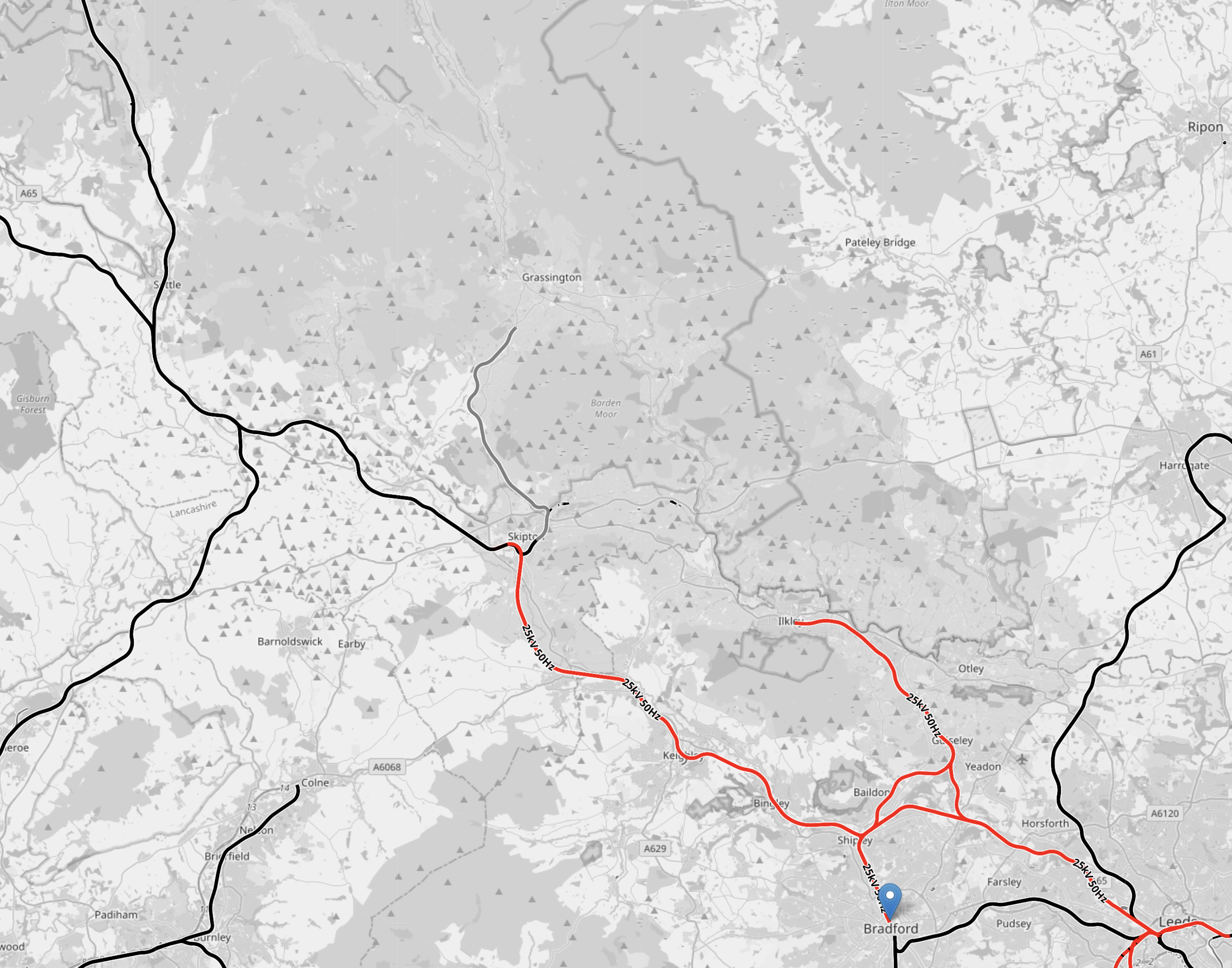
Note.
- Electrified lines are shown in red and lines shown in black are not electrified.
- The blue arrow on this line, indicates Bradford Forster Square station.
- The fully-electrified Leeds station is in the South-East corner of the map. You can just pick out the ee of the name.
- The electrified Leeds-Bradford Line connects Bradford Forster Square and Leeds station via Shipley station and its triangular junction.
- The electrification continues in a North-Westerly direction as far as Skipton, where the red track stops.
- Electric intercity trains can run from London to Leeds, Bradford Forster Square and Skipton.
- Self-powered intercity trains can also run from London to Harrogate, which is on the line without electrification, that runs North from Leeds.
- Leeds receives a London service of two trains per hour (tph).
- Bradford Forster Square station receives a London service of one train per two hours (tp2h) via Leeds.
- Harrogate station receives a London service of 1 tp2h via Leeds.
- Skipton station receives a London service of one train per day (tpd) via Leeds.
The Leeds-Bradford area gets a frequent service to London and the South.
This OpenRailwayMap shows how the Settle and Carlisle Line connects to the electrification at Skipton.
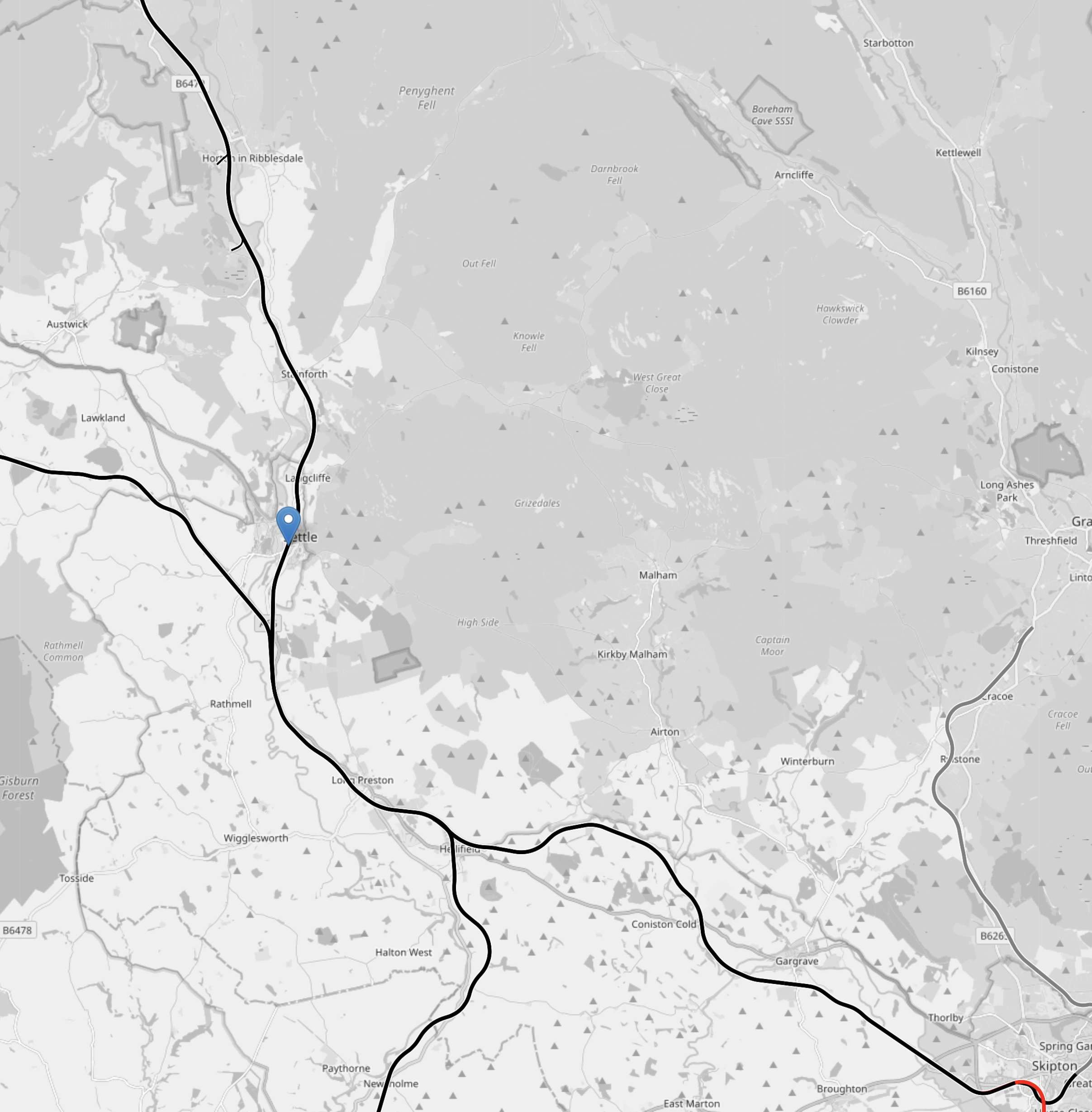
Note.
- Electrified lines are shown in red and lines shown in black are not electrified.
- The only electrified lines on the map are at Skipton station in the South-East corner of the map.
- The blue arrow on this line, indicates Settle station.
- Skipton and Settle stations are 15.2 miles apart.
- Settle and Carlisle are 71.5 miles apart.
To bridge the gap in the electrification between Carlisle and Skipton, trains will need to be able to run 86.7 miles on their own power.
Bridging The Carlisle And Skipton Gap
But once the train gets to Carlisle or Skipton, the train will have the luxury of 25 KVAC overhead electrification to both power the train and charge any batteries.
In my opinion, there are three intercity trains coming into service, that could handle an 86.7 mile gap in electrification.
- East Midland Railways’s Class 810 train, which is a diesel bi-mode with lots of power, which is described in this Wikipedia entry.
- LNER’s Class 802 trains, which currently is a diesel bi-mode, that Hitachi could convert into a Hitachi Intercity Battery Train, which is described on this Hitachi web site.
- LNER’s Class 897 trains, which is a diesel tri-mode, that CAF are building in Spain and Wales, which is described in this Wikipedia entry.
In How Far Will A Hitachi Intercity Battery Train Travel Without Using The Electrification?, I answer the question for both Hitachi and CAF trains.
Surprisingly, I got the answer of a range of 120 miles for both the Hitachi and CAF trains. But could it be that Network Rail and the train companies wanted a range of 120 miles to electrify the UK rail network and so a 120 mile battery range was in the specification.
My estimate of 120 miles for Hitachi’s trains, was also confirmed by the company.
Bridging The Gaps
Some other distances, where gaps must be bridged include.
- Sheffield and South Wigston – 69.4 miles
- Holyhead and Chester – 84.4 miles
- Exeter and Basingstoke – 124,3 miles
- Fishguard Harbour and Cardiff Central – 119.1 miles
- Aberystwyth and Shrewsbury – 81.5 miles
- Bristol Temple Meads and Newbury – 70.8 miles
- Inverness and Aberdeen – 108.3 miles
- Carlisle and Glasgow Central via Dumfries – 115.9 miles
- Hereford to Didcot Junction – 96.9 miles
120 miles could be a good fit.
Could it be that that distance was the range of a steam locomotive on a full load of water?
The Updating Of Bradford Forster Square Station
This is now a four-platform station, with two platforms able to take a pair of 5-car Hitachi or the new CAF 10-car Class 397 trains.
In Bradford Forster Square Station – 20th May 2025, I describe and show pictures of the updated station.
Bradford Forster Square station now gets seven trains per day to and from London King’s Cross via Leeds.
This article on the BBC, which is entitled New Platform’s Opening Gives Bradford More Trains has this sub-heading.
A new £35m platform at Bradford’s Forster Square Station has opened – boosting rail services in the city
£35million seems a lot of money to spend to just increase the number of services between King’s Cross and Bradford, even though 2025 was the year that Bradford was UK City of Culture, but there may be valid reasons to create a new route between London and Scotland, using the Settle and Carlisle Line.
- The Settle and Carlisle Line is one of the UK’s most famous scenic routes with 20 viaducts, 14 tunnels and countless beautiful vistas along its 72 mile track.
- You put the Mona Lisa on display, not in a store.
- LNER now has battery-electric bi-mode trains, with CAF tri-mode trains due to enter service in 2028, that can both handle the 86.7 mile gap in the electrification in silence.
- The CAF trains have extra diesel power, about which CAF is not disclosing much. This to me, suggests some innovative use.
- There appear to be no flights between Leeds/Bradford Airport and Scotland.
- There appear to be no direct trains between Glasgow and West Yorkshire.
- A direct train between Glasgow and Leeds and Bradford Forster Square would add additional connectivity between Scotland and Yorkshire.
- With the cancellation of High Speed Two, we need more train paths between London and Scotland.
- Decarbonisation of aviation is difficult, but replacing fossil-fueled planes with zero-carbon trains is easier.
- A single Class 897 train can carry 569 seated passengers, which is about 3.5 times the capacity of a single Airbus A320.
- The proposed Leeds Metro would bring passengers to the new service.
- Leeds and Bradford could see an upturn in tourism.
I also think the line will not be lightly used due to its iconic status.
How Would A Leeds/Bradford And Scotland Service Call At Bradford Forster Square Station?
- Bradford Forster Square station now gets seven trains per day to and from London King’s Cross via Stevenage, Newark Northgate, Doncaster, Wakefield Westgate, Leeds and Shipley.
- There is one fewer train on Sunday.
- There is a triangular junction at Shipley station, which connects the three electrified lines to Leeds, Bradford Forster Square and Skipton.
This OpenRailwayMap shows Shipley station and the triangular junction.
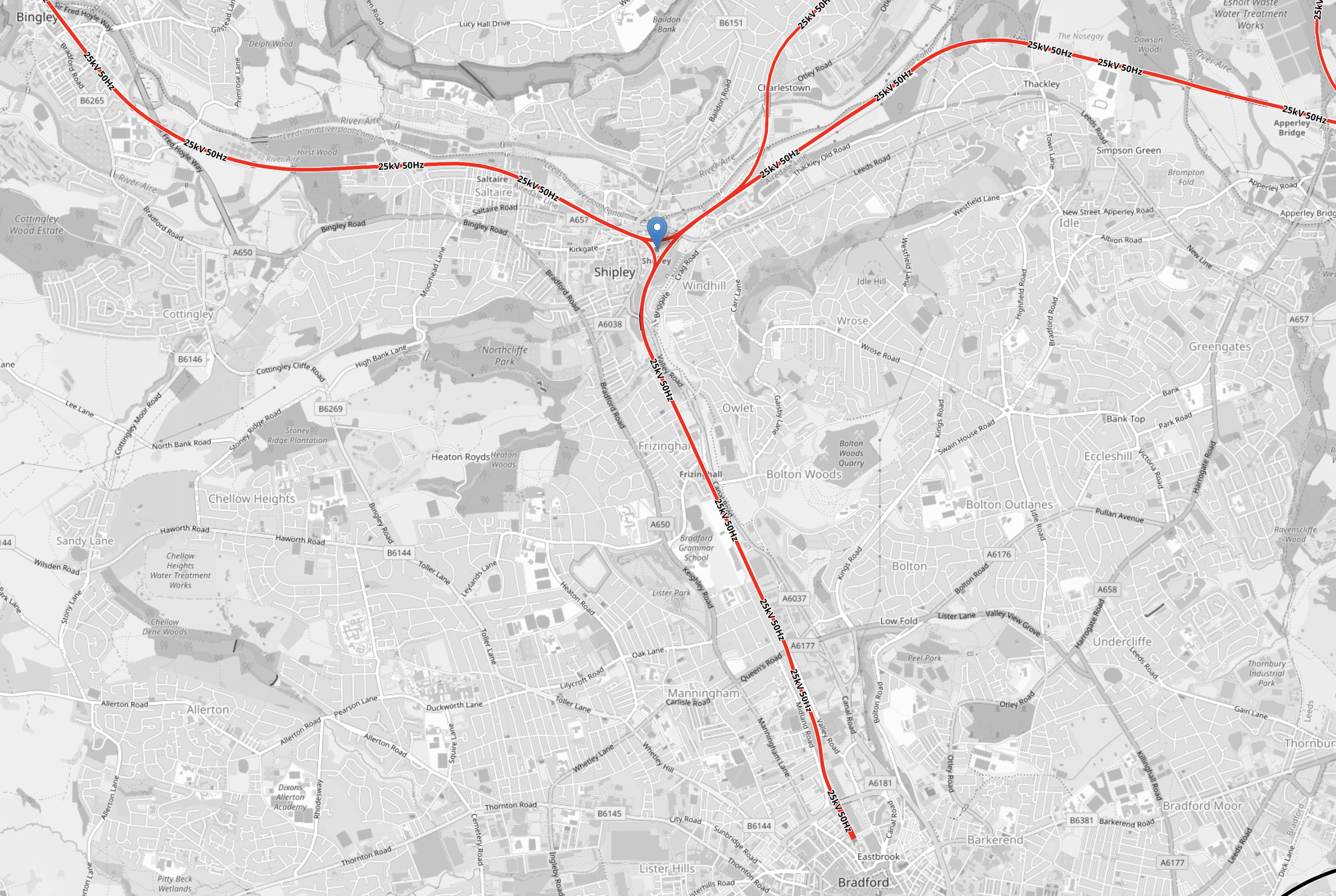
Note.
- All rail lines are electrified and shown in red.
- The blue arrow on this line, indicates Shipley station.
- Shipley station appears to be in the middle of the junction.
- The line going East connects to Leeds station.
- The line going South connects to Bradford Forster Square station, which is at the end of the line.
- The line going West connects to Skipton station and the Settle and Carlisle Line.
Trains returning to London would reverse out of Bradford Forster Square station and take the Eastern route through Shipley and Leeds back to London.
- An appropriate number of trains for Carlisle and Scotland, could surely just reverse out of the station and take the Western route through Skipton station and go on to the Settle and Carlisle Line.
- The trains would call at Wakefield Westgate, Leeds, Shipley, Bradford Forster Square and Skipton stations in the Leeds/Bradford conurbation.
- Other stations could be added to the route if required.
- The trains would effectively reverse direction in their call at Bradford Forster Square station.
- Going North the trains might check their battery levels in Bradford Forster Square station and use a fast-charger if necessary.
- Going South, there would be no need for charging, as the route South from Bradford Forster Square station, is already fully-electrified.
- Would the operator, use this longer stop to replace the crew with a fresh one?
It could be a simple and efficient way to run a London and Scotland service via the Settle and Carlisle Line.
What About Hull, Sheffield And York?
I’m asking this question, as Yorkshire is a large county and this article has only mentioned a few places, where people live and might need to go to London or Scotland.
In February, I wrote Northern Launches New Yorkshire Flyer Fast Service Between Leeds And Sheffield.
I’m fairly sure that Hull, York and other cities and large towns in Yorkshire already have a good regional service to Bradford Forster Square or Leeds station, which will give a good connection to the new service.
Could Dumfries Be Served By Using The Glasgow South Western Line?
This OpenRailwayMap shows the Southern part of the Glasgow South Western Line.
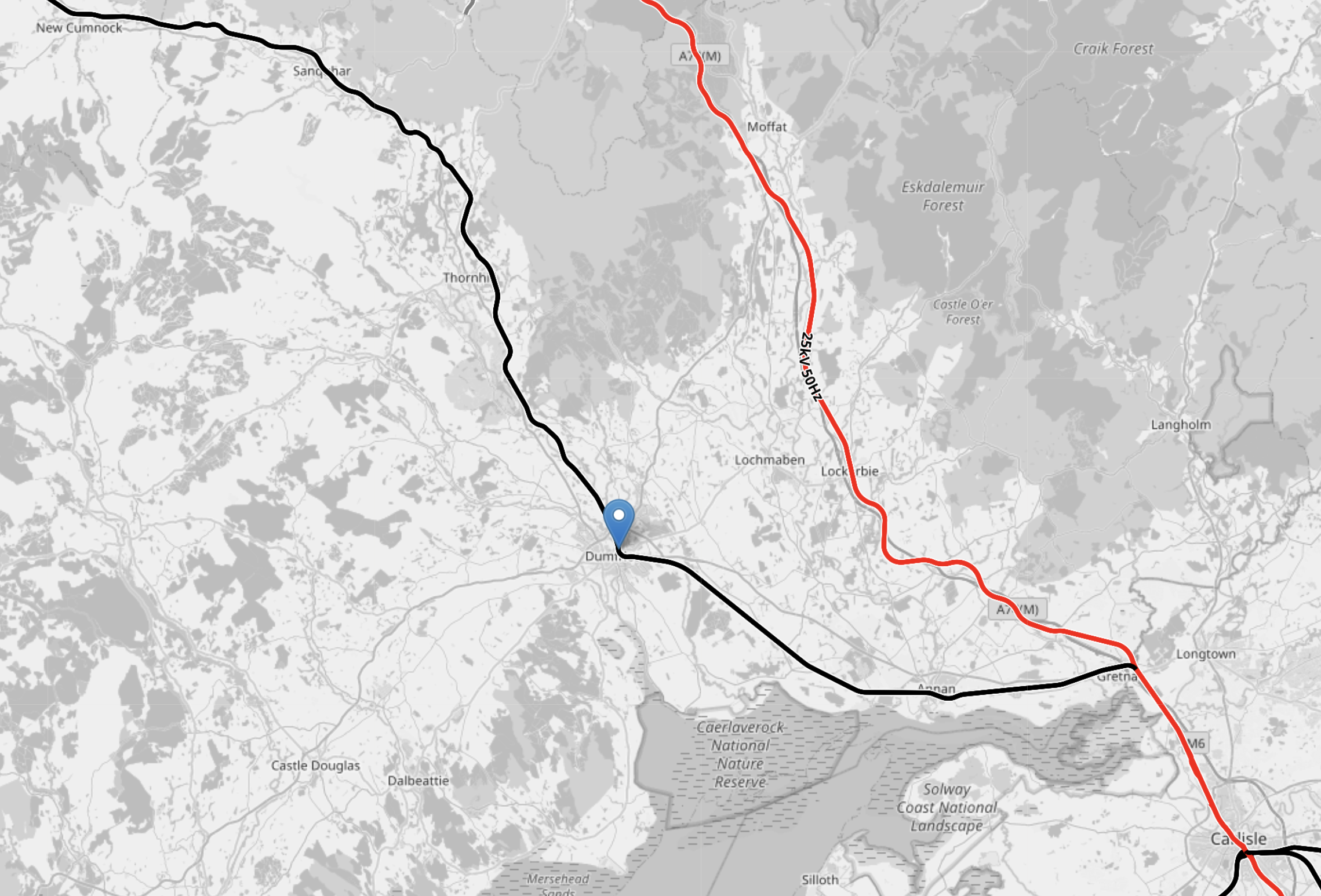
Note.
- Electrified lines are shown in red and lines shown in black are not electrified.
- The blue arrow on the black track, indicates Dumfries station on the Glasgow South Western Line.
- The red track is the West Coast Main Line.
- Carlisle is in the South-East corner of the map.
- Carlisle and Glasgow Central via Dumfries is 115.9 miles
- The Thames-Clyde Express, ran on this route until 1974.
- According to the Wikipedia entry for the Thames-Clyde Express, the train called at Dumfries and Kilmarnock stations.
From this brief look it appears that the new service could include Dumfries and should be able to serve the town on battery power.
Is More Capacity Needed On The West Coast Main Line Between Carlisle And Glasgow?
I asked Google AI, this question, to see if there is capacity.
This was the answer I received.
Yes, increased capacity and infrastructure enhancements are required on the West Coast Main Line (WCML) between Carlisle and Glasgow, as the line is currently full and unable to meet modern, growing passenger and freight demands.
Upgrades are necessary to tackle aging infrastructure, bottlenecks, and the need for more frequent services.
Key Aspects of the Need for Capacity:Full Capacity: The WCML is essentially full, with little space left for growth, despite 75 million passengers using it annually.
Freight and Passenger Growth: Passenger numbers are expected to double by 2050, and the line is a crucial artery for Anglo-Scottish freight.
Infrastructure Age: The northern section is undergoing its largest upgrade in half a century to address reliability issues.
Performance Bottlenecks: Specific locations, such as those north of Carlisle, require signaling and track improvements to prevent delays.
Proposed Upgrades: Current initiatives include a £400m investment until March 2029 for upgrades, including signalling and track renewals, though these are largely to boost reliability rather than provide a massive increase in capacity.
It looks to me, that a bit of a redesign and some use of battery trains on the Glasgow South Western Line, might squeeze a few more trains into the route.

