My First Ride In A Hydrogen-Powered Double-Deck Bus
Today, I had my first ride in a hydrogen double-deck bus.
I took these pictures.







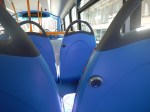







Note.
- I took the No 7 bus in London between Ladbroke Grove tube station and Oxford Circus.
- There were still some of the older Volvo hybrid buses on the route.
- The current fleet is around twenty buses.
This article on edie.net, is entitled England’s First Hydrogen Double-Decker Buses Hit The Road In London.
I note this paragraph in the article with interest.
Hydrogen used to fuel the new London buses is being produced at Air Liquide’s facility in Runcorn, Cheshire, which processes waste hydrogen from the industrial chemical industry. From 2023, the facility will be converted to produce only green hydrogen – a term used to describe hydrogen produced using electrolysis powered by renewable electricity.
It sounds, that at present the hydrogen could be coming from the old Castner-Kellner plant at ICI’s Runcorn complex. where I had my first job after leaving Liverpool University in the late 1960s.
These are my thoughts.
Refuelling
The edie article says the buses are refuelled once a day, at a facility at Perivale in Ealing.
Interior Design
Londoners will feel at home in these buses, as they have the same look and feel as London’s other double-deck buses.
But they do have some features, borrowed from other means of transport.
- They have a set of four family seats.
- Are those two yellow bars in front of where I sat a foot rest?
- There were a lot of USB- charger sockets.
It is certainly a well-designed interior.
Battery Or Hydrogen?
In A Trip On An Electric Double Deck Bus On Route 212 Between Chingford And St. James Street Stations, I described a trip on an electric double-deck bus.
I would go for the hydrogen, rather than electric.
A friend who runs a bus company in London, says fleets of battery buses are a nightmare to recharge.
The Edie article says once a day is fine.
The battery bus has a higher environmental footprint.
Hydrogen can fuel trucks, cars, vans and semblances, at the same charging station.
But the big problem is most battery buses are Chinese and Transport for London’s hydrogen buses have been built in Northern Ireland.
Performance
\\\thr performance of the bus was spritely!
Conclusion
This was a good bus!
The Story Of ITM Power
The title of this post, is the same as that of this article on H2 View.
The article confirms, that they have the funds to build a second Gigafactory for electrolysers and it would take eighteen months to build.
My view is that after the Anglo-Australian trade deal, that it could be built in Australia, as that country will need a lot of electrolysers to fulfil their hydrogen ambitions.
Hydrogen And The Anglo-Australian Trade Deal
This article on the BBC is entitled UK And Australia In First Post-Brexit Trade Deal.
I can see one very profitable result of this trade deal.
The world has a large and growing need for green hydrogen produced by renewable energy.
Australia is embracing the hydrogen economy and I have posted about Australia hydrogen developments several times.
This post is entitled H2U Eyre Peninsula Gateway Hydrogen Project Begins Largest Green Ammonia Plant and it describes how Australia will convert renewable electricity into liquid green ammonia for export to Japan.
Australia has a lot of sun and can create a lot of green hydrogen and ammonia for South East Asia.
Electrolysers need to be used to convert solar and wind electricity into hydrogen, which would be exported in tankers either as liquid hydrogen or liquid ammonia.
The largest hydrogen electrolyser factory in the world, is owned by ITM Power and is located in Sheffield/Rotherham. It has a capacity to build 1 GW of electrolysers in a year.
Looking at the electrolyser market, I can see the company needing another similar-sized factory.
Australia’s Solar Power Potential
This section in the Wikipedia entry for Solar Power In Australia is called Potential.
These are some points from the section.
- Typically, in the winter months, a square metre of much of Australia receives 4 kWh of insolation per day.
- Some areas in the North receive fifty percent more.
- Australia has the potential to install 179 GW of solar power on roofs across the nation.
Australia used to curse the sun because of all the cancer it brought. Now it could make them the world’s hydrogen powerhouse!
At present ninety percent of Australia’s solar panels are made in China.
But that may not be for ever, if what I wrote in Solar To Hydrogen Efficiency Record Broken By Australian National University Researchers, turns out to lead to an alternative technology to create hydrogen.
An Anglo-Australian Hydrogen Alliance
What better possible place to build a second electrolyser factory is there, than in Australia?
- The Australian economy can use a lot of hydrogen for transport.
- Australia is embracing hydrogen technology.
- Australia is well-placed to export electrolysers to their friends in South East Asia.
- Australia has the sun to produce massive amounts of green hydrogen.
If the UK and Australia developed hydrogen together, it would be good for both countries.
- Australia can develop massive levels of renewable electricity from solar.
- The UK can develop massive levels of renewable electricity from wind and possibly other sources.
- Both countries are researching the ways to create and use hydrogen.
- Both countries could produce hydrogen for nearby economies needing large amounts of hydrogen.
- Many UK and Australian companies operate in both countries.
But above all, we haven’t had a major fall-out with Australia since the Bodyline Tour in 1932-1933.
Cummins: Paving The Way To A Hydrogen Economy
The title of this post, is the same as that of this article on H2 View.
Cummins is an American multinational corporation, with sales of $23.77 billion in 2018.
That is not small and a lot of that sales revenue comes from the sales and support of products that use diesel fuel, with all the emission and pollution problems that that entails.
So rather than just wait for a slow corporate death, Cummins have decided to embrace a zero-carbon fuel strategy based on hydrogen.
As part of this strategy they purchased an 81 % stake in Canadian hydrogen technology company; Hydrogenics.
This must-read article is a good report on the progress of the strategy.
I believe Cummins is a company to watch in the strategy of replacing diesel with hydrogen.
Hyundai’s Hydrogen Future
I found this video from Hyundai informative.
The video quotes the following about the hydrogen truck, that is shown in the video.
- It has a range of up to 248 miles
- Charging takes between 8 and 20 minutes
- If one of these trucks replaces a diesel truck, it cuts seventy tonnes of carbon dioxide emissions per year, based on 50,000 miles per year.
I know a lot is corporate speak, but I certainly think hyundai are right about hydrogen.
Vivarail At COP26
This press release from Network Rail is entitled Network Rail And Porterbrook To Showcase Britain’s Green Trains Of The Future At COP26.
These two paragraphs are from the end of the first section of the press release.
It is envisaged that the HydroFLEX may also be used to transport visitors to see the Zero Emission Train, Scotland’s first hydrogen powered train.
Network Rail is also in the earlier stages of planning a similar event with Vivarail to bring an operational battery train to COP26.
Vivarail have taken battery trains to Scotland before for demonstration, as I wrote about in Battery Class 230 Train Demonstration At Bo’ness And Kinneil Railway.
Will other train companies be joining the party?
Alstom
It looks like Alstom’s hydrogen-powered Class 600 train will not be ready for COP26.
But I suspect that the French would not like to be upstaged by a rolling stock leasing company and a university on the one hand and a company with scrapyard-ready redundant London Underground trains on the other.
I think, they could still turn up with something different.
They could drag one of their Coradia iLint trains through the Channel Tunnel and even run it to Scotland under hydrogen power, to demonstrate the range of a hydrogen-powered train.
Alstom have recently acquired Bombardier’s train interests in the UK and there have been rumours of a fleet of battery-electric Electrostars, even since the demonstrator ran successfully in 2015. Will the prototype turn up at COP26?
Alstom’s UK train factory is in Widnes and I’ve worked with Liverpudlians and Merseysiders on urgent projects and I wouldn’t rule out the Class 600 train making an appearance.
CAF
Spanish train company; CAF, have impressed me with the speed, they have setup their factory in Newport and have delivered a total of well over a hundred Class 195 and Class 331 trains to Northern.
I wrote Northern’s Battery Plans, in February 2020, which talked about adding a fourth-car to three-car Class 331 trains, to create a battery-electric Class 331 train.
Will the Spanish bring their first battery-electric Class 331 train to Glasgow?
I think, they just might!
After all, is there a better place for a train manufacturer looking to sell zero-carbon trains around the world to announce, their latest product?
Hitachi
A lot of what I have said for Alstom and CAF, could be said for Hitachi.
Hitachi have announced plans for two battery-electric trains; a Regional Battery Train and an Intercity Tri-Mode Battery Train.
I doubt that either of these trains could be ready for COP26.
But last week, I saw the new Hitachi Class 803 train speeding through Oakleigh Park station.
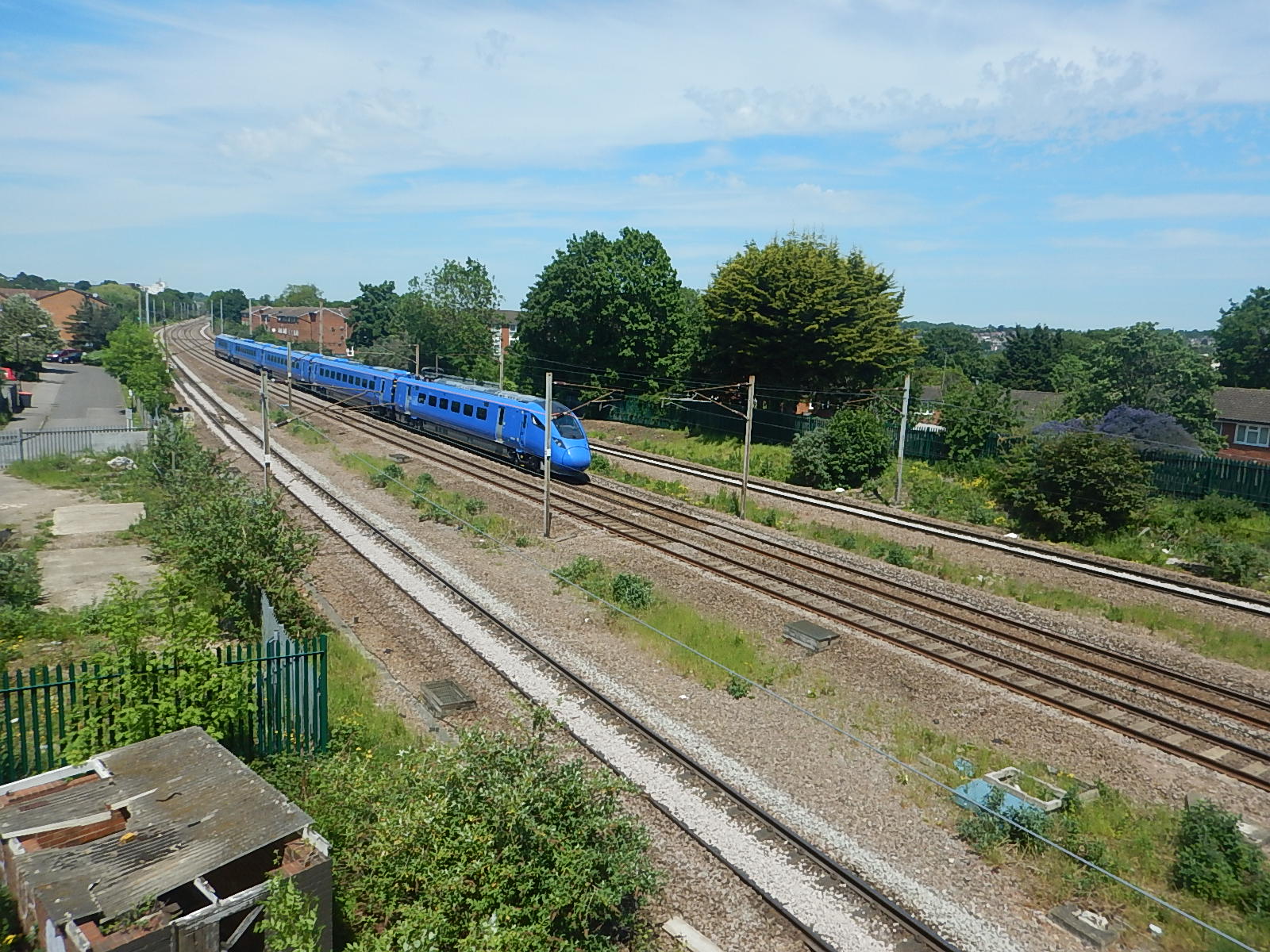
This is not a battery-electric train, where battery power can be used for traction, but according to Wikipedia and other sources, it is certainly an electric train fitted with batteries to provide hotel power for the train, when the overhead electrification fails.
Are these Class 803 trains already fitted with their batteries? And if they are, have they been tested?
And who is building the batteries for the Class 803 trains?
The traction batteries for Hitachi’s two battery-electric trains are to be produced by Hyperdrive Innovation of Sunderland, which is not far from Hitachi’s train factory at Newton Aycliffe.
As an engineer, I would suspect that a well-respected company like Hyperdrive Innovation, can design a battery-pack that plugs in to Hitachi’s trains, as a diesel engine would. I would also suspect that a good design, would allow an appropriate size of battery for the application and route.
I feel it is very likely, that all batteries for Hitachi’s UK trains will be designed and build by Hyperdrive Innovation.
If that is the case and the Class 803 trains are fitted with batteries, then Hitachi can be testing the battery systems.
This document on the Hitachi Rail web site, which is entitled Development of Class 800/801 High-speed Rolling Stock for UK Intercity Express Programme, gives a very comprehensive description of the electrical and computer systems of the Hitachi trains.
As an engineer and a computer programmer, I believe that if Hyperdrive Innovation get their battery design right and after a full test program, that Hitachi could be able to run battery-electric trains based on the various Class 80x trains.
It could be a more difficult task to fit batteries to Scotland’s Class 385 trains, as they are not fitted with diesel engines in any application. Although, the fitting of diesel engines may be possible in the global specification for the train.
It is likely that these trains could form the basis of the Regional Battery Train, which is described in this infographic.

Note.
- The Class 385 and Regional Battery trains are both 100 mph trains.
- Class 385 and Class 80x trains are all members of Hitachi’s A-Train family.
- Regional Battery trains could handle a lot of unelectrified routes in Scotland.
I wouldn’t be surprised to see Hitachi bring a battery-equipped train to COP26, if the Class 803 trains have a successful introduction into service.
Siemens
Siemens have no orders to build new trains for the national rail network in the UK.
But there are plans by Porterbrook and possibly other rolling stock leasing companies and train operators to convert some redundant Siemens-built trains, like Class 350 trains, into battery-electric trains.
According to Wikipedia, Siemens upgraded East Midlands Railways, Class 360 trains to 110 mph operation, at their Kings Heath Depot in Northampton.
Could Siemens be updating one of the Class 350 trains, that are serviced at that depot, to a prototype battery-electric Class 350 train?
Stadler
Stadler have a proven design for diesel-electric, battery-electric and hydrogen trains, that they sell all over the world.
In the UK, the only ones in service are Greater Anglia’s Class 755 trains, which are diesel-electric bi-mode trains.
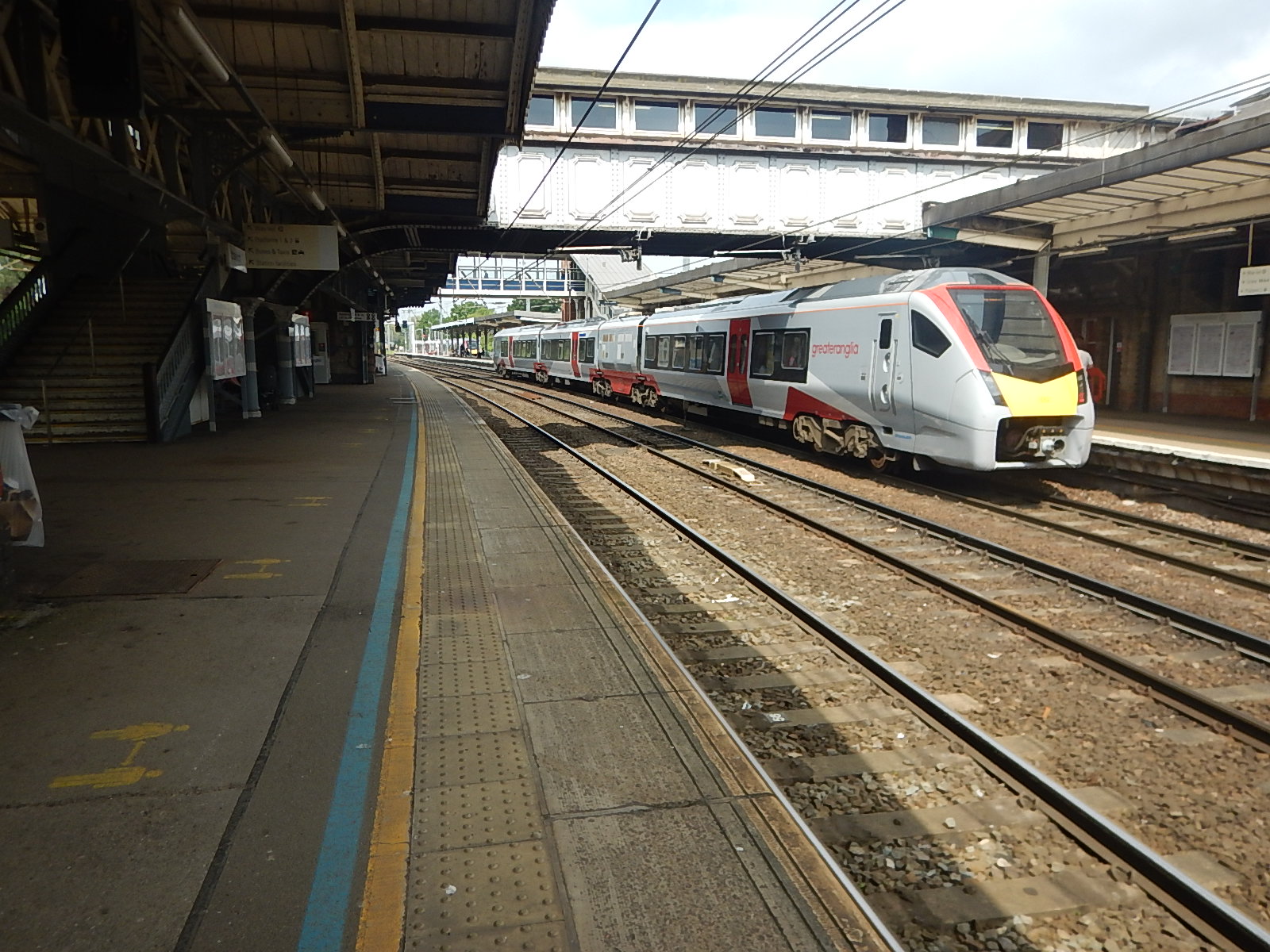
The picture shows one of these trains at Ipswich.
- They are 100 mph trains.
- Diesel, battery or hydrogen modules can be inserted in the short PowerPack car in the middle of the train.
- Diesel-battery-electric versions of these trains have been sold for operation in Wales.
- The interiors of these trains are designed for both short journeys and a two-hour run.
There is a possibility, that these trains will be upgraded with batteries. See Battery Power Lined Up For ‘755s’.
Conclusion
Times will be interesting in Glasgow at COP26!
A Class 319 Train, But Not As We Know It!
This article on Rail Advent is entitled COP26 To Showcase Britain’s Sustainable Trains Of The Future Thanks To Network Rail And Porterbrook Partnership.
The article talks about and shows pictures of Porterbrook’s HydroFLEX or Class 799 train, which has been developed by the University of Birmingham, fitted out for COP26.
I have downloaded this picture of the interior from Network Rail’s media centre.
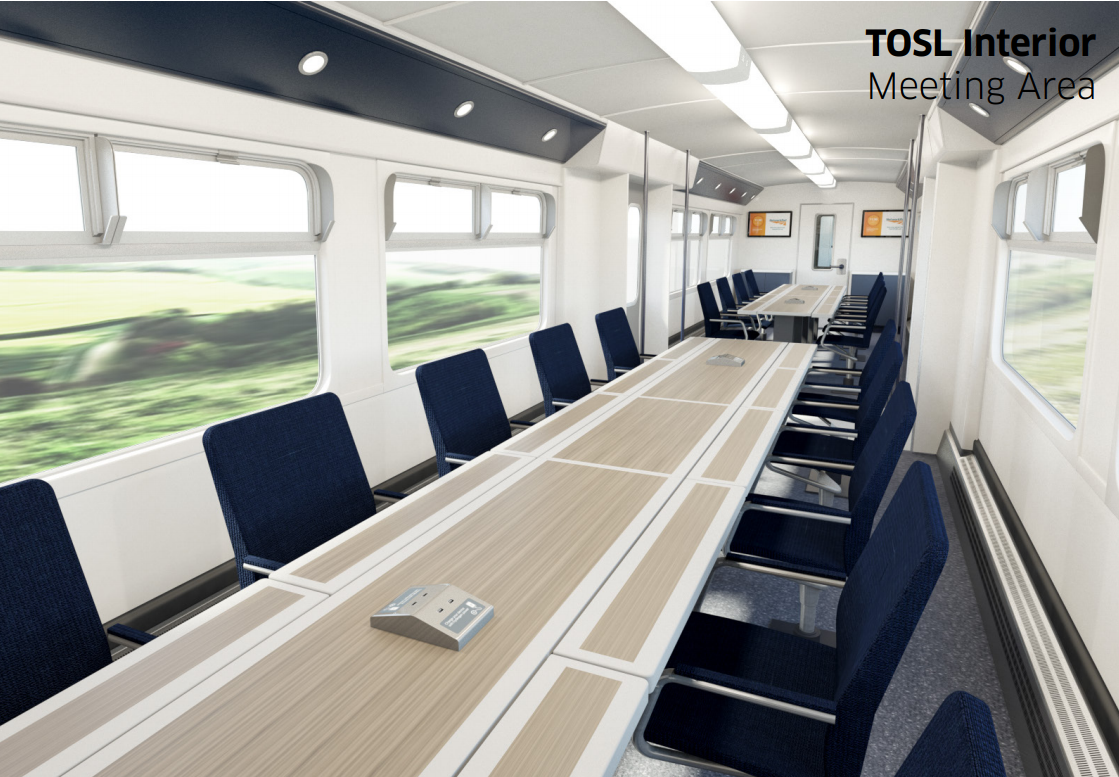
Who’d have thought a Class 319 train could look so grand?
But then some Class 319 trains used by commuters don’t look their age of over thirty years.
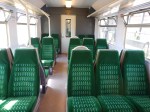
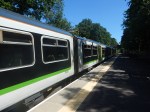
These pictures were taken on the Abbey Line in 2018.
There’s also this BBC Profile and video of the technology behind the HydroFLEX train.
Conclusion
It looks like Network Rail and Porterbrook are doing their best to showcase the best that Britain and Scotland can offer.
I am reminded of a tale, that I heard from a former GEC manager.
He was involved in selling one of GEC’s Air Traffic Control radars to a Middle Eastern country.
The only working installation of the radar was at Prestwick in Scotland, so he arranged that the dignitaries and the sales team would be flown to Prestwick in GEC’s HS 125 business jet.
As they disembarked at Prestwick and walked to the terminal, the pilot called the GEC Manager over.
The pilot told him “The Scottish Highlands at this time of the year, are one of the most beautiful places in the world! Would you and your guests like a low-level tour on the way back? I can arrange it, if you say so!”
Despite knowing GEC’s draconian attitude to cost control he said yes.
The sale was clinched!
Are Network Rail, Porterbrook, the UK and Scottish Governments, setting up the same Scottish treatment to all the delegates to COP26?
The First North American Commercial Hydrogen Ferry Is In The Works
The title of this post, is the same as that of this article on Hydrogen Fuel News.
The 84-passenger ferry will be called Sea Change and will operate in the San Francisco Bay Area.
What is interesting about this project are some of the companies and organisations involved, who include BAe Systems, Cummins and the California Air Resources Board, who are chipping in with a $3 million grant.
I’ve said before that Cummins are making investments in hydrogen and modern, reliable and eco-friendly ferries across iconic rivers and estuaries wouldn’t harm the companies involved in their creation.
This page on the Switch Maritime gives more details of the Sea Change.
Ferries Across The Mersey
The current Mersey Ferries in Liverpool entered service in the 1960s.
These pictures shows Snowdrop, when she had been given a razzle-dazzle paint scheme by Sir Peter Blake.


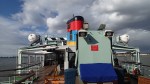
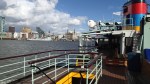

Note.
- There is more about this colour scheme in the Wikipedia entry for Dazzle Ship (14-18 NOW).
- Snowdrop is much larger than the Californian ferry
- Mersey Ferries are different and the current pair will need to be replaced soon.
To me, hydrogen is the obvious choice for propulsion for a new ferry.
Freeport East
Freeport East is a new freeport to be built around the ports of Harwich and Felixstowe.
It will also be a hydrogen hub, as this infographic shows.
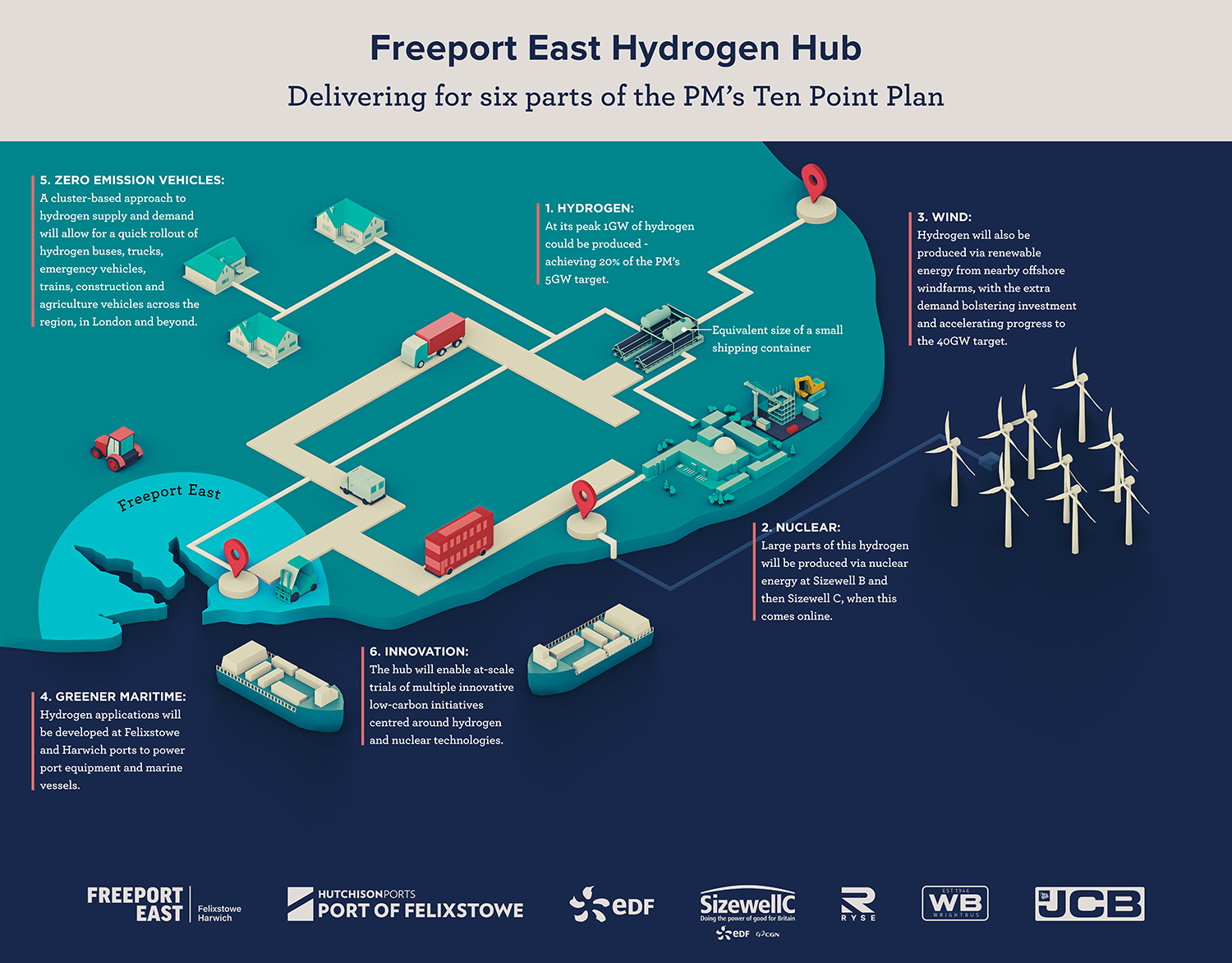
I would expect that the ferry between the two ports will be upgraded to a hydrogen one.
Conclusion
Ferries will be one of the first application of hydrogen power to ships.
INEOS To Spearhead Formula 1 Hydrogen Fuel Technology Initiative With Mercedes
The title of this post, is the same as that of this article on Hydrogen Fuel News.
It’s an interesting concept to promote hydrogen-powered cars, trucks and specialist vehicles.
On the plus side, there would be all the environmental benefits.
But on the negative side there would be no noise and probably no smell.
If trials avowed it could be as exciting as Formula One today on a good day, I do feel it could be a way for the sport to progress.
 The Anonymous Widower