Beeching Reversal – Reopening Stratford-upon-Avon And Honeybourne-Worcester/Oxford (SWO) Railway Line
This is one of the Beeching Reversal projects that the Government and Network Rail are proposing to reverse some of the Beeching cuts.
I covered this route in RSC Urges GWR To Provide Stratford Improvements and came to these conclusions.
There are three ways to improve rail access to Stratford-upon-Avon.
-
- The relatively easy and quick, enhancement of the rail services in Warwickshire.
- Provide better one-change routes using Chiltern Railways.
- The more difficult re-connection of Stratford to the Cotswold Line at Honeybourne.
As the last project will take years to implement, I feel, it is important that services to Stratford from Birmingham, Coventry, Leamington Spa and the West Midlands are substantially increased.
I also believe that the responsibility of providing a local service between Leamigton Spa and Stratford should be given to West Midlands Trains.
The Case To Reconnect Stratford-on-Avon and Honeybourne Stations
In Where Is London Midland Going?, I wrote this section in July 2017.
The North Warwickshire Line
The North Warwickshire Line links Birmingham with Stratford-on-Avon and has an alternative name of the Shakespeare Line.
Plans exist to extend this line South to Honeybourne station on the Cotswold Line.
Under Possible Future Development in the Wikipedia entry for the Warwickshire Line, this is said.
The Shakespeare Line Promotion Group is promoting a scheme to reopen the 9 miles (14 km) of line south of Stratford to Honeybourne where it would link to the Cotswold Line. Called the “Avon Rail Link”, the scheme (supported as a freight diversionary route by DB Schenker) would make Stratford-upon-Avon station a through station once again with improved connections to the South, and would open up the possibility of direct services to Oxford and Worcester via Evesham. The scheme faces local opposition. However, there is a good business case for Stratford-Cotswolds link.
I think we’ll see something in the new franchise about developing this line, as there is a lot of potential for a train operator.
-
- Direct services between Stratford-on-Avon and Oxford, where there is a connection to Bicester Village. Tourists would love that!
- Connection of the housing development at Long Marston to Birmingham.
- Could Stratford-on-Avon or Honeybourne become the terminus of a service from Leamington, Coventry and Nuneaton?
It would also give DB Schenker, their freight diversion.
But we didn’t see anything in the new franchise and the project has turned up in the list of Beeching Reversal projects.
The Route Into Stratford-Upon-Avon
This Google Map shows Stratford-upon-Avon station.
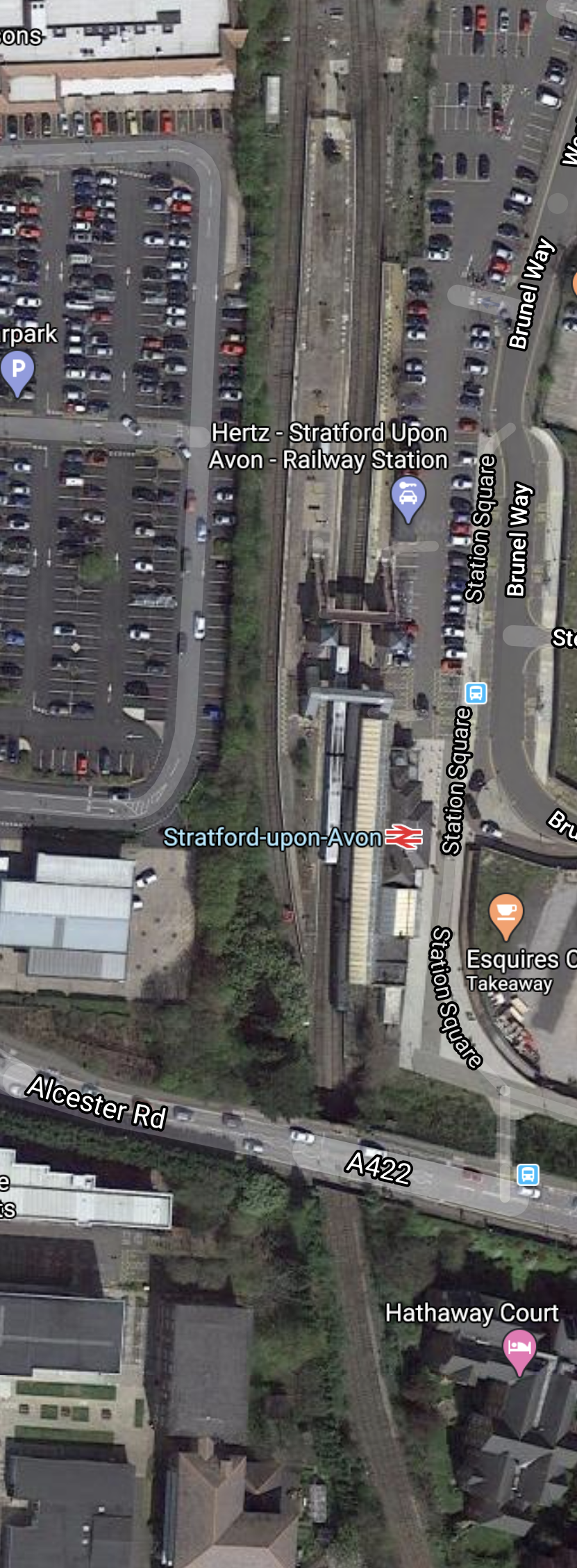
Note.
- The station is well-appointed with step-free access and three platforms.
- The bridge at the Southern end of the station to allow the railway to go South, appears to be intact.
This second Google Map shows the area of the town from the station to the racecourse.
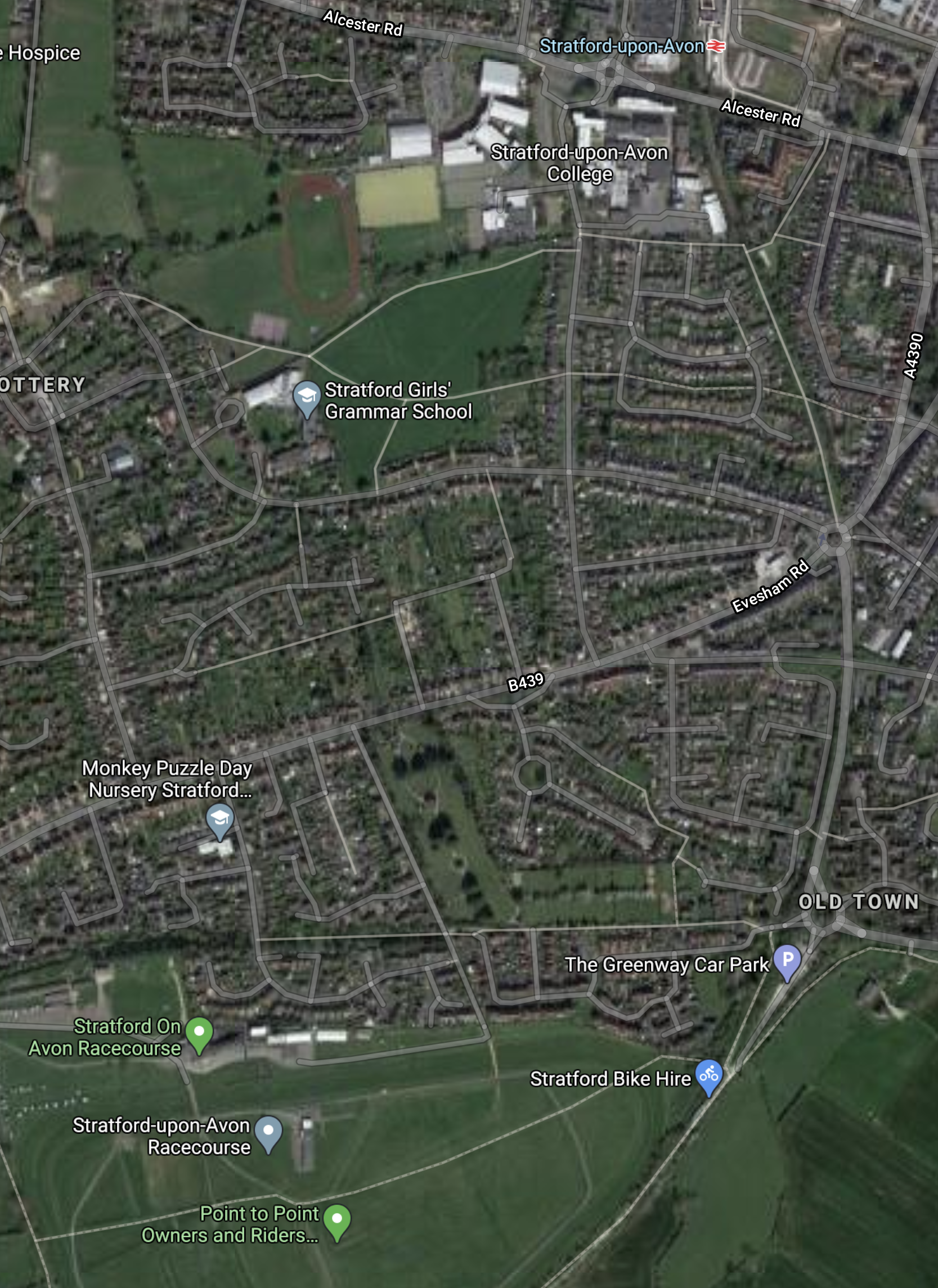
Note.
- Stratford-upon-Avon station at the top of the map.
- Stratford Racecourse at the bottom of the map.
The road curving between the station and the racecourse is the track of the former Stratford to Honeybourne railway.
My first reaction, when I saw this was that those, who want to rebuild this railway can’t be serious.
- Would you want one of DB Schenker’s noisy, smelly and polluting Class 66 locomotives running past your house?
- Would you want the line to be electrified, so they could use electric locomotives on this short stretch of railway? If so would DB Schenker be happy to change locomotives twice?
I have looked at new railways entering towns and cities all over the UK and Europe and feel there is only two possible solutions for Southern access to Stratford-upon-Avon station.
- A single-track passenger-only railway run by battery electric trains.
- A tunnel, which would probably be single-bore for cost reasons.
South of Stratford, the route is easier and it can be picked out on Google Maps until it reaches the Cotswold Line to the East of Honeybourne station.
This Google Map shows Honeybourne station and the junction.
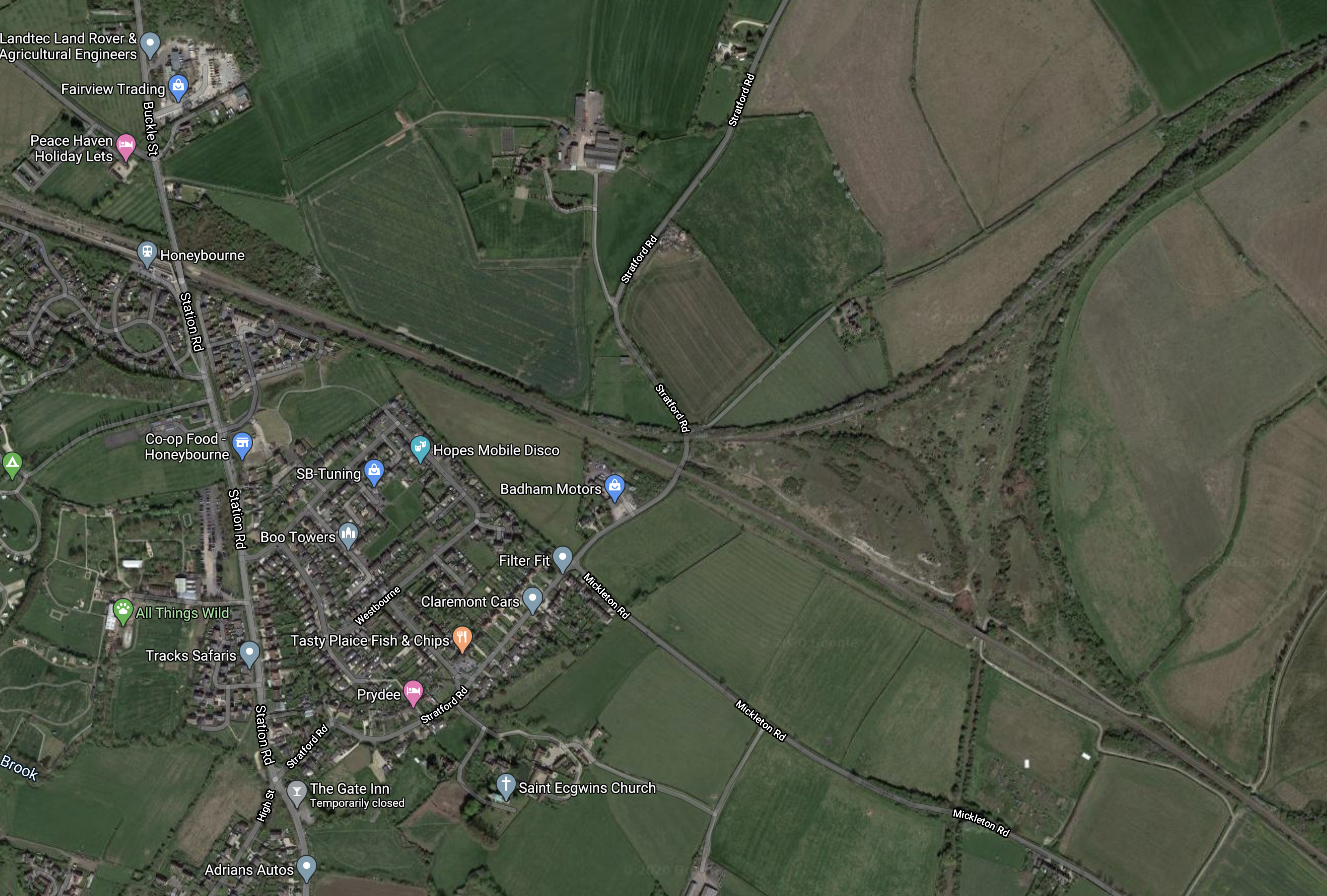
Note.
- The Cotswold Line running NW-SE across the map.
- The large triangular junction that connected the line to Stratford-upon-Avon station, which is to the North-East.
- Another track going South from the junction, can be picked out. This leads to the heritage Gloucestershire Warwickshire Railway at Broadway station, with onward connections to Cheltenham Racecourse.
Honeybourne station could be an important rail hub.
Honeybourne Station And Battery Electric Trains
Consider.
- Hereford and Honeybourne stations are 48 miles apart.
- Didcot East Junction, where trains switch to and from the Great Western Main Line electrification and Honeybourne stations are 48 miles apart.
- Trains to Hereford pass through Great Malvern, Worcestershire Parkway and Worcester Foregate Street.
- Stratford-up-on-Avon and Honeybourne stations would be less than thirty miles apart, if the two stations were to be reconnected by rail.
- Hitachi’s proposed battery electric trains will have a range of 56 miles on battery power.
If the means to charge battery electric trains were provided in the Honeybourne area, the following services could be run by battery electric trains.
- London Paddington and Worcestershire Parkway, Worcester Foregate Street, Great Malvern and Hereford.
- Honeybourne and Stratford-upon-Avon
The charging could be performed, by a ten minute stop at Honeybourne station or a section of electrified line centred on the station.
The two stations either side of Honeybourne are Evesham and Moreton-in-Marsh.
- They are fifteen miles apart.
- Trains take eighteen minutes between the stations.
- This would be enough time to charge the batteries.
- Trains could pan-up and pan-down in the two stations.
I believe modern low-visibility overhead electrification could be used.
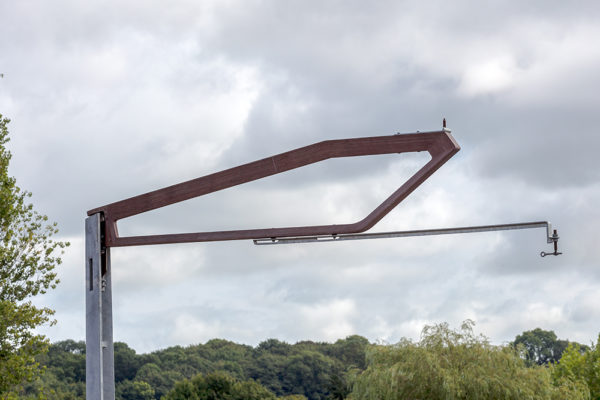
See Prototype Overhead Line Structure Revealed for more details on these gantries.
An Oxford And Stratford-upon-Avon Service
My estimates for the timings of the two sections of the route are as follows.
- Stratford-upon-Avon and Honeybourne – 20 minutes
- Honeybourne and Oxford – 46 minutes
Perhaps not the best for an efficient services, but I’m sure something could be arranged.
Conclusion
This will be a difficult project to get built.
If it is built, I suspect, it will be a passenger-only route using battery trains.
The Future Of West Midlands Trains’s Class 350 Trains
Currently, West Midlands Trains have four sub-fleets of Class 350 trains.
- Class 350/1 – 30 trains – Leased from Angel Trains
- Class 350/2 – 37 trains – Leased from Porterbrook
- Class 350/3 – 10 trains – Leased from Angel Trains
- Class 350/4 – 10 trains – Leased from Angel Trains
Note.
- All are 110 mph trains
- The trains are capable of being modified for 750 VDC third-rail electrification.
Under Future the Wikipedia entry for Class 350 trains says this.
West Midlands Trains announced that they would be replacing all 37 of their 350/2 units for Class 350/4 units cascaded from TransPennine Express and brand new Class 730 units which both can travel up to speeds of 110 mph.
In October 2018, Porterbrook announced it was considering converting its fleet of 350/2s to Battery electric multiple units for potential future cascades to non-electrified routes.
As West Midlands Trains have ordered 45 Class 730 trains for express services, it looks like they will be expanding services on the West Coast Main Line and around the West Midlands.
But it does appear that as many as thirty-seven trains will be returned to Porterbrook.
Class 350 Trains With Batteries
I believe that if fitted with batteries, these trains would meet or be very near to Hitachi’s specification, which is given in this infographic from Hitachi.

Note that 90 kilometres is 56 miles.
Could West Midlands Trains Run Any Services With Class 350 Trains With Batteries?
I think there are some possibilities
- Birmingham New Street and Shrewsbury – 30 miles without electrification between Shrewsbury and Wolverhampton – Charging facility needed at Shrewsbury.
- Birmingham New Street and Hereford via Worcester – 41 miles without electrification between Hereford and Bromsgrove – Charging facility needed at Hereford.
- Leamington Spa and Nuneaton via Coventry – 19 miles without electrification – Charging on existing electrification at Coventry and Nuneaton.
- The proposed direct Wolverhampton and Walsall service, that i wrote about in Green Light For Revived West Midlands Passenger Service.
There may also be some services added because of the development of the Midlands Rail Hub and extensions to London services,
Who Has Shown Interest In These Trains?
I can’t remember any reports in the media, about any train operator wanting to lease these trains; either without or with batteries.
Conclusion
It does all seem a bit strange to me.
- As a passenger, I see nothing wrong with these trains.
- They are less than twenty years old.
- They are 110 mph trains.
- They have 2+2 interiors, with lots of tables.
- They could be fitted with batteries if required.
But then, all of those things could be said about Greater Anglia’s Class 379 trains.
Midlands Rail Hub
On the Midlands Connect web site, they have a page, which is entitled Midlands Rail Hub.
This is the introductory paragraph.
The Midlands Rail Hub – our flagship project – is the biggest upgrade of our rail network for a generation.
The page contains this helpful map.

There is also a table of journeys and the improvements to be made.
- Birmingham – Nottingham – +1 tph – 72 minutes – 59 minutes
- Birmingham – Leicester – +2 tph – 66 minutes – 42 minutes
- Birmingham – Hereford – +1 tph – 85 minutes – 65 minutes
- Bitmingham – Worcester – +1 tph – 40 minutes – 35 minutes
- Birmingham – Derby – +2 tph – 38 minutes – 38 minutes
- Coventry – Leicester – +2 tph – 57 minutes – 38 minutes
- Coventry – Nottingham -+2 tph – 99 minutes – 63 minutes
- Birmingham – Bristol – +1 tph – 85 minutes – 80 minutes
- Birmingham – Cardiff – +1 tph – 117 minutes – 112 minutes
- Birmingham – Kings Norton – +2 tph – 18 minutes – 14 minutes
Note that the data by each route is the increase in frequency in trains per hour (tph), the current journey time and the future journey time.
I’ll now look at each route in more detail.
Birmingham And Bristol
Consider.
- Birmingham New Street and Bristol Temple Meads stations are 90 miles apart.
- Current service is two tph, which is provided by CrossCountry and goes via Worcestershire Parkway, Cheltenham Spa and Bristol Parkway.
- There is to be an increase of one tph.
- Current journey time is 85 minutes
- Future journey time is 80 minutes
As CrossCrountry’s Birmingham and Bristol service goes through to Edinburgh, Glasgow or Manchester Piccadilly, would it not be convenient, if the service could use High Speed Two to the North of Birmingham?
Birmingham And Cardiff
Consider.
- Birmingham New Street and Cardiff Central stations are 108 miles apart.
- Current service is two tph, which is provided by CrossCountry and goes via Worcestershire Parkway, Cheltenham Spa. Gloucester and Newport.
- There is to be an increase of one tph.
- Current journey time is 85 minutes
- Future journey time is 80 minutes
As CrossCrountry’s Birmingham and Cardiff service goes through to Nottingham, would it not be convenient, if the service could use High Speed Two between Birmingham and Nottingham?
It would appear that both Bristol and Cardiff services could benefit from a High Speed Two connection.
This map from High Speed Two shows the line’s route through the Water Orton area.
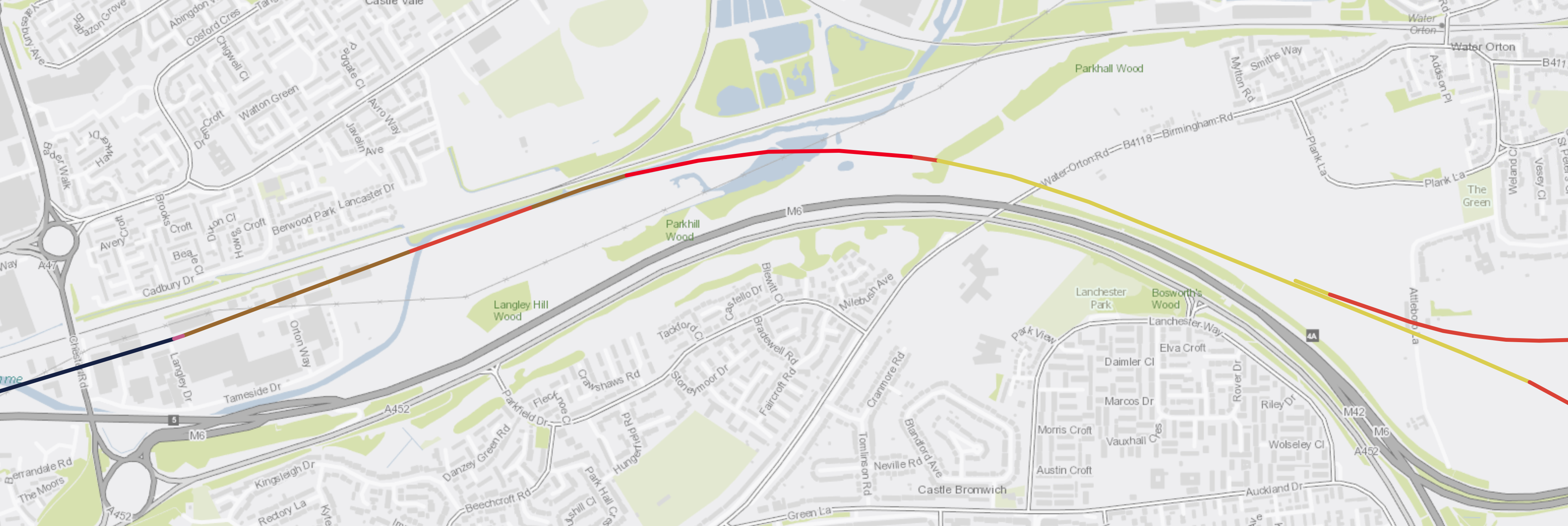
Note.
- High Speed Two is shown in various colours.
- High Speed Two splits at the Eastern edge of the map, with the Northern link going to Northern destinations and the Southern link going to Birmingham Interchange and London.
- Curving across the map beneath it, is the M6 motorway, with Spaghetti Junction off the map to the West.
- Water Orton station is in the North East corner of the map.
- The Birmingham and Peterborough Line, which connects Leicester and Birmingham New Street stations via Water Orton runs just tom the North of the route of High Speed Two shown on the map.
This Google Map shows the area.
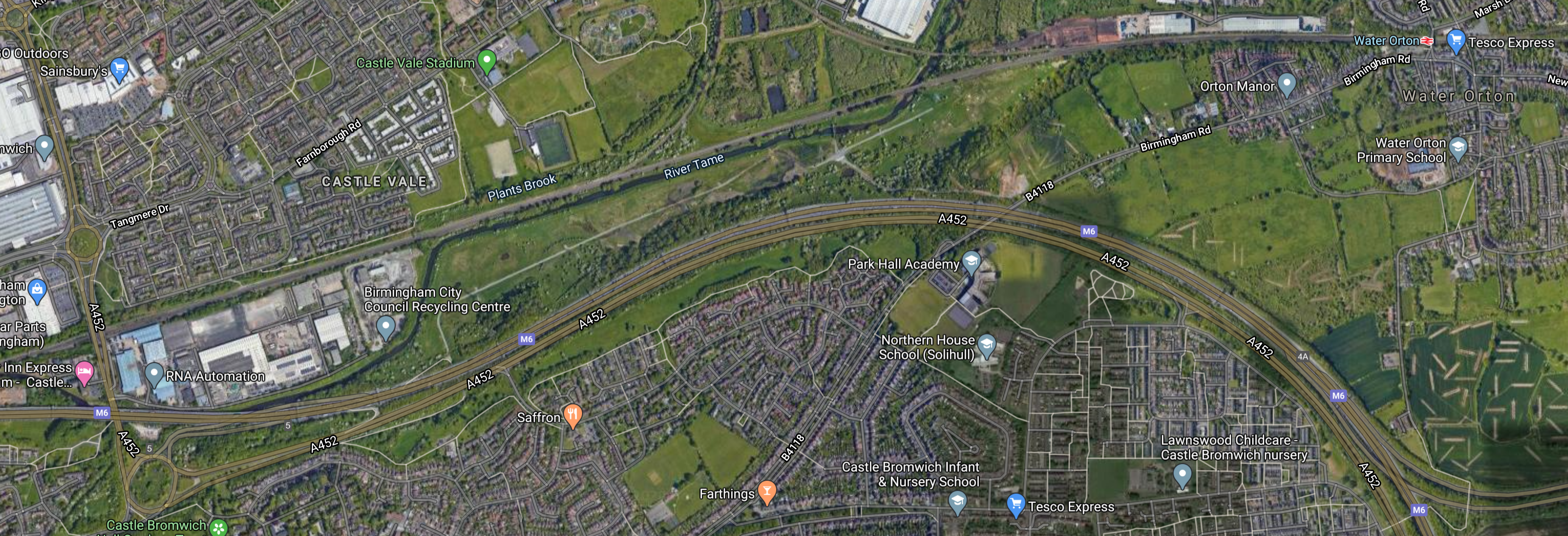
I wonder if it would be possible to provide links so that the following would be possible.
- Trains running East from New Street station could join High Speed Two to run to East Midlands Hub, Edinburgh, Glasgow, Leeds, Liverpool, Manchester, Newcastle, Sheffield and York.
- Trains from the North could run into New Street station and then continue to Bristol, Cardiff and Cheltenham.
The trains would have to be classic-compatible High Speed Two trains. These would fit into New Street station, as they are shorter than Class 390 trains and will have a aimilar height and width.
Time savings could be as follows.
- Bristol/Cardiff and Edinburgh – 110 minutes
- Bristol/Cardiff and Manchester Piccadilly- 50 minutes
- Bristol/Cardiff and Newcastle – 80 minutes
- Bristol/Cardiff and Nottingham – 45 minutes
All trains would be direct.
Birmingham And Derby
Consider.
- Birmingham New Street and Derby stations are 41 miles apart.
- Current service is two tph, which is provided by CrossCountry and goes via Wilnecote, Tamworth and Burton-on-Trent
- There is to be an increase of two tph.
- Current journey time is 38 minutes
- Future journey time is 38 minutes
- High Speed Two will run three tph between Birmingham Curzon Street and East Midlands Hub station in 20 minutes.
- Midlands Connect will run one tph between Birmingham Curzon Street and Nottingham Station in 30 minutes. See Classic-Compatible High Speed Two Trains At East Midlands Hub Station
Will passengers between Birmingham and Derby use High Speed Two services, which will be four tph or the current ones?
Birmingham And Hereford Via Worcester
Consider.
- Birmingham New Street and Hereford stations are 55 miles apart.
- Current service is one tph, which is provided by West Midlands Trains, and goes via Bromsgrove, Malvern Link and Great Malvern.
- There is to be an increase of one tph.
- Current journey time is 85 minutes
- Future journey time is 65 minutes
- The track between Bromsgrove and Birmingham is electrified.
- Hereford and Bromsgrove are 41 miles apart.
- Worcester and Bromsgrove are 13 miles apart.
With charging facilities at Worcester, this route would be an ideal one for battery electric trains.
Birmingham And Leicester
Consider.
- Birmingham New Street and Leicester stations are 40 miles apart.
- Current service is two tph, which is provided by CrossCountry and goes via Water Orton, Coleshill Parkway, Nuneaton, Hinckley and Narborough.
- There is to be an increase of two tph.
- Current journey time is 66 minutes
- Future journey time is 42 minutes
Birmingham – Nottingham
Consider.
- Birmingham New Street and Nottingham stations are 57 miles apart.
- Current service is two tph, which is provided by CrossCountry and goes via Tamworth, Burton-on-Trent and Derby.
- There is to be an increase of one tph.
- Current journey time is 72 minutes
- Future journey time is 59 minutes
- High Speed Two will run three tph between Birmingham Curzon Street and East Midlands Hub station in 20 minutes.
- Midlands Connect will run one tph between Birmingham Curzon Street and Nottingham Station in 30 minutes. See Classic-Compatible High Speed Two Trains At East Midlands Hub Station
Will passengers between Birmingham and Nottingham use High Speed Two services, which will be four tph or the current ones?
Coventry And Leicester
Consider.
- Coventry and Leicester are 28 miles apart.
- There is currently no direct train and a change is needed at Nuneaton
- There is to be an increase of two tph.
- Current journey time is 57 minutes
- Future journey time is 38 minutes
I suspect that a direct Coventry and Leicester service is being provided that does one of the following.
- Reverses in Nuneaton station.
- Takes a new flyover to cross the West Coast Main Line.
Would the Southern terminus of the route be Coventry, Leamington Spa or Stratford-on-Avon?
Coventry And Nottingham
Consider.
- Coventry and Nottingham are 55 miles apart.
- There is currently no direct train and a change is needed at Birmingham New Street or at both Nuneaton and Leicester.
- There is to be an increase of two tph.
- Current journey time is 99 minutes
- Future journey time is 63 minutes
Would this service be an extension of the Coventry and Leicester service?
As Leicester and Nottingham takes around thirty minutes, this could be the case.
Birmingham And Kings Norton Via The Camp Hill Line
The Midlands Rail Hub page, says this about the Bordesley Chords, which will connect Birmingham Moor Street station to the Camp Hill Line.
Construction of the Bordesley Chords, two viaducts creating new paths to the East Midlands and South West from Birmingham Moor Street Station.
This Google Map shows where they will be built.
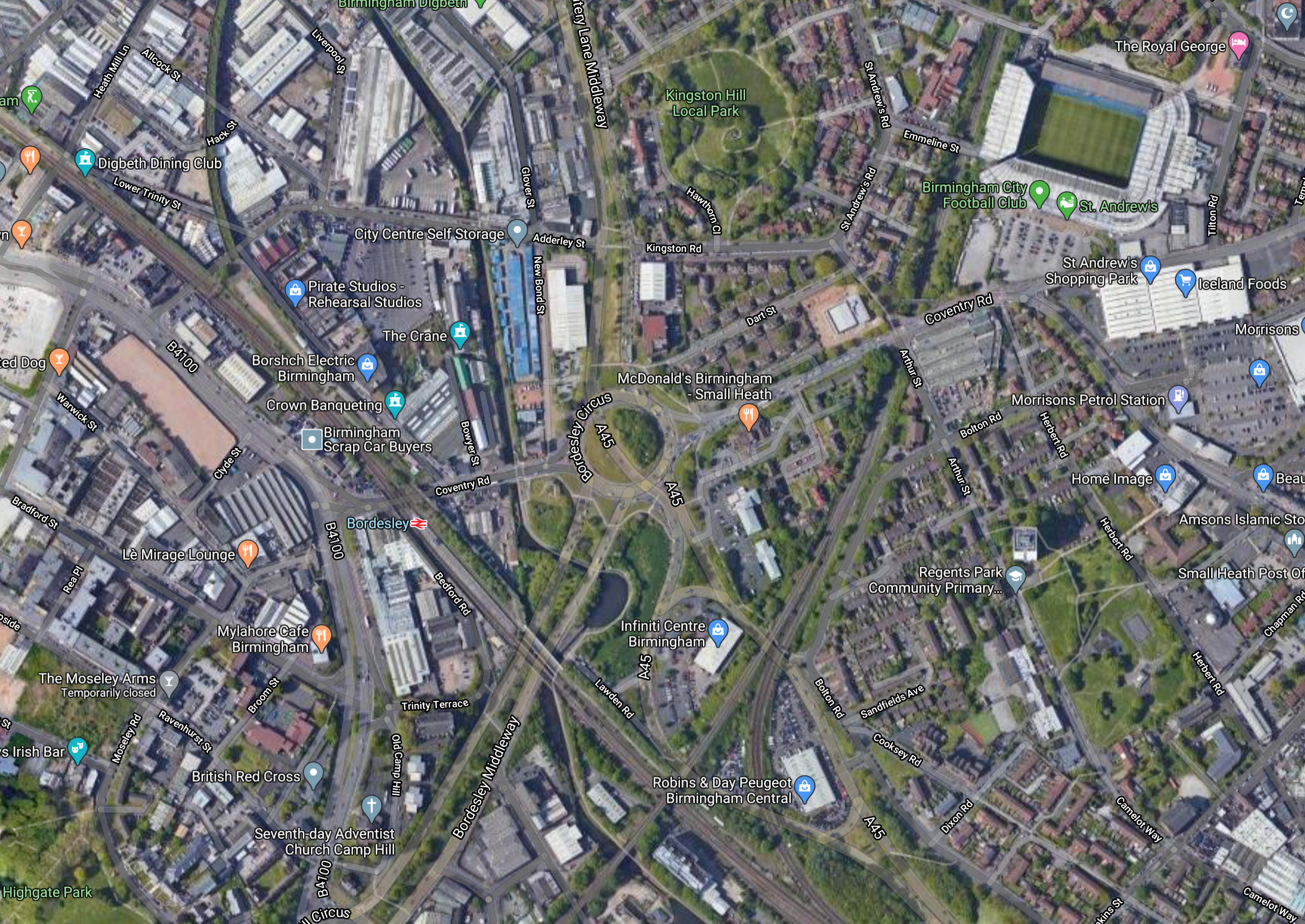
Note.
- The Football ground in the North-East corner of the map is St. Andrew’s, which is Birmingham City’s home ground.
- The rail line going North South across the map and passing to the West side of the ground is the Camp Hill Line, which leads to Water Orton station in the North and Kings Norton station in the South.
- The station in the middle of the map is Bordesley station.
- The rail line going NW-SE across the map through the station is the Chiltern Main Line into Birmingham Moor Street station, which is a couple of miles to the North-West.
The two Bordesley chords will be double-track chords linking the following routes.
- Moor Street station to the Camp Hill Line going South to Kings Norton via new stations at Moseley, Kings Heath and Hazelwell.
- Moor Street station to the Camp Hill Line going North to Water Orton station.
The initial service would appear to be two tph between Moor Street and Kings Norton stations.
CrossCountry Trains and Moor Street Station
Consider.
- Birmingham New Street station is very busy.
- Some CrossCountry trains take a Water Orton-Birmingham New Street-Kings Norton route across the city.
Could these trains go between Water Orton and Kings Norton, with a reverse in Moor Street station?
- Plymouth and Edinburgh Waverley
- Cardiff Central and Nottingham
And could these services terminate at Moor Street station?
- Birmingham New Street and Nottingham
- Birmingham New Street and Stansted Airport via Leicester
- Birmingham New Street and Leicester
It would seem there must be scope improve the operation of New Street station, by using Moor Street station and the Bordesley chords.
If all these trains used Moor Street station it would be a very busy station.
In an hour it would handle these trains via the Bordesley chords.
- CrossCountry – 1 tph – Cardiff Central
- CrossCountry – 1 tph – Edinburgh Waverley
- West Midlands Railway – 2 tph – Kings Norton
- CrossCountry – 2 tph – Leicester
- CrossCountry – 2 tph – Nottingham
- CrossCountry – 1 tph – Plymouth
- CrossCountry – 1 tph – Stansted Airport
That is a balanced five tph to the North and five tph to the South.
There would also be the existing services.
- Chiltern Trains – 2 tph – London Marylebone and Birmingham
- West Midlands Railway – 6 tph – Dorridge/Stratford-upon-Avon/Whittocks End and Stourbridge Junction
There would also be the proposed Moor Street and Oxford service.
Battery Electric Trains
If we assume that a battery electric train has a battery range equal to or longer than Hitachi’s quoted figure of 56 miles, these routes are possibilities for battery electric trains.
- Birmingham and Leicester with either electrification or charging at Leicester.
- Birmingham and Hereford with charging at Hereford
- Birmingham and Kings Norton
- Birmingham and Oxford with charging at Oxford and Banbury
- Coventry and Leicester
If the Midland Main Line is electrified in the Nottingham Area, then all services to Nottingham could be added.
CrossCountry And High Speed Two
Consider.
- There are up to half-a-dozen spare hourly paths on both the Northern legs of High Speed Two.
- Using High Speed Two tracks to the North of Birmingham can speed up services considerably.
- CrossCountry needs a new fleet of trains.
- Services could be run using classic-compatible High Speed Two trains.
- The trains might be shorter and would certainly have independent power sources.
It could be a large improvement in quality and journey times, with all current destinations served.
The only extra infrastructure needed would be a connecting junction near Water Orton station. A junction there would work, whether services used Moor Street or New Street station in Birmingham.
Cnnclusion
The concept of a Midlands Rail Hub is very sound.
Birmingham Airport Connectivity
On the Midlands Connect web site, they have a page, which is entitled Birmingham Airport Connectivity.
This is the introductory paragraph.
By using capacity released by HS2 and investing in new track south of Birmingham Airport, we can improve connections from the south of England, East Midlands, Yorkshire and the North East.
The page contains this helpful map.
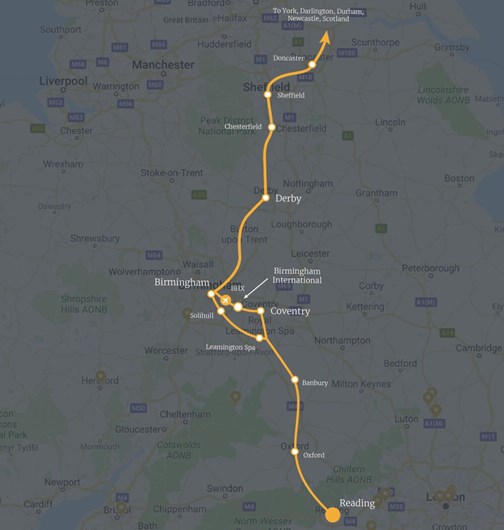
It looks like Midlands Connect are thinking about improving the Reading and Newcastle service.
Points made on the page and related articles, like this one on Rail News include.
- Birmingham Airport has plans to increase passenger numbers to 18 million by 2033.
- Coventry and Leamington Spa via Kenilworth will be double-tracked.
- High Speed Two will release capacity in the area.
- It will open up rail capacity between Birmingham and Solihull.
- There will be a new service between Birmingham Moor Street and Oxford via Solihull and Warwick Parkway.
- It will improve local connections to Birmingham Airport.
- Birmingham and Reading services will be increased to two trains per hour (tph)
- The Government is being asked to chip in £20 million.
These are my thoughts.
Birmingham Airport
Birmingham Airport can become a true Heart of England Airport.
I feel that the future of aviation will be very different to the past.
- COVID-19 and the future pandemics, that we will endure from the East and the Americas, will mean that flying will be a very different experience with hygiene and social distancing to the fore.
- Smaller aircraft, for flights up to 500 miles, will be odd-looking zero-carbon machines with exotic power systems.
- Larger aircraft will be energy efficient planes powered by aviation biofuels produced from household and industrial waste, and biomass.
- Boeing 747s and Airbus A380s will only be talked about in tales from older people to the young.
- Airports will be important rail hubs to more than just the local area.
Wikipedia also says this about expansion of Birmingham Airport.
Plans for a second runway (a third when demand requires) on the other side of the M42 and a new terminal complex and business park have been published, and they could help to create around 250,000 jobs. It has been estimated that if these plans went ahead, the airport could handle around 70,000,000 passengers annually, and around 500,000 aircraft movements.
This Google Map shows the Airport.
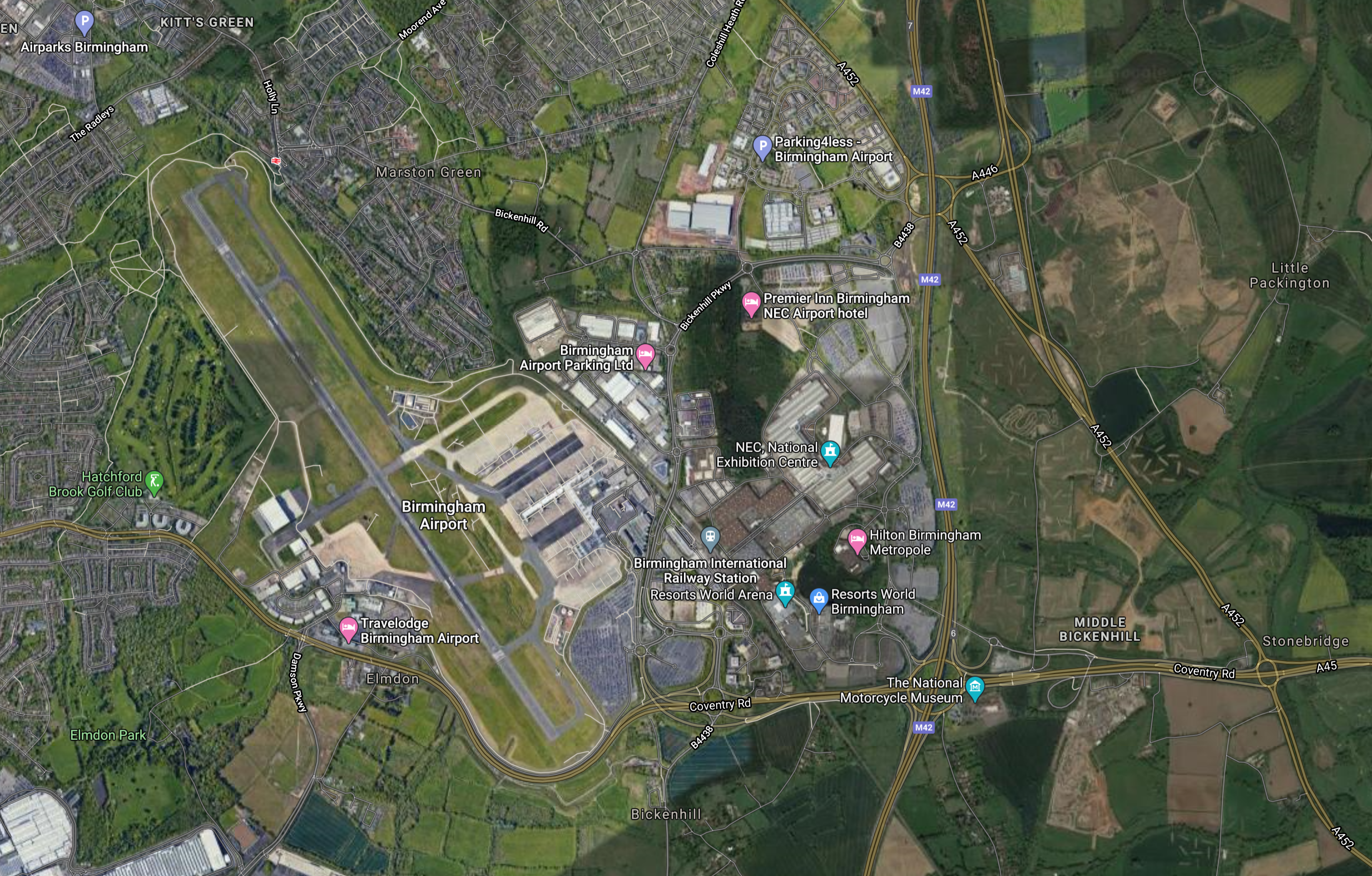
Note the M42 motorway passing North-South to the East of the Airport.
Could Birmingham Airport develop towards Birmingham Interchange and High Speed Two?
It is worth looking at the distance to other airports.
- Aberdeen – 328 miles
- Amsterdam – 280 miles
- Dublin – 199 miles
- Frankfurt – 478 miles
- Geneva – 558 miles
- Paris – 304 miles
All could be within range of an electric aircraft like the under-development Eviation Alice.
I believe that large airports will develop low-noise zero-carbon secondary runways.
Birmingham Airport is well-situated to take advantage.
Adding A Second Track Between Leamington Spa And Coventry
This section of track is about ten miles long, with probably under half only single-track.
This Google Map shows the single-track through the new Kenilworth station.

And these are pictures I took soon after the station opened.



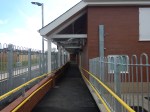
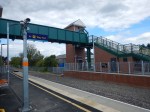
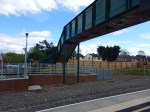
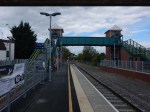
It is certainly one of the best of the current crop of new small stations.
I don’t think that adding a second track will be the most challenging of projects.
It should be noted that the Leamington Spa and Nuneaton service could be a candidate for a battery electric train.
- The route is twenty miles long
- Nuneaton and Coventry stations are fully electrified.
- There might be possibilities to extend this service at either or both ends.
- Nuneaton and Leicester are nineteen miles apart and a new Nuneaton Parkway station is proposed for the route. I wrote about this station in New Railway Station Between Hinckley And Nuneaton Receives Backing.
- Leamington Spa and Stratford-upon-Avon are fifteen miles apart and would need a reverse at Leamington Spa.
A battery electric train might give a faster and more passenger-friendly service, if the passenger numbers and forecasts would support an extended service.
A Birmingham Moor Street And Oxford Service
This Google Map shows Birmingham Moor Street station.
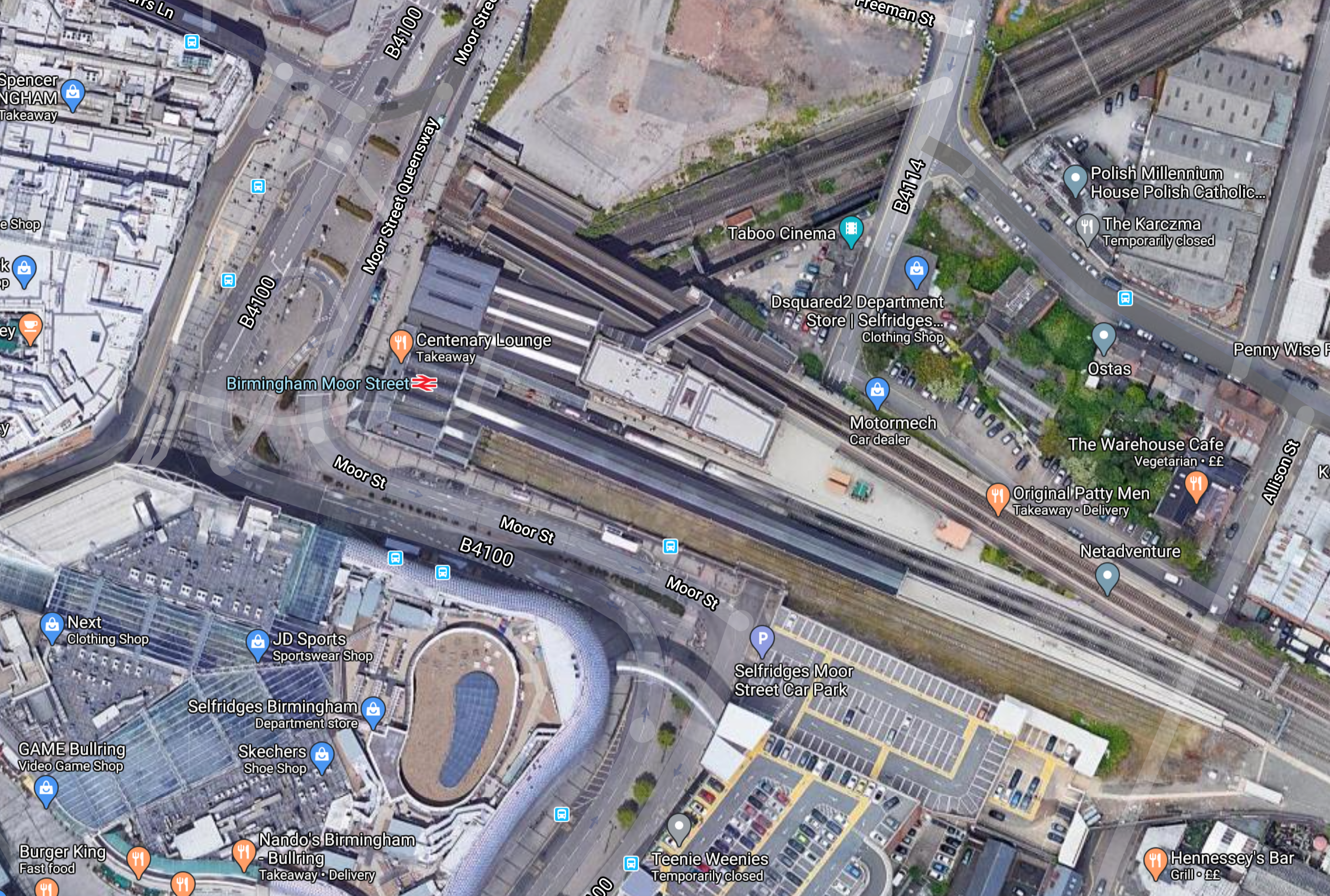
Note.
- The two Northern through platforms on the Snow Hill Lines, that continue under Birmingham to Birmingham Snow Hill station.
- At least two, but possibly three bay platforms, that can take Chiltern Railway’s longest trains.
- There is more space for possibly another two bay platforms to be reinstated or built.
Birmingham Moor Street station will also be a short walk from High Speed Two’s Birmingham Curzon Street station.
This Google Map shows Oxford station.
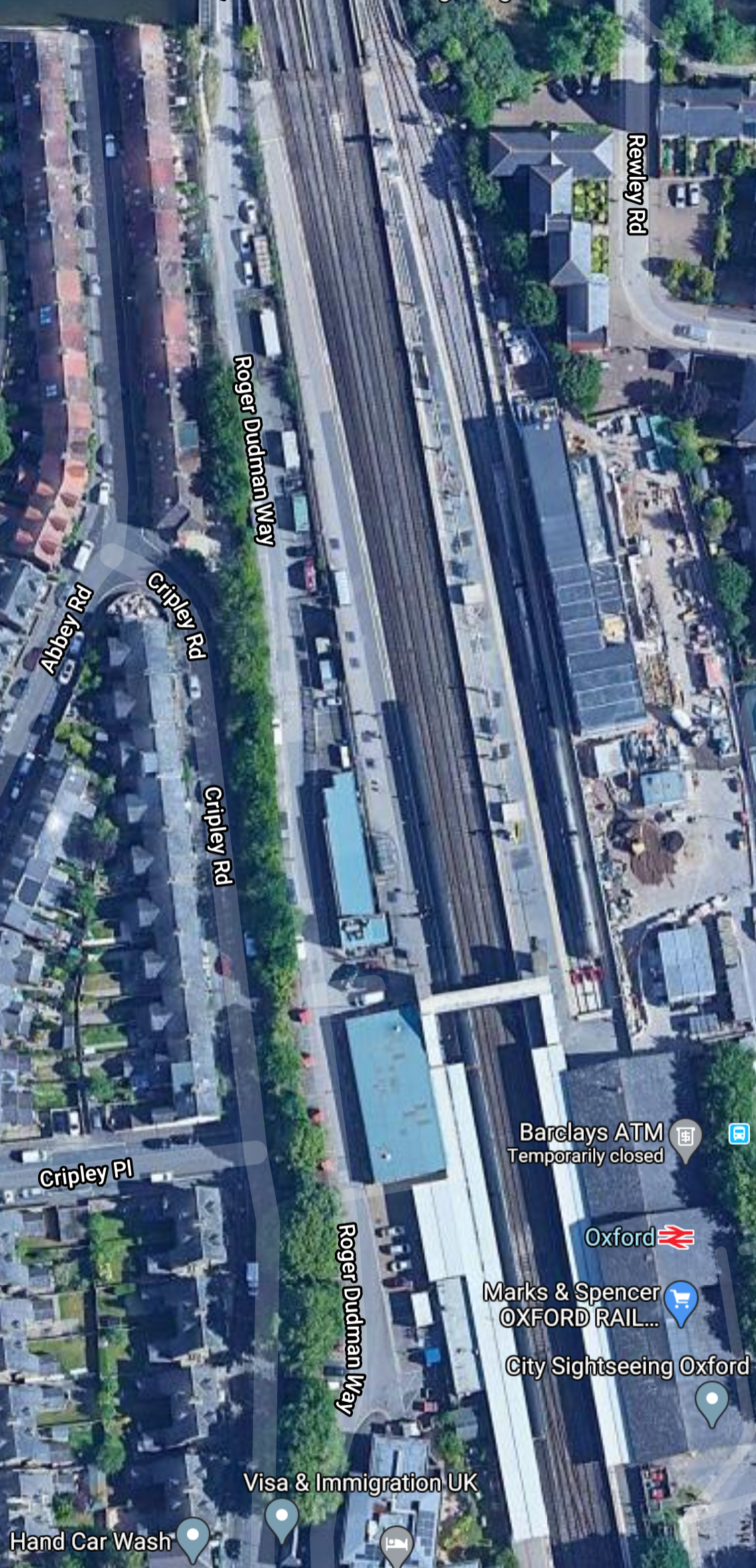
Note.
- Birmingham Moor Street station is to the North via Banbury and Warwick Parkway stations.
- The two long through platforms capable of taking a nine-car train.
- There are two bay platforms to the East of the two through platforms, at the Northern end of the station.
- The bay platforms handle Chiltern’s services from London Marylebone and could also handle the proposed service to Birmingham Moor Street.
Consider this about the proposed Birmingham Moor Street and Oxford service.
- The service could stop at Solihull, Warwick Parkway, Warwick, Leamington Spar and Banbury, as was thought necessary.
- I estimate that Birmingham Moor Street and Oxford are 66 miles apart and that a 100 mph train would take around 66 minutes.
- Birmingham Moor Street and Banbury are 43 miles apart.
- Oxford and Banbury are 23 miles apart.
With these timings and a few minutes to reverse at each end of the route, I would estimate that a 2.5 hour round trip would be possible.
But, I also think, that with charging facilities or short lengths of electrification at Birmingham Moor Street, Banbury and Oxford stations, this service could be run by battery electric trains.
- A three hour round trip should be possible.
- Three trains would be needed to provide an hourly service.
- Oxford, Banbury, Leamington Spa and Warwick would have a direct connection to High Speed Two.
It should also be noted
- Birmingham Moor Street and Stratford-upon-Avon stations are only 25 miles apart and the journey rakes 46 minutes
- Banbury and Stratford-upon-Avon are 35 miles apart. and the journey takes 57 minutes.
- Leamington Spa and Nuneaton are 20 miles apart and the journey takes 36 minutes.
There would appear to be tremendous potential for battery electric services between Birmingham and Oxford.
How many tourists would a Birmingham and Oxford service via Stratford-upon-Avon attract?
Improving The Reading And Newcastle Service
Currently, this is a one tph service between Reading and Newcastle stations.
- It is run by CrossCountry.
- Intermediate stops include Oxford, Banbury, Leamington Spa, Birmingham New Street, Derby, Sheffield, Doncaster, York, Darlington and Durham.
- It appears that the full journey takes four-and-a-half hours.
It looks like to run a two tph service would need as many as twenty trains.
There is an alternative route after High Speed Two opens.
- High Speed Two – Newcastle and Birmingham Curzon Street – 118 minutes
- Walk – Curzon Street and New Street – 10 minutes
- CrossCountry – Birmingham New Street and Reading – 90 minutes
This saves about forty-five minutes.
You could even do a double change.
- High Speed Two – Newcastle and East Midlands Hub – 96 minutes
- High Speed Two – East Midlands Hub and Birmingham Interchange – 17 minutes
- Walk – Birmingham Interchange and Birmingham International – 10 minutes
- CrossCountry – Birmingham International and Reading – 78 minutes
This gives a time of around three hours and twenty minutes.
High Speed Two certainly saves time.
But look at this map clipped from the High Speed Two web site.
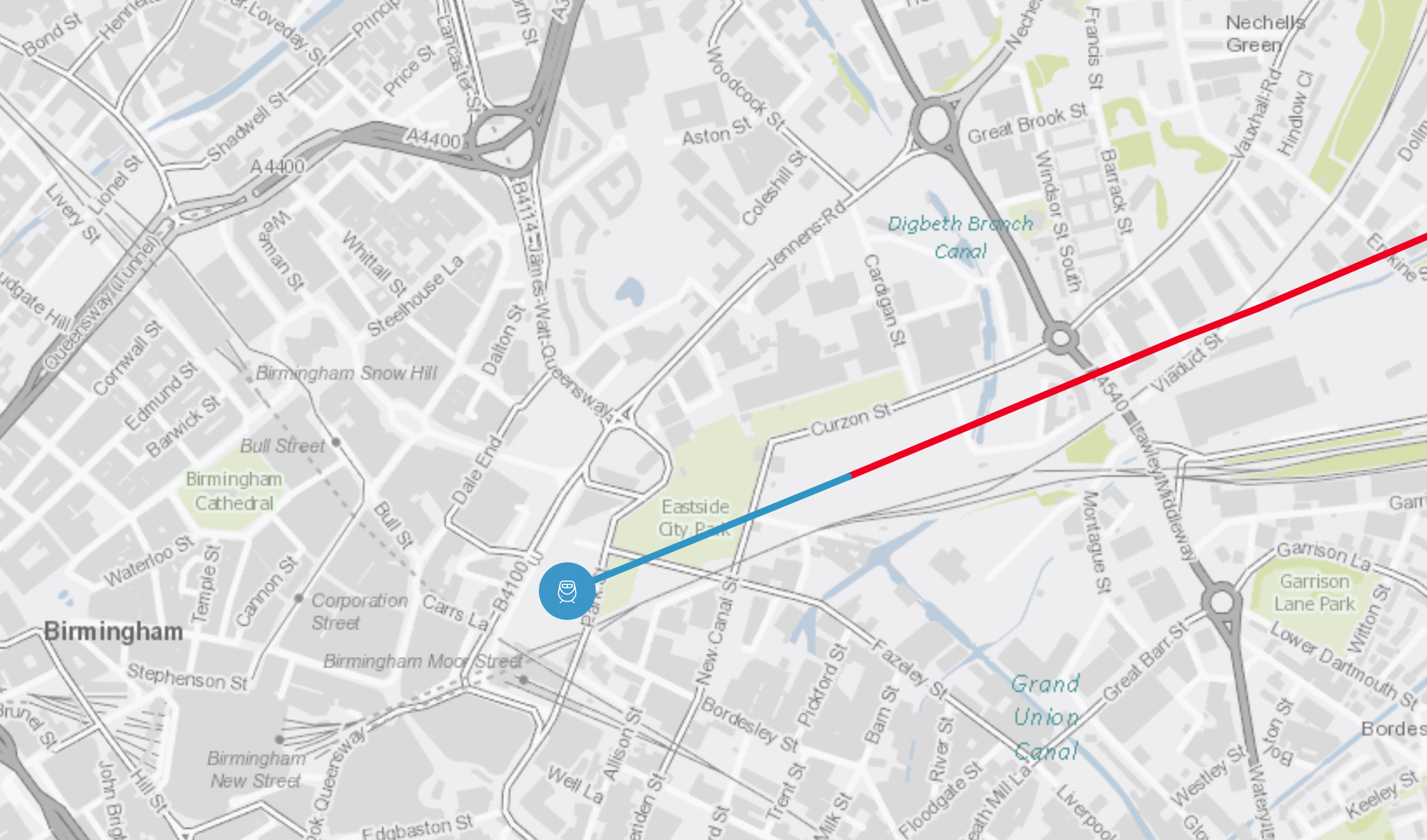
Note.
- The blue dot shows the location of Curzon Street station.
The West Coast Main Line running into New Street station, is just to the South of Curzon Street station.
New Street station can be picked out to the West of Curzon Street station.
This Google Map shows a close-up of the current Curzon Street station site.
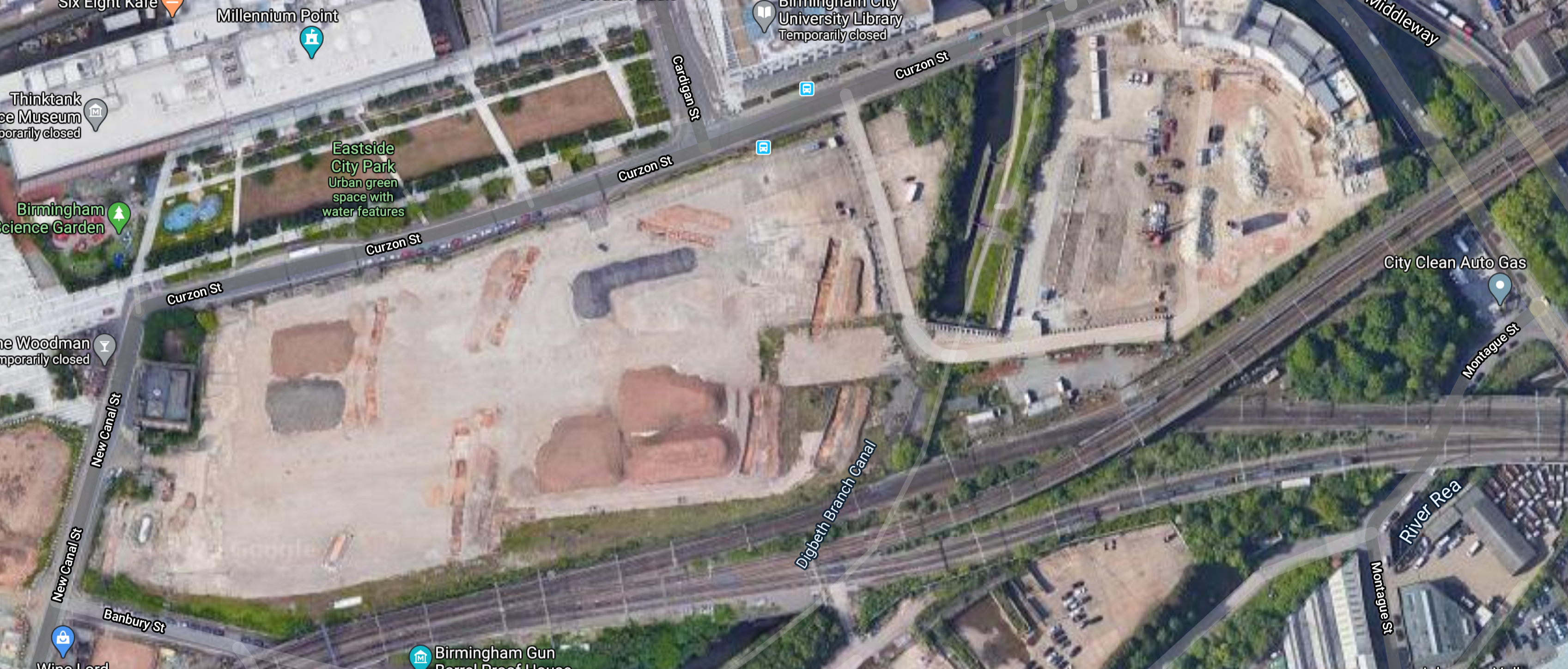
The same pattern of rail lines going past the Curzon Street site into New Street station can be picked out.
Surely, a connection could be made to allow trains from a couple of platforms in Curzon Street station to terminate trains from the West Coast Main Line.
To improve services between Newcastle and Reading, trains would do the following.
- Run on the current East Coast Main Line infrastructure between Newcastle and York. Station stops could be Durham, Darlington and York.
- Switch to new High Speed Two infrastructure South of York.
- Run on High Speed Two infrastructure to Birmingham Curzon Street station. Station stops could be Sheffield, Chesterfield and East Midlands Hub.
- The train would reverse at Birmingham Curzon Street station.
- Switch to the West Coast Main Line outside Birmingham Curzon Street station.
- Run on the West Coast Main Line to Birmingham International station.
- Take the route currently used by CrossCountry between Birmingham International and Reading. Station stops could be Leamington Spa, Warwick Parkway, Banbury and Oxford stations.
Timings would be as follows.
- Newcastle and Birmingham Curzon Street – 118 minutes – From High Speed Two web site.
- Birmingham Curzon Street and Reading – 90 minutes – Current CrossCountry timing.
Note.
- This saves about an hour over the current CrossCountry timings.
- It could use classic-compatible High Speed Two trains.
- Between Birmingham Curzon Street and Newcastle, it follows the same route as one of the current proposed High Speed Two services.
- The service could be extended to Edinburgh from Newcastle.
- The service could be extended to Southampton from Reading
- As there are only twelve tph planned to be running on the Eastern leg of High Speed Two, against a total capacity of eighteen tph, it should be possible to accommodate the extra service or services.
This would surely be a very useful High Speed Two service.
Conclusion
It is a comprehensive package of measures, some of which could have a high cost benefit ratio.
Beeching Reversal – Stockport And Ashton Line
This is one of the Beeching Reversal projects that the Government and Network Rail are proposing to reverse some of the Beeching cuts.
I came across this railway, when I was writing Macclesfield Station And High Speed Two, as I felt the Stockport and Stalybridge Line could be a useful connection to the proposed High Speed Two terminus at Macclesfield station.
This article on the Quest Media Network is entitled Proposals For New Rail Link Between Ashton And Stockport.
This paragraph described the political backing.
The Labour politicians are backing a bid to the ‘Restoring Your Railway Fund’, which will distribute £500 million of funds to reinstate axed local services and restore stations.
The bid was put forward by Transport for Greater Manchester (TfGM) and Stockport Council, but also has the backing of Tameside Council.
Not fans of Boris, I would presume!
These paragraphs describe the proposals
It proposes two options – a heavy rail service between Stockport and Manchester Victoria via Denton and Reddish South, and a light rail service connecting with the existing Manchester-Ashton Metrolink line at Ashton Moss in the north, and with the proposed Stockport-East Didsbury line in the south.
The proposals also open possibilities of new stations along the line at Audenshaw, Thornley Lane and Heaton Norris.
These are my thoughts.
Macclesfield As A Terminal
As I said in conjunction with High Speed Two, I believe that Macclesfield station would make a good terminal, where a Stockport-facing platform could be built, which would give step-free access to the hourly High Speed Two train to Stoke, Stafford and London.
Manchester Victoria And Stockport
This route map, which has been clipped from Wikipedia, shows the route between Manchester Victoria and Stockport stations.
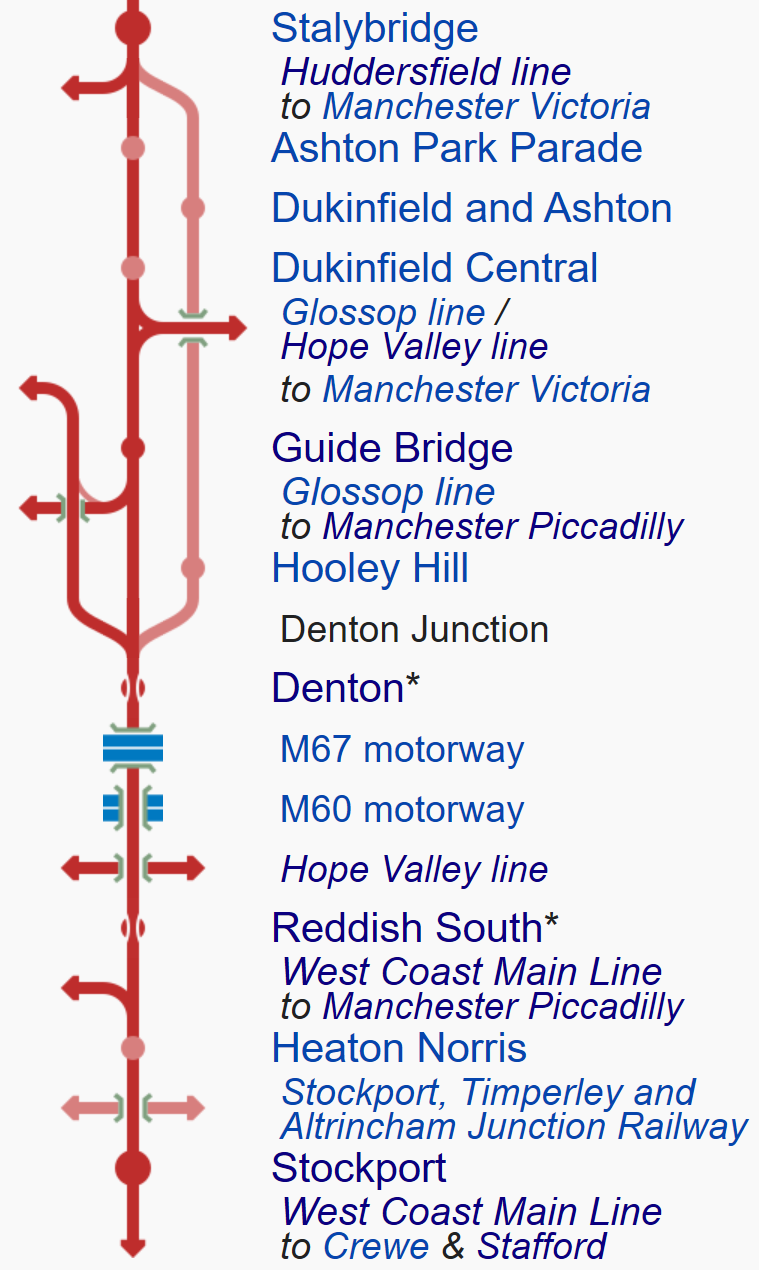
Note.
- The connection to Manchester Victoria station joins at Denton Junction.
- There are possible stations at Denton, Reddish South and Heaton Norris.
- Trains to Macclesfield station take the West Coast Main Line from Stockport station.
- At Stalybridge there is a connection to the Huddersfield Line for Huddersfield and Leeds.
Realtimetrains devolves this extra information.
- Manchester Victoria and Stockport are twelve miles apart via Denton.
- It is a busy freight route with upwards of a couple of trains per hour (tph)
- There used to be a station at Miles Platting.
It is a comprehensive route and deserves a lot more than a simple hourly service to Manchester Victoria station.
Battery Electric Trains
Consider.
- Macclesfield, Manchester Victoria and Stockport stations are all fully electrified.
- About twelve miles of track are not electrified.
- Manchester Victoria and Macclesfield stations are twenty-four miles apart.
- I estimate a four-car 100 mph battery electric train like a Class 350 train would do the trip in close to 25 minutes.
It looks like an ideal route for a battery electric train to me.
Two trains would be needed to run a two tph service, with no extra infrastructure.
Conclusion
Develop a service between Manchester Victoria and Macclesfield stations using battery electric trains, with at least a frequency of two tph.
Along The Hope Valley Line – 13th July 2020
These pictures show my return trip between Manchester Piccadilly and Dore & Totley stations.
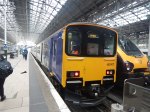

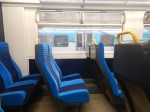

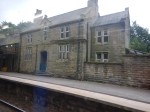
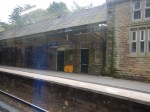
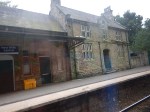







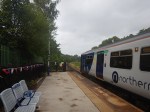
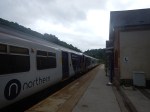
There are an assorted set of stations.
- Some stations appear to have new platforms.
- Marple station has a impressive step-free bridge.
- Some stations may be Listed or should be.
- There are walking routes from some stations.
- Some stations need improvements to the access.
I also have some thoughts on the service.
The Class 150 Trains
The Class 150 trains have these characteristics.
- Installed Power – 426 kW
- Weight – 35.8 tonnes
- Operating Speed – 75 mph.
This compares with these for a Class 195 train.
- Installed Power – 780 kW
- Weight – 40 tonnes
- Operating Speed – 100 mph.
- Acceleration – 0.83 m/sec/sec
Unfortunately, I can’t find the acceleration for a Class 150 train, but I suspect that it’s not as good as the Class 195 train.
- I was in a Class 150 train, for both journeys.
- IThe train was on time both ways.
- The engine under my carriage wasn’t working that hard.
- The train was trundling around at around 60 mph.
- The operating speed of the line is 90 mph.
So I suspect, that a well-driven Class 195 train will shave a few minutes from the journey time.
Transport For The North’s Plan For Manchester And Sheffield
Transportbfor the North objective for Manchester Piccadilly and Sheffield stations can be summed up as follows.
Four tph in forty minutes.
As current trains take over anhour, it could be a tough ask!
The Timetable
The timetable isn’t very passenger-friendly with no easy-to-remember clock-face timetable.
This must be sorted.
Hopefully, it will increase the number of passengers riding on the route.
Battery Electric Trains
Consider.
- Sheffield station will be electrified for High Speed Two.
- It is likely that the route between Dore & Totley and Sheffield station will be electrified.
- There is electrification at the Manchester end of the route.
- The distance without electrification in the middle is probably about thirty-six miles.
- Fifty-sixty miles seems a typical range quoted for a battery electric train by train manufacturers.
As electric trains generally accelerate faster than their diesel equivalent, these could run the route reliably and save time on the journey.
Conclusion
I’m coming round to the opinion, that Transport for the North’s objectives for the route can be met without electrification.
Beeching Reversal – Restoring A South Humber Link
This is one of the Beeching Reversal projects that the Government and Network Rail are proposing to reverse some of the Beeching cuts.
The project is described by these two paragraphs in this article in the Yorkshire Post, which is entitled Government Announce Yorkshire Rail Schemes That Could Receive ‘Reverse Beeching’ Funding.
North Lincolnshire Council have bid for funding to subsidise a new train service that would allow passengers from Barton-on-Humber to travel to Gainsborough, from where they would be able to catch direct services to Sheffield.
This would be achieved by diverting the existing Barton to Grimsby and Cleethorpes trains up a freight-only section used by traffic heading to Immingham docks. There have never been passenger trains using this path before.
This rail map clipped from Wikipedia shows the Barton Line to Barton-on-Humber station.
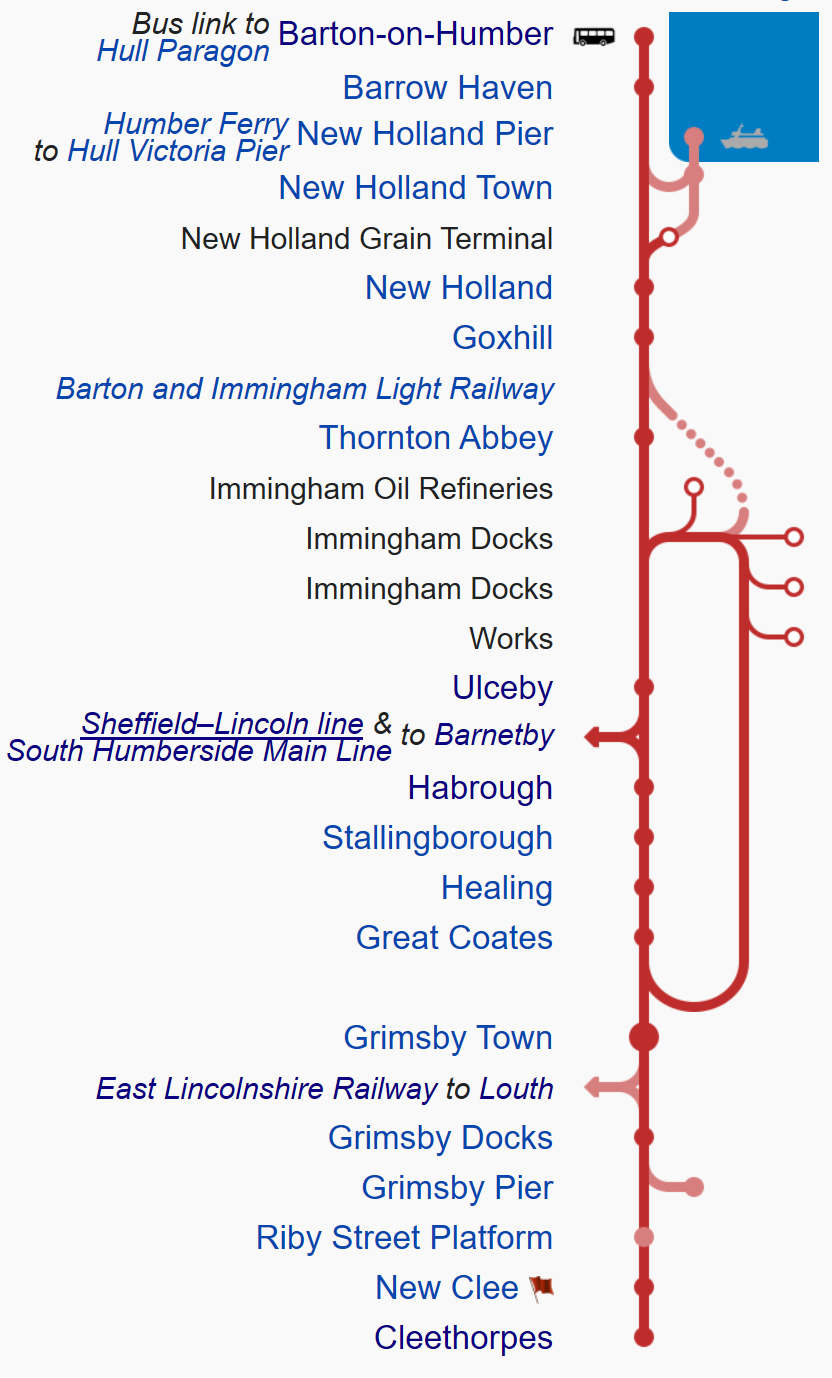
Note.
- Barton-on-Humber station has a bus link to Hull station.
- The loop gives a grand tour of the Port of Immingham on what is now a freight-only line.
- There is a lot of development going on in the area including the AltAlto aviation biofuel, that I wrote about in Grant Shapps Announcement On Friday.
Perhaps all this development is causing a lot of small problems.
- Is it causing congestion on the roads?
- Are workers difficult to find in the Immingham area?
- Is commuting over the Humber Bridge expensive?
- Is parking difficult in the Port?
North Lincolnshire Council could feel that a better rail connection serving the Port of Immingham, would be an asset, that reduces these problems.
I suspect the current two-hourly service between Barton-on-Humber and Cleethorpes stations, will be replaced by an hourly one, between Barton-on-Humber and Gainsborough Lea Road stations, that takes the following route.
- Barton-on-Humber to Ulceby
- At Ulceby station the train will reverse and go clockwise around the loop.
- After calling at Great Coates, Healing, Stallingborough and Habrough stations, the train would go West to Barnetby and Gainsborough Lea Road stations.
- Passengers wanting to go from Barton-on-Humber to Grimsby Town or Cleethorpes, would change at Great Coates station.
It may look a rather round-about route, but I suspect that the plan includes some stations to serve the Port of Immingham and the industrial development.
I suspect that some of these port, oil, chemical and energy companies can afford to pay a contribution.
Gainsborough Lea Road Station
Gainsborough Lea Road station is a mix of architectural styles.
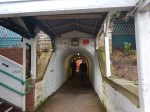
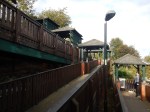
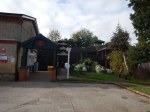
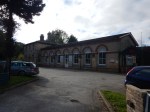
But with the addition of a friendly café and some other facilities, it would be a good interchange between the Immingham area and Sheffield and the county town of Lincoln.
Future Trains
Lincolnshire is an energy-rich county, which partly explains all the industrial development in the North-East of the county around Grimsby, Immingham and Scunthorpe.
- Immingham is a large importer of biomass for power generation.
- There are off-shore and on-shore gas fields connected to Theddlethorpe gas terminal.
- There is the large power station complex at Keadby.
But the energy mix is a-changing.
- Keadby now includes a solar farm.
- Wind turbines are springing up both on land and in the sea.
If I was to make a prediction, it would be that more and more large energy-related businesses will develop in the area.
- In recent months, Altalto’s waste-to-aviation biofuel plant has been given national and local government backing to be built at Immingham.
- ITM Power are involved in a hydrogen development project in the area.
- I wouldn’t be surprised to see hydrogen produced for transport from all this energy.
I think it will be inevitable, that zero-carbon battery electric or hydrogen-powered trains will run in the area.
- Cleethorpes and Doncaster via Scunthorpe 52 miles apart.
- Cleethorpes and Barton-on-Humber are 23 miles apart
- Lincoln and Newark are 16.5 miles apart.
- Lincoln and Doncaster are 37 miles apart.
- Lincoln and Sheffield are 48 miles apart
- Lincoln and the electrification at Peterborough are 54 miles apart.
- Skegness and Sleaford are 41 miles apart.
- Sleaford and Grantham are 18 miles apart.
With charging facilities at Barton-on-Humber, Lincoln, Skegness and Sleaford, the whole of Lincolnshire could be served by zero-carbon battery electric trains.
I suspect LNER could lead the way, as a five-car Class 800 train equipped with batteries, is predicted to have a 56 mile range away from the wires, which would easily handle a return trip between Newark and Lincoln.
There could be a small problem, in that the first train of the day, between Lincoln and London Kings Cross positions from Doncaster Carr IEP Depot, so running Doncaster to Newark via Lincoln might challenge the battery range of the train. I suspect, that the positioning could be performed via Newark with a reverse, prior to the installation of a charging facility at Lincoln Central station.
I estimate that Barton-on-Humber and Gainsborough Lea Road stations are about 35 miles apart, so with today’s battery technology, I suspect that a round trip in a battery electric train would be on the limit. But with charging facilities at Gainsborough, there would be no problems.
I suspect that East Midlands Railway would use several of their forty diesel Class 170 trains on this and other routes in Lincolnshire, so perhaps a good interim solution would be to run the Class 170 trains on Altalto’s biodiesel, that will be produced at Immingham.
There is also the possibility, that some or all of the Class 170 trains will be retrofitted with MTU Hybrid PowerPacks, which would cut their diesel consumption.
Surely, with all Lincolnshire’s energy, hydrogen-powered trains must be a possibility. But they seem to be stuck in a siding!
The MTU Hybrid PowerPack and Altalto’s bio-diesel seems a more affordable and less risky route.
A Direct Connection To London
In the Wikipedia entry for Gainsborough Lea Road station, there is a section called Future Services, where a direct connection to London is mentioned.
Conclusion
Given that the likes of East Midlands Railway, Hull Trains, LNER and TransPennine Express are improving their services to Hull, Lincoln, Cleethorpes and Grimsby, this local North Lincolnshire Metro serving the Port and the industrial development, could well be welcomed by those that live and work in the area.
I doubt that the infrastructure cost will be very high.
Beeching Reversal – Reinstatement Of The Beverley And York Rail Line
This is one of the Beeching Reversal projects that the Government and Network Rail are proposing to reverse some of the Beeching cuts.
The York And Beverley Line does what it says in the name.
A section in the Wikipedia entry is entitled Re-Opening Proposals and the treatment of the trackbed after closure would appear to be a case study in how not to mothball a railway.
- The original route has been built on in several places at Huntingdon, New Earswick, Pocklington and Stamford Bridge.
- A new route will have to be built to connect to the York and Scarborough Line at Haxby.
- There may also be problems at Beverley.
The only positive thing I can see, is that York City Council, want to re-open Haxby station. If this station were to be re-opened with a future-proofed design that might help in the wider scheme of reopening the Beverley and York Line.
This Google Map shows the original location of Haxby station.
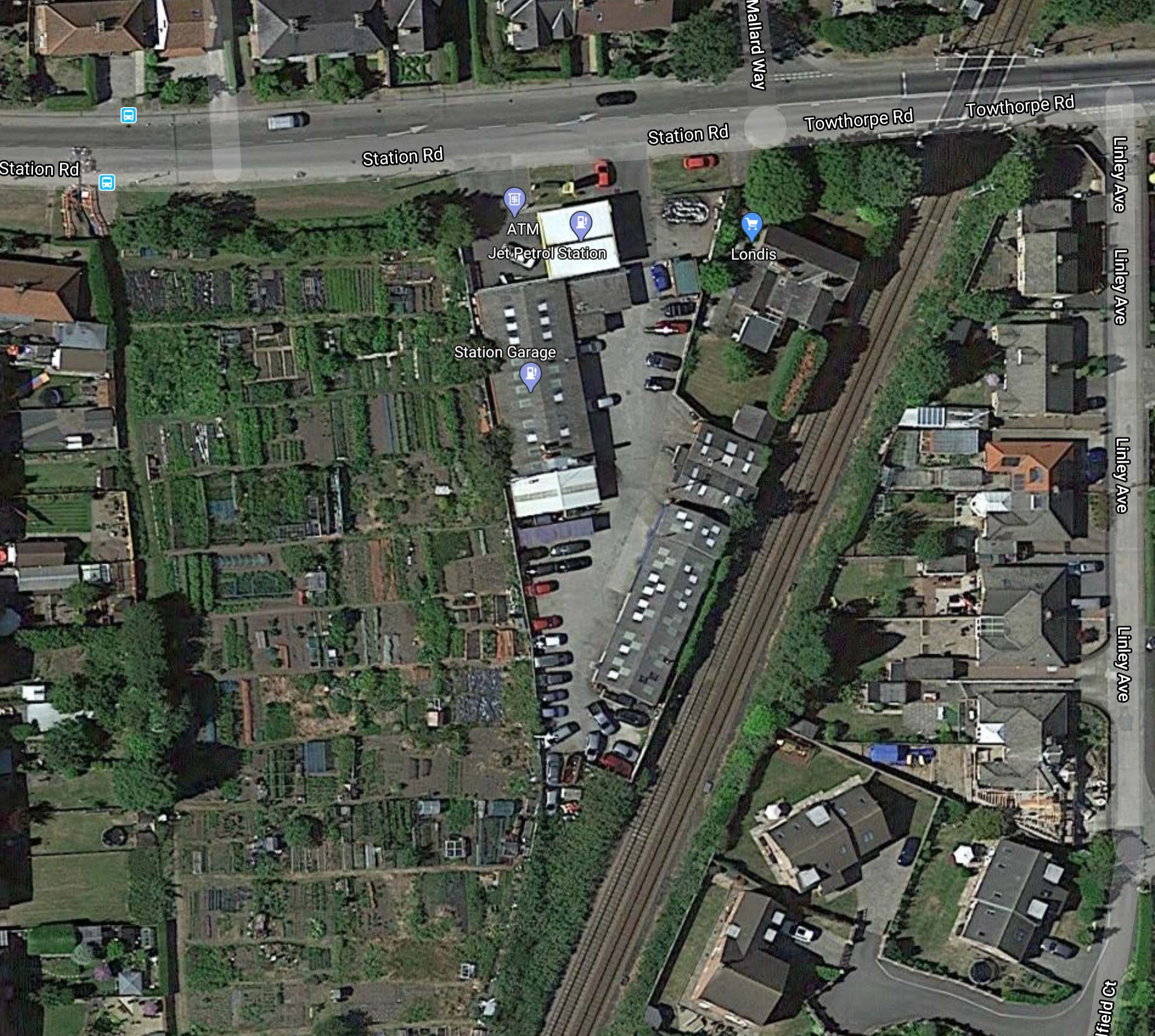
Note.
- There is a dreaded level crossing in the middle of the village, that typically has around two trains per hour (tph)
- The road going to the West at the top of the map, is called Station Road, which is a bit of a giveaway.
- The building on the triangular site is called Station garage.
- Some reports on the Internet say that allotments will be turned into car parks.
- According to Wikipedia 22,000 people live within three miles of the station site.
The station site appears to be hemmed in by housing and comments from readers on one report are complaining about car parking being a problem an definitely don’t want the station.
Wikipedia says this about the proposed service on the Beverley and York Line.
The report recommended reinstating a service from Hull via Beverley, Market Weighton, Stamford Bridge and Pocklington connecting to the York to Scarborough Line at Haxby, on a double track line with a frequency of 2 trains per hour, with intermediate stations only at Market Weighton, Pocklington and Stamford Bridge. The estimate journey time was under 1 hour.
As the Beverley and York Line can’t join the York and Scarborough Line in the middle of Haxby, would it join North or South of the town?
Joining to the North would allow the Beverley trains to call at Haxby, but that would mean the level crossing was busy with six tph.
This Google Map shows the countryside between Haxby in the North and Earswick in the South.
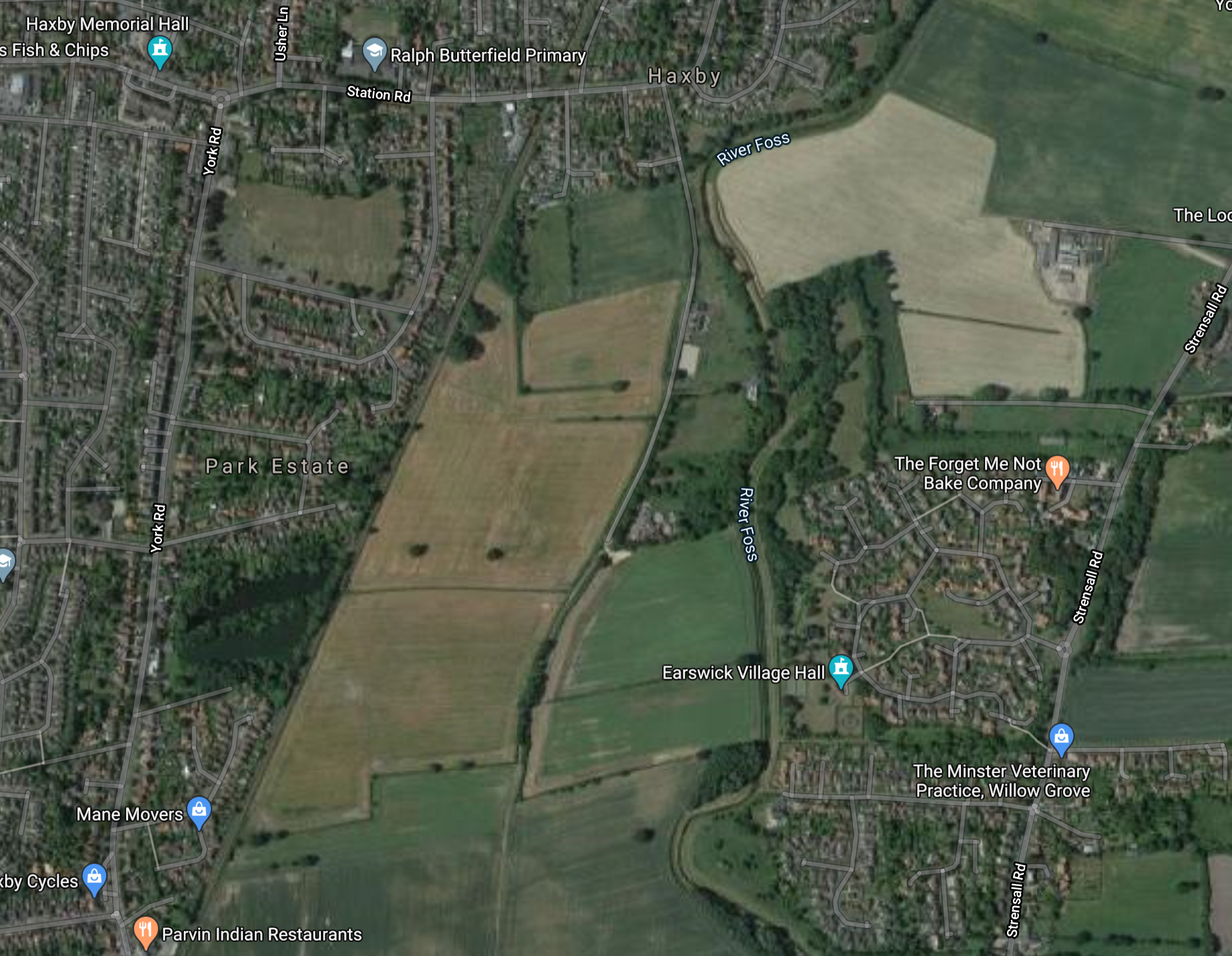
Note.
- The York and Scarborough Line going through the centre of Haxby and then passing down the West side of the light brown fields.
- York is to the South and Scarborough is to the North.
I wonder, if the Beverley and York Line could branch to the East here and skirt to the North of Earswick before continuing to Pocklington for Beverley.
Perhaps, a Park-and-Ride station could be situated, where the railway and the road called Landing Lane cross?
At Beverley, this Google Map shows how the Beverley and York Line connects to the station.
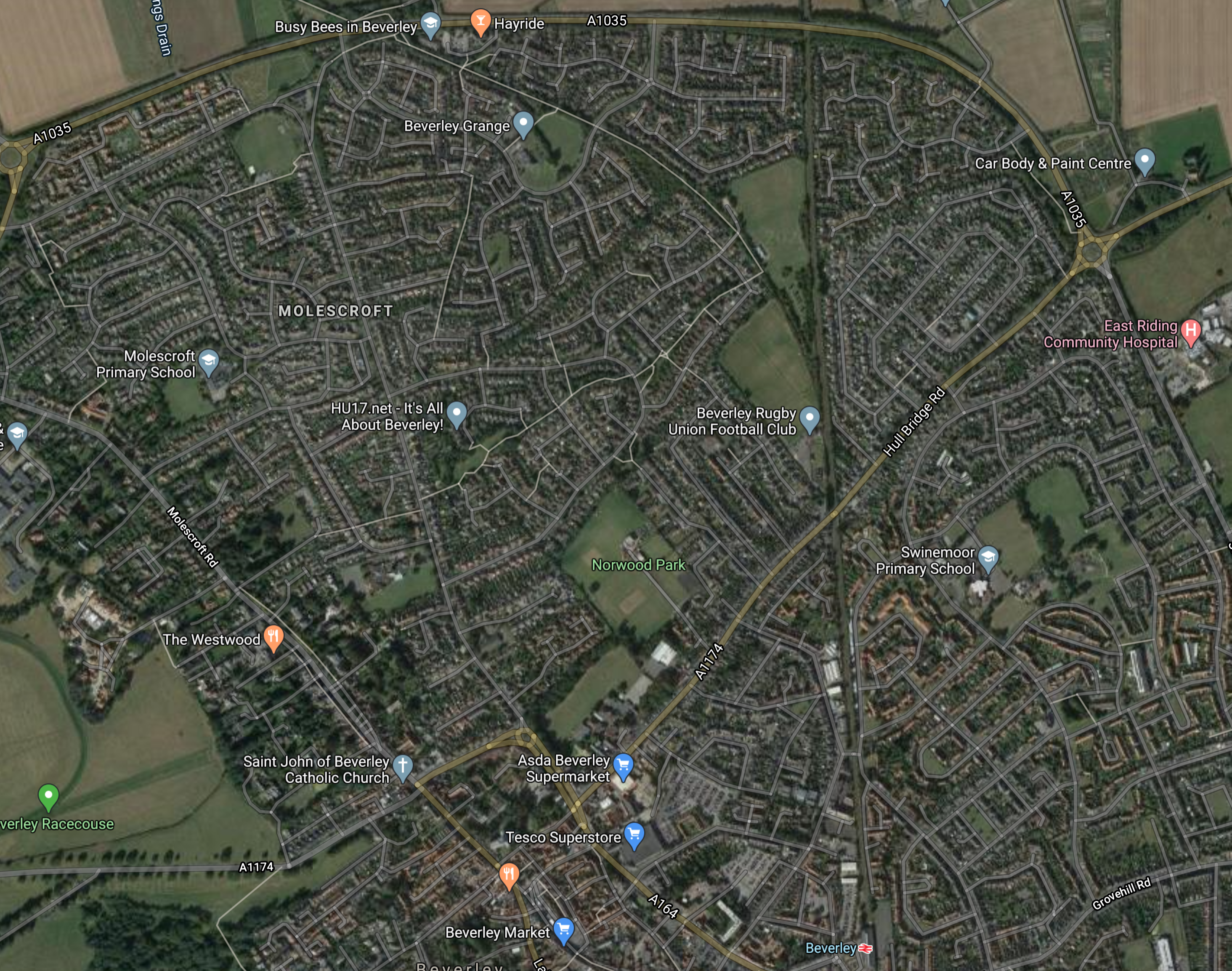
Note.
- Beverley station at the bottom of the map.
- The Hull and Scarborough running North-South through the station.
The line divides by Beverley Rugby Football Club, with the trackbed of the Beverley and York Line going off in the North-Westerly direction.
This seems a lot easier than at the York end of the route.
I have flown my virtial helicopter over much of the route between Beverley and York, and the trackbed is visible but missing in places, where construction has taken place.
Would The Route Be Single Or Double-Track?
The plans call for double track, but would it be necessary?
- There will only be two tph, that will take under an hour.
- No freight trains will use the line.
- The route is 32 miles long.
I suspect a single track would suffice, with a passing loop at Market Weighton station.
Should The Line Be Electrified?
I wouldn’t electrify the whole line, but I would electrify the following.
- Hull and Beverley, so that battery trains to and from London could top up their batteries.
- Haxby and York, so that battery trains to and from Scarborough could top up their batteries.
These two short stretches of electrification would allow battery electric operation between Hull and York, trains could charge their batteries at either end of the route.
Electrification Between Hull And Beverley
Consider.
- Hull Trains extend their London and Hull services to Beverley.
- Hull and Beverley are just over eight miles apart.
- Trains to and from London Kings Cross use the electrification on the East Coast Main Line to the South of Temple Hirst Junction.
- Hull and Temple Hirst Junction are thirty-six miles apart.
- Hull Trains and LNER use Hitachi Class 800 or Class 802 electro-diesel trains on services between London Kings Cross and Hull.
Hitachi’s proposed battery-electric conversion of these trains, would have a range of 56 miles, according to this infographic.
I have flown my helicopter along the route and counted the following.
- Level crossings – 5
- Modern road bridges – 5
- Footbridges – 5
- Other bridges – 5
- Stations – 1
Nothing looked too challenging.
In my view electrification between Hull and Beverley and at convenient platforms at both stations, would be a simple way of decarbonising rail travel between London and Hull.
If this electrification were to be installed, distances from the electrification between Hull and Beverley, these would be the distances to be covered on battery power to various places.
- Bridlington – 23 miles
- Doncaster via Goole – 41 miles
- Leeds – 52 miles
- Neville Hill Depot – 49 miles
- Scarborough – 45 miles
- York – 52 miles
Note.
- All of these places would be in range of a fully-charged Hitachi battery electric train running to and from Hull.
- Of the destinations, only Bridlington and Scarborough, is not a fully-electrified station.
- One of the prerational problems in the area, is that due to a lack of electrification to the East of Neville Hall Depot, electric trains from York and Hull have difficulty reaching the depot. Trains with a battery capability won’t have this problem.
- Hull and Beverley and a lot of stations in the area, would only be served by electric trains, with a battery capability.
There would be a large decrease in pollution and emissions caused by passenger trains in the area.
Electrification Between Haxby And York
Consider.
- York and Haxby are 4 miles apart.
- York and Scarborough are 42 miles apart.
- York and Beverley are 32 miles apart.
Note that unlike at Beverley, there is no need to electrify the end of the route, as trains can be charged in the turnround at York.
With a charging facility at Scarborough, the Class 802 trains of TransPennine Express could work this route if fitted with batteries.
Could Lightweight Electrification Be Used?
Electrification gantries like these have been proposed for routes, where the heavy main-line gantries would be too intrusive.
They could have a place in the rebuilding of lines like Beverley and York.
Trains Between York And Beverley
The UK’s railways need to be decarbonised before 2040.
As a train delivered today, would probably last forty years, I think it would be prudent to only introduce zero-carbon trains to the network, where they are able to run the proposed services.
There is no doubt in my mind, that all these local services in East Yorkshire could be run using battery-electric trains with a 56 mile range.
- Hull and Doncaster
- Hull and Leeds
- Hull and Neville Hill Depot
- Hull and Scarborough
- Hull and York via Beverley and Market Weighton
- Hull and York via Selby
- York and Scarborough
The only electrification needed would be as follows.
Electrification between Hull and Beverley.
Electrification of some platforms at Beverley and Hull stations.
Some form of charging at Scarborough.
Charging may also be needed at Bridlington station.
The trains needed for the route seem to fit Hitachi’s specification well and a Class 385 train to the following specification, would do a highly capable job.
- Three or four-cars.
- Batteries for a 56 mile range.
- 90-100 mph operating speed.
I’m also sure that Bombardier, CAF and Stadler could also provide a suitable train.
Could Tram-Trains Be Used?
I feel that they could be used successfully and might enable cost savings on the substantial rebuilding of the route needed.
- Lighter weight structures.
- Single track with passing places.
- Tramway electrification or battery.
- Less vidual intrusion.
- The service could also have more stops.
Perhaps too, it could go walkabout in Hull City Centre to take passengers to and from Hull station.
Conclusion
It is rebuilding the tracks between Beverley and York, that will be difficult in the reopening of this line, which with hindsight should have not been vandalised by British Rail.
But even, if the Beverley and York Line is not re-opened, it does look that if Beverley and Hull were to be electrified, it would enable a network of battery electric zero-carbon trains in East Yorkshire and allow battery electric trains to run between Kings Cross and Hull.
Electrifying Wales
I would not be surprised to learn that Wales wants to decarbonise their railways.
At present, Wales only has the following electrified railways either in operation or under construction.
- The South Wales Main Line between the Severn Tunnel and Cardiff.
- The South Wales Metro based on local railways around Cardiff and Newport is being created and will be run by electric trains.
There is no more electrification planned in the future.
Hitachi’s Specification For Battery Electric Trains
Recently, Hitachi have released this infographic for their Regional Battery Train.
This gives all the information about the train and a definitive range of 90 km or 56 miles.
The Welsh Rail Network
If you look at the network of services that are run by Transport for Wales Rail Services, they connect a series of hub stations.
Major hubs include the following stations.
- Cardiff Central – Electrified
- Chester
- Hereford
- Shrewsbury
- Swansea
Smaller hubs and termini include the following stations.
- Aberystwyth
- Birmingham International – Electrified
- Birmingham New Street – Electrified
- Blaenau Ffestiniog
- Carmarthen
- Crewe – Electrified
- Fishguard Harbour
- Hereford
- Holyhead
- Llandudno Junction
- Manchester Airport – Electrified
- Manchester Piccadilly – Electrified
- Machynlleth
- Milford Haven
- Newport – Electrified
- Pembroke Dock
Running Welsh Routes With Electric Trains
These routes make up the Welsh rail network.
Chester And Crewe
Consider.
- The route between Chester and Crewe is without electrification.
- Crewe and Chester are 21 miles apart.
I believe that if a battery-electric train, with a range of 56 miles, can leave Chester and Crewe with full batteries, that it will be possible to run between Chester and Crewe stations.
Chester And Holyhead via Llandudno Junction
Consider.
- All services between Llandudno Junction and England call at Chester.
- All services running to and from Holyhead call at Llandudno Junction.
- The route between Chester and Holyhead is without electrification.
- Chester and Llandudno Junction are 54 miles apart.
- Llandudno Junction and Holyhead are 40 miles apart.
I believe that if a battery-electric train with a range of 56 miles can leave Chester, Llandudno Junction and Holyhead with full batteries, that it will be possible to run between Chester and Holyhead stations.
Chester And Liverpool Lime Street
Consider.
- The route between Runcorn and Liverpool Lime Street is electrified.
- The route between Chester and Runcorn is without electrification.
- Chester and Runcorn are 14 miles apart.
I believe that if a battery-electric train, with a range of 56 miles, can leave Chester and Runcorn with full batteries, that it will be possible to run between Chester and Liverpool Lime Street stations.
Chester And Manchester Airport
Consider.
- The route between Warrington Bank Quay and Manchester Airport is electrified.
- The route between Chester and Warrington Bank Quay is without electrification.
- Chester and Warrington Bank Quay are 18 miles apart.
I believe that if a battery-electric train, with a range of 56 miles, can leave Chester and Warrington Bank Quay with full batteries, that it will be possible to run between Chester and Manchester Airport stations.
Chester And Shrewsbury
Consider.
- The route between Chester and Shrewsbury is without electrification.
- Chester and Shrewsbury are 42 miles apart.
I believe that if a battery-electric train with a range of 56 miles, can leave Shrewsbury and Chester with full batteries, that it will be possible to run between Chester and Shrewsbury stations.
Llandudno And Blaenau Ffestiniog
Consider.
- The route between Llandudno and Blaenau Ffestiniog is without electrification.
- Llandudno and Blaenau Ffestiniog are 31 miles apart.
I believe that if a battery-electric train with a range of 56 miles, can leave Llandudno and Blaenau Ffestiniog with full batteries, that it will be possible to run between Llandudno and Blaenau Ffestiniog stations.
Machynlleth And Aberystwyth
Consider.
- The route between Machynlleth and Aberystwyth is without electrification.
- Machynlleth and Aberystwyth are 21 miles apart.
I believe that if a battery-electric train with a range of 56 miles, can leave Machynlleth and Aberystwyth with full batteries, that it will be possible to run between Machynlleth and Aberystwyth stations.
Machynlleth And Pwllheli
Consider.
- The route between Machynlleth and Pwllheli is without electrification.
- Machynlleth and Pwllheli are 58 miles apart.
I believe that if a battery-electric train with a range of upwards of 58 miles, can leave Machynlleth and Pwllheli with full batteries, that it will be possible to run between Machynlleth and Pwllheli stations.
Machynlleth And Shrewsbury
Consider.
- The route between Machynlleth and Shrewsbury is without electrification.
- Machynlleth and Shrewsbury are 61 miles apart.
I believe that if a battery-electric train with a range of upwards of 61 miles, can leave Machynlleth and Shrewsbury with full batteries, that it will be possible to run between Machynlleth and Shrewsbury stations.
Shrewsbury and Birmingham International
Consider.
- The route between Birmingham International and Wolverhampton is electrified.
- The route between Shrewsbury and Wolverhampton is without electrification.
- Shrewsbury and Wolverhampton are 30 miles apart.
I believe that if a battery-electric train, with a range of 56 miles, can leave Shrewsbury and Wolverhampton with full batteries, that it will be possible to run between Shrewsbury and Birmingham International stations.
Shrewsbury And Cardiff Central via Hereford
Consider.
- All services between Cardiff Central and Shrewsbury call at Hereford.
- The route between Cardiff Central and Newport is electrified.
- The route between Newport and Shrewsbury is without electrification.
- Shrewsbury and Hereford are 51 miles apart.
- Hereford and Newport are 44 miles apart.
I believe that if a battery-electric train, with a range of 56 miles, can leave Shrewsbury, Hereford and Newport with full batteries, that it will be possible to run between Shrewsbury and Cardiff Central stations.
Shrewsbury And Crewe
- The route between Shrewsbury and Crewe is without electrification.
- Shrewsbury and Crewe are 33 miles apart.
I believe that if a battery-electric train with a range of upwards of 61 miles, can leave Shrewsbury and Crewe with full batteries, that it will be possible to run between Shrewsbury and Crewe stations.
Shrewsbury and Swansea
Consider.
- The Heart of Wales Line between Shrewsbury and Swansea is without electrification.
- Shrewsbury and Swansea are 122 miles apart.
- Trains cross at Llandrindod and wait for up to eleven minutes, so there could be time for a charge.
- Shrewsbury and Llandrindod are 52 miles apart.
- Swansea and Llandrindod are 70 miles apart.
It appears that another charging station between Swansea and Llandrindod is needed
I believe that if a battery-electric train, with a range of 56 miles, can leave Shrewsbury, Swansea and the other charging station, with full batteries, that it will be possible to run between Shrewsbury and Swansea stations.
Swansea And Cardiff Central
Consider.
- The route between Swansea and Cardiff Central is without electrification.
- Swansea and Cardiff Central are 46 miles apart.
I believe that if a battery-electric train, with a range of 56 miles, can leave Swansea and Cardiff Central with full batteries, that it will be possible to run between Swansea and Cardiff Central stations.
Swansea And Carmarthen
Consider.
- The route between Swansea and Carmarthen is without electrification.
- Swansea and Carmarthen are 31 miles apart.
I believe that if a battery-electric train, with a range of 56 miles, can leave Swansea and Carmarthen with full batteries, that it will be possible to run between Swansea and Carmarthen stations.
Swansea And Fishguard Harbour
Consider.
- The route between Swansea and Fishguard Harbour is without electrification.
- Swansea and Fishguard Harbour are 73 miles apart.
- Tramins could top up the batteries during the reverse at Carmathen.
- Swansea and Carmarthen are 31 miles apart.
- Carmarthen and Fishguard Harbour are 42 miles apart.
I believe that if a battery-electric train, with a range of 56 miles, can leave Swansea, Carmathen and Fishguard Harbour with full batteries, that it will be possible to run between Swansea and Fishguard Harbour stations.
Swansea And Milford Haven
Consider.
- The route between Swansea and Milford Haven is without electrification.
- Swansea and Milford Haven are 72 miles apart.
- Tramins could top up the batteries during the reverse at Carmathen.
- Swansea and Carmarthen are 31 miles apart.
- Carmarthen and Milford Haven are 41 miles apart.
I believe that if a battery-electric train, with a range of 56 miles, can leave Swansea, Carmathen and Milford Haven with full batteries, that it will be possible to run between Swansea and Milford Haven stations.
Swansea And Pembroke Dock
Consider.
- The route between Swansea and Pembroke Dock is without electrification.
- Swansea and Pembroke Dock are 73 miles apart.
- Tramins could top up the batteries during the reverse at Carmathen.
- Swansea and Carmarthen are 31 miles apart.
- Carmarthen and Pembroke Dock are 42 miles apart.
I believe that if a battery-electric train, with a range of 56 miles, can leave Swansea, Carmathen and Pembroke Dock with full batteries, that it will be possible to run between Swansea and Pembroke Dock stations.
Other Routes
I have not covered these routes.
- Borderlands Line
- Cardiff Valley Lines, that will be part of the South Wales Metro
- Routes on the electrified South Wales Main Line, that are to the East of Cardiff.
The first will run between Chester and the electrified Merseyrail system and the others will be electrified, except for short stretches.
Stations Where Trains Would Be Charged
These stations will need charging facilities.
Aberystwyth
Aberystwyth station only has a single terminal platform.
I’ve not been to the station, but looking at pictures on the Internet, I suspect that fitting a charging facility into the station, wouldn’t be the most difficult of engineering problems.
Birmingham International
Birmingham International station is fully-electrified and ready for battery-electric trains.
Blaenau Fflestiniog
Blaenau Ffestiniog station has a single terminal platform.
My comments would be similar to what, I said for Aberystwyth station. I would hope a standard solution can be developed.
Cardiff
Cardiff station is fully-electrified and ready for battery-electric trains.
Chester
Chester station has two through platforms and one bay platform, that are used by Trains for Wales.
- The through platforms are bi-directional.
- The bay platform is used by services from Liverpool Lime Street and Manchester Airport and Piccadilly.
- The station is a terminus for Merseyrail’s electric trains, which use 750 VDC third-rail electrification.
- Some through services stop for up to seven minutes in the station.
This Google Map shows the station.
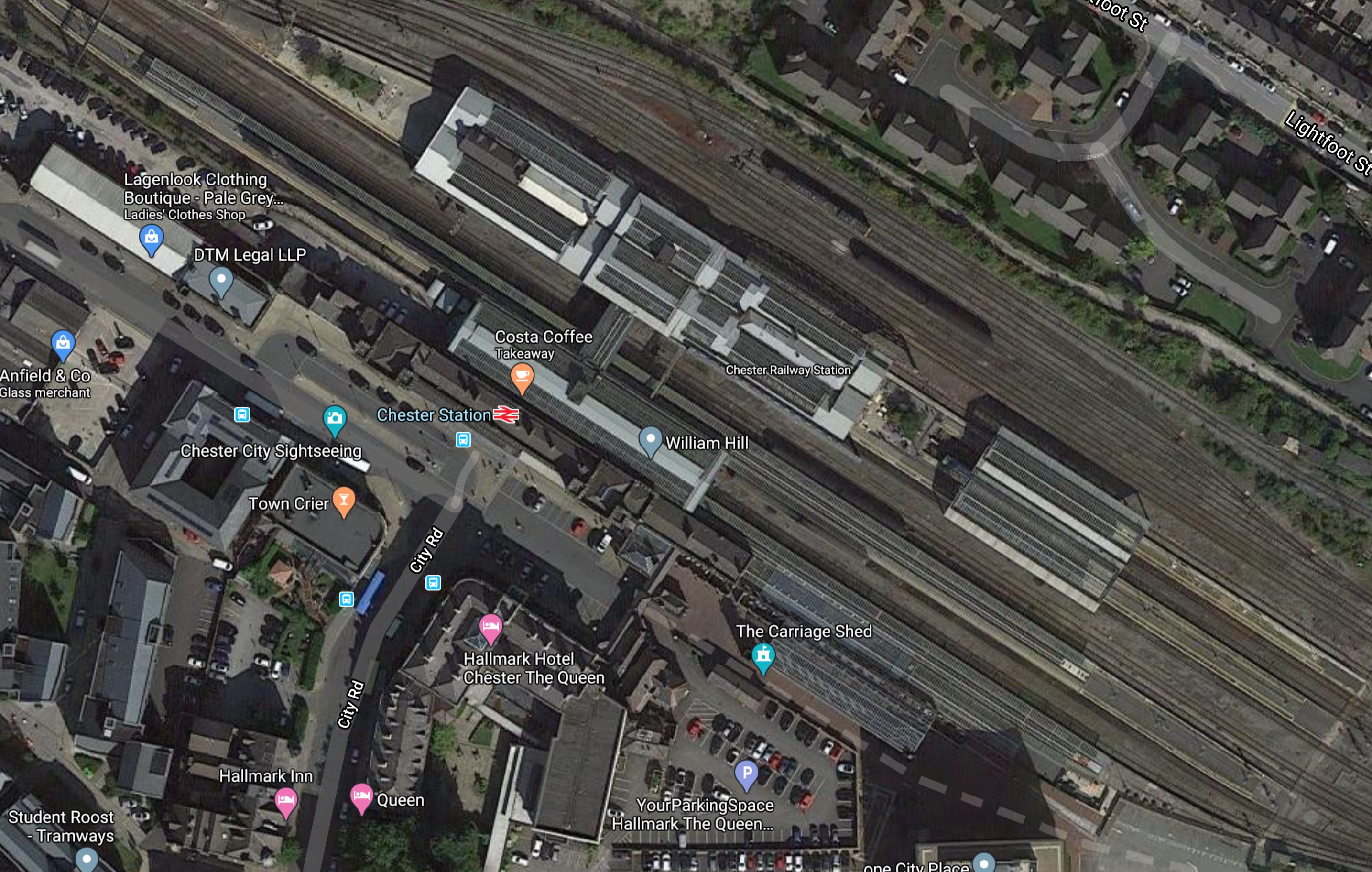
There is plenty of space.
The simplest way to charge trains at Chester would be to electrify the two through platforms 3 and 4 and the bay platform 1.
I would use 750 VDC third-rail, rather than 25 KVAC overhead electrification.
- I’m an engineer, who deals in scientifically-correct solutions, not politically-correct ones, devised by jobsworths.
- Maintenance staff at the station will be familiar with the technology.
- Station staff and passengers will know about the dangers of third-rail electrification.
- Trains connect and disconnect automatically to third-rail electrification.
- Trains don’t have to stop to connect and disconnect, so passing trains can be topped-up.
- Hitachi with the Class 395 train and Alstom with the Class 373 train, have shown even trains capable of 140 mph can be fitted with third-rail shoes to work safely at slower speeds on lines electrified using third-rail.
- Modern control systems can control the electricity to the third-rail, so it is only switched on, when the train completes the circuit.
I have a vague recollection, that there is an avoiding line at Chester station, so trains can go straight through. Perhaps that should be electrified too.
Carmarthen
Carmarthen station is a two platform station, with a rather unusual layout, that I wrote about in Changing Trains At Carmarthen Station.
I took these pictures when I passed through in 2016.



Note the unusual step-free crossing of the tracks.
This Google Map shows the layout at the station.
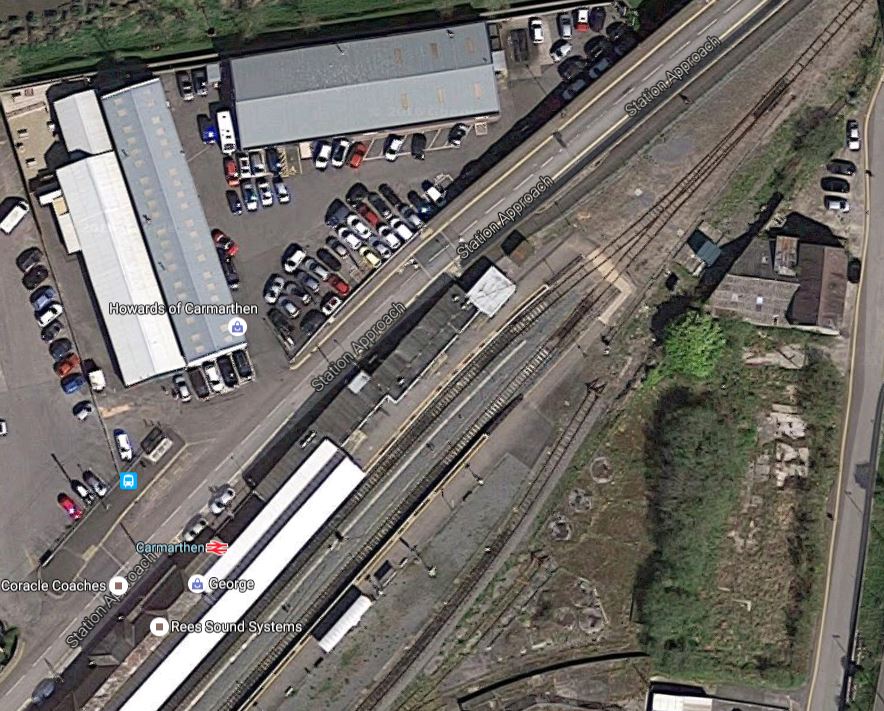
I believe it is another station, where third-rail electrification could be the solution.
- Most trains seem to reverse at the station, which gives time for a full charge.
- Others terminate here.
but would they still allow passengers to cross the line as they do now, whilst trains are being charged?
Crewe
Crewe station is fully-electrified.
- Trains for Wales seem to use Platform 6 for through trains and the bay Platform 9 for terminating trains.
- Both platforms appear to be electrified.
- Terminating trains appear to wait at least 9-11 minutes before leaving.
It does appear that Crewe station is ready for battery-electric trains.
Fishguard Harbour
Fishguard Harbour station only has a single terminal platform.
My comments would be similar to what, I said for Aberystwyth station. I would hope a standard solution can be developed.
Hereford
Hereford station has four through platforms.
This Google Map shows the station.
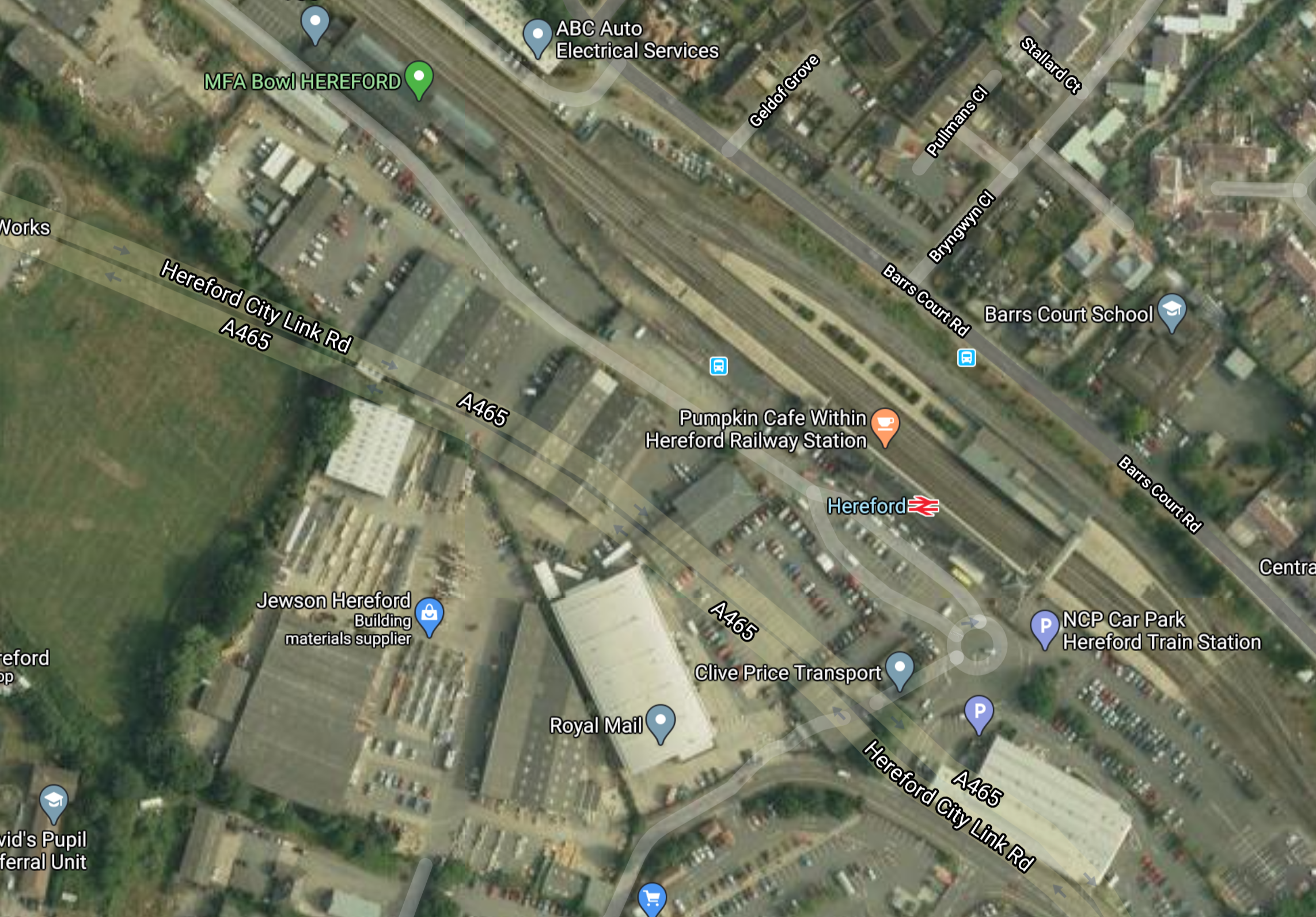
There is plenty of space.
As with Chester, I would electrify this station with 750 VDC third-rail equipment.
But the electrification wouldn’t be just for train services in Wales.
- West Midlands Trains, run an hourly service to Birmingham New Street and there is only a forty-one mile gap in the electrification between Hereford and Bromsgrove.
- Great Western Railway’s service to London, has a massive ninety-six mile run to the electrification at Didcot Junction, which could be bridged by installing charging facilities at Worcestershire Parkway and/or Honeybourne stations.
Both services have generous turnround times at Hereford, so would be able to leave fully-charged.
Distances from Hereford station are as follows.
- Abergavenny – 24 miles
- Bromsgrove – 41 miles
- Great Malvern – 21 miles
- Honeybourne – 48 miles
- Ludlow – 13 miles
- Newport – 44 miles
- Shrewsbury – 51 miles
- Worcester Parkway – 33 miles
Hereford station could be a serious battery-electric train hub.
Holyhead
Holyhead station has three terminals platforms.
My comments would be similar to what, I said for Aberystwyth station. I would hope a standard solution can be developed.
Liverpool Lime Street
Liverpool Lime Street station is fully-electrified and ready for battery-electric trains.
Llandrindod
Llandrindod station has two through platforms.
I took these pictures at the station as I passed through in 2016.



The Heart of Wales Line is certainly a route, that would benefit from larger trains. Zero-carbon battery-electric trains would surely fit well in the area.
This Google Map shows the station.
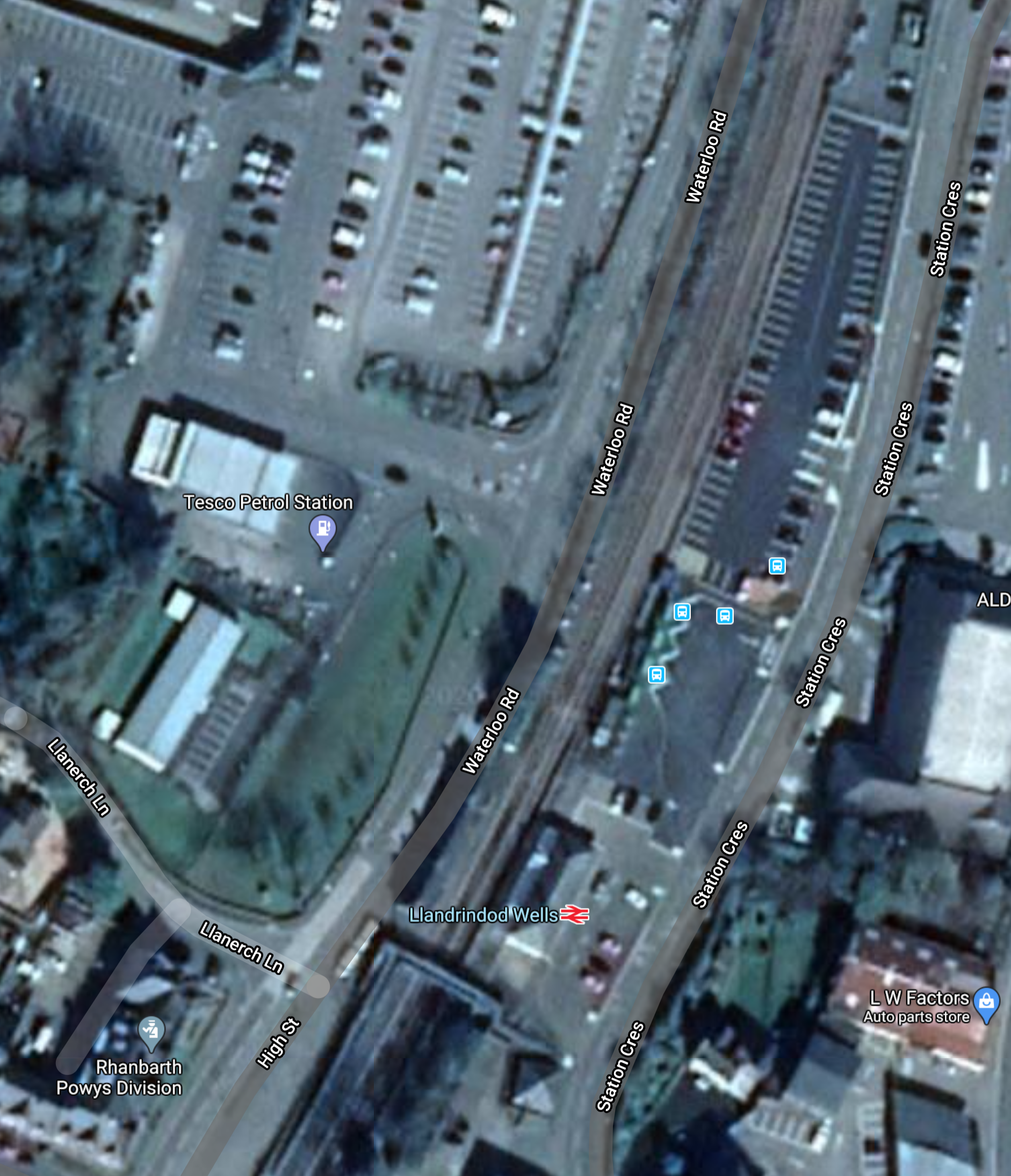
It would appear that, it is another station, that could be fitted with third-rail electrification to charge the trains.
Distances from Llandrindod station are as follows.
- Shrewsbury – 52 miles
- Llandovery – 27 miles
- Llanelli – 59 miles
- Swansea – 70 miles
It would appear that a second station with charging facilities or bigger batteries are needed.
Llandudno Junction
Llandudno Junction station has four platforms.
This Google Map shows the station.
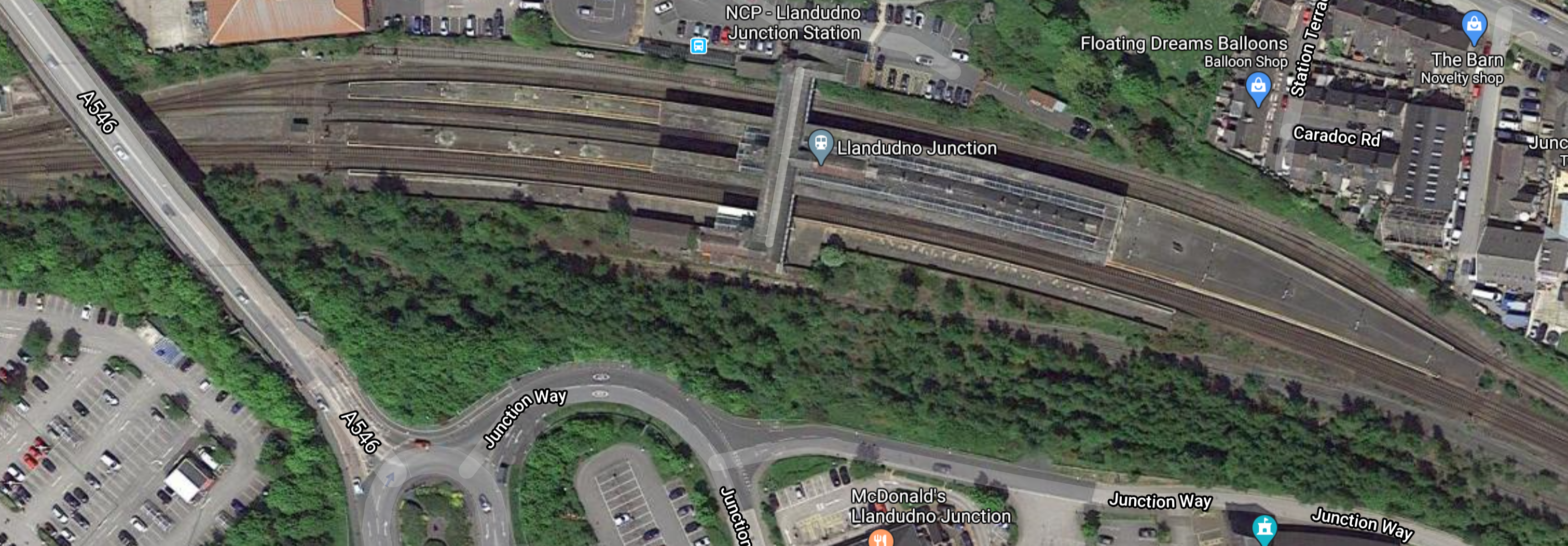
There is plenty of space.
As at Chester, the simple solution would be to electrify the platforms used by trains, that will need charging.
Butb there may also be a wider plan.
Llandudno Junction station is at the Western end of a string of five closely-spaced stations with Prestatyn station in the East.
- Llandudno Junction and Prestatyn are eight miles apart.
- Trains take twenty-three minutes to pass through this section.
- Some trains do a detour to Llandudno station before continuing.
- For part of the route, the railway lies between the dual-carriageway A55 road and the sea.
So why not electrify this section of railway between Llandudno Junction and Prestatyn stations?
- Either 750 VDC this-rail or 25 KVAC overhead electrification could be used.
- Prestatyn and Chester are 46 miles apart.
- Llandudno Junction and Holyhead are 40 miles apart.
If third-rail electrification were to be used, it might be advantageous to electrify to Llandudno station.
- It would be less intrusive.
- It would be quieter in an urban area.
- It would give the trains to Blaenau Ffestiniog trains a good charge.
But above all third-rail electrification might cost a bit less and cause less disruption to install.
Machynlleth
Machynlleth station is where the Aberystwyth and Pwllheli services split and join.
This Google Map shows the station.
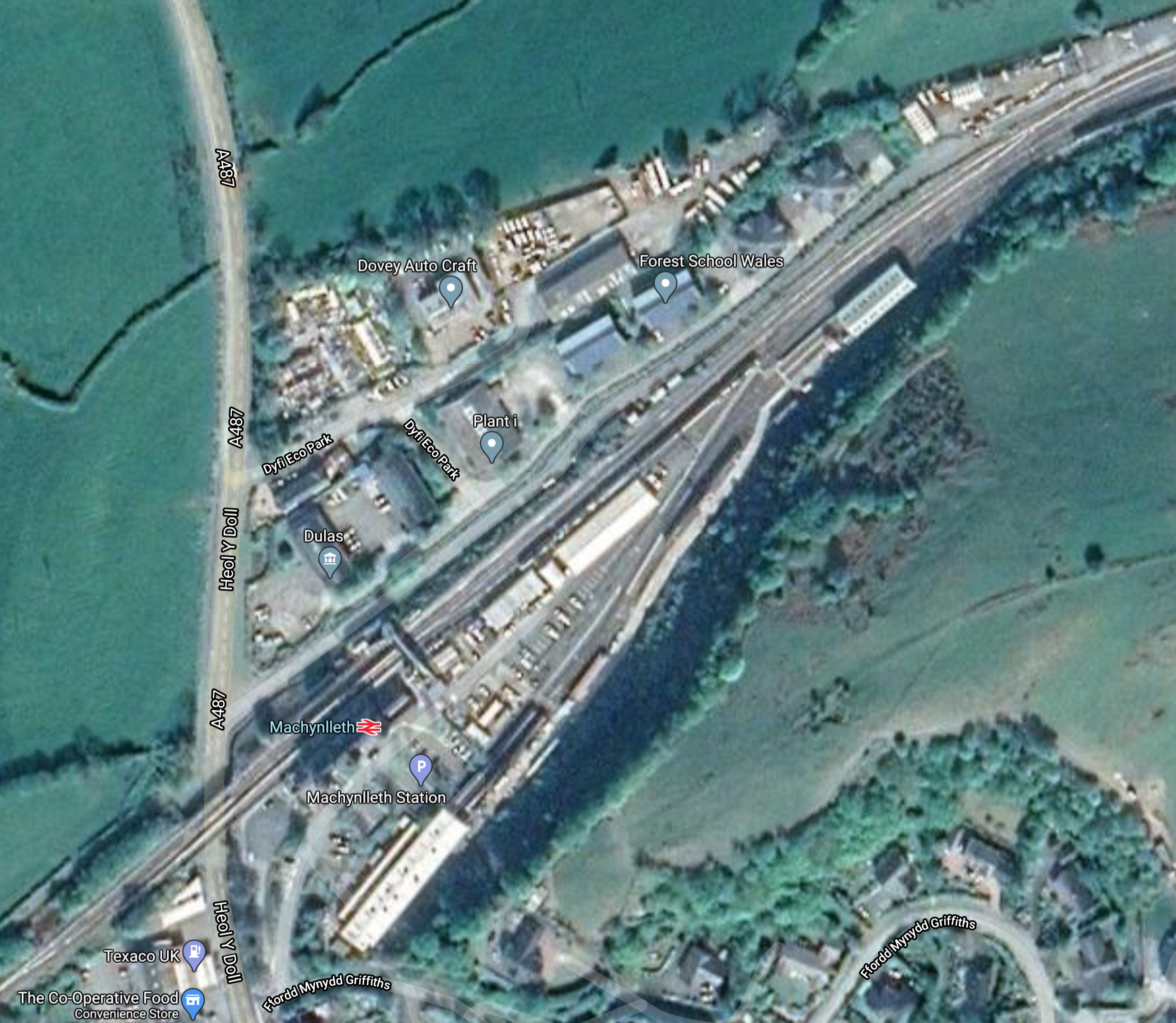
Consider.
- There is a train depot by the station.
- Will there be a good power supply at the station to charge the trains?
- Machnylleth and Pwllhelli are 58 miles apart.
- Machynlleth and Shrewsbury are 61 miles apart.
I think that Machynlleth might be pushing things too far, without extra stations with charging facilities.
One solution might be to develop the Riding Sunbeams concept and electrify the route between Newtown and Dovey Junction via Machynlleth, using third-rail technology powered-by solar or wind power.
Another solution would be batteries with a larger capacity.
Manchester Airport
Manchester Airport station is fully-electrified and ready for battery-electric trains.
Manchester Piccadilly
Manchester Piccadilly station is fully-electrified and ready for battery-electric trains.
Milford Haven
Milford Haven station only has a single terminal platform.
My comments would be similar to what, I said for Aberystwyth station. I would hope a standard solution can be developed.
Pembroke Dock
Pembroke Dock station only has a single terminal platform.
My comments would be similar to what, I said for Aberystwyth station. I would hope a standard solution can be developed.
Pwllheli
Pwhelli station is a only has a single terminal platform.
This Google Map shows the location of the station.
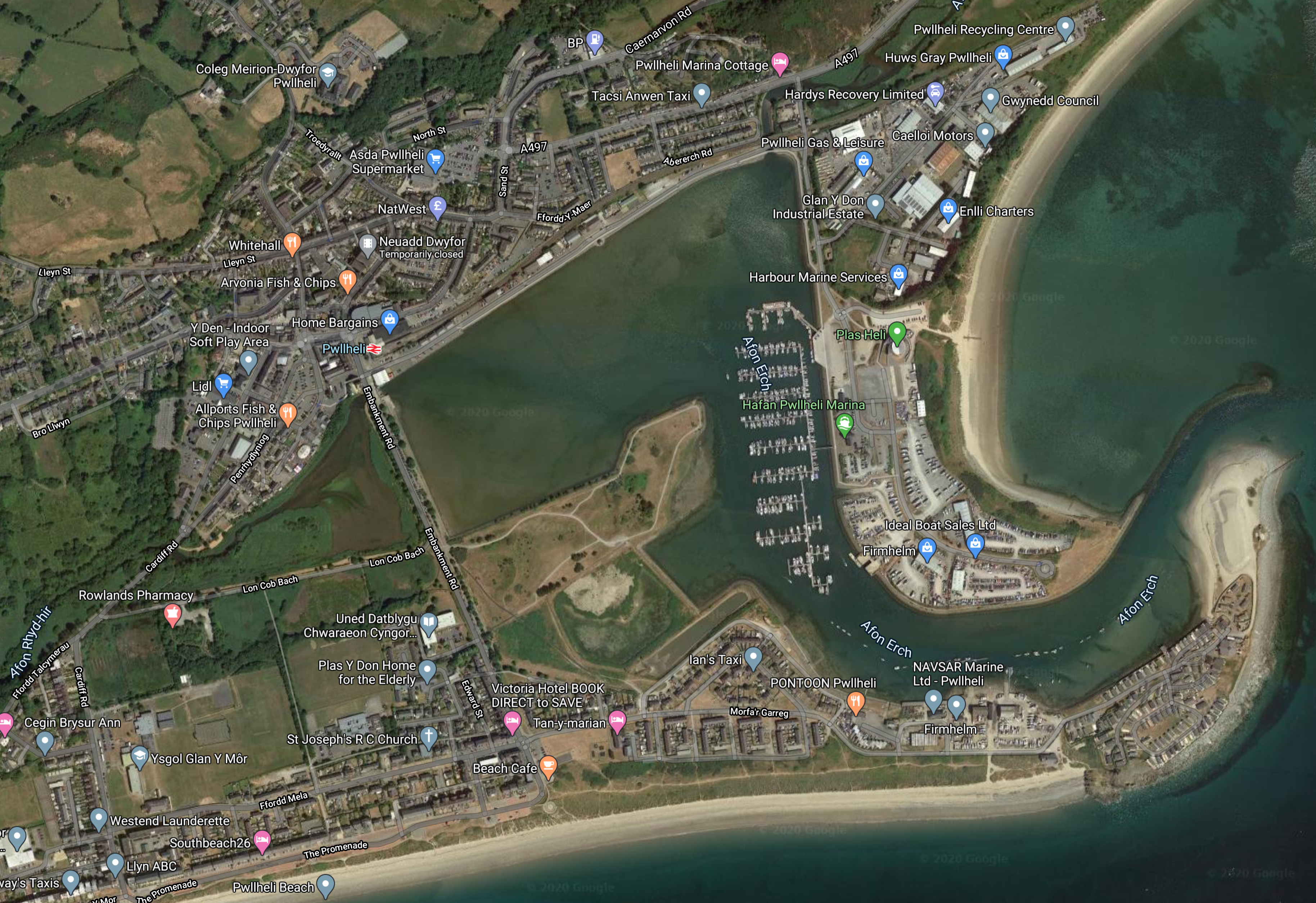
The stsation is at the North West corner of the bay.
My first reaction, when I saw this was that I have to go.
So I took a closer look at the station instead.

I suspect that fitting a charging facility into the station, wouldn’t be the most difficult of engineering problems. Although, there might be a problem getting a good enough connection to the National Grid.
Shewsbury
Shrewsbury station is a five-platform station.
This Google Map shows the station’s unusual location over the River Severn.
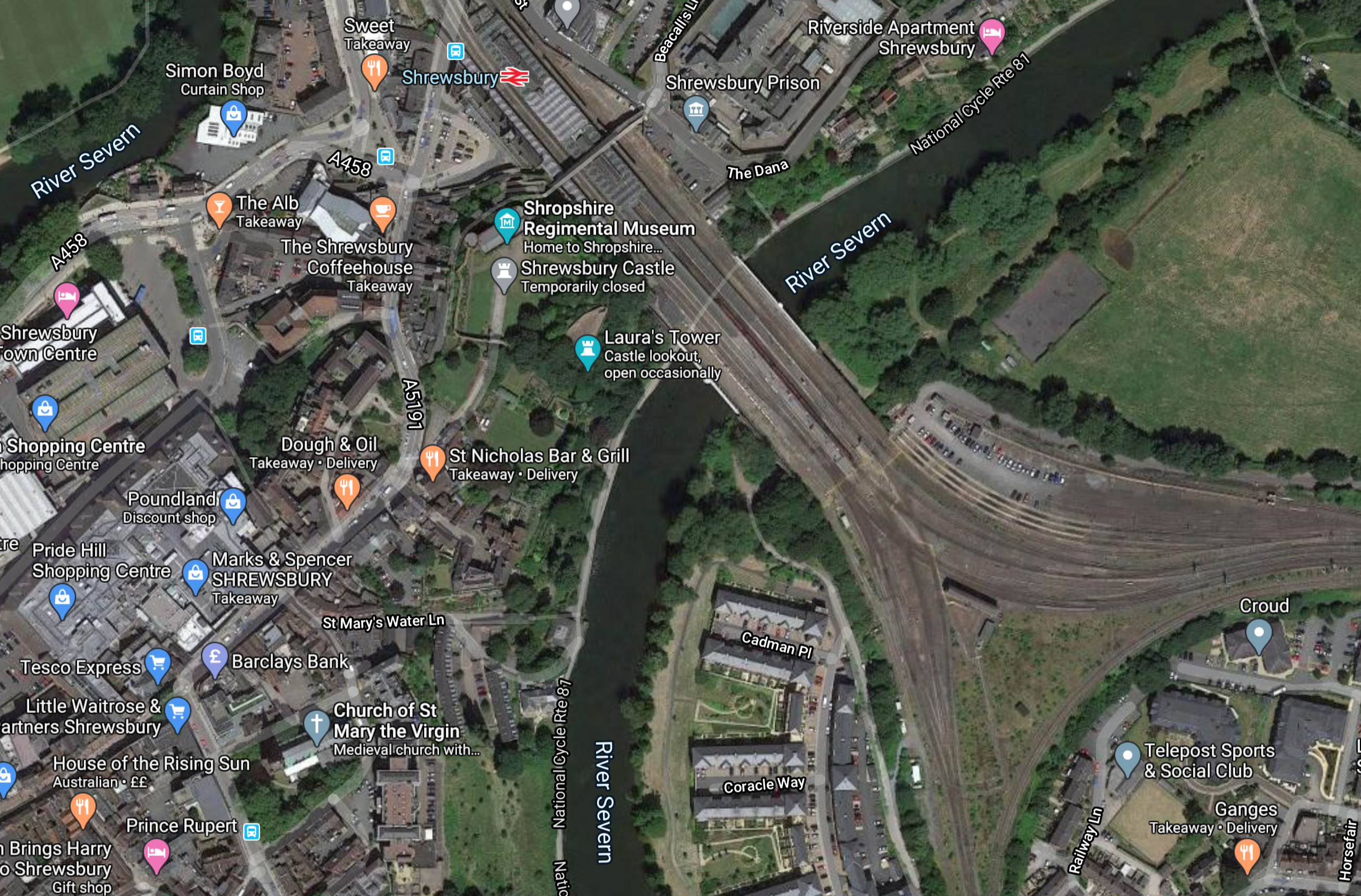
It must be one of few stations in the world, where trains enter the station from three different directions.
- From Crewe and Chester to the North.
- From Hereford and Wales to the South.
- From Birmingham and Wolverhampton in the East.
Adding electrification to all or selected platforms should allow trains to recharge and be on their way.
- Under current timetables, dwell times in Shrewsbury are up to eight minutes.
- I would suspect the train times could be adjusted, so that trains left the station with full batteries.
With battery-electric services to Aberystwyth, Birmingham International, Birmingham New Street, Cardiff Central, Chester, Crewe, Hereford, Holyhead, London Euston, Manchester, Pwllheli and Swansea, it will be a very important station.
Swansea
Swansea station has four terminal platforms.
A charging facility could be added to an appropriate number of platforms.
Or perhaps, the last few miles of track into the station should be electrified, so trains could charge on the way in, charge in the station and charge on the way out.
Third Rail Electrification
I have suggested in this post, that 750 VDC third-rail electrification could be used in several places.
I will repeat what I said earlier, when discussing Chester station.
- I’m an engineer, who deals in scientifically-correct solutions, not politically-correct ones, devised by jobsworths.
- Maintenance staff at the station will be familiar with the technology.
- Station staff and passengers will know about the dangers of third-rail electrification.
- Trains connect and disconnect automatically to third-rail electrification.
- Trains don’t have to stop to connect and disconnect, so passing trains can be topped-up.
- Hitachi with the Class 395 train and Alstom with the Class 373 train, have shown even trains capable of 140 mph can be fitted with third-rail shoes to work safely at slower speeds on lines electrified using third-rail.
- Modern control systems can control the electricity to the third-rail, so it is only switched on, when the train completes the circuit.
Third-rail electrification should be seriously considered.
A Standardised Terminal Solution
In this post, I mentioned that the following stations could be powered by a scandalised solution, as they are all one platform, terminal stations.
- Aberystwyth
- Blaenau Ffestiniog
- Fishguard Harbour
- Holyhead
- Milford Haven
- Pembroke Dock
- Pwllheli
The system might also be applicable at Carmarthen and Swansea.
My view is that Vivarail’s Fast Track charging based on third-rail technology would be ideal. I discussed this technology in Vivarail Unveils Fast Charging System For Class 230 Battery Trains.
Conclusion
With a bit of ingenuity, all train services run by Transport for Wales, can be run with battery-electric trains.
Vivarail And Hitachi Seem To Be Following Similar Philosophies
This press release on the Vivarail web site, is entitled Battery Trains And Decarbonisation Of The National Network.
This is the two paragraphs.
Vivarail welcomes the recent announcements regarding new technologies for rail, and the growing understanding that battery trains will be a key part of the decarbonisation agenda.
Battery trains have been much misunderstood until now – the assumption has been that they can’t run very far and take ages to recharge. Neither of these are true! Vivarail’s trains:
To disprove the assumptions, they then make these points.
- Have a range of up to 100 miles between charges
- Recharge in only 10 minutes
They also make this mission statement.
Vivarail’s battery train, Fast Charge and power storage system is a complete package that can drop into place with minimal cost and effort to deliver a totally emission-free independently powered train, ideally designed for metro shuttles, branch lines and discrete routes across the country.
They add these points.
- Batteries can be charged from 750 VDC third-rail or 25 KVAC overhead electrification or hydrogen fuel cells.
- A daily range of 650 miles can be achieved on hydrogen.
- Vivarail seem very positive about hydrogen.
- The company uses modern high-performance lithium Ion pouch batteries from Intilion.
- It also appears that Vivarail are happy to install their traction package on other trains.
The press release finishes with this paragraph.
The rail industry needs to move now to hit its own decarbonisation targets and assist with the national effort. Battery trains are the quick win to achieve that.
Following on from Hitachi’s announcement on Monday, that I wrote about in Hyperdrive Innovation And Hitachi Rail To Develop Battery Tech For Trains, it does appear that battery trains will be arriving soon in a station near you!
 The Anonymous Widower