A First Ride In A Five-Car Class 710 Train – 30th January 2023
These pictures are from a few weeks back, when I had a first ride in one of the new five-car Class 710 trains.
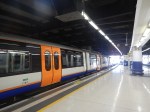
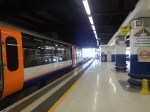
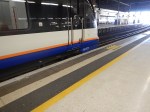
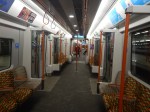
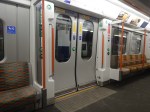
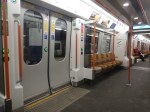
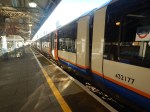
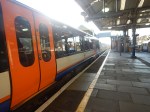
I only went between Euston and Queen’s Park stations.
Is Liverpool Going To Get High Speed One-Point-Five?
Some of the best train journeys, I’ve ever had were not on high speed trains on specially-built tracks.
- The Thunder of Three-Thousand Three-Hundred Horses is from the early 1970s and describes a trip back from Darlington behind a Class 55 locomotive or Deltic.
- Norwich-In-Ninety Is A Lot More Than Passengers Think! describes a trip from London to Norwich and back, in the early days of the Norwich-in-Ninety timetable behind a Class 90 locomotive.
- I could add a journey on an InterCity 125 from London to Plymouth, which was running nearly thirty minutes late at Newbury, but was on time at Exeter.
The connection between these stories, was that all had a superb biological control system in the cab, who with help from the signallers was able to keep to a difficult schedule or make up time.
Last year, I made several journeys between Euston and Liverpool Lime Street. A couple of the journeys were unusual in that we arrived at our destination around six or more minutes early.
I suspect, that Avanti West Coast were experimenting to make sure that they get the new two trains per hour (tph) for the route perfect.
In Avanti West Coast Looks To Recover, I said this about Euston and Liverpool Lime Street services.
A paragraph talks about the second hourly service between London and Liverpool.
Avanti still has ambitions to introduce a second hourly service between Euston and Liverpool, but when this will come in will depend on demand recovery.
Consider.
- If would be desirable if some or all trains running on the route could achieve a timing of two hours between London and Liverpool.
- It is felt that the second service should stop at Liverpool South Parkway station, where the platforms are too short for eleven-car Class 390 trains.
- Avanti have stated they would like more stops in the Trent Valley, especially at Nuneaton, where they would connect to services to the East Midlands.
- Nuneaton is almost exactly halfway between London and Liverpool.
- Running two tph with Class 807 trains would need nine trains and Avanti have only ordered ten in total.
I believe that a practical timetable like this could work.
- Class 390 train – one tph – Non-stop or perhaps a single stop in the Midlands – Under two hours
- Class 807 train – one tph – Stopping at Nuneaton, Stafford, Crewe, Runcorn and Liverpool South Parkway – Current time or better
An hourly service between London and Liverpool in under two hours would surely be a passenger magnet.
So what is possible?
I found this service on Real Time Trains, which ran on the 16th February 2023.
- Scheduled to leave Liverpool Lime Street at 0943, but left at 1012 or 29 minutes late.
- Train did a ninety second unadvertised stop at Liverpool South Parkway. Now running 26 minutes late.
- There was a two minute stop at Runcorn and a four-minute stop at Crewe. Now running 25 minutes late
- There was a one-minute stop at Milton Keynes. Now running 20 minutes late.
- The train arrived in London Euston at 1220 or 16 minutes late.
Note.
- Liverpool Lime Street and London Euston took 2 hours and 8 minutes.
- As Liverpool Lime Street and London Euston is a distance of 193.6, a 128 minute journey is an average speed of 90.7 mph
- Liverpool Lime Street and Crewe took 32 minutes with two stops.
- Crewe and London Euston took 1 hour and 32 minutes with one stop.
- In West Coast Main Line Electro-Diesels On Test, I found that a Glasgow and London train took 1 hour and 28 minutes between Crewe and London Euston.
- All services last week had the unadvertised stop at Liverpool South Parkway
What can be deduced from these figures?
- If the Crewe stop were to be cut out, two hours and four minutes could certainly be possible between Liverpool Lime Street and London Euston with a Class 390 train.
- I also suspect that if the train were to be run non-stop, that the other four minutes could be saved.
So will Avanti West Coast run the current service using new Class 807 trains, with the extra stop at Liverpool South Parkway and perhaps other stations and the additional hourly train with a non-stop nine-car Class 390 train?
This way of delivering a two tph service would mean.
- Runcorn, Crewe and Milton Keynes would not lose any of their current fast services to and from Liverpool Lime Street and London Euston.
- Liverpool South Parkway station is probably a more convenient location for some passengers going to and from the South. It would gain an hourly service to London Euston.
- There will be an additional 77% of seats between Liverpool Lime Street and London Euston.
- Passengers who don’t like tilting trains could use the Class 807 trains.
- One tph would be timed for two hours or under and would be a marketing man’s dream.
No train would be slower than the current services.
Improvements To The Non-Stop Class 390 Train Service
I earlier said.
As Liverpool Lime Street and London Euston is a distance of 193.6, a 128 minute journey is an average speed of 90.7 mph.
An average speed of 90.7 mph, doesn’t seem fast for a Class 390 train with an operating speed of 125 mph or 140 mph under full ERTMS digital signalling.
These are some times for a selection of average speeds between Liverpool Lime Street and London Euston.
- 90 mph – 2 hours 9 minutes
- 100 mph – 1 hour 56 minutes
- 110 mph – 1 hour 46 minutes
- 120 mph – 1 hour 37 minutes
- 125 mph – 1 hour 33 minutes
- 130 mph – 1 hour 29 minutes
- 135 mph – 1 hour 26 minutes
- 140 mph – 1 hour 23 minutes
Note.
- Average speeds of upwards of 130 mph are unlikely, but I’ve added them to show that the train speed is less important than the speed of the track.
- High Speed Two’s planned time between Liverpool Lime Street and London Euston is 1 hour and 32 minutes.
But I do think times of around 1 hour and 35 minutes should be possible for non-stop Class 390 trains between Liverpool Lime Street and London Euston with an improved track and full ERTMS digital signalling.
Improvements To The Stopping Class 807 Train Service
As the track of the West Coast Main Line is improved with better track and full ERTMS digital signalling, this will also benefit the times of the stopping service run by the new Class 807 trains.
The Class 807 train with its lighter weight will have better acceleration than the current Class 390 trains. This will mean, that they will not be slowed as much, when they stop.
It may be possible to add extra stops at places like Watford Junction, Nuneaton and Stafford and still time the train for a few minutes over two hours.
Avanti West Coast Looks To Recover, is a post, that I wrote based on an interview in Modern Railways with Phil Whittingham, who is MD of Avanti West Coast.
There is a lot of talk in the article about.
- Using Nuneaton to connect the North West and the East Midlands.
- The acceleration of the Class 807 trains.
- Improving the Customer Service.
I think that Liverpool will find it is connected to more of the country on services with just a single change.
Conclusion
Liverpool is getting greater connectivity to the Midlands and the South-East of England, with times, that could be improved to be comparable with High Speed Two.
West Coast Main Line Electro-Diesels On Test
The title of this post, is the same as that of this article on Railway Gazette.
This is the first paragraph.
The first two of 13 Hitachi Class 805 electro-diesel trainsets ordered for Avanti West Coast services are undergoing testing on the West Coast Main Line ahead of entry into service later this year.
These Class 805 trains will go to places like Chester, Bangor and Holyhead via Crewe.
It is interesting to look at various Crewe to London Euston services this morning.
- 0740 – Class 390 train – From Liverpool – One Stop – 1 hour 40 minutes
- 0755 – Class 221 train – From Holyhead – One Stop – 1 hour 40 minutes
- 0832 – Class 390 train – From Manchester – One Stop – 1 hour 37 minutes
- 0844 – Class 390 train – From Glasgow – 1 hour 28 minutes
Note.
- The first field is the four-figure time that the train left Crewe.
- The last field is the journey time between Crewe to London Euston.
- The Class 390 and 805 trains will use electricity to run between Crewe and London Euston, whereas the Class 221 train will use diesel.
- Crewe and London Euston is 158 miles.
- The Glasgow train covers the 158 miles at an average speed of 107.7 mph.
I have some thoughts.
What Will Be The Time For A Class 805 Train Between Crewe And London Euston?
Consider.
- From Crewe, the Class 805 train will be using the electrification to London Euston.
- The Class 390 train can tilt, whereas the Class 805 train can’t!
- The Class 805 train is at least three tonnes lighter per car, than the Class 390 train.
- The lighter weight and possibly more power of the Class 805 trains, will give better acceleration.
- There is twenty-one years of difference in the build dates of the two trains. In that time, I also suspect that Network Rail have improved the track between Crewe and London Euston.
- Norton Bridge junction has been improved to avoid conflicts.
- It would be very convenient for Avanti West Coast and Network Rail, if the performance under electrification of the two trains were similar.
For these reasons, I believe that the performance of a non-stop Crewe And London Euston service using a Class 805 train will be such that it can match that of a Class 390 train.
I would also expect that with a similar stopping pattern between Crewe And London Euston, there would be little to choose between the two trains.
I can see with its better acceleration and lighter weight that the time between Crewe and London Euston will be perhaps a dozen minutes faster than the current time.
Using the electrification will also save a lot of diesel fuel with all its emissions.
Along The North Wales Coast Line
Consider.
- Crewe and Holyhead is 105.5 miles and takes two hours and two minutes in a typical service.
- These figures give an average speed of 52 mph.
- There are six stops, which are scheduled to take a total of ten minutes.
- About half the North Wales Coast Line has a maximum operating speed of 90 mph, but through Chester, Llandudno Junction and West of Bangor, the operating speed is 75 mph or less.
I am fairly sure, that with both the current Class 221 trains and the new Class 805 trains, it will be the track, rather than the train that determines the average speed.
It would therefore appear that if the average speed can be raised by track improvements these time savings could be achieved.
- 60 mph – 105.5 mins – 16.5 mins
- 70 mph – 90 mins – 32.5 mins
- 80 mph – 79 mins – 43 mins
- 90 mph – 70 mins – 52 mins
- 100 mph – 63 mins – 59 mins
- 110 mph – 58 mins – 64 mins
- 120 mph – 53 mins – 69 mins
- 130 mph – 49 mins – 73 mins
- 140 mph – 45 mins – 77 mins
Note.
- The first column is the average speed.
- The second column is the time between Holyhead and Crewe.
- The third column is the saving.
- I suspect that 90 or 100 mph would be the highest possible practical average speed.
- Trains average 100 mph on several long sections of the Great Eastern Main Line.
- I put in the higher speeds to show what is possible, if the North Wales Coast Line were to be converted into a 140 mph electrified line with digital signalling.
Even at these relatively slow speeds compared to High Speed Two, there are considerable time savings to be made, just by improving the tracks.
Incidentally, High Speed Two is quoted in Wikipedia as aiming for a Crewe and London Euston time of 56 minutes, so by averaging 100 mph between Crewe and Holyhead, London Euston and Holyhead could be under two hours.
Batteries And Class 805 Trains
I wouldn’t be surprised that soon after the Class 805 trains are delivered, they could be converted to a version of Hitachi’s Intercity Tri-Mode Battery Train, the specification of which is shown in this Hitachi infographic.

Note.
- I suspect that the batteries will be used to handle regenerative braking on lines without electrification, which will save diesel fuel and carbon emissions.
- The trains accelerate faster, than those they replace.
- The claimed fuel and carbon saving is twenty percent.
- It is intended that these trains will be introduced in 2023.
But Hitachi have not given any predictions of the range of these trains on battery power alone.
However, they do claim a battery range of 56 miles for the Hitachi Regional Battery Train, which is based on similar technology.
These trains could help in speeding the stops between Crewe and Holyhead.
- Batteries would be charged at Holyhead and on the electrification to the South of Crewe.
- At each stop, trains would use a proportion of the power in the battery to accelerate faster and save fuel and cut emissions.
- Battery power would be used in stations for train hotel power.
- Westbound trains would arrive in Holyhead and Southbound trains would arrive in Crewe, with not much power in the battery.
I suspect that, whether diesel or battery power is used, will be controlled by a sophisticated computerised control system.
Electrification Along The North Wales Coast Line
I think this will eventually happen to allow High Speed Two Classic-Compatible trains to run to Chester and along the North Wales Coast Line to Llandudno, Bangor and Holyhead.
But there is no benefit to be gained in electrifying until higher speeds are possible, after track improvements.
I believe these times will be possible with track improvements and the opening of High Speed Two.
- Holyhead and Crewe – Class 805 train and 80 mph average – 79 mins
- Holyhead and Crewe – Class 805 train and 90 mph average – 70 mins
- Holyhead and Crewe – High Speed Two Classic-Compatible train, electrification and 100 mph average – 63 mins
- Crewe and London Euston – Class 805 train – 80 mins
- Crewe and London Euston – High Speed Two Classic-Compatible train – 56 mins
Note, electrification will be needed, to run High Speed Two Classic-Compatible trains along the North Wales Coast Line.
I am confident that these times will be possible.
- Holyhead and London Euston – Class 805 train and 90 mph average along the coast – 2 hours 30 mins
- Holyhead and London Euston – High Speed Two Classic-Compatible train and 100 mph average along the coast – 2 hours
The current time between Holyhead and London Euston is over three hours 45 minutes.
Conclusion
These trains will certainly speed up trains to North Wales.
Thoughts On Extending The Northern Line To Clapham Junction
As I wrote in Northern Line Could Be Extended To Clapham Junction In Regeneration Plans, the extension of the newly-built extension to Battersea Power Station station could be further extended to Clapham Junction station.
Railways Between Battersea And Clapham
This map from OpenRailwayMap shows the tracks that run between the two stations.

Note.
- Battersea Power Station station is in the North-East corner of the map.
- The orange and yellow lines going North from that corner go to Victoria station.
- The orange and yellow lines going North-East from that corner go to Waterloo station.
- The yellow line going West is the West London Line to Shepherds Bush and Willesden Junction stations.
- Clapham Junction station is in the South-West corner of the map.
I estimate that the distance between Battersea Power Station and Clapham Junction stations is about three kilometres.
This map from OpenRailwayMap shows an enlargement of the tracks around Battersea.
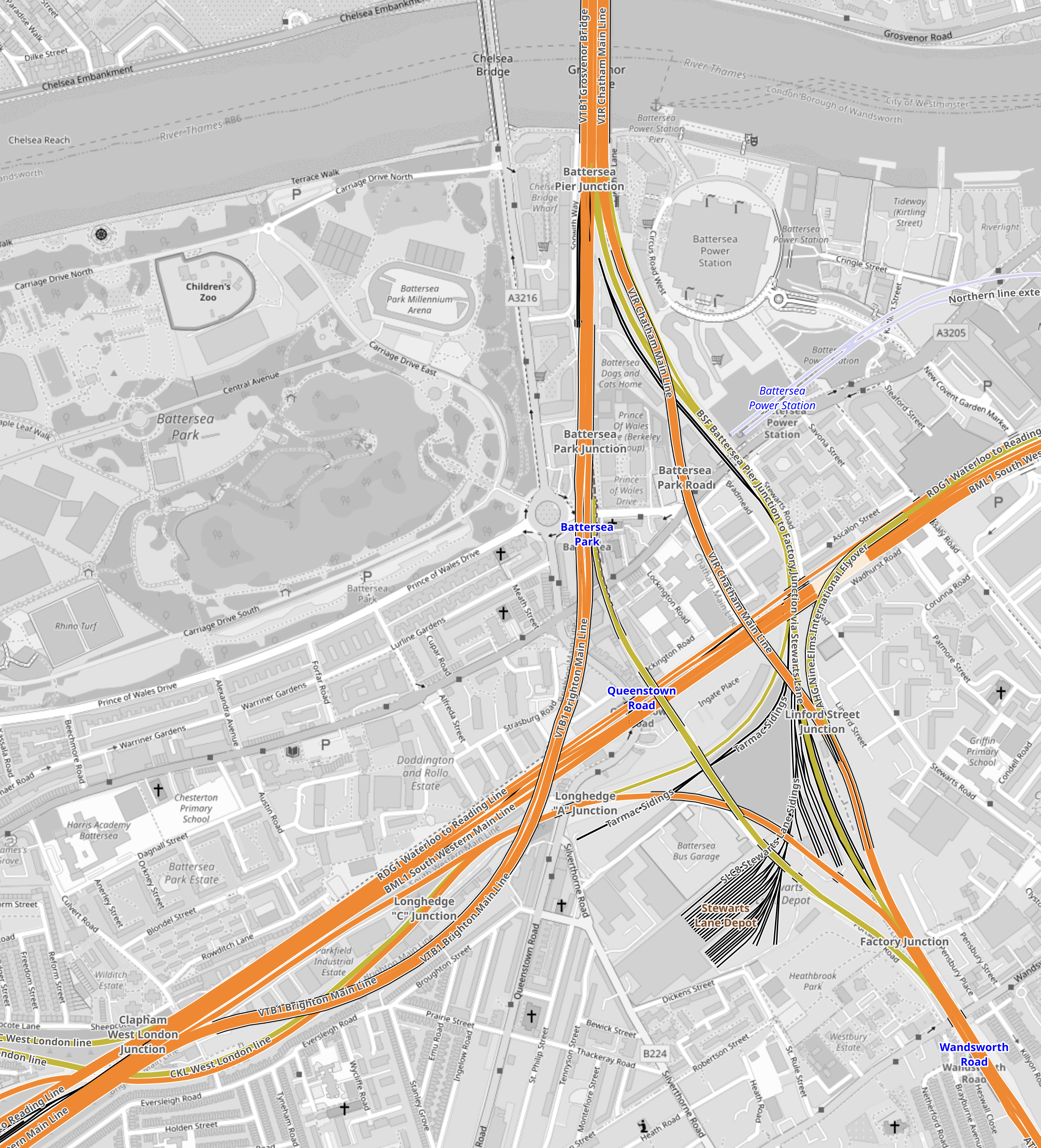
Note.
- The tracks going North over the River to Victoria station.
- The tracks going East to Waterloo station.
- The tracks going South West to Clapham Junction station.
- The tracks from Victoria pass over and then join the tracks from Waterloo to continue to Clapham Junction station.
Battersea Power Station station can be seen to the North-East of the junction.
This map from OpenRailwayMap shows an enlargement of the tracks around Battersea Power Station station.
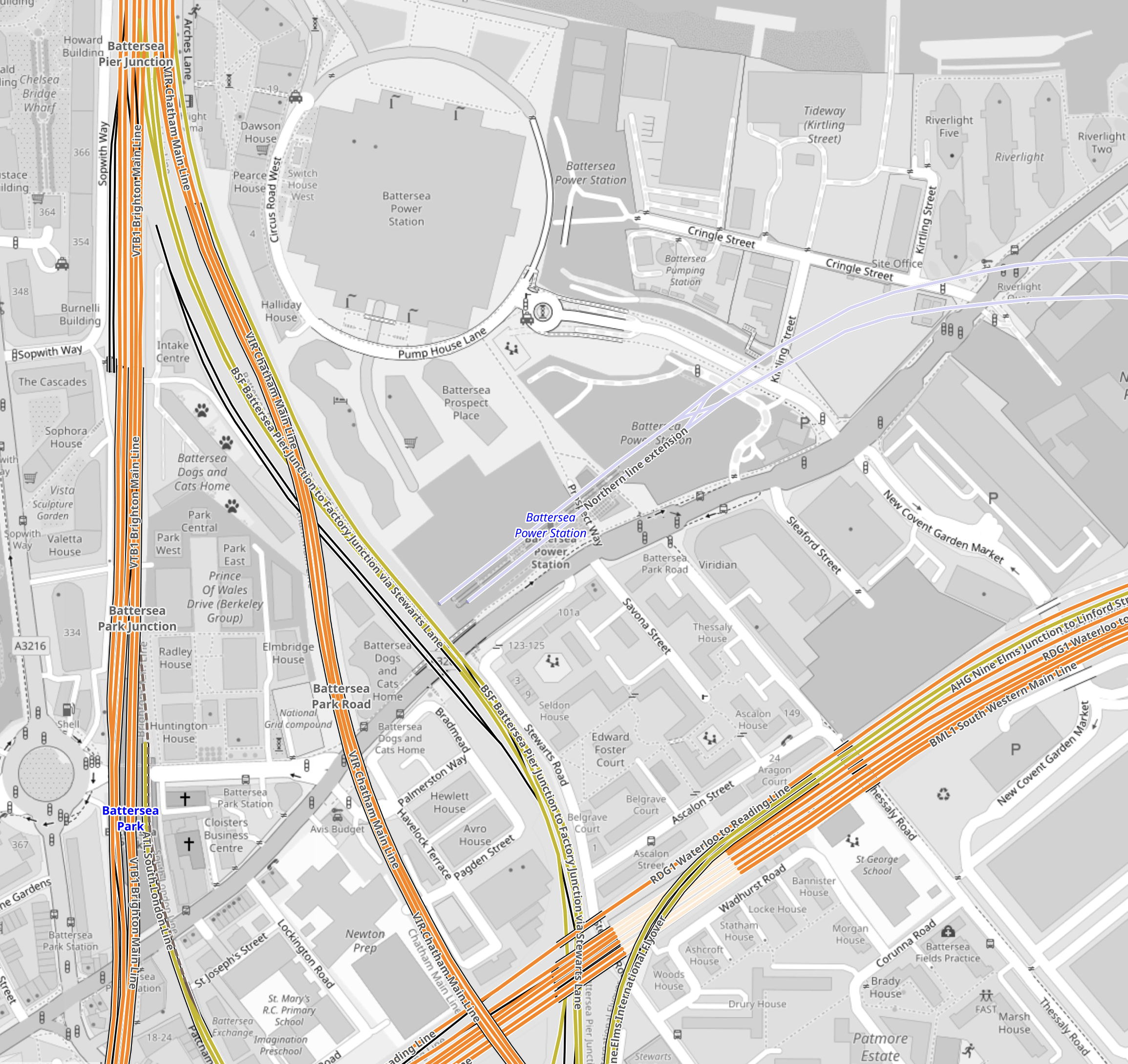
Note how the tracks go through Battersea Power Station station and terminate just before the lines into Victoria station.
It should also be noted that the platforms at Battersea Power Station station are reached using two sets of escalators, so they could be over forty metres below the surface. This would surely make the construction of tower blocks with deep foundations easier over the Northern Line.
But the depth would also enable an extended Northern Line to be below any existing or future construction.
This map from OpenRailwayMap shows the approaches to Clapham Junction station.
There are certainly a lot of tracks through Clapham Junction station.
Reasons For The Extension Of The Northern Line To Clapham Junction
These reasons come to mind.
To Enable Development In The Area
This is always a good reason.
In Network Rail To Outline Business Case For Clapham Junction Redevelopment, I said this.
The Rail Technology Magazine article talks of decking over the whole station and putting two million square feet of development on top. But it also cautions, it would be very expensive.
With that amount of development, there would be a need for as many transport links as possible.
To Improve Access To The Elizabeth Line For Passengers On Trains To And From Victoria
Victoria station does not have an Underground Line, that connects to easily the Elizabeth Line.
The best route to use is described in The Lizzie Line And Circle/District Line Interchange At Paddington – 1st July 2022, where you use the Circle to Paddington.
- To go to the West on the Elizabeth Line, take the Circle/District Line to Paddington.
- To go to the East on the Elizabeth Line, take the District Line to Whitechapel.
- To go to Liverpool Street take the Circle Line all the way.
Getting to the stations between Paddington and Liverpool Street means a change at either of those stations.
At Waterloo, you can use the Northern Line, which has a direct connection to Tottenham Court Road on the Elizabeth Line.
Connecting to the Northern Line at Clapham Junction will give Victoria-bound passengers, the advantages of those going to Waterloo.
An Alternative Way Of Connecting Victoria To The Elizabeth Line
The lack of an easy connection between the Victoria and the Elizabeth Line is a pain and I believe that it was a major omission in the design of the Elizabeth Line.
- Dear Old Vicky has a frequency of upwards of thirty trains per hour (tph)
- With some improvements at stations like Oxford Circus, Highbury & Islington and Walthamstow Central, the line could handle some more passengers.
- More step-free access would also help increase capacity.
- Engineers are a competitive bunch and I could see the day, when Vicky is running at 40 tph.
If Vicky was running at forty full tph, it would be moving 45120 passengers per hour.
This would mean that to match the passenger capacity of the older line, the Elizabeth Line would have to be running at a frequency of thirty tph.
As passengers at the ends of the line have difficulty getting to places like Paddington and Heathrow, a connection between the two Queens would really help.
Vicky was universe-class in the 1960s and now she needs updating to the 21st Century.
This map from cartometro shows the Lines through Bond Street and Oxford Circus stations.
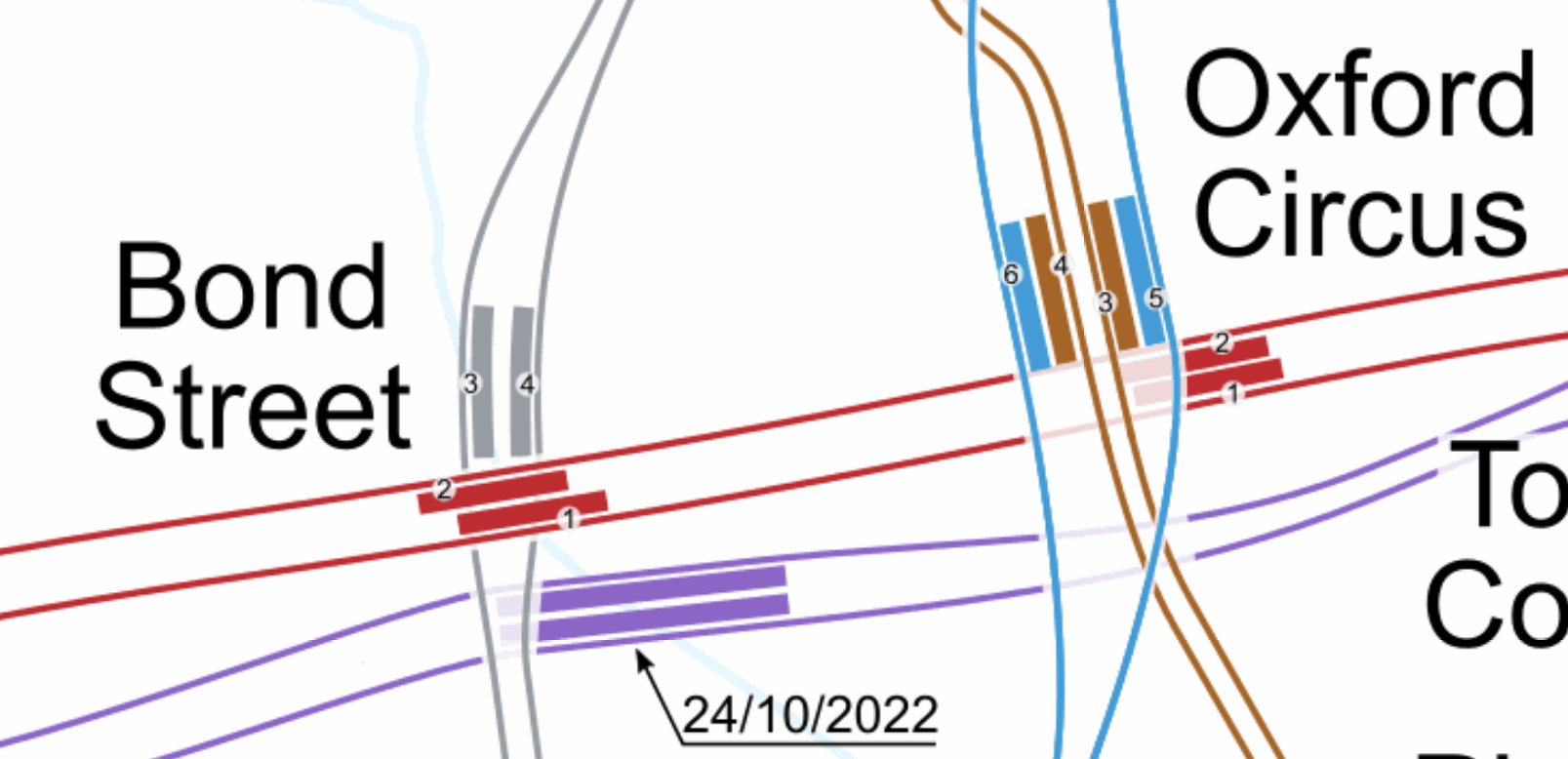
Note.
- The Bakerloo Line is shown in brown.
- The Central Line is shown in red.
- The Elizabeth Line is shown in purple.
- The Victoria Line is shown in light blue.
- The Elizabeth Line is the deepest line.
In addition, consider.
The Eastern exit of the Elizabeth Line at Bond Street station has three escalators and lifts. It also opens onto Hanover Square, so it won’t suffer from overcrowding problems outside.
- Hanover Square is just a garden, with no car park underneath, so pedestrian tunnels could pass under it
- I also suspect there are no existing or planned buildings between the two stations with deep foundations that would block a pedestrian tunnel.
- With the capability and ingenuity of three-D design software, I can see wide tunnels being created that would link Oxford Circus and the two Bond Street stations.
- The new wide tunnels at Bank station have opened up the station’s capacity and all the tunnels were dug traditionally.
- If it was felt to be needed, moving walkways could be added, just as they have been at Bank station.
I am absolutely sure, that by using the ideas and methods, that have worked so well in the upgrade of Bank station, that Oxford Circus and Bond Street stations could be turned into a London Superhub Station, that connects all the Underground lines together and has entrances all over the area.
The benefits of such a station would be.
- It would provide a high-capacity link between London’s two highest-capacity Underground Lines; Elizabeth and Victoria.
- It would provide a high-capacity link between the Elizabeth Line and Euston, St. Pancras and King’s Cross.
- It would provide a high-capacity link between the Elizabeth Line and Victoria.
- It would provide a high-capacity link between the Elizabeth Line and High Speed Two.
- Areas like Brixton, Haringey and Walthamstow would gain a much needed link to the Elizabeth Line for Heathrow and Paddington.
Wikipedia says this about the building of the Bank Station Upgrade.
As part of the development of the scheme, TfL worked with potential bidders to improve the design of the station from TfL’s original design. The design proposed in the winning bid by Dragados was 9.7% cheaper than the original design (saving TfL £60m), took 10 months less time to construct than the original design (the proposed closure of the Northern line was also 5 weeks shorter), and the layout of the station was more efficient. This substantially improved the benefit–cost ratio by 45% to 3.5:1.
The Mayor should be knocking on the door of Dragados and asking them for a price for a design and build for a West End Superhub station.
A Possible Route For The Extension Of The Northern Line To Clapham Junction
I suspect that the simplest route for the extension of the Northern Line would be to bore or dig a twin-track railway underneath the numerous other railways in the area.
It could terminate in two underground platforms at Clapham Junction station.
This is the first map of this post and it shows the tracks that run between the two stations.
Note.
- Battersea Power Station station is in the North-East corner of the map.
- Clapham Junction station is in the South-West corner of the map.
The Western of the pair of orange Lines going off the map in the North-East corner of the map is the Brighton Main Line.
It passes through Battersea Park station.
It passes over the South Western Main Line out of Waterloo.
It then loops to the West and joins the lines to Clapham Junction on the Southern side.
It serves four platforms at Clapham Junction; 12 and 14 are up platforms and 13 and 15 are down platforms.
This Google Map shows an overview of Clapham Junction station.
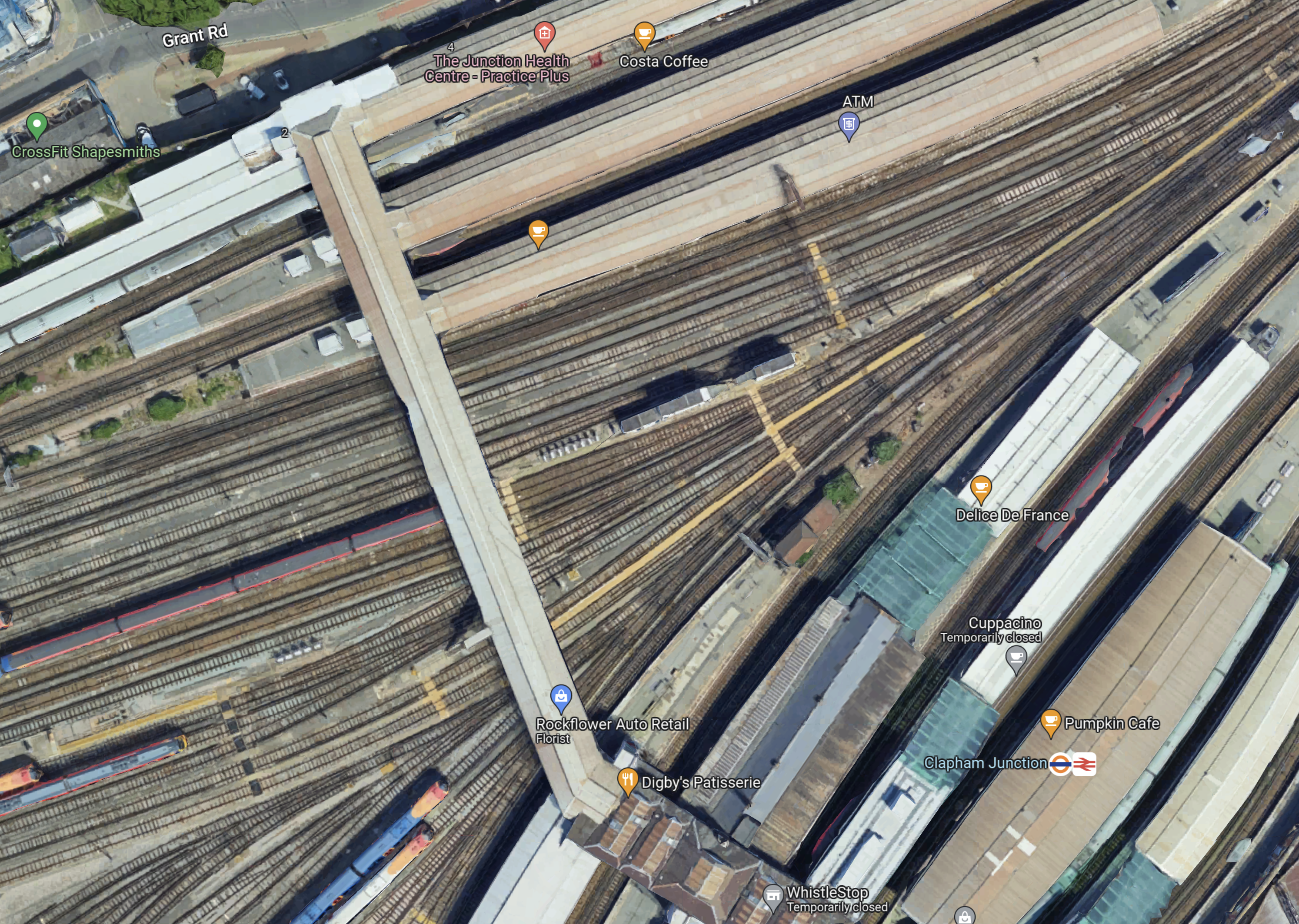
Note.
- Platforms 1 and 2 at the top of the map, handle London Overground services.
- Platforms 3 to 11 handle South Western Train services.
- Platforms 12 to 17 handle Southern services.
- Platforms 9 and 10 have a Delice de France cafe.
- Platforms 11 and 12 have a Cuppacino cafe.
- Platforms 13 and 14 have the logos.
- All platforms have full step-free access with lifts to the wide footbridge that connects all platforms.
The platforms don’t seem to be very wide and putting stairs and escalators down to underground platforms could be a difficult proposition.
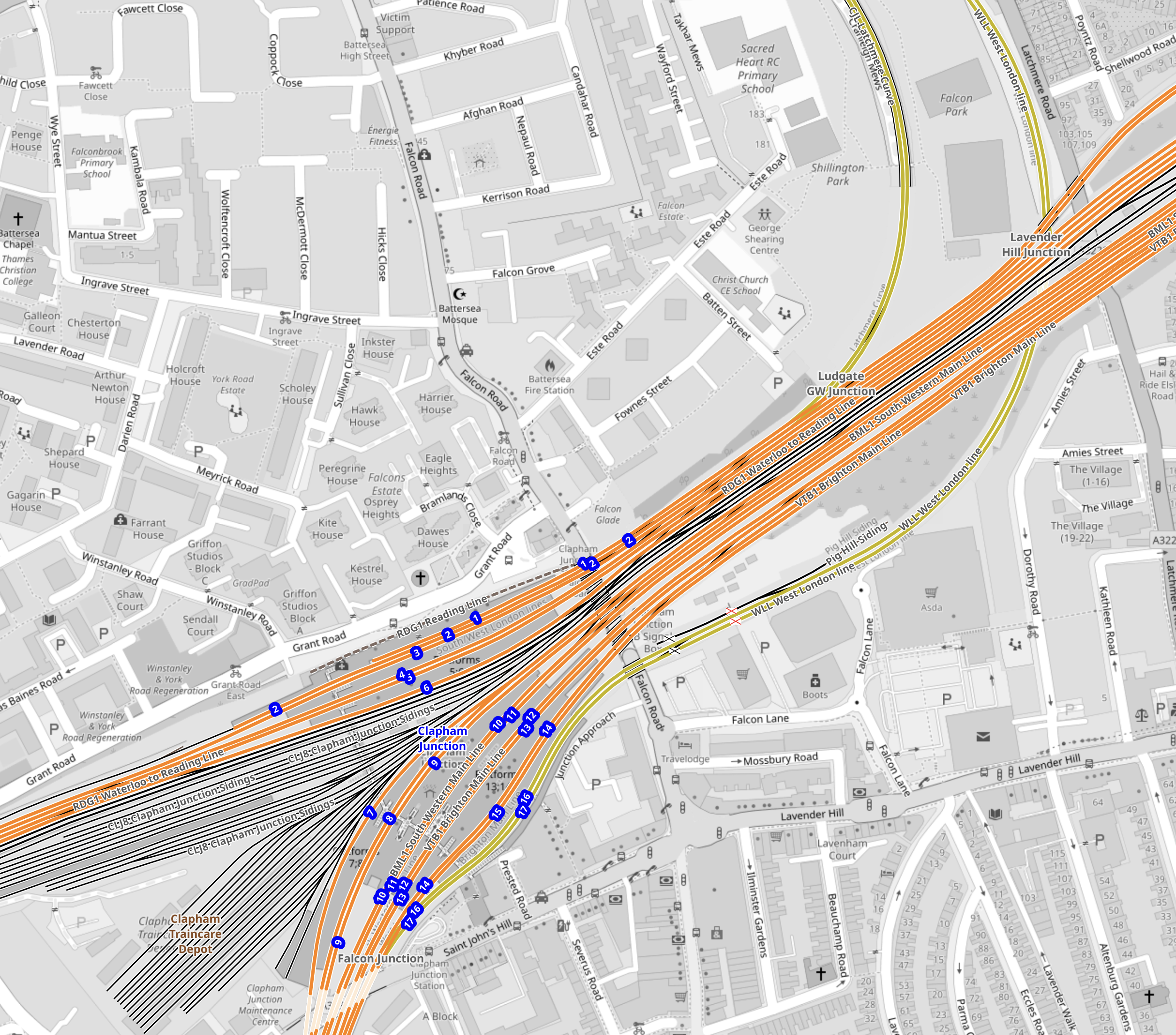
This map from OpenRailwayMap shows shows the platforms at Clapham Junction station and the track layout to the West of the footbridge.
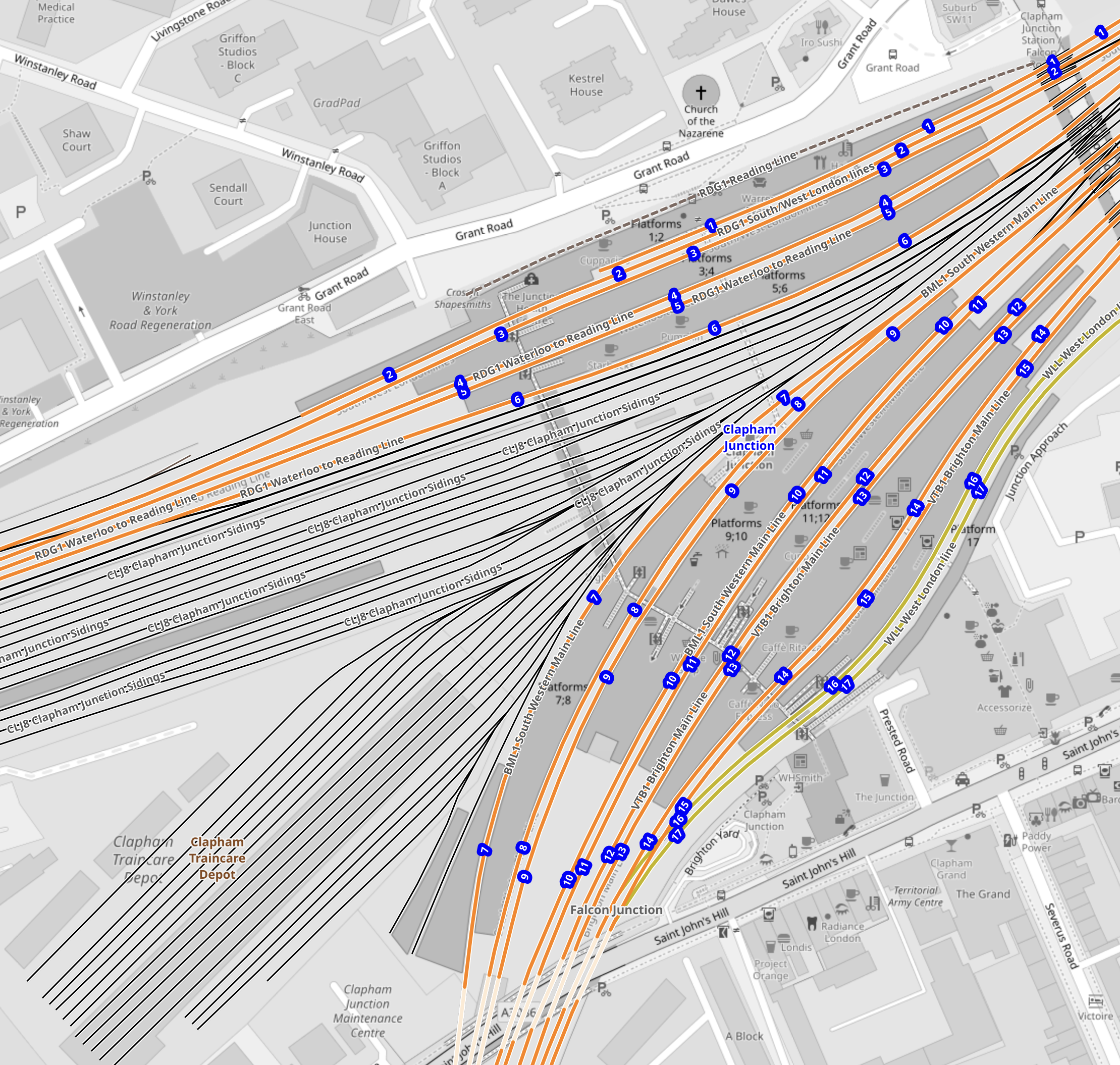
Note.
- The tracks through the platforms are shown in orange.
- The blue dots are platform numbers.
- The bridge connecting all the platforms is shown shaded in the middle of the map.
- To the West of the bridge are Clapham Junction Sidings and Clapham Traincare Depot.
These pictures were taken from the bridge.
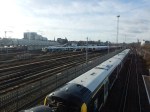
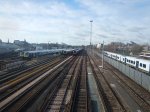
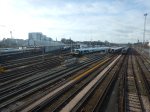
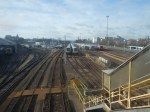
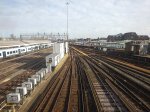
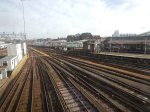
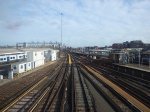
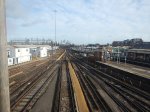
Note.
- The top row of pictures were taken looking West.
- The bottom row of pictures were taken looking East.
- Many of the tracks are electrified.
- There is a lot of space to park trains.
Will all the space be needed now, that a new depot has been built at Feltham.
Could Two New Surface Platforms Be Built For The Extension Of The Northern Line To Clapham Junction?
Consider.
- The step-free bridge across all the platforms at Clapham Junction station works well.
- It is connected to the streets around the station at both ends.
- Clapham Junction station will be redeveloped and surplus depot land could be used for housing.
- As the maps show, there is a large gap in the platforms between the South Western Railway and the Southern sides of the station.
- As Battersea Power Station station can turn services on the Northern Line with only two platforms, there would only need to be the same number of Northern Line platforms at Clapham Junction.
So could an extra pair of platforms be built under the bridge, with stairs and a lift similar to the existing platforms?
- The platform would have full step-free access.
- The platforms could be long enough for any future trains.
- There could be sidings for a few trains.
- The tunnels from Battersea Power Station would surface just outside the station.
- There would need to be a crossover or a turnback siding for operational reasons.
I also think, that once the depot and sidings at Clapham Junction have released the space, the new platforms and tracks could be installed without interrupting main line services through the station.
Would The Extension Of The Northern Line Be Electrified?
Consider.
- Merseyrail were not allowed to use third-rail electrification to Headbolt Lane station and had to use batteries.
- The Northern Line was extended to Battersea Power Station station using London’s four-rail electrified system.
- Clapham Junction station has third-rail electrification everywhere.
I think that the authorities would be very churlish not to allow electrification to Clapham Junction.
Conclusion
I believe it is possible to extend the Northern Line to two new surface platforms at Clapham Junction station.
But I also believe that using similar methods to those used in the Bank Station Upgrade, that a full interchange between the Elizabeth and Victoria Lines can be built at Oxford Circus and Bond Street.
.
Low Carbon Construction Of Sizewell C Nuclear Power Station
Sizewell C Nuclear Power Station is going to be built on the Suffolk Coast.
Wikipedia says this about the power station’s construction.
The project is expected to commence before 2024, with construction taking between nine and twelve years, depending on developments at the Hinkley Point C nuclear power station, which is also being developed by EDF Energy and which shares major similarities with the Sizewell plant.
It is a massive project and I believe the construction program will be designed to be as low-carbon as possible.
High Speed Two is following the low-carbon route and as an example, this news item on their web site, which is entitled HS2 Completes Largest Ever UK Pour Of Carbon-Reducing Concrete On Euston Station Site, makes all the right noises.
These three paragraphs explain in detail what has been done on the Euston station site.
The team constructing HS2’s new Euston station has undertaken the largest ever UK pour of Earth Friendly Concrete (EFC) – a material that reduces the amount of carbon embedded into the concrete, saving over 76 tonnes of CO2 overall. John F Hunt, working for HS2’s station Construction Partner, Mace Dragados joint venture, completed the 232 m3 concrete pour in early September.
The EFC product, supplied by Capital Concrete, has been used as a foundation slab that will support polymer silos used for future piling works at the north of the Euston station site. Whilst the foundation is temporary, it will be in use for two years, and historically would have been constructed with a more traditional cement-based concrete.
The use of the product on this scale is an important step forward in how new, innovative environmentally sustainable products can be used in construction. It also helps support HS2’s objective of net-zero construction by 2035, and achieve its goal of halving the amount of carbon in the construction of Britain’s new high speed rail line.
Note.
- Ten of these slabs would fill an Olympic swimming pool.
- I first wrote about Earth Friendly Concrete (EFC) in this post called Earth Friendly Concrete.
- EFC is an Australian invention and is based on a geopolymer binder that is made from the chemical activation of two recycled industrial wastes; flyash and slag.
- HS2’s objective of net-zero construction by 2035 is laudable.
- It does appear that this is a trial, but as the slab will be removed in two years, they will be able to examine in detail how it performed.
I hope the Sizewell C project team are following High Speed Two’s lead.
Rail Support For Sizewell C
The Sizewell site has a rail connection and it appears that this will be used to bring in construction materials for the project.
In the January 2023 Edition of Modern Railways, there is an article, which is entitled Rail Set To Support Sizewell C Construction.
It details how sidings will be built to support the construction, with up to four trains per day (tpd), but electrification is not mentioned.
This is surprising to me, as increasingly, big construction projects are being managed to emit as small an amount of carbon as possible. Sizewell C may be an isolated site, but in Sizewell B, it’s got one of the UK’s biggest independent carbon-free electricity generators a couple of hundred metres away.
The writer of the Modern Railways article, thinks an opportunity is being missed.
I feel the following should be done.
- Improve and electrify the East Suffolk Line between Ipswich and Saxmundham Junction.
- Electrify the Aldeburgh Branch Line and the sidings to support the construction or agree to use battery-electric or hydrogen zero-carbon locomotives.
Sizewell C could be a superb demonstration project for low-carbon construction!
Sizewell C Deliveries
Sizewell C will be a massive project and and will require a large number of deliveries, many of which will be heavy.
The roads in the area are congested, so I suspect rail is the preferred method for deliveries.
We already know from the Modern Railways article, that four tpd will shuttle material to a number of sidings close to the site. This is a good start.
Since Sizewell A opened, trains have regularly served the Sizewell site to bring in and take out nuclear material. These occasional trains go via Ipswich and in the last couple of years have generally been hauled by Class 88 electro-diesel locomotives.
It would be reasonable to assume that the Sizewell C sidings will be served in the same manner.
But the route between Westerfield Junction and Ipswich station is becoming increasingly busy with the following services.
- Greater Anglia’s London and Norwich services
- Greater Anglia’s Ipswich and Cambridge services
- Greater Anglia’s Ipswich and Felixstowe services
- Greater Anglia’s Ipswich and Lowestoft services
- Greater Anglia’s Ipswich and Peterborough services
- Freight services serving the Port of Felixstowe, which are expected to increase significantly in forthcoming years.
But the Modern Railways article says this about Saxmundham junction.
Saxmundham junction, where the branch meets the main line, will be relaid on a slightly revised alignment, retaining the existing layout but with full signalling giving three routes from the junction protecting signal on the Down East Suffolk line and two in the Down direction on the bidirectional Up East Suffolk line. Trap points will be installed on the branch to protect the main line, with the exit signal having routes to both running lines.
Does the comprehensive signalling mean that a freight train can enter or leave the Sizewell sidings to or from either the busy Ipswich or the quieter Lowestoft direction in a very safe manner?
I’m no expert on signalling, but I think it does.
- A train coming from the Lowestoft direction needing to enter the sidings would go past Saxmundham junction on the Up line. Once clear of the junction, it would stop and reverse into the branch.
- A train coming from the Ipswich direction needing to enter the sidings would approach in the wrong direction on the Up line and go straight into the branch.
- A train leaving the sidings in the Lowestoft direction would exit from the branch and take the Up line until it became single track. The train would then stop and reverse on to the Down line and take this all the way to Lowestoft.
- A train leaving the sidings in the Ipswich direction would exit from the branch and take the Up line all the way to Ipswich.
There would need to be ability to move the locomotive from one end to the other inside the Sizewell site or perhaps these trains could be run with a locomotive on both ends.
The advantage of being able to run freight trains between Sizewell and Lowestoft becomes obvious, when you look at this Google Map, which shows the Port of Lowestoft.
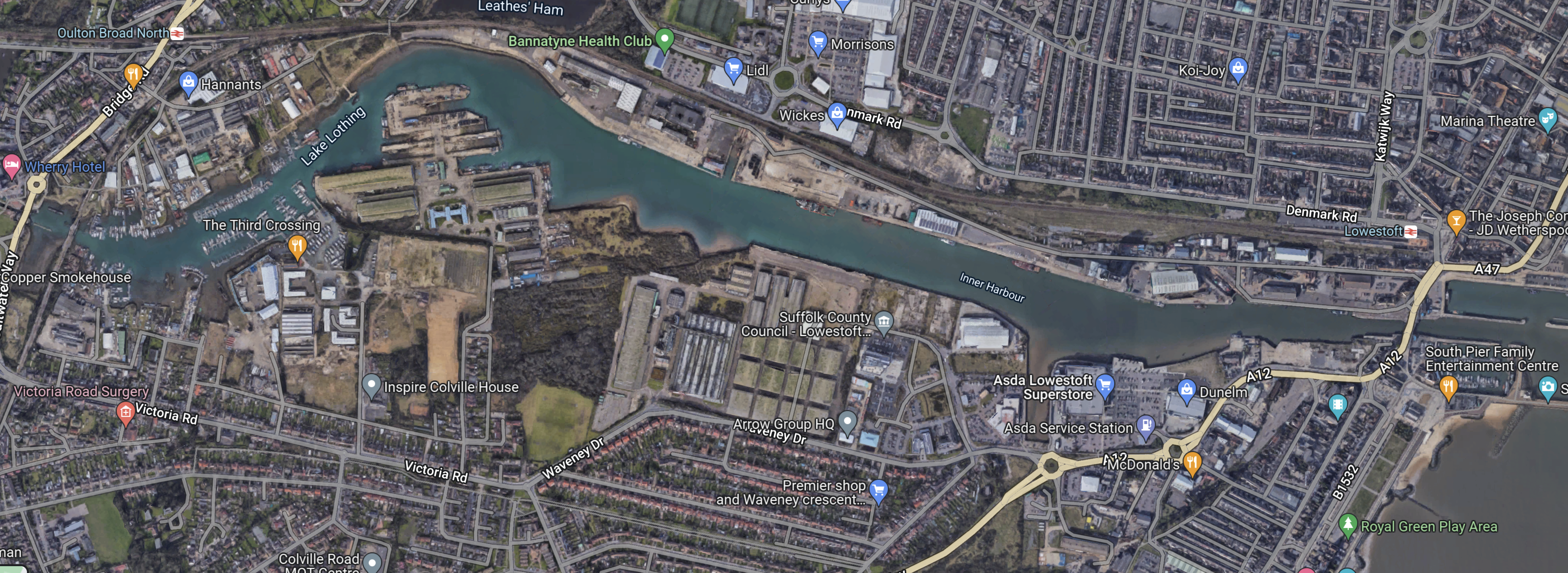
Note.
- The Inner Harbour of the Port of Lowestoft.
- The East Suffolk Line running East-West to the North of the Inner Harbour.
- Lowestoft station at the East side of the map.
I doubt it would be the most difficult or expensive of projects to build a small freight terminal on the North side of the Inner Harbour.
I suspect that the easiest way to bring the material needed to build the power station to Sizewell would be to do the following.
- Deliver it to the Port of Lowestoft by ship.
- Tranship to a suitable shuttle train for the journey to the Sizewell sidings.
- I estimate that the distance is only about 25 miles and a battery or hydrogen locomotive will surely be available in the UK in the next few years, that will be able to provide the motive power for the return journey.
In The TruckTrain, I wrote about a revolutionary freight concept, that could be ideal for the Sizewell freight shuttle.
In addition, there is no reason, why shuttle trains couldn’t come in from anywhere connected to the East Suffolk Line.
Zero-Carbon Construction
Sizewell C could be the first major construction site in the UK to use electricity rather than diesel simply because of its neighbour.
Conclusion
I shall be following the construction methods at Sizewell C, as I’m fairly sure they will break new ground in the decarbonisation of the Construction industry.
Avanti West Coast Applies For Second Hourly Euston And Liverpool Service
Tucked away beside the Grand Union Sets Out Stirling Ambitions article in the December 2022 Edition of Modern Railways is a report on Avanti West Coast’s application for a second service between Euston and Liverpool.
This is said.
Avanti West Coast has applied for access rights for its second hourly Euston to Liverpool service, starting from December 2023, although a phased introduction of the new service is likely. This would make use of Avanti’s new fleet of 10×7-car Class 807 Hitachi EMUs, which are expected to enter service from Autumn 2023. The ‘807s’ would be deployed on the current hourly Liverpool service, on which a call at Liverpool South Parkway would be added. (provision is made for this in the December 2022 timetable.).
Pendelinos would then operate the second service each hour, calling at Lichfield Trent Valley and Tamworth.
A linespeed project is in progress to raise the permissible speed for non-tilting trains on the West Coast Main Line, and Avanti’s new Hitachi trains will take advantage of this.
In Will Avanti West Coast’s New Trains Be Able To Achieve London Euston and Liverpool Lime Street In Two Hours?, I laid out my reasoning for a two-hour journey between Euston and Liverpool Lime Street.
I’m not sure, if they will reduce the time to two hours, but I wouldn’t be surprised if they do.
Grand Union Sets Out Stirling Ambitions
The title of this post, is the same as that of an article in the December 2022 Edition of Modern Railways.
This is the first paragraph.
Grand Union Trains has updated its plans to operate services between Stirling and London Euston. It is targeting a 10-year track access agreement with services starting in May 2025.
I have a few thoughts.
The Route
The route between Stirling and Euston is as follows.
- Trains will call at Larbert, Greenfauds, Whifflet, Motherwell, Lockerbie, Carlisle, Preston, Nuneaton and Milton Keynes.
- Station upgrades are proposed for Larbert, Greenfauds, Whifflet and Lockerbie.
- The route is fully-electrified.
- There will be four trains per day in both directions, with a slightly reduced service on Saturday evenings and Sunday mornings.
This sentence from the article sums up the philosophy of Grand Union Trains.
The company says the aim is to link towns which have no or limited long-distance services and to improve connectivity for some station pairs on the West Coast Main Line.
Note.
Currently Larbert, Greenfauds and Whifflet don’t have services running past Stirling or Motherwell.
- Currently, Nuneaton and Milton Keynes have no Scottish services.
- Nuneaton is well connected to Peterborough and the East.
- Milton Keynes will be on the East-West Railway to Oxford and Cambridge.
It looks to be a service that has been well-planned and offers good possibilities for travel.
The Trains
The article says this about the trains.
New bi-mode rolling stock would be used and GUT says discussions with potential suppliers and manufacturers are ongoing.
Why Are Bi-Mode Trains Needed?
I can think of these reasons.
- Grand Union Trains want to run their South Wales services with the same trains.
- They might want to extend Scottish services from Stirling to perhaps Perth or Dundee.
- They want to offer a reliable service, when the electrification is damaged.
Bi-mode trains will certainly offer flexibility and reliability.
How Long Will The Trains Be?
Consider.
- An eleven-car Class 390/1 train is 265.3 metres long.
- A pair if five-car Class 802 trains is 260 metres long.
I suspect a train has a maximum length of 260 metres and these can be run between London Euston and Stirling.
Could it be that station upgrades are needed for Larbert, Greenfauds, Whifflet and Lockerbie, is that these stations have short platforms?
Could the trains and platforms start short and grow with the business?
The Trains Will Have Three Classes
These classes will be offered.
- First Class in compartments
- Standard in a 2+1 arrangement
- Standard Economy in a 2+2 arrangement
You pays your money and you make your choice.
Vanload Freight May Be Carried
Consider.
- There has been a lot of speculation and some serious train conversions, looking at the possibilities of high speed freight.
- Imagine a train of perhaps five passenger cars and one freight car for containerised freight.
- I suggested earlier, that the trains might grow with the business.
- As business develops, extra cars can be added as appropriate.
- If business booms, then it might be best to run separate passenger and freight services.
Modern trains and refurbished older ones, offer a multitude of solutions.
The Finance
The article says this about finance.
Grand Union Trains has linked with European independent investment firm Serena Industrial Partners to support its ambitions for its new Great Western service, and the project is supported by Spanish operator RENFE.
Serena Industrial Partners are Spanish, so does that mean, that the trains could be Spanish too?
Heritage Train Company Launches First Class Service In Competition With Avanti West Coast
The title of this post, is the same as that of this article on Business Live.
These are the two introductory paragraphs.
A heritage train company is launching a charter service between London and the North West to help passengers frustrated by Avanti West Coast’s severe disruption.
Crewe-based Locomotive Services Group will begin operating a first class-only charter service to and from London Euston on Friday.
These are more details of the service.
The train’s air-conditioned carriages are restored British Rail Mark 3 stock with three-abreast seating, tables, power points and large windows.
The service will only operate on Fridays for the next three weeks, and will run at 110mph using electric locomotives.
It will depart from Crewe at 2.29pm, running non-stop to arrive at London Euston at 4.12pm.
The train will set off to return north at 5.27pm, calling at Birmingham International, Birmingham New Street, Wolverhampton, Stafford, Crewe and Wilmslow before arriving at Manchester Piccadilly at 8.45pm.
I have a feeling that the Mark 3 coaches, were acquired from Greater Anglia.
Locomotive Services Group, also owns a couple of main-line registered Class 90 locomotives.
I am seriously, thinking of taking one of their trips.
I can travel in Mark 3 and Mark 4 coaches, all Stadler and Hitachi trains, but if I travel in a Class 390 train, the air-conditioning plays havoc with my body.
Avanti West Coast can’t put Class 807 trains on London Euston and Liverpool Lime Street. too soon for me!
The Connection Between The Northern And Lizzie Lines At Tottenham Court Road Station
In Elizabeth Line To Northern Line At Moorgate Station, I described how I was rather underwhelmed with the connection between the Bank branch of the Northern Line and the Lizzie Line.
It’s just too far to walk in the long tunnel, which is not as well fitted out as the connection to the Bakerloo Line at Paddington.
At least it can be improved, without a major amount of expense.
So what is the connection between the Lizzie Line and the Northern Line like at Tottenham Court Road?
There is access to stairs and a lift at the Southern end of the Northern Line platforms, that lead to the pedestrian tunnel between the two platforms of the Lizzie Line.
These pictures show the connection.

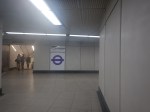
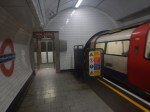
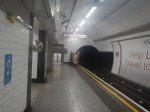
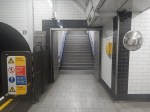
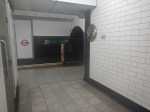
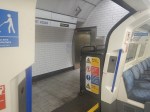
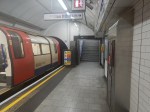
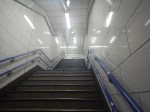
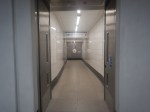
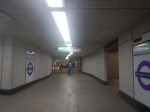
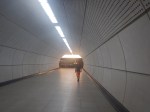
Note.
- It is certainly a lot easier than the connection at Moorgate.
- You have a choice of stairs or a lift between lines.
- Both Northern branches and both Southern branches of the Northern Line all have services through Tottenham Court Road station. Just make sure, that you get a Charing Cross branch train.
- If you’re using Tottenham Court Road station for changing to the Lizzie Line from the Northern Line, then make sure you get at the Southern end of the Northern train.
- If you’re using Tottenham Court Road station for changing to the Northern Line, then make sure you get at the Eastern end of the Lizzie Line train.
Practice will make perfect, how passengers handle this interchange.
Going Between Euston And Heathrow
There is no problem with the interchange to and from the Elizabeth Line, but getting to and from the Charing Cross branch of the Northern Line is not step-free.
Hopefully, High Speed Two and the rebuilding of Euston station will solve this problem.
First ‘As New’ Refurbished Avanti West Coast Pendolino Takes To The Tracks
The title of this post, is the same as that of this article on Rail Advent.
The article gives these improvements to the Class 390 trains.
- 25,000 new Standard Class seats
- Conversion of one First Class carriage to provide 2,000 extra standard class seats.
- New onboard shop
- New lighting and carpets
- Passenger information screens (PIS)
- Additional luggage space in standard class
- Power points at every seat
- Refurbished toilets
- New First and Standard Premium seats
The only refurbished train in service is 390125, which operated the following services on the 25th April 2022.
- 0505 Manchester to Euston – Stops at Stockport, Crewe and Stafford
- 0807 Euston to Liverpool – Stops at Milton Keynes Central, Stafford and Runcorn
- 1047 Liverpool to Euston – Stops at Runcorn, Crewe and Stafford
- 1857 Euston to Manchester – Stops at Rugby, Stoke-on-Trent, Macclesfield and Stockport
It will be joined by a second refurbished train early next month.

