Green Light For Major Transpennine Improvements
The title of this post, is the same as that of this article on Railnews.
These paragraphs outline the project.
Improvements on the Transpennine route in West Yorkshire have been given the green light, after a Transport and Works Act order was signed by the transport secretary on 27 June, six months earlier than planned.
The cost of the upgrades was described as ‘multi-billion’ by Network Rail, which said it was the ‘biggest milestone’ so far on the Transpennine Route Upgrade programme.
The improvements will be carried out between Huddersfield and Westtown in Dewsbury, and include quadrupling the double line and remodelling track layouts as well as major renovations at Huddersfield, Deighton and Mirfield and a new station at Ravensthorpe. In addition, there will be a flyover near Ravensthorpe to separate the Wakefield and Leeds lines and reduce conflicting movements.
Effectively, Grant Shapps fired the starting gun for this project four days ago.
I have written various posts on the upgrade and they can be read from this link.
The Transpennine Route Upgrade Web Site
The project now has its own comprehensive web site, which is named the Transpennine Route Upgrade.
A Reply To Peter Robins About Electrification
Peter Robins made this very perceptive comment.
The main point of TPU isn’t electrification, though, it’s upgrading the track to remove bottlenecks, improve lines speeds, add capacity. This is mainly what the Hudd-Dew TWA order is about. If you electrify the line while you’re doing that, then you increase the number of connecting places/lines which are within range of current batteries.
I think that Lds-CF will also have to wait for the post-IRP review, meaning the full upgrade will be a long time coming.
This Hitachi infographic shows the specification of their Regional Battery Train.

Note.
- It is a 100 mph train.
- Batteries can be charged when travelling under wires or 10-15 mins static.
- Range on batteries is 90 km. or 56 miles.
- My experience of Hitachi bi-modes is that pantographs on these trains can go up and down, with all the alacrity of a whore’s drawers.
Hitachi have stated that they will be testing a Class 802 train with batteries later this year.
Could Hitachi Battery Trains Be Charged On The Electrification Between Huddersfield And Dewsbury?
Looking at the data from RealTimeTrains for this route it appears that the fastest time I can find between Huddersfield And Dewsbury is eleven minutes.
Would this be enough time to fully-charge the battery? If not the electrification could perhaps be extended for a couple of miles.
How Many Of Transpennine Express (TPE)’s Services Could Be Decarbonised, if Huddersfield And Dewsbury Were To Be Electrified?
I’ll look at each service that uses this route.
Liverpool Lime Street And Newcastle
This is an hourly service that calls at Newton-le-Willows, Manchester Victoria, Huddersfield, Dewsbury, Leeds, York, Northallerton, Darlington and Durham.
- Liverpool Lime Street and Manchester Victoria is electrified.
- Colton Junction and Newcastle is electrified.
- Huddersfield and Dewsbury will be electrified by the Transpennine Route Upgrade.
This leaves the following sections without electrification.
- Manchester Victoria and Huddersfield – 25.8 miles
- Dewsbury and Colton Junction – 29.3 miles
Note.
- There are also stops under the wires, at Dewsbury, Huddersfield and Leeds, which could be used to top up the battery.
- The largest unelectrified section would be 29.3 miles.
It looks to me that Liverpool Lime Street And Newcastle could be served using a Hitachi Regional Battery Train or similar.
Manchester Airport And Redcar Central
This is an hourly service that calls at Gatley, Manchester Piccadilly, Manchester Oxford Road, Manchester Victoria, Huddersfield, Dewsbury, Leeds, York, Thirsk, Northallerton, Yarm, Thornaby and Middlesbrough.
- Manchester Airport and Manchester Victoria is electrified.
- Colton Junction and Northallerton is electrified.
- Huddersfield and Dewsbury will be electrified by the Transpennine Route Upgrade.
This leaves the following sections without electrification.
- Manchester Victoria and Huddersfield – 25.8 miles
- Dewsbury and Colton Junction – 29.3 miles
- Northallerton and Redcar Central – 28.8 miles
Note.
- There are also stops under the wires, at Dewsbury, Huddersfield and Leeds, which could be used to top up the battery.
- The largest unelectrified section would be 29.3 miles.
- I suspect that charging could be needed at Redcar end of the route. Middlesbrough would probably be best, as it could also charge the LNER services, if they used battery power from Northallerton.
It looks to me that Manchester Airport And Redcar Central could be served using a Hitachi Regional Battery Train or similar.
Manchester Piccadilly And Hull
This is an hourly service that calls at Stalybridge, Huddersfield, Leeds, Selby and Brough.
- Manchester Piccadilly and Manchester Victoria is electrified.
- Huddersfield and Dewsbury will be electrified by the Transpennine Route Upgrade.
- Leeds and Neville Hill Depot is electrified.
This leaves the following sections without electrification.
- Manchester Victoria and Huddersfield – 25.8 miles
- Dewsbury and Leeds – 29.3 miles
- Neville Hill Depot and Hull – 50 miles
Note.
- There are also stops under the wires, at Huddersfield and Leeds, which could be used to top up the battery.
- The largest unelectrified section would be 50 miles.
- I am sure that charging would be needed at Hull end of the route. Hull would probably be best, as it could also charge the Hull Trains, LNER and Northern Trains services, if they used battery power from the East Coast Main Line.
- Alternatively, there could be electrification between Hull and Brough. or Neville Hill and Micklefield. The latter would knock eight miles off the unelectrified section and is needed to allow electric trains to access Neville Hill Depot under electric power.
It looks to me that Manchester Piccadilly and Hull could be served using a Hitachi Regional Battery Train or similar.
Manchester Piccadilly and Huddersfield
This is an hourly service that calls at Stalybridge, Mossley, Greenfield, Marsden, and Slaithwaite.
- Manchester Piccadilly is electrified.
- Huddersfield is electrified.
This leaves the following sections without electrification.
- Manchester Piccadilly and Huddersfield – 25.5 miles
Note.
- There are also stops under the wires, at Manchester Piccadilly and Huddersfield, which would be used to top up the battery.
- The largest unelectrified section would be 25.5 miles.
- Trains would be charged at both ends of the route.
It looks to me that Manchester Piccadilly and Huddersfield could be served using a Hitachi Regional Battery Train or similar.
Huddersfield And Leeds
This is an hourly service that calls at Deighton, Mirfield, Ravensthorpe, Dewsbury, Batley, Morley and Cottingley
- Huddersfield is electrified.
- Leeds is electrified.
This leaves the following sections without electrification.
- Dewsbury and Leeds – 29.3 miles
Note.
- There are also stops under the wires, at Manchester Piccadilly and Huddersfield, Deighton, Mirfield, Ravensthorpe, Dewsbury and Leeds, which would be used to top up the battery.
- The largest unelectrified section would be 29.3 miles.
- Trains would be charged at both ends of the route.
It looks to me that Huddersfield and Leeds could be served using a Hitachi Regional Battery Train or similar.
York And Scarborough
This is an hourly service that calls at Malton and Seamer
- York is electrified.
This leaves the following sections without electrification.
- York And Scarborough – 42.1 miles
Note.
- The largest unelectrified section would be 42.1 miles.
- Trains would be charged at both ends of the route.
It looks to me that York and Scarborough could be served using a Hitachi Regional Battery Train or similar.
How Many Of Northern Trains’s Services Could Be Decarbonised, if Huddersfield And Dewsbury Were To Be Electrified?
I’ll look at each service that uses this route.
Wigan North Western And Leeds
This is an hourly service that calls at Daisy Hill, Atherton, Walkden, Salford Crescent, Salford Central, Manchester Victoria, Rochdale, Smithy Bridge, Littleborough, Walsden, Todmorden, Hebden Bridge, Mytholmroyd, Sowerby Bridge, Brighouse, Mirfield, Dewsbury, Morley and Cottingley
- Wigan North Western is electrified.
- Salford Crescent and Manchester Victoria is electrified.
- Heaton Lodge East junction and Dewsbury is electrified.
- Leeds is electrified.
This leaves the following sections without electrification.
- Wigan North Western and Salford Crescent – 16 miles
- Manchester Victoria and Heaton Lodge East junction – 37.6 miles
- Dewsbury and Leeds – 29.3 miles
Note.
- There are also stops under the wires, at Wigan North Western, Salford Crescent, Salford Central, Manchester Victoria, Mirfield, Dewsbury and Leeds, which would be used to top up the battery.
- The largest unelectrified section would be 37.6 miles.
- Trains would be charged at both ends of the route.
It looks to me that Wigan North Western and Leeds could be served using a Hitachi Regional Battery Train or similar.
Huddersfield And Castleford
This is an occasional service that calls at Deighton, Mirfield and Wakefield Kirkgate.
As it is run by buses at the moment, I can’t get the data to work out if it could be served using a Hitachi Regional Battery Train or similar.
But I suspect it can, after looking at a map.
How Many Of Grand Central’s Services Could Be Decarbonised, if Huddersfield And Dewsbury Were To Be Electrified?
I’ll look at each service that uses this route.
London King’s Cross And Bradford Interchange
This is a four trains per day service that calls at Doncaster, Pontefract Monkhill, Wakefield Kirkgate, Mirfield, Brighouse, Halifax and Low Moor.
- King’s Cross and Doncaster is electrified.
- Mirfield is electrified.
This leaves the following sections without electrification.
- Doncaster and Mirfield – 34.8 miles
- Mirfield and Bradford Interchange – 17.3 miles
Note.
- There are also stops under the wires, at Mirfield, which would be used to top up the battery.
- The largest unelectrified section would be 34.8 miles.
- Trains would need to be charged at Bradford Interchange, during the turnround of around an hour.
- It is likely, that some electrification will be erected in the Bradford area, to improve services to Leeds.
It looks to me that London King’s Cross and Bradford Interchange could be served using a Hitachi Regional Battery Train or similar.
Conclusion
It looks like electrifying between Huddersfield and Dewsbury will enable a Hitachi Regional Battery Train or similar to work all passenger routes, that run on that section of track.
Bank Station Upgrade – 1st July 2022
I walked past the new Southern entrance to Bank station today and took these pictures.



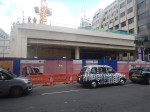






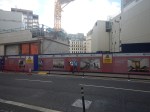

Note.
- You can see the station name inscribed in the lintel over the station entrance.
- Electricians seemed to be busy in the station entrance.
- There doesn’t appear to be a start on oversite development yet.
But at least progress seems to be consistent with a delivery in the next few months.
Enery Dome Closes $11M Convertible Round To Accelerate Commercial Deployment Of CO2 Battery
The title of this post, is the same as that of this press release from Energy Dome.
When I first saw Energy Dome on the Internet, I thought they had something.
Energy Dome Secures Funding, Partner For New CO2 Energy Storage Projects was my first post about the company and this is an extract, from that post.
Note.
- It appears that Energy Dome has weaponised carbon dioxide against climate change.
- Providing 2.5 MW for over an hour and a half is an impressive performance.
- I think this project has the style we associate with Italy and Italians.
I have found their website at energydome.com and behind their energy storage system is unusual technology.
Their web site says this about their choice of storage medium.
CO2 is the perfect fluid to store energy cost effectively in a closed thermodynamic process as it is one of the few gases that can be condensed and stored as a liquid under pressure at ambient temperature. This allows for high density energy storage without the need to go at extreme cryogenic temperatures.
That is breathtakingly simple!
The main tank for the gaseous carbon dioxide is an inflatable dome and the liquid carbon dioxide is stored in steel tanks.
A turbine -compressor moves the carbon dioxide between gaseous and liquid states storing it appropriately.
It is very impressive! And I suspect extremely affordable!
This was the sub-heading of Tuesday’s press release.
Provider of long-duration energy storage completes convertible funding round co-led by CDP Venture Capital Sgr and Barclays and joined by Novum Capital Partners, ahead of planned Series B round.
This is the second time they have raised eleven million dollars to fund a project.
This paragraph from the press release outlines how the money will be used.
Energy Dome’s rapid technological development motivates the speed and frequency of the funding rounds. The Series A enabled the company to complete its 2.5MW / 4MWh commercial demonstration plant in Sardinia, Italy, the final step of technology de-risking. Energy Dome has begun the commercialization of the CO2 Battery. This latest bridge funding will allow the company to accelerate its development in advance of the Series B round by placing purchase orders for the long lead time turbomachinery equipment associated with its First of a Kind utility scale (20MW, 200MWh, 10-hour duration) energy storage projects. A Memorandum of Understanding for this first utility scale project has been signed with A2A, a major European utility, and the company is making strong progress on its commercial pipeline.
This is a company to watch.
The Lizzie Line And Circle/District Line Interchange At Paddington – 1st July 2022
This morning I wanted to go between Moorgate and Victoria stations.
It is a journey that can be done in any number of ways.
- Circle, Hammersmith & City or Metropolitan Line to King’s Cross St. Pancras and then change to the Victoria Line.
- Northern Line to King’s Cross St. Pancras and then change to the Victoria Line.
- Northern Line to Euston and then change to the Victoria Line. This can be a cross-platform interchange.
- Northern City Line to Highbury & Islington and then change to the Victoria Line. This is not an easy interchange.
- Northern Line to Bank and the change to the Circle or District Line.
- Circle or Hammersmith & City to Paddington and then change to the Circle or District Line. This interchange involves a walk all the way across Paddington station.
- 21, 43 or 141 bus to Monument and the change to the Circle or District Line.
If you’re lucky and time it right, you can get a direct Circle Line train, which run at a frequency of six trains per hour (tph).
The Elizabeth Line has opened up another way.
The Elizabeth Line is taken to Paddington and then you walk up the side of the station to the Circle/District Line entrance on the other side of Praed Street from the National Rail station.
These pictures show my walk at Paddington station.










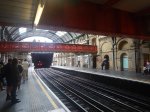

Note.
- It is an immaculate step-free climb out of the Elizabeth Line station.
- Once at station level, it is a walk up a gentle incline the the Circle/District Line station.
- There are shops; including Boots, M & S and Sainsburys, and toilets just inside Paddington station, as you walk beside the station.
- There are stairs to walk down to the Circle/District Line platforms.
I walked the transfer in under ten minutes. From Moorgate to Victoria took 38 minutes.
I feel that this route has advantages for many travellers.
- The Elizabeth Line currently has 12 tph through Paddington.
- When the Elizabeth Line is fully connected up in Autumn 2022, there will be 22 tph, through Paddington.
- The convenient shops and toilets will be welcomed by many.
- It is an easier route, than accessing the Circle/District Line station from inside the main station.
The Lawn, which has shops and cafes, would also be a good place to meet friends, family or a business colleague or client.
Moorgate And Victoria Via The Circle Line
I did this route on the 5th of July, after waiting ten minutes for a Circle Line train. It took me 23 minutes.
Moorgate Station – 1st July 2022
I took these pictures at Moorgate station today.


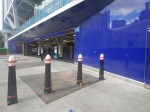
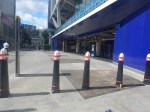
The new entrance to the station, appears to be almost complete.
- 101 Moorgate, which is the building in front of the station, needs to be built.
- The area between the buildings needs to be landscaped.
This image from JRA Architects shows the space between 11 Moorgate and the new station entrance.
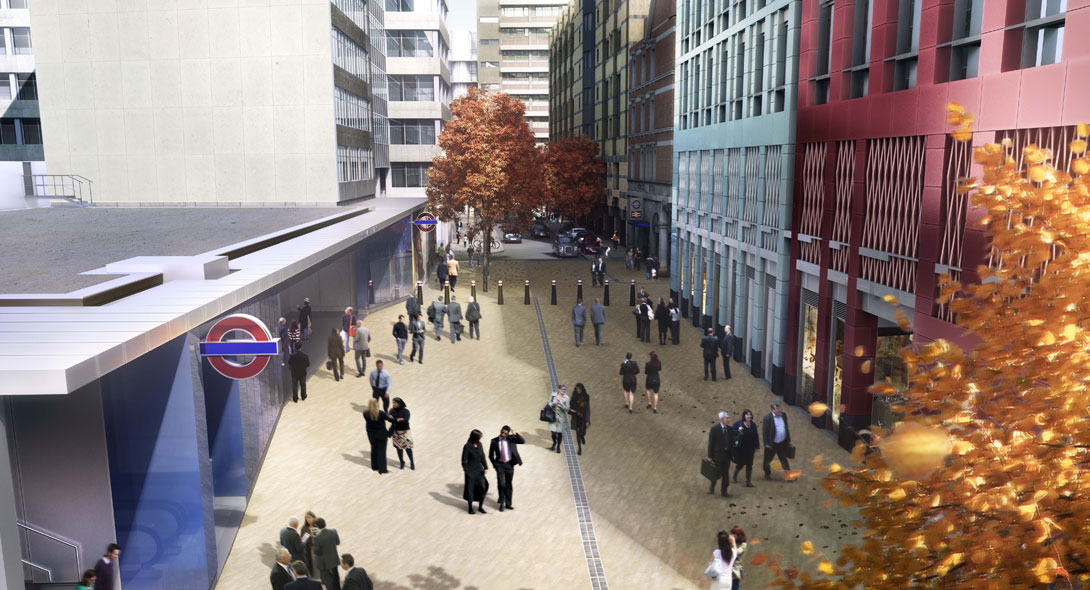
This image is from the South, whereas my pictures were taken from the North.
101 Moorgate is the white and ruby building on the right.
Essex Firm’s Hydrogen Lorry On Show In Stoneleigh
The title of this post, is the same as that of this article on the BBC.
These paragraphs describe the truck.
Tevva, the maker in Tilbury, Essex, says it is the first hydrogen fuel cell-supported truck to be designed, built and mass produced in the UK.
The company adds the vehicle has a range of up to 310 miles (500 km) via the tech, with hydrogen tanks able to be refilled in 10 minutes.
It says it wants to help the transport industry adapt to a “post-fossil fuel future”.
To that end, it developed a fuel cell to top up electric battery-powered trucks, giving them a longer range while reducing the size of the electric battery needed.
I think that this truck is a superb example of disruptive innovation.
- Tevva have looked at the 7.5 tonne truck market and have developed a truck that fits it.
- Using hydrogen as a range extender up to to 500 km. is probably a good fit for the use of these vehicles.
- So many local delivery companies will look at these trucks, so they can tell their customers, that they now offer zero-carbon deliveries.
- They will also be useful to go into cities, that charge diesel vehicles.
I also suspect, that a lot of parts follow the route pioneered by the great Colin Chapman – Borrow from other manufacturers.
I wouldn’t be surprised to see other companies following Tevva’s route all over the world.
From Moorgate To Imperial Wharf – 30th June 2022
I wanted to see the new entrance at Imperial Wharf station today, so after a full English breakfast on Moorgate, I took the Lizzie Line, Central and West London Lines across London.
I took this route.
- Lizzie Line – Moorgate to Tottenham Court Road
- Central Line – Tottenham Court Road To Shepherds Bush
- West London Line – Shepherds Bush To Imperial Wharf
I took these pictures along the route.











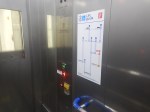





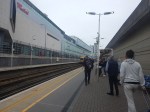
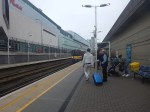
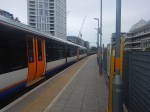


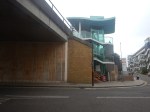





Note.
- The change at Tottenham Court Road station involves going up to the ticket hall and down again.
- The change at Shepherds Bush involves crossing the road between the Central Line and Overground station.
- The last few pictures show the new entrance at Imperial Wharf, which is for Northbound trains only.
When Bond Street station opens on the Lizzie Line, it should be easier to change there for the Central Line.
The Plans For A Connection Between The Lizzie And West London Lines?
This map from cartometro.com shows, where the Lizzie and West London Lines cross in the area of Old Oak Common.
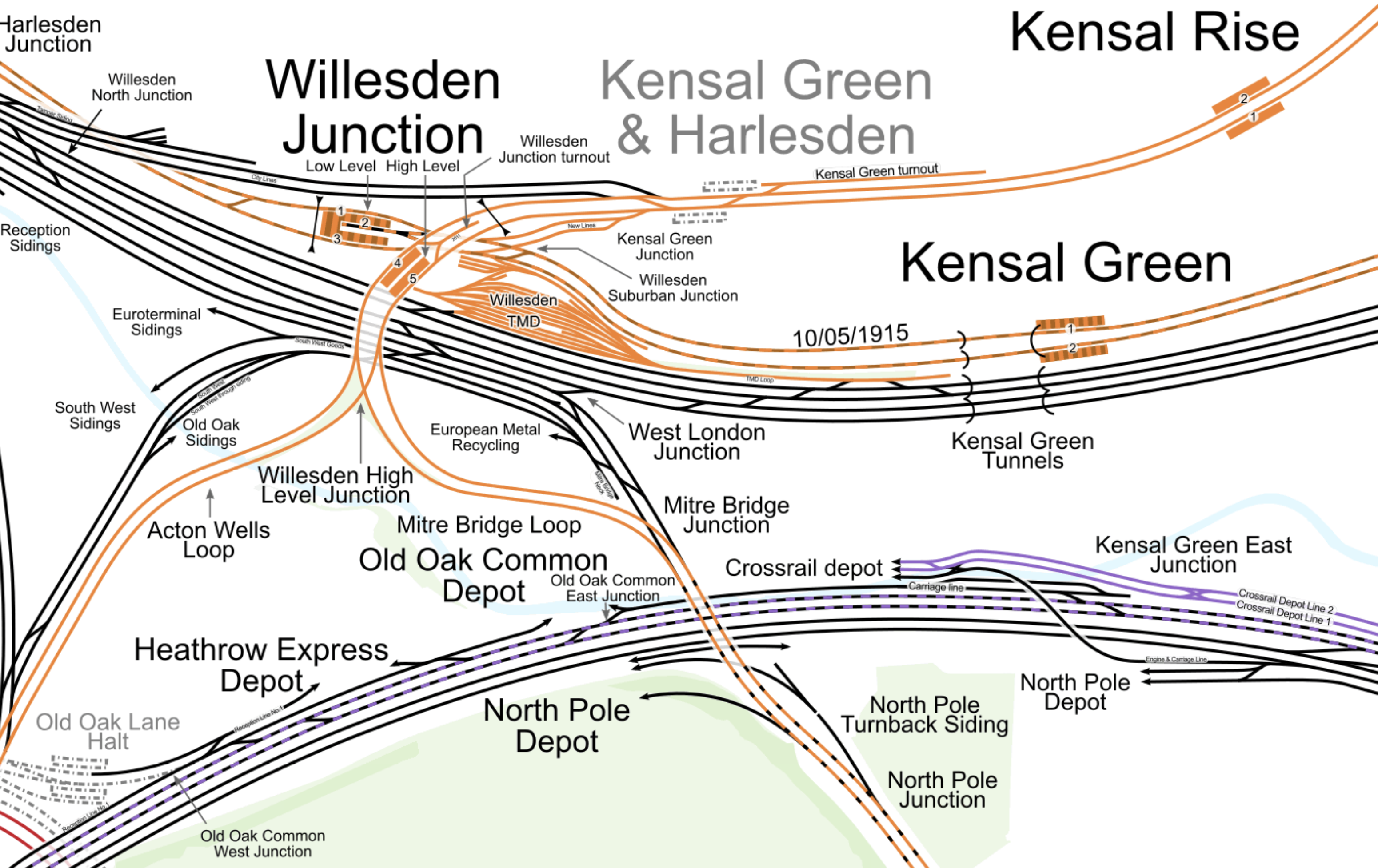
Note.
- The Overground is shown in orange and splits into the North and West London Lines South of Willesden Junction station.
- The Lizzie Line is shown in purple and black, as it goes across the map, as at this point it shares tracks with the Great Western Main Line.
This map shows how High Speed Two will change the lines.
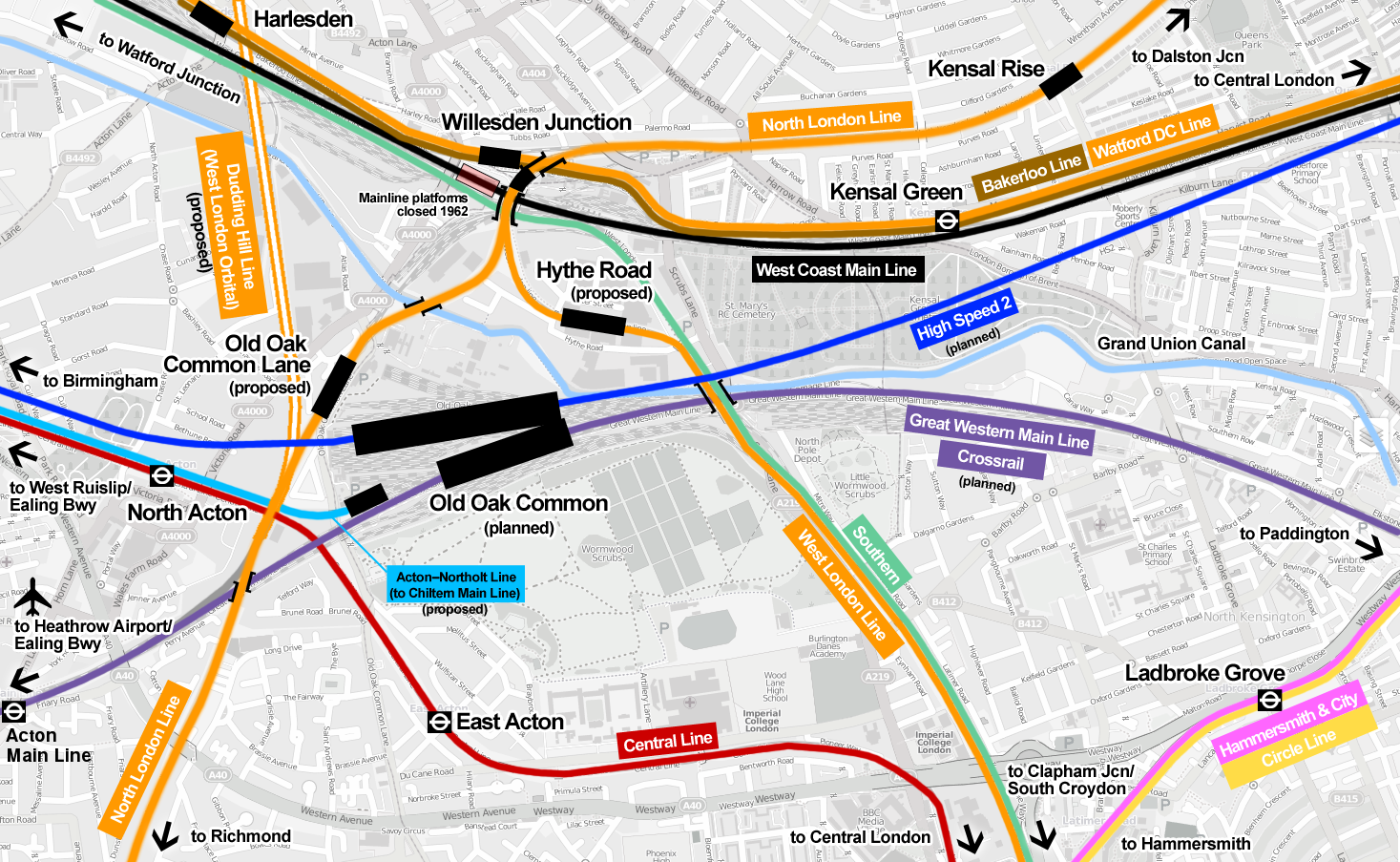
Note.
- Hythe Road station on the West London Line, which will have a walking route to High Speed Two and the Lizzie Line.
- Old Oak Common Lane station on the North London Line, which will have a walking route to High Speed Two and the Lizzie Line.
- The Dudding Hill Line, which is shown as an orange double-line and could be part of the West London Orbital passing North-South to the West of Old Oak Common Lane station.
- The Acton-Northolt Line, which is shown in blue and could give Chiltern Railways extra platforms at Old Oak Common with a walking route to High Speed Two and the Lizzie Line.
Wikipedia says that the status of the two Overground stations according to Transport for London is as follows.
Subject to funding being secured and further public consultation, we would seek permission to build and operate the proposals via a Transport and Works Act Order (TWAO). Funding remains a significant constraint in delivering these proposals. We are currently seeking to establish a package of funding that could enable the stations to be delivered by 2026 alongside the new HS2 and Elizabeth line station.
I suspect that with our current South London Mayor, we will see little progress on these connectivity schemes at Old Oak Common station, as with the possible exception of Hythe Road station, there’s little in it for South London.
Conclusion
Hythe Road station would certainly have made my journey easier yesterday.
Hopefully, though, if I do the journey again in the next year or so, Bond Street station will be open on the Lizzie Line and I’ll change to the Central Line there.
SSE Thermal And Equinor To Acquire Triton Power In Acceleration Of Low-Carbon Ambitions
The title of this post, is the same as that as this press release from SSE.
These are the first three paragraphs.
SSE Thermal and Equinor have entered into an agreement to acquire Triton Power Holdings Ltd from Energy Capital Partners for a total consideration of £341m shared equally between the partners.
The transaction represents another step forward for the two companies’ existing collaboration, supporting the long-term decarbonisation of the UK’s power system whilst contributing to security of supply and grid stability through flexible power generation in the shorter term.
Triton Power operates Saltend Power Station which is 1.2GW CCGT (Combined Cycle Gas Turbine) and CHP (Combined Heat & Power) power station located on the north of the Humber Estuary in East Yorkshire.
This deal is more complicated than it looks and these are my thoughts.
What About The Triton Power Workers?
The press release says this.
The 82 existing employees will continue to be employed by Triton Power. In line with just transition principles, the joint venture is committed to transitioning the assets for the net zero world through responsible ownership and operation, and in consultation with the local workforce and representatives.
It does sound that they are following the right principles.
Saltend Power Station
Saltend power station is no tired ancient asset and is described like this in Wikipedia.
The station is run on gas using single shaft 3 × Mitsubishi 701F gas Turbines machines with Alstom 400 MWe generators. The station has a total output of 1,200 MW; of that 100 MW is allocated to supply BP Chemicals. Each gas turbine has a Babcock Borsig Power (BBP) heat recovery steam generator, which all lead to one steam turbine per unit (single shaft machine means Gas turbine and Steam Turbine are on the same shaft). The waste product of electricity generation is steam at the rate of about 120 tonnes/h which is sold to BP Chemicals to use in their process. This makes Salt End one of the most efficient[clarification needed] power stations in the UK. The plant is scheduled to use hydrogen from steam reformed natural gas for 30% of its power.
Note.
- It was commissioned in 2000.
- It appears there are seven CCGT power stations in England that are larger than Saltend.
- The power station seems to have had at least four owners.
The press release says this about SSE and Equinor’s plans for Saltend power station.
The transaction underscores SSE Thermal and Equinor’s shared ambition to decarbonise the Humber, which is the UK’s most carbon-intensive industrial region, as well as the UK more widely. Initial steps to decarbonise Saltend Power Station are already underway, targeting partial abatement by 2027 through blending up to 30% of low-carbon hydrogen. In addition, carbon capture provides an additional valuable option for the site. SSE Thermal and Equinor will continue to work towards 100% abatement.
Note.
- It appears that initially, Saltend power station will move to running on a mixture of 30 % hydrogen and 70 % natural gas.
- Carbon capture will also be applied.
- It looks like that in the future all carbon-dioxide emitted by the power station will be captured and either stored or used.
The press release says this about the source of the hydrogen.
Saltend Power Station is a potential primary offtaker to Equinor’s H2H Saltend hydrogen production project. H2H Saltend is expected to kick-start the wider decarbonisation of the Humber region as part of the East Coast Cluster, one of the UK’s first carbon capture, usage and storage clusters.
H2H Saltend is described in this page on the Equinor web site, which has a title of The First Step To A Zero Carbon Humber, where this is said.
This project represents a bold but practical first step towards delivering the world’s first net zero industrial cluster by 2040. This unparalleled project can play a leading role in the UK’s journey to net zero by 2050, renew the UK’s largest industrial cluster, and unlock technology that will put the UK at the forefront of a global hydrogen economy.
There is also a video.
SSE Thermal And Equinor Low-Carbon Thermal Partnership
This is a section in the press release, where after giving their policy about the workers, it says this about the acquisition of Triton Power.
This acquisition strengthens SSE Thermal and Equinor’s portfolio of joint projects, which bring together expertise in power, natural gas, hydrogen and carbon capture and storage. This portfolio includes three development projects within the Humber region:
- Keadby 3 Carbon Capture Power Station, which could be the UK’s first flexible power station equipped with carbon capture.
- Keadby Hydrogen Power Station, which could be one of the world’s first 100% hydrogen-fuelled power stations.
- Aldbrough Hydrogen Storage, located in East Yorkshire, which could be one of the world’s largest hydrogen storage facilities.
The two companies are also developing Peterhead Carbon Capture Power Station, situated on the Aberdeenshire coast in Scotland and there are further opportunities for hydrogen blending across SSE’s generation portfolio, including at Keadby 2.
Note.
- There is no mention of the three Dogger Bank Wind Farms, each of which will be 1200 MW, that are owned by SSE Renewables and Equinor.
- I wrote about Aldbrough Gas Storage in The Massive Hydrogen Project, That Appears To Be Under The Radar.
- According to this press release from Equinor, which is entitled SSE Thermal And Equinor Join Forces On Plans For First-Of-A-Kind Hydrogen And Carbon Capture Projects In The Humber, Keadby Hydrogen power station will have a capacity of 1800 MW.
The Complete System
The system has the following power sources.
- Dogger Bank A – 1200 MW – Expected commissioning in 2023/24
- Dogger Bank B – 1200 MW – Expected commissioning in 2024/25
- Dogger Bank C – 1200 MW – Expected commissioning in 2024/25
- Keadby power station – 735 MW
- Keadby 2 power station – 893 MW – Could be Part-Hydrogen
- Keadby 3 power station – 910 MW – Carbon Capture
- Keadby Hydrogen power station – 1800 MW – Hydrogen
- Saltend power station – 1200 MW – Part-Hydrogen
That totals up to 9138 MW.
Fuel will come from three sources.
- The God of the winds.
- Natural gas
- Hydrogen
Hydrogen will be sourced from.
- Blue hydrogen from H2H Saltend
- Green Hydrogen could come from electrolysers driven by wind power.
Hydrogen would be stored in Aldbrough Gas Storage.
I am by training a Control Engineer and controlling these power sources is either a wonderful dream or your most entwined and complicated nightmare.
Conclusion
I suspect on an average day, this cluster of power stations and sources could reliably supply as much zero-carbon power as two large nuclear stations.
Octopus Energy On Xlinks
Today, Octopus Energy published a web page, which is entitled Backing Cheaper, Greener Energy Globally, giving more details of the Xlinks project.
I first wrote about the tie-up between Octopus Energy and Xlinks in Xlinks Welcomes New Investor Octopus Energy In Providing Cheap Green Power To Over 7 Million Homes.
Points made in the page on the Octopus web page include.
- The project will cover over 570 square miles in Morocco with 7GW of solar and 3.5GW of wind generation alongside a 20GWh battery storage facility.
- This green energy powerhouse will be connected to the UK via 2,361 miles of HVDC subsea cables.
- The cables will be built with British steel in a new factory in Hunterton, Scotland.
- It also appears that the site of the project has been chosen to optimise energy collection.
This project appears to be excellently-thought out to bring large benefits to all stakeholders.
Rolls-Royce To Develop mtu Hydrogen Electrolyser And Invest In Hoeller Electrolyser
The title of this post, is the same as that of this press release from Rolls-Royce.
These are the three main points in the press release.
- Holdings in start-up companies in northern Germany secure Rolls-Royce Power Systems access to key green hydrogen production technology.
- Electrolysis systems for several megawatts of power.
- First demonstrator in 2023 using a Hoeller stack.
This is the introductory paragraph to the deal.
Rolls-Royce is entering the hydrogen production market and acquiring a 54% majority stake in electrolysis stack specialist Hoeller Electrolyzer, whose innovative technology will form the basis of a new range of mtu electrolyzer products from its Power Systems division. Hoeller Electrolyzer, based in Wismar, Germany, is an early-stage technology company that is developing highly efficient polymer electrolyte membrane (PEM) stacks, under the brand name Prometheus, for the cost-effective production of hydrogen.
This page on the Hoeller Electrolysis web site gives details of Prometheus.
- Hoeller are planning small, medium and large electrolyser modules, the largest of which is rated at 1.4 MW.
- Load changes of between 0 and 100 % within seconds.
- Cold start capability.
- It will produce 635 Kg/day.
- They are talking of a cost of 4€/Kg.
It all sounds good to me.
This paragraph is from the press release.
Founded in 2016, Hoeller Electrolyzer has positioned itself, with Prometheus, as one of the few highly specialized expert players in the field of high-efficiency PEM electrolysis stacks. Its founder, Stefan Höller, has more than a quarter of a century’s experience of developing electrolysis technology and has already registered 14 patents connected with Prometheus. Particularly high efficiency is promised by special surface technologies for the bipolar plates which significantly reduce the use of expensive precious metals platinum and iridium as catalysts, as well as increased output pressure.
I know a small amount about electrolysis and feel that Rolls-Royce may have got themselves a high-class deal.
Rolls-Royce’s large German presence in companies like mtu, will also help to smooth any doubts about the deal.
This paragraph indicates a shared belief.
Rolls-Royce and Hoeller Electrolyzer are united by a shared belief in the opportunity of zero-carbon energy – both for power supply and the propulsion of heavy vehicles. With decades of experience and systems expertise, Rolls-Royce is going to develop a complete electrolyzer system and has a global sales and service network, which opens up the potential for significant worldwide sales.
But perhaps, this is the most significant paragraph of the press release.
Armin Fürderer, who heads up the Net Zero Solutions business unit of Power Systems, said: “We’re going to launch electrolyzers with several megawatts of power right from the start. A total output of over 100 megawatts is conceivable by combining several electrolyzers.”
A quick search of the Internet, indicates that 100 MW is the size of the world’s largest electrolysers.
Applications
I can see applications for these large electrolysers.
Rolls-Royce Power Systems
This is a sentence from the press release.
Hoeller Electrolyzer, whose innovative technology will form the basis of a new range of mtu electrolyzer products from its Power Systems division.
The Rolls-Royce Power Systems web site, has this mission statement.
The Power Systems Business Unit of Rolls-Royce is focused on creating sustainable, climate neutral solutions for drive, propulsion and power generation.
In Rolls-Royce Makes Duisburg Container Terminal Climate Neutral With MTU Hydrogen Technology, I describe one of Rolls-Royce Power Systems projects.
The title of this post, is the same as this press release from Rolls-Royce.
This is the first sentence.
Rolls-Royce will ensure a climate-neutral energy supply at the container terminal currently under construction at the Port of Duisburg, Germany.
There is also this Rolls-Royce graphic, which shows the energy sources.

It would appear batteries, combined heap and power (CHP), grid electricity, hydrogen electrolyser, hydrogen storage and renewable electricity are being brought together to create a climate-neutral energy system.
Note.
- The system uses a large hydrogen electrolyser.
- I suspect the hydrogen will be generated by off-peak electricity and local renewables.
- Hydrogen will probably power the container handling machines, ships, trucks, vehicles and other equipment in the port.
Hydrogen appears to be used as a means of storing energy and also for providing motive power.
I would suspect, the ultimate aim is that the port will not emit any carbon dioxide.
Other ports like Felixstowe and Holyhead seem to be going the hydrogen route.
Refuelling Hydrogen Buses and Charging Electric Buses
If you look at the Duisburg system, I can imagine a similar smaller system being used to refuel hydrogen buses and charge electric ones.
- The hydrogen electrolyser would be sized to create enough hydrogen for a day or so’s work.
- Hydrogen would be generated by off-peak electricity and local renewables.
- If an operator bought more buses, I’m certain that the architecture of the electrolyser would allow expansion.
- Hydrogen fuel cells would boost the electricity supply, when lots of buses needed to be charged.
- Any spare hydrogen could be sold to those who have hydrogen-powered vehicles.
- Any spare electricity could be sold back to the grid.
It should be noted that manufacturers like Wrightbus have developed a range of hydrogen and electric buses that use the same components. So will we see more mixed fleets of buses, where the best bus is assigned to each route?
I have used buses as an example, but the concept would apply to fleets of cars, trucks and vans.
Green Hydrogen
Large efficient electrolysers will surely be the key to producing large quantities of green hydrogen in the future.
It appears that about 55 MWh is needed to produce a tonne of green hydrogen using existing electrolysers.
The Hoeller electrolyser appears to be about 53 MWh, so it is more efficient.
Green Hydrogen From An Onshore Wind Farm
If you look at the average size of an onshore wind farm in the UK, a quick estimate gives a figure of 62 MW. I shouldn’t expect the figure for much of the world is very different, where you ignore the gigafarms, as these will distort the numbers.
An appropriately-sized electrolyser could be added to onshore wind farms to provide a local source of hydrogen for transport, an industrial process or a domestic gas supply for a new housing estate.
A single 5 MW wind turbine with a capacity factor of around 30 % would produce around 680 Kg of green hydrogen per day.
Green Hydrogen From An Offshore Wind Farm
There are basic methods to do this.
Put the electrolyser onshore or put the electrolyser offshore and pipe the hydrogen to the shore.
I think we will see some innovative configurations.
In ScotWind N3 Offshore Wind Farm, I described how Magnora ASA are developing the ScotWind N3 wind farm.
The floating turbines surround a concrete floater, which in the future could contain an electrolyser and tankage for hydrogen.
The ScotWind N3 wind farm is designed to be a wind farm rated at 500 MW.
I can see an electrolyser on the floater, of an optimal size to make sure all electricity is used.
Pink Hydrogen
Pink hydrogen, is zero-carbon hydrogen produced using nuclear-generated electricity.
There are industrial processes, like the making of zero-carbon chemicals, concrete and steel, that will require large quantities of zero-carbon green or pink hydrogen.
Rolls-Royce are developing the Rolls-Royce SMR, which will be a 470 MW small modular nuclear reactor.
One of these placed near to a steel works and coupled to one or more 100 MW electrolysers could provide enough zero-carbon electricity and hydrogen to produce large quantities of zero-carbon green steel.
Manufacturing
Rolls-Royce and their subsidiaries like mtu, seem to be extensive users of advanced manufacturing techniques and I would expect that they can improve Hoeller’s manufacturing.
Research And Development
The press release says this about the founder of Hoeller.
Its founder, Stefan Höller, has more than a quarter of a century’s experience of developing electrolysis technology and has already registered 14 patents connected with Prometheus.
If Rolls-Royce can develop and support Stefan Höller and his team, development could easily go to a higher level.
Conclusion
I think that Rolls-Royce have taken over a company, that will in the end, will design excellent efficient electrolysers.
 The Anonymous Widower