An Extreme Day Out – Bradford Forster Square Station
It seems to be the fashion to go and visit somewhere far away in a day. So why not?
For my first trip in this vein, I decided on the spur of the moment to go to Bradford Forster Square station.
Why Did I Choose Bradford Forster Square Station?
There are three main reasons.
- A new platform has just opened at the station to handle the longest LNER trains.
- LNER are now running a seven trains per day (tpd) service via Leeds.
- I wanted to see how LNER’s walk-up ticketing performed on the route.
In addition, I wanted to see how the service performed, now that Bradford is this year’s UK City of Culture.
King’s Cross To Bradford Forster Square Station For £43.00 With A Railcard
I just missed the 11:03, so I booked the 13:03 for £43.00 with my Senior Railcard, from one of the numerous ticket machines in King’s Cross.
The train arrived on time in two hours 47 minutes for the 199.4 miles, which was an average speed of 72 mph.
In What Will Be The Fastest Times Possible Between London King’s Cross And Leeds?, I predicted this.
I wouldn’t be surprised to see with full digital signalling and a 125 mph average between London King’s Cross and Leeds.
- 125 mph Base Time – 89 minutes.
- Four Acceleration/Deceleration sections at 6 minutes each – 24 minutes.
- Three Dwell Times at 2 minutes each – 6 minutes
This would mean a total time of one hour and 59 minutes.
As my Bradford service took two hours and 28 minutes between London King’s Cross And Leeds, that would mean, that a time close to two hours and fifteen minutes could be possible between London King’s Cross and Bradford Forster Square stations.
There Weren’t Many Passengers Between Leeds And Bradford Forster Square Stations
These pictures show the nearly empty train and the small numbers, who alighted at Bradford Forster Square station.
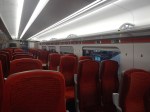
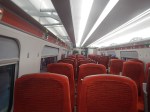
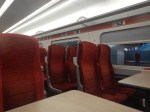
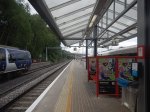
But I don’t think three in the afternoon is a time, when many passengers will need to go between Leeds and Bradford Forster Square stations.
Bradford Forster Square Station
I described that station, with its new Platform 0 in Bradford Forster Square Station – 20th May 2025, where I said the station needed these additions.
The station needs a few additions, like a proper coffee shop, a better shop, ticket machines and toilets.
But it’s not been open very long.
Bradford Forster Square Station To King’s Cross For £25.70 With A Railcard
I bought this ticket from a Yorkshire Lass in the Ticket Office.
There Weren’t Many Passengers Between Bradford Forster Square And King’s Cross Stations
Only about a dozen passengers boarded the train at Bradford Forster Square and some got out at Leeds.
In fact the train wasn’t very busy all the way to London with perhaps twenty passengers in my carriage, when we arrived in King’s Cross.
Will This Service Develop Into A Two-Hourly London King’s Cross And Leeds Or Bradford Forster Square Service With A Trans-Yorkshire Service Tacked On?
Currently, it is the following.
- An express service between King’s Cross and Leeds with stops at Peterborough, Doncaster and Wakefield Westgate.
- An express service between King’s Cross and Bradford Forster Square with stops at Peterborough, Doncaster, Wakefield Westgate and Leeds.
- A local service between Doncaster and Bradford Forster Square with stops at Wakefield Westgate and Leeds.
- Additional calls on some services are at Stevenage, Grantham, Retford and Shipley.
In addition the following would be possible.
- Pairs of trains could split at Leeds, with one train going to Bradford Forster Square and the other train to somewhere like Harrogate, Huddersfield or Skipton.
- Additional stops could be added between Leeds and Bradford Forster Square without slowing services between Leeds and King’s Cross.
But then where does this fit with LNER buying ten CAF tri-mode trains?
Surely they would get better flexibility, if they’d bought more Azumas, which could run on the electrification all the way to Bradford Forster Square, Huddersfield and Skipton. If some had batteries, they could run all the way to Harrogate.
LNER’s Disabled-Unfriendly Refreshments System
I am not disabled, but I only have one fully-working hand, as the school bully broke my left humerus and I have difficulty doing certain things with my left hand, due to the quality of the care I received in Highlands Hospital in Winchmore Hill.
Having a left-sided stroke didn’t help either.
One of the things, I can’t do is take pictures on my mobile phone, so I always carry a proper camera. Because of the injury, I have also never read a QR code with my phone.
On LNER’s trains to get a drink, you either have to order it by reading a QR code or walking to the buffet.
As on the train going North, the buffet was closed, I went thirsty.
In future, if I have a choice of trains, I’ll choose one with a trolly service.
Are The CAF Tri-Mode Trains Part Of A Plan To Drive Open Access Operators Out Of Yorkshire?
This is possibly the only scenario that makes sense.
The ten-car tri-mode trains would be used to take over Grand Central’s services to Bradford Interchange and Sunderland, and Hull Trains services to Hull.
After Monday, LNER are now running more daily services to Bradford Forster Square, than Grand Central are to Bradford Interchange.
If like my return to London on Tuesday, you can buy a walk-up ticket on LNER, then why would you travel on Grand Central.
Conclusion
£68.70 is not a bad price for what is in effect a walk-up day return to Bradford Forster Square.
I’ve just looked how much, I would be charged for an advance ticket on Friday, using the trains I used on Tuesday.
I could get a ticket for £25.70 going North and £28.95 going South or a total of £54.65. All are with my Senior Railcard.
But it does look to me, that LNER and the Government are trying to drive Grand Central off the Bradford route.
If I am right and Hull Trains and Lumo will be next in LNER’s sights, then what was Starmer and other Government ministers doing at the launch of orders for new trains for Grand Central, Hull Trains and Lumo?
Arriva’s Grand Central Applies For Extended Track Access Rights
The title of this post, is the same as that of this news item from Arriva.
These three bullet points, act as sub-headings.
- Grand Central to submit application to the rail regulator for extended track access up to 2038.
- Proposals for a new, greener fleet are outlined as part of the application.
- Application signals Arriva’s long-term commitment to UK rail.
These three paragraphs add more detail to the application.
Arriva Group’s UK open access train operating company, Grand Central, has today announced it is seeking to extend its existing track access rights until 2038, securing its services for the next 15 years and unlocking Arriva’s intentions to invest in new, state-of-the-art trains.
Grand Central has been operating services on the East Coast mainline since 2007 as an open access operator, which means it receives no government funding or subsidy. It directly links 15 destinations, including cities in Yorkshire and the North East with London’s Kings Cross.
The application represents a significant commitment to long-term services and supports its plans to expand services with improved connectivity and increased frequency, as outlined in a previous application, submitted to the Office of Rail and Road in May this year.
These are my observations and thoughts.
Grand Central’s Current Services
Grand Central currently runs two separate services.
- King’s Cross and Sunderland via Peterborough,York, Thirsk, Northallerton, Eaglescliffe and Hartlepool – six tpd
- King’s Cross and Bradford Interchange via Peterborough, Doncaster, Pontefract Monkhill, Wakefield Kirkgate, Mirfield, Brighouse, Halifax and Low Moor – four tpd
Note.
- tpd is trains per day.
- Weekend services are reduced.
- Peterborough is served by one train in each direction.
Grand Central have applied to run more services.
Distances Without Electrification On Current Services
Only the Northern ends of both routes are not electrified.
- King’s Cross and Sunderland – Longlands junction and Sunderland – 48.5 miles
- King’s Cross and Bradford Interchange – Doncaster and Bradford Interchange – 52.1 miles
Note.
- Going North, any train batteries could be charged on the East Coast Main Line.
- Before returning South, train batteries could need to be charged at the two terminals.
- Battery-electric trains would need infrastructure changes at the two terminals.
The two terminals; Bradford Interchange and Sunderland are not particular spacious.
These pictures show Bradford Interchange station.
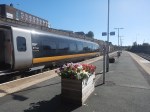
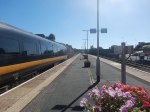

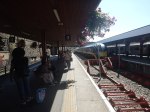

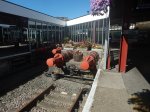

And these pictures show Sunderland station, which is underground.

Putting even a short length of catenary to charge battery-electric trains might not be that easy at either station.
Grand Central’s New Trains
Arriva’s news item, gives these details on the new trains.
- Increased capacity: The new trains would feature approximately 20 per cent more seats than the current Class 180 units, providing additional capacity to meet growing passenger demand.
- Modernised fleet: The new Bi-Mode trains would replace the existing 24-year-old Class 180 units bringing new customer focussed features and a more comfortable experience for passengers.
- Greener services: The Bi-mode trains would cut carbon emissions and provide smoother journeys for passengers. They can operate on electric and non-electric tracks, so they can serve long into the future as track electrification gathers pace across the UK.
Note.
- A five-car Class 802 train has approximately twenty percent more seats than a four-car Class 180 train.
- Hull Trains, LNER, Lumo and TransPennine Express all run Hitachi Class 80x trains on the East Coast Main Line, which could ease operations, if all trains were similar.
- Bi-mode trains are specified. Grand Central will change mode once on each trip.
- LNER have specified CAF Tri-mode trains for their new fleet. Will these have an extra level of complication, that Grand Central don’t need?
I suspect that rand Central will opt for the Hitachi trains.
Using The Joint Line Between Peterborough and Doncaster via Lincoln
The diesel Class 180 trains can use this line, in times of incidents or engineering works.
Class 800 and Class 802 trains can also use this diversion, so it might be sensible to be able to use the line in time of trouble.
Chiltern Trains’ London And Birmingham Services
Both Arriva and Chiltern Trains are subsidiaries of Deutsche Bahn.
Currently, Chiltern run six-car rakes of Mark 3 coaches, with a Class 68 locomotive at one end and a driving van trailer at the other, between London and Birmingham.
They are nice trains, but they are not zero-carbon.
Could these be replaced by an eight-car Class 802 train?
- Chiltern have said that they are looking for new trains.
- An eight-car Class 802 train could be a similar length to the current trains.
- London Marylebone and Birmingham Moor Street is only 111.7 miles.
- The Hitachi trains would offer an increase in capacity.
- They might save a few minutes.
But the trains will still be not zero-carbon.
This page on the Hitachi web site is entitled Intercity Battery Trains.
The trains for London Marylebone and Birmingham Moor Street would be built as conventional eight-car Hitachi trains, with perhaps four diesel engines.
- Over the years, the Chiltern Main Line would be partially electrified, starting perhaps in the middle around Banbury.
- One by one, the diesel engines would be replaced by batteries, so that the trains could run on battery power between the electrified sections.
- Eventually, the London Marylebone and Birmingham Moor Street service would be fully battery-electric.
- As Kidderminster is only twenty miles past Birmingham Moor Street, there must surely be possibility for extension of the service.
I believe that Hitachi’s Intercity Battery Train, is going to play a large part in the decarbonisation of UK railways.
Chiltern Trains’ London And Oxford Services
If eight-car Hitachi Intercity Battery Trains can handle London Marylebone and Birmingham Moor Street services, then I am fairly sure that five-car Hitachi Intercity Battery Trains could handle London Marylebone and Oxford services.
They would also have more capacity, than the current trains, that serve Oxford and Bicester Village.
Conclusion
It may be advantageous for Deutsche Bahn to put the two orders together.
More Open Access Services Could Be On The Way
In the February 2024 Edition of Modern Railways, there is an article which is entitled First Bid For Sheffield To King’s Cross Paths.
The article is mainly about FirstGroup’s proposal for a new Sheffield and London service, running under the Hull Trains brand.
But, this is the last paragraph.
Modern Railways understands First is working on a number of proposals for additional open access services, and this is an early statement of intent. Other existing open access proposals include Grand Union Trains’ plans for London to Stirling and Cardiff to Edinburgh services, along with an already approved London to Carmarthen service, and the recently submitted Wrexham, Shropshire and Midland Railway application for a London to Wrexham service. It is understood other organisations, including MTR and Virgin, are also working up plans for new open access services.
These are my thoughts.
Grand Union Trains
These posts talk about Grand Union Trains services, where a proposal has been filed with the Office of Rail and Road.
- Grand Union Trains – Cardiff and Edinburgh – Cardiff – Edinburgh Open Access Train Service Proposal Under Development
- Grand Union Trains – Carmarthen and London – Regulator Approves New Grand Union Train Service From Carmarthen To London Paddington
- Grand Union Trains – Stirling and Euston – Grand Union Sets Out Stirling Ambitions
Note.
- All three services are substantially electrified.
- Cardiff and Edinburgh is not electrified between Severn Tunnel Junction and Doncaster, which is 180.7 miles, but 258.4 miles are electrified.
- Once the Midland Main Line is electrified, the longest section of unelectrified track is the 72.5 miles between Severn Tunnel Junction and Bromsgrove.
- Carmarthen and London has 145.1 miles of electrification between London and Cardiff and about 75 miles of unelectrified track West of Cardiff.
- Stirling and Euston is fully electrified.
A bi-mode or tri-mode train with an independent range at least 190 miles would be able to handle all three services. It would also allow extension of the Stirling service to Perth, if later that was felt to be a better terminus.
Trains able to be used would include.
- CAF Tri-Mode Train – As being built for LNER
- Class 221 train – Will be released soon by Avanti West Coast.
- Class 222 train – Will be released soon by East Midlands Railways
- Class 802 train
- Class 755 train – A Greater Anglia driver told me, the train is designed for 125 mph.
- Class 93 locomotive and a rake of coaches.
Note.
- All trains except the Class 221 and Class 222 trains would be able to make use of the electrification.
- The Class 93 locomotive option is not a 125 mph train.
- CAF Tri-Mode Train and the Class 802 train have digital signalling as standard, which could allow some 140 mph running.
But I do believe after the completion of the Midland Main Line electrification, a battery-electric high speed train with an independent range of around 100 miles could also handle all routes with perhaps charging in a couple of stations, like Carmarthen.
The services could of course be commenced using refurbished Class 221 and Class 222 trains from Avanti West Coast and East Midlands Railways respectively.
I can see a bidding and design war going on between CAF, Hitachi and Stadler to supply Grand Union Trains.
Liverpool Lime Street Station
Liverpool Lime Street station has been updated and has the capacity for extra services.
I also feel, that with the improvements to the West Coast Main Line and especially between Crewe and Liverpool in preparation for High Speed Two, that journey times between London and Liverpool will improve to around two hours.
Given the attractions of Liverpool, this will increase passenger numbers on the route and I believe extra services will be viable.
The Wikipedia entry for the station says this about a proposal from Virgin.
In June 2019, Virgin Trains lodged an application for an open access service from London Euston to Liverpool Lime Street calling at Nuneaton, Tamworth, Lichfield Trent Valley, Liverpool South Parkway and Liverpool Lime Street to rival the future West Coast Partnership franchise Avanti West Coast from December 2022.
It does seem to have gone quiet.
A Fast Zero-Carbon Route Between England And Ireland
This OpenRailwayMap shows Liverpool South Parkway station and Liverpool John Lennon Airport.

Note.
Liverpool South Parkway station is in the North-West corner of the map.
The orange track at the top of the map is the Liverpool branch of the West Coast Main Line.
At the bottom of the map, the long runway of Liverpool John Lennon Airport can be seen.
I believe that a fast link could be developed between the station and the airport.
- Initially this would be a coach.
- But later it could be developed as a tram-train from the City Centre, that also would call at Liverpool South Parkway station.
Operation of the airport could be ideal for up to 30-seater electric airliners.
Destinations served could include.
- Belfast City – 151 miles
- Bristol – 135 miles
- Cardiff – 135 miles
- Derry/Londonderry – 210 miles
- Dublin – 140 miles
- Glasgow – 186 miles
- Haverfordwest – 127 miles
- Humberside – 104 miles
- London City – 176 miles
- Norwich – 180 miles
- Ronaldsway – 89 miles
- Southend – 172 miles
Note.
- Liverpool appears to sit in circle of airports
- An Eviation Alice has a range of 290 miles with 9 passengers.
- The Wikipedia entry for Heart Aerospace, says their 30-seater electric airliner says it has a range of 124 miles or more if less passengers are carried.
- The East-West runway is also in line with the prevailing wind, which should help take-off.
- Liverpool Airport is located such that there is access to plentiful supplies of green electricity and hydrogen.
I will be very surprised if Liverpool Airport doesn’t develop into an airport for zero-carbon flights.
This could attract open access rail services from London and across the country.
Huddersfield
In First Bid For Sheffield To King’s Cross Paths, I postulated that Huddersfield station could be an ideal extension of FirstGroup’s proposed open access service between London King’s Cross and Sheffield.
Chiltern Railways Seeks Fleet Proposals
The title of this post, is the same as that of this article on Rail Business UK.
These are the first two paragraphs.
Chiltern Railways has invited proposals from established rolling stock owners for the lease and maintenance of between 25 and 70 existing vehicles to operate inter-city and regional services on the Chiltern Main Line between London Marylebone and Birmingham.
The operator is seeking either ‘self-powered’ multiple units or locomotive-hauled coaches, which can operate at 160 km/h in fixed formations of five or six passenger vehicles.
It does appear that only existing vehicles will be allowed.
These are my thoughts.
A Very Tight Timescale
The Rail Business UK article, says this about entry into service.
Requests to participate are required by February 2. Driver training is planned for 2024, and entry to passenger service for early 2025.
This requirement probably means that new trains are not allowed, as I doubt any manufacturer could deliver them by early 2025.
Although, I could envisage a proposal, where a couple of trains are delivered early for driver training and the other trains are delivered, as soon as they are refurbished or perhaps even built.
100 mph Trains With At Least Five Cars
The second paragraph from the Rail Business UK article is very definite about speed and the length of trains.
The operator is seeking either ‘self-powered’ multiple units or locomotive-hauled coaches, which can operate at 160 km/h in fixed formations of five or six passenger vehicles.
It does appear, that this paragraph, rules out multiple units, with less than five coaches. Unless it counts a two-car Class 175 train and a three-car Class 175 train working together as a five-car fixed formation. They would though be 100 mph trains.
Noise Restrictions
This noise restriction must be met according to the Rail Business UK article.
The trains must also offer a reduction in ambient noise compared to Chiltern’s existing MkIII coaches hauled by a Class 68 diesel locomotive.
This could be a difficult condition to meet for some trains and probably rules out diesel locomotives.
What Fuels Can Be Used?
This is the only restriction in the Rail Business UK article.
Any diesel-powered trains should be compatible with use of alternative fuels, such as HVO, from the service introduction date.
Chiltern have experience of this fuel.
‘Self-Powered’ Multiple Units Or Locomotive-Hauled Coaches
i am tending towards the former for the following reasons.
- I was told by someone, that between London and Norwich, ‘self-powered’ multiple units are faster than locomotive-hauled coaches.
- Without the locomotive and the driving van trailer, you may get more passengers in a shorter train. This might avoid some platform lengthening.
- The Chiltern route to Birmingham has around a dozen stops and the lighter ‘self-powered’ multiple units may save time.
- Battery-electric ‘self-powered’ multiple units can be very quiet.
- Chiltern have had complaints about noise from diesel locomotives.
The last two points probably clinch it.
The Operating Speed Of The Chiltern Main Line
I have followed the Chiltern Main Line on OpenRailwayMap and virtually all of it is faster than 75 mph, with several sections of 90-100 mph running.
Hence the need for 100 mph trains!
What Distances Are Involved
The route can be split into sections.
- London Marylebone and High Wycombe – 28.1 miles
- High Wycombe and Banbury – 41 miles
- Banbury and Warwick – 21.8 miles
- Warwick and Birmingham Moor Street – 20.8 miles
Note.
- The total distance is 111.7 miles.
- High Wycombe and Warwick are 62.8 miles apart.
No sections are too challenging.
Could A Battery-Electric Train Handle The Route?
In The Data Sheet For Hitachi Battery Electric Trains, these were my conclusions for the performance.
- The battery pack has a capacity of 750 kWh.
- A five-car train needs three battery-packs to travel 100 miles.
- A nine-car train needs five battery-packs to travel 100 miles.
- The maximum range of a five-car train with three batteries is 117 miles.
- The maximum range of a nine-car train with five batteries is 121 miles.
It would appear that a five-car train with three batteries could handle the route, but there would need to be some form of charging at both ends of the route. This might not be too easy to arrange, as all three terminal stations are not the most spacious.
Could A Tri-Mode Train Handle The Route?
LNER have taken the tri-mode route with their new trains, which I wrote about in First Tri-Mode Long Distance Trains For The East Coast Main Line.
These trains could be a possibility, especially if they used battery power in stations where there have been complaints of noise.
I suspect CAF’s tri-mode trains could also be run on HVO, as it is likely they’ll have Rolls-Royce mtu engines, which can use the fuel.
As Hitachi’s Class 802 trains also use Rolls-Royce mtu engines and Hitachi are developing a tri-mode version, these trains are also a possibility.
Although tri-mode trains are a possibility, I doubt that delivery would be easy by the beginning of 2025.
Unless, the Government has tipped off CAF and/or Hitachi and they are already building some trains that can be completed as tri-modes.
After all, CrossCountry, Grand Central, South Western Railway and TransPennine may need tri-mode trains for their routes.
What About Hydrogen?
I don’t think, there is a hydrogen train, that would be suitable and could start driver training this year.
So, unless someone like Stadler says they have a train, hydrogen looks to be a non-starter.
An Unusual Solution
As I said on the previous section about hydrogen, the time-scale is tight and this probably cuts out totally new trains.
But we may have an unusual solution, that surprised everyone.
Consider.
- I have stated that I believe that a five-car Class 802 train with three battery packs has a range of 117 miles.
- The range would be enough to go between London Marylebone and Birmingham.
- So why not put in short lengths of overhead electrification at High Wycombe, Banbury and Warwick, where the train can have a quick splash and dash?
I am certain, that a unusual strategy like this can be made to work.
Conclusion
I suspect we’ll see an innovative solution, that gives ISquared what they want.
New LNER Fleet To Have Joint Line Capability
The title of this post, is the same as that of an article in the January 2024 edition of Modern Railways.
This is the text of the article.
LNER’s new fleet of CAF tri-mode trains, for which an order was confirmed in November, has been specified with the capability to operate via the Joint Line via Spalding and Lincoln in case of closures on the East Coast Main Line between Peterborough and Doncaster.
CAF will supply 10×10-car trains with overhead electric, battery and diesel capability, financed by Porterbrook. The inclusion of diesel engines as part of the winning bid, rather than a straightforward battery-electric unit, has surprised some observers, but LNER’s specification was that the fleet should have sufficient self-powered capability to cover the length of the joint line, which is approximately 90 miles. This is currently to be considered to be beyond the scope of battery-power alone, although as the technology evolves diesel engines could be replaced by batteries. The configuration of diesel engines and batteries within the sets has yet to be decided.
LNER frequently uses the Joint Line as a diversionary route, both during planned engineering work and at times of disruption, but only its bi-mode Azumas are currently able to traverse it under their own power (electric sets have been hauled by a diesel locomotive, but this is now a very rare occurrence). The new CAF fleet will replace the InterCity 225 electric fleet, and the self-power capability will provide valuable resilience to LNER to divert via non-electrified routes.
While the ‘225s’ are currently confined to services between King’s Cross and Leeds/York, if the enhanced December 2024 timetable goes ahead as currently planned (see story above) they will operate north of York once again on some of the hourly services which will terminate at Newcastle. However, LNER is having to limit the use of the sets before the Class 91 locomotives and Mk 4 coaches come due for major overhauls: the decision to retain 12 locos and eight rakes of coaches was based on the intended timescale for replacing the fleet at the time, but confirming the order for the new CAF tri-modes has taken longer than anticipated, largely due to delays in receiving Government approval to place the order.
This article has got me thinking.
The InterCity225 Trains Need Replacing Urgently
The Modern Railways article states that the need to replace the InterCity 225s is getting urgent, as more than the Azumas will be needed for the December 2024 timetable and the InterCity 225s are getting to the end of their economic life.
As LNER have been doing reasonably well lately, a cock-up caused by lack of trains at Christmas 2024 would be the last thing they need.
Currently, LNER have enough Mark 4 coaches for eight trains, so ordering ten new CAF tri-mode trains will allow for a small amount of extra services.
The CAF tri-mode trains were only ordered in November 2023, so getting them delivered for December 2024 would be tight.
As I write this on the 31st December 2023, trains from King’s Cross to Leeds included.
- 5 x InterCity225
- 5 x 10-car Azuma
- 7 x 9-car Azuma
- 2 x 5-car Azuma
So there were InterCity 225s running on that day.
A Few Distances Around Lincolnshire
I believe that because of offshore wind, interconnectors and other renewable energy developments, that Lincolnshire will become an energy powerhouse, supporting the East Midlands and also exporting electricity and hydrogen to Europe through pipelines and interconnectors.
Because of this and other developments, I believe that rail passenger traffic to and around the county will increase significantly.
These are a few selected distances.
- Doncaster and Cleethorpes – 52.1 miles
- Grantham and Skegness – 58.2 miles
- Lincoln and Doncaster – 36.8 miles
- Lincoln and Newark – 16.8 miles
- Lincoln and Peterborough – 54.8 miles
- Lincoln and Cleethorpes – 47.2 miles
Note.
- This means that the length of the Joint Line, which between Werrington Junction and where it rejoins the East Coast Main Line to the South of Doncaster is no more than ninety miles. This ninety mile distance was assumed in the Modern Railways article.
- Peterborough and Cleethorpes via Lincoln is ninety-two miles.
- I estimate that around four miles could be easily electrified at Werrington, which would reduce these two distances by four miles.
- Newark and Cleethorpes via Lincoln is sixty-four miles.
It looks like if a battery-electric train had a range of 92 miles and there was charging at Cleethorpes and Skegness, Lincolnshire could have a first class zero-carbon rail service.
CAF Tri-Mode Trains And The Joint Line
This is the first sentence in the Modern Railways article.
LNER’s new fleet of CAF tri-mode trains, for which an order was confirmed in November, has been specified with the capability to operate via the Joint Line via Spalding and Lincoln in case of closures on the East Coast Main Line between Peterborough and Doncaster.
Note.
- The Modern Railways article states the Joint Line is approximately 90 miles.
- As I stated earlier with some strategically placed electrification at Werrington and South of Doncaster, this distance without electrification can probably be shortened by a few miles.
It looks like any service run by a CAF tri-mode train will be able to use the Joint Line.
Hitachi Class 801 Trains And The Joint Line
Unless the Joint Line is electrified or the all-electric Class 801 trains are fitted with batteries of a sufficient size the Class 801 trains will not be able to use the Joint Line.
Hitachi Class 800/802 Trains And The Joint Line
If currently, the Class 800/802 trains can handle the Joint Line on their diesel engines, they can continue to do this.
Hitachi Class 803 Trains And The Joint Line
Unless the Joint Line is electrified or Class 803 trains are fitted with batteries of a sufficient size the Class 803 trains will not be able to use the Joint Line.
Hitachi Class 80x Trains With Batteries And The Joint Line
Note that Lumo’s Class 803 trains are already fitted with an emergency battery for hotel power. So Hitachi must have information on how their batteries perform in service.
This press release from Hitachi, which is entitled Hitachi And Eversholt Rail To Develop GWR Intercity Battery Hybrid Train – Offering Fuel Savings Of More Than 20% announced the start of Hitachi’s battery-electric program in December 2020.
This is a paragraph.
The projected improvements in battery technology – particularly in power output and charge – create opportunities to replace incrementally more diesel engines on long distance trains. With the ambition to create a fully electric-battery intercity train – that can travel the full journey between London and Penzance – by the late 2040s, in line with the UK’s 2050 net zero emissions target.
Hitachi have now published this page on their web site, which is entitled Intercity Battery Trains.
The page has this sub-heading.
Accelerate the decarbonisation of intercity rail with batteries
These are the first two paragraphs.
A quick and easy application of battery technology is to install it on existing or future Hitachi intercity trains. Hitachi Rail’s modular design means this can be done without the need to re-engineer or rebuild the train and return them to service as quickly as possible for passengers.
Replacing one diesel engine with just one battery reduces emissions by more than 20% and offers cost savings of 20-30%. Our intercity battery powered trains can cover 70km on non-electrified routes, operating at intercity speeds at the same or increased performance.
It appears to be a masterful application of an old electrical or software engineer’s trick.
In the 1960s, I spent time in two summer holidays building transistorised control systems in a rolling mills to replace obsolete control systems that used thermionic valves and relays.
Are Hitachi just replacing a diesel power pack with a battery pack, that has the same power and control functionality?
In The Data Sheet For Hitachi Battery Electric Trains, I looked at Hitachi’s published data sheet, which has these bullet points.
- 750kW peak power
- Weight neutral
- At least 20% lower CO2 emissions
- 70km on non-electrified routes
- 20% reduction in whole life maintenance costs
- Up to 30% fuel cost savings
- Zero emissions in and out of stations
- Charge on the move
- 10 year life span
Note.
- 750 kW peak power, is around the power of the diesel-engine, that will be replaced.
- I wouldn’t be surprised that powerwise, the battery pack looks like a diesel engine.
- Weight neutral means that acceleration and performance will be unchanged. I suspect this means that current timetables can be achieved.
- Batteries are easier to maintain than diesels.
- It is stated that a train can be fully-decarbonised.
I have a feeling these trains are no ordinary battery-electric trains.
This paragraph, that I quoted earlier gives details on battery range.
Replacing one diesel engine with just one battery reduces emissions by more than 20% and offers cost savings of 20-30%. Our intercity battery powered trains can cover 70km on non-electrified routes, operating at intercity speeds at the same or increased performance.
If one battery can give seventy kilometres or 43.5 miles, what distances would be possible in the various Hitachi Class 80x trains on the UK rail network?
- Five-car Class 800 – Three diesel engines
- Nine-car Class 800 – Five diesel engines
- Five-car Class 801 – One diesel engine
- Nine-car Class 801 – One diesel engine
- Five-car Class 802 – Three diesel engines
- Nine-car Class 802 – Five diesel engines
- Five-car Class 803 – One battery
- Five-car Class 805 – Three diesel engines
- Seven-car Class 807 – No diesel engine or battery
- Five-car Class 810 – Four diesel engines
Note.
- The Class 801 trains have one diesel engine for emergency use.
- The Class 803 trains have one battery for emergency use.
- The Class 807 trains appear to be built for top speed and acceleration and have no unnecessary weight.
In The Data Sheet For Hitachi Battery Electric Trains, I came to the conclusion, that if all diesel engine packs are be replaced by batteries, the train has a range of around 117-121 miles.
If my calculation is correct, I believe that Hitachi battery-electric trains will be capable of using the Joint Line, if all diesel engines are replaced by battery packs.
Surely, if a number of Hitachi trains could use the Joint Line in addition to the ten CAF tri-mode trains, this would minimise disruption to passengers and increase revenue on days, when the East Coast Main Line was closed for engineering works or an incident.
Will The Hitachi Class 80x Trains With Batteries Or The CAF Tri-Mode Trains Have The Longer Range Without Electrification?
Consider.
- Cleethorpes could be the problem, as it is 64 miles from Newark and 92 miles from Peterborough and a round trip without charging at Cleethorpes for a battery-electric might be a trip to far.
- But a tri-mode train like that from CAF with an on-board diesel, should have the range.
- More range for a tri-mode train, just needs bigger fuel tanks.
- I also suspect Cleethorpes has the equipment to refuel a diesel train, as all services to the station are diesel powered.
The article also says this.
The inclusion of diesel engines as part of the winning bid, rather than a straightforward battery-electric unit, has surprised some observers, but LNER’s specification was that the fleet should have sufficient self-powered capability to cover the length of the joint line, which is approximately 90 miles. This is currently to be considered to be beyond the scope of battery-power alone, although as the technology evolves diesel engines could be replaced by batteries.
Could it be that some of LNER’s routes like Aberdeen, Cleethorpes and Inverness have longer running without electrification, than Hitachi’s trains with batteries can achieve. Perhaps, this is why they lost the order?
Pairs Of Hitachi Class 80x Trains With Batteries And The Joint Line
I suspect if one five-car train with batteries can handle the Joint Line, then a pair could also handle it, if the train’s control system allowed it.
Will The Joint Line Be Slower Than The East Coast Main Line?
Consider.
- The Joint Line is not the slowest line in the country and large sections of the route, have a top speed of 60 mph or higher.
- It is surprisingly straight.
- There are some slower sections, through Lincoln and Sleaford.
- The average speed between Peterborough and Lincoln of local trains is about 50 mph.
- The average speed between Doncaster and Lincoln of local trains is about 48 mph.
I suspect that the expresses, should be able to achieve 60 mph between Peterborough and Doncaster, with a small amount of track improvement.
This would mean the following times between Doncaster and Peterborough.
- Via the Joint Line – 90 minutes
- Via East Coast Main Line – 50 minutes
It looks like forty minutes will be added to journey times.
Would There Be Any Point In Running Some Services Via The Joint Line?
Consider.
- Lincoln has one train per two hours (tp2h) to and from King’s Cross.
- A King’s Cross and Doncaster service could use the Joint Line and call at Peterborough, Spalding, Sleaford, Lincoln Central, Gainsborough Lea Road and Doncaster.
- If it terminated at Harrogate, Leeds or York, it could ease congestion on the East Coast Main Line between Peterborough and Doncaster.
- Lincoln is making a name for itself as a University town.
- Lincolnshire is getting more important with respect to renewable energy and innovative food production.
- The frequency would be at least one tp2h.
- If needed, Lincoln Central could be electrified to charge passing trains.
- The service could also go via Cambridge to provide East Anglia and its technological powerhouse with better connections to and from the North.
It would all depend on where extra rail services are needed.
Could Cleethorpes And Grimsby Town Have A Service From King’s Cross?
In Azuma Test Train Takes To The Tracks As LNER Trials Possible New Route, I discuss how in June 2023, LNER ran a test train to Cleethorpes and Grimsby Town.
- With all the energy development going on in North-East Lincolnshire, I suspect that a service between King’s Cross and Cleethorpes via Lincoln, Market Rasen, Barnetby and Grimsby Town could be viable.
- I suspect that the energy developments could find recruitment difficult and say a one tp2h service to Peterborough might ease the problem.
- Whether it ran to Lincoln via Newark and the East Coast Main Line or via Spalding and Sleaford would be down to predicted traffic.
- The distance via Newark would be 64 miles or 128 miles return.
- The distance via Peterborough would be 92 miles or 184 miles return.
- These distances would probably mean that a battery-electric train would need charging at Cleethorpes.
So would it be better if the Cleethorpes trains were to be run by CAF tri-mode trains.
Could Cleethorpes Services Be Paired With The York Service?
The current King’s Cross and Lincoln service uses the same path as a York service.
- Both services leave King’s Cross at six minutes past the hour.
- York trains leave at odd hours.
- Lincoln trains leave at even hours.
If the York service used the Joint Line and the Lincoln service were to be extended to Cleethorpes, Lincoln would receive an hourly service.
- One service could go via Newark and the other via Peterborough, Spalding and Sleaford.
- A path on the East Coast Main Line would be saved.
- The service to York could go via Leeds.
- The York service could be extended to Middlesbrough, Scarborough or Sunderland.
- I suspect that timings to Cleethorpes and York could be a similar six-hour round trip.
- CAF tri-mode trains would be needed for the Cleethorpes services.
- Either train type could work the York services.
There are various possibilities to improve the train service been London and Lincolnshire.
What Will Be The Maximum Range Of The CAF Tri-Mode Trains?
When determining this, LNER would probably have taken into account all current and every possible service, that they might run in the future, which was not fully electrified.
These would include.
- London King’s Cross and Aberdeen – 91.4 miles
- London King’s Cross and Bradford Interchange via Shaftholme junction – 47.8 miles
- London King’s Cross and Cleethorpes via Newark and Lincoln – 64 miles
- London King’s Cross and Cleethorpes via Peterborough, Spalding and Lincoln – 92 miles
- London King’s Cross and Harrogate via Leeds – 18.3 miles
- London King’s Cross and Inverness– 151.1 miles
- London King’s Cross and Hull via Temple Hirst junction – 36.1 miles
- London King’s Cross and Lincoln – 16.8 miles
- London King’s Cross and Middlesbrough via Northallerton – 20.3 miles
- London King’s Cross and Scarborough via York – 42.1 miles
- London King’s Cross and Sunderland via Northallerton – 47.4 miles
They would also have taken in possible diversion routes.
- London King’s Cross and Carlisle via Leeds – 86.8 miles
- London and Edinburgh – 400 miles
- London King’s Cross and Newcastle via Northallerton and Durham Coast Line – 59.6 miles
Note.
- The distance is the length without electrification.
- London King’s Cross and Carlisle is a possible diversion route, if between Leeds and Edinburgh is blocked.
- A London King’s Cross and Edinburgh capability might be needed, if there was something like a serious weather problem, bringing down the overhead wires.
- London King’s Cross and Newcastle via Northallerton and Durham Coast Line is a possible diversion route, if between Northallerton and Newcastle is blocked.
LNER’s longest route without electrification is to Inverness and it is 151.1 miles between Stirling and Inverness.
London King’s Cross and Cleethorpes via Peterborough, Spalding and Lincoln could be longer, if it were to be run as a return trip of 184 miles.
LNER will probably have specified the range they need on the longest route they run or might run in the future, as there is no point in buying a fleet of trains and then finding that they can’t handle all your routes. They would also include all possible emergency routes, just as they’ve already included the Joint Line.
Out of curiosity I asked Professor Google how far a diesel train could run on a full tank of diesel and got this answer.
According to the traction manual for 158/159 stock each coach has a 400 gallon tank or 1818 Ltr. £2500 at the filling station.
The manual also says that that is enough fuel to travel Waterloo to Exeter and back twice over. Which is 688 miles exactly. Guess there is spare in there for shunting and idling at terminus. Still an mpg of 1.7.
It looks to me, that if a humble Class 158/159 train has a range of nearly 700 miles, then LNER can probably have virtually any distance they want for their new trains.
These journeys will probably all be possible.
- Between London King’s Cross and Edinburgh – 400 miles
- A round trip between Stirling and Inverness – 302.2 miles
- A round trip between Peterborough and Cleethorpes – 184 miles
Professor Google also gives the diesel range of a Class 800 train as 650 miles.
Conclusion
It looks to me, that LNER, Lumo and FirstGroup have a serious plan to decarbonise their network.
All services, that can be decarbonised by replacing diesel generator units, with electrical battery packs.
LNER’s longer routes will use the new CAF trains.
These will be fully decarbonised at a later date.
What Will Be The Power Unit In LNER’s New CAF Tri-Mode Trains?
There is a short article in the January 2024 Edition of Modern Railways, that is entitled New LNER Fleet To Have Joint Line Capability.
This is said about the diesel engines in the new CAF tri-mode trains.
CAF will supply 10×10-car trains with overhead electric, battery and diesel capability, financed by Porterbrook. The inclusion of diesel engines as part of the winning bid, rather than a straightforward battery-electric unit, has surprised some observers, but LNER’s specification was that the fleet should have sufficient self-powered capability to cover the length of the joint line, which is approximately 90 miles. This is currently to be considered to be beyond the scope of battery-power alone, although as the technology evolves diesel engines could be replaced by batteries. The configuration of diesel engines and batteries within the sets has yet to be decided.
As the paragraph says that the diesel engines can be replaced by batteries and the trains are from CAF’s modular Civity family, it sounds like CAF are using a modular power system.
The CAF Class 195, 196 and 197 diesel multiple units, that are used in the UK, use mtu Railcar Power Packs, which are shown on this web page.
mtu are a Rolls-Royce subsidiary.
mtu also make a Hybrid Power Pack, which is shown on this web page.
This is the sub-title on the web page.
Individual hybrid drive with a modular design
Underneath is this sub-heading.
It takes revolutionary thinking to develop a smart rail drive system like the Hybrid PowerPack. Find out what makes mtu different, and why our Hybrid PowerPack brings added value to operators while benefiting passengers and the environment alike.
These paragraphs describe the mtu Hybrid PowerPack.
The Hybrid PowerPack was developed from the successful mtu underfloor drives: Tried and tested mtu PowerPacks were modified and equipped with additional components and functionalities in order to integrate hybrid technology. The mtu hybrid concept consists of a modular kit with a variety of drive elements. It satisfies all existing railway standards and can be arranged according to customer specifications.
Thanks to its compact design and the use of power-dense electrical machines, the Hybrid PowerPack can be easily integrated in the existing installation space under the floor, both in new rail vehicles or for repowering. mtu EnergyPacks – the energy storage – can be positioned at various places in the vehicle: on the roof or underfloor. The modular design creates great flexibility for operators who are planning new diesel hybrid vehicles or want to convert existing vehicles.
Based on specifications for the hybrid train and the profile of the planned routes, mtu can simulate the lifecycle costs (capital, maintenance and operating costs) of specific projects. This means that a variety of drive options can be defined even before the design stage. Together with you, we then determine an optimal concept based on your needs.
Note.
- mtu Hybrid PowerPacks can be used in new rail vehicles or for repowering.
- It looks to me, that the total of 161 of Class 195, 196 and 197 trains, that will soon be all in service in the UK may well have been designed to be converted to hybrid power using mtu Hybrid PowerPacks.
- In Would You Buy A Battery Energy Storage System From Rolls-Royce?, I talk about how mtu EnergyPacks are also used for battery storage.
- In fact, mtu EnergyPacks could be the secret ingredient to both systems.
This looks like a typical Rolls-Royce product, that pushes the design to the full.
I will be very surprised if LNER’s new CAF tri-mode trains are not powered by mtu Hybrid PowerPacks.
I have a few thoughts.
CAF Are Going For A Proven Solution
CAF are going for a proven power solution, that they will also need for 161 trains in the UK.
Integration of systems like these can be difficult but CAF are using another company to combine diesel, electric and battery power in an efficient way.
I also feel that mtu Hybrid PowerPacks have a big future and Rolls Royce mtu will do what it takes to make sure they dominate the market.
Decarbonising The Trains
I suspect given Rolls-Royce’s philosophy, that the diesel engines will run on sustainable fuels from delivery.
But as the extract from the Modern Railways article says, the space used by diesel engines can be used for batteries.
Follow The Money
Consider.
- Porterbrook and Rolls-Royce are both based in Derby.
- Porterbrook are a rolling stock leasing company, who own a lot of rolling stock, that could be converted to hybrid trains, using mtu Hybrid PowerPacks.
- Porterbrook are financing LNER’s new CAF tri-mode trains.
I wouldn’t be surprised if Porterbrook and Rolls-Royce have done a lot of due diligence on these trains.
Other Train Operators Will Follow
LNER’s new CAF tri-mode trains may be a bespoke design for LNER, but other train operators will need a similar train.
- CrossCountry need a replacement low-carbon fleet.
- ScotRail need a replacement fleet for their Inter7City services.
- Great Western Railway need a replacement fleet for their GWR Castles.
- Grand Central need a replacement low-carbon fleet.
- TransPennine Express need new trains.
- Open Access Operator Grand Union Trains will need trains.
I think CAF are gong to be busy.
Conclusion
The more I read about Rolls-Royce and its engineering, the more I’m impressed.
Are LNER Going To Take On The Airlines?
Nine years ago, I wrote Edinburgh – Plane Or Train?, after a trip to Scotland, where I took easyJet up and came back in First Class by train.
- Both trips were about five hours door-to-door.
- The flight was about six quid more,
- But I got free food and drink on the train.
- Security on the plane was a pain.
- I had to take my passport for identification at Stansted.
I haven’t flown internally in Great Britain since, although, I have flown to Belfast.
For shorter flights the market is going towards rail, as these posts seem to suggest.
- 2.7M Tonnes Of Co2 Could Be Saved Per Year If UK Domestic Flights Went Electric
- Air Travellers To Be Hit By Carbon Charge On All Tickets
- Climate Change ‘May Curb Growth In UK Flying’
- France Bans Short-Haul Flights To Cut Carbon Emissions
- KLM Replaces Plane With High Speed Train
- Lumo Carbon Data Shows Its Trains Are 22 Times Greener Than Flying
- Next Time I’ll Go By Train
- Ryanair One Of Europe’s Top Polluters, EU Data Suggests
- Stop Taking Internal Flights And Go Green, Says Lib Dem Contender Davey
The climate seems to be turning against flying short-haul.
This is a paragraph, in this press release from LNER, which is entitled First Tri-Mode Long Distance Trains For The East Coast Main Line.
This new fleet of trains will keep LNER on track to reduce its emissions by 67 per cent by 2035 and be net zero by 2045. LNER has already reduced carbon emissions by 50 per cent compared with 2018/19. Per mile, LNER trains produce 15 times less carbon emissions than a domestic flight.
Are LNER building a number of climate-based sticks, with which to beat the airlines on the routes, where they compete?
These are my thoughts on the various routes, where LNER compete with airlines.
Newcastle
Newcastle is an interesting one.
- Newcastle station is in the city centre and is on the Tyne and Wear Metro.
- London King’s Cross is one of London’s major Underground hubs.
- There are lots of buses and local trains within walking distance of both stations.
- There are three trains every two hours and an additional eight trains per day (tpd) between the two London King’s Cross and Newcastle stations.
- Lumo also run five tpd on the route.
- There are generally no security delays at rail stations.
- London King’s Cross is laid out to maximise passenger flows. If it gets busy, everybody just walks out into King’s Cross Square.
- I’ve never had a problem at Newcastle station with overcrowding.
Perhaps, if you live near one of the airports, flying is more convenient.
LNER’s weapons against the airlines between London King’s Cross and Newcastle will be convenience and journey times.
Convenience is all about the location of the stations, their excellent local transport networks and good walking routes around the station.
Journey times will only get better, as the magic of digital in-cab signalling, allows the Azumas, the new CAF tri-mode long distance trains and the few remaining InterCity 225s to show what they were designed to do.
Dalton-on-Tees, where the first phase of the digitally signalling will end, is 39.8 miles South of Newcastle, so once the Newcastle train is passes Dalton-on-Tees on the East Coast Main Line, it will be a digital-signalled electrified railway all the way to Woolmer Green.
- Dalton-on-Tees is 39.8 miles South of Newcastle
- Woolmer Green is 244.8 miles South of Newcastle.
- Dalton-on-Tees and Woolmer Green is 205 miles.
- Newcastle and Dalton-on-Tees takes 37 minutes.
- Woolmer Green and King’s Cross takes 18 minutes
- Trains take typically an average three hours and nine minutes between London and Newcastle.
- A typical train time by LNER between Dalton-on-Tees and Woolmer Green is two hours and 14 minutes.
- This is an average speed of 91.8 mph between Dalton-on-Tees and Woolmer Green.
- Between London King’s Cross and Newcastle is fully-electrified.
I can build a table of timings and savings at various average speeds.
- 120 mph – 103 minutes – two hours and 38 minutes – 31 minutes
- 125 mph – 98 minutes – two hours and 33 minutes – 36 minutes
- 130 mph – 95 minutes – two hours and 30 minutes – 39 minutes
- 135 mph – 91 minutes – two hours and 26 minutes – 43 minutes
- 140 mph – 88 minutes – two hours and 23 minutes – 46 minutes
Note.
- The first field is the average speed between Dalton-on-Tees and Woolmer Green.
- The second field is the time between Dalton-on-Tees and Woolmer Green.
- The third field is the time between London and Newcastle.
- The fourth field is the saving over current timings.
- The London and Newcastle time is calculated by adding the times for the three sections together.
I have regularly timed trains at a very constant 125 mph, so with digital signalling, I suspect an average of 130 mph is possible.
This would mean, times of a few minutes under two hours and thirty minutes could be possible between London and Newcastle.
Edinburgh
Edinburgh builds on the improvements South of Newcastle.
Edinburgh station Waverley is a well-connected station.
- There are lots of buses, local trains and the Edinburgh Tram within walking distance of Edinburgh Waverley station.
- There are three trains every two hours and an additional seven tpd between the London King’s Cross and Edinburgh Waverley stations.
- Lumo also run five tpd on the route.
- Trains take typically an average four hours and thirty minutes between London and Edinburgh Waverley.
- Any savings because of the digital in-cab signalling between London and Newcastle can be applied to London and Edinburgh Waverley services.
As my calculations showed that averaging 130 mph between Dalton-on-Tees and Woolmer Green could save 39 minutes on journey times, I am fairly sure than a sub-four hour journey time will be possible between London and Edinburgh Waverley.
It should also be noted that that the power supply has been improved between Newcastle and Edinburgh Waverley.
- The distance between Newcastle and Edinburgh Waverley is 124.2 miles
- Newcastle and Edinburgh Waverley takes around one hour and 30 minutes.
- This is an average speed of 82.8 mph between Newcastle and Edinburgh Waverley.
- Between London King’s Cross and Edinburgh Waverley is fully-electrified.
As the record time for between London King’s Cross and Edinburgh Waverley was set by an InterCity225 train in 1993 at three hours and twenty-nine minutes, I suspect that with more digital signalling and some track improvements, that there are more journey time improvements to be squeezed out.
I certainly believe that a time of three hours and fifty minutes between London and Edinburgh Waverley will be regularly achieved. This is a journey time saving of around forty minutes.
Dundee
Dundee has an airport and a station on the East Coast Main Line.
Trains between London King’s Cross and Dundee take around five hours and 45 minutes.
LNER run three trains per day to and from London King’s Cross and one tpd to and from Leeds.
CrossCountry also run services.
Loganair has two flights per day to Heathrow.
Aberdeen
Aberdeen builds on the improvements South of Edinburgh.
The four direct tpd between London and Aberdeen take around seven hours and ten minutes.
This should come down to around six hours and thirty minutes with the journey time savings between London King’s Cross and Edinburgh Waverley.
Will this tempt travellers from the airlines?
Battery-Electric Trains To Dundee And Aberdeen
One thing that will help, is that Edinburgh and Aberdeen is to be partially electrified.
InPiling Work To Get Underway To Electrify Line To Fife, I included this Network Rail map of the electrification.
This map has been downloaded from the Network Rail web site.
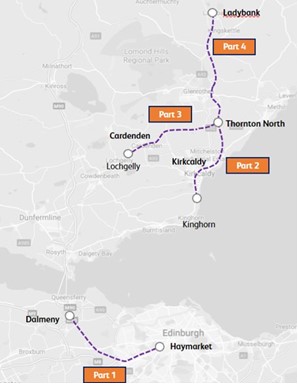
The electrification is split into four phases.
- Haymarket and Dalmeny – 25 km
- Kirkcaldy and Thornton North – 25 km.
- Lochgelly and Thornton North – 20 km.
- Thornton North and Ladybank – 34 km.
Note.
- The last three phases of electrification connect to Thornton North.
- The new rail link to Leven will also be electrified. and connected to Thornton North.
- The Forth Bridge is not to be electrified.
As Ladybank station is just 91.4 miles from Aberdeen, I suspect LNER will use Hitachi Intercity Battery Hybrid Trains to serve Aberdeen.
If these trains haven’t got the range, then I suspect LNER’s new CAF Tri-Mode Trains could handle the route.
Inverness
Inverness has a problem.
Zero-carbon trains will be unlikely to get to the city without full electrification of the Highland Main Line.
- Dunblane is the nearest electrified station to Inverness, but it is 146.2 miles away over a route with lots of steep climbs.
- I doubt that a battery-electric train could handle that route.
One solution would be for LNER to run the new CAF Tri-Mode Trains to Inverness using HVO or biodiesel.
Glasgow
Glasgow is the only other Scottish city with an airport and good rail connections to the South.
I am sure that Avanti West Coast will target airline passengers, if LNER prove it is a successful policy.
Other Factors
These are other factors, that will come into a traveller’s choice.
First Class
Some travellers like a bit more comfort and service.
Ability To Work
Some travellers like to work on a train.
You Don’t Get Tables On a Plane
I like to open a paper or magazine flat, which is difficult on a plane.
Views Tend To Be Better On a Train
Providing you get a window!
Parking Tends To Be Better At An Airport
But it may be more expensive!
Security Is Less Hassle On A Train
At the moment!
You Don’t Need To Prove Your Identity On A Train
Not in the UK! Yet!
Conclusion
It looks like LNER can offer the airlines to four of our major Northern cities serious zero-carbon competition.
Do LNER Have Plans For Lincolnshire?
I ask the question in the title of this post, for two reasons.
- In Azuma Test Train Takes To The Tracks As LNER Trials Possible New Route, I talked about how LNER had run a test train to Cleethorpes.
- In First Tri-Mode Long Distance Trains For The East Coast Main Line, I talked about LNER’s order for tri-mode long distance trains.
Note.
- London King’s Cross and Cleethorpes via Newark and Lincoln is just over 200 miles.
- Around eighty miles between London King’s Cross and Cleethorpes is not electrified.
- The Cleethorpes/Grimsby area is doing well because of all the offshore wind and the power stations at Keadby.
- I am fairly sure, that Lincolnshire will attract more energy-related businesses or ones that need a lot of energy.
- Lincoln is a city that is becoming more important for business and education.
- Lincoln probably needs a train service to the capital of at least one train per hour (tph).
For a train to do the round-trip between London King’s Cross and Cleethorpes, without refueling or charging the batteries at Cleethorpes, needs a train with a range without electrification of over 150 miles.
It seems to me, that LNER’s new CAF tri-mode long distance trains would be ideal to run a one train per two hours (tp2h), between London King’s Cross and Cleethorpes.
- The service could call at Stevenage, Peterborough, Grantham, Newark Northgate, Lincoln, Market Rasen, Barnetby and Grimsby Town.
- I estimate that the trip would take about 0ne hour and 55 minutes to Lincoln and two hours and 55 minutes to Cleethorpes.
- The CAF tri-mode long distance trains could probably easily handle the 160 miles without wires.
- Cleethorpes can handle a ten-car train.
The current London King’s Cross and Lincoln service and the future London King’s Cross and Cleethorpes would be timed to give Lincoln an hourly service to and from London King’s Cross.
Serving Sleaford And Spalding
It must surely be possible to route the Cleethorpes trains to the South of Lincoln, via Sleaford, Spalding and the new Werrington dive-under, so that Sleaford and Spalding would have a direct service to London.
Don’t Forget Skegness And Boston
Consider.
Skegness, Boston and other places are connected to the East Coast Main Line, by an hourly train to Nottingham via Grantham.
They are also connected to Lincoln and Peterborough at Sleaford.
This OpenRailwayMap shows the lines at Sleaford.
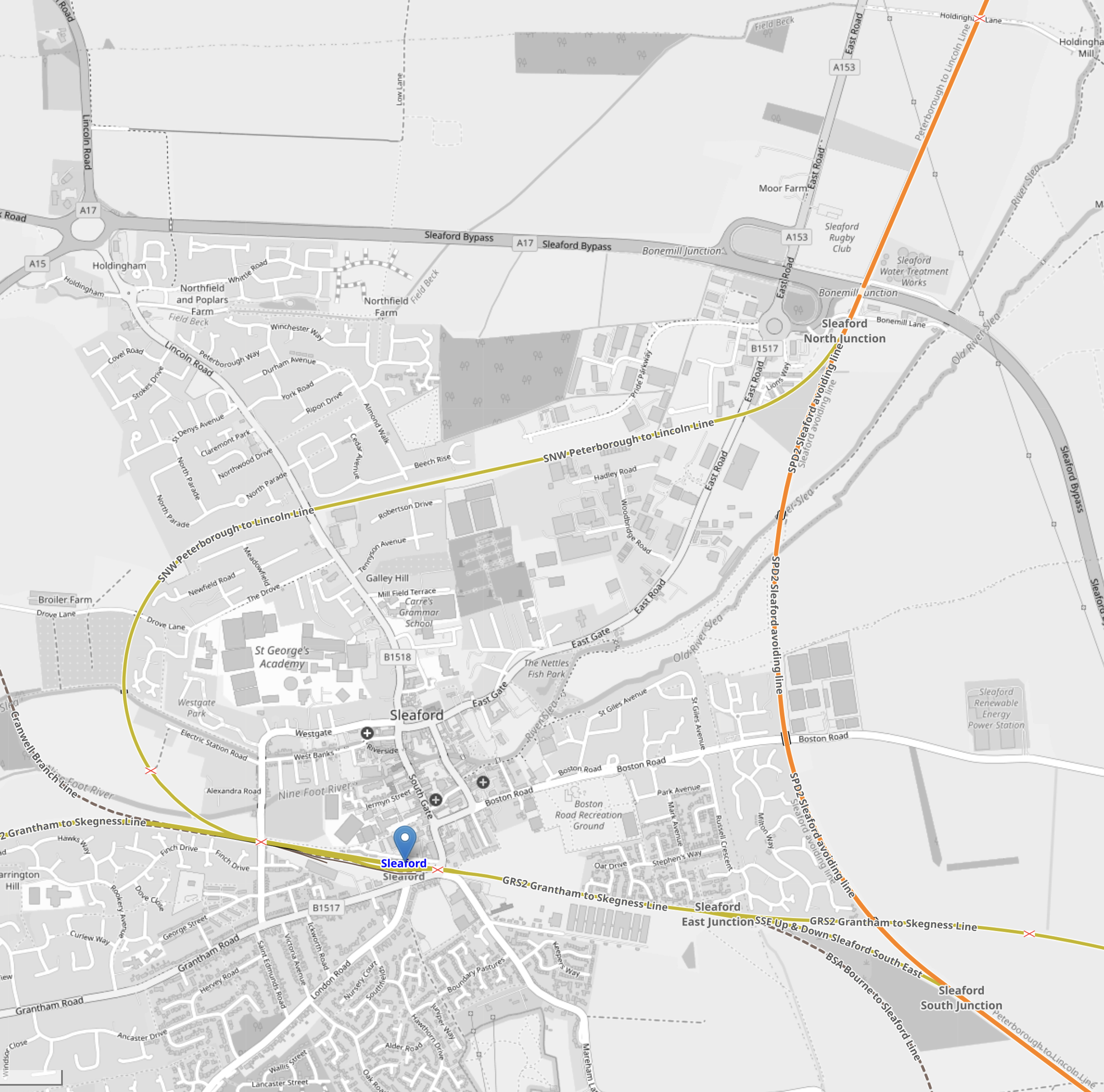
Note.
- Sleaford station is marked with the blue arrow.
- The orange track is the Peterborough and Lincoln Line, that avoids Sleaford.
- The yellow track going East-West is the Grantham and Skegness Line.
- There is a loop from the Peterborough and Lincoln Line, so that passenger trains can go through Sleaford station.
I think that there are possibilities to improve the experience at Sleaford.
One possibility must be to build a Park-and-Ride station, where the two lines cross.
How Many Trains Would Be Needed For London King’s Cross and Cleethorpes Via Peterborough?
I estimate that the journey time could be around two hours and 45-50 minutes, so perhaps a six-hour round trip would be possible.
To run an hourly service would need six trains, with three needed for one tp2h.
New Infrastructure Required
The only new infrastructure required, might be some method of refuelling the CAF tri-mode long distance train at Cleethorpes.
LNER’s New Sunday Timetable
LNER’s new Sunday timetable, that starts on the 10th December 2023 is now available to view on this page of the National Rail web site, where this is said.
Sundays are now one of the most popular days to travel on LNER’s network.
To support this increase in demand, LNER is introducing three additional Sunday services into its timetable starting in December 2023 – two (one each way) between Leeds and London Kings Cross and one between Doncaster and London.
There will also be more seats added to some trains with eight existing Sunday services becoming longer trains. The current five carriage services will be replaced with either nine or ten carriage Azuma trains for destinations including Leeds, Harrogate and Lincoln.
This equates to more than 3,000 additional seats on a Sunday and will help reduce overcrowding and increase connectivity for more people between Yorkshire and London.
To provide additional Sunday seating capacity, due to the lengthening of some London Kings Cross to Harrogate services on Sundays, two northbound station calls at Horsforth need to be removed on Sundays only. The impacted services are the 09.05 and 17:05 London Kings Cross to Harrogate trains.
Note.
- Horsforth looks to have short platforms.
- Last Sunday, Harrogate to London services were three nine-car and three five-car trains.
- In September 2023, I wrote Yorkshire To See More LNER Services And Longer Trains.
LNER certainly seem to be fulfilling the last promise.
Additionally, in this article on Modern Railways, which is entitled LNER Orders CAF Tri-mode Sets, this is said.
Modern Railways understands the new fleet will be maintained at Neville Hill depot in Leeds and, like the ‘225’ sets, will be used predominantly on services between London and Yorkshire, although unlike the ‘225s’ the tri-modes, with their self-power capability, will be able to serve destinations away from the electrified network such as Harrogate and Hull.
So are LNER gradually moving towards the new timetable they will use after the CAF tri-mode trains are delivered?
 The Anonymous Widower