New Rail Service From Newcastle To Edinburgh To Stop At These Northumberland Stations
The title of this post, is the same as that of this article on the Chronicle Live.
Details of the service are as follows.
- It will be run by TransPennine Express.
- It starts in December 2021.
- It will run five times per day (tpd)
- It will call at Cramlington, Morpeth, Widdrington, Alnmouth, Berwick-upon-Tweed, Reston and Dunbar.
It is planned to run at least until May 2023.
These are my thoughts.
What Trains Will TransPennine Express Use?
The service will probably need a single train, if it was run by a dedicated fleet of trains, that just shuttled between Edinburgh and Newcastle. TransPennine could use either an electric Class 802 train or a diesel Class 185 train.
The diesel train might not be a good idea for operational reasons as TransPennine’s current services to Newcastle and Edinburgh use Class 802 trains.
But this service wouldn’t need a Class 802 train, as the route is fully electrified, so TransPennine might use a Class 800 train, if one were available from another company in the First Group.
TransPennine could also extend selected Manchester Airport and Newcastle services to Edinburgh, which might be the most efficient ways of using both trains and platforms in Newcastle.
This would give those using the intermediate stations between Edinburgh and Newcastle a service to and from Manchester Airport and the intervening stations, with a change at Newcastle, which would involve staying on the same train.
I’d organise the service as five tpd between Manchester Airport and Edinburgh with calls at Manchester Piccadilly, Manchester Oxford Road, Manchester Victoria, Huddersfield, Dewsbury, Leeds, York, Northallerton, Darlington, Durham, Chester-le-Street, Newcastle, Cramlington, Morpeth, Widdrington, Alnmouth, Berwick-upon-Tweed, Reston and Dunbar.
The big advantage of this, is that TransPennine could use the existing Class 802 trains, although they may need one more.
Reston Station
It looks like it will be a much needed service, that will get the new Reston station up and running.
I suspect that, passenger numbers at Reston station will determine the calling pattern after May 2023.
Will Other Services Continue?
TransPennine Express only has one service that stops between Newcastle and Edinburgh and that is the hourly service between Liverpool Lime Street and Edinburgh stations and that only stops at Morpeth.
I doubt this service will be changed, although after May 2023, it may make some extra stops depending on passenger numbers on the new service.
It should be noted that CrossCountry and LNER call irregularly at Alnmouth, Berwick-upon-Tweed and Dunbar.
As LNER are in rather a mess over their new timetable, I suspect that after May 2023, there could be a bit of a sort out of services.
How Will The New Service Fit With The Reopened Northumberland Line?
Initially the Northumberland Line will run as far as Ashington and won’t open until 2023 at the earliest.
But plans exist to extend the Northumberland Line to Morpeth.
The new service would fit well with an extended Northumberland Line service.
How Will The New Service Fit With East Coast Trains New London And Edinburgh Service?
East Coast Trains will be running a new Open Access service between London and Edinburgh from this autumn.
- It will have a frequency of 5 tpd.
- It will stop at Newcastle, Morpeth and Stevenage.
- It will offer one way fares of £25.
East Coast Trains are another First Group company.
As both services are five tpd in both directions, will the two services co-ordinate stops, so that passengers between say London and Reston can take advantage?
Going North, the stopping train could follow the East Coast Trains express and going South the stopping train would be a few minutes in front of the express.
This would also help with maximising capacity between Edinburgh and Newcastle on the busy East Coast Main Line.
Conclusion
This new stopping service between Edinburgh and Newcastle looks to be a simple solution to improve passenger services for intermediate stations between the two important cities.
Improving The Cross Country Route
The Cross Country Route is one of the UK’s forgotten railway lines.
- It runs between York and Bristol Temple Meads.
- Intermediate stations include Leeds, Wakefield Westgate, Rotherham Central, Meadowhall, Sheffield, Chesterfield, Derby, Burton-on-Trent, Tamworth, Birmingham New Street, University, Bromsgrove, Worcestershire Parkway, Cheltenham Spa and Bristol Parkway.
- At the Northern end trains can swap to the electrified East Coast Main Line and can extend services to Edinburgh and Aberdeen.
- At the Southern end trains can swap to the Great Western Main Line and extend services to Taunton, Exeter, Plymouth and Penzance.
- Trains can also swap to the South Wales Main Line in the Bristol area, to serve Cardiff and South Wales.
- Operating speeds are generally around 100 mph, but there are sections of 125 mph running.
- Some sections of the route have 25 KVAC overhead electrification.
I very much believe that it is a route that is ripe for improvement.
These are my thoughts.
Extra And Rebuilt Stations
Recently, Worcestershire Parkway station has been opened on the route.
Bromsgrove station was rebuilt and reopened in 2016.
Derby station was remodelled in 2018.
In addition, there are aspirations for other mew stations and station improvements on the route.
- University station is being rebuilt for the 2022 Commonwealth Games.
- Sheffield Region are proposing a station at Barnsley Dearne Valley. I wrote about this in Sheffield Region Transport Plan 2019 – A New Station At Barnsley Dearne Valley.
- Sheffield Region may be creating a new station in Rotherham.
I can see more station improvements and additions on the Cross Country Route.
New Trains
Most services are run by CrossCountry, who only use diesel trains.
Their core services are as follows.
Plymouth And Edinburgh uses the route between York and Bristol Temple Meads. The service runs under wires North of Leeds and at Bristol Parkway and at Birmingham New Street.
Southampton Central And Newcastle uses the route between York and Birmingham New Street. The service runs under wires North of Leeds and at Reading and at Birmingham New Street.
Bournemouth and Manchester Piccadilly uses the route at Birmingham New Street. The service runs under wires North of Birmingham New Street.
Bristol Temple Meads and Manchester Piccadilly uses the route between Bristol Temple Meads and Birmingham New Street. The service runs under wires at Bristol Parkway and North of Birmingham New Street.
Cardiff Central and Nottingham uses the route between Gloucester and Derby. The service runs under the wires West of Bristol Parkway and at Birmingham New Street.
Birmingham New Street and Nottingham uses the route between Birmingham New Street and Derby. The service runs under the wires at Birmingham New Street.
Birmingham New Street and Stansted Airport does not use the route. The service runs under the wires at Birmingham New Street and around Cambridge and Peterborough.
Birmingham New Street and Leicester does not use the route. The service runs under the wires at Birmingham New Street.
Note.
- Several services run under wires for sufficient time to charge a battery-electric train.
- Several services turn in stations for sufficient time to charge a battery-electric train.
- At least six or possibly seven of the services run for at least fifty miles on tracks that can handle 125 mph running. Some of this track will be upgraded to 140 mph with digital signalling.
This Hitachi infographic shows the Hitachi Intercity Tri-Mode Battery Train.

I believe that Hitachi could produce a version of this train, that would partially meet CrossCountry’s need for a new fleet to reduce their carbon footprint.
For the purpose of this analysis, I will assume this about the trains.
- Battery power will always be used in stations.
- The trains have a battery range of around forty miles at 100 mph.
- Running at 125 mph will need 25 KVAC overhead electrification.
This table shows the current electrification status of the Cross Country Route.
- York and South Kirby junction- 45.4 miles – Electrified
- South Kirby junction and Birmingham New Street – 96.6 miles – Not Electrified
- Birmingham New Street and Bromsgrove – 16 miles – Electrified
- Bromsgrove and Bristol Parkway – 69.8 miles – Not Electrified
- Bristol Parkway and Bristol Temple Meads – 4.8 miles- Not Electrified
The trains would appear to still need to use diesel on some parts of the route.
Or Hitachi ABB Power Grids could install short lengths of 25 KVAC overhead electrification to top up the trains’ batteries in appropriate places.
I believe CrossCountry could decarbonise this route using battery-electric trains and discontinuous electrification.
This would surely refresh the line and attract passengers, but would the trains speed up the service?
- Birmingham New Street and Leeds is 116.4 miles and currently takes just under two hours at an average speed of 59.3 mph in a Class 221 train.
- Several sections of line between Birmingham New Street and Leeds can sustain 125 mph running.
- London Liverpool Street and Norwich is 114.5 miles and has regularly been achieved by British Rail-era electric trains in ninety minutes on a 100 mph line, which is an average speed of 76 mph.
- Averaging 76 mph between Birmingham New Street and Leeds would give a time of 92 minutes.
For these and other reasons, I am fairly sure that a battery-electric train capable of running at 125 mph with fast acceleration could run between Birmingham New Street and Leeds in under ninety minutes, with the addition of some discontinuous electrification.
- There is currently one tph between Birmingham New Street and Leeds, which also serves Sheffield.
- There is also one tph between Birmingham New Street and Sheffield by a different route.
- There is two tph between Birmingham New Street and Nottingham.
- My calculations indicate that the Nottingham and Sheffield services would take under an hour to and from Birmingham New Street, with the Leeds service taking thirty minutes longer.
In normal circumstances no diesel would be used.
Track Improvements And Discontinuous Electrification
This table shows the current electrification status of the Cross Country Route.
- York and South Kirby junction- 45.4 miles – Electrified
- South Kirby junction and Birmingham New Street – 96.6 miles – Not Electrified
- Birmingham New Street and Bromsgrove – 16 miles – Electrified
- Bromsgrove and Bristol Parkway – 69.8 miles – Not Electrified
- Bristol Parkway and Bristol Temple Meads – 4.8 miles – Not Electrified
Solutions will have to be found to decarbonise a lot of the route.
I have flown my virtual helicopter from Tamworth to Sheffield and this part of the route seems to the sort of route that could be upgraded to a full 125 mph line, as it is fairly straight and some sections already allow trains to travel at this speed.
As the 15.5 miles between Clay Cross North Junction and Sheffield will be updated and electrified for High Speed Two’s spur into Sheffield sometime in the future, I would feel that as updating this section benefits High Speed Two, the Midland Main Line, the Cross Country Route and the Hope Valley Line, that this section should be rebuilt as necessary and electrified, as soon as is practically possible.
I believe that Clay Cross North Junction and Sheffield is one of the most important routes in the country to be electrified, if not the most important.
This table shows the electrification status of the Cross Country Route after electrification of Clay Cross North Junction and Sheffield.
- York and South Kirby junction- 45.4 miles – Electrified
- South Kirby junction and Sheffield – 18.8 miles – Not Electrified
- Sheffield and Clay Cross North junction – 15.5 miles – Electrified
- Clay Cross North junction and Birmingham New Street – 62.1 miles – Not Electrified
- Birmingham New Street and Bromsgrove – 16 miles – Electrified
- Bromsgrove and Bristol Parkway – 69.8 miles – Not Electrified
- Bristol Parkway and Bristol Temple Meads – 4.8 miles – Not Electrified
It looks that by electrifying the 15.5 miles between Sheffield and Clay Cross North junction, the gap of 18.8 miles between South Kirby junction and Sheffield could be easily bridged by a battery-electric train.
The section between Clay Cross North junction and Birmingham New Street can be split into three.
- Clay Cross North junction and Derby – 20.9 miles
- Derby and Tamworth – 23.9 miles
- Tamworth and Birmingham New Street – 17.3 miles
If Hitachi ABB Power Grids installed discontinuous electrification at Derby and Tamworth, this should bridge the gap to the electrification at Birmingham.
As some of this section can sustain 125 mph running, it may be better to fully electrify part of the route.
This table shows the electrification status of the route would become
- York and South Kirby junction- 45.4 miles – Electrified
- South Kirby junction and Sheffield – 18.8 miles – Not Electrified
- Sheffield and Clay Cross North junction – 15.5 miles – Electrified
- Clay Cross North junction and Derby – 20.9 miles – Not Electrified
- Derby and Tamworth – 23.9 miles – Not Electrified
- Tamworth and Birmingham New Street – 17.3 miles – Not Electrified
- Birmingham New Street and Bromsgrove – 16 miles – Electrified
- Bromsgrove and Bristol Parkway – 69.8 miles – Not Electrified
- Bristol Parkway and Bristol Temple Meads – 4.8 miles – Not Electrified
I have also flown my virtual helicopter from Bromsgrove to Westerleigh junction, where the Cross Country Route joins the electrified Great Western Main Line, about 4.5 miles East of Bristol Parkway station.
It looks to me that this Southern short section of electrified line would be able to charge a battery-electric train so that it could reach Bristol Temple Meads station.
But the sixty-plus miles of route without electrification between Bromsgrove and Westerleigh junction would be too far to travel without some electrification.
This could either be full electrification or discontinuous using the methods proposed by Hitachi ABB Power Grids.
It certainly looks to me, that Hitachi’s technology or similar, that I talked about in Solving The Electrification Conundrum could be used to run battery-electric trains between York and Bristol Temple Meads on the Cross Country Route.
Digital Signalling
I would assume this will be installed on the route, to give more precise control of trains on the more complicated sections of the route.
East Coast Main Line Improvements
There are several improvements to the North of York, that will reduce journey times on all services using the East Coast Main Line.
These could contribute time saving of up to ten minutes, according to High Speed Two’s Journey Planner and current timetables.
Comparison With The Proposed Eastern Leg Of High Speed Two
With all the talk about possible cancellation of the Eastern Leg of High Speed Two could an improved Cross Country Route be used in the interim?
I will look at a few timings from Birmingham.
Birmingham And Leeds
A fully-developed High Speed Two is claiming forty-nine minutes, as against the one hour and fifty-eight minutes today.
I have stated that ninety minutes is an attainable time on a 116.4 mile journey, where a good proportion of 125 mph running will be possible, sustained by electrification.
But with full electrification, more 125 mph running and even some 140 mph running under the control of digital signalling, I suspect that ninety minutes is only an upper limit to the journey time between Birmingham and Leeds.
High Speed Two are saying they will run two tph between Birmingham and Leeds, which is twice the current frequency.
I could see that an improved frequency on the Cross Country Route could be very convenient, if it increased the frequency between the two cities to four tph.
Is it going to annoy passengers, that services will leave from two different stations in Birmingham and if you go to the wrong one, you’ll have to wait thirty minutes for the next train?
Birmingham And Middlesbrough
Times between Birmingham and Middlesbrough will be determined by adding a Leeds and Middlesbrough time to the Birmingham and Leeds times.
The best time between Leeds and Middlesbrough today is one hour and 23 minutes, which I suspect will lose a few minutes due to East Coast Main Line improvements North of York.
This gives using High Speed Two to Leeds a time of two hours and eight minutes, as against two hours and forty-nine minutes using an improved Cross Country Route.
Birmingham And Newcastle
A fully-developed High Speed Two is claiming one hour and fifty-seven minutes, as against the three hours and twenty-six minutes today.
Based on the current and possible times between Birmingham at Leeds using CrossCountry, I feel times to stations North of Leeds will be reduced by at least twenty-eight minutes, putting the Birmingham and Newcastle time a few minutes under three hours.
Birmingham And Nottingham
A fully-developed High Speed Two is claiming twenty minutes to East Midlands Hub, which when adding in the tram to Nottingham City Centre will be thirty-five minutes..
,Current services are one hour and ten minutes today.
On an improved Cross Country Route, with with battery-electric trains and some 125 mph running, I can see this time shrink to under an hour, even with the reverse at Derby.
Midlands Connect are also proposing a high speed service between Birmingham Curzon Street and Nottingham station, which will take thirty-three minutes.
High Speed Two are saying they will run three tph between Birmingham and East Midlands Hub, which compares with two tph using the Cross Country Route.
Birmingham And Sheffield
A fully-developed High Speed Two is claiming fifty-seven minutes, as against the one hour and fifteen minutes today.
I have stated that an hour is an attainable time on this route, with battery-electric trains and some 125 mph running.
A time of an hour would be very competitive with the Eastern Leg of High Speed Two.
High Speed Two are saying they will run two tph between Birmingham and Sheffield with a change at East Midlands Hub, which compares with two tph using the Cross Country Route.
Conclusion
A fully developed East Coast Main Line will give High Speed Two a good run for its money on services between London and Yorkshire, North East England and Scotland. I indicated my thoughts and conclusions in What Is Possible On The East Coast Main Line?.
I also believe that an improved Cross Country Route could give the Eastern Leg of High Speed Two a very good run for its money.
Perhaps, we should safeguard the route of Eastern Leg of High Speed Two for building later to increase capacity when it is needed, but in the interim we should upgrade the following routes.
- Cross Country Route
- East Coast Main Line
- Midland Main Line
- Northern Powerhouse Rail
- West Coast Main Line
These routes should have at least these minimum standards.
- All passenger trains electric or battery-electric.
- All freight locomotives electric, battery-electric or hydrogen-electric.
- Where possible all lines should allow 125 mph running.
- Universal in-cab digital signalling
- There should be sections of 140 mph running, where possible.
We will need the Eastern Leg of High Speed Two in the future, but we don’t need it in the next few years.
Thoughts On The Eastern Leg Of High Speed Two
These are a few thoughts on the Eastern Leg of High Speed Two.
Serving The North-East Quarter Of England From London
In Anxiety Over HS2 Eastern Leg Future, I gave a table of timings from London to towns and cities in the North-East quarter of England from Lincoln and Nottingham Northwards.
I’ll repeat it here.
- Bradford – Will not be served by High Speed Two – One hour and fifty-four minutes
- Cleethorpes – Will not be served by High Speed Two – Two hours and fifty-one minutes
- Darlington – One hour and forty-nine minutes – One hour and forty-nine minutes
- Doncaster – Will not be served by High Speed Two – One hour
- Edinburgh – Three hours and forty minutes via Western Leg – Three hours and thirty minutes.
- Grimsby – Will not be served by High Speed Two – Two hours and thirty-six minutes
- Harrogate – Will not be served by High Speed Two – One hour and fifty-two minutes
- Huddersfield – Will not served by High Speed Two – Two hours and eight minutes
- Hull – Will not be served by High Speed Two – One hour and fifty minutes
- Leeds – One hour and twenty-one minutes – One hour and thirty minutes
- Lincoln – Will not be served by High Speed Two – One hour and fifty-one minutes
- Middlesbrough – Will not be served by High Speed Two – Two hours and twenty minutes
- Newcastle – Two hours and seventeen minutes – Two hours and sixteen minutes
- Nottingham – One hour and seven minutes – One hour and fifty minutes
- Scarborough – Will not be served by High Speed Two – Two hours and fifty-seven minutes
- Sheffield – One hour and twenty-seven minutes – One hour and twenty-seven minutes
- Skipton – Will not be served by High Speed Two – Two hours and seven minutes
- Sunderland – Will not be served by High Speed Two – Two hours and thirty minutes
- York – One hour and twenty-four minutes – One hour and twenty-four minutes
Note.
- I have included all destinations served by Grand Central, Hull Trains and LNER.
- I have included Nottingham and Sheffield for completeness and in case whilst electrification is installed on the Midland Main Line, LNER run services to the two cities.
- I suspect LNER services to Bradford, Harrogate, Huddersfield and Skipton will split and join at Leeds.
There are a total of nineteen destination in this table.
- Twelve are not served by High Speed Two.
- Six are not more than fifteen minutes slower by the East Coast Main Line.
Only Nottingham is substantially quicker by High Speed Two.
Serving The North-East Quarter Of England From Birmingham
Fenland Scouser felt the above table might be interesting to and from Birmingham with or without the Eastern Leg of High Speed Two.
I think, I can give more information than that and it should be possible to give for each destination the following.
- Whether of not the route exists on High Speed Two.
- Time on High Speed Two from Birmingham.
- Time on High Speed Two and Northern Powerhouse Rail from Birmingham via Manchester
- Time by current trains from Birmingham
In the following table, the fields are in the order of the previous table.
- Bradford – No direct route – No time – One hour and three minutes – Two hours and twenty-seven minutes
- Cleethorpes – No direct route – No time – Three hours and eight minutes – Three hours and eighteen minutes
- Darlington – Route Exists – One hour and twenty-three minutes – One hour and forty minutes – Two hours and fifty-five minutes
- Doncaster – No direct route – No time – One hour and thirty-six minutes – Two hours and nineteen minutes
- Edinburgh- Route Exists – Three hours and fourteen minutes – Four hours – Four hours and thirteen minutes
- Grimsby – No direct route – No time – Two hours and fifty-three minutes – Three hours and three minutes
- Harrogate – No direct route – No time – One hour and twenty-eight minutes – Three hours
- Huddersfield – No direct route – No time – Fifty-six minutes – Two hours and eleven minutes
- Hull – No direct route – No time – One hour and forty-four minutes – Three hours and two minutes
- Leeds – Route Exists – Forty-nine minutes – One hour and six minutes – One hour and fifty-nine minutes
- Lincoln – No direct route – No time – Two hours and fifty-three minutes – Two hours and thirteen minutes
- Middlesbrough – No direct route – No time – Two hours and twenty-nine minutes – Three hours and thirty-two minutes
- Newcastle – No direct route – No time – Two hours and four minutes – Three hours and twenty-six minutes
- Nottingham – Route Exists – Fifty-seven minutes – Two hours and fifty-five minutes – One hour and ten minutes
- Sheffield – Route Exists – Thirty-five minutes – One hour and thirty-four minutes – One hour and fifteen minutes
- Skipton – No direct route – No time – One hour and forty-three minutes – Two hours and fifty-two minutes
- Sunderland – No direct route – No time – Two hours and fifty-nine minutes – Three hours and fifty-eight minutes
- York – Route Exists – Fifty-seven minutes – One hour and twenty-eight minutes – Two hours and twenty-seven minutes
Note.
- No time means just that!
- One of the crucial times is that Birmingham Curzon Street and Leeds is just an hour and six minutes via High Speed Two and Northern Powerhouse Rail. This time gives good times to all destinations served from Leeds.
- Nottingham and Sheffield are both around an hour and fifteen minutes from Birmingham New Street, by the current trains.
I’ll now look at some routes in detail.
Birmingham And Leeds
The time of one hour and six minutes is derived from the following.
- Birmingham Curzon Street and Manchester Piccadilly by High Speed Two – Forty-one minutes
- Manchester Piccadilly and Leeds by Northern Powerhouse Rail – Twenty-five minutes
It would be seventeen minutes slower than the direct time of forty-nine minutes.
But it is quicker than the current time of one hour and fifty-nine minutes
Note.
- As Manchester Piccadilly will have a time to and from London of one hour and eleven minutes, Leeds will have a time of one hour and twenty-six minutes to London via Northern Powerhouse Rail and Manchester.
- If the Eastern Leg is built, The London and Leeds time will be one hour and twenty-one minutes.
- The Eastern Leg would therefore save just five minutes.
The Northern Powerhouse route could probably mean that Huddersfield, Bradford and Hull would be served by High Speed Two from London.
Manchester Airport, Manchester Piccadilly and Leeds would be connected by a tunnel deep under the Pennines.
- Manchester Piccadilly, Huddersfield and Bradford could be underground platforms added to existing stations.
- Piccadilly and Leeds would have a journey time of under 25 minutes and six trains per hour (tph).
- The tunnel would also carry freight.
- It would be modelled on the Gotthard Base Tunnel in Switzerland.
I wrote full details in Will HS2 And Northern Powerhouse Rail Go For The Big Bore?
Birmingham And Nottingham
The time of two hours and fifty-five minutes is derived from the following.
- Birmingham Curzon Street and Manchester Piccadilly by High Speed Two – Forty-one minutes
- Manchester Piccadilly and Leeds by Northern Powerhouse Rail – Twenty-five minutes
- Leeds and Nottingham – One hour and forty-nine minutes
It would be one hour and fifty-eight minutes slower than the direct time of fifty-nine minutes.
The current time of one hour and ten minutes is much quicker.
Birmingham And Sheffield
The time of two hours and thirty-four minutes is derived from the following.
- Birmingham Curzon Street and Manchester Piccadilly by High Speed Two – Forty-one minutes
- Manchester Piccadilly and Leeds by Northern Powerhouse Rail – Twenty-five minutes
- Leeds and Sheffield – One hour and twenty-eight minutes
It would be one hour and fifty-nine minutes slower than the direct time of thirty-five minutes.
The current time of one hour and fifteen minutes is much quicker.
Conclusions On The Timings
I am led to the following conclusions on the timings.
The building of the Eastern Leg of High Speed Two gives the fastest times between Birmingham and Leeds, Nottingham and Sheffield.
But if the Eastern Leg of High Speed Two is not built, then the following is true, if Northern Powerhouse Rail is created between Manchester and Leeds.
The time of an hour and six minutes between Birmingham Curzon Street and Leeds is probably an acceptable time.
This time probably enables acceptable times between Birmingham Curzon Street and destinations North of Leeds.
But with Nottingham and Sheffield the current CrossCountry service is faster than the route via Manchester.
The speed of the CrossCountry services surprised me, but then there is a section of 125 mph running between Derby and Birmingham, which is used by CrossCountry services between Birmingham New Street and Leeds, Nottingham and Sheffield.
This table gives details of these services.
- Birmingham New Street and Leeds – 116,4 miles – One hour and 58 minutes – 59.3 mph
- Birmingham New Street and Nottingham – 57.2 miles – One hour and 14 minutes – 46.4 mph
- Birmingham New Street and Sheffield – 77.6 miles – One hour and 18 minutes – 59.7 mph
Note.
- The Leeds and Sheffield services are run by 125 mph Class 220 trains.
- The Notting service is run by 100 mph Class 170 trains.
- All trains are diesel-powered.
As there is 125 mph running between Derby and Birmingham, the train performance probably accounts for the slower average speed of the Nottingham service.
CrossCountry And Decarbonisation
Consider.
- CrossCountry has an all-diesel fleet.
- All train companies in the UK are planning on decarbonising.
- Some of CrossCountry’s routes are partially electrified and have sections where 125 mph running is possible.
The only standard train that is built in the UK that would fit CrossCountry’s requirements, would appear to be one of Hitachi’s 125 mph trains like a bi-mode Class 802 train.
- These trains are available in various lengths
- Hitachi will be testing battery packs in the trains in the next year, with the aim of entering service in 2023.
- Hitachi have formed a company with ABB, which is called Hitachi ABB Power Grids to develop and install discontinuous electrification.
When CrossCountry do replace their fleet and run 125 mph trains on these services several stations will be connected to Birmingham for High Speed Two.
The route between Leeds and Birmingham via Sheffield is part of the Cross Country Route, for which electrification appears to have planned in the 1960s according to a section in Wikipedia called Abortive British Rail Proposals For Complete Electrification,
I suspect that the following times could be achieved with a frequency of two tph
- Birmingham New Street and Leeds – 90 minutes
- Birmingham New Street and Nottingham – 60 minutes
- Birmingham New Street and Sheffield – 60 minutes
It is not the Eastern Leg of High Speed Two, but it could do in the interim.
Electrification Of The Midland Main Line
I don’t believe that the Midland Main Line needs full electrification to speed up services to Derby, Nottingham and Sheffield, but I believe that by fitting batteries to Hitachi’s Class 810 trains, that will soon be running on the line and using the Hitachi ABB Power Grids system of discontinuous electrification, that the route can be decarbonised.
I would also apply full digital in-cab signalling to the Midland Main Line.
Conclusion
We will need the Eastern Leg of High Speed Two at some time in the future, but if we do the following we can do more than cope.
- Create Northern Powerhouse Rail between Manchester and Leeds, so that High Speed Two can serve Leeds and Hull via Manchester.
- Decarbonise CrossCountry with some 125 mph battery-electric trains.
- Electrify the Midland Main Line.
I would also deliver as much as possible before Phase 1 and 2a of High Speed Two opens.
Should All High Speed Long Distance Services To Newcastle Extend To Edinburgh?
Look at this Google Map of Newcastle station.
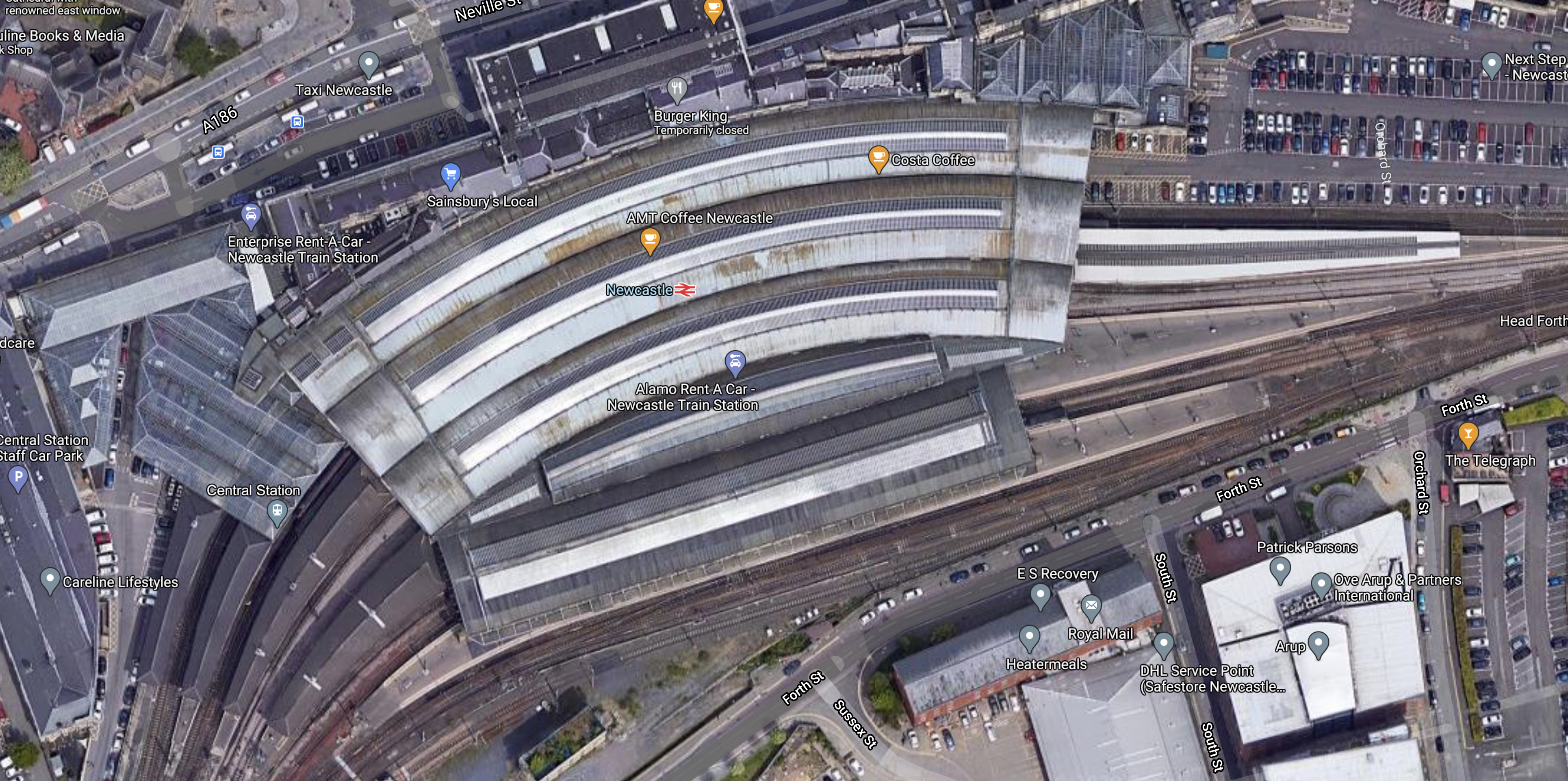
Note.
- It is built on a curve.
- It is on a cramped site.
- Platforms are numbered from 1 at the top to 8 at the bottom.
- Platform 2 seems to be used for all express services going North.
- Platforms 3 and 4 seem to be used for all express services going South.
- Not all platforms would appear to be long enough for nine-car Class 80x trains.
I am certain, that any nation with a sophisticated railway system wouldn’t build a station on a curve with no avoiding lines like Newcastle these days.
Network Rail have a plan to sort out Darlington station and I’m sure they’d like to sort out Newcastle as well!
Current Long Distance Trains Through And To Newcastle
These include.
- CrossCountry – Plymouth and Edinburgh or Glasgow via Alnmouth, Berwick-upon-Tweed and Dunbar.
- CrossCountry – Southampton Central or Reading and Newcastle.
- LNER – King’s Cross and Edinburgh via Berwick-upon-Tweed
- LNER – King’s Cross and Edinburgh via Alnmouth
- TransPennine Express – Liverpool Lime Street and Edinburgh via Morpeth
- TransPennine Express – Manchester Airport and Newcastle.
Note.
- All have a frequency of one train per hour (tph)
- All trains call at Newcastle.
- Two tph terminate at Newcastle and four tph terminate at Edinburgh or beyond.
There is also a new and Edinburgh service from East Coast Trains, that will start this year.
- It will run five trains per day (tpd).
- It will call at Newcastle.
- It will stop at Morpeth between Newcastle and Edinburgh.
There will also be High Speed Two services to Newcastle in a few years.
- There will be two tph between Euston and Newcastle
- There will be one tph between Birmingham Curzon Street and Newcastle.
Note.
- All services will be run by 200 metre long High Speed Two Classic-Compatible trains.
- There is no High Speed Two service to Newcastle, that calls at Leeds.
- Only one High Speed Two service to Newcastle calls at East Midlands Hub.
I suspect High Speed Two services need a dedicated platform at Newcastle, especially, if another High Speed Two service were to be added.
Extra Paths For LNER
In the December 2020 Edition of Modern Railways, there is an article, which is entitled LNER Seeks 10 More Bi-Modes.
This is the last paragraph.
Infrastructure upgrades are due to prompt a timetable recast in May 2022 (delayed from December 2021), from which point LNER will operate 6.5 trains per hour out of King’s Cross, compared to five today. As an interim measure LNER is retaining seven rakes of Mk. 4 coaches hauled by 12 Class 91 locomotives to supplement the Azuma fleet and support its timetable ambitions until new trains are delivered.
There would certainly appear to be a path available if LNER wanted to increase the frequency of trains between King’s Cross and Edinburgh from the current two trains per hour (tph) to three.
I laid out how I would use this third path to Edinburgh in A New Elizabethan.
The Possible Long Distance Trains Through And To Newcastle
These trains can be summed up as follows.
- 1 tph – CrossCountry – Plymouth and Edinburgh or Glasgow via Alnmouth, Berwick-upon-Tweed and Dunbar.
- 1 tph – CrossCountry – Southampton Central or Reading and Newcastle.
- 1 tph – LNER – King’s Cross and Edinburgh via Berwick-upon-Tweed
- 1 tph – LNER – King’s Cross and Edinburgh via Alnmouth
- 1 tph – TransPennine Express – Liverpool Lime Street and Edinburgh via Morpeth
- 1 tph – TransPennine Express – Manchester Airport and Newcastle.
- 5 tpd – East Coast Trains – King’s Cross and Edinburgh via Morpeth
- 2 tph – High Speed Two – Euston and Newcastle
- 1 tph – High Speed Two – Birmingham Curzon Street and Newcastle
- 1 tph – LNER – King’s Cross and Edinburgh – Extra service
This is ten tph and the five tpd of East Coast Trains.
Capacity Between Newcastle And Edinburgh
I wonder what capacity and linespeed would be possible on the East Coast Main Line between Newcastle and Edinburgh.
There are a few freight trains and some suburban electrics at the Northern end, but I suspect that the route could handle ten tph with some upgrades.
Edinburgh As A Terminal
Consider.
- Not all trains terminate at Edinburgh, but several tpd go through to places like Aberdeen, Glasgow, Inverness and Stirling.
- Edinburgh has several shorter East-facing bay platforms, that can take five-car Class 802 trains.
- Edinburgh has undergone a lot of reconstruction in recent years, so that it can turn more trains.
I very much feel that Edinburgh could handle, at least ten tph from the South.
Conclusion
I think it would be possible to extend all trains to Newcastle to at least Edinburgh.
Would it increase passenger capacity between the two capitals?
It would certainly avoid the difficult and expensive rebuilding at Newcastle station.
Through Settle And Carlisle Service Under Consideration
The title of this post, is the same as that of an article in the June 2021 Edition of Modern Railways.
This is the first paragraph.
Plans for a new Leeds to Glasgow through service via the Settle and Carlisle line are being developed, with CrossCountry and the Department for Transport starting to look at the possible scheme.
It sounds like a sensible idea to me.
The article also suggests the following.
- CrossCountry is a possible operator.
- CrossCountry are keen to improve services between Leeds and Glasgow
- The trains could be InterCity 125s, freed up, by a the arrival of Class 221 trains from Avanti West Coast, when they receive their new Class 805 trains.
- Maintenance of the trains wouldn’t be a problem, as this could be done at Neville Hill in Leeds or Craigentinny in Edinburgh.
- Services could start in December 2023.
I have a few thoughts of my own!
The Route
The route between Leeds and Carlisle is obvious, but there are two routes between Carlisle and Glasgow.
Trains would probably choose a route and call at stations to maximise passenger numbers.
These stations are on the various routes.
- Settle and Carlisle – Shipley, Bingley, Keighley, Skipton, Gargrave, Hellifield, Long Preston, Settle, Horton in Ribblesdale, Ribblehead, Dent, Garsdale, Kirkby Stephen, Appleby, Langwathby, Lazonby & Kirkoswald and Armathwaite
- Glasgow South Western – Dunlop, Stewarton, Kilmaurs, Kilmarnock, Auchinleck, New Cumnock, Kirkconnel, Sanquhar, Dumfries, Annan and Gretna Green
- West Coast Main – Motherwell, Carstairs and Lockerbie
There are certainly a lot of possibilities.
Upgrading The InterCity 125 Trains
CrossCountry appear to have enough InterCity 125 trains to muster five in a two Class 43 power car and seven Mark 3 coach formation.
They may not be fully in-line with the latest regulations and there may be a need for a certain degree of refurbishment.


These pictures show some details of a refurbished Great Western Railway Castle, which has been fitted with sliding doors.
Will The InterCity 125 Trains Be Shortened?
Scotrail’s Inter7City trains and Great Western Railway’s Castle trains have all been shortened to four or five coaches.
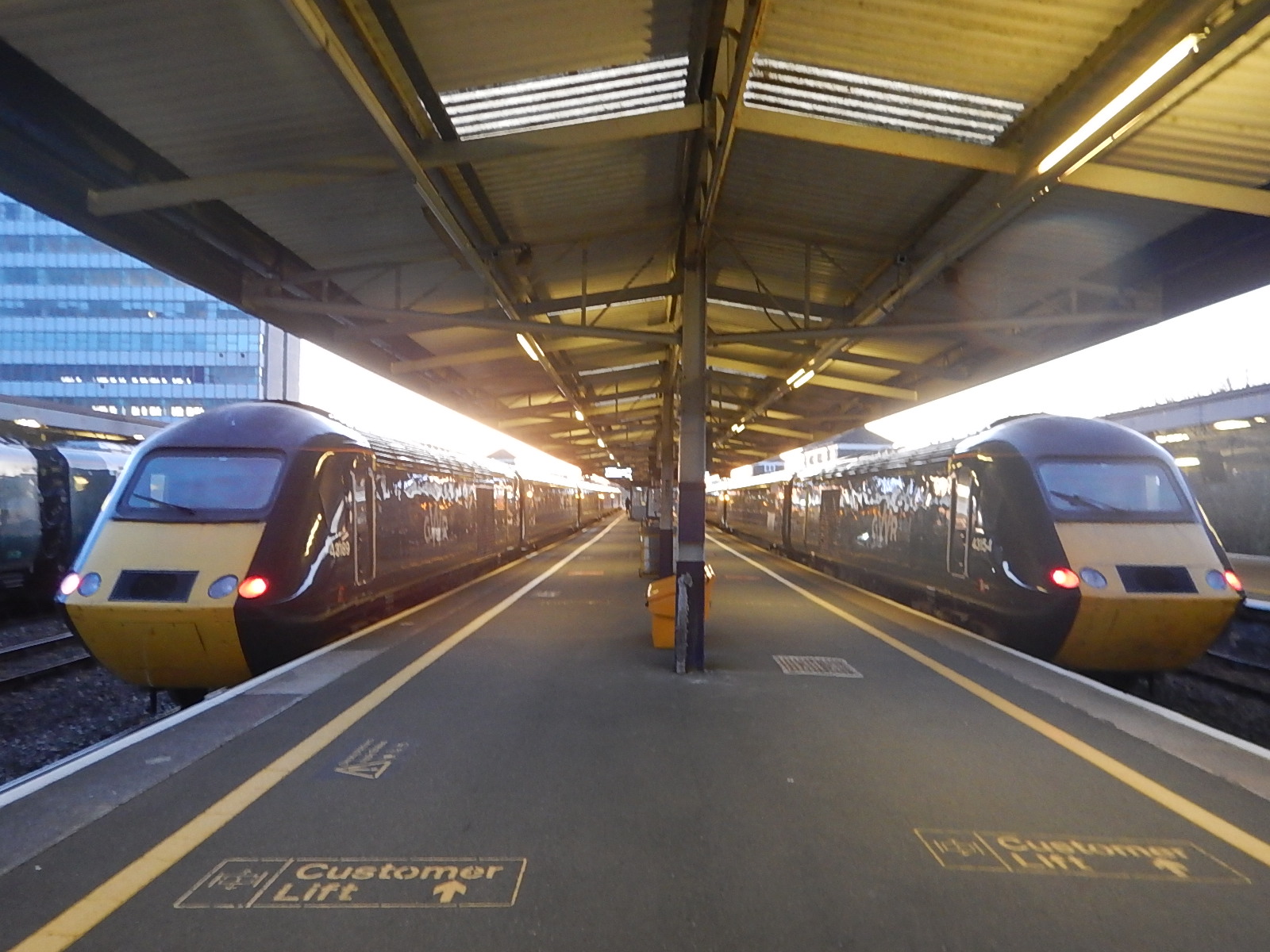
This picture shows a pair of Castles.
Journey Times, Timetable And Frequency
The current journey time between Leeds and Glasgow Central stations via the East Coast Main Line is four hours and eight minutes with nine stops.
The Modern Railways article says this about the current service.
The new service would be targeted at business and leisure travellers, with through journey times competitive with road and faster than the current direct CrossCountry Leeds to Glasgow services via the East Coast main line.
I would expect that CrossCountry are looking for a time of around four hours including the turn round.
- Stops could be removed to achieve the timing.
- The trains could run at 125 mph on the West Coast Main Line.
This could enable a train to have the following diagram.
- 0800 – Depart Leeds
- 1200 – Depart Glasgow Central
- 1600 – Depart Leeds
- 2000 – Depart Glasgow Central
- Before 2400 – Arrive Leeds
Note.
- A second train could start in Glasgow and perform the mirrored timetable.
- Timings would probably be ideal for train catering.
- Trains would leave both termini at 0800, 1200, 1600 and 2000.
- The timetable would need just two trains.
I also think, if a second pair of trains were to be worked into the timetable, there could be one train every two hours on the route, if the demand was there.
I certainly believe there could be a timetable, that would meet the objectives of attracting business and leisure passengers away from the roads.
Tourism And Leisure Potential
The Settle and Carlisle Line is known as one of the most scenic railway lines in England, if not the whole of the UK.
There are important tourist sites all along the route between Leeds and Glasgow
- Leeds – The station is well-connected in the City Centre.
- Saltaire – For the World Heritage Site and Salt’s Mill
- Keighley – For the Keighley and Worth Heritage Railway
- Settle – The town of Settle is worth a visit.
- Ribblehead – For the famous Ribblehead Viaduct
- Appleby – For the Horse Fair.
- Carlisle – The station is well-connected in the City Centre.
- Glasgow – Glasgow Central station is well-connected in the City Centre.
Many of the stations are used by walkers and others interested in country pursuits.
I believe that it is a route that needs a quality rail service.
Travel Between London and Towns Along The Settle And Carlisle Line
In Thoughts On Digital Signalling On The East Coast Main Line, I said this.
I think it is highly likely that in the future, there will be at least one train per hour (tph) between London Kings Cross and Leeds, that does the trip in two hours.
It may seem fast compared to today, but I do believe it is possible.
With a timely connection at Leeds station, will this encourage passengers to places along the Settle and Carlisle line to use the train?
What About the Carbon Emissions?
The one problem with using InterCity 125 trains on this route, is that they are diesel-powered, using a pair of Class 43 locomotives.
But then there are over a hundred of these diesel-electric locomotives in service, nearly all of which are now powered by modern MTU diesel engines, which were fitted in the first decade of this century.
Consider.
- The locomotives and the coaches they haul have an iconic status.
- Great Western Railway and Scotrail have recently developed shorter versions of the trains for important routes.
- There are over a hundred of the locomotives in service.
- Companies like ULEMCo are developing technology to create diesel-powered vehicles that can run on diesel or hydrogen.
- There is plenty of space in the back of the locomotives for extra equipment.
- MTU have a very large number of diesel engines in service. It must be in the company’s interest to find an easy way to cut carbon emissions.
- I believe that the modern MTU diesel engines could run on biodiesel to reduce their carbon footprint.
And we shouldn’t forget JCB’s technology, which I wrote about in JCB Finds Cheap Way To Run Digger Using Hydrogen.
If they could develop a 2 MW hydrogen engine, it could be a shoe-in.
I believe that for these and other reasons, a solution will be found to reduce the carbon emissions of these locomotives to acceptable levels.
Conclusion
In this quick look, it appears to me that a Glasgow and Leeds service using InterCity 125 trains could be a very good idea.
High Speed Two And Scotland
In this post, I will only look at services and capacity.
I will leave the economics to others with the appropriate data.
Current Anglo-Scottish Services
Currently, these services run between England and Edinburgh Waverley and Glasgow Central stations.
- 1 train per hour (tph) – Avanti West Coast – London Euston and Glasgow Central via Warrington Bank Quay, Wigan North Western, Preston, Lancaster, Carlisle.
- 1 train per two hours (tp2h) – Avanti West Coast – London Euston and Glasgow Central via Milton Keynes Central, Coventry, Birmingham International, Birmingham New Street, Sandwell and Dudley, Wolverhampton, Crewe, Warrington Bank Quay, Wigan North Western, Preston, Lancaster, Carlisle.
- 1 tp2h – CrossCountry – South-West England and Edinburgh Waverley via Bristol Temple Meads, Birmingham New Street, Derby, Chesterfield, Sheffield, Wakefield Westgate, Leeds, York and Newcastle.
- 1 tp2h – CrossCountry – South-West England and Glasgow Central via Bristol Temple Meads, Birmingham New Street, Derby, Chesterfield, Sheffield, Wakefield Westgate, Leeds, York, Newcastle and Edinburgh Waverley.
- 1 tph – LNER – London Kings Cross and Edinburgh Waverley via York, Darlington, Newcastle and Berwick-upon-Tweed
- 1 tph – LNER – London Kings Cross and Edinburgh Waverley via Peterborough, Newark North Gate, Doncaster, York, Northallerton, Darlington, Durham and Newcastle
- 1 tph – TransPennine Express – Liverpool Lime Street and Edinburgh Waverley via Newton-le-Willows, Manchester Victoria, Huddersfield, Leeds, York, Darlington, Durham, Newcastle and Morpeth
- 1 tp2h – TransPennine Express – Manchester Airport and Edinburgh Waverley via Manchester Piccadilly, Manchester Oxford Road, Bolton, Preston, Lancaster and Carlisle.
- 3 trains per day (tpd) – TransPennine Express – Liverpool Lime Street and Glasgow Central via St. Helen’s Central, Wigan North Western, Preston, Lancaster and Carlisle.
- 1 tp2h – TransPennine Express – Manchester Airport and Glasgow Central via Manchester Piccadilly, Manchester Oxford Road, Bolton, Preston, Lancaster and Carlisle.
Note.
- I’ve not included service extensions to Aberdeen and Inverness.
- I’ve cut out a few smaller stations
- Some services call at both Edinburgh and Glasgow.
- Because of signalling and track improvements it is likely that London Kings Cross and Edinburgh timings will come down to four hours.
The services can be roughly summarised as follows.
- Birmingham and Edinburgh – 0.5 tph
- Birmingham and Glasgow – 1 tph
- London and Edinburgh – 2 tph
- London and Glasgow – 1.5 tph
- Leeds and Edinburgh – 1.5 tph
- Leeds and Glasgow – 0.5 tph
- Liverpool and Edinburgh – 1 tph
- Liverpool and Glasgow – 3 tpd
- Manchester and Edinburgh – 1.5 tph
- Manchester and Glasgow – 0.5 tph
- Manchester Airport and Edinburgh – 0.5 tph
- Manchester Airport and Glasgow – 0.5 tph
Note.
- I have ignored the five tpd London Kings Cross and Edinburgh service, that starts next year, which will be run by East Coast Trains.
- 0.5 tph is equivalent to one tp2h.
It looks a fairly well-balanced and comprehensive service.
High Speed Two Anglo-Scottish Services
According to a table in the June 2020 Edition of Modern Railways, these High Speed Two services will run between England and Edinburgh Waverley and Glasgow Central.
- 1 tph – London Euston and Edinburgh Waverley via Old Oak Common, Preston, Carlisle and Edinburgh Haymarket
- 1 tph – London Euston and Edinburgh Waverley via Old Oak Common, Birmingham Interchange, Preston, Carlisle and Edinburgh Haymarket
- 1 tph – London Euston and Glasgow Central via Old Oak Common, Preston and Carlisle
- 1 tph – London Euston and Glasgow Central via Old Oak Common, Birmingham Interchange, Preston and Carlisle
- 1 tp2h – Birmingham Curzon Street and Edinburgh Waverley via Warrington Bank Quay, Wigan North Western, Preston, Lancaster, Oxenholme or Penrith, Carlisle and Edinburgh Haymarket.
- 1 tp2h – Birmingham Curzon Street and Glasgow Central via Warrington Bank Quay, Wigan North Western, Preston, Lancaster, Oxenholme or Penrith, Carlisle, Lockerbie and Motherwell.
Note.
- All trains will be High Speed Two’s 200 metre long Classic-Compatible trains.
- The four one tph services will run as two pairs of trains and split and join at Carlisle.
The services can be roughly summarised as follows.
- Birmingham and Edinburgh – 1.5 tph
- Birmingham and Glasgow – 1.5 tph
- London and Edinburgh – 2 tph
- London and Glasgow – 2 tph
Note.
- Passengers between Liverpool or Manchester and Scotland will have to change at Preston.
- There is no connection between the Eastern Leg of High Speed Two and Edinburgh.
- London and Edinburgh Waverley will take three hours and forty minutes, which saves twenty minutes on the likely four hours on the East Coast Main Line.
- London and Glasgow Central will take three hours and forty minutes, which saves fifty minutes on the current time.
High Speed Two certainly provides good services between London, Birmingham and Scotland, but it leaves out travelling between the cities of the North and North of the Border.
High Speed Two Classic-Conventional Trains
In Thoughts On Class 807 Trains And High Speed Two’s Classic-Compatible Trains, I discussed a design of Classic-Compatible High Speed Two train based on the recently-ordered Class 807 trains for Avanti West Coast.
Except for the required speeds, the specifications of the trains are similar and this was my conclusion.
I wouldn’t be surprised that Hitachi’s offering for more trains on the West Coast Main Line and the Classic-Compatible trains for High Speed Two are very similar to the Class 807 trains.
-
- The Classic-Compatible trains for High Speed Two could be eight-car trains with twenty-five metre cars.
- The replacements for the eleven-car Class 390 trains could be nine-car trains with twenty-six metre cars.
Both would be based on the Class 807 train.
A common design would surely ease operation of the combined West Coast Partnership.
TransPennine Express Between Liverpool Lime Street And Edinburgh
Will this TransPennine Express service still be the primary connection between the North of England and Edinburgh?
- It has a frequency of one tph.
- It takes about four hours and fifty minutes.
- It connects Liverpool, Manchester, Huddersfield, Leeds, York, Darlington, Durham and Newcastle to the Scottish capital.
- According to Real Time Trains, it runs as far as York on diesel and then using the electrification.
Current plans envisage Northern Powerhouse Rail will create an electrified route across the Pennines.
This report on the Transport for the North web site, is entitled At A Glance – Northern Powerhouse Rail.
It gives these times and frequencies for the various legs of the route.
- Liverpool and Manchester via Manchester Airport – 26 minutes – 6 tph
- Manchester and Leeds – 25 minutes – 6 tph
- Leeds and Newcastle – 58 minutes – 4 tph
- Newcastle and Edinburgh – 90 minutes
This totals to three hours and nineteen minutes.
Note.
- The Newcastle and Edinburgh time is that currently achievable today by Class 801 trains.
- Liverpool and Manchester city centres have a six tph high speed service via Manchester Airport.
- Manchester and Edinburgh will be under three hours.
- Leeds and Edinburgh will be under two-and-a-half hours.
- The Manchester and Manchester Airport leg could be shared with High Speed Two.
Most of this will be achievable with the current TransPennine Express Class 802 trains, which are capable of 140 mph.
In addition, I think that it is likely that the East Coast Main Line will be upgraded between York and Newcastle for High Speed Two.
Liverpool Lime Street and Edinburgh will unlikely be to High Speed Two standards, but it could match the standards of the East Coast Main Line.
Improvements To The East Coast Main Line Between Newcastle and Edinburgh
Consider
- There have been reports that the power supply on the route is not very robust and Class 800 and Class 802 trains have to use diesel power.
- The route is fairly straight and could probably be partially-upgraded for 140 mph running with appropriate signalling.
- The route carries about five tph in both directions. Modern digital signalling could probably double this frequency.
- The Scottish Government has suggested adding new stations at East Linton and Reston.
- Edinburgh and Newcastle are 124.5 miles apart and trains typically take ninety minutes.
In addition, High Speed Two might like to extend some or all of their three Newcastle services to Edinburgh.
- 1 tph – Birmingham Curzon Street and Newcastle via East Midlands Hub, York, Darlington and Durham
- 1 tph – London Euston and Newcastle via Old Oak Common and York
- 1 tph – London Euston and Newcastle via Old Oak Common, York and Darlington.
High Speed Two will run between London Euston and Newcastle in two hours and seventeen minutes.
I think it could be possible, that an upgraded Newcastle and Edinburgh route could be covered in seventy minutes by either one of High Speed Two’s Classic Compatible trains or a Class 80x train.
This could mean these timings.
- Under four hours for classic services between London Kings Cross and Edinburgh.
- Around three hours for classic services between Liverpool and Edinburgh.
- Under three-and-a-half hours for High Speed Two services between London Euston and Edinburgh.
This shows the importance of improving the East Coast Main Line to the North of Newcastle.
Improvements To The West Coast Main Line Between Carlisle and Glasgow/Edinburgh
If the frequency and speed of trains on the East Coast Main Line can be increased, what can be done on the West Coast Main Line?
Consider.
- High Speed Two are showing Carlisle and Glasgow Central as a one hour and nineteen minute journey. Avanti West Coast do the journey in one hour and eleven minutes.
- High Speed Two are showing Carlisle and Edinburgh as a one hour and eleven minute journey. Avanti West Coast do the journey in one hour and fifteen minutes.
- Could the route be fully upgraded for 140 mph running with appropriate signalling?
- In a typical hour, there are two Avanti West Coast trains and one TransPennine Express passing along all or part of the West Coast Main Line North of Carlisle.
- The route carries a total of about four tph in both directions. Modern digital signalling could probably increase this frequency.
- Hitachi and Avanti West Coast seem to be saying that their new Class 807 trains have similar performance to the Class 390 trains, but without using tilting technology.
There doesn’t appear to be the scope for such dramatic improvement in the West, as in the East, but I can still see a succession of 140 mph trains running between Carlisle and Glasgow or Edinburgh in no more than an hour and eleven minutes.
These passenger services could be running North of Carlisle, when High Speed Two is fully open.
- 2 tph – High Speed Two – London Euston and Edinburgh – High Speed Two Classic-Compatible train
- 2 tph – High Speed Two – London Euston and Glasgow Central – High Speed Two Classic-Compatible train
- 0.5 tph – High Speed Two – Birmingham Curzon Street and Edinburgh – High Speed Two Classic-Compatible train
- 0.5 tph – High Speed Two – Birmingham Curzon Street and Glasgow Central – High Speed Two Classic-Compatible train
- 0.5 tph – TransPennine Express – Manchester Airport and Edinburgh – Class 397 train
- 0.5 tph – TransPennine Express – Manchester Airport and Glasgow Central – Class 397 train
- 3 tpd – TransPennine Express – Liverpool and Glasgow Central – Class 397 train
Note.
- I am assuming that Avanti West Coast’s services will be replaced by the High Speed Two services.
- As the TransPennine Express services share a path, it would appear that six tph will be running between Carlisle and Edinburgh or Glasgow.
There would appear to be space for more trains on the West Coast Main Line, to the North of Carlisle.
A Few Random Thoughts
These are a few random thoughts and ideas.
Avanti West Coast And High Speed Two Classic-Compatible Trains
Avanti West Coast will have these fleets of high-speed trains.
- 11-car Class 390 electric trains, which are 265.3 metres long
- 9-car Class 390 electric trains, which are 217.5 metres long.
- 7-car Class 807 electric trains, which will be 182 metres long
- 5-car Class 805 bi-mode trains, which will be 130 metres long
- High Speed Two Classic-Compatible trains, which will be 200 metres long
- Full-size High Speed Two trains, which will be 400 metres long.
It would appear that there could be some fleet simplification.
All Passenger Trains Between Newcastle Or Carlisle and Glasgow Central Or Edinburgh Should Be Capable Of Operating At 140 mph
Both the East and West Coast Main Lines between Carlisle and Newcastle in England and Edinburgh and Glasgow in Scotland are not far off being capable of running trains at 140 mph. Modern digital in-cab signalling and some track works will be needed.
Once 140 mph running is achieved, then all trains will need to be capable of making use of the speed, to maximise the capacity of the routes.
Freight Trains Between Newcastle Or Carlisle and Glasgow Central Or Edinburgh Should Be Capable Of Operating As Fast As Possible
Freight trains will need to be hauled by electric locomotives, at as high a speed as possible, to avoid slowing the express passenger trains.
More well-positioned freight loops may be needed.
Will TransPennine’s Manchester And Scotland Service Transfer To High Speed Two?
I think, that this is highly likely.
- The service would be run by High Speed Two Classic-Compatible trains.
- Depending on track layout, the Liverpool and Scotland service on the West Coast Main Line could be upgraded to the High Speed Two Classic-Compatible trains or discontinued.
This would mean, that all passenger trains on the West Coast Main Line North of Lancaster would be High Speed Two Classic-Compatible trains.
- 2 tph – High Speed Two – London Euston and Edinburgh – High Speed Two Classic-Compatible train
- 2 tph – High Speed Two – London Euston and Glasgow Central – High Speed Two Classic-Compatible train
- 0.5 tph – High Speed Two – Birmingham Curzon Street and Edinburgh – High Speed Two Classic-Compatible train
- 0.5 tph – High Speed Two – Birmingham Curzon Street and Glasgow Central – High Speed Two Classic-Compatible train
- 0.5 tph – High Speed Two – Manchester Airport and Edinburgh – High Speed Two Classic-Compatible train
- 0.5 tph – High Speed Two – Manchester Airport and Glasgow Central – High Speed Two Classic-Compatible train
- 3 tpd – High Speed Two – Liverpool and Glasgow Central – High Speed Two Classic-Compatible train
This must mean that if the operating speed on the West Coast Main Line were to be increased, all passenger services could take advantage, which would surely improve timings.
What About CrossCountry?
CrossCountry run a single hourly service between Plymouth and Edinburgh.
- The route goes via Bristol Temple Meads, Birmingham New Street, Derby, Chesterfield, Sheffield, Wakefield Westgate, Leeds, York, Newcastle.
- Some services are extended to Glasgow Central and Aberdeen.
Currently, this service is run by a diesel train, which surely will need to be replaced with a zero-carbon train.
Consider.
- Scotland is keen to electrify or allow electric trains to run between Edinburgh and Aberdeen.
- High Speed Two will provide an electrified route between Birmingham and York via East Midlands Hub for Derby, Chesterfield, Sheffield and Leeds.
- The likes of Hitachi and Adrian Shooter of Vivarail are very bullish about battery electric trains.
- Great Western Railway, Hitachi and Network Rail have probably hired Baldrick for a cunning plan to run battery electric trains between Bristol and Penzance.
Could it be possible for Hitachi or another manufacturer to design a High Speed Two Classic-Compatible train, with a battery capability?
A train with this specification, could be ideal for the Plymouth and Edinburgh service.
It might also be useful for these CrossCountry services.
- Southampton and Newcastle
- Bournemouth and Manchester Piccadilly
- Exeter St. Davids/Bristol and Manchester Piccadilly
- Cardiff Central and Nottingham
- Birmingham and Nottingham
- Birmingham and Stansted Airport
Note.
- All could run on High Speed Two fpr part of the route.
- Birmingham and Nottingham has already been proposed for running using High Speed Two Classic-Compatible train, by Midlands Engine Rail, as I wrote about in Classic-Compatible High Speed Two Trains At East Midlands Hub Station.
- I proposed a Birmingham and Cambridge service using High Speed Two Classic-Compatible trains in A Trip To Grantham Station – 4th November 2020.
High Speed Two could have a big positive effect on CrossCountry services.
Future Anglo-Scottish Services After High Speed Two Opens Fully
It is possible, that when High Speed Two fully opens, these services will run between England and Edinburgh Waverley and Glasgow Central stations.
- 1 tp2h – CrossCountry – South-West England and Edinburgh Waverley via Bristol Temple Meads, Birmingham New Street, Derby, Chesterfield, Sheffield, Wakefield Westgate, Leeds, York and Newcastle.
- 1 tp2h – CrossCountry – South-West England and Glasgow Central via Bristol Temple Meads, Birmingham New Street, Derby, Chesterfield, Sheffield, Wakefield Westgate, Leeds, York, Newcastle and Edinburgh Waverley.
- 1 tph – LNER – London Kings Cross and Edinburgh Waverley via York, Darlington, Newcastle and Berwick-upon-Tweed
- 1 tph – LNER – London Kings Cross and Edinburgh Waverley via Peterborough, Newark North Gate, Doncaster, York, Northallerton, Darlington, Durham and Newcastle
- 1 tph – High Speed Two – London Euston and Edinburgh Waverley via Old Oak Common, Preston, Carlisle and Edinburgh Haymarket
- 1 tph – High Speed Two – London Euston and Edinburgh Waverley via Old Oak Common, Birmingham Interchange, Preston, Carlisle and Edinburgh Haymarket
- 1 tph – High Speed Two – London Euston and Glasgow Central via Old Oak Common, Preston and Carlisle
- 1 tph – High Speed Two – London Euston and Glasgow Central via Old Oak Common, Birmingham Interchange, Preston and Carlisle
- 1 tp2h – High Speed Two – Birmingham Curzon Street and Edinburgh Waverley via Warrington Bank Quay, Wigan North Western, Preston, Lancaster, Oxenholme or Penrith, Carlisle and Edinburgh Haymarket.
- 1 tp2h – High Speed Two – Birmingham Curzon Street and Glasgow Central via Warrington Bank Quay, Wigan North Western, Preston, Lancaster, Oxenholme or Penrith, Carlisle, Lockerbie and Motherwell.
- 1 tph – TransPennine Express – Liverpool Lime Street and Edinburgh Waverley via Newton-le-Willows, Manchester Victoria, Huddersfield, Leeds, York, Darlington, Durham, Newcastle and Morpeth
- 1 tp2h – High Speed Two – Manchester Airport and Edinburgh Waverley via Manchester Piccadilly, Manchester Oxford Road, Bolton, Preston, Lancaster and Carlisle.
- 3 trains per day (tpd) – High Speed Two – Liverpool Lime Street and Glasgow Central via St. Helen’s Central, Wigan North Western, Preston, Lancaster and Carlisle.
- 1 tp2h – High Speed Two – Manchester Airport and Glasgow Central via Manchester Piccadilly, Manchester Oxford Road, Bolton, Preston, Lancaster and Carlisle.
Note.
- I have assumed that the Liverpool/Manchester services to Scotland via the West Coast Main Line have transferred to High Speed Two.
- All trains would be run by High Speed Two Classic-Compatible trains.
The services can be roughly summarised as follows.
- Birmingham and Edinburgh – 1.5 tph (0.5 tph)
- Birmingham and Glasgow – 1.5 tph (1 tph)
- London and Edinburgh – 4 tph (2 tph)
- London and Glasgow – 2 tph (1.5 tph)
- Leeds and Edinburgh – 1.5 tph (1.5 tph)
- Leeds and Glasgow – 0.5 tph (0.5 tph)
- Liverpool and Edinburgh – 1 tph (1 tph)
- Liverpool and Glasgow – 3 tpd (3 tpd)
- Manchester and Edinburgh – 1.5 tph (1.5 tph)
- Manchester and Glasgow – 0.5 tph (0.5 tph)
- Manchester Airport and Edinburgh – 0.5 tph (0.5 tph)
- Manchester Airport and Glasgow – 0.5 tph (0.5 tph)
Note.
- My estimates for the number of trains in the future, are probably best described as minimum figures.
- The figures in brackets are the current frequencies.
- Currently, there are eleven express trains between England and Scotland and after High Speed Two is fully open there could be at least fifteen express trains.
I have a few final thoughts.
Capacity Between England And Scotland
Capacity of the current and future Anglo-Scottish trains is as follows.
- High Speed Two Classic-Compatible train – 500-600
- Eleven-car Class 390 train – 589
- Nine-car Class 800 train – 611
It appears that the all the longer trains have roughly the same capacity.
As there are now eleven Anglo-Scottish long trains and these will be increased to fifteen, that indicates an minimum 36 % increase in capacity.
Will High Speed Two And Northern Powerhouse Rail Share A Route Across The Pennines?
Northern Powerhouse Rail have talked about extending High Speed Two services from Manchester to Huddersfield, Leeds, Hull, York and Newcastle.
I wrote about this in Changes Signalled For HS2 Route In North.
I like this plan for the following reasons.
It gives more places like Huddersfield and Hull access to High Speed Two.
It increases frequencies across the North.
But most importantly, as infrastructure is shared, it saves a lot of money.
It also opens up possibilities for services.
- The Liverpool and Edinburgh service could be run on the High Speed Two route across the Pennines and up the East Coast Main Line.
- London and Manchester services could be extends to Leeds, York, Newcastle and Scotland.
If Northern Powerhouse Rail were to be cleared for High Speed Two’s Full-Size trains, it opens up the possibility of running them further North.
Conclusion
High Speed Two will increase Anglo-Scottish capacity by more than a third.
DfT and Arriva CrossCountry Sign Agreement
The title of this post, is the same as that of this article on Railway News.
This is the introductory paragraph.
The franchisee CrossCountry, which is owned by Arriva, has signed a three-year agreement with the Department for Transport to bring the franchise in line with the Emergency Recovery Measures Agreements (ERMAs).
CrossCountry has the following trains in its fleet.
34 x Class 220 trains
24 x Class 221 trains
This gallery shows Class 220 trains and the closely related Class 222 trains, which are in service with East Midlands Railways.


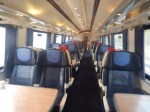
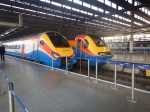
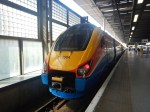
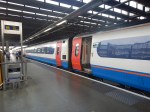
Note that these three fleets of Bombadier Voyager trains are now twenty years old and will probably need a makeover soon.
If they have a problem it is that they are diesel multiple units and create a lot of noise and pollution in stations and depots.
This is said in the Railway News article.
One element of this new contract is a focus on reducing the environmental impact of the operator’s diesel fleet.
, Two separate projects are mentioned.
- Using a separate electrical supply to Turbostars during cleaning.
- Use of on-train batteries on the Voyagers in stations.
In Have Bombardier Got A Cunning Plan For Voyagers?, I gave my thoughts on the second project, when Bombardier proposed it in 2018.
I can see the following scenario happening.
- When the new Class 805 trains are delivered, Avanti West Coast’s Class 220 trains are transferred to Arriva CrossCountry.
- When the new Class 810 trains are delivered, East Midland Railway’s Class 222 trains are transferred to Arriva CrossCountry.
- CrossCountry update their Voyagers with batteries.
- CrossCountry retire their InterCity 125 trains.
CrossCountry may have enough trains to run a mainly Voyager fleet, backed up by a few Turbostars.
Could Bombardier’s Plan Be Revived In A Different Form?
If CrossCountry had all the Voyages, they would have the following fleet.
- 34 x four-car Class 220 trains – Currently with CrossCountry.
- 20 x five-car Class 221 trains – Currently with Avanti West Coast
- 20 x five-car Class 221 trains – Currently with CrossCountry
- 4 x four-car Class 221 trains – Currently with CrossCountry
- 6 x seven-car Class 222 trains – Currently with East Midlands Trains
- 17 x five-car Class 222 trains – Currently with East Midlands Trains
- 4 x four-car Class 222 trains – Currently with East Midlands Trains
This totals to eighty-five trains with a total of 285 intermediate cars, of which 128 were built with tilt for Class 221 trains.
Currently CrossCountry has a total of 58 four- and five-car Voyagers and enough Class 43 power cars for six InterCity 125 trains.
If they rearranged the non-tilting intermediate cars of the Voyagers, 157 intermediate cars is enough for one of the following.
- 78 – four-car trains
- 52 – five-car trains
- 39 – six-car trains
- 26 – eight-car trains
- 22 – nine-car trains
Add in forty five-car Class 221 trains and there is more than enough trains for CrossCountry to run their current services without the retired InterCity 125s.
CrossCountry would also be able to form the trains into the lengths they needed for efficient services.

This formation photographed at Basingstoke could be formed of a single train, if they wished, as they have more than enough coaches.
I suspect in true design engineering fashion, engineers at CrossCountry have got the toy trains or Lego bricks out to shuffle the coaches on a big table to see what are the best train lengths for their network.
If they decided to go the eight-car route, which could give up to twenty-six trains, this would be more than enough to be able to retire the InterCity 125s.
Could one of the Intermediate cars be converted into a pantograph and battery car?
- If the diesel engine and the associated gubbins were to be removed, this would save around two tonnes in weight.
- A two-tonne battery could probably have a capacity of 200 kWh.
- Bombardier probably have ideas about how a car could be converted.
Someone could have a lot of fun playing musical carriages and the following trains could be created.
- A fleet of Voyager bi-mode trains of optimum length for CrossCountry’s route network.
- Most services would be run by single trains, which must give advantages to the operator, their staff and passengers.
- All braking would be regenerative braking to battery to save energy.
- Where electrification exists, the trains could use it.
- All station stops would be performed on battery power.
There might even be some left over driving cars and some intermediate cars to be converted into battery electric trains for another route.
Conclusion
There is a route there for CrossCountry to have a much more environmentally-friendly fleet, better suited to their needs
- The Turbostars would be given a local electricity supply to cut noise and pollution during overnight cleaning.
- The InterCity 125s would be retired.
- CrossCountry acquires as many Voyagers as it needs after Avanti West Coast and East Midlands Railway get their new trains.
- The Voyagers carriages would be shuffled so that they could handle all routes and replace the InterCity 125s.
- The design exists to convert the Voyagers into diesel-electric-battery tri-mode high speed trains.
Note.
- There are enough trains to do a gradual conversion, with CrossCountry having enough trains for a full service at all times.
- All trains will probably have been built this century or nearly so!
I also feel, that the fleet would be a marketing asset, rather than a bit of a discouragement to use CrossCountry’s services again.
Beeching Reversal – Goodrington and Churston Stations
This is one of the Beeching Reversal projects that the Government and Network Rail are proposing to reverse some of the Beeching cuts.
I wrote about a similar project, that had been proposed by the Association of Train Operating Companies in Between Exeter And Paignton. after I visited Devon, three years ago.
The basic idea is described in a section called Plans in the Wikipedia entry for the Riviera Line, where this is said.
In 2009 the Association of Train Operating Companies identified Brixham as one of fourteen towns for which the provision of a new railway service would have a positive benefit-cost ratio. This would be an extension of the Great Western Railway service beyond Paignton to Churston station on the Paignton and Dartmouth Steam Railway, which would then act as a railhead for Brixham. It would also serve other housing developments in the area since the opening of the steam railway, and may require the doubling of that line between Paignton and Goodrington Sands.
This Google Map shows between Paignton and Goodrington Sands stations.
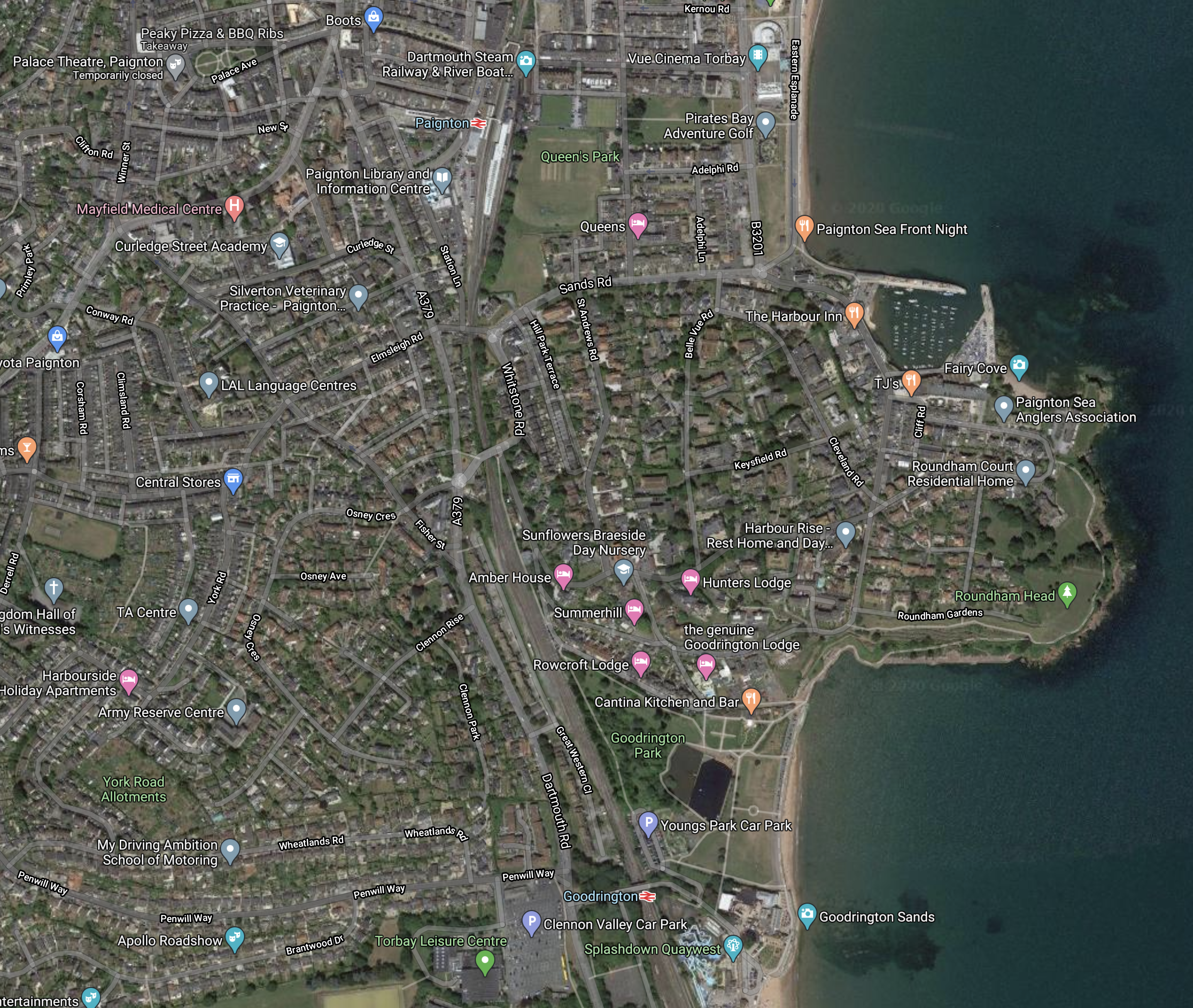
Note.
- Paignton station is marked by a station sign towards the top of the map.
- Goodrington Sands station is towards the bottom of the map.
The two stations seem well placed to serve the serve the town of Paignton and its beaches.
This second Google Map shows the Goodrington Sands and Churston stations in relation to Brixham and Berry Head.
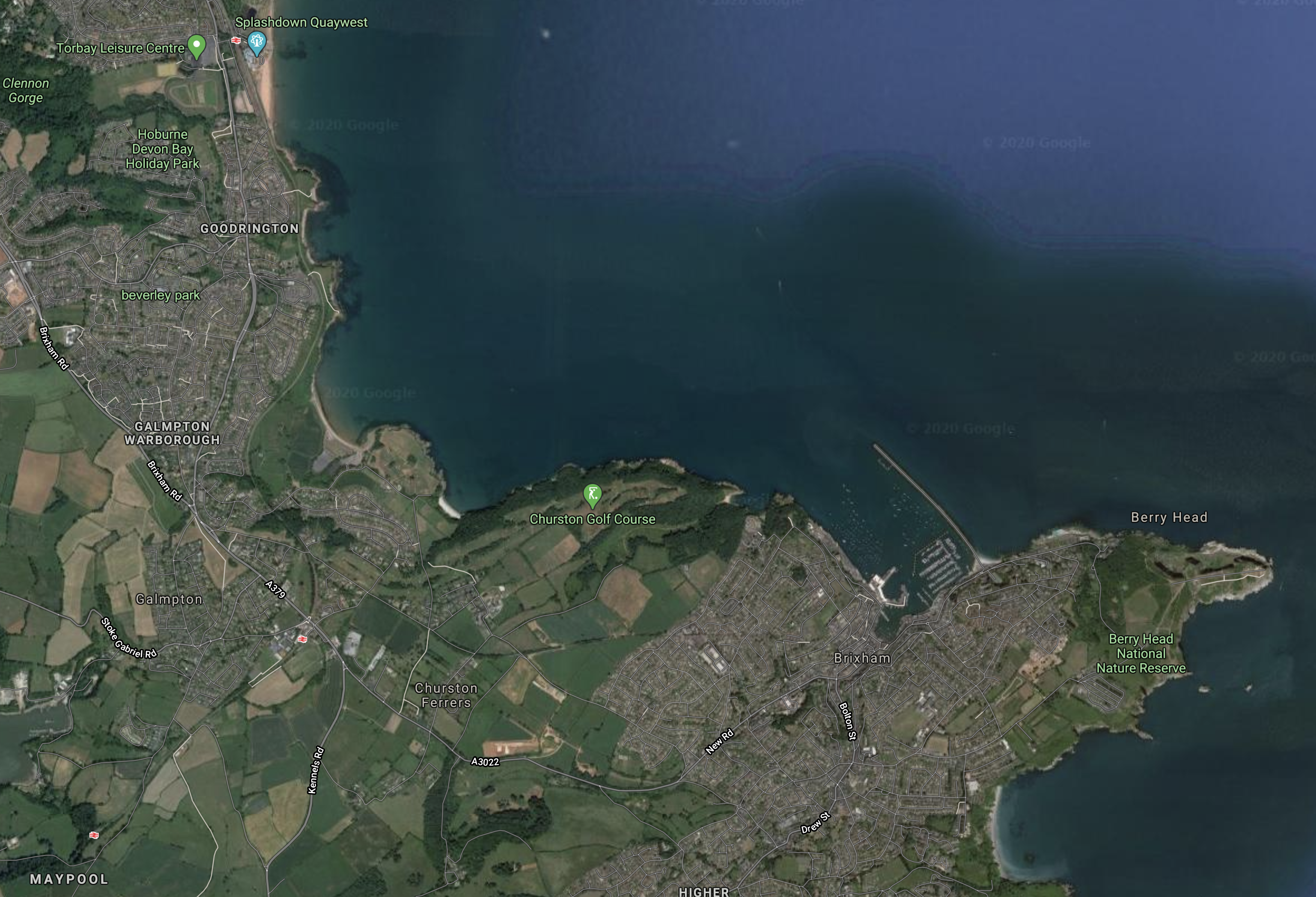
Note.
- Goodrington Sands station is at the top of the map.
- Two other stations on the Dartmouth Steam Railway are shown; Greenway Halt and Churston.
- Churston station is the most Northerly of the pair.
Churston station looks well-placed for Brixham.
These are my thoughts.
The Current Train Service
The train service between Paignton and Exeter St. Davids is run by Great Western Railway.
There are basically two services,
- A two train per hour (tph) service between Paignton and Exmouth via Torquay and Exeter St. Davids. I have used it and it is a useful local service for commuters, shoppers and visitors, although it could do with some modern trains.
- Occasional trains during the day to London Paddington.
There are also some CrossCountry trains going to and from Manchester Piccadilly.
The Dartmouth Steam Railway also runs trains between Paignton and via Goodrington Sands and Churston.
Hitachi’s Regional Battery Train
This train is described in this infographic from Hitachi.

I believe it will revolutionise rail travel in the South West of England, as shorter lengths of electrification, will enable this train based on current Class 800 and Class 802 trains to run all-electric services between London Paddington and Exeter St. Davids, Newquay, Paignton, Penzance and Plymouth.
Exeter St. Davids As A Hub For Battery Electric Trains
Exeter St. Davids station could become a major hub for battery electric trains.
These are distances to various stations.
- Barnstaple – 39 miles
- Exmouth – 11 miles
- Paignton – 28 miles
- Plymouth – 52 miles
- Taunton – 32 miles
- Yeovil Junction – 49 miles
All of these would be in range of a Hitachi Regional Battery Train or any battery electric train with sufficient range, that was fully-charged at Exeter St. Davids station.
The station has plenty of space and several long platforms, so I believe it would make an ideal hub for battery electric trains.
Could Battery Electric Trains Work The Riviera Line?
The Riviera Line was designed by Brunel for atmospheric power. Perhaps, he had observed the weather and felt the massive seas would make it difficult for for the steam locomotives of the day?
As an Electrical Engineer, I certainly couldn’t recommend electrifying through Dawlish with 25 KVAC overhead wires.
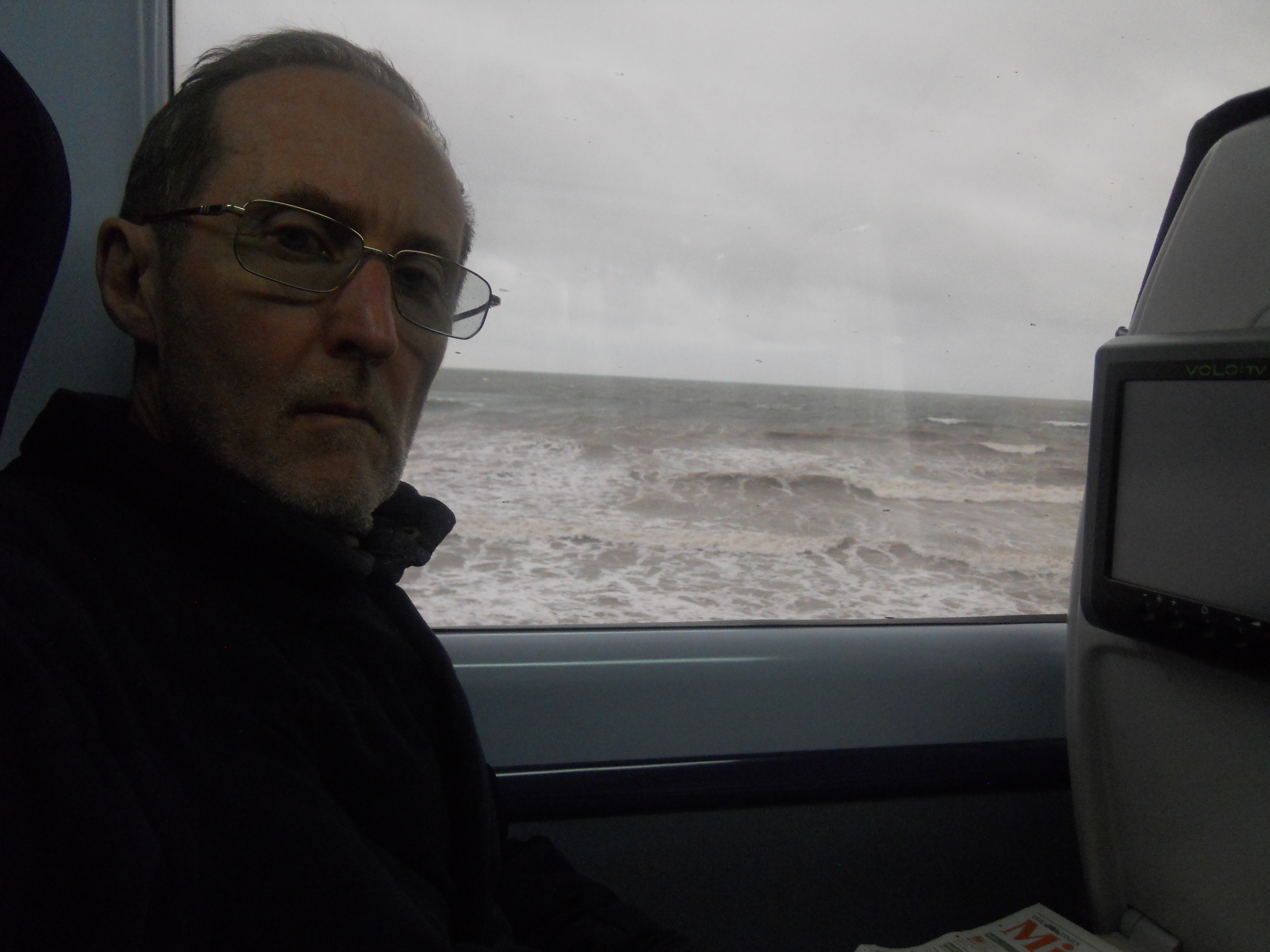
I took the picture from an InterCity 125 in 2011 and the seas seem to have got worse. Remember, that the line was washed away at Dawlish in February 2014.
But Hitachi’s Class 802 trains, seem to be handling the route on diesel power, without too much trouble.
I would expect that if one or more of the diesel engines are swapped for battery packs that the performance in heavy seas will not be worse.
But the biggest advantage of battery electric trains on the Riviera Line would surely be one of marketing.
And not just of the environmentally-friendly train service by Great Western Railway and CrossCountry, but by Hitachi in the marketing of their trains all over the world.
The only minor problem, I can see, could be the provision of charging at Paignton, as a 28 mile journey twice might be on the limit of the range of a battery electric train. Unless of course, bigger batteries were fitted!
A Splash-and-Dash At Newton Abbott
Newton Abbott station is roughly halfway between Plymouth and Exeter St. Davids and might be needed to give a Splash-and-Dash to trains between Devon’s two cities.
Some trains terminate at the station and others seem to take a leisurely stop at the station, so it could be a valuable calling point in a discontinuous electrification strategy.
Edginswell Station
Wikipedia has an entry for a new Edginswell station.
This is said.
Edginswell railway station is a proposed station in the Edginswell area of Torquay, Devon. The station would be located on the Riviera Line between Newton Abbot and Torre stations. Edginswell will be the location of employment and housing development and the new station will support this development. The station would also serve Torbay Hospital, The Willows retail park and the Torquay Gateway development area.
Plans for the station are being developed by Network Rail and Devon County Council.
This Google Map shows the area, where I think the station could be built.

Note.
- The large red dot indicates Edginswell.
- The main road across the map, was built on the North side of the Riviera Line.
- The Willows retail park lies to the North of the Hospital on the other side of the road and the railway.
- Torbay Hospital lies in the bend of the road and the railway.
This second Google Map shows an enlargement of the area to the North of the large red dot in the previous map.

Note.
- The A380 or South Devon Expressway leaving the map to the North-West. This road connects Torquay and the neighbouring towns and villages to the A38 and M5, which connect to the rest of the UK Motorway network.
- The Riviera Line passing across the North-East corner of the map.
Could this be the position to build a large Park-and-Ride station?
- It is a sizeable site, with good rail and road connections.
- I would estimate that the distance between Edginswell and Churston is under ten miles.
- Frequent electric shuttle buses could take people to the hospital and the nearby retail parks.
- Battery electric shuttle trains with a frequency of up to four tph could run between Exeter St. Davids and Paignton or another suitable terminal.
- Shuttle trains could charge at Edginswell and probably manage two round trips in an hour.
- This article on DevonLive is entitled Gridlocked Devon: Pollution – The Invisible Killer On Devon’s Roads, says a lot in the title.
- Long distance trains run by Great Western Railway or CrossCountry could call.
- Could some heritage trains terminate at Edginswell station?
- Would a Park-and-Ride station allow some of the land taken up by car parking along the coast, to be released for other purposes, more in tune with today’s mood?
It would be very interesting to see what would happen, if Edginswell station was built as a Park-and-Ride station with a Turn-Up-and-Go service to Torquay and Paignton and their beaches.
Paignton Station
This Google Map shows Paignton station.
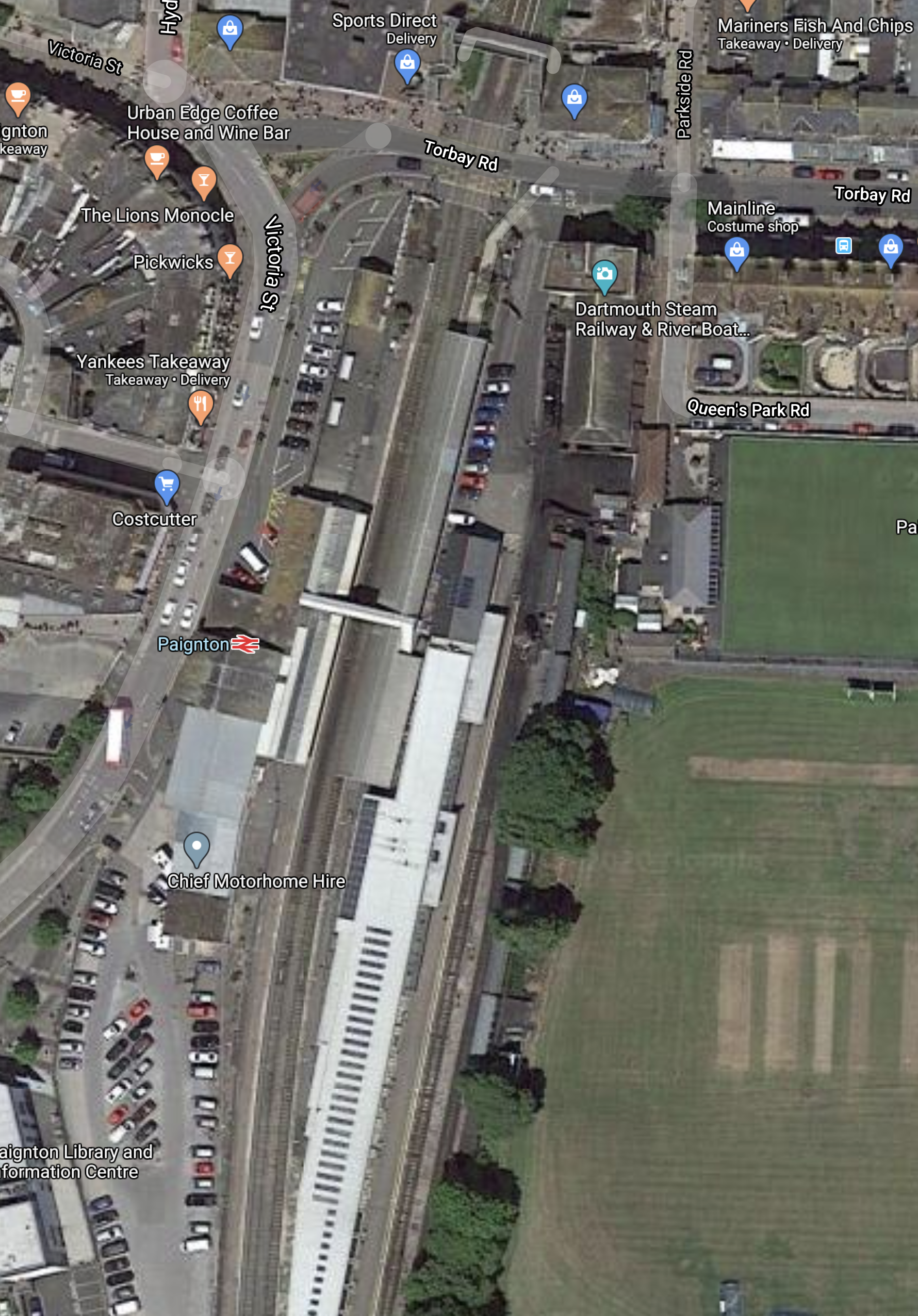
Note.
- The station has three National Rail platforms and one heritage platform for the Dartmouth Steam Railway.
- There is also a level crossing at the Northern end of the station, where Torbay Road crosses the railway.
Obviously, I don’t know the definitive answer, but would fitting a Fast Charge system to charge battery trains into the station be difficult because of the lack of space.
Goodrington Sands Station
This Google Map shows Goodrington Sands station.
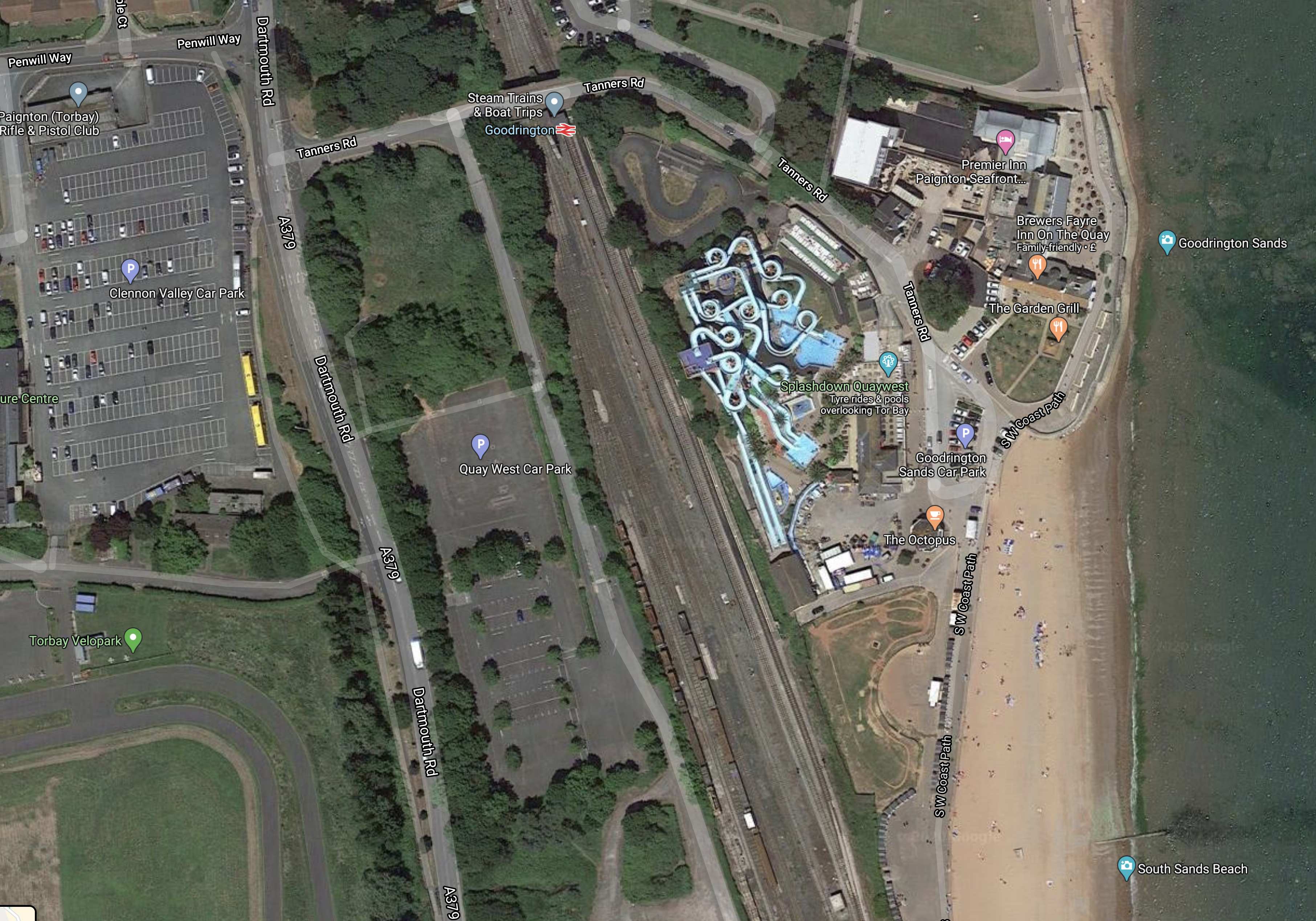
Note.
- Goodrington Sands station has two platforms.
- There is a comprehensive track layout between Paignton and Goodrington Sands stations.
- South of Goodrington Sands station, the line becomes single-track
- Goodrington Sands station appears to be surrounded by car parks.
- The only bridge across the railway appears to be at the North end of the station.
I think that a well-designed Goodrington Sands station could feature the following.
- Charging for battery trains.
- There might be a bay platform to turn and charge trains.
- A step-free bridge across the tracks.
- Easy walking routes to the nearby attractions.
- At least four tph to and from Edginswell, if that is built as a Park-and-Ride station.
Churston Station
This Google Map shows Churston station.
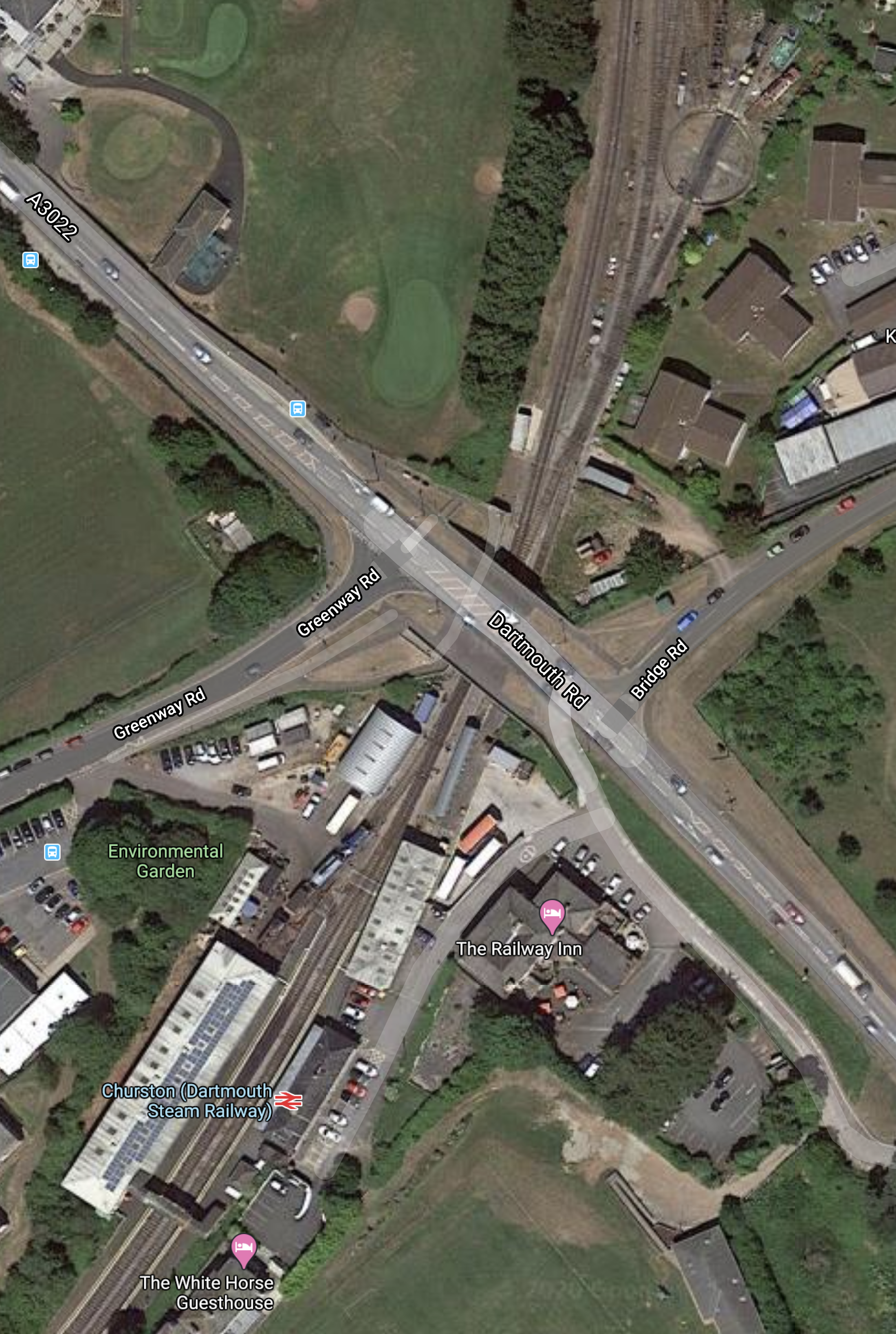
Note.
- Churston station is towards the South-West corner of the map.
- The station has two platforms.
Until I see the station, I am inclined to think, that the site would be a difficult one, in which to fit a Fast Charge system.
Conclusion
I can see the addition of Goodrington Sands and Churston turning the Riviera Line into a Coastal Metro between Exmouth and Churston.
I do think, the following would make it the ultimate rail line for the area.
- A Park-and-Ride station at Edginswell.
- Battery electric operation.
- A Turn-Up-and-Go frequency of four tph, between Exeter St. Davids and Churston.
- Two tph between Exmouth and Churston.
- One tph between London Paddington and Churston.
- One tph between Manchester Piccadilly and Churston.
It may be that some trains will turn back at Paignton or Goodrington Sands.
There are certainly a lot of possibilities.
CrossCountry’s Bournemouth And Manchester Piccadilly Service
Whilst I was at Basingstoke station yesterday one of CrossCountry‘s services between Bournemouth and Manchester Piccadilly came through, so I took these pictures.
It was a long formation of Class 220 trains.
Could This Service Be Replaced By Hitachi Regional Battery Trains?
This Hitachi infographic gives the specification of the Hitachi Regional Battery Train.
I feel that in most condition, the range on battery power can be up to 56 miles.
I can break the Bournemouth and Manchester Piccadilly route into a series of legs.
- Bournemouth and Basingstoke – 60 miles – 750 VDC third-rail electrification
- Basingstoke and Reading – 15.5 miles – No electrification
- Reading and Didcot North Junction – 18 miles – 25 KVAC overhead electrification
- Didcot North Junction and Oxford – 10 miles – No electrification
- Oxford and Banbury – 22 miles – No electrification
- Banbury and Leamington Spa – 20 miles – No electrification
- Leamington Spa and Coventry – 10 miles – No electrification
- Coventry and Manchester Piccadilly – 101 miles – 25 KVAC overhead electrification
Note.
- 63 % of the route is electrified.
- The short 15.5 mile gap in the electrification between Basingstoke and Reading should be an easy route for running on battery power.
- But the 62 mile gap between Didcot North Junction and Coventry might well be too far.
The train would also need to be able to work with both types of UK electrification.
If some way could be found to bridge the 62 mile gap reliably, Hitachi’s Regional Battery Trains could work CrossCountry’s service between Bournemouth and Manchester Piccadilly.
Bridging The Gap
These methods could possibly be used to bridge the gap.
A Larger Battery On The Train
If you look at images of MTU’s Hybrid PowerPack, they appear to show a basic engine module with extra battery modules connected to it.
Will Hitachi and their battery-partner; Hyperdrive Innovation use a similar approach, where extra batteries can be plugged in as required?
This modular approach must offer advantages.
- Battery size can be tailored to routes.
- Batteries can be changed quickly.
The train’s software would know what batteries were fitted and could manage them efficiently.
I wouldn’t be surprised to see Hitachi’s Regional Battery Train able to handle a gap only six miles longer than the specification.
Battery And Train Development
As Hitachi’s Regional Battery Train develops, the following should happen.
- Useable battery capacity will increase.
- The train will use less electricity.
- Actions like regenerative braking will improve and recover more electricity.
- Driving and train operating strategies will improve.
These and other factors will improve the range of the train on batteries.
A Charging Station At Banbury Station
If some form of Fast Charge system were to be installed at Banbury station, this would enable a train stopping at Banbury to take on enough power to reliably reach Oxford or Coventry depending, on their final destination.
This method may add a few minutes to the trip, but it should work well.
Electrification Of A Section Of The Chiltern Main Line
This could be an elegant solution.
I have just flown my helicopter between Bicester North and Warwick Parkway stations and these are my observations.
- The Chiltern Main Line appears to be fairly straight and has received a top class Network Rail makeover in the last couple of decades.
- There are a couple of tunnels, but most of the bridges are new.
- Network Rail have done a lot of work on this route to create a hundred mph main line.
- It might be possible to increase the operating speed, by a few mph.
- The signalling also appears modern.
My untrained eye, says that it won’t be too challenging to electrify between say Bicester North station or Aynho Junction in the South and Leamington Spa or Warwick Parkway stations in the North. I would think, that the degree of difficulty would be about the same, as the recently electrified section of the Midland Main Line between Bedford and Corby stations.
The thirty-eight miles of electrification between Bicester North and Warwick Parkway stations would mean.
- The electrification is only eight-and-a-half miles longer than Bedford and Corby.
- There could be journey time savings.
- As all trains stop at two stations out of Banbury, Leamington Spa, Warwick and Warwick Parkway, all pantograph actions could be performed in stations, if that was thought to be preferable.
- Trains would be able to leave the electrification with full batteries.
- The electrification may enable some freight trains to be hauled between Didcot and Coventry or Birmingham using battery electric locomotives.
Distances of relevance from the ends of the electrification include.
- London Marylebone and Bicester North stations – 55 miles
- London Marylebone and Aynho junction – 64 miles
- Didcot North and Aynho junctions – 28 miles
- Leamington Spa and Coventry stations – 10 miles
- Leamington Spa and Birmingham Snow Hill stations – 23 miles
- Leamington Spa and Stratford-upon-Avon stations – 15 miles
- Warwick Parkway and Birmingham New Street stations – 20 miles
- Warwick Parkway and Birmingham Snow Hill stations – 20 miles
- Warwick Parkway and Kidderminster – 40 miles
- Warwick Parkway and Stratford-upon-Avon stations – 12 miles
These figures mean that the following services would be possible using Hitachi’s Regional Battery Train.
- Chiltern Railways – London Marylebone and Birmingham Moor Street
- Chiltern Railways – London Marylebone and Birmingham Snow Hill
- Chiltern Railways – London Marylebone and Kidderminster
- Chiltern Railways – London Marylebone and Stratford-upon-Avon
- CrossCountry – Bournemouth and Manchester Piccadilly
- CrossCountry – Southampton Central and Newcastle
- Midlands Connect – Oxford and Birmingham More Street – See Birmingham Airport Connectivity.
Other services like Leicester and Oxford via Coventry may also be possible.
As I see it, the great advantage of this electrification on the Chiltern Main Line is that is decarbonises two routes with the same thirty-eight miles of electrification.
Conclusion
CrossCountry’s Bournemouth And Manchester Piccadilly service could be run very efficiently with Hitachi’s proposed Regional Battery Train.
My preferred method to cross the electrification gap between Didcot North junction and Coventry station would be to electrify a section of the Chiltern Main Line.
- The electrification would be less than forty miles.
- I doubt it would be a challenging project.
- It would also allow Hitachi’s proposed trains to work Chiltern Main Line routes between London Marylebone and Birmingham.
I am fairly certain, that all passenger services through Banbury would be fully electric.
Beeching Reversal – Unlocking Capacity And Services Through Bramley (Hants)
This is one of the Beeching Reversal projects that the Government and Network Rail are proposing to reverse some of the Beeching cuts.
Bramley Station
Bramley (Hants) station is on the Reading-Basingstoke Line, which is 15.5 miles long.
- The line is double-track.
- Bramley station is the nearest one to Basingstoke station.
- The two stations are about five miles apart.
- The basic local service is two trains per hour (tph), with trains taking a few minutes under half-an-hour.
- The speed limit is listed in Wikipedia at 75 mph and my Class 165 train was travelling at about 60 mph on both journeys between Basingstoke and Bramley stations.
This Google Map shows Bramley station.
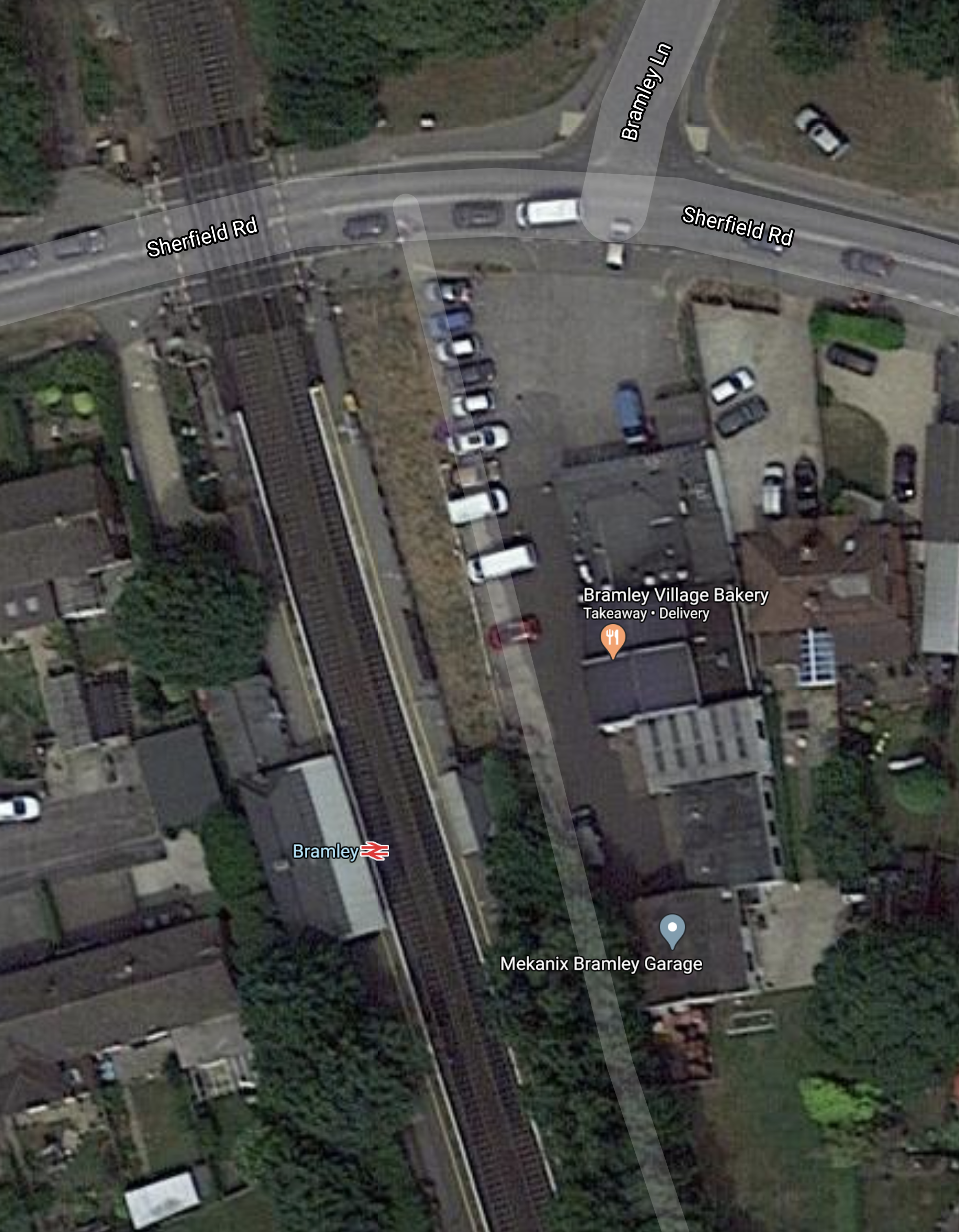
Note the level crossing, just to the North of the station.
These are some pictures, that I took, whilst I spent about thirty minutes at Bramley station.








Note
- In the thirty minutes, I was at the station, two long freight trains and three passenger trains came through.
- The level crossing barriers were going up and down like a whore’s drawers.
- Each level crossing closure resulted in long queues at the barriers.
It reminded me how bad the level crossing at Brimsdown station used to be in the Peak in 1966, when I crossed it twice every day to go to and from work at Enfield Rolling Mills. At least I was on two wheels and it gave me a break from pedalling!
There is more on the problems of the level crossing on this article on the Bramley Parish Council web site, which is entitled Living With Our Level Crossing.
Current Future Plans For the Reading-Basingstoke Line
The Wikipedia entry for the Reading-Basingstoke Line has a Future section, where this is said.
The railway is listed with Network Rail as part of route 13, the Great Western main line, and was due to be electrified with 25 kV overhead wiring by 2017 as part of the modernisation of the main line.[8] In July 2007, plans were agreed to build a station in Reading south of Southcote Junction in the Green Park business park, serving the southern suburbs of Reading and also the Madejski Stadium. Construction of Reading Green Park railway station was expected to be completed in 2010; the plans were suspended in 2011, but were reinstated in 2013. It is now set to open by the end of 2020[9], with electrification along the line at a later date.
It is my view, that the new Reading Green Park station will probably mean that four tph between Reading and Basingstoke stations will be needed. especially if a second new station were to be built at Chineham.
But four tph would probably be impossible, without improving the traffic of both rail and road through Bramley.
Solving The Level Crossing Problem
Ideally, the level crossing should be closed and the road diverted or put on a bridge,
If you look at a wider map of the area, building a by-pass to enable road traffic to avoid the crossing will be difficult if not impossible.
But this is not an untypical problem on rail networks and not just in the UK.
I suspect that with precise train control using digital ERTMS signalling, trains and level crossing closures can be timed to improve traffic on both road and rail.
Consider.
- If trains crossed on the level crossing and they were under precise control, this would reduce the number of level crossing closures per hour.
- If the line speed was higher and the trains ran faster, this should ease timetabling, as there could be more train paths per hour.
- Faster accelerating electric trains would save time too, by shortening station dwell times.
- A third track might be laid in places.
- The signalling could possibly drive the train or tell the driver exactly what speed to travel, so trains passed on the crossing or in the station.
As Network Rail and their contractors roll-out ERTMS, they’ll discover better and more intelligent ways to deploy the system.
Electric Trains Would Help
Electric trains accelerate faster and if they use regenerative braking to batteries, this cuts station dwell times.
But powering them by electrification would mean the connecting lines between the Reading and Basingstoke Lines and the nearest electrified lines would also have to be electrified. This would make the scheme excessively expensive.
But Battery Electric Trains Could Be Better!
I believe that battery electric trains, would be a more-than-viable alternative.
- You still get the performance advantages of electric trains.
- With charging at just one end of the route, a battery electric train could run a round trip on battery power.
The big advantage, would be that the only new electrification infrastructure needed would be to charge the trains.
Charging Battery Electric Trains At Reading Station
Reading is a fully electrified station and the shuttle trains to and from Basingstoke station, appear to use Platform 2.
This Google Map shows electrification gantries over Platforms 1, 2 and 3 at Reading station.
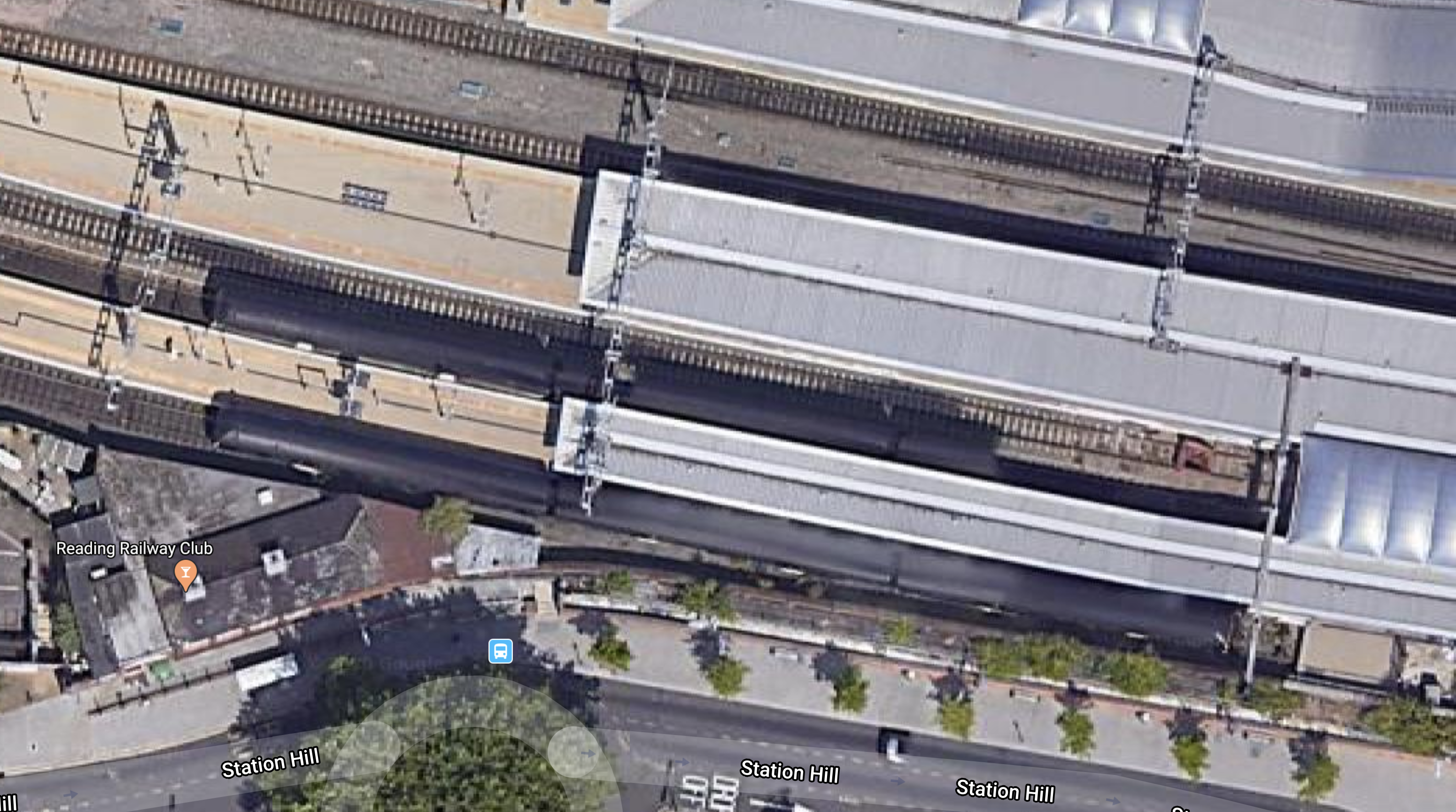
Note.
- The route between Reading station and Southcote junction, where the Basingstoke and Newbury routes divide, may be under two miles, but it is fully electrified.
- Trains take three minutes to travel between Reading station and Southcote junction.
- Trains wait for up to twenty minutes in the platform at Reading station.
It would appear that trains get enough time at Reading to fully charge the batteries.
Charging Battery Electric Trains At Basingstoke Station
The shuttle trains between Reading and Basingstoke stations, appear to use Platform 5 in Basingstoke station.
This Google Map shows Platform 5 at Basingstoke station.
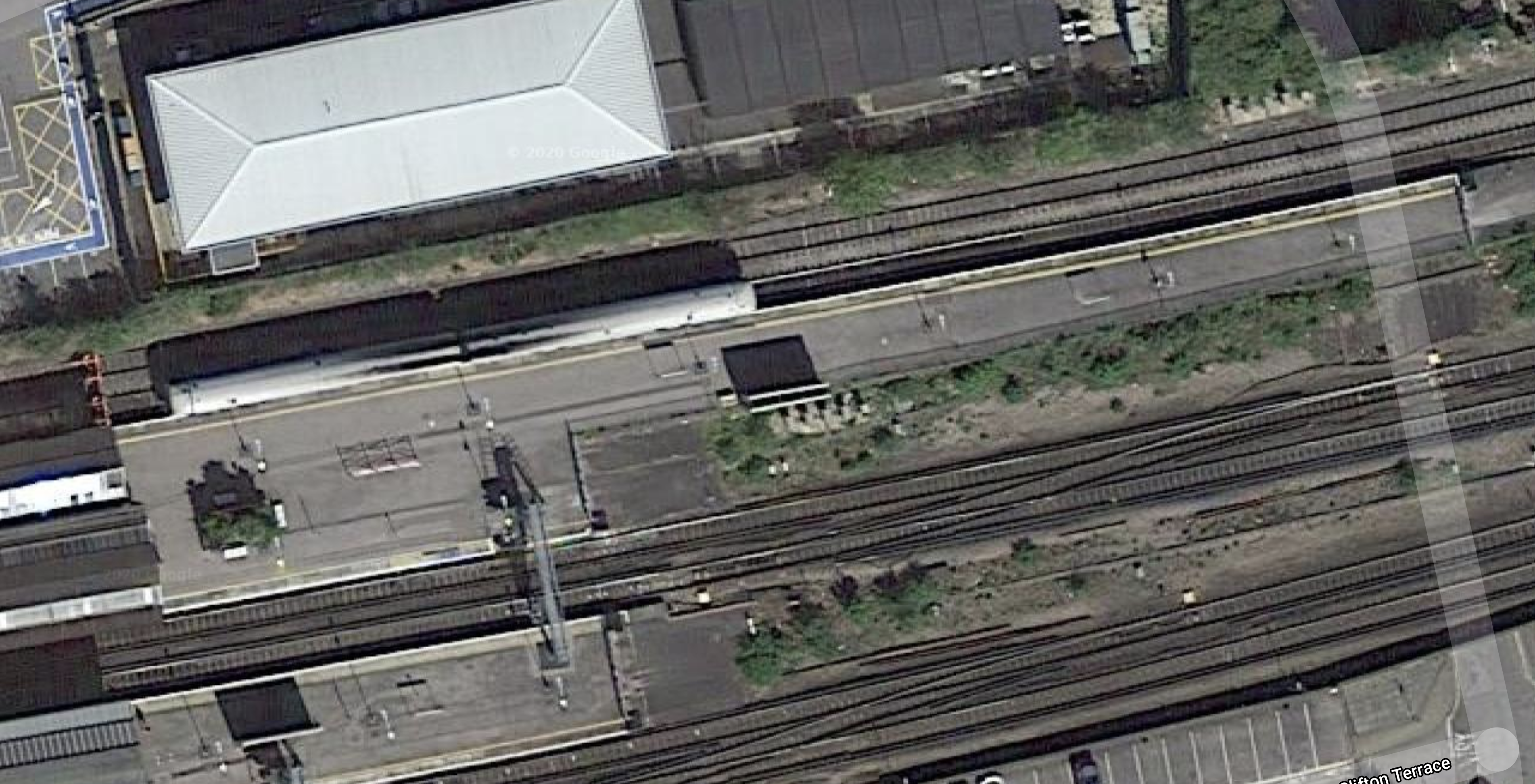
Platform 5 is towards the top of the map and contains a two-car train.
These pictures show the platform.



Note.
- There would appear to be space on the North side of Platform 5 to install another platform, if one should be needed.
- It appears from the Google Map, that Platform 5 could take a four-car train.
- The platform is wide and spacious for passengers.
- I suspect a Fast Charge system of some sort could be installed in this platform.
As at Reading, trains can take around twenty minutes to turn back at Basingstoke, which would be ideal for a battery charge.
What Trains Could Work The Shuttle?
After South Western Railway‘s interim Managing Director; Mark Hopwood’s comments, that led me to write Converting Class 456 Trains Into Two-Car Battery Electric Trains, these trains must be a possibility.
I also think, that as both South Western Railway and Great Western Railway are both First Group companies, there won’t be too much argument about who supplies the trains for the shuttle.
CrossCountry Trains Between Reading And Basingstoke
CrossCountry will need to replace their Class 220 trains with electric or bi-mode trains soon, to meet the dates for decarbonisation.
The prime candidate must be a dual-voltage version of Hitachi’s Regional Battery Train, which could easily work the 15.5 miles between Reading and Basingstoke on battery power, after charging up on the electrification at both ends.
The trains could also be easily fitted with the ERTMS signalling equipment that will be required to go smoothly along the line.
Freight Trains Between Reading And Basingstoke
We might see this section of the UK rail network, electrified for freight, but as it would require lots of connecting electrification, I think it is more likely that freight locomotives will be powered by an alternative fuel like hydrogen or bio-diesel. This would cut electrification needs, but still reduce carbon emissions.
Freight locomotives are already being fitted with the required ERTMS signalling equipment.
Conclusion
I am absolutely sure, that there’s a technological solution in there, that can increase the number of trains through Bramley.
But diverting the road traffic and clossing the level crossing would appear to be difficult.
 The Anonymous Widower