Could The Settle And Carlisle Be Used As A More Formal Route?
In June 2021, I wrote Through Settle And Carlisle Service Under Consideration, which starts like this.
The title of this post, is the same as that of an article in the June 2021 Edition of Modern Railways.
This is the first paragraph.
Plans for a new Leeds to Glasgow through service via the Settle and Carlisle line are being developed, with CrossCountry and the Department for Transport starting to look at the possible scheme.
It sounds like a sensible idea to me.
The article also suggests the following.
- CrossCountry is a possible operator.
- CrossCountry are keen to improve services between Leeds and Glasgow
- The trains could be InterCity 125s, freed up, by a the arrival of Class 221 trains from Avanti West Coast, when they receive their new Class 805 trains.
- Maintenance of the trains wouldn’t be a problem, as this could be done at Neville Hill in Leeds or Craigentinny in Edinburgh.
- Services could start in December 2023.
But nothing more has been heard.
However some things have happened.
The Settle And Carlisle Has Become A Popular Charter Route
Google AI gave me this paragraph.
The Settle and Carlisle line is an extremely popular, premier route for heritage rail charters, steam excursions, and luxury rail tours in the UK, often operating at full capacity. Renowned for its scenic 72-mile journey through the Yorkshire Dales and Pennines, it features iconic structures like the Ribblehead Viaduct.
I have also written these posts about charters on the Settle and Carlisle Line.
Scheduled Steam-Hauled Services For the Settle And Carlisle Railway
Rail Operator Crosses Line For First Time In Years
‘Staycation Express’ To Return Along Full Length of S & C
It doesn’t appear that the numbers of charter trains are showing any sign of decrease.
LNER Has Ordered Class 897 Trains
When LNER took over the East Coast Main Line services, they had six main classes of trains.
- Five-car Class 800/1 bi-mode trains
- Nine-car Class 800/2 bi-mode trains
- Five-car Class 801/1 electric trains
- Nine-car Class 801/2 electric trains
- Seven-car InterCity225 trains
- Nine-car InterCity225 trains
Note.
- The five-car trains can run in pairs as ten-car trains.
- The Class 800 and Class 801 trains can run to destinations, that lack full electrification using diesel power where needed.
- Hitachi are developing battery-power for rail routes without electrification.
In 2023 to replace the InterCity225 trains ten ten-car Class 897 tri-mode trains were ordered from CAF, which will soon be in service, over all LNER’s network.
LNER Has Fully Electrified And Unelectrified Destinations
LNER’s current destinations, that are fully electrified to King’s Cross include.
- Bradford Forster Square
- Berwick on Tweed
- Darlington
- Doncaster
- Durham
- Edinburgh Haymarket
- Edinburgh Waverley
- Grantham
- Keithley
- Leeds
- Newark Northgate
- Newcastle
- Peterborough
- Retford
- Shipley
- Skipton
- Stevenage
- Wakefield Westgate
- York
Whilst those are not fully electrified include.
- Aberdeen
- Cleethorpes
- Dundee
- Grimsby Town
- Harrogate
- Huddersfield
- Horsforth
- Hull
- Inverness
- Lincoln
- Middlesbrough
- Sheffield
- Sunderland
- Thornaby
- Worksop
Note.
- Other destinations can be added as required.
- I suspect, that Class 897 trains will be able to approach many stations without electrification on battery power alone.
- Staff and Passengers would probably like underground stations like Sunderland to be worked on batteries alone.
The Class 800 bi-mode, the Class 801 electric and the Class 897 tri-mode trains will give LNER a very flexible fleet.
Onward To Skipton, Carlisle and Glasgow Central And Edinburgh From Bradford Forster Square
I wonder is someone has realised that the Class 897 trains could use their tri-mode capabilities to invade Scotland?
This OpenRailwayMap shows the railways between the Scottish Lowlands and northern England.
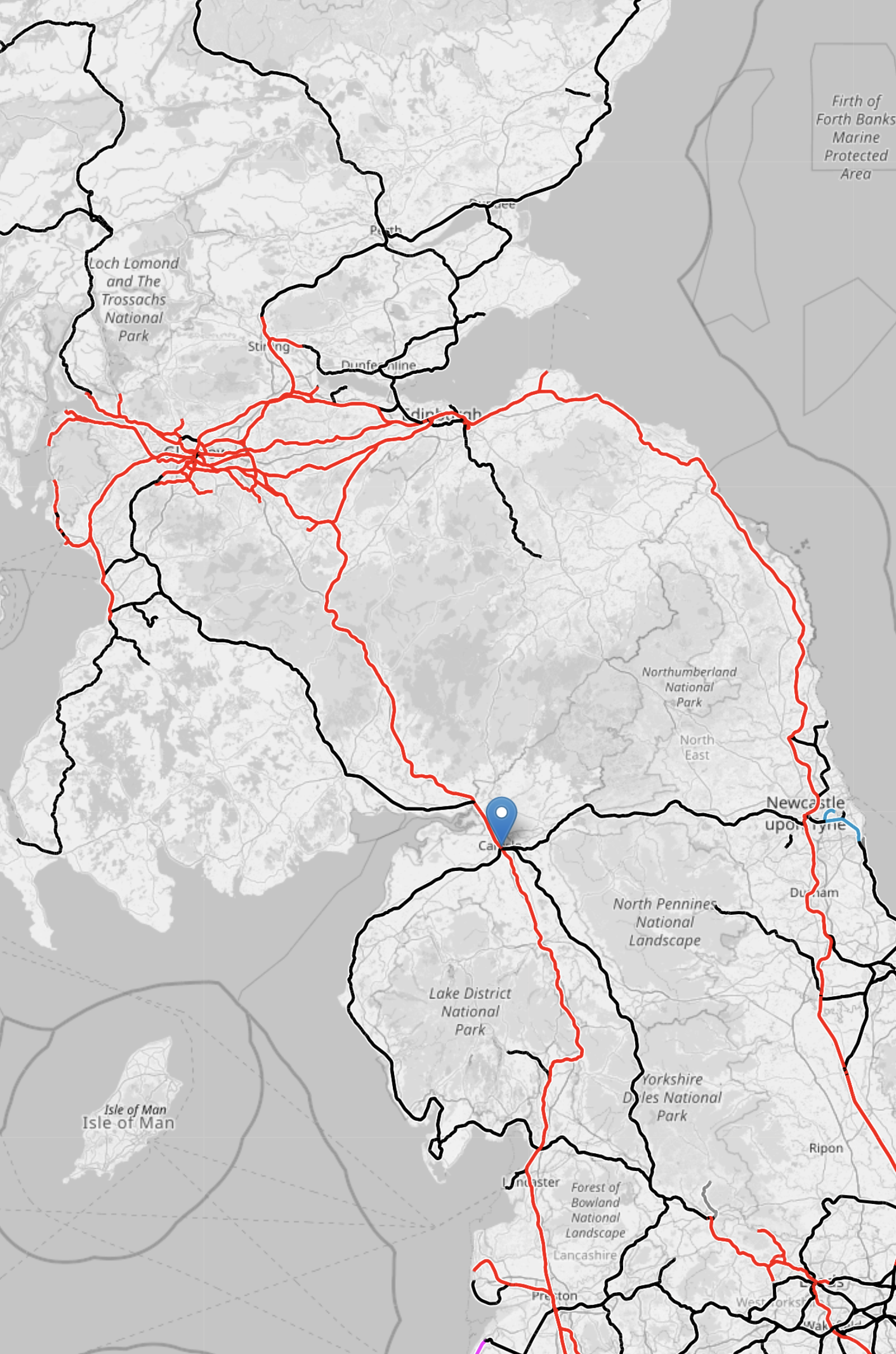
Note.
- Red tracks are electrified.
- Black tracks are not.
- The blue arrow in the middle of the map indicates Carlisle.
- The red track going North-South through Carlisle is the West Coast Main Line.
- The black track going South from Carlisle is the Settle and Carlisle Line.
- Where it turns red is at Skipton station and the electrification can power the train to Bradford Foster Square, Doncaster, Leeds or Sheffield stations.
- The West Coast Main Line splits North of Carlisle and electrified trains can reach either Glasgow Central in the West or Edinburgh Haymarket or Waverley in the East.
- The black track going North-South between Carlisle and Glasgow via Dumfries is the Glasgow South Western Line, which can be used as a diversionary route by some trains with a self-powered capability.
The Settle and Carlisle Line certainly makes Anglo-Scottish routes more robust and flexible when there is bad weather, engineering works or overhead wire or signalling failures.
Will Class 897 Trains Be Able To Run On The Settle And Carlisle Line?
I asked Google AI this question and it gave this answer.
Yes LNER’s new Class 897 tri-mode trains (scheduled for introduction from 2027) will be able to run on the Settle and Carlisle line. As tri-mode electro-diesel multiple units, these 10-car trains are designed to operate across the entire LNER network, utilizing electric, diesel, or battery power to manage non-electrified routes like this, providing a modern alternative to older, diesel-only fleets.
Key details regarding Class 897 on the Settle and Carlisle Line:
Tri-mode Capability: These trains can run on electric, diesel, or battery power, making them highly versatile for non-electrified, scenic, or challenging routes.
Operating Strategy: The trains are designed for flexibility and can be used across the LNER network, which includes routes connecting to Scotland via the West Coast Main Line (WCML) or through services from Leeds.Upgrading Service: They will replace the 40-year-old InterCity 225 fleet, offering a more environmentally friendly, modern alternative to current diesel bi-modes, such as the Class 800/802.
The route is a major, yet challenging, rail line featuring 20 viaducts and 14 tunnels, making it suitable for modern, versatile train sets.
I also believe that running Class 897 trains between Yorkshire and Glasgow offers opportunities to run new services, that will appeal to both travellers and rail operators.
Does The UK Need More Passenger Rail Capacity Between Yorkshire And Glasgow?
I asked Google AI this question and it gave this answer.
Yes, the UK requires more passenger rail capacity between Yorkshire and Glasgow due to severe overcrowding and forecasted demand growth. Major routes like the East Coast Main Line (ECML) and West Coast Main Line (WCML) are, or will soon be, at maximum capacity. Key constraints include infrastructure limitations and the need for better Scotland-England connectivity.
Key insights on this need:
Capacity Constraints: The WCML, particularly at its southern end, is already effectively full, with limited capacity for additional, longer trains. Similarly, the ECML is experiencing significant overcrowding.
Growing Demand: Passenger demand for long-distance rail travel continues to rise, with significant increases noted in journeys between Scotland and other regions.
Infrastructure Issues: Constraints include steep inclines, tight curves, and the need to mix passenger and freight traffic, particularly on the West Coast route.
Proposed Solutions: While some improvements are planned, such as Lumo extending services to Glasgow, the Integrated Rail Plan (IRP) focuses on capacity enhancements in the North/Midlands.
Strategic Need: Enhanced, high-speed connections are considered essential for long-term economic integration and to prevent increased air travel/emissions.
The great advantage of the route, is that is already in place.
Can The Settle And Carlisle Line Handle Planned Diversions?
Can The Settle And Carlisle Line Handle The Caledonian Sleeper?
I asked Google AI this question and it gave this answer.
The Settle-Carlisle line is not a standard route for the Caledonian Sleeper, which typically travels via the West Coast Main Line (WCML) to Edinburgh, Glasgow, and beyond. While the line is a scenic, double-track route with significant infrastructure, it is generally used for local services and freight, not long-distance, heavy sleeper trains.
Key Considerations:
Route: The Caledonian Sleeper operates on the West Coast Main Line, serving destinations like Edinburgh, Glasgow, Aberdeen, Inverness, and Fort William.
Capacity & Infrastructure: While the Settle-Carlisle line has major structures like the Ribblehead Viaduct, it is not the primary route for high-speed or overnight sleeper services.
Operational Normal: The sleeper service splits into portions at Edinburgh, and does not regularly operate via the Settle-Carlisle line.
In short, the Settle-Carlisle line is not designed for or used by the Caledonian Sleeper, which operates via the West Coast Main Line.
But it does appear, that in the past some sleeper trains have used it.
How Many Freight Trains Use the Settle And Carlisle Line In A Typical Day?
This article on the BBC is entitled Settle To Carlisle line: Shortage of trains ‘Hampering Growth’, says this about the number of trains.
From only two trains a day in the 1980s the Settle and Carlisle line now sees 14 passenger and 18 freight services a day.
That is progress!
Northern Launches New Yorkshire Flyer Fast Service Between Leeds And Sheffield
The title of this post is the same as that of this news item from Northern Trains.
This is the sub-heading.
Northern is running a new fast service which allows customers to travel between Leeds and Sheffield in 47 minutes.
These three introductory paragraphs add more detail.
Known as the Yorkshire Flyer, as it provides a quick and convenient connection between the White Rose county’s two biggest cities, the service was officially launched during an event at Leeds station earlier today.
Cutting journey times and providing more than 30,000 extra seats a week, the service will support economic growth by making it easier for people to get to work and reach new opportunities.
It used to take all Northern customers around an hour or longer to make the journey, with trains calling at various stops along the way.
These further details come from Real Time Trains.
- The trains used appear to be two-car Class 158 trains.
- The total distance is 38.7 miles.
- Between Leeds station and South Kirkby junction is electrified and a distance of 20.6 miles.
- Trains appear to leave Leeds station at xx45.
- CrossCountry services Leeds station for Sheffield at xx15 and make a similar intermediate stop at Wakefield Westgate.
- Leeds trains for Sheffield seem to leave from Platform 12 or 12A.
- Trains appear to leave Sheffield station at xx52.
- CrossCountry services leave Sheffield station for Leeds at xx22 and make a similar intermediate stop at Wakefield Westgate.
- Sheffield trains for Leeds don’t seem to have such a regular platform, as those in the other direction. But I suppose that will be improved.
Effectively, Northern and CrossCountry have paired up two services to give a two trains per hour, fast service between Leeds and Sheffield with one stop at Wakefield Westgate.
I have some further thoughts.
The Route Could Be Run By Battery-Electric Trains
Consider.
- The only part of the route that is not electrified is the 18.1 miles between South Kirkby junction and Sheffield station.
- From talking to engineers, who are working on developing battery-electric trains, a three-car train with a battery range of fifty miles is already a possibility.
- In 2015, I actually rode on a four-car battery-electric Class 379 train, that ran reliably on the Harwich branch for three months.
- Merseyrail’s battery-electric Class 777 trains probably have the performance and are working reliably on Merseyside. But they are probably a bit slow.
I believe that any number of train manufacturers would be very pleased to provide new battery-electric trains for the route.
But Siemens must be in the prime position.
- The German company has built a £200 million train factory at Goole in East Yorkshire, which is currently building London’s Piccadilly Line trains, which have batteries.
- Siemens have already delivered trains in Germany using the technology, they would use in the UK.
- The battery charging technology they would use for other routes in the UK, is described in Technology Behind Siemens Mobility’s British Battery Trains Hits The Tracks.
- Sheffield and Leeds, would make a superb test and demonstration route for battery-electric trains, as 50% of the route is fully-electrified with 25 KVAC.
- The Sheffield and Leeds route is just down the track from the Goole factory.
- I wouldn’t be very surprised, if Siemens were very keen to get a few orders close to their factory, as they would surely be easy to support.
But the clincher must be Juergen Maier, who used to be CEO of Siemens UK, and is now Chair of Great British Energy. Maier holds both British and Austrian citizenship, and was educated in Leeds and Nottingham, so hopefully, he can give this clanger-prone government some excellent advice where they need it, from his position in Great British Energy.
Could A Stop Be Made At Meadowbank Station?
This would give access to other rail routes and the Sheffield Supertram, but most of this access could also be performed at Sheffield.
Looking at the timetable of the route, I feel that there is enough slack to fit in a stop at Meadowhall, but it would need for the route to be electrified, so that the trains had faster acceleration and deceleration.
However, battery-electric trains may have the required performance.
What Maximum Speed Would The Trains Need?
Consider.
- The current Class 158 diesel trains used between Sheffield and Leeds and in many places in the UK are 90 mph trains.
- There are also a large number of Class 170 trains in the UK, that will need to be replaced and these are 100 mph trains.
- The Sheffield and Leeds route has some sections of 85 mph running.
- Train speeds are all accurately computer-controlled.
As a Control Engineer for safety and route availability reasons, I believe the trains will have a 100 mph maximum speed, but train speed will be computer controlled.
Will The Trains Be Driver-Only Operated?
I asked Google AI if Hitachi IET trains are driver only operated (DOO) and received this reply.
Hitachi Intercity Express Trains (IETs, Class 800/802) are designed for versatile operation, capable of Driver-Only Operation (DOO) using in-cab CCTV monitors for door safety checks. While they can operate without a guard, many services, particularly on GWR, still retain a guard on board for passenger service duties, even if the driver controls the doors.
So Hitachi trains can be driver-only operated and these will surely share the tracks with the trains that work the Northern Flyer.
I asked Google AI if Thameslink trains are driver only operated (DOO) and received this reply.
Yes, all Thameslink train services are Driver Only Operated (DOO). This means the driver is solely responsible for operating the doors and ensuring the safe dispatch of the train, without a guard or conductor on board to manage the doors. Through the central London core, these trains often use Automatic Train Operation (ATO).
As I believe that Siemens would be likely to win the battery-electric train order, because of proven technology, factory location and influence of Juergen Maier, Siemens certainly have the ability to produce trains, that are driver-only operated.
I believe that, whoever builds the trains, they will be capable of driver-only operation.
But if driver-only operation is to be used will be down to politics.
- Because of the situation on East West Rail, Heidi Alexander will probably be in favour.
- The Tories and Liberal Democrats will also be in favour.
- The rail unions, the left wing of the Labour Party and the Greens will be strongly against.
- Farage and Reform UK will take a very hard line to enforce driver-only operation everywhere.
The average citizen on the Northern Flyer and all the other trains in the UK, will just want a reliable train service.
Conclusion
- This would make a superb route for a battery electric train.
- No chargers or extra electrification would need to be installed.
- There wouldn’t be much work needed to be done to the platforms or the signalling.
- The trains would use standard 25 KVAC overhead electrification for charging.
- The trains would be running close to where they were built.
I believe the new service will give a large boost to the Yorkshire economy. Even before the arrival of battery-electric trains.
Could Electric Trains Run Between St. Pancras International and Sheffield Stations With No More Electrification?
A reader suggested, that I look at this, so here goes!
- A couple of weeks ago, I took a Class 222 diesel train back from Sheffield to St. Pancras International and it seemed a few minutes quicker.
- Looking at the timetable today, at least one service on the route is now just under two hours and some others are just over.
So the new Class 810 trains may not be fully in service yet, but the trains have already had an effect on the timetable.
How Far North Is The Midland Main Line Being Electrified?
I asked Google AI this question and received this answer.
As of early 2026, the Midland Main Line (MML) is electrified as far north as Wigston, just south of Leicester.
- Northern Limit: The section from Kettering up to Wigston South Junction was energised in July 2024, representing the current northern limit of 25kV overhead line equipment (OLE).
- Pause in Further Electrification: Following a UK government spending review, the further, planned northward extension of electrification to Leicester, Derby, Nottingham, and Sheffield was indefinitely paused in July 2025.
- Current Operations: While electrification has stopped at Wigston, the line is served by new bi-mode (electro-diesel) trains, allowing for electric running from London St Pancras to Wigston before switching to diesel power.
- Previous Work: The line is also fully electrified from London St Pancras to Bedford, including the route to Corby.
Note.
- South Wigston Junction and Sheffield are 69.4 miles apart.
- The Hitachi trains can raise and lower pantographs on the move.
Distances without wires from London St. Pancras International to various destinations are as follows.
- Sheffield – 69.4 miles
- Leicester – 3.7 miles
- Derby – 36.4 miles
- Nottingham – 31.1 miles
As trains will have to go out and back to these destinations distances travelled will be doubled.
- Sheffield – 138.8 miles
- Leicester – 7.4 miles
- Derby – 72.8 miles
- Nottingham – 62.2 miles
It looks to me, that if the new Class 810 trains, can travel 138.8 miles on batteries and diesel engines as a tri-mode train, then the Midland Main Line is electrified.
Could The Sheffield Services Turn Round At Doncaster And Charge Their Batteries There?
Note.
- South Wigston Junction and Doncaster are 79.5 miles apart.
- Doncaster is a fully-electrified station.
- Sheffield and Doncaster would get two extra connecting trains per hour.
- The two services could also call at Meadowhall and/or Rotherham Central.
The Class 810 trains could charge their batteries, whilst passengers to and from Doncaster left and entered the trains.
Could A Simple Cross-Platform Change Be Arranged Between East Coast And Midland Main Line Services?
Doncaster station has two long island platforms, one of which is generally used for Northbound services and one for Southbound services.
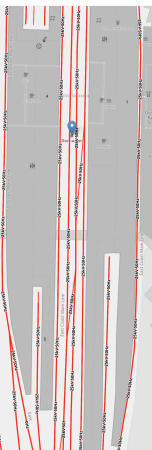
Note.
- All electrified tracks are shown in red.
- The two wide island platforms, with Northbound on the West side and Southbound on the East side.
- Each island platform has an electrified platform face on both sides.
- The four platforms faces on the island platforms can hold pairs of five-car Hitachi trains.
- There are two through tracks or avoiding lines between the two island platforms for trains that aren’t stopping.
- There are bay platforms at the ends of the station for local trains.
- The station is fully step-free with a wide pedestrian underpass.
I know the station well and it looks to me, that East Midland Railway’s five-car services for St. Pancras could charge up in the Southern ends of the four faces of the island platforms and the two South-facing bay platforms.
I also believe that a pair of five-car Class 810 trains could be handled and charged, should it become necessary.
It looks to me, that the engineers updating the East Coast Main Line, know that they were caught out badly by High Speed Two, so the redesign for the next fifty or a hundred years will be completely future-proofed.
Doncaster and London could almost be considered to be twin main lines, with two pairs of high speed lines taking different routes, that serve different towns and cities.
How Many Travellers Go Between East Scotland And The North-East of England And The English Midlands?
It must be quite a few, as in the new East Coast Main Line timetable, more Scottish services stop at places like Doncaster and Newark.
But surely, if you could go between say Perth or Aberdeen and Derby or Nottingham in two battery-electric trains, with a relaxed change at Doncaster, you’d take it?
I certainly would!
East Coast And Midland Main Lines Compared
These are times between London and Doncaster.
- Current times between Doncaster and London are typically between 1 hour and 31-40 minutes going via the East Coast Main Line.
- I estimate times between Doncaster and London will be typically 2 hours and 22-27 minutes going via the Midland Main Line.
Note.
- Doncaster and London King’s Cross is 156 miles
- Doncaster and London St. Pancras International is 183.3 miles
- So the Midland Main Line route would appear to to be about 45 minutes slower.
- I suspect, that for passengers between between London and North of York, it will always be quicker to use an East Coast Main Line service.
These are times between London and Sheffield.
- Current times between Sheffield and London are typically between 2 hours and 4-9 minutes going via the Midland Main Line.
- I estimate times between Sheffield and London will be typically between 2 hours and 2 minutes going via the East Coast Main Line.
Note.
- Sheffield and London King’s Cross is via Retford.
- Sheffield and London King’s Cross is 162.1 miles
- Sheffield and London St. Pancras International is 183.3 miles
- Sheffield and Retford is 23.5 miles
- So the Midland Main Line route would appear to to be a few minutes slower.
I would feel that there is scope that under Great British Railways to optimise services between London and Doncaster and Sheffield.
The Master Cutler
The Master Cutler is a named train, that is described in this Wikipedia entry, that was introduced in 1947.
- Over its life it has run into both King’s Cross and St. Pancras.
- I can remember the train in the 1950s, running into King’s Cross.
- It has also been run to and from Leeds.
- It has been run as a Pullman service.
- There are reports of overcrowding in recent years.
It strikes me that the Master Cutler could do with a revamp.
- As St. Pancras can accept pairs of five-car Class 810 trains, ten-car trains could be run into King’s Cross or St. Pancras.
- An alternative would be to use a nine-car Hitachi Class 800/801 train.
- All trains would be battery electric.
- All trains would use the East Coast Main Line for a faster service.
- Services could terminate in the North at Leeds.
- The service could be run as a Pullman service.
- This article on Ian Visits, writes about East Coast Main Line trains using St. Pancras.
I would create a train service, that would attract passengers from all over the world.
Who knows?
If it was conceived in the right way, it might warrant a second service or similar service on other lines like these possibilities.
London and Blackpool via Crewe, Wigan and Preston.
- London and Aberystwyth via Birmingham and Shrewsbury.
- London and Bristol via Bath
- London and Fishguard via Cardiff and Swansea
- London and Holyhead via Birmingham and Chester
- London and Liverpool
- London and Manchester
- London and Newcastle via York and Durham
- London and Norwich via Colchester and Ipswich
- London and Plymouth via Exeter
Note.
- All routes could be run using electric or battery-electric trains.
- The Fishguard and Holyhead services would be zero-carbon routes to Ireland, connecting to appropriate zero-carbon ferries.
- Could services be arranged so that all parts of the country have at least one service in both directions every day?
- In the days of British Rail, London and Norwich had a very high-class service, that could serve a full English breakfast between Colchester and London, which certainly wasn’t like the regular joke.
Get the offering right and it could level-up the UK.
Rail Operator Crosses Line For First Time In Years
The title of this post, is the same as that of this article on the BBC.
This is the sub-heading.
An operator’s first passenger train has crossed a historical and scenic route for the first time in more than a decade.
These three paragraphs give more details about the reason for the trip.
Avanti West Coast’s 07:54 GMT from Wigan was the first to run on the Settle to Carlisle route earlier.
The 73-mile line is renowned for its picturesque views across the Yorkshire Dales and the North Pennines via the Ribblehead viaduct.
The route is usually only used by Northern trains operating between Leeds and Carlisle, but Avanti is using it as a diversion while work to replace the Clifton Bridge take place over the M6 near Penrith.
I’ve only ridden the Route once and that was on a day in 2014, when the weather wasn’t at its best.
Afterwards I wrote Long Live The Settle And Carlisle, so the trip couldn’t have been that bad!
These paragraphs give the reason for and details of the diversion.
The Settle to Carlisle line does not have overhead power lines, meaning Avanti is using bi-mode Class 805 Evero trains which operate on diesel.
Several timetable changes have been made during the engineering works, with disruption expected until 15 January.
Until 5 January, the railway will also be blocked south of Preston, meaning on these days the diverted services are running between Wigan North Western and Carlisle.
But if Great British Railways could get their act together and convert a sufficient number of their Hitachi diesel bi-modes to battery-electric bi-modes and do some testing and a few calculations, the problem would be solved.
In 2021, I wrote Through Settle And Carlisle Service Under Consideration, after Modern Railways wrote an article of the same name.
Could Lumo Run A Lincoln And Glasgow Service Via Doncaster, Leeds And Settle?
In South Yorkshire Now Has Better North-South Connections, I calculated that Doncaster station now has 173 express trains per day, that stop at the station.
So why not add five or six express trains per day to Doncaster, Lincoln, Leeds, Settle, Carlisle and Glasgow?
And why not ask Lumo to run it, as they’d know how to run such a service?
FIRST TO THE FUTURE: Lumo Owner Bids To Turbo-Charge UK Rail With New Routes
The title of this post, is the same as that of this press release from First Group.
These first three paragraphs introduce FirstGroup’s application for the first phase of three separate applications to the Office of Rail and Road (ORR) for new and extended open access rail services.
FirstGroup plc plans to expand its open access rail operations through its successful Lumo business, boosting connectivity, improving UK productivity and passenger choice across the UK.
The expansion aims to replicate the success of Lumo’s Edinburgh to London service in driving material growth on the East Coast Main Line. Lumo operates without government subsidy and contributes more per train mile to infrastructure investment than any other long-distance operator – delivering growth on the railway and connectivity to local communities, at a substantial benefit to the taxpayer.
FirstGroup has submitted the first phase of three separate applications to the Office of Rail and Road (ORR) for new and extended open access rail services, which are described in these bullet points.
- A revised application to run new services between Rochdale and London Euston via Manchester Victoria from December 2028;
- An extension to Lumo’s current Stirling to London Euston track access agreement to operate services beyond 2030;
- A new route between Cardiff and York via Birmingham, Derby, and Sheffield from December 2028; and
- Purchase of new trains meaning continued investment in UK manufacturing of c.£300 million, and long-term jobs.
This paragraph from the press release describes the philosophy of the rolling stock.
Should these applications be successful, FirstGroup will make use of its option to commit further investment in new Hitachi trains built in County Durham. This investment will include five battery electric trains for the Stirling route and three battery electric trains for Rochdale, supporting jobs at Hitachi’s Newton Aycliffe plant. For the services between Cardiff and York, it will deploy refurbished Class 222s.
Note.
- The Class 222 trains will run the Euston and Stirling service until the future Hitachi trains are delivered in 2028.
- The Class 222 trains will run the Cardiff and York service from 2028.
- The Class 222 trains have a maximum speed of 125 mph
- Avanti West Coast’s Class 390 trains have a maximum speed of 125 mph.
- Avanti West Coast’s Class 805 trains have a maximum speed of 125 mph on electrification.
- Avanti West Coast’s Class 807 trains have a maximum speed of 125 mph.
- Grand Central Trains’s future Hitachi trains have a maximum speed of 125 mph.
- Hull Trains’s Class 802 trains have a maximum speed of 125 mph.
- Lumo’s current Class 803 trains have a maximum speed of 125 mph.
- LNER’s current Class 800 and 801 trains have a maximum speed of 125 mph.
- LNER’s current InterCity 225 trains have a maximum speed of 125 mph.
- LNER’s future Class 897 trains have a maximum speed of 125 mph.
- All of the trains, with the exception of the Class 222 trains are electric and have been designed for 140 mph running and can do this if there is appropriate 140 mph signalling.
If the Class 222 trains don’t run on the East and West Coast Main Lines, then these lines could introduce 140 mph running in stages to speed up rail travel between London and the North of England and Scotland.
Rochdale And London
These three paragraphs from the press release describe the proposed Rochdale and London service.
The new Lumo service will operate the first direct service since 2000 between Rochdale and London. Services will call at Manchester Victoria, Eccles, Newton-le-Willows and Warrington Bank Quay. Eccles station connects other parts of the city of Salford, including the fast-growing MediaCity area, via the nearby interchange with Metrolink. Services to Newton-le-Willows will deliver greater rail connectivity for St Helens.
There will be three new return services on weekdays and Sundays, and four return services on Saturdays, which will provide 1.6 million people in the north-west with a convenient and competitively priced direct rail service to London, encouraging people to switch from cars to train as well as providing additional rail capacity. It will also deliver material economic benefits for the communities along the route, including regeneration areas such as Atom Valley and the Liverpool City Region Freeport scheme.
The application has been revised to address the ORR’s concerns about network capacity set out in its letter of July 2025 rejecting FirstGroup’s original application. Supported by extensive modelling, the company has identified sufficient space on the network to accommodate the proposed services. Services will also make use of the Government’s recent investment in power supply for the West Coast Mainline (WCML).
In FirstGroup’s Lumo Seeks To Launch Rochdale – London Open Access Service, I gave my thoughts for Lumo’s application last year.
Differences between the two applications include.
- The service will be run by Lumo’s standard battery-electric Hitachi trains.
- The original application was for six return journeys per day, whereas the new application is for three return services on weekdays and Sundays, and four return services on Saturdays.
Note.
- The battery-electric trains will be able bridge the 10.4 mile gap between Manchester Victoria and Rochdale, and return after charging on the West Coast Main Line.
- The battery-electric trains could be useful during engineering works or other disruptions.
- The trains would be ready for 140 mph running on the West Coast Main Line, when the digital signalling is installed.
- Is the extra return service on a Saturday to cater for football and rugby fans?
I still feel, that with Lumo’s battery-electric trains one or more services could extend across the Pennines to Hebden Bridge, Bradford Interchange or Leeds. Trains would be recharged for return at Leeds.
Stirling And London
This paragraph from the press release describes the proposed Stirling and London service.
Stirling has a wide catchment area, with an estimated three million people living within an hour’s drive. Extending the current track access agreement for the Stirling route from May 2030 will support the shift from car to rail, and investment in the city, as well as in the service’s intermediate stations which include Larbert, Greenfaulds and Whifflet, thanks to greater connectivity to London. The four return services weekdays and Saturdays, and three on Sundays, on the new route are expected to start early in the company’s 2027 financial year.
In Lumo To Expand Scotland’s Rail Network With New London-Stirling Rail Route From Spring 2026, I gave my thoughts for Lumo’s application in June 2025.
Differences between the two applications include.
- The service will only be run initially by Class 222 trains.
- The service will be run by Lumo’s standard battery-electric Hitachi trains after 2028.
- The original application was for five return journeys per day, whereas the new application is for four return services on weekdays and Saturdays, and three return services on Sundays.
- In the original application, Lumo’s new route was to link London Euston directly to Stirling, also calling at Milton Keynes, Nuneaton, Crewe, Preston, Carlisle, Lockerbie, Motherwell, Whifflet (serving Coatbridge), Greenfaulds (serving Cumbernauld) and Larbert.
Note.
- The battery-electric trains could be useful during engineering works or other disruptions.
- The trains would be ready for 140 mph running on the West Coast Main Line, when the digital signalling is installed.
- Is the extra return service on a Saturday to cater for football and rugby fans?
It should be noted that there are always more return services per day going to Stirling, than Rochdale.
Could The Rochdale and Stirling Services Share A Path?
Consider.
- The two services use the West Coast Main Line South of Warrington Bank Quay station.
- Pairs of Class 803 trains can split and join.
- A pair of Class 803 trains are shorter than an 11-car Class 390 train.
- An 11-car Class 390 train can call in Warrington Bank Quay or Crewe stations.
I believe that the Rochdale and Stiring services could share a path.
- One Weekday service per day would be a single train.
- Going South, the trains would join at Warrington Bank Quay or Crewe stations.
- Going North, the trains would split at Warrington Bank Quay or Crewe stations.
- The pair of trains would share a platform at Euston station.
Operating like this would increase the connectivity and attractiveness of the services, and probably increase the ridership and profitability.
Cardiff And York via Birmingham, Derby And Sheffield
These four paragraphs from the press release describe the proposed Cardiff and York service.
Lumo’s new route between Cardiff and York will join up the entire Great British Railway network, connecting all four main lines from the Great Western Main Line to the East Coast Main Line. The plans will also deliver more capacity and drive passenger demand on a previously underserved corridor.
The application proposes six return services each weekday – a significant increase from the current single weekly service.
Bringing Lumo’s popular low-cost model to the corridor will support local communities between Cardiff, Birmingham, Derby, Sheffield, and York. These cities alone have a combined population of more than 2.5 million people. The new services will give local communities access to jobs and services along the route, in support of significant investment that has already been committed by the Government and private sector. This investment includes the Cardiff Capital Regional Investment Zone, the £140million proposed refurbishment at Cardiff Central station, the West Midlands Investment Zone which is expected to create £5.5 billion of growth and 30,000 new jobs, as well as investment plans in Derby, Sheffield and York.
The ORR will now carry out a consultation exercise as well as discuss the applications with Network Rail to secure the required approvals.
Note.
- Only minimal details are given of the route.
- The TransPennine Upgrade will create a new electrified route across the Pennines between York and Huddersfield via Church Fenton, Leeds and Dewsbury.
- The Penistone Line is being upgraded, so that it will handle two trains per hour.
- In the 1980s, the Penistone Line took InterCity 125s to Barnsley.
- The connection with the Penistone Line at Huddersfield has been upgraded.
I am reasonably certain, that FirstGroup intend to route the York and Cardiff service over this partially electrified route.
Sections of the route will be as follows.
- Cardiff and Westerleigh junction – 38 miles – Electrified
- Westerleigh junction and Bromsgrove – 65.2 miles – Not Electrified
- Bromsgrove and Proof House junction – 15 miles – Electrified
- Proof House junction and Derby – 40.6 miles – Not Electrified
- Derby and Sheffield – 36.4 miles – Not Electrified
- Sheffield and Huddersfield – 36.4 miles – Not Electrified
- Huddersfield and York – 41.9 miles – Electrified
There are only two sections of track, that is not electrified.
- Westerleigh junction and Bromsgrove – 65.2 miles
- Proof House junction and Huddersfield – 113.4 miles
Out of a total of 273.5 miles, I believe in a few years, with a small amount of extra electrification or more powerful batteries, Hitachi’s battery-electric high-speed trains will have this route cracked and the Class 222 trains can be sent elsewhere to develop another route.
Huddersfield Station – 30th September 2025
This press release on the Network Rail Media Centre is entitled Huddersfield Station Set To Reopen Next Week With New Temporary Layout.
As it is now next week, I went to have a look at the progress today.
I made a mistake and got on a Grand Central Train, which meant, I had to change at York.
Speeding past Drax power station on the Selby Diversion, I took these pictures.
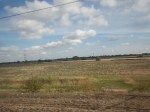
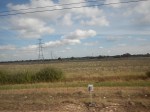
We were only in a 125 mph diesel, so we couldn’t take advantage of the 160 mph running, that the East Coast Main Line’s new signalling might allow on this section. The Wikipedia entry for the Selby Diversion, says this about the possible speeds.
The line was the first purpose-built section of high-speed railway in the UK having a design speed of 125 mph; however, research by British Rail in the 1990s indicated that the route geometry would permit up to 160 mph operation, subject to the necessary overhead line equipment and signalling upgrades. The new line also avoided the speed restriction over the swing bridge at Selby. The former ECML route, the NER’s 1871 York and Doncaster branch line, was closed from Selby northwards.
As the Selby Diversion opened in 1983, I wouldn’t be surprised that the calculations were performed on British Rail Research’s Pace 231-R, which was similar to the one I used at ICI and the pair, that NASA used calculate how to land Apollo on the moon.
When I eventually got to Huddersfield, I took these pictures.
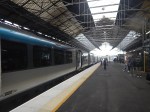
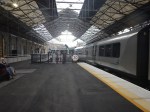
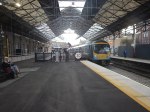
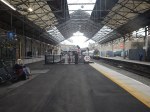
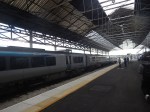
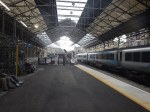




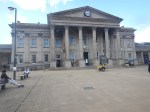

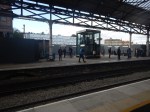
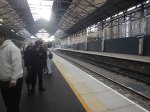
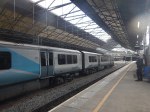
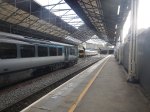
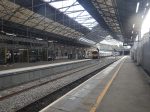
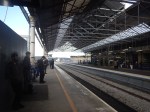
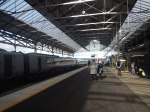
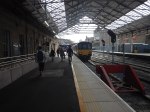
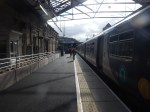
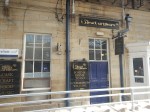
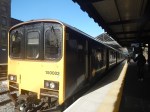
Note.
- In I’ve Just Glimpsed The Future Of Train Travel Across The North Of England And I Like It, there are pictures of Huddersfield station, that were taken on the 21st August, soon after the work started.
- In Huddersfield Station – 15th December 2023, there are pictures of Huddersfield before the work started.
- Much of the work seems to have been done at the Western end of the station to lengthen the platform on the Penistone Line to Sheffield.
- Platform 2 for the Penistone Line has also been renumbered Platform 1.
Work still to be carried out at Huddersfield station, includes refurbishing the roof, installing the electrification and adding a couple of new platforms.
These are my thoughts.
Which Platforms Will Be Electrified?
This OpenRailwayMap shows the proposed electrification in Huddersfield station.
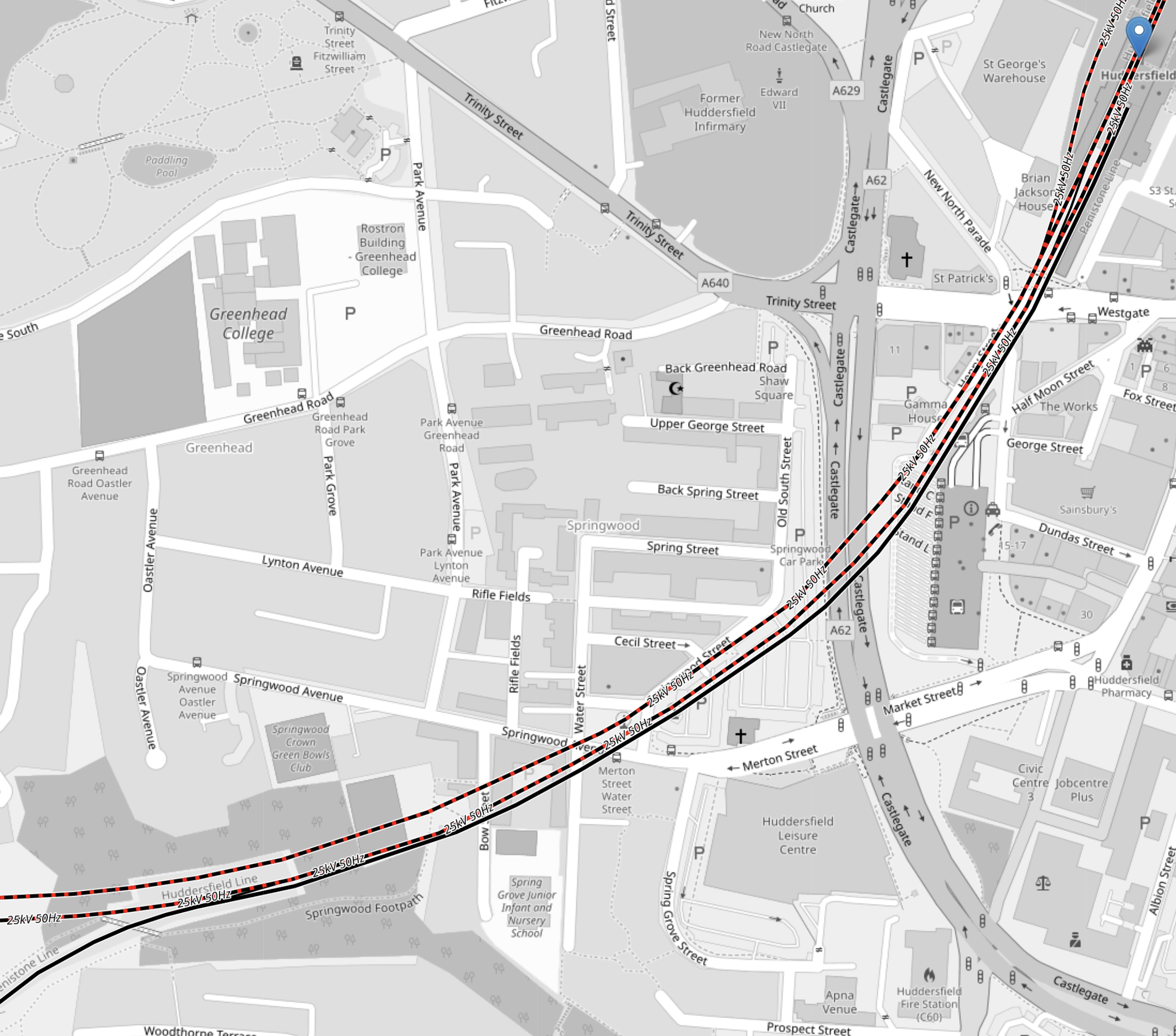
Note.
- The blue arrow in the North-East corner of the map indicates Huddersfield atation.
- The two red-and-black tracks going diagonally across the map are the Hudderfield Line.
- The red-and-black colour, indicates that the two tracks will be electrified.
- South of these two tracks, the Penistone Line sneaks into Platform 1 at Huddersfield station.
- The Penistone Line goes to Sheffield in a South-Westerly direction.
- There appears to be a crossover, so that trains from the Penistone Line can use both Platforms 1 and 2 in Huddersfield station.
- The OpenRailwayMap appears to show planned electrification between Stalybridge and Leeds stations.
- To the East of Leeds planned electrification is shown as far as Micklefield and Church Fenton stations.
Once installed, this electrification will create a complete electrified route across the Pennines from Liverpool Lime Street in the West to the East Coast Main Line in the East.
This OpenRailwayMap shows the planned electrification between Micklefield and Hull stations.
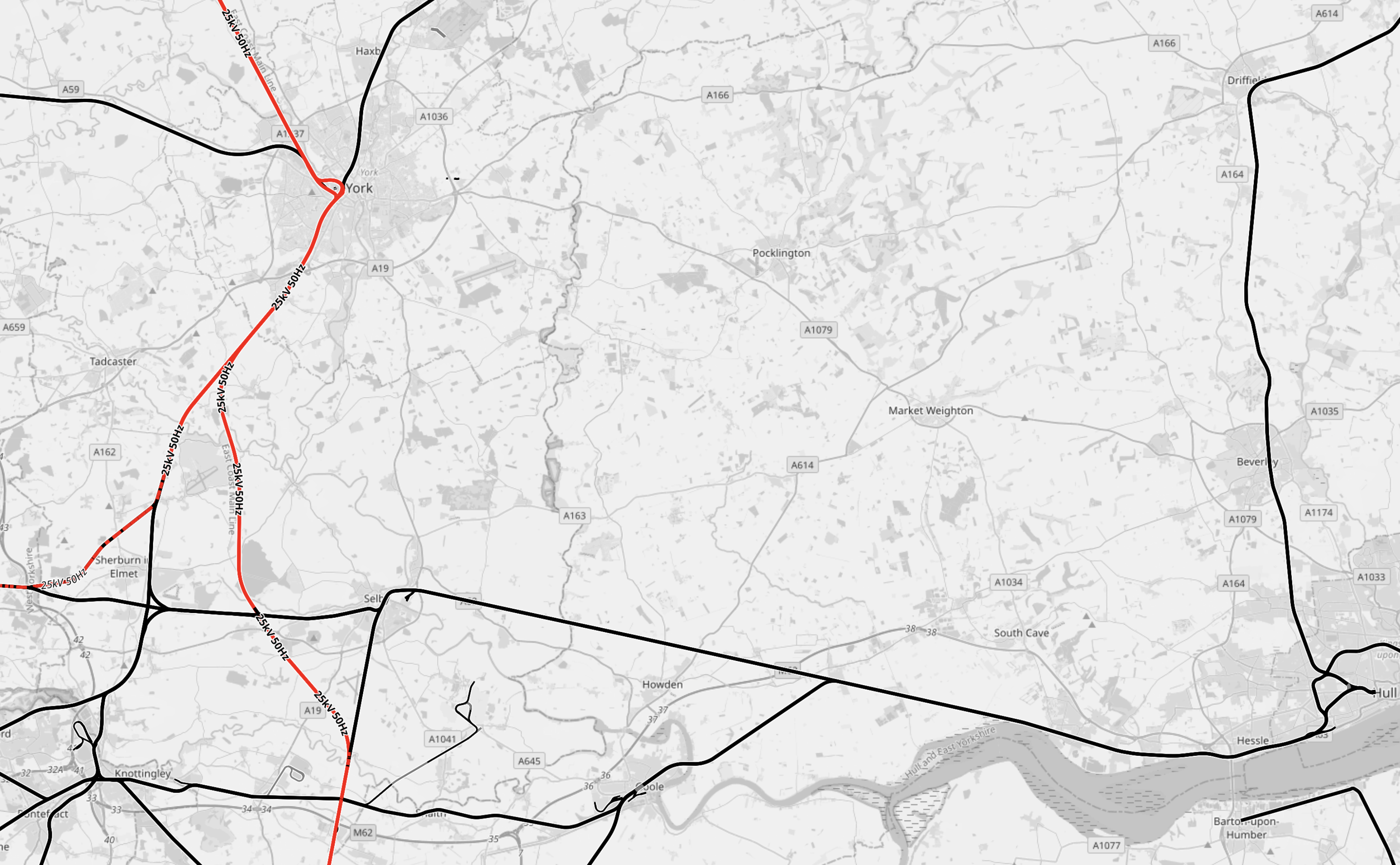
Note.
- Red tracks are electrified.
- Black tracks are not electrified.
- York is in the North-West corner of the map, with the electrified East Coast Main Line going through the station North-South.
- South of York, the East Coast Main Line now splits.
- The Western branch includes an electrified line to Micklefield station, Neville Hill depot and Leeds station.
- The Eastern Branch is the Selby Diversion, which is an electrified 160 mph line, that avoids the Selby coalfield.
- Running West-East across the map is the unlectrified Micklefield and Hull Line, which goes via Selby.
- Hull is in the South-East corner of the map.
- Hull is 42 miles from Micklefield and 36.1 miles from the Temple Hirst junction on the Selby Diversion, so it is within range of battery-electric trains, with charging at Hull station.
- Hitachi’s battery-electric Class 802 trains, used by Hull Trains and TransPennine Express, which are currently on test, should certainly be able to serve Hull.
Hull can become an electrified station, without the expense and disruption of full electrification.
How Long Is Platform 1 At Huddersfield Station?
This OpenRailwayMap shows the new Platform 1 at Huddersfield station.
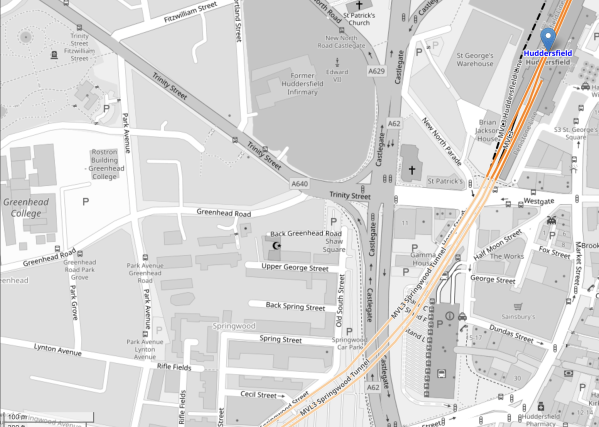
Note.
The blue arrow indicates Huddersfield station.
- The three darker orange lines indicate the two through platforms 2 and 3, and the reconfigured bay platform 1.
- There is a cross-over between platforms 1 and 2, which connects Platform 2 to the Penistone Line.
- In the South-West corner of the map is a hundred metre scale.
- Using the scale, I estimate that the length of the bay platform 1 is around 120 metres.
- In the last two rows of pictures in the gallery of this post, a three car Class 150 train is shown in Platform 1.
- A three car Class 150 train is approximately sixty metres long.
Looking at the pictures, I wouldn’t be surprised if the new platform has been designed to take two three-car Class 150 trains. It would certainly take a pair of two-car Class 150 trains.
Other trains and their lengths that might use the platform include.
- Class 170 – three-car – 70.85 metres
- Class 195 – two-car – 48.05 metres
- Class 195 – three-car – 71.40 metres
- Class 195 – 2 x two-car – 96.10 metres
- Class 810 – five-car – 120 metres
The Class 810 uses 24 metre cars, so that a pair of trains, will fit in St. Pancras. But with perhaps selective door opening could a single Class 810 train run a St. Pancras and Huddersfield service, perhaps with a split and join at Sheffield.
Electrification Across The Pennines
The TransPennine Route will be electrified between Liverpool Lime Street and Micklefield stations, once the current works between Huddersfield and Leeds are complete.
Sections without electrification include.
- Bradford Interchange and Doncaster – 52.1 miles
- Cleethorpes and Doncaster – 52.1 miles
- Harrogate and Leeds – 18.3 miles
- Hazel Grove and Doncaster – 52.6 miles
- Hull and Micklefield – 42 miles
- Hull and Temple Hirst junction – 36.1 miles
- Saltburn and Northallerton – 28.1 miles
- Sunderland and Northallerton – 46.8 miles
- Scarborough and York – 42.1 miles
I expect that Hitachi trains with batteries or CAF’s tri-mode trains will be able to handle these routes in a low-carbon manner.
Electrification Between Stalybridge And Huddersfield
This section is shown as being electrified on OpenRailwayMap.
But as it is only 18 miles and includes the Standedge Tunnels will the route use battery-electric trains?
Wakefield Westgate Station – 18th September 2025
To get to Knottingley and the consultation about Ferrybridge hydrogen-fired power station, I had to change trains at Wakefield Westgate station.
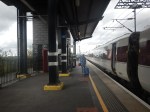
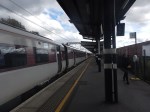
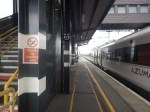
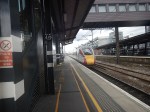
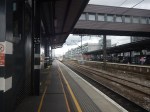
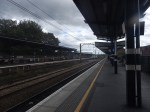
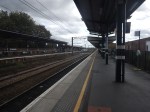
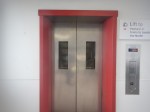
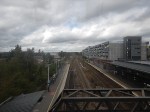
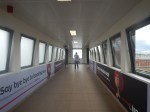
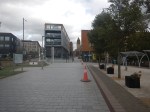
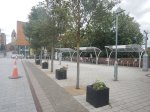
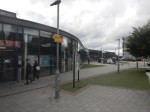
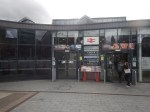
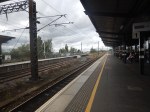
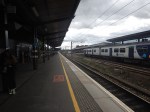
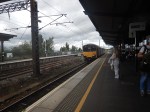
Note.
- It is an impressive station.
- It has been rebuilt since the turn of the century.
- It is fully step-free.
- Entrance is level from the square outside the station to the Southbound platform.
- There are toilets on the Southbound platform.
- There are six trains per hour (tph) between Wakefield Westgate and Leeds.
Certainty, in the time I was changing trains and waiting for my train to Knottingley, there were a lot of trains going to and from Leeds.
The timetables are changing on December 14, 2025 and the October 2025 Edition of Modern Railways gives this summary for Wakefield.
On Mondays-Saturdays, the CrossCountry train calling at Westgate at 18:17 will no longer stop at Wakefield. Northern will introduce an additional hourly fast train seven days a week between Leeds and Sheffield, and on Saturdays there will be extra later last trains between Sheffield and Westgate via Rotherham and Sheffield and Kirkgate via Barnsley.
With the development of the Leeds Metro, I can see more services being added on the route between Doncaster and Bradford via Wakefield Westgate and Leeds.
- Bradford is getting a new through station.
- From December 14, 2025, Sunday services to Bradford Forster Square will be increased for two to six each way per day.
- It also looks like from December 14, 2025, the new Northern service between Leeds and Sheffield via Wakefield Westgate, will form a two trains per hour with the CrossCountry service.
It certainly looks like the train companies have been co-operating to create a high-class Trans-West Yorkshire service.
I’ve Just Glimpsed The Future Of Train Travel Across The North Of England And I Like It
Yesterday, I had an appointment at Liverpool Lime Street station at four o’clock, so as I hadn’t seen the works for the TransPennine Upgrade for some time, I decided to go the long way round with a change of train from LNER to TransPennine Express at Leeds.
These sections document my day.
London King’s Cross To Leeds In An InterCity 225
I took these pictures on the journey.
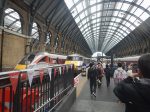
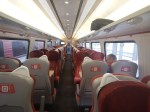
Note.
- The 31 InterCity 225 trains were built around 1990.
- They have a capacity of 535 seats, whereas the newer Hitachi Class 801 trains have a capacity of 611 seats. Both trains are nine cars with both First and Standard seats.
- There is more of a step-up and step-down when entering or leaving the trains, compared to the best of today’s trains.
- They are now being phased out in favour of ten new CAF tri-mode Class 897 trains, which should be entering service in 2027.
- No details are available of the seating capacity of these trains, but they could be between 650 and 700, so they could maximise capacity on any LNER route.
Yesterday, the InterCity 225 performed well, although the windows at the seat where I sat, were rather dirty.
Changing Trains At Leeds Station
I changed to TransPennine Exzpress at Leeds station.
- At least, Leeds station, is one of the few in the UK, with a ticket office behind the barrier. Reading station please note this.
- But, I did have to walk across the bridge from one side of the station to the other.
In the end, I caught the TransPennine Express with about thirty seconds to spare.
Between Leeds And Huddersfield Stations
I took these pictures between Leeds and Huddersfield stations.
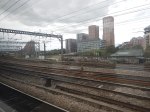
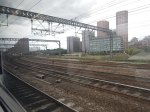
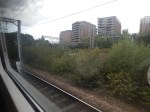

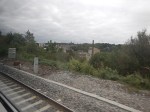
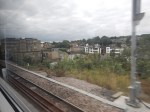
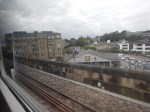
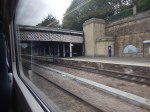
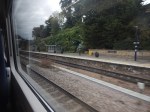
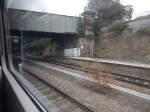
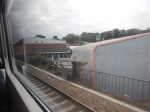
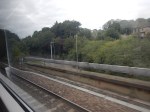
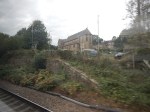
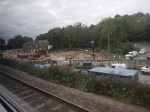
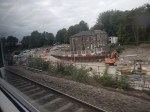
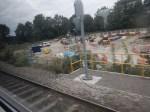
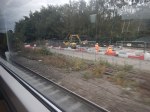
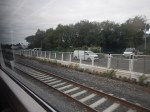
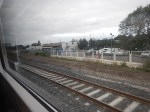
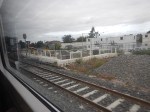
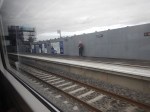
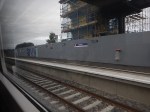
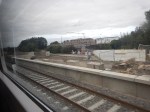
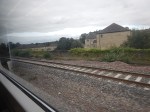
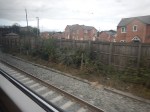
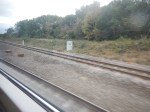
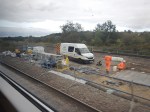

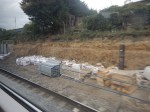
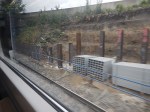
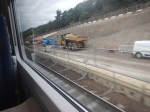
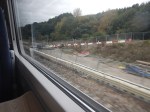
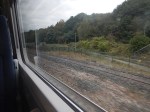
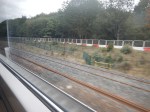
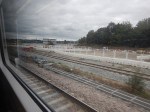
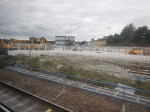
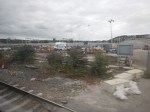
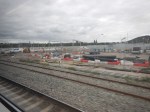
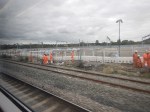
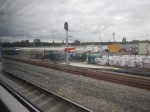
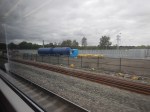
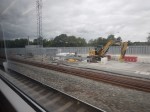
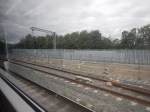
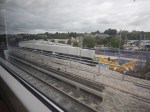
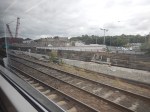
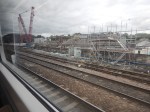
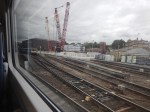
Note.
- Dewsbury and Huddersfield stations is about eight miles and takes about eight minutes.
- It is virtually a continuous building site, where extra tracks are being inserted.
- Three stations are being rebuilt.
- Overhead electrification is being installed. But except for approaching Huddersfield, there’s not much to be seen.
- OpenRailwayMap gives the maximum speed between Dewsbury and Huddersfield stations as between 60-75 mph.
The ride on my Class 803 train was very quiet and smooth. Was it on battery power or was I sitting in a coach without a diesel engine underneath?
Huddersfield Station
I took these pictures at Huddersfield station.
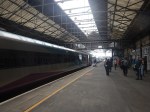
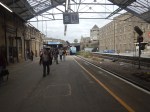
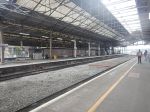
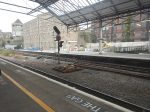
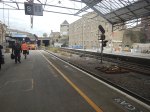

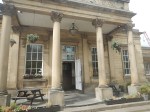
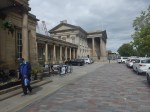
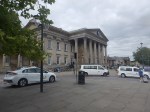





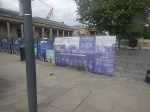
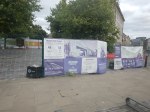

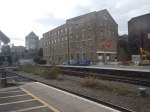
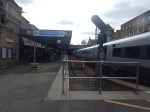
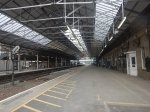
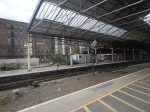
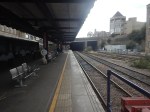
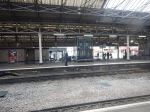
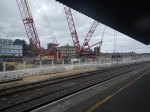
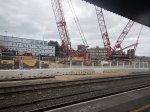
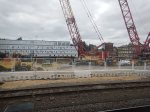
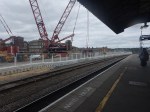
Note.
- Huddersfield station is Grade I Listed.
- There is a pub in each wing.
- I had a beer in the West Wing.
- There are currently three main through platforms and three bay platforms.
- Extensive works, which will be part of the TransPennine Upgrade, will include electrification, a new roof, a new footbridge, and two extra through platforms.
Huddersfield station will be the jewel in the Costa del Yorkshire.
The Platforms At Huddersfield Station
This OpenRailwayMap shows the platforms in Huddersfield station.
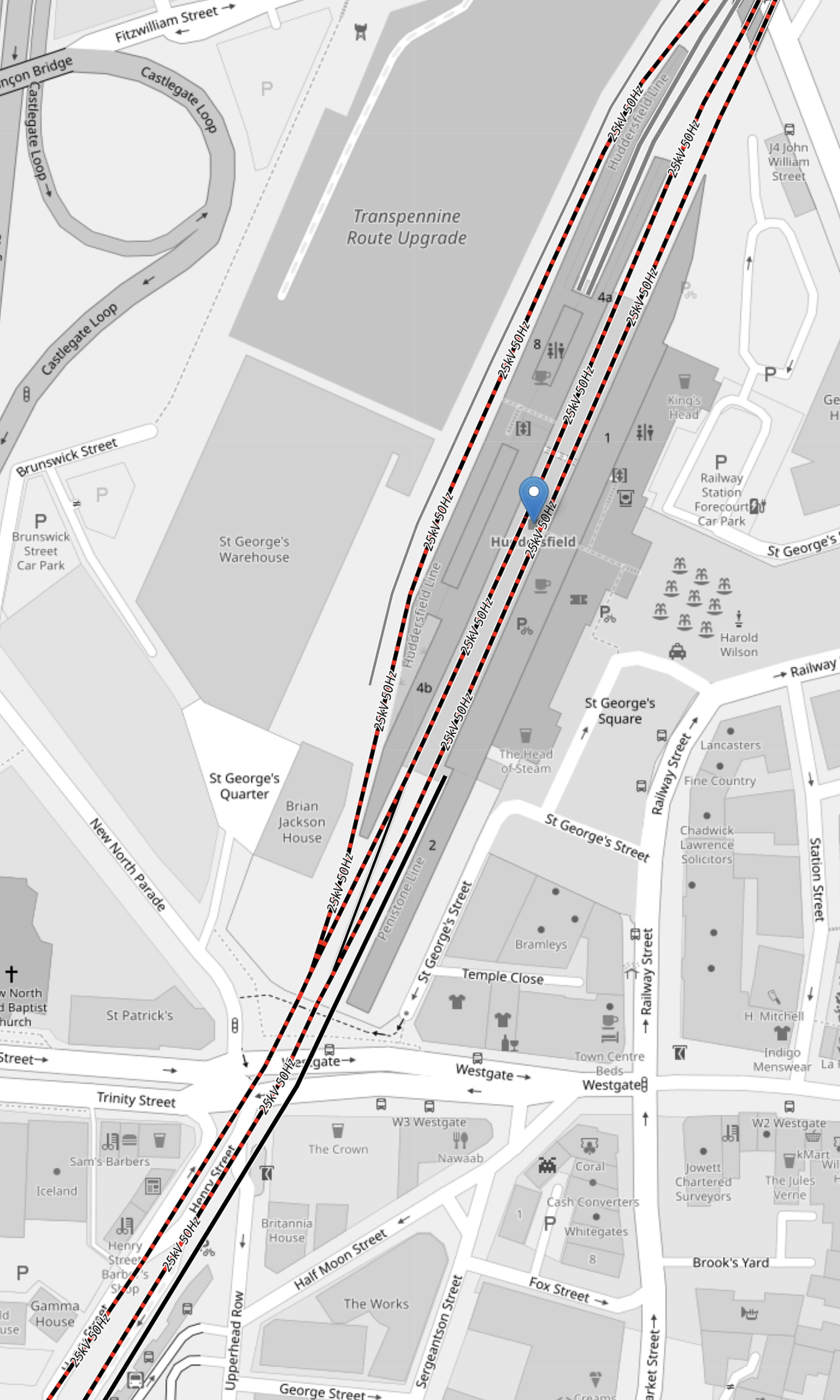
Note.
- The red and black tracks are being electrified.
- Of the current platforms, Platforms 1, 4 and 8 will be electrified.
- The two bay platforms; 5 and 6, will be converted into through platforms.
- Platform 2 is the bay platform in the South-West corner of the map, that is used by the shuttle train from Sheffield.
I am sure extra platforms could be electrified as required, as there must be a good electrical connection at Huddersfield station.
A Tram-Train Service Between Huddersfield And Sheffield Stations
This OpenRailwayMap shows platform 2 at Huddersfield station.
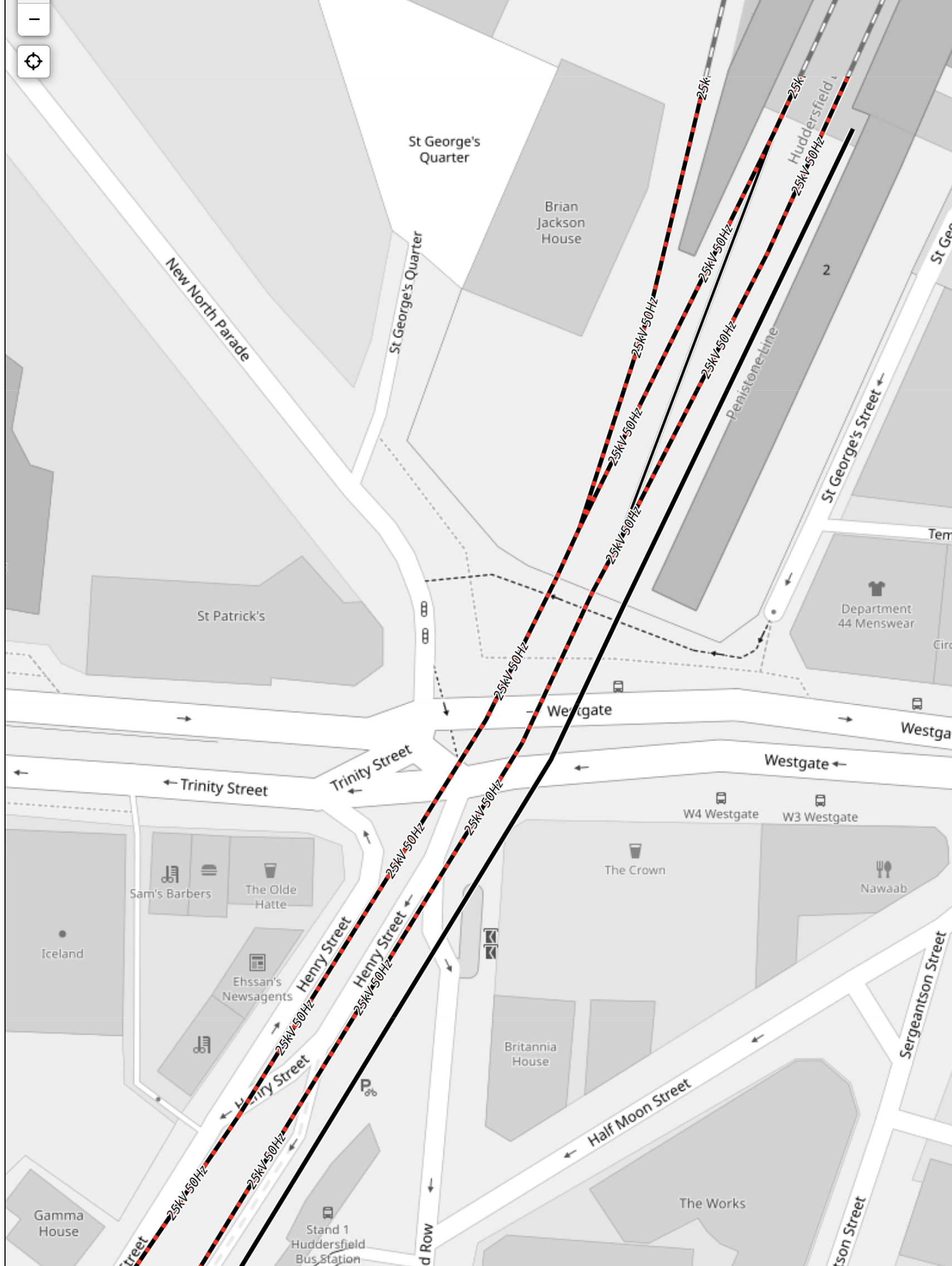
Note.
- Platform 2 is the black track at the right of the two through tracks, that are being electrified.
- Platform 2 is a bay platform close to the Head of Steam pub.
- I estimate that the platform is about 90 metres long.
- I suspect Platform 2 could be lengthened if required.
- Sheffield’s Class 399 tram/trains are 37.2 metres long, so a pair should fit in Platform 2.
- The Class 398 tram/trains can run on battery power and climb hills in South Wales.
- Platform 2 at Huddersfield station could be electrified to charge the tram/trains.
- There could be a significant height difference between Huddersfield and Sheffield stations of about 40 metres, which could be used to charge tram/trains on the way down.
- I feel with some track improvements, that a four trains per hour (tph) service could be run.
The service would call at Meadowhall, Chapeltown, Elsecar, Wombwell, Barnsley, Dodworth, Silkstone Common, Penistone, Denby Dale, Shepley, Stocksmoor, Brockholes, Honley, Berry Brow and Lockwood
The Pair Of Cranes In Huddersfield Station
These can’t be missed in the pictures. But why two massive cranes?
With an old roof to be taken down and a new roof and a footbridge to be lifted into place, I believe Network Rail have decided to bring in two of largest mobile cranes available in the UK, so that all the lifting doesn’t delay the project.
Between Huddersfield And Stalybridge Stations
I took these pictures between Huddersfield and Stalybridge stations.
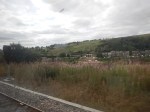
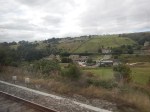
Note.
- The Class 802 train was running freely along a well-laid track.
- There are four stations between Huddersfield and Stalybridge; Slaithwaite, Marsden, Greenfield and Mossley(Manchester).
- The stations were in reasonable condition, but some needed new footbridges and a bit of refurbishment.
- There was virtually no signs of any foundations for electrification.
This map shows the route.
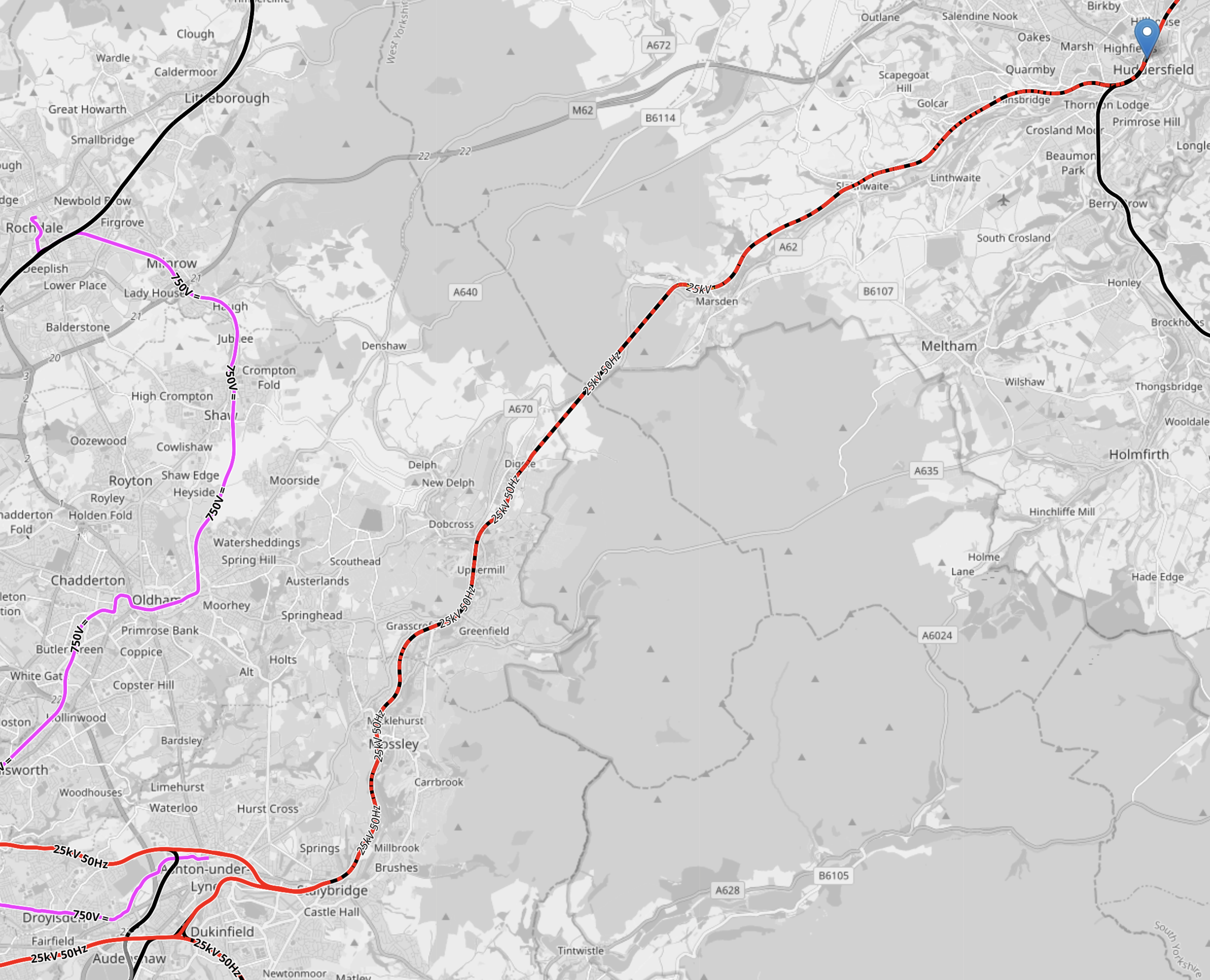
Note.
- The pink tracks are the Manchester Metrolink.
- The red tracks are electrified at 25 KVAC overhead.
- The red and black tracks are being electrified.
- Huddersfield is indicated by the blue arrow in the North-East corner of the map.
- Stalybridge station is in the South-West corner of the map.
- The pink track in the South-West corner of the map is the Manchester Metrolink branch to Ashton-under-Lyme.
- The route between Huddersfield and Stalybridge is shown as it will will be fully electrified.
- Huddersfield and Stalybridge is 18 miles.
- There are three short tunnels between Huddersfield and Stalybridge.
I wonder, if it would be more affordable to not put up wires between Huddersfield and Stalybridge and use battery-electric passenger trains and hydrogen freight locomotives?
Stalybridge Station
I took these pictures at Stalybridge station.
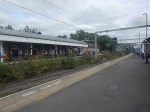
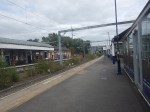
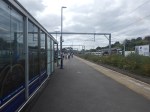
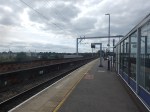
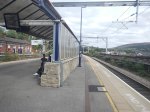
The station is fully-electrified and has direct services to Huddersfield, Hull, Leeds, Liverpool, Manchester Piccadilly, Manchester Victoria, Newcastlle, Wigan and York.
Will Liverpool Lime Street And Newcastle Be Fully Electrified?
Consider.
- Liverpool Lime Street and Newcastle stations is 180.8 miles.
- Newcastle and Church Fenton stations is 91.4 miles and is fully-electrified.
- Liverpool Lime Street and Stalybridge stations is 39.4 miles and is fully-electrified.
This means that the gap between Church Fenton and Stalybridge stations is just fifty miles.
Real Time Trains indicate that the current Class 802 trains on the route run on diesel between Stalybridge and York stations, which is 60.8 miles.
- Changing power in Stalybridge and York stations means if anything goes wrong passengers can be easily rescued.
- From what I saw on Thursday, it looks like electrification will be completed between Neville Hill depot and Huddersfield.
I wouldn’t be surprised, if they just electrified to the West of Stalybridge and the East of Huddersfield.
That would mean that the 18 miles between Stalybridge and Huddersfield would be run on batteries.
- But it would also avoid electrifying three tunnels.
- How much disruption would be saved, by not electrifying the tunnels?
- Freight trains would use something like a bi-mode Class 99 locomotive, but it would only need a range of 18 miles on diesel.
I can also see improvised bi-mode locomotives being used like this combination of a Class 66 and Class 90 locomotives.
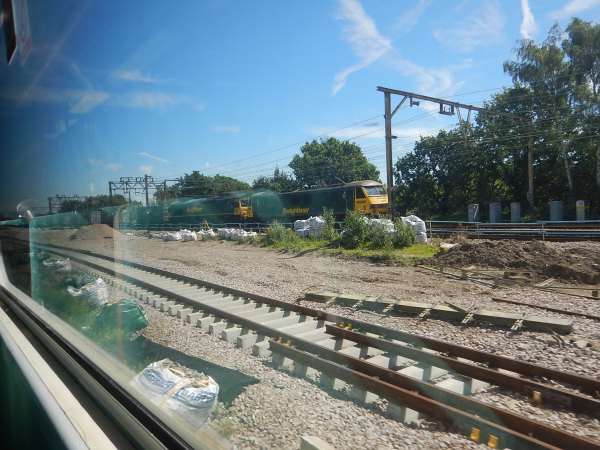
It was certainly doing its job, when I saw the combination at Shenfield.
Could East Midlands Railway Run A St. Pancras And Leeds Service?
East Midlands Railway’s new Class 810 trains have been designed, so that a pair will fit into one platform at St. Pancras.
If we assume one platform at St. Pancras is used for the Corby and Luton Airport Express services, that leaves three platforms for pairs of Class 810 trains to run expresses to the East Midlands.
This could be as many as twelve pairs of five-car trains per hour.
Where wioll they all terminate in the North?
Leeds station must be the obvious new destination.
- Leeds has the largest population and is the largest commercial and finance centre in Yorkshire and the North-East.
- Leeds would have gained three trains per hour (tph) from London, two tph from Birmingham and four tph from the East Midlands Hub at Nottinham.
- Leeds is getting a brand new metro.
- Leeds is a fully-electrified station, so it could charge the trains before they return to Sheffield, Leicester, Wigston junction and St. Pancras.
- Leeds and Wigston junction is 107.8 miles, which should be within the range of a battery-electric Class 810 train. If it is too far, an extended stop could be taken at Sheffield to top up the batteries.
- Note that Stadler hold the Guinness World Record for the greatest distance covered on one charge at 139 miles. Hitachi Rail, who are partnered with JCB’s battery-maker in Sunderland, should be able to smash that.
The Rail Minister; Lord Peter Hendy went to Leeds University.
Which Route Would The Trains Take Between Sheffield And Leeds?
Consider.
- The fastest trains between Sheffield and Leeds, go via Meadowhall, Barnsley and Wakefield Kirkgate stations.
- Trains take about an hour.
- The current frequency is two tph.
- The distance is 41.1 miles with no electrification.
A frequency of two additional tph between St. Pancras and Leeds would give the following.
- A nice round four tph between Yorkshire’s two most important cities.
- Four fast tph between Meadowhall, Barnsley and Wakefield Kirkgate stations, and Leeds and Sheffield.
- Two direct trains between Meadowhall, Barnsley and Wakefield Kirkgate, and Chesterfield, Derby, Long Eaton, East Midlands Parkway, Loughborough, Leicester and St. Pancras.
It would be complimentary to any Leeds Metro.
Could East Midlands Railways Also Serve Huddersfield?
Consider.
- Huddersfield is 36.4 miles further than Sheffield on the Penistone Line, which is not electrified.
- Wigston junctionand Huddersfield station is 105.3 miles.
- Huddersfield is a Grade I Listed station with two pubs in the middle of the town.
- Huddersfield station is being fully-electrified in connection with the TransPennine Upgrade.
- All trains from Sheffield, that use the Penistone Line terminate in Platform 2 at Huddersfield station.
This OpenRailwayMap shows the position of Platform 2 in the station.
Note.
- The red-and-black dotted tracks are being electrified.
- The black tracks are not going to be electrified.
- Platform 2 is marked 2 in the top-right corner of the map.
- Platform 2 looks to be about 90 metres long.
- Five-car Class 810 trains are 120 metres long.
- From the map, it looks like the platform could be lengthened by the required thirty metres.
I suspect that some form of charger can be squeezed into the available space. After all, you don’t often get the chance to put charging into one of the most grand stations in Europe. Power supply would not be a problem, because of the electrification.
A frequency of twotph between St. Pancras and Huddersfield would give the following.
- Two fast tph between Meadowhall, and Barnsley, and Huddersfield and Sheffield.
- Two extra direct trains between Meadowhall and Barnsley, and Chesterfield, Derby, Long Eaton, East Midlands Parkway, Loughborough, Leicester and St. Pancras.
It would connect many stations to the TransPennine Route at Huddersfield station.
What Could The Sheffield and St. Pancras Look Like?
Consider that currently.
- There are two tph.
- Trains stop at Leicester, Loughborough (1tph), East Midlands Parkway (1tph), Long Eaton (1tph), Derby and Chesterfield.
- Trains are five- or seven-cars.
The simplest solution would probably be.
- A pair of five-car trains run all services.
- Trains split and join at Sheffield with one train going to Leeds and one going to Huddersfield.
I estimate that the Class 810 trains will offer about thirty more seats in every hour.
 The Anonymous Widower