Battery-Powered Train Breaks Distance Record
The title of this post, is the same as that of this article on the BBC.
This is the sub-heading.
A battery-powered train has broken the world record for the longest railway journey on a single charge.
These three introductory paragraphs add more details.
The Great Western Railway (GWR) train – a specially adapted former District Line train – travelled overnight along a 200-mile (322km) route from Reading and back again, via London Paddington and Oxford.
It reached 140 miles (225km), breaking the record on Brunel’s Maidenhead Bridge at about 04:00 BST.
The previous record of 139 miles (224km) was set by German train company Stadler Deutschland in Berlin on 10 December 2021.
This was an impressive demonstration of the capabilities of battery-electric trains.
Will This Record Be Beaten?
200 miles is impressive, but there was also this paragraph in the article.
At the end of the journey GWR said there was a remaining battery charge of 22% which it estimated would have allowed the train to travel about a further 58 miles (93km).
So it looks like 258 miles should be possible.
Four other companies are also developing battery-electric trains.
- Alstom at Derby
- CAF at Newport
- Hitachi at Newton Aycliffe
- Siemens at Goole
- Stadler in Switzerland.
Note.
- All except Stadler have UK factories.
- Siemens and Stadler have delivered trains in Germany.
- This page on the Hitachi Rail web site is entitled Intercity Battery Trains.
- This page on the Hitachi Rail web site is entitled Hitachi Wins New UK Contract To Build Intercity Battery Trains. The customer is Grand Central Trains.
- Hitachi have been running a prototype for some months, in the UK.
The competition is hotting up and the record will certainly be soundly beaten.
New Bid To Connect Heritage Railway To Mainline
The title of this post, is the same as that of this article on the BBC.
The is the sub-heading.
A bid to connect one of the longest heritage railways in Britain with mainline services has taken a step forward.
These are the first two paragraphs.
West Somerset Railway (WSR) and Somerset Council have now submitted a business plan to the government to restore the mainline from Taunton to the final WSR stop at Bishop’s Lydeard.
The proposal suggests Bishop’s Lydeard could become a commuter and tourist hub.
There has been several attempts to connect the branch to Taunton station.
These are my thoughts.
Minehead, Bishop’s Lydeard And Hinckley Point C
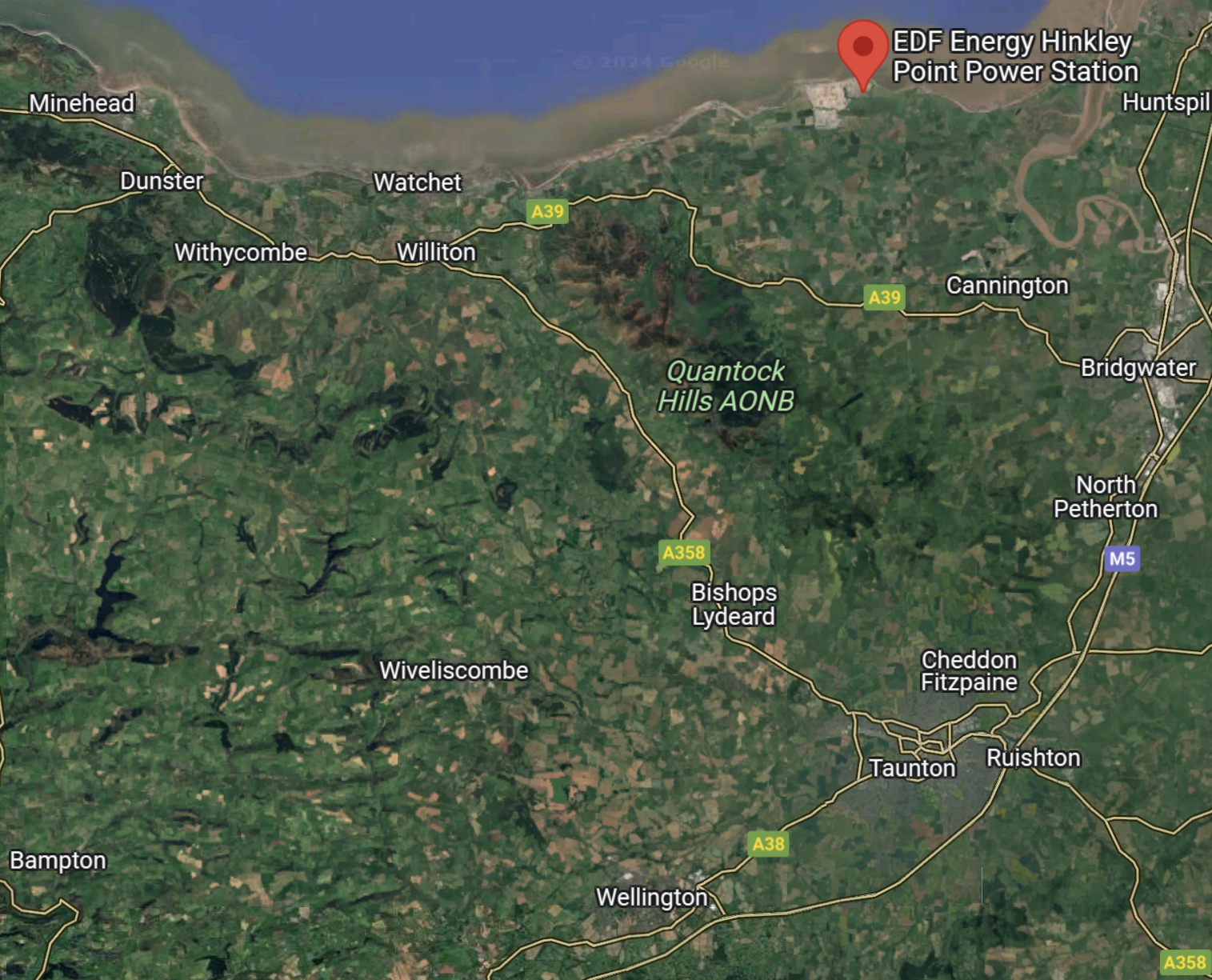
This Google Map shows the area.
Note.
- Minehead is in the North-West corner of the map.
- Hinckley Point power station is indicated by the red arrow.
- Bishop’s Lydeard is in the middle of the map.
- The M5 motorway curves diagonally between the North-East and South-West corners of the map.
- There are motorway services at Taunton Deane, which is to the South of Taunton and Cullompton, which is a few miles South-West of Wellington.
- The large town of Taunton is the junction of the London and Exeter and the Bristol and Exeter railway lines.
- The town of Wellington will be getting a new railway station.
It is a very busy area and it will only get busier, as the availability of power will only attract industry, like the battery factory pencilled in for Bridgewater.
The Major Effect Of Hinckley Point C
Hinckley Point C will generate 3.26 GW of electricity and to operate the power station will need around nine hundred workers.
I can also expect that the Hinckley Point site will get involved in other energy handling and use.
- The site would be an ideal place for a large electrolyser to produce hydrogen.
- Wind turbines in the Bristol Channel could use Hinckley’s grid connection.
- Energy could be stored on the site. It could be an ideal location for one of Highview Power’s 200 MW/3.25 GWh liquid air batteries.
- Hydrogen could be exported using coastal tankers.
- Interconnectors could take electricity to Cornwall, Devon, Wales and Ireland.
All of these activities would create needs for workers at all levels.
- A rail connection to Taunton and Bristol, will probably be needed to bring workers into Hinckley Point.
- A rail connection would be ideal for bringing construction materials, steel and other heavy goods into and out of the Hinckley Point site.
- Hydrogen could also be taken out in rail tankers.
- Nuclear waste could be taken out by train.
I think it is highly likely, that Hinckley Point will need a rail connection for efficient operation.
Sizewell C And Hydrogen
Hydrogen is so important to the philosophy of the design and construction of Sizewell C, that hydrogen has its own section on the Sizewell C web site.
Hydrogen produced by nuclear power stations like Hinckley Point C, is called pink hydrogen, but like green hydrogen it is zero-carbon and pollution-free.
Hinckley Point C And Hydrogen
I can envisage Hinckley Point C will create a lot of hydrogen both for use locally and distribution to remote users.
- Hydrogen could be delivered locally by truck, just as propane is today around the world.
- Coastal tankers could distribute the hydrogen from a jetty.
- Pipelines could connect the two nearby motorway service stations to the power station site.
Just as is happening at Sizewell, a local hydrogen network could be built.
Hydrogen Refuelling On The M5
Consider.
- In MAN Expands Its Zero-Emission Portfolio, I talked about MAN’s new hydrogen-powered hTGX truck, which has been designed with a 600 km. or 373 mile range.
- As Cullompton, which is the Southernmost of the two services on the M5 that are close to Hinckley Point C, is only 124.9 miles from Penzance, it should be possible for a truck, with a range similar to that of the MAN hTGX to do a round trip from the Southern end of the M5 to Penzance, without refuelling.
- As the total length of the M5 is only 163 miles, a hydrogen-powered truck with the range of the MAN hTGX would be able to do a delivery anywhere along the motorway and return to the hydrogen from Hinckley Point C, without refuelling.
- MAN are saying that the hTGX truck can be refuelled in less than fifteen minutes.
It looks to me, that a hydrogen electrolyser at Hinckley Point C would be ideally located to provide pink hydrogen for a zero-carbon hydrogen-powered route to and from the far South-West.
I believe that if there were a best-in-class hydrogen-refuelling facility close to Hinckley Point C, it would encourage those who regularly drove to Devon and Cornwall to look seriously at hydrogen-powered vehicles.
The Nature Of The Hinckley Point C Rail Link
Sizewell C are using a simple practical approach to connect the Sizewell C site to the nearby East Suffolk Line.
- The existing freight sidings are being expanded.
- Two Park-and-Ride sites are being created at stations in the East Suffolk Line.
- A link road will be built between the railway and the Sizewell C site.
- A fleet of hydrogen-powered double-deck buses has been ordered to take workers between the railway and the power station.
- The signalling on the East Suffolk Line is being improved.
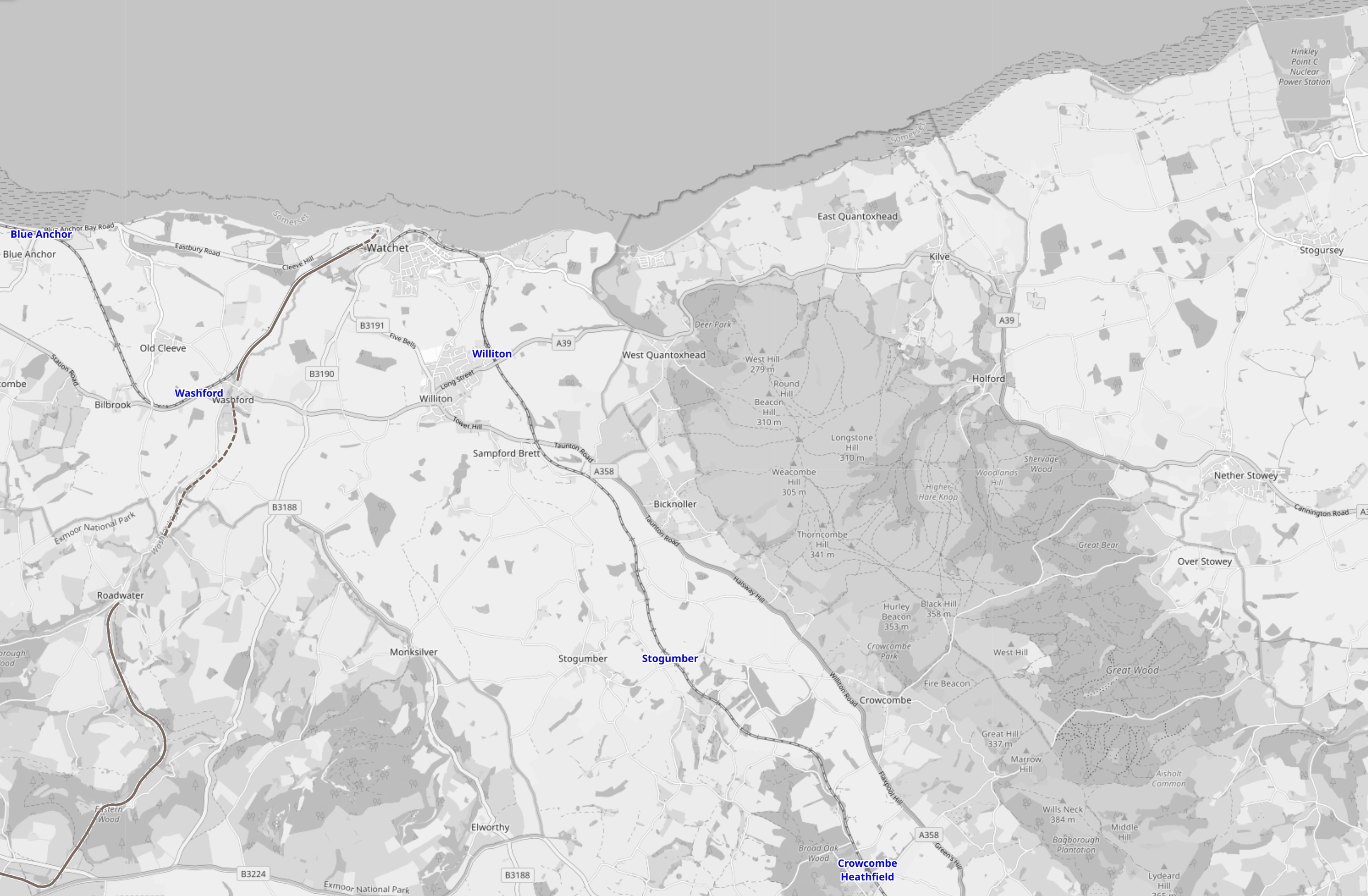
This map from OpenRailwayMap shows the Northern end of the West Somerset Railway and its relationship to Hinckley Point C power station.
Note.
- Hinckley Point C power station is in the North-East corner of the map.
- Crowcombe & Heathfield, Stogumber, Sampford Brett, Doniford Halt, Williton, Watchet, Washford and Blue Anchor are existing or former stations on the West Somerset Railway.
- Existing stations are shown in blue.
- West of Blue Anchor are the two existing stations of Dunster and Minehead.
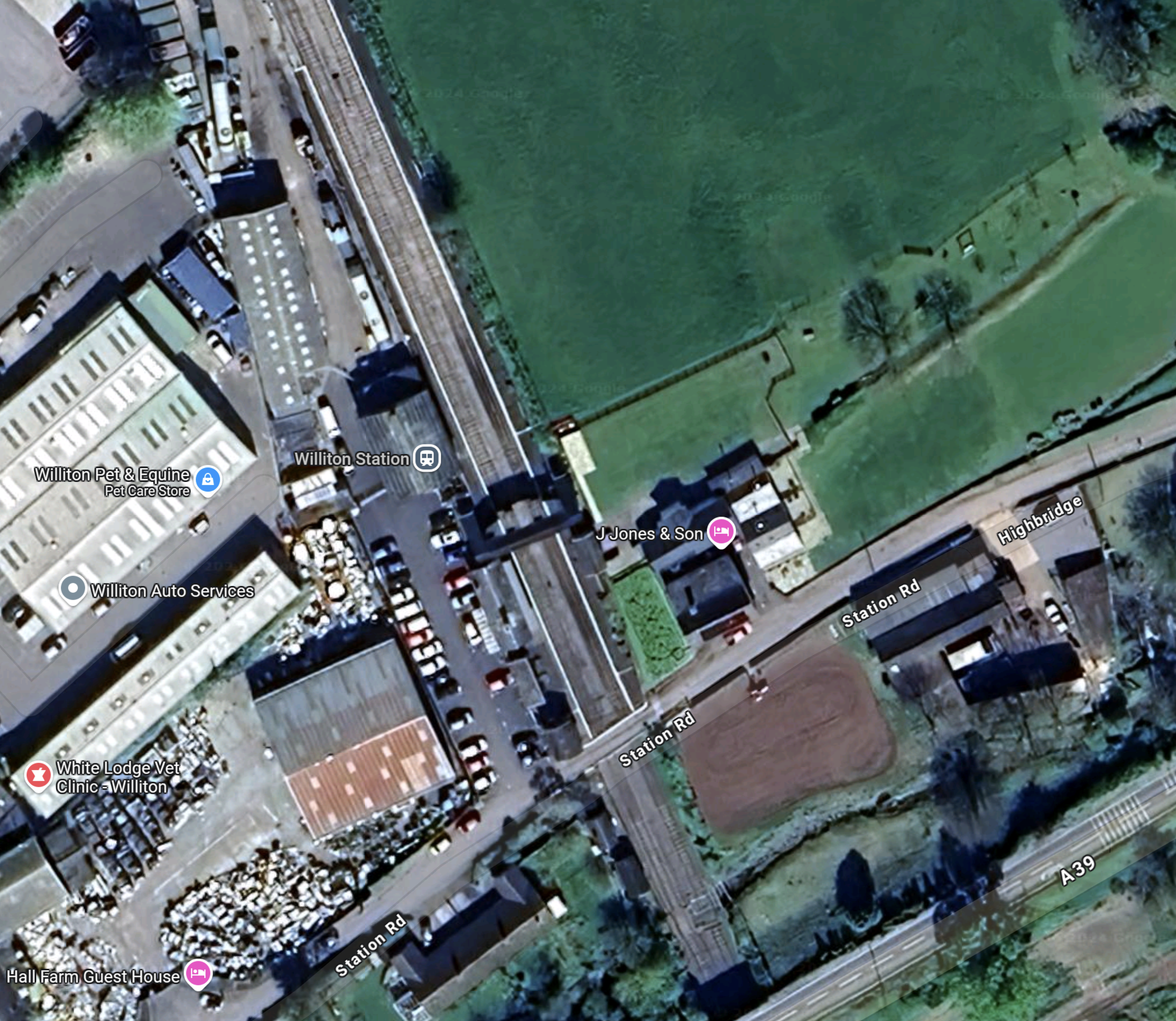
This Google Map shows Williton station, which is the nearest station to Hinckley Point C.
Note.
- The station has a footbridge, which was erected in 2011, so is probably in good condition.
- There are several Listed buildings on the site.
- Going East on the A39 should lead to Hinckley Point C.
I suspect a quality bus company could build a small fleet of buses to shuttle workers, visitors and others to Hinckley Point C.
As I’m sure, hydrogen will be in plentiful supply, I’m certain hydrogen-powered buses could be used.
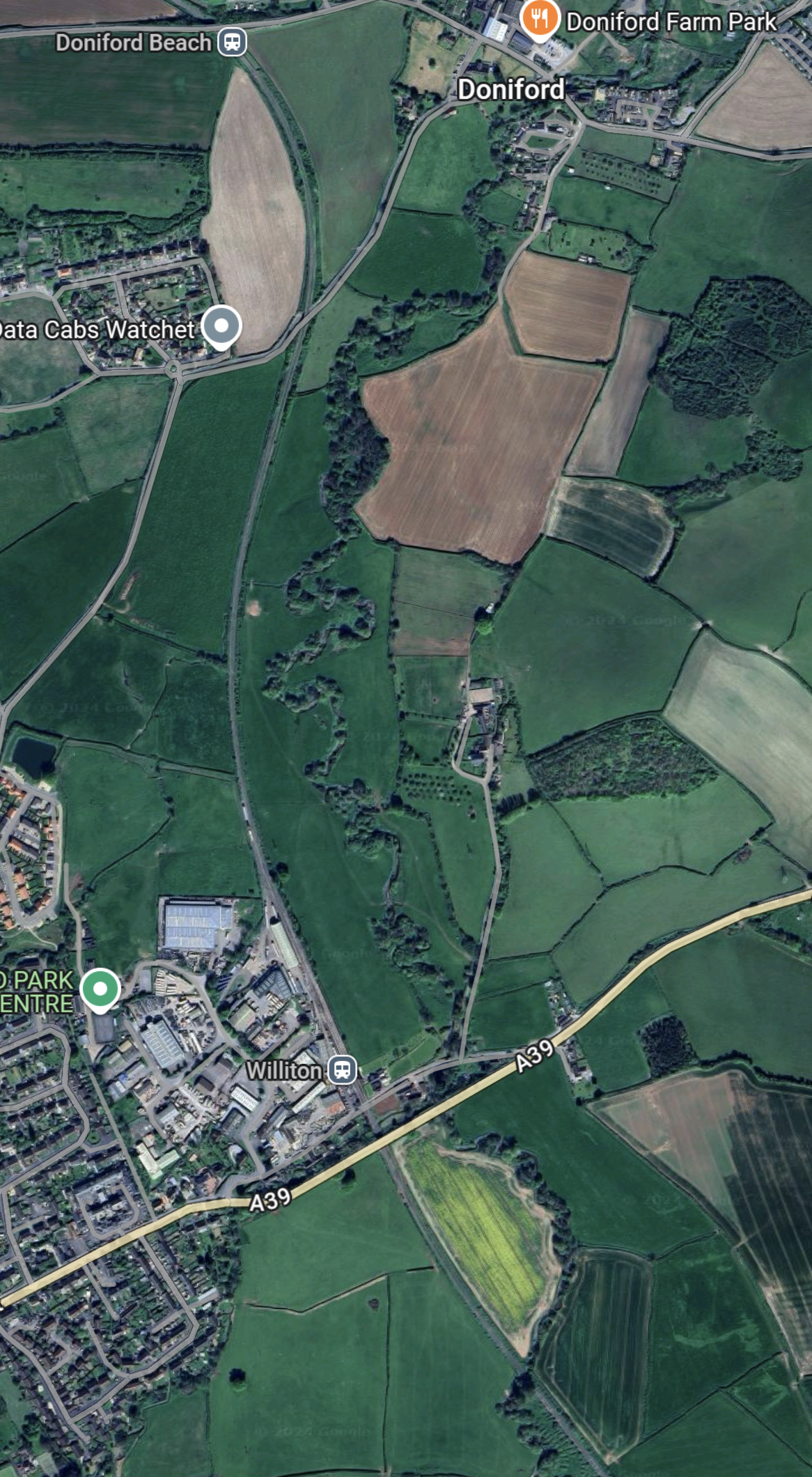
This Google Map shows a longer section of the West Somerset Line through Williton station.
Note.
- The West Somerset Line runs North-South down the map.
- Doniford Halt station is at the top of the map, where the coast road crosses the railway on a bridge.
- Williton station is in the middle of the map, where the A39 crosses the railway.
Looking at the railway, which runs mainly between fields, I wouldn’t be surprised that if Hinckley Point wanted a freight siding, they could fit one in.
Go-op
Go-op are an open access railway company, that wants to run services in Somerset.
I wrote about their successful application in Regulator Approves New Go-op Train Service Between Swindon, Taunton and Weston-super-Mare.
This is the first paragraph of their Wikipedia entry.
Go-op Cooperative Ltd.,[ branded as Go-op, is an open access train operating company, proposing to operate a service in south-west England between Taunton and Swindon, via Westbury. It aims to become the first cooperatively owned train operating company in the United Kingdom, to improve access to the public transport infrastructure through open access rail services linking main lines to smaller market towns, and by co-ordinating services with light rail, bus links and car pools.
If you read their Wikipedia entry and their web site, they seem to have ambition and be different.
According to Wikipedia, they have made no less than five different proposals, but it is the fourth that I find interesting.
In 2021, Go-op began discussions with Network Rail for services between Swindon and Bishops Lydeard (just beyond Taunton), which it hoped to begin in mid-2022. At first there could only be three services per day, due to congestion between Swindon and Westbury; a further three could be provided to Frome or Westbury, connecting with existing services to Swindon. These plans would also improve local services on the TransWilts Line, calling at Trowbridge and Melksham.
The plans for Bishops Lydeard would restore the link broken in 1971 between the national network and the preserved West Somerset Railway, which runs leisure services to Minehead.
This sounds very much like an extended and simplified version of the West Somerset Line proposal.
But it does look like two groups have looked at the infrastructure and what is needed and come to similar conclusions.
Perhaps, they have other things in common like train procurement and servicing.
Stadler Presents A World First In Berlin
The title of this section, is the same as that of this press release from Stadler.
These are the first two paragraphs.
With the RS ZERO, the rail vehicle manufacturer is presenting the successor to the successful Regio-Shuttle RS1 model. There is a choice of two modern and environmentally friendly drive technologies: Hydrogen and battery. Both will enable CO2 emission-free operation of secondary lines in the future.
Stadler today unveiled the prototype of the new RS ZERO, the innovative successor to the successful RS1 Regio-Shuttle. The Regio-Shuttle has been one of the most popular vehicles in German regional rail transport for 28 years, with around 500 RS1 vehicles currently in operation in Germany and the Czech Republic. Stadler is building on this proven technology and integrating state-of-the-art, environmentally friendly drive systems. The RS ZERO is optionally available with a hydrogen and/or battery drive and thus not only sets new standards for environmentally friendly rail transport, but also presents a world first.
These pictures from Chemnitz Trams And The Chemnitz Model, show the Regio-Shuttle RS1.
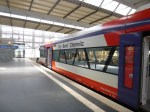
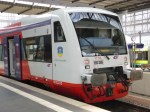
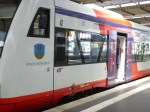
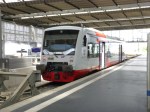
Note.
- The Regio-Shuttles can run as up to seven car trains.
- These Regio-Shuttles are electro-diesel.
- The distinctive diagonal windows.
- They can carry 170 passengers at 75 mph.
- They can run as train-trams using the Chemnitz model on compatible tram networks.
The Regio-Shuttle Wikipedia entry gives more details.
This image from the press release shows the prototype RS ZERO.
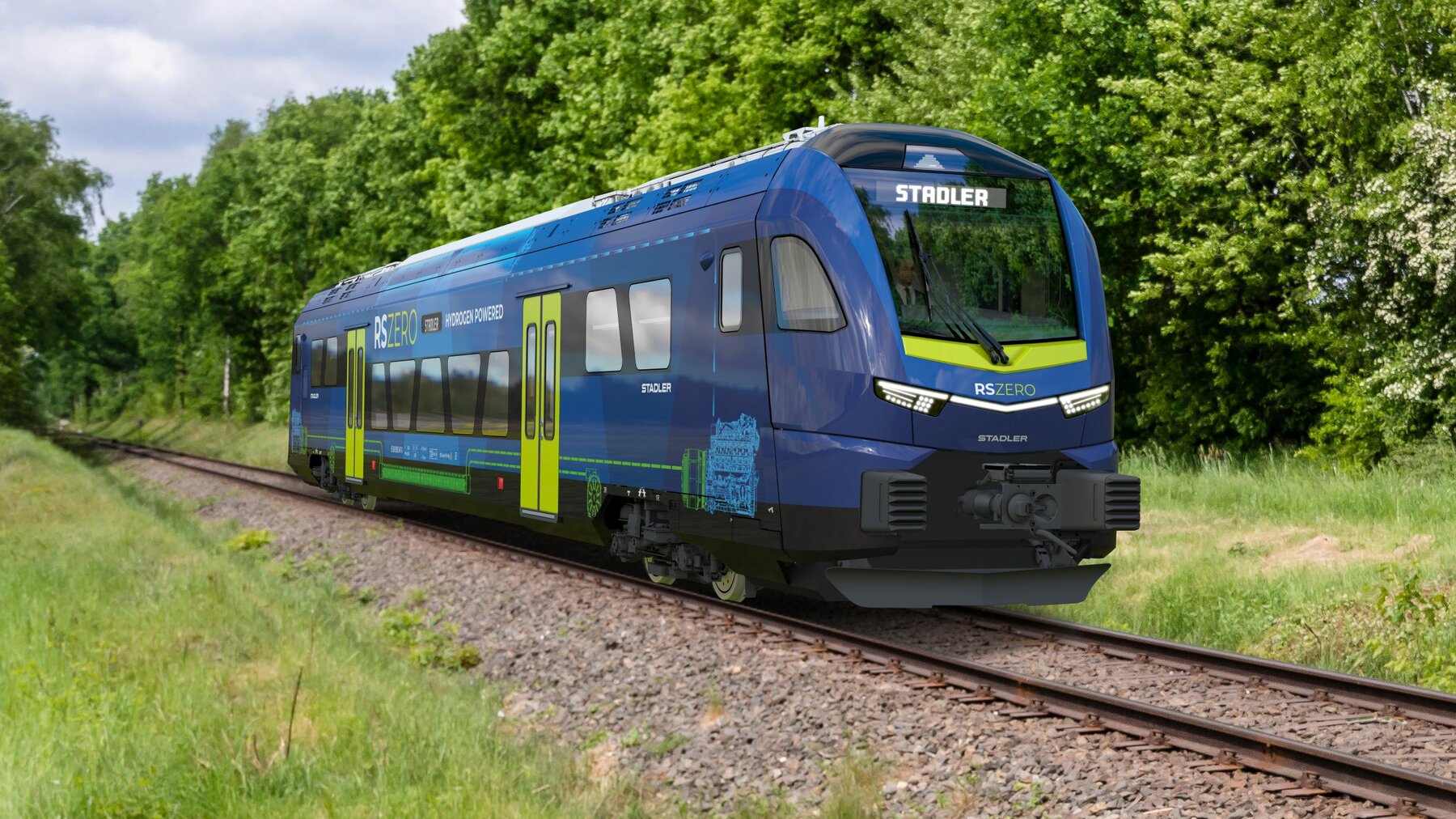
It looks very similar to my pictures from Chemnitz.
I have a few thoughts.
Comparison To A Class 150 Train
A Class 150 train can carry up to 149 seated passengers at 75 mph, which is similar to the RS ZERO.
As Stadler have built trains for Greater Anglia, Merseyrail and the Glasgow Subway, I believe that Stadler could build an RS ZERO, that would fit the UK loading gauge.
In What Train Is This?, I show the standard of interior, that can be achieved by refurbishing a Class 150 train, but unlike the RS ZERO, the train won’t be zero-carbon.
Does The RS ZERO Have A Toilet?
This is a paragraph from the press release.
The prototype of the RS ZERO presented today in Berlin is a one-car vehicle with hydrogen drive. Stadler is demonstrating the numerous design options with a multi-purpose area equipped for carrying bicycles, pushchairs and bulky luggage, lounge and comfort zones, standard and privacy seats, a wheelchair space, WC and a train office.
The train appears to be able to have what an operator might need.
What Will Be The Range Of An RS ZERO On Hydrogen?
I suspect, Stadler will provide a train, that will handle the route.
Would Stadler Be Able To Produce An RS ZERO That Could Satisfy The West Somerset/Go-op Requirement?
I obviously, can’t answer that.
But.
- The train is zero-carbon.
- It’s the right size.
- I suspect that the hydrogen fuel will be available from Hinckley Point C.
- The design has a proven track record.
- The train is not by any means vapourware!
- Stadler need a launch order.
- An experienced ROSCO would probably finance the trains.
One perk is that those involved in buying the train, could probably wangle a trip to Chemnitz to see several Regio-Shuttle RS1 trains at work.
Note that Chemnitz used to be Karl-Marx Stadt, so some of our Government will feel nostalgic.
But I do believe, this could be a very handy train to decarbonise branch and secondary lines in the UK.
Great Western Railway Updates EHRT On Its Upcoming Operational Trial Of Fast Charge Tech
The title of this post, is the same as that of this article on Electric and Hybrid Rail Technology.
This is the sub-heading.
Great Western Railway’s senior program manager, Sonya Johns, speaks to Electric & Hybrid Rail Technology about the firm’s progress on developing ex-Vivarail Fast Charge technology for battery-powered trains, ahead of operational trials due to commence in 2024.
The article is a must-read as it describes the progress since First Group, acquired the assets and intellectual property of Vivarail and its Fast Charge battery train technology.
This paragraph describes the components of the Fast Charge technology.
The Fast Charge system consists of three key components: retractable charging shoe gear, which is mounted to the underframe of the train; short (4m) charging rails mounted between the underframe of the train; and the Fast Charge Battery Bank (FCBB) installed beside the track, acting as an energy buffer between the train and the grid.
This paragraph outlines the benefits of the system.
The Fast Charge system has several benefits, according to Johns, including high charging power, enabling the train to be recharged in around 10 minutes; a standard DNO connection, avoiding costly power supply upgrades; full automation, with no driver interaction required; low safety risk (the charging rails are never live unless fully covered by the train); and minimal disruption during installation, as the FCBB is manufactured offsite and the charging rails are attached to existing sleepers.
This sounds like a system, that has been designed by someone fed up with regulators saying no to innovative ideas.
Other points from the article include.
- The shoe gear has been designed to be easily installed on any rolling stock.
- The one-year trial of the Fast Charge technology and the Class 230 battery train on the West Ealing and Greenford line will commence in spring 2024.
- GWR will capture and analyze data during the trial to understand how the technology performs in different conditions.
The article finishes with this paragraph.
The work, according to GWR, is part of its commitment to reduce the carbon emissions of its train fleet with a view to removing all diesel-only traction from the network by 2040, in line with the Government’s Transport Decarbonisation Plan.
Adrian Shooter would have been pleased if he was here to see it.
My First Ride In A Welsh Class 230 Train – 4th May 2023
These pictures show my first ride in a Welsh Class 230 train.



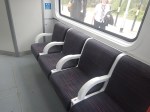
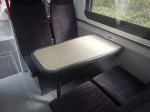

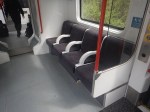
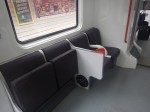
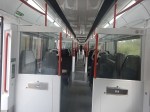


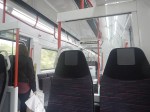
As with the other Class 230 trains, the trains are a tribute to Adrian Shooter’s perseverance.
Okehampton Railway Return ‘Clear Reality’ After £40m Commitment In Budget
The title of this post, is the same as that of this article on the Okehampton Times.
This is the introductory paragraph.
The return of a regular passenger rail service to Okehampton is now a clear reality after £40m of funding to reinstate services was included in the Budget.
I am not surprised about this planned reopening, as much of the infrastructure is ready.
Okehampton already has a station, which is shown in this Google Map.
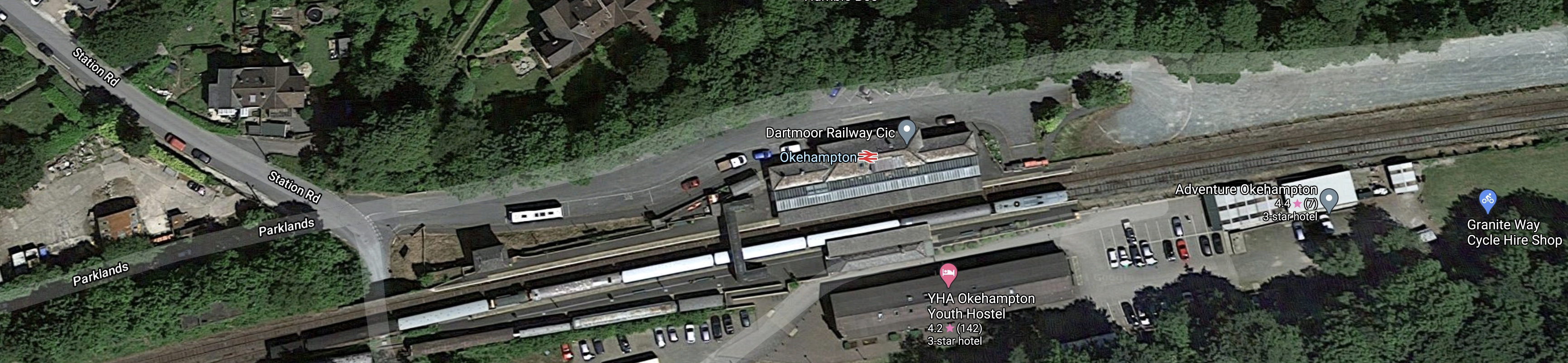
It looks as if there are tourist facilities at the station, where you can stay the night and hire bicycles.
The Dartmoor Railway connects the station to the Tarka Line at Coleford Junction.
- The railway appears to be single track.
- There is a single-platform station at Sampford Courtenay.
- A Great Western Railway passenger service connects St. James Park and Okehampton stations on Summer Sundays.
- This service also calls at Exeter Central, Exeter St. Davids and Ctediton stations.
In a section called Future Options for the Wikipedia entry for Okehampton station, finishes with this sentence.
Work started by Network Rail in 2020 on relaying and refurbishing the track between Coleford Junction and Okehampton with a plan to reopen the line to passengers during 2021.
It looks like a rail service could be made permanent and seven days per week, for an affordable budget.
The trains and those on the Tarka Line to Barnstaple are actually turned in a reversing siding at Exmouth Junction, which is shown in this Google Map.
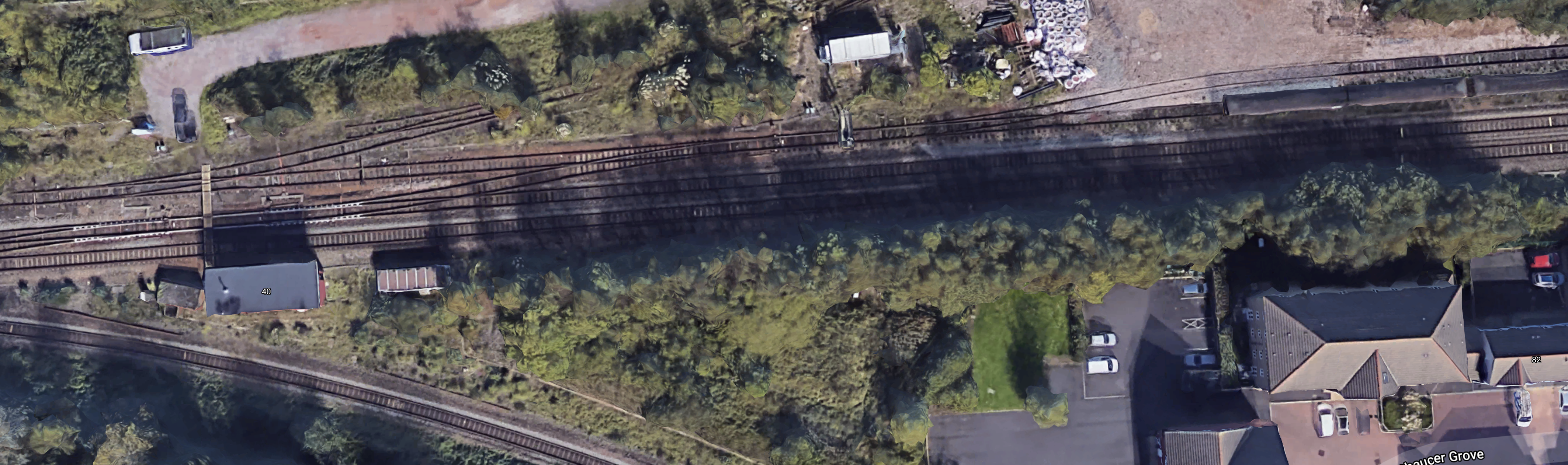
Note.
- St. James Park station is to the West.
- Honiton station is to the East.
- The Avocet Line to Exmouth station goes South East at the bottom of the map.
I suspect that if more trains were reversed at Exmouth Junction, some work on track and signalling might be needed to be done.
This paragraph is taken from this article on the Moorlander, which is entitled Okehampton To Exeter Railway Line Secures More Than £40m Funding.
As The Moorlander has previously reported, the news means that Okehampton will become a ‘railhead’ for the hinterland and benefit three main markets; those wishing to visit the heritage station and Dartmoor, local people from Okehampton travelling to Exeter for work, leisure and education plus potential passengers wanting to connect with the train from West Devon, parts of Torridge and North Cornwall.
That seems all very sensible to me.
Could It Be Trialled As A Pop-Up Metro?
Could it be, that once the line is approved for opening, a service is run for a few months to test out, whether it would be financially viable?
It would be the classic test of the Pop-Up Metro concept, that has been proposed by Adrian Shooter of Vivarail, that I wrote about in Vivarail’s Plans For Zero-Emission Trains.
To be zero-emission, there would need to be one of Vivarail’s Fast Charge systems at Exmouth Junction, which could also charge trains for Barnstaple.
What would zero-emission battery trains serving Barnstaple and Okehampton so for passenger numbers?
Train operators discount the positive effects, these trains have on passengers.
Did Greater Anglia for instance, ever do any market research after the successful trial of the Class 379 BEMU train at Manningtree five years ago? I suspect not!
I estimate that to run the following pair of hourly services would take three trains for each.
- St. James Park and Barnstaple via Exeter Central, Exeter St. Davids and Crediton.
- St. James Park and Okehampton via Exeter Central, Exeter St. Davids and Crediton.
Two extra trains for a hot spare and one in maintenance would typically be added, to give a requirement of eight trains. As Great Western Railway already run the hourly service to Barnstaple, they would probably need another three trains for the Okehampton service.
I think there are two very sensible and affordable philosophies.
Refurbished Class 150 Trains
These pictures show a refurbishment of one of Great Western Railway‘s Class 150 trains.
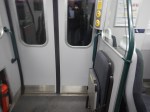
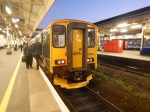
Note.
- It is one of the finest train refurbishments, I have ever seen.
- As I rode one that had been to Barnstable, they can certainly handle the route.
- Great Western Railway have twenty of these trains.
What’s wrong with a fleet of these trains?
Vivarail Class 230 Trains
Battery-electric or diesel-electric versions of these Class 230 trains would be a possibility.
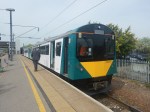
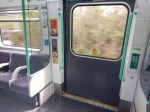
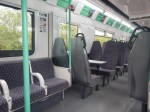
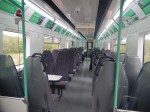
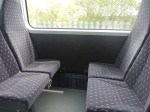
Note.
- I am not sure, if they could manage the climb to Barnstaple, but as they have have so many different power options, I suspect something is possible.
- If they are battery-electric, there could be a Fast Charge system at Exmouth Junction, where the trains turn back.
- Charging may also be needed at Barnstaple and Okehampton to nudge the trains down the hill.
Suppose the various improvements to track, signals and stations and providing charging cost half of the £40 million, that would leave £20 million to pay for the trains. In a cost comparison from October 2015, it is stated that lease costs of Class 230 trains are £7000 per car per month.
So if we call that £10000 to allow for inflation and the pandemic, that means that 8 x three-car trains will cost £2.88 million per year. There will obviously be maintenance and fuel and electricity costs to add. Let’s make the total £4 million per year.
So that would mean, that after spending £20 million on getting the infrastructure ready, the route could be run for five years as a trial.
Conclusion
Consider.
- I feel that this line has been proposed for reopening, as it looks like there could be a good return on the investment.
- The biggest problem would be finding three trains to run the service.
- I suspect, it could also be implemented in a short period of time and perhaps open for Summer 2021.
This train service could be a prototype for many others in the UK.
Shooter Urges Caution On Hydrogen Hubris
The title of this post is the same as that of an article in the January 2021 Edition of Modern Railways.
This is the first paragraph.
Vivarail Chairman Adrian Shooter has urges caution about the widespread enthusiasm for hydrogen technology. In his keynote speech to the Golden Spanner Awards on 27 November, Mr. Shooter said the process to create ‘green hydrogen’ by electrolysis is ‘a wasteful use of electricity’ and was skeptical about using electricity to create hydrogen to then use a fuel cell to power a train, rather than charging batteries to power a train. ‘What you will discover is that a hydrogen train uses 3.5 times as much electricity because of inefficiencies in the electrolysis process and also in the fuel cells’ said Mr. Shooter. He also noted the energy density of hydrogen at 350 bar is only one-tenth of a similar quantity of diesel fuel, severely limiting the range of a hydrogen-powered train between refuelling.
Mr. Shooter then made the following points.
- The complexity of delivering hydrogen to the railway depots.
- The shorter range available from the amount of hydrogen that can be stored on a train compared to the range of a diesel train.
- He points out limitations with the design of the Alstom Breeze train.
This is the last paragraph.
Whilst this may have seemed like a challenge designed purely to promote the battery alternatives that Vivarail is developing, and which he believes to be more efficient, Mr. Shooter explained: ‘I think that hydrogen fuel cell trains could work in this country, but people just need to remember that there are downsides. I’m sure we’ll see some, and in fact we should because competition improves the breed.’
i think Mr. Shooter may have made several good points.
These are my thoughts.
Creating Green Hydrogen
I haven’t done an analysis of the costs of creating green hydrogen from electrolysis, but I have a feeling, that electrolysis won’t be the only way to create large amounts of carbon-free hydrogen, in a few years.
These methods are currently available or under development or construction.
- The hydrogen tram-buses in Pau have a personal electrolyser, that provides hydrogen at 350 bar.
- London’s hydrogen buses will be provided with hydrogen from an electrolyser at Herne Bay by truck. Will the trucks be hydrogen-powered?
Some industrial processes like the Castner-Kellner process create hydrogen as a by-product.
In Shell Process To Make Blue Hydrogen Production Affordable, I describe the Shell Blue Hydrogen Process, which appears to be a way of making massive amounts of carbon-free hydrogen for processes like steel-making and cement production. Surely some could be piped or transported by truck to the rail depot.
In ITM Power and Ørsted: Wind Turbine Electrolyser Integration, I describe how ITM Power and Ørsted plan to create the hydrogen off shore and bring it by pipeline to the shore.
Note.
- The last two methods could offer savings in the cost of production of carbon-free hydrogen.
- Surely, the delivery trucks if used, must be hydrogen-powered.
- The Shell Blue Hydrogen Process uses natural gas as a feedstock and converts it to hydrogen using a newly-developed catalyst. The carbon-dioxide is captured and used or stored.
- If the local gas network has been converted to hydrogen, the hydrogen can be delivered to the depot or filling station through that gas network.
I very much feel that affordable hydrogen can be supplied to bus, train, tram or transport depot. For remote or difficult locations. personal electrolysers, powered by renewable electricity, can be used, as at Pau.
Hydrogen Storage On Trains
Liquid hydrogen could be the answer and Airbus are developing methods of storing large quantities on aircraft.
In What Size Of Hydrogen Tank Will Be Needed On A ZEROe Turbofan?, I calculated how much liquid hydrogen would be needed for this ZEROe Turbofan.
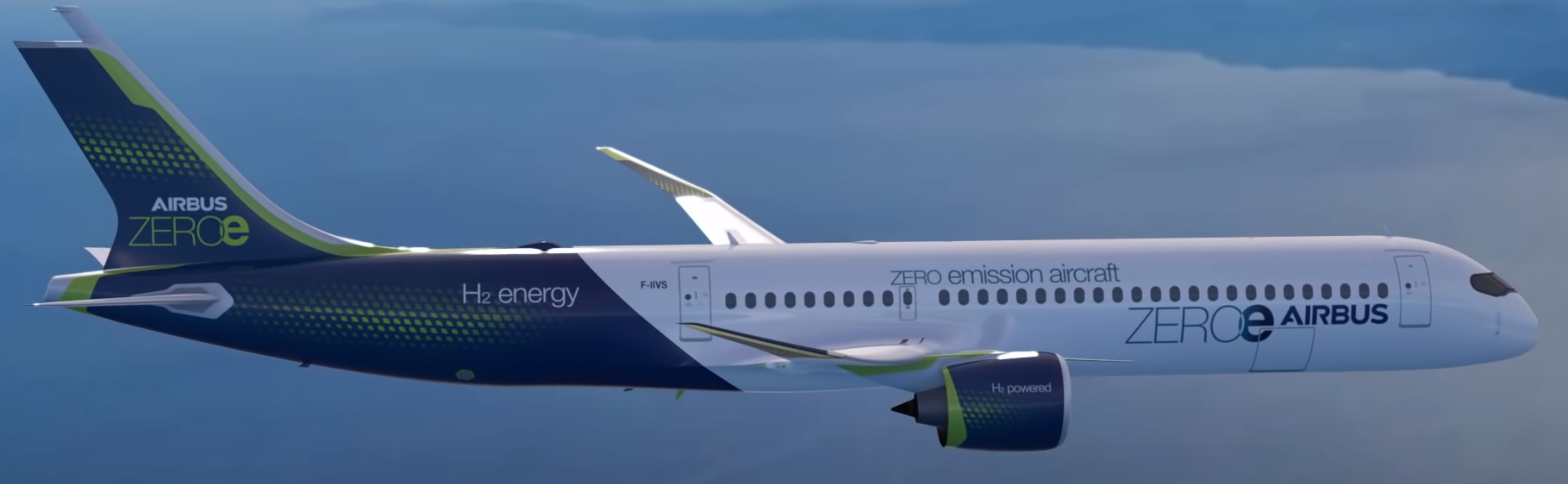
I calculate that to carry the equivalent amount of fuel to an Airbus A320neo would need a liquid hydrogen tank with a near 100 cubic metre capacity. This sized tank would fit in the rear fuselage.
I feel that in a few years, a hydrogen train will be able to carry enough liquid hydrogen in a fuel tank, but the fuel tank will be large.
In The Mathematics Of A Hydrogen-Powered Freight Locomotive, I calculated how much liquid hydrogen would be needed to provide the same amount of energy as that carried in a full diesel tank on a Class 68 locomotive.
The locomotive would need 19,147 litres or 19.15 cubic metres of liquid hydrogen, which could be contained in a cylindrical tank with a diameter of 2 metres and a length of 6 metres.
Hydrogen Locomotives Or Multiple Units?
We have only seen first generation hydrogen trains so far.
This picture shows the Alstom Coradia iLint, which is a conversion of a Coradia Lint.

It is a so-so train and works reasonably well, but the design means there is a lot of transmission noise.
This is a visualisation of an Alstom Breeze or Class 600 train.
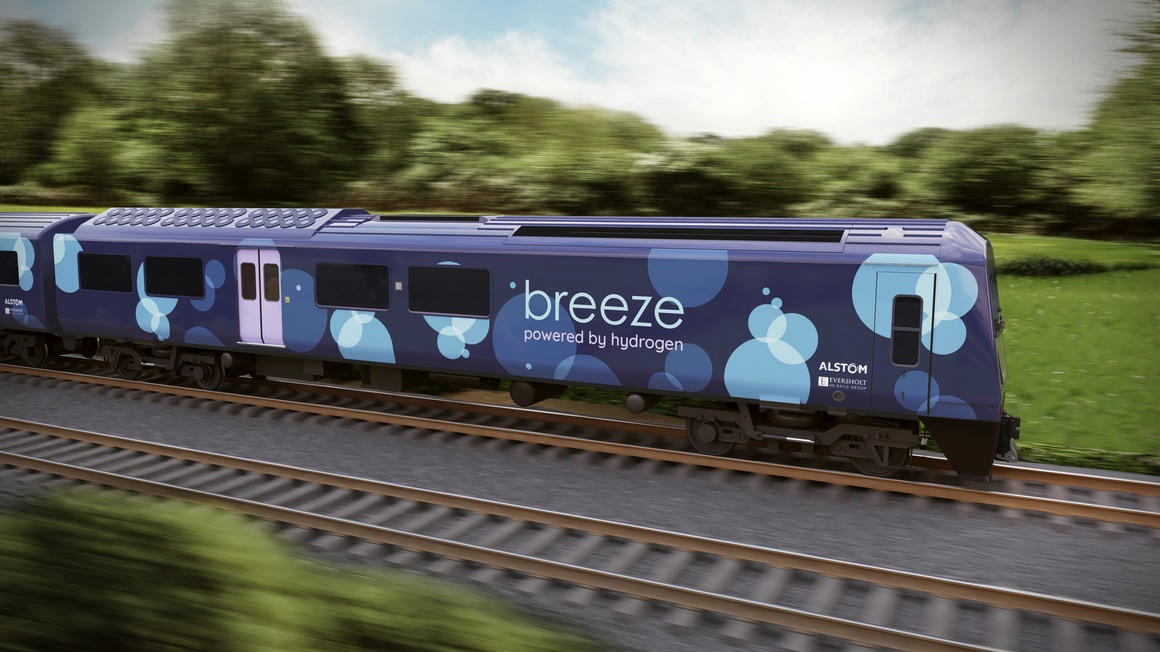
Note that the front half of the first car of the train, is taken up with a large hydrogen tank. It will be the same at the other end of the train.
As Mr. Shooter said, Alstom are converting a three-car train into a two-car train. Not all conversions live up to the hype of their proposers.
I would hope that the next generation of a hydrogen train designed from scratch, will be a better design.
I haven’t done any calculations, but I wonder if a lighter weight vehicle may be better.
Hydrogen Locomotives
I do wonder, if hydrogen locomotives are a better bet and easier to design!
- There is a great need all over the world for zero-carbon locomotives to haul freight trains.
- Powerful small gas-turbine engines, that can run on liquid hydrogen are becoming available.
- Rolls-Royce have developed a 2.5 MW gas-turbine generator, that is the size of a beer-keg.
In The Mathematics Of A Hydrogen-Powered Freight Locomotive, I wondered if the Rolls-Royce generator could power a locomotive, the size of a Class 68 locomotive.
This was my conclusion.
I feel that there are several routes to a hydrogen-powered railway locomotive and all the components could be fitted into the body of a diesel locomotive the size of a Class 68 locomotive.
Consider.
- Decarbonising railway locomotives and ships could be a large market.
- It offers the opportunities of substantial carbon reductions.
- The small size of the Rolls-Royce 2.5 MW generator must offer advantages.
- Some current diesel-electric locomotives might be convertible to hydrogen power.
I very much feel that companies like Rolls-Royce and Cummins (and Caterpillar!), will move in and attempt to claim this lucrative worldwide market.
In the UK, it might be possible to convert some existing locomotives to zero-carbon, using either liquid hydrogen, biodiesel or aviation biofuel.
Perhaps, hydrogen locomotives could replace Chiltern Railways eight Class 68 locomotives.
- A refuelling strategy would need to be developed.
- Emissions and noise, would be reduced in Marylebone and Birmingham Moor Street stations.
- The rakes of carriages would not need any modifications to use existing stations.
It could be a way to decarbonise Chiltern Railways without full electrification.
It looks to me that a hydrogen-powered locomotive has several advantages over a hydrogen-powered multiple unit.
- It can carry more fuel.
- It can be as powerful as required.
- Locomotives could work in pairs for more power.
- It is probably easier to accommodate the hydrogen tank.
- Passenger capacity can be increased, if required by adding more coaches.
It should also be noted that both hydrogen locomotives and multiple units can build heavily on technology being developed for zero-carbon aviation.
The Upward Curve Of Battery Power
Sparking A Revolution is the title an article in Issue 898 of Rail Magazine, which is mainly an interview with Andrew Barr of Hitachi Rail.
The article contains a box, called Costs And Power, where this is said.
The costs of batteries are expected to halve in the next years, before dropping further again by 2030.
Hitachi cites research by Bloomberg New Energy Finance (BNEF) which expects costs to fall from £135/kWh at the pack level today to £67/kWh in 2030 and £47/kWh in 3030.
United Kingdom Research and Innovation (UKRI) are predicting that battery energy density will double in the next 15 years, from 700 Wh/l to 1400 Wh/l in 2-35, while power density (fast charging) is likely to increase four times in the same period from 3 kW/kg to 12 kW/kg in 2035.
These are impressive improvements that can only increase the performance and reduce the cost of batteries in all applications.
Hitachi’s Regional Battery Train
This infographic gives the specification of Hitachi Regional Battery Train, which they are creating in partnership with Hyperdrive Innovation.
Note that Hitachi are promising a battery life of 8-10 years.
Financing Batteries
This paragraph is from this page on BuyaCar, which is entitled Electric Car Battery Leasing: Should I Lease Or Buy The Batteries?
When you finance or buy a petrol or diesel car it’s pretty simple; the car will be fitted with an engine. However, with some electric cars you have the choice to finance or buy the whole car, or to pay for the car and lease the batteries separately.
I suspect that battery train manufacturers, will offer similar finance models for their products.
This paragraph is from this page on the Hyperdrive Innovation web site.
With a standardised design, our modular product range provides a flexible and scalable battery energy storage solution. Combining a high-performance lithium-ion NMC battery pack with a built in Battery Management System (BMS) our intelligent systems are designed for rapid deployment and volume manufacture, supplying you with class leading energy density and performance.
I can envisage that as a battery train ages, every few years or so, the batteries will get bigger electrically, but still be the same physical size, due to the improvements in battery technology, design and manufacture.
I have been involved in the finance industry both as a part-owner of a small finance company and as a modeller of the dynamics of their lending. It looks to me, that train batteries could be a very suitable asset for financing by a fund. But given the success of energy storage funds like Gore Street and Gresham House, this is not surprising.
I can envisage that battery electric trains will be very operator friendly, as they are likely to get better with age and they will be very finance-friendly.
Charging Battery Trains
I must say something about the charging of battery trains.
Battery trains will need to be charged and various methods are emerging.
Using Existing Electrification
This will probably be one of the most common methods used, as many battery electric services will be run on partly on electrified routes.
Take a typical route for a battery electric train like London Paddington and Oxford.
- The route is electrified between London Paddington and Didcot Junction.
- There is no electrification on the 10.4 miles of track between Didcot Junction and Oxford.
If a full battery on the train has sufficient charge to take the train from Didcot Junction to Oxford and back, charging on the main line between London Paddington and Didcot Junction, will be all that will be needed to run the service.
I would expect that in the UK, we’ll be seeing battery trains using both 25 KVAC overhead and 750 VDC third rail electrification.
Short Lengths Of New Strategic Electrification
I think that Great Western Railway would like to run either of Hitachi’s two proposed battery electric trains to Swansea.
As there is 45.7 miles pf track without .electrification, some form of charging in Swansea station, will probably be necessary.
The easiest way would probably be to electrify Swansea station and perhaps for a short distance to the North.
This Google Map shows Swansea station and the railway leading North.
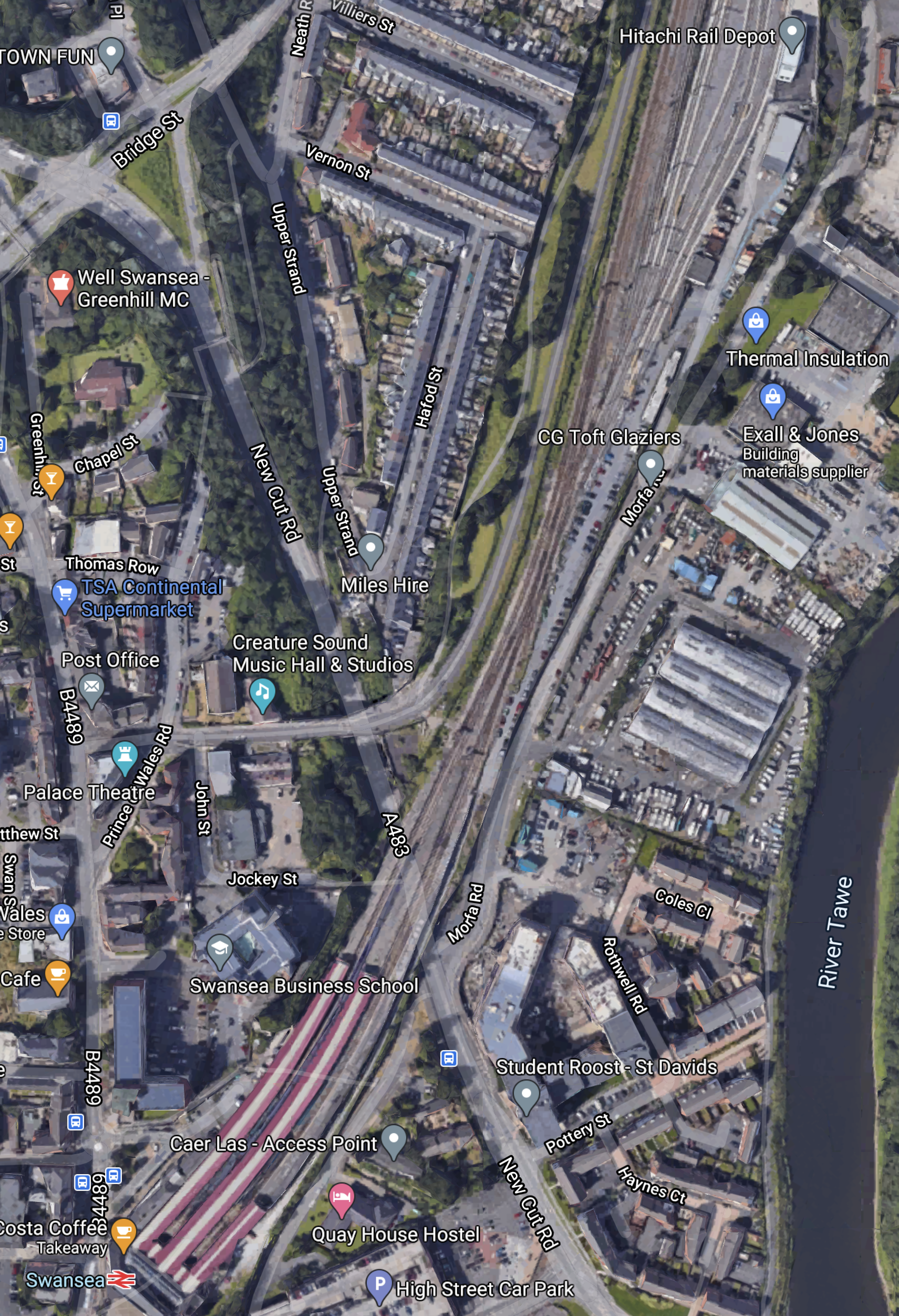
Note.
- There is a Hitachi Rail Depot at the Northern edge of the map.
- Swansea station is in South-West corner of the map.
- Swansea station has four platforms.
Swansea station would probably make an excellent battery train hub, as trains typically spend enough time in the station to fully charge the batteries before continuing.
There are other tracks and stations of the UK, that I would electrify to enable the running of battery electric trains.
- Leeds and York, which would enable carbon-free London and Edinburgh services via Leeds and help TransPennine services. This is partially underway.
- Leicester and East Midlands Parkway and Clay Cross North Junction and Sheffield – These two sections would enable EMR InterCity services to go battery electric.
- Sheffield and Leeds via Meadowhall, Barnsley Dearne Valley and the Wakefield Line, which would enable four trains per hour (tph) between Sheffield and Leeds and an extension of EMR InterCity services to Leeds.
- Hull and Brough, would enable battery electric services to Hull and Beverley.
- Scarborough and Seamer, would enable electric services services to Scarborough and between Hull and Scarborough.
- Middlesbrough and Redcar, would enable electric services services to Teesside.
- Crewe and Chester and around Llandudno Junction station – These two sections would enable Avanti West Coast service to Holyhead to go battery electric.
- Shrewsbury station – This could become a battery train hub, as I talked about for Swansea.
- Taunton and Exeter and around Penzance, Plymouth and Westbury stations – These three sections would enable Great Western Railway to cut a substantial amount of carbon emissions.
- Exeter, Yeovil Junction and Salisbury stations. – Electrifying these three stations would enable South Western Railway to run between London and Exeter using Hitachi Regional Battery Trains, as I wrote in Bi-Modes Offered To Solve Waterloo-Exeter Constraints.
We will also need fast chargers for intermediate stations, so that a train can charge the batteries on a long route.
I know of two fast chargers under development.
- Opbrid at Furrer + Frey
- Vivarail’s Fast Charge, which I wrote about in Vivarail’s Plans For Zero-Emission Trains.
I believe it should be possible to battery-electrify a route by doing the following.
- Add short lengths of electrification and fast charging systems as required.
- Improve the track, so that trains can use their full performance.
- Add ERTMS signalling.
- Add some suitable trains.
Note.
- I feel ERTMS signalling with a degree of automatic train control could be used with automatic charging systems, to make station stops more efficient.
- In my view, there is no point in installing better modern trains, unless the track is up to their performance.
Charging The Batteries On An Intercity Tri-Mode Battery Train
There are several ways the batteries on an Intercity Tri-Mode Battery Train could be charged.
- On an electrified main line like the Great Western or East Coast Main Lines, the electrification can be used in normal electrified running.
- A short length of electrification at the terminal or through stations can be used.
- The diesel engines could be used, at stations, where this is acceptable.
Alternatively, a custom design of charger can be used like Vivarail’s Fast Charge system.
In Vivarail’s Plans For Zero-Emission Trains, I said this.
Vivarail Now Has Permission To Charge Any Train
Mr. Shooter said this about Vivarail’s Fast Charge system.
The system has now been given preliminary approval to be installed as the UK’s standard charging system for any make of train.
I may have got the word’s slightly wrong, but I believe the overall message is correct.
In the November 2020 Edition of Modern Railways, there is a transcript of what Mr. Shooter said.
‘Network Rail has granted interim approval for the fast charge system and wants it to be the UK’s standard battery charging system’ says Mr. Shooter. ‘We believe it could have worldwide implications.’
I hope Mr. Shooter knows some affordable lawyers, as in my experience, those working in IPR are not cheap.
I think it’s very likely, that Vivarail’s Fast Charge system could be installed at terminals to charge Hitachi’s Intercity Tri-Mode Battery Trains.
-
- The Fast Charge systems can be powered by renewable energy.
- The trains would need to be fitted with third rail shoes modified to accept the high currents involved.
- They can also be installed at intermediate stations on unelectrified lines.
Vivarail is likely to install a Fast Charge system at a UK station in the next few months.
These are my thoughts about charging trains at various stations.
Penzance station
This Google Map shows Penzance station.
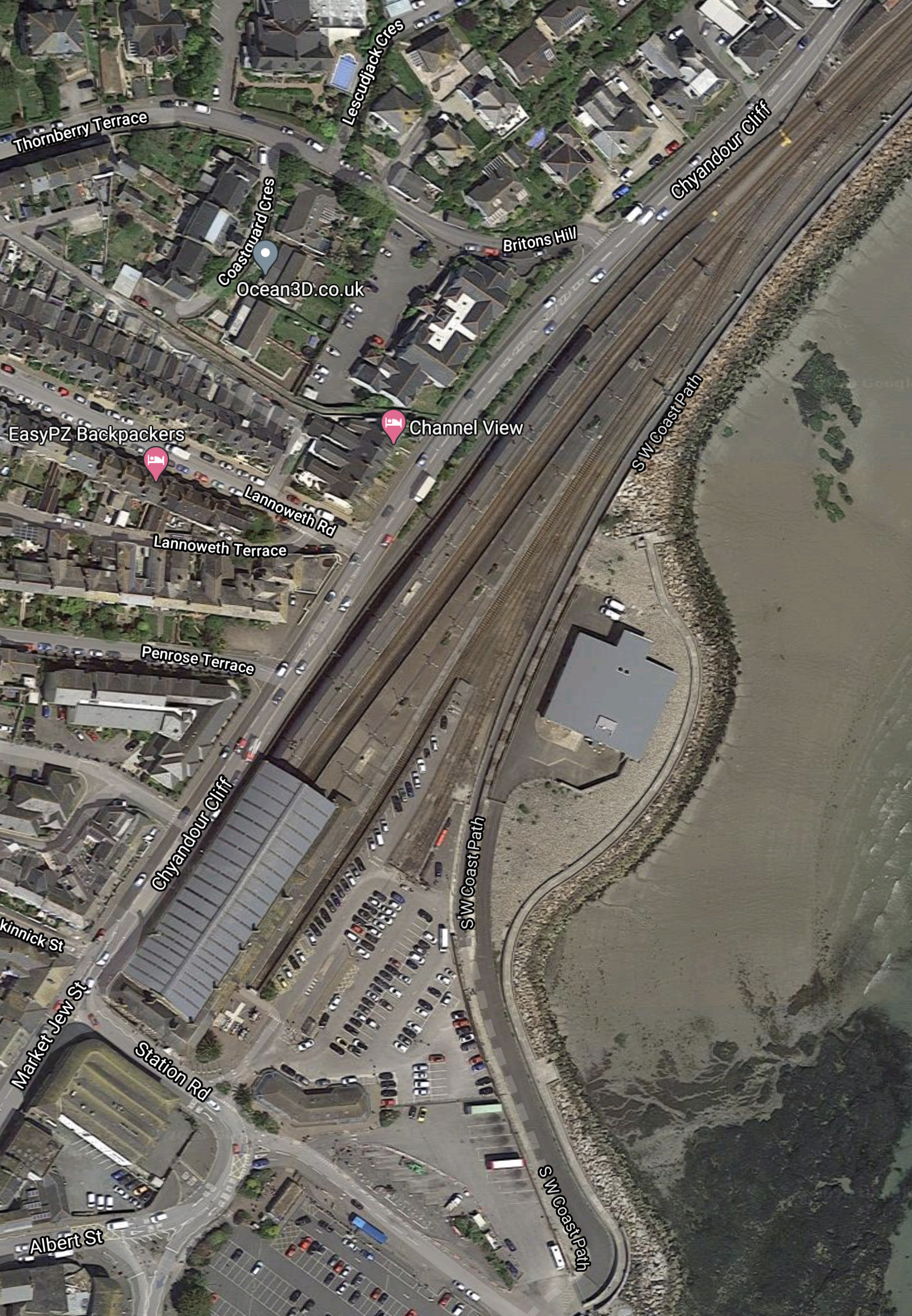
Penzance would be an ideal station to fully charge the trains, before they ran East.
- The station has four long platforms.
- There appears to be plenty of space just to the East of the station.
- Penzance TMD is nearby.
This picture shows Platform 4, which is on the seaward side of the station. The train in the platform is one of GWR’s Castles.
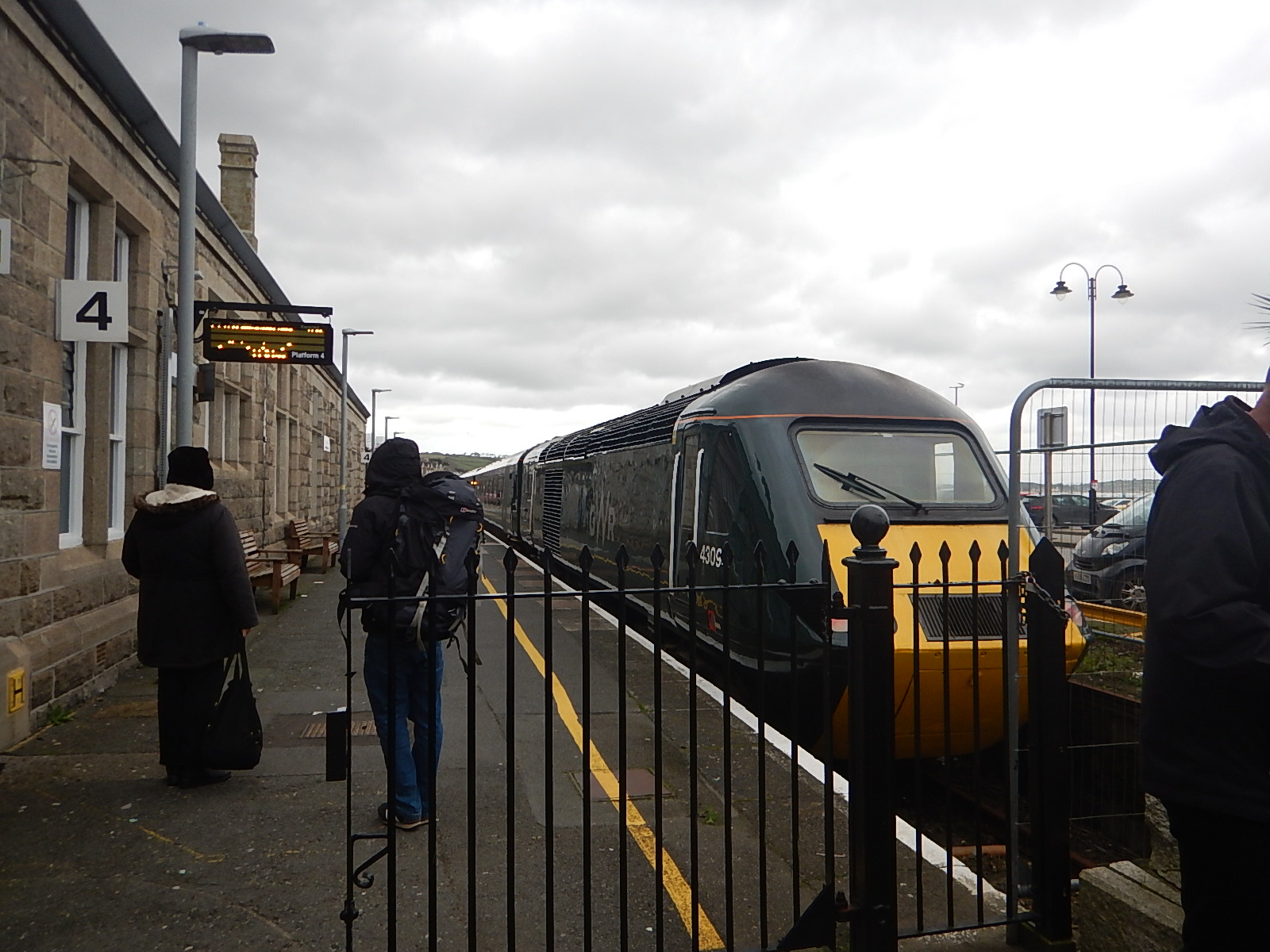
It is partly outside the main station, so might be very suitable to charge a train.
If trials were being performed to Penzance, it appears that the station would be a superb choice to charge trains.
My only worry, is would the location have enough power to charge the trains?
Plymouth Station
This Google Map shows Plymouth station.
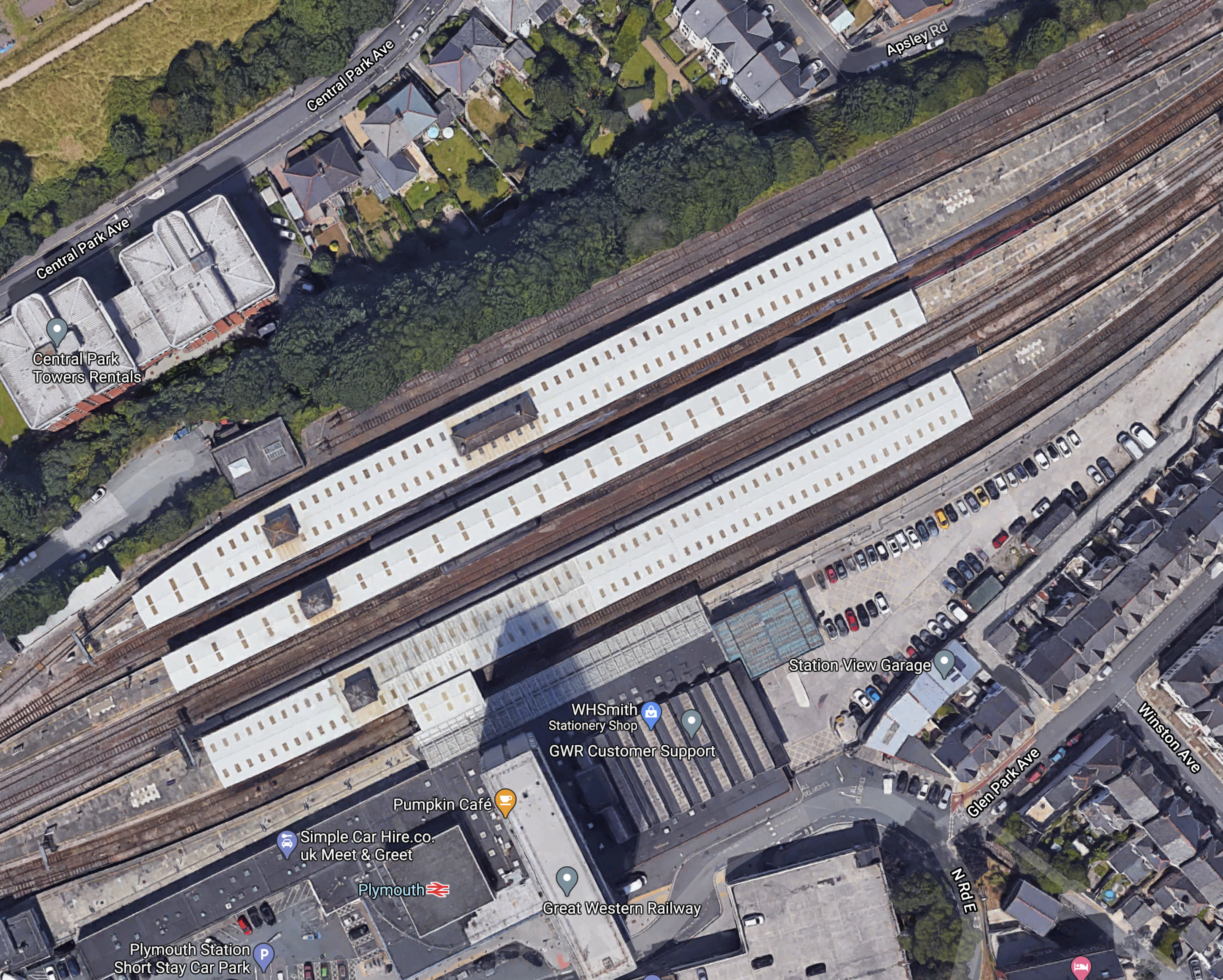
It is another spacious station with six platforms.
Chargers could be installed as needed for both expresses and local trains.
A Zero-Carbon Devon and Cornwall
If the battery trains perform as expected, I can see the Devon and Cornwall area becoming a low if not zero carbon railway by the end of this decade.
- The Castles would be retired.
- They would be replaced by battery electric trains.
- Charging would be available on all platforms at Penzance, Plymouth and possible some other intermediate stations and those on some branch lines.
It certainly wouldn’t hurt tourism.
LNER Seeks 10 More Bi-Modes
The title of this post, is the same as that of an article in the December 2020 Edition of Modern Railways.
This is the opening paragraph.
LNER has launched the procurement of at least 10 new trains to supplement its Azuma fleet on East Coast Main Line services.
Some other points from the article.
- It appears that LNER would like to eliminate diesel traction if possible.
- On-board energy storage is mentioned.
- No form of power appears to be ruled out, including hydrogen.
- LNER have all 65 of their Azumas in service.
The last paragraph is very informative.
Infrastructure upgrades are due to prompt a timetable recast in May 2022 (delayed from December 2021) from which point LNER will operate 6.5 trains per hour, out of Kings Cross, compared to five today. As an interim measure, LNER is retaining seven rakes of Mk 4 coaches hauled by 12 Class 91 locomotives to supplement the Azuma fleet and support its timetable ambitions until the new trains are delivered.
These are my thoughts.
More Azumas?
Surely, It would require a very innovative train at perhaps a rock-bottom price from another manufacturer, for LNER to not acquire extra Azumas.
Classic-Compatible Trains For High Speed Two
Consider.
- Alstom, Bombardier, CAF, Hitachi, Siemens and Talgo are involved in the competition to design Classic-Compatible trains for High Speed Two.
- As the York and Edinburgh section of the East Coast Main Line will eventually be upgraded and used by High Speed Two services,
- Also in the December 2020 Edition of Modern Railways, is an article entitled 140 mph Plan For ECML North of York, which details improvements proposed by Northern Powerhouse Rail to improve services between Leeds and Edinburgh.
Would there be advantages to High Speed Two, LNER and Network Rail and Northern Powerhouse Rail, to have some commonality between the High Speed Two, LNER and Northern Powerhouse Rail fleets?
Hopefully, the various government-controlled companies are talking.
A Flagship Train For Aberdeen And Inverness
The InterCity 225s, which consist of a Class 91 locomotive and a rake of nine Mark 4 coaches, have given thirty years of top-quality service on the East Coast Main Line and appear to be being asked to handle services until the new trains are delivered.
- Full-length InterCity 225s are 245 metres long and have 406 Standard and 129 First seats or a total of 535 seats.
- Nine-car Azumas are 234 metres long and have 510 Standard and 101 First seats or a total of 611 seats.
- Two five-car Azumas working as a pair are 260 metres long and have 604 seats. They can also be handled on most platforms, that are used by LNER.
- The power of a Class 91 locomotive is 4.83 MW.
- A Class 91 locomotive is 19.4 metres long and weighs 81.5 tonnes.
- Both Azumas and InterCity 225s can maintain 125 mph with ease on the East Coast Main Line and both will be able to reach 140 mph with in-cab signalling.
There would appear to be nothing wrong with locomotive-hauled high speed services, in terms of capacity and performance.
In The Mathematics Of A Hydrogen-Powered Freight Locomotive, I laid out my thoughts on a high-powered railway locomotive fuelled by hydrogen, that used one or possibly two Rolls-Royce gas-turbine engines to generate electricity for traction.
With all the work done, by the companies bidding for Classic-Compatible trains for High Speed Two, into very high speed trains, I believe that at least one company could build a locomotive with this specification.
- 140 mph operation on 25 KVAC overhead electrification. As I said, that was done by British Rail almost forty years ago.
- Ability to use full digital in-cab signalling. This is on its way and already working in some applications.
- 110 mph operation on hydrogen. Hitachi are planning 100 mph battery trains, so it should be possible.
- 400 mile range on one filling of hydrogen. This is working in Germany.
- Ability to be upgraded to higher speeds on electric power, should the East Coast Main Line be upgraded for higher speeds in the future. The train manufacturers are probably ahead of track designers with this one.
Such a locomotive would be key to building a train with this specification.
- Sub-four hour time between London and Edinburgh.
- Sub-seven hour time between London and Aberdeen, which has 130 miles without wires.
- Sub-eight hour time between London and Inverness, which has 146 miles without wires.
- Hydrogen would be used, where there is no electrification.
- Zero-carbon at all times.
- A maximum length of 260 metres, which I estimate could give a passenger capacity of around 640 seats.
- The last coach would include a driving van trailer.
- They would not need the ability to split and join, except for the purpose of rescue, as there is no platform on the route, that could accommodate the resulting 520 metre long pair of trains.
I estimate that a fleet of around seven trains would be needed to run the current Aberdeen and Inverness services.
A few extra thoughts.
- Could they have an up-market more spacious interior, as their main competition to the North of Scotland, would be the budget airlines?
- Could they be slightly longer, with some platform work at Kings Cross and other stations?
- Add a few extra trains to the order, so that extra services between London and Edinburgh could be added to the timetable.
- Could the driving van trailer incorporate an observation car?
- Hydrogen refuelling shouldn’t be a problem in Scotland, as the country is developing a hydrogen economy.
- Hydrogen refuelling wouldn’t be needed in England, as they’d be using the electrification.
- As an alternative to hydrogen, sustainable aviation fuel could be used.
I suspect that Talgo, would be very happy to tender.
- They are developing hydrogen-powered trains as I wrote in Talgo: Our Hydrogen Train Will Be Ready In 2023.
- They are building a factory in Scotland, close to the Forth Bridge.
- Because of the factory, Talgo probably have the ear of the Scottish Government, who would probably welcome a Scottish-built train.
- A shorter version of these trains without the hydrogen, could be the design for a High Speed Two Classic-Compatible train, for which Talgo, are on the short list of suppliers.
What better way, would there be to sell your hydrogen-powered high speed trains, than to give prospective clients a ride up from London to the factory in the luxury version?
A New Elizabethan
I can remember The Elizabethan, which was a steam-hauled non-stop express between London and Edinburgh between 1953 and 1961.
I have laid out my ideas for a modern express train of the same name in A New Elizabethan.
It could be an interesting concept, to increase capacity between London and Edinburgh.
Splitting And Joining
Some of LNER’s philosophy to serve places like Harrogate, Huddersfield and Middlesbrough, depends on the ability to split and join trains.
A pair of Azumas could leave London and go to Leeds, where they would split, with one train going to Harrogate and the other going to Huddersfield.
When returning to London, the two trains would join at Leeds.
The big advantage of splitting and joining, is that it increases the capacity on the main line, as services can be arranged, so that every path always carries a full-length train. I would expect that LNER would prefer never to run a single five-car Azuma into Kings Cross.
Currently LNER have these paths to and from Kings Cross.
- 2 tph between London Kings Cross and Leeds
- 1 tph between London Kings Cross and Lincoln and East Yorkshire
- 2 tph between London Kings Cross and Edinburgh
Note.
- LNER have already started to extend services from Leeds, so will we see splitting and joining being used on one tph at Leeds to provide services to several destinations, throughout the day.
- Splitting and joining at Edinburgh is surely another possibility, to serve Stirling and Glasgow, with the same train.
- Splitting and joining at York could serve destinations like Middlesbrough, Newcastle, Redcar, Scarborough and Sunderland.
- In A Trip To Grantham Station – 4th November 2020, I advocated splitting at Grantham station to serve both Nottingham and Lincoln.
There are a lot of possibilities for splitting and joining.
As LNER has a fleet of twenty-two five-car Azumas, if the new trains are needed to split and join on certain services, this might mean more five-car Azumas are a better buy.
What Will Happen To Nine Car Azumas?
Hitachi have launched the Regional Battery Train concept, the specification of which is given in this Hitachi infographic.

The diesel engines in LNER’s Class 800 trains will be able to be replaced with batteries, making them all-electric trains.
- Destinations like Cleethorpes, Dundee, Grimsby, Harrogate, Huddersfield, Hull, Lincoln, Middlesbrough Nottingham, Perth, Redcar, Scarborough, Sheffield and Sunderland will be within range of battery electric Azumas.
- Some destinations would need the ability to charge the train before it returned, but I can see lots of places getting an appropriate service, even if it was just one or two trains per day.
- Unfortunately, Aberdeen and Inverness would be too far for battery electric Azumas, so services will still need to be run by nine-car bi-mode Azumas.
Five-car battery electric Azumas working in pairs from London could be the key to increasing LNER services.
I can see that LNER may end up with too many nine-car Azumas, if nine-car trains are replaced by pairs of five-car trains to serve two destinations by splitting and joining.
Would it be possible to shorten nine-car Azumas to five-car trains?
These are the formations of the two trains.
- nine-car: DPTS-MS-MS-TS-MS-TS-MC-MF-DPTF
- five-car: DPTS-MS-MS-MC-DPTF
It is known, that the trains have a computer, that does a quick check on start-up to determine, what cars are present and correct in the train.
- This means that if LNER needed twelve-car trains for say London and Edinburgh, they could create a sub-fleet by just buying the requisite number of extra TS (Trailer Standard) and MS (Motor Standard) cars and coupling them up.
- This feature also means that operators running fleets of five-car Hitachi trains, like TransPennine Express and Hull Trains can increase capacity by just purchasing the extra cars.
- It would also allow, cars to be shuffled to create viable trains, after say several cars were damaged by vandalism.
All trains these days seem to have this very operator-friendly feature.
With LNER’s trains, I suspect that all cars of the same type are identical.
This would mean, that a nine-car train can be converted to a five-car by removing two TS (Trailer Standard), one MS (Motor Standard) and one MF (Motor First) cars.
The four cars, that have been removed could be reconfigured to form the middle three cars of a new five-car train, which would be completed by adding new DPTS (Driver Pantograph Trailer Standard) and DPTF (Driver Pantograph Trailer First) cars.
An Increase In Paths From 5 To 6.5
This will certainly allow LNER to run more services.
The odd half path could be easy to explain.
- Hull is a city, that is on the up.
- I suspect that it could support a five-car direct service from London with a frequency of one tph.
- But Hull Trains are also running a successful service on the route.
Perhaps a fair solution, would be to allow both LNER and Hull Trains to run a one train per two hour (tp2h) service.
If LNER didn’t want to use the path to just run a five-car train to Hull, there are several possibilities for a split and join.
- With a Cleethorpes, Lincoln or Nottingham service at Grantham.
- With a Cleethorpes or Lincoln service at Newark.
- With a Cleethorpes, Middlesbrough, Sheffield or Sunderland service at Doncaster.
I can only see splitting and joining increasing, which surely means an Azuma order is more likely.
As someone, who spent a working life, writing software to schedule projects, I can’t resist speculating on what to do with the extra whole path, that LNER will be allocated, when the infrastructure allows.
- Many travellers wouldn’t mind LNER providing more seats between the English and Scottish capitals.
- Many would like an alternative to flying.
- Others would like a faster service.
- Leeds and York will soon be a route, that LNER’s Azumas will be able to use without diesel, because of extra electrification and Azumas with traction batteries.
This leads me to believe that LNER could use the extra path for a third London and Edinburgh service in every hour, that ran via Leeds.
- Additionally, it might stop at stations like Peterborough, York, Darlington or Newcastle.
- It could also provide a non-stop London and Leeds service.
- Some services could go non-stop between London and Edinburgh.
- The direct London and Edinburgh service would be under four hours.
- Going via Leeds would add under an hour.
It would be run by a nine-car all-electric Azumas, of which there will be unlikely to be a shortage.
How Many Azumas Could Be Fitted With Batteries Instead Of Diesel Engines?
The Wikipedia entry for the Class 800 train, has a section called Powertrain, where this is said.
Despite being underfloor, the generator units (GU) have diesel engines of V12 formation. The Class 801 has one GU for a five to nine-car set. These provide emergency power for limited traction and auxiliaries if the power supply from the overhead line fails. The Class 800 and Class 802 bi-mode has three GU per five-car set and five GU per nine-car set. A five-car set has a GU situated under vehicles 2/3/4 and a nine-car set has a GU situated under vehicles 2/3/5/7/8.
Consider.
- Class 807 trains for Aventi West Coast will have no batteries or diesel engines. Does this save weight?
- Class 803 trains for East Coast Trains will only have a small battery for emergency hotel power, in case of catenary failure. Does this save weight?
- Saving weight should improve acceleration and deceleration, which could reduce journey times.
- Removal of diesel engines would reduce the trains carbon footprint.
- Removal of diesel engines could reduce maintenance costs.
- Diesel engines are only needed for services that run North of Edinburgh. Other sections without electrification are probably within battery range or could be easily made so.
- It appears every Motor car (MC, MF and MS) can be fitted with a diesel engine, although in Class 801 trains, only one is fitted. Does that mean that every Motor car in the future, could have a battery?
I think this could lead to the following.
- The Class 801 trains are fitted with sufficient batteries to enable handling of expected emergencies. These could be similar to those in the Class 803 trains.
- Enough nine-car Class 800 trains would be kept with diesel engines to work the Aberdeen and Inverness services. These routes at 130 and 146 miles without wires are too long for battery trains, without a succession of chargers along the routes.
- If a third Edinburgh service were to be introduced, could some of the remainder of the nine-car Class 800 trains be converted to Class 801 trains, by removing the diesel engines?
- I would expect most of the five-car thirty-six Class 800 trains would be fitted with batteries to run services to destinations, that can be reached on battery power. In a few years time, these will probably mean splitting and joining at Edinburgh, Leeds and other places.
- Could we even see the twelve five-car Class 801 trains converted to battery electric Class 800 trains, which would surely give maximum flexibility about their use?
If the software on the trains, is as intelligent as it could be and can accept cars with diesel engines, batteries or no extra power, then LNER will have an enormous amount of flexibility, to configure the trains as they need.
I could even see a nine-car Class 800 train with a mix of batteries and diesel engines, that can be used as range extenders, reaching further towards Aberdeen and Inverness.
Consider a five-car Class 800 train with two batteries and a single diesel engine!
- If I assume that Hitachi’s specification for the Regional Battery Train, is for a five-car train with three diesel engines replaced with battery packs, then a two battery pack train could have a range of 60 km or 37 miles.
- If the route wasn’t very challenging, and the computer made judicious use of the diesel engine, could the train’s range be extended to beyond the ninety kilometres of the three-battery pack train.
- The diesel engine could also be used to charge the batteries, before returning to the electrification of the main line.
In Vivarail’s Plans For Zero-Emission Trains, I talked about Adrian Shooter and his concept of a Pop-Up Metro, run for perhaps a year, to test if a Metro service would be viable, instead of spending the money on consultants.
The two-battery pack/one diesel Class 800 train, could run a Pop-Up London Service to test the need for a London service. All it would need is a convenient platform long enough to take a 130 metre long Class 800 train.
Possible destinations to test could include Cleethorpes, Dundee, Glenrothes-with-Thornton, Grimsby, Nottingham, Norwich, Perth, Redcar, Sheffield and Sunderland
Conclusion
There is a lot of scope to develop LNER’s services.
I think it is likely that the order will go to Hitachi.
But as I indicated, I do believe that there is scope for a manufacturer to design a zero-carbon train, that was able to serve the Aberdeen and Inverness.
- I suspect a fleet of ten trains would be sufficient.
- Trains would use the 25 KVAC overhead electrification, where it exists and hydrogen or battery power North of the wires.
The trains would also be capable of being upgraded to higher speeds, should the East Coast Main Line be turned into a High Speed Line.
I also think, that whatever trains are bought, there will be a large upgrading of the existing Hitachi fleet, which will add batteries to a lot of trains.
High Speed Two And Scotland
In this post, I will only look at services and capacity.
I will leave the economics to others with the appropriate data.
Current Anglo-Scottish Services
Currently, these services run between England and Edinburgh Waverley and Glasgow Central stations.
- 1 train per hour (tph) – Avanti West Coast – London Euston and Glasgow Central via Warrington Bank Quay, Wigan North Western, Preston, Lancaster, Carlisle.
- 1 train per two hours (tp2h) – Avanti West Coast – London Euston and Glasgow Central via Milton Keynes Central, Coventry, Birmingham International, Birmingham New Street, Sandwell and Dudley, Wolverhampton, Crewe, Warrington Bank Quay, Wigan North Western, Preston, Lancaster, Carlisle.
- 1 tp2h – CrossCountry – South-West England and Edinburgh Waverley via Bristol Temple Meads, Birmingham New Street, Derby, Chesterfield, Sheffield, Wakefield Westgate, Leeds, York and Newcastle.
- 1 tp2h – CrossCountry – South-West England and Glasgow Central via Bristol Temple Meads, Birmingham New Street, Derby, Chesterfield, Sheffield, Wakefield Westgate, Leeds, York, Newcastle and Edinburgh Waverley.
- 1 tph – LNER – London Kings Cross and Edinburgh Waverley via York, Darlington, Newcastle and Berwick-upon-Tweed
- 1 tph – LNER – London Kings Cross and Edinburgh Waverley via Peterborough, Newark North Gate, Doncaster, York, Northallerton, Darlington, Durham and Newcastle
- 1 tph – TransPennine Express – Liverpool Lime Street and Edinburgh Waverley via Newton-le-Willows, Manchester Victoria, Huddersfield, Leeds, York, Darlington, Durham, Newcastle and Morpeth
- 1 tp2h – TransPennine Express – Manchester Airport and Edinburgh Waverley via Manchester Piccadilly, Manchester Oxford Road, Bolton, Preston, Lancaster and Carlisle.
- 3 trains per day (tpd) – TransPennine Express – Liverpool Lime Street and Glasgow Central via St. Helen’s Central, Wigan North Western, Preston, Lancaster and Carlisle.
- 1 tp2h – TransPennine Express – Manchester Airport and Glasgow Central via Manchester Piccadilly, Manchester Oxford Road, Bolton, Preston, Lancaster and Carlisle.
Note.
- I’ve not included service extensions to Aberdeen and Inverness.
- I’ve cut out a few smaller stations
- Some services call at both Edinburgh and Glasgow.
- Because of signalling and track improvements it is likely that London Kings Cross and Edinburgh timings will come down to four hours.
The services can be roughly summarised as follows.
- Birmingham and Edinburgh – 0.5 tph
- Birmingham and Glasgow – 1 tph
- London and Edinburgh – 2 tph
- London and Glasgow – 1.5 tph
- Leeds and Edinburgh – 1.5 tph
- Leeds and Glasgow – 0.5 tph
- Liverpool and Edinburgh – 1 tph
- Liverpool and Glasgow – 3 tpd
- Manchester and Edinburgh – 1.5 tph
- Manchester and Glasgow – 0.5 tph
- Manchester Airport and Edinburgh – 0.5 tph
- Manchester Airport and Glasgow – 0.5 tph
Note.
- I have ignored the five tpd London Kings Cross and Edinburgh service, that starts next year, which will be run by East Coast Trains.
- 0.5 tph is equivalent to one tp2h.
It looks a fairly well-balanced and comprehensive service.
High Speed Two Anglo-Scottish Services
According to a table in the June 2020 Edition of Modern Railways, these High Speed Two services will run between England and Edinburgh Waverley and Glasgow Central.
- 1 tph – London Euston and Edinburgh Waverley via Old Oak Common, Preston, Carlisle and Edinburgh Haymarket
- 1 tph – London Euston and Edinburgh Waverley via Old Oak Common, Birmingham Interchange, Preston, Carlisle and Edinburgh Haymarket
- 1 tph – London Euston and Glasgow Central via Old Oak Common, Preston and Carlisle
- 1 tph – London Euston and Glasgow Central via Old Oak Common, Birmingham Interchange, Preston and Carlisle
- 1 tp2h – Birmingham Curzon Street and Edinburgh Waverley via Warrington Bank Quay, Wigan North Western, Preston, Lancaster, Oxenholme or Penrith, Carlisle and Edinburgh Haymarket.
- 1 tp2h – Birmingham Curzon Street and Glasgow Central via Warrington Bank Quay, Wigan North Western, Preston, Lancaster, Oxenholme or Penrith, Carlisle, Lockerbie and Motherwell.
Note.
- All trains will be High Speed Two’s 200 metre long Classic-Compatible trains.
- The four one tph services will run as two pairs of trains and split and join at Carlisle.
The services can be roughly summarised as follows.
- Birmingham and Edinburgh – 1.5 tph
- Birmingham and Glasgow – 1.5 tph
- London and Edinburgh – 2 tph
- London and Glasgow – 2 tph
Note.
- Passengers between Liverpool or Manchester and Scotland will have to change at Preston.
- There is no connection between the Eastern Leg of High Speed Two and Edinburgh.
- London and Edinburgh Waverley will take three hours and forty minutes, which saves twenty minutes on the likely four hours on the East Coast Main Line.
- London and Glasgow Central will take three hours and forty minutes, which saves fifty minutes on the current time.
High Speed Two certainly provides good services between London, Birmingham and Scotland, but it leaves out travelling between the cities of the North and North of the Border.
High Speed Two Classic-Conventional Trains
In Thoughts On Class 807 Trains And High Speed Two’s Classic-Compatible Trains, I discussed a design of Classic-Compatible High Speed Two train based on the recently-ordered Class 807 trains for Avanti West Coast.
Except for the required speeds, the specifications of the trains are similar and this was my conclusion.
I wouldn’t be surprised that Hitachi’s offering for more trains on the West Coast Main Line and the Classic-Compatible trains for High Speed Two are very similar to the Class 807 trains.
-
- The Classic-Compatible trains for High Speed Two could be eight-car trains with twenty-five metre cars.
- The replacements for the eleven-car Class 390 trains could be nine-car trains with twenty-six metre cars.
Both would be based on the Class 807 train.
A common design would surely ease operation of the combined West Coast Partnership.
TransPennine Express Between Liverpool Lime Street And Edinburgh
Will this TransPennine Express service still be the primary connection between the North of England and Edinburgh?
- It has a frequency of one tph.
- It takes about four hours and fifty minutes.
- It connects Liverpool, Manchester, Huddersfield, Leeds, York, Darlington, Durham and Newcastle to the Scottish capital.
- According to Real Time Trains, it runs as far as York on diesel and then using the electrification.
Current plans envisage Northern Powerhouse Rail will create an electrified route across the Pennines.
This report on the Transport for the North web site, is entitled At A Glance – Northern Powerhouse Rail.
It gives these times and frequencies for the various legs of the route.
- Liverpool and Manchester via Manchester Airport – 26 minutes – 6 tph
- Manchester and Leeds – 25 minutes – 6 tph
- Leeds and Newcastle – 58 minutes – 4 tph
- Newcastle and Edinburgh – 90 minutes
This totals to three hours and nineteen minutes.
Note.
- The Newcastle and Edinburgh time is that currently achievable today by Class 801 trains.
- Liverpool and Manchester city centres have a six tph high speed service via Manchester Airport.
- Manchester and Edinburgh will be under three hours.
- Leeds and Edinburgh will be under two-and-a-half hours.
- The Manchester and Manchester Airport leg could be shared with High Speed Two.
Most of this will be achievable with the current TransPennine Express Class 802 trains, which are capable of 140 mph.
In addition, I think that it is likely that the East Coast Main Line will be upgraded between York and Newcastle for High Speed Two.
Liverpool Lime Street and Edinburgh will unlikely be to High Speed Two standards, but it could match the standards of the East Coast Main Line.
Improvements To The East Coast Main Line Between Newcastle and Edinburgh
Consider
- There have been reports that the power supply on the route is not very robust and Class 800 and Class 802 trains have to use diesel power.
- The route is fairly straight and could probably be partially-upgraded for 140 mph running with appropriate signalling.
- The route carries about five tph in both directions. Modern digital signalling could probably double this frequency.
- The Scottish Government has suggested adding new stations at East Linton and Reston.
- Edinburgh and Newcastle are 124.5 miles apart and trains typically take ninety minutes.
In addition, High Speed Two might like to extend some or all of their three Newcastle services to Edinburgh.
- 1 tph – Birmingham Curzon Street and Newcastle via East Midlands Hub, York, Darlington and Durham
- 1 tph – London Euston and Newcastle via Old Oak Common and York
- 1 tph – London Euston and Newcastle via Old Oak Common, York and Darlington.
High Speed Two will run between London Euston and Newcastle in two hours and seventeen minutes.
I think it could be possible, that an upgraded Newcastle and Edinburgh route could be covered in seventy minutes by either one of High Speed Two’s Classic Compatible trains or a Class 80x train.
This could mean these timings.
- Under four hours for classic services between London Kings Cross and Edinburgh.
- Around three hours for classic services between Liverpool and Edinburgh.
- Under three-and-a-half hours for High Speed Two services between London Euston and Edinburgh.
This shows the importance of improving the East Coast Main Line to the North of Newcastle.
Improvements To The West Coast Main Line Between Carlisle and Glasgow/Edinburgh
If the frequency and speed of trains on the East Coast Main Line can be increased, what can be done on the West Coast Main Line?
Consider.
- High Speed Two are showing Carlisle and Glasgow Central as a one hour and nineteen minute journey. Avanti West Coast do the journey in one hour and eleven minutes.
- High Speed Two are showing Carlisle and Edinburgh as a one hour and eleven minute journey. Avanti West Coast do the journey in one hour and fifteen minutes.
- Could the route be fully upgraded for 140 mph running with appropriate signalling?
- In a typical hour, there are two Avanti West Coast trains and one TransPennine Express passing along all or part of the West Coast Main Line North of Carlisle.
- The route carries a total of about four tph in both directions. Modern digital signalling could probably increase this frequency.
- Hitachi and Avanti West Coast seem to be saying that their new Class 807 trains have similar performance to the Class 390 trains, but without using tilting technology.
There doesn’t appear to be the scope for such dramatic improvement in the West, as in the East, but I can still see a succession of 140 mph trains running between Carlisle and Glasgow or Edinburgh in no more than an hour and eleven minutes.
These passenger services could be running North of Carlisle, when High Speed Two is fully open.
- 2 tph – High Speed Two – London Euston and Edinburgh – High Speed Two Classic-Compatible train
- 2 tph – High Speed Two – London Euston and Glasgow Central – High Speed Two Classic-Compatible train
- 0.5 tph – High Speed Two – Birmingham Curzon Street and Edinburgh – High Speed Two Classic-Compatible train
- 0.5 tph – High Speed Two – Birmingham Curzon Street and Glasgow Central – High Speed Two Classic-Compatible train
- 0.5 tph – TransPennine Express – Manchester Airport and Edinburgh – Class 397 train
- 0.5 tph – TransPennine Express – Manchester Airport and Glasgow Central – Class 397 train
- 3 tpd – TransPennine Express – Liverpool and Glasgow Central – Class 397 train
Note.
- I am assuming that Avanti West Coast’s services will be replaced by the High Speed Two services.
- As the TransPennine Express services share a path, it would appear that six tph will be running between Carlisle and Edinburgh or Glasgow.
There would appear to be space for more trains on the West Coast Main Line, to the North of Carlisle.
A Few Random Thoughts
These are a few random thoughts and ideas.
Avanti West Coast And High Speed Two Classic-Compatible Trains
Avanti West Coast will have these fleets of high-speed trains.
- 11-car Class 390 electric trains, which are 265.3 metres long
- 9-car Class 390 electric trains, which are 217.5 metres long.
- 7-car Class 807 electric trains, which will be 182 metres long
- 5-car Class 805 bi-mode trains, which will be 130 metres long
- High Speed Two Classic-Compatible trains, which will be 200 metres long
- Full-size High Speed Two trains, which will be 400 metres long.
It would appear that there could be some fleet simplification.
All Passenger Trains Between Newcastle Or Carlisle and Glasgow Central Or Edinburgh Should Be Capable Of Operating At 140 mph
Both the East and West Coast Main Lines between Carlisle and Newcastle in England and Edinburgh and Glasgow in Scotland are not far off being capable of running trains at 140 mph. Modern digital in-cab signalling and some track works will be needed.
Once 140 mph running is achieved, then all trains will need to be capable of making use of the speed, to maximise the capacity of the routes.
Freight Trains Between Newcastle Or Carlisle and Glasgow Central Or Edinburgh Should Be Capable Of Operating As Fast As Possible
Freight trains will need to be hauled by electric locomotives, at as high a speed as possible, to avoid slowing the express passenger trains.
More well-positioned freight loops may be needed.
Will TransPennine’s Manchester And Scotland Service Transfer To High Speed Two?
I think, that this is highly likely.
- The service would be run by High Speed Two Classic-Compatible trains.
- Depending on track layout, the Liverpool and Scotland service on the West Coast Main Line could be upgraded to the High Speed Two Classic-Compatible trains or discontinued.
This would mean, that all passenger trains on the West Coast Main Line North of Lancaster would be High Speed Two Classic-Compatible trains.
- 2 tph – High Speed Two – London Euston and Edinburgh – High Speed Two Classic-Compatible train
- 2 tph – High Speed Two – London Euston and Glasgow Central – High Speed Two Classic-Compatible train
- 0.5 tph – High Speed Two – Birmingham Curzon Street and Edinburgh – High Speed Two Classic-Compatible train
- 0.5 tph – High Speed Two – Birmingham Curzon Street and Glasgow Central – High Speed Two Classic-Compatible train
- 0.5 tph – High Speed Two – Manchester Airport and Edinburgh – High Speed Two Classic-Compatible train
- 0.5 tph – High Speed Two – Manchester Airport and Glasgow Central – High Speed Two Classic-Compatible train
- 3 tpd – High Speed Two – Liverpool and Glasgow Central – High Speed Two Classic-Compatible train
This must mean that if the operating speed on the West Coast Main Line were to be increased, all passenger services could take advantage, which would surely improve timings.
What About CrossCountry?
CrossCountry run a single hourly service between Plymouth and Edinburgh.
- The route goes via Bristol Temple Meads, Birmingham New Street, Derby, Chesterfield, Sheffield, Wakefield Westgate, Leeds, York, Newcastle.
- Some services are extended to Glasgow Central and Aberdeen.
Currently, this service is run by a diesel train, which surely will need to be replaced with a zero-carbon train.
Consider.
- Scotland is keen to electrify or allow electric trains to run between Edinburgh and Aberdeen.
- High Speed Two will provide an electrified route between Birmingham and York via East Midlands Hub for Derby, Chesterfield, Sheffield and Leeds.
- The likes of Hitachi and Adrian Shooter of Vivarail are very bullish about battery electric trains.
- Great Western Railway, Hitachi and Network Rail have probably hired Baldrick for a cunning plan to run battery electric trains between Bristol and Penzance.
Could it be possible for Hitachi or another manufacturer to design a High Speed Two Classic-Compatible train, with a battery capability?
A train with this specification, could be ideal for the Plymouth and Edinburgh service.
It might also be useful for these CrossCountry services.
- Southampton and Newcastle
- Bournemouth and Manchester Piccadilly
- Exeter St. Davids/Bristol and Manchester Piccadilly
- Cardiff Central and Nottingham
- Birmingham and Nottingham
- Birmingham and Stansted Airport
Note.
- All could run on High Speed Two fpr part of the route.
- Birmingham and Nottingham has already been proposed for running using High Speed Two Classic-Compatible train, by Midlands Engine Rail, as I wrote about in Classic-Compatible High Speed Two Trains At East Midlands Hub Station.
- I proposed a Birmingham and Cambridge service using High Speed Two Classic-Compatible trains in A Trip To Grantham Station – 4th November 2020.
High Speed Two could have a big positive effect on CrossCountry services.
Future Anglo-Scottish Services After High Speed Two Opens Fully
It is possible, that when High Speed Two fully opens, these services will run between England and Edinburgh Waverley and Glasgow Central stations.
- 1 tp2h – CrossCountry – South-West England and Edinburgh Waverley via Bristol Temple Meads, Birmingham New Street, Derby, Chesterfield, Sheffield, Wakefield Westgate, Leeds, York and Newcastle.
- 1 tp2h – CrossCountry – South-West England and Glasgow Central via Bristol Temple Meads, Birmingham New Street, Derby, Chesterfield, Sheffield, Wakefield Westgate, Leeds, York, Newcastle and Edinburgh Waverley.
- 1 tph – LNER – London Kings Cross and Edinburgh Waverley via York, Darlington, Newcastle and Berwick-upon-Tweed
- 1 tph – LNER – London Kings Cross and Edinburgh Waverley via Peterborough, Newark North Gate, Doncaster, York, Northallerton, Darlington, Durham and Newcastle
- 1 tph – High Speed Two – London Euston and Edinburgh Waverley via Old Oak Common, Preston, Carlisle and Edinburgh Haymarket
- 1 tph – High Speed Two – London Euston and Edinburgh Waverley via Old Oak Common, Birmingham Interchange, Preston, Carlisle and Edinburgh Haymarket
- 1 tph – High Speed Two – London Euston and Glasgow Central via Old Oak Common, Preston and Carlisle
- 1 tph – High Speed Two – London Euston and Glasgow Central via Old Oak Common, Birmingham Interchange, Preston and Carlisle
- 1 tp2h – High Speed Two – Birmingham Curzon Street and Edinburgh Waverley via Warrington Bank Quay, Wigan North Western, Preston, Lancaster, Oxenholme or Penrith, Carlisle and Edinburgh Haymarket.
- 1 tp2h – High Speed Two – Birmingham Curzon Street and Glasgow Central via Warrington Bank Quay, Wigan North Western, Preston, Lancaster, Oxenholme or Penrith, Carlisle, Lockerbie and Motherwell.
- 1 tph – TransPennine Express – Liverpool Lime Street and Edinburgh Waverley via Newton-le-Willows, Manchester Victoria, Huddersfield, Leeds, York, Darlington, Durham, Newcastle and Morpeth
- 1 tp2h – High Speed Two – Manchester Airport and Edinburgh Waverley via Manchester Piccadilly, Manchester Oxford Road, Bolton, Preston, Lancaster and Carlisle.
- 3 trains per day (tpd) – High Speed Two – Liverpool Lime Street and Glasgow Central via St. Helen’s Central, Wigan North Western, Preston, Lancaster and Carlisle.
- 1 tp2h – High Speed Two – Manchester Airport and Glasgow Central via Manchester Piccadilly, Manchester Oxford Road, Bolton, Preston, Lancaster and Carlisle.
Note.
- I have assumed that the Liverpool/Manchester services to Scotland via the West Coast Main Line have transferred to High Speed Two.
- All trains would be run by High Speed Two Classic-Compatible trains.
The services can be roughly summarised as follows.
- Birmingham and Edinburgh – 1.5 tph (0.5 tph)
- Birmingham and Glasgow – 1.5 tph (1 tph)
- London and Edinburgh – 4 tph (2 tph)
- London and Glasgow – 2 tph (1.5 tph)
- Leeds and Edinburgh – 1.5 tph (1.5 tph)
- Leeds and Glasgow – 0.5 tph (0.5 tph)
- Liverpool and Edinburgh – 1 tph (1 tph)
- Liverpool and Glasgow – 3 tpd (3 tpd)
- Manchester and Edinburgh – 1.5 tph (1.5 tph)
- Manchester and Glasgow – 0.5 tph (0.5 tph)
- Manchester Airport and Edinburgh – 0.5 tph (0.5 tph)
- Manchester Airport and Glasgow – 0.5 tph (0.5 tph)
Note.
- My estimates for the number of trains in the future, are probably best described as minimum figures.
- The figures in brackets are the current frequencies.
- Currently, there are eleven express trains between England and Scotland and after High Speed Two is fully open there could be at least fifteen express trains.
I have a few final thoughts.
Capacity Between England And Scotland
Capacity of the current and future Anglo-Scottish trains is as follows.
- High Speed Two Classic-Compatible train – 500-600
- Eleven-car Class 390 train – 589
- Nine-car Class 800 train – 611
It appears that the all the longer trains have roughly the same capacity.
As there are now eleven Anglo-Scottish long trains and these will be increased to fifteen, that indicates an minimum 36 % increase in capacity.
Will High Speed Two And Northern Powerhouse Rail Share A Route Across The Pennines?
Northern Powerhouse Rail have talked about extending High Speed Two services from Manchester to Huddersfield, Leeds, Hull, York and Newcastle.
I wrote about this in Changes Signalled For HS2 Route In North.
I like this plan for the following reasons.
It gives more places like Huddersfield and Hull access to High Speed Two.
It increases frequencies across the North.
But most importantly, as infrastructure is shared, it saves a lot of money.
It also opens up possibilities for services.
- The Liverpool and Edinburgh service could be run on the High Speed Two route across the Pennines and up the East Coast Main Line.
- London and Manchester services could be extends to Leeds, York, Newcastle and Scotland.
If Northern Powerhouse Rail were to be cleared for High Speed Two’s Full-Size trains, it opens up the possibility of running them further North.
Conclusion
High Speed Two will increase Anglo-Scottish capacity by more than a third.
A Trip To Grantham Station – 4th November 2020
I hadn’t intended to go to Grantham station, but that’s what I did on the last day before lockdown.
Over the last couple of weeks, I’ve been talking to a guy in Lincolnshire, who read Energy In North-East Lincolnshire, on this blog.
Last week, we both realised that we’d worked together in the 1970s, when he worked at a bank in the City, and I did some data analysis for the section, where he worked.
He is unwell with cancer at the moment and suggested I come down and see him in Skegness, where he now lives with his wife.
So I arrived at Grantham and found that the connecting train was running nearly an hour late and even then it was terminating at Boston.
After a quick exchange of texts, I told him the bad news and he gave me the good news, that his condition had improved and would be able to see me after Christmas and/or lockdown.
Luckily, I was able to change my ticket and took the next train back to London, after taking these pictures of the station.
I just had time to have a last drink of Aspall cyder before lockdown, in the station bar.
These are some thoughts.
Platform Layout At Grantham
The Wikipedia entry for Grantham station says this about the platforms.
It is composed of four platforms; platforms 1 and 2 are on the East Coast Main Line and are responsible for express services between London and Scotland. Platform 1 serves exclusively London King’s Cross via Peterborough and Stevenage; Platform 2 serves cities of northern England and Edinburgh. Platform 2, 3 and 4 are formed from a large island platform structure. Platform 3 is a bay platform at the northern end of the station that is used to allow local trains to reverse, while Platform 4 is a two-way platform that is used by East Midlands Railway. Only Platform 1 has amenities, including toilets, refreshments and a buffet.
This Google Map shows the station.
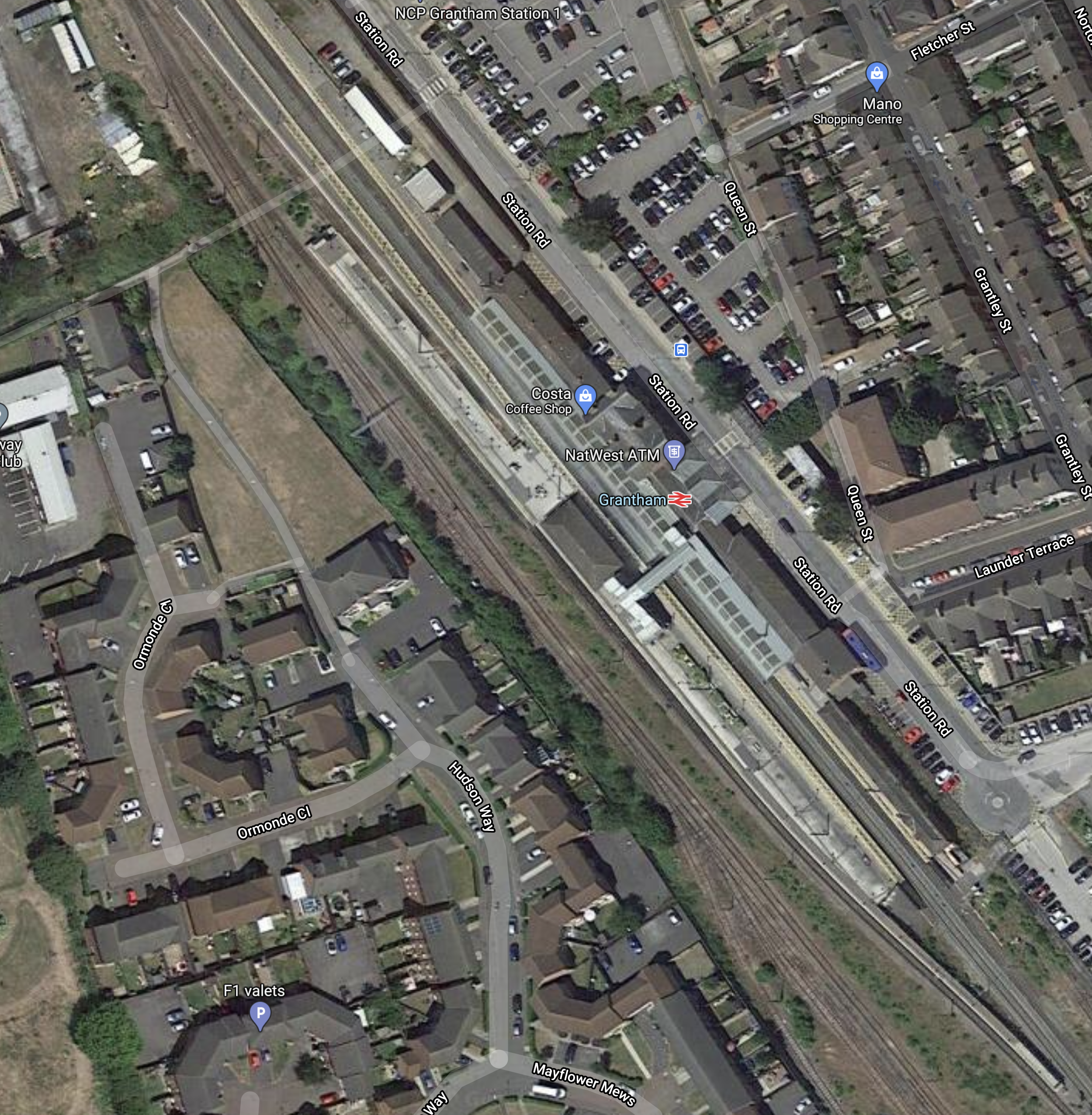
Note.
- Platforms are numbered 1 to 4 from East to West.
- Platforms 1 and 2 are long enough to take two five-car Class 800 trains working as a pair.
- Platform 4 may be long enough for these pairs of trains or could be made so.
- All trains to and from Nottingham call in Platform 4.
- Trains from Nottingham to Peterborough call in Platform 4 before crossing over to the down lines.
- There would appear to be no easy way for a Southbound train on the East Coast Main Line to access Platform 4.
- Platform 3 didn’t get much use on the day I visited.
There is also an avoiding line to allow freight and other passing trains to avoid going through the platforms.
Services Through Grantham Station
Services stopping at Grantham are as follows.
- LNER – One tp2h – London Kings Cross and Harrogate via Stevenage, Grantham, Doncaster, Wakefield Westgate, Leeds
- LNER – One tp2h – London Kings Cross and Bradford Forster Square via Stevenage, Grantham, Doncaster, Wakefield Westgate, Leeds
- LNER – One tp2h – London Kings Cross and Lincoln via Stevenage, Peterborough, Grantham and Newark North Gate
- LNER – One tp2h – London Kings Cross and York via Stevenage, Peterborough, Grantham, Newark North Gate, Retford and Doncaster.
- Hull Trains – Five tpd – London Kings Cross and Hull via Stevenage, Grantham, Retford, Doncaster, Selby, Howden and Brough
- Hull Trains – Two tpd – London Kings Cross and Beverley via Stevenage, Grantham, Retford, Doncaster, Selby, Howden, Brough, Hull and Cottingham.
- East Midlands Railway – One tph – Liverpool Lime Street and Horwich via Peterborough and Nottingham
- East Midlands Railway – One tph – Nottingham and Skegness
Note.
- tph is trains per hour
- tp2h is trains per two hours.
- tpd is trains per day.
Adding the services together, there is a frequent service between Stevenage, Peterborough, Grantham and Newark North Gate.
Train Timings Between London Kings Cross and Grantham
The fastest trains take 67 minutes between London Kings Cross and Grantham.
- The distance is 105.5 miles
- This would be an average speed of 94.5 mph.
- The East Coast Main Line is being upgraded with in-cab digital ERTMS signalling, which will allow 140 mph running.
- The works at Kings Cross station will have increased the station’s capacity.
I wouldn’t be surprised to see a time between London Kings Cross and Grantham, of under an hour, time-tabled in the near future.
Could There Be A London Kings Cross and Nottingham Service Via Grantham?
On this page on UK Rail Forums, this was posted in 2010.
According to today’s East Midlands news on BBC1, Network Rail is considering inviting tenders to run a faster service from Nottingham to London King’s Cross via Grantham, from 2014. The present service of around 1hr 45m is considered too slow by passengers.
How would this new service be reconciled with the much-publicised capacity constraints at Welwyn and at King’s Cross itself? Will the proposed possible service be diesel-powered under the wires from Grantham, or will the Grantham-Nottingham stretch be electrified? Interesting times.
Technology has changed since 2010 and the East Coast Main Line has improved.
- King;s Cross station is being sorted.
- Digital ERMTS signalling is coming to the East Coast Main Line
- Hatachi’s new Class 800 trains have arrived and could go between Grantham and Nottingham on diesel power.
- Grantham and Nottingham takes 35 minutes on a service with three stops, that’s timed for a Class 153 train.
- Grantham and Nottingham is just over twenty miles.
As I said earlier, that I believe Grantham and London could be inside an hour, I wouldn’t be surprised to see a Nottingham and London Kings Cross service in under an-hour-and-a-half.
But it could be better than that?
Hitachi’s Regional Battery Train
This is the train that could unlock the potential of a London Kings Cross and Nottingham service.
This Hitachi infographic gives details of the train.
Note that the train has a range of 90 kilometres or 56 miles, at speeds of up to 100 mph.
The trains would be ideal for a London Kings Cross and Nottingham service.
- They would charge the batteries, whilst using the electrification on the East Coast Main Line.
- The battery range is such, that it would not need any charging between leaving Grantham and returning there from Nottingham.
- They could travel at speeds of up to 140 mph on the East Coast Main Line, once the digital ERTMS signalling is installed.
- Stops could be at Stevenage, Peterborough and Grantham.
LNER’s five-car Class 800 trains, which are branded Azumas can be turned into Regional Battery Trains, by replacing the three diesel engines with battery packs.
I would suspect that times of around eighty minutes, between London Kings Cross and Nottingham, could be in order.
A Park-And-Ride For Nottingham And London
Nottingham has several Park-and-Ride sites, that are served by the trams. of the Nottingham Express Transit, which already calls at Nottingham station.
Would another site on the rail line between Grantham and Nottingham be useful?
This map shows. where the rail line crosses the A46, near its junction with the A52.
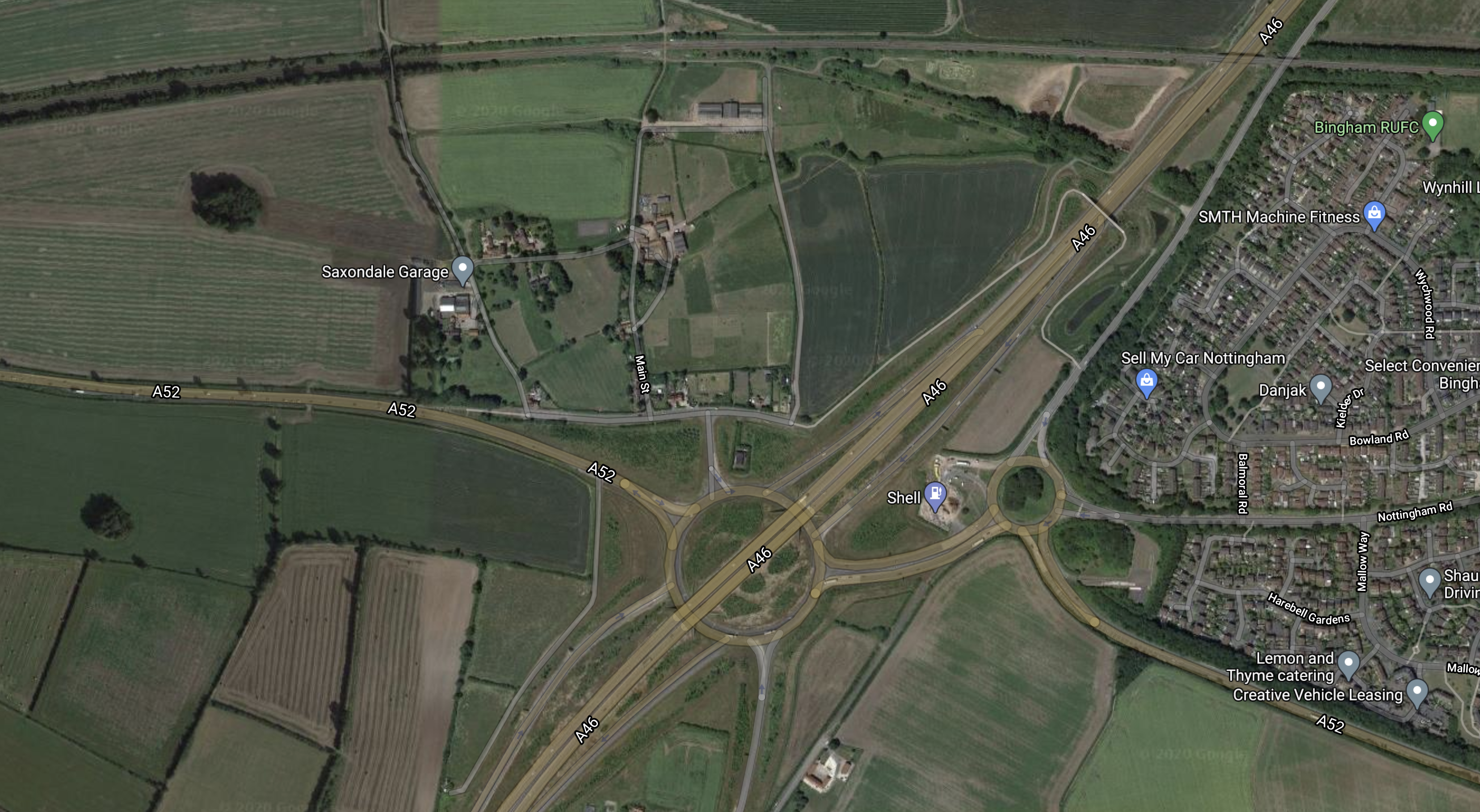
Note the Grantham and Nottingham line running across the top of the map and the big junction between the A52 and the A46.
It looks to be a good place for a Park-and-Ride station, if it was decided one needed to be built.
There might also be sites further in towards Nottingham, close to the racecourse or the Holme Pierpoint National Watersports Centre.
A Combined Nottinghamshire And Lincolnshire Service
I originally called this section a Combined Nottingham And Lincoln Service, but I don’t see why it can’t serve most of both counties.
Consider.
- Birmingham, Brighton, Cambridge, Oxford and Southend get two services from the capital by different routes.
- Hitachi’s Class 800 trains can Split/Join in around two minutes.
- Running five-car Class 800 trains all the way between London Kings Cross and Lincoln is not a good use of a valuable train path on the East Coast Main Line.
- Lincoln is just 16.5 miles and 24 minutes from the East Coast Main Line.
- Nottingham is 22 miles and could be 20 minutes from the East Coast Main Line.
- Both Lincoln and Nottingham would be in battery range for a return trip from the East Coast Main Line.
- Platforms 1, 2 and 4, at Grantham are long enough to handle two Class 800 trains, running as a pair and regularly pairs call in Platforms 1 and 2.
I believe it would be possible for a pair of Regional Battery Trains to do the following.
- Leave London Kings Cross and run to Grantham in an hour, stopping at Stevenage and Peterborough.
- Stop in Platform 4 at Grantham station, where the trains would split.
- One train would continue on the East Coast Main Line to Newark North Gate station, where it would leave the East Coast Main Line and go to Lincoln.
- The other train would continue to Nottingham.
Note.
- Coming back, the process would be reversed with trains joining in Platform 1 or Platform 4 at Grantham.
- There may need to be some track and signalling modifications, but nothing too serious or challenging.
Connections to other parts of Nottinghamshire and Lincolnshire would be as follows.
- Nottingham and Nottinghamshire would be connected using the Nottingham Express Transit and the Robin Hood and Maid Marian Lines from Nottingham station.
- All stations between Grantham and Nottingham would be reached from either Grantham or Nottingham.
- All stations to Boston and Skegness would be reached from Grantham.
- All stations between Newark and Lincoln would be reached from either Lincoln or Newark.
- All stations between Doncaster and Lincoln would be reached from either Doncaster or Lincoln.
- All stations between Peterborough and Lincoln would be reached from either Lincoln or Peterborough.
- All stations to Market Rasen, Grimsby Town and Cleethorpes would be reached from Lincoln.
Note.
- I feel that some Lincoln services could be extended to Cleethorpes via Market Rasen and Grimsby Town.
- Hopefully, a timetable could be developed, so that no connection was overly long.
Most of the distances are not unduly long and I would hope that most secondary services could be battery electric trains, which would be charged in the larger stations like Boston, Cleethorpes, Doncaster, Grantham, Lincoln, Mansfield, Nottingham, Peterborough, Sleaford, Spalding and Worksop.
Doncaster, Grantham and Peterborough already have 25 KVAC overhead electrification and this could be used to charge the trains, with possibly some small extensions.
The other stations will need a number of systems to charge the trains, as they pass through.
Some stations will be suitable for the installation of the standard 25 KVAC overhead electrification, but others will need specialised charging systems.
It appears that Adrian Shooter of Vivarail has just announced a One-Size-Fits-All Fast Charge system, that has been given interim approval by Network Rail.
I discuss this charger in Vivarail’s Plans For Zero-Emission Trains, which is based on a video on the Modern Railways web site.
There is more about Vivarail’s plans in the November 2020 Print Edition of the magazine, where this is said on page 69.
‘Network Rail has granted interim approval for the fast charge system and wants it to be the UK’s standard battery charging system’ says Mr. Shooter. ‘We believe it could have worldwide implications.’
Vivarail’s Fast Charge system must surely be a front-runner for installation.
What frequency of the Combined Nottinghamshire And Lincolnshire service would be needed and could be run?
Consider.
- Currently, Lincoln is served with one tp2h with a five-car Class 800 train running the service.
- The Lincoln service alternates with a one tp2h service to York, which also calls at Retford and Doncaster.
- Work is progressing on increasing the number of high speed paths on the East Coast Main Line.
Obviously, an hourly service to both Nottingham and Lincoln would be ideal and would give most of the two counties an hourly service to and from London Kings Cross with a single change at either Doncaster, Grantham. Lincoln, Newark, Nottingham or Peterborough.
- An hourly service might be difficult to timetable because of the York service.
- But I don’t believe it would be impossible to setup.
Especially if after, the Eastern leg of High Speed Two opens, East Coast Main Line services from London Kings Cross to North of York are replaced in part, by High Speed Two services.
The Effect Of High Speed Two
High Speed Two will build a new station at Toton called East Midlands Hub station.
- The station will be situated about halfway between Nottingham and Derby, with frequent connections to both cities.
- There will be frequent services to Birmingham, Leeds, London, Newcastle and Sheffield.
- I wouldn’t be surprised to see a direct service to Edinburgh and Glasgow from the station.
- There will be a lot of economic growth around the station.
I very much feel, that a lot of passengers were travel to East Midlands Hub station for both long distance trains and to access the Derby-Nottingham area.
A Cambridge And Birmingham Service
In How Many Trains Are Needed To Run A Full Service On High Speed Two?, I proposed a Cambridge and Birmingham Curzon Street service.
This is what I said.
The obvious one is surely Cambridge and Birmingham
- It would run via Peterborough, Grantham, Nottingham and East Midlands Hub.
- It would connect the three big science, engineering and medical centres in the Midlands and the East.
- It would use High Speed Two between Birmingham Curzon Street and East Midlands Hub.
- It could be run by High Speed Two Classic-Compatible trains.
It might even be a replacement for CrossCountry’s Stansted Airport and Birmingham service.
Timings for the various legs could be.
- Cambridge and Peterborough – CrossCountry – 49 minutes
- Peterborough and Grantham – LNER – 19 minutes
- Grantham and Nottingham -Best Estimate – 20 minutes
- Nottingham and Birmingham Curzon Street – Midlands Rail Engine – 33 minutes
Note.
- This totals to two hours and one minute.
- The current service takes two hours and forty-four minutes.
- The Ely and Peterborough and Grantham and Nottingham legs are not electrified.
If the route were to be fully electrified or the trains were to be fitted with batteries, the time via High Speed Two, would surely be several minutes under two hours.
Conclusion
These objectives are possible.
- An hourly service between London Kings Cross and Grantham, Lincoln, Newark and Nottingham.
- A very much more comprehensive train service for Nottingham and Lincolnshire.
- A two hour service between Cambridge and Birmingham.
Most of the services would be zero carbon.
No major infrastructure would be needed, except possibly completing the electrification between Nottingham and Ely, some of which is probably needed for freight trains anyway.
Alternatively, the High Speed Two Classic-Compatible trains could be fitted with batteries.
 The Anonymous Widower