Could Avanti West Coast Run A Lumo-Style Service Between London And Liverpool?
Avanti West Cost’s Class 807 Trains
Avanti West Coast will be introducing their new Class 807 trains by 2023.
One of the routes, on which they will run, will be between London Euston and Liverpool Lime Street stations.
These trains are members of Hitachi’s AT300 family, with these characteristics.
- Seven cars.
- 453 seats
- 125 mph operating speed, with 140 mph possible under in-cab signalling, where the track allows.
They have been designed to be able to achieve or better times from the Class 390 trains, which have the advantage of tilt.
The Seats In The New Trains
Seats are important to passengers and there has been criticism, that some of the seats in Hitachi trains are like ironing boards.
But, so far nothing has been said about the seats on the new Class 807 trains.
453 seats in seven cars of a Class 807 train is 64.7 seats per car.
These are comparison figures for other trains.
- On a nine-car Class 801 train, there are 611 seats or 67.8 seats per car.
- On a five-car Class 801 train, there are 302 seats or 60.4 seats per car.
- On a five-car Class 810 train, there are 301 seats or 60.2 seats per car.
- On a five-car Class 803 train, there are 406 seats or 81.2 seats per car.
- On a nine-car Class 390 train, there are 469 seats or 52.1 seats per car.
- On an eleven-car Class 390 train, there are 589 seats or 53.5 seats per car.
Note.
- The Class 390 trains or Pendolinos have less seats per car, than the Hitachi trains. Is this because of all the space taken up by the tilting mechanism?
- As the seats per car for a Class 807 is between the five- and nine-car Class 801 trains, it would appear that the seat density is not much different to the trains on LNER and Great Western Railway.
- Lumo’s Class 803 trains on their low-cost service would appear to have a higher seating density. But Lumo says that they have redesigned the seats for more comfort.
- In The Seat Of Aurora, I looked at a report from Modern Railways on the seats in the Class 810 trains, which the writer found were much more comfortable.
It would appear that the two latest fleets of Hitachi trains have seats that are designed for more comfort.
Consider.
- First Group own seventy percent of Avanti West Coast.
- First Group own hundred percent of two train operating companies; Great Western and TransPennine Express, who run versions of Hitachi AT300 trains, so they probably have a lot of bottom-level feedback.
- In the current Class 390 train upgrade, Avanti West Coast are replacing all the Standard Class seats, the company must care about seat quality.
- First Group own hundred percent of Lumo, who have acquired new trains with comfortable seats.
I would be very surprised if the seats in the new Class 807 trains for Avanti West Coast were not custom-designed for their routes.
The Unusual Length Of The Class 807 Train
These are the length of the Class 390 and Class 807 trains.
- Class 390/0 – nine-car – 217.5 metres
- Class 390/1 – eleven-car – 265.3 metres
- Class 807 – seven-car – 182 metres
Note.
- A ten-car Class 807 train would be 260 metres.This could be convenient, if more eleven-car Pendolinos were needed.
- The Class 807 train is thirty-five metres shorter, than the nine-car Pendolino.
As eleven-car Class 390 trains commonly run London Euston and Liverpool Lime Street, why would they need the Class 807 train to be shorter?
I think there is a clue in this picture.

It shows a Class 390 train in Liverpool South Parkway station.
- At the time, Liverpool Lime Street station was closed for track remodelling.
- Liverpool South Parkway was acting as Liverpool’s main terminus.
- To accommodate the Pendolinos a temporary platform extension was built in the station.
Could it be that shorter trains were ordered to avoid the expense of lengthening the platforms at Liverpool South Parkway and perhaps other stations, that Avanti West Coast might serve?
The Current Service Between London Euston And Liverpool
The current London Euston and Liverpool Lime Street service is as follows.
- There is one train per hour (tph)
- The service calls at Milton Keynes Central, Stafford, Crewe and Runcorn.
- All of the stations can accommodate an eleven-car Pendolino.
- Trains take around an average of two hours and twelve minutes.
- The first Northbound train leaves at 07:07 and the last at 21:07.
- The first Southbound train leaves at 07:00 and the last at 20:48.
Services are generally run by eleven-car Class 390 trains, which gives a capacity of 589 passengers per hour.
I always think, there a need for a later train back to London, but then that could be said of many places.
A Possible Service From December 2022
Wikipedia says this.
- There will be two tph.
- The second service will call at Liverpool South Parkway station.
If two tph were to be run by Class 807 trains, this would give the following.
- A capacity of 906 seats per hour.
- This is a 54 % increase in capacity.
But if only the Liverpool South Parkway service was run by a Class 807 train and the other service was still run by an eleven-car Class 390 train, this would give the following.
- A capacity of 1042 seats per hour.
- This is a 77 % increase in capacity.
And all without expensive and disruptive platform extensions at Liverpool South Parkway station.
According to Wikipedia, the plans will need to be approved by the Office of Road and Rail.
How Fast Will A Class 807 Train Travel Between London Euston And Liverpool?
The Class 807 trains will have these features.
- The trains will have no diesel engines or batteries. This must save weight and that means better acceleration.
- The trains will have no tilt mechanism.. This must save weight and that means better acceleration.
- The trains will have a new nose. Is it more aerodynamic, which would cause less drag and increase operating speed?
Would these features mean the Class 807 trains can match the performance of the Class 390 train, despite not having tilt?
There are also improvements on the West Coast Main Line, that have not been fully reflected in the timetable.
I did a full analysis about how a two-hour journey time might be achieved in Will Avanti West Coast’s New Trains Be Able To Achieve London Euston and Liverpool Lime Street In Two Hours? This analysis led me to these conclusions.
- I am convinced that the new trains are designed for a two hour journey between London Euston and Liverpool Lime Street stations.
- Refurbished Class 390 trains should also be able to do the same time.
- I also calculated that nine trains would be needed for the two tph service, if they can arrange a fifteen minute turnround at both ends of the route. So would, the Class 807 trains be used on the Liverpool service to release newly-refurbished Class 390 trains to boost Blackpool and Birmingham services?
Alternatively, if the two services are run using eleven-car Class 390 trains for the current service and seven-car Class 807 trains for the one via Liverpool South Parkway, Avanti West Coast would need five of each train.
- They could fit in thirty minute turnrounds at both ends of the route.
- The mixed pair of trains would give a 77 % increase in capacity.
- The Class 807 service would be a two-hour trip.
- If the Class 390 service couldn’t match the time it could use current timings.
Whatever is done, it would be a flagship service between London and Liverpool.
The new trains will pay for themselves many times over, if this is the case, as a two-hour journey will surely attract passengers.
Organising The Service
If you really wanted to make the service simple and passenger-friendly, you would have dedicated platforms for the trains at both ends of the route.
- In Liverpool Lime Street station trains seem to have used one platform for many years. Currently, they seem to be using Platform 9.
- Surely, a similar arrangement could be setup at London Euston.
The service could also be setup with contactless ticketing, if that was felt the way things should be done.
Going The Whole Way
Suppose, that the London Euston and Liverpool Lime Street service is very successful for any number of reasons.
- The two hour journey time.
- The all-electric service.
- The doubling of the frequency.
- The availability of more seats.
- The expansion of Merseyrail into England’s first battery-electric Metro, which I wrote about in Chancellor To Fund £710m Merseyrail Expansion.
- The cost of driving, due to a mileage charge on all journeys.
Will this lead to a need to expand the service?
If it does, the obvious way would be to lengthen Liverpool South Parkway station and run longer trains.
An Eleven-car Class 390 train would carry 589 passengers.
Adding three-cars to a seven-car and the train would still be shorter than an eleven-car Class 390 train, but it would carry around 650 passengers.
This would add an extra ten percent capacity to the route.
This would surely provide the capacity until High Speed Two arrives towards the end of the decade.
I do wonder if Avanti West Coast are using the London Euston and Liverpool Lime Street service to experiment with how they might run High Speed Two services.
Conclusion
As a two tph service run by Class 807 trains in two hours would be over 4,500,000 seats in each direction, I feel that this will be a very popular and intensive service.
I feel that Avanti West Coast will need to apply lessons learned on sister company’s Lumo’s service between London Kings Cross and Edinburgh.
No Trains Out Of Cornwall Until The Weekend After Lorry Hits Plymouth Bridge
The title of this post, is the same as that of this article on The Times.
A few points from the article.
- It was a Tesco truck.
- It took twenty-four hours to extract.
- The accident happened on Ashford Hill in Plymouth.
I found the bridge on Google Maps.
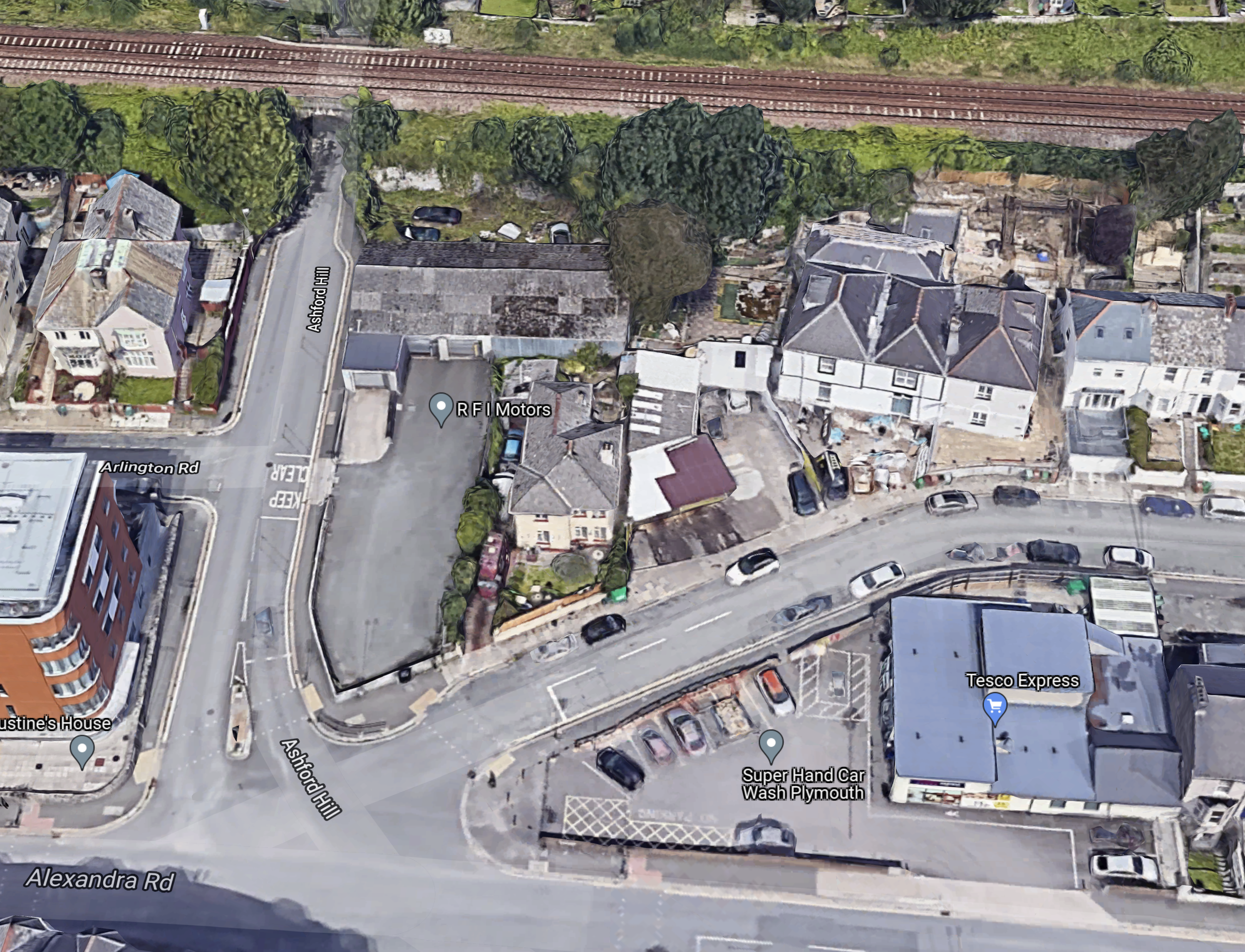
Note.
- The railway and the bridge are at the top of the map.
- My eyesight isn’t good, but I can see the warning signs on the bridge.
- There is a TescoExpress in the bottom right corner of the map.
It can’t be a lot more than a hundred metres between the bridge and the TescoExpress.
To make matters worse for the train operators, the accident site is to the East of Plymouth station, which means trains can’t run to Plymouth.
Will GWR Use Okehampton?
Network Rail have already re-laid the track to Okehampton, prior to opening an hourly service between Exeter and Okehampton later this year.
Okehampton station is close to the A30 and I suspect that GWR would have little difficulty running a five-car Hitachi train to Okehampton from London with a reverse at Exeter. At Okehampton, they could use coaches to serve Cornwall by running to Bodmin Parkway.
If I was the CEO of GWR, I’d see if it could be arranged, as what good publicity they’d get for the new Okehampton service.
Solving The Electrification Conundrum
The title of this post, is the same as an article in the July 2021 Edition of Modern Railways.
This is the introductory sub-heading.
Regional and rural railways poses a huge problem for the railway to decarbonise.
Lorna McDonald of Hitachi Rail and Jay Mehta of Hitachi ABB Power Grids tell Andy Roden why they believe they have the answer.
These are my thoughts on what is said.
Battery-Electric Trains
The article starts by giving a review of battery-electric trains and their use on routes of moderate but important length.
- Some short routes can be handled with just a charge on an electrified main line.
- Some will need a recharge at the termini.
- Other routes might need a recharge at some intermediate stations, with a possible increase in dwell times.
It was in February 2015, that I wrote Is The Battery Electric Multiple Unit (BEMU) A Big Innovation In Train Design?, after a ride in public service on Bombardier’s test battery-electric train based on a Class 379 train.

I also wrote this in the related post.
Returning from Harwich, I travelled with the train’s on-board test engineer, who was monitoring the train performance in battery mode on a laptop. He told me that acceleration in this mode was the same as a standard train, that the range was up to sixty miles and that only minimal instruction was needed to convert a driver familiar to the Class 379 to this battery variant.
It was an impressive demonstration, of how a full-size train could be run in normal service without connection to a power supply. I also suspect that the partners in the project must be very confident about the train and its technology to allow paying passengers to travel on their only test train.
A couple of years later, I met a lady on another train, who’d used the test train virtually every day during the trial and she and her fellow travellers felt that it was as good if not better than the normal service from a Class 360 train or a Class 321 train.
So why if the engineering, customer acceptance and reliability were proven six years ago, do we not have several battery electric trains in service?
- There is a proven need for battery-electric trains on the Marshlink Line and the Uckfield Branch in Sussex.
- The current Class 171 trains are needed elsewhere, so why are no plans in place for replacement trains?
- The government is pushing electric cars and buses, but why is there such little political support for battery-electric trains?
It’s almost as if, an important civil servant in the decision process has the naive belief that battery-electric trains won’t work and if they do, they will be phenomenally expensive. So the answer is an inevitable no!
Only in the South Wales Metro, are battery-electric trains considered to be part of the solution to create a more efficient and affordable electric railway.
But as I have constantly pointed out since February 2015 in this blog, battery-electric trains should be one of the innovations we use to build a better railway.
Hydrogen Powered Trains
The article says this about hydrogen powered trains.
Hybrid hydrogen fuel cells can potentially solve the range problem, but at the cost of the fuel eating up internal capacity that would ideally be used for passengers. (and as Industry and Technology Editor Roger Ford points out, at present hydrogen is a rather dirty fuel). By contrast, there is no loss of seating or capacity in a Hitachi battery train.
I suspect the article is referring to the Alstom train, which is based on the technology of the Alstom Coradia iLint.

I have ridden this train.
- It works reliably.
- It runs on a 100 km route.
- The route is partially electrified, but the train doesn’t have a pantograph.
- It has a very noisy mechanical transmission.
Having spoken to passengers at length, no-one seemed bothered by the Hindenburg possibilities.
It is certainly doing some things right, as nearly fifty trains have been ordered for train operating companies in Germany.
Alstom’s train for the UK is the Class 600 train, which will be converted from a four-car Class 321 train.
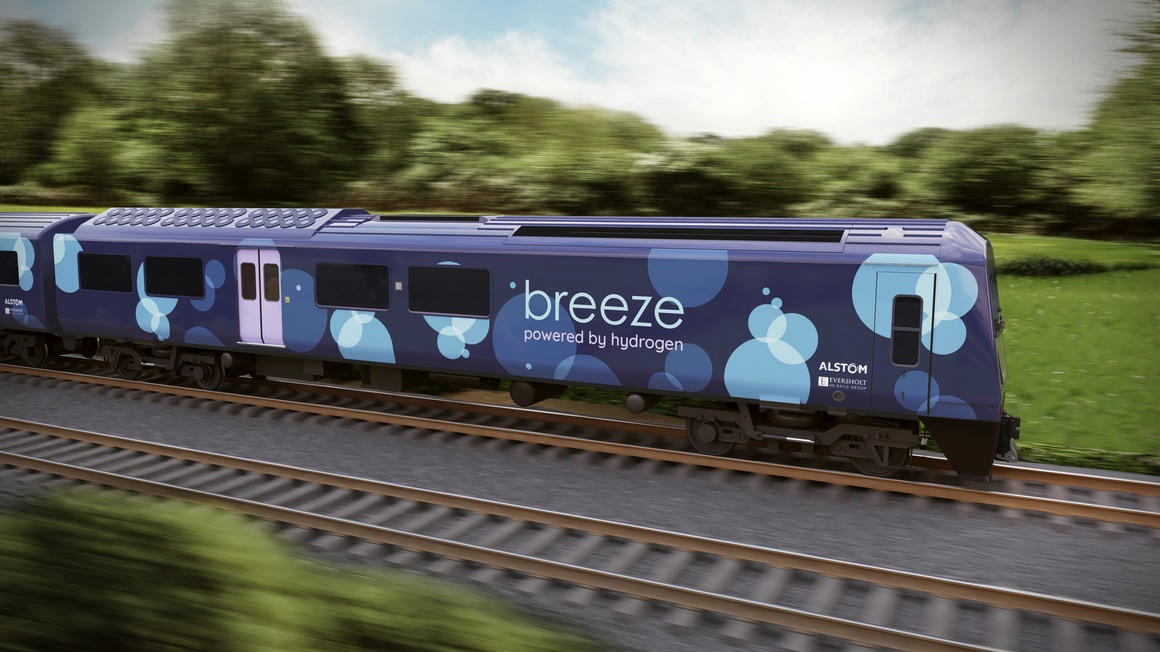
Note.
- Half of both driver cars is taken up by a hydrogen tank.
- Trains will be three-cars.
- Trains will be able to carry as many passengers as a two-car Class 156 train.
It is an inefficient design that can be improved upon.
Porterbrook and Birmingham University appear to have done that with their Class 799 train.
- It can use 25 KVAC overhead or 750 VDC third-rail electrification.
- The hydrogen tanks, fuel cell and other hydrogen gubbins are under the floor.
This picture from Network Rail shows how the train will appear at COP26 in Glasgow in November.
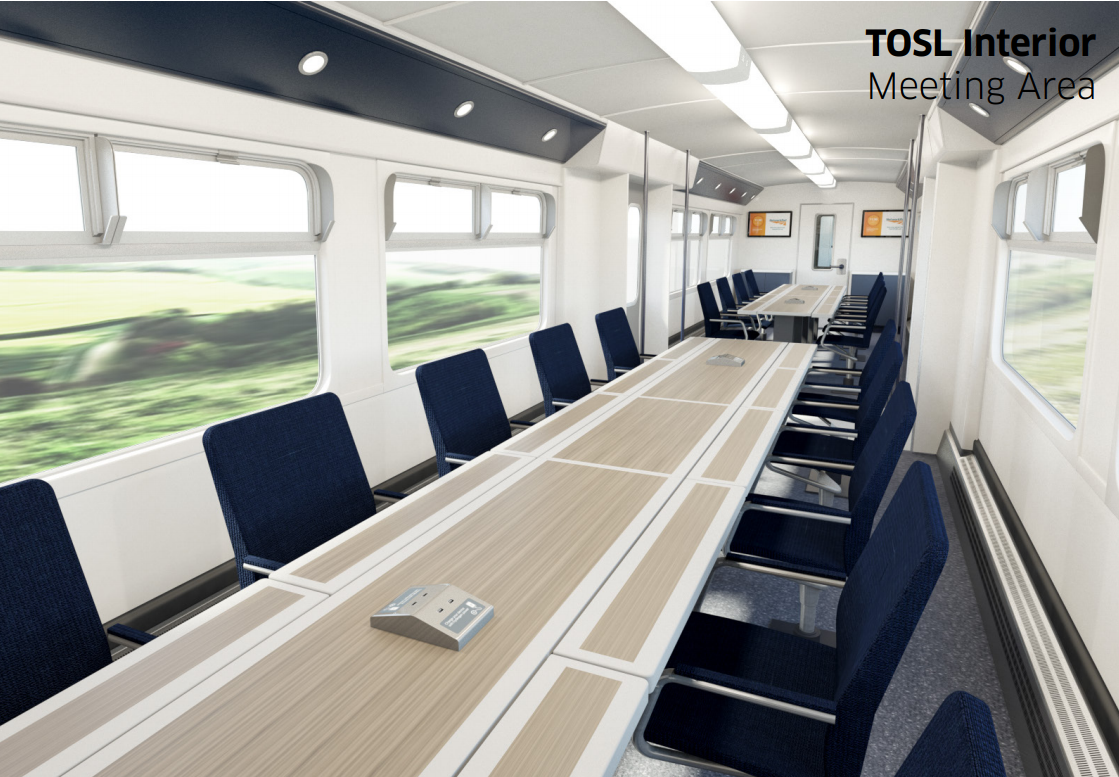
Now that’s what I call a train! Let alone a hydrogen train!
Without doubt, Porterbrook and their academic friends in Birmingham will be laying down a strong marker for hydrogen at COP26!
I know my hydrogen, as my first job on leaving Liverpool University with my Control Engineering degree in 1968 was for ICI at Runcorn, where I worked in a plant that electrolysed brine into hydrogen, sodium hydroxide and chlorine.
My life went full circle last week, when I rode this hydrogen powered bus in London.
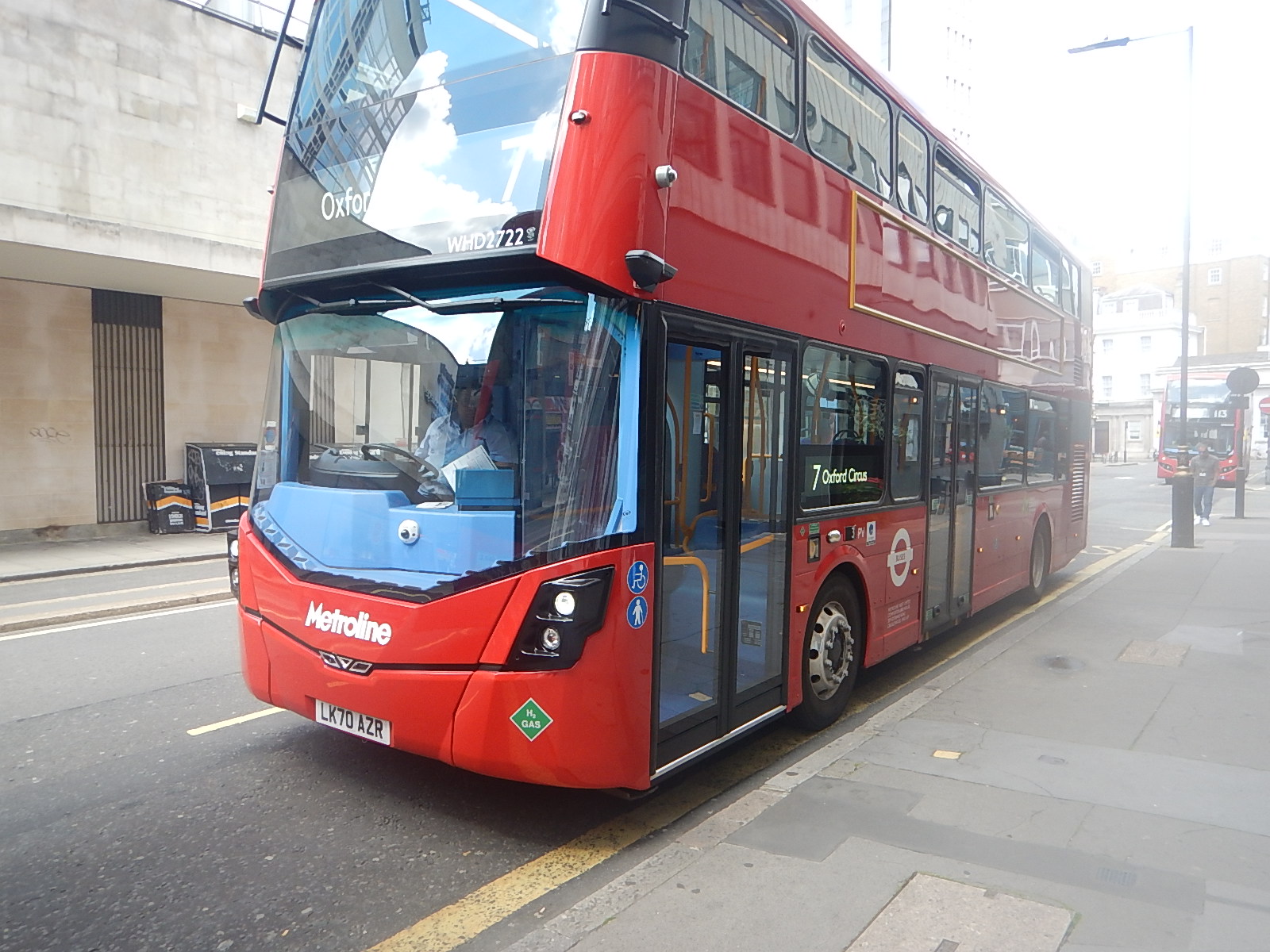
The hydrogen is currently supplied from the same chemical works in Runcorn, where I worked. But plans have been made at Runcorn, to produce the hydrogen from renewable energy, which would make the hydrogen as green hydrogen of the highest standard. So sorry Roger, but totally carbon-free hydrogen is available.
The bus is a Wightbus Hydroliner FCEV and this page on the Wrightbus web site gives the specification. The specification also gives a series of cutaway drawings, which show how they fit 86 passengers, all the hydrogen gubbins and a driver into a standard size double-deck bus.
I believe that Alstom’s current proposal is not a viable design, but I wouldn’t say that about the Porterbrook/Birmingham University design.
Any Alternative To Full Electrification Must Meet Operator And Customer Expectations
This is a paragraph from the article.
It’s essential that an alternative traction solution offers the same levels of performance and frequency, while providing an increase in capacity and being economically viable.
In performance, I would include reliability. As the on-board engineer indicated on the Bombardier test train on the Harwich branch, overhead electrification is not totally reliable, when there are winds and/or criminals about.
Easy Wins
Hitachi’s five-car Class 800 trains and Class 802 trains each have three diesel engines and run the following short routes.
- Kings Cross and Middlesbrough- 21 miles not electrified – Changeover in Northallerton station
- Kings Cross and Lincoln – 16.6 miles not electrified – Changeover in Newark Northgate station
- Paddington and Bedwyn – 13.3 miles not electrified – Changeover in Newbury station
- Paddington and Oxford – 10.3 miles not electrified – Changeover in Didcot Parkway station
Some of these routes could surely be run with a train, where one diesel engine was replaced by a battery-pack.
As I’m someone, who was designing, building and testing plug-compatible transistorised electronics in the 1960s to replace older valve-based equipment in a heavy engineering factory, I suspect that creating a plug-compatible battery-pack that does what a diesel engine does in terms of power and performance is not impossible.
What would be the reaction to passengers, once they had been told, they had run all the way to or from London without using any diesel?
Hopefully, they’d come again and tell their friends, which is what a train operator wants and needs.
Solving The Electrification Conundrum
This section is from the article.
Where electrification isn’t likely to be a viable proposition, this presents a real conundrum to train operators and rolling stock leasing companies.
This is why Hitachi Rail and Hitachi ABB Power Grids are joining together to present a combined battery train and charging solution to solve this conundrum. In 2020, Hitachi and ABB’s Power Grids business, came together in a joint venture, and an early outcome of this is confidence that bringing together their expertise in rail, power and grid management, they can work together to make electrification simpler cheaper and quicker.
I agree strongly with the second paragraph, as several times, I’ve been the mathematician and simulation expert in a large multi-disciplinary engineering project, that went on to be very successful.
The Heart Of The Proposition
This is a paragraph from the article.
The proposition is conceptually simple. Rather than have extended dwell times at stations for battery-powered trains, why not have a short stretch of 25 KVAC overhead catenary (the exact length will depend on the types of train and the route) which can charge trains at linespeed on the move via a conventional pantograph?
The article also mentions ABB’s related expertise.
- Charging buses all over Europe.
- Creating the power grid for the Great Western Electrification to Cardiff.
I like the concept, but then it’s very similar to what I wrote in The Concept Of Electrification Islands in April 2020.
But as they are electrical power engineers and I’m not, they’d know how to create the system.
Collaboration With Hyperdrive Innovation
The article has nothing negative to say about the the collaboration with Hyperdrive Innovation to produce the battery-packs.
Route Modelling
Hitachi appear to have developed a sophisticated route modelling system, so that routes and charging positions can be planned.
I would be very surprised if they hadn’t developed such a system.
Modular And Scalable
This is a paragraph from the article.
In the heart of the system is a containerised modular solution containing everything needed to power a stretch of overhead catenary to charge trains. A three-car battery train might need one of these, but the great advantage is that it is scalable to capacity and speed requirements.
This all sounds very sensible and can surely cope with a variety of lines and traffic levels.
It also has the great advantage , that if a line is eventually electrified, the equipment can be moved on to another line.
Financing Trains And Chargers
The article talks about the flexibility of the system from an operator’s point of view with respect to finance.
I’ve had some good mentors in the area of finance and I know innovative finance contributed to the success of Metier Management Systems, the project management company I started with three others in 1977.
After selling Metier, I formed an innovative finance company, which would certainly have liked the proposition put forward in the article.
No Compromise, Little Risk
I would agree with this heading of the penultimate section of the article.
In February 2015, when I rode that Class 379 train between Manningtree and Harwich, no compromise had been made by Bombardier and it charged in the electrified bay platform at Manningtree.
But why was that train not put through an extensive route-proving exercise in the UK after the successful trial at Manningtree?
- Was it the financial state of Bombardier?
- Was it a lack of belief on the part of politicians, who were too preoccupied with Brexit?
- Was it that an unnamed civil servant didn’t like the concept and stopped the project?
Whatever the reason, we have wasted several years in getting electric trains accepted on UK railways.
If no compromise needs to be made to create a battery-electric train, that is equivalent to the best-in-class diesel or electric multiple units, then what about the risk?
The beauty of Hitachi’s battery-electric train project is that it can be done in phases designed to minimise risk.
Phase 1 – Initial Battery Testing
Obviously, there will be a lot of bench testing in a laboratory.
But I also believe that if the Class 803 trains are fitted with a similar battery from Hyperdrive Innovation, then this small fleet of five trains can be used to test a lot of the functionality of the batteries initially in a test environment and later in a real service environment.
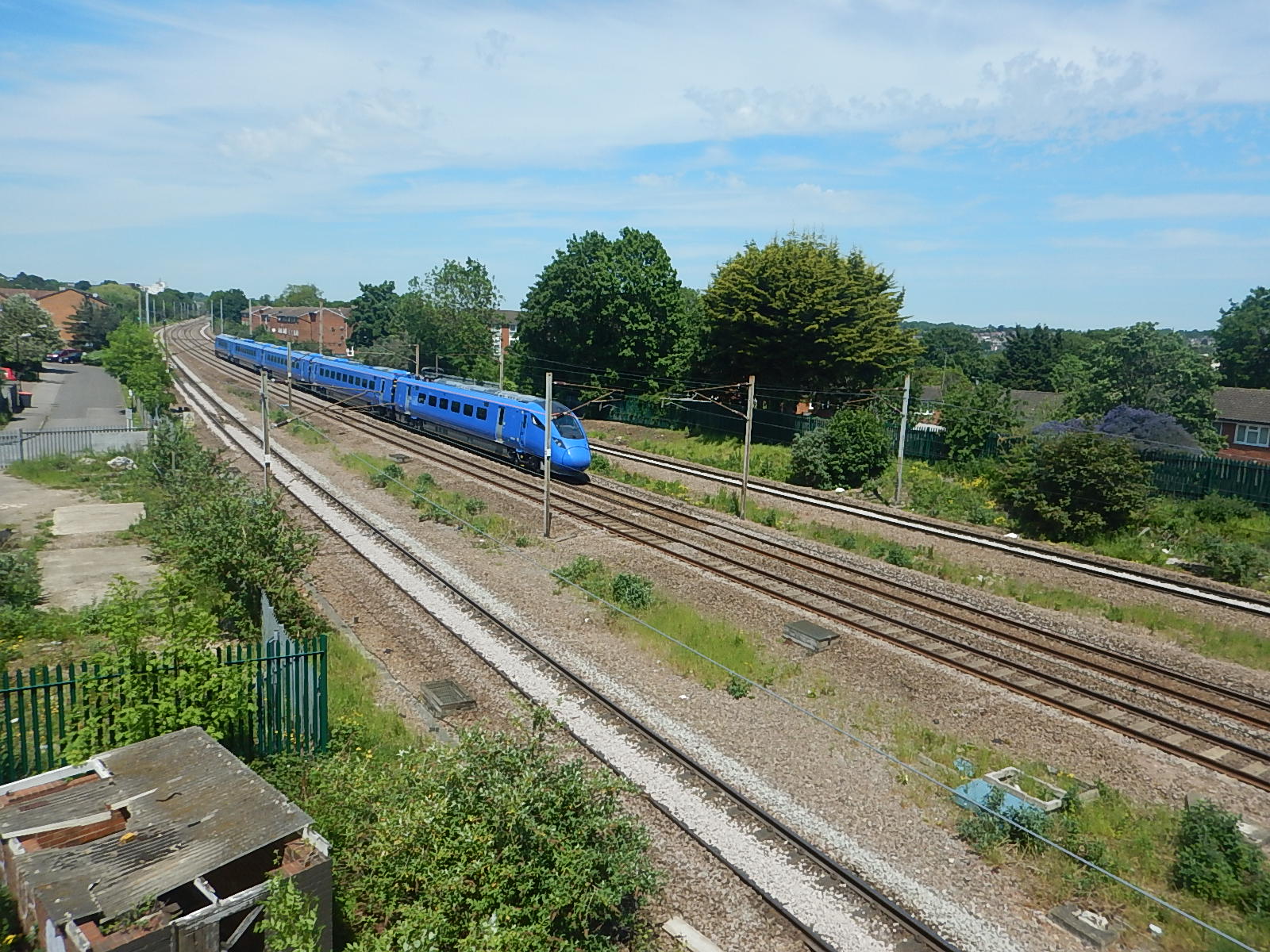
The picture shows a Class 803 train under test through Oakleigh Park station.
This phase would be very low risk, especially where passengers are concerned.
Phase 2 – Battery Traction Testing And Route Proving
I am a devious bastard, when it comes to software development. The next set of features would always be available for me to test earlier, than anybody else knew.
I doubt that the engineers at Hyperdrive Innovation will be any different.
So I wouldn’t be surprised to find out that the batteries in the Class 803 trains can also be used for traction, if you have the right authority.
We might even see Class 803 trains turning up in some unusual places to test the traction abilities of the batteries.
As East Coast Trains, Great Western Railway and Hull Trains are all First Group companies, I can’t see any problems.
I’m also sure that Hitachi could convert some Class 800 or Class 802 trains and add these to the test fleet, if East Coast Trains need their Class 803 trains to start service.
This phase would be very low risk, especially where passengers are concerned.
Possibly, the worse thing, that could happen would be a battery failure, which would need the train to be rescued.
Phase 3 – Service Testing On Short Routes
As I indicated earlier, there are some easy routes between London and places like Bedwyn, Lincoln, Middlesbrough and Oxford, that should be possible with a Class 800 or Class 802 train fitted with the appropriate number of batteries.
Once the trains have shown, the required level of performance and reliability, I can see converted Class 800, 801 and Class 802 trains entering services on these and other routes.
Another low risk phase, although passengers are involved, but they are probably subject to the same risks, as on an unmodified train.
Various combinations of diesel generators and batteries could be used to find out, what is the optimum combination for the typical diagrams that train operators use.
Hitachi didn’t commit to any dates, but I can see battery-electric trains running on the Great Western Railway earlier than anybody thinks.
Phase 4 – Service Testing On Medium Routes With A Terminal Charger System
It is my view that the ideal test route for battery-electric trains with a terminal charger system would be the Hull Trains service between London Kings Cross and Hull and Beverley.
The route is effectively in three sections.
- London Kings Cross and Temple Hirst junction – 169.2 miles – Full Electrification
- Temple Hirst junction and Hull station – 36.1 miles – No Electrification
- Hull station and Beverley station – 8.3 miles – No Electrification
Two things would be needed to run zero-carbon electric trains on this route.
- Sufficient battery capacity in Hull Trains’s Class 802 trains to reliably handle the 36.1 miles between Temple Hirst junction and Hull station.
- A charging system in Hull station.
As Hull station also handles other Class 800 and Class 802 trains, there will probably be a need to put a charging system in more than one platform.
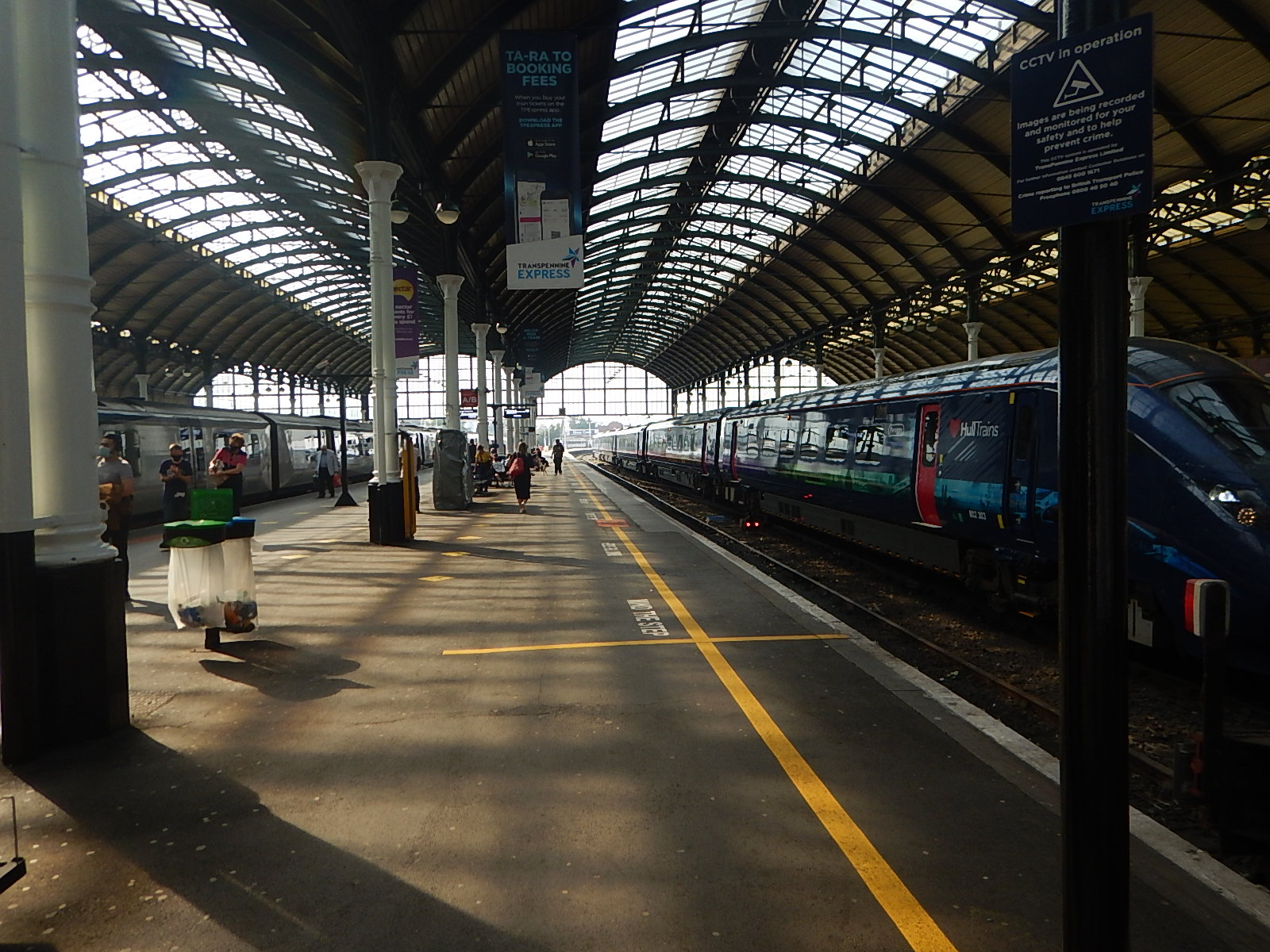
Note.
- Hull station has plenty of space.
- No other infrastructure work would be needed.
- There is a large bus interchange next door, so I suspect the power supply to Hull station is good.
Hull would be a very good first destination for a battery-electric InterCity train.
Others would include Bristol, Cheltenham, Chester, Scarborough, Sunderland and Swansea.
The risk would be very low, if the trains still had some diesel generator capacity.
Phase 5 – Service Testing On Long Routes With Multiple Charger Systems
Once the performance and reliability of the charger systems have been proven in single installations like perhaps Hull and Swansea stations, longer routes can be prepared for electric trains.
This press release from Hitachi is entitled Hitachi And Eversholt Rail To Develop GWR Intercity Battery Hybrid Train – Offering Fuel Savings Of More Than 20%.
The press release talks about Penzance and London, so would that be a suitable route for discontinuous electrification using multiple chargers?
These are the distances between major points on the route between Penzance and London Paddington.
- Penzance and Truro – 35.8 miles
- Truro and Bodmin Parkway – 26.8 miles
- Bodmin Parkway and Plymouth – 26.9 miles
- Plymouth and Newton Abbot – 31,9 miles
- Newton Abbot and Exeter – 20.2 miles
- Exeter and Taunton – 30.8 miles
- Taunton and Westbury – 47.2 miles
- Westbury and Newbury – 42.5 miles
- Newbury and Paddington – 53 miles
Note.
- Only Newbury and Paddington is electrified.
- Trains generally stop at Plymouth, Newton Abbott, Exeter and Taunton.
- Services between Paddington and Exeter, Okehampton, Paignton, Penzance, Plymouth and Torquay wouldn’t use diesel.
- Okehampton would be served by a reverse at Exeter.
- As Paignton is just 8.1 miles from Newton Abbot, it probably wouldn’t need a charger.
- Bodmin is another possible destination, as Great Western Railway have helped to finance a new platform at Bodmin General station.
It would certainly be good marketing to run zero-carbon electric trains to Devon and Cornwall.
I would class this route as medium risk, but with a high reward for the operator.
In this brief analysis, it does look that Hitachi’s proposed system is of a lower risk.
A Few Questions
I do have a few questions.
Are The Class 803 Trains Fitted With Hyperdrive Innovation Batteries?
East Coast Trains‘s new Class 803 trains are undergoing testing between London Kings Cross and Edinburgh and they can be picked up on Real Time Trains.
Wikipedia says this about the traction system for the trains.
While sharing a bodyshell with the previous UK A-train variants, the Class 803 differs in that it has no diesel engines fitted. They will however be fitted with batteries to enable the train’s on-board services to be maintained, in case the primary electrical supplies have failed.
Will these emergency batteries be made by Hyperdrive Innovation?
My experience of similar systems in other industries, points me to the conclusion, that all Class 80x trains can be fitted with similar, if not identical batteries.
This would give the big advantage of allowing battery testing to be performed on Class 803 trains under test, up and down the East Coast Main Line.
Nothing finds faults in the design and manufacture of something used in transport, than to run it up and down in real conditions.
Failure of the catenary can be simulated to check out emergency modes.
Can A Class 801 Train Be Converted Into A Class 803 Train?
If I’d designed the trains, this conversion would be possible.
Currently, the electric Class 801 trains have a single diesel generator. This is said in the Wikipedia entry for the Class 800 train about the Class 801 train.
These provide emergency power for limited traction and auxiliaries if the power supply from the overhead line fails.
So it looks like the difference between the powertrain of a Class 801 train and a Class 803 train, is that the Class 801 train has a diesel generator and the Class 803 train has batteries. But the diesel generator and batteries, would appear to serve the same purpose.
Surely removing diesel from a Class 801 train would ease the maintenance of the train!
Will The System Work With Third-Rail Electrification?
There are three routes that if they were electrified would probably be electrified with 750 DC third-rail electrification, as they have this electrification at one or both ends.
- Basingstoke and Exeter
- Marshlink Line
- Uckfield branch
Note.
- Basingstoke and Exeter would need a couple of charging systems.
- The Marshlink line would need a charging system at Rye station.
- The Uckfield branch would need a charging system at Uckfield station.
I am fairly certain as an Electrical Engineer, that the third-rails would only need to be switched on, when a train is connected and needs a charge.
I also feel that on some scenic and other routes, 750 VDC third-rail electrification may be more acceptable , than 25 KVAC overhead electrification. For example, would the heritage lobby accept overhead wires through a World Heritage Site or on top of a Grade I Listed viaduct?
I do feel that the ability to use third-rail 750 VDC third-rail electrification strategically could be a useful tool in the system.
Will The System Work With Lightweight Catenary?
I like the design of this 25 KVAC overhead electrification, that uses lightweight gantries, which use laminated wood for the overhead structure.
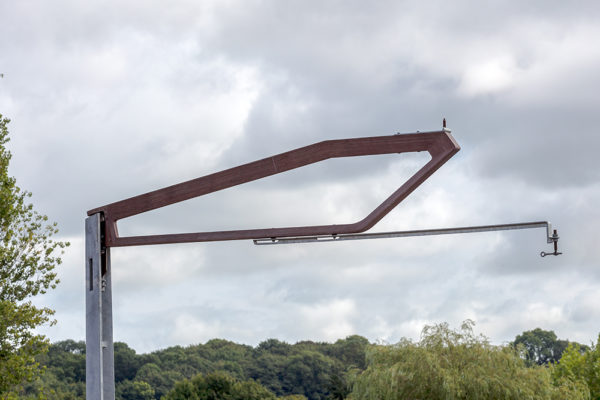
There is also a video.
Electrification doesn’t have to be ugly and out-of-character with the surroundings.
Isuspect that both systems could work together.
Would Less Bridges Need To Be Rebuilt For Electrification?
This is always a contentious issue with electrification, as rebuilding bridges causes disruption to both rail and road.
I do wonder though by the use of careful design, that it might be possible to arrange that the sections of electrification and the contentious bridges were kept apart, with the bridges arranged to be in sections, where the trains ran on batteries.
I suspect that over the years as surveyors and engineers get more experienced, better techniques will evolve to satisfy all parties.
Get this right and it could reduce the cost of electrification on some lines, that will be difficult to electrify.
How Secure Are The Containerised Systems?
Consider.
- I was delayed in East Anglia two years ago, because someone stole the overhead wires at two in the morning.
- Apparently, overhead wire stealing is getting increasingly common in France and other parts of Europe.
I suspect the containerised systems will need to be more secure than those used for buses, which are not in isolated locations.
Will The Containerised Charging Systems Use Energy Storage?
Consider.
- I’ve lived in rural locations and the power grids are not as good as in urban areas.
- Increasingly, batteries of one sort or another are being installed in rural locations to beef up local power supplies.
- A new generation of small-footprint eco-friendly energy storage systems are being developed.
In some locations, it might be prudent for a containerised charging system to share a battery with the local area.
Will The Containerised Charging Systems Accept Electricity From Local Sources Like Solar Farms?
I ask the question, as I know at least one place on the UK network, where a line without electrification runs through a succession of solar farms.
I also know of an area, where a locally-owned co-operative is planning a solar farm, which they propose would be used to power the local main line.
Will The System Work With Class 385 Trains?
Hitachi’s Class 385 trains are closely related to the Class 80x trains, as they are all members of Hitachi’s A-Train family.
Will the Charging Systems Charge Other Manufacturers Trains?
CAF and Stadler are both proposing to introduce battery-electric trains in the UK.
I also suspect that the new breed of electric parcel trains will include a battery electric variant.
As these trains will be able to use 25 KVAC overhead electrification, I would expect, that they would be able to charge their batteries on the Hitachi ABB charging systems.
Will The System Work With Freight Trains?
I believe that freight services will split into two.
Heavy freight will probably use powerful hydrogen-electric locomotives.
In Freightliner Secures Government Funding For Dual-Fuel Project, which is based on a Freightliner press release, I detail Freightliner’s decarbonisation strategy, which indicates that in the future they will use hydrogen-powered locomotives.
But not all freight is long and extremely heavy and I believe that a battery-electric freight locomotive will emerge for lighter duties.
There is no reason it could not be designed to be compatible with Hitachi’s charging system.
In Is This The Shape Of Freight To Come?, I talked about the plans for 100 mph parcel services based on redundant electric multiple units. Eversholt Rail Group have said they want a Last-Mile capability for their version of these trains.
Perhaps they need a battery-electric capability, so they can deliver parcels and shop supplies to the remoter parts of these islands?
Where Could Hitachi’s System Be Deployed?
This is the final paragraph from the article.
Hitachi is not committing to any routes yet, but a glance at the railway map shows clear potential for the battery/OLE-technology to be deployed on relatively lightly used rural and regional routes where it will be hard to make a case for electrification. The Cambrian Coast and Central Wales Lines would appear to be worthy candidates, and in Scotland, the West Highland Line and Far North routes are also logical areas for the system to be deployed.
In England, while shorter branch lines could simply be operated by battery trains, longer routes need an alternative. Network Rail’s Traction Decarbonisation Network Strategy interim business case recommends hydrogen trains for branch lines in Norfolk, as well as Par to Newquay and Exeter to Barnstaple. However, it is also entirely feasible to use the system on routes likely to be electrified much later in the programme, such as the Great Western main line West of Exeter, Swansea to Fishguard and parts of the Cumbrian Coast Line.
Everyone is entitled to their own opinion and mine would be driven by high collateral benefits and practicality.
These are my thoughts.
Long Rural Lines
The Cambrian, Central Wales (Heart Of Wales), Far North and West Highland Lines may not be connected to each other, but they form a group of rail routes with a lot of shared characteristics.
- All are rural routes of between 100 and 200 miles.
- All are mainly single track.
- They carry occasional freight trains.
- They carry quite a few tourists, who are there to sample, view or explore the countryside.
- All trains are diesel.
- Scotrail have been experimenting with attaching Class 153 trains to the trains on the West Highland Line to act as lounge cars and cycle storage.
Perhaps we need a long-distance rural train with the following characteristics.
- Four or possibly five cars
- Battery-electric power
- Space for a dozen cycles
- A lounge car
- Space for a snack trolley
- Space to provide a parcels service to remote locations.
I should also say, that I’ve used trains on routes in countries like Germany, Poland and Slovenia, where a similar train requirement exists.
Norfolk Branch Lines
Consider.
- North of the Cambridge and Ipswich, the passenger services on the branch lines and the important commuter routes between Cambridge and Norwich and Ipswich are run by Stadler Class 755 trains, which are designed to be converted to battery-electric trains.
- Using Hitachi chargers at Beccles, Bury St. Edmunds, Lowestoft, Thetford and Yarmouth and the existing electrification, battery-electric Class 755 trains could provide a zero-carbon train service for Norfolk and Suffolk.
- With chargers at Dereham and March, two important new branch lines could be added and the Ipswich and Peterborough service could go hourly and zero carbon.
- Greater Anglia have plans to use the Class 755 trains to run a London and Lowestoft service.
- Could they be planning a London and Norwich service via Cambridge?
- Would battery-electric trains running services over Norfolk bring in more visitors by train?
Hitachi may sell a few chargers to Greater Anglia, but I feel they have enough battery-electric trains.
Par And Newquay
The Par and Newquay Line or the Atlantic Coast Line, has been put forward as a Beeching Reversal project, which I wrote about in Beeching Reversal – Transforming The Newquay Line.
In that related post, I said the line needed the following.
- An improved track layout.
- An hourly service.
- An improved Par station.
- A rebuilt Newquay station with a second platform, so that more through trains can be run.
I do wonder, if after the line were to be improved, that a new three-car battery-electric train shuttling between Par and Newquay stations could be the icing on the cake.
Exeter And Barnstaple
The Tarka Line between Exeter and Barnstaple is one of several local and main lines radiating from Exeter St. David’s station.
- The Avocet Line to Exmouth
- The Great Western Main Line to Taunton, Bristol and London
- The Great Western Main Line to Newton Abbott, Plymouth and Penzance
- The Riviera Line to Paignton
- The West of England Line to Salisbury, Basingstoke and London.
Note.
- The Dartmoor Line to Okehampton is under development.
- Several new stations are planned on the routes.
- I have already stated that Exeter could host a charging station between London and Penzance, but it could also be an electrified hub for battery-electric trains running hither and thither.
Exeter could be a city with a battery-electric metro.
Exeter And Penzance
Earlier, I said that I’d trial multiple chargers between Paddington and Penzance to prove the concept worked.
I said this.
I would class this route as medium risk, but with a high reward for the operator.
But it is also an enabling route, as it would enable the following battery-electric services.
- London and Bodmin
- London and Okehampton
- London and Paignton and Torquay
It would also enable the Exeter battery-electric metro.
For these reasons, this route should be electrified using Hitachi’s discontinuous electrification.
Swansea And Fishguard
I mentioned Swansea earlier, as a station, that could be fitted with a charging system, as this would allow battery-electric trains between Paddington and Swansea via Cardiff.
Just as with Exeter, there must be scope at Swansea to add a small number of charging systems to develop a battery-electric metro based on Swansea.
Cumbrian Coast Line
This is a line that needs improvement, mainly for the tourists and employment it could and probably will bring.
These are a few distances.
- West Coast Main Line (Carnforth) and Barrow-in-Furness – 28.1 miles
- Barrow-in-Furness and Sellafield – 25 miles
- Sellafield and Workington – 18 miles
- Workington and West Coast Main Line (Carlisle) – 33 miles
Note.
- The West Coast Main Line is fully-electrified.
- I suspect that Barrow-in-Furness, Sellafield and Workington have good enough electricity supplies to support charging systems for the Cumbrian Coast Line.
- The more scenic parts of the line would be left without wires.
It certainly is a line, where a good case for running battery-electric trains can be made.
Crewe And Holyhead
In High-Speed Low-Carbon Transport Between Great Britain And Ireland, I looked at zero-carbon travel between the Great Britain and Ireland.
One of the fastest routes would be a Class 805 train between Euston and Holyhead and then a fast catamaran to either Dublin or a suitable rail-connected port in the North.
- The Class 805 trains could be made battery-electric.
- The trains could run between Euston and Crewe at speeds of up to 140 mph under digital signalling.
- Charging systems would probably be needed at Chester, Llandudno Junction and Holyhead.
- The North Wales Coast Line looks to my untrained eyes, that it could support at least some 100 mph running.
I believe that a time of under three hours could be regularly achieved between London Euston and Holyhead.
Battery-electric trains on this route, would deliver the following benefits.
- A fast low-carbon route from Birmingham, London and Manchester to the island of Ireland. if coupled with the latest fast catamarans at Holyhead.
- Substantial reductions in journey times to and from Anglesey and the North-West corner of Wales.
- Chester could become a hub for battery-electric trains to and from Birmingham, Crewe, Liverpool, Manchester and Shrewsbury.
- Battery-electric trains could be used on the Conwy Valley Line.
- It might even be possible to connect the various railways, heritage railways and tourist attractions in the area with zero-carbon shuttle buses.
- Opening up of the disused railway across Anglesey.
The economics of this corner of Wales could be transformed.
My Priority Routes
To finish this section, I will list my preferred routes for this method of discontinuous electrification.
- Exeter and Penzance
- Swansea and Fishguard
- Crewe and Holyhead
Note.
- Some of the trains needed for these routes have been delivered or are on order.
- Local battery-electric services could be developed at Chester, Exeter and Swansea by building on the initial systems.
- The collateral benefits could be high for Anglesey, West Wales and Devon and Cornwall.
I suspect too, that very little construction work not concerned with the installation of the charging systems will be needed.
Conclusion
Hitachi have come up with a feasible way to electrify Great Britain’s railways.
I would love to see detailed costings for the following.
- Adding a battery pack to a Class 800 train.
- Installing five miles of electrification supported by a containerised charging system.
They could be on the right side for the Treasury.
But whatever the costs, it does appear that the Japanese have gone native, with their version of the Great British Compromise.
GWR To Test Battery Train On Branch Line
The title of this post, is the same as that of this article on Rail Business UK.
This is the first paragraph.
Great Western Railway has invited expressions of interest in trialling a battery powered train on the 4 km non-electrified branch line from West Ealing to Greenford in west London.
The article says that Vivarail have made a previous proposal, but other companies are also likely to declare their interest.
I feel some unexpected proposals could turn up.
The reason would be commercial,.
This is the last paragraph of the article, which says this.
The challenge on Great Western is we’ve got branches like Greenford, Windsor, Marlow and Henley along the Thames valley, and then in the West Country we’ve got St Ives, Falmouth, Newquay, Looe, Gunnislake and so on’, said Hopwood. ‘If we don’t electrify those could we fit the trains with a battery?’ The ideal solution may be a train that fast charges either at one end of the route or possibly at both ends, or on a route like Marlow, Gunnislake or Looe, where the trains reverse during their journey, could the charge point even be on that part of the branch?’
Note.
- Mark Hopwood is now the Managing Director of GWR.
- Nine branches are mentioned, so with spare trains and maintenance, it could be a good-sized order.
But this project could be even bigger.
South Western Railway are a sister company of Great Western Railway and in August 2020, I wrote Special Train Offers A Strong Case For Reopening Fawley Line about the plans to open the Fawley Line.
This was a section, I wrote about trains that might work the line.
South Western Railway’s Innovative Train Plan
This is another quote from the article.
However, SWR’s Mark Hopwood favours a much bolder plan. “We’d have to take a decision, once we knew the line was going ahead. But my personal belief is that we should be looking for a modern environmentally-friendly train that can use third-rail electricity between Southampton and Totton and maybe operate on batteries down the branch line.”
Pressed on whether that would mean Vivarail-converted former-London Underground stock, Hopwood ads. “It could be. Or it could be a conversion of our own Class 456, which will be replaced by new rolling stock very shortly. But I don’t think this is the time to use old diesels.
This is the same Mark Hopwood, who is now Managing Director of GWR.
These pictures show the current status of one of the twenty-four Class 456 train.
In Converting Class 456 Trains Into Two-Car Battery Electric Trains I discuss this conversion in detail.
Conclusion
Twenty-four battery-electric Class 456 trains would probably go a long way to satisfy GWR’s needs.
Thoughts On Train Times Between London Paddington And Cardiff Central
I went to Cardiff from Paddington on Tuesday.
These were the journey details.
- Distance – Paddington and Cardiff – 145.1 miles
- Time – Paddington and Cardiff – 110 minutes – 79.1 mph
- Time – Cardiff and Paddington- 114 minutes – 76.4 mph
There were four stops. Each seemed to take between two and three minutes.
I do feel though, that the trains are still running to a timetable, that could be run by an InterCity 125.
I watched the Speedview app on my phone for a lot of both journeys.
- There was quite an amount of 125 mph running on the route.
- Some stretches of the route seemed to be run at a line speed of around 90 mph.
- The Severn Tunnel appears to have a 90 mph speed.
- Coming back to London the train ran at 125 mph until the Wharncliffe Viaduct.
These are my thoughts.
Under Two Hour Service
The current service is under two hours, which is probably a good start.
Improving The Current Service
It does strike me that the current timetable doesn’t take full advantage of the performance of the new Hitachi Class 80x trains.
- Could a minute be saved at each of the four stops?
- Could more 125 mph running be introduced?
- Could the trains go faster through the Severn Tunnel?
- If two trains per hour (tph) were to be restored, would that allow a more efficient stopping pattern?
- The route has at least four tracks between Paddington and Didcot Parkway and the Severn Tunnel and Cardiff.
I would reckon that times of between one hour and forty minutes and one hour and forty-five minutes are possible.
These times correspond to average speeds of between 87 and 83 mph.
Application of In-Cab Digital Signalling
Currently, a typical train leaving Paddington completes the 45.7 miles between Hanwell and Didcot Parkway with a stop at Reading in 28 minutes, which is an average speed of 97.9 mph.
This busy section of the route is surely an obvious one for In-cab digital signalling., which would allow speeds of up to 140 mph.
- Services join and leave the route on branches to Bedwyn, Heathrow, Oxford and Taunton.
- The Heathrow services are run by 110 mph Class 387 trains.
- There are slow lines for local services and freight trains.
If an average speed of 125 mph could be attained between Hanwell and Didcot Parkway, this would save six minutes on the time.
Would any extra savings be possible on other sections of the route, by using in-cab digital signalling?
I suspect on the busy section between Bristol Parkway and Cardiff Central stations several minutes could be saved.
Would A Ninety Minute Time Between Paddington And Cardiff Be Possible?
To handle the 145.1 miles between Paddington and Cardiff Central would require an average speed including four stops of 96.7 mph.
This average speed is in line with the current time between Hanwell and Didcot Parkway with a stop at Reading, so I suspect that with improvements to the timetable, that a ninety minute service between Paddington and Cardiff Central is possible.
It may or may not need in-cab digital signalling.
My Control Engineer’s nose says that this signalling upgrade will be needed.
Would A Sixty Minute Time Between Paddington And Cardiff Be Possible?
A journey time of an hour between Paddington and Cardiff Central would surely be the dream of all politicians the Great Western Railway and many of those involved with trains.
To handle the 145.1 miles between Paddington and Cardiff Central would require an average speed including four stops of 145.1 mph.
It would probably be difficult to maintain a speed a few mph above the trains current maximum speed for an hour.
- How many minutes would be saved with perhaps a single intermediate stop at Bristol Parkway station?
- Perhaps the Cardiff service could be two tph in ninety minutes and one tph in sixty minutes.
- Full in-cab digital signalling would certainly be needed.
- Faster trains with a maximum speed of up to 155-160 mph would certainly be needed.
- There may be a need for some extra tracks in some places on the route.
A journey time of an hour will be a few years coming, but I feel it is an achievable objective.
The Extended Route To Swansea
Cardiff Central and Swansea is a distance of 45.7 miles
A typical service takes 55 minutes with three stops, at an average speed of 49.8 mph.
This would be an ideal route for a Hitachi Intercity Tri-Mode Battery Train, which is described in this Hitachi infographic.

It would probably be needed to be charged at Swansea station, to both enable return to Cardiff Central or extend the service to the West of Swansea.
Conclusion
Big improvements in journey times between Paddington and Cardiff Central are possible.
Ealing Broadway Station – 31st May 2021
This article on Rail Technology Magazine, which is entitled Transport for London Completes Step-Free Access At Ealing Broadway, alerted me that the station might be worth a look.

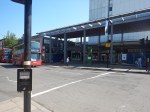


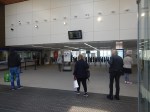

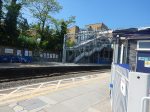
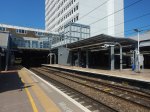
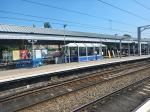


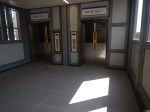
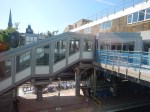
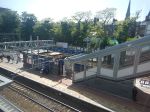
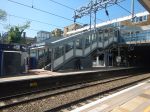
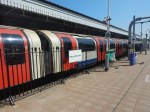
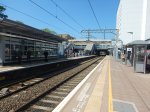
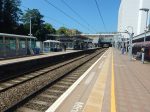
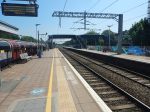
I took these pictures this morning.
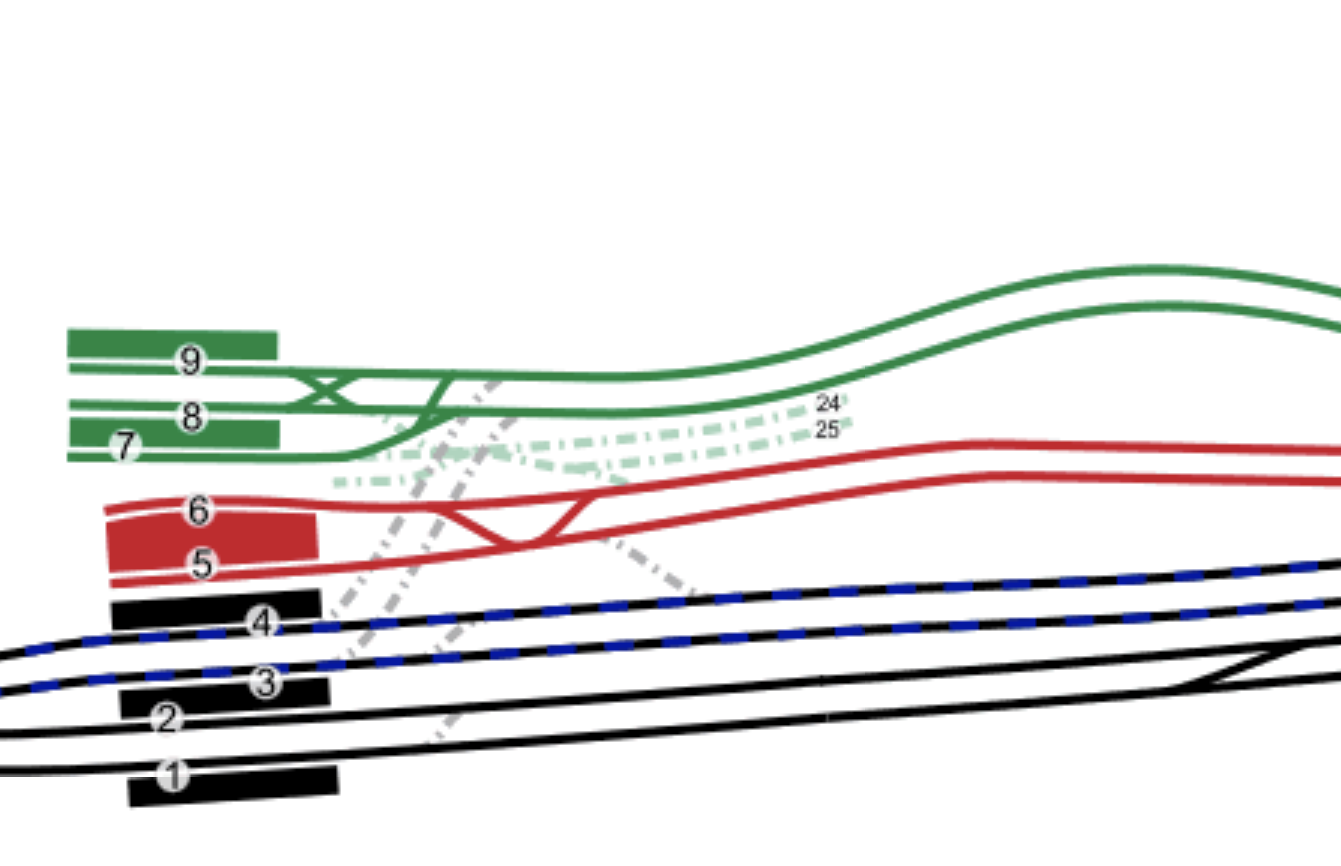
This map from cartometro.com shows the station layout.
Note.
- The black lines in Platforms 1 and 2 are the Great Western Railway main line platforms.
- The black/blue lines in Platforms 3 and 4 are the Great Western Railway slow line platforms, which are also used by Crossrail.
- The red tracks in Platforms 5 and 6 are the Central Line platforms.
- The green tracks in Platforms 7, 8 and 9 are the District Line platforms.
These are my thoughts.
Step-Free Access
Consider.
- Access between platforms 4, 5, 6, 7, 8 and 9 is on the level, as it has been for years.
- There are a pair of lifts to access these six platforms from street level.
- There are also two other lifts to Platform 1 and Platform 2/3.
- There are three typical Network Rail stairs to the platforms, with double-handrails, which at 73, I can still manage.
I’ve certainly seen much worse stations with supposedly step-free access.
I also wonder if another lift will be added to directly serve the District Line platforms.
It could be one of those additions, that has been catered for, so it can be added if necessary.
Crossrail And Routes Into And Out Of London
Crossrail will change commuting and leisure routes, into and out of London.
- Crossrail serves the West End, the North of the City and Canary Wharf directly.
- Crossrail has good connections to the Central, Circle, District and Jubilee Lines.
- Crossrail has a direct connection to Thameslink.
- All Crossrail interchanges will be step-free.
After it has been opened for a few months, I can see that direct connections and ducking and diving will have seriously changed London’s well-established commuting and travel patterns.
Using Ealing Broadway Station As An Interchange
It will certainly be easier with all the new step-free access, but I suspect some passengers, who previously changed at Ealing Broadway station, will go straight through on Crossrail.
In Will Crossrail Open To Reading in 2019?, I said that Ealing Broadway station will get the following total number of Crossrail trains.
- 12 tph in the Peak
- 10 tph in the Off-Peak
Note.
- tph is trains per hour.
- Six tph would go between London Paddington and Heathrow.
- Two tph would go between London Paddington and Reading.
It will be interesting to see what Crossrail timetable is delivered.
The Overall Design
It is a fairly conservative design, that follows the principles of good step-free access.
Interchange is level and good between Crossrail and the tube lines.
There are still a few details to be finished and I suspect it will be a well-thought of station.
A Few Questions
These are a few questions.
Will The Station Be A Gateway To Heathrow?
I suspect it could be, as the station is well-connected by bus and tube to large numbers of places.
Conclusion
Ealing Broadway will be a busy interchange and I’m sure, it’s been designed to handle a lot of passengers.
Somerset: Plans For New Railway Station On Levels
The title of this post, is the same as that of this article on the BBC.
This is the first two paragraphs.
Plans for a new railway station have moved forward after councillors agreed to help fund a feasibility study.
The stations at Somerton and Langport on the Somerset Levels were closed in the Beeching cuts during the 1960s.
I put my thoughts on this station in Beeching Reversal – New Station For Langport And Somerton Area.
The BBC article says this about the study.
The study, to be carried out by the Langport Transport Group (LTG) will identify possible sites, which may include a parkway-style station between the towns, possibly on the site of the former Long Sutton and Pitney station.
This Google Map shows the railway between the two villages of Langport and Somerton.
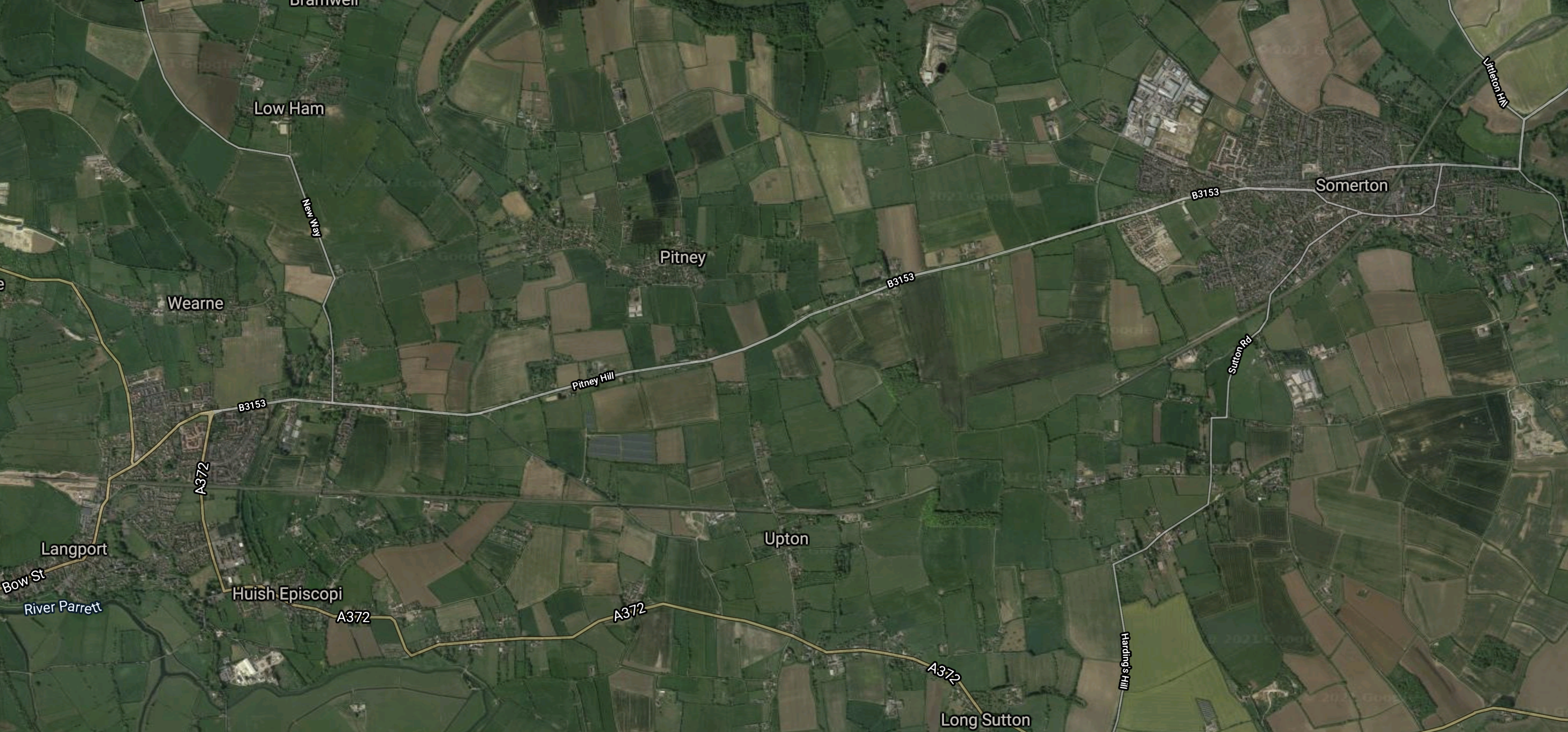
Note.
- Langport is in the South-West corner of the map.
- Somerton is in the North-East corner of the map.
- The Reading-Taunton Line goes through both villages, although both stations are now closed.
The map is probably best clicked to show on a larger scale.
This second Google Map shows the area between the two villages of Long Sutton and Pitney.
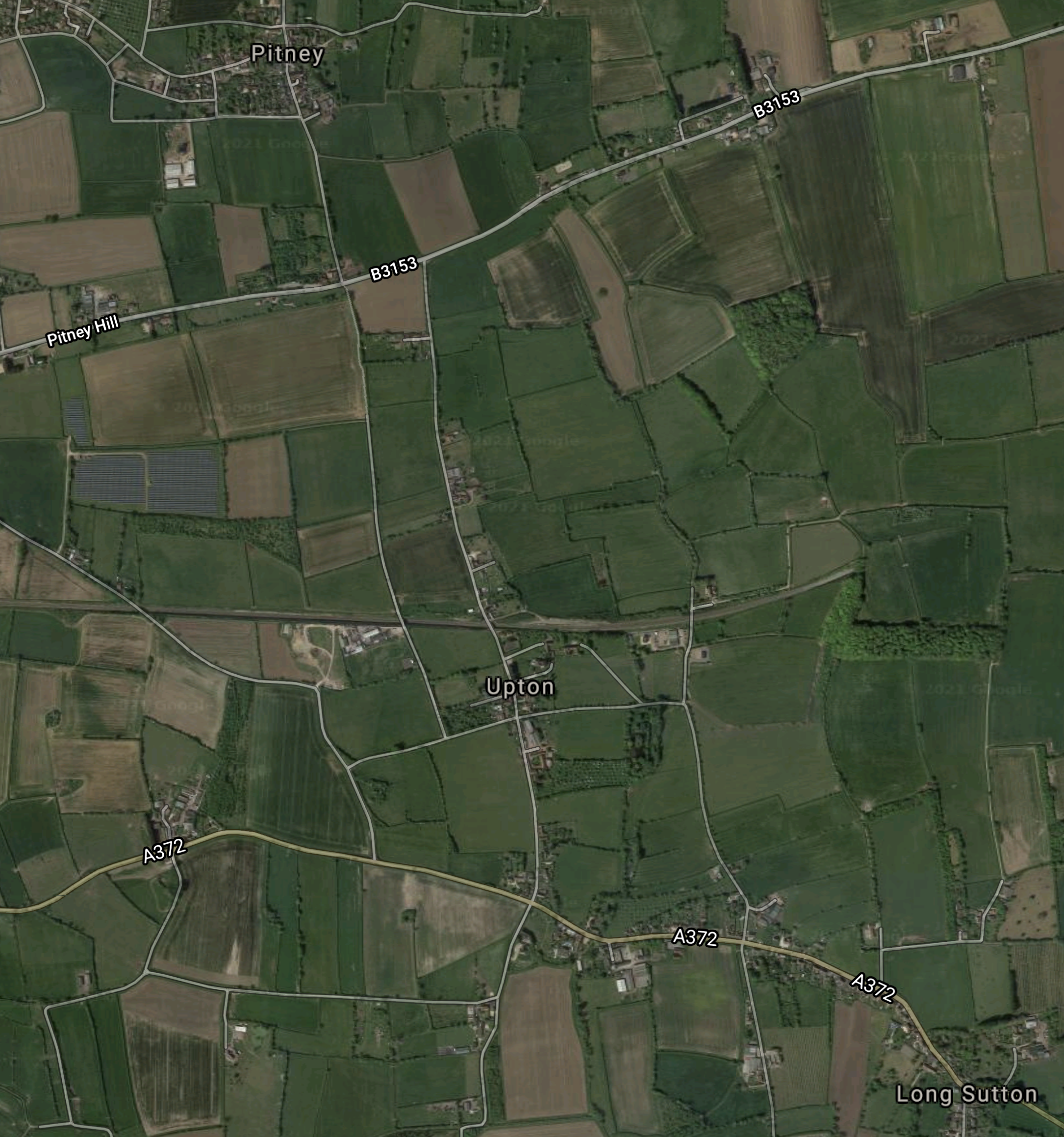
Note.
- Pitney is in the North-West corner of the map.
- Long Sutton is in the South-East corner of the map.
- The railway runs across the middle of the map it looks as if there was a station site to the North of the village of Upton.
- The only major road in the area; the A372, runs across the bottom of the map.
It is certainly a possibility for a Parkway station, but are the road connections good enough?
Through Settle And Carlisle Service Under Consideration
The title of this post, is the same as that of an article in the June 2021 Edition of Modern Railways.
This is the first paragraph.
Plans for a new Leeds to Glasgow through service via the Settle and Carlisle line are being developed, with CrossCountry and the Department for Transport starting to look at the possible scheme.
It sounds like a sensible idea to me.
The article also suggests the following.
- CrossCountry is a possible operator.
- CrossCountry are keen to improve services between Leeds and Glasgow
- The trains could be InterCity 125s, freed up, by a the arrival of Class 221 trains from Avanti West Coast, when they receive their new Class 805 trains.
- Maintenance of the trains wouldn’t be a problem, as this could be done at Neville Hill in Leeds or Craigentinny in Edinburgh.
- Services could start in December 2023.
I have a few thoughts of my own!
The Route
The route between Leeds and Carlisle is obvious, but there are two routes between Carlisle and Glasgow.
Trains would probably choose a route and call at stations to maximise passenger numbers.
These stations are on the various routes.
- Settle and Carlisle – Shipley, Bingley, Keighley, Skipton, Gargrave, Hellifield, Long Preston, Settle, Horton in Ribblesdale, Ribblehead, Dent, Garsdale, Kirkby Stephen, Appleby, Langwathby, Lazonby & Kirkoswald and Armathwaite
- Glasgow South Western – Dunlop, Stewarton, Kilmaurs, Kilmarnock, Auchinleck, New Cumnock, Kirkconnel, Sanquhar, Dumfries, Annan and Gretna Green
- West Coast Main – Motherwell, Carstairs and Lockerbie
There are certainly a lot of possibilities.
Upgrading The InterCity 125 Trains
CrossCountry appear to have enough InterCity 125 trains to muster five in a two Class 43 power car and seven Mark 3 coach formation.
They may not be fully in-line with the latest regulations and there may be a need for a certain degree of refurbishment.


These pictures show some details of a refurbished Great Western Railway Castle, which has been fitted with sliding doors.
Will The InterCity 125 Trains Be Shortened?
Scotrail’s Inter7City trains and Great Western Railway’s Castle trains have all been shortened to four or five coaches.
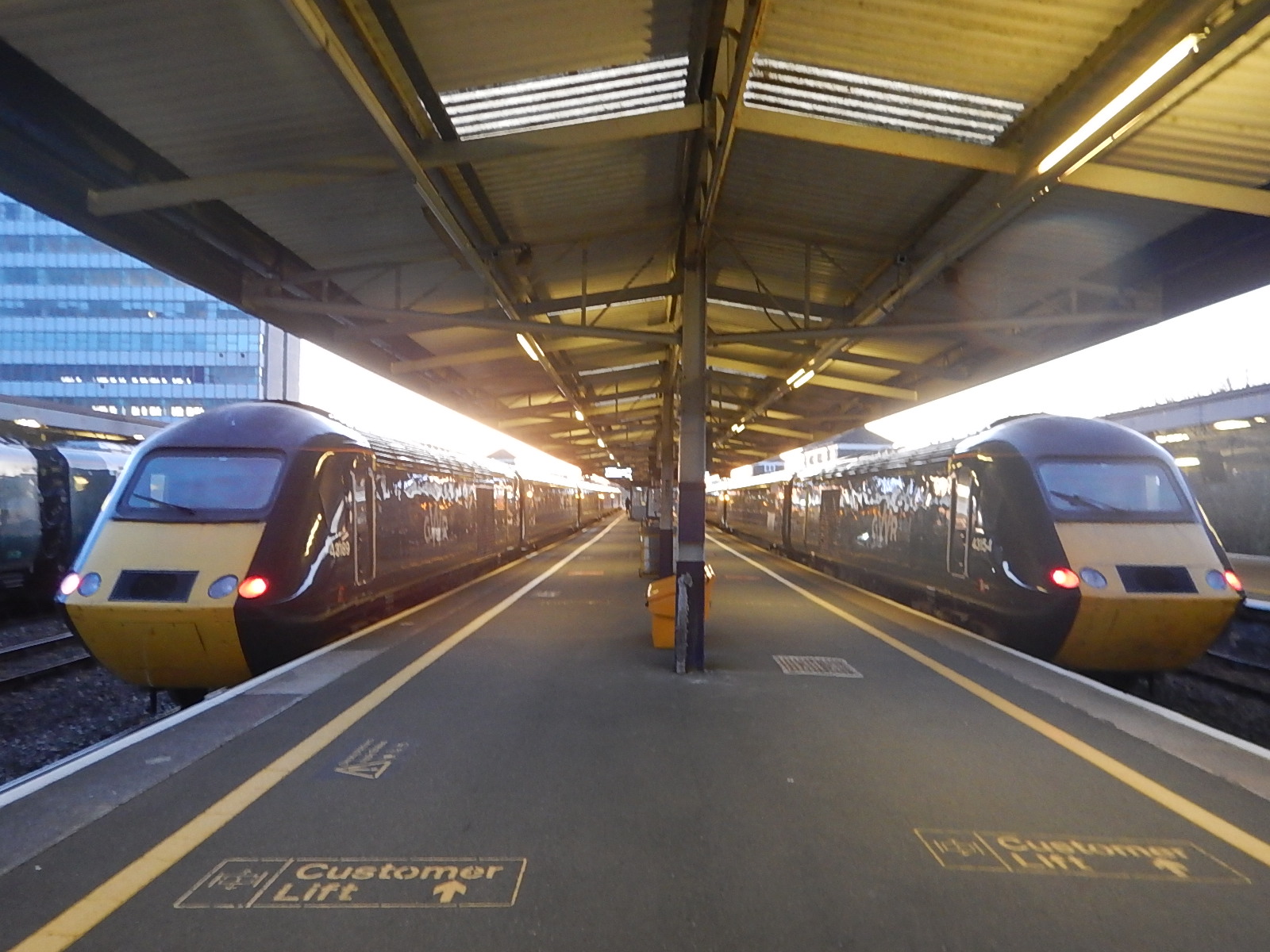
This picture shows a pair of Castles.
Journey Times, Timetable And Frequency
The current journey time between Leeds and Glasgow Central stations via the East Coast Main Line is four hours and eight minutes with nine stops.
The Modern Railways article says this about the current service.
The new service would be targeted at business and leisure travellers, with through journey times competitive with road and faster than the current direct CrossCountry Leeds to Glasgow services via the East Coast main line.
I would expect that CrossCountry are looking for a time of around four hours including the turn round.
- Stops could be removed to achieve the timing.
- The trains could run at 125 mph on the West Coast Main Line.
This could enable a train to have the following diagram.
- 0800 – Depart Leeds
- 1200 – Depart Glasgow Central
- 1600 – Depart Leeds
- 2000 – Depart Glasgow Central
- Before 2400 – Arrive Leeds
Note.
- A second train could start in Glasgow and perform the mirrored timetable.
- Timings would probably be ideal for train catering.
- Trains would leave both termini at 0800, 1200, 1600 and 2000.
- The timetable would need just two trains.
I also think, if a second pair of trains were to be worked into the timetable, there could be one train every two hours on the route, if the demand was there.
I certainly believe there could be a timetable, that would meet the objectives of attracting business and leisure passengers away from the roads.
Tourism And Leisure Potential
The Settle and Carlisle Line is known as one of the most scenic railway lines in England, if not the whole of the UK.
There are important tourist sites all along the route between Leeds and Glasgow
- Leeds – The station is well-connected in the City Centre.
- Saltaire – For the World Heritage Site and Salt’s Mill
- Keighley – For the Keighley and Worth Heritage Railway
- Settle – The town of Settle is worth a visit.
- Ribblehead – For the famous Ribblehead Viaduct
- Appleby – For the Horse Fair.
- Carlisle – The station is well-connected in the City Centre.
- Glasgow – Glasgow Central station is well-connected in the City Centre.
Many of the stations are used by walkers and others interested in country pursuits.
I believe that it is a route that needs a quality rail service.
Travel Between London and Towns Along The Settle And Carlisle Line
In Thoughts On Digital Signalling On The East Coast Main Line, I said this.
I think it is highly likely that in the future, there will be at least one train per hour (tph) between London Kings Cross and Leeds, that does the trip in two hours.
It may seem fast compared to today, but I do believe it is possible.
With a timely connection at Leeds station, will this encourage passengers to places along the Settle and Carlisle line to use the train?
What About the Carbon Emissions?
The one problem with using InterCity 125 trains on this route, is that they are diesel-powered, using a pair of Class 43 locomotives.
But then there are over a hundred of these diesel-electric locomotives in service, nearly all of which are now powered by modern MTU diesel engines, which were fitted in the first decade of this century.
Consider.
- The locomotives and the coaches they haul have an iconic status.
- Great Western Railway and Scotrail have recently developed shorter versions of the trains for important routes.
- There are over a hundred of the locomotives in service.
- Companies like ULEMCo are developing technology to create diesel-powered vehicles that can run on diesel or hydrogen.
- There is plenty of space in the back of the locomotives for extra equipment.
- MTU have a very large number of diesel engines in service. It must be in the company’s interest to find an easy way to cut carbon emissions.
- I believe that the modern MTU diesel engines could run on biodiesel to reduce their carbon footprint.
And we shouldn’t forget JCB’s technology, which I wrote about in JCB Finds Cheap Way To Run Digger Using Hydrogen.
If they could develop a 2 MW hydrogen engine, it could be a shoe-in.
I believe that for these and other reasons, a solution will be found to reduce the carbon emissions of these locomotives to acceptable levels.
Conclusion
In this quick look, it appears to me that a Glasgow and Leeds service using InterCity 125 trains could be a very good idea.
Work Begins On Okehampton Parkway Station
The title of this post, is the same as that of this article on Rail Technology Magazine.
These are the first two paragraphs.
Following confirmation of government funding from the ‘Restoring Your Railway ideas’ fund, work has started on the Okehampton Parkway railway station that will serve the east of the town when the Dartmoor Line reopens.
Services are expected to restart later this year on the 14-mile stretch of railway for the first time in almost 50 years, providing a regular, daily passenger rail service between Okehampton and Exeter.
Okehampton Parkway station will be a completely new station for the Dartmoor Line.
This Google Map shows the probable location of the station.
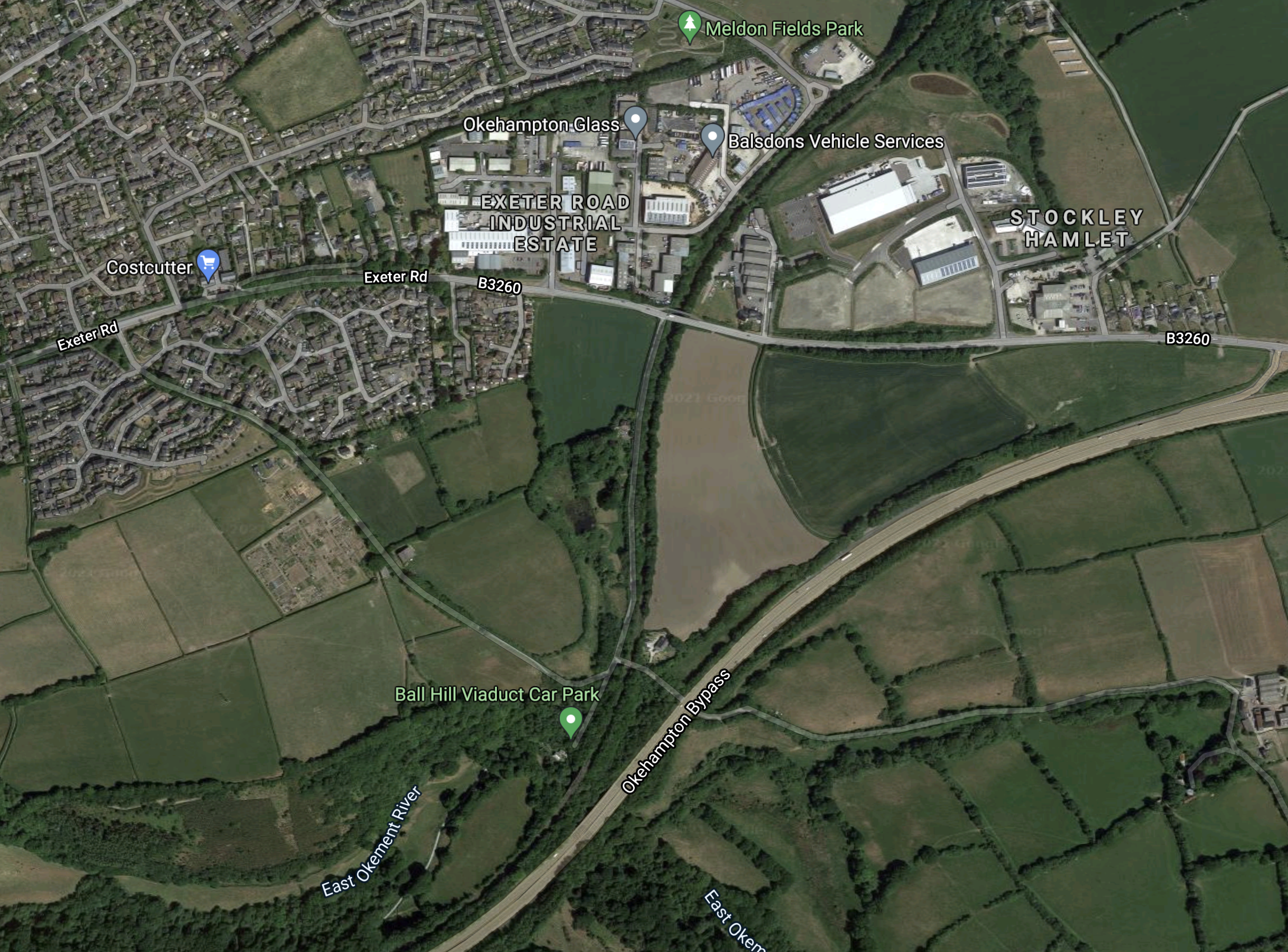
The Wikipedia entry for the station, says this about its location.
The station is to be sited at the A30 junction at Stockley Hamlet and would be sited at the Business Park at Okehampton as well as serving a further 900 homes close to the site.
Stockey Hamlet is in the North-East corner of the map with the Dartmoor Line running along its Western side. Wikipedia also says this about the station design.
In April 2018, two preferred options for a new station which included an option for a double-sided platform which included a through platform and a bay platform. Another is for a platform single-sided platform on the south side of the railway with staggered faces. Exeter-bound trains would use the north through platform and the Dartmoor Railway would use the bay platform.
But as the track is only single-track and Devon has several single-platform stations, I will be surprised if the station has more than a single platform initially.
Would A Mutant Many-Parent Child Help To Solve London’s Transport Problems?
London needs to increase the capacity of its public transport system, as the City continues to get larger and larger.
Current Major Projects
There are only three major rail projects ongoing in London at the present time.
The Bank Station Upgrade
The Bank Station Upgrade appears to be progressing well, albeit perhaps it’s a bit late due to the pandemic.
It is a complex project and from what I have heard and observed, it has been well designed and planned.
The Barking Riverside Extension
As with the Bank Station Upgrade the Overground extension to the new Barking Riverside station, appears to be going reasonably well.
But compared to that project, it is a relatively simple project, built mainly in the open air, with no tunneling.
Crossrail
Crossrail is in trouble, after what many believe was a very good tunnelling phase of the project.
But then tunnels under London usually seem to go well. I can remember the Victoria Line tunnelling and many other under London since the 1960s and all of these tunnels seem to have been dug without trouble. As I write, there don’t seem to be any tunneling problems with the Thames Tideway Tunnel.
Crossrail now has been reduced to a series of station builds and rebuilds, some of which are as large as the Bank Station Upgrade, with other ongoing projects like the testing of trains and systems.
So why are some of these stations running late in their delivery?
If you walk along the route of Crossrail in the City of London and through Clerkenwell and the West End, it is one massive building side as developers raise massive clusters of new developments around and above the Crossrail stations.
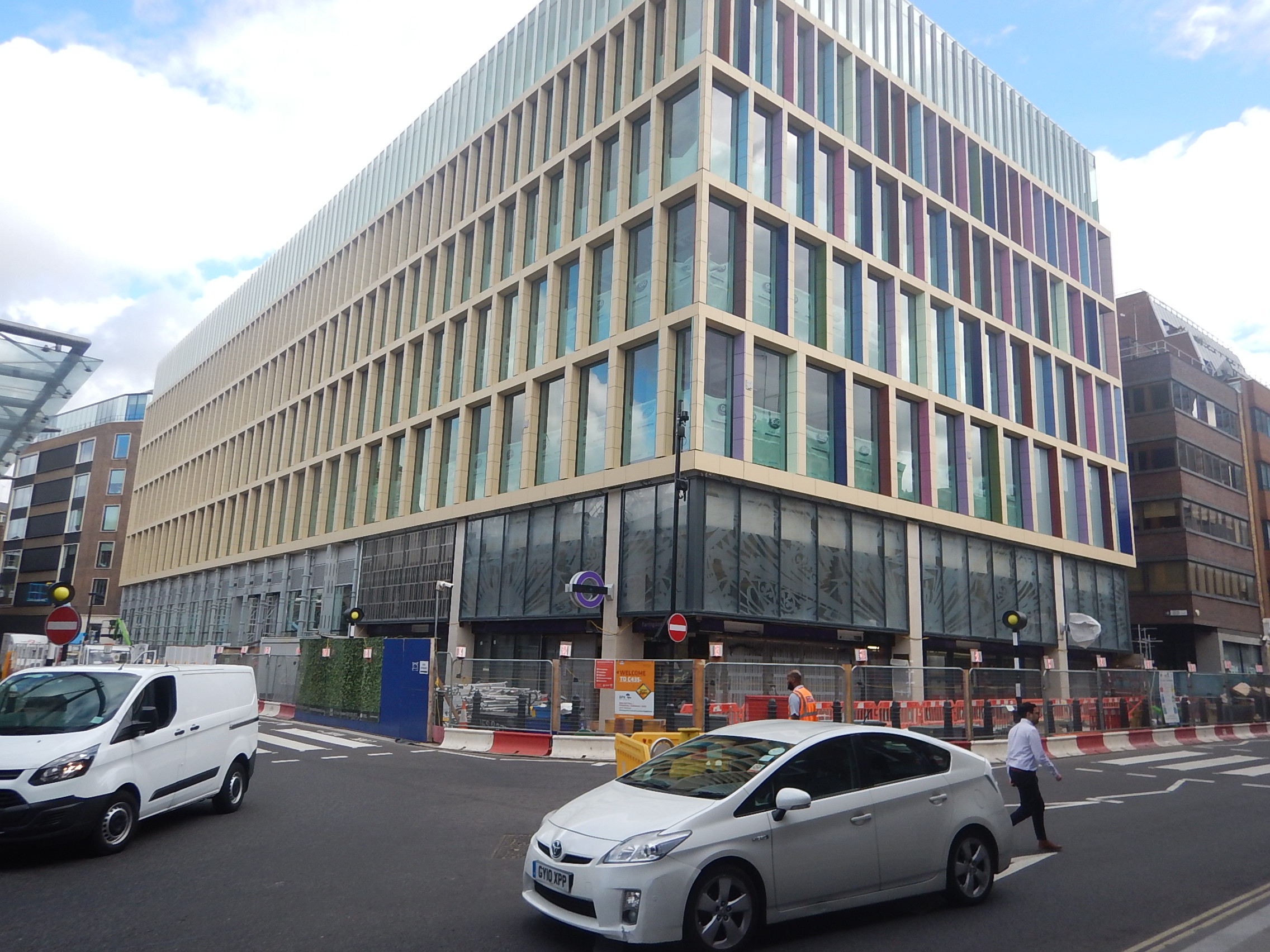
The picture shows Farrington station’s Eastern entrance, with a new development on top.
This one wasn’t a big one, but it went up in record time.
These buildings are often funded by Sovereign Wealth Funds, who want their buildings finished ASAP and as they have bottomless pockets, they are prepared to pay more to get the builders and tradesmen they need.
And where did they get the workers from? Other projects, including Crossrail.
This problem happened in Aberdeen at the height of the oil boom in the last century.
I also think that Brexit worsened the problem, as workers from mainland EU moved to large projects closer to home, like Stuttgart 21 and the new Berlin Brandenburg airport, that were both very much in trouble and could have been offering premium salaries as well!
The solution would have been to phase developments so that the limited pool of workers was not exhausted.
But that probably wouldn’t have suited the developers and politicians for all sorts of reasons.
- An uncompleted building doesn’t bring in money and jobs.
- Early completion must improve chances of letting the building.
- Delaying the building would probably have meant fewer holidays for politicians in exotic locations.
Hopefully, a comprehensive enquiry into the lateness of Crossrail will provide answers.
High Speed Two
High Speed Two is to my mind a London local project. But only in a secondary way!
- Rebuilding Euston station will improve Underground connections and interchange at Euston and Euston Square stations.
- It is claimed by High Speed Two, that the rebuilt Euston station will create 16000 jobs and 2200 homes.
- High Speed Two will enable massive development at Old Oak Common, with tens of thousands of homes and jobs.
- Old Oak Common station will be a very important rail hub in North-West London.
With seventeen trains per hour (tph) between Euston and Old Oak Common will High Speed Two attract local traffic?
- I suspect High Speed Two between Manchester Airport and Manchester Piccadilly and between Birmingham Interchange and Birmingham Curzon Street will also attract local traffic.
- I’ve used TGVs between Nice and Antibes.
- Tourists might visit, just like they did and still do at the Olympic Park.
- Many Londoners will join High Speed Two at Old Oak Common.
Some wag will suggest putting it on the Tube Map. But is it such a stupid idea?
Where Does London Need More Rail Services?
Having lived in London on and off for over seventy years, I feel the worst areas for rail links are probably.
- North West London
- South East London
- South Central London between Wimbledon and Croydon.
- South West London
Note.
- Over the years, there is no doubt that East and North London have improved considerably, with the development of the East London, North London and Gospel Oak to Barking Lines.
- Thameslink has been improved in North London and now it is being supported with improvements to the Northern City Line. Both routes now have new Siemens trains, which give a whole new dimension to using ironing-boards as seats.
- Crossrail will produce major improvements in West, East and South East London.
- Building of a new Penge Interchange station, which I wrote about in Penge Interchange could improve routes to and from South East London.
- Hopefully the work in recent years at Waterloo will improve suburban services out of Waterloo. In An Analysis Of Waterloo Suburban Services Proposed To Move To Crossrail 2, I showed that four tph could be run to Chessington South, Epsom, Hampton Court and Shepperton stations.
It looks like North West and South Central London are missing out.
How Can Services Be Improved In North West London?
There are radial routes from the centre of London to the suburbs.
Starting from the North and going to the West, there are the following lines.
- The High Barnet branch of the Northern Line
- The Mill Hill East branch of the Northern Line
- The Midland Main Line to St. Albans, Luton, Bedford and the East Midlands.
- The Edgware branch of the Northern Line
- The Jubilee Line to Stanmore
- The West Coast Main Line to Watford, Milton Keynes, the West Midlands, the North West of England and West Scotland.
- The Bakerloo Line to Harrow & Wealdstone.
- The Watford DC Line of the London Overground
- The Amersham, Chesham and Watford branches of the Metropolitan Line
- The Chiltern Route to Aylesbury.
- The Chiltern Main Line to High Wycombe, Banbury, Bicester, Birmingham and Oxford.
- The West Ruislip branch of the Central Line.
- The Uxbridge branch of the Metropolitan and Piccadilly Lines
When I used to live at Cockfosters as a child, to visit my many cousins in North West London, there was no alternative but to use a bus and take well over an hour each way.
There are now some circular rail routes in London but nothing in the North West of the capital.
The Dudding Hill Line And The West London Orbital Railway
But there is the little-used freight route called Dudding Hill Line.
- It runs between Cricklewood on the Midland Main Line and Acton Central on the North London Line.
- It is four miles of double-track railway.
This YouTube video shows a cab ride from Acton to Cricklewood.
Plans exist to turn it into the West London Orbital Railway, which will run two services.
- West Hampstead and Hounslow via Cricklewood, Neasden, Harlesden, Old Oak Common Lane, Acton Central, South Acton, Lionel Road, Brentford, Syon Lane and Isleworth
- Hendon and Kew Bridge via Brent Cross West, Neasden, Harlesden, Old Oak Common Lane, Acton Central, South Acton
Note.
- The proposed frequency of both services is four tph.
- There would be some stations to be built, but the track exists.
- There would be no new tunnels.
- The route is technically feasible.
- The route would connect West London to High Speed Two.
- There would be little disruption whilst it was built.
- The services could be run by dual-voltage battery-electric trains charged on the electrification at both ends of the route.
- The scheme represents a high value for money, with a benefit-cost ratio (BCR) of 2.2.
On the other hand, the scheme has two serious problems, as far as the current London Mayor is concerned.
- Transport for London has no money, partly because of London’s Fare Freeze.
- The project is not in South London.
This important and value-for-money project will not be built, whilst Sadiq Khan is still Mayor of London.
Harlesden Interchange
I believe that if we get the interchanges right on the West London Orbital Railway correct we can do things like.
- Increase the benefit cost ratio.
- Link the route to South London to make the Mayor a bit happier about the North London Scheme.
This Google Map shows Harlesden station.
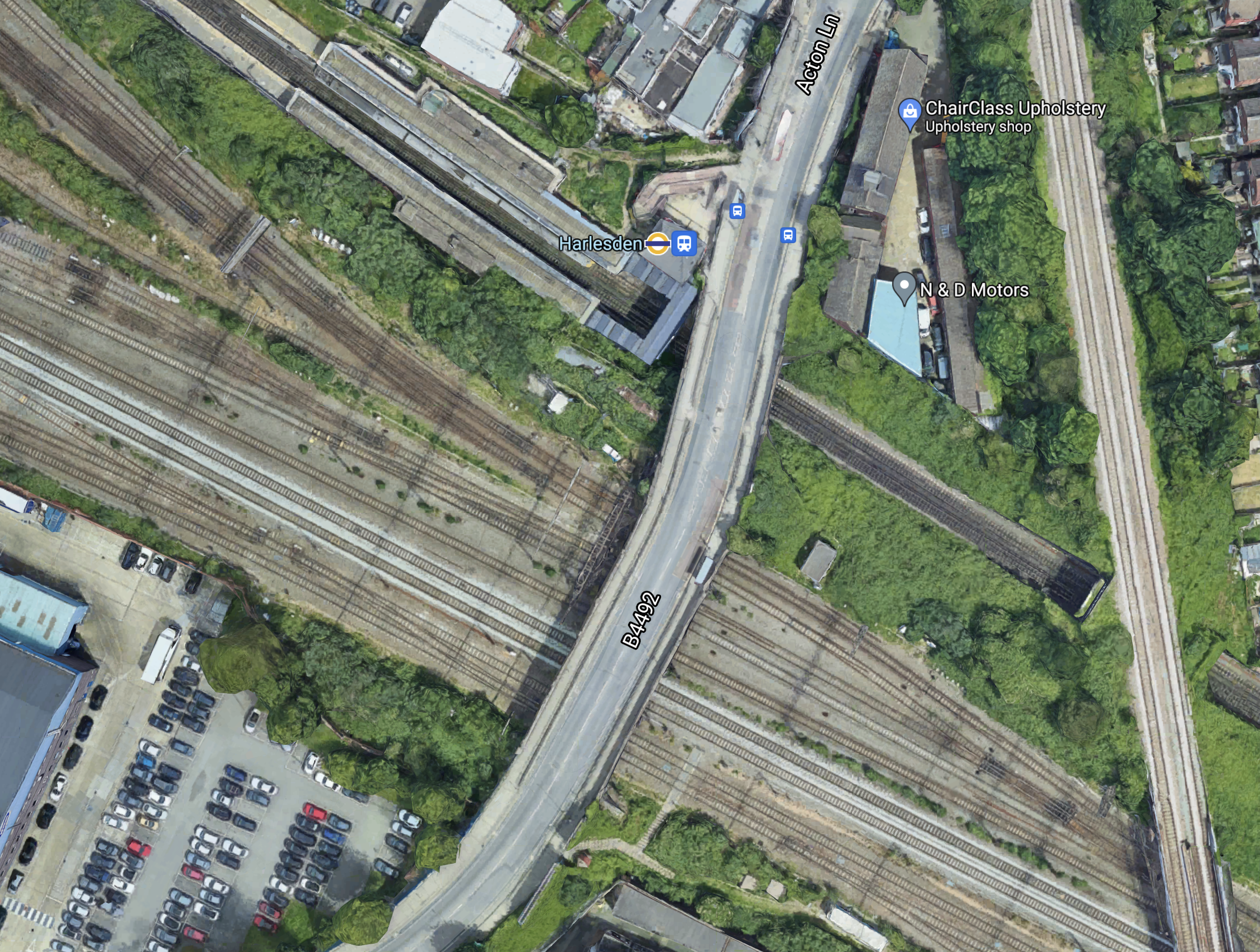
Note.
- The Bakerloo Line/Watford DC Line running North-West/South-East through Harlesden station.
- The West Coast Main Line in the Southern section of the map.
- The Dudding Hill Line running North-South across the map.
Platforms will be built on the Dudding Hill Line to connect that would probably be new or extended platforms in the current Harlesden station to enable interchange between the West London Orbital and the Watford DC Lines.
I also think there is a possibility that platforms could be added to the slow tracks of the West Coast Main Line, so that suburban services into London Euston can also connect to the West London Orbital Line.
It would also enable a connection between Southern’s Clapham Junction and Milton Keynes service and the West London Orbital Railway.
Looking at this from various angles, I think that an architect good at designing three-dimensional structures could develop a quality Harlesden Interchange station.
Neasden Interchange
Like Harlesden, Neasden is another possibility for a comprehensive interchange.
This Google Map shows Neasden station.
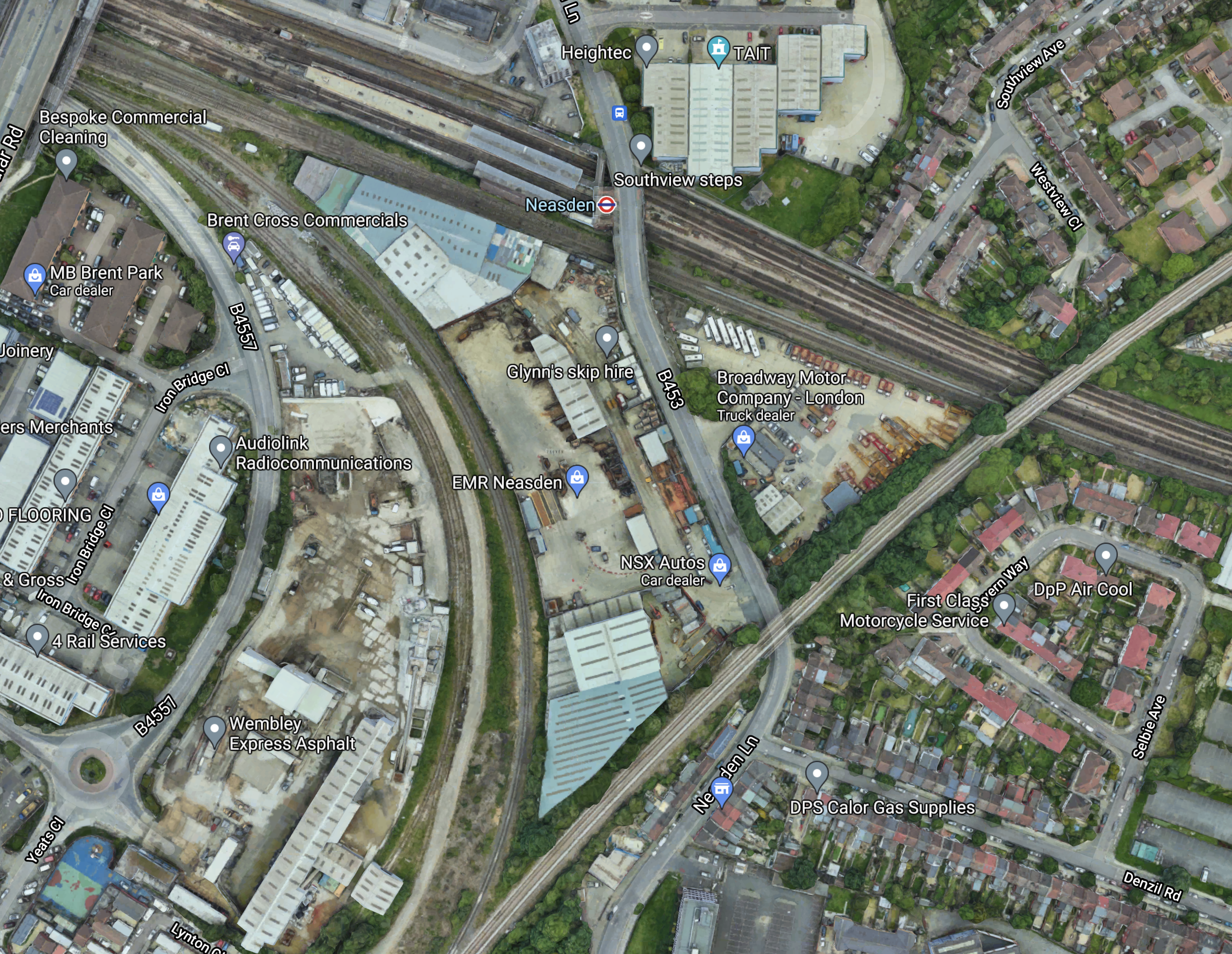
Note.
- There are a lot of lines going through Neasden station.
- The Dudding Hill Line goes across the South-East corner of the map.
- There is plenty of space in the area.
This map from cartometro.com shows the lines in the area.
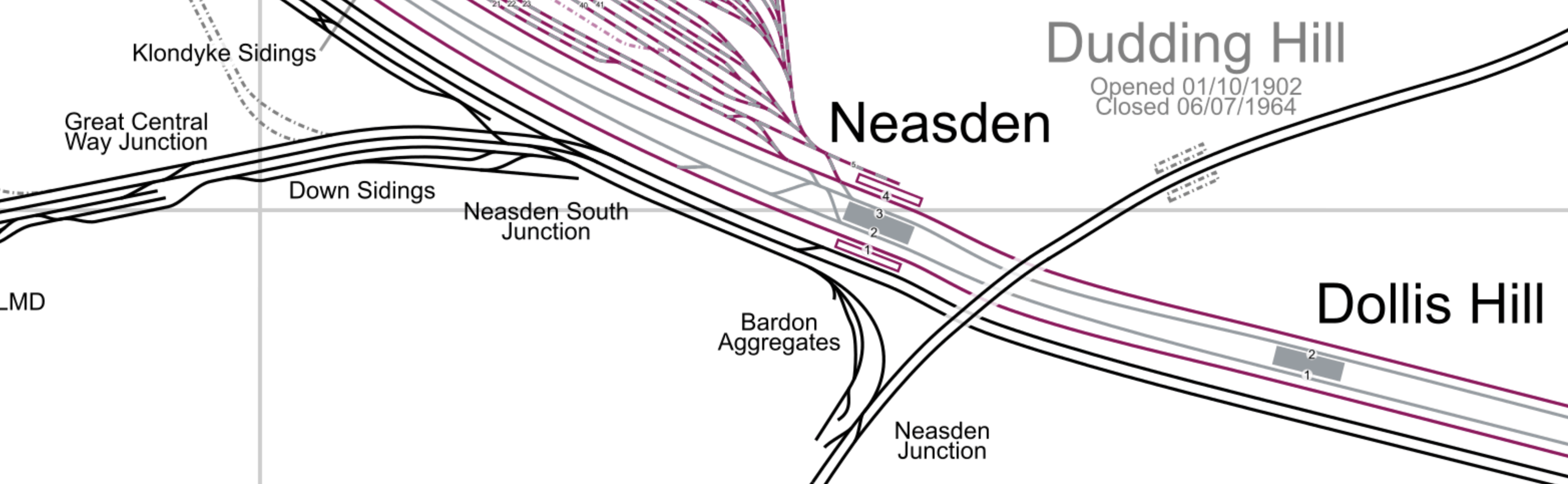
Note.
- The Dudding Hill Line is indicated by the former Dudding Hill station.
- The red tracks are Metropolitan Line tracks.
- The silver tracks are Jubilee Line tracks.
- The Southerly pair of lines through Neasden and Dollis Hill stations are Chiltern’s lines into Marylebone.
- The Chiltern tracks divide to the West of Neasden station, with the Aylesbury line following the other tracks and the Chiltern Main Line diverging to the West.
- London’s largest Underground Depot at Neasden, lies to the North-West in an area of London noted for few merits with the North Circular Road passing through.
I wonder, if the station and the depot offers a unique opportunity to offer large scale additions to London’s housing stock over the top of a rebuilt station and depot.
This Google Map shows the wider area.
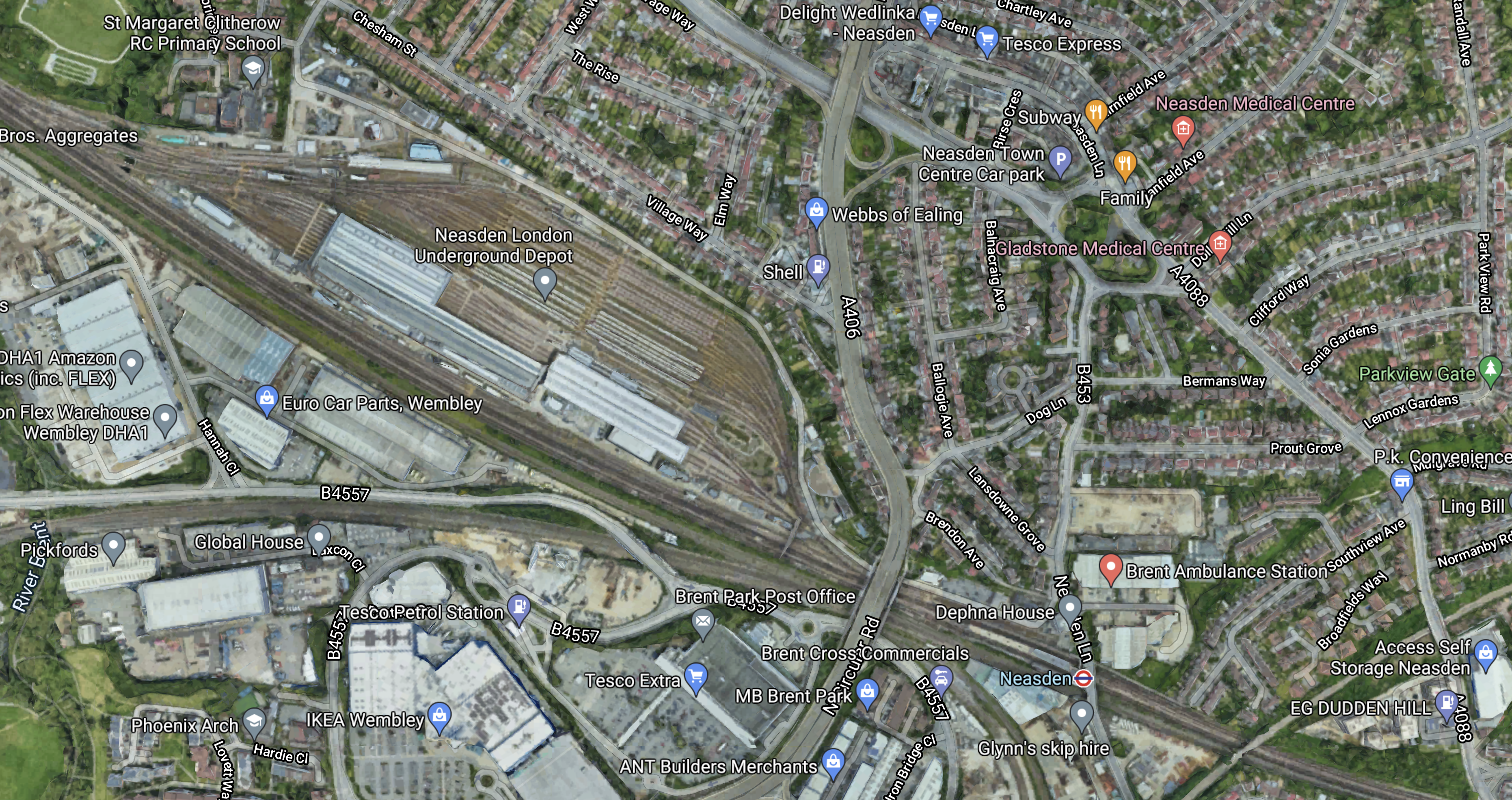
Note.
- Much of the depot appears to be open-air stabling for trains.
- The North Circular Road passes North-South between the depot and Neasden station.
- The Dudding Hill Line cuts across the South-East corner of the map.
- This corner of the map is labelled as Dudden Hill.
- According to Wikipedia, Dudding Hill is considered a more genteel spelling of Dudden Hill and could be as old as 1544.
It looks as if it would be relatively easy to develop over the top of the depot to create housing, industrial or commercial properties.
But why stop there and cover both the North Circular Road and the six tracks through Neasden station?
Neasden station could be rebuilt into a station with platforms on the following lines.
- Metropolitan Line
- Jubilee Line
- Chiltern Lines
- Dudding Hill Lines
Note.
- I estimate that Chiltern has a train about every six minutes, so some could stop.
- There might be space for a bay platform for Chiltern.
Neasden could be a major housing and transport hub.
- There could be large amounts of parking.
- Road access would be good.
- It would have good rail connections.
- It could have a bus interchange.
- London needs housing.
It might even be an alternative to Chiltern’s plan for a West Hampstead Interchange.
The Mayor of London, Transport for London and the Borough of Brent need to be bold!
Improvements To Chiltern’s Routes
Chiltern Railways have some plans that could improve services in North West London.
Using The Acton-Northolt Line
Wikipedia says this about using the Acton-Northolt Line to access new platforms at Old Oak Common station.
Upgrading the Acton–Northolt line (formerly the “New North Main Line”) to new platforms at Old Oak Common. This upgrade will also extend to London Paddington to increase capacity on the Chiltern Main Line as there is no room to expand the station at Marylebone.
This scheme has merit.
- The platforms would be connected to the Chiltern Main Line along the route of a partly-disused railway.
- The route could be double-tracked.
- There must be space for at least two new platforms.
- The new platforms could easily handle four tph.
- There may be a case for some new stations.
The scheme could add valuable extra capacity for Chiltern.
A Chiltern Metro
Wikipedia says this about a proposed metro service between Marylebone and West Ruislip stations.
- The Metro would have a frequency of four tph.
- It would call at Wembley Stadium, Sudbury & Harrow Road, Sudbury Hill Harrow, Northolt Park and South Ruislip.
- The service would require a reversing facility at West Ruislip.
- There would need to be passing loops at Sudbury Hill Harrow, and Wembley Stadium.
Given that the Chiltern Metro was first proposed over a decade ago, perhaps the concept could be increased in scope.
- Housing and other developments along the route may suggest that a station further out like High Wycombe might be a better terminal.
- ERTMS in-cab digital signalling is likely to be installed at some time, which would decrease headways between trains and allow more services.
- Electrification is likely in some form before 2040 and this will improve train performance.
- If Neasden station were to be rebuilt, as a comprehensive transport and residential development, I believe that this Metro service should also call at Neasden, as it would complement the West London Orbital Railway.
I believe that a review of the Chiltern Metro may mean, that an improved version is worth building.
Improvements To The Milton Keynes And Clapham Junction Service
I feel that this service could be key in improving services between North London and South London via the West London Line and High Speed Two’s station at Old Oak Common.
Currently, this service is as follows.
- It runs between Milton Keynes and Clapham Junction stations.
- It has a frequency of one tph.
- It calls at Bletchley, Leighton Buzzard, Tring, Berkhamsted, Hemel Hempstead, Watford Junction, Harrow & Wealdstone, Wembley Central, Shepherd’s Bush, Kensington (Olympia), West Brompton and Imperial Wharf stations.
- The service used to extend to South Croydon via Wandsworth Common, Balham, Streatham Common, Norbury, Thornton Heath, Selhurst and East Croydon.
- It uses Class 377 trains.
- It shares parts of the route with the London Overground.
I also think it has various issues and questions with respect to the future.
- The Class 377 trains are only 100 mph units, whereas the outer suburban trains on the West Coast Main Line are 110 mph Class 350 trains, which will soon be replaced by 110 mph Class 730 trains. Do the slower trains cause timetabling problems?
- Is one tph enough?
- The route doesn’t serve High Speed Two at Old Oak Common station.
- Is the service run by the right operator?
- What is the ideal Southern terminal?
These are my thoughts on the various issues.
The Service As A North-South Link
A friend, who lives in South London has told me, that if you go to an event at Wembley stadium the route is busy.
On the other hand, I’ve used it at midday on a Tuesday and found the trains empty.
But developed properly it could connect the following.
- Milton Keynes Central
- Bletchley for the East West Rail Link
- Watford for the West Coast Main Line to the North
- Wembley Central for Wembley Stadium and other entertainments
- Willesden Junction for the North London Line
- Hythe Road for High Speed Two, Crossrail and the Great Western Railway
- Shepherd’s Bush for the shopping.
- Clapham Junction for most of South London and the South of England
It would be a very useful cross-London route to complement Thameslink and the East London Line.
The Frequency
The current Milton Keynes and Clapham Junction has a frequency of one tph.
This may be enough for some parts of the route, as other services also provide services.
But many would argue, that perhaps South of Watford Junction, the service needs to be increased to connect the area to Old Oak Common and Clapham Junction.
I feel that High Speed Two, Crossrail and the Great Western Railway give so much connectivity, that between Clapham Junction and Willesden Junction needs a frequency of at least eight tph.
As the North London Line and the Watford DC Line are working at a frequency of four tph, this could indicate that a four tph direct service Watford Junction and Clapham Junction be ideal. Perhaps, it could continue North to Milton Keynes with a frequency of two tph.
The Trains
I am absolutely certain, that the full service needs to be operated by dual voltage trains, that are capable of running at 110 mph.
The Class 350/1 trains of West Midlands Trains would probably be ideal for the full service.
- They are dual voltage trains.
- They are 110 mph trains.
- They have a long distance interior.
They are being replaced with new Class 730 trains, so would be available.
If some services were running only as far North as Watford Junction, these could be either Class 378 or Class 710 trains of the London Overground.
The Connection To The West London Line And High Speed Two
This map from Wikipedia by Cnbrb shows the latest iteration of the lines at Old Oak Common station.
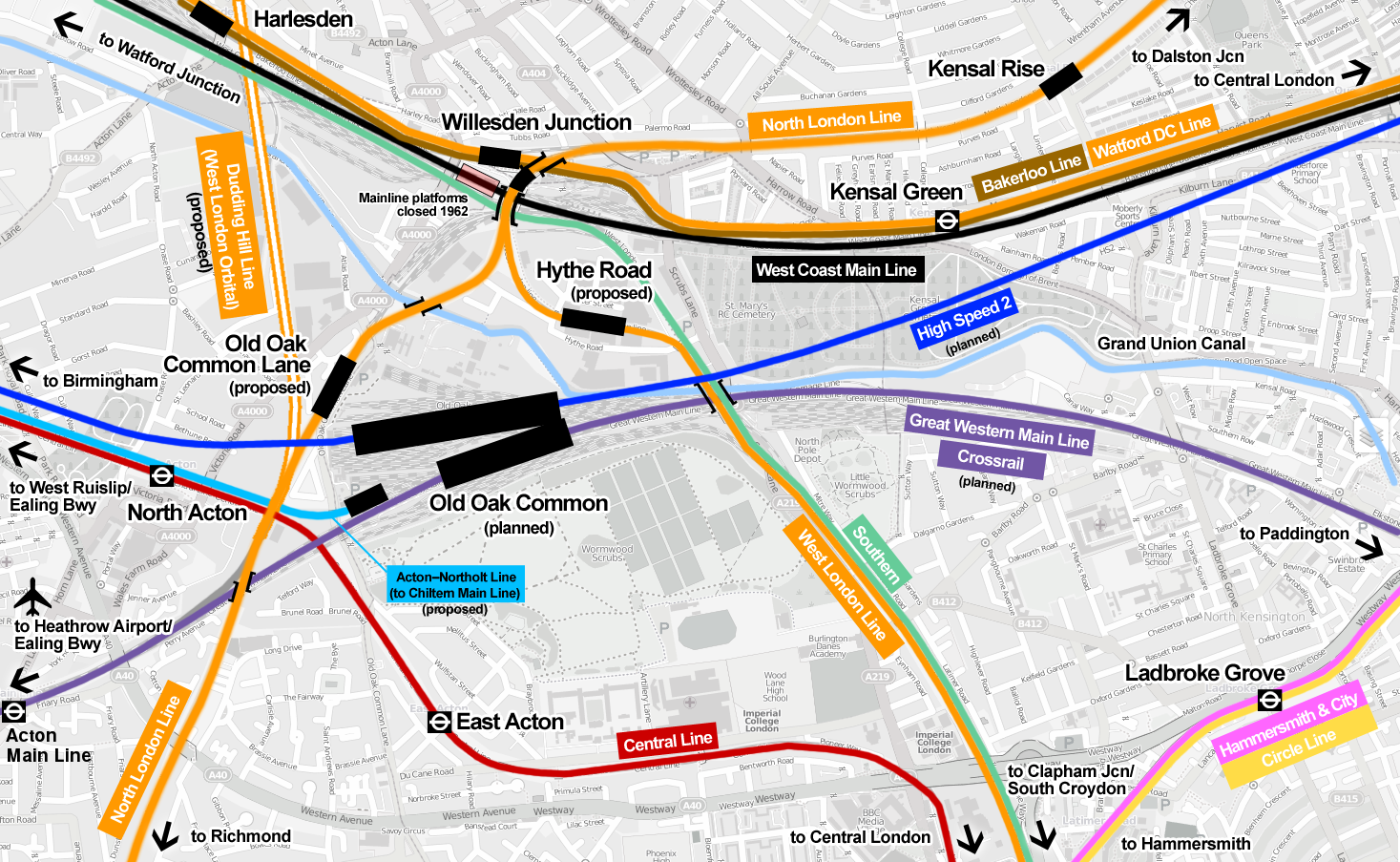
Note.
- The green route is taken by the Milton Keynes and Clapham Junction trains.
- The bright blue is High Speed Two.
- The purple is Crossrail.
- The orange is the Overground
- Hythe Road station is proposed for the West London Line to connect to Old Oak Common station for High Speed Two.
- Hythe Road station will have a bay platform to turn trains from the South.
- Old Oak Common Lane station is proposed for the North London Line to connect to Old Oak Common station for High Speed Two.
But where is the connection between the Milton Keynes and Clapham Junction service and Old Oak Common station for High Speed Two?
- Access from the South is not a problem as the Overground can be used to Hythe Road station.
- Extra services from the South can be run to and from the bay platform at Hythe Road station.
- Access from the East is not a problem as the Overground can be used to Hythe Road station.
- How do passengers go between say Wembley Central and Heathrow?
In addition for access from the West is the Overground can be used to Old Oak Common Lane station.
But as things stand at the moment the Milton Keynes and Clapham Junction service bypasses Hythe Road station and the only ways to go from Milton Keynes to Old Oak Common station for either High Speed Two, Crossrail or the Great Western is to do one of the following.
- Change to the Watford DC Line at Watford Junction, Harrow & Wealdstone or Wembley Central and then change to the Overground at Willesden Junction for either Old Oak Common Lane or Hythe Road station.
- Continue South to Shepherd’s Bush station, cross over to the other platform and then come back to Hythe Road station.
- Go via Euston station. OK for High Speed Two, but not for Crossrail or the Great Western.
They cannot be serious!
I hope that there is a cunning plan to enable the Milton Keynes and Clapham Junction service to connect.
Whilst on the subject of connections at Old Oak Common, where is the promised connection of Crossrail to the West Coast Main Line?
Were all these connections just kicked into the long grass and quietly forgotten, as they were deemed too difficult and/or expensive?
I think serious questions need to be asked about the design of Crossrail and High Speed Two at Old Oak Common.
Why weren’t Crossrail and High Speed Two designed to connect directly to the London Overground at Willesden Junction station perhaps by the use of a North South people mover serving the following lines?
- Bakerloo, Watford DC, West Coast Main and West London Orbital Lines at a rebuilt Harlesden station.
- London Overground at the high-level Willesden Junction station.
- High Speed Two
- Crossrail and the Great Western Railway
- The new Chiltern platforms.
- Central Line at East Acton station.
Note.
- Hythe Road and Old Oak Common stations would not be needed.
- The Milton Keynes and Clapham Junction service would call additionally at the rebuilt Harlesden station.
The current design of Old Oak Common stinks like a horse designed by a committee!
The Northern Terminal
I suggested earlier that some trains use Watford Junction and others use Milton Keynes Central.
Both stations have the capacity and the connectivity.
The Southern Terminal
In the last ten years, South Croydon, East Croydon and Clapham Junction have been used as the Southern terminal.
Thameslink seems to have chosen its various terminals to satisfaction of the travelling public, so perhaps the same method or personnel should be used.
The Operator
The Gibb Report said that this service should be transferred to the London Overground and I wrote about this proposal in Gibb Report – East Croydon – Milton Keynes Route Should Be Transferred To London Overground.
This is one suggestion, but I do wonder, if it should be transferred to West Midlands Trains and run in conjunction with their West Coast Main Line services.
- The service needs 110 mph trains.
- Timetabling and operation should be easier.
- London Overground trains don’t have a long-distance interior.
On the other hand, trains running between Watford Junction and Clapham Junction would probably be better if they were London Overground trains.
Conclusion
I believe that by using the current network and some modern trains and signalling, the passenger services to the West of the capital can be substantially improved.

