‘I Get To Work On The Most Scenic Railway Line In The World’
The title of this post, is the same as that of this article on the BBC. It is a quote from someone in the BBC article.
This is the sub-heading.
Have you heard the one about the railway line that was threatened with closure, so lots of people started using it and it was saved?
These three opening paragraphs add some detail to the story.
Welcome to the Settle to Carlisle line, the quirky steel road through some of Britain’s most magnificent countryside.
The line starts in Leeds and passes through Shipley and Skipton, but it is the section between North Yorkshire and Cumbria that is world-famous for its views.
Heading north from Settle, the peak of Pen-y-Ghent soon looms large, with Whernside and Ingleborough following a few miles later.
The saving of the line in the 1980s, is one of those classic British tales of a fight against bureaucracy, which like all these tales involved a dog, who gets a heroic mention in the BBC article.
In the next few sections, I will detail how improvements to the rail infrastructure between Bradford, Carlisle, Lancaster, Leeds have gradually developed the rail infrastructure, so that the Settle and Carlisle Line can play an increasing part in improving the economic outlook for a large area of England.
Is The Settle And Carlisle Line In Good Condition?
Google AI gives this answer to the question in the title of this section.
Yes, the Settle-Carlisle line is in good, operational condition and is considered a vital, well-maintained part of the National Rail network.
Despite a history of threatened closures and past structural issues, major investments have secured its future, and it currently carries over 1.2 million passengers a year.
Here is the current status of the line as of early 2026:
Infrastructure Condition: Following significant repairs, including a major £2.1 million project on the Ribblehead Viaduct completed in 2021 and extensive work at Eden Brows (2017), the line’s 14 tunnels and 22 viaducts are in good condition.
Active Usage: It is regularly used by Northern passenger services and is a designated diversionary route for mainline express trains when the West Coast Main Line is closed.
Operational Status: The line is fully operational, featuring regular commuter services, tourist trains, and steam heritage charter trains.
Safety & Upgrades: While it is a historic line, the infrastructure is deemed safe.
Occasional, isolated issues (like the 2022 freight derailment near Carlisle) have been managed with swift repairs.As of early 2026, the line is heavily used, with special passenger services and 150th-anniversary celebrations planned.
It’s probably in better condition, than many houses in the UK.
What Is The Operating Speed Of The Settle And Carlisle Line?
Google AI gives this answer to the question in the title of this section.
The Settle and Carlisle Line generally operates at a maximum speed of 60 mph/97 km/h.
While historically faster, this 60 mph limit is standard for modern passenger and freight services on the route.
Usage Examples and ContextPassenger Services: Northern Rail and various chartered services, including the scenic “Staycation Express” HST 125, operate along the route.
Freight: The line is used for heavy freight, including oil, timber, and cement trains.
Diversions: The line is frequently used as a, albeit slower, alternative route (approx. 2.5 hours for Leeds-Carlisle) during major West Coast Main Line (WCML) closures.
Scenic Tourism: The line is renowned as one of England’s most scenic, carrying over a million travelers annually, with notable sights like the Ribblehead Viaduct.
The Settle And Carlisle Line Is Well Connected To The Rail Network At The Northern End
This OpenRailwayMap shows how the line connects to the West Coast Main Line and the Tyne Valley Line, to the South of Carlisle.
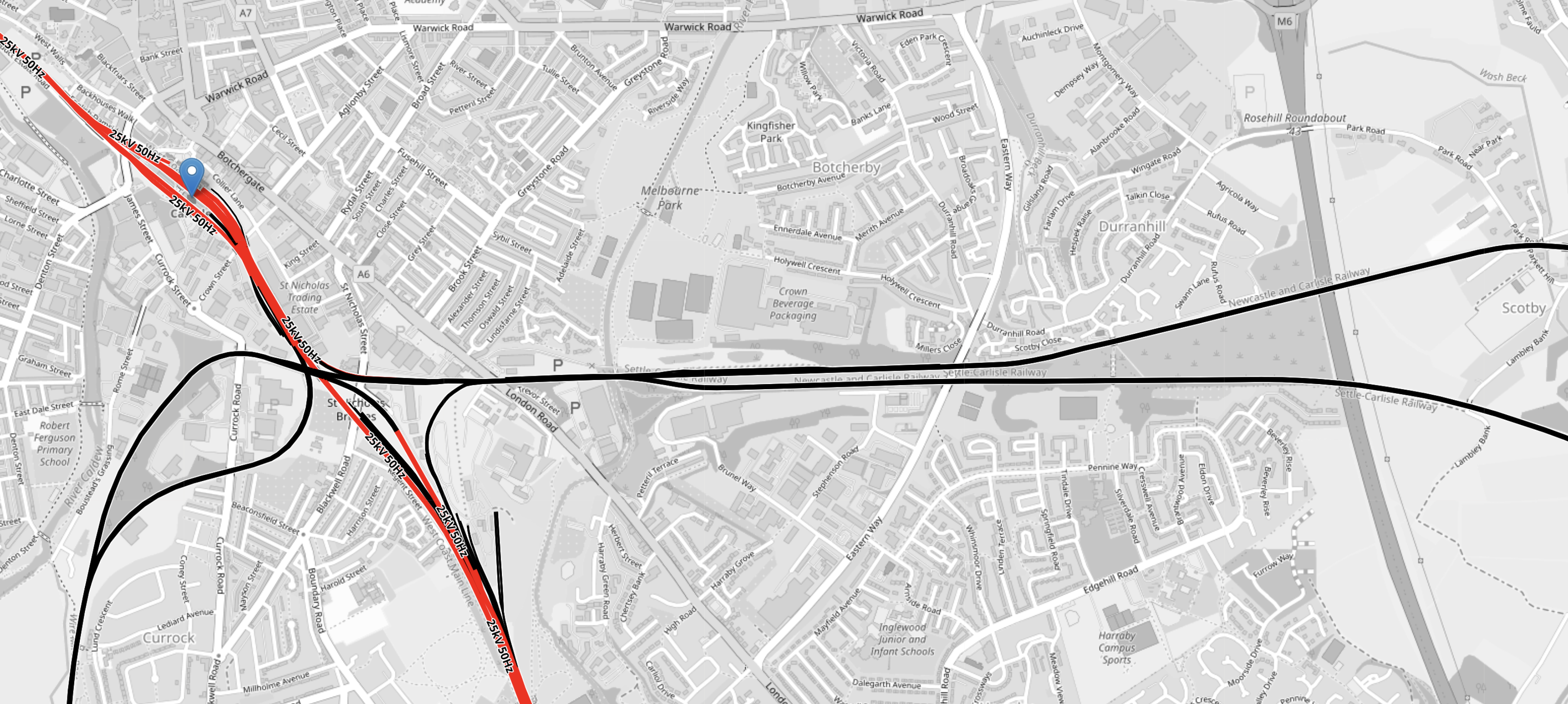
Note.
- Electrified lines are shown in red and lines shown in black are not electrified.
- The electrified West Coast Main Line runs diagonally across the South-West corner of the map.
- The blue arrow on this line, indicates Carlisle station.
- The Northernmost of the two black cross lines is the Tyne Valley Line between Carlisle and Newcastle.
- The Southernmost of the two black cross lines is the Settle And Carlisle Line, which goes South to Settle, Bradford Forster Square, Leeds and Settle stations.
- The line going South-West joins the Cumbrian Coast Line, which joins the West Coast Main Line at Carnforth.
It does appear that the junction South of Carlisle is very comprehensive and allows very flexible routing.
The Settle And Carlisle Line Is Well Connected To The Rail Network At The Southern End
This OpenRailwayMap shows how the line connects to the West Coast Main Line and the Tyne Valley Line, to the North of Skipton.
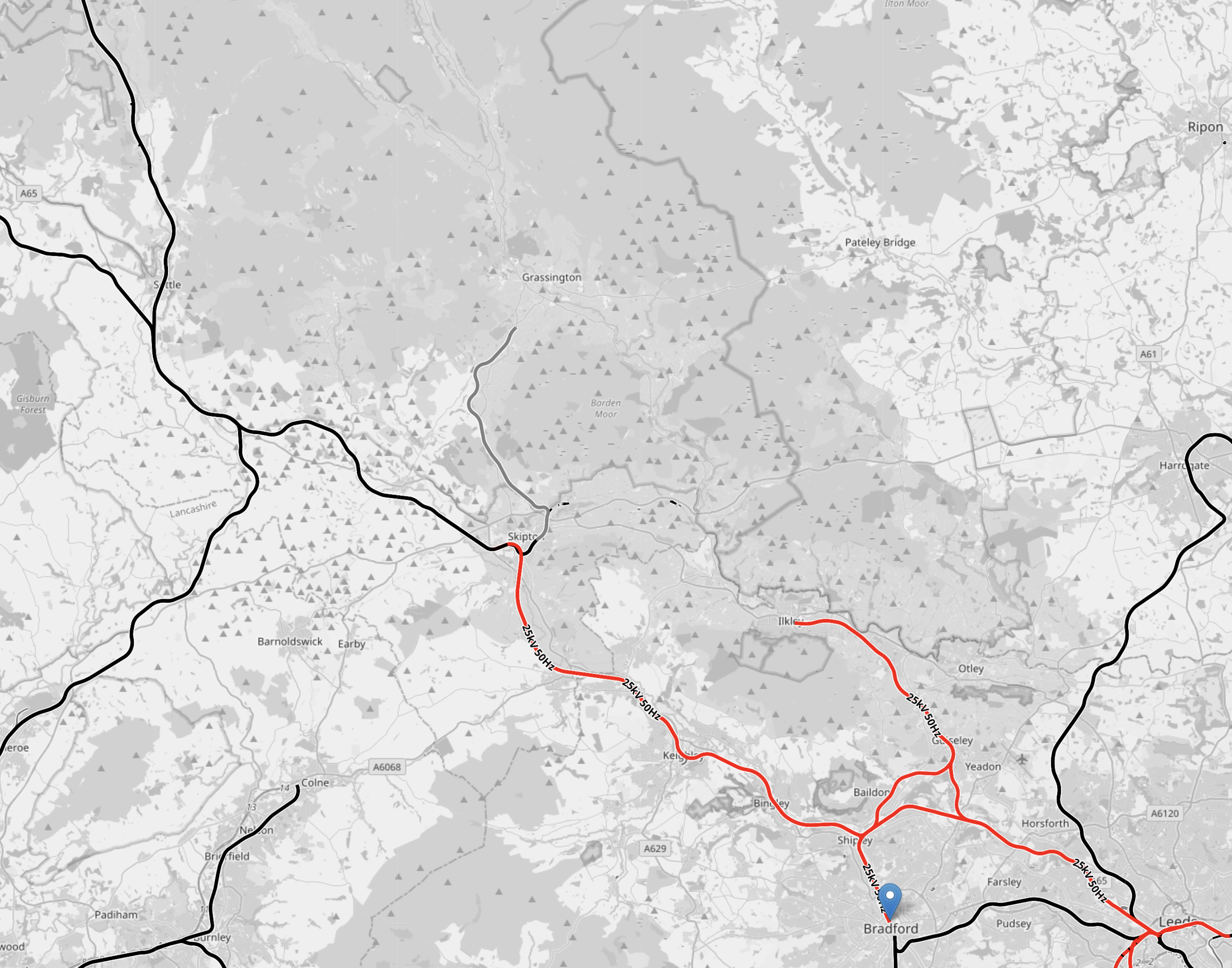
Note.
- Electrified lines are shown in red and lines shown in black are not electrified.
- The blue arrow on this line, indicates Bradford Forster Square station.
- The fully-electrified Leeds station is in the South-East corner of the map. You can just pick out the ee of the name.
- The electrified Leeds-Bradford Line connects Bradford Forster Square and Leeds station via Shipley station and its triangular junction.
- The electrification continues in a North-Westerly direction as far as Skipton, where the red track stops.
- Electric intercity trains can run from London to Leeds, Bradford Forster Square and Skipton.
- Self-powered intercity trains can also run from London to Harrogate, which is on the line without electrification, that runs North from Leeds.
- Leeds receives a London service of two trains per hour (tph).
- Bradford Forster Square station receives a London service of one train per two hours (tp2h) via Leeds.
- Harrogate station receives a London service of 1 tp2h via Leeds.
- Skipton station receives a London service of one train per day (tpd) via Leeds.
The Leeds-Bradford area gets a frequent service to London and the South.
This OpenRailwayMap shows how the Settle and Carlisle Line connects to the electrification at Skipton.
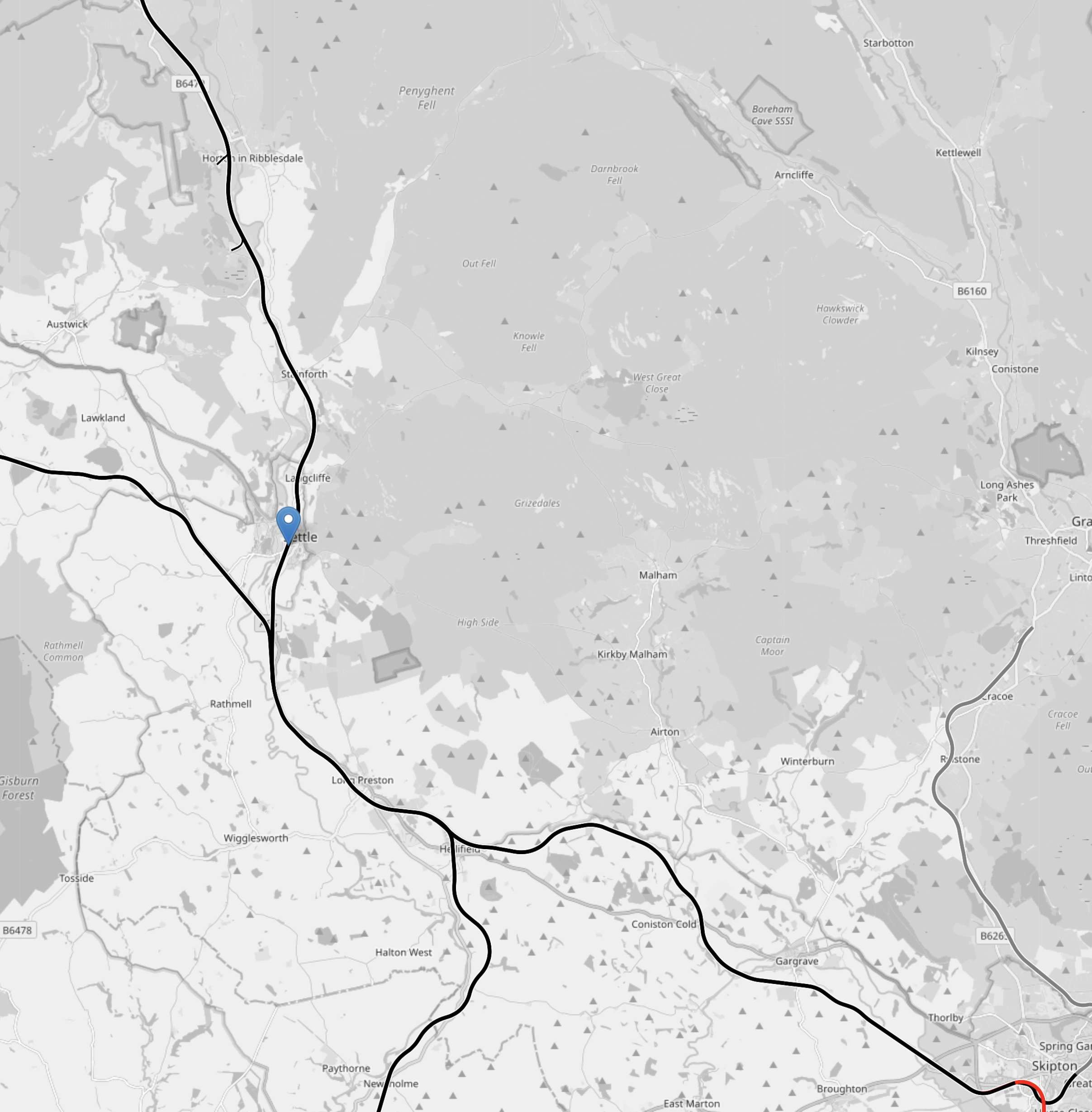
Note.
- Electrified lines are shown in red and lines shown in black are not electrified.
- The only electrified lines on the map are at Skipton station in the South-East corner of the map.
- The blue arrow on this line, indicates Settle station.
- Skipton and Settle stations are 15.2 miles apart.
- Settle and Carlisle are 71.5 miles apart.
To bridge the gap in the electrification between Carlisle and Skipton, trains will need to be able to run 86.7 miles on their own power.
Bridging The Carlisle And Skipton Gap
But once the train gets to Carlisle or Skipton, the train will have the luxury of 25 KVAC overhead electrification to both power the train and charge any batteries.
In my opinion, there are three intercity trains coming into service, that could handle an 86.7 mile gap in electrification.
- East Midland Railways’s Class 810 train, which is a diesel bi-mode with lots of power, which is described in this Wikipedia entry.
- LNER’s Class 802 trains, which currently is a diesel bi-mode, that Hitachi could convert into a Hitachi Intercity Battery Train, which is described on this Hitachi web site.
- LNER’s Class 897 trains, which is a diesel tri-mode, that CAF are building in Spain and Wales, which is described in this Wikipedia entry.
In How Far Will A Hitachi Intercity Battery Train Travel Without Using The Electrification?, I answer the question for both Hitachi and CAF trains.
Surprisingly, I got the answer of a range of 120 miles for both the Hitachi and CAF trains. But could it be that Network Rail and the train companies wanted a range of 120 miles to electrify the UK rail network and so a 120 mile battery range was in the specification.
My estimate of 120 miles for Hitachi’s trains, was also confirmed by the company.
Bridging The Gaps
Some other distances, where gaps must be bridged include.
- Sheffield and South Wigston – 69.4 miles
- Holyhead and Chester – 84.4 miles
- Exeter and Basingstoke – 124,3 miles
- Fishguard Harbour and Cardiff Central – 119.1 miles
- Aberystwyth and Shrewsbury – 81.5 miles
- Bristol Temple Meads and Newbury – 70.8 miles
- Inverness and Aberdeen – 108.3 miles
- Carlisle and Glasgow Central via Dumfries – 115.9 miles
- Hereford to Didcot Junction – 96.9 miles
120 miles could be a good fit.
Could it be that that distance was the range of a steam locomotive on a full load of water?
The Updating Of Bradford Forster Square Station
This is now a four-platform station, with two platforms able to take a pair of 5-car Hitachi or the new CAF 10-car Class 397 trains.
In Bradford Forster Square Station – 20th May 2025, I describe and show pictures of the updated station.
Bradford Forster Square station now gets seven trains per day to and from London King’s Cross via Leeds.
This article on the BBC, which is entitled New Platform’s Opening Gives Bradford More Trains has this sub-heading.
A new £35m platform at Bradford’s Forster Square Station has opened – boosting rail services in the city
£35million seems a lot of money to spend to just increase the number of services between King’s Cross and Bradford, even though 2025 was the year that Bradford was UK City of Culture, but there may be valid reasons to create a new route between London and Scotland, using the Settle and Carlisle Line.
- The Settle and Carlisle Line is one of the UK’s most famous scenic routes with 20 viaducts, 14 tunnels and countless beautiful vistas along its 72 mile track.
- You put the Mona Lisa on display, not in a store.
- LNER now has battery-electric bi-mode trains, with CAF tri-mode trains due to enter service in 2028, that can both handle the 86.7 mile gap in the electrification in silence.
- The CAF trains have extra diesel power, about which CAF is not disclosing much. This to me, suggests some innovative use.
- There appear to be no flights between Leeds/Bradford Airport and Scotland.
- There appear to be no direct trains between Glasgow and West Yorkshire.
- A direct train between Glasgow and Leeds and Bradford Forster Square would add additional connectivity between Scotland and Yorkshire.
- With the cancellation of High Speed Two, we need more train paths between London and Scotland.
- Decarbonisation of aviation is difficult, but replacing fossil-fueled planes with zero-carbon trains is easier.
- A single Class 897 train can carry 569 seated passengers, which is about 3.5 times the capacity of a single Airbus A320.
- The proposed Leeds Metro would bring passengers to the new service.
- Leeds and Bradford could see an upturn in tourism.
I also think the line will not be lightly used due to its iconic status.
How Would A Leeds/Bradford And Scotland Service Call At Bradford Forster Square Station?
- Bradford Forster Square station now gets seven trains per day to and from London King’s Cross via Stevenage, Newark Northgate, Doncaster, Wakefield Westgate, Leeds and Shipley.
- There is one fewer train on Sunday.
- There is a triangular junction at Shipley station, which connects the three electrified lines to Leeds, Bradford Forster Square and Skipton.
This OpenRailwayMap shows Shipley station and the triangular junction.
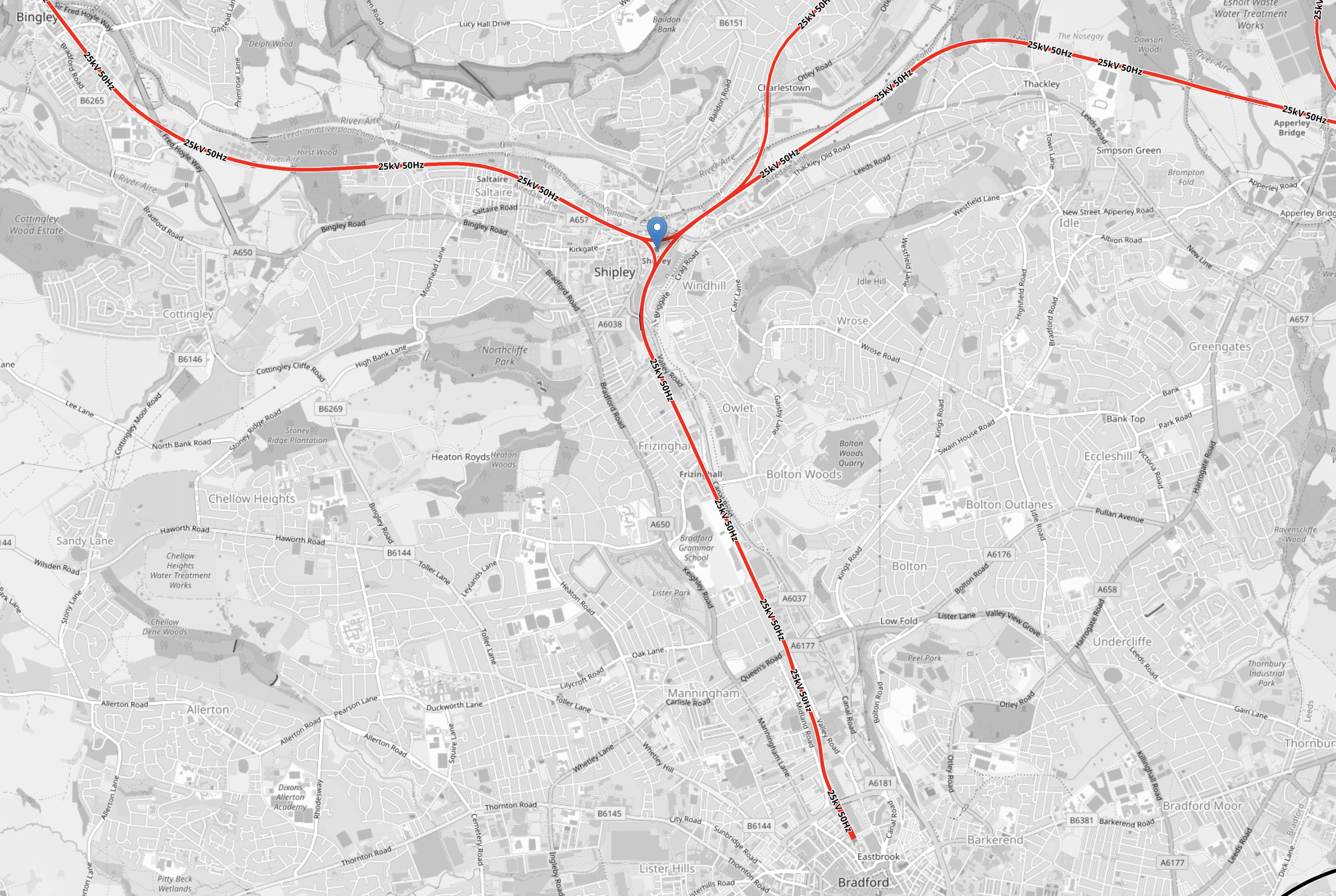
Note.
- All rail lines are electrified and shown in red.
- The blue arrow on this line, indicates Shipley station.
- Shipley station appears to be in the middle of the junction.
- The line going East connects to Leeds station.
- The line going South connects to Bradford Forster Square station, which is at the end of the line.
- The line going West connects to Skipton station and the Settle and Carlisle Line.
Trains returning to London would reverse out of Bradford Forster Square station and take the Eastern route through Shipley and Leeds back to London.
- An appropriate number of trains for Carlisle and Scotland, could surely just reverse out of the station and take the Western route through Skipton station and go on to the Settle and Carlisle Line.
- The trains would call at Wakefield Westgate, Leeds, Shipley, Bradford Forster Square and Skipton stations in the Leeds/Bradford conurbation.
- Other stations could be added to the route if required.
- The trains would effectively reverse direction in their call at Bradford Forster Square station.
- Going North the trains might check their battery levels in Bradford Forster Square station and use a fast-charger if necessary.
- Going South, there would be no need for charging, as the route South from Bradford Forster Square station, is already fully-electrified.
- Would the operator, use this longer stop to replace the crew with a fresh one?
It could be a simple and efficient way to run a London and Scotland service via the Settle and Carlisle Line.
What About Hull, Sheffield And York?
I’m asking this question, as Yorkshire is a large county and this article has only mentioned a few places, where people live and might need to go to London or Scotland.
In February, I wrote Northern Launches New Yorkshire Flyer Fast Service Between Leeds And Sheffield.
I’m fairly sure that Hull, York and other cities and large towns in Yorkshire already have a good regional service to Bradford Forster Square or Leeds station, which will give a good connection to the new service.
Could Dumfries Be Served By Using The Glasgow South Western Line?
This OpenRailwayMap shows the Southern part of the Glasgow South Western Line.
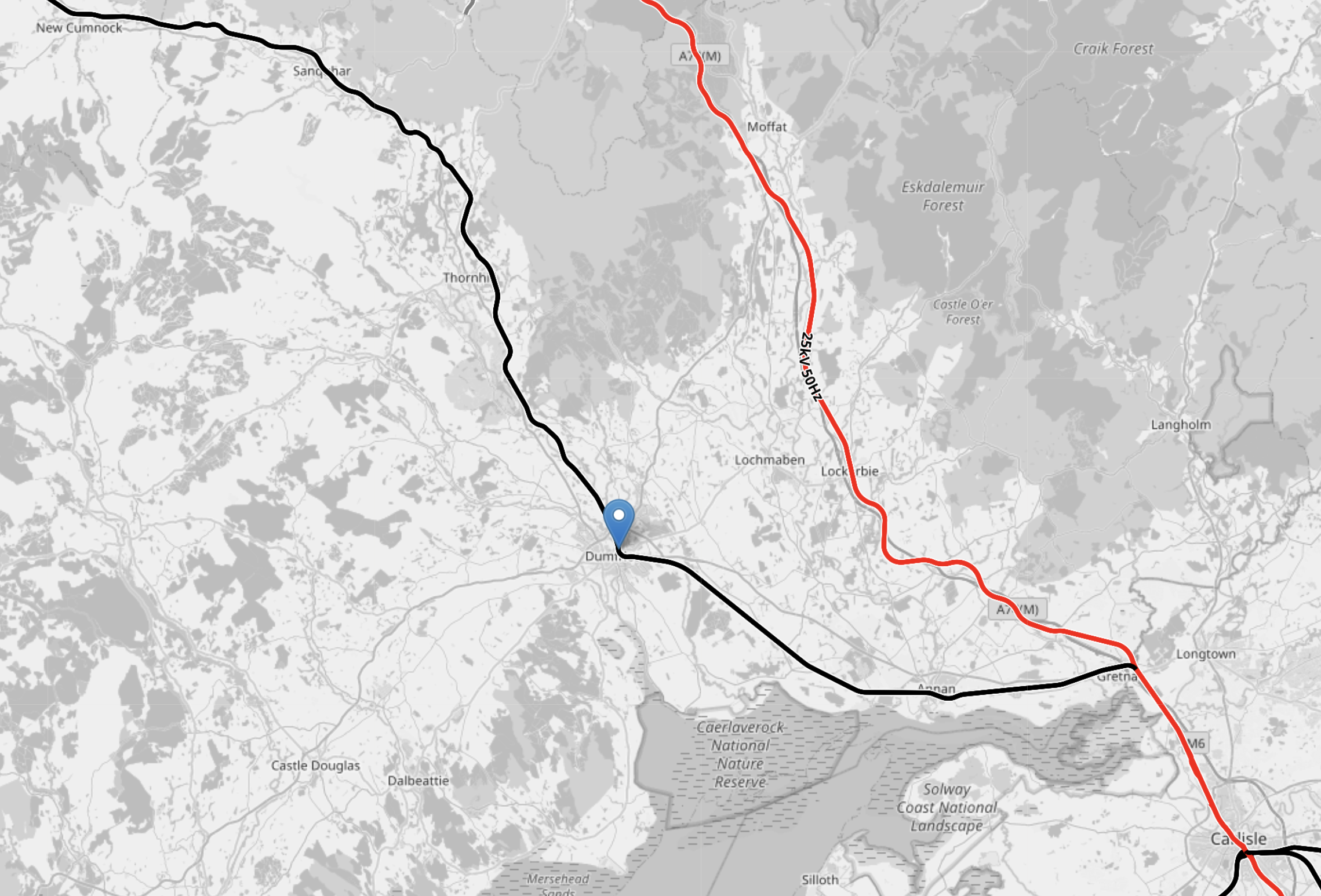
Note.
- Electrified lines are shown in red and lines shown in black are not electrified.
- The blue arrow on the black track, indicates Dumfries station on the Glasgow South Western Line.
- The red track is the West Coast Main Line.
- Carlisle is in the South-East corner of the map.
- Carlisle and Glasgow Central via Dumfries is 115.9 miles
- The Thames-Clyde Express, ran on this route until 1974.
- According to the Wikipedia entry for the Thames-Clyde Express, the train called at Dumfries and Kilmarnock stations.
From this brief look it appears that the new service could include Dumfries and should be able to serve the town on battery power.
Is More Capacity Needed On The West Coast Main Line Between Carlisle And Glasgow?
I asked Google AI, this question, to see if there is capacity.
This was the answer I received.
Yes, increased capacity and infrastructure enhancements are required on the West Coast Main Line (WCML) between Carlisle and Glasgow, as the line is currently full and unable to meet modern, growing passenger and freight demands.
Upgrades are necessary to tackle aging infrastructure, bottlenecks, and the need for more frequent services.
Key Aspects of the Need for Capacity:Full Capacity: The WCML is essentially full, with little space left for growth, despite 75 million passengers using it annually.
Freight and Passenger Growth: Passenger numbers are expected to double by 2050, and the line is a crucial artery for Anglo-Scottish freight.
Infrastructure Age: The northern section is undergoing its largest upgrade in half a century to address reliability issues.
Performance Bottlenecks: Specific locations, such as those north of Carlisle, require signaling and track improvements to prevent delays.
Proposed Upgrades: Current initiatives include a £400m investment until March 2029 for upgrades, including signalling and track renewals, though these are largely to boost reliability rather than provide a massive increase in capacity.
It looks to me, that a bit of a redesign and some use of battery trains on the Glasgow South Western Line, might squeeze a few more trains into the route.
Delta And Centrica Launch Scalable Off-Grid Fuel Cell Power Solution
The title of this post, is the same as that of this news item from Centrica.
The news item is accompanied by this picture.
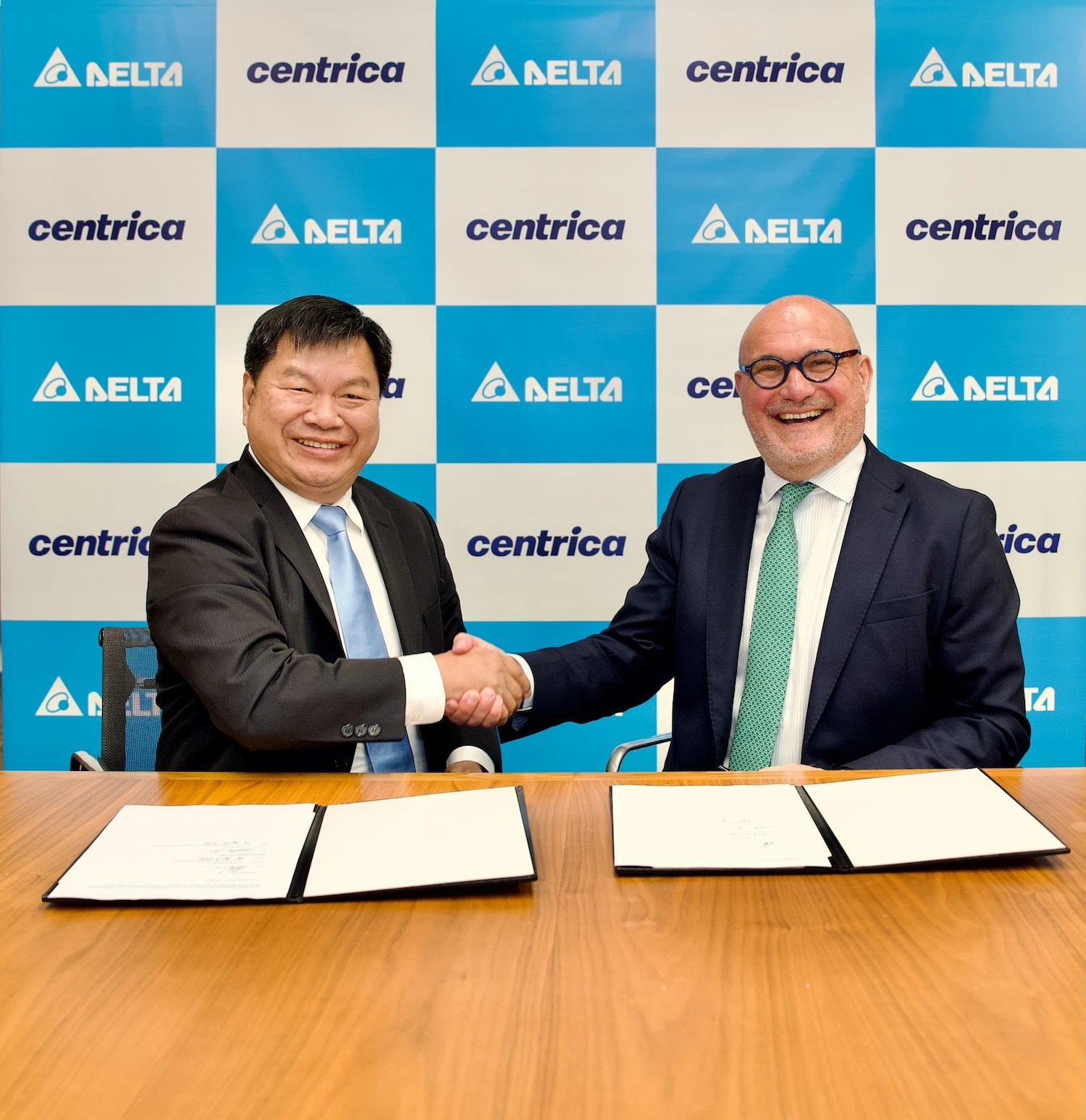
So who is the happy oriental-looking guy sitting with the equally-happy Robert Booker, who is Chief Strategy and Transformation Officer at Centrica?
He is Charles Tsai, General Manager of Hydrogen Energy BD at Delta Electronics Inc.
Google AI produces this answer to “Who Are Delta Electronics Inc.”
Delta Electronics, Inc. is a Taiwan-based global leader in power and thermal management solutions, founded in 1971. Renowned as the world’s top provider of switching power supplies and DC brushless fans, they focus on energy-efficient, IoT-based smart solutions for industrial automation, EV charging, data centers, and renewable energy.
Core Business Areas
Power Electronics: A global leader in switching power supplies, thermal management, and components for cloud computing and electric vehicles (EVs).
Automation: Offers industrial and building automation systems to enhance manufacturing efficiency.
Infrastructure: Provides data center infrastructure, EV charging solutions, and telecom power systems.
Key Facts and Highlights
Market Position: Often cited as the world’s largest provider of computer power supplies, with significant market share in server power units.
Sustainability Focus: Dedicated to “innovative, clean and efficient energy solutions” with a strong ESG (Environmental, Social, and Governance) focus.
Global Presence: Operates manufacturing plants and R&D centers worldwide, including Taiwan, China, Thailand, Mexico, India, and Europe.
Financials: Publicly listed on the Taiwan Stock Exchange (code: 2308).
Delta Electronics serves industries looking for energy-efficient, AI-ready, and sustainable technology solutions.
Delta Electronics has had an R & D facility in East Kilbride in Scotland for nearly ten years.
This is the sub-heading of Centrica’s news item.
Centrica and Delta Electronics, Inc. today announced an infrastructure partnership to serve the data centre market and energy intensive industries in the UK and Europe, launching with Solid Oxide Fuel Cells (SOFCs) for off-grid energy generation.
These two paragraphs add more detail to the partnership.
This partnership creates a pathway for offering customers competitively priced, on-site power generation, significantly reducing exposure to wholesale electricity market volatility and grid capacity constraints. The partners plan to establish a demonstration site in the UK within the next 12 months, with a medium-term goal of delivering MW-scale, rapidly deployable ‘gas-to-power’ solutions within the next three to five years.
Delta’s SOFCs, licensed by British solid oxide technology leader Ceres, provide stable, low-carbon energy fuelled by natural gas and reach 60% electrical efficiency – significantly higher than the open-cycle gas turbines typically used for on-site and back up generation (35%-42%). These cells are designed to meet the growing power demands of data-intensive digital infrastructure in the UK and Europe which underpin economic growth, digital sovereignty and the energy transition.
This partnership appears to be a partnership of three world-leading companies doing what they do best, to efficiently satisfy the enormous power need for data centres and energy intensive industries.
- Centrica will make sure, that there is enough natural gas. They have a strong reputation for trading gas and source it from all over the world.
- Ceres will provide the Solid Oxide Fuel Cells (SOFCs), that will efficiently convert this natural gas into electricity. Ceres’s SOFCs are fifty percent more efficient than open-cycle gas turbines, which is a large improvement.
- Delta Elctronics then work their high power electronic wizardry to supply the electricity.
Nothing is said about what happens to all the carbon dioxide. It will certainly be captured and will probably be of food grade, but this could be the next piece of the jigsaw that Centrica are putting together.
Could HS2 Trains Continue To Wales?
The title of this post is the same as that of this article on New Civil Engineer.
This is the sub-heading.
North Wales business group Growth Track 360 has recently renewed its calls for electrification of the North Wales Main Line to accommodate HS2 trains.
These two paragraphs add some more detail.
The group is pushing for electrification of the North Wales Main Line to Crewe and Warrington, which would allow HS2 trains to run directly from London and Birmingham to Chester and beyond.
It has also commissioned a series of conceptual artworks to help the public visualise the proposed improvements. Produced by Nataliia Marchuk, a Ukrainian Fine Arts undergraduate at the University of Chester, the first shows an HS2 train passing Conwy Castle on an electrified North Wales Main Line.
The article dates from May 2022, so it is a bit old now, but transport in Wales is moving on.
On the Growth Track 360 web site, I found this mission statement.
Growth Track 360 has been launched to secure £1bn of rail improvements, which would transform the North Wales and Cheshire regional economy and deliver 70,000 new jobs over 20 years.
It’s being led by a cross-border alliance of business, political and public sector leaders.
If successful, it would lead to a massive boost to the North Wales, Cheshire and Wirral economies, linking them with the planned HS2 line between London and the North of England.
This OpenRailwayMap shows the railways in the area.
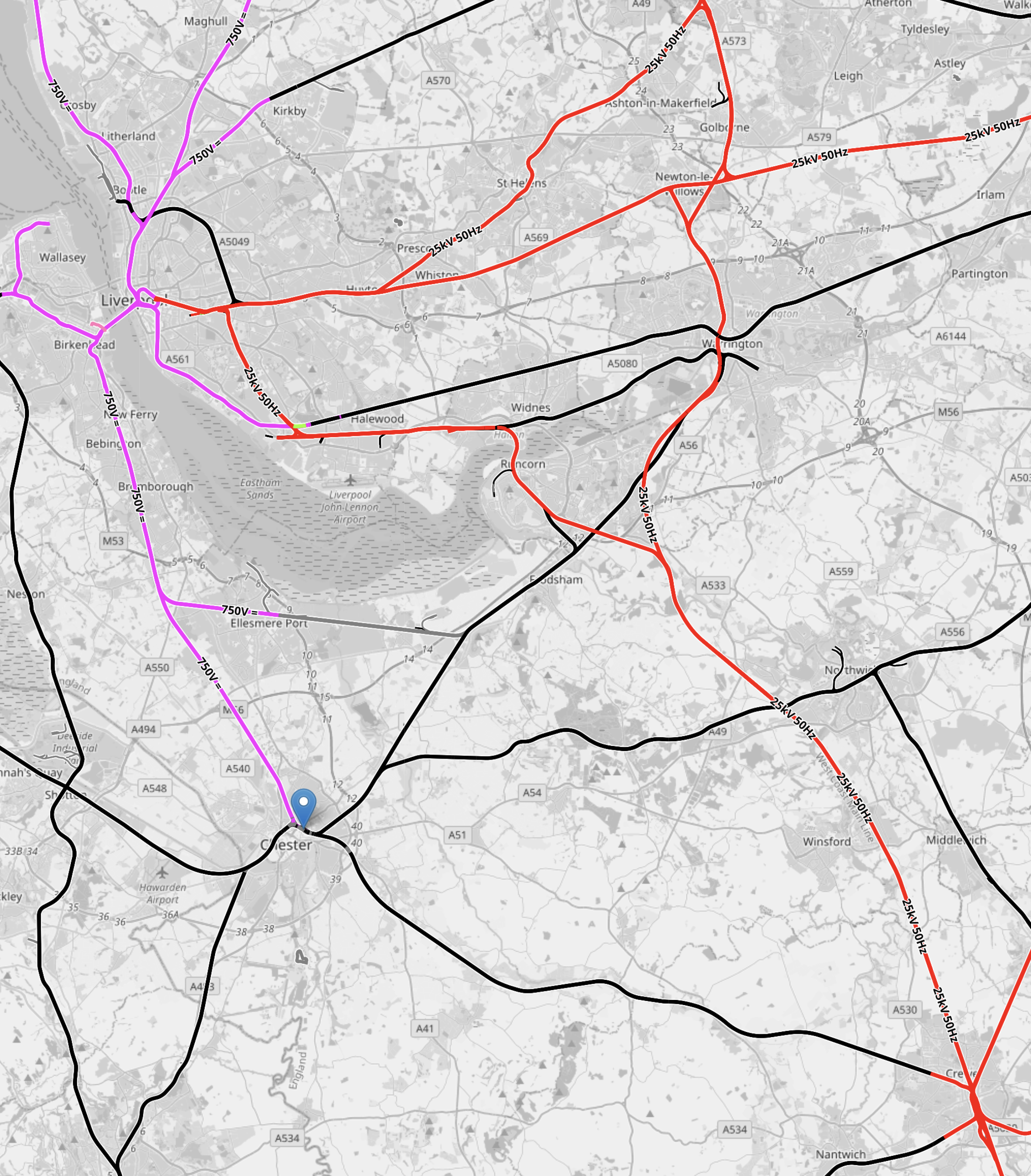
Note.
- The lilac tracks are Merseyrail’s third rail network.
- The lilac knot in the North-West corner of the map is the city of Liverpool.
- The red tracks are electrified with 25 KVAC overhead and connect Liverpool to Manchester in the East and Crewe in the South-East corner of the map.
- The black tracks are not electrified.
- The blue arrow marks the position of Chester.
- The lilac line going North from Chester is the Borderlands Line to Liverpool.
- Chester and Crewe are a distance of just over twenty-one miles.
Looking at the route on Google maps, I don’t think to electrify between Crewe and Chester will be the most difficult of projects.
The Advantage Of Electrifying Between Crewe and Chester
In How Far Will A Class 897 Train Travel Without Using The Electrification?, I showed that that these new tri-mode trains have a range of 120 miles.
In The Data Sheet For Hitachi Battery Electric Trains, I look at the data sheet, that Hitachi published in late 2023.
These were my conclusions about the data sheet.
These are my conclusions about Hitachi’s battery packs for Class 80x trains, which were written in November 2023.
- The battery pack has a capacity of 750 kWh.
- A five-car train needs three battery-packs to travel 100 miles.
- A nine-car train needs five battery-packs to travel 100 miles.
- The maximum range of a five-car train with three batteries is 117 miles.
- The maximum range of a nine-car train with five batteries is 121 miles.
As battery technology gets better, these distances will increase.
Hitachi have seen my figures.
They also told me, that they were in line with their figures, but new and better batteries would increase range.
It looks like Great British Railways will have at least two 125 mph, 120 mile range express trains away from the wires.
These are distances from Chester.
- Holyhead – 84.4 miles
- Bangor – 59.7 miles
- Llandudno Junction – 44.7 miles
It would appear that electrifying between Crewe and Chester will be an insurance policy to make sure, that battery-electric trains can serve Holyhead.
Electrifying between Crewe and Chester, will also ensure, that any battery-electric train leaves Chester with a full battery.
Are There Any Battery-Electric High Speed Trains?
I asked Google AI, this question and received this answer.
Yes, battery-electric high-speed and intercity trains are entering service, primarily in Europe. While many battery trains are designed for regional speeds, Hitachi Rail offers intercity battery trains capable of high speeds and over 70 km ranges. In 2026, the UK’s Great Western Railway (GWR) launched a record-breaking, fast-charging battery train with a 200-mile range.
Key Developments in Battery Trains:
Hitachi Rail Intercity Battery Trains: These trains can operate at intercity speeds, designed for both electrified and non-electrified routes, enhancing sustainability without sacrificing performance.
GWR Class 230 Battery Train: This UK-based, three-car train achieved a world record of over 200 miles on a single charge in 2025.
Rapid Charging Technology: The GWR train uses a 2,000kW fast charger, allowing it to recharge in just over three minutes while stopped at a station, making it suitable for extending electrical service without full, expensive track electrification.
Regional Battery Trains: Beyond the UK, Hitachi’s battery trains (Full battery, Hybrid, Tri-brid) are part of a broader shift in Europe toward lowering emissions. In Argentina, battery-electric units are also used for regional services, designed to operate with solar-powered charging.
These developments show a move towards using battery technology to reduce reliance on diesel trains on partially electrified lines.
How Long Will HS2 Take To Go Between London Euston And Holyhead?
Consider.
- Sources like the House of Commons Library give HS2 times of 56 minutes between London Euston snd Crewe.
- Avanti West Coast’s Class 805 trains take two hours and two minutes between Crewe and Holyhead.
I don’t think that a sub-three hour journey is unreasonable.
Is A Green Route Between London And Dublin Possible?
As we’re more likely to see a zero-carbon ferry, than a zero-carbon airliner. Yes!
Blackpool North Station Platform Layout
In this post, I will look at the current platform layout at Blackpool North station and see if it needs to be updated for High Speed Two.
This OpenRailwayMap shows the current platform layout at the station.
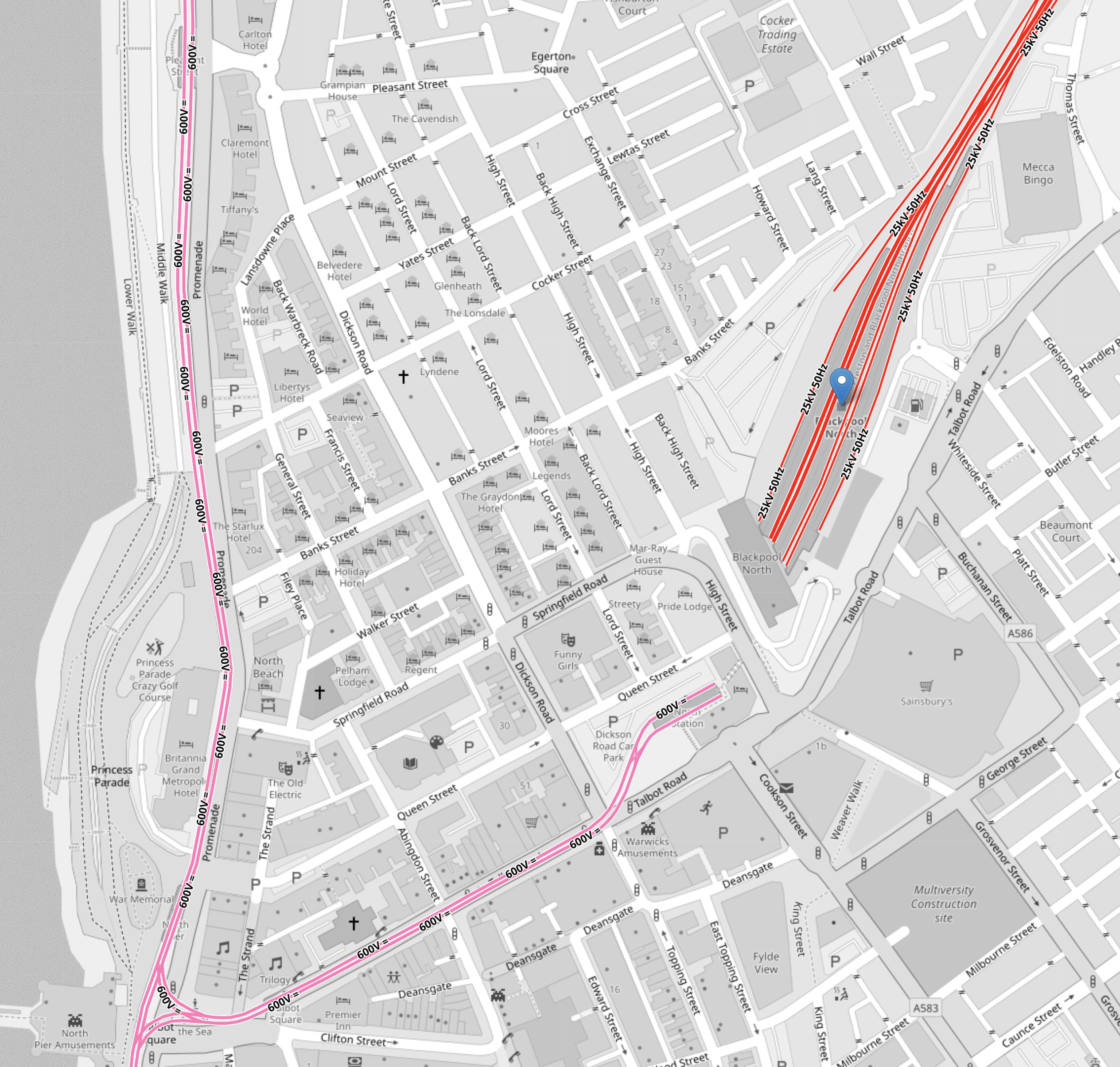
Note.
- The pink tracks are the Blackpool Tramway.
- The Tramway station has two terminating platforms and a crossover and together with the delta junction on the seafront, trams can go North or South.
- I wouldn’t be surprised to see the Tramway upgraded.
- The red tracks are the Blackpool Branch to Blackpool North station.
- Blackpool North station has six platforms and their lengths are 277, 277, 205, 203, 203 and 205 metres.
- The two longer platforms are on the South side of the station and can take an 11-car Pendolino or an HS2 200 m. Classic-Compatible train.
It appears to be a compact interchange between the trams and the trains.
I have some further thoughts.
Do Trains Spend The Night Parked In Blackpool North Station?
The Wikipedia entry for Blackpool North station says this about work done whilst the station was being electrified.
A major rebuild and upgrade of the nearby carriage servicing depot was carried out at the same time.
I asked Google AI, the question in the title of this section and received this reply.
Yes, trains can and do spend the night parked in the sidings and platforms at Blackpool North station. While many trains return to depots for maintenance, some units are stabled overnight at the station to facilitate the first early morning services of the day, as the facility is a key terminus for Northern Trains.
Overnight Stabling: Trains often occupy the 6 platforms or nearby sidings to start service early in the morning.
Station Activity: While passenger facilities close around midnight, the site itself remains secure for overnight parking.
Blackpool North station appears to be almost an efficient cross between terminal station and depot.
Stabling a train at Blackpool North station could be the easy way for Avanti West Coast or HS2 to run an early train to London.
Could A Late Train From London Bring Up All The Stragglers And Take Back All The Early-Risers?
The only transport, I’ve ever scheduled in anger were container ships, but it seems the following could be possible.
- A late train runs from London Euston to Blackpool North, stopping at stations where it is thought necessary.
- The train gets an overnight service and a wash-and-brush-up in Blackpool North station, from staff in the local depot.
- An early train runs from Blackpool to London Euston, stopping at stations where it is thought necessary.
It would be efficient use of equipment and staff. It would also help those in Crewe, Warrington, Wigan, Preston and the Fylde, who wanted to spend a long day in London or the South.
Could Blackpool North Handle A 400 Metre HS2 Classic-Compatible Train To And From London?
Consider.
- Avanti West Coast’s London Euston and Blackpool North train calls at Crewe, Warrington Bank Quay, Wigan North Western and Preston.
- The Specification of the HS2 Classic-Compatible Train says that they should be able to split and join, with all the speed and competence of a sex act, at one of Epstein’s parties.
- Blackpool North has two platforms that are 277 metres long, which can both handle 200 metre HS2 Classic-Compatible Trains.
- Preston station has a platform, that is one of the longest in England at 362 metres.
- Wigan North Western station has a platform that is 274 metres long.
- Warrington Bank Quay station has main line platforms that are 250-260 metres long.
- Crewe station has a platform that is 390 metres long.
- The provisional timetable for HS2 shows pairs of 200 metre HS2 Classic-Compatible Trains, stopping at Preston and Crewe stations.
- When built, HS2 stations at London Euston, Old Oak Common and Birmingham Interchange will be able to handle pairs of 200 metre HS2 Classic-Compatible Trains.
I am fairly sure that a 400 metre HS2 Classic-Compatible Train could run between London Euston and Blackpool North stations
- The train could call at Old Oak Common, Birmingham Interchange, Crewe, Warrington Bank Quay, Wigan North Western and Preston stations.
- The frequency could be as passenger numbers needed.
- HS2 stations at London Euston, Old Oak Common and Birmingham Interchange will be able to handle pairs of 200 metre HS2 Classic-Compatible Trains.
- Crewe, Warrington Bank Quay, Wigan North Western and Preston stations should be able to handle pairs of 200 metre HS2 Classic-Compatible Trains by using selective door opening.
- Each 200 metre HS2 Classic-Compatible Train, would use one of Platform 1 or 2 at Blackpool North station.
The two 200 metre HS2 Classic-Compatible Trains would either split and join at Preston station or by some shunting in Blackpool North station.
Conclusion
I believe Blackpool North station could handle as least one pair of 200 metre HS2 Classic-Compatible Trains to and from London Euston every hour.
It might be able to handle two such trains in every hour.
How Will HS2 Classic Compatible Trains Be Tested?
As there has been some scare stories on this, I thought I had better ask Google AI for a second opinion.
This was the reply I received.
HS2 classic compatible trains (Class 895) will undergo rigorous, phased testing starting in 2027, including static checks in climate chambers and low-speed facilities, followed by dynamic testing on a 50-mile section of the new HS2 line. These tests, conducted at up to 360 km/h (225 mph), ensure compatibility with new high-speed infrastructure and existing network interfaces.
Key Testing Stages & Locations:
Static Testing: Initial tests conducted at production sites in Derby, involving climate chambers to test systems in extreme temperatures and at low-speed test tracks.
Dynamic Testing (Mainline): High-speed tests will occur on a ~50-mile (~80 km) section of the new high-speed line between Washwood Heath in Birmingham and the north portal of the Wendover green tunnel, focusing on braking, power, and signalling systems.
Infrastructure Compatibility: Testing includes extensive checks at the Rail Innovation & Development Centres (RIDC) and validation of the train-track interface, especially for “good vehicle-track interaction”.
International Testing: Specialized tests, such as those at the Velim test centre in the Czech Republic, will be utilized.
Existing Network Testing: Because these trains must run on the existing West Coast Main Line (WCML), they will be tested for interoperability on traditional tracks.
Focus Areas:
Performance: Validating that trains can handle speeds of 360 km/h and high acceleration.
Integration: Testing of signaling, power, and communication systems together.
Safety: Verification of braking systems and emergency systems.
Accessibility & Design: Physical mock-ups have been used for user group testing regarding cabin layout.
These tests are critical as the Class 895 trains are a joint project between Hitachi and Alstom, designed to run both on new high-speed lines and older, conventional lines (Classic Compatible).
These are some of my observations.
Where Is The North Portal Of The Wendover Green Tunnel?
This Google Map shows its location.
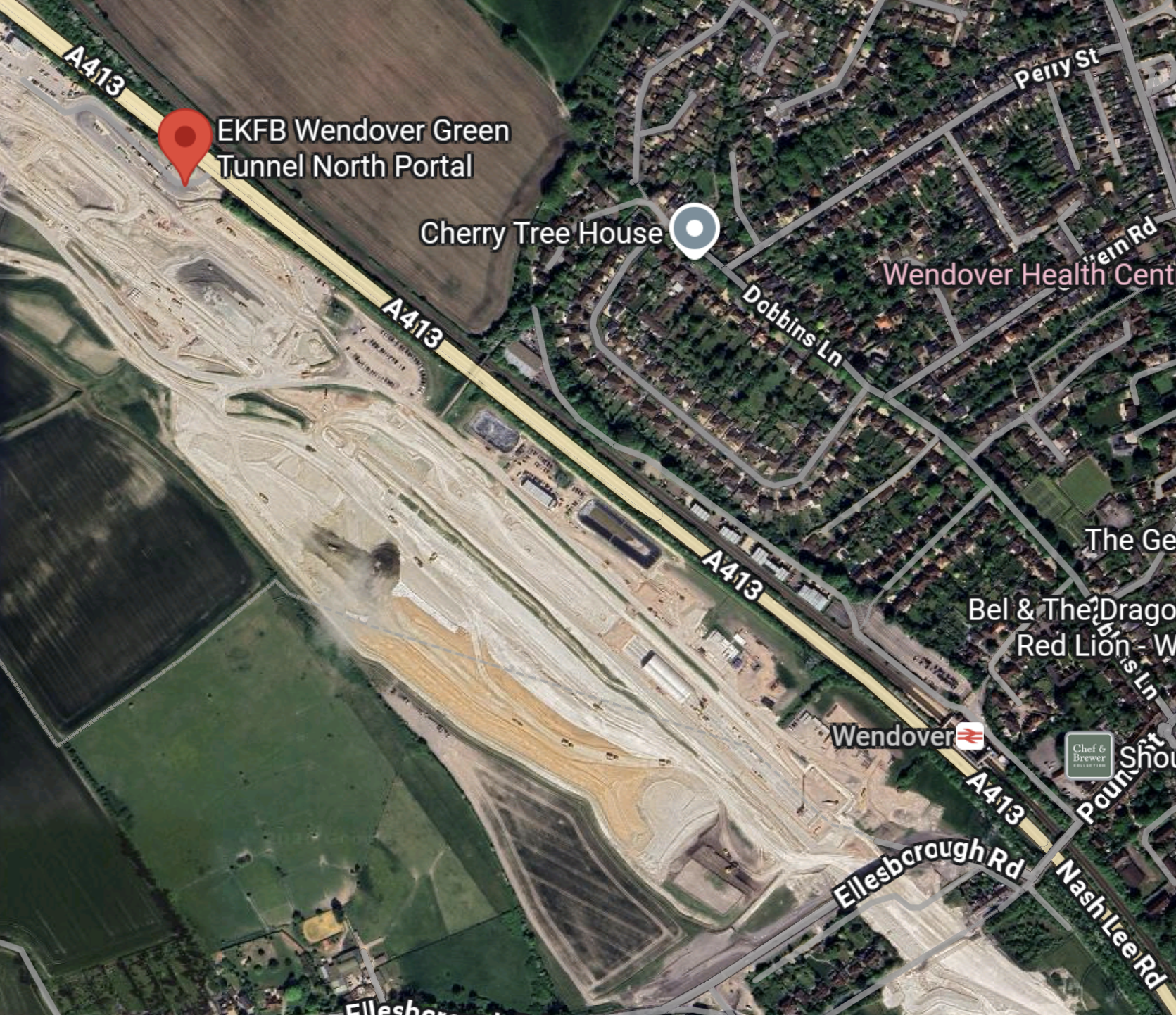
It would appear that North Portal of the Wendover Green Tunnel, is conveniently close to Wendover station.
This OpenRailway Map gives a larger view.
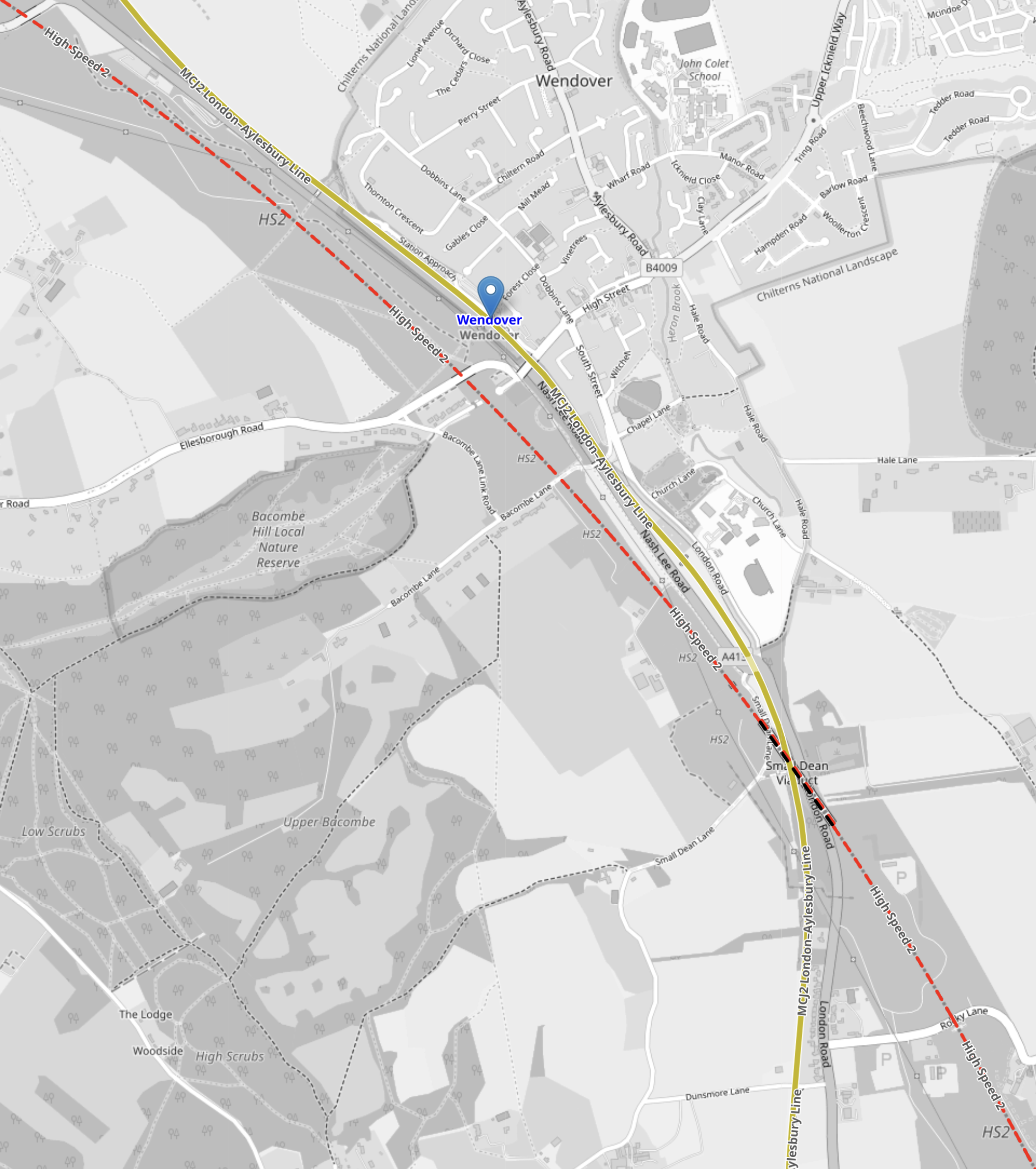
Note.
- HS2 is shown as dotted red tracks.
- Chiltern is shown in yellow.
- Wendover station is indicated by a blue arrow.
I suspect the portal is near the top of the map.
But looking at the roads and the station, it could be an interesting place to get close to HS2 infrastructure and trains under test.
Manchester Piccadilly Station Platform Layout
In this post, I will look at the current platform layout at Manchester Piccadilly station and see if it could be updated for High Speed Two.
This OpenRailwayMap shows the current platform layout at the station.
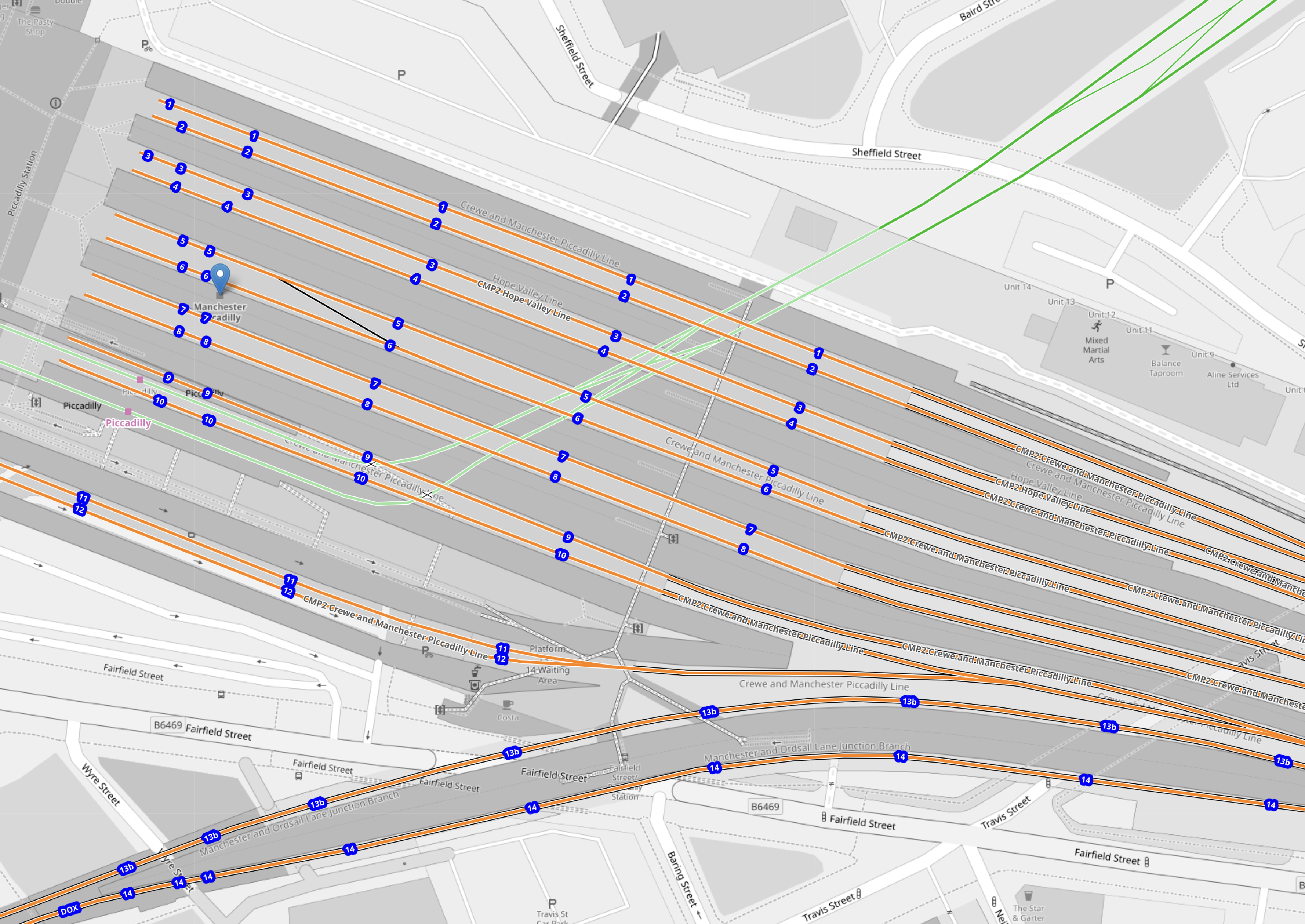
Note.
- There are twelve platforms in the main station, which are numbered 1 to 12 from North to South.
- There are also two platforms to the South of the main station, which are on the Castlefield Corridor and numbered 13 and 14.
- The current Avanti West Coast services use Platforms 5 to 8.
- Platforms 1 to 8 seem well-spaced.
- The Internet gives the length of Platform 1 as 238 metres, so it can be used as a ruler on all the platforms.
- The green tracks are for the Manchester Metrolink, which runs under the station.
I will now take a detailed look at the four platforms used by Avanti West Coast services, which are 5 to 8.
- The platforms are 340, 277, 277 and 340 metres long respectively.
- All four platforms can handle 11-car Pendolino Class 390 trains, which are 265.3 metres long.
- All four platforms will also handle 8-car HS2 Classic-Compatible trains, which will be 200 metres long.
- The platforms also seem to have a straight run-in to the buffers, which is about 260 metres long.
- This straight section is long enough to accommodate an 11-car Pendolino or an 8-car HS2 Classic-Compatible train.
I would think it reasonable that an 8-car HS2 Classic-Compatible train could take over the service of an 11-car Pendolino, but running on HS2 infrastructure, where it exists.
The current Avanti West Coast service to Manchester Piccadilly is as follows.
- 1 tph – 9-car or 11-car – London Euston and Manchester Piccadilly via Milton Keynes Central, Rugby, Stoke-on-Trent, Macclesfield and Stockport
- 1 tph – 9-car or 11-car – London Euston and Manchester Piccadilly via Nuneaton, Stoke-on-Trent and Stockport
- 1 tph – 9-car or 11-car – London Euston and Manchester Piccadilly via Stafford, Crewe, Wilmslow and Stockport
In the original design for HS2, this was the service pattern.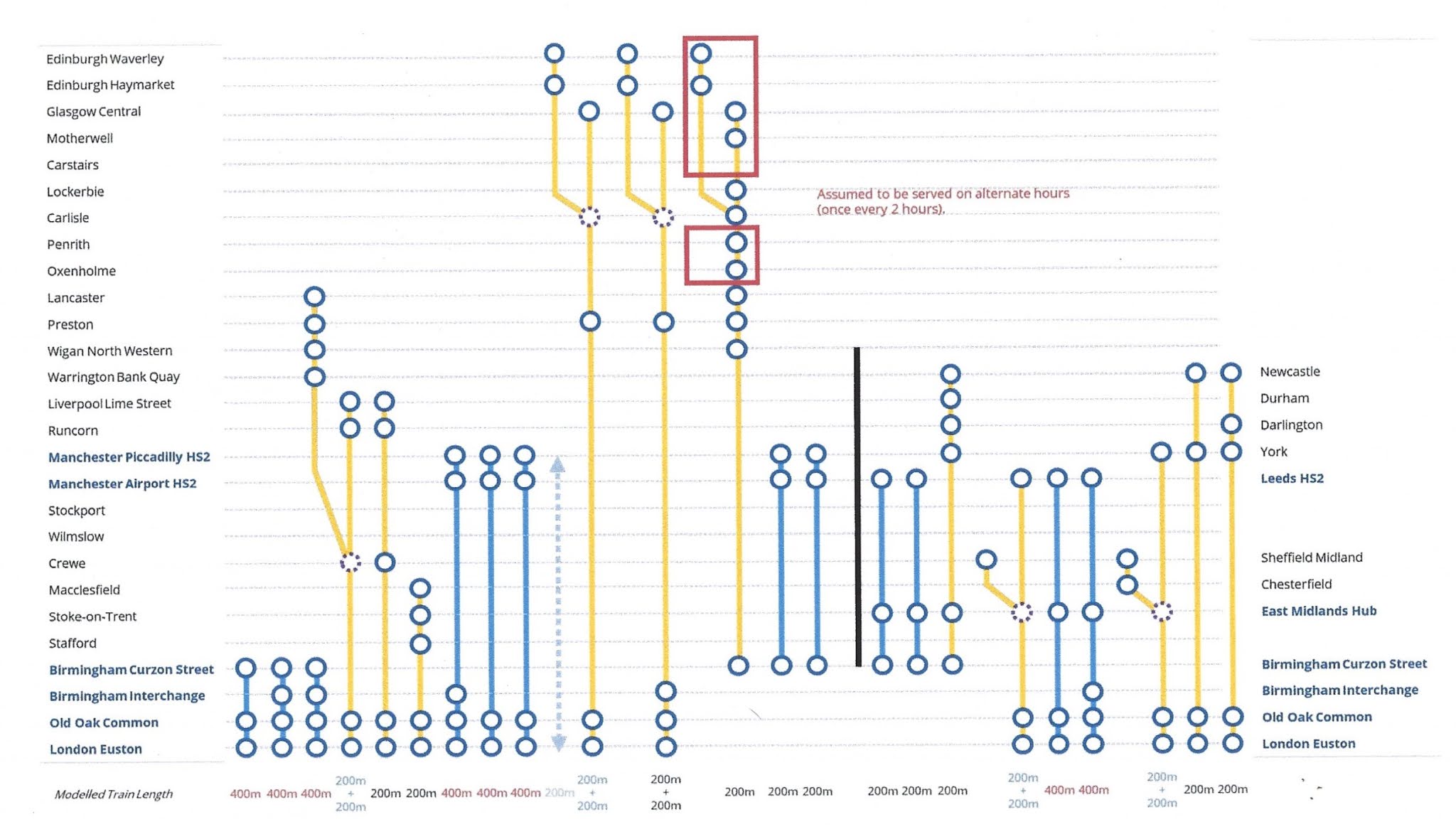
Note.
- Trains to the left of the vertical black line are Phase 1 and those to the right are Phase 2.
- Full-Size trains are shown in blue.
- Classic-Compatible trains are shown in yellow.
- The dotted circles are where trains split and join.
- In the red boxes routes alternate every hour.
Click on the diagram to enlarge it.
Services to Manchester Piccadilly and the Manchester area are as follows.
- Train 6 – 200 m. HS2 CC – London Euston and Macclesfield via Old Oak Common, Stafford and Stoke-on-Trent
- Train 7 – 400 m HS2 FS – London Euston and Manchester Piccadilly via Old Oak Common, Birmingham Interchange and Manchester Airport
- Train 8 – 400 m HS2 FS – London Euston and Manchester Piccadilly via Old Oak Common and Manchester Airport
- Train 9 – 400 m HS2 FS – London Euston and Manchester Piccadilly via Old Oak Common and Manchester Airport
- Train 13 – 200 m HS2 FS – Birmingham Curzon Street and Manchester Piccadilly via Manchester Airport
- Train 14 – 200 m HS2 FS – Birmingham Curzon Street and Manchester Piccadilly via Manchester Airport
Note.
- All trains are one train per hour (tph)
- Macclesfield should be able to handle one 200 m. HS2 Classic-Compatible train per hour, as it is shorter and has less passengers than an 11-car Pendolino.
- All Manchester Piccadilly services call at Manchester Airport.
I believe this allows two possible solutions.
- A largely tunneled solution, that gives access to enough 400 m platforms underneath or alongside Manchester Piccadilly station.
- An interim solution, that replaces 11-car Pendolinos with 200 m. HS2 Classic-Compatible trains.
I will answer this question first.
Will HS2 Use A Tunnel Between Manchester Airport And Manchester Piccadilly Station?
I asked Google AI and received this answer.
Yes, in the original HS2 proposals, a 7.5-mile twin-bore tunnel was planned to run between Manchester Airport and the Ardwick area, surfacing near Manchester Piccadilly. This tunnel was designed to carry the high-speed line underneath the built-up areas of south Manchester and into the terminal station.
Key Details of the Proposed Tunnel:
Purpose: To connect the new Manchester Airport High Speed Station with Manchester Piccadilly station.
Structure: A 7.5-mile (approx. 12km) twin tunnel.
Route: Following the airport, the line would enter the tunnel, traveling towards Piccadilly station.
Location: The tunnel handles the approach to Manchester city centre, allowing the high-speed tracks to bypass surface-level congestion in the south Manchester suburbs.
Note: While this was the planned route for Phase 2b, the future of the northern leg of HS2 has been subject to change and government reviews, which may impact these designs
The Full Solution
This will entail the following.
- A two-platform underground station at Manchester Airport, that is capable of handling 400 m. HS2 Full-Size trains.
- A large enough extension to Manchester Piccadilly station that is capable of terminating enough 400 m. HS2 Full-Size trains.
- The extension to Manchester Piccadilly station could be underneath or alongside, the current station.
- A 7.5 mile twin-bore tunnel between the two stations.
I also believe the full solution will need the completion of the high speed line between Handsacre junction and Crewe.
That would be an expensive and difficult solution, so we will need an interim solution.
The Interim Solution
This will entail the following.
- All HS2 services into Manchester Piccadilly will be run by 8-car 200 m. HS2 Classic-Compatible trains.
- They will use Platforms 5 to 8 in Manchester Piccadilly station, which are 340, 277, 277 and 340 metres long respectively.
- The Manchester Piccadilly services will not call at Manchester Airport.
- The Macclesfield service will run to serve Stafford and Stoke-on-Trent.
- I also believe the interim solution will not need the completion of the high speed line between Handsacre junction and Crewe.
My project management experience leads me to believe, that after HS2 is completed to Handsacre junction, Manchester Piccadilly station could be served by 8-car 200 m. HS2 Classic-Compatible trains.
How Many Trains Will The Interim Solution Run Through The Trent Valley Line?
If the interim solution is to work, then HS2 trains for North of Handsacre Junction will have to take their chances on the Trent Valley Line.
This OpenRailwayMap shows the route of the Trent Valley Line between Handsacre Junction and Crewe.
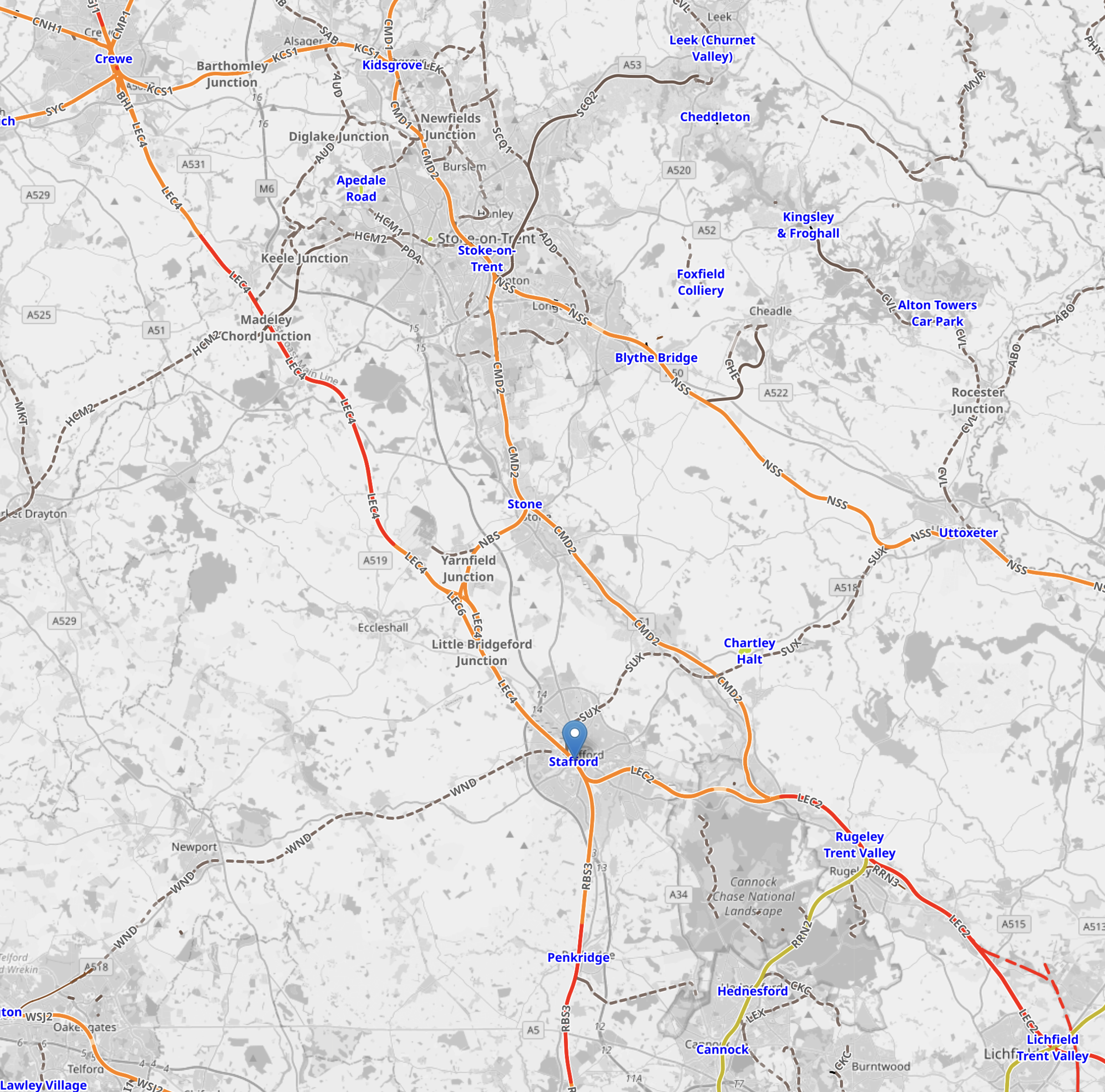
Note.
- Stafford station is marked with a blue arrow.
- Crewe station is in the North-West corner of the map.
- Lichfield Trent Valley station is in the South-East corner of the map.
- The Northern end of HS2 is should dotted around Lichfield Trent Valley station
- Rugeley Trent Valley station is to the North-West of Lichfield Trent Valley station.
- Crewe, Stafford, Rugeley Trent Valley and Lichfield Trent Valley stations are all on the Trent Valley Line, which runs North-West and South-East across the map.
- Handsacre junction is to the North of Lichfield Trent Valley station and links the North end of HS2 to the the Trent Valley Line.
This second OpenRailwayMap shows Handsacre junction in more detail.
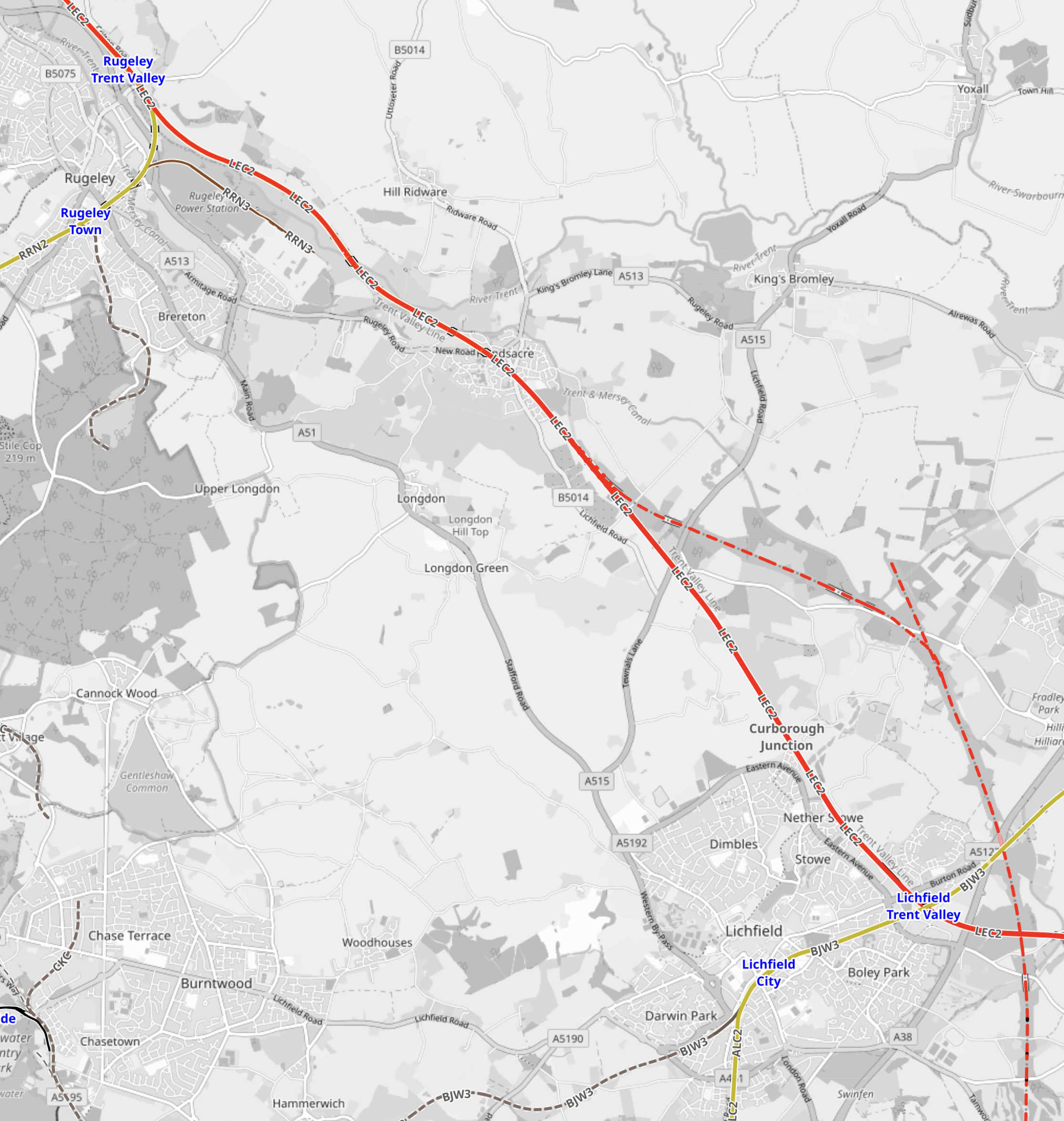
Note.
- Rugeley Trent Valley station is in the North-West corner of the map.
- Lichfield Trent Valley station is in the South-East corner of the map.
- The Trent Valley Line runs diagonally across the map between the two stations.
- The route of HS2 is shown as a dotted red line in the South-East corner of the map.
- HS2 and the Trent Valley Line will join at Handsacre junction.
The stub of HS2 in the North-East corner of the map, will eventually link to Crewe.
The following services will join the Trent Valley Line at Handsacre junction.
- Train 4a – 200 m. HS2 CC – London Euston and Lancaster via Old Oak Common, Crewe, Warrington Bank Quay, Wigan North Western and Preston
- Train 4b – 200 m. HS2 CC – London Euston and Liverpool via Old Oak Common, Crewe and Runcorn
- Train 5 – 200 m. HS2 CC – London Euston and Liverpool via Old Oak Common, Crewe and Runcorn
- Train 6 – 200 m. HS2 CC – London Euston and Macclesfield via Old Oak Common, Stafford and Stoke-on-Trent
- Train 7 – 200 m HS2 CC – London Euston and Manchester Piccadilly via Old Oak Common and Birmingham Interchange
- Train 8 – 200 m HS2 CC – London Euston and Manchester Piccadilly via Old Oak Common
- Train 9 – 200 m HS2 CC – London Euston and Manchester Piccadilly via Old Oak Common
- Train 10a – 200 m HS2 CC – London Euston and Edinburgh Waverley via Old Oak Common, Preston, Carlisle and Edinburgh Haymarket
- Train 10b – 200 m HS2 CC – London Euston and Glasgow Central via Old Oak Common, Preston and Carlisle
- Train 11a – 200 m HS2 CC – London Euston and Edinburgh Waverley via Old Oak Common, Birmingham International, Preston, Carlisle and Edinburgh Haymarket
- Train 11b – 200 m HS2 CC – London Euston and Glasgow Central via Old Oak Common, Birmingham International, Preston and Carlisle
- Train 12 – 200 m HS2 CC – Birmingham Curzon Street and Edinburgh Waverley/Glasgow Central via Wigan North Western, Preston, Lancaster, Oxenholme, Penrith, Carlisle, Lockerbie, Carstairs and Edinburgh Haymarket/Motherwell
- Train 13 – 200 m HS2 CC – Birmingham Curzon Street and Manchester Piccadilly
- Train 14 – 200 m HS2 CC – Birmingham Curzon Street and Manchester Piccadilly
Note.
- All trains are one train per hour (tph)
- Train 4 splits and joins at Crewe, so runs as a 400 m train on the Trent Valley Line.
- Train 10 splits and joins at Carlisle, so runs as a 400 m train on the Trent Valley Line.
- Train 11 splits and joins at Carlisle, so runs as a 400 m train on the Trent Valley Line.
- Train 12 runs alternatively to Edinburgh Haymarket and Edinburgh Waverley/Motherwell and Glasgow Central.
In any hour, it looks like eight single trains and three pairs will run along the Trent Valley Line.
How Close In Minutes Can Trains Run On The Trent Valley Line?
I asked Google AI and received this answer.
On the modernised Trent Valley Line (part of the West Coast Main Line), trains can run at high frequencies, often with fast, long-distance services operating with headway (spacing) of approximately 3 to 5 minutes, though typically, a 2-4 train per hour per direction service pattern is standard, equating to 15–30 minute intervals between similar services.
Capacity: The line is a four-track railway between Rugby and Stafford, allowing fast, long-distance express trains (up to 125 mph) to overtake slower, local, and freight trains.
Service Frequency: High-frequency, high-speed travel is standard.
Constraints: While the infrastructure supports close spacing, schedules are constrained by capacity at major bottlenecks and the requirement for consistent track maintenance.
It’s probably tight, but not impossibly so. Especially, as Train 6 to Macclesfield cuts off through Stoke-on-Tent after Stafford.
What Is The Capacity Of Each Train Timetable Between London Euston And Manchester Piccadilly/Macclesfield?
Consider.
- An 11-car Pendolino has 607 seats.
- I’m assuming all Pendolinos are 11-car trains.
- An 8-car HS2 Classic-Compatible train has 504 seats.
- I’m assuming that HS2 Full Size trains have the same capacity as the Classic Compatible trains.
These are figures for each timetable.
Current Timetable
3 x 11-car Pendolino = 1,821 seats. per hour
Interim Timetable
4 x 8-car 200 m. HS2 Classic-Compatible trains = 2,016 seats per hour, which is a 10.7 % increase over today.
Full Timetable
7 x 8-car 200 m. HS2 Classic-Compatible trains = 3,538 seats per hour, which is a 93.7 % increase over today.
How Many Trains Run On Each Section Of HS2?
Current Timetable
None
Interim Timetable
These are my estimates of trains per hour on each section.
- London Euston and Birmingham – 11 tph
- Birmingham and Stafford – 11 tph
- Stafford and Crewe – 10 tph
- Stafford and Macclesfield – 1 tph
- Crewe and Liverpool – 2 tph
- Crewe and Manchester Piccadilly – 5 tph
- Crewe and Preston – 4 tph
- Preston and Lancaster – 4 tph
- Lancaster and Carlisle – 3 tph
- Carlisle and Edinburgh Waverley – 2.5 tph
- Carlisle and Glasgow Central – 2.5 tph
There would appear to be spare capacity for up to six trains per hour, South of Crewe.
Full Timetable
These are my estimates of trains per hour on each section.
- London Euston and Birmingham – 11 tph
- Birmingham and Stafford – 11 tph
- Stafford and Crewe – 10 tph
- Stafford and Macclesfield – 1 tph
- Crewe and Liverpool – 2 tph
- Crewe and Manchester Airport- 5 tph
- Manchester Airport and Manchester Piccadilly – 5 tph
- Crewe and Preston – 4 tph
- Preston and Lancaster – 4 tph
- Lancaster and Carlisle – 3 tph
- Carlisle and Edinburgh Waverley – 2.5 tph
- Carlisle and Glasgow Central – 2.5 tph
There would still appear to be spare capacity for up to six trains per hour, South of Crewe.
Conclusions
Theses are my conclusions.
- There Are At Least Six Free Train Paths In Every Hour Between London And Crewe
This is partly because the Eastern leg was cancelled. But it does seem silly to waste them.
I believe Blackpool would be a good place to serve and I said so in Could High Speed Two Serve Blackpool North?
Other possible places would be Chester, Holyhead and Scotland.
2. There Will Need To Be A Tunnel To Connect Manchester Piccadilly And Manchester Airport
This is because you can’t knock all the houses down to build the link.
The Channel Tunnel Rail Link is tunnelled under Dalston in East London for the same reason.
3. Manchester Piccadilly and Manchester Airport services will be five Trains Per Hour
Two of these five trains will go to Birmingham Curzon Street and three to London Euston.
I would expect that the Manchester Tunnel will be an important project for the finances of Manchester Airport.
4. When The Manchester Tunnel Is Built, This Will Double Seat Capacity Between London And Manchester Piccadilly
This is because it will allow 400 metre trains between London Euston and Manchester Piccadilly.
5. HS2 Can Run To Manchester Without Building The Manchester Tunnel Or A High Speed Line Between Crewe And Birmingham
This surprised me at first, but it appears, that it’s because HS2 Classic-Compatible trains are shorter than 11-car Pendolinos.
6. HS2 Can’t Run To Manchester Airport Without Building the Manchester Tunnel.
It’s all because of the houses in between.
7. Single 200 m. HS2 Classic Compatible trains, Can Use The Unmodified Manchester Piccadilly.
This is because they are shorter than 11-car Pendolinos. But pairs can’t, as they are too long!
8. Stockport Gets A Raw Deal From HS2
Currently, Stockport, gets three 11-car Pendolino services between London Euston and Manchester Piccadilly.
Under the Interim Solution, these services will continue as HS2 Classic-Compatible trains are shorter than 11-car Pendolinos.
But under the Full Solution, HS2 trains will be in the Manchester Tunnel between Manchester Airport and Manchester Piccadilly.
9. The Interim Solution Will Work
I am more and more convinced, that a proposed solution which entails the following will work.
- A new service from London Euston to Macclesfield via Old Oak Common, Stafford and Stoke-on-Trent is introduced.
- 11-car Pendolinos are replaced by 8-car HS2 Classic-Compatible trains, which are shorter.
- The Trent Valley Line is updated, so that it can handle 11 trains per hour, that will eventually be transferred to the new HS2 line between Handsacre junction and Crewe.
- London Euston and Manchester Piccadilly will get three trains per hour via HS2 to Handsacre junction the Trent Valley Line.
- There will be no major work to be done at Manchester Piccadilly.
- Three trains per hour between London Euston and Manchester Piccadilly could still call at Stockport.
I also believe that this solution can be easily built, as it is mainly improving the existing route between Handsacre junction and Manchester Piccadilly via Crewe and Stockport.
Magna Tram Stop – 23rd April 2026
I went to the new Magna tram stop on the Sheffield tram-train today and took these pictures.
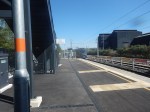
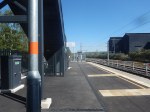
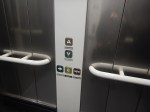
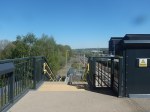

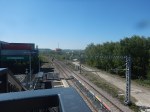
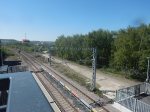
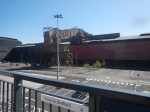
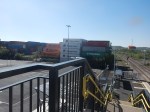
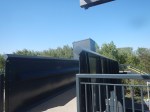
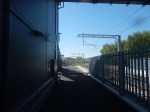
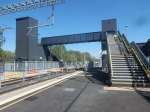
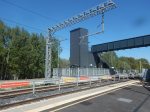
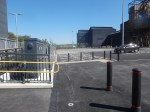

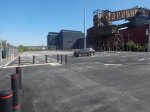
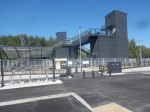
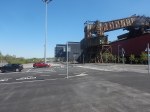
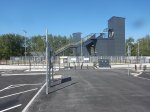
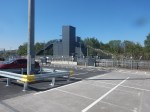
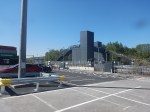
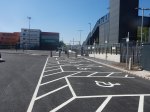
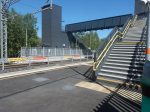
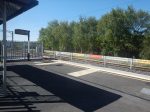
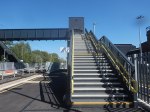
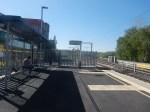
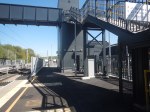
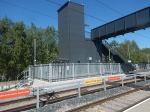
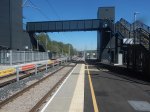
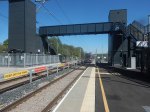
The tram stop structure looks like two identical lift towers with a staircase, that have been lifted in onto foundations, that are opposite each other.
- The two structures appear to be made almost entirely of steel, which is surely appropriate for the Sheffield and Rotherham area.
- The lifts are typical quality lifts from Stannah.
- After installation the staircases point in opposite directions.
- Were the three components of the bridge just lifted into place and then wired up and switched on?
- A steel bridge completes the tram stop.
- The design of the bridge keeps the travellers well away from the electrification.
- The bridge steelwork was constructed locally at Barnsley.
I believe, this tram stop was designed for ease of installation and the lowest possible cost consistent with high quality.
I wouldn’t be surprised that this tram stop bridge has been designed so it can be replicated in different sizes at different locations.
I have some further thoughts.
Can This Design Be Adapted For Other Applications, Locations And Sizes?
I believe it can and this bridge could be the first of many.
Can This Design Be Assembled Around A Working Railway With A Few Short Possessions?
I believe it can, which would be a good cost and time saving in assembly!
I also believe, that as at Magna, it could be assembled around a working electrified railway.
There is a lot to like about this tram-stop design.
Are Sheffield Planning Any Expansion Of The Trams?
Out of curiosity, I had to ask Google AI, the title of this section.
I received this answer.
Yes, Sheffield is actively planning to expand its tram network as part of a major public transport regeneration project aiming for better connectivity and reduced congestion. Key proposals include extending the tram-train network to Doncaster and Barnsley, a new route to Stocksbridge, a connection to Chesterfield via Barrow Hill, and a new stop at the Magna Science Adventure Centre.
Key details of the expansion plans include:
Network Expansion Plans: The South Yorkshire Mayoral Combined Authority (SYMCA) is evaluating several extensions, including a potential route connecting the Royal Hallamshire Hospital and the southern city centre.
Tram-Train Focus: Future expansion heavily features tram-trains, which can use existing rail lines, such as the 9-mile link to Stocksbridge.
Doncaster and Barnsley Routes: Proposed extensions involve utilizing existing rail lines for faster connections to Doncaster and a new line to Barnsley.
Infrastructure Investment: The government has announced £570 million for upgrading the existing Supertram network, including improving capacity at Sheffield Train Station.
Timeline: While studies and developments are ongoing, significant work is expected to pick up speed toward 2030, integrated with Northern Powerhouse Rail developments.
Could we see more innovative bridges?
Could A Feeder Network Of Local Trains Be Developed For HS2 At Macclesfield Station?
Macclesfield station is one of the less important stations that will be served by High Speed Two.
I visited in July 2020 and afterwards wrote Macclesfield Station And High Speed Two.
This OpenRailwayMap shows the railway network around Macclesfield.
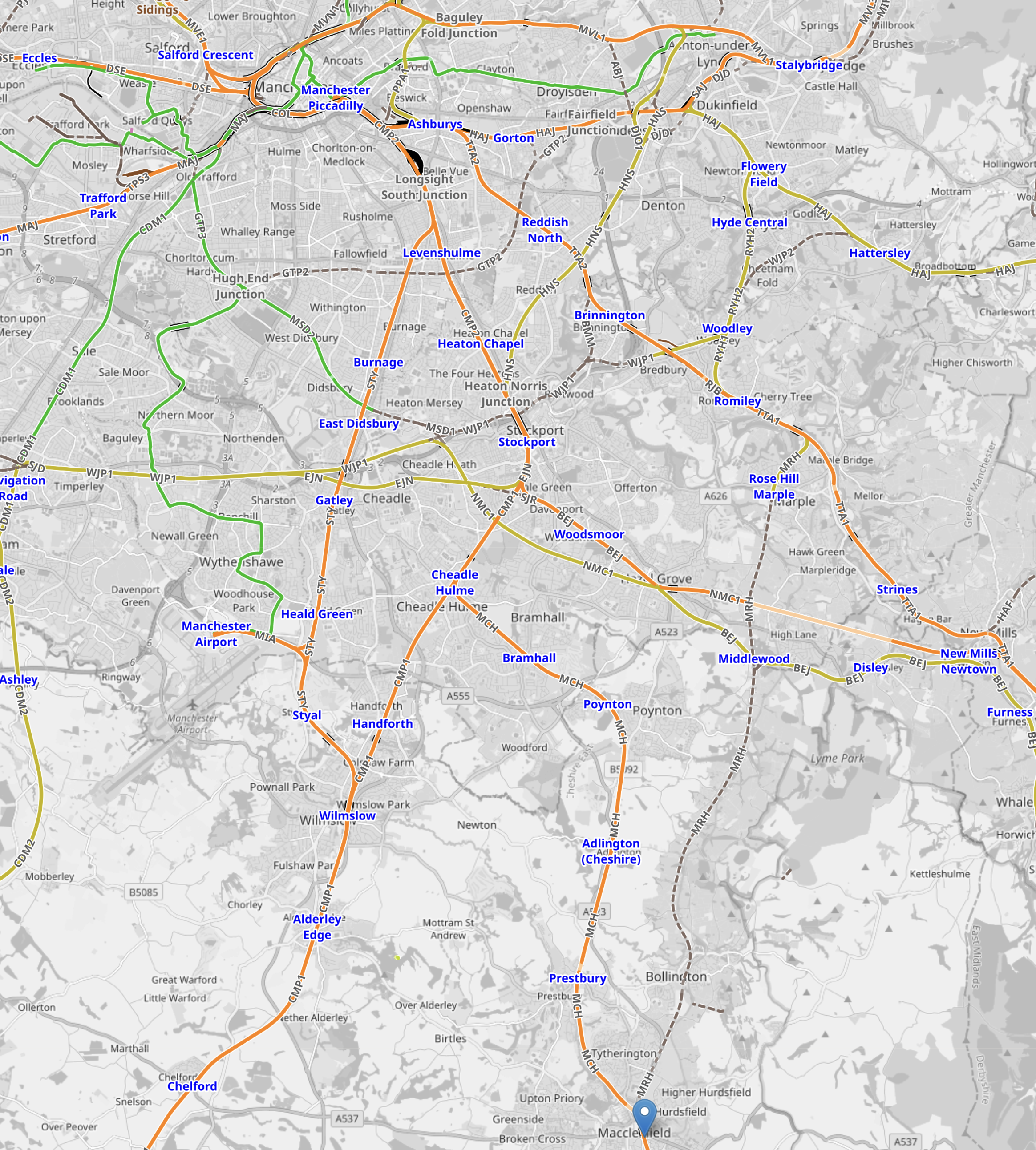
Note.
- Manchester Piccadilly station is at the top of the map .
- The station is surrounded by the green tracks of the Manchester Metrolink.
- Macclesfield station is at the bottom of the map and indicated by a blue arrow.
The West Coast Main Line can be followed North as it threads through Prestbury, Adlington (Cheshire), Poynton, Bramhall, Cheadle Hulme, Stockport, Heaton Chapel, Levenshulme and Ashburys on its way to Manchester Piccadilly.
This summary from the Wikipedia entry for the station outlines the services at the station.
Macclesfield is served by three train operating companies: Avanti West Coast, CrossCountry and Northern Trains.
Northbound to Stockport and Manchester Piccadilly, Avanti West Coast and Northern operate hourly services, with some peak time extras, and CrossCountry runs two services an hour.
Southbound, there are also four trains per hour: one stopping service to Stoke-on-Trent, operated by Northern Trains; one inter-city service to London Euston, operated by Avanti West Coast; one to Bournemouth, via Birmingham New Street and Reading; and one to Bristol Temple Meads, both operated by CrossCountry.
Sunday services are similar, but the local stopping service operated by Northern Trains no longer runs on Sunday, with rail replacement bus services operating between Stockport and Stoke-on-Trent.
It is not as busy a station, as the map suggests it is.
Searching in detail, I found these local trains.
- CrossCountry – 1 – tph – Manchester Piccadilly and Bournemouth via Stockport, Macclesfield, Stoke-on-Trent and Stafford
- CrossCountry – 1 – tph – Manchester Piccadilly and Bristol Temple Meads via Stockport, Macclesfield, Stoke-on-Trent and Stafford
- Northern – 1 tph – Manchester Piccadilly and Stoke-on-Trent via Stockport, Cheadle Hulme, Bramhall, Poynton, Adlington, Prestbury, Macclesfield, Congleton and Kidsgrove
Three trains per hour is not many.
The train and bus network from Macclesfield station needs to be developed, so travellers can make full use of HS2.
This second OpenRailwayMap shows the railway network to the East of Macclesfield.
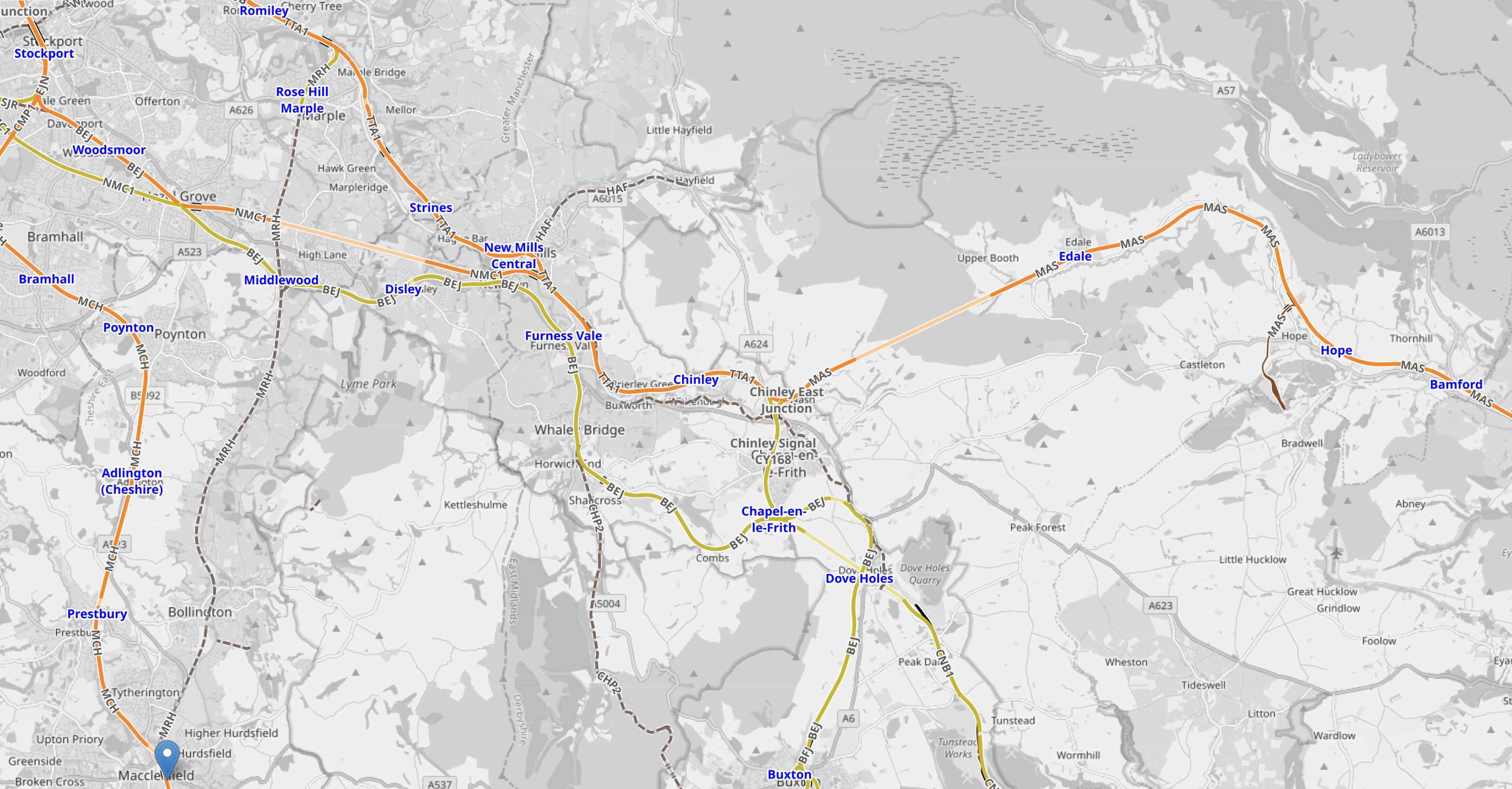
Note.
- Macclesfield is in the South-West corner of the map.
- Stockport is in the North-West corner of the map.
- The orange track that stretches across the map is the busy Hope Valley Line, which is an important passenger route between Manchester and Sheffield and an important freight route for the quarry products of the Peak District to the South.
- The Buxton Line comes South from the Hope Valley Line to Chapel-en-le-Frith, Dove Holes and Buxton.
I believe a strong case can be made to link the area to the East of Macclesfield to HS2.
These points must be considered, when designing a road transport network to feed travellers from the East of Macclesfield.
Bakewell
Bakewell is the largest settlement and only town within the boundaries of the Peak District National Park.
I believe that travellers to Bakewell, would use a quality transport network to HS2 at Macclesfield.
Buxton
These are facts from Buxton’s Wikipedia entry.
- Buxton is a spa town of 20,000 people.
- It is England’s highest market town, sited at some 1,000 feet (300 m) above sea level.
- The University of Derby is a noted employer.
- Tourism is a major industry, with over a million visitors to Buxton each year.
- The Buxton Line connects Buxton to Stockport and Manchester Piccadilly.
I believe that travellers to Buxton, would use a quality transport network to HS2 at Macclesfield.
The Cat And Fiddle Inn
The road between Macclesfield and Buxton passes the famous Cat and Fiddle Inn.
This is the first paragraph of the Wikipedia entry for the public house.
The Cat and Fiddle Inn is a former public house in the English Peak District, close to the border between Cheshire and Derbyshire. It sits on the A537 road from Macclesfield to Buxton, which runs across a high and remote area of moorland. A section of the road is known as the “Cat and Fiddle Road” after the inn. The building is some 1,689 feet (515 m) above sea level, and it was the second-highest public house in Britain before it closed in 2015 (the Tan Hill Inn in Yorkshire is slightly higher). In 2020, it reopened as a distillery, shop and bar.
I visited it once in the 1960s with my future wife and two friends.
These roads in the Peak District will be challenging roads for modern electric buses.
Chatsworth House
I have never been to Chatsworth House and no very little about the house and its history.
So I asked Google AI,”Is Chatsworth House A Major Tourist Attraction?” and received this reply.
Yes, Chatsworth House is a major tourist attraction, frequently cited as one of the UK’s most popular country houses and a top destination in the Peak District. Located in Derbyshire, it draws hundreds of thousands of visitors annually to explore its historic house, 105-acre garden, farmyard, and massive parkland.
Key Reasons for Its Status:
Cultural Significance: As the home of the Cavendish family since 1549, it holds significant art collections (Old Masters, modern sculpture, Egyptian artifacts).
“Palace of the Peak”: Known for its grand interiors, including the Painted Hall and Sketch Galleries.
Famous Grounds: Features a 105-acre garden with a maze, cascading water features, and the impressive Emperor Fountain.
Media Appearance: Known as the real-life Pemberley from the 2005 Pride & Prejudice film.
Family Activities: The estate includes a popular farmyard and adventure playground.
Chatsworth is often ranked as a favorite stately home in Britain and is a key visitor attraction in the East Midlands region.
As with Buxton, I believe that travellers to Chatsworth House, would use a quality transport network to HS2 at Macclesfield.
Chesterfield Station
Chesterfield station is a major station on the Midland Main Line, close to the East side of the Peak District.
Chesterfield station is the following distances from these towns and attractions.
- Bakewell – 12-13 miles
- Buxton – 24-25 miles
- Chatsworth House – 12 miles
- Macclesfield – 35-40 miles
Chesterfield has no direct rail connection to any of these towns, but I think you can get to Buxton with changes at Sheffield and Hazel Grove.
The Wikipedia entry for Chesterfield station gives this description of services at the station.
Chesterfield is served by three train operating companies:
- East Midlands Railway operates regular inter-city services on the Midland Main Line between Sheffield and London St Pancras, via Derby and Leicester; this includes the 07:45 southbound departure, the Master Cutler. It also runs a route between Liverpool and Norwich, via Manchester Piccadilly and Nottingham.
- Northern Trains runs an hourly service between Nottingham and Leeds.
- CrossCountry operates a regular service between Sheffield and Derby; trains continue on to a variety of final destinations including Glasgow Central, Edinburgh Waverley, Plymouth, Reading, Southampton Central and Bristol Temple Meads.
There are typically 12 passenger trains per hour passing through the station on weekdays (six in each direction), with ten of those calling.
I believe that if a transport network is developed to the East of Macclesfield, it should call at Chesterfield station.
Dore & Totley Station
Dore &Totley station is the nearest station to Sheffield at the Sheffield end of the Hope Valley Line.
I wrote about the station in Dore & Totley Station – 1st April 2025 and after a sympathetic restoration, it is now a superb step-free station.
These pictures give a flavour of the station.


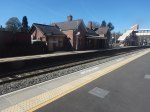
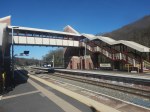
The second picture, appears to show a pair of bus stops on the main road.
If these aren’t considered adequate, I’m sure space could be found in the car park for a bus stop with level access to the station.
Hazel Grove Station
Hazel Grove station is the nearest station to Stockport at the Manchester end of the Hope Valley Line.
I wrote about the station in Hazel Grove Station and it is a rather ordinary station with car parking and step-free access.
Passengers can also change trains for the Buxton Line.
HS2 Day Trips
Toyota’s Trial Of Hydrogen Buses In The Peak District
To find out more of this, I typed the title of this section into Google AI, and received this answer.
Toyota conducted a two-week trial of hydrogen fuel cell buses in the Peak District National Park in September 2022 to promote sustainable tourism and reduce carbon emissions. Using CaetanoBus H2.City Gold vehicles, the trial aimed to connect key tourist sites without relying on private cars. This initiative supports a long-term goal of launching the “Peak Express” service by 2025.
Key Details of the Peak District Hydrogen Bus Trial
Purpose: The trial was designed to reduce the high reliance on cars (85% of visitors) in the national park, aiming to cut emissions by 3.6 million kg a year once fully operational.
Vehicles: The trial used hydrogen fuel cell electric buses manufactured by CaetanoBus, which is part of Toyota’s European partner network. These buses provide a range of up to 200 kilometers and can be refueled in 10-15 minutes.
Route: The hydrogen buses operated in and around the Peak District, connecting major spots including Chesterfield railway station and Chatsworth.
The “Peak Express” Initiative: Led by the Gateway at Peak development, this project plans a full service by 2025 to offer sustainable transport options.
Multi-technology Strategy: Toyota is testing both hydrogen fuel cell electric vehicles (FCEV) and battery electric vehicles (BEV) to determine which is most suitable for different types of journeys.
The trial was part of a larger push to test hydrogen infrastructure, with long-term plans to create multiple hubs around the Peak District National Park boundary.
The experience from my trip to Gatwick, that I described in Sutton Station To Gatwick Airport By Hydrogen-Powered Bus, has convinced me, that where bus and hills are involved, you need to have hydrogen buses, as they torque the torque.
Conclusion
I believe that the Peak District and Toyota are on the right track, but I strongly believe that any buses ferrying passengers around the Peak District, need the extra torque that hydrogen will provide.
The bus also must be large enough.
I also wonder, if as the service will be serving Chatsworth, that a hydrogen-powered coach might be a better choice of vehicle.
Hydrogen-Powered Coaches
The first hydrogen-powered coaches will becoming into service this year.
- Mercedes and Wrightbus have both said they will launch vehicles.
- Two and three-axle models have been talked about.
- Ranges of a thousand kilometres on a single tank of hydrogen seem to have been promised.
- Typical load will be about eighty passengers, which will include wheelchairs.
- Like the bus between Sutton station and Gatwick Airport, they will be mouse-quiet.
I believe they will become a valuable part of the public transport network.
- Running long distance coach services.
- Extending long-distance rail services.
- Running special services over long distances, like those for football supporters.
- Running rail replacement bus services for rail companies.
I can’t wait to have my first ride.

