Basingstoke And Salisbury – 26th August 2026
The next leg was between Basingstoke and Salisbury, as I just missed the train at Basingstoke.


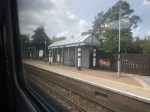
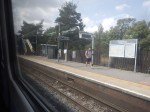
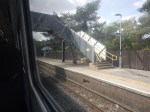
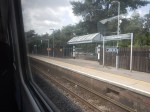
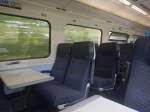
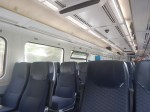
Note.
- The four electrified tracks continue between Basingstoke and Worting Junction, where the West of England Line diverges from the South West Main Line.
- The Ludgershall Branch leaves the West of England Main Line between Andover and Grately stations and goes North.
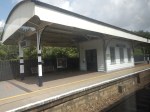
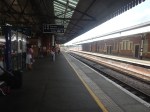
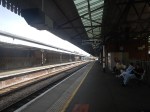
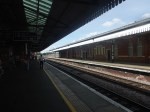
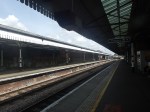
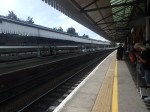
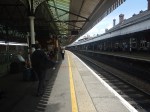
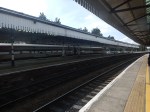
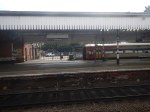
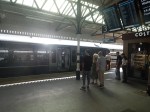
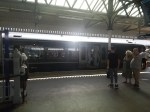
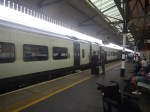
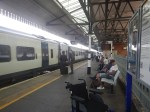
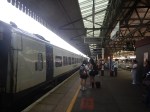
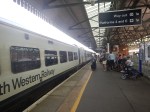
On arrival at Salisbury station I took these pictures.

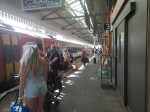
Note.
- The platforms are long as they are used for splitting and joining trains.
- The Class 159 Trains don’t seem to be as good at splitting and joining as are Hitachi trains.
- There is a typical Costa coffee stall.
- But there is nowhere to sit or stand with your drink.
Tales Of Woe And Opportunity On The West Of England
The title of this post, is the same as that of the Railtalk editorial in the September 2027 Edition of Modern Railways.
These is the opening four paragraphs.
The West of England Line from London Waterloo to Exeter was once an important main line, the London & South Western Railway’s great rival to Brunel’s ‘billiard’ table, but its role is much diminished since the glory days.
Largely singled west of Salisbury in the 1960s, and with many of its coastal branches closed, a casual onlooker might conclude it has rather lost its purpose.
Yet recent journeys on the route suggest otherwise. Travelling from Waterloo on the way West one late afternoon was instructive.
On a baking hot day in London, the six-car South Western Railway Class 159 departed on time, full and standing. More passengers joined at Clapham Junction, and Woking.
The two problems of the line are mentioned in the text from the article.
- The singling of the West of England Line, to the West of Salisbury was typical of many short-sighted acts of vandalism inflicted by the Treasury on British Rail.
- The Class 159 diesel trains date from the early 1990s and probably need replacing.
This OpenRailwayMap shows middle part of the route between Basingstoke and Salisbury.
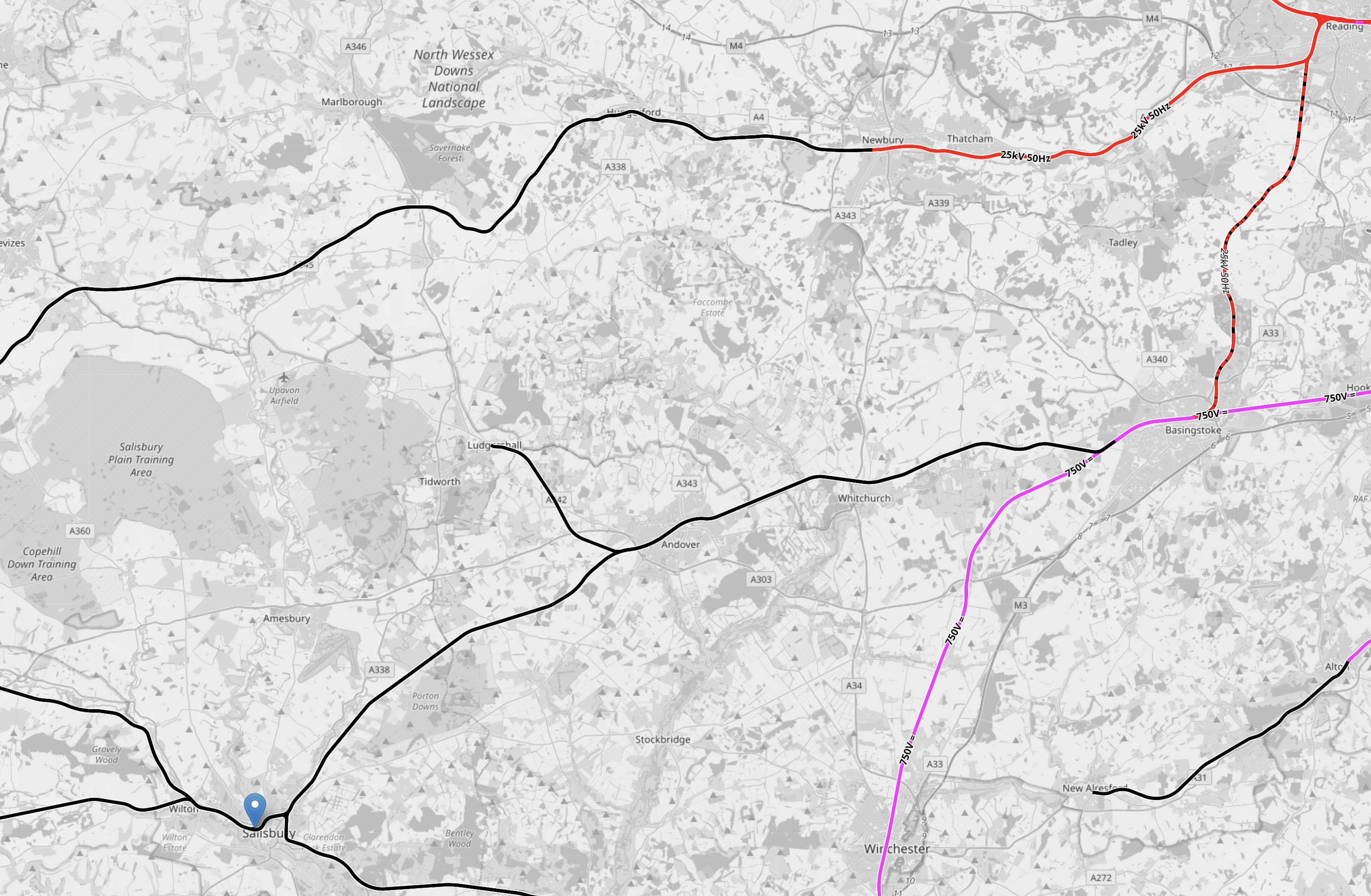
Note.
- Tracks shown in black are not electrified.
- Tracks shown in red are electrified with 25 KVAC overhead,
- Tracks shown in dashed red and black are proposed to be electrified.
- Tracks shown in mauve are electrified with 750 VDC third rail.
- Reading station is in the North-East corner of the map.
- The Reading and Basingstoke Line runs South from Reading station and is shown dashed.
- Basingstoke station is on the third-rail electrified South West Main Line between London Waterloo and Southampton.
- Salisbury station is indicated by the blue arrow.
- Linking Basingstoke and Salisbury is the unelectrified West of England Main Line between London Waterloo and Exeter.
- The branch line going North from the West of England Main Line to the East of Salisbury is used by the Army to move tanks.
- Ludgershall Town Council want passenger trains on the branch line to support housing at Tidworth with trains to Andover on the West of England Main Line.
- I wrote about this branch line in A Branch Line For Ludgershall
- Across the top of the map is the Reading and Taunton Line, which is electrified as far as Newbury.
I will now look at replacing the Class 159 trains.
Consider.
- Between Exeter St. David’s and Basingstoke stations is not electrified and is 124.3 miles.
- I believe that both Hitachi and CAF have the capability to produce a zero-carbon train with a range of 125 miles.
- The Office of Rail and Road will not allow any more third-rail electrification.
- Trains could have a generous turnround time at Exeter St. David’s which could allow trains to be charged, before returning to London.
- Basingstoke and Salisbury is only 35.8 miles, so a train terminating at Salisbury from London, should be able to return to London.
- Trains could be charged using short length of overhead electrification.
- Five-car trains, which could run in pairs might be ideal.
- I believe several manufacturers could make trains capable of running the route.
I also believe that once the charging strategy is known and any infrastructure has been installed, the new trains can be introduced into service to run alongside the Class 159 trains.
This would hopefully avoid, the current problems of the Class 820 trains on the Midland Main Line.
A Branch Line For Ludgershall
In the Wikipedia entry for Andover station, this is said under Future.
The new open-access operator Go! Cooperative has proposed operating a light rail service from Andover using the branch line to Ludgershall.
This sounds like another branch line that could work under Zwickau rules.
- Single track with no passing loop.
- Single self-powered train, like a Class 172 train providing a two trains per hour service.
- Simple one platform stations, with step-free level access to the train.
- Slow speed with train warning devices like horns and lights and good driver lookout.
- Standard railway signalling.
Note.
- There would appear to be a disused platform at Andover station.
- Trains with onboard energy storage couldn’t be used, as Andover isn’t electrified.
- The route might be an ideal trial for a Class 230 train.
- In Zwickau, the train goes through parkland, the town centre and across full-barrier level crossings.
- In Zwickau, pedestrians and cyclists can cross the tracks, just like they can cross the Blackpool Tramway or the London Tramlink.
- The Zwickau trains have a driver and conductor, as is normal on German trains.
- Rules would have to be developed for the Army to move in their tanks by train on the branch.
You might argue that we’ve used Zwickau rules in the UK on some branch lines for years.
But, usually branch lines are worked using some ancient diesel multiple unit with these characteristics.
- Bad driver visibility.
- Inadequate warning systems.
- Poor passenger comfort.
- Terrible access from station to train.
The train at Zwickau is a standard Stadler diesel multiple unit of a modern design, with large windows and a few extra orange lights and warning devices.
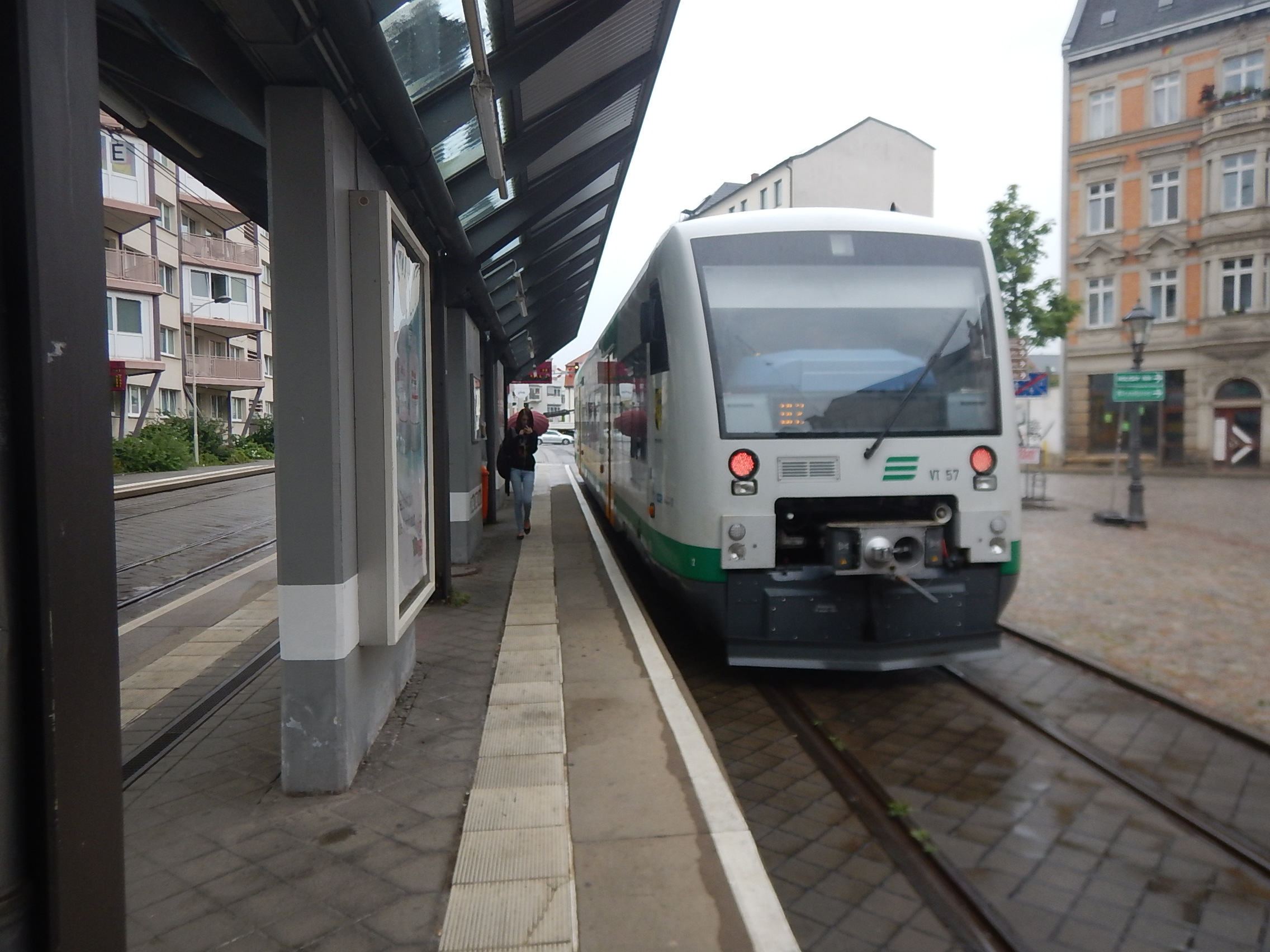
But because it is a standard train, once it joins the main railway, it can speed under normal train rules along a convenient route to an important terminus, some distance away.
Off the main line, all it needs is a single-track railway and one platform stations.
Advantages
The Zwickau approach has several advantages.
- Virtually standard train with a few extra features.
- No electrification.
- Single-track with no passing loops.
- Standard railway signalling.
- Single platform stations aligned for step-free access.
- No station footbridges.
- Pedestrians and cyclists cross the line, as they would a tramway.
Perhaps the biggest advantage is that the same train runs under normal railway rules on a heavy rail line and then can switch to slow running under tram rules on a branch or perhaps an extension to a town centre station.
Disadvantages
There are a couple of drawbacks.
- Train must be a modern design with extra safety features, like lights and warning devices.
- Train must be self-powered; diesel or onboard energy storage.
- Network Rail don’t like pedestrians and cyclists crossing the tracks willy-nilly.
If the train is a modern design with good driver visibility, then the risks associated with last point are probably minimised, or at least reduced to the level of a well-designed and run tramway.

