Improvements To Leeds And Hull Services
This news story from the Department of Transport is entitled Yorkshire And The Humber To Benefit From £19.8 billion Transport Investment.
This is said about Leeds and Hull services.
Hull will also be brought into the Northern Powerhouse Rail network, reducing journey time from Leeds from 58 minutes to just 48. The number of trains between Hull and Sheffield will be doubled, to 2 per hour, with capacity also doubled. Journeys from Hull to Manchester will drop from 115 to 84 minutes, enabling 2 fast trains to Leeds.
I shall look at the 10:15 Northern Trains service between Hull and Leeds on the 13th October 2023.
- The distance is 51.8 miles.
- There are seven stops.
- The service is run by a diesel Class 158 train.
- Journey time is 69 minutes.
Ten minutes off this time would be worthwhile.
I shall look at the 10:03 TransPennine Express service between Hull and Leeds on the 13th October 2023.
- There are two stops.
- The service is run by a diesel Class 185 train.
- Journey time is 54 minutes.
Ten minutes off this time would be difficult.
Note.
- The line between Micklefield and Leeds is being electrified.
- The distance between Hull and Micklefield is 42 miles.
- The route has a maximum speed of between 75 and 90 mph.
There is also an historic swing bridge at Selby, which would probably be difficult to electrify.
How Many Minutes Could Electric Trains Save Between Leeds and Hull?
Electric trains have better acceleration and deceleration, when compared to diesel trains, so two minutes per stop and for the acceleration and deceleration at Hull and Leeds, would give the following times.
- Northern Trains – 53 minutes
- TransPennine Express – 48 minutes
As electrification is not mentioned for between Leeds and Hull, the only electric trains, that could work the route will be battery-electric trains.
Battery-Electric Trains Between Leeds and Hull
Consider.
- TransPennine Express already have Class 802 trains, from which the battery-electric version is being developed.
- Northern Trains would need a suitable battery-electric train. There has been talk of a CAF battery-electric Class 331 train, but nothing more. These would surly be ideal.
- Trains could be charged on new electrification in Hull station and between Micklefield and Leeds.
The trains would need a range of just 42 miles.
A Second Fast Train Between Leeds and Hull
What does this statement in the news story imply?
Journeys from Hull to Manchester will drop from 115 to 84 minutes, enabling 2 fast trains to Leeds.
I feel that this statement must be read in conjunction with the benefits of the TransPennine Route Upgrade.
One benefit is given as Faster Journeys, where this is said.
We’re speeding up journeys so you can travel to your favourite towns and cities more quickly. Our fastest journey times are forecast to be 63-66 minutes between Manchester and York and 41-42 minutes between Manchester and Leeds.
The news story says that the fastest journey times between Leeds and Hull will be 48 minutes, which would give a Hull and Manchester time of 89-90 minutes.
Alternatively, there could be these timings on one train.
- Hull and Leeds – 48 mins
- Hull and Manchester Victoria – 84 mins
- Leeds and Manchester Victoria – 36 mins
Note.
- The train would call at Brough, Selby, Leeds, Huddersfield and Stalybridge.
- There may be a new station at Leeds Thorpe Park
- The distance between Hull and Manchester Victoria is 94.7 miles.
- This is an average speed of 67.6 mph.
It almost looks like it’s connectivity East of Leeds and speed between Leeds and Manchester.
Conclusion
Battery-electric trains would provide all the improvements promised between Leeds and Hull.
Electrification Of The Hope Valley Line
This news story from the Department of Transport is entitled Yorkshire And The Humber To Benefit From £19.8 billion Transport Investment.
This is said about the Hope Valley Line.
The Hope Valley Line between Manchester and Sheffield will also be electrified and upgraded, with the aim of cutting journey times from 51 to 42 minutes and increasing the number of fast trains on the route from 2 to 3 per hour, doubling capacity.
The fast trains are currently TransPennine’s service between Liverpool Lime Street and Cleethorpes.
- Between Platform 13 at Manchester Piccadilly station and Sheffield station is 42.6 miles.
- At the Manchester end, there will be electrification between Manchester Piccadilly and Hazel Grove stations, which is 8.7 miles and takes typically 17 minutes.
- After the electrification of the Midland Main Line to Sheffield, there will be electrification between Dore & Totley and Sheffield stations, which is 4.2 miles and takes typically 8 minutes.
The gap in the electrification between Dore & Totley and Hazel Grove stations will be 29.7 miles.
But it will not be an easy route to electrify.
- At the Western end, there is the Disley Tunnel, which is 3535 metres long.
- In the middle, there is the Cowburn Tunnel which is 3385 metres long, that is also the deepest tunnel in England.
- At the Eastern end, there is the Totley Tunnel, which is 5700 metres long.
Yorkshire doesn’t have an Underground railway, but the combined length of these three tunnels is 7.84 miles, which means that over 26 % of the electrification needed between Manchester Piccadilly and Sheffield will have to be installed in tunnels.
Could The Route Be Run Using Battery-Electric Trains?
Consider.
- The gap in the electrification between Dore & Totley and Hazel Grove stations will be 29.7 miles.
- There is electrified sections at Dore & Totley and Hazel Grove stations, which will be able to charge the trains.
- Merseyrail’s Class 777 trains have demonstrated a battery range of 84 miles.
- A Stadler Akku train has demonstrated a battery range of 139 miles.
- Hitachi are developing a battery-electric version of TransPennine’s Class 802 train.
- If all trains can run on batteries or be self-powered, there would be no need to electrify the long and possibly difficult tunnels.
I believe that it would be possible to electrify all passenger services between Manchester and Sheffield using appropriate battery-electric trains.
Freight would be a problem and I suspect that hydrogen-hybrid and other self-powered locomotives could handle the route.
Could The Complete TransPennine Liverpool Lime Street and Cleethorpes Service Be Run By Battery-Electric Class 802 trains?
These are the various electrified and unelectrified sections.
- Liverpool Lime Street and Liverpool South Parkway – Electrified – 5.7 miles – 10 minutes
- Liverpool South Parkway and Trafford Park – Not Electrified – 25.2 miles – 30 minutes
- Trafford Park and Hazel Grove – Electrified – 12.6 miles – 28 minutes
- Hazel Grove and Dore & Totley – Not Electrified – 29.7 miles – 35 minutes
- Dore & Totley and Sheffield – Electrified – 4.2 miles – 6 minutes
- Sheffield and Doncaster – Not Electrified – 18.6 miles – 25 minutes
- Doncaster and Cleethorpes – Not Electrified – 52.1 miles – 78 minutes
Note.
- This is a total of 125.6 miles without electrification.
- The Manchester Piccadilly and Sheffield time is 56 minutes.
- The distance is 37.8 miles.
- That is an average speed on 40.5 mph.
- Most of the line between Manchester Piccadilly and Sheffield has an maximum speed of 70 mph, but there is a short length of track with a 50 mph speed and another longer one with 90 mph.
To achieve 40 minutes between Manchester Piccadilly and Sheffield would need an average speed of 60.7 mph. Given the improvements being carried out by Network Rail at the current time, I believe that forty minutes between Manchester Piccadilly and Sheffield should be possible.
I’ll look at a train going East.
- The train will leave Liverpool Lime Street with a reasonably full battery after charging using the current electrification in the station.
- The train will leave Liverpool South Parkway with a full battery after charging using the current electrification from Liverpool Lime Street.
- The train will arrive at Trafford Park with a battery perhaps two-thirds full, but it will be fully charged on the current electrification to Hazel Grove.
- The train will arrive at Dore & Totley with a battery perhaps two-thirds full, but it will be fully charged on the Midland Main Line electrification to Sheffield.
- The train will arrive at Doncaster with a battery perhaps two-thirds full and the train would wait until it had enough charge to reach Cleethorpes.
I’ll look at a train going West.
- The train will leave Cleethorpes with a full battery after charging using the new electrification in the station.
- The train will arrive at Doncaster with a battery perhaps two-thirds full and the train would wait until it had enough charge to reach Sheffield.
- The train will arrive at Sheffield with a battery perhaps two-thirds full, but it will be fully charged on the Midland Main Line electrification to Dore & Totley.
- The train will arrive at Hazel Grove with a battery perhaps two-thirds full, but it will be fully charged on the current electrification to Trafford Park.
- The train will arrive at Liverpool South Parkway with a battery perhaps two-thirds full, but the route is electrified to Liverpool Lime Street.
Note.
- If the battery range on a full battery was over 90 miles, the two most easterly sections could be run without any charging at Doncaster.
- If the battery range was over 125.6 miles, the journey could be done by starting with a full battery.
- If every time the train decelerated, regenerative braking would recover energy, which could be reused.
- The only new electrification needed will be a short length at Cleethorpes station, that would charge the trains.
I certainly believe that Liverpool Lime Street and Cleethorpes services could be run by battery-electric trains.
Could The Complete TransPennine Liverpool Lime Street and Cleethorpes Service Be Run By Battery-Electric Class 802 trains Without The Midland Main Line Electrification?
In this section, I’m assuming, that there is no electrification at Sheffield.
These would be the various electrified and unelectrified sections.
- Liverpool Lime Street and Liverpool South Parkway – Electrified – 5.7 miles – 10 minutes
- Liverpool South Parkway and Trafford Park – Not Electrified – 25.2 miles – 30 minutes
- Trafford Park and Hazel Grove – Electrified – 12.6 miles – 28 minutes
- Hazel Grove and Cleethorpes – Not Electrified – 104.6 miles – 143 minutes
Note.
- This is a total of 129.6 miles without electrification.
- The battery range of the train, should probably be around 120 miles to make sure the train could run between Hazel Grove and Cleethorpes.
- One diesel power-pack could be installed for emergency use.
I’ll look at a train going East.
- The train will leave Liverpool Lime Street with a reasonably full battery after charging using the current electrification in the station.
- The train will leave Liverpool South Parkway with a full battery after charging using the current electrification from Liverpool Lime Street.
- The train will arrive at Trafford Park with a battery perhaps 80 % full, but it will be fully charged on the current electrification to Hazel Grove.
- The train would then eek out what power it had left to reach Cleethorpes.
If necessary, the train could stop in the electrified Doncaster station to top up the batteries from the East Coast Main Line electrification for the run to Cleethorpes.
I’ll look at a train going West.
- The train will leave Cleethorpes with a full battery after charging using new electrification in the station.
- The train will arrive at Doncaster with a battery perhaps 57 % full and the train would wait if needed, until it had enough charge to reach Hazel Grove.
- The train will arrive at Hazel Grove with a battery perhaps one-thirds full, but it will be fully charged on the current electrification to Trafford Park.
- The train will arrive at Liverpool South Parkway with a battery perhaps one-thirds full, but the route is electrified to Liverpool Lime Street.
Note.
- If the battery range on a full battery was over 105 miles, the Eastern section could be run without any charging at Doncaster.
- If the battery range was over 129.6 miles, the journey could be done by starting with a full battery.
- If every time the train decelerated, regenerative braking would recover energy, which could be reused.
- The only new electrification needed will be a short length at Cleethorpes station, that would charge the trains.
However, it might be prudent to electrify the through platforms at Sheffield, so that they could be used for emergency charging if required.
Northern Train’s Service Between Sheffield And Manchester Piccadilly Via The Hope Valley Line
There is a one train per hour (tph) Northern service between Sheffield and Manchester Piccadilly.
- The Class 195 diesel train takes 78 minutes.
- The distance is 42 miles.
- The first mile or so at the Manchester end is electrified.
- Trains seem to take about sixteen minutes to turn round at Manchester Piccadilly.
- Trains seem to take about nine minutes to turn round at Sheffield.
- The service runs via Reddish North, Brinnington, Bredbury, Romiley, Marple, New Mills Central, Chinley, Edale, Hope, Bamford, Hathersage, Grindleford and Dore & Totley.
- The max speed is generally 60 mph to the West of New Mills Central and 70 mph to the East, with short lower speed sections.
There would appear to be two ways to run this route withy battery-electric trains.
- As Manchester Piccadilly station is fully-electrified and trains could be connected to the electrification for upwards of twenty minutes, trains will certainly be able to be fully-charged at Manchester. As the round trip is only 84 miles, could trains run the service without a charge at Sheffield.
- Alternatively, there could be a dedicated electrified platform at Sheffield. But the problem with this, is that currently this service uses a random platform at Sheffield.
It looks like, if the train has the required range, that charging at the Manchester end would be the better solution.
Liverpool And Norwich Via The Hope Valley Line
This service uses a similar route between Liverpool Lime Street and Sheffield, as the Liverpool and Hull service and then it meanders, through the East Midlands.
- Liverpool Lime Street and Liverpool South Parkway – Electrified – 5.7 miles – 11 minutes
- Liverpool South Parkway and Trafford Park – Not Electrified – 25.2 miles – 33 minutes
- Trafford Park and Hazel Grove – Electrified – 12.6 miles – 26 minutes
- Hazel Grove and Dore & Totley – Not Electrified – 29.7 miles – 28 minutes
- Dore & Totley and Sheffield – Electrified – 4.2 miles – 6 minutes
- Sheffield and Nottingham – Being Electrified – 40.6 miles – 52 minutes
- Nottingham and Grantham – Not Electrified – 22.7 miles – 30 minutes
- Grantham and Peterborough – Electrified – 29.1 miles – 29 minutes
- Peterborough And Ely – Not Electrified – 30 miles – 31 minutes
- Ely and Norwich – Not Electrified – 53.7 miles – 56 minutes
This is a total of 161.3 miles without electrification.
But as Sheffield and Nottingham and Grantham and Peterborough will be fully electrified, this route will be possible using a battery-electric train.
Electrifying Sheffield Station
I said earlier in this post, that electrifying Sheffield station would be an option for electrifying the Sheffield and Manchester Piccadilly service.
If this were to be done, it would have collateral benefits for other services that terminate at Sheffield, which could be charged whilst they turned around.
I wrote about Sheffield station as a battery-electric train hub in Could Sheffield Station Become A Battery-Electric Train Hub?
Conclusion
I believe that full electrification of the Hope Valley Line is not needed, if battery-electric trains are used.
I also believe that battery-electric trains and the current improvements being carried out on the Hope Valley Line will enable a forty minute time between Manchester Piccadilly and Sheffield.
The Diesel Power Of The Class 805 Trains
Avanti West Coast’s new Class 805 trains, will probably start running between London Euston and Chester, Shrewsbury and North Wales before the end of the year.
But will they have the 560 kW engines of the Class 800 trains or the the 700 kW engines of the Class 802 trains?
On this page of Eversholt Rail’s web site, there is a detailed specification for a Class 802 train.
It says these trains have a top speed of 110 mph on diesel.
But it also says this about the design of the trains.
They have been designed to meet the operational requirements of the West of England route and are used on services out of London Paddington to Plymouth and Penzance.
The class 802 is almost identical to the class 800, the differences are that class 802s have a higher rated engine output to tackle the gradients through Devon and Cornwall, and a superior diesel range to provide the IET experience to the wider Greater Western Network, they also have a larger brake resistor which reduces brake pad usage and requires less maintenance.
Wikipedia also says that these are the diesel engine sizes in the three main classes of these Hitachi AT 300 trains.
- Class 800 train – 560 kW – Three engines for five cars
- Class 801 train – 560 kW – One emergency engine for five cars
- Class 802 train – 700 kW – Three engines for five cars
- Class 810 train – 735 kW – Four engines for five cars
All these four trains have similar bodyshells and running gear, so I suspect that to run at similar cruising speeds, similar amounts of power will be needed.
If the Class 802 train has a speed of 110 mph on diesel, then a rough estimate of the cruising speed of a train with the 560 kW engines can be estimated by doing this simple calculation. Note that air resistance is proportional to the square of the speed.
Square root (110*110 *560/700) = 98.4 mph
I have looked on OpenRailwayMap at all the tracks to the West of Wolverhampton, where these trains will run and the highest maximum operating speed I can find is 90 mph.
As the Class 805 trains have a reprofiled nose, which could be more aerodynamic, they may be able to cruise at 90 mph.
I believe that a train with three 560 kW engines will suit Avanti West Coast purposes well.
What Is The Operating Speed Of The Class 810 trains?
I can use a similar calculation to estimate the maximum operating speed of the Class 810 trains, that will operate on the Midland Main Line.
Consider.
- The Class 802 train has a total power of 2100 kW
- The Class 810 train has a total power of 2940 kW
- The Class 810 train with only three working engines has a total power of 2205 kW
I can estimate the cruising speed by doing this simple calculation, which is similar to the one for the Class 805 train.
Square root (110*110 *2940/2100) = 130 mph
I can also do it for a train running on three engines.
Square root (110*110 *2205/2100) = 113 mph
I looks to me, that the following is possible.
- As Class 810 trains can achieve the maximum speed of 125 mph on both diesel and electric power, the timetable is independent of the progress of the electrification.
- If the 125 mph sections are ignored, the fastest sections of line have a maximum speed of 110 mph, which could be possible on three engines.
- North of the electrification, where the maximum speed is only 110 mph, engines could be selectively rested to avoid overheating.
Four engines give a lot of interesting options.
I can’t wait to take a ride.
Could The Class 810 Trains Be Fitted With Batteries?
When, the electrification reaches Market Harborough station, there will be no 125 mph sections on the Midland Main Line, which are not electrified.
This Hitachi infographic shows the Hitachi Intercity Tri-Mode Battery Train.

A Class 810 version of this train would have three diesel engines and one battery pack.
- It would have all the features of the infographic.
- My calculations give it a top speed of 113 mph on a route, where the maximum speed North of the electrification is 110 mph.
- I also suspect, it could bridge any small gaps in the electrification.
It would have the very positive effects of saving fuel and cutting pollution in stations.
Liverpool Lime Street And Newcastle By Battery-Electric Class 802 Train
After my visit to Morley station, which I wrote about in Morley Station – 17th August 2023, in this post, I look at how a battery-electric Class 802 train might run between Liverpool Lime Street And Newcastle stations.
These are the various sections of the route.
- Liverpool Lime Street and Manchester Victoria – 31.6 miles – 36 minutes – Electrified
- Manchester Victoria and Huddersfield – 25.7 miles – 30 minutes – Not Electrified
- Huddersfield and Dewsbury – 8 miles – 7 minutes – Currently Being Electrified
- Dewsbury and Leeds – 9.1 miles – 14 minutes – Not Electrified
- Leeds and York – 25.8 miles – 30 minutes – Currently Being Electrified
- York and Newcastle – 80.2 miles – 58 minutes – Electrified
Note.
- Liverpool Lime Street and Manchester Victoria, Leeds and York and York and Newcastle are all long enough to fully charge a battery-electric train.
- There is electrification of both ends of the route.
- Manchester Victoria and York is a distance of 68.6 miles.
- The total route length is a distance of 180.4 miles.
In the August 2023 Edition of Modern Railways, there is an article, which is entitled GWR Seeks Opportunities To Grow.
This is the sub-heading.
Managing Director Mark Hopwood tells Philip Sherratt there is plenty of potential to increase rail’s economic contribution.
This is a paragraph.
Meanwhile, GWR had announced plans with Eversholt Rail to trial the replacement of a diesel generator unit with batteries on a Class 802 IET. However, Mr. Hopwood says this would not be useful for GWR and so the trial is not proceeding; instead, a TransPennine Express Class 802 will be the subject of a battery trial.
Could the trial be conducted on TransPennine Express’s Liverpool Lime Street And Newcastle route?
- The total route length is a distance of 180.4 miles.
- The two electrified sections at the ends of the route; Liverpool Lime Street and Manchester Victoria and York and Newcastle are both long enough to fully charge a battery-electric train.
- The central section between Manchester Victoria and York is not overly long at 68.6 miles.
- The route is convenient for Hitachi’s headquarters at Newton Aycliffe.
It looks like, the Liverpool Lime Street And Newcastle route would make an ideal test route for battery-electric Class 802 trains.
Manchester Piccadilly And Newcastle By Battery-Electric Class 802 Train
This is a very similar route to the Liverpool Lime Street And Newcastle route with a different Western terminal.
These are the various sections of the route.
- Manchester Piccadilly and Huddersfield – 25.5 miles – 42 minutes – Not Electrified
- Huddersfield and Dewsbury – 8 miles – 10 minutes – Currently Being Electrified
- Dewsbury and Leeds – 9.1 miles – 14 minutes – Not Electrified
- Leeds and York – 25.8 miles – 30 minutes – Currently Being Electrified
- York and Newcastle – 80.2 miles – 58 minutes – Electrified
Note.
- Turnround time at Manchester Piccadilly and York and Newcastle are all long enough to fully charge a battery-electric train.
- There is electrification of both ends of the route.
- Manchester Piccadilly and York is a distance of 68.4 miles.
- The total route length is a distance of 148.5 miles.
Like the Liverpool Lime Street And Newcastle route, I believe the Manchester Piccadilly And Newcastle route would make an ideal test route for battery-electric Class 802 trains.
Electrification Between Newbury And East Somerset Junction
In the August 2023 Edition of Modern Railways, there is an article, which is entitled GWR Seeks Opportunities To Grow.
This is the sub-heading.
Managing Director Mark Hopwood tells Philip Sherratt there is plenty of potential to increase rail’s economic contribution.
This is two paragraphs.
The desire to provide electrification to support aggregates traffic from the Mendip quarries could also benefit GWR , says Mr. Hopwood. ‘Having an electric loco would massively help with pathing heavy freight trains through the Thames Valley. If you could electrify from Newbury to East Somerset Junction, a big chunk of the Berks and Hants route would be wired.
Then you can ask how much further you could get on battery power on an IET without running out of juice.’
I have some thoughts.
Where Is East Somerset Junction?
This OpenRailwayMap shows East Somerset junction.
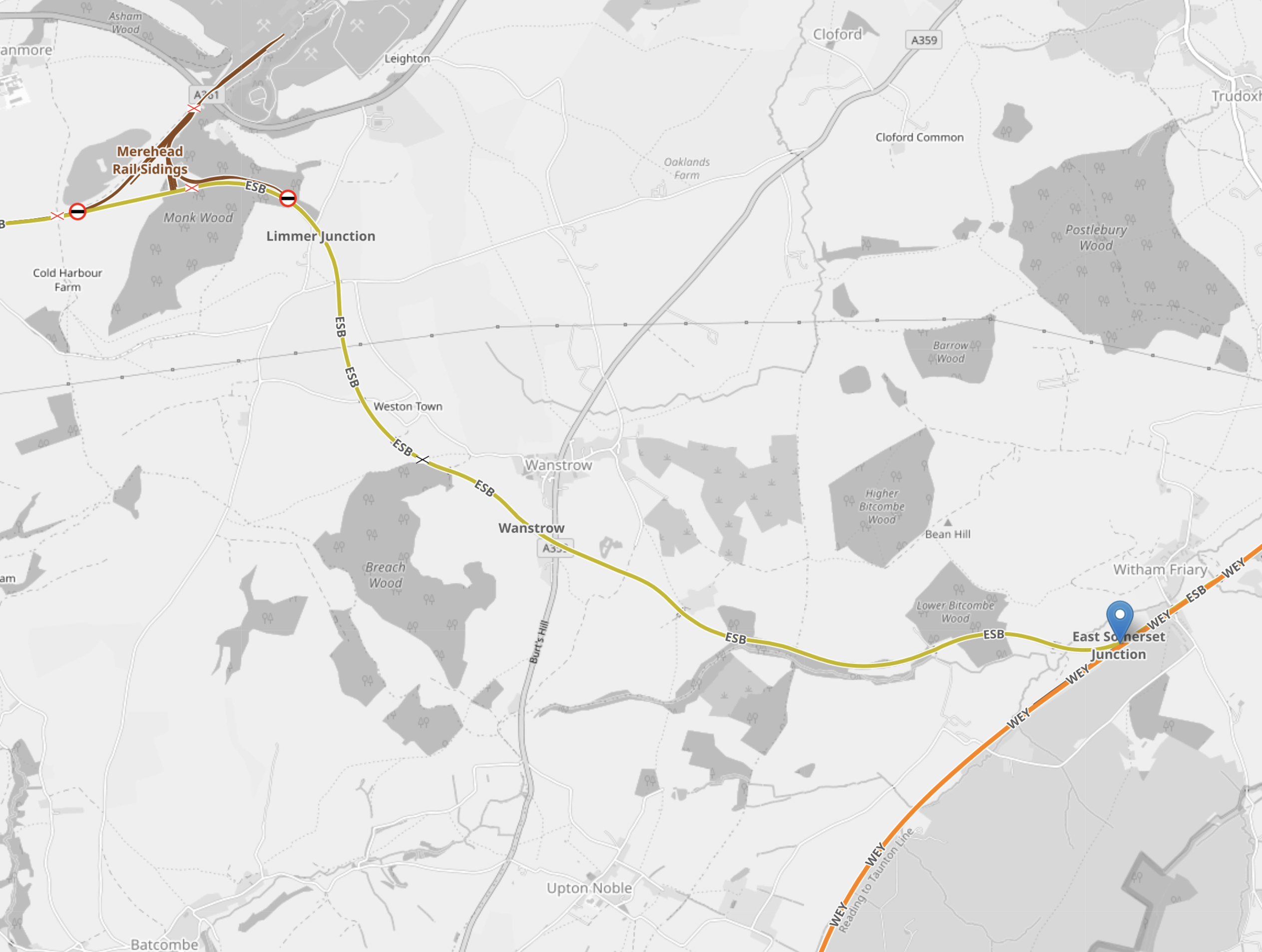
Note.
- The East Somerset junction is marked with the blue arrow.
- East Somerset junction is 5.2 miles North of Bruton station and 5.4 miles South of Frome station on the Reading and Taunton Line.
As the map shows there is a branch to Merehead Rail Sidings, which is shown in yellow.
This Google Map shows Merehead Rail Sidings.
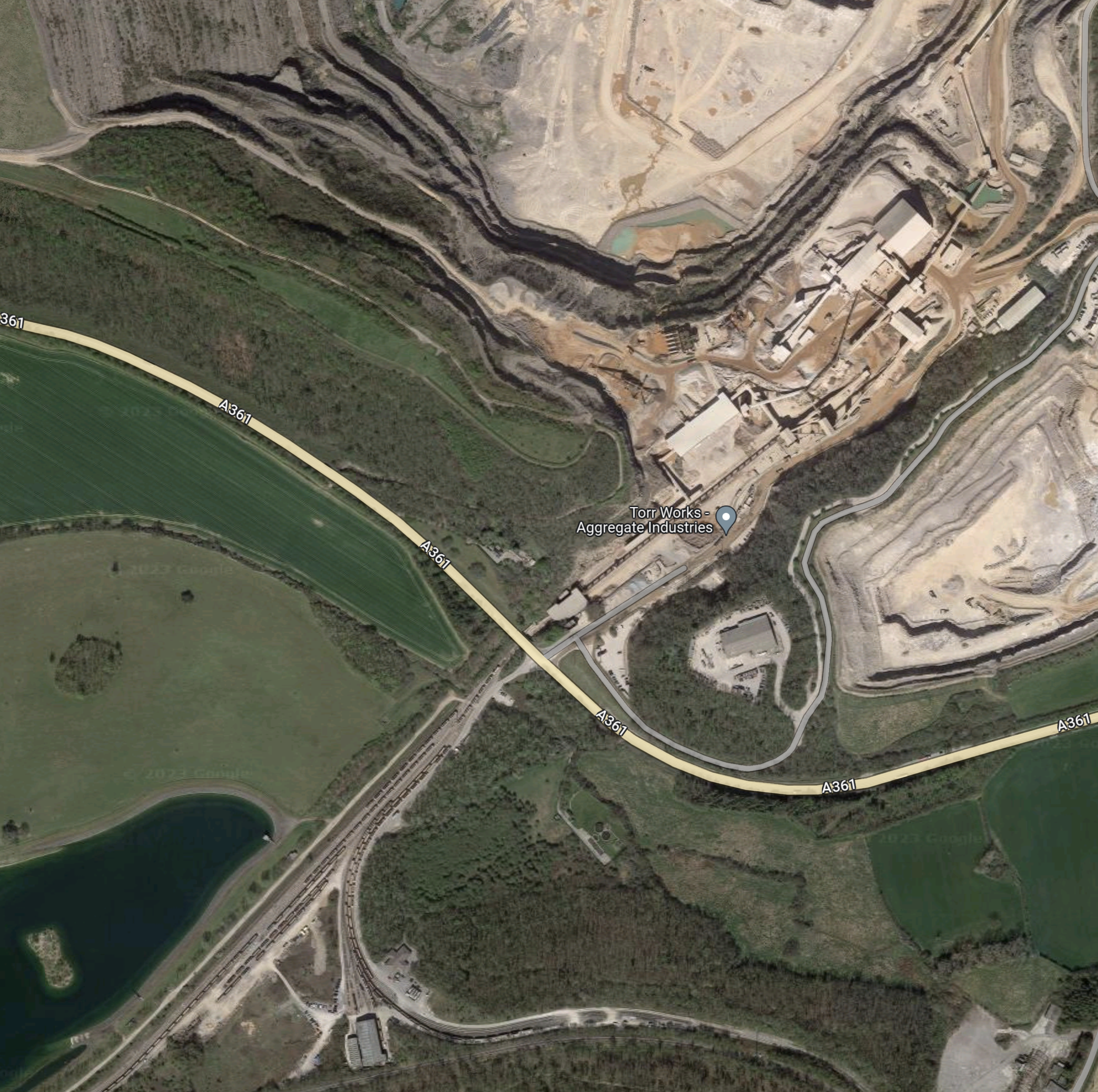
Note.
- It looks like there is a massive quarry to the North of the A361 road, which curves across the map.
- It is labelled Torr Works – Aggregate Industries.
- Torr Works has a Wikipedia entry.
- The rail sidings are South of the A361.
- Zooming in on the map, shows that the railway between East Somerset junction and Merehead is single-track and only a few miles long.
Distances from East Somerset junction are as follows.
- Dorchester junction – 41.2 miles
- Newbury – 53.4 miles
- Taunton – 37.2 miles
- Weymouth – 47.8 miles
Note that it is electrified with 750 VDC third-rail between Weymouth and Dorchester junction.
Range of Battery-Electric Trains
Consider.
- A Bombardier engineer told me eight years ago, that the battery-electric Class 379 train had a range of sixty miles.
- Stadler’s FLIRT Akku has a Guinness world record of 139 miles on one battery charge. See this page on the Stadler web site.
- Even Stadler’s Class 777 trains for Merseyrail have a range of 84 miles on battery power. See New Merseyrail Train Runs 135 km On Battery.
It does appear that five-car battery-electric trains will have ranges in excess of a hundred miles.
I believe that because Hitachi’s battery makers have a good record, they will probably be very ambitious and will want that Guinness record, that Hitachi’s Class 802 trains will have a battery range not far short of the 139 miles of the Stadler FLIRT Akku.
I will be very surprised if Hitachi’s battery-electric version of a Class 802 train, doesn’t have range of at least 125 miles.
But say if they could do say 140 miles, the battery-electric Class 802 train could cover every long-distance route in the UK, which would attract orders for trains to run on the following routes.
- Cardiff and Swansea
- Crewe and Holyhead
- Edinburgh and Aberdeen
- Edinburgh and Inverness
- Crewe and Holyhead
- London Waterloo and Exeter St. Davids
A substantial reward to the battery makers, would probably not be out of order.
Aggregate Trains From The Mendips
Consider.
- Mining and quarrying companies are under pressure from governments, shareholders and environmentalists to reduce their carbon footprints.
- Many are replacing diesel-powered mining excavators and trucks, with electric or hydrogen versions.
- In addition, those companies delivering building products to the construction industry are under pressure to provide low-carbon products.
- Using rail with electric traction to deliver products to market would cut carbon emissions and might even help sales.
These Mendip quarries appear to be connected to the Reading and Taunton Line.
- Torr Works – Connects 5.4 miles to the South of Frome.
- Whatley Quarry – Connects close to Frome.
There may be others.
But these rail-connected quarries, connect at or North of East Somerset junction, to where Mark Hopwood is proposing electrification.
Zero-carbon rail traction could even be possible, by electrifying the short single-track branch lines. or by using hydrogen-electric hybrid locomotives.
GWR’s London And South-West Services
These services use the Reading and Taunton Line to join the Bristol and Exeter Line at Taunton, before going on to Exeter, Plymouth and other destinations in the South-West of England.
These are distances from East Somerset Junction.
- Exeter – 67 miles
- Paignton 95.2 miles
- Penzance – 198.5 miles
- Plymouth – 119.0 miles
- Taunton – 37.2 miles
Note.
- Exeter, Paignton, Penzance and Plymouth stations would need short lengths of electrification to charge terminating trains or top-up passing trains.
- In Thoughts About Electrification Through Devon And Cornwall, I showed that the average stop time at Plymouth station was eight minutes, which could be enough for the rail equivalent of a Formula One splash and dash.
- A 125 mile battery range, not only enables London and Penzance, but also Cardiff and Swansea, and Edinburgh and Aberdeen, when the extra electrification is completed.
Could my estimate of a 125 mile battery range, be Hitachi’s objective for their battery-electric trains?
The Ultimate Battery-Electric Class 802 Train
Hitachi have been totally silent on how the fitting of batteries to Class 802 trains is going.
But Mark Hopwood is more forthcoming in the GWR Seeks Opportunities To Grow article. where this is said.
Meanwhile, GWR had announced plans with Eversholt Rail to trial the replacement of a diesel generator unit with batteries on a Class 802 IET. However, Mr. Hopwood says this would not be useful for GWR and so the trial is not proceeding; instead, a TransPennine Express Class 802 will be the subject of a battery trial.
It sounds to me that another solution is being developed to get trains to run on electric power between London and the South-West.
- I think we can rule out full electrification on the grounds of cost, disruption, time and the Nimbys and objectors will have a field day.
- Newbury and Penzance is a distance of 251.9 miles, which would surely need a lot of batteries.
Mark Hopwood’s idea to electrify the 53.4 miles between Newbury And East Somerset junction, is starting to look like a good compromise.
GWR’s Bristol/Gloucester And Weymouth Services
These stopping trains are run by diesel trains and take the following route between Bristol Temple Meads and Weymouth stations.
- Keynsham
- Oldfield Park
- Bath Spa
- Freshford
- Avoncliff
- Bradford-on-Avon
- Trowbridge
- Westbury
- Frome
- East Somerset junction
- Bruton
- Castle Cary
- Yeovil Pen Mill
- Thornford
- Yetminster
- Chetnole
- Maiden Newton
- Dorchester West
- Dorchester junction
- Upwey
Note.
- I would assume that there is enough electrification at Bristol Temple Meads and towards Gloucester to charge the trains.
- Trains would leave Bristol Temple Meads with a full battery.
- The eighteen stops mean that an electric train with regenerative braking will be more efficient.
- Bristol Temple Meads and Westbury is not electrified.
- Westbury and East Somerset junction will be electrified with 25 KVAC overhead electrification under Mark Hopwood’s proposal.
- Trains take sixteen minutes between Westbury and East Somerset junction.
- East Somerset junction and Dorchester junction is not electrified.
- Dorchester junction and Weymouth is electrified with 750 VDC third-rail electrification.
- Trains take ten minutes between Dorchester junction and Weymouth.
Distances of the various legs are as follows.
- Bristol Temple Meads and Westbury – 28.3 miles – Not Electrified
- Westbury and East Somerset junction – 11.4 miles – Electrified
- East Somerset junction and Dorchester junction – 41.4 miles – Not Electrified
- Dorchester junction and Weymouth – 6.6 miles – Electrified
The two sections without electrification, should be well within range of a dual-voltage battery-electric train, that has been designed for the route.
GWR’s Cardiff Central And Portsmouth Harbour Service
These stopping trains are run by diesel trains and take the following route between Bristol Temple Meads and Portsmouth Harbour stations.
- Keynsham
- Oldfield Park
- Bath Spa
- Freshford
- Avoncliff
- Bradford-on-Avon
- Trowbridge
- Westbury
- Warminster
- Salisbury
- Romsey
- Redbridge
- Southampton Central
- Fareham
- Cosham
- Fratton
- Portsmouth & Southsea
Note.
- I would assume that there is enough electrification at Bristol Temple Meads and towards Cardiff Central to charge the trains.
- Trains would leave Bristol Temple Meads with a full battery.
- The seventeen stops mean that an electric train with regenerative braking will be more efficient.
- Bristol Temple Meads and Westbury is not electrified.
- Westbury station will be electrified with 25 KVAC overhead electrification under Mark Hopwood’s proposal.
- Trains would leave Westbury with a full battery.
- Westbury and Redbridge is not electrified.
- Redbridge and Portsmouth Harbour is electrified with 750 VDC third-rail electrification.
Distances of the various legs are as follows.
- Bristol Temple Meads and Westbury – 28.3 miles – Not Electrified
- Westbury and Redbridge – 46.4 miles – Not Electrified
- Redbridge and Portsmouth Harbour – 28.5 miles – Electrified
The two sections without electrification, should be well within range of a dual-voltage battery-electric train, that has been designed for the route.
GWR’s Bristol Temple Meads And Salisbury Services
These stopping trains are run by diesel trains and take the following route between Bristol Temple Meads And Salisbury stations.
- Keynsham
- Oldfield Park
- Bath Spa
- Freshford
- Avoncliff
- Bradford-on-Avon
- Trowbridge
- Dilton Marsh
- Warminster
Note.
- I would assume that there is enough electrification at Bristol Temple Meads to charge the trains.
- Trains would leave Bristol Temple Meads with a full battery.
- An electric train with regenerative braking will be more efficient.
- Bristol Temple Meads and Westbury is not electrified.
- Westbury station will be electrified with 25 KVAC overhead electrification under Mark Hopwood’s proposal.
- Trains would leave Westbury with a full battery.
- Westbury and Salisbury is not electrified.
Distances of the various legs are as follows.
- Bristol Temple Meads and Westbury – 28.3 miles – Not Electrified
- Westbury and Salisbury – 24.4 miles – Not Electrified
The two sections without electrification, should be well within range of a battery-electric train, that has been designed for the route.
GWR’s Swindon And Westbury Services
These stopping trains are run by diesel trains and take the following route between Swindon and Westbury stations.
- Chippenham
- Melksham
- Trowbridge
Note.
- This is the Transwilts service.
- I would assume that there is enough electrification at Swindon to charge the trains.
- Trains would leave Swindon with a full battery.
- An electric train with regenerative braking will be more efficient.
- Chippenham and Westbury is not electrified.
- Westbury station will be electrified with 25 KVAC overhead electrification under Mark Hopwood’s proposal.
- Trains would leave Westbury with a full battery.
Distances of the various legs are as follows.
- Swindon and Chippenham – 16.9 miles – Electrified
- Chippenham and Westbury – 15.8 miles – Not Electrified
The section without electrification, should be well within range of a battery-electric train, that has been designed for the route.
What Can Be Done If The Electrification Is Not Long Enough?
Some of these routes battery-electric routes may need more electrification to work efficiently.
Despite some routes having both 25 KVAC overhead and 750 VDC third-rail electrification, any extension of the electrification would be overhead, as new third-rail electrification is effectively banned.
Conclusion
It looks like Mark Hopgood proposal is an excellent idea to enable the decarbonisation of GWR services in Wiltshire and Somerset.
- Express services would be run by battery-electric Class 802 trains.
- Local services would be run by battery-electric trains with perhaps three cars.
Some of the local trains would need to be dual-voltage to use both forms of electrification.
What Will Be The Range Of A Hitachi Class 800 Battery Train?
I feel now, I have enough information to make an educated, at what the distance a five-car Class 800 or Class 802 train will travel on batteries.
Previous Battery-Electric Trains
These are examples of previous distances.
- A Bombardier engineer told me eight years ago, that the battery-electric Class 379 had a range of sixty miles.
- Stadler’s FLIRT Akku has a Guinness world record of 139 miles on one battery charge. See this page on the Stadler web site.
- Even Stadler’s Class 777 trains for Merseyrail have a range of 84 miles on battery power. See New Merseyrail Train Runs 135 km On Battery.
It does appear that five-car battery-electric trains will have ranges in excess of a hundred miles.
Engineering Ambition
Several times in my life, I’ve got fired up about engineering or software projects and I like to think, I’ve produced the best and fastest solution.
For this reason, I believe that Hyperdrive Innovation, who are now part of Turntide Technologies, and Hitachi will set themselves three objectives with the design of the the battery packs for the Class 800 or Class 802 train.
- The battery-electric Class 802 will outperform the Stadler FLIRT Akku in terms of speed and distance.
- The battery packs will be plug-compatible with the diesel engines, so there will only be minor software modification to the trains.
- The train will be able to be handle all Great Western Railway’s routes without using diesel.
- I wouldn’t be surprised that on many routes the train will cruise at over 110 mph on batteries.
I also suspect they want the Akku’s Guinness world record, which will mean the range will be in excess of 139 miles.
More On LNER’s Ten New Bi-Modes
I wrote about these trains in LNER Seeks 10 More Bi-Modes.
This was my conclusion.
There is a lot of scope to develop LNER’s services.
I think it is likely that the order will go to Hitachi.
But as I indicated, I do believe that there is scope for a manufacturer to design a zero-carbon train, that was able to serve Aberdeen and Inverness.
- I suspect a fleet of ten trains would be sufficient.
- Trains would use the 25 KVAC overhead electrification, where it exists and hydrogen or battery power North of the wires.
The trains would also be capable of being upgraded to higher speeds, should the East Coast Main Line be turned into a High Speed Line.
I also think, that whatever trains are bought, there will be a large upgrading of the existing Hitachi fleet, which will add batteries to a lot of trains.
In the July 2023 Edition of Modern Railways, there is an article, which is entitled LNER Embraces Pioneering Spirit, which takes the form of an interview with LNER’s Managing Director; David Horne.
In a section, which is entitled ‘225’ Replacement, this is said.
Meanwhile, Mr Horne is looking to what might replace the InterCity 225 fleet, now smartly repainted in a scheme which pays homage to the original ‘Swallow’ livery. While there were fears this fleet may be withdrawn as an economy measure, the ‘225s’ are now on lease until at least next summer.
But Mr Horne says obsolescence issues are a real challenge and LNER will struggle to maintain the fleet beyond 2025, and from the May 2023 timetable change the number of daily diagrams was reduced from five to four to conserve the fleet’s mileage. Much of the heavy maintenance work had previously been carried out at Wabtec’s Doncaster site, but this facility is no longer available, and while a recent reliability improvement programme is bearing fruit, the challenges remain. The crunch point comes with the transition to ETCS at the southern end of the ECML as part of the East Coast Digital Programme – Mr Horne says LNER does not want to fit cab signalling on the ‘225s’.
The solution to this issue is to procure additional trains to run alongside the 65 Azumas, and LNER went out to tender in October 2020 for a fleet of 10 trains with self-power capability.
While a preferred bidder has been identified, the business case to proceed with the procurement is awaiting approval, but Mr Horne is still hopeful this project can be progressed.
The current plan envisages the new trains broadly replacing the ‘225s’ on Leeds and York diagrams, but a major benefit with the new fleet would be during engineering work – at present LNER has to withdraw services to places such as Harrogate and Hull to concentrate its bi-mode Azumas on services using non-electrified diversionary routes, and having more stock with self-power capability would ease the issue.
Currently, LNER has these Azumas and InterCity 225s in its fleet.
- Five-car bi-mode Class 800 trains – 10
- Nine-car bi-mode Class 800 trains – 13
- Five-car electric Class 801 trains – 12
- Nine-car electric Class 801 trains – 30
- Nine-car electric ImterCity 225 trains – 8
Note.
- There are 23 bi-mode trains and 50 electric trains.
- There are 167 bi-mode carriages and 302 electric carriages.
- Currently 31.5 % of the trains are bi-mode.
- With ten new bi-mode trains and no InterCity 225 trains, 44 % of the fleet will be bi-mode.
Is this increase in the percentage of the fleet, that are bi-mode acceptable?
LNER’s Two Needs
Let’s look at LNER’s needs, which are actually two separate sub-needs.
- There is a need for ten new trains to replace the InterCity 225 trains.
- There is a need to increase the size of the bi-mode fleet to be able to use the Great Northern and Great Eastern Joint Line and other non-electrified routes to by-pass engineering works.
Note.
- I suspect that as Mr Horne explained, there are only five or possibly four InterCity 225s diagrammed on a particular day, then perhaps ten five-car bi-mode Class 800 trains, might be able to cover for the retirement of the InterCity 225s.
- These trains would work as pairs to Leeds and York to replace the InterCity 225 capacity.
- If required they could split and join at Leeds and York to serve other destinations.
- The diversion route of the Great Eastern Joint Line has an unelectrified distance of 93.7 miles and the route is electrified at both ends.
- Would a battery-electric Class 800 train handle this distance? I suspect if Stadler can do it, then Hitachi and Turntide Technology will be able to do it too!
LNER will have replaced the InterCity 225s and acquired ten new five-car blockade runners.
As an order for ten new five-car battery-electric trains, is not to be sneezed at, I suspect Hitachi will make sure that their new battery-electric variants have enough range.
So this would mean that the range of a five car battery-electric Class 800 train, should be in excess of 93.7 miles.
Advantages Of Converting Class 800 and Class 802 Trains To Battery-Electric Operation
It should be noted that the five-car and nine-car Class 800 and Class 802 trains have specific advantages when it comes to converting them to battery-electric operation.
- They are modern trains, that are still in production, so every bit of information about the train is known down to the last nut, bolt and plastic clip.
- Like most modern trains, hey have a sophisticated computer system controlling the train.
- They have spaces for three, four or maybe even five diesel engines under the floor, which could be used for a battery-pack in every car designed to hold a diesel engine.
- The train has an electric bus between nose and tail.
- As is shown, when the trains change between diesel and electric, the pantograph can go up and down with all the alacrity of a whore’s drawers.
- The trains can be converted between bi-mode and electric, by adding or removing diesel packs. I doubt this feature will be removed, as batteries replace diesels.
With my Electrical and Control Engineer’s hard hat on, I doubt there is anything to stop a Class 800 or Class 802 train being fitted with three or more batteries to create a 125 mph train, with a range approaching two hundred miles on battery power.
The initial name of these Hitachi trains was the Hitachi Super Express. Is this train the Hitachi Super Battery Express?
But it would appear, that for their initial needs, LNER, just need a range to handle the near hundred miles of the Great Northern and Great Eastern Joint Line.
Inverness and Aberdeen will come later.
Conclusion
The first version of the battery-electric train will have a range of around a hundred miles, so that they can handle the Great Northern and Great Eastern Joint Line diversion, which is 93.7 miles on battery power.
But fairly soon after introduction into service, I will be very surprised if they don’t claim the Guinness world record by running farther than the Stadler FLIRT Akku’s 139 miles.
No-one likes being second!
Thoughts About Electrification Through Devon And Cornwall
Distances
I’ll start by looking at a few distances.
- Penzance and Taunton – 162.3 miles
- Penzance and Exeter St. David’s – 131.5 miles
- Penzance and Plymouth – 79.5 miles
- Taunton and Exeter St. David’s – 30.7 miles
- Plymouth and Exeter St. David’s – 52 miles
- Taunton and Newbury – 89.6 miles
- Plymouth and Taunton – 82.8 miles
- Taunton and Paignton – 59 miles
- Taunton and Patchway – 51.7 miles
Note.
- Patchway and Newbury are already electrified to Cardiff Central and London Paddington respectively.
- Bombardier’s engineer told me eight years ago, that the battery-electric Class 379 had a range of sixty miles.
- Stadler’s FLIRT Akku has a Guinness world record of 139 miles on one battery charge. See this page on the Stadler web site.
- Even Stadler’s Class 777 trains for Merseyrail have a range of 84 miles on battery power. See New Merseyrail Train Runs 135km On Battery.
The rail distances in Devon and Cornwall are getting closer to being within the capability of trains fitted with batteries.
Station Stop Times
These are typical times that trains stop in the more important stations between Taunton and Penzance.
- Taunton – < 2 mins
- Tiverton Parkway – < 2 mins
- Exeter St. Davids – 2 mins
- Newton Abbot – < 2 mins
- Totnes – < 2 mins
- Plymouth – 11 minutes
- Devonport – < 2 mins
- Saltash – < 2 mins
- Menheniot – < 2 mins
- Liskeard – < 3 mins
- Bodmin Parkway – 2 mins
- Lostwithiel – 2 mins
- Par – 2 mins
- St. Austell – 2 mins.
- Truro – 2 mins
- Redruth – 2 mins
- Camborne – 2 mins
Note.
- The timings were for today.
- The Cardiff and Penzance services were being run by five-car Class 802 trains.
- Most station stops are around two minutes or less, but Plymouth on this train was eleven minutes.
I find it interesting that the Plymouth stop takes so much longer.
Train Stops At Plymouth
I looked at about twenty trains stopping at Plymouth, that included these services.
- London Paddington and Penzance
- Penzance and London Paddington
- Cardiff Central and Penzance
- Penzance and Cardiff Central
Note.
- I found an average time of eight minutes.
- Eleven minutes was a common stop.
- Eight minutes could be enough time for the rail equivalent of a Formula One splash and dash.
- CrossCountry services were going through the station in three minutes.
I am led to believe that the timetable used by the GWR trains would allow a quick battery charge at Plymouth station.
This OpenRailwayMap shows the platforms at Plymouth station.
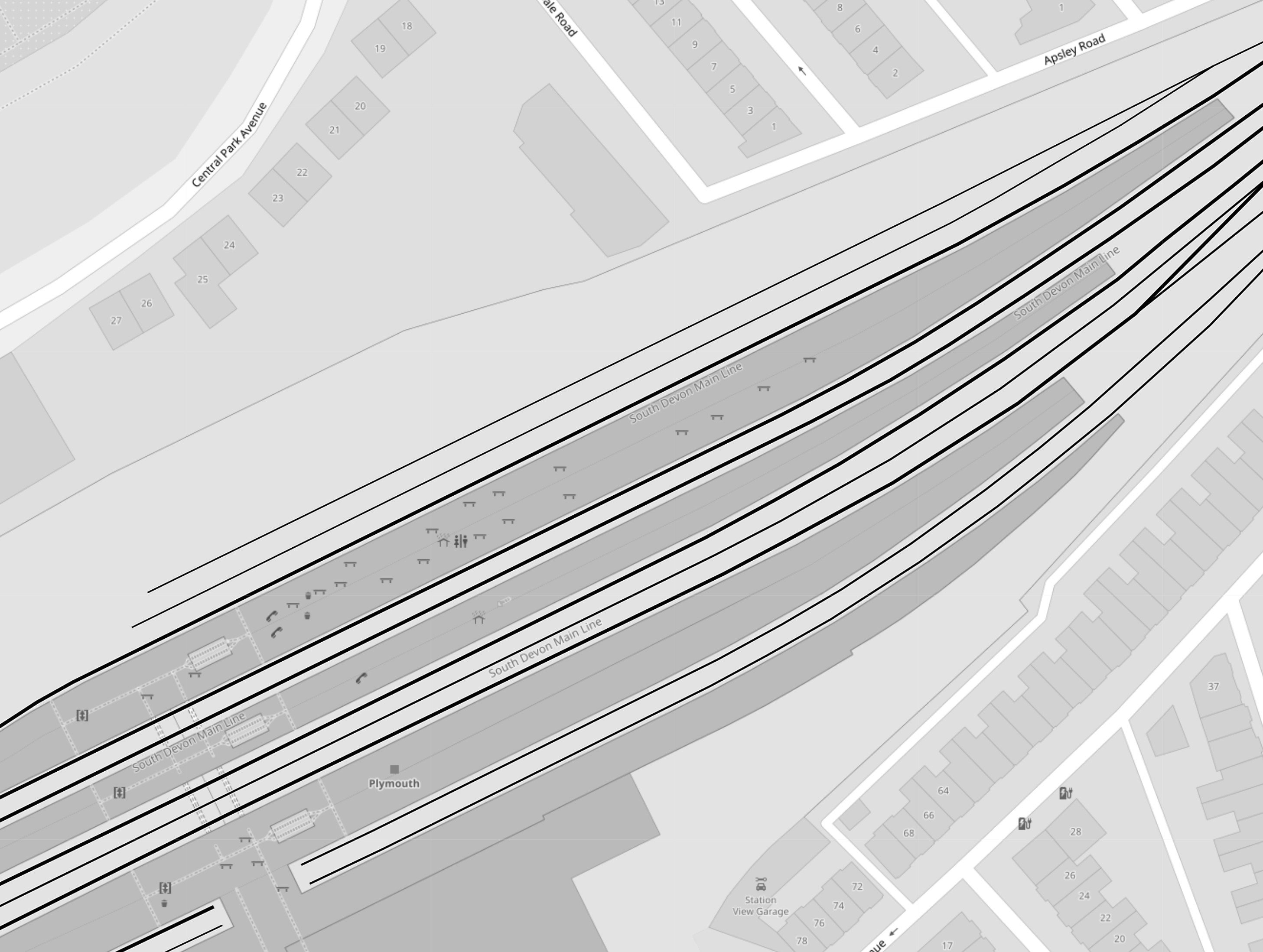
Note.
- London is to the East and Penzance is to the West.
- Platform numbers increase from South to North.
- The two East-facing bay platforms are Platforms 1 and 2.
- The West-facing bay platform in the South-West corner is Platform 3.
- Platform 4 shares the island with the bay platforms 1, 2 and 3.
- Most trains going to Penzance use Platform 4.
- Platforms 5 and 6 share the centre island platform.
- Platforms 7 and 8 share the Northernmost island platform.
- Most trains going towards London use Platform 7.
- Wikipedia indicates that the track layout is comprehensive and allows a lot of operational flexibility.
Although the station was completed around forty years ago, it could have been designed for handling modern battery-electric trains.
- There are three bay platforms numbered 1 to 3, to charge local services and send them on their way.
- Trains can arrive and depart in the five through platforms, numbered 4 to 8, from either direction.
- Two days ago, a nine-car London Paddington to Plymouth train terminated in Platform 7. After waiting an hour it returned to London. An hour would be enough time to fully-charge a train.
- As many platforms as needed could be electrified.
I am fairly sure, that most battery-electric trains could be timetabled to leave Plymouth station with full batteries.
Turnround At Penzance
I have found these turnrounds.
- 802113 arrived from Paddington at 1142 and left for London at 1215
- 802022 arrived from Paddington at 1307 and left for London at 1415
- 802103 arrived from Paddington at 1500 and left for London at 1615
This OpenRailwayMap shows the platforms at Penzance station.
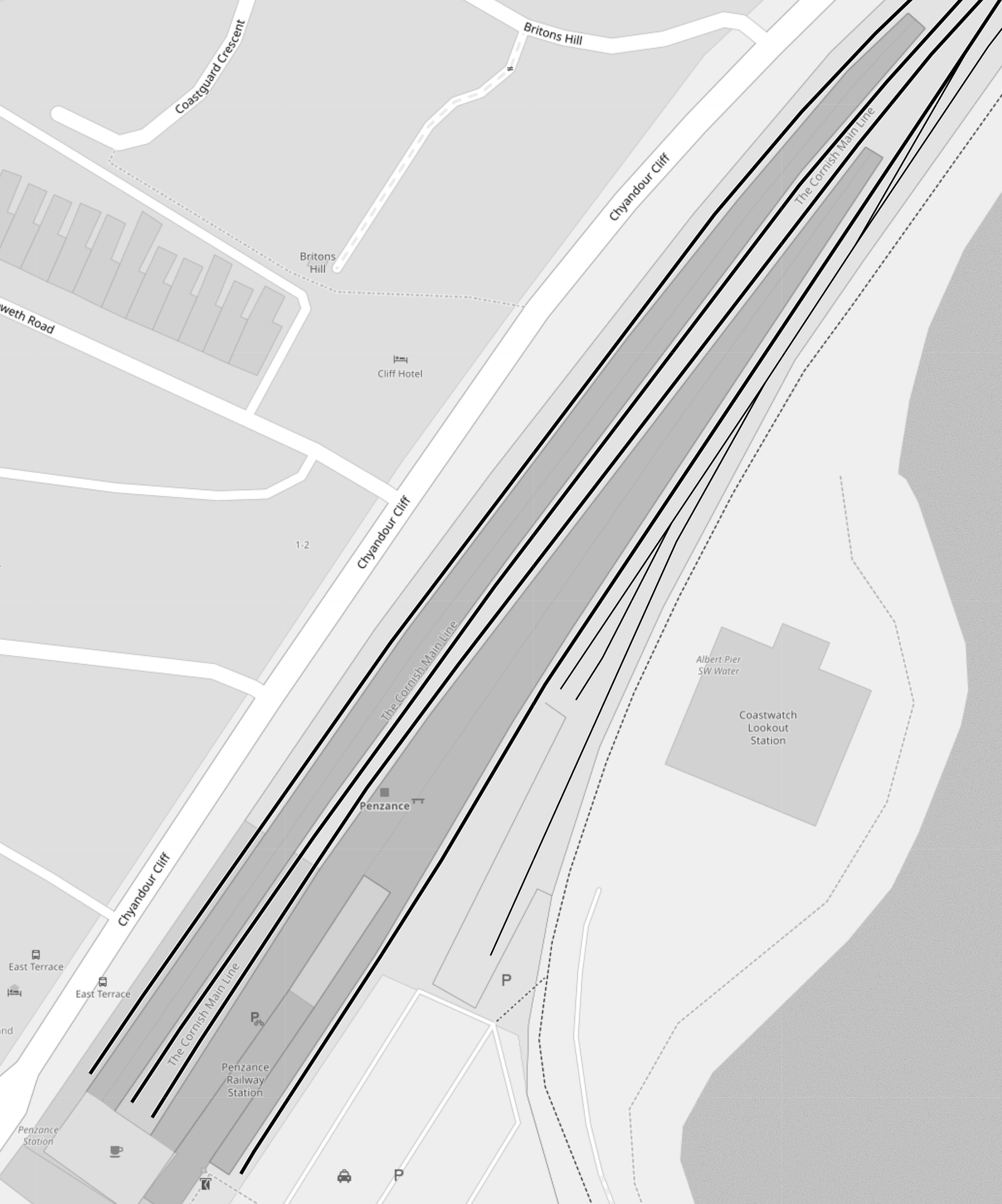
Note.
- The three example trains used Platform 1.
- Platform 1 is the long platform on the landward side of the station.
- Platforms are numbered 1 to 4 from left to right.
- An appropriate number of platforms would be electrified to charge trains terminating at Penzance.
Trains would appear to have plenty enough time to recharge, so they would start their return journey with full batteries.
Engineering Ambition
Several times in my life, I’ve got fired up about engineering or software projects and I like to think, I’ve produced the best and fastest solution.
For this reason, I believe that Hyperdrive Innovation, who are now part of Turntide Technologies, and Hitachi will set themselves three objectives with the design of the the battery packs for the Class 802 train.
- The battery-electric Class 802 will outperform the Stadler FLIRT Akku in terms of speed and distance.
- The battery packs will be plug-compatible with the diesel engines, so there will only be minor software modification to the trains.
- The train will be able to be handle all Great Western Railway’s routes without using diesel.
- I wouldn’t be surprised that on many routes the train will cruise at over 110 mph on batteries.
I also suspect they want the Akku’s Guinness world record, which will mean the range will be in excess of 139 miles.
Battery Range Needed For Routes
These are routes that need to be covered by battery-electric Class 802 trains or similar.
- Avanti West Coast – Crewe and Chester – 22.2 miles
- Avanti West Coast – Crewe and Holyhead – 105.5 miles
- Avanti West Coast – Crewe and Llandudno Junction – 65.5 miles
- Avanti West Coast – Crewe and Wrexham – 34.4 miles
- Avanti West Coast – Shrewsbury and Wolverhampton – 29.7 miles
- Great Western Railway – Penzance and Plymouth – 79.5 miles
- Great Western Railway – Plymouth and Taunton – 82.8 miles
- Great Western Railway – Taunton and Patchway – 51.7 miles
- Great Western Railway – Newbury and Taunton – 89.6 miles
- Great Western Railway – Taunton and Paignton – 59.0 miles
- Great Western Railway – Weston-super-Mare and Chippenham – 43.5 miles
- Great Western Railway – Oxford and Great Malvern – 65.6 miles
- Great Western Railway – Oxford and Hereford – 86.3 miles
- Great Western Railway – Oxford and Worcester Foregate Street – 57.6 miles
- Great Western Railway – Oxford and Worcester Shrub Hill – 57.2 miles
- Great Western Railway – Cheltenham Spa and Swindon – 43.2 miles
- Great Western Railway – Cardiff Central and Carmarthen – 77.4 miles
- Great Western Railway – Cardiff Central and Pembroke Dock – 118.9 miles
- Great Western Railway – Cardiff Central and Swansea – 45.7 miles
- Hull Trains – Beverley and Temple Hirst Junction – 44.3 miles
- Hull Trains – Hull and Temple Hirst Junction – 36.1 miles
- LNER – Hull and Temple Hirst Junction – 36.1 miles
- LNER – Middlesbrough and Longlands Junction – 22.2 miles
- LNER – Sunderland and Longlands Junction – 48.5 miles
- LNER – Lincoln Central and Newark Northgate – 16.6 miles
- LNER – Leeds and Bradford – 13 miles
- LNER – Leeds and Harrogate – 18 miles
- LNER – Leeds and Huddersfield – 17 miles
- LNER – Stirling and Inverness – 146 miles
- LNER – Edinburgh Haymarket and Aberdeen – 130 miles
- LNER – Peterborough and Doncaster via Great Northern and Great Eastern Joint Line – 93.7 miles
- South Western Railway – Basingstoke and Exeter St. David’s – 124.5 miles
- TransPennine – Hull and Micklefield – 42 miles
- TransPennine – Longlands Junction and Saltburn – 34.7 miles
- TransPennine – York and Scarborough – 42 miles
- TransPennine – Doncaster and Cleethorpes – 52.1 miles
- TransPennine – Stockport and Doncaster – 55.4 miles
- TransPennine – Stockport and Cleethorpes – 107.5 miles
Note.
- Stirling and Inverness and Edinburgh Haymarket and Aberdeen could be shortened by up to thirty miles, by planned electrification in Scotland.
- I have assumed that the TransPennine Upgrade has been completed.
- It looks like a battery-electric Class 802 train could use the Great Northern and Great Eastern Joint Line diversion via Lincoln.
- I am slightly surprised, that the longest stretch of line without electrification and with a passenger service is Basingstoke and Exeter St. David’s.
Charging will be needed at some places to charge the battery-electric trains. Stations fitted with chargers could include Aberdeen, Carmarthen, Cleethorpes, Exeter St. David’s, Hereford, Holyhead, Hull, Inverness, Paignton, Penzance, Pembroke Dock, Plymouth, Swansea, Taunton, Weston-super-Mare, Worcester.
Most chargers would be a length of electrification in the platform, where the battery-electric trains terminated or passed through.
More On LNER’s Ten New Bi-Modes
I wrote about these trains in LNER Seeks 10 More Bi-Modes.
This was my conclusion.
There is a lot of scope to develop LNER’s services.
I think it is likely that the order will go to Hitachi.
But as I indicated, I do believe that there is scope for a manufacturer to design a zero-carbon train, that was able to serve Aberdeen and Inverness.
-
- I suspect a fleet of ten trains would be sufficient.
- Trains would use the 25 KVAC overhead electrification, where it exists and hydrogen or battery power North of the wires.
The trains would also be capable of being upgraded to higher speeds, should the East Coast Main Line be turned into a High Speed Line.
I also think, that whatever trains are bought, there will be a large upgrading of the existing Hitachi fleet, which will add batteries to a lot of trains.
In the July 2023 Edition of Modern Railways, there is an article, which is entitled LNER Embraces Pioneering Spirit, which takes the form of an interview with LNER’s Managing Director; David Horne.
In a section, which is entitled ‘225’ Replacement, this is said.
Meanwhile, Mr Horne is looking to what might replace the InterCity 225 fleet, now smartly repainted in a scheme which pays homage to the original ‘Swallow’ livery. While there were fears this fleet may be withdrawn as an economy measure, the ‘225s’ are now on lease until at least next summer.
But Mr Horne says obsolescence issues are a real challenge and LNER will struggle to maintain the fleet beyond 2025, and from the May 2023 timetable change the number of daily diagrams was reduced from five to four to conserve the fleet’s mileage. Much of the heavy maintenance work had previously been carried out at Wabtec’s Doncaster site, but this facility is no longer available, and while a recent reliability improvement programme is bearing fruit, the challenges remain. The crunch point comes with the transition to ETCS at the southern end of the ECML as part of the East Coast Digital Programme – Mr Horne says LNER does not want to fit cab signalling on the ‘225s’.
The solution to this issue is to procure additional trains to run alongside the 65 Azumas, and LNER went out to tender in October 2020 for a fleet of 10 trains with self-power capability.
While a preferred bidder has been identified, the business case to proceed with the procurement is awaiting approval, but Mr Horne is still hopeful this project can be progressed.
The current plan envisages the new trains broadly replacing the ‘225s’ on Leeds and York diagrams, but a major benefit with the new fleet would be during engineering work – at present LNER has to withdraw services to places such as Harrogate and Hull to concentrate its bi-mode Azumas on services using non-electrified diversionary routes, and having more stock with self-power capability would ease the issue.
Currently, LNER has these Azumas and InterCity 225s in its fleet.
- Five-car bi-mode Class 800 trains – 10
- Nine-car bi-mode Class 800 trains – 13
- Five-car electric Class 801 trains – 12
- Nine-car electric Class 801 trains – 30
- Nine-car electric ImterCity 225 trains – 8
Note.
- There are 23 bi-mode trains and 50 electric trains.
- There are 167 bi-mode carriages and 302 electric carriages.
- Currently 31.5 % of the trains are bi-mode.
- With ten new bi-mode trains and no InterCity 225 trains, 44 % of the fleet will be bi-mode.
Is this increase in the percentage of the fleet, that are bi-mode acceptable?
I wonder, if there is a more affordable and flexible way to increase the fleet size.
In the Wikipedia entry for the Class 800 train, there is a section, which is entitled Traction And Generator Units, where this is said.
The Class 800 and Class 802 bi-mode are equipped with three GU per five-car set and five GU per nine-car set; a five-car set has a GU situated under vehicles 2/3/4 and a nine-car set has a GU situated under vehicles 2/3/5/7/8. In comparison, the electric-orientated Class 801 features a single GU for a five to nine-car set, which provides emergency power for limited traction and auxiliaries if the power supply from the overhead line fails. By adding or removing GUs, a Class 800 can be converted into a Class 801 and vice versa.
Let’s look at LNER’s needs, which are actually two separate sub-needs.
- There is a need for ten new trains to replace the InterCity 225 trains.
- There is a need to increase the size of the bi-mode fleet to be able to use the Great Northern and Great Eastern Joint Line and other non-electrified routes to by-pass engineering works.
Note.
- I suspect that as Mr Horne explained, there are only five or possibly four InterCity 225s diagrammed on a particular day, then perhaps ten five-car bi-mode Class 800 trains, might be able to cover for the retirement of the InterCity 225s.
- These trains would work as pairs to Leeds and York to replace the InterCity 225 capacity.
- If required they could split and join at Leeds and York to serve other destinations.
- The diversion route of the Great Eastern Joint Line has an unelectrified distance of 93.7 miles and the route is electrified at both ends.
- Would a battery-electric Class 800 train handle this distance? I suspect if Stadler can do it, then Hitachi and Turntide Technology will be able to do it too!
LNER will have replaced the InterCity 225s and acquired ten new five-car blockade runners.
As an order for ten new five-car battery-electric trains, is not to be sneezed at, I suspect Hitachi will make sure that their new battery-electric variants have enough range.
So this would mean that the range of a five cat battery-electric Class 800 train, should be in excess of 93.7 miles.
It should be noted that the five-car Class 800 and Class 802 trains have specific advantages when it comes to converting them to battery-electric trains.
- They are modern trains, that are still in production, every bit of information about the train is known down to the last nut, bolt and plastic clip.
- Like most modern trains, hey have a sophisticated computer system controlling the train.
- They have spaces for three, four or maybe even five diesel engines under the floor, which could be used for a battery-pack in every car designed to hold a diesel engine.
- The train has an electric bus between nose and tail.
- As is shown, when the trains change between diesel and electric, the pantograph can go up and down with all the alacrity of a whore’s drawers.
- The trains can be converted between bi-mode and electric, by adding or removing diesel packs. I doubt this feature will be removed, as batteries replace diesels.
With my Electrical and Control Engineer’s hard hat on, I doubt there is anything to stop a Class 800 or Class 802 train being fitted with three or more batteries to create a 125 mph train, with a range approaching two hundred miles on battery power.
The initial name of these Hitachi trains was the Hitachi Super Express. Is this train the Hitachi Super Battery Express?
But it would appear, that for their initial needs, LNER, just need a range to handle the near hundred miles of the Great Northern and Great Eastern Joint Line.
Inverness and Aberdeen will come later.
Hull Trains
This page on the Lumo web site is entitled Greener Travel Between Edinburgh And London.
These are the first three paragraphs.
A new, 100% electric rail service is to start running between London and Edinburgh with fares for as little as £14.90 in a bid to encourage greener and more affordable travel between the capitals.
Called Lumo, it will provide low-carbon, affordable long-distance travel for over 1 million passengers per year. Over 74,500 passengers currently fly between Edinburgh and London each month3.
And with single tickets between the capitals starting from just £14.90, Lumo will be a comfortable, convenient alternative to flying that is affordable for all. Some 60% of all single fares will be available at a cost of £30 or less.
I’m sure Hull Trains, who are owned by First Group like Lumo would like to position themselves in the 100 % electric low-carbon box too!
Currently, Hull Trains’s five-car Class 802 trains, run 88.6 and 72.2 miles using diesel on round-trips to Beverley and Hull respectively from London.
If batteries were fitted to their trains to give a battery range of around a hundred miles, Hull Trains could call themselves 100 % electric.
No new infrastructure would be required, but a short length of overhead electrification in a convenient platform at Hull station would ensure the train left for London and Beverley with a full battery.

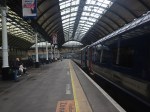
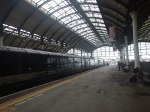



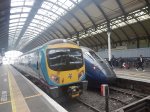
The pictures show Hull Trains’s Class 802 train in Platform 7 at Hull station.
Penzance And Taunton
This to me is the key section as if you can run a battery-electric train between these two stations it allows so many of the services to be run using zero-carbon traction.
These are distances from Taunton.
- Exeter St. David’s – 30.7 miles
- Newbury – 89.6 miles
- Okehampton – 55.3 miles
- Paignton – 59.0 miles
- Patchway – 51.7 miles
- Plymouth – 82.8 miles
Note.
- I’ve added Okehampton, as I feel that if Dawlish had another encounter with Poseidon, Okehampton with its proposed Parkway station on the A30 could be the terminus for coaches to and from Cornwall.
- All would be possible with a battery-electric train, with a hundred-mile range, leaving Taunton with a full battery.
- Charging could be needed at Okehampton and Paignton.
What is needed is some form of charging in the Taunton area.
This OpenRailwayMap shows Taunton station.

Note.
- The station has four through platforms.
- All Great Western Railway services to and from Devon and Cornwall stop in the station.
- I feel it would be possible to electrify the station, so that all stopping trains could charge the batteries.
But the problem would be, that as typically trains only stop for a couple of minutes at Taunton, there may not be enough time to take enough charge on board.
This OpenRailwayMap shows the track between Wellington and Collumpton, between Taunton and Exeter.
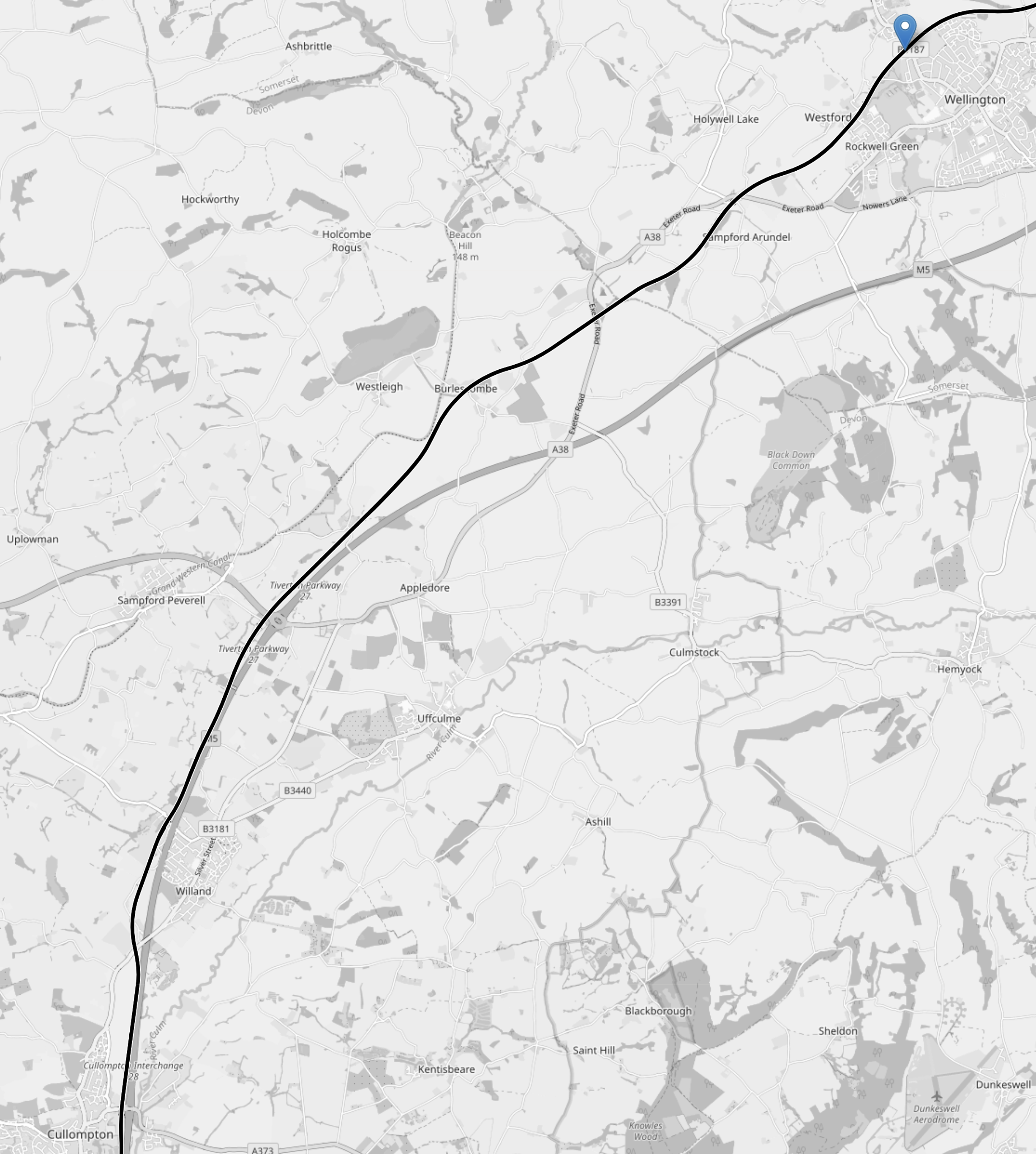
Note.
- The black line is the railway between Taunton and Exeter.
- The blue arrow in the North-East corner of the map indicates the position of the proposed Wellington station.
- Collumpton is in the South-West corner of the map and has also been put forward for a new Collumpton station.
- I talked about the reopening of these two stations in Reopening Of Wellington and Cullompton Stations.
- The M5 to the North of Collumpton runs closely alongside the railway.
- According to Real Time Trains, it takes just under ten minutes to go the thirteen miles between Wellington and Collumpton.
This Google Map shows a section of the M5 North of Collumpton.
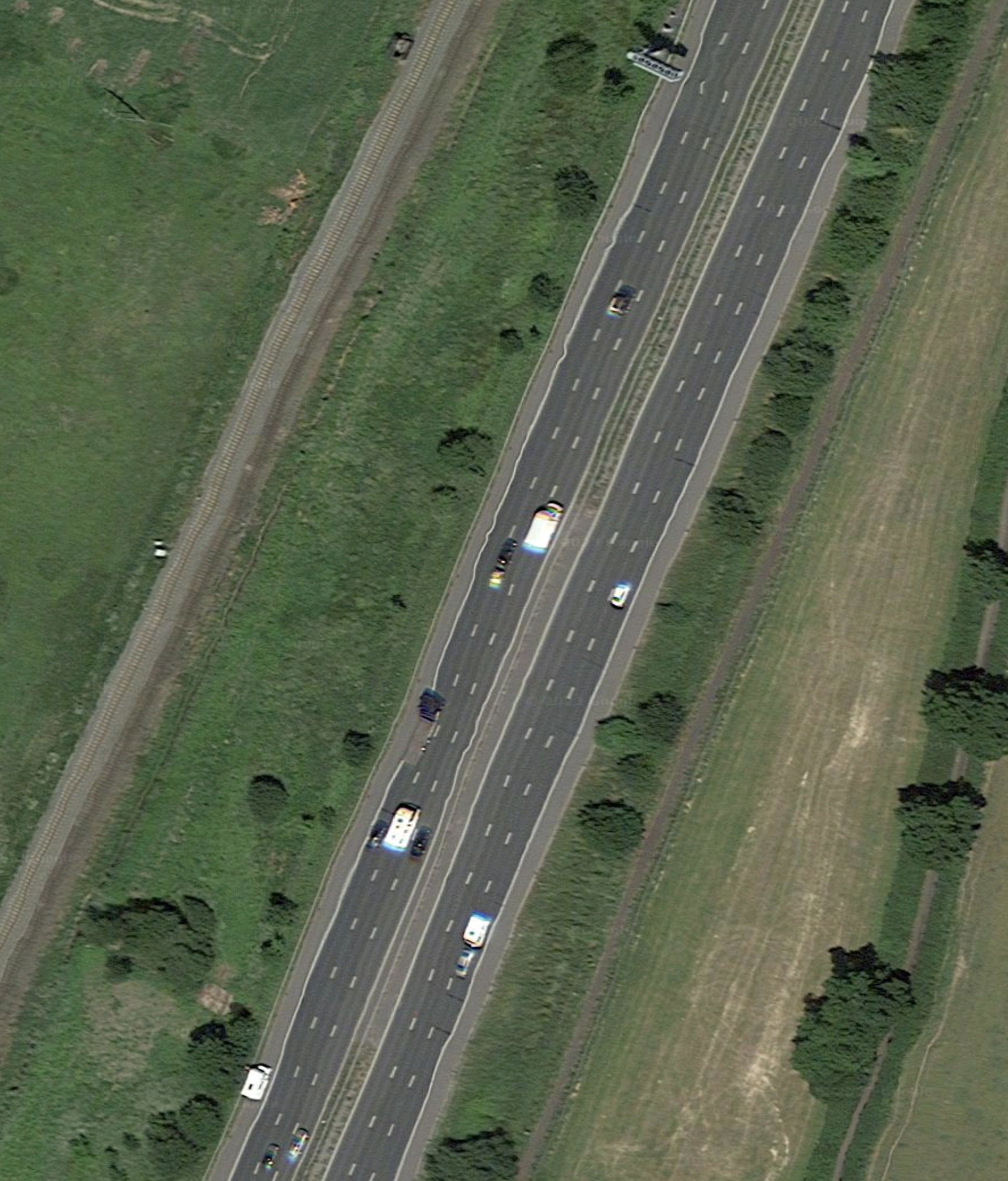
And this Google Map shows Tiverton Parkway station.
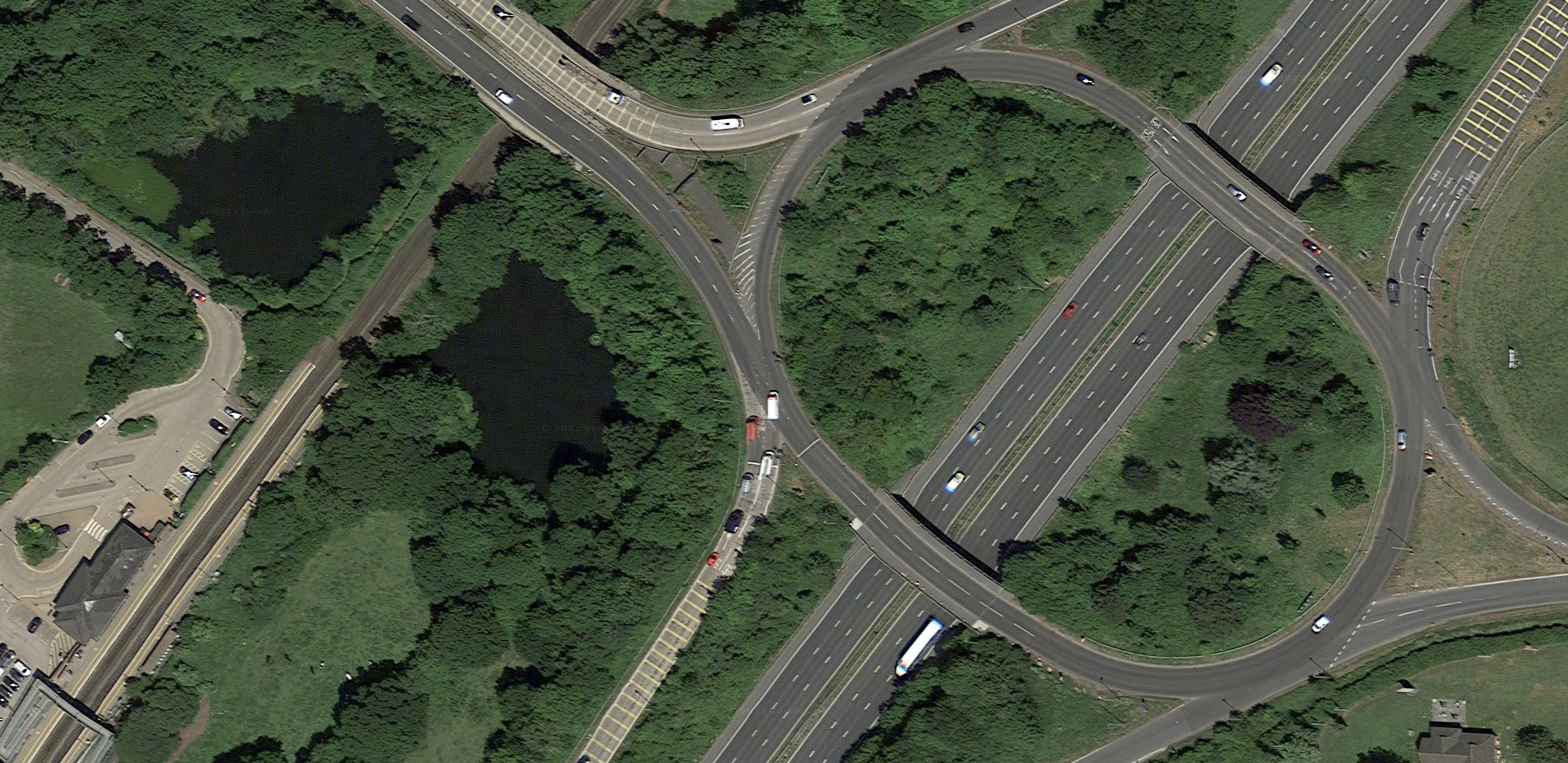
Note how the railway runs alongside the M5 to the West.
I feel that if the two new stations of Wellington and Collumpton are built between Taunton and Exeter St. David’s, then why not partially electrify the route, so that all trains would leave or pass through Taunton and Collumpton stations with full batteries.
- Going West the trains would reach Exeter St. David’s, Okehampton or Plymouth.
- Going East trains would reach Newbury for Reading and Paddington, and Patchway for Cardiff.
I believe that a battery-electric solution is possible, that would enable the decarbonisation of the Great Western Main Line all the way to Penzance.
Marsh Barton Station Will Open On Tuesday, 4th July 2023
This is said on this page on the Great Western Railway web site.
The station is due to open on Tuesday 4 July 2023.
This Google map shows Marsh Barton station under construction.
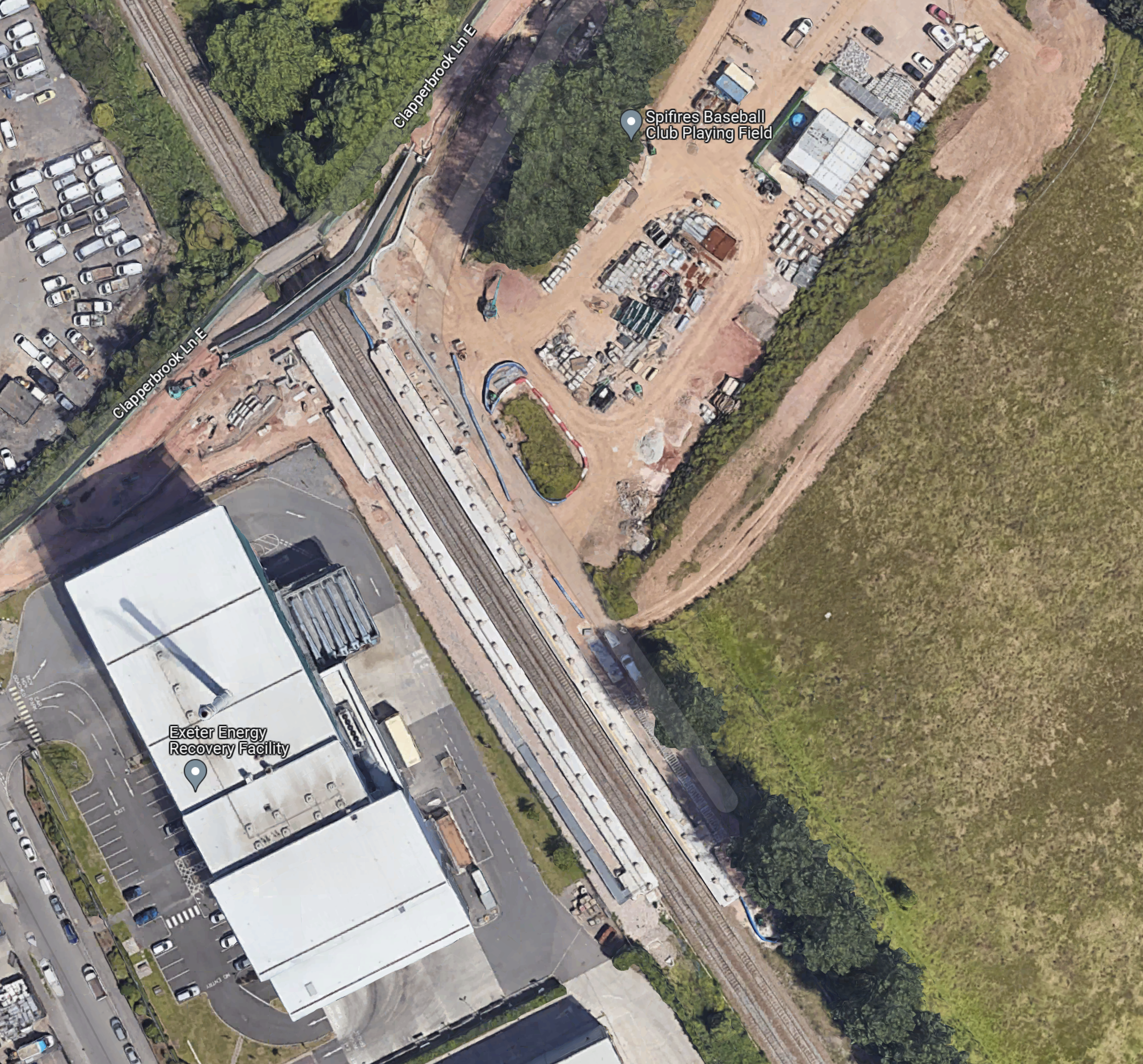
Note.
- The two five-car platforms.
- The pedestrian and cycle bridge over the tracks at the Northern end of the station.
- I would assume, that the bridges have been made high enough over the tracks for electrification.
The page on the Great Western Railway web site also has a couple of videos showing construction of the station.
Services
The page on the Great Western Railway web site also says this about services at the station.
Marsh Barton will be served by our local services between Paignton and Exmouth which run through the heart of Exeter.
We aim to provide hourly off-peak services to the station with additional trains stopping at peak times.
Currently, there is an hourly train that stops at all stations between Exmouth and Paignton, which will probably be the main service.
In addition five long distance services will pass through Marsh Barton station.
- Two trains per day (tpd) – London Paddington and Paignton via Reading, Newbury, Hungerford, Pewsey, Westbury, Castle Cary, Taunton, Tiverton Parkway, Exeter St. Davids, Dawlish, Teignmouth, Newton Abbot, Torre and Torquay
- Three tpd – London Paddington and Plymouth via Reading, Newbury, Hungerford, Pewsey, Westbury, Castle Cary, Taunton, Tiverton Parkway, Exeter St. Davids, Dawlish, Teignmouth, Newton Abbot, Totnes and Ivybridge
- One train per two hours (tp2h) – London Paddington and Plymouth via Reading, Taunton, Tiverton Parkway, Exeter St Davids, Newton Abbot and Totnes.
- One tp2h – London Paddington and Penzance via Reading, Taunton, Tiverton Parkway, Exeter St Davids, Newton Abbot, Totnes, Plymouth, Liskeard, Bodmin Parkway, Par, St Austell, Truro, Redruth, Camborne and St Erth.
- One tp2h – Cardiff Central and Penzance via Newport, Severn Tunnel Junction, Patchway, Filton Abbey Wood, Bristol Temple Meads, Nailsea & Backwell, Yatton, Worle, Weston-super-Mare, Highbridge & Burnham, Bridgwater, Taunton, Tiverton Parkway, Exeter St Davids, Dawlish, Teignmouth, Newton Abbot, Totnes, Ivybridge, Plymouth, Devonport, Dockyard, Keyham, St Budeaux Ferry Road, Saltash, St Germans, Menheniot, Liskeard, Bodmin Parkway, Lostwithiel, Par, St Austell, Truro, Redruth, Camborne, Hayle and St. Erth
Note.
- The fifth train is definitely what you would call a stopping train.
- All the through expresses stop at Taunton, Tiverton Parkway, Exeter St Davids and Newton Abbot.
- The stopping service, the Paignton trains and some Plymouth trains stop at Dawlish and Teignmouth.
- All trains stopping at Plymouth, stop at Totnes.
- The Paignton and Plymouth services are run using Class 802 trains.
- The fifth stopping service is run by a GWR Castle.
- Marsh Barton station has been built for five-car Class 802 trains.
As the GWR Castles are being retired and will probably be replaced by more Class 802 trains, we are very likely to see more Hitachi trains working between Taunton and Penzance via Tiverton Parkway, Exeter St Davids, Dawlish, Teignmouth, Newton Abbot, Totnes, Plymouth, Liskeard, Bodmin Parkway, St Austell, Truro, Redruth, Camborne and Hayle.
Could Hull Station Be Electrified?
I took these pictures, as I passed through Hull station yesterday.
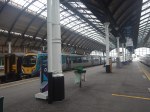
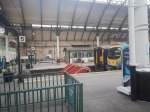
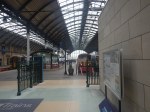
It appears that Hull station has a similar Victorian roof to Liverpool Lime Street and London Paddington, so I suspect the answer is yes.
These pictures show the platforms and overhead electrification at Liverpool Lime Street station, since the recent remodelling.


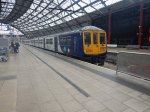
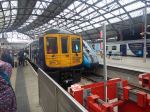
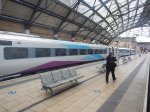

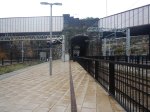
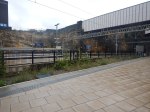

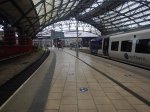

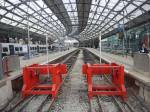
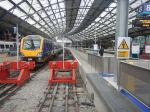

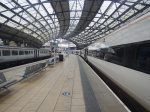

The electrification seems to be very traditional, with lots of steel gantries over the tracks.
These pictures show the platforms and overhead electrification at London Paddington station.
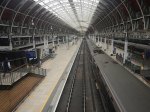
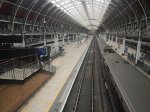
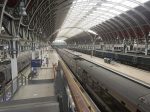
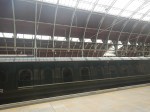



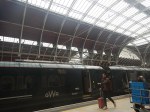


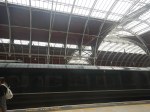

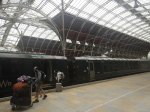
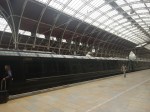

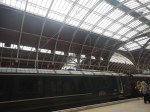
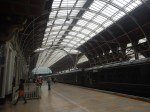


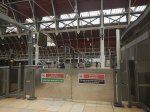
Note.
- The roof seems to have extra tie-bars reaching across.
- The wires seem to be hung from the roof.
- At the end of the platform they are fixed to large arch supports.
- Because Liverpool Lime Street’s electrification is newer than Paddington’s, it seems to have much more professional look.
After looking at the electrification in Liverpool Lime Street and Paddington, I believe that Hull station could be successfully electrified.
This map from OpenRailwayMap shows the platform layout at Hull station.
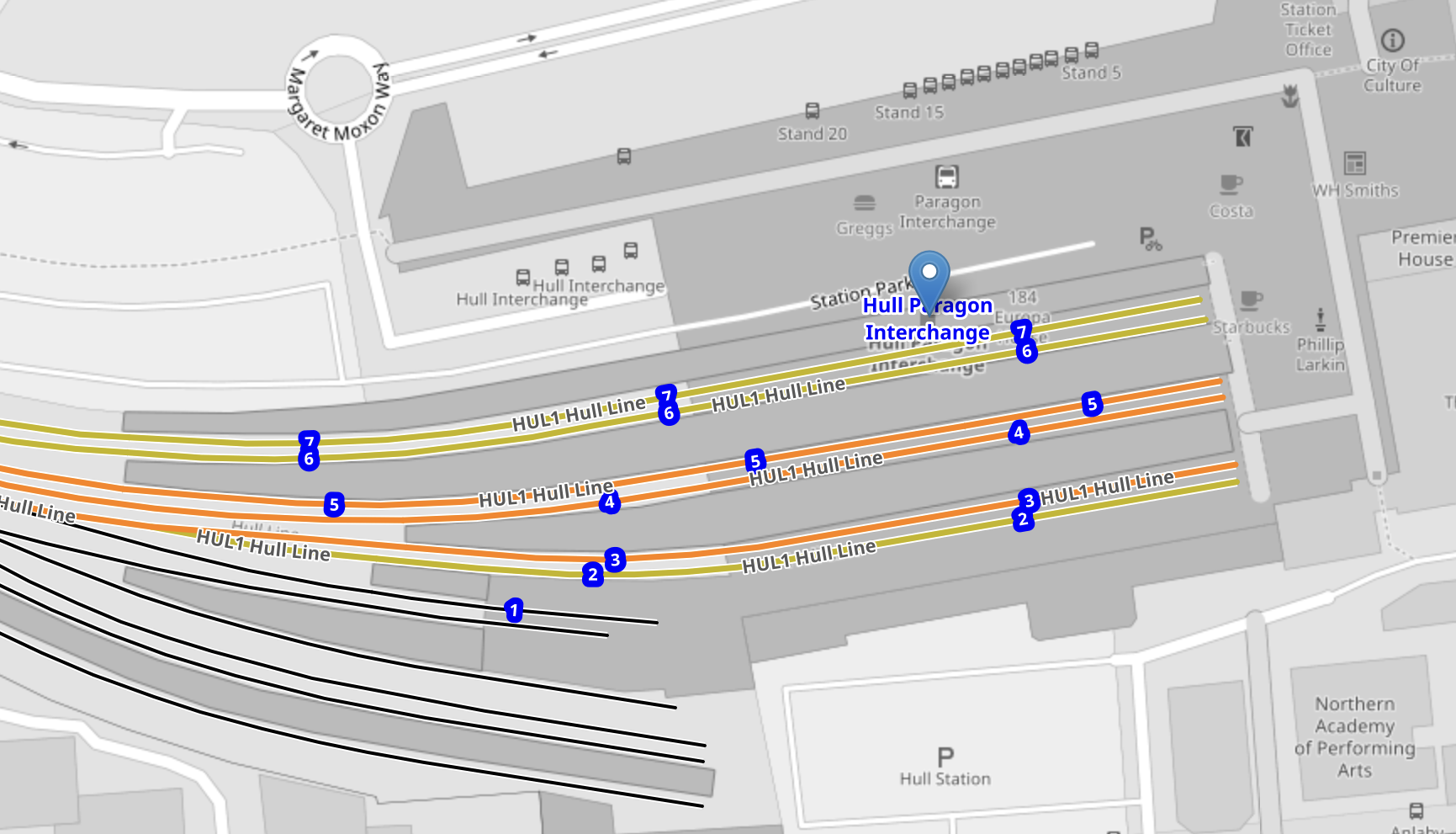
Note.
- Yesterday, my trains arrived in and left from Platform 7, which is the Northern-most platform.
- Other pictures in this blog show Hull Trains’s London service in Platform 7.
- Yesterday all Class 802 trains to and from London run by Hull Trains and LNER used Platform 7.
- I have been told by station staff, that Platform 7 can take a nine-car LNER Azuma.
- In Ten-Car Hull Trains, I talk about ten-car Class 802 trains running to and from Hull.
- Platform 7 or another platform at Hull station must be able to handle a ten-car train, which means that Hull station can handle a train, that is 260 metres long.
Looking at the station map, I believe that Hull station’s capacity for long express trains, is on a par with that of Liverpool Lime Street station.
I could see both stations handling two trains per hour (tph) across the Pennines and to and from London, with if necessary trains being formed of a pair of five-car trains.
How Many Services From Hull Station Can Be Run With Battery Trains?
Hull Trains service between London and Beverley travels for 44.5 miles on unelectrified track between Temple Hirst junction and Beverley.
Typically Hull Trains services wait in Hull station for the following times.
- Going between London King’s Cross and Beverley – Between ten and fifteen minutes.
- Returning to London King’s Cross – Upwards of twenty-five minutes.
I believe these waits in Hull station would mean that.
- A train going North to Beverley will have a battery containing enough electricity to get the train to Beverley and back, which is a distance of 16.7 miles.
- A train going South from Hull will have a battery containing enough electricity to get the train to Temple Hirst junction, which is a distance of 36.1 miles.
I believe that Hull Trains are currently working a timetable, that has been designed for operation by trains with a range on batteries of around fifty miles, provided there is electrification in at least one platform at Hull station to charge the trains.
It is also interesting to look at LNER’s two services that serve Hull.
- The 0700 to London, is scheduled to arrive at Hull station at 0635 from stabling at Doncaster and waits up to twenty-five minutes before leaving for London.
- The 2004 from London, is scheduled to arrive at Hull station at 2004 and waits up to twenty-five minutes before going South to overnight stabling in Doncaster.
It looks like LNER’s two trains follow Hull Trains rules.
- They use Platform 7 in Hull station.
- Trains going South have up to twenty-five minutes in the station.
It appears to me, that both Hull Trains and LNER are running a timetable, that would allow their services to be run using trains with a battery that had a range of around fifty miles, that could be fully-charged at Hull station before going South.
TransPennine Express run an hourly service to Liverpool Lime Street via Leeds and Manchester Victoria.
According to OpenRailwayMap’s map of electrification, when the TransPennine Upgrade is complete, the only section of the route without electrification will be the 42.1 miles between Hull and Micklefield.
As TransPennineExpress have some of the same Class 802 trains as Hull Trains, if there were at least two electrified platforms in Hull station, then Hull and Liverpool services could be run by battery-electric trains, with a similar specification to those of Hull Trains.
Northern Trains run an hourly service to Halifax via Leeds.
According to OpenRailwayMap’s map of electrification, , the only sections of the route without electrification will be the 42.1 miles between Hull and Micklefield and the 17.5 miles between Leeds and Halifax.
As Leeds and Micklefield is timetabled for seventeen minutes, I suspect this would be enough time to fully charge a battery-electric version of CAF’s Class 331 train and with charging in Hull station, then this route could be electrified.
Northern Trains also run other services, but because the Goole swing bridge is closed, I can’t get all the distances without electrification from Hull.
Ones I can find are.
- Beverley – 16.7 miles for return trip.
- Bridlington – 31.1 miles
- Doncaster – 40.8 miles
- Micklefield – 42.1 miles
- Scarborough – 53.8 miles
- Sheffield – 59.4 miles
- Temple Hirst – 36.1 miles
- York – 41.1 miles – Hull and Church Fenton
Note.
- York and Doncaster are electrified.
- Bridlington and Scarborough have suitable platforms where 25 KVAC overhead electrification could be installed to charge trains.
- Sheffield and Doncaster is only 18.6 miles and this may be the way to electrify between Sheffield and Hull.
- In The Data Sheet For Hitachi Battery Electric Trains, I state that Hitachi’s battery-electric trains have a range of 43.5 miles
It looks if enough platforms are electrified at Hull, all current services from the city could be run by battery-electric trains.
Conclusion
I believe that by electrifying Hull station, that Hull could have a station consistent with the HumberZero philosophy, with battery-electric trains running hither and thither, handling all rail traffic to and from the City.
Elizabeth Line Takes Fliers Away From Heathrow Express
The title of this post, is the same as that of this article on The Times.
These three paragraphs add details to the story.
The opening of the Elizabeth Line has eaten into the revenues of Heathrow Express, the country’s most expensive railway service per mile travelled.
Filings reveal that Heathrow Express, which offers a 15-minute service between London Paddington and Heathrow, has failed to recover to pre-pandemic levels despite flight volumes at the airport returning to near-normal. Heathrow said revenues from Heathrow Express in the first three months of the year were £22 million.
While that is 50 per cent more than in the same period last year, when Covid-19 travel restrictions were beginning to be relaxed, it is almost a third down on the £31 million of revenues in the first quarter of 2019.
Considering how air travel is on the upturn, Heathrow Express would not appear to be performing as the airport expects.
Remember, that First Group are paid by Heathrow Airport to run the service, which is owned by the airport.
In So Many Cases On A Train!, I wrote about a trip from West Ealing to Moorgate station. These were my opening sentences.
This afternoon about three, I went to West Ealing station to see what it was like to transfer between the Elizabeth Line Central Tunnel and the Western Branch at Paddington.
Coming back, I took an Elizabeth Line service that had started from Heathrow Airport and it was one of the busiest Lizzies, I’d ever ridden!
To get on the train at West Ealing station, I got in to probably coach 4 of 9, as that was in the dry and the back end of the train I needed for Moorgate station was certainly in the wet.
I then had to walk half the length of the train to get to the back of the train.
It was not easy, as the train was full of scores of passengers with large wheelie cases.
It certainly got me thinking about how passengers were getting to and from Heathrow and I came to this conclusion.
Lizzie will start a revolution in travel to and from Heathrow.
Judging by the title of the article in The Times, the revolution has already started.
Consider these reasons.
- Heathrow Express is overpriced.
- It doesn’t go where many passengers want to go.
- It’s not the best way to get workers to and from the airport.
- The ULEZ will discourage passengers and staff from driving to the airport.
In Effects Of The ULEZ In West London, I said this about journeys to and from the airport.
Heathrow Airport is one of the world’s busiest airports and 76,000 people work at the airport, with many more employed nearby.
The airport handled 61.6 million passengers in 2022, which is a few short of 170,000 per day.
If you consider that those that work at the airport do two trips per day and passengers generally do one, that means there are 322,000 trips per day to or from the airport.
But as it now so easy to get to the Airport using the Elizabeth Line will more people use the new line to meet and greet and say goodbye to loved ones or business associates. Since the Elizabeth Line opened, I’ve met a couple of friends at Heathrow, who were passing through.
I wonder, if that daily journey total of 322,000 could be nearer to 350,000 or even 400,000.
If the ULEZ charge makes some passengers and staff switch from their car to using a bus or train, this probably means that public transport to and from the airport, will need to be boosted by a substantial amount.
I can see airport workers lobbying for free tickets on Heathrow Express, but they probably live closer to the airport than Paddington or perhaps even in the Eastern areas of London served by the Elizabeth Line.
The Elizabeth Line Is Showing Signs Of Running Out Of Capacity
In the last few weeks, I’ve been on some very full Elizabeth Line trains.
Articles, like this one on Rail Advent, which is entitled Transport for London Looks Into Funding For Additional Elizabeth Line Trains, are also starting to appear.
These three paragraphs explain the problem.
Transport for London has announced that they are looking for confirmation from the Government regarding funding so that they can look into the possibility of purchasing additional Elizabeth Line trains.
The news from TfL comes after the recent announcement of delays to HS2 terminating at London Euston.
TfL says that without the extra trains, there is insufficient capacity on the Elizabeth Line (until HS2 is extended to Euston in the 2040s) for passengers looking to use HS2 and the Elizabeth Line to get into Central London.
Alstom also appear to want the space in the factory to build other trains.
So it appears that Transport for London must act soon.
Heathrow Express Needs To Be Repurposed
In Extending The Elizabeth Line – High Speed Trains On The Elizabeth Line, I talked about running faster trains through the Central Tunnel of the Elizabeth Line.
As any train would have to be compatible with the platform-edge doors in the central tunnel of the Elizabeth Line, the trains would have to be dimensionally identical to the current Class 345 trains.
- Nine cars
- Possibility of lengthening to ten cars.
- 204.73 metres long.
- 6 sets of doors per carriage
- Ability to run under full digital signalling.
- The trains would be designed for a higher speed of at least 110 or 125 mph, to enable running on the fast lines of the Great Western Main Line.
- The trains would have Heathrow Express branding and interior.
Services could be as follows.
- Heathrow Terminal 4 and Southend Victoria via Bond Street and Liverpool Street for the City and Stratford.
- Heathrow Terminal 5 and Ebbsfleet International via Bond Street and Liverpool Street for the City and Canary Wharf.
Note.
- Both services would be two trains per hour (tph)
- Traffic would determine, which Eastern terminal is paired with which Western terminal.
- Each route would also have two Elizabeth Line tph on the same route.
The Heathrow Express services would run as follows.
- Between Heathrow Airport and Paddington, they would run as now.
- I believe that by using the power of the digital signalling, they could be slotted into the queue of Elizabeth Line trains taking the Central Tunnel.
- They would run through the Central Tunnel, as just another Elizabeth Line train, stopping at all stations.
- Southend Victoria trains would stop at Stratford, take the fast lines to Shenfield, after which they would stop at all stations to Southend Victoria.
- Ebbsfleet International trains would stop at all stations from Abbey Wood to Ebbsfleet International.
Note.
- Trains would stop at Old Oak Common after it opened for High Speed Two and GWR.
- All ticketing would be contactless.
- Passengers using Heathrow Express to the West of Paddington, would pay an extra fee, but nothing like today’s price.
These Heathrow Express routes would have advantages.
- Southend Airport and Southend Victoria would get a direct fast train to Central London and High Speed Two.
- Heathrow would have a direct connection with Continental train services at Ebbsfleet International.
- Capacity could be increased by going to ten-car trains.
- Heathrow Express could release their platforms at Paddington.
- There would be two fast tph between Heathrow and Stratford.
- There would be two fast tph between Heathrow and Canary Wharf.
- There would be four fast tph between Heathrow and Bond Street for the shopping and Liverpool Street for the City of London.
- There would be four fast tph between Heathrow and Farringdon for Thameslink, Gatwick and Luton Airports.
Heathrow Express trains will be fifteen minutes faster to all destinations.
I don’t think there would be any major disadvantages.

