Could High Speed Two Serve Chester And North Wales?
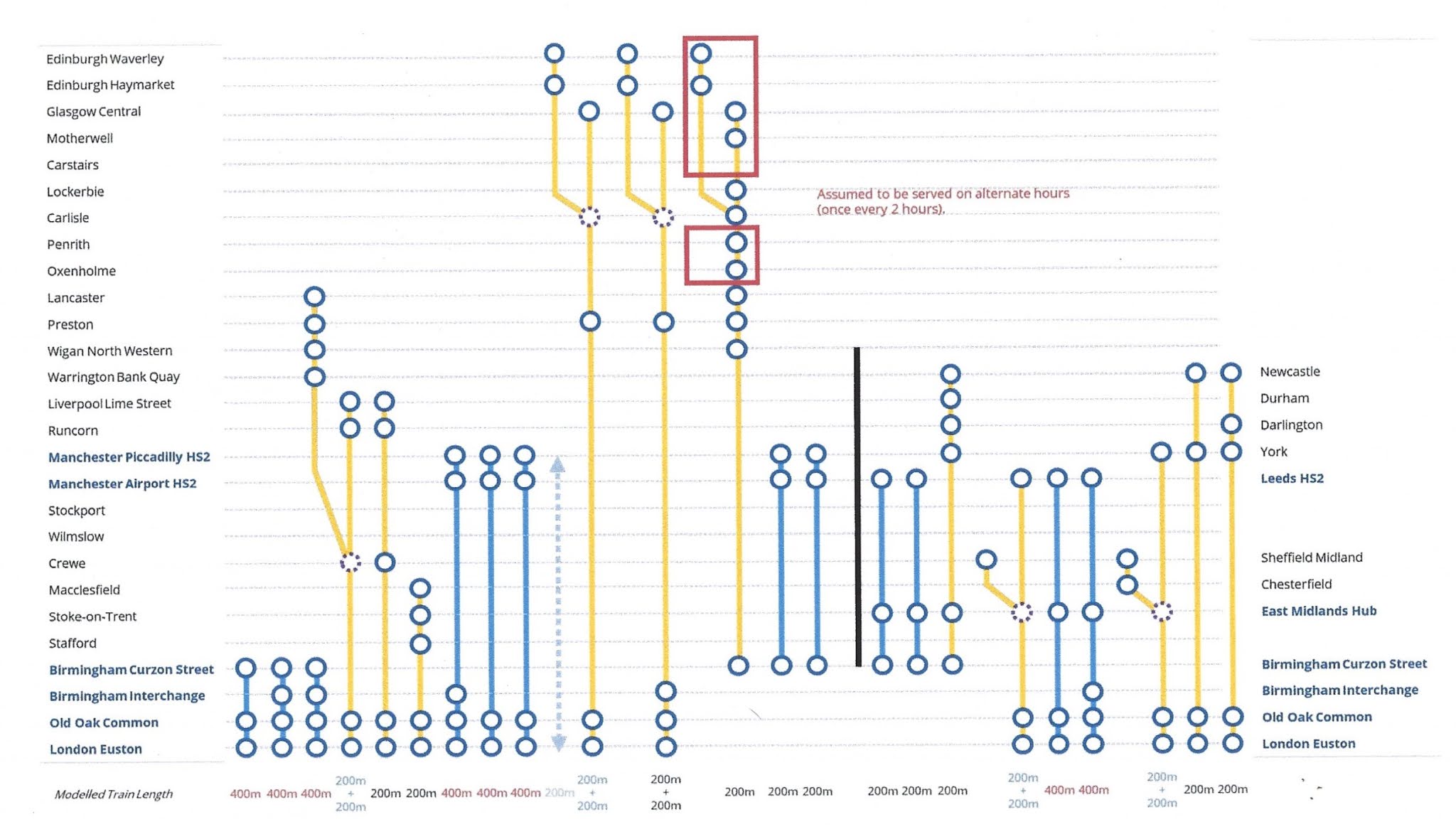
This diagram shows High Speed Two services, as they were originally envisaged before Phase 2 was discontinued.
Note.
- Trains to the left of the vertical black line are Phase 1 and those to the right are Phase 2.
- Full-Size trains are shown in blue.
- Classic-Compatible trains are shown in yellow.
- Blue circles are shown, where trains stop.
- The dotted circles are where trains split and join.
- In the red boxes routes alternate every hour.
Click on the diagram to enlarge it.
If I look at the trains counting from the left of the diagram, I see the following.
- Train 4 is a pair of Classic-Compatible trains, that split and join at Crewe, with one train going to Lancaster and the other to Liverpool Lime Street.
- Train 5 is a single Classic-Compatible train going to Liverpool Lime Street.
This gives Liverpool Lime Street two trains per hour (tph) and Lancaster one tph
Could train 5 be a a pair of Classic-Compatible trains, that split and join at Crewe, with one train going to Holyhead via Chester and the other to Liverpool Lime Street?
Consider.
- Yesterday, a pair of Class 805 trains, ran between Euston and Holyhead. Each Class 805 train is 130 metres long, so a pair of Class 805 trains is sixty metres longer than a High Speed Two Classic-Compatible train.
- I am certain, that a single High Speed Two Classic-Compatible train will fit the platforms between Crewe and Holyhead.
- Crewe and Holyhead is 105.5 miles and the route is not electrified.
- Crewe and Holyhead is double-track all the way except for the Britannia Bridge over the Menai Strait.
- With the exception of perhaps 2 to 3 miles, half the route between Crewe and Holyhead has a line speed of 90 mph. with the other half being 75 mph.
- Given the countryside and the number of important historic sites, electrification might be difficult, as the heritage Taliban will say no!
- It was promised by the last government that Crewe and Holyhead would be electrified, but I will assume it won’t be!
- Hitachi, who are part of the consortium building the High Speed Two Classic-Compatible trains have developed battery-electric high speed train technology, which is likely to be applied to the Current Class 805 trains, that work the route.
- Hitachi’s battery-electric high speed train technology can propel the trains at up to 125 mph, provided the track allows it.
I feel that Crewe and Holyhead can be developed into one of the most iconic high speed railways in the world, by using battery-electric high-speed trains. Tourists would come from all over the world, to experience mouse-quiet battery-electric trains.
High Speed Two should go for it!
These are some thoughts.
It Would Be A Green Route To Ireland
Consider.
The fastest direct Avanti service to Holyhead is scheduled to take three hours and forty-two minutes, with one hour and 46 minutes between Euston and Crewe, and one hour and fifty-seven minutes between Crewe and Holyhead.
- High Speed Two will knock thirty-four minutes off the time between Euston and Crewe, when the core route between Euston and Crewe is complete, which will reduce the time to three hours eight minutes, with with one hour and 12 minutes between Euston and Crewe, and one hour and fifty-seven minutes between Crewe and Holyhead.
- The Crewe and Holyhead section of the route would still take one hours and fifty-seven minutes, which is an average speed of just 54 mph, along the North Wales Coast.
- An overall time of three hours between Euston and Holyhead, would require an average speed along the North Wales coast, which would be an average speed of just 62 mph.
- The operating speed is an average of around 80 mph between Crewe and Holyhead, and would run the section of the route in 79 minutes, which would mean a Euston and Holyhead time of two hours and 31 minutes.
- A 100 mph average between Crewe and Holyhead, would run the section of the route in 63 minutes, which would mean a Euston and Holyhead time of of two hours and 15 minutes.
I believe that with track improvements, a more efficient stopping pattern and using Hitachi’s battery technology, that battery-electric High Speed Two Classic-Compatible trains could run between Euston and Holyhead in under two hours.
A fast ferry would complete the route between Holyhead and Dun Laoghaire.
Could More Than One Train Per Hour Be Sent To Chester And North Wales?
Consider.
- Because of the cancellation of Phase 2 of High Speed 2, there are spare paths on High Speed Two between London and the West Midlands.
- If the core section of High Speed Two is extended Northwards to Crewe, as advocated by Dyan Perry of the High Speed Rail Group, that I wrote about in The Future Of HS2 Could Lie In Its Original Vision, this would create extra paths to Crewe.
- If the West Midlands and Crewe section of the High Speed Two route has the same capacity as London Euston and the West Midlands it could handle seventeen tph.
- At present it looks like with the cancellation of Phase 2, the West Midlands and Crewe section will handle just ten tph.
, So there will be seven spare paths between Euston and Crewe!
In fact it will be better than that, as each train could be a pair of Classic-Compatible trains, that split and joined to serve two destinations.
Could A North Wales Service Call At Hawarden Airport?
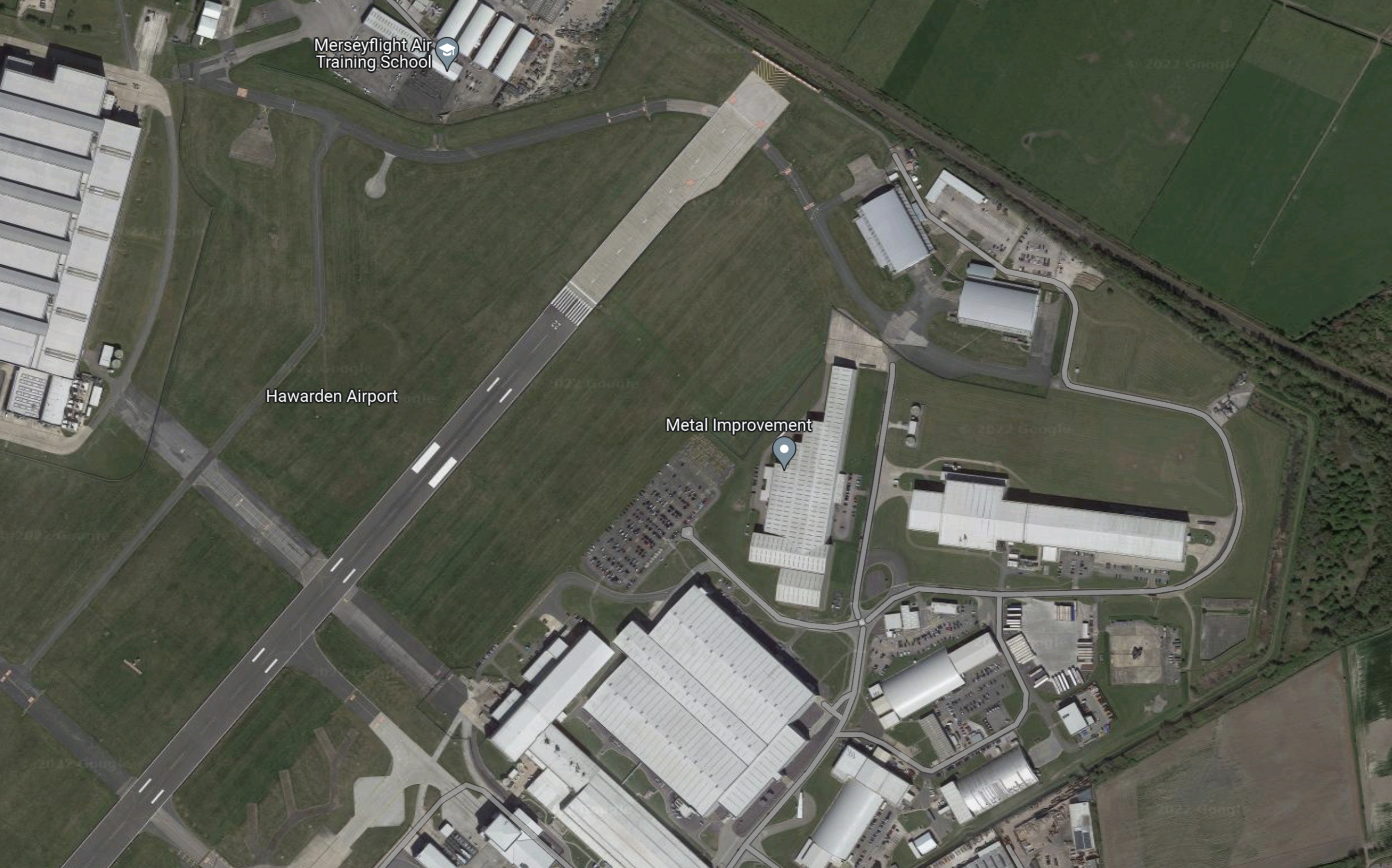
Hawarden Airport is where Airbus build wings for their aircraft in the UK.This Google Map shows Hawarden Airport.
Note.
- The large runway.
- The various factory buildings.
- The North Wales Coast Line between Chester and Holyhead, runs along the North side of the Airport.
I doubt if Airbus wanted a station, it would be difficult to arrange.
Conclusion
Because of the vacant paths, it would appear that extra services to North Wales and North West England can be fitted in.
Fast Battery-Electric Hitachi Trains Between Paddington And Bristol Temple Mead Stations
It was when I was writing Thoughts On Lumo’s Proposed Paddington And Paignton Service, that I realised how significant Hitachi’s battery-electric high speed trains will be.
This page on the Hitachi web site gives this overview of their Intercity Battery Trains.
A quick and easy application of battery technology is to install it on existing or future Hitachi intercity trains. Hitachi Rail’s modular design means this can be done without the need to re-engineer or rebuild the train and return them to service as quickly as possible for passengers.
Replacing one diesel engine with just one battery reduces emissions by more than 20% and offers cost savings of 20-30%. Our intercity battery powered trains can cover 70km on non-electrified routes, operating at intercity speeds at the same or increased performance.
For the purpose of this exercise, I will assume the following.
- All trains are five-car trains.
- They were all originally manufactured as Class 800, 802 or 805 trains.
- They were all originally manufactured with three 750 kW Rolls-Royce mtu diesel generators.
- One diesel generator in each train has been replaced by a 750 kW battery-pack of the same size, weight and performance.
According to Hitachi’s web page, that I quote above, this gives intercity speeds at the same or increased performance, for 70 km. on non-electrified routes.
I will now look at how a Hitachi battery-electric high speed train would handle the line between London Paddington and Bristol Temple Mead stations.
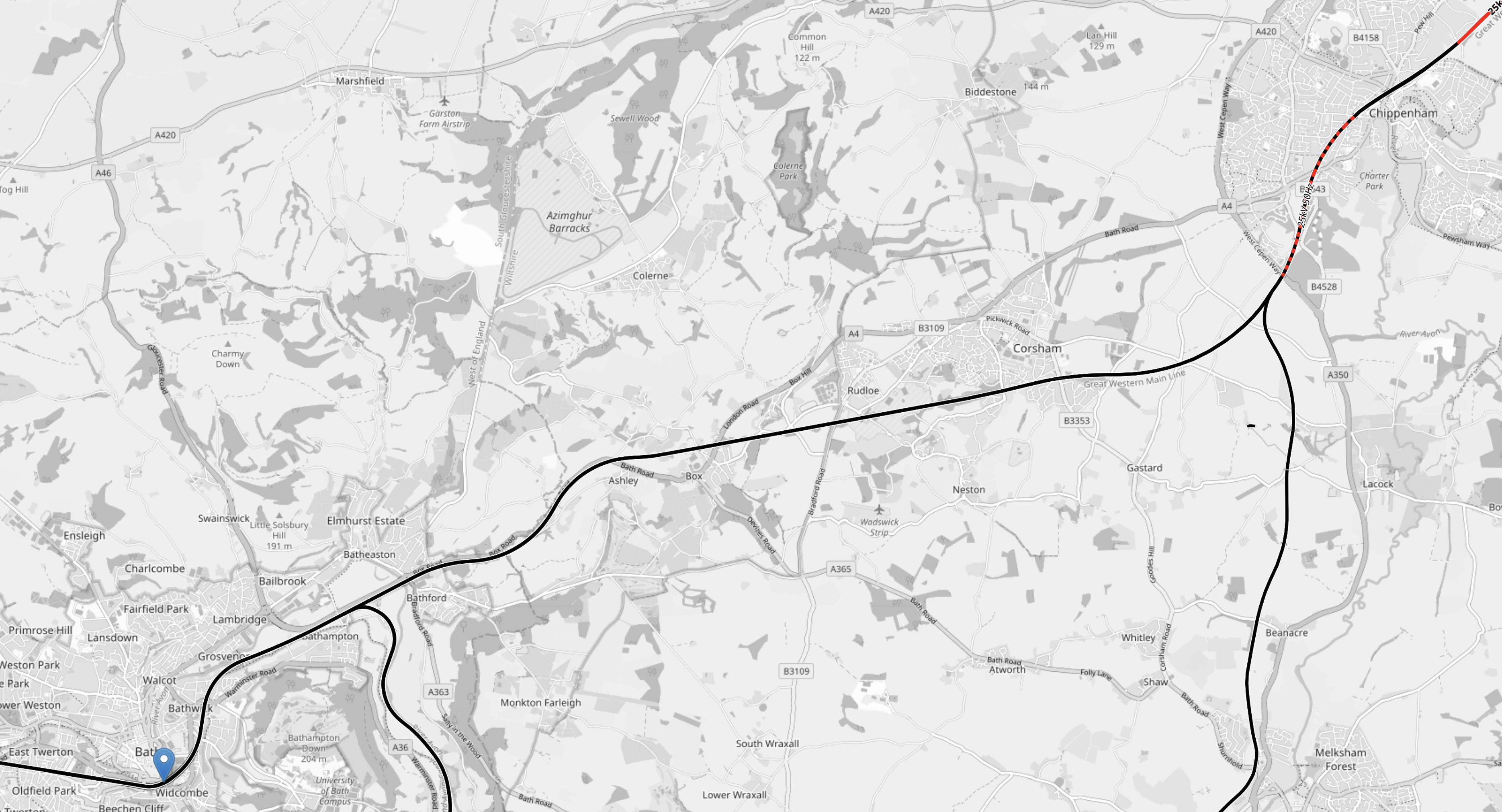
This OpenRailwayMap shows the electrification between Chippenham and Bath Spa stations.
Note.
- London Paddington and Bristol Temple Mead stations are 118.3 miles apart.
- The blue arrow indicates Bath Spa station.
- Bristol Temple Meads station is 11.5 miles to the West of Bath Spa station.
- Chippenham station is in the North East corner of the map.
- Black lines are not electrified.
- Red lines are electrified with 25 KVAC overhead wires.
- The 93.9 miles betweeen London Paddington and Chippenham is fully-electrified.
- Red and black dotted lines are being electrified.
- The 24.4 miles between Chippenham and Bristol Temple Mead stations is not electrified.
- The residents of Bath Spa are not keen for the railway through Bath to be electrified.
The single battery-pack in the train, will have to propel the train between Chippenham and Bristol Temple Mead stations.
- On arrival at Chippenham, the battery will have been fully charged on the 93.9 miles from London Paddington.
- The train will be switched to battery power and proceed through Bath Spa station to Bristol Temple Meads station.
- The 24.4 miles between Chippenham and Bristol Temple Mead stations is only 39.26 km. so it is well within range of a single battery pack.
- The trains will be able to reach Bath, as fast as the track allows, so they could have come much of the way from London Paddington at speeds approaching 125 mph.
Hence my belief that Bath Spa could be reached in around an hour without any stops from London Paddington and Bristol Temple Meads in a very fast time.
There may be a need to top up the battery at Bristol Temple Meads station for London trains to return to the electrification at Chippenham or for other trains to continue their journey through Bristol.
This could be handled by some lengths of electrification in platforms in Bristol Temple Meads station, where the Hitachi trains terminate.
However, I feel Network Rail will be able to avoid the sensitive and possibly very challenging electrification through Bath.
Conclusion
London Paddington and Bristol Temple Meads via Bath Spa trains would be substantially speeded up. Especially, if the first stop out of London Paddington were to be Bath Spa station.
Great Western Railway would only cut out the stops if they wanted to speed up services.
Who’d have thought, that powering services by batteries, would speed up services?
Thoughts On Lumo’s Proposed Paddington And Paignton Service
Modern Railways says this about Lumo’s proposed new service between Paddington and Paignton.
Under the plans for Paignton, announced on 5 December, there would be five return Lumo trains running between Paddington and Paignton, serving Bath Spa, Bristol Temple Meads, Taunton, Exeter St David’s and Torquay. These could start in May 2028. A sixth path is planned between Highbridge & Burnham and London Paddington.
Modern Railways says that currently there are only three direct trains between Torbay and London and that rail has a 29% modal share on that route compared to 71% for road.
Modern Railways tell us that GWR current run three trains per day to Paignton and these call at Reading, Newbury, Hungerford, Pewsey, Westbury, Castle Cary, Taunton, Tiverton Parkway and Exeter St. David’s and Torquay.
Note.
- Lumo will be taking five stops using a longer route.
- GWR currently take ten stops using a shorter route via Westbury.
- GWR currently take ten stops between London Paddington and Bristol Temple Meads.
- The fastest GWR service I can find takes three hours and four minutes between London Paddington and Paignton.
- The fastest GWR service I can find takes one hour and thirty-five minutes between London Paddington and Bristol Temple Meads.
- The fastest service I can find takes one hour and thirty-nine minutes with five stops between Bristol Temple Meads and Paignton.
- Lumo’s trains will probably be fitted with traction batteries rather than diesel engines, so it is likely, that the fewer stops they execute will be done quieter and faster.
I would not be at all surprised to find that Lumo’s journey times would be of this order.
- London Paddington and Bath Spa – One hour
- London Paddington and Bristol Temple Meads – One hour and thirty minutes
- London Paddington and Taunton – Two hours
- London Paddington and Exeter St. David’s – Two hours and thirty minutes
- London Paddington and Torquay – Two hours and fifty minutes
- Paddington and Paignton – Three hours
These sections would not be electrified.
- Chippenham and Bristol Temple Meads – 24.4 miles
- Bristol Temple Meads and Paignton – 103.8 miles
In Fast Battery-Electric Hitachi Trains Between Paddington And Bristol Temple Mead Stations, I discuss how Lumo and Great Western Railway will speed trains to Bristol Temple Meads via Bath Spa and Chippenham.
If 128.2 miles on batteries sounds a tough ask, remember that a similar-sized Stadler Addu ran 139 miles on one charge in 2021. Lumo, Hitachi and their battery makers from Sunderland didn’t enter this contest to come a distant second.
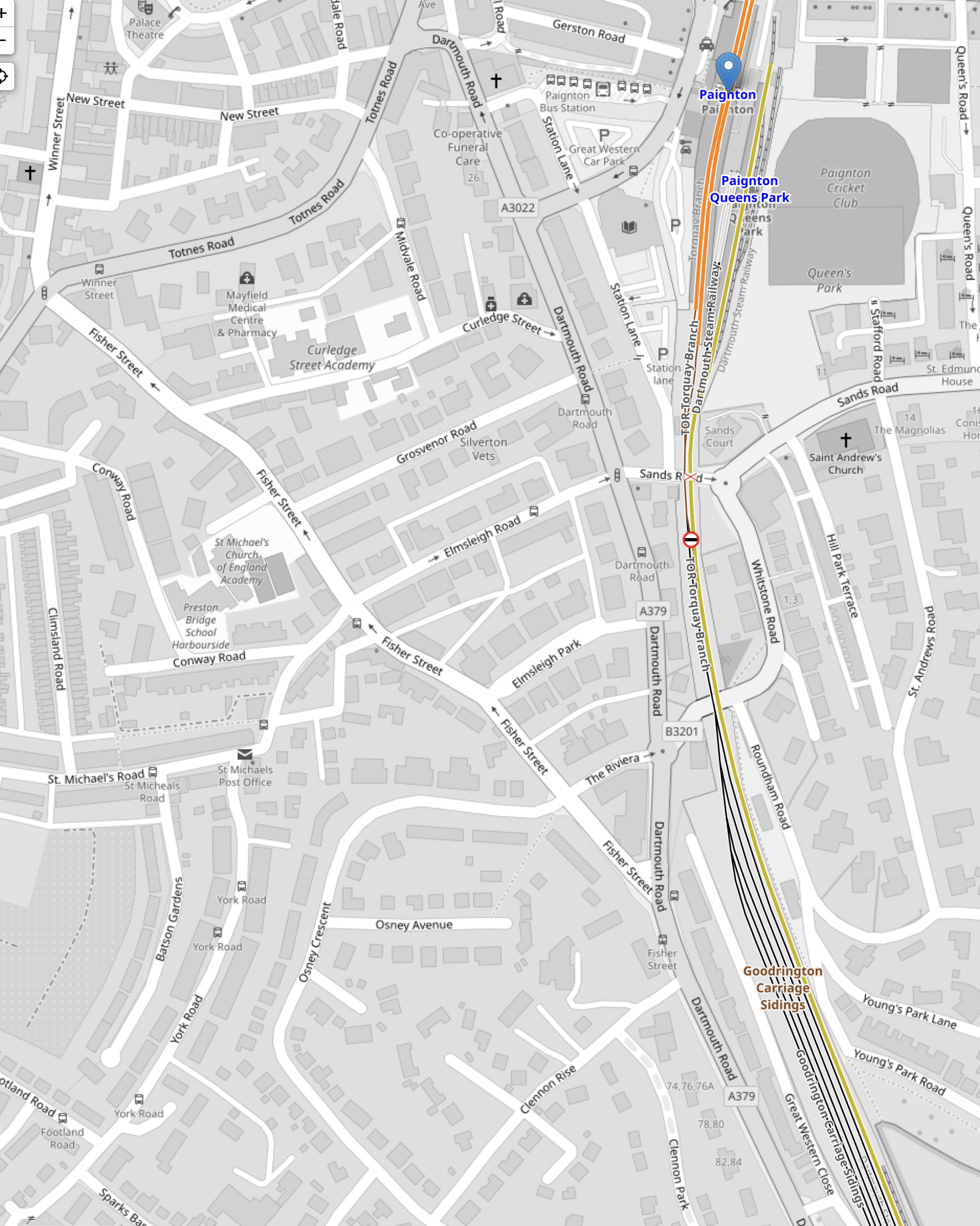
Paignton has a big advantage, as this OpenRailwayMap shows.
Note.
- Paignton station is marked by the blue arrow and writing at the top of the map.
- There are two platforms, one of which normally handles arrivals and the other departures.
- There are the Goodrington Carriage sidings to the South of the station.
I’m sure Hitachi will electrify some of the sidings, so that Lumo’s trains can leave Paignton with full batteries. But they only need enough charge to cover the 128.2 miles to Chippenham!
I have a few extra thoughts.
The Train’s Batteries Will Get Bigger
Hitachi must have access to the best battery chemistry, that the world and especially Japan can offer.
I feel very strongly, that the performance of Hitachi’s trains will get better, as the years progress.
Pairs Of Trains Could Be Used
I suspect all the stations that will be used by the service ; Paddington, Bath Spa, Bristol Temple Meads, Taunton, Exeter St David’s, Torquay and Paignton can handle a pair of five-car Hitachi trains on a busy day.
The Goodrington Carriage sidings at Paignton station would certainly appear to be long enough.
This could be useful.
An Early Bath
Consider.
- Currently, the fastest trains to Bath Spa take one hour and fourteen minutes from London Paddington.
- But the trains do make as many as three stops at Reading, Swindon and Chippenham, before they stop at Bath Spa.
- London Paddington and Bath Spa are 106.8 miles apart.
- The route is fully electrified between London Paddington and Chippenham.
This is an average speed of 86.6 mph.
Lumo will have two advantages
- They will be making Bath Spa the first stop.
- They will be able to maintain at least 100 mph for a large part of the route between London Paddington and Bath Spa, by the use of traction batteries, where there are no wires.
- To go between London Paddington and Bath Spa in an hour, requires an average speed of 106.8 mph
If they could average 100 mph, the time would be 66 minutes.
Bath Spa may not be an hour from Paddington, but it will be very close to it.
I would expect that a fast service to Bath could fill up with day-trippers.
How Long Will A Round Trip Take?
If I’m right that Lumo’s battery-electric high speed trains will be able to do one-way in three hours, then adding in half-an-hour to turn and charge the train at Paignton would suggest a six-an-a-half hour round trip.
How Many Trains Will Be Needed For A Full Service?
Lumo are talking of five round trips per day to Paignton and one to Highbridge & Burnham, so this would probably need two trains to run the service.
The Wikipedia entry for Highbridge & Burnham station says this.
A loop on the west side of the line south of the station can be used by goods trains in either direction, southbound trains crossing over to run wrong line through the northbound No.2 platform to do so. This crossing also allows terminating passenger trains from the north to reverse here if required.
Perhaps this loop will be used to allow one train to start from here in the morning and at the end of the day stable here overnight.
The loop could be electrified to make sure that the first train of the day gets to Chippenham.
Trains could follow a schedule like this.
- Train 1 – Leaves Highbridge & Burnham – 06:00
- Train 1 – Arrives London Paddington – 08:00
- Train 1 – Leaves London Paddington – 08:30
- Train 1 – Arrives Paignton – 11:30
- Train 1 – Leaves Paignton – 12:00
- Train 1 – Arrives London Paddington – 15:00
- Train 1 – Leaves London Paddington – 15:30
- Train 1 – Arrives Paignton – 18:30
- Train 1 – Leaves Paignton – 19:00
- Train 1 – Arrives London Paddington – 22:00
- Train 2 – Leaves London Paddington – 06:30
- Train 2 – Arrives Paignton – 09:30
- Train 2 – Leaves Paignton – 10:00
- Train 2 – Arrives London Paddington – 13:00
- Train 2 – Leaves London Paddington – 13:30
- Train 2 – Arrives Paignton – 16:30
- Train 2 – Leaves Paignton – 17:00
- Train 2 – Arrives London Paddington – 20:00
- Train 2 – Leaves London Paddington – 20:30
- Train 2 – Arrives Highbridge & Burnham – 22:30
Someone with more experience of writing timetables could make this work.
But it does appear to me, that using Highbridge & Burnham station for an early start and an overnight charge of one of the trains could mae the whole service work.
Fourteen New Trains To Drive First Rail Open Access Growth
The title of this post, is the same as that of this press release from First Group.
These four bullet points are sub-headings.
- The Group has signed an agreement with Angel Trains and Hitachi to lease 14 new five-car class 80X Hitachi electric, battery electric or bi-mode trains (70 cars in total) at a cost of c.£500m including maintenance, over a ten year lease period
- The trains will be manufactured by Hitachi in County Durham, securing the skills base and jobs in the local area
- The new trains will enable FirstGroup to significantly expand its open access portfolio and will be used on the newly announced London-Carmarthen route and to increase the number of cars on the existing Lumo and Hull Trains services
- The agreement also contains an option for FirstGroup to lease up to an additional 13 trains on the same terms if the Group’s open access applications are granted by the Office of Rail and Road (‘ORR’)
These first three paragraphs add a bit more detail.
Prime Minister Sir Keir Starmer is visiting Newton Aycliffe, County Durham, today to celebrate a significant agreement for the Hitachi factory which has secured an order to manufacture 70 new rail cars for FirstGroup’s growing open access business, creating certainty for the manufacturing skills base, and the factory’s future.
The Lease Agreement will deliver 14 new trains, which will not only give the Group a homogenous fleet across its open access operations, ensuring flexibility and reliability for customers, but also facilitates the Group’s strategic objective of materially increasing its open access capacity. Delivery of the new trains is expected to commence in late 2027. The lease will be financed by Angel Trains, adding to their portfolio of Hitachi assets. The trains will be maintained by Hitachi at their facilities around the country.
The trains will be used on the Group’s open access rail services, including the Carmarthen-London route announced on 5 December, and the existing Hull Trains and Lumo services on the East Coast Mainline.
Note.
- Does the presence of Keir Starmer indicate any approval for open access?
- Trains could be electric, battery electric or bi-mode.
- Bi-mode trains should only be purchased these days, if they are convertible to battery-electric trains. Hitachi’s can.
- Delivery is expected to commence in late 2027.
- The first fourteen trains will be deployed on the London to Carmarthen, Edinburgh and Hull routes.
This table shows the trains needed initially for each route.
- Carmarthen – Class 802 trains – 5 tpd – 5 trains – 75.3 miles unelectrified
- Edinburgh – Class 803 trains – 5 tpd – 5 trains – electrified
- Hull – Class 802 trains – 5 tpd – 5 trains – 44.3 miles unelectrified
Note.
- tpd is trains per day.
- I’m assuming that as unelectrified distances to Carmarthen and Hull are not that far apart, the number of trains needed is the same.
- Class 802 trains are bi-mode.
- Class 803 trains are electric.
After the fourteen new trains are delivered, there will be a combined fleet of 29 trains.
Consider.
- Hull Trains have started running some services as pairs of trains. I wrote about this in Ten-Car Hull Trains.
- Lumo has been a success and perhaps needs more capacity.
The Wikipedia entry for Grand Union says this.
Grand Union proposed to operate with ex-LNER Class 91s and Rail Operations Group Class 93s hauling nine-car Mark 4s and a Driving Van Trailer.
So perhaps the Carmarthen service needs ten-car trains.
That would mean that the number of routes needed for the three routes would be as follows.
- Carmarthen – Class 802 trains – 5 tpd -10 trains
- Edinburgh – Class 803 trains – 5 tpd -10 trains
- Hull – Class 802 trains – 7 tpd – 10 trains
It would appear that we’re a train short with 29 in the combined fleet against a need of 30 trains.
But then it would also appear that Hull Trains can provide the required five/ten car service with only four trains.
I would assume that the extra train, goes to make up the numbers for Lumo’s Carmarthen service.
‘UK-First’ Intercity Battery Trial Exceeds Expectations
The title of this post, is the same as that of this press release from Hitachi.
These three bullet points, act as sub-headings.
- Intercity battery train completes testing in the north of England, demonstrating superior performance and cost-effectiveness compared to diesel engines.
- Trial confirms single battery technology can reduce fuels costs between 35%-50% and enter and leave stations in zero-emission mode.
- Ahead of Railway 200 celebration, this new UK rail innovation is ready to reduce cost and emissions on the railways.
These are the first two paragraphs.
Today, Angel Trains, Hitachi Rail and TransPennine Express are celebrating the successful completion of the UK’s first intercity battery trial in the North of England.
The powerful 700kw battery technology met, and in some cases even surpassed, the key objectives of the trial, including:
- Fuel costs savings between 35%-50%, surpassing previous predictions of up to 30%.
- Just one battery has managed to power the train to speeds greater than 75mph, clearly demonstrating this technology can enter, alight and exit stations solely in zero-emission battery-mode to improve air quality and reduce noise pollution.
- Able to achieve all journey times and performance requirements so can meet operators timetable requirements.
- The battery matches the weight of a diesel engine and is installed in the same undercarriage space, ensuring no risk of track degradation and no impact on the passenger environment.
Note.
- I would expect, that most of the fuel cost savings are due to the use of regenerative braking to the battery.
- 75 mph might seem slow, but Hull Trains average slower speeds than this on their diesel sections.
- Running in a non-polluting mode in stations and sensitive areas, is not going to be disliked by anyone.
- The most powerful diesel engines in Class 800 and Class 802 trains are rated at 700 kW. So with the same weight and power, it is not surprising that the performance is the same.
It looks to me, that Hitachi have designed an efficient battery-electric electric train, that can extend services from electrified main lines onto branch lines without electrification.
The One Battery Test Train And Hull Trains
Hull Trains currently run one service to Hull and Beverley and have applied for another service to serve Worksop, Woodhouse and Sheffield, where the trains would leave the East Coast Main Line at Retford.
Hitachi’s current test train has two diesel engines and one battery pack.
An Electric Service Between London and Hull/Beverley
Distances for the Hull and Beverley service are.
- ECML and Hull – 58.1 km. – 3 stops
- Hull and Beverley – 13.2 km or 26.4 km both ways. – 1 stop
Note.
- Trains will be fully-charged, when they leave the ECML.
- Trains could be fully-charged, when they leave Hull station, if the platform they use has a charging system.
- All Hull Trains call in Platform 7 at Hull station.
- The Hitachi press release said “During a trial run, the battery’s impressive power enabled the train to operate solely in battery mode for 70km.” A speed of 75 mph is indicated.
- I would assume the Hitachi train used regenerative braking to help recharge the batteries, at the intermediate stops.
- Trains average around 57 mph between the ECML and Hull and 38 mph between Hull and Beverley.
- Much of the track between the ECML and Hull has a speed limit of 75 mph.
- Much of the track between Beverley and Hull has a speed limit of 70 mph or less.
Because of these figures and what Hitachi have said of the train’s performance on batteries, I am convinced that Hull Trains will use an electrified Platform 7 at Hull station to charge the trains.
These pictures show a Hull Trains’s Class 802 train in Platform 7 at Hull station.

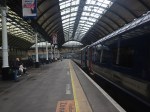
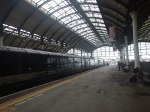



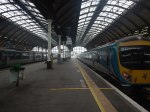
Note.
- The blue Hull Train is in Platform 7 in the pictures.
- Hull station has a classic Victorian cast-iron roof.
- Many other similar platforms have been electrified in the UK.
I believe that this platform can be electrified relatively easily with 25 KVAC overhead wires.
An Electric Service Between London and Worksop/Sheffield
Distances for the Worksop and Sheffield service are.
- ECML and Worksop – 12.2 km. – 1 stop
- Worksop and Sheffield- 25.3 km or 50.6 km both ways. – 1 stop
Note.
1. A train from London will leave Retford with a full battery.
2. Retford and Sheffield is only 37.5 km. So the round trip is only 75 km.
3. A full battery will power the train at 75 mph for 70 km – According to Hitachi.
4. Much of the track between Retford and Sheffield is only 60 mph. So going slower will give an energy saving.
5. Slowing at Worksop, Woodhouse and Sheffield will give the batteries a small charge.
6. There are no bridges in the Workshop station area, so a mile or so of electrification could be easy.
7. It’s an easy level route.
8. I’ve read somewhere that Hitachi have a full route simulator.
I calculate, that a two minute charge at Worksop would probably be all the train would need to travel the 75 km. on batteries.
We don’t know if Hitachi have licenced some of Vivarail’s FastCharge technology from FirstGroup. This could enable them to extract the maximum value from each stop at Worksop.
The One Battery Test Train And Lumo
Hitachi’s current test train has two diesel engines and one battery pack.
It is likely that a train with this configuration could be used on Lumo’s new service to Rochdale.
As London Euston and Manchester Victoria is fully electrified, the only unelectrified section is the 16.7 km. between Manchester Victoria and Rochdale. This would mean, that to complete the trip, Lumo’s train would need the ability to do 33.4 km on battery power.
As Hitachi’s test train can do 70 km on a full charge, Lumo could use trains with the standard two diesel engine and one battery pack configuration. The battery would be charged on the electrified sections of the route, between London Euston and Manchester Victoria stations.
It looks to me, to be a superb demonstration of the capabilities of a battery-electric InterCity train with two diesel engines and one battery pack.
The One Battery Test Train And LNER
Hitachi’s current test train has two diesel engines and one battery pack.
It is likely that a train with this configuration could be used on several LNER services from King’s Cross.
- Bradford Forster Square – 21.9 km. from Leeds
- Cleethorpes – 102.5 km. from Newark
- Grimsby Town – 97.9 km. from Newark
- Harrogate – 29.4 km from Leeds
- Lincoln – 26.9 km. from Newark
- Middlesbrough – 35.2 km. from ECML
- Cleethorpes – 102.5 km. from ECML
- Scarborough – 67.8 km. from York
Note.
- Some services like those to Bradford Forster Square, Harrogate and Lincoln could be run by only charging on the East Coast Main Line.
- Some services like those to Middlesbrough and Scarborough could be run by charging at the destination.
- Other services would need more batteries and/or charging at the destination.
I haven’t put in the Scottish services as running them may be more complicated.
Running Longer Distances On Battery Power
This paragraph is from the original Hitachi press release.
This success demonstrates that Hitachi Rail is ready to deliver the next stage of a full intercity battery-electric train. Based on real-world data, such a train would have a range between 100-150km. These ranges can cover significant sections of non-electrified routes, eliminating the need for wires in tunnels or stations, and potentially saving hundreds of millions of pounds on electrification projects.
Note.
- I would assume that as many diesel engines as possible would be replaced with battery packs.
- On a typical three-battery Class 800 train, 802 train or Class 805 train, this could be up to three batteries.
- But on a four-battery Class 810 train, this could be up to four batteries.
A strategy would need to be developed for all routes and trains would be configured and allocated to the routes accordingly.
Potential Tram Builders Announced For New London Trams
The title of this post, is the same as that of this article on RailAdvent.
These three paragraphs outline the design of the new trams.
Transport for London has issued an Invitation to Tender for four manufacturers to design and build a new fleet of trams.
Alstom UK, CAF, Hitachi and Stadler are the four manufacturers who can now proceed to the next stage of the procurement process with Transport for London to design and build the new trams.
The new trams are expected to feature air-conditioning, real time travel info and charging points, along with areas designed for wheelchair users and those with pushchairs and luggage.
It sounds that the new trams will be to a higher standard with more comfort and interior space.
These are my observations and thoughts.
Will There Be The Same Number of Trams?
These two paragraphs indicate the number of trams.
The initial contract will be for 24 new trams to replace the oldest trams on the network – which are now nearly 25 years old.
There is an option in the contract to replace the trams that were introduced from 2012.
Could this mean, that each tram would be replaced on a one-to-one basis?
It would surely make it easy to introduce the new fleet.
Will The New Trams Be Longer?
To me, the most significant words in the article are “areas designed for wheelchair users and those with pushchairs and luggage”.
As passengers seem to want to carry more and more with them on buses, trains and probably trams in London, I believe the new trams will probably need more interior space.
Increasing the width of the tram, would probably mean gauging difficulties, but with the lengthening of some platforms longer trams might be possible.
The current trams are as follows.
- 24 x Bombardier CR4000 – 30.1 metres – 70+138=208 = 6.9 pass/metre
- 12 x Stadler Variobahn – 32 metres – 72+134 = 206 = 6.4 pass/metre
Note.
- The total number of each tram type is at the left.
- Seats+Standing=Total Passengers.
- The Bombardier trams only have a single articulation, but it looks like the Stadler ones have four.
The longer Stadler trams seem less crowded, despite carrying two fewer passengers.
I have looked at the terminal platforms on maps and it appears, that 35 metre and possibly 40 metre trams would be possible.
At least in London, passengers are used to being told not to use the end door.
A 40 metre tram could probably handle over 250 passengers based on the Stadler passenger density.
Longer Trams Could Increase Capacity By Up To 25 %
I believe my figures show this could be possible.
More Articulations Should Mean A Tighter Turning Circle
This could help operation on some existing or new sections of London Tramlink.
Would Battery Tram-Train Operation Be Useful?
CAF’s trams in the West Midlands already have batteries and Stadler’s tram-trains in Cardiff will have batteries to extend routes on rail tracks, that don’t have electrification.
In Could Beckenham Junction To Birkbeck Be Run Using Third-Rail Tram-Trains?, I detailed how third-rail tram-trains could be used between Harrington Lane tram stop and Beckenham Junction station to create more capacity.
I believe that third-rail tram-trains would work, but that Health and Safety would outlaw the concept.
On the other hand, battery-electric tram trains could probably handle the link between train and tram routes.
If I was bidding for the TramLink contract, I’d make sure the trams could be updated with a battery-electric tram-train capability.
Increasing Capacity At Elmers End Tram Stop
Elmers End tram stop, is the only terminal on the London Tramlink with a single platform.
This map from OpenRailwayMap shows the platform layout at Elmers End station.
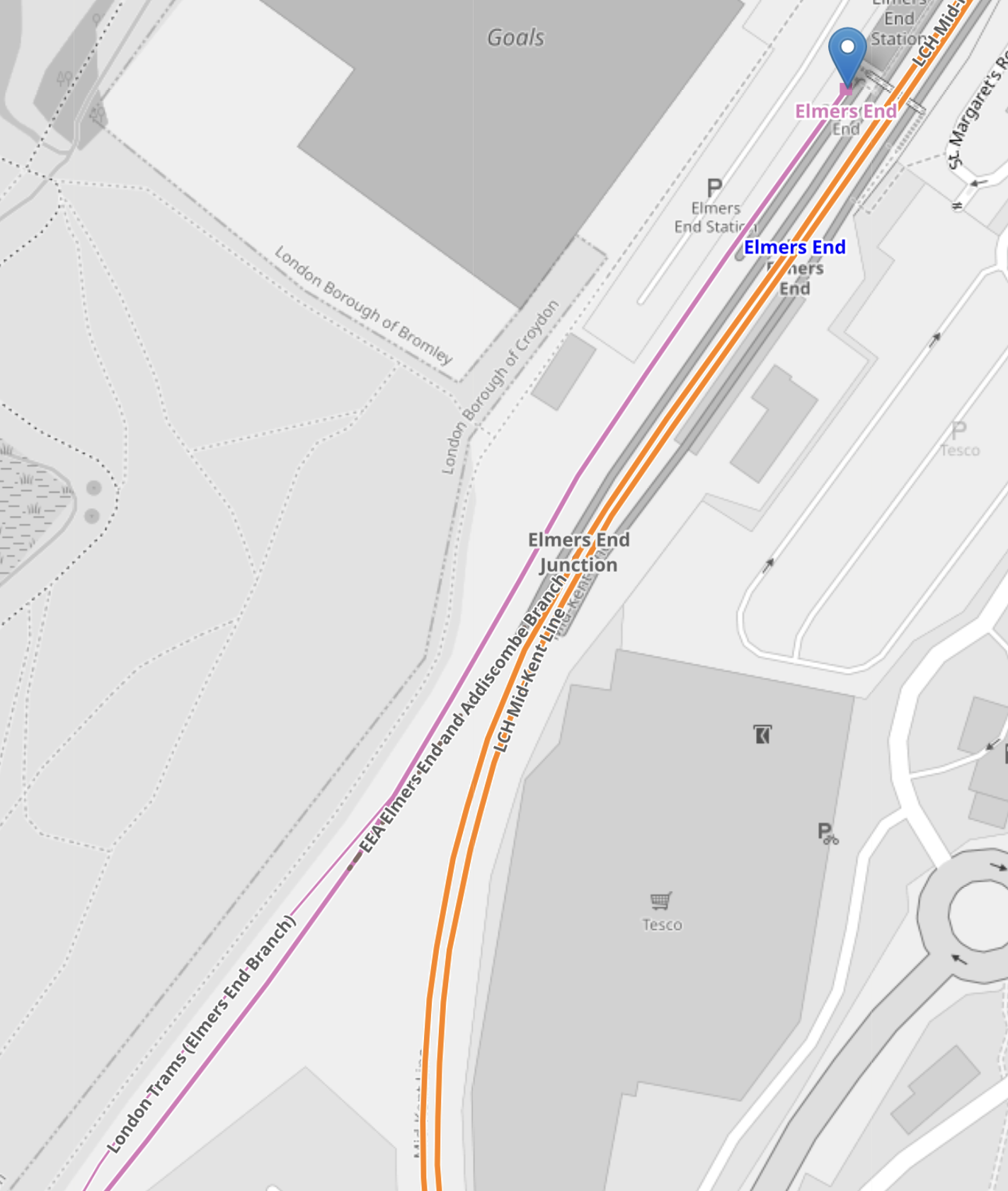
Note.
- The orange lines are the Hayes Line.
- The mauve line is the London Tramlink.
- The London Tramlink has a single platform on the North-West side of the Hayes Line.
These pictures show Elmers End station and a tram in the London Tramlink platform.
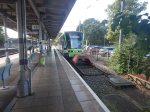
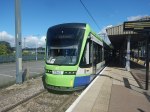
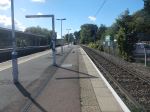
Note.
- The bridge in the station is not step-free.
- The tram is a five-section Stadler Variobahn.
- The tram platform would appear to be able to handle a tram, that is several metres longer than the 32.0 metre Stadler Variobahn.
- The London Tramlink has a typical off-peak service to Wimbledon every ten minutes from Elmers End tram stop.
The Wikipedia entry for Elmers End station, says this about Tramlink developments at the station.
Work is underway to open a second tram platform and double the tram line to Arena to increase capacity. As of March 2019, vegetation has been cleared to make way for the new line. The platform was due to open in December 2020, but has been delayed.
My pictures show no ongoing work or evidence of the second Tramlink platform.
There are two main ways, that capacity can be increased at Elmers End station.
- Install a second platform and run more trams to the station.
- Run longer trams with a higher capacity.
Perhaps, Transport for London have decided, that the second way, is the best, especially, if the money saved, allows them to build a much-needed step-free footbridge at Elmers End station.
From my observations, I would estimate that Elmers End tram stop could accommodate a forty metre tram and possibly, one that was even longer.
Arena Tram Stop
The Arena tram stop, is where the Beckenham Junction and Elmers End branches join and split.
This map from OpenRailwayMap shows the platform layout at Arena tram stop.
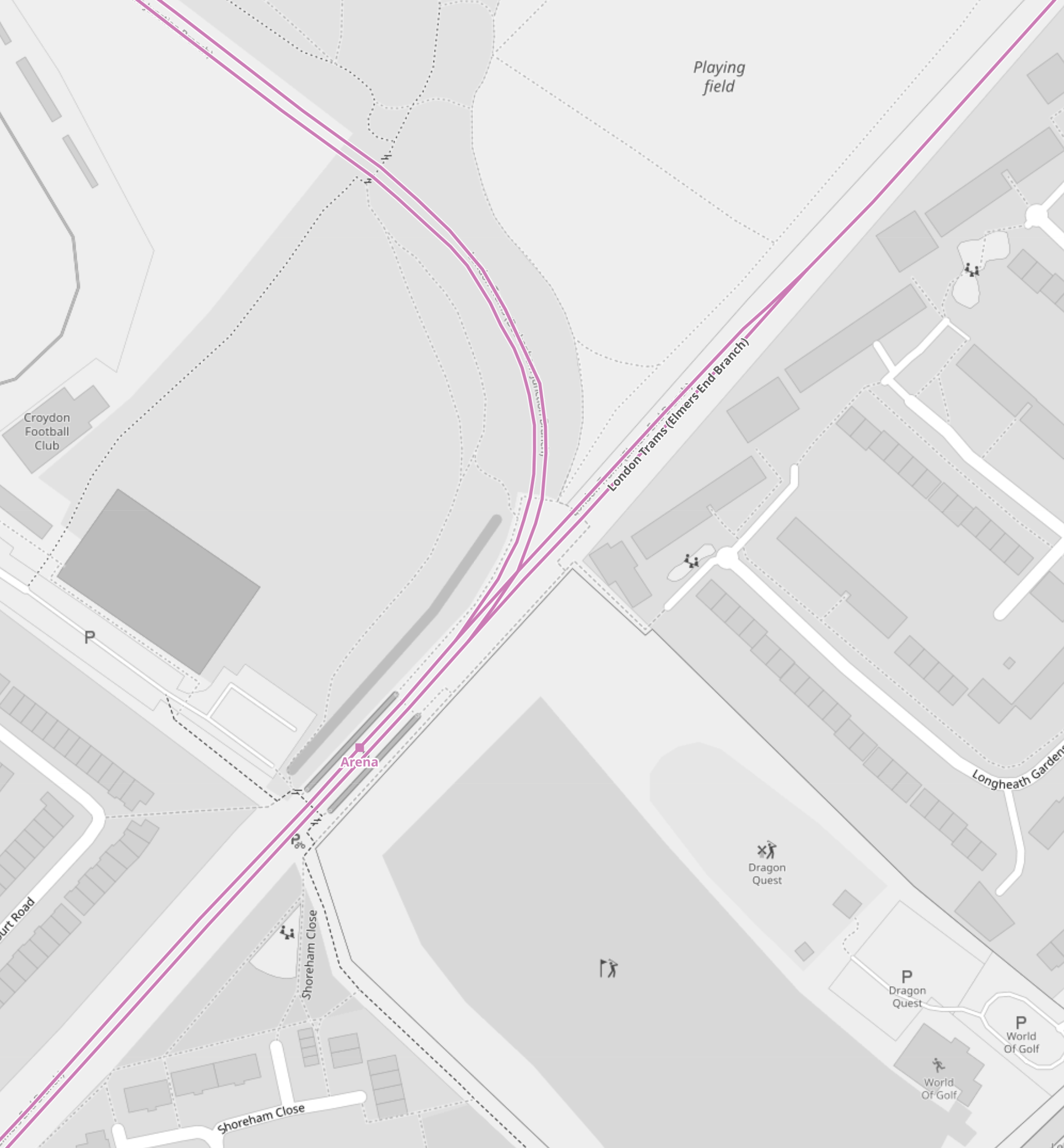
Note.
- The mauve lines are the London Tramlink.
- The line going North-East runs to Elmers End. It starts off as double-track at Arena tram stop and quickly becomes single track all the way to Elmers End. tram stop.
- The line going North-West runs to Beckenham Junction.
- The line going South-West runs to East Croydon and Wimbledon.
- The platforms are on the outside of both tracks.
These pictures show Arena tram stop and some trams passing through.
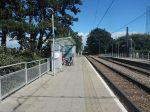
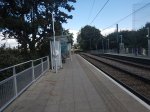
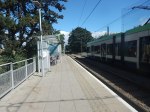
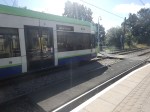
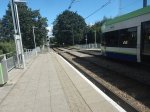
Note.
- The tram platforms are generally a few metres longer than the trams.
- All tram doors are step-free to the platform.
- Passengers walk across the line in front or behind the trams.
- The platform is wide, so that passengers can stay well clear of the occasional passing tram. One picture shows a tram is signed “Not In Service”
I believe, that with some judicial platform lengthening, some selective door opening and trams stopping automatically in the right place on the platform, that longer trams could be handled in a stop like Arena.
As with Elmers End, I believe a forty metre tram will be possible, but this might not be the limit with clever design.
Handling Longer Trams At Beckenham Junction Tram Stop
This map from OpenRailwayMap shows the platform layout at Beckenham Junction tram stop.
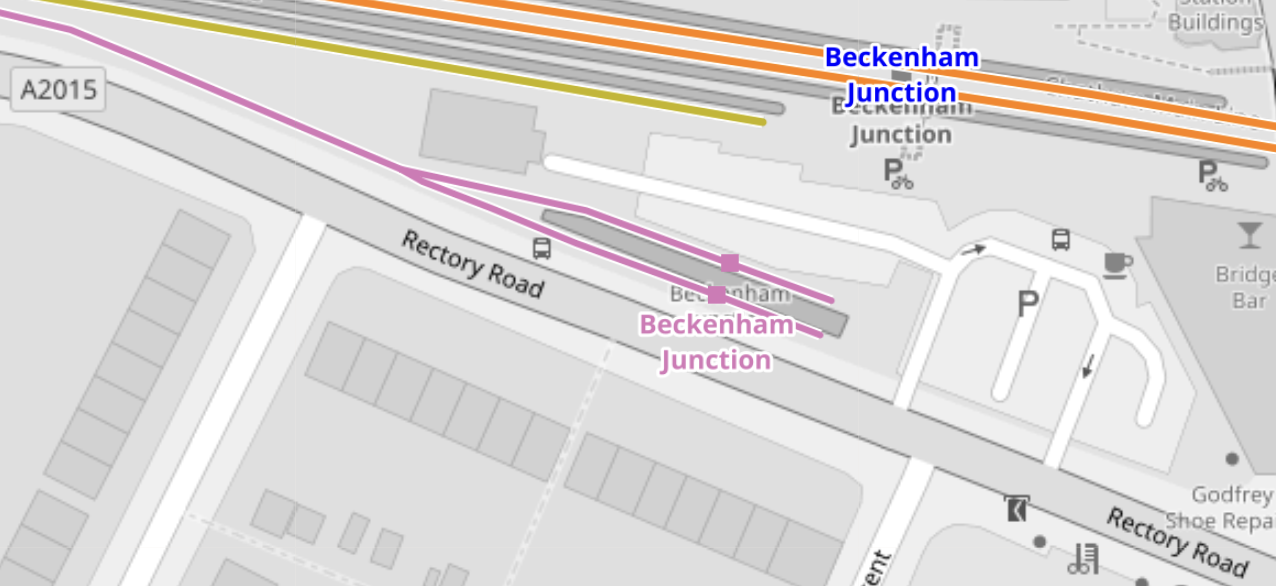
Note.
- The orange lines are the Chatham Main Line.
- The mauve line is the London Tramlink.
- There are a pair of short platforms for the London Tramlink.
- The platforms would be difficult to extend to the East.
- The platforms would be difficult to extend to the West, as the map above shows a building, just to the North of the junction of the two Tramlink platforms.
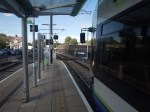
These pictures show Beckenham Junction station and the London Tramlink platforms.
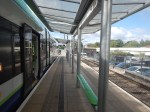
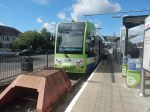
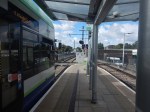

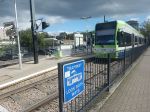


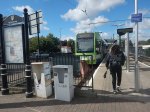
The Wikipedia entry for Beckenham Junction tram stop, says this about the Tramlink service.
Tram services at Beckenham Junction are operated by Tramlink. The tram stop is served by trams every 10 minutes to Wimbledon via Croydon. This is reduced to a tram every 15 minutes on Saturday evenings and Sundays.
Perhaps, the solution to lengthen Tramlink platforms at Beckenham Junction is to do the following.
- Rebuild the building to the North of the junction of the two Tramlink platforms.
- Extend the two Tramlink platforms to the West.
- Move the junction between the two Tramlink platforms to the West.
These pictures show the building in detail.
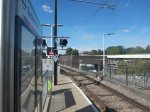
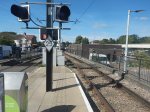
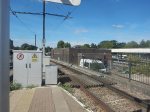
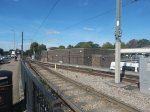
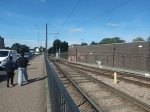
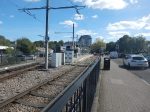
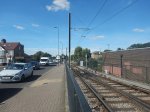




Note.
- There is a Network Rail van outside the building.
- The building looks like it dates from about 2000, when the Tramlink was built.
- Perhaps, the building houses power supply or signalling equipment for the Tramlink.
After the modifications, operation would be the same, but longer trams could be handled.
Trams And Trains Between Birkbeck And Beckenham Junction Stations
This short section of track must be one of the most unusual and complicated in the UK.
- There are three dual National Rail and Tramlink stations; Birkbeck, Avenue Road and Beckenham Road.
- Each station has a single bi-directional National Rail track and/or platform.
- Birkbeck has a single bi-directional Tramlink platform.
- Avenue Road and Beckenham Road each have two Tramlink platforms.
Engineer; Baldrick was obviously having one of his cunning phases.
This map from OpenRailwayMap shows the track/platform layout at Birkbeck station/tram stop.
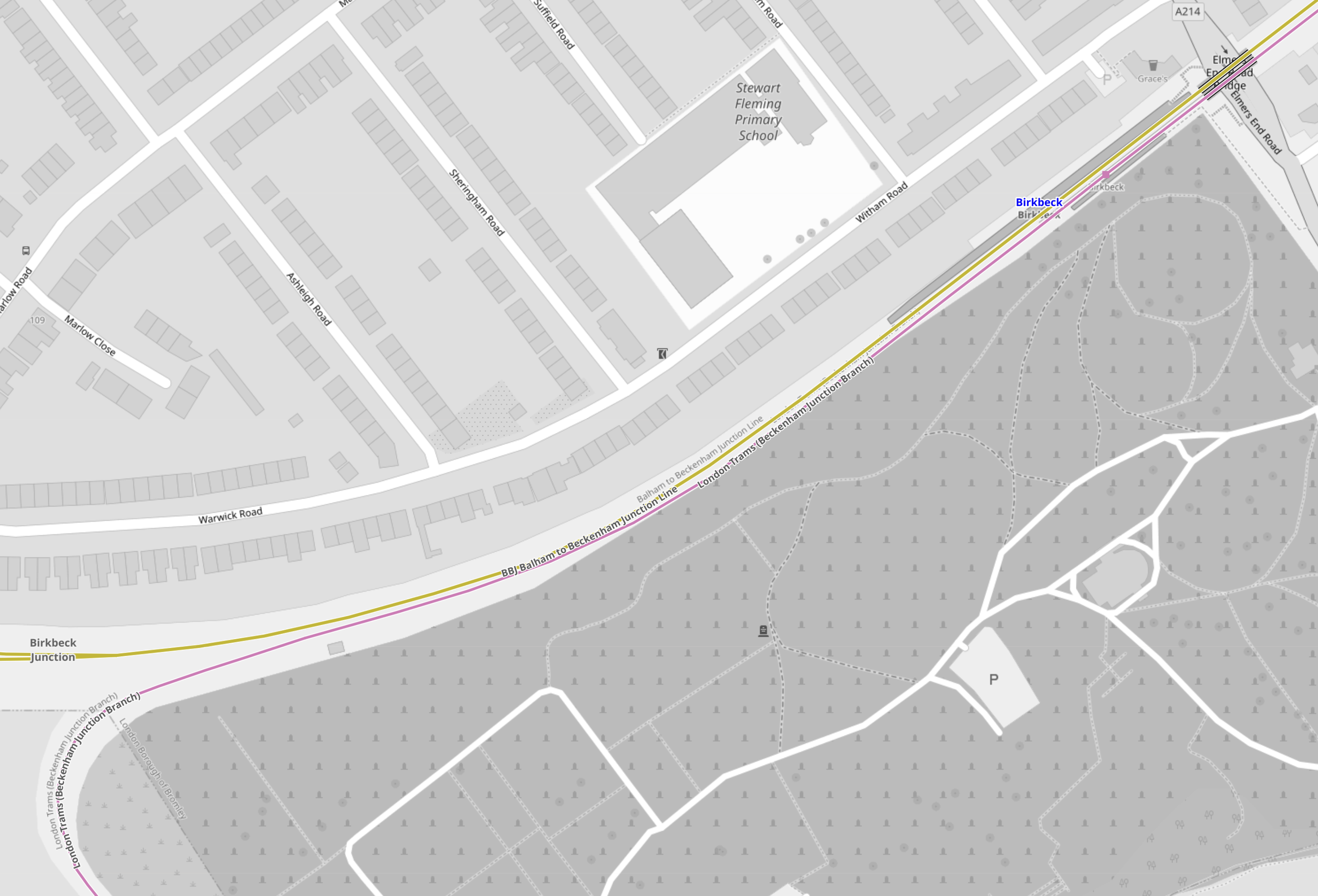
Note.
- The yellow line is the National Rail line between Crystal Palace and Beckenham Junction.
- The mauve line is the London Tramlink between Croydon and Beckenham Junction.
- There is no rail connection between the two lines.
Birkbeck station/tram stop has bi-directional platforms on both National Rail and London Tramlink.
These pictures were taken at the Birkbeck station/tram stop.

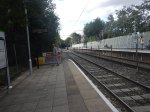
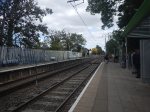
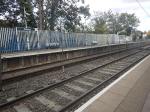
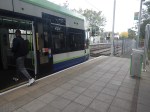
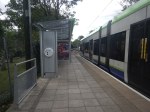
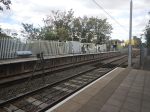
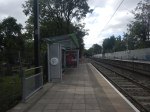
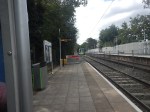
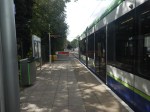
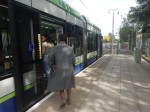
Note.
- The two bi-directional platforms.
- The wire fence between the tracks.
- The two tracks appear to be the same level, but the National Rail platforms seem quite a bit higher.
From the pictures, I would estimate that the Birkbeck tram stop platform is currently about thirty-five metres and could probably handle a forty metre tram with selective door opening.
This map from OpenRailwayMap shows the track/platform layout at Avenue Road station/tram stop.
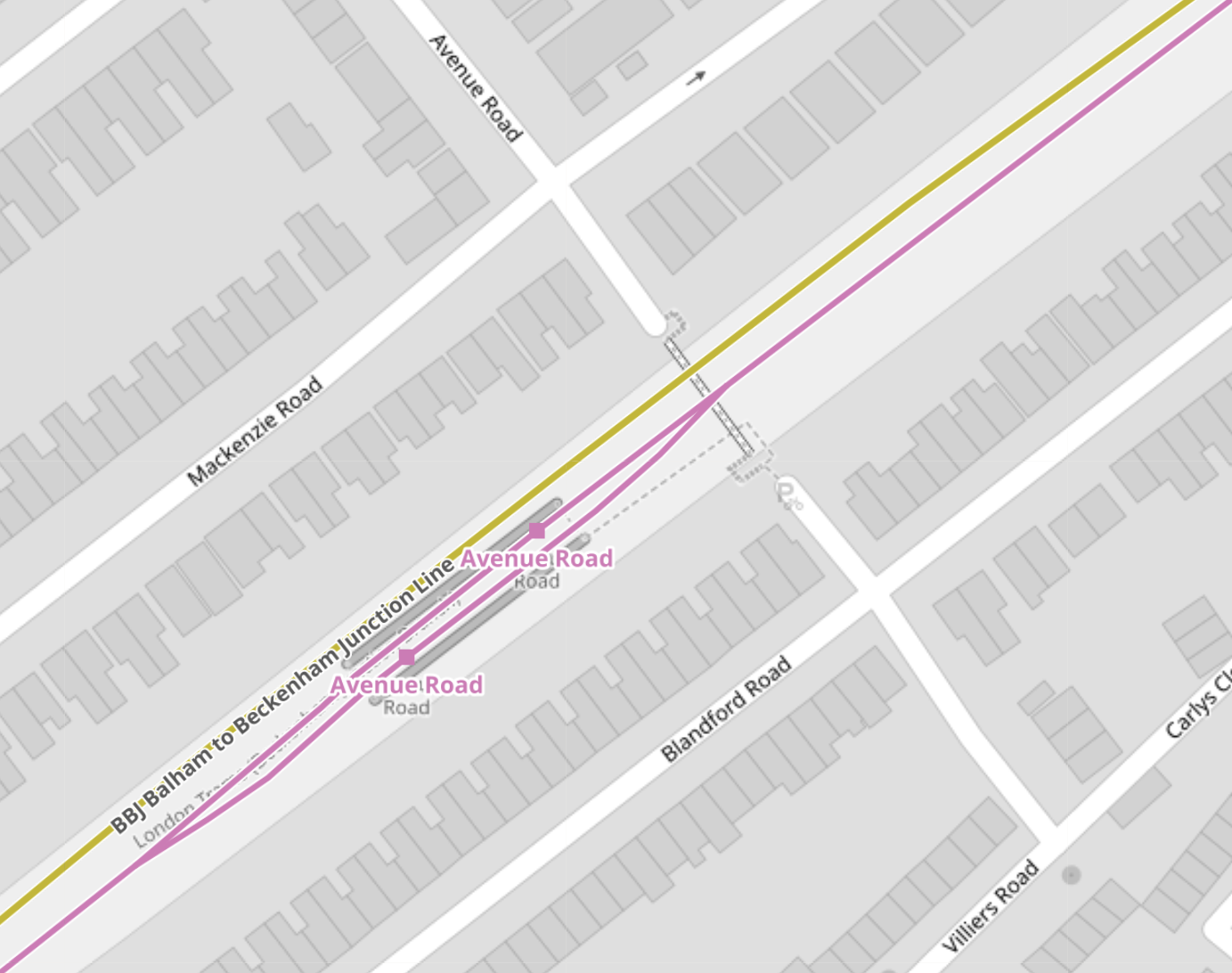
Note.
- The yellow line is the National Rail line between Crystal Palace and Beckenham Junction.
- The National Rail line isn’t shown to have a platform.
- The mauve line is the London Tramlink between Croydon and Beckenham Junction.
- There is no rail connection between the two lines.
London Tramlink has a loop through the tram stop and each branch has a platform.
These pictures were taken at the Avenue Road tram stop.
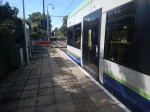
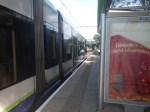
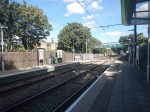
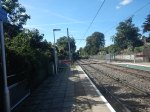
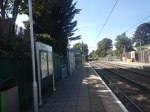
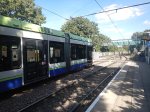
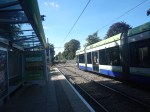
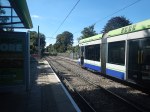
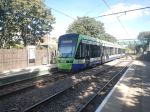
I would estimate the the loop at Avenue Road tram stop could handle a forty metre tram and possibly one of forty-five metres, judging the loop against this thirty-two metre Stadler tram.
This map from OpenRailwayMap shows the track/platform layout at Beckenham Road station/tram stop.
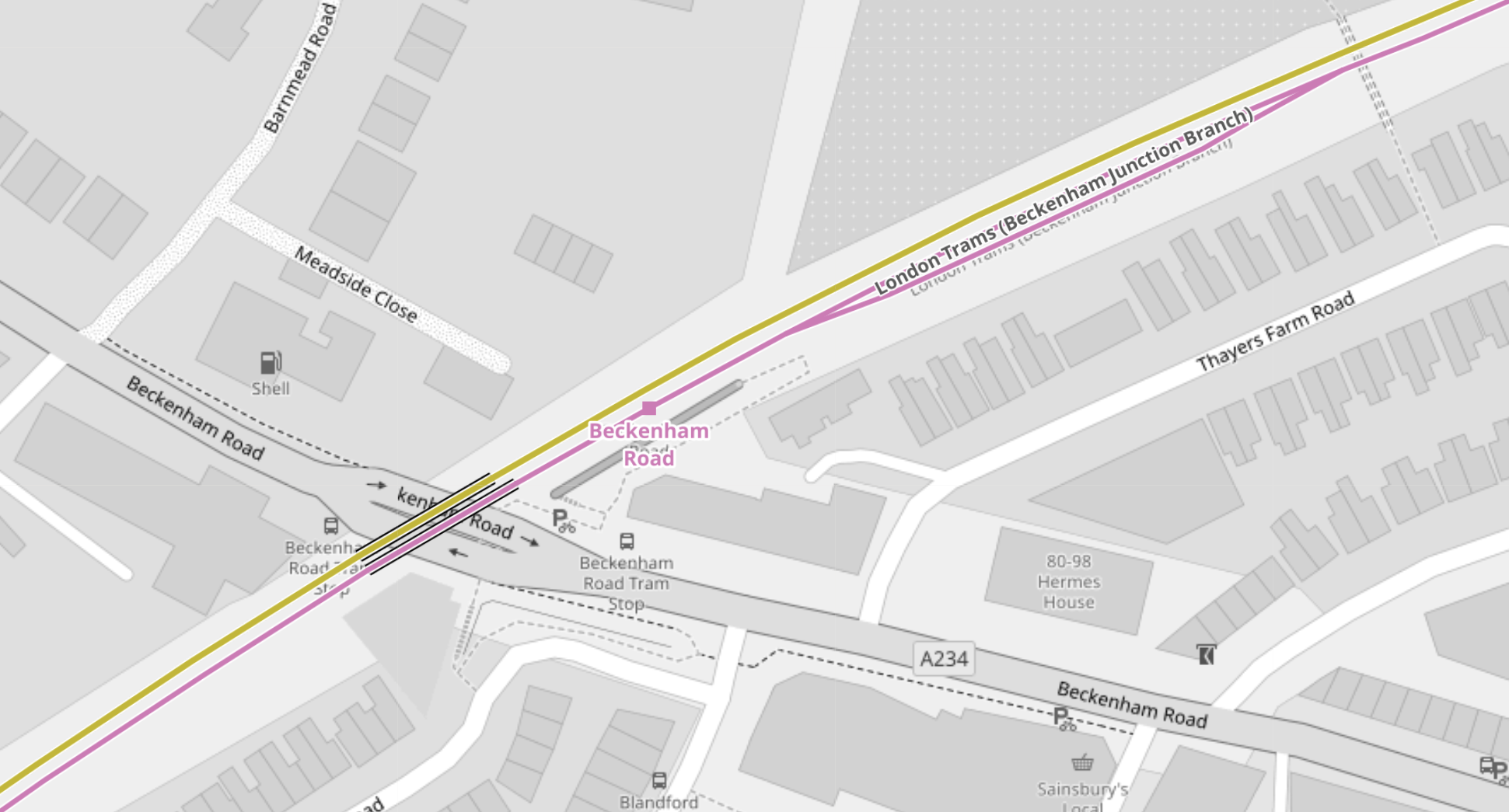
Note.
- The yellow line is the National Rail line between Crystal Palace and Beckenham Junction.
- The National Rail line isn’t shown to have a platform.
- The mauve line is the London Tramlink between Croydon and Beckenham Junction.
- There is no rail connection between the two lines.
The London Tramlink has a single bi-directional platform.
There is also a loop in the London Tramlink to the East of Beckenham Road station/tram stop to allow trams to pass.
These pictures were taken at the Beckenham Road tram stop.
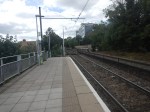
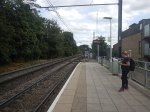
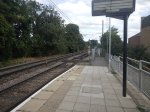
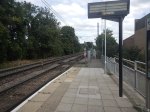
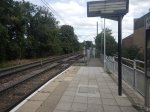
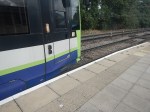
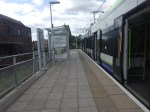
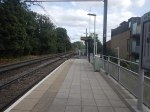
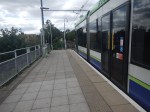
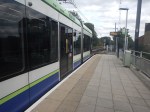
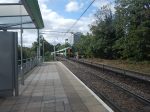
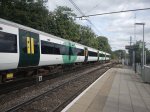
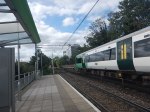
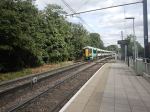
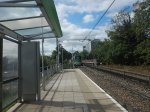
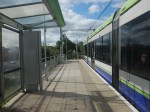
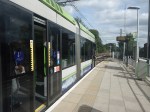
Note.
- A train conveniently came through from London Bridge to Beckenham Junction, when I was taking pictures.
- Several pictures show trams using the loop to the East of the tram stop.
- Both types of tram were pictured in the tram stop.
- The platform in the tram stop is wide.
From the pictures, I would estimate that the Beckenham Road tram stop platform is currently about thirty-five metres and could probably handle a forty metre tram with selective door opening.
Tram-Train Operation Between Birkbeck And Beckenham Junction Stations
I am certain that if this track was being designed today, tram-train operation would be used.
- There would be two tracks, with one for each direction, through Birkbeck, Avenue Road and Beckenham Road stations.
- Both tracks would have dual-height platform at each station/tram stop, so tram and train passengers got level boarding.
- Trains would use third-rail power and trams would use battery-power.
Unfortunately, tram-trains didn’t exist, when the London Tramlink was designed.
Handling Longer Trams At New Addington Tram Stop
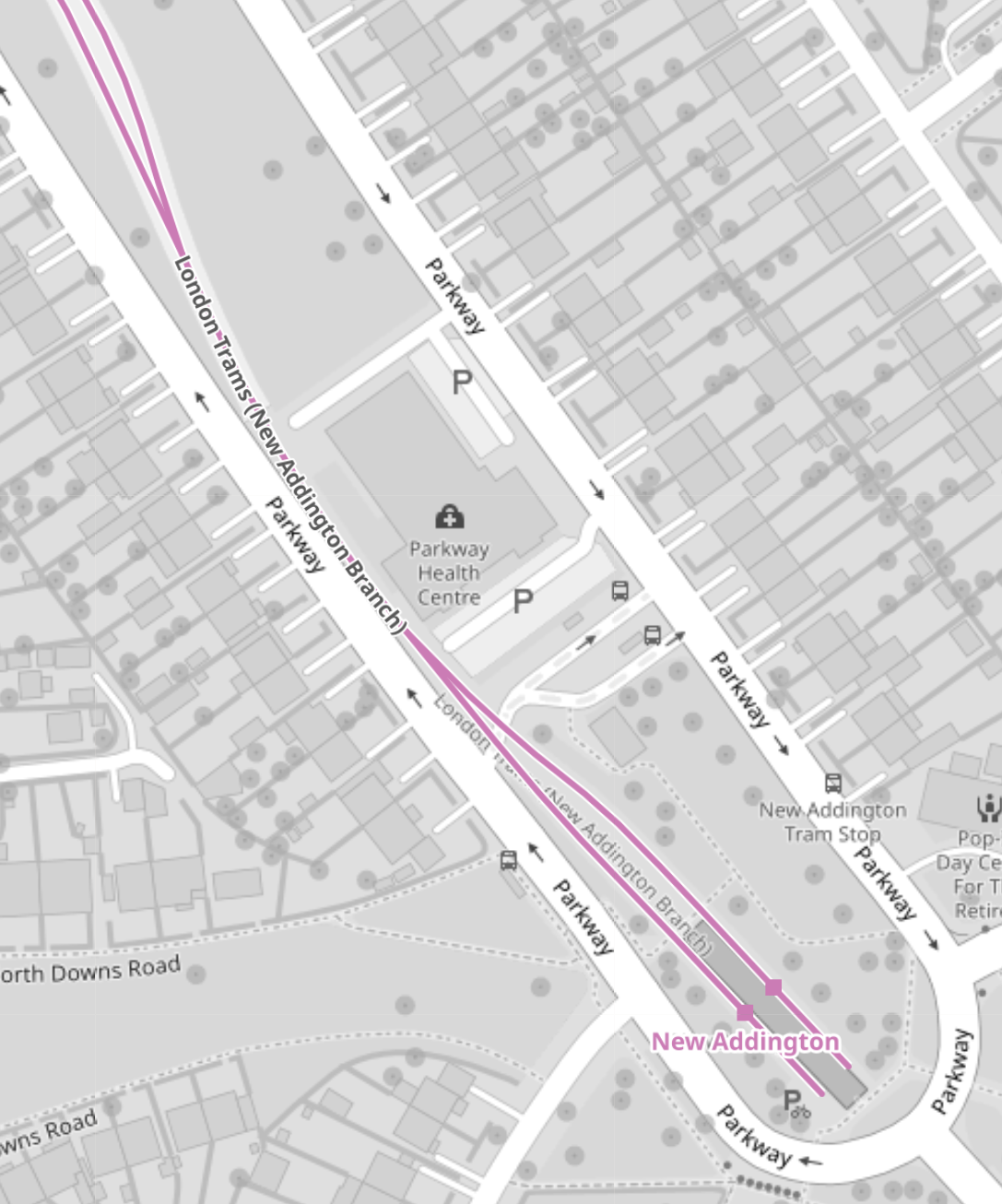
This map from OpenRailwayMap shows the platform layout at New Addington tram stop.
These pictures show the New Addington tram stop and the London Tramlink platforms.
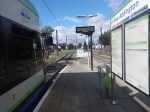
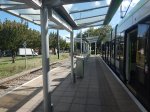
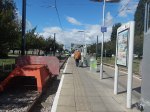

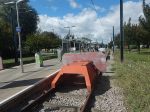
If some of the grassland around the platforms was allocated to the tram stop, I suspect the platforms could be lengthened.
Handling Longer Trams At Wimbledon Station
This map from OpenRailwayMap shows the platform layout at Wimbledon station.
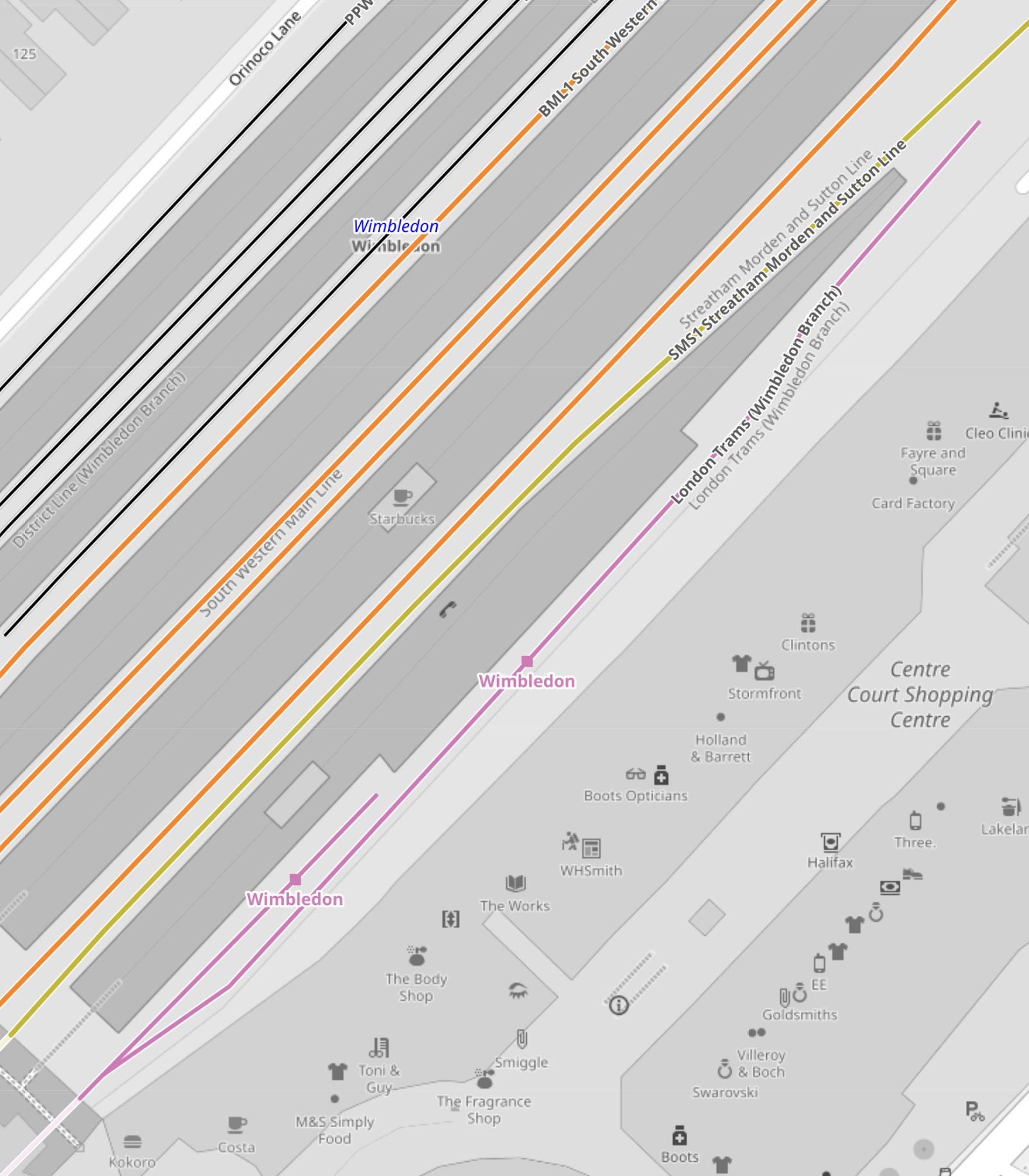
Note.
- The mauve line is the London Tramlink.
- There are two platforms; 10A and 10B, which are indicated with a separate dot.
- Platform 9, which is used by Thameslink, is the other side of Platform 10, so interchange to Thameslink is excellent.
- The main tram platform 9/10 is wide.
- The platforms are step-free to the trams, with lifts to the station bridge and the other platforms and Way Out.
I suspect that when the second platform was built, both platforms were made longer than the thirty-two metres needed for the Stadler trams.
These pictures show the two platforms.
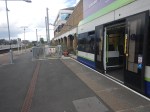
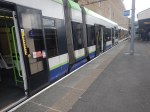
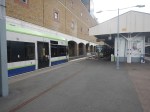

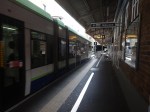


Could another platform be created on the other side of the tracks to give better access to the tracks?
Conclusions
My first conclusion is that the London Tramlink could be run by a new fleet of the same number of trams, that were a few metres longer than the current 30.7/32 metres of the current trams.
- I suspect that forty metre trams would be possible, with a few modifications to platforms.
- It might even be possible to have forty-five metre trams, with a more substantial rebuild at Beckenham Junction.
- Trams could overhang platforms and selective door opening could be used.
- Forty metre trams would carry 25 % more passengers than the current trams.
- The Elmers End and Wimbledon terminals already seem to be capable of handling forty metre long trams and possibly could take trams a few metres longer.
I suspect that Elmers End and Wimbledon, could be the first route, where the longer trams were introduced, as the trams should be able to shuttle between the two end terminals to the current timetable.
The New Addington tram stop would be brought into operation next.
- Platforms would be lengthened as required.
- Trams operate a frying pan loop from New Addington to Croydon, with an Off Peak frequency of 7-8 minutes.
- I suspect that one platform won’t be able to handle this frequency.
- The last point probably means that the two platforms will need to be lengthened.
Works at the New Addington tram stop could be tricky, but not substantial.
Initially, the service to Beckenham Junction could be run by the existing Stadler Variobahn trams.
I believe that a lot of work will need to be done to get Beckenham Junction ready for the new trams if they are longer, which I suspect they are.
- The Network Rail installation will have to be relocated.
- The two platforms will have to be lengthened.
I suspect the works will be substantial.
But I do believe, that there is scope to plan all the works at the terminals, so they can be done efficiently, whilst at least maintaining a partial service.
My second conclusion, is that it will be possible to build a financial model, which shows infrastructure costs against tram lengths.
Longer trams will cost more and cost more for infrastructure, but they will carry more passengers and collect more fare revenue.
Brand New Battery Technology To Be Trialled On TransPennine Train
The title of this post, is the same as that of this press release from Hitachi.
These three bullet points, act as sub-headings.
- First-ever trial in the UK to replace a diesel engine with a battery on an intercity train is underway.
- Pioneering collaboration between Angel Trains, TransPennine Express, Turntide Technologies and Hitachi Rail.
- Hitachi Rail has built a battery using the North East supply chain, with one battery unit predicted to reduce emissions and fuel costs by as much as 30%.
These are my thoughts on some of the paragraphs in the press release.
The First Paragraph
This is the first paragraph.
Testing of the UK’s first intercity battery train commenced earlier today. The battery, which generates a peak power of more than 700kw, has now been successfully retrofitted onto a TransPennine Express ‘Nova 1’ train (five-carriage intercity Class 802), ahead of the trial on Transpennine routes this summer.
Each of the three diesel power packs in on of TransPennine Express’s Class 802 trains can generate 700 kW, so the battery packs can provide the same power as the current Rolls-Royce mtu diesel power packs.
The Third Paragraph
This is the third paragraph.
The single battery unit is incredibly powerful, storing enough electricity to power more than 75 houses for a day. This impressive energy and power density will deliver the same levels of high-speed acceleration and performance, while being no heavier than the diesel engine it replaces.
This equity of high-speed acceleration and performance is to be expected, as the train power and weight is the same, if the power is diesel engines or batteries.
The Fourth Paragraph
This is the fourth paragraph.
The installation of a battery will reduce emissions and improve energy efficiency. It is predicted to reduce emissions and fuel costs by as much as 30% on a Hitachi intercity train.
I would assume that this improvement in emissions and fuel costs, is due to the use of regenerative braking to recharge the batteries, when the train slows down.
The Fifth Paragraph
This is the fifth paragraph.
Most importantly for passengers, the trial will test how intercity trains can enter, alight and leave non-electrified stations in zero-emission battery mode to improve air quality and reduce noise pollution.
As the trains enter a non-electrified station, the regenerative braking will recharge the batteries to both power the train in the station and accelerate the train on its way.
The Seventh Paragraph
This is the seventh paragraph.
The trial will provide real-world evidence to inform the business case for a 100% -battery-electric intercity train, capable of running up to 100km in battery mode. This remarkable range means this battery technology could be deployed to cover the final non-electrified sections of intercity routes in the coming years. It will also demonstrate how battery technology can reduce infrastructure costs by reducing the need for overhead wires in tunnel sections and over complex junctions.
Note that 100 kilometres is 62.1 miles.
You can never do too much real world testing!
These are my further thoughts.
Acceleration And Braking Under Battery Power
This graph from Eversholt Rail, shows the acceleration and deceleration of a five-car Class 802 electric train.
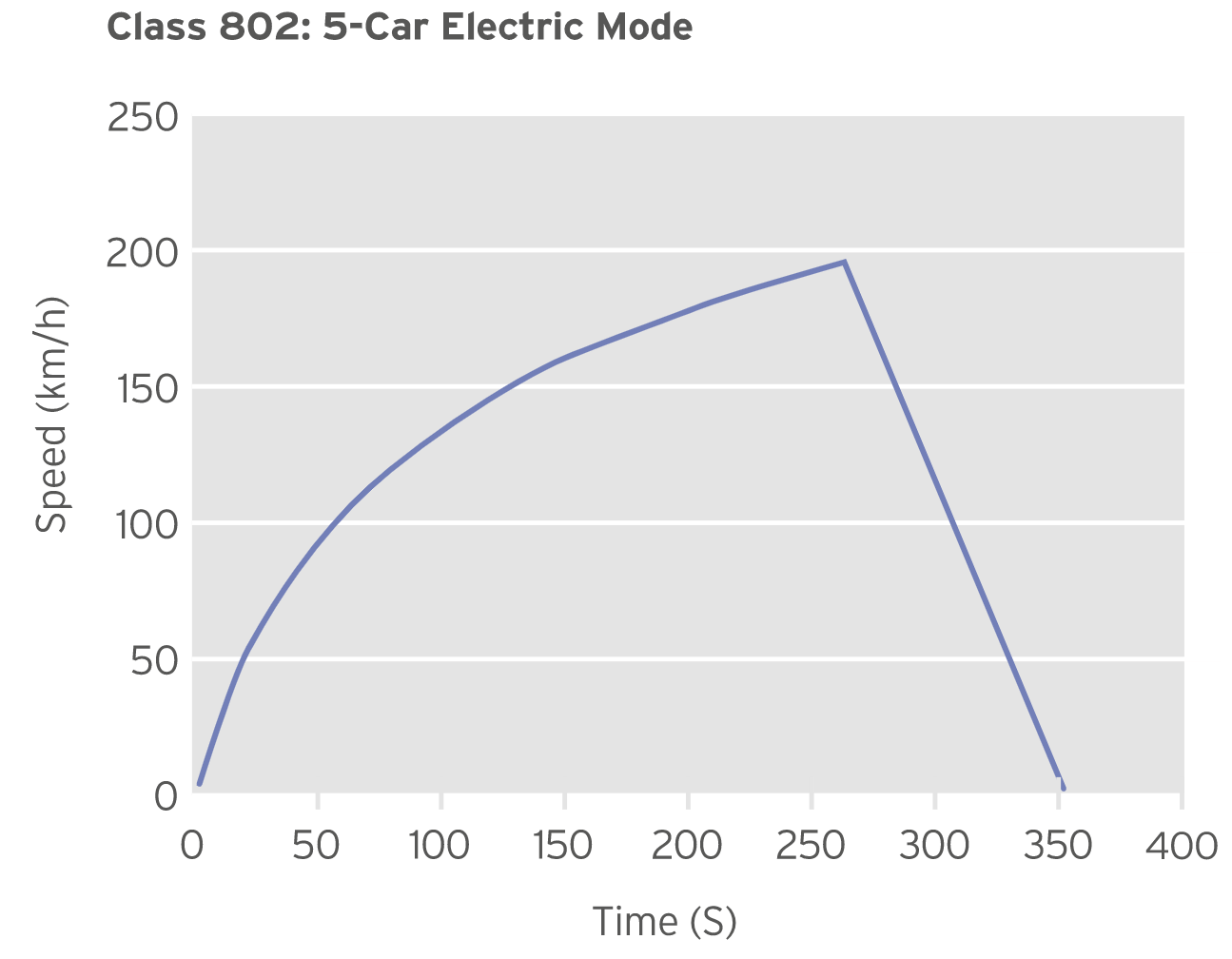
As Hitachi have said in the press release that.
- The weight of a battery pack is the same as a diesel engine.
- The power of a battery pack is the same as a diesel engine.
The acceleration and braking curve for a Class 802 train, with a single traction battery will surely be the same.
Would this mean, that if a battery-electric train replaced a diesel-electric train, the timetable would be the same?
What would be the effects, if a second diesel engine were to be replaced with a battery pack?
- The train would still weigh the same.
- The train’s performance would still be the same.
- The train would have 1400 kW of power available, but I doubt this could be used efficiently, as it might exceed the train’s performance limits.
- The train would have enough electricity for a 200 kilometre or 124.3 mile range.
There might be a need for a sophisticated control system to set the power mode, but in my experience of riding in the cab of an InterCity 125 and a Boeing 747, drivers or pilots have enough intelligence and fingers to control systems with multiple engines.
What would be the effects, if a third diesel engine were to be replaced with a battery pack?
- The train would still weigh the same.
- The train’s performance would still be the same.
- The train would have enough electricity for a 300 kilometre or 186.4 mile range.
The range is sufficient for a lot of routes.
London And Beverley
Consider.
- This route has 44.3 miles of unelectrified track between Temple Hirst Junction and Beverley.
- One battery range is 100 kilometres or 62.1 miles.
- As the trains have three slots for battery packs or diesel engines, they could always carry a diesel engine for emergencies.
The route could be run in one of two ways.
- By using one battery, that would be charged at Beverley.
- By two batteries, that would be charged on the main line to the South of Temple Hirst Junction. One battery would be used in each direction.
Note.
- The second method would not require any new infrastructure at Beverley or Hull.
- All batteries would be identical 100 km batteries.
- Trains would just swap an appropriate number of diesel engines for batteries.
The service could run as soon as the trains had the power transplants.
Using The Lincoln Diversion
In Extra Luggage Racks For Lumo, I also talked about Lumo taking the diversion via Lincoln.
Consider.
- This route is 88.5 miles of unelectrified track.
- It would be possible to be handled by a Class 802 train with two battery packs.
- Hull Trains will need battery packs to get to Beverley.
- Some LNER services will use battery packs.
Perhaps trains will use one battery to Lincoln and one from.
Crewe And Holyhead
In October 2023, the government said, that the North Wales Coast Line would be electrified.
Consider.
- Crewe and Holyhead are 105.5 miles apart.
- The route currently has no electrification.
- It has been planned to electrify the 21.1 miles between Crewe and Chester for some time.
- A lot of the route West of Chester may arouse the wrath of the Nimbies and be politically difficult to electrify, as castles and electrification don’t mix.
- Llandudno Junction station might be a station, where trains could be charged.
- Shotton and Chester stations need rebuilding.
- The line is not short of electric power, because of Electric Mountain and the windfarms along the coast.
- The route will soon be served by Hitachi Class 805 trains.
I believe the North Wales Coast Line could be one of those routes, which Hitachi’s partial electrification might be ideal.
I also believe that, it could be an extension of High Speed Two from Crewe, which provided a zero-carbon route between London and Ireland.
Conclusion
I can see if the tests perform as expected, that there will be some battery express trains running soon.
Contracts Signed For Eastern Green Link 2 Cable And Converter Stations
The title of this post, is the same as that of this press release from National Grid.
These four bullet points, act as sub-headings.
- Eastern Green Link 2 (EGL2) is a 525kV, 2GW high voltage direct current (HVDC) subsea transmission cable from Peterhead in Scotland to Drax in England delivered as a joint venture by National Grid and SSEN Transmission
- The joint venture has signed a contract with the Prysmian Group to supply around 1,000km of cable for the project and a contract with Hitachi Energy and BAM for the supply of converter stations at either end of the subsea cable
- Contract signing is a significant milestone for the project as it progresses towards the delivery phase
- EGL2 will be the longest HVDC cable in the UK and the UK’s single largest electricity transmission project ever, providing enough electricity to power two million UK homes
This paragraph outlines the project.
EGL2, a joint venture between SSEN Transmission and National Grid Electricity Transmission (NGET), has reached another milestone in the development of a new subsea electricity superhighway after sealing contracts this week with specialist HVDC cable supplier, Prysmian, and with Hitachi Energy and BAM for the supply of converter stations at either end of the project.
These four paragraphs add more detail.
EGL2 will see the creation of a 525kV, 2GW HVDC subsea transmission cable from Peterhead in Scotland to Drax in England. The longest HVDC cable in the UK and the UK’s single largest electricity transmission project ever, it will provide enough electricity to power two million UK homes.
Prysmian has confirmed it has the capability to deliver the project with its manufacturing facilities for the production of the HVDC cable and its cable laying vessels for the installation in the timescale required for EGL2 to meet its targeted energisation date in 2029, supporting the timely delivery of this project and mitigating risks associated with global constraints in the HVDC supply chain.
Hitachi Energy is partnering with BAM to provide the engineering works and technology for the HVDC converter stations which form the terminals for the HVDC cable and convert direct current to the alternating current used in the onshore transmission network. This latest milestone is another significant step as the project moves towards delivery and, following final approval from Ofgem, work is expected to commence later this year, with a targeted operational date of 2029.
The subsea HVDC cable system is approximately 436km in length with new converter stations at either end to connect it into the existing transmission network infrastructure. HVDC technology provides the most efficient and reliable means of transmitting large amounts of power over long distances subsea.
Note.
- EGL2 can handle 2 GW.
- There is a targeted operational date of 2029.
- Eastern Green Link 2 now has its own web site.
- Most of these links now seem to be HVDC.
A map in the press release, shows the undersea route may be shorter.

It also appears to me, that moving electricity around the UK under the sea, is possibly the most environmentally-friendly and least intrusive way to do it.
We already have four HVDC interconnectors.
There will be many more,
Battery Traction Trial Ahead As TransPennine Express Fortunes Improve
The title of this post, is the same as that of this article on Railway Gazette International.
This is the sub-heading.
Overcrowding and short-notice cancellations at state-owned TransPennine Express have declined since the December timetable change, prompting Managing Director Chris Jackson to suggest the operator is in a ‘better place’.
It is a must-read article and the section called Battery Power Trial, says this.
Meanwhile, the Class 802 trainset which was damaged in a shunting accident in March 2022 remains out of traffic. Although No 802 207 has now been repaired, it will not be returning to service yet, as it is receiving modifications for use as a battery testbed.
This will see a 6 m long, 2·2 m wide battery module installed in place of one of the existing engines, which will improve fuel efficiency by using two diesel powerpacks rather than three.
The battery module will provide top-up power for peak demand and give regenerative braking capability when operating in diesel mode, which the trains currently do not have. Arrival and departure at stations is also to be trialled in battery mode to assess noise and air-quality improvements. The train is planned to re-enter traffic in December.
‘We’re supplying that unit to support what we think is a sensible industry scheme to look at whether we can do something to move from bi-mode to tri-mode, which could be beneficial for the industry from a green perspective’, Jackson confirms.
That looks to be a good plan, but I can’t help feeling that battery power for the Class 802 trains has been a long time coming.
This press release from Hitachi is entitled Hitachi And Eversholt Rail To Develop GWR Intercity Battery Hybrid Train – Offering Fuel Savings Of More Than 20%, which announced the project was published on the 15th December 2020.
It will be four years from when Hitachi and Eversholt Rail said go, before the prototype is running.
Is this why LNER bought their new trains from CAF?
Ørsted Greenlights 2.9 GW Hornsea 3 Offshore Wind Farm
The title of this post, is the same as that of this article on offshoreWIND.biz.
This is the sub-heading.
Ørsted has taken the final investment decision (FID) on what the company says is the world’s single largest offshore wind farm, the 2.9 GW Hornsea 3, which is expected to be completed around the end of 2027.
These are the two introductory paragraphs.
In July 2022, Ørsted was awarded a contract for difference (CfD) for Hornsea 3 at an inflation-indexed strike price of GBP 37.35 per MWh in 2012 prices.
The CfD framework permits a reduction of the awarded CfD capacity. The company said it will use this flexibility to submit a share of Hornsea 3’s capacity into the UK’s upcoming allocation round 6.
With all the work, that Ørsted have done to protect kittiwakes, which I wrote about in Kittiwake Compensation, the company seems to have been taking the development of this wind farm carefully and this statement from the wonderfully-named Mads Nipper, Group President and CEO of Ørsted indicates that the UK Government has been persuasive in times, that are not totally favourable to wind farm developers.
Offshore wind is an extremely competitive global market, so we also welcome the attractive policy regime in the UK which has helped secure this investment. We look forward to constructing this landmark project, which will deliver massive amounts of green energy to UK households and businesses and will be a significant addition to the world’s largest offshore wind cluster.
But the article also has this paragraph.
According to Ørsted, most of Hornsea 3’s capital expenditure was contracted before recent inflationary pressures, securing competitive prices from the supply chain, adding that the larger wind turbines and the synergies with Hornsea 1 and 2 lead to lower operating costs.
It looks like Ørsted, may have taken advantage of Siemens well-publicised financial woes and got a good price for the over two hundred turbines.
This page on the Hitachi web site, describes their part in Hornsea 3, where this is said.
Hitachi Energy has supported Ørsted with the grid connection of Hornsea One and Hornsea Two, but Hornsea 3 will be the first phase to use HVDC application in the Hornsea cluster.
The overall HVDC system, including the offshore platform, is delivered in partnership with Aibel. Hitachi Energy will supply two HVDC Light® converter systems, while Aibel will deliver two HVDC offshore converter platforms. The platform is based on Hitachi Energy’s modular HVDC system including its advanced control and protection system, MACH™. As the HVDC offshore market grows and becomes more complex, Hitachi Energy will continue to develop solutions with its customers and partners to enable a more flexible offshore grid of the future.
Hitachi Energy is supplying four HVDC converter stations, which convert AC power to DC for transmission in the subsea cables, then reconvert it to AC for integration into the onshore grid. Two of the converter stations will be installed on offshore platforms and two at mainland grid connections.
Note.
- Hitachi are pushing their electrical innovation hard.
- Hitachi and Ørsted have worked together on Hornsea 1 and 2.
- What better place is there for Hitachi to test their new modular HVDC system, than on one of the world’s largest wind farms?
- Hitachi appear to say, they like to develop with customers and partners.
It looks to me, that Ørsted may well have got new improved technology at an advantageous price.
This is the last paragraph of the article.
The Hornsea zone will also include the Hornsea 4 project, which could have a capacity of up to 2.6 GW. The wind farm received its development consent order from the UK government earlier in 2023 and is now eligible for forthcoming CfD allocation rounds.
So will Hornsea 4 be a slightly smaller version of Hornsea 3 using the same suppliers?
- There could be savings in the design and manufacturing of the electrical systems, foundations, sub-stations and turbines.
- Could for instance, Hitachi’s modular HVDC result in savings in converters and sub-stations, if the two wind farms shared infrastructure?
- I’m sure that Siemens, Hitachi and the other suppliers will be happy to just keep rolling.
- It would be an ideal follow-on.
It looks to me, that by using good design and management, and established suppliers, Ørsted have managed to get the costs of Hornsea 3 and Hornsea 4 to a level, where the venture is profitable.

