Battery Wagons To Lower Mining Railway Emissions
The title of this post, is the same as that of this article on Railway Gazette.
These two paragraphs introduce the concept of the wagons.
Intramotev is to supply three ReVolt battery wagons to enable regenerative braking on a industrial railway.
The battery and automation technology company said this would be the first deployment of self-propelled battery-electric wagons in a traditional freight train, with regenerative braking and battery technology used to reduce locomotive diesel consumption and thus costs and emissions.
It may seem an unusual concept, but it’s one of those ideas, where if the maths and the costs stack up, it will work.
Intramotev’s web site gives more details on their Product & Technology page, where this is said.
Combining the low energy usage of steel wheels on steel rails with the efficiency of electric drivetrains to create the most energy-efficiency overland transport.
This article on electrek is entitled A Company Is Developing Self-Propelled, Battery-Electric Railcars You Can Control With Your Phone has two paragraphs, which describe their two current products.
In a few short years, the company has been able to develop unique freight solutions using software and battery-electric propulsion technology. This includes the TugVolt battery electric railcar (seen above and below), which can decouple from the consist (the group of railcars as a whole) and operate independently for first and last mile legs.
The company has also developed a ReVolt railcar that can be positioned to stay within the train’s consist and capture energy using regenerative braking to reduce diesel consumption from the line’s locomotive.
As a Control Engineer, I feel strongly, that this technology would work very well in the UK.
Reading And Oxford – 10th June 2023
Yesterday, after breakfast on Moorgate, I went for an explore at the Western end of the Elizabeth Line.
My aim was to change at Reading for Oxford and then have a bit of an explore in the University City.
These are my observations and thoughts.
Changing Trains At Reading
There are two trains per hour between Liverpool Street and Reading station, but at the Moorgate end of Liverpool Street station, there is no way of buying a ticket, that would get me between Reading and Oxford. To make things more complicated, I needed to be quick with my change at Reading, as I only had a few minutes before the next Oxford train left Reading.
In the end I had to leave Reading station and walk across the concourse in front of the station.

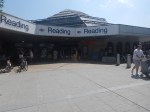


O then bought a ticket in a machine and then re-entered the station.
Great Western Railway can do better.
In Germany, there would be a ticket machine inside the barriers for those changing trains. But we never do that!
In the end, I missed my train and had to wait thirty minutes for a very crowded London Paddington to Oxford train.
Electrification At Oxford
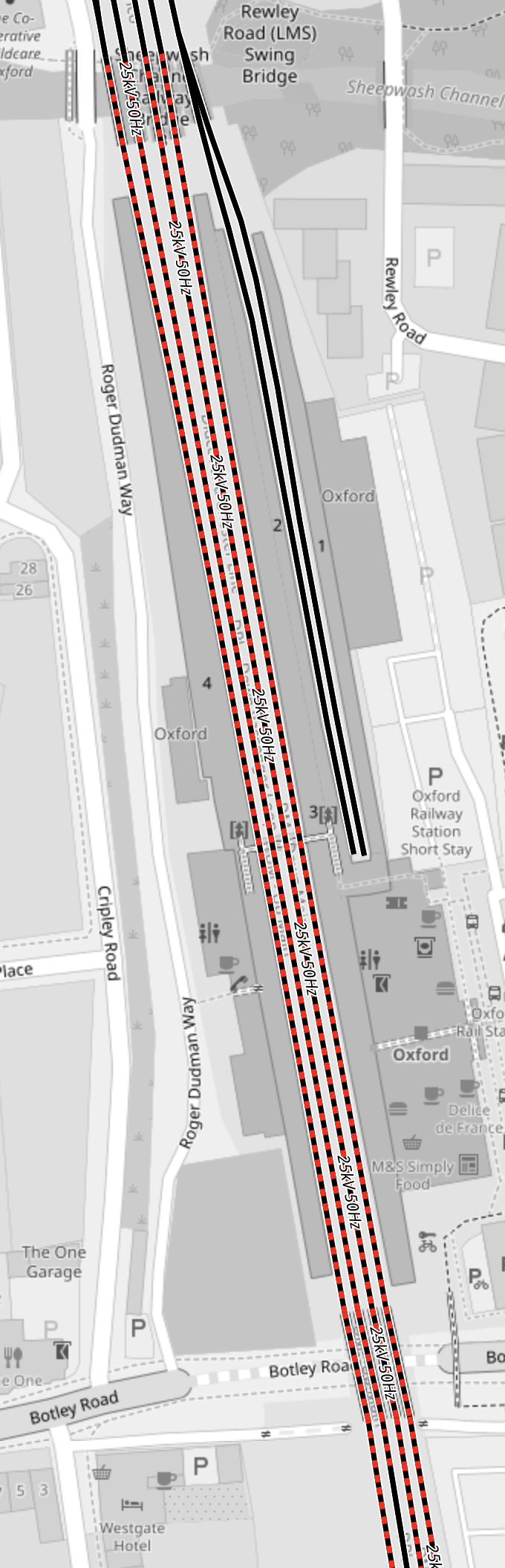
This map from OpenRailwayMap shows the planned electrification at Oxford station.
Note.
- The four through lines are shown in dotted red-and-black, which indicates, that they will be electrified with 25 KVAC overhead electrification.
- The proposed electrification continues all the way to Didcot Parkway station on the map.
- The two black tracks are the unelectrified platforms for Chiltern and East West Railway services.
But the proposed electrification stops just outside the station. Why?
Great Western Railway Services Beyond Oxford
Great Western Railway run an hourly service to Great Malvern, which according to Wikipedia terminates as follows.
- 4 trains per day continue to Hereford calling at Colwall and Ledbury.
- 1 train per day terminates at Worcester Shrub Hill.
- 4 trains per day terminate at Worcester Foregate Street.
So what are the distances of these stations from Oxford?
- Great Malvern – 65.6 miles
- Hereford – 86.3 miles
- Worcester Foregate Street – 57.6 miles
- Worcester Shrub Hill – 57.2 miles
I suspect that one version of the Hitachi Intercity Tri-Mode Battery Train, which is shown in the infographic below
could handle all these distances.

After the Oxford and Didcot Parkway electrification is complete, trains will arrive at Oxford station with a full battery.
But how would the batteries be recharged for the journey back to Oxford?
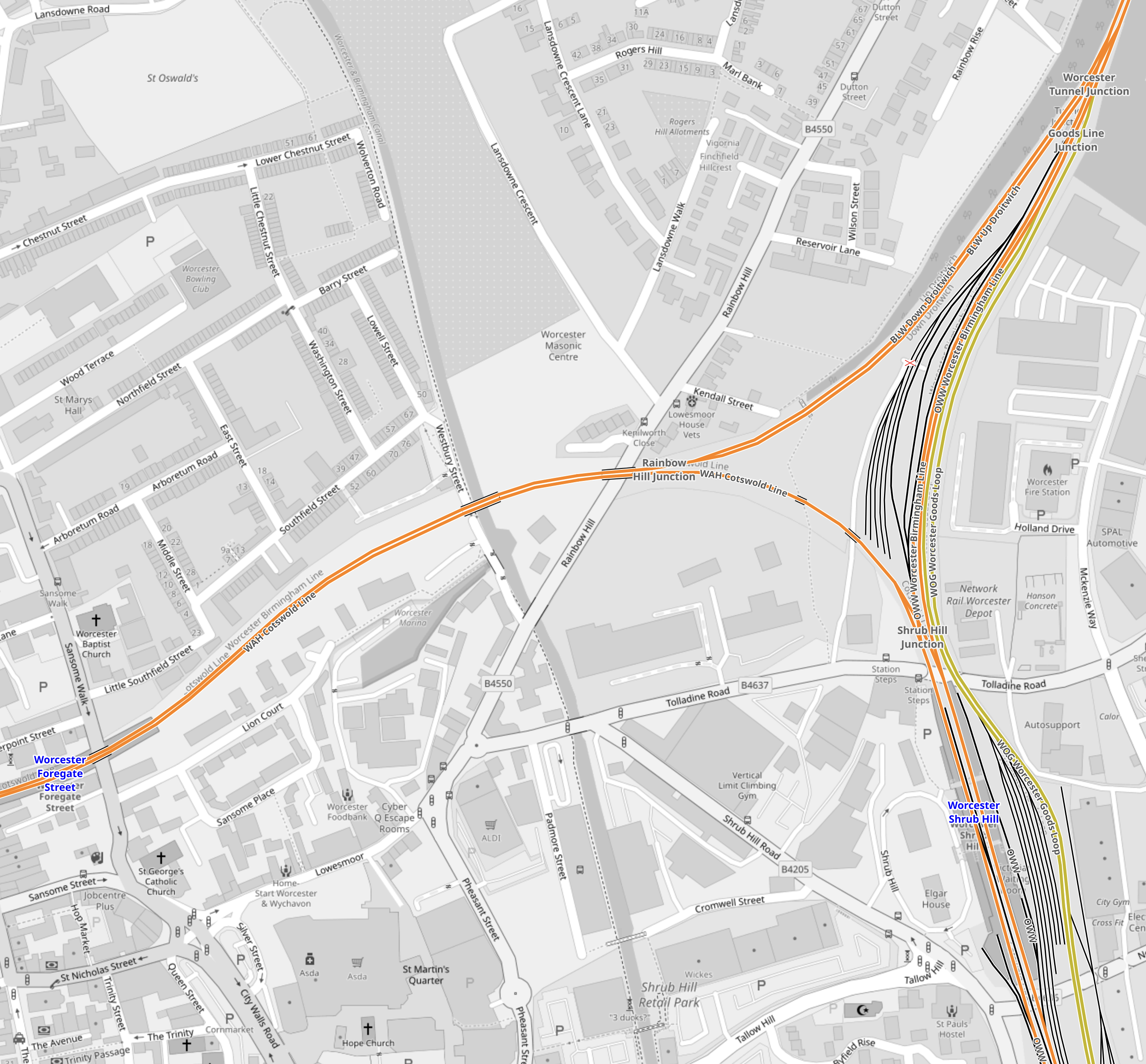
This map from OpenRailwayMap shows the tracks at Worcester.
Note.
- Trains to and from Oxford, use the tracks in the South-East corner of the map.
- Trains to and from Birmingham, use the tracks in the North -East corner of the map.
- Trains to and from Great Malvern and Hereford, use the tracks in the South-West corner of the map.
I suspect that some selective electrification would be able to charge the trains.
Trains take around twenty minutes to go between Great Malvern and Worcester Shrub Hill via Worcester Foregate Street.
Electrifying this 8.5 mile section would surely enable the following.
- Trains to leave Worcester Shrub Hill for Oxford with a full battery.
- Trains to leave Great Malvern for Hereford with a full battery.
- As Hereford and Great Malvern are only 20.7 miles apart, I suspect a return trip without a recharge is possible.
- Trains terminating at Worcester Shrub Hill and Worcester Foregate Street to be fully recharged before travelling back to Oxford.
Other services to and from the Worcester stations could also be run by battery-electric trains.
As Worcester Shrub Hill and Oxford stations are only 57.2 miles and well within the capabilities of most battery-electric trains, there would be no need to electrify the route.
I may of course, be wrong about the length and position of the electrification at Worcester, but this could be just one of many solutions using partial electrification.
Does this explain the stopping of the proposed electrification at Oxford?
In addition, there must be marketing opportunities in running a battery-electric service to Hereford and Worcester.
The Bay Platforms At Oxford Station
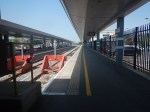
These pictures show the two North facing bay platforms 1 and 2 at Oxford station.
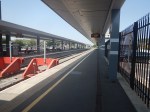

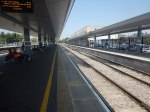
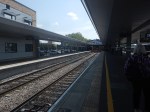
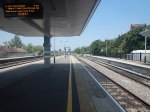
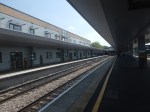
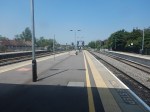
Note.
- The platforms are not electrified.
- They appear to be easily updated with electrification to be able to charge Chiltern and East West Railway trains.
- Marylebone is only 66.7 miles from Oxford.
- Milton Keynes Central is just over 40 miles from Oxford.
- Bedford is just under 60 miles from Oxford.
I suspect that services from Oxford to Bedford, Marylebone and Milton Keynes can all be run by battery-electric trains.
Battery-Electric Trains On The Henley Branch
As I keep mentioning battery-electric trains on the Henley branch line and I was in the area today, I thought I’d pop in and take a trip to Henley-on-Thames station.
These are my thoughts about the Henley branch line.
The Branch Line Was Busy
The two-car Class 165 train coped with the traffic today, but I suspect that on some days more capacity is needed.
The Branch Line Is Only 4.6 Miles Long
Battery-electric trains of a length of three- or four-cars are typically showing battery ranges of upwards of fifty miles, so I am fairly certain, that several battery-electric trains could handle the route, with charging at Twyford station.
- Conversions of Class 321, Class 379 and Class 387 trains would probably be possibilities.
- The Class 379 and Class 387 have a very handy 110 mph operating speed.
- Alstom, CAF, Hitachi and Siemens could probably offer new trains.
- All are four-car trains.
Because of the length of the branch, I doubt there wouldn’t need to be any infrastructure changes at Henley-on-Thames station.
Charging A Train In Platform 5 At Twyford Station
These pictures show the Class 165 train, that worked the branch in Platform 5 at Twyford station.
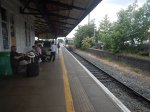
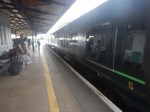
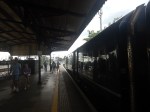
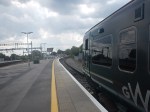
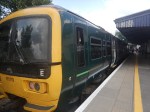
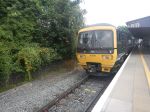

Note.
- The two-car Class 165 train in the station is 46.50 metres long.
- I suspect that a three-car or even four-car train, that would be eighty metres long, could be accommodated in the platform.
- The last picture shows a Class 387 train in the adjoining electrified Platform 4 in Twyford station.
It looks to me, that installing a three-car length of overhead electrification in the bay platform would not be the most challenging of projects.
Longer Trains To Henley-on-Thames
The Wikipedia entry for the Henley branch line says this about services.
The current (2022) passenger train service pattern on the line provides trains at about 30 minute intervals off peak. The first train out from Henley is at 06:05 and the last train back at 00:18. The Saturday service is also half-hourly until around 20:15, after which a largely hourly service is operated. This is also the case with the Sunday service, with half-hourly services until 19:15.
Additional services are provided during Henley Regatta at the beginning of July, with longer trains. All services are operated by Great Western Railway (GWR), using Class 165 and 166 Turbo diesel multiple units. Upon completion of electrification, Class 387 trains will be used, while the Turbos will be displaced to other parts of the GWR network.
The map from OpenRailwayMap shows the platform and track layout at Henley-on-Thames station.
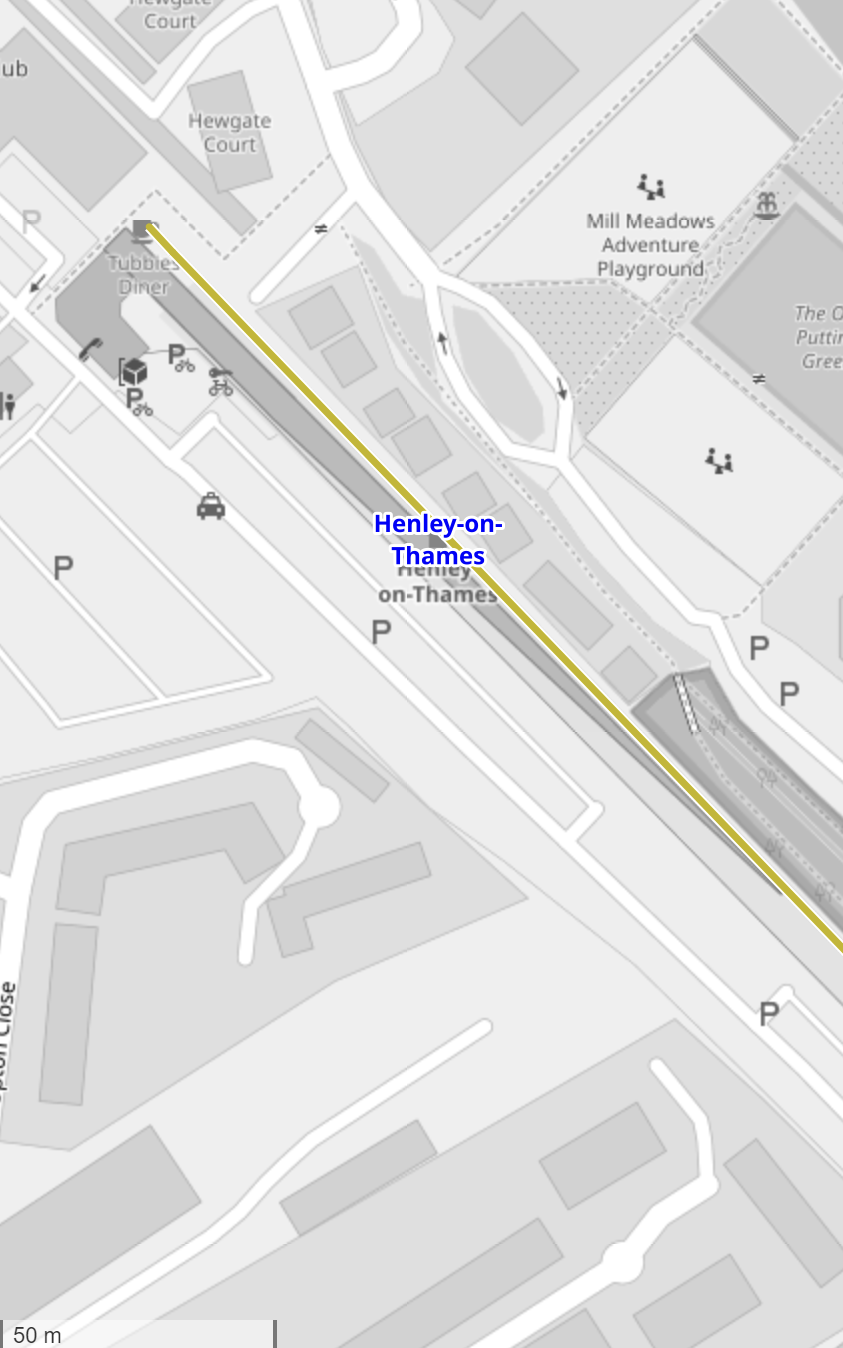
Note.
- The Henley branch line is shown in yellow.
- The scale in the bottom-left corner of the map.
- I would estimate that the platform is around 200 metres long, which means it will take an eight-car train.
The second map from OpenRailwayMap shows the track layout at Twyford station.
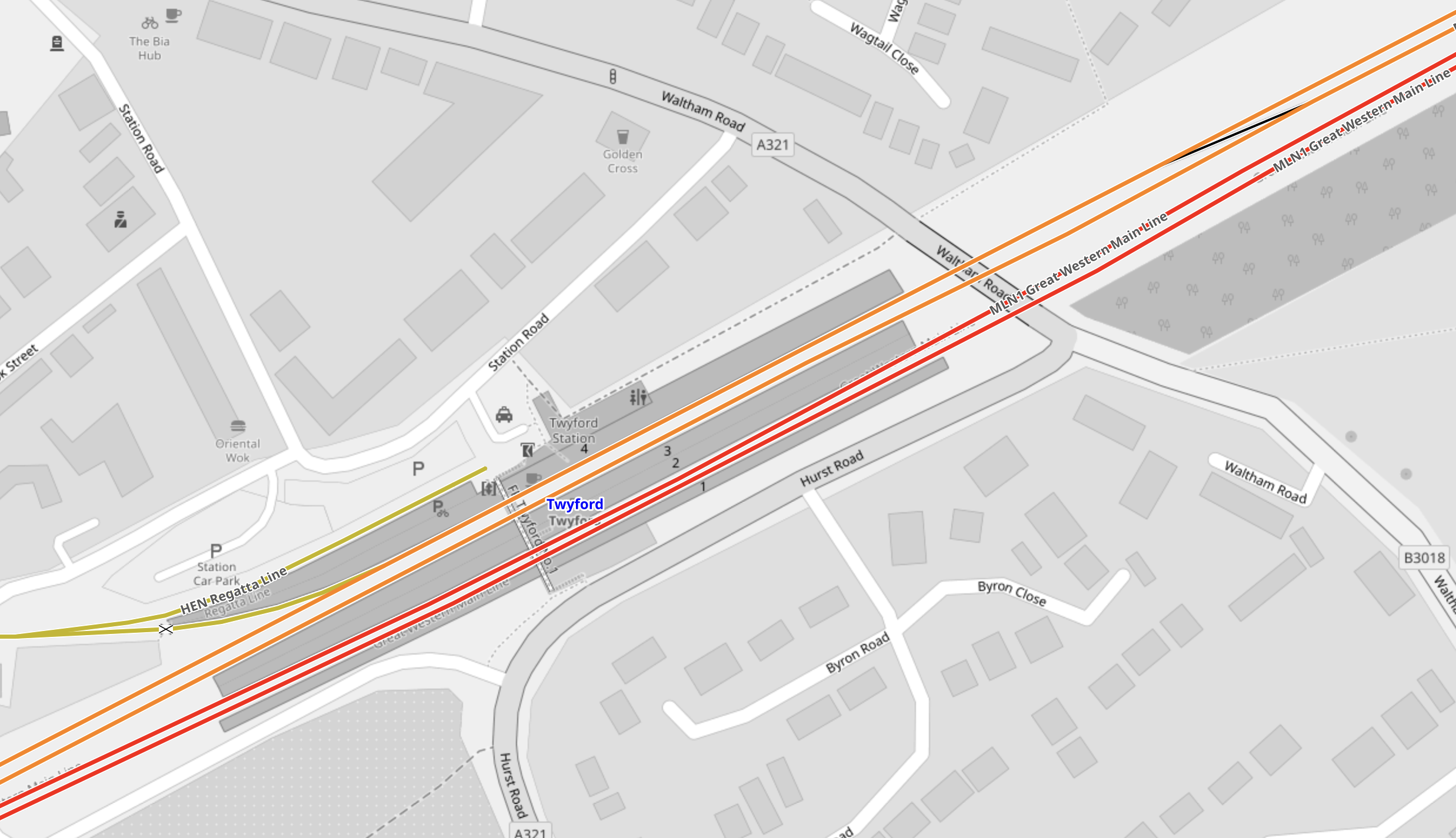
Note.
- Both maps are to the same scale.
- The Henley branch line is shown in yellow.
- The slow lines of the Great Western Main Line are shown in orange.
- The fast lines of the Great Western Main Line are shown in red.
There is a cross-over between the two slow lines to allow trains from London to access the branch line.
It looks to me, that the line will be fully-electrified or battery-electric trains could be used.
Ticketing
I can get to Twyford by using my Freedom Pass on the Elizabeth Line, like probably a large number of those over sixty, who live in London.
I had started my journey at the Moorgate end of Liverpool Street station, where there is no ticket office or machine capable of selling an extension ticket.
In the end, I bought my ticket for the branch in the ticket office, but you can buy tickets on the train.
Transport for London and Great Western Railway can do better.
Could Hull Station Be Electrified?
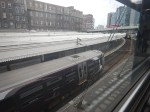
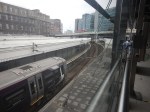
I took these pictures, as I passed through Hull station yesterday.
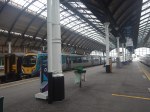
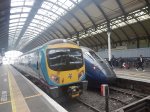
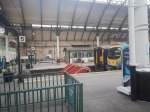
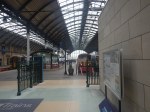


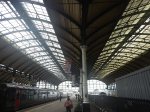
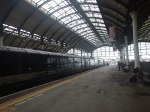
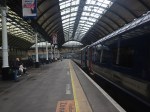

It appears that Hull station has a similar Victorian roof to Liverpool Lime Street and London Paddington, so I suspect the answer is yes.
These pictures show the platforms and overhead electrification at Liverpool Lime Street station, since the recent remodelling.


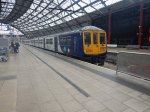
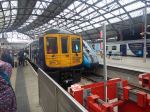
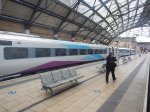

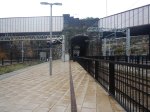
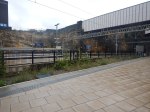

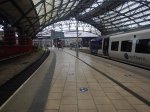

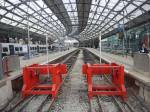
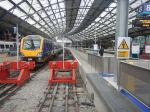

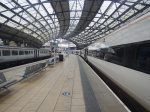

The electrification seems to be very traditional, with lots of steel gantries over the tracks.
These pictures show the platforms and overhead electrification at London Paddington station.
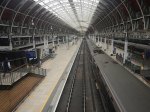
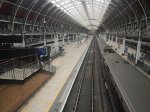
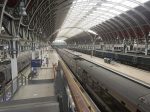



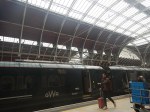
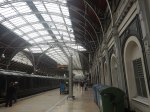

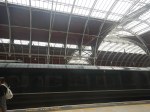
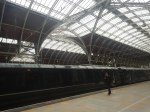
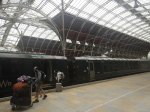
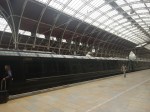

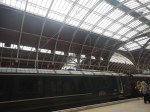
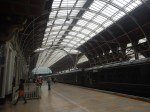
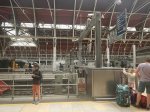
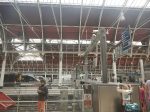
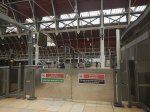
Note.
- The roof seems to have extra tie-bars reaching across.
- The wires seem to be hung from the roof.
- At the end of the platform they are fixed to large arch supports.
- Because Liverpool Lime Street’s electrification is newer than Paddington’s, it seems to have much more professional look.
After looking at the electrification in Liverpool Lime Street and Paddington, I believe that Hull station could be successfully electrified.
This map from OpenRailwayMap shows the platform layout at Hull station.
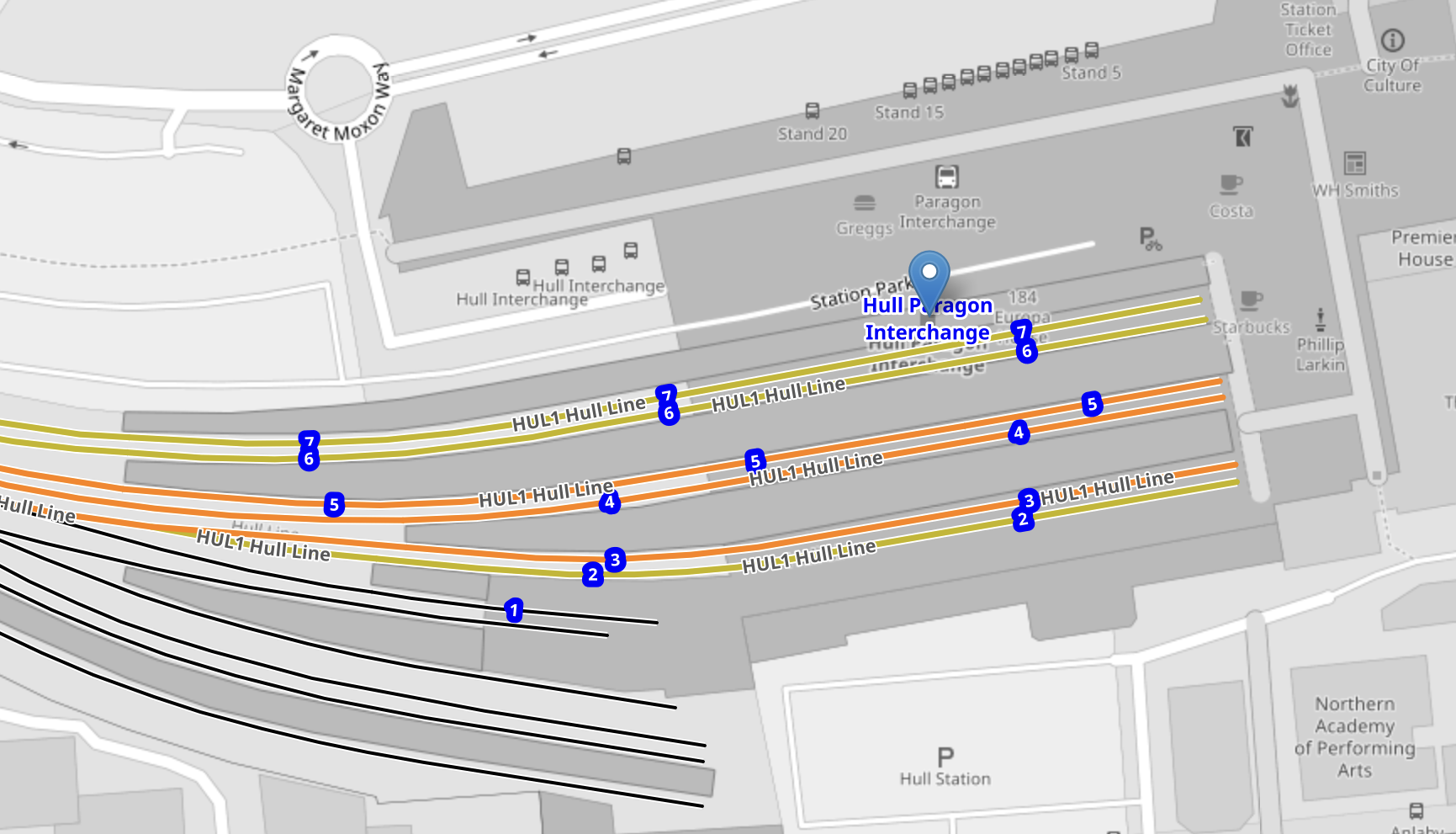
Note.
- Yesterday, my trains arrived in and left from Platform 7, which is the Northern-most platform.
- Other pictures in this blog show Hull Trains’s London service in Platform 7.
- Yesterday all Class 802 trains to and from London run by Hull Trains and LNER used Platform 7.
- I have been told by station staff, that Platform 7 can take a nine-car LNER Azuma.
- In Ten-Car Hull Trains, I talk about ten-car Class 802 trains running to and from Hull.
- Platform 7 or another platform at Hull station must be able to handle a ten-car train, which means that Hull station can handle a train, that is 260 metres long.
Looking at the station map, I believe that Hull station’s capacity for long express trains, is on a par with that of Liverpool Lime Street station.
I could see both stations handling two trains per hour (tph) across the Pennines and to and from London, with if necessary trains being formed of a pair of five-car trains.
How Many Services From Hull Station Can Be Run With Battery Trains?
Hull Trains service between London and Beverley travels for 44.5 miles on unelectrified track between Temple Hirst junction and Beverley.
Typically Hull Trains services wait in Hull station for the following times.
- Going between London King’s Cross and Beverley – Between ten and fifteen minutes.
- Returning to London King’s Cross – Upwards of twenty-five minutes.
I believe these waits in Hull station would mean that.
- A train going North to Beverley will have a battery containing enough electricity to get the train to Beverley and back, which is a distance of 16.7 miles.
- A train going South from Hull will have a battery containing enough electricity to get the train to Temple Hirst junction, which is a distance of 36.1 miles.
I believe that Hull Trains are currently working a timetable, that has been designed for operation by trains with a range on batteries of around fifty miles, provided there is electrification in at least one platform at Hull station to charge the trains.
It is also interesting to look at LNER’s two services that serve Hull.
- The 0700 to London, is scheduled to arrive at Hull station at 0635 from stabling at Doncaster and waits up to twenty-five minutes before leaving for London.
- The 2004 from London, is scheduled to arrive at Hull station at 2004 and waits up to twenty-five minutes before going South to overnight stabling in Doncaster.
It looks like LNER’s two trains follow Hull Trains rules.
- They use Platform 7 in Hull station.
- Trains going South have up to twenty-five minutes in the station.
It appears to me, that both Hull Trains and LNER are running a timetable, that would allow their services to be run using trains with a battery that had a range of around fifty miles, that could be fully-charged at Hull station before going South.
TransPennine Express run an hourly service to Liverpool Lime Street via Leeds and Manchester Victoria.
According to OpenRailwayMap’s map of electrification, when the TransPennine Upgrade is complete, the only section of the route without electrification will be the 42.1 miles between Hull and Micklefield.
As TransPennineExpress have some of the same Class 802 trains as Hull Trains, if there were at least two electrified platforms in Hull station, then Hull and Liverpool services could be run by battery-electric trains, with a similar specification to those of Hull Trains.
Northern Trains run an hourly service to Halifax via Leeds.
According to OpenRailwayMap’s map of electrification, , the only sections of the route without electrification will be the 42.1 miles between Hull and Micklefield and the 17.5 miles between Leeds and Halifax.
As Leeds and Micklefield is timetabled for seventeen minutes, I suspect this would be enough time to fully charge a battery-electric version of CAF’s Class 331 train and with charging in Hull station, then this route could be electrified.
Northern Trains also run other services, but because the Goole swing bridge is closed, I can’t get all the distances without electrification from Hull.
Ones I can find are.
- Beverley – 16.7 miles for return trip.
- Bridlington – 31.1 miles
- Doncaster – 40.8 miles
- Micklefield – 42.1 miles
- Scarborough – 53.8 miles
- Sheffield – 59.4 miles
- Temple Hirst – 36.1 miles
- York – 41.1 miles – Hull and Church Fenton
Note.
- York and Doncaster are electrified.
- Bridlington and Scarborough have suitable platforms where 25 KVAC overhead electrification could be installed to charge trains.
- Sheffield and Doncaster is only 18.6 miles and this may be the way to electrify between Sheffield and Hull.
- In The Data Sheet For Hitachi Battery Electric Trains, I state that Hitachi’s battery-electric trains have a range of 43.5 miles
It looks if enough platforms are electrified at Hull, all current services from the city could be run by battery-electric trains.
Conclusion
I believe that by electrifying Hull station, that Hull could have a station consistent with the HumberZero philosophy, with battery-electric trains running hither and thither, handling all rail traffic to and from the City.
East-West Rail: Electrification
The first paragraph of the Wikipedia entry for the East West Railway, says this about electrification.
As of March 2020, electrification of the line is not planned, but the 2019 decision (to rule it out) is under review.
But I don’t think it’s a simple decision of electrify or not!
These observations are guiding my thoughts.
Milton Keynes Central Station
This OpenRailwayMap shows the platforms and whether they are electrified in Milton Keynes Central station.
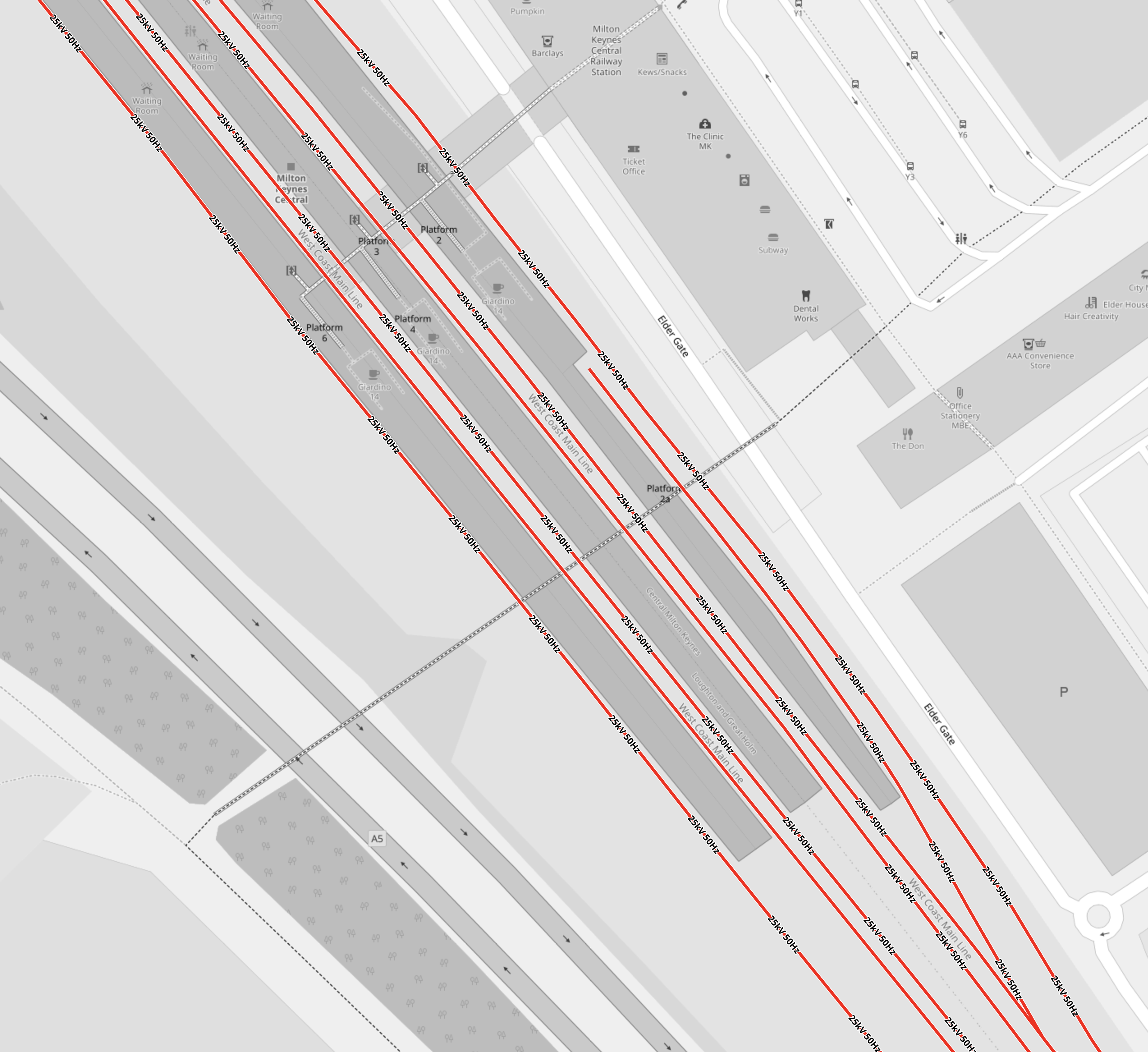
Note.
- Lines shown in red are electrified with 25 KVAC overhead wires.
- The short platform is Platform 2A, which can take a five-car train and was built recently to terminate the Marston Vale Line service.
- Could Platform 2A be ideal for handling and charging, battery-electric trains, that terminate in Milton Keynes station?
The Wikipedia entry for Milton KeynesCentral station, has a section called Platforms and Layout, which gives full details.
Bletchley Station
This OpenRailwayMap shows the platforms and whether they are electrified in Bletchley station.
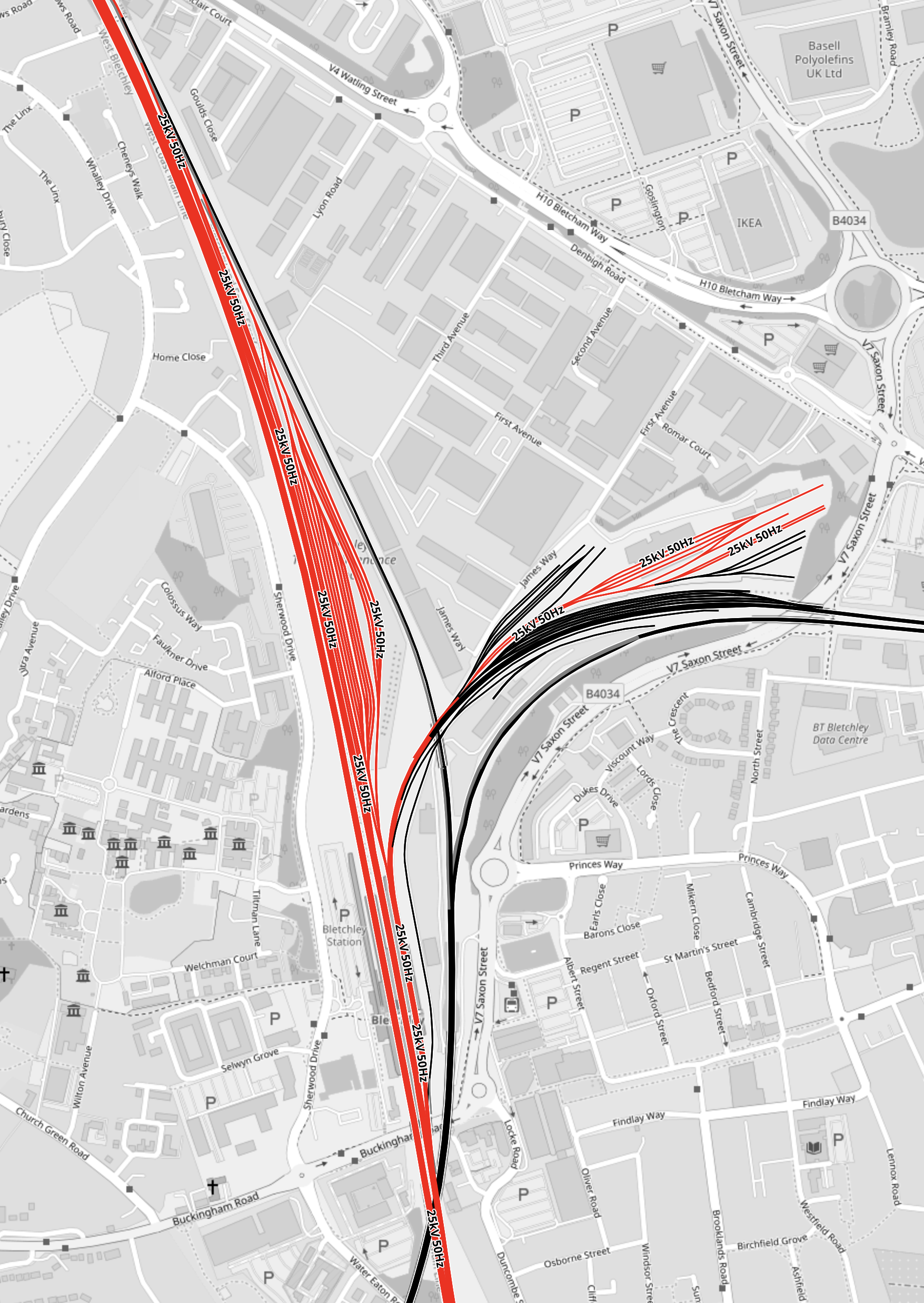
Note.
- Lines shown in red are electrified with 25 KVAC overhead wires.
- The wide swath of red going North is the West Coast Main Line.
- The smaller patch of red to the East of the West Coast Main Line are electrified sidings.
- All low-level platforms at Bletchley station are electrified.
- The viaduct platforms, are shown in black as they are not electrified.
- A non-electrified line leads North-West from the viaduct towards Milton Keynes Central.
- The Milton Keynes end of the line between Milton Keynes Central station and the viaduct is electrified.
- A non-electrified line leads North-East from the viaduct towards Fenny Stratford and Bedford.
The Google Map shows a 3D visualisation of Bletchley station.
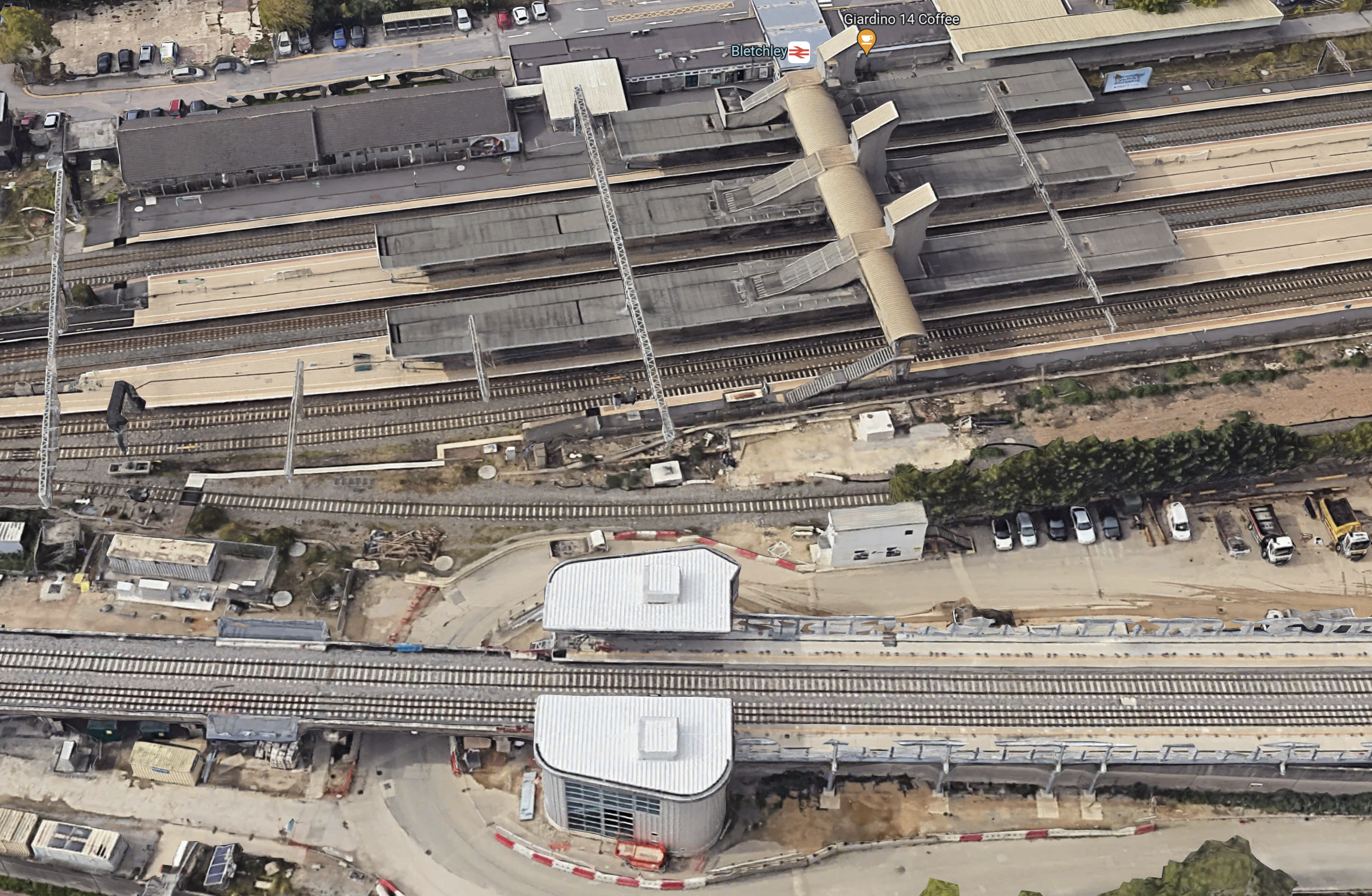
I can’t see much sign of any electrification.
Bedford Station
This OpenRailwayMap shows the platforms and the electrification around Bedford station.
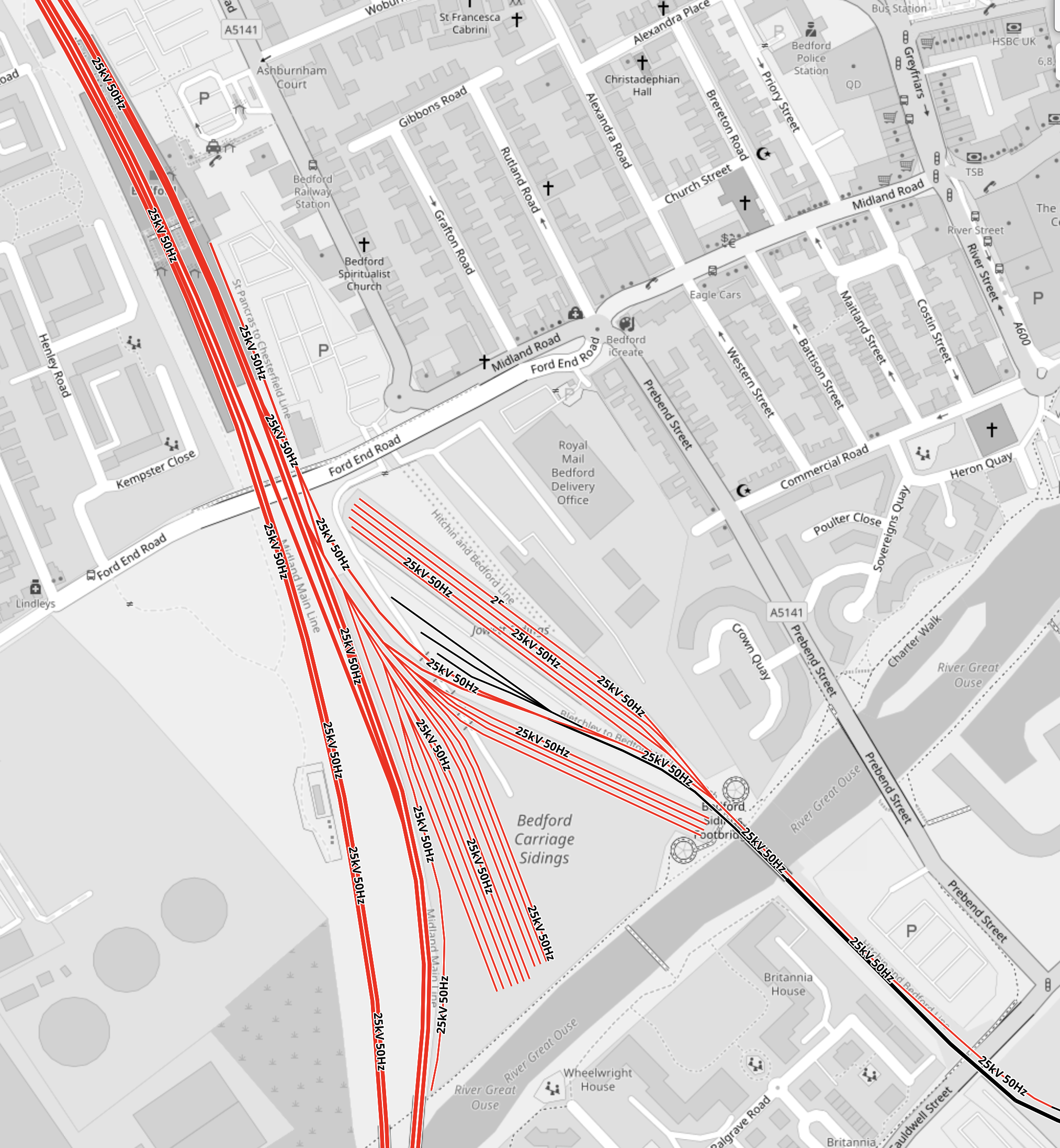
Note.
- All platforms at Bedford station are electrified.
- The lines to the West of the station are the electrified Midland Main Line.
- The Marston Vale Line services terminate in the short Platform 1A, which is the South-East corner of the station.
- The track into Platform 1A is electrified for about two hundred metres, through the sidings South of the station.
This picture shows the electrified track as it crosses over the river.
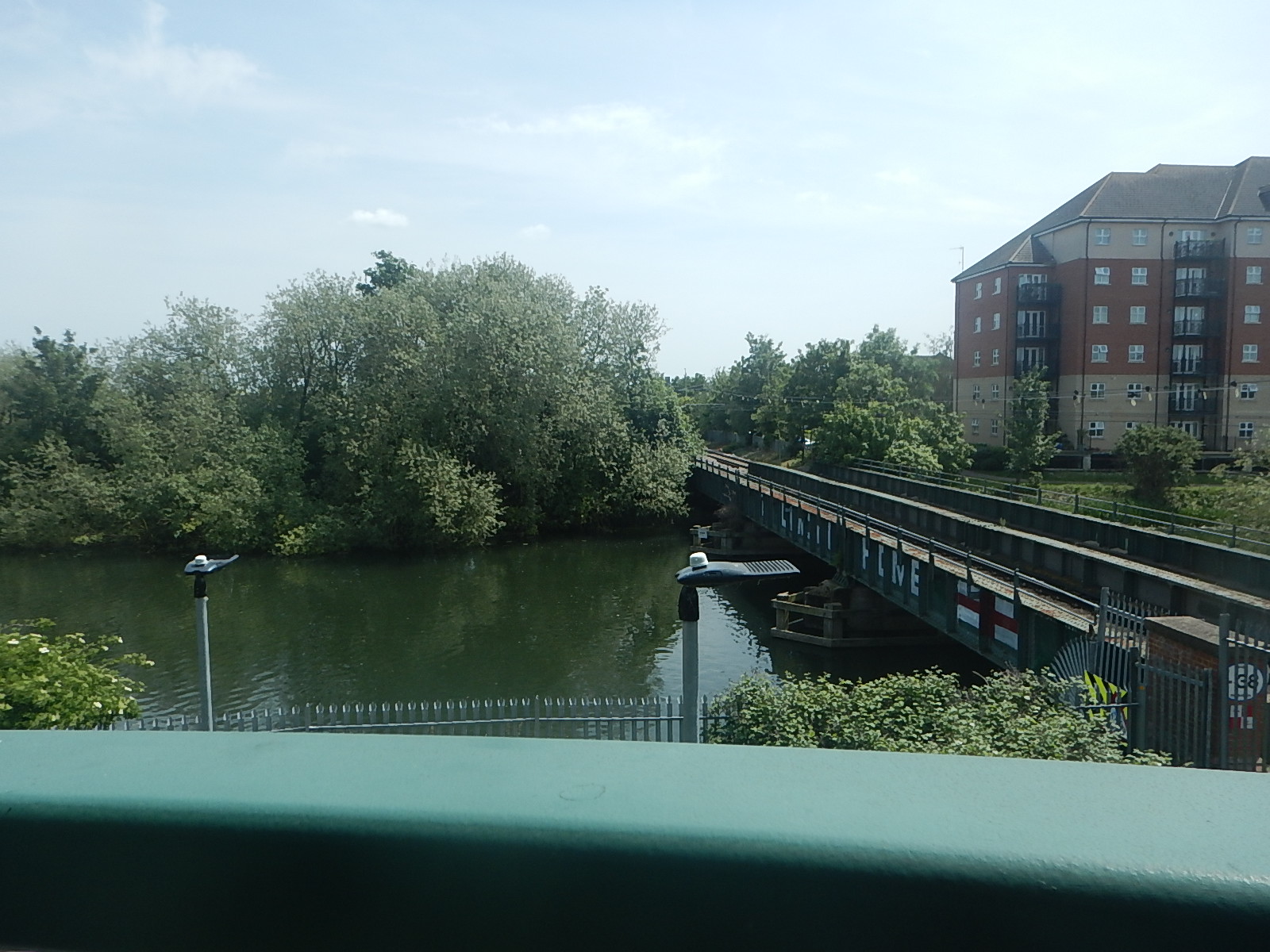
Could Platform 1A be ideal for handling and charging, battery-electric trains, that terminate in Bedford station?
It’s odd that there is the same platform layout at both ends of the Marston Vale Line.
Is it just a coincidence or does Engineer Baldrick have a cunning Plan?
Oxford Station
This OpenRailwayMap shows the platforms and the electrification around Oxford station.
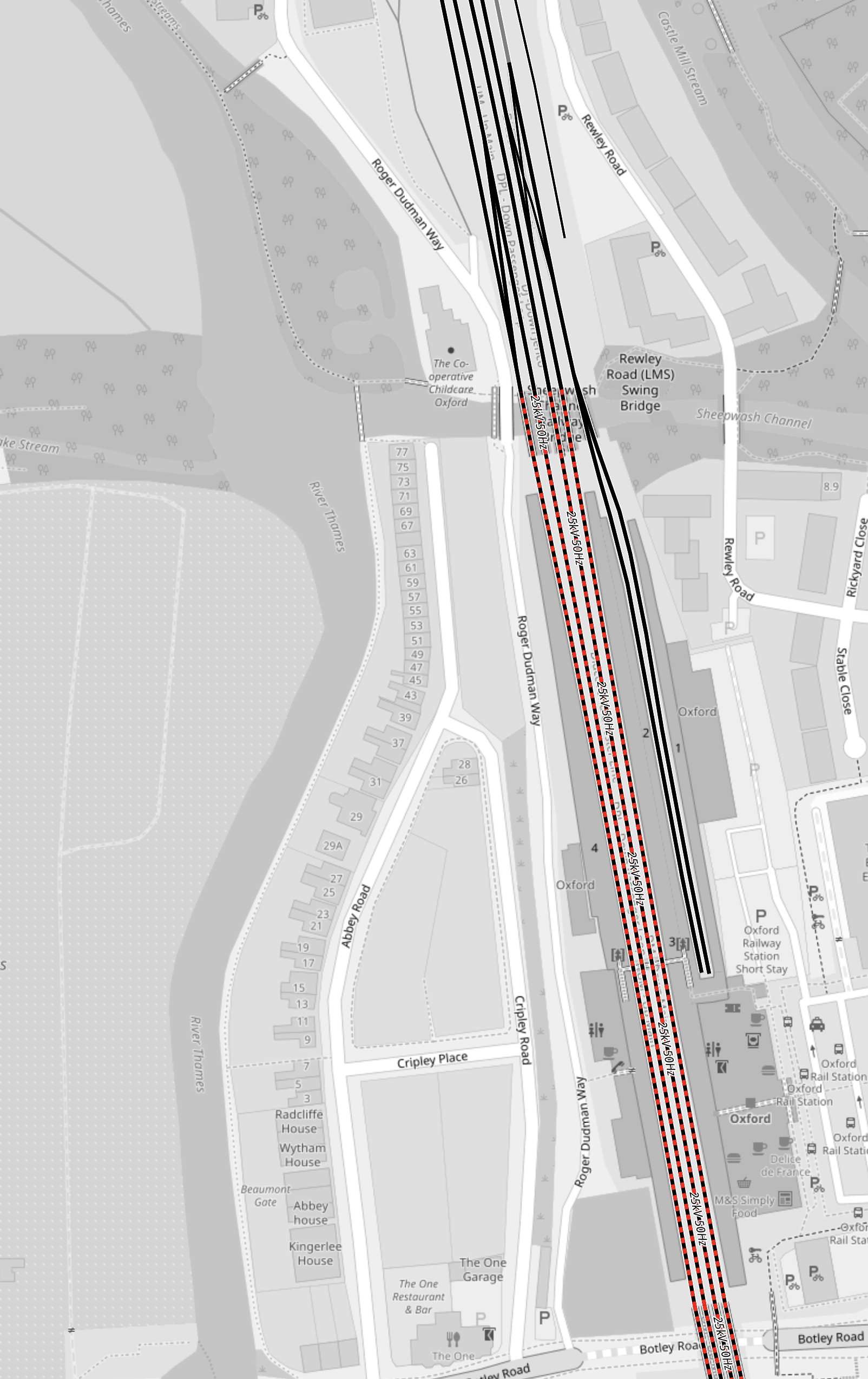
Note.
- The dotted red and black tracks, indicate electrification is planned.
- The planned electrification will connect Oxford station to Didcot Junction station.
- The two bay platforms at the North of the station are not electrified and Platform 2 is now used by Chiltern’s London services.
- Platform 1 could be used by trains on the East West Railway that terminate at Oxford.
When Oxford station is electrified, it wouldn’t be the largest project to add 25 KVAC overhead electrification to the two bay platforms.
Aylesbury Station
This OpenRailwayMap shows the platforms and the lack of electrification around Aylesbury station.
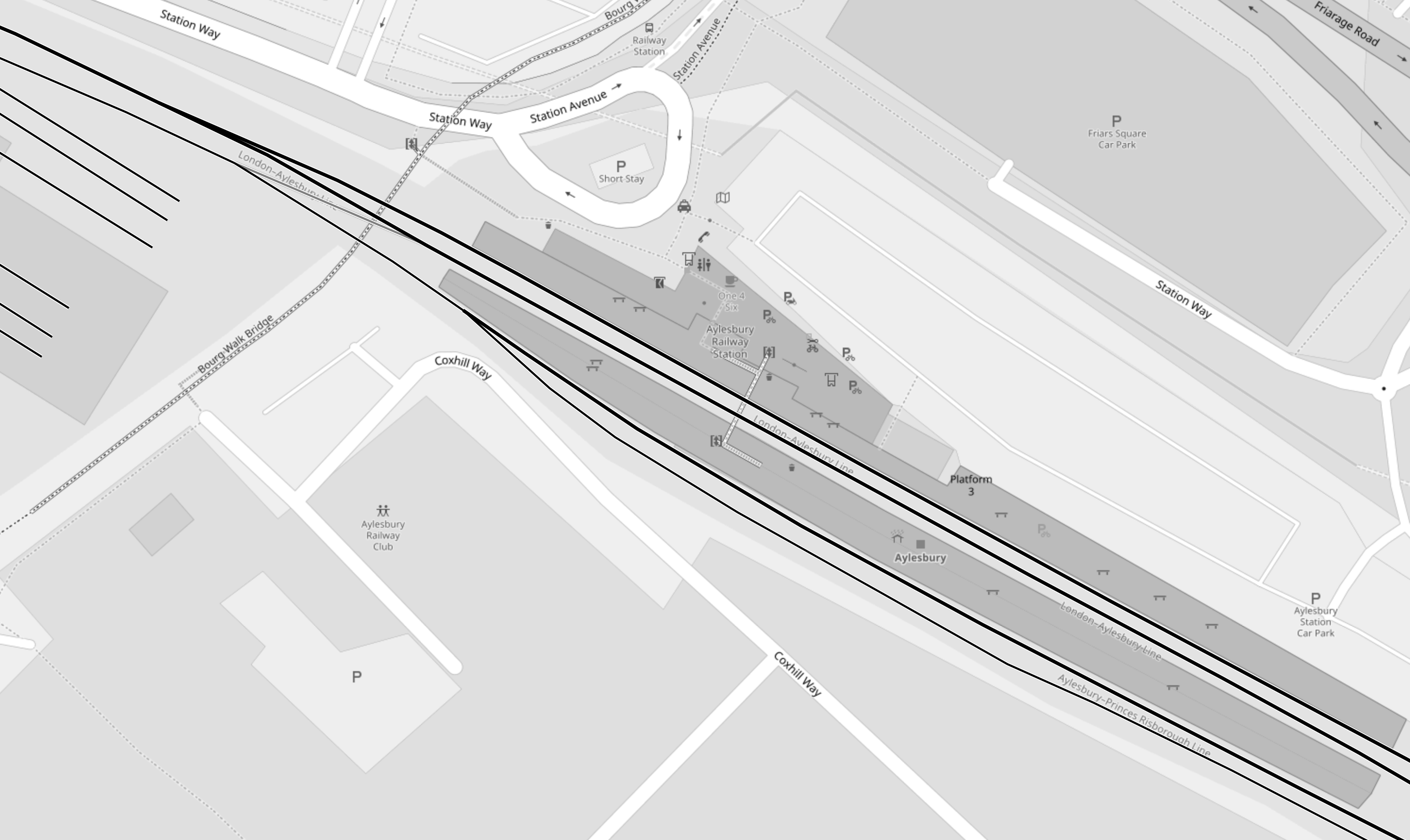
Note.
- No tracks are electrified.
- Platforms are numbered 3, 2, 1 from the top, so 2 and 3 are paired in the middle.
- All freight trains go through Platform 2 and most seem to go via Princes Risborough and High Wycombe.
- Chiltern services use Platforms 1 and 3.
Putting a charging system in Aylesbury station could be tricky.
I wonder if the simplest system for East West Railway would be to electrify between Aylesbury and Aylesbury Vale Parkway stations.
Chiltern Railway’s time between the two stations is as much as seven minutes.
Some trains to Aylesbury take over twenty minutes to do the short journey to Aylesbury Vale Parkway and return, which is more than enough to fully-charge a battery-electric train.
You can even have Chiltern’s hourly Aylesbury Parkway service, sharing the same stretch of electrification with East West Railway’s Aylesbury service, as there is a loop, which creates double-track for some of the way.
It should be noted that between Marylebone and Aylesbury Vale Parkway stations is only 41.1 miles, so some battery-electric trains could do that with a full charge at one end.
East West Railway Distances
In Trains Needed For The East West Railway, I calculated some of these distances.
- Oxford and Bedford – 46.8 miles
- Oxford and Milton Keynes – 33.4 miles
- Aylesbury and Milton Keynes – 25.9 miles
With charging at both ends, all of these routes are possible using modern battery-electric trains, where even a Class 777 IPEMU, designed for extending Merseyrail’s suburban network has done 84 miles on one charge.
On To Cambridge
In this document on the East-West Rail Consortium web site, these services are suggested, for when the East West Railway is complete.
- An hourly train via Norwich terminating at Great Yarmouth.
- An hourly train via Ipswich terminating at Manningtree.
These are distances on these routes that are not electrified, that are to the East of Cambridge.
- Ely and Norwich – 53.7 miles
- Norwich and Great Yarmouth – 18.3 miles
- Cambridge and Haughley Junction – 40.3 miles
Note.
- The Manningtree service would be able to charge its batteries after passing Haughley junction going East and it would be nearly an hour before it needed to use the battery for traction.
- If the Yarmouth service could handle the full route on batteries, then it could return to Cambridge with an efficient charger at Great Yarmouth, which for 25 KVAC overhead electrification trains is an off the shelf item.
- But it does look to me that the trains must leave Cambridge with full batteries, so they can reach electrification at Bedford, Haughley or Norwich.
This map shows the route of the East West Railway between Bedford and Cambridge.
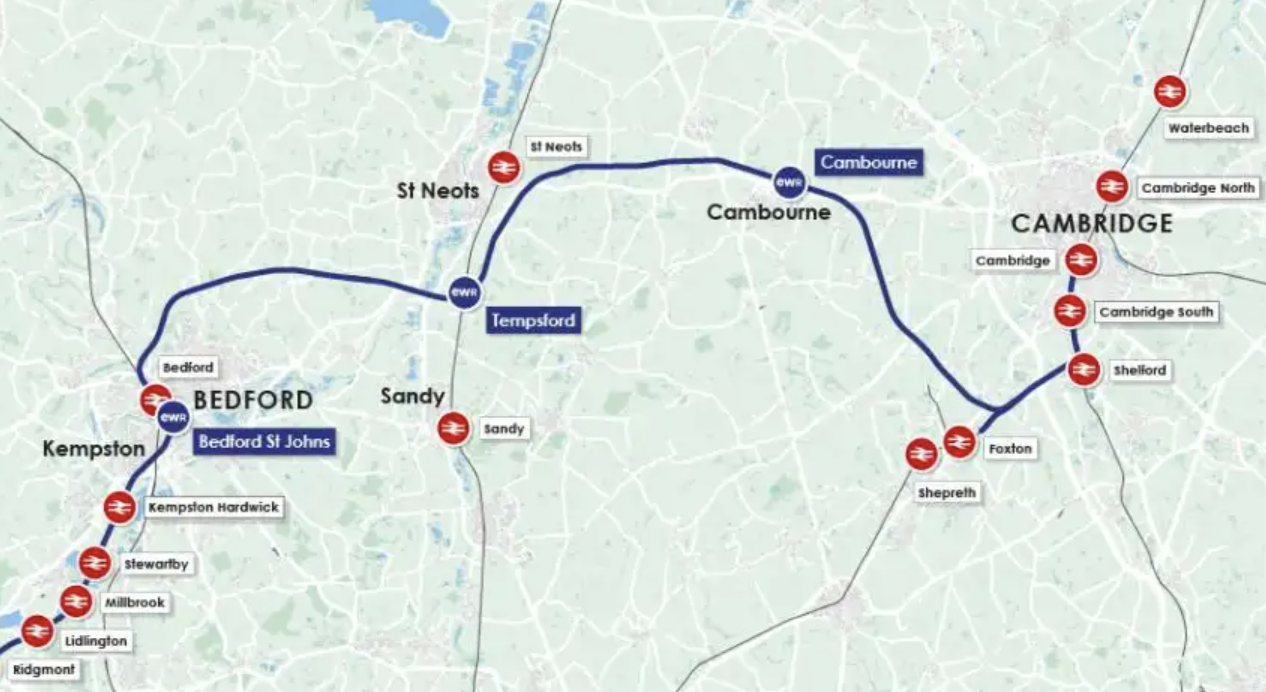
Note.
- Bedford is on the electrified Midland Main Line to London.
- Tempsford is on the electrified East Coast Main Line to London.
- Cambridge has two electrified main lines to London.
- These connections should ensure a good power supply to the East of Bedford for electrification.
I suspect the easiest option will be to add some more electrification at one or more of these places.
- At the Eastern end of the Bedford and Cambridge section.
- To the West of Haughley junction, when it is rebuilt.
- To the North of Ely, when the railways in that area are improved.
Although, as it will be a new route, it might be best to build Bedford and Cambridge as an electrified railway.
Hitachi Rail Names Preferred Supplier For Battery System Development For UK Trial
The title of this post is the same as that of this article on Rail Technology Magazine.
These are the first two paragraphs.
Hitachi Rail UK is continuing its commitment to electrification and sustainability as it has teamed with a UK based Technology firm to design and supply its traction and battery systems for its intercity battery train trial which it hopes to run in the future.
Working with the North East England Partnership and Turntide Technologies, Hitachi UK Rail are working towards a UK trial for its battery technology which is engineered to reduce emissions and fuel costs. It is hoped, that if successful, it’ll advance the UK’s position as a global leader in battery train technology.
Note.
- Turntide Technologies took over Hyperdrive Innovation.
- Turntide Technologies have designed and built systems for JCB.
Up until now, we have been told very little about the batteries.
I have the following questions.
Is The Battery System In The Class 803 Trains For Lumo By Turntide Technologies/Hyperdrive Innovation?
The Wikipedia entry for Lumo, says this about the design of the Class 803 train.
Services are operated by a fleet of 125 mph (200 km/h) Class 803 electric multiple unit trains, ordered in March 2019 at a cost of £100 million, financed by the rail leasing company Beacon Rail.[15] While based on the same Hitachi AT300 design as the Class 801 Azuma trains operated on the East Coast Main Line by franchised operator London North Eastern Railway (LNER), they are not fitted with an auxiliary diesel engine, but instead feature batteries intended solely to power onboard facilities in case of overhead line equipment failure.
The maker of the batteries has not been disclosed.
If they have been made by Turntide, then they would certainly have had a good vibration testing.
Is The Battery System In The Class 803 Trains Similar To That Proposed For Class 800/802/805/810 Trains?
It would seem sensible, as this would mean that Hitachi would only be introducing one type of battery into the various fleets.
Supporting structures and wiring harnesses would then be identical in all trains, whether diesel engines or batteries were to be fitted.
Are The Batteries Plug Compatible With Similar Performance To The Diesel Engines?
I have never driven a train, but I have ridden in the cab of an InterCity 125, as I wrote about in Edinburgh to Inverness in the Cab of an HST.
The driver controls the two locomotives individually, just like I controlled the two engines in my Cessna 340 with two separate throttles.
So how does a driver control all the three engines in a five-car Class 800 train or the five engines in a nine-car?
Put simply, the driver just tells the computer, what speed or power is required and the train’s computer adjusts al the engines accordingly.
I believe it would be possible to design battery packs that are plug-compatible with similar performance to the diesel engines.
Hitachi could be playing an old Electrical/Electronic Engineer’s trick.
As a sixteen-year-old, I spent a Summer in a rolling mills, building replacement transistorised control units for the old electronic valve units. They had been designed, so they were plug-compatible and performed identically.
The great advantage of this approach, is that no changes were needed to the rolling mill.
So if Hitachi are using a similar approach, there should be very few or even no changes to the train.
What Range Will A Class 800 Train Have On Batteries?
This article on Focus Transport is entitled 224-kilometre Battery Range For FLIRT Akku – Stadler Sets World Record For Guinness Book Of Records.
I would be very surprised if Hitachi don’t break that record of 224 kilometres or 139 miles.
Conclusion
I belive we’re going to see a real revolution in rail transport.
Do Network Rail Have A Cunning Plan To Run Battery Electric Trains To Wigan Wallgate And Blackburn?
This news story, which is entitled £72 million Boost For Train Services In Manchester And The North, was released by the government today.
This is the sub-heading.
This package will improve the passenger experience by having more reliable trains and fewer delays.
These two paragraphs describe the work.
The funding will deliver a third platform at Salford Crescent station and track improvement work across north Manchester to help reduce delays, bottlenecks and station overcrowding, meaning passengers will enjoy more comfortable and reliable journeys.
Manchester Victoria Station will also benefit from extra entry and exit points to platforms, making it easier for passengers to travel through the station during busier periods.
These are my thoughts.
Battery-Electric Trains
New Merseyrail Train Runs 135km On Battery says a lot about the capabilities of modern battery-electric multiple units.
135 km is 84 miles and if you look at services in the Wigan and Blackburn area, these are the services, currently run by diesel trains on lines without electrification.
- Blackburn and Bolton – 13.9 miles
- Blackburn and Manchester Victoria – 39.4 miles
- Hindley and Salford Crescent – 16.2 miles
- Southport and Wigan Wallgate – 17.4 miles
- Kirkby and Wigan Wallgate – 12 miles
- Clitheroe and Bolton – 23.7 miles
- Manchester Piccadilly and Buxton – 19 miles
I believe that a modern battery-electric train would be able to handle all these routes, with assistance from regenerative braking and Newton’s friend.
I also believe that CAF, Hitachi, Siemens and Stadler would be capable of building a battery-electric train for these routes.
This OpenRailwayMap shows the electrification between Wigan and Lostock Junction.
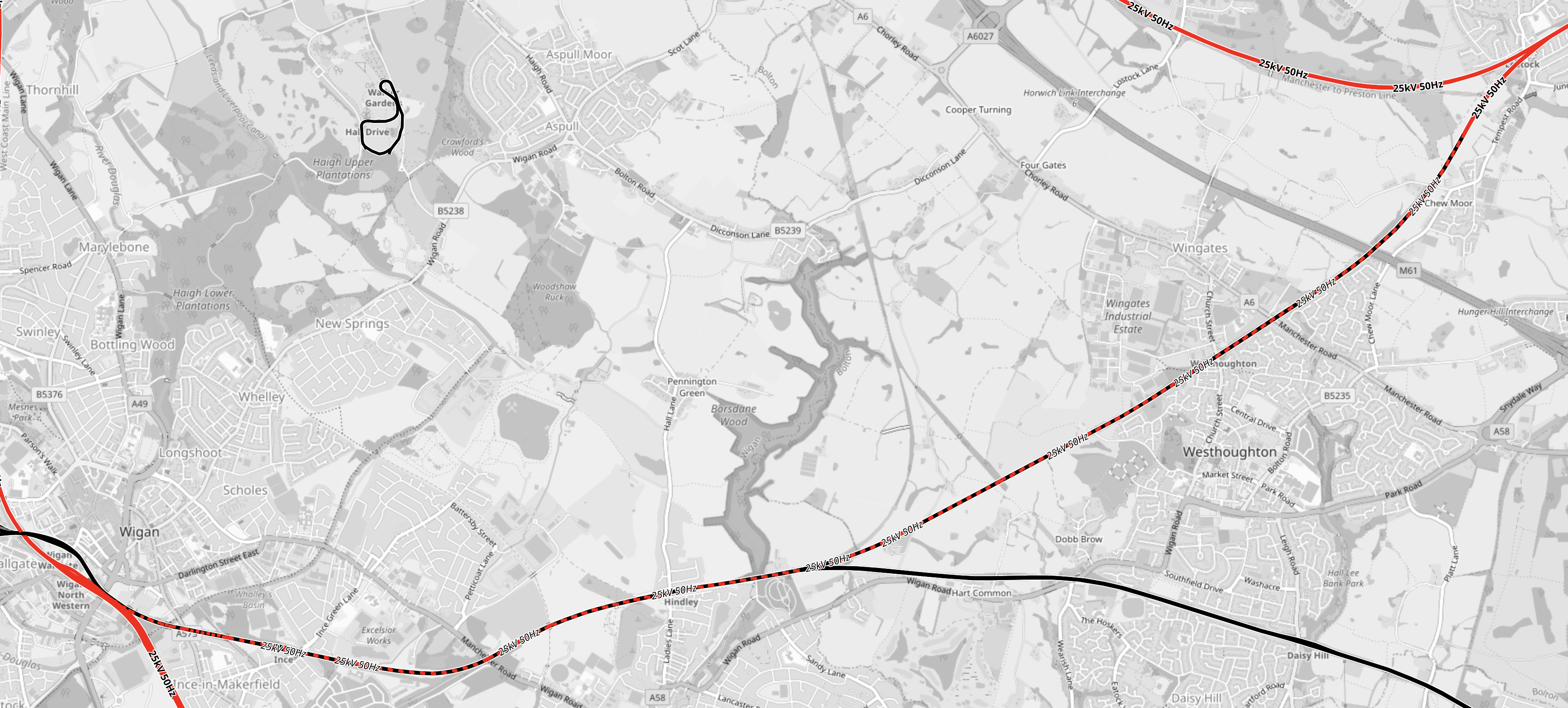
Note.
- Wigan is in the South-West corner of the map.
- Lostock Junction is in the North-East corner of the map.
- The black and red line between Wigan and Lostock Junction indicates the track is being electrified with 25 KVAC overhead electrification.
- The black line going East to the South-East corner of the map is the unelectrified line to Salford Crescent via Atherton.
- At Lostock Junction the line joins the electrified Manchester and Preston Line via Bolton.
Network Rail’s layout means that trains to Kirkby, Southport and Salford Crescent via Atherton can all charge their batteries in a convenient station before embarking to their destination without electrification.
The Third Platform At Salford Crescent Station
Three platforms at Salford Crescent will give capacity advantages.
But it will also mean, that if all battery-electric trains for Wigan Wallgate via Atherton can have a dedicated platform, that if necessary, they can use to top up the batteries.
Northern’s Trans-Pennine Services
Northern Trains run four hourly trains across the Pennines.
- York and Blackpool North via Church Fenton, Garforth, Leeds, New Pudsey, Bradford Interchange, Halifax, Sowerby Bridge, Hebden Bridge, Burnley Manchester Road, Accrington, Blackburn, Preston, Kirkham & Wesham and Poulton-le-Fylde.
- Leeds and Manchester Victoria via Bramley, New Pudsey, Bradford Interchange, Halifax, Hebden Bridge, Todmorden and Rochdale.
- Leeds and Wigan Wallgate via Morley, Batley, Dewsbury, Ravensthorpe, Mirfield, Brighouse, Sowerby Bridge, Mytholmroyd, Hebden Bridge, Todmorden, Walsden, Littleborough, Smithy Bridge, Rochdale, Manchester Victoria, Salford Central, Salford Crescent, Swinton, Moorside, Walkden, Atherton, Hag Fold, Daisy Hill, Hindley and Ince.
- Leeds and Chester via Bramley, New Pudsey, Bradford Interchange, Low Moor, Halifax, Sowerby Bridge, Mytholmroyd, Hebden Bridge, Todmorden, Rochdale, Manchester Victoria, Newton-le-Willows, Earlestown and Warrington Bank Quay.
Note.
- All routes are partly electrified.
- Hebden Bridge gets four trains per hour (tph).
- Bradford Interchange, Halifax, New Pudsey Rochdale, Sowerby Bridge, Todmorden and Manchester Victoria get three tph.
- It is a comprehensive set of routes serving nearly fifty stations in the North.
Stretches of line without electrification include.
- Chester and Earlstown – 23 miles
- Leeds and Manchester Victoria – 49.8 miles
- Leeds and Blackburn – 50.2 miles
- Hindley and Salford Crescent – 16.2 miles
There may be a need to electrify Blackburn and Preston or some other short sections.
Conclusion
I have a feeling that most of the diesel services in Manchester could be replaced by battery-electric trains.
A Waste Of Valuable Resources Between Paddington And Heathrow
Much of my working life was spent in writing project management software.
I like to think, I was an expert at writing software to juggle resources.
I wrote my first piece of software in that field in ICI, to get my boss out of trouble, after he’d promised the department a program to allocate the department’s office space more efficiently.
Unfortunately, the student, who’d written the software, without leaving anything that worked or any decent instructions.
So I told my boss;Colin, that I’d have a go.
In my previous position at ICI in Runcorn, I’d worked out an algorithm to decode mass spectrometer traces, which started with a rough idea of what was there, which was entered by an operator and then used permutations and combinations to fit the output.
I used the algorithm in every resource scheduler, I ever wrote and it worked a treat.
So when I see a waste of resources, I get angry, as I know those who devised the system could have done a lot better.
Look at these pictures, I took of a Heathrow Express, that I took today.
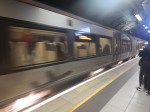
It is barely ten percent full.
It has become a waste of resources; train, valuable paths in the Heathrow tunnel, and platform space at Paddington.
These are a few thoughts.
Capacity To And From Heathrow
Consider.
- Heathrow Express uses twelve-car Class 387 trains, with a capacity of 672 seats, that run at a frequency of four trains per hour (tph), which is 2,688 seats per hour.
- The Elizabeth Line uses nine-car Class 345 trains, with a capacity of 454 seats, that run at a frequency of six tph, which is 2,724 seats per hour.
- The Class 345 trains can also carry another 1046 standing passengers on each journey, which adds up to a maximum of 6276 standees per hour.
- The Piccadilly Line uses 73 Stock trains, with a capacity of 684 seats, that run at a frequency of twelve tph, which is 8,208 seats per hour.
This gives a capacity of 19,896 passengers, staff and visitors per hour, or which 13,620 get seats.
Expressed as percentages, the four modes of transport are as follows.
- Heathrow Express – 13.5 %
- Elizabeth Line – Sitting – 13.7 %
- Elizabeth Line – Standees – 33.8 %
- Piccadilly Line – 41.2 %
In Effects Of The ULEZ In West London, I said this about journeys to and from the airport.
Heathrow Airport is one of the world’s busiest airports and 76,000 people work at the airport, with many more employed nearby.
The airport handled 61.6 million passengers in 2022, which is a few short of 170,000 per day.
If you consider that those that work at the airport do two trips per day and passengers generally do one, that means there are 322,000 trips per day to or from the airport.
But as it now so easy to get to the Airport using the Elizabeth Line will more people use the new line to meet and greet and say goodbye to loved ones or business associates. Since the Elizabeth Line opened, I’ve met a couple of friends at Heathrow, who were passing through.
I wonder, if that daily journey total of 322,000 could be nearer to 350,000 or even 400,000.
If the ULEZ charge makes some passengers and staff switch from their car to using a bus or train, this probably means that public transport to and from the airport, will need to be boosted by a substantial amount.
322,000 trips per day is 13,416 per hour assuming a 24 hour day.
Consider.
- The ULEZ will drive employees and passengers to trains to Heathrow.
- A lot of would-be travellers to Heathrow have had a tough couple of years.
- Because of the Elizabeth Line more meeters and greeters will go to the airport.
- The Elizabeth Line is making it easy to get to Heathrow for a large proportion of those living in the South-East.
- There have been numerous car parking scandals at Heathrow and other airports.
- Are there enough charging points for electric cars in Heathrow’s parking?
- Parking at Heathrow is expensive.
- Taxis to the airport are very expensive.
- Passengers with large cases can use the Elizabeth Line.
- Good reports of the Elizabeth Line will push people to use it.
- The Elizabeth Line serves the City, Canary Wharf and the West End.
- The Elizabeth Line has a step-free connection with Thameslink.
- Passengers seem to travel with very large cases.
- Passengers seem to be deserting Heathrow Express, as I wrote in Elizabeth Line Takes Fliers Away From Heathrow Express.
Note.
- The train, I took back from Heathrow this morning was full with all seats taken and quite a few standees.
- And it was a Sunday morning!
- We won’t know the effect of the ULEZ until August, but I believe it will be significant.
Obviously, I’m only using rough figures, but they lead me to believe that in a few months, the Elizabeth Line will be at full capacity to and from Heathrow.
Heathrow Express’s Train Paths Should Be Re-Allocated To The Elizabeth Line
This would increase hourly passenger capacity from 19,896 to 23,208 or by seventeen percent.
Great Western Railway would get two extra platforms at Heathrow and the Class 387 trains could be reallocated.
Where Would Great Western Railway Run Trains From Two Extra Platforms?
Consider.
- Various government levelling up funding has been allocated to Wales and the West.
- I talk about the Mid-Cornwall Metro in Landmark Levelling Up Fund To Spark Transformational Change Across The UK.
- The Mid-Cornwall Metro could include direct trains between London and Newquay.
- There are also plans for a new station at Okehampton Parkway.
- Given all the wind farm development in the Celtic Sea, I can see more trains between London and Pembrokeshire.
- Cardiff and Bristol would probably welcome extra services.
I don’t think Great Western Railway will have problems finding destinations to serve from two extra platforms.
What Will Happen To The Class 387 Trains?
Currently, twelve Class 387 trains are used for Heathrow Express.
In The Future Of The Class 387 And Class 379 Trains, I said this.
The Battery-Electric Class 379 Train
I rode this prototype train in 2015.

An Outwardly Normal Class 379 Train
I think it is reasonable to assume, that as battery technology has improved in the seven years since I rode this train, that converting Class 379 trains to battery-electric operation would not be a challenging project.
Creating A Battery-Electric Class 387 Train
If the Class 387 train is as internally similar to the Class 379 train as it outwardly looks, I couldn’t believe that converting them to battery-electric operation would be that difficult.
I could see a lot of the Class 379 and Class 387 trains converted to 110 mph battery-electric trains.
Would Heathrow Express Completely Disappear?
If the Elizabeth Line trains are going between Heathrow Airport and Central London, at a frequency of 10 tph or one train every six minutes, I feel there may be scope for marketing and operational reasons to create a sub-fleet of the Class 345 trains.
The trains would be identical to the Elizabeth Line’s current fleet, except for livery, seating and some internal passenger features.
- Perhaps, they could be called the Heathrow Train boldly on the outside, so even the dimmest passenger didn’t get on a Reading train instead of a Heathrow one.
- All trains would have wi-fi and 4G connectivity. These features have been promised for the Class 345 trains.
- Some coaches would be fitted with luggage spaces for the outsize cases people carry.
I could envisage the Heathrow Trains terminating at a wide number of places in addition to Abbey Wood and Shenfield. Possibilities must include Beaulieu Park, Ebbsfleet, Gravesend, Northfleet and Southend Victoria
Govia Thameslink Railway Issues a Prior Information Notice For New Trains
This article on Railway Gazette is entitled UK Railway News Round-Up and contains this section.
Govia Thameslink Railway has issued a prior information notice seeking the provision of between 21 and 30 four-car 25 kV 50 Hz 160 km/h through-gangwayed EMUs with air-conditioning and toilets for use on existing and/or additional Great Northern services from May 2024. Maintenance would be undertaken in-house at Hornsey depot, supported by a Technical Support & Spares Supply Agreement.
I find this all a bit puzzling.
- The trains that need replacing are surely the eighteen Class 313 trains, that run on the West Coastway Line, as they are some of the oldest trains on the UK network.
- If Govia Thameslink Railway were serious about decarbonisation, they would also replace the Class 171 diesel trains, that work the Marshlink Line and the Uckfield branch, with electric trains with a range of thirty miles on batteries.
How many trains would be needed to replace the Class 313 and Class 171 trains?
- The eighteen three-car Class 313 trains could be replaced with an equal number of new four-car trains and this might result in a rise in passenger numbers.
- I would assume the eighteen trains includes allowances for trains in maintenance and spare trains for when a train fails.
- It may be possible to replace the six four-car Class 171 trains used on the Marshfield Line with three new four-car trains, which have a range of thirty miles on batteries.
- The eleven two-car Class 171 trains used on the Uckfield branch could be replaced with three new four-car trains, which have a range of thirty miles on batteries and would run as four-car trains.
- If eight-car trains were needed on the Uckfield branch, there would be a need for six new four-car trains.
- If twelve-car trains were needed on the Uckfield branch, there would be a need for nine new four-car trains.
Note.
- If four-car trains are needed on the Uckfield branch, this means a total of 18+3+3 or 24 trains.
- If eight-car trains are needed on the Uckfield branch, this means a total of 18+3+6 or 27 trains.
- If twelve-car trains are needed on the Uckfield branch, this means a total of 18+3+9 or 30 trains.
Trains on these Southern routes wouldn’t be stabled at Hornsey depot, but could be moved to Hornsey for maintenance using Thameslink.
But the puzzling bit is that the prior information notice says that the trains will be.
Four-car 25 kV 50 Hz 160 km/h through-gangwayed EMUs with air-conditioning and toilets for use on existing and/or additional Great Northern services from May 2024.
Note.
- There is no mention of the trains being able to run on 750 VDC third-rail infrastructure.
- The trains will run on Great Northern services and the Class 313 and Class 171 trains run on Southern routes.
- The only Great Northern services, that have not been moved to Thameslink are Kings Cross and Cambridge, Ely and King’s Lynn and services to Moorgate.
- The Moorgate services have their own dual-voltage Class 717 trains.
- Govia Thameslink Railway have ambitions to double the frequency of trains to King’s Lynn.
- Two eight-car trains per hour (tph) between King’s Cross and King’s Lynn would need sixteen operational four-car trains.
- Two twelve-car trains per hour (tph) between King’s Cross and King’s Lynn would need twenty-four operational four-car trains.
If Govia Thameslink Railway are thinking of thirty new trains, they must have other destinations in mind.
Could we be seeing a double swap?
- An appropriate number of new trains are procured to run Great Northern services between Kings Cross and Cambridge, Ely and King’s Lynn.
- The Class 387 trains released will be moved to the South to replace the Class 313 and Class 171 trains.
- Some or all of the transferred Class 387 trains will be fitted with batteries to give a range of thirty miles without electrification.
Note.
- Could the new trains be Siemens Desiro City trains like the Class 700 and Class 717 trains, which are already maintained at Hornsey depot? It would surely be more efficient and save money.
- Class 387 trains are dual voltage and would need little or no modification to replace the Class 313 trains.
- Uckfield and Hurst Green junction is 24.7 miles.
- Ashford International and Ore is 25.4 miles
- Adding a battery to a Class 387 train has not been done, but Bombardier converted a near-identical Class 379 train to battery-electric operation over eight years ago.
- Converting a Class 387 train gives a dual-voltage battery-electric train.
- I suspect a charger would be needed at Uckfield. Could it be a short length of 25 KVAC overhead electrification?
Could all the Class 387 trains, that will replace the Class 313 and Class 171 trains be identical to ease the problems, when a train develops a fault?
Conclusion
It looks a good plan.
It also opens up the following possibilities.
- Deployment of 750 VDC battery-electric trains on other routes.
- Deployment of 25 KVAC overhead battery-electric trains on other routes.
- Deployment of tri-mode battery-electric trains on other routes.
- Charging of battery-electric trains using a short length of 25 KVAC overhead electrification.
- Fitting of batteries to Class 379 trains to create a 25 KVAC overhead battery-electric train.
It might be possible to convert other Electrostars to battery-electric operation.
Ignoring Class 387 trains on dedicated services like Heathrow and Gatwick Express, these trains are available for conversion.
- Class 379 trains – Stored – 30 trains
- Class 387 trains – Govia Thameslink Railway – 40 trains
- Class 387 trains – Great Western Railway – 33 trains
Note.
- This gives 103 trains.
- They all have good interiors.
- They are all 100/110 mph trains.
- All trains could be updated to 110 mph.
- All trains can use 25 KVAC overhead electrification.
- The Class 387 trains can also use 750 VDC third-rail electrification.
- The Class 379 trains were built in 2010-2011.
- The Class 387 trains were built from 2014.
I believe both classes will make excellent battery-electric trains.
Where will they be deployed?
These are a selection of routes starting in the South-East of England.
- Ashford International and Eastbourne.
- Gravesend and Hoo.
- London Bridge and Uckfield.
- London Paddington and Bedwyn.
- London Paddington and Oxford.
- Reading and Basingstoke.
- Reading and Gatwick.
- Reading and Redhill.
- Slough and Windsor & Eton Central.
- Twyford and Henley-on-Thames
I’ve only added routes which are less than thirty miles.
Adding Buxton And Manchester Piccadilly To The Bee Network
This article on the Railway Gazette has a list of the lines, that will be transferred between Northern Rail and the Bee Network.
Included in the list is this line.
Buxton And Manchester Piccadilly
I think this route would be the following.
- The Southern terminus would be Buxton.
- The Northern terminus would be Manchester Piccadilly.
- Intermediate stations would be Dove Holes, Chapel-en-le-Frith, Whaley Bridge, Furness Vale, New Mills Newtown, Disley, Middlewood, Hazel Grove, Woodsmoor, Davenport, Stockport, Heaton Chapel and Levenshulme.
- he route is fully electrified with 25 KVAC overhead between Hazel Grove and Manchester Piccadilly.
- Most of the route has a range of operating speeds. up to 90 mph.
- The distance is 19 miles
- Trains take 62 minutes
- Trains are often two-car Class 150 trains working as a pair.
- The Buxton Line is one of the stiffest routes on the UK rail network.
The route is the same as the current Northern Trains service.
This is my thought.
Trains
I think there are three choices.
- Electrify the line fully and use 100 mph electric trains like Class 331 trains.
- Use 100 mph battery-electric trains, with large enough batteries to climb to Buxton.
- Use 100 mph hydrogen-electric trains, with enough power on hydrogen to climb to Buxton.
Note.
- The current diesel trains could be used until a zero-carbon solution is delivered.
- 100 mph trains would be needed because of the 90 mph section around Stockport.
- The stiffness of the line makes the choice difficult.
- Regenerative braking would allow trains to coast down the hill.
- Battery-electric trains would not need charging at Buxton.
I’m sure that the deal that will be setting up the Bee Network, would have a plan for the Buxton Line.
 The Anonymous Widower