A Job Well Done
Everybody is breathing a sigh of relief after the reopening of the rail line to Plymouth and Cornwall yesterday. It’s all reported here on the BBC.
The only problem this summer is going to be that with all the publicity, many of those, who want to go to Devon and Cornwall, might decide to use the train. So can the wonderful Inter City 125s cope? They have yet to fail to meet a challenge yet!
There has been talk of opening an inland route, which could go round the North of Dartmoor by way of Okehampton and Tavistock. This is the route of the old London and South Western Railway from Exeter to Plymouth. The article in Wikipedia includes this.
There are proposals to reopen the line from Tavistock to Bere Alston for a through service to Plymouth. In the wake of widespread disruption caused by damage to the mainline track at Dawlish by coastal storms in February 2014, Network Rail are considering reopening the Tavistock to Okehampton and Exeter section of the line as an alternative to the coastal route.
I suspect there’s a team of exhausted engineers in Network Rail, who have the special engineering envelopes ready with a plan to reinstate this route for an encore after Dawlish. According to Wikipedia, the main viaducts seem to be intact, so it might not be the major job some might think.
As an engineer of sorts, I’d put the opening of this line in a box marked Difficult But Possible With Good Engineering.
Of course, Sod’s Law being what it is, if the old LSWR line was reinstated, there wouldn’t be any more trouble on the Dawlish line. But it would provide an easy route to get to Dartmoor and the surrounding part of Devon by train.
A Two-Way Station
Exeter St. Davids station is unusual in that the two London services to Paddington and Waterloo leave in opposite directions.
When the two companies; GWR and LSWR were racing to get the mail from America to London, that had been dropped off at Plymouth, the trains used to pass through in opposite directions.
We sometimes wonder why things are not logical on British trains. But often, it’s down to what happened in the 19th century.
How To Signpost a Ground – And a Town or City!
I found this in Exeter.
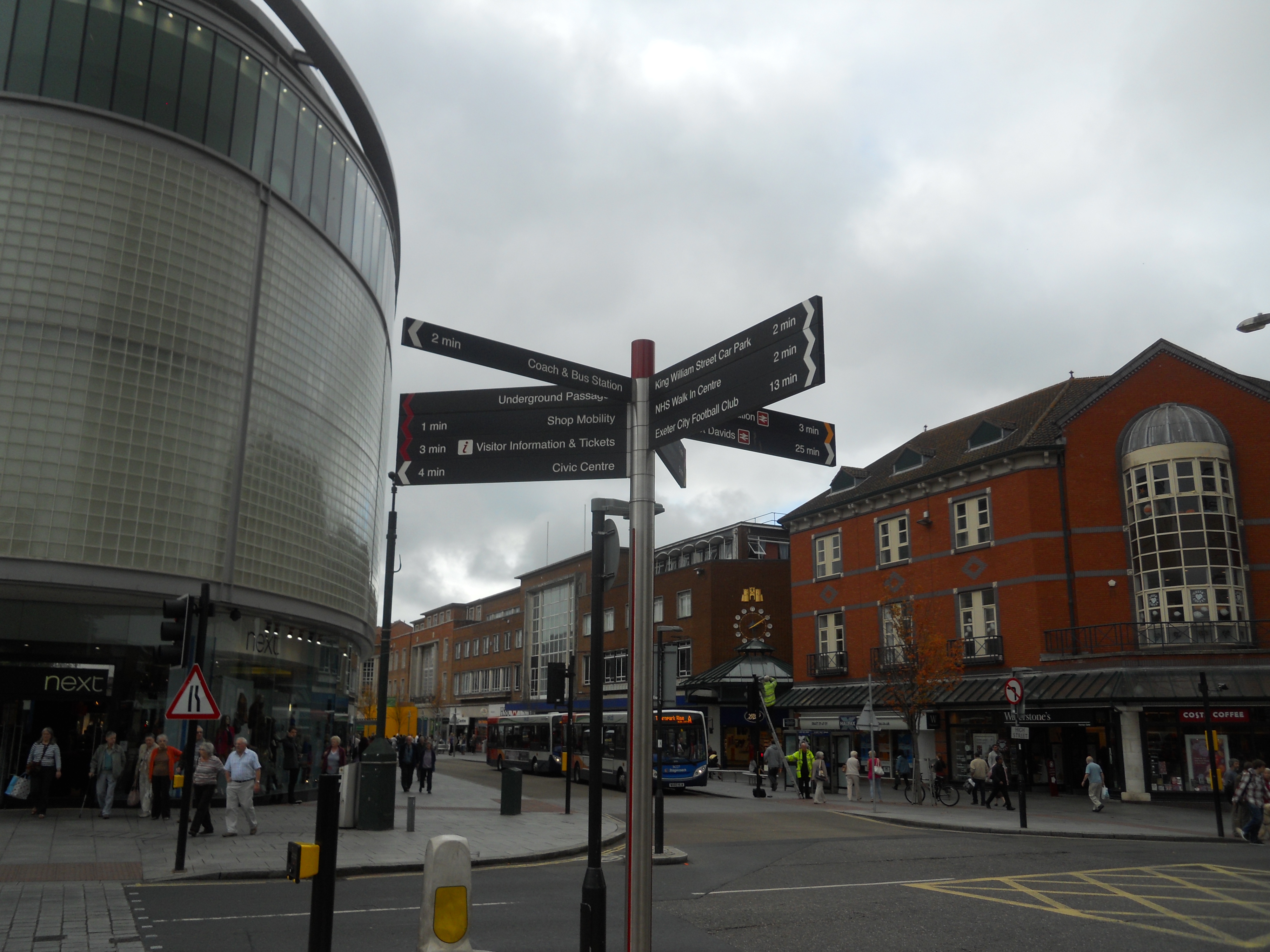
Signpost in Exeter
The city also has very good maps.
It should almost be the law that all major towns and cities have at least this minimum!
A Ground With Its Own Station
Exeter play at St. James Park.
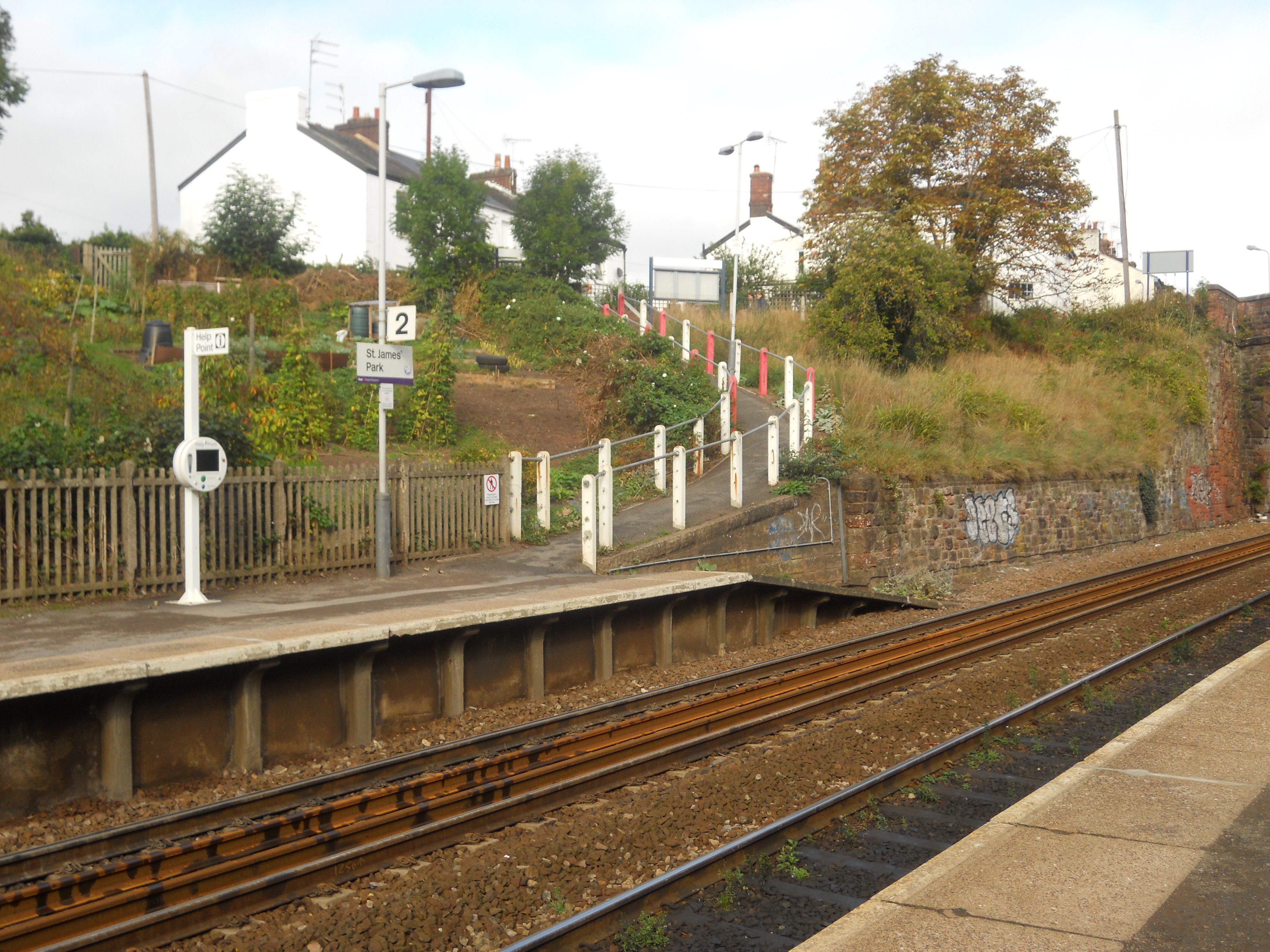
St. James Park Station
It’s even painted in the club colours.
92 Clubs – Day 13 – Exeter City, Fulham
It wasn’t a particularly early start, but I was on the 11:06 to Exeter from Paddington.
The main station is at the bottom of a steep hill leading into the city, with the club on the other side of the centre. so as I had plenty of time, I walked it and didn’t get lost at all, as it was very well-signposted. The only problem was that Marks and Spencer didn’t have any gluten-free sandwiches, so I had to make do, with crisps and a Coke on the way home.
Exeter‘s ground is best described as compact and the staff were certainly friendly.

Inside St. James Park
This picture was taken by the receptionist and she certainly did her job well.
Let’s hope Ipswich get an away tie in a cup there at some point. I shall certainly go!
It is an almost unique stadium in that it has it’s own station, so I took the train down the hill to St. Davids to get back to London. It’s probably better to take the train on the way to the ground and walk down the hill on the way home. Although, this may play havoc with some people’s drinking habits.
After I got to London, I took the Underground to Fulham. The ground was deserted, as this picture shows.
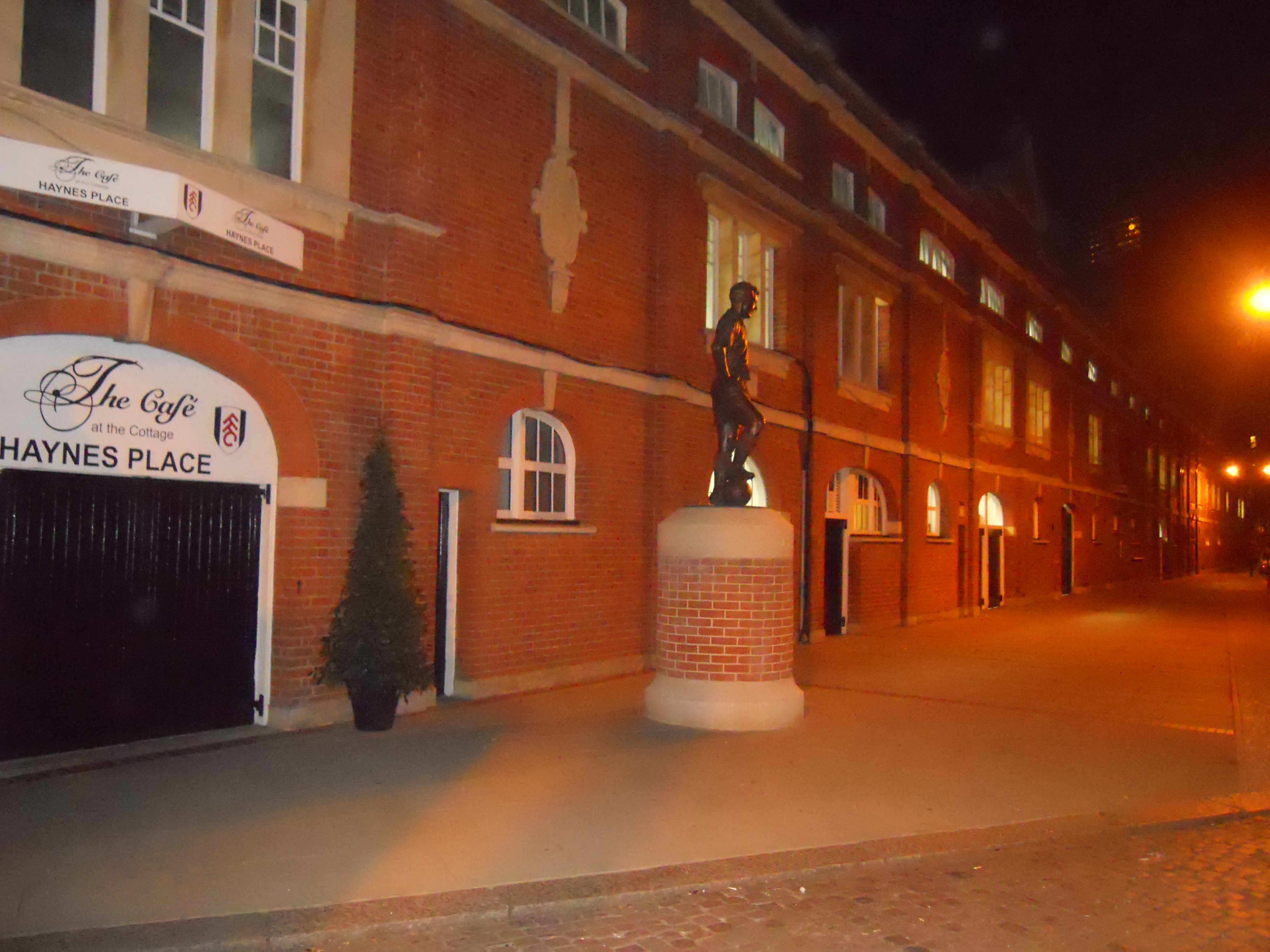
Craven Cottage and Johnny Haynes
The statue in the picture is of the great Johnny Haynes. Luckily, I couldn’t find any other statues.
Getting back from Fulham wasn’t the easiest, as I ended up on a bus that got stuck in a jam at Hammersmith, caused mainly by roadwiorks. Eventually, I managed to cross the road to the Underground station and eventually got to Monument, where I got a bus home.

