SSE Becomes First Utility To Trial First Hydrogen Fuel Cell EV Van
hydrThe title of this post, is the same as that of this article on Hydrogen Central.
This is the first two paragraphs.
The low-carbon energy infrastructure company will be the first utility to trial the hydrogen-powered vehicle – and the first to put it to the test in real-life fleet operations by deploying the vehicle with SSE engineers.
The project will enable First Hydrogen’s team to gather data on fuel consumption, usage, and efficiency. The trials are being used to inform development of First Hydrogen’s Generation II series, currently in development, and will help enhance Total Cost of Ownership (TCO) data.
The deployment will take place in Aberdeen, as the city has some of the UK’s best hydrogen infrastructure.
The Mayor of London please note how being a hydrogen denier causes London to have more pollution.
Did I See The UK’s Hydrogen-Powered Future In Hull Today?
I went from London to Hull today on Hull Trains for £50.80 return (with my Senior Railcard) to see SSE’s presentation for their Aldbrough Pathfinder Hydrogen project, which will feature a 35 MW green hydrogen electrolyser and 320 GWh of hydrogen storage in the thick layers of salt under East Yorkshire.
- Green electricity would come mainly from the part-SSE owned 8 GW Dogger Bank wind farm complex.
- According to their web site, Meld Energy are planning a 100 MW electrolyser, which would produce 13,400 tonnes of hydrogen per year.
Every large helps!
- It should be noted that the thick layers of salt stretch all the way to Germany, and as drilling and storage technology improves, the amount of hydrogen storage available will increase.
- I was also impressed by the ambition, competence and enthusiasm, of the SSE engineers that I met.
- As has been pointed out, HiiROC, who have backing from Centrica, Hyundai, Kia and others, are also in Hull!
I believe, that I saw our hydrogen-powered future in Hull today!
We need more hydrogen mega-projects like these! Perhaps in Aberdeen, Clydeside, Freeport East, Isle of Grain, Merseyside, Milford Haven and Teesside?
Aberdeen City Council And BP Sign Joint Venture Agreement To Develop City Hydrogen Hub
The title of this post, is the same as this article on Renewable Energy Magazine.
The title is a good description of the project and these are a few details.
- Production will start in 2024.
- The hub will produce 800 kilograms of green hydrogen per day.
- That will be enough for 25 buses and 25 other vehicles.
- Further investment would provide hydrogen for rail, freight and marine uses.
I don’t think this is a small project, as they are talking about potentially exporting the hydrogen.
These are a few thoughts.
Electricity Supply
In Can The UK Have A Capacity To Create Five GW Of Green Hydrogen?, I said the following.
Ryze Hydrogen are building the Herne Bay electrolyser.
- It will consume 23 MW of solar and wind power.
- It will produce ten tonnes of hydrogen per day.
The electrolyser will consume 552 MWh to produce ten tonnes of hydrogen, so creating one tonne of hydrogen needs 55.2 MWh of electricity.
Scaling those figures mean that to create 800 kilograms of hydrogen will need 44.16 MWh of electricity or if it is a 24/7 operation, the electrolyser will need a feed of 1.84 MW.
Currently, there are two offshore wind farms close to Aberdeen.
- European Offshore Wind Development Centre – 93 MW
- Hywind Scotland – 30 MW
That would provide enough electricity to provide a starter of under 2 MW.
I can see a lot more wind farms off the coasts around Aberdeen, as on all my visits to the city it has been windy and there is a lot of empty sea.
I don’t think providing enough renewable electricity for a very large electrolyser in Aberdeen will be a problem.
Hydrogen Exports
I would expect, that the hydrogen would go to Germany, as the Germans are backing BP in their wind farm ambitions and they are building a large hydrogen import terminal at Wilhelmshaven on the North-West German coast. The distance for a ship is under 500 miles.
BP’s Future Hydrogen Plans
This is a quote from Louise Kingham CBE, BP’s UK head of country and senior vice president for Europe.
Partnering with cities and corporates as they shape their paths to net zero is a core part of BP’s strategy. BP expects to partner with 10-15 cities globally by 2030 to provide innovative, integrated, and decarbonized energy solutions at scale to help them achieve their goals of net zero emissions. BP also aims to capture 10% of the low carbon hydrogen market in key geographies by 2030.
BP is investing across all the energy transition growth areas in the UK. In fact, we have committed to spend £2 in the UK for every £1 generated here out to the middle of this decade.
“Today’s announcement is evidence of that commitment in action and is supported by other ambitious plans to produce clean energy from UK offshore wind, develop carbon capture in Teesside and grow the country’s electric vehicle charging network.
BP would be in part using their expertise in providing oil and gas to the production and delivery of hydrogen to end users, be they large or small.
I can also see BP repurposing a few gas and oil production platforms into offshore hydrogen production hubs, as this could be a better financial route, rather than demolishing the platforms.
Conclusion
Birmingham is building a hydrogen hub at Tyseley Energy Park to fuel hydrogen buses and other vehicles.
Where is the plan for London’s hydrogen hubs?
Aberdeen Unveils UK’s First Green Hydrogen Waste Truck
The title of this post, is the same as that of this article on renews.biz.
These are the first three paragraphs.
The UK’s first green hydrogen-fuelled waste collection vehicle has been unveiled in Aberdeen.
While typical waste trucks are powered by diesel and petrol, the new vehicle will use green hydrogen from existing refuelling infrastructure in Aberdeen.
The truck will start collecting waste and recycling around the city from early March and will be the first hydrogen-powered waste truck to become operational in the UK.
I feel, that this is one of the obvious applications for hydrogen trucks.
- They return to the same depot at the end of the day and if the hydrogen refuelling station is nearby or at the depot, refuelling would be no more hassle than with diesel.
- The trucks are probably too large for battery power.
- They tend to work a lot in areas, where there are a lot of people about, like residential streets and shopping centres.
- Workers will be exposed to less pollution, as they bring bins to the trucks.
Aberdeen Council have provided this video.
I can see lots of Councils at least thinking of following Aberdeen’s example, when they renew their refuse trucks.
Incidentally, I may be only 74, but I can still remember the horse-drawn waste carts that Wood Green Council used to use in the 1950s. They were used around Wood Green town centre, where trailers were parked to receive rubbish from shops and businesses. Horses were used to move them about and to the depot. In the end they horses were replaced by Scammel Mechanical Horses.
Aberdeen’s Hydrogen Buses Taken Off The Road Due To Technical Issue
The title of this post, is the same as that of this article on the BBC.
This is the introductory paragraph.
Aberdeen’s fleet of hydrogen buses has been taken off the road due to a “technical issue”.
The technical issue appears not to be hydrogen-related, but with a mounting bracket.
Strange coming after CAF had bracket trouble with their trams and Hitachi had a similar problem with their trains.
Wrightbus, CAF and Hitachi haven’t been using the save dodgy Chinese supplier called El Cheapo Brackets have they?
North From Thornton Junction
This Google Map shows how all the railways connect at Thornton junction.
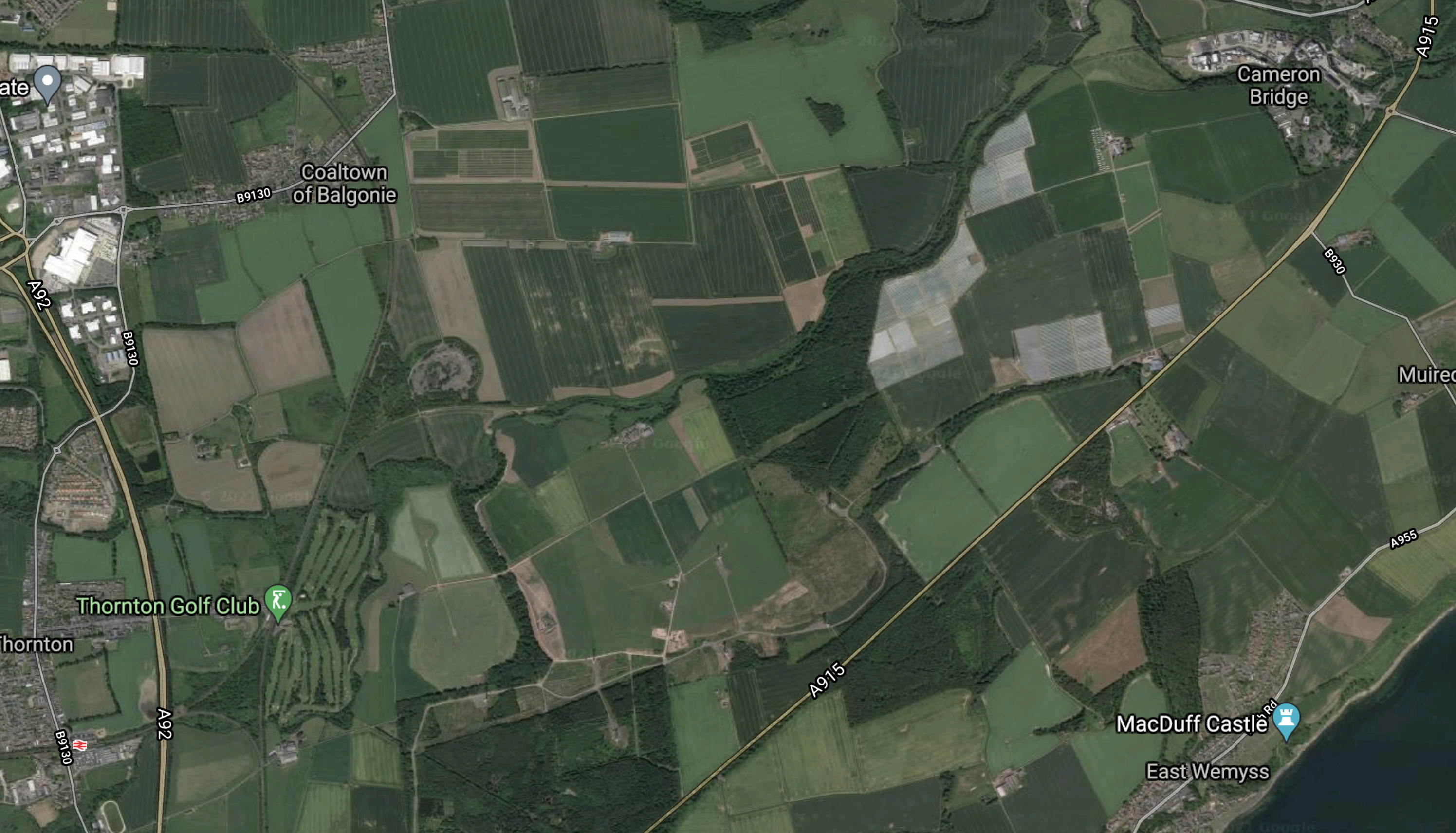
Note.
- The village of Cameron Bridge is in the North-East corner of the map.
- The A 915 running diagonally across the map and to the East of the village of Cameron Bridge.
- In The New Cameron Bridge Station On The Levenmouth Rail Link, I showed how Cameron Bridge station was positioned to the East of the A915 and the village.
- The Levenmouth Rail Link would appear to pass to the South of the village, according to a Network Rail map in the related post.
Thornton junction is a large triangular junction in the South-West corner of the map.
- Thornton North junction is close to Thornton Golf Club, which is shown by the green marker.
- Glenrothes with Thornton station is at the Eastern point of Thornton junction.
- Trains going West from Glenrothes with Thornton station go through Dunfermline and over the Forth bridge to Edinburgh.
- Thornton South junction is South of Thornton Golf Club and leads South through Kirkcaldy station and over the Forth bridge to Edinburgh.
This second Google Map shows the main Edinburgh and Dundee rail line between Thornton Golf Club (Thornton North junction) and Markinch station, which is the next station to the North.
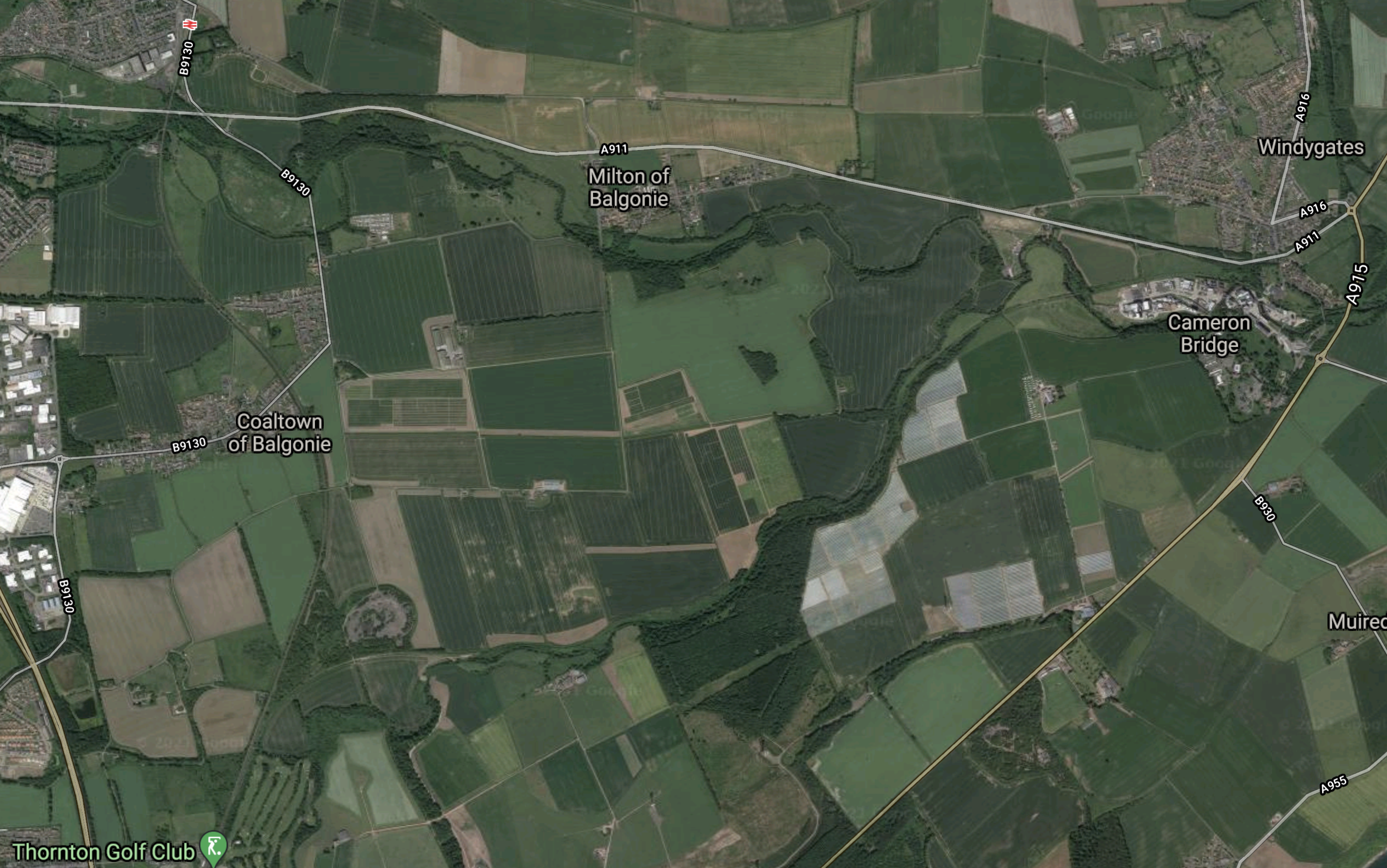
Note.
- The village of Cameron Bridge in the East of the map.
- Markinch station is in the North-West corner of the map.
- Thornton Golf Club (Thornton North junction) is in the South-West corner of the map.
Looking at various maps, Thornton Junction appears very complicated.
- The North-South leg of the junction is at least double-track.
- The North-East leg of the junction appears to be single-track.
- The South-East leg of the junction appears to be single-track.
- The former Levenmouth Rail Link appeared to join the main line at a single-track junction to the North of Thornton North junction
- There is lots of space.
.I’m sure Network Rail can come up with an efficient track layout, that will enable the following.
- Trains can go between Glenrothes with Thornton and Kirkcaldy stations in both directions, as they do now.
- Trains can go between Glenrothes with Thornton and Levenmouth Rail Link in both directions.
- Trains can go between Kirkcaldy station and Levenmouth Rail Link in both directions.
This would enable the service provision, that was specified in Service Provision On The Levenmouth Rail Link.
What Will Be Electrified At Thornton Junction?
This page on the Network Rail web site, says this about the trains that will run the service on the Levenmouth Rail Link.
And while the line will be electrified with overhead wires, services will be operated initially by battery electric units in order to reduce the number of diesels operating on the network as early as possible.
I wouldn’t be surprised to see full electrification between Glenrothes with Thornton and Leven stations, to make sure that the battery-electric trains had full batteries for the run South to Edinburgh.
- The other two legs of Thornton junction would also be fully electrified to give all passing trains a good charge.
- The distance between Kirkcaldy and Markinch stations is 7.3 miles and trains take about ten minutes. I suspect most of this section of the Edinburgh and Dundee line will be electrified. There looks to be about six overbridges that might need raising, but I suspect it would be nothing too terrible, with about the same degree of engineering difficulty as electrifying the Gospel Oak to Barking Line in London.
- I feel with good engineering and guile, enough electrification can be added to the route through Kirkcaldy to get the trains to the South.
- West of Glenrothes with Thornton station, the track looks to be good territory for electrification and enough wires can be added, so that by Cardenden station, there is enough power in the batteries to get the trains to the South.
I have a feeling that by intelligently using the two routes via Kirkcaldy and Dunfermline, Network Rail can increase the frequency of trains over the Forth Bridge.
- This probably partly explains, why trains to Leven go alternatively via Kirkcaldy and Dunfermline.
- 100 mph battery-electric trains help too with their sparkling acceleration.
- Who’d have thought, that at the age of one hundred and thirty, the Forth Bridge will be at the heart of an electrified local train network?
And the only new electrification is based on Thornton junction, over twenty miles to the North.
Electrification Between The Forth Bridge And Edinburgh
Without doubt, the electrification to the South of the Firth of Forth must reach as far North as possible.
Dalmeny station is the most Northerly station South of the bridge and I feel that this could be a practical place for the electrification to end.
Distances from Dalmeny to stations further North include.
- Leuchars – 41.4 miles
- Leven – via Dunfermline – 28.2 miles
- Leven – via Kirkcaldy – 27.3 miles
- Dundee – 48.8 miles
- Perth – 47.4 miles
All these destinations would be within range of Hitachi Regional Battery Trains, which are described in this Hitachi infographic.

Note that the range on battery power alone is 90 km or 56 miles.
Given that the battery-electric trains would be able to grab a battery charge as they passed through Thornton junction, I am fairly certain that Hitachi Regional Battery Trains could reach Leuchars, Dundee or Perth.
An Electric Service Between Edinburgh And Dundee
Dundee is a new station and I doubt, that it was rebuilt without provision for full electrification.
It has two through platforms for Aberdeen and Edinburgh services.
There are also two South-facing bay platforms for regional services from the South.
This picture shows the two bay platforms with an Edinburgh-bound train to the left.
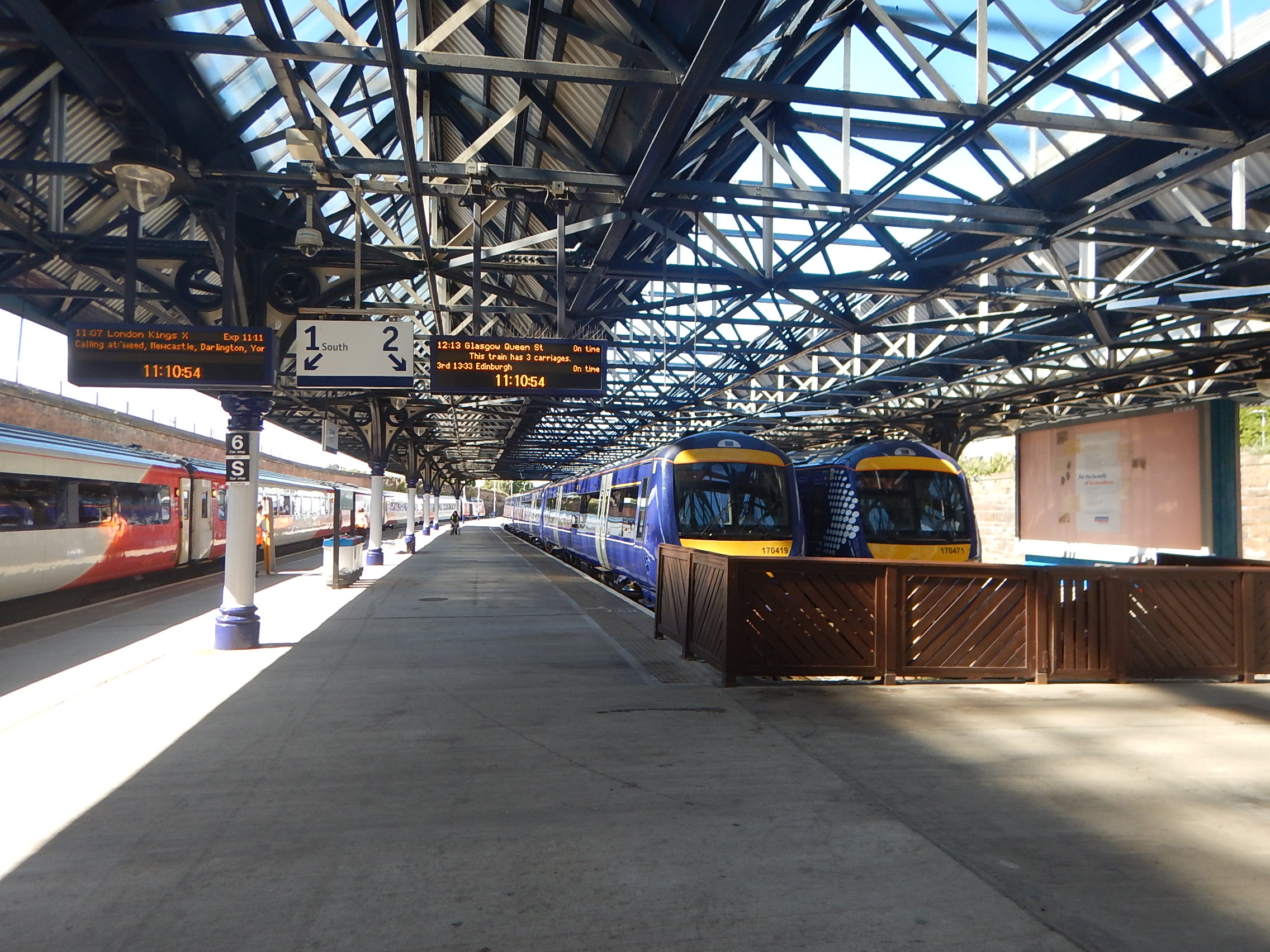
Note.
- In the picture the two Class 170 diesel trains will be going to Edinburgh or Glasgow.
- Scotrail’s plans include an hourly train to both of Edinburgh and Glasgow.
If these two bay platforms were electrified with 25 KVAC overhead wires, these battery-electric services will be possible.
- Edinburgh and Dundee via Haymarket, Kirkcaldy, Thornton junction and intermediate stations.
- Glasgow Queen Street and Dundee via Stirling, Dunblane, Perth, Gleneagles and intermediate stations.
I suspect other routes battery-electric will be possible.
An Electric Service Between Dundee And Aberdeen
The distance between Dundee and Aberdeen stations is 72 miles.
In Solving The Electrification Conundrum, I described techniques being developed by Hitachi Rail and Hitachi ABB Power Grids to electrify routes like Dundee and Aberdeen.
With Hitachi looking to give battery-electric trains a range of over forty miles, it could be just two hops between Dundee and Aberdeen.
I suspect Montrose could be the charging point, as it is forty miles South of Aberdeen.
Conclusion
It appears that the proposed electrification of Levenmouth Rail Link creates an electrification island at Thornton junction, that enables battery-electric trains to reach Dundee.
Coupled with plans to electrify between Stirling and Perth, this means that both Perth and Dundee will be connected to Scotland’s electrified rail network.
I suspect it is also possible to easily extend battery-electric trains all the way to Aberdeen, with only short sections of carefully positioned overhead wires.
Related Posts
The New Leven Station On The Levenmouth Rail Link
The New Cameron Bridge Station On The Levenmouth Rail Link
Service Provision On The Levenmouth Rail Link
Crossrail: Report Finds Not Enough Money To Finish Project
The title of this post, is the same as that of this article on the BBC.
These are the first two paragraphs.
The cost of completing Crossrail exceeds available funding, the government spending watchdog has found.
The National Audit Office (NAO) estimates the cost of the new rail link will be between £30m and £218m above the current funding.
After such a good start with the tunneling and surface line going well, how did we get here?
My main business for nearly forty years was writing project management software and that gave me a deep insight into the dynamics and mathematics of large projects.
The software, I created in the 1970s; Artemis was deeply involved in the most important project of the time; North Sea Oil.
But then more by luck, than any judgement on my part, it was well suited to solving the management problems of North Sea Oil.
The software ran on a small Hewlett-Packard mini-computer with an attached display and a printer, whose footprint, gave Artemis an advantage over competitors who needed a mainframe, for which there was no office space in Aberdeen.
I had first got involved in scheduling resources at ICI about five years earlier and because from previous experience I knew resources would be critical, I gave the program extensive resource aggregation and scheduling capabilities.
I have been told that the latter proved invaluable in successfully developing North Sea Oil. People may have been flattering me, but I do know that Shell used to ensure that all their suppliers used Artemis, so they could check easily if they were being told the truth.
I suspect that Shell and others used the aggregation capability to see that they weren’t overloading the pool of available labour.
Artemis definitely proved itself capable of handling the various projects in the North Sea.
We have now moved on forty years, but has project management moved on to cope with the advances in technology of the modern world?
As with North Sea Oil in Aberdeen, in the 1970s, Crossrail and other large projects like Berlin’s new Brandenburg Airport will always have a need for large numbers of resources, be they men, materiel or machines.
I have some questions.
- Do all contractors working on Crossrail use the same software?
- Does Crossrail have the right to inspect the contractors project management systems?
- Is the upward reporting what it needs to be?
- Does the software the contractors use, have an aggregation capability?
- Do Crossrail track and predict the resources needed?
Someone I respect told me, that a lot of modern project management software doesn’t even have an aggregation capability- Enough said!
I must admit, aggregation and scheduling software is difficult to write, so it might be easier to cut it out and let your clients muddle through!
But The Tunnels Were Built On Time And On Budget!
It all started so well, with the first part of the project, which was the boring of the tunnels being completed on time and on budget.
Observing the project, as I did and picking up information from engineers working on the tunnels and various magazines and television programs, I have to come to the conclusion, that the credit for the on time and budget completion must be down to excellent planning.
- I don’t remember any delays or problems reported in the tunneling. Was that good planning and surveying or luck?
- There were few if any articles on the BBC or in the Standard complaining about the problems the tunneling was inflicting on Londoners.
- The planners realised there could be a shortage of workers qualified to work underground, so they built the Tunnelling and Underground Construction Academy at Ilford, which I wrote about in Open House – TUCA.
Certainly, St Barbara, who is the patron saint of tunnellers looked after the project and its builders.
Worsening The Resource Problem
Crossrail, the Greater London Authority and the Boroughs should have been monitoring this growing resource problem, but I doubt they were in anything other than a perfunctory way!
Instead the politicians were giving planning permission to anybody with money, who wanted to build a shiny new development close to a station.
These projects would need more men, materiel or machines.
As many of these new developments are backed by companies or funds with bottomless pockets to get their developments finished they were prepared to pay more for their labour.
So labour has been deserting Crossrail in droves, thus further delaying the project.
Senior politicians in the Greater London Authority and the boroughs should accept some responsibility for Crossrail’s delay.
They didn’t need to withhold the planning permission, just say that construction of the other projects couldn’t commence until an appropriate phase of Crossrail was open.
In some parts of the world, brown envelopes will have changed hands, but it would be nice to know how many mayors and senior politicians have had holidays in places, they would not normally visit.
Senior project managers tell me, that they would not be surprised if developments along Crossrail had delayed the project.
The Covid Problem
No-one saw Covid coming, except possibly the Chinese.
But good project management is all about negotiating the slings and arrows of outrageous fortune.
There is the story of the miniMetro production line.
The first body shells coming out of the automated welder were crooked and it turned out that the machine had hit a motorway bridge in Germany. But by good project management using Artemis, British Leyland engineers were able to get the second line working correctly before the first and the car was launched on time.
With Covid, the Mayor shut construction, and it was some months before it restarted again.
I am certain, that with good project management we could have done better.
Covid is also a good excuse for lateness.
On the other hand good project management got the vaccines developed, manufactured and delivered into arms.
Covid also blew a big hole in Transport for London’s finances.
But then so did Sadiq Khan’s Fare Freeze, that brought him to office.
Could Crossrail Have Part-Opened Earlier?
I often ponder this and others ask me if it would be possible.
The Victoria Line was built with crossovers and it was able to open in phases.
Crossrail has crossovers in the following places.
- Either side of Custom House station
- To the West of Whitechapel station
- Between Farringdon and Tottenham Court Road stations
Note.
- It doesn’t appear to have been built for part opening.
- From media reports, it appears Whitechapel station is the basket case in the East.
The answer is probably that Crossrail can’t be part-opened, but there are good reasons, why it should be opened earlier.
- To generate a small amount of revenue.
- To give travellers and Londoners in general a lift.
The only practical service would be a few trains turning at Farringdon.
Conclusion
I blame politicians for Crossrail being late and over budget.
Thoughts On Batteries On A Hitachi Intercity Tri-Mode Battery Train
This Hitachi infographic describes a Hitachi Intercity Tri-Mode Battery Train.

Hitachi are creating the first of these battery trains, by replacing one of the diesel power-packs in a Class 802 train with a battery-pack from Hyperdrive Innovation of Sunderland.
This press release from Hitachi is entitled Hitachi And Eversholt Rail To Develop GWR Intercity Battery Hybrid Train – Offering Fuel Savings Of More Than 20%, gives a few more details.
The Class 802 train has the following characteristics.
- Five cars.
- Three diesel power-packs, each with a power output of 700 kW.
- 125 mph top speed on electricity.
- I believe all intermediate cars are wired for diesel power-packs, so can all intermediate cars have a battery?
In How Much Power Is Needed To Run A Train At 125 Or 100 mph?, I estimated that the trains need the following amounts of energy to keep them at a constant speed.
- Class 801 train – 125 mph 3.42 kWh per vehicle mile
- Class 801 train – 100 mph 2.19 kWh per vehicle mile
The figures are my best estimates.
The Wikipedia entry for the Class 800 train, also gives the weight of the diesel power-pack and all its related gubbins.
The axle load of the train is given as 15 tonnes, but for a car without a diesel engine it is given as 13 tonnes.
As there are four axles to a car, I can deduce that the diesel power-pack and the gubbins, weigh around eight tonnes.
How much power would a one tonne battery hold?
This page on the Clean Energy institute at the University of Washington is entitled Lithium-Ion Battery.
This is a sentence from the page.
Compared to the other high-quality rechargeable battery technologies (nickel-cadmium or nickel-metal-hydride), Li-ion batteries have a number of advantages. They have one of the highest energy densities of any battery technology today (100-265 Wh/kg or 250-670 Wh/L).
Using these figures, a one-tonne battery would be between 100 and 265 kWh in capacity, depending on the energy density.
As it is likely that if the diesel power-pack replacement would probably leave things like fuel tanks and radiators behind, so that the diesel engines could be reinstalled, I would expect that a battery of around four tonnes would be fitted.
On the basis of the University of Washington’s figures a 400 kWh battery pack would certainly be feasible.
Using. the energy use at 100 mph of 2.19 kWh per vehicle mile, I can get the following ranges for different battery sizes.
- 400 kWh battery – 36.53 miles
- 500 kWh battery – 45.67 miles
- 600 kWh battery – 54.80 miles
- 800 kWh battery – 73.06 miles
As Lincoln and Newark are just 16.6 miles apart, it looks to me that a 500 or 600 kWh battery could be a good choice for that route, as it would leave enough hotel power for the turnround.
It should also handle shorter routes like these.
- Newbury and Bedwyn – 13.3 miles.
- Didcot and Oxford – 10.3 miles
- Newark and Lincoln – 16.6 miles
- Leeds and Harrogate – 18.3 miles
- Northallerton and Middlesbrough – 20 miles
- Hull and Temple Hirst Junction and Hull – 36.1 miles
Some routes like Temple Hirst Junction and Hull would need charging at the destination.
The Range Of A Five Car Train With Three Batteries
Suppose a Hitachi Intercity Tri-Mode Battery Train had three battery-packs and no diesel engines.
- It would be based on Hitachi Intercity Tri-Mode Battery Train technology.
- It would have two driver cars without batteries.
- It would have three intermediate cars with 600 kWh batteries.
- It would have 1800 kWh in the batteries.
- The train would be optimised for 100 mph running.
- My estimate says it would need 2.19 kWh per vehicle mile to cruise at 100 mph.
It could have a range of up to 164 miles.
If the batteries were only 500 kWh, the range would be 137 miles.
The Ultimate Battery Train
I think it would be possible to put together a nine car battery-electric train with a long range.
- It would be based based on Hitachi Intercity Tri-Mode Battery Train technology, which would be applied to a Class 800 or Class 802 train.
- It would have two driver cars without batteries.
- It would have seven intermediate cars with 600 kWh batteries.
- It would have a total battery capacity of 4200 kWh.
- The train would be optimised for 100 mph running.
- My estimate in How Much Power Is Needed To Run A Train At 125 Or 100 mph?, said it would need 2.19 kWh per vehicle mile to cruise at 100 mph.
That would give a range of over 200 miles.
If the batteries were only 500 kWh, the range would be 178 miles.
Aberdeen, Inverness, Penzance and Swansea here we come.
Can Hitachi Increase The Range Further?
There are various ways that the range can be improved.
- More electrically-efficient on-board systems like air-conditioning.
- A more aerodynamic nose.
- Regenerative braking to the batteries.
- Batteries with a higher energy density.
- Better driver assistance software.
Note.
- Hitachi have already announced that the Class 810 trains for East Midlands Railway will have a new nose profile.
- Batteries are improving all the time.
I wouldn’t be surprised to see a ten percent improvement in range by 2030.
Conclusion
I was surprised at some of the results of my estimates.
But I do feel that Hitachi trains with 500-600 kWh batteries could bring a revolution to train travel in the UK.
Edinburgh And Aberdeen
Consider.
- The gap in the electrification is 130 miles between Edinburgh Haymarket and Aberdeen.
- There could be an intermediate charging station at Dundee.
- Charging would be needed at Aberdeen.
I think Hitachi could design a train for this route.
Edinburgh And Inverness
Consider.
- The gap in the electrification is 146 miles between Stirling and Inverness.
- This could be shortened by 33 miles, if there were electrification between Stirling and Perth.
- Charging would be needed at Inverness.
I think Hitachi could design a train for this route.
Roger Ford’s Cunning Plan
In the February 2020 of Modern Railways, there is an article called LNER Procurement, which has been written by Roger Ford.
It is Roger’s reply to an article in the December 2020 Edition of Modern Railways, which was entitled LNER Seeks 10 More Bi-Modes.
He starts by describing the requirement and then says this.
Would any fleet engineer in his or her right mind want to add a unique sub-fleet of 10 high speed trains to an existing successful fleet, even if they were hydrogen-electric tri-modes from the respected Kim Chong t’ae Electric Locomotive Works?
In my analysis of the December 2020 article, I wrote this post with the same name, where I said this, under a heading of More Azumas?
Surely, It would require a very innovative train at perhaps a rock-bottom price from another manufacturer, for LNER to not acquire extra Azumas.
So it would appear that Roger and myself are vaguely in agreement on the subject of more Azumas.
The last section of the article has a title of Cunning.
Roger puts forward, the view that the procurement process, as well as being compatible with EU law, could be a warning to Hitachi, to make sure that LNER get a good deal.
It certainly could be, and I remember a similar maneuver by ICI around 1970.
The company was buying a lot of expensive IBM 360 computers.
ICI needed a new computer to do scientific calculations at their Central Instrument Research Establishment (CIRL) at Pangbourne in Berkshire.
- English Electric had just released a clone of an IBM 360 and were keen to sell it to ICI.
- As it would do everything that ICI wanted, they bought one.
- It worked well and did everything that CIRL wanted at a cheaper price.
IBM’s reaction was supposedly quick and dramatic. The salesman who dealt with ICI, was immediately fired!
But as ICI had about a dozen large IBM computers, there wasn’t much they could do to one of the most important and largest UK companies.
IBM also made sure, that ICI got their next computer at a good price.
I’m with Roger that all the shenanigans are a warning to Hitachi.
Roger finishes the article with these two paragraphs.
A genuine bluff would have been to seek bids for the long-term deployment of remanufactured IC225s. Which in these straitened times could still turn out to be a more viable option.
I rather fancy the idea of a hydrogen-electric Class 91. Owner Eversholt Rail might even have played along on the understanding that it funded the inevitable hybrid Azumas.
Note that IC225s are InterCity 225 trains.
- The 31 trains, were built for British Rail in the 1980s.
- They are hauled by a 4.83 MW Class 91 locomotive, which is usually at the Northern end of the train.
- Nine Mark 4 coaches and a driving van trailer complete the train.
- As with the Hitachi Azumas (Class 800 and Class 801 trains), they are capable of operating at 140 mph on lines where digital in-cab ERTMS signalling has been installed.
I just wonder, if a Class 91 locomotive could be to the world’s first 140 mph hydrogen-electric locomotive.
Consider the following.
Dynamics
The wheels, bogies and traction system were designed by British Rail Engineering Ltd, who were the masters of dynamics. This is a sentence from the locomotive’s Wikipedia entry.
Unusually, the motors are body mounted and drive bogie-mounted gearboxes via cardan shafts. This reduces the unsprung mass and hence track wear at high speeds.
That is a rather unique layout. But it obviously works, as otherwise these locomotives would have been scrapped decades ago.
I believe the quality dynamics are because BREL owned a PACE 231R for a start, which was an analogue computer, that was good enough for NASA to use two computers like this to calculate how to put a man on the moon.

London and Edinburgh is a slightly shorter distance, run at a somewhat slower speed.
Space
This picture shows a Class 91 locomotive.
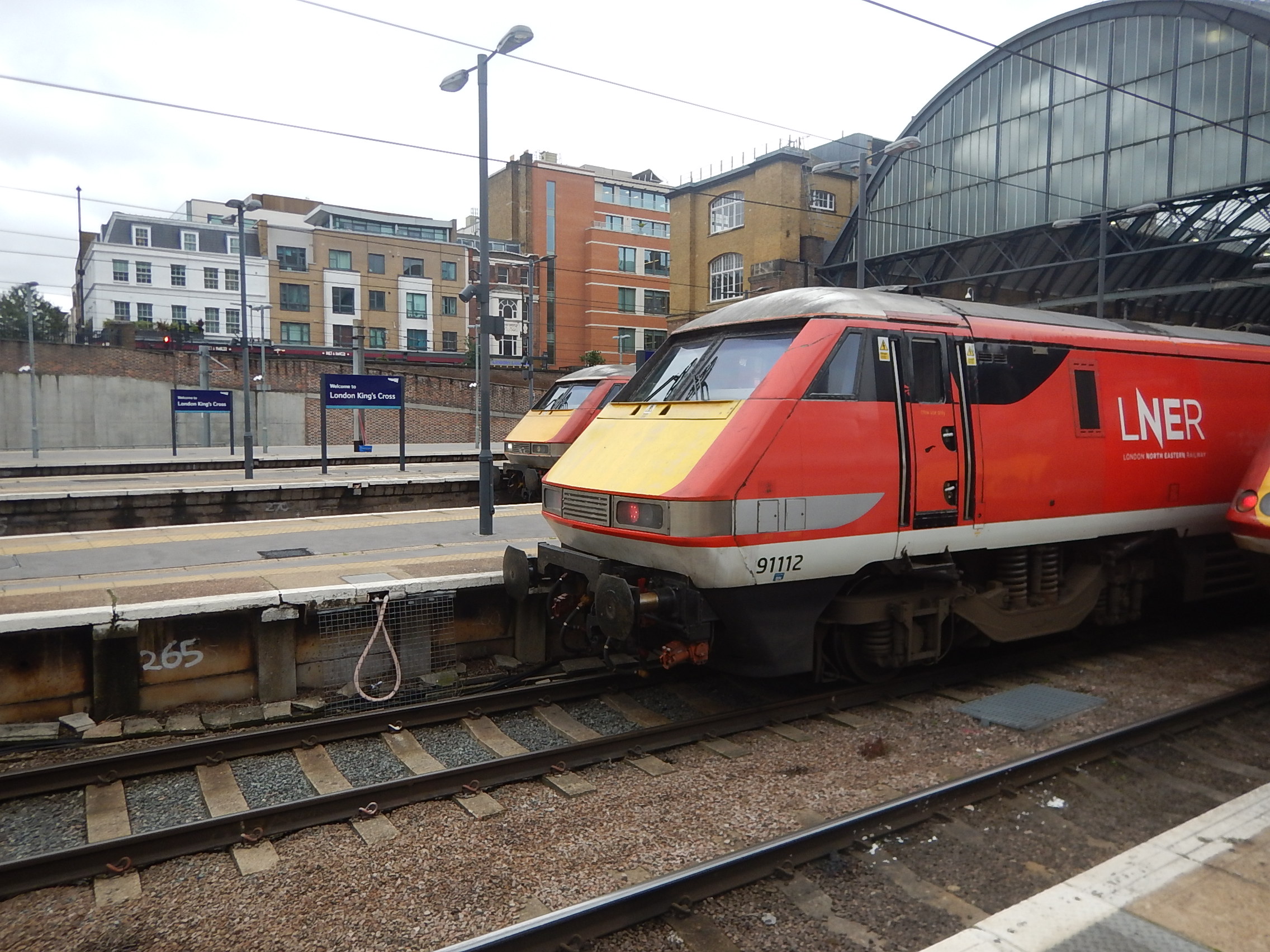
What is in the space in the rear end of the nearly twenty metre-long locomotive?
This sentence from the Wikipedia entry for the locomotive gives a clue.
The locomotive also features an underslung transformer, so that the body is relatively empty compared to contemporary electric locomotives.
It also states that much of the layout came from the APT-P, which was a version of the tilting Advanced Passenger Train.
Would the space be large enough for a tank of hydrogen and some form of generator that used the hydrogen as fuel?
It should be noted that one version of the APT used a gas-turbine engine, so was the locomotive designed for future use as a bi-mode?
Fuel Cells
I’ve ignored fuel cells, as to get the amount of power needed, the fuel cells could be too large for the locomotive.
Class 91 Locomotive Performance
The performance of a Class 91 locomotive is as follows.
- Power output – 4.83 MW
- Operating speed – 140 mph
- Record Speed – 161 mph
Not bad for a 1980s locomotive.
Required Performance Using Hydrogen Fuel
If the locomotives were only needed to use hydrogen to the North of the electrification from London, the locomotive would need to be able to haul a rake of coaches twice on the following routes.
- Aberdeen and Edinburgh Haymarket – 130 miles
- Inverness and Stirling – 146 miles
A range of three hundred miles would be sufficient.
The locomotive would need refuelling at Aberdeen and Inverness.
The operating speed of both routes is nowhere near 140 mph and I suspect that a maximum speed of 100 mph on hydrogen, pulling or pushing a full-size train, would probably be sufficient.
When you consider that a nine-car Class 800 train has five 560 kW diesel engines, that give a total power of 2.8 MW, can carry 611 passengers and an InterCity 225 can only carry 535, I don’t think that the power required under hydrogen will be as high as that needed under electricity.
Rolls-Royce
Rolls-Royce have developed a 2.5 MW generator, that is the size of a beer keg. I wrote about it in Our Sustainability Journey.
Could one of these incredibly-powerful generators provide enough power to speed an InterCity 225 train, through the Highlands of Scotland to Aberdeen and Inverness, at speeds of up to 100 mph.
I would give it a high chance of being a possible dream.
Application Of Modern Technology
I do wonder, if the locomotive’s cardan shaft drive could be improved by modern technology.
These pictures show Joseph Bazalgette’s magnificent Abbey Mills Pumping station in East London.
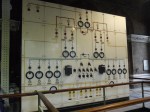
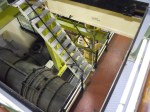


A few years ago, Thames Water had a problem. Under the pumping station are Victorian centrifugal pumps that pump raw sewage to Beckton works for treatment. These are connected to 1930s electric motors in Dalek-like structures on the ground floor, using heavy steel shafts. The motors are controlled from the control panel in the first image.
The shafts were showing signs of their age and needed replacement.
So Thames Water turned to the experts in high-power transmission at high speed – Formula One.
The pumps are now connected to the electric motors, using high-strength, lower-weight carbon-fibre shafts.
Could this and other modern technology be used to update the cardan shafts and other parts of these locomotives?
Could The Locomotives Use Regenerative Braking To Batteries?
I’ll start by calculating the kinetic energy of a full InterCity 225 train.
- The Class 91 locomotive weighs 81.5 tonnes
- Nine Mark 4 coaches weigh a total of 378 tonnes
- A driving van trailer weighs 43.7 tonnes.
- This gives a total weight of 503.2 tonnes.
Assuming that each of the 535 passengers, weighs 90 Kg with babies, baggage, bikes and buggies, this gives a passenger weight of 48.15 tonnes or a total train weight of 551.35 tonnes.
Using Omni’s Kinetic Energy Calculator, gives the following values at different speeds.
- 100 mph – 153 kWh
- 125 mph – 239 kWh
- 140 mph – 300 kWh
I think, that a 300 kWh battery could be fitted into the back of the locomotive, along with the generator and the fuel tank.
With new traction motors, that could handle regenerative braking, this would improve the energy efficiency of the trains.
Sustainable Aviation Fuel
Sustainable aviation fuel produced by companies like Altalto would surely be an alternative to hydrogen.
- It has been tested by many aerospace companies in large numbers of gas turbines.
- As it has similar properties to standard aviation fuel, the handling rules are well-known.
When produced from something like household waste, by Altalto, sustainable aviation fuel is carbon-neutral and landfill-negative.
ERTMS Signalling And Other Upgrades
Full ERTMS digital signalling will needed to be fitted to the trains to enable 140 mph running.
Conclusion
I believe it is possible to convert a Class 91 locomotive into a hydrogen-electric locomotive with the following specification.
- 4.83 MW power on electricity.
- 140 mph on electrification
- 2.5 MW on hydrogen power.
- 100 mph on hydrogen
- Regenerative braking to battery.
If it were easier to use sustainable aviation fuel, that may be a viable alternative to hydrogen, as it is easier to handle.
Hydrogen Fuel ‘In Time For COP26’ For Glasgow
The title of this post, is the same as that of this article on Brinkwire.
This is the introductory paragraph.
The companies behind the plans for a new £ 45 million hydrogen production facility in central Scotland have announced the site of the facility, which is planned to be partially operational prior to the delayed COP26 conference in Glasgow next year.
The article gives a lot of useful information including.
- The plant is at Lesmahagow as I reported in Plans For £45m Scottish Green Hydrogen Production Plant Revealed.
- It will initially have a 9 MW electrolyser, which could be upgraded to 20 MW.
- When fully-developed is could create a thousand tonnes of hydrogen per year.The hydrogen will be used to power buses in Aberdeen and Glasgow.
Construction could start this year.

