Level Boarding Included In Rail Innovation Funding Competition
The title of this post, is the same as that of this article in Railway Gazette.
This is the introductory paragraph.
Innovate UK has opened the latest calls for grant funding proposals under the First of a Kind programme, which supports the demonstration of innovative technologies to give them a better chance at being deployed by railway companies.
What annoys me about boarding trains (and some buses for that matter!), is how variable it is.
- Trains in East Anglia, Merseyside and Switzerland are particularly good, but then they have the common Stadler factor.
- Will the Newcastle Metro and the Glasgow Subway be as good?
- Some European countries, including Germany, could do much better!
- Once at Leipzig, I helped four hefty Germans lift a guy and his wheel-chair out of the bottom-deck of a double-deck train.
- In London, the Docklands Light Railway, the Elizabeth Line and some parts of the Overground are acceptable, but there is need for improvement.
- Southeastern, including the HighSpeed is particularly dodgy and I need help at some stations like Clapham Junction and Lewisham.
- Bank has a notorious platform on the Central Line.
- Perhaps the worst in London are some stations on theBakerloo Line, where it shares with the Watford DC Line.
All passengers on buses and trains deserve the best access that designers and bus and train manufacturers can devise.
In one incident, a slight, elderly Indian lady in a sari, was having difficulty getting down from an Overground train on the Watford DC Line at Willesden Junction station.
I was the only person on the platform, so I called out. “Can You Jump?”
Which she did and landed safely on her feet! I caught her and it was smiles all round!
I suspect she’d done that before.
So is one idea to give all passengers, lessons in jumping on and off buses and trains?
Seriously though, could Lego devise a large-scale engineering version of their product, that could be used to create steps and humps, which could be glued together for strength.
Alternatively, 3D printing could be used to create gap-fillers.
I think this challenge from Innovate UK will bring forward some good solutions.
CoacH2 – The Next Generation Coach
This page on the Advanced Propulsion Centre UK web site is entitled CoacH2 – Next Generation Hydrogen Fuel-Cell Coach Powertrain Demonstrator.
This is the sub-heading.
Accelerating the development of zero-emission hydrogen fuel-cell electric coaches, with a full on-vehicle technology demonstrator.
These are the first two paragraphs.
Coaches are an integral part of the public transport network, with over 30,000 diesel coaches operating across the UK and Ireland. Due to the specific demands of coach operation (motorway driving, long-range, high passenger and luggage loading capacity) decarbonisation options for this sector are extremely limited with hydrogen fuel-cell technology considered the most viable choice. This project will tackle this difficult to decarbonise sector by developing, testing and validating an innovative hydrogen fuel-cell powertrain suitable for coach applications.
Delivered by a Northern Irish consortium spanning OEM, coach operator and academia, CoacH2 will accelerate the development of zero-emission, fuel-cell electric coaches, with a full on-vehicle technology demonstrator to be manufactured and showcased at Cenex Expo 2024.
As I indicated in British Buses For British Bottoms, Wrightbus build a good well-built, smooth-riding and comfortable bus, so now they can add hydrogen-powered coaches to the product range.
This press release on the Wrightbus web site is entitled Wrightbus Coach Demonstrator Unveiled At Cenex Expo, gives more information on CoacH2.
- The demonstrator has a power of 300 Kw.
- It has a range of 1,000 km. on one refueling.
- An internet search reveals a launch date of 2026 for the hydrogen-powered coach.
I wonder, if this will be the killer application for hydrogen-powered road transport.
Ricardo’s Hydrogen Fuel Cell Module Successfully Reaches Full Power
The title of this post is the same as that of this press release from Ricardo.
This is the sub-heading.
Ricardo, a global strategic, environmental, and engineering consulting company, today announces a significant milestone in clean energy innovation with its new high-powered, multi-stack hydrogen fuel cell module technology successfully reaching 393kW of net electrical power, achieved within three months development from initial start-up.
These are the first two paragraphs.
This achievement was made possible due to Ricardo’s virtual engineering toolchain, which reduces physical prototyping costs and risks, accelerates development timelines, and provides a deeper understanding of system behaviours under diverse conditions.
Initially developed as part of the Sustainable Hydrogen Powered Shipping (sHYpS) Horizon Europe project for the maritime sector, Ricardo’s multi-stack hydrogen fuel cell module is designed to deliver high energy output with zero emissions. Its modular architecture integrates multiple fuel cell stacks to provide unmatched power density, and scalability while meeting the evolving energy demands of diverse applications, such as maritime, stationary power generation, rail and off-highway.
It certainly looks like Ricardo have developed a heavy end hydrogen fuel cell, that can be applied to a range of applications, in a very short time. Now that’s what I call world class engineering.
The last paragraph of the press release indicates what is possible.
To support the adoption of hydrogen technology, Ricardo has also developed a containerised solution, able to combine multiple fuel cell modules, enabling power output to be scaled up to 3MW per container, with the DC-DC power conversion on board, all without sacrificing efficiency or durability. When scaled up to incorporate multiple fuel cell modules housed within two bespoke containers, a total net electrical plant output of 6MW can be delivered. This is sufficient to power a 50,000 tonne 1,000 passenger cruise ship through important zero-emission mission cycles.
Although, this family of fuel cells, was originally developed for maritime applications, as an example of the flexibility of the system, it would surely be applicable for replacing any diesel engine from 2 MW upwards in a large number of rail, stationary and on and off-road applications.
This picture shows one of several hundred Class 66 locomotives on UK railways.
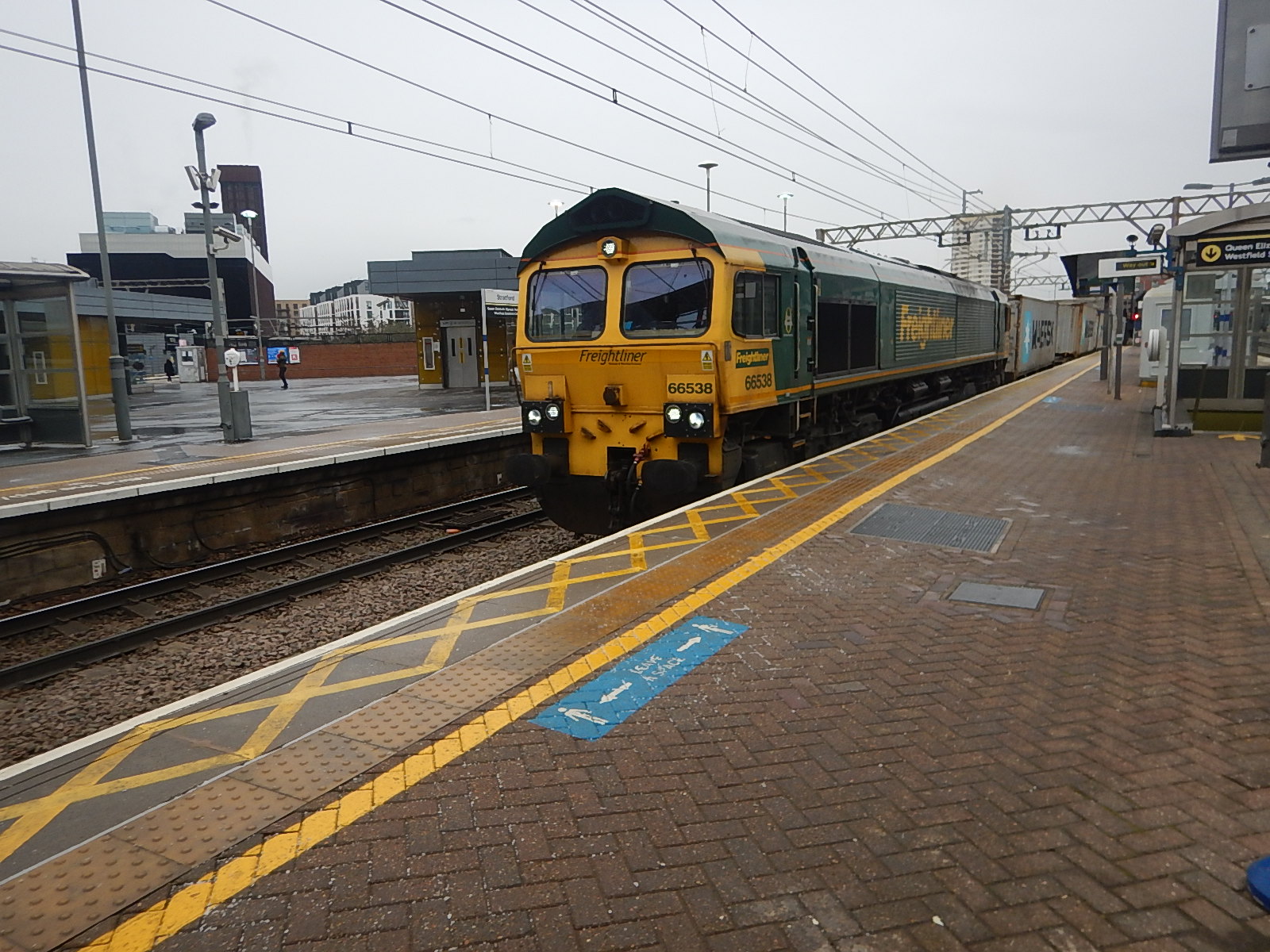
As they have an electric transmission, the 2 MW diesel engine could be fairly easily changed for a hydrogen fuel-cell of an appropriate size.
Great British Railways And Private Sector To Compete For Ticket Sales
The title of this post, is the same as that of this article on Railway Gazette.
This is the introductory paragraph.
The Department for Transport has announced that the future Great British Railways will sell tickets online, while retaining a ‘thriving’ private sector market where third party ticket retailers can compete in an ‘open and fair’ manner.
I would certainly like to see more innovation in the selling of rail tickets.
A few things I would like to see in ticketing include.
Ticketing Machines At Busy Interchanges
When, I wrote My First Trip On The Northumberland Line – 18th December 2024, I bought my Lumo ticket between Kings Cross and Newcastle at King’s Cross and needed to buy my ticket for Ashington at Newcastle station.
There is no ticket machine on the long walk between where Lumo trains arrive and leave and the Northumberland Line.
This is a common problem and someone needs to design a ticketing machine for interchanges to simplify the changing of trains for passengers.
Stations that need such a machine include.
- Clapham Junction on the bridge.
- Ipswich on the central platform.
- Leeds on the bridge.
- Reading on the bridge.
It should be noted, that in some cases train staff will sell you a ticket, which gets round the problem. But other train companies are getting tough on revenue enforcement.
These ticket machines could be provided by Great British Railways or a private company.
Automatic Freedom Pass Extension
If I don’t want to buy a physical ticket for Gatwick Airport, I can use my Freedom Pass to East Croydon. Then I exit the station and come back in using a credit card or my phone. I then exit at Gatwick, using the method I used to reenter at East Croydon.
But wouldn’t it be so much easier, if I could link a credit card to my Freedom Pass, so that the charge for East Croydon and Gatwick Airport was automatically charged to my credit card.
Collection Of Tickets
In Collecting National Rail Tickets, I had a moan at Transport for London about their unwillingness to provide facilities for passengers to pick up National Rail tickets.
This was their unfriendly notice at Tottenham Court Road station.
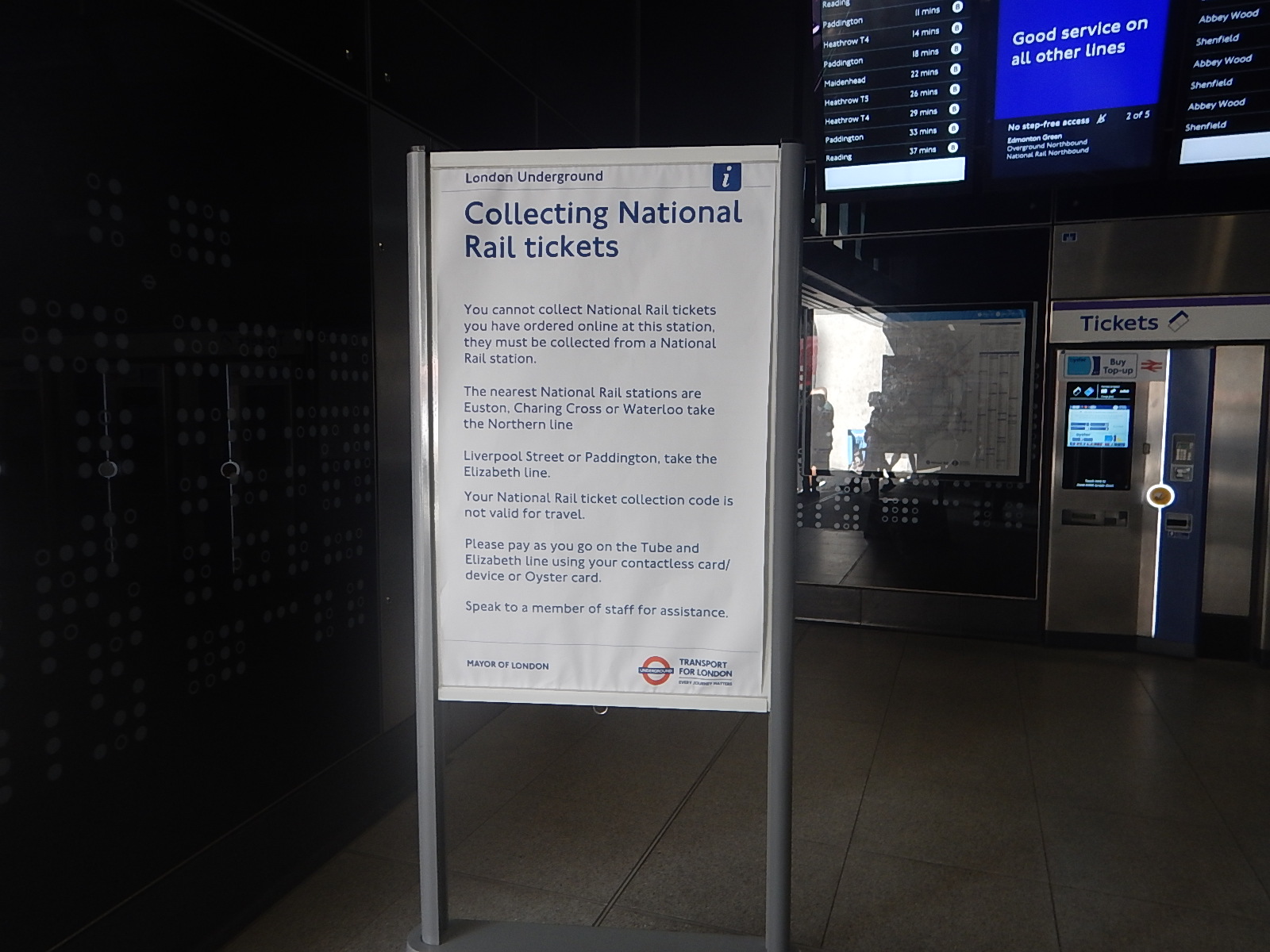
Facilities should be provided in many more places, where passengers can pick up rail tickets bought on-line.
These ticket collection machines could be provided by Great British Railways or a private company.
Offshore Wind Innovation Hub in New York Opens Third Call For Applications
The title of this post, is the same as that of this article on offshoreWIND.biz.
This is the sub-heading.
The Offshore Wind Innovation Hub in New York, led by Equinor in collaboration with Urban Future Lab at NYU Tandon School of Engineering and National Offshore Wind Research & Development Consortium (NOWRDC), opened the 2025 application process on 15 January, issuing the third call for its accelerator programme since the Hub was officially launched in January 2023.
These two paragraphs describe the work of the innovation hub.
“We look forward to building on the strong foundation of the Innovation Hub and supporting the next round of entrepreneurs and emerging technologies”, said Molly Morris, President, Equinor Renewables Americas. “The solutions identified by the innovators will play a critical role in advancing the offshore energy industry, developing supply chains, and strengthening energy security for future generations of New Yorkers.”
Last year, six companies were selected to join the Hub’s accelerator programme and receive support to develop further their solutions that could help advance offshore wind in New York and the US: Boxkite Software, Claviate, Indeximate, Pliant Energy Systems, Sensatek, and Triton Anchor. Through the first call for applications in 2023, the Innovation Hub selected Benchmark Labs, Flucto, Heerema Engineering Solutions, RCAM Technologies, OSC, and VinciVR.
Note.
- Many countries have innovation hubs like these based on research institutions and universities.
- Molly Morris, with her Norwegian support, seems the sort of woman, who can keep Trumkopf under control.
- The Offshore Wind Innovation Innovation Hub certainly seems to spread their support around.
- I don’t think the Innovation Hub’s philosophy fits with Trump’s ‘Drill, Baby, Drill’
I can see Molly Morris, Equinor and The Innovation Hub really annoying Trump.
Let the battle commence!
Automated Wheel Shape Monitor To Detect Wear
The title of this post, is the same as that of this article on Railway Gazzette.
These three paragraphs describe the monitor.
Central Japan Railway has developed a device that allows the shape of wheels to be measured while trains are passing over it at up to 80 km/h.
Following a series of field tests, the equipment is being introduced on JR Central’s Tokyo – Shin Osaka Shinkansen route in the 2025 financial year, ending in March 2026. Similar devices will then be installed for JR Central’s electric rolling stock running on 1 067 mm gauge conventional routes.
The Automatic Wheel Shape Measurement Device is intended to ensure that wheels are reprofiled at the optimal time based on the wear condition of the wheels. Until now reprofiling has been used at regular intervals or after a train has run a specified distance.
I like this monitor and I hope it is a success.
In the early 1970s, I was working for a section in ICI, that developed innovative instruments for chemical plants.
One of the instruments that the section developed, measured the size of a plastic-film bubble using a television camera and then used the result to control the size and the pressure of the bubble.
We need more clever instruments to measure the size of moving objects.
I’ve Got A New Keyboard
My eyesight is not as good as it was, so I have called in the experts.
The RNIB recommended this keyboard with large yellow keys.




At a price of just over thirty pounds it seems to make a lot of difference to my typing.
It was bought from the RNIB web site.
To install it, I just shut down the computer, swapped the keyboards and restarted the computer.
These are some thoughts on the use of these keyboards.
Typing Accuracy
I’ve been using the keyboard for about three hours now and I’ve only made one mistake.
Last week, I was typing garbage all the time.
Should Every Office Have A Keyboard Like This?
I have four minor eyesight and keyboard problems, so I am probably a special case.
- My first eye-test was done by a retired eye doctor of many years experience, who said, I’d got the driest eyes he’d ever seen.
- Because of the dryness, I have a bath every day and put my head under the hot water for perhaps five minutes every morning, when I get up.
- The school bully broke my left humerus, so I usually type with just my right hand and look down on the keyboard.
- My mother went blind from macular degeneration, so I’m worried about the same happening to me.
The keyboard certainly seems to improve my typing.
From what I’ve learned in the last few hours, at least the knowledge of these keyboards and where to get them should be in every office.
Customer Data Entry
I have solar panels on my roof and I have to enter how much electricity, I’ve generated every few months.
Although, I have problems reading the meter, I have no problems entering the values into the Internet.
But I can envisage some data entry, where one of these keyboards would help, when the customer in reporting their readings or energy usage.
Perhaps someone should devise a large screen smart meter for solar panels? I certainly need one!
Medical And Other Research
I am involved in medical research as a lab-rat.
In two cases, I have been asked to use a computer.
- At Moorfields Eye Hospital they were testing a new instrument that had been designed by one of the London Universities, to test a particular ocular function, that used a keyboard worked by the patient.
- At the University of East London, I used a computer to test my balance as part of stroke research.
Using a yellow keyboard might remove bias in the research, against bad typists.
High Pressure Typing Jobs
How many people have to retire from high pressure jobs with a lot of typing, because there eyes aren’t up to it?
Could the thirty pounds for one of these keyboards allow people to work productively longer?
The keyboard my help someone to return to work earlier after an eye operation.
Coeliacs like me are prone to cataracts and I’m pretty certain, that the keyboard would have helped my recovery.
Public Keyboards
I haven’t come across more that one or two public keyboards in say a GP’s surgery or an optician’s, where the patient has been asked to use a computer for a test.
But I do believe this type of testing will happen more often.
Using a yellow keyboard might remove bias in the test , against bad typists.
Digital Disparities Among Healthcare Workers
This paper in the BMJ is entitled Digital Disparities Among Healthcare Workers In Typing Speed Between Generations, Genders, And Medical Specialties:Cross Sectional Study.
Surely, the title suggests a problem. But does that problem exist in similar or different patterns across other professions?
More Research needs to be done.
Conclusion
With a small amount of innovation, the blind and those with failing eyesight should be able to use computers and smart devices as easily as sighted people.
H2Rescue Truck Smashes World Record With 1,806 Miles On A Single Hydrogen Fill!
The title of this post, is the same as that of this article on Hydrogen Fuel News.
This is the sub-heading.
H2Rescue Truck Sets New World Record in Hydrogen Transportation
These first two paragraphs add more detail.
A groundbreaking milestone in hydrogen-powered transportation has been achieved by the H2Rescue truck, a prototype heavy-duty vehicle capable of addressing energy challenges during disaster relief. Built by Accelera (a division of Cummins), with support from the U.S. Department of Energy (DOE) and other federal agencies, the truck recently achieved a Guinness World Record by traveling an astonishing 1,806 miles on a single fill of hydrogen fuel.
What makes this feat remarkable is the environmental implications of the technology. While a traditional internal combustion engine would have emitted 664 pounds of carbon dioxide (CO2) over the same distance, the hydrogen-fueled H2Rescue truck produced zero CO2 emissions. Hydrogen-powered vehicles like this one exemplify cutting-edge innovation in decarbonizing transportation.
This last paragraph describes the use of the vehicle in emergencies.
More than just a long-distance performer, the H2Rescue truck is an essential tool during emergencies. It can provide 25 kilowatts of power for critical relief operations, such as lighting, medical equipment, and communication systems, for up to 72 hours without refueling. This capability could make a significant difference in disaster zones, where reliable energy sources are often scarce.
Cummins are certainly serious about the innovative use of hydrogen.
Stadler Presents A World First In Berlin
The title of this post, is the same as that of this press release from Stadler.
These are the first two paragraphs.
With the RS ZERO, the rail vehicle manufacturer is presenting the successor to the successful Regio-Shuttle RS1 model. There is a choice of two modern and environmentally friendly drive technologies: Hydrogen and battery. Both will enable CO2 emission-free operation of secondary lines in the future.
Stadler today unveiled the prototype of the new RS ZERO, the innovative successor to the successful RS1 Regio-Shuttle. The Regio-Shuttle has been one of the most popular vehicles in German regional rail transport for 28 years, with around 500 RS1 vehicles currently in operation in Germany and the Czech Republic. Stadler is building on this proven technology and integrating state-of-the-art, environmentally friendly drive systems. The RS ZERO is optionally available with a hydrogen and/or battery drive and thus not only sets new standards for environmentally friendly rail transport, but also presents a world first.
These pictures from Chemnitz Trams And The Chemnitz Model, show the Regio-Shuttle RS1.


Note.
- The Regio-Shuttles can run as up to seven car trains.
- These Regio-Shuttles are electro-diesel.
- The distinctive diagonal windows.
- They can carry 170 passengers at 75 mph.
- They can run as train-trams using the Chemnitz model on compatible tram networks.
The Regio-Shuttle Wikipedia entry gives more details.
This image from the press release shows the prototype RS ZERO.
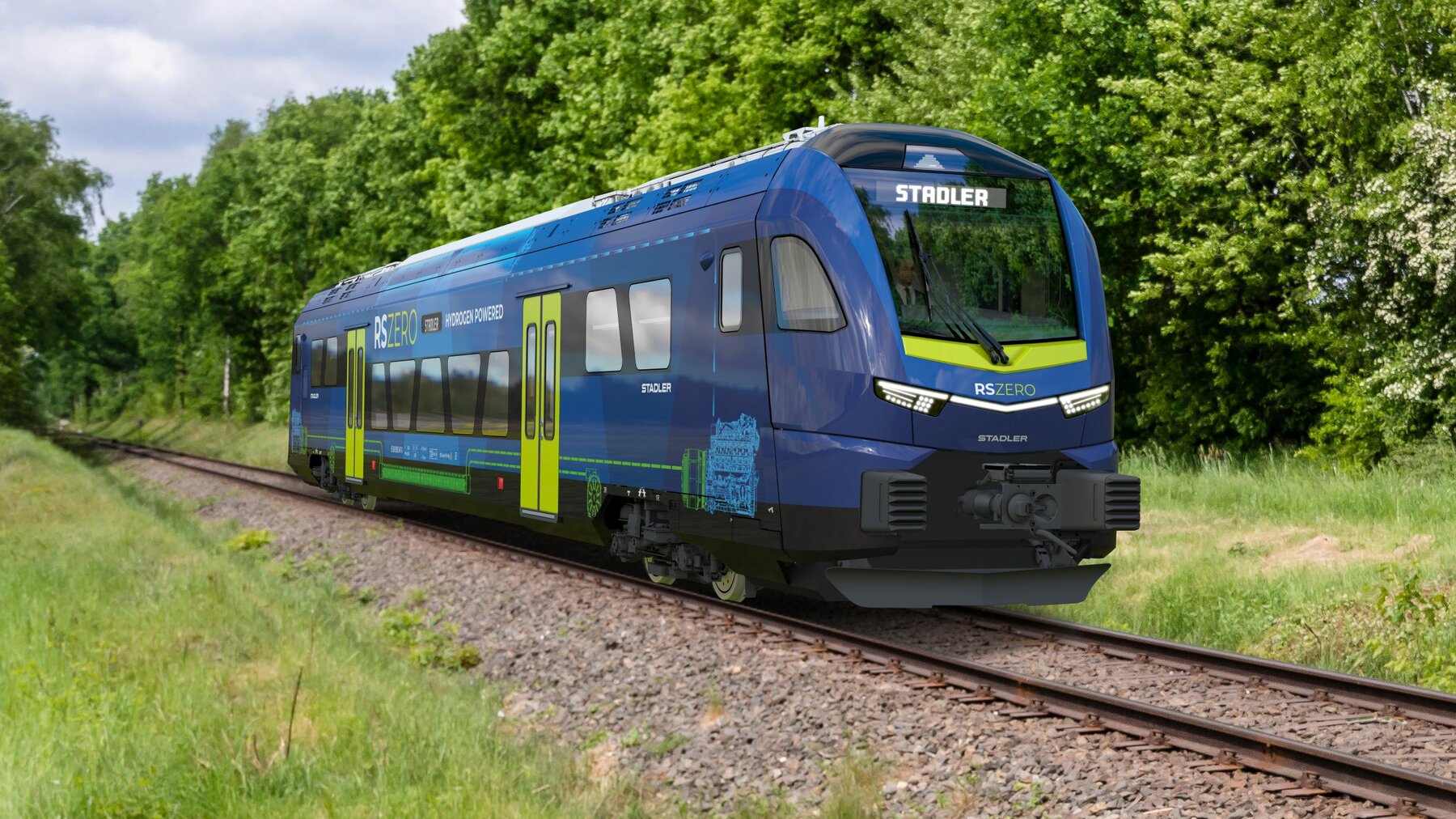
It looks very similar to my pictures from Chemnitz.
I have a few thoughts.
Comparison To A Class 150 Train
A Class 150 train can carry up to 149 seated passengers at 75 mph, which is similar to the RS ZERO.
As Stadler have built trains for Greater Anglia, Merseyrail and the Glasgow Subway, I believe that Stadler could build an RS ZERO, that would fit the UK loading gauge.
In What Train Is This?, I show the standard of interior, that can be achieved by refurbishing a Class 150 train, but unlike the RS ZERO, the train won’t be zero-carbon.
Does The RS ZERO Have A Toilet?
This is a paragraph from the press release.
The prototype of the RS ZERO presented today in Berlin is a one-car vehicle with hydrogen drive. Stadler is demonstrating the numerous design options with a multi-purpose area equipped for carrying bicycles, pushchairs and bulky luggage, lounge and comfort zones, standard and privacy seats, a wheelchair space, WC and a train office.
The train appears to be able to have what an operator might need.
What Will Be The Range Of An RS ZERO On Hydrogen?
I suspect, Stadler will provide a train, that will handle the route.
Conclusion
This could be a very handy train to decarbonise branch and secondary lines in the UK.

