Waterloo Upgrade August 2017 – Waterloo To Sevenoaks
During this week Network Rail are working on the OverJubilee or the lines between London Bridge, Waterloo East and Charing Cross, so capacity from places like Sevenoaks station is reduced.
To compensate Southeastern are running a two trains per hour (tph) service between Sevenoaks and Platform 22 at Waterloo station.
- One train goes to Dover Priory station and the other goes to Ramsgate station.
- The trains take the old Eurostar route into Waterloo station over the Waterloo Curve or the Nine Elms Flyover.
So I thought I’d have a look, hoping to perhaps have a lunch in Sevenoaks.
These are a few pictures I took.

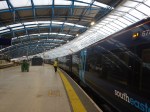










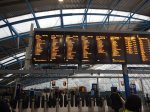
There would have been more, but it was chucking it down and the ones I took were terrible.
The Linford Street Junction And The Waterloo Curve
This map from carto.metro.free.fr shows the Linford Street Junction and the Waterloo Curve.
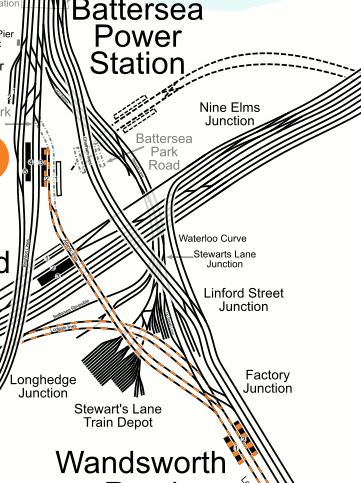
The Junction and the Curve are used by trains to connect from Waterloo in the North East, to the lines from Victoria that go across South London via Denmark Hill and Peckham Rye stations.
Note how the train going into Waterloo and the train coming out passed on the flyover. I assume this was for safety so that trains could leave and join the lines to Victoria at Linford Street Junction.
These pictures of the flyover were taken on another journey to Clapham Junction station.

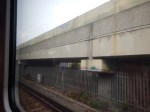

The flyover is recent and was built for Eurostar and completed in May 1993. There’s a page called Nine Elms Flyover on the Kent Rail website, which gives a detailed history of the flyover.
The Route Between Waterloo And Sevenoaks
The journey between Waterloo And Sevenoaks passed through the following stations without stopping.
- Vauxhall
- Wandsworth Road
- Clapham High Street
- Denmark Hill
- Peckham Rye
- Nunhead
- Lewisham
- Hither Green
- Grove Park
- Elmstead Woods
- Chislehurst
- Petts Wood
- Orpington
- Chelsfield
- Knockholt
- Dunton Green
From Lewisham station onwards the route is on the South Eastern Main Line.
Overall Impressions
The route seemed to work well, although between Waterloo and Lewisham, the train was rather slow, with a slight delay joining the lines out of Victoria.
The journey was timed at 47 minutes, with the fastest normal services between London and Sevenoaks being around ten minutes faster.
It certainly seems to be providing an extra two tph between London and Sevenoaks. In Eurostar days, it handled up to six tph.
I also suspect it could handle twelve-car trains, although my journey was in an eight-car train.
Future Developments Along The Route
There are going to be more developments to rail services along the route and also into Kent. Many will be driven, by the bidding for the new Southeastern Franchise.
Ashford International Station
In Kent On The Cusp Of Change – Ashford Spurs, I talked about the completed upgrading of Ashford International station, so that more Eurostar and other Continental services can call.
As the station is going to get more Highspeed services, I can envisage some innovative ways to make more and better use of this station.
Bakerloo Line Extension To Lewisham
The Bakerloo Line Extension will provide passengers with the option of using the Underground from Lewisham to access Central and North London.
Brockley Lane Station
The Lewisham Line runs between Peckham Rye and Lewisham stations and is used by Southeastern trains from both Victoria and Waterloo.
There used to be a Brockley Lane station, where the route crosses the current London Overground’s East London Line, close to Brockley station.
This is said under Future in the Wikipedia entry for the station.
According to the Department for Transport and the Transport for London rail prospectus report released in 2016, it has been listed as one of the Southeastern franchise planned improvements in the document entitled “New interchange at Brockley”, suggesting that there might be a case to reopen the station.
Creating an interchange here would certainly open up lots of travel opportunities.
It should be noted that Brockley station will from 2020, have a ten tph service to Canada Water and Whitechapel stations, with all their Crossrail and Underground connections.
Charing Cross Station
Charing Cross station is bursting at the seams, with typically fourteen and more trains in each hour.
This extract comes from Network’s Kent Route Study.
Charing Cross has just six 12-car platforms and Platforms 4, 5 and 6 are very narrow, leading to operational restrictions.
Class 465 units cannot operate in 12-car into these platforms and selective door operation is used on Class 375 units.
A major rebuild of the station could allow it to be extended south over the river, like Blackfriars, providing compliant platforms and greater passenger circulation.
At concept level, a new link to Waterloo from a southern entrance to Charing Cross may supersede Waterloo East allowing the station area to be used for additional track capacity, but there are likely to be many issues with a project on this scale.
One of the many issues would be how to keep services running during the rebuild of the station.
I suspect that Waterloo could have a role to play in handling some of the services.
Fawkham Junction Link
In Kent On The Cusp Of Change – Fawkham Junction Link, I talked about the proposal to reopen the Fawkham Junction Link, which was originally used to allow Eurostar trains to get to Waterloo station.
If this link were to be reopened, coupled with what has been happening between Waterloo and Sevenoaks, this would enable extra Southeastern HighSpeed services to Thanet to be run to either Victoria or Waterloo.
Victoria Station
Victoria station will periodically need work and might even be subject to a major upgrade project.
As with Charing Cross, I’m sure Waterloo could be used as an alternative terminus for a few trains.
Could Southeastern Services Into Waterloo Become Permanent?
I suspect that as has been successfully shown this week, that it is a feasible proposition.
But whether it actually happens would be up to the train operators.
Consider.
- Eurostar used to run a 6 tph service on this route.
- A single well-designed platform can handle 4 tph.
- The new platforms can handle twelve-car trains.
But most importantly, the train operators will have all the passenger data!
Conclusion
Southeastern and Network Rail have certainly shown it is possible to run a two tph service successfully between Sevenoaks and Waterloo.
If nothing else, it could prove to be a useful alternative route during engineering works or other diversions.
Waterloo Upgrade August 2017 – A First Trip Into Platform 1
I took these pictures as my train went from Clapham Junction into Platform 1 at Waterloo station.
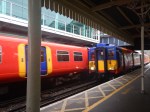
It appears that if your train is going into Platforms 1 to 6, Platform 6 shows on the National Rail web site.
Then just outside the station, it appears that this changes to the actual pltform when it is allocated.
My train was actually held for a minute or two, whilst another train left the platform.
It all seems to happen very smoothly.
Despite the rain!
I certainly think that they’ll achieve their objective of running twenty-two trains per hour into platforms 1 to 6.
Note how in this display from about 16:00.
- There are still quite a few delayed and cancelled trains due to the overrunning engineering work.
- Platforms 1 to 4 and 6 have a departure.
- Platforms 20-24 don’t appear. in the display.
It appears that a lot of the objectives have been completed.
Waterloo Upgrade August 2017 – A First Trip Out Of Platform 4
I took these pictures as my train left Platform 4.

It does seem that most of Platforms 1 to 6 have been seen in the Departures display.

Note how in this display from about 16:00.
- There are still quite a few delayed and cancelled trains due to the overrunning engineering work.
- Platforms 1 to 4 and 6 have a departure.
- Platforms 20-24 don’t appear. in the display.
It appears that a lot of the objectives have been completed.
Waterloo Upgrade August 2017 – 28th August 2017
I took a quick trip to Waterloo station and took these pictures from a train departing from Platform 19.


There certainly seems to be less piles of track and other construction materials.
Waterloo Upgrade August 2017 – A Progress Report From London Reconnections
This article on London Reconnections is entitled Back to the Future: (Re)lengthening and Shortening at Waterloo.
It describes in detail why and how the platforms at Waterloo station are being lengthened and shortened and information on other important topics can be gleaned.
Why Did The Train Hit The Barrier Train?
It doesn’t actually say why, but it does discuss the need for the barrier train to protect the workforce. As the train hit the barrier train, it seemed to have worked.
If you want to know more, I suggest you search for barrier in the comments added to the article by others. If nothing, you’ll realise there’s a lot to go wrong.
Why Weren’t The International Platforms Used Earlier?
The platforms were designed to handle six trains per hour (tph) with a long dwell time in the platform and after modification they will handle 18 tph for the Windsor Lines. So a lot of serious work was needed!
There was also complicated ownership of the five platforms.
Looking at it from a planning point of view, the provision of a terminal for Eurostar in London could have been handled better.
Why Are The International Platforms Only Being Used For A Few Weeks And Then Reopening in 2018?
The platforms are needed for this August’s blockade, but there is still a lot of work to do.
Effectively, the remodelling of the International Platforms have been almost split into two independent projects.
I like the way they’ve done this.
How Will Suburban Capacity Change?
In addition to the five platforms in the old International station, platforms 1-6 will also be remodelled for suburban use.
Currently, the slow lines through Wimbledon can handle 18-19 tph into four platforms.
After completion . these same slow lines will handle 22 tph, but they will have the use of two extra platforms.
In An Analysis Of Waterloo Suburban Services Proposed To Move To Crossrail 2, I showed that if you were running 4 tph on the four branches to Chessington South, Epsom, Hampton Court and Shepperton, which will transfer to Crossrail 2, then you need.
- New 100 mph trains.
- A capacity of 20 tph between Waterloo and Wimbledon.
Both these conditions will be met.
How Will The Passenger Experience At Waterloo Change?
Read the article and there are some snippets in there, that give me hope, that passengers will like it. See what you think!
Conclusion
It is a highly intricate and difficult project, that will be performed in a short time.
What Is Happening At Platform 9 At London Bridge Station?
I regularly come home from Waterloo station, by walking to Waterloo East station and then getting a Southeastern train to London Bridge station, from where, I get a 141 bus to a zebra crossing on the corner opposite my house.
Location is important, when buying a house!
You might ask, why I don’t use the Jubilee Line between Waterloo and London Bridge. I prefer not to be in a dark tunnel in an small-diameter Underground train, when there is a full-size alternative on the surface.
When the new Southeastern Franchise is awarded, I wouldn’t be surprised to see a succession of large-windowed trains, like Aventras, replacing the over twenty-years-old Class 466 trains. They could become a tourist attraction linking Greenwich and Westminster via The Shard, that would be so much more interesting than the Jubilee Line.
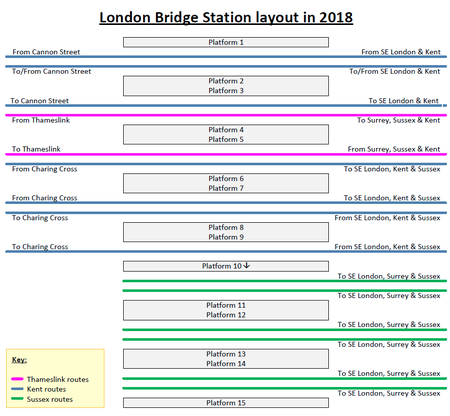
This diagram from Wikipedia shows the proposed platform layout for London Bridge station from 2018.
Note.
- The island Platform 6 and 7 is flanked by two lines coming from Charing Cross station.
- The island Platform 8 and 9 is flanked by two lines going io Charing Cross station.
- The tracks through Platforms 6 and 9 appear to be on loops from the track going through the other paired platform.
I assume the layout is to get sufficient platform capacity for the ten-car trains going through the station.
Look at this Google Map of the station.
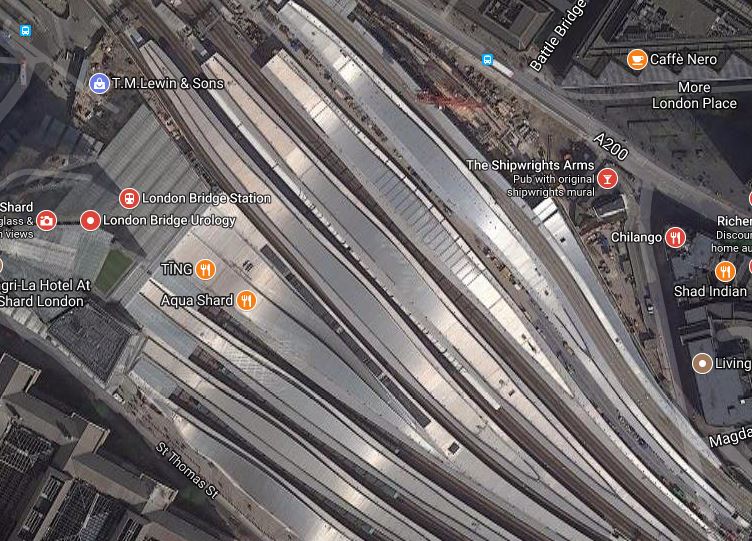
The Platforms are numbered from top-right to bottom-left.
- Platform 1 doesn’t appear to be complete and will be a bi-directional platform into Cannon Street station.
- Platforms 2 and 3 are the first through island platform and serve Cannon Street.
- Platforms 4 and 5 are the second through island platform are are for Thameslink.
- Platforms 6 and 7 are for trains coming from Charing Cross.
- Platforms 8 and 9 are for trains going to Charing Cross.
- Platform 10 upwards are bay platforms for terminating services.
Note.
- The generous width of the through island platforms.
- Ot appears it might be possible to put a second platform on the other side of the track through Platform 9. Let’s call it Platform 9a
- This extra Platform 9a and the bay Platform 10 could be easily connected, with a walk-through.
These pictures were taken from outside the station and show the area to the West of Platform 9.
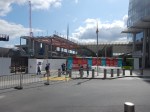
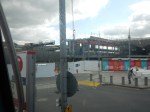
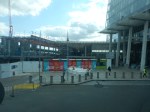
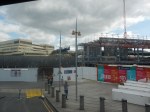
Some substantial construction work is going on.
These pictures were taken inside the station.


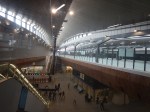
I wonder what the final outcome will be!
Waterloo Upgrade August 2017 – 18th August 2017
I took a train to and from Waterloo to Woking today, so that I could take pictures of the Platform 1 to 8 works at Waterloo and to have lunch at a branch of Carluccio’s, which is close to the Woking station.


I went out on a train from Platform 11, but unfortunately, the train came back into Platform 14.
Waterloo Upgrade August 2017 – Timelapse Video Of Platforms 1-4 At Waterloo Station
This video dates from the 14th August 2017.
The story seems to have gone rather quiet.
There are these possible explanations.
- Everybody is getting through the station without any trouble.
- It was so bad on the first day, everybody has given up.
- The upgrade has finished and everything is running normally.
Or it could just be that it’s all going well and good news doesn’t sell newspapers!
Waterloo Upgrade August 2017 – Mid-Platform Entrance/Exit On Platforms 23/24 At Waterloo Station
These pictures show the mid-platform entrance/exit on Platforms 23/24 at Waterloo station.
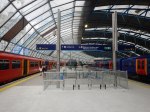

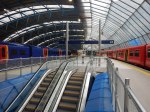
Note.
- This mid-platform entrance/exit must mean that Platforms 20 to 24 effectively have a double-deck gate line.
- Access is also to the Waterloo and City Line.
This article in Rail Engineer, which is entitled Waterloo and South West Route Upgrade, says this.
Improvements in access to the Bakerloo, Northern and Jubilee tube lines from platforms 1/2 and 3/4 and from the former International terminal.
These pictures were taken at 09:30 at the end of the Peak.



When finished it looks like it will be impressive.
Will the access on Platforms 1/2 and 3/4 be double-escalator like this access on the former International platforms?
As I indicated in Waterloo’s Wide Platforms, the design of the older platforms isn’t cramped, so it could be possible.
Incidentally, I couldn’t see any lifts on Platforms 23/24, but these structures behind the grey hoardings could be for lifts.
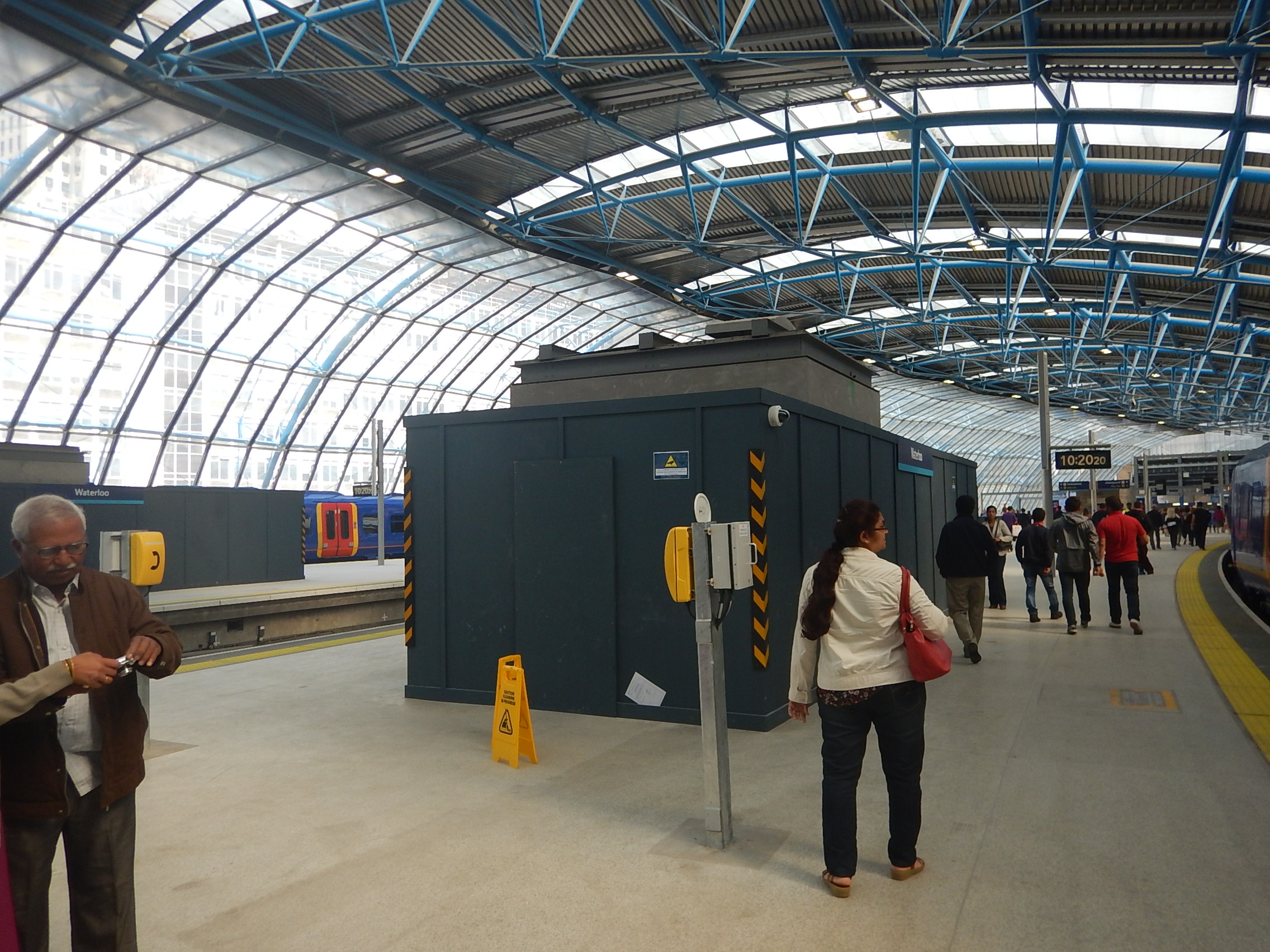
Will there be any platforms in the UK with better step-free access?
And it’s not as if the platforms are for an exotic destination like Cardiff, Huddersfield or Norwich, although I suspect services will go to the regal delights of Windsor! Will Liz be amused?
Waterloo Upgrade August 2017 – Waterloo’s Wide Platforms
These pictures compare the platforms at Waterloo station.
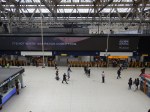
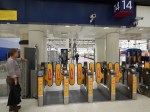
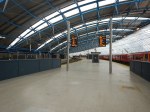
The pictures are shown in increasing platform number order.
Platforms 5 to 14 are in the old part of the station, which was opened in 1922, whilst Platforms 20 to 24 are in the former International station.
Surprisingly, the platforms in the old part of the station seem to be fairly generous in width compared to say those in other London terminals.
They are not much narrower than those built for Eurostar in 1994.
Note that it appears that the old platforms have around five to seven gates per platform, as the space allows, whereas the new ones have thirty gates for the five platforms.
As gates are reversible, that surely is enough to cope with the Peak, especially as there is a mid-platform entrance/exit on some platforms to the Underground.
I suspect the platforms can cope with a whole battalion of guardsmen complete with full kit, all arriving at the same time!

