An Analysis Of Waterloo Suburban Services Proposed To Move To Crossrail 2
I wrote this post in January 2017, when I decided to cut this out of my original post of A Hard Look At Crossrail 2.
Nearly two years later, I decided to update the post after the new platforms have reopened at Waterloo station.
I wrote Is This One Of The Best Platform Access Routes In Europe?, after the access to the new platforms was substantially completed in May 2019.
This has meant a further upgrade has been incorporated.
The Waterloo Suburban Services Proposed To Move To Crossrail 2
These suburban termini and their routes into Waterloo station are proposed to be connected to Crossrail 2.
- Chessington South – 34 minutes – 9 stops
- Epsom – 37 minutes – 9 stops
- Hampton Court – 36 minutes – 9 stops
- Shepperton – 51 minutes – 14 stops
The times are for a typical one-way journey from Waterloo, which usually has a frequency of two trains per hour (tph).
I suspect that the timings are designed, so that they can be achieved by a 75 mph Class 455 train.
An Upgraded Waterloo Station
Waterloo station is getting a massive upgrade in August 2017, which I describe in detail in What Is Happening At Waterloo In August?.
That upgrade has now opened and is now substantially complete in May 2019.
After the upgrade, Waterloo station will handle the suburban services better than it does today.
- There will be five extra platforms, with the reopening of the platforms 20 to 24 in Waterloo International.
- Together these platforms should be able to handle another twenty tph.
- There will be longer platforms, which will all be able to take twelve-car trains.
- There will be an improved track layout, both in Waterloo and on the approach.
- There will be related improvements to improve access to the Underground and the Waterloo and City Line at Waterloo station.
All this should mean Waterloo station, will be capable of handling a substantial increase in trains and passengers, with an improvement in efficiency and comfort.
As I said in Rail Engineer On New Platforms At London Waterloo, the number of passengers handled in a year will increase by twenty-five percent.
Improvements On The Branches
Each branch has its own problems, but the following would help in various places.
- More step-free access.
- Some level crossings on the branches can probably be removed..
- Improved access to onward services like buses, cycling and walking at some stations.
- Some trackwork to allow Crossrail 2’s proposed frequency of 4 tph.
These improvements will generally be needed, whether the services terminate in Waterloo or are a part of Crossrail 2.
New Trains
Currently, suburban services out of Waterloo are run by a large mixed fleet of generally excellent trains.
- 127 Class 450 trains – 100 mph – Entered service in 2003.
- 137 Class 455 trains – 75 mph – Entered service in 1982.
- 30 Class 458 trains – 100 mph – Entered service in 2000.
- 30 Class 707 trains – 100 mph – Entering service in 2017.
This gives 264 four-car trains and 60 five-car trains with a total of 1137 carriages.
South Western Railway are purchasing 30 five-car and sixty ten-car new Aventras with a total of 750 carriages.
The Class 707 trains and the Aventras could offer serious performance improvements, as they are probably designed to be able to have a short as possible time, for a stop at a station.
In an ideal world, all trains running these branches would be identical and all platforms would be designed to fit them perfectly, just as many Overground platforms, fit the Class 378 trains.
Crossrail 2 would do this, with possibly the same Class 345 trains, that have been developed for Crossrail.
But why shouldn’t the routes be worked by a homogeneous fleet, serving platforms and stations designed for the trains?
I believe that Crossrail 2 could make no extra difference to the passenger going between these branches and Central London, except for the route from Wimbledon, which will be in tunnel.
But the new Aventra trains will have three very big effects.
- They will be walk-through ten-car trains.
- They will have much better capacity for bags, cases and all the other paraphernalia passengers bring.
But most importantly, if they live up to the claims of train manufacturers, the high performance, well-designed trains with a consistent train-platform interface will save as much as three minutes a station.
- Trains will stop from line speed faster.
- Trains will accelerate back to line speed faster.
- Bigger lobbies, will enable passengers to load and unload faster.
- Wheelchair passengers and buggy pushers would roll across on the flat.
- Regenerative braking and light weight will save the train operating company in electricity and train access costs.
Until we get actual figures, even one minute a stop, would reduce times on the branches as follows. Figures in brackets are for two minutes a station.
- Chessington South – 25 minutes (16)
- Epsom -28 minutes (19)
- Hampton Court – 27 minutes (18)
- Shepperton -37 minutes (23)
Note that the first three services are now under half-an-hour, without making any allowance that the timings will be for a 100 mph train with better performance, than the 75 mph Class 455 trains.
Is Four Trains Per Hour Possible?
If the round trip from Waterloo can be done in an hour, that means that just two ten-car trains can provide a 2 tph service, as opposed to the four trains now needed.
I suspect that South Western Railway will be experimenting to see if they can get a Shepperton round trip in under the hour.
It may seem difficult, but there are certain factors in their favour.
- The Shepperton Branch Line is self-contained after it leaves the Kingston Loop Line.
- It is double-track, so there is no passing loop problems.
- There are no level crossings.
- The stations on the branch are fairly evenly-spaced at just over a mile apart.
If a total out-and-back time from Waterloo could be under an hour for each branch, this would mean that a 4 tph service on a branch, would need just four trains.
So for each branch to have 4 tph would need just 16 ten-car trains, with similar performance and characteristics to Class 707 trains or the Aventras.
Currently, to provide a 2 tph service, needs sixteen trains, because it takes over an hour to do a complete round trip.
Would it be possible for trains to shuttle up and down these branches?
Look at the example of the East London Line, where four tph shuttle between dedicated platforms at Highbury and Islington and Dalston Junction stations in the North of London to various destinations in the South.
In Increased Frequencies On The East London Line, I reported on Transport for London’s plans to up the frequency on this line to 20 tph.
So could we be seeing something similar at Waterloo, where trains to Chessington South, Epsom, Hampton Court and Shepperton stations, each have their own dedicated platforms?
The four platforms could even be adjacent, so if you want Wimbledon or a station common to more than one branch, displays would lead you to the first train.
Put simply to provide 4 tph for all branches would need 16 modern ten-car trains and four dedicated platforms at Waterloo. How efficient is that for passengers and train operating companies?
Crossrail 2’s Proposals For Services On The Branches
Wikipedia says this about Crossrail 2 services to these suburban branches, after surfacing from the tunnel South of Wimbledon station.
- 20 tph at Raynes Park
- 8-10 tph at Motspur Park
- Exclusive use of the Chessington Branch Line to Chessington South (4 tph)
- Mixed use of the Raynes Park – Epsom Line to Epsom (4-6 tph)
- 10-12 trains per hour at New Malden
- Exclusive use of the Hampton Court Branch Line to Hampton Court (4 tph) with interchange at Surbiton
- Shared use of the Shepperton Branch Line with 6-8 tph to Teddington and 4 trains per hour to Shepperton
I think that Wimbledon will have to handle perhaps another 8 tph from other places on the fast lines. But they do that now!
Between Wimbledon And Waterloo
South Western Railway have not disclosed their hand yet, but I suspect that they are doing the maths.
I think that it will be possible for a 4 tph Crossrail 2 service and all the other slow services between Wimbledon and Waterloo to use a single pair of tracks carrying 20 tph.
Surely, if 20 tph can be handled on the East London Line with ten year old signalling technology and Class 378 trains, then this frequency can be handled with modern signalling and new Aventras.
It should be noted that Crossrail and Thameslink can both handle 24 tph under Automatic Train Operation (ATO) in a tunnel, so surely the slow lines can handle 20 tph on the surface under ATO or just using plain good driving.
There could even be capacity for some extra services.
Wimbledon Station
Wimbledon station would only need two platforms for these services, but I do feel that work would need to be done to accommodate the passengers.
But the station would probably not need the massive modifications until it was decided to build the Crossrail 2 tunnel.
Clapham Junction Station
If all these trains can be accommodated on just two tracks between Waterloo and Wimbledon, then these services could call at two dedicated platforms at Clapham Junction station.
- All trains would stop.
- Staff and passengers would see a succession of identical trains stopping every three minutes.
- Passengers would have a maximum wait for fifteen minutes for a direct train, to their specific destination.
- All trains to stations on the branches would use the same platform, making it easy for passengers.
- As on the East London Line, trains for any station on the branches would be to a clock-face pattern.
The two platforms could be opposite faces of an island platform, with a waiting room, cafe and toilets in the middle.
Vauxhall Station
If it can be done at Clapham Junction station, why not have a dedicated pair of platforms at Vauxhall station, giving access to the Victoria Line?
I use the link at Vauxhall, between the Victoria Line and Waterloo suburban services occasionally and every time I do, it seems to have been improved.
This map from carto.metro.free.fr shows the lines at Vauxhall station.
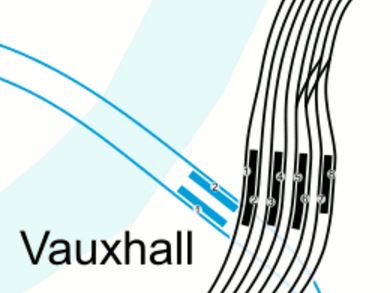
Lines At Vauxhall
I think it is true to say, that if the Victoria Line had been built in the last decade or so, the Victoria Line station could have been placed underneath the main line station.
But even so, I suspect Network Rail and Transport for London have ideas to improve the interchange.
Only Sixteen Ten-Car Aventras Will Be Needed
My calculations show that modern 100 mph trains, like the Aventras that South Western Railway have ordered could provide 4 tph on the Crossrail 2 routes with just sixteen ten-car trains.
All the calculations I’ve done show that replacing trains with faster modern ones, increases the frequency and results in more efficient use of trains.
South Western Railway have bought sixty of these trains.
So they must have some impressive plans!
Conclusion
Crossrail 2’s proposals for the suburban branch lines from Waterloo to the four destinations of Chessington South, Epsom, Hampton Court and Shepperton stations, can be fulfilled using the following.
- More platform capacity in Waterloo.
- Modern high-performance 100 mph trains like Class 707 trains or Aventras.
- Some improvements to track and signals between Waterloo and Wimbledon stations.
- Wimbledon station would only need minor modifications.
- A measure of ATO between Waterloo and Wimbledon stations.
What effect will this have on the design of Crossrail 2?
Rail Engineer On New Platforms At London Waterloo
Reopening the Waterloo International station platforms for local services may seem to be some people to be a very easy project.
This article on Rail Engineer, which is entitled New Platforms At London Waterloo, is a detailed article about the conversion.
Some points from the article and a couple of my deductions.
- The platforms were far to long for suburban services and had to be shortened for twelve-car trains.
- Eurostar only ran five trains per hour (tph) into the station and Network Rail and South Western Railway have planned for four times this frequency.
- Each Eurostar train has only 750 passengers, whereas a commuter train can handle twice as many.
- This means a theoretical eight times more passengers need to be handled.
- The platforms were designed for stationary trains, not for trains continually moving in and out.
- The roof is a Listed structure.
- Direct access to the Underground needed to be added.
The article concludes that with all the work, that needs to be done, the conversion is good value.
I suggest if you are sceptical about the costs, that you read the Rail Engineer article. As ever the magazine gives a good honest engineeringly-correct assessment.
Will The Passengers Like The Extension?
According to the article the number of passengers, that can be handled by Waterloo station will rise from 96 million to 120 million or an increase of twenty-five percent.
The link to the Underground will include three new escalators and there will be lifts and escalators everywhere to cope with the higher level of the tracks in the five new platforms.
Nothing is said in the article about the areas, that the increased services will serve, but in An Analysis Of Waterloo Suburban Services Proposed To Move To Crossrail 2, I showed that it would be possible to run a service with Crossrail 2’s characteristics terminating in Waterloo.
As Crossrail 2, is very unlikely to be built in the next ten years, will Network Rail and South Western Railway give passengers the same service levels a lot earlier?
Conclusion
It looks to me, that this reopening project, is doing a good job to turn the Waterloo White Elephant, into something that will benefit passengers and train operators.
Can anybody explain to me, why we spent £120 million (£237 million in today’s money!) in the 1990s to create such a grand station to accommodate Eurostar trains, when something less grand could have been built?
New Platforms Open At Waterloo Station
According to this article on Rail Technology News, platforms 20-22 are now open and 23-24 will open next May, when the platforms in the old Eurostar terminal, will be connected to the Underground.




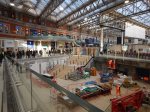

It certainly will look impressive when it is finished.
Pedestrian Tunnels In London’s Transport System
I take particular interest in pedestrian tunnels, as I believe properly designed tunnels can be a solution to improving access to stations.
This list will be extended as I photograph more.
Bank – Bank And Monument Escalator Connection
I still think of this tunnel, as an escalator connection, as that was how it was marked on the tube map in the 1950s.



It is two escalators down a walk between the Docklands Light Railway platforms and then two escalators up at the other end.
Verdict – The connection is being upgraded.
Bank- Central To Northern Interchange Tunnel
This is the shortest way from the Central Line to the Northern Line.
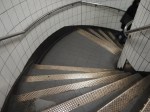
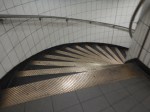

It does involve a descent of a circular staircase.
When the Bank station upgrade is complete this route will be replaced by an escalator connection between the two lines.
This visualisation shows the connecting escalators.
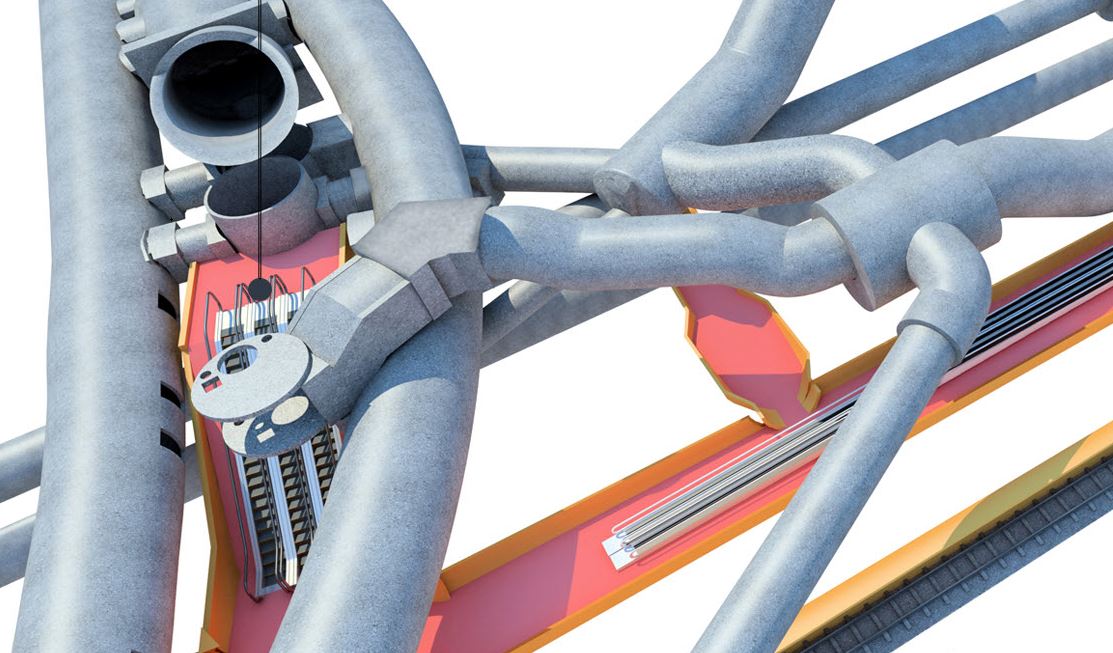
Note.
- The two wide highest level tunnels are the Central Line.
- The infamous curved Central Line platforms,create a large gap to mind.
- The two mid-level crossed tunnels are the existing Bank and Monument Escalator Connection and the Waterloo & City Tunnel.
- The four narrower lowest level tunnels are from bottom to top; the Southbound Northern Line, a new tunnel with a travelator; the old Southbound Northern Line tunnel and the Northbound Northern Line tunnel.
- The old Southbound Northern Line tunnel will become a passenger walkway.
Poking through all this spaghetti are the three escalators connecting the Central Line level with the Northern Line level.
Verdict – This connection will become much better.
Bank – Waterloo & City Inclined Travelator
The inclined travelators that link the Waterloo & City Line platforms and the main station entrances around Bank junction, are unique on the London Underground.
There are other travelators, but no others are inclined.


Verdict – I wonder why there are no others, as this pair seem to work very well.
Bank – Waterloo & City Tunnel
This tunnel connects the Waterloo & City Line platforms at Bank station to the central tunnel at Bank station.



Verdict – It is a linear oasis in an otherwise dingy and cramped station.
Bond Street – Northern Entrance Tunnel
This new tunnel connects the new Northern entrance at Bond Street station to the platforms.


Incidentally, I’d arrived at Bond Street station through the main entrance and it was an awfully overcrowded scrum. The Northern entrance was quiet, as the pictures show.
The entrance is steps or a lift between the street and its own gate line and then a well-lit wide passage to the escalators.
In future, it will link to a wide tunnel to the Western end of the Crossrail platforms at the station.
It is much better way to enter Bond Street station.
Verdict – London and other cities with underground railways, need more new station entrances like this.
Green Park – Interchange Tunnel
This tunnel connects the Jubilee, Piccadilly and Victoria Lines at Green Park station.
The opening dates of the three lines, through the station were.
- Piccadilly Line – 1906 – Modernised in the 1930s with escalators.
- Victoria Line – 1969
- Jubilee Line – 1979
Since 1979 the station has been continually improved and is step-free.
This map from carto.metre.free.fr shows the lines at Green Park station.
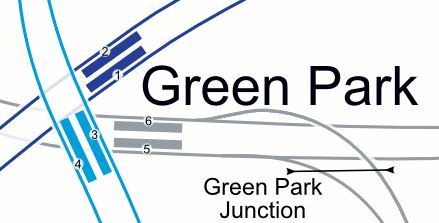
Note that the Jubilee Line is below the other lines and when the extension was built, it was a radical change to what was originally planned. The lines to the right lead to Charing Cross station and those going South to Westminster station.

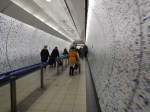

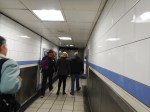

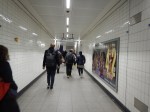
The interchange tunnel is long and usually very crowded. I had an incident recently, where I was walking slowly to the Victoria Line and a group of tourists all with four-wheeled cases, were nudging me to go faster. When we all got to the steps at the end, there was an enforced slow down.
Verdict – I avoid interchanging at Green Park like the plague.
Kings Cross – Eastern Tunnel
This tunnel runs which used to be part of the access to the old Kings Cross Thameslink station, runs from East of Kings Cross station and then has access to the main tunnel connecting the Northern, Piccadilly and Victoria Lines.



It has partial escalator access at the Eastern end, where the buses from Islington and the East stop outside the old station entrance. Although getting buses to the East mens crossing the busy Pentonville Road.
Verdict – Needs improvement
Kings Cross – Interchange Tunnel
This tunnel connects the Eastern Tunnel at Kings Cross to the escalators and lifts that lead to the Northern ticket hall Kings Cross St. Pancras tube station. On the way is connects to the Victoria, Piccadilly and Northern Lines.


It is a long walk, especially, if you have accessed it, as I often do, from the Eastern Tunnel which is convenient for buses from Islington and Dalston.
Verdict – Too long and boring
Kings Cross – St. Pancras Tunnel
This tunnel connects St. Pancras station to the Northern ticket hall at Kings Cross St. Pancras tube station.



It is a wide, comfortable tunnel with a double handrail down the middle.
Note that the middle picture shows the connection to the next tunnel.
Verdict – Useful and a better walk than the surface alternative in cold or wet weather.
Kings Cross – Pancras Square Tunnel
This tunnel connects St. Pancras Square to the underground tunnel, that links St. Pancras station to the Northern ticket hall of Kings Cross St. Pancras tube station.


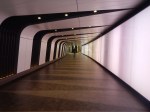

It is a good example of how to create a tunnel.
It has up and down escalators at the St. Pancras Square entrance.
Verdict – Good design and a pleasant walk.
Knightsbridge – Northern Exit Tunnel
This tunnel at Knightsbridge station was built in 2010 to connect the new entrance on the North side of Knightsbridge.


It looks to me that Transport for London had to make do with less space than they needed.
Verdict – Rather narrow and utilitarian.
Paddington – Bakerloo Line Link
This project to create a pedestrian link between the Bakerloo Line and Crossrail at Paddington is currently being built.
- It will be one hundred and thirty metres long.
- It will be twenty-five metres below the Paddington station concourse.
- The design uses a route to avoid existing station facilities.
- The tunnel is being built without major disruption to Bakerloo Line passengers.
- It will have lifts and escalators at both ends.
- The tunnel will handle five thousand passengers per hour in the Peak.
In August 2016, I wrote Paddington Is Operational Again, which describes the tunnel in detail.
Verdict – I have a feeling that this could be one of the most impressive parts of Crossrail.
I can’t wait for this tunnel to open.
South Kensington – Exhibition Road Pedestrian Tunnel
The Exhibition Road Pedestrian Tunnel at South Kensington station is unique in London, as it was built in 1885 and it is Grade II Listed.


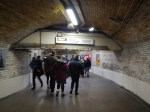

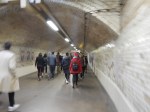
As the pictures show, it can get very busy.
Verdict – A Victorian idea, that hasn’t been copied much.
Tottenham Court Road – Interchange Tunnel
This tunnel connect the Central and Northern Lines at Tottenham Court Road station.
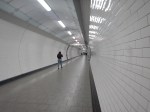


It is a bit lacking in colour to my liking. But at least there is some of Eduardo palotzi’s tiles at one end.
Verdict – Bland and too long.
Victoria – New Tunnels
Victoria station has had a new entrance at Cardinal Place and a lot of new tunnels to sort out the poor connectivity, added in the last couple of years.




As the pictures show, not all the tunnels are finished.
Verdict – Victoria is no longer a station yo avoid
Waterloo – Interchange Travelator
This map from carto.metro.free.fr shows the Underground lines at Waterloo station.
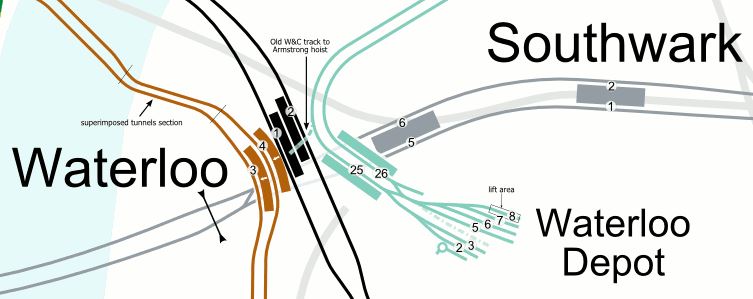
Note the large separation of the platforms of the Jubilee Line and those of the Bakerloo and Northern Lines.
The solution was to install a travelator, when the Jubilee Line Extension was built.


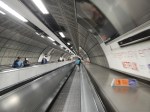
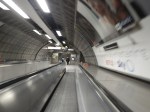
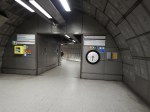


Although expense wasn’t spared on the project, I think we would give it a more decorative lining today.
Verdict – It works.
Whitechapel – Refurbished Overground Staircases
There are two staircases between the District/Hammersmith & City Lines and the East London Line, that are being refurbished for Crossrail.

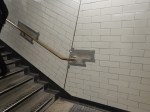
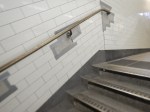

It looks like the work is of a high quality and that the old rails have not been replaced.
Verdict – These were scruffy tunnels a couple of years ago.
Summing Up
Some tunnels are obviously better than others, but what surprised me, was how well the Exhibition Rpad Tunnel to the museums coped with large numbers of passengers.
Perhaps, the Victorians got it right, as some of the best tunnels in my examples are the wider ones.
Comparing the Northern Exit Tunnel at Knightsbridge with the Northern Entrance Tunnel at Bond Street, shows how a wide tunnel and entrance, built with a lift, is a much better solution, than a narrow tunnel and entrance, without a lift.
The only narrow tunnel, that seems to work well is the tunnel connecting the Waterloo & City Line to the main Bank station complex.
But this tunnel is well-lit and I suspect tends to have passengers going the same way most of the time.
It also appears that recent tunnels like those at Bond Street and Victoria, are much better than those built about ten years ago, like the tunnel at Knightsbridge.
The Future
After Crossrail, London has a number of large station projects in the pipeline, some of which will require new connecting tunnels for passengers.
- The upgrading of Bank station is underway, where tunnels are being dug and escalators, travelators and lifts and being installed.
- The upgrading of Knightsbridge station is underway, but this will be simpler and I don’t think the upgrade includes more tunnels.
- The upgrading of Camden Town, Holborn and Walthamstow stations are in the planning stage. All will probably involve creating a new entrance connected to the existing platforms with lifts and escalators, but no long tunnels.
- Oxford Circus station is likely to be the subject of a major upgrade.
- Euston and Euston Square stations are being upgraded for the arrival of High Speed Two and there will be new tunnels to dig, between the two stations.
There are also possible new lines to consider, which may or may not be built.
- Bakerloo Line Extension
- Crossrail 2
- Docklands Light Railway to Thamesmead
- Docklands Light Railway to Euston, St. Pancras and Victoria.
All will be built with lots of entrances and exits, and interchanges with existing lines, so it is likely, there will be quite a few connecting tunnels.
Conclusion
I think that three tunnel projects will define a lot of the thinking about pedestrian access in the future.
- The Northern Entrance Tunnel at Bond Street, which surfaces in a commercial development.
- The Paddington Bakerloo Line Link, which appears to be setting new standards of design and construction.
- The narrow well-lit tunnel at Bank.
Could we see lessons learned with these newly-built tunnels applied to projects like Oxford Circus and Euston stations?
Heathrow Southern Railway And Woking Station
This news item on the Heathrow Southern Railway web site is entitled Plans Announced For £1 billion Rail Link Between Southampton And Heathrow.
This is an extract.
We hope three trains an hour (tph) could be running to Southampton by 2026.”
That is the message from Graham Cross, chief executive of Heathrow Southern Railway (HSR), which is preparing plans for a £1 billion rail link between the city and the UK’s biggest airport.
This map shows a schematic of the Heathrow Southern Railway.
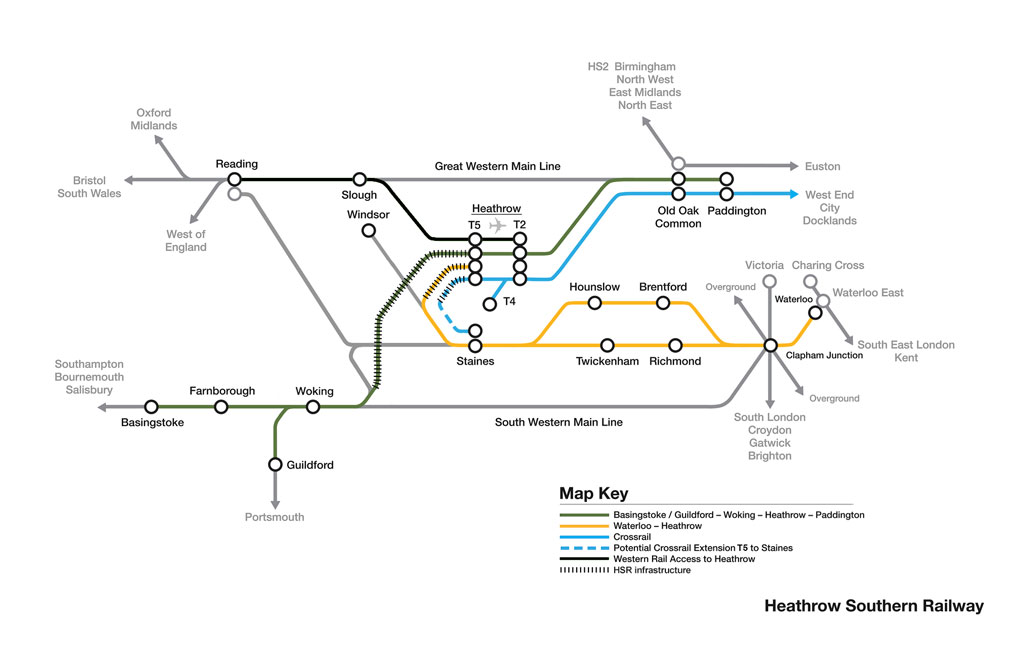
Hethrow Southern Railway’s plans are as follows.
- A new section of railway will connect the Chertsey Branch Line to Heathrow Terminal 5 station.
- This new section of railway will be built alongside the M25 to minimise environmental disruption.
- From there trains will call at Heathrow Central and Old Oak Common stations before terminating at Paddington station.
- Trains will connect Heathrow to Woking station and on to Basingstoke and Guildford.
Currently, the service between Southampton Central and London is as follows.
- South Western Railway – One tph – Poole and Waterloo
- South Western Railway – One tph – Weymouth and Waterloo – Stops at Woking
- South Western Railway – One tph – Weymouth and Waterloo
- Southern – One tph – Southampton Central and Victoria – Stops at Gatwick
If we take Graham Cross at his word, that the following frequencies to various stations.
- Gatwick Airport – 1 tph
- Heathrow Airport – 3 tph
- Old Oak Common – 3 tph
- Victoria – 1 tph
- Warerloo – 3 tph
- Woking – 4 tph
Passengers from Southampton.Bournemouth, Poole and Weymouth would have a much larger choice of London stations.
As Heathrow Southern Railway also plan to run two tph between Paddington and Guildford via Heathrow, Woking could become a busier place.
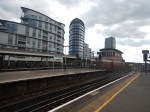
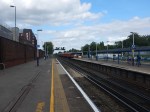
These pictures show Woking station.
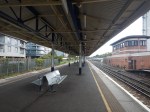
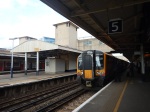
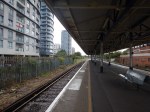
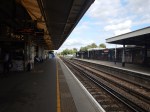
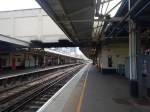
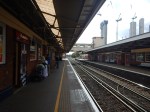

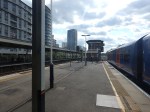
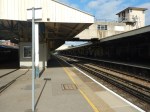

This Google Map shows the station.
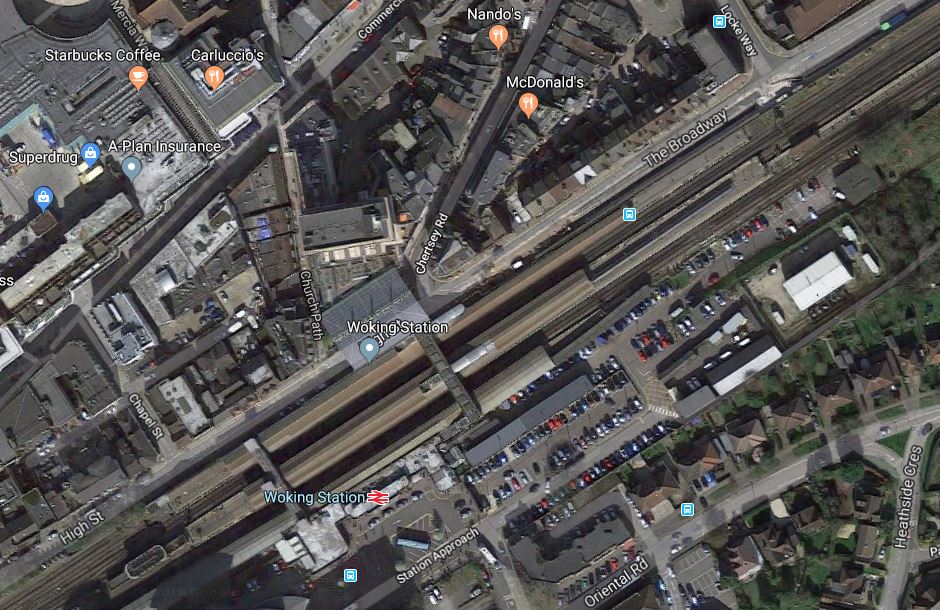
Note some of the characteristics.
Four Long Through Platforms
The station has four long through platforms, which can accommodate the longest ten-car trains used by South Western Railway.
Twelve-Car Class 387 Trains
Two five-car Class 444 trains are 230 metres long, when running as a ten-car train.
If Heathrow Southern Railway want to run Class 387 trains, train lengths will be as follows.
- Eight cars – 163 metres
- Twelve cars – 280 metres
Twelve-cars trains may be too long for the platforms at Woking and other stations. but as Heathrow Southern Railway won’t open for a few years, I wouldn’t be surprised to see new trains used by Heathrow Express and Heathrow Southern Railway.
Splitting And Joining Trains At Woking
I also think, that these platforms are ideal for pairs to join and split here, so that trains are say tencars between Woking and Paddington via Heathrow and Old Oak Common and five cars to the South West of Woking.
Conclusion
Woking’s long platforms will be used to great advantage by Heathrow Southern Railway to match their services to the capacity needed.
- For passengers and workers to and from Heathrow Airport.
- For commuters and passengers to and from Paddington, Central London, the City of London and Canary Wharf
- For passengers to and from HS2 at Old Oak Common.
Heathrow Southern Railway will do a lot more, than just provide Southern access to Heathrow.
A Shorter Bay Platform At The London End
There is a shorter bay platform at the London end of the station, which is currently used for stopping trains to London.
It can’t handle long trains like the through platforms and for this reason along, I doubt it will be used by services to Heathrow.
But I wouldn’t be surprised to see a second bay platform added to improve capacity.
A Shorter Bay Platform At The Country End
Wikipedia says this about Plstform 6, which is a short by platform facing West.
The first train of the day to Portsmouth Harbour via Eastleigh starts from this platform, and it is often used to stable diesel locomotives in the event of a train failure.
It is probably best filed under operationally useful and I doubt it will be used by Heathrow Southern Railway, as it faces away from Heathrow.
Woking Station Is Surrounded By Tower Blocks
In the pictures, you can see tower blocks rising all round the station.
There will obviously be more, even if as I suspect the local residents object.
But we do need more housing in this crowded country of ours and Woking is a convenient distance from London for commuters.
Should Tracks At Woking Station Be Remodelled?
After Heathrow Southern Railway opens, trains calling at Woking station will use the following routes towards London.
- Via Clapham Junction to Waterloo.
- Via Heathrow to Old Oak Common and Paddington
And the following routes away from London.
- Via Basingstoke to Bournemouth, Exeter, Poole, Salisbury, Southampton and Weymouth.
- Via Guildford to Portsmouth
An ideal layout might be two wide island platforms, as they have at Reading stations.
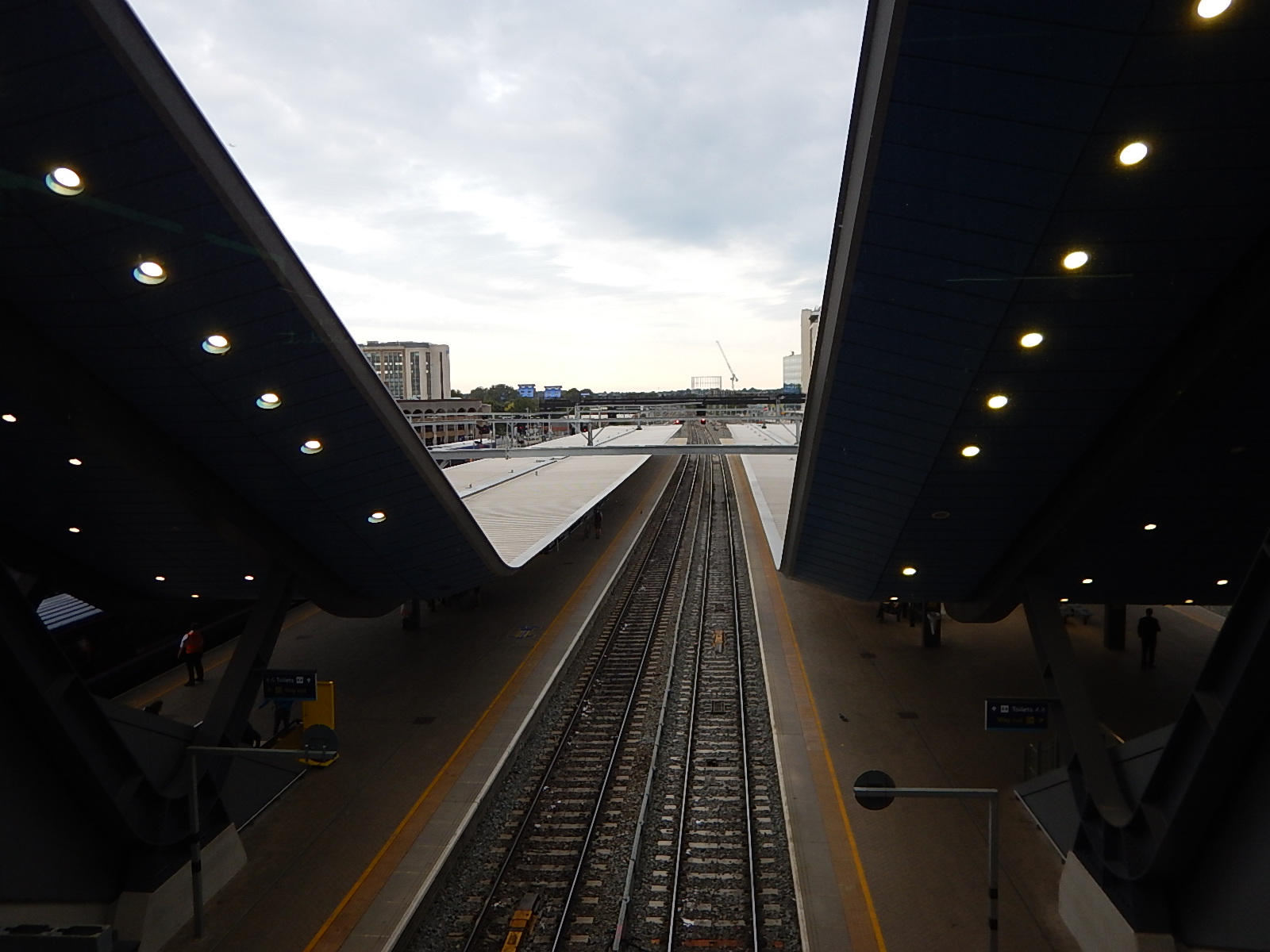
The platforms are connected to a wide overbridge with coffee kiosks and useful shops, by escalators and lifts.
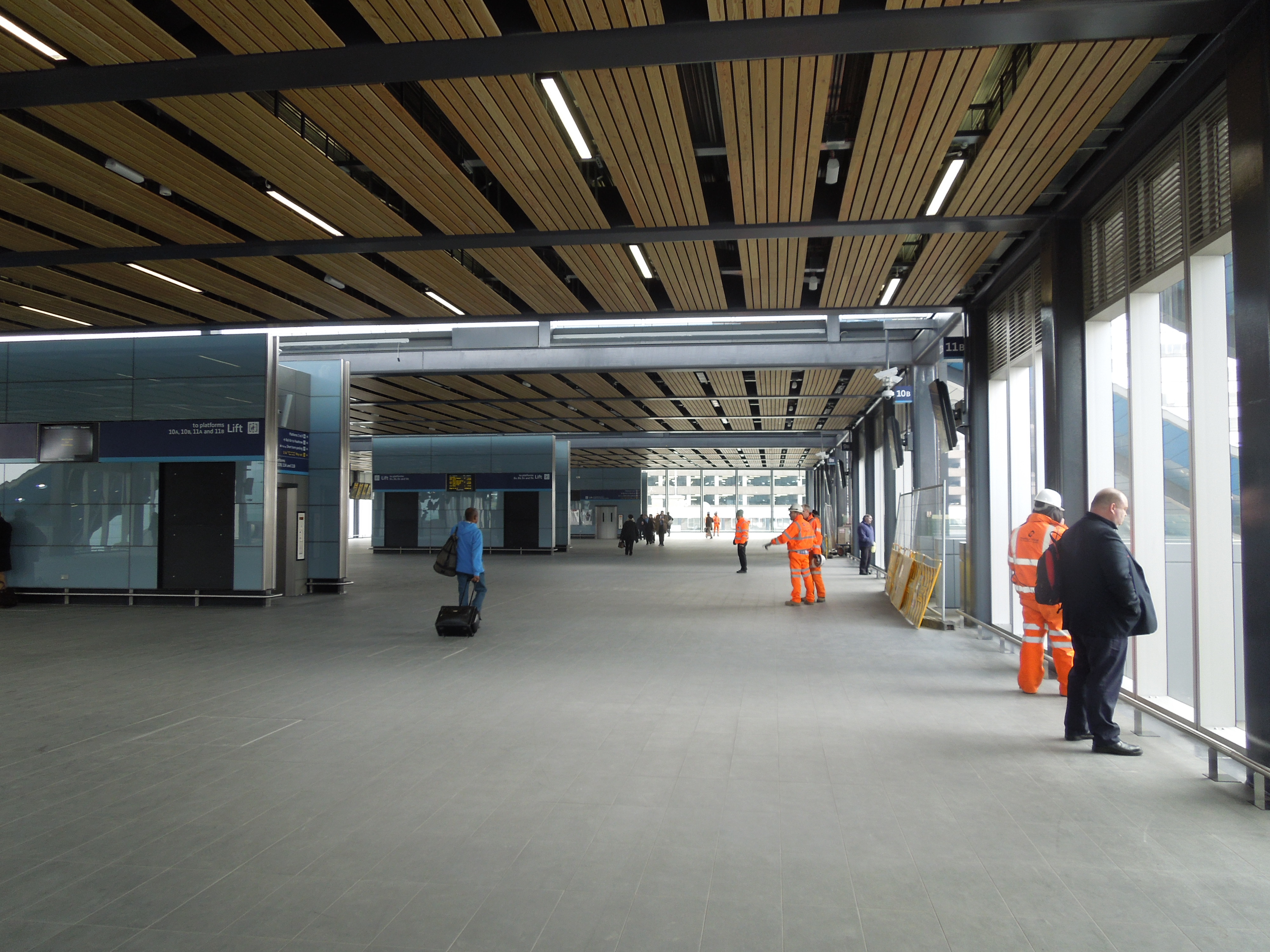
The picture shows the wide open spaces of the overbridge at Reading on the day it opened.
At Reading passengers can change trains, by waiting on the platform or sitting on the overbridge.
Would a similar design work at Woking?
Certainly something designed on similar principles to fit the circumstances of Woking station would!
Reading incidentally manages at least six tph on each face of the wide island platforms.
They are able to do this because.
- The platforms are very wide.
- Trains are increasingly Class 800 trains with modern doors.
- There are both up and down escalators.
- There are lifts.
I suspect, that when InterCity 125 trains no longer call at Reading and all trains are using modern in-cab signalling, that the frequencies of train through Reading will rise significantly.
Space To The West
To the West of Woking station, where the routes to Guildford and Basingstoke divide, there is a lot of space and if required a flyover or dive-under could be built to minimise the need for flat junctions.
West Byfleet and Byfleet & New Haw Stations
West Byfleet and Byfleet & New Haw stations are between Woking station and Byfleet Junction, where Heathrow and Waterloo services will divide.
This map from carto.metro.free.fr shows Byfleet & New Haw station and Byfleet Junction.
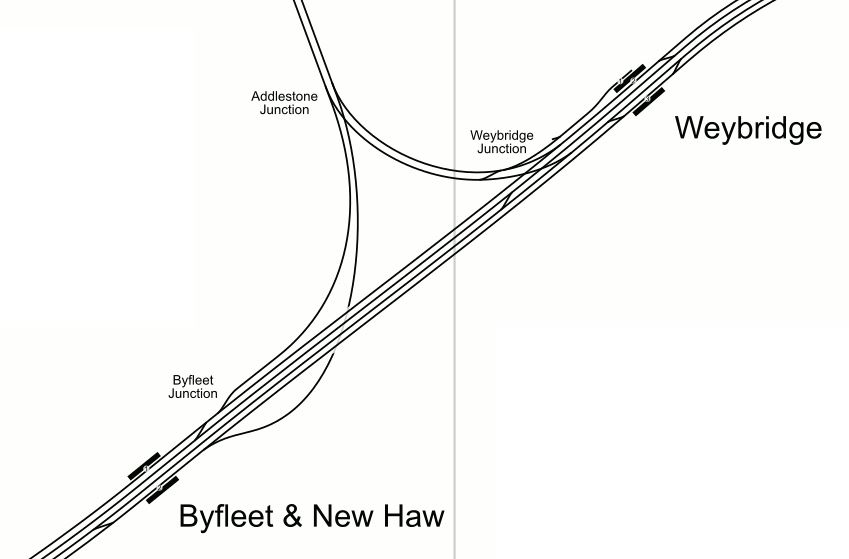
Note.
- There is only four tracks between Byfleet junction.
- Byfleet junction connects to the slow lines.
- Crossovers connect the slow and fast lines.
This layout means that fast trains coming from Heathrow will have to go through the slow platform at Byfleet & New Haw station.
There are two ways to increase safety.
- Increase the number of tracks between Woking station and Byfleet Junction to six, with dedicated tracks for Heathrow services.
- Rebuild the platforms on the two intermediate stations to the design rules in Two Platform Stations With 125 mph Trains.
It all depends, whether Heathrow Southern Railway want to use 125 mph trains on their services to Heathrow!
I discussed this in Will Heathrow Southern Railway Use Trains Capable Of 125 mph?, where I came the conclusion that the railway will be built to that standard.
Will Woking Station Be Rebuilt?
To work efficiently, as a railway station, I very much feel that Woking station will be rebuilt.
As at Reading, this will probably be done without too much disruption to passengers and trains.
It is quite a large station site and I wonder, if the ideal solution would be to build a concrete deck over the station and railway and put developments like housing, offices, shops, cafes and green spaces over the top.
Why shouldn’t we create more land for useful purposes?
The Station Concourse
The station could have a massive concourse.
- Wide lines of gates on either side would give quick access to the Town Centre and the Car Parking.
- Escalators and lifts would lead down to the platforms
- Useful shops and cafes would be on the concourse.
Think Edinburgh Haymarket station, only bigger, more spacious and with escalators
A Capacity Of 24 Trains Per Hour
The new station should be designed to allow up to 24 tph, through the station.
Currently, services include
- 14 tph to Waterloo
- 4 tph to Portsmouth
- 2 tph to Salisbury and/or Exeter
- 6 tph to Southampton, Bournemouth and/or Poole
Perhaps it would be sensible to design fora capacity of 12 tph on all branches.
With modern signalling and perhaps a degree of automatic train control, these frequencies shouldn’t be a problem.
Wide Platforms
Wide platforms, that allow passengers to change trains, by just getting off one train and onto another a few minutes later are an essential.
A double-faced island platform could be used or a single wide platform in each direction as on Thameslink at St. Pancras station.
The platforms at St. Pancras work reasonably well and have been designed to handle 24 tph.
- They have three escalators.
- They have a lift.
- The platforms are fully-manned.
- Passenger information displays are magnitudes better than most stations.
- There are Harrington Humps for step-free access to the Class 700 trains.
- Only one class of train uses the platforms.
- Modern digtal signalling is used.
- Passengers use the station to change trains, when perhaps they are on a train going to one direction and need another.
To complicate matters at St.Pancras, there is a flat junction to the North of the station, where services go to and from the Midland Main and East Coast Main Lines. It appears the junction causes no delays to services.
So perhaps at Woking we could see one very wide platform in each direction.
Building On Experiences At London Bridge, Reading And St. Pancras
I’m sure that Network Rail and their architects can use the experience gained at other stations in the UK to create an interchange station at Woking, that is fit for the 21st Century.
Conclusion
I feel there is a lot to be gained by creating a bold interchange at Woking station to integrate the Heathrow Southern Railway and the existing services into Waterloo
Progress On Access To Platforms 20-24 At Waterloo Station – June 21st 2018
These pictures show the creation of the new access routes between Platforms 20 to 24 and the Underground at Waterloo station.


I suspect there will be a lot more retail outlets.
Expanding Charing Cross Station
Network Rail have published the Kent Route Study, which says the following about Charing Cross station.
Charing Cross and Cannon Street stations are effectively full.
Only Platform 1-3 can take the longest trains at Charing Cross station.
The study suggests this as a solution at Charing Cross.
Charing Cross has just six 12-car platforms and Platforms 4, 5
and 6 are very narrow, leading to operational restrictions. Class 465
units cannot operate in 12-car into these platforms and selective
door operation is used on Class 375 units. A major rebuild of the
station could allow it to be extended south over the river, like
Blackfriars, providing compliant platforms and greater passenger
circulation. At concept level, a new link to Waterloo from a southern
entrance to Charing Cross may supersede Waterloo East allowing
the station area to be used for additional track capacity, but there
are likely to be many issues with a project on this scale.
This Google Map shows the station and the Northern |end of the Hungerford Railway Bridge.
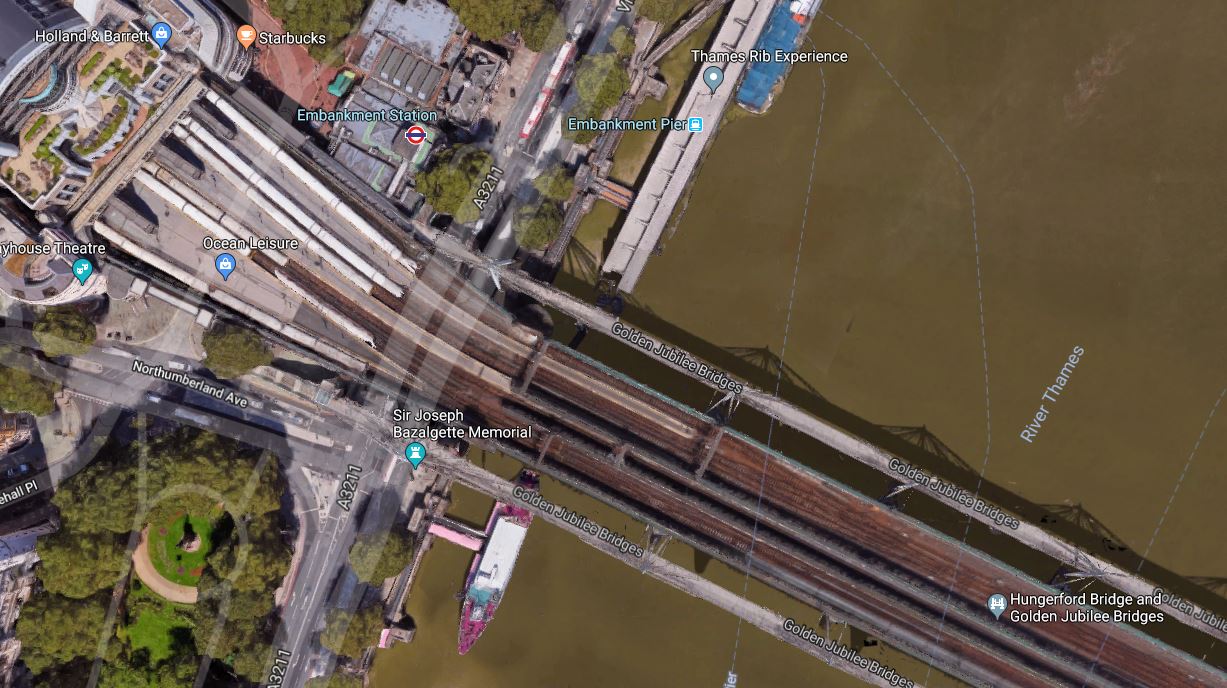
Note.
- Platforms are numbered 1 to 6 from top to bottom.
- The two Golden Jubilee footbridges on either side of the Hungerford bridge.
- There appear to be four or five tracks on the bridge.
- The bridge appears to tracks on either side of a central truss.
I went to Charing Cross station on the train and then walked across the downstream Golden Jubilee Bridge, which is the top one in the Google Map.





The Hungerford Bridge is certainly a good example of Victorian engineering, which appears to be two separate sections separated by a big truss, with trains running o either side.
A Cross River Charing Cross Station
Network Rail obviously feel that it will be possible to create a cross-River station, as they have published the idea in the Kent Route Study.
I shall outline some thoughts.
Will The Hungerford Bridge Have To Be Replaced?
Consider.
- Replacing the bridge and all the associated steel-work, would be an extensive and expendive project.
- The state of the bridge, which was refurbished about three decades ago, will be very important.
- Modern structural engineering can probably give the bridge sufficient integrity and possibly more space.
- The Golden Jubilee Footbridges, which are some of the busiest pedestrian crossings of the Thjames would obviously stay.
I feel that unless the bridge was in a really poor condition, that the current bridge won’t be replaced, but it will probably be substantially rebuilt.
Will Waterloo East Station Be Closed?
The Kent Route Study said this about Waterloo East station.
At concept level, a new link to Waterloo from a southern
entrance to Charing Cross may supersede Waterloo East allowing
the station area to be used for additional track capacity, but there
are likely to be many issues with a project on this scale.
The issues could include.
- A double-ended Charing Cross station would give benefits similar to those at Blackfriars.
- A Southern entrance to Charing Cross station would possibly be better than Waterloo East station for entertainment on the South Bank.
- Passengers transferring between Charing Cross and Waterloo services might have further to walk.
- Underground connections.
- Cutting out the stop at Waterloo East would save time. It would probably make it easier to stick to the timetabe.
- Some of the Waterloo East site could be released for development.
I wouldn’t be surprised to see Waterloo East station closed.
How Many Trains Could Use Charing Cross Station?
Currently, the six platforms at Charing Cross handle sixteen trains per hour (tph) in the Off Peak.
A well-run platform can turnback four tph, so it could be that the capacity of a well-laid out Charing Cross station could be 24 tph.
Other factors could increase the capacity of the station.
- The platforms could be long enough to handle two full length trains.
- Entrances on both sides of the river would ease passenger flows.
- The next generation of trains will hold more people in a train of a given length.
- Automatic Train Operation could be employed on trains out of Charing Cross.
Obviously, the engineers and architects will have to get the design right, but I believe this frequency could be possible.
Conclusion
I think expanding Charing Cross station across the river is a good plan and not impossible.
But the design could be tricky!
It also looks like the passenger capacity at Charing Cross could be substantially increased.
It Looks Like Platforms 21 And 22 Will Open Soon At Waterloo
I went to Reading from Platform 20 at Waterloo this morning.
There were temporary signs all over Platform 19 pointing to 20-22!
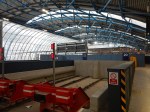
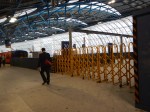
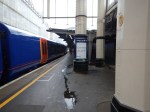
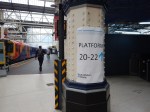
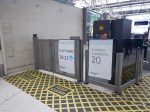
The barriers were blocking access to 21-22, but it looks like the extra two platforms are ready to open soon!
Transport for London Warns Crossrail 2 Could Be Delayed By Decade
The title of this post is the same as that of an article in the Financial Times.
It’s all about funding and probably the Government not wanting to finance all of the large rail projects.
- HS2
- Crossrail 2
- Northern Powerhouse Rail
- East West Rail
HS2 is funded and underway and the last two projects are being sorted, but the cost of Crossrail 2 is too much to digest.
I have believed for some time, that Crossrail 2 is a number of separate projects.
- Increasing capacity on the Waterloo suburban lines
- Increasing capacity on the Lea Valley Lines
- Creation of the mega-station at Euston-St. Pancras
- New trains
- The high capacity central tunnel
I will now look at each in detail.
Increasing Capacity On The Waterloo Suburban Lines
In An Analysis Of Waterloo Suburban Services Proposed To Move To Crossrail 2, I showed that it would be possible to run a service with Crossrail 2’s characteristics terminating in Waterloo.
I said the following were needed.
- More platform capacity in Waterloo.
- Modern high-performance 100 mph trains like Class 707 trains or Aventras.
- Some improvements to track and signals between Waterloo and Wimbledon stations.
- Wimbledon station would only need minor modifications.
- A measure of ATO between Waterloo and Wimbledon stations.
Much of the infrastructure works have been completed as I reported in It’s All Over Now, Waterloo!.
All it needs is Bombardier to build the new Class 701 trains for South Western Railway.
Increasing Capacity On The Lea Valley Lines
In Could A Lea Valley Metro Be Created?, I looked at the possibility of creating a Lea Valley Metro with the following characteristics.
- Four-tracks between Tottenham Hale and Broxbourne stations.
- Step-free stations.
- Termination in the unused loop at Stratford.
- 10-15 trains per hour.
- Links to Crossrail, the Underground and Southeastern Highspeed services at Stratford.
I came to the conclusion it was very much possible.
Creation Of The Mega-Station At Euston-St. Pancras
In Should A Mega-Station Be Created At Kings Cross-St. Pancras-Euston?, I looked at this mega station project for Crossrail 2.
I came to these conclusions.
- If Crossrail 2 is built, there will obviously be a mega station at Euston St. Pancras.
- But I believe that all the other improvements that will happen before HS2 opens may well be enough to cope with the extra capacity needed.
- Obviously though, any improvements must not compromise the building of Crossrail’s mega-station.
In Should A Mega-Station Be Created At Kings Cross-St. Pancras-Euston?, I proposed a four-level mega-station.
- Surface level – National Rail and HS2
- Sub-surface level – Circle, Hammersmith and City and Metropolitan Lines
- Deep level – Northern, Piccadilly and Victoria Lines.
- Very deep level – Crossrail 2
Lines would be connected by escalators, travelators and lifts going all over the place.
It would not be that different to the double-ended Crossrail station at Moorgate-Liverpool Street station, which I described in London’s First Underground Roller Coaster, except that it connects three stations instead of two.
This would enable Crossrail 2 to be bored through at a deeper level after Euston station had been rebuilt for HS2.
In terms of Crossrail 2, the creation of the mega station at Euston St. Pancras could be the last project to be completed.
New Trains
This should be the easy bit, as surely using the same Class 345 trains on Crossrail and Crossrail 2, would be an objective, if it were possible.
The High Capacity Central Tunnel
I’ve never built a tunnel, although my software; Artemis helped to build the Channel Tunnel, but I would suspect that building the central tunnel for Crossrail 2 will be easier than building that for Crossrail.
So many things like riding a bike or sex are a lot easier the second time.
There must be so many lessons from Crossrail that can be applied to Crossrail 2.
If all of the central stations on the tunnel, from Dalston to Wimbledon, where there is interchange with Crossrail 2 can be made tunnel-ready, then I don’t see why boring the central tunnel can’t be one of the last jobs to be started.
The tunnel boring machines would then just pass through the stations to link them all together.
It’s probably not as simple as that, but it is going to be a lot easier job than Crossrail.
The Importance Of The Victoria Line
I’ve never seen this said before, but one of the keys to building Crossrail 2 is the Victoria Line or Dear Old Vicky.
I believe the Victoria Line should be updated as follows to be as near the standard of Crossrail as possible, by using the existing trains, track and signalling and by updating the stations.
- Addition of the missing escalators and other features left out to save money in the 1960s..
- Full step-free access at all stations.
- Addition of new entrances at Oxford Circus, Highbury and Islington and Walthamstow Central.
- Better interchange with the Overground at Blackhorse Road and Walthamstow Central.
- Better interchange with National Rail at Brixton, Vauxhall, Finsbury Park, Seven Sisters and Tottengham Hale.
- Forty tph between Brixton and Walthamstow Central.
Forty tph may need a reversing loop at Brixton and an extra one-platform station at Herne Hill.
I believe that an update of this type and scale could be applied to the Victoria Line without causing too much grief for passengers. The work on the stations is necessary to cope with the current and increased passenger numbers and could be carried out in much the same way as the upgrade at Victoria station has been done in the last few years.
The Victoria Line would then offer a high capacity link between Tottenham Hale and Vauxhall prior to the building of Crossrail 2’s central tunnel.
Passengers from say Broxbourne to Hampton Court would take the following route.
- Lea Valley Line from Broxbourne to Tottenham Hale – (10 tph)
- Victoria Line from Tottenham Hale to Vauxhall – (>30 tph)
- South Western Railway from Vauxhall to Hampton Court – (4 tph)
Two changes (both hopefully step-free) would be needed, but with improvement to the National Rail routes at both ends, it would be faster than now.
The Importance Of The Bakerloo Line
Ask TfL’s Journey Planner, which is the quickest way from Tottenham Hale to Waterloo and it gives the following route.
- Victoria Line from Tottenham Hale to Oxford Circus
- Bakerloo Line from Oxford Circus to Waterloo
There is a simple cross-platform interchange at Oxford Circus, with the two legs taking 16 and 8 minutes respectively.
Currently, the Bakerloo Line has a frequency of twenty-two tph and plans have been mooted, that will see this going to twenty-seven tph by 2033.
It looks like when combining an updated Victoria Line with the current Bakerloo Line, you get a excellent connection that can stand-in for the Crossrail 2 central tunnel between Tottenham Hale and Waterloo.
But the Bakerloo Line might be extended to Lewisham, so will this extension make the combined Victoria/Bakerloo route more important.
The extended Bakerloo Line is not planned to have a connection with Crossrail 2, so using the Victoria Line across Central London will probably be the fastest way from say Lewisham to Enfield Lock.
It looks to me, that the cross-platform interchange at Oxford Circus between the Bakerloo and Victoria Lines is more important than anybody thinks and will continue to be so.
The Splitting Of The Northern Line
TfL would like to split the Northern Line into two branches, but this can’t be done until Camden Town station is rebuilt around 2024.
The only effect this split will have on Crossrail 2, is it will give extra routes to Euston station, which may probably make it less important that Crossrail 2 is completed before HS2.
A Possible Timetable
This is very much speculation on my part.
- 2020 – Improved Overground services to Cheshunt, Chingford and Enfield Town using new Class 710 trains.
- 2021 – Increased Greater Anglia services on the Lea Valley Lines using new Class 720 trains.
- 2021 – Waterloo suburban branches running at four tph using new Class 701 trains.
- 2024 – Extended Camden Town station opens.
- 2024 – Splitting of the Northern Line
- 2024 – More capacity on the Victoria Line
- 2025 – Increased services on the Lea Valley Line after four-tracking.
- 2025 – Upgraded Euston station opens with better connection to the Underground.
- 2026 – Old Oak Common statio opens
- 2026 – HS2 opens to Birmingham
The Crossrail 2 central tunnel could be built, when traffic levels are predicted to be too much for the Victoria Line.
Conclusion
This analysis says to me that Crossrail 2 could be planned as a series of much smaller projects, that would give passengers benefits from the early-2020s and also ease the funding problems for the line.
But the analysis also says that if the central tunnel is not built before the 2040s, then the Victoria Line must be upgraded to create a high capacity link between Tottenham Hale and Vauxhall or Waterloo using the Bakerloo Line.
It’s All Over Now, Waterloo!
As was planned, the former International platforms 21 to 24 are now closed and will remain so until the end of next year.
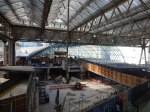
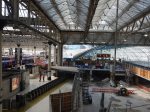


Note that Platform 20 is still open and can be accessed from a hole in the wall on Platform 19.
The platform closure is to allow the following to be done..
- Access to the Underground to be finished.
- Lifts to be added to the platforms.
- The platforms to be completed.
- Retail units to be added to the area.
Operationally, Waterloo station now seems to have at least the same amount of capacity as before the modifications started, but with the following changes.
- Platforms 1 to 6 can now all take ten-car trains.
- Access to the Underground has been improved on Platforms 1 to 4.
- A more efficient track layout has been created tp Platforms 1 to 6.
- The frequency of trains between Waterloo and Wimbledon has been increased.
There is still Platforms 21 to 24 to be added to the station to increase capacity.
South Western Railway’s Plans
In the September 2017 Edition of Modern Railways, there is a short article entitled Uplift In Windsor Line Capacity.
South Western Railway are proposing to make two major timetable changes in December 2018 and December 2020.
The first will see the following changes.
- Waterloo to Reading services updated from two trains per hour (tph) to four tph.
- Waterloo to Windsor services doubled to 4 tph.
They will be run by the new Class 707 trains.
This will be the first benefit of the Waterloo Upgrade.
As Waterloo handles about forty tph at present, this represents a ten percent capacity upgrade for trains.
The LaMiLo Project
I don’t know whether the new platforms or any others at Waterloo have been designed so that they can handle freight movements as in the LaMiLo Project, but you’d think it would be a good idea to make sure new platforms in major cities could handle parcel and pallet trains, where the goods will be collected and distributed by electric vehicles in the City Centre.
Conclusion
It appears that platforms 1 to 6 are now fully operational, although, I think that the lifts still need to be fitted.
So it seems that the doom mongers didn’t get this one right!
But the engineers and project managers seem to have done!

