Effort To Contain Costs For Hoo Reopening
The title of this post, is the same as that of an article in the April 2022 Edition of Modern Railways.
This is the first paragraph.
Medway Council is working with Network Rail and other industry players in an effort to make restoration of a passenger service to Hoo on the Isle of Grain branch feasible. The Council was awarded £170 million from the Housing Infrastructure Fund in 2020 to support schemes to facilitate building of 12,000 new houses in the area, with £63 million of the HIF money for reinstatement of services on the Hoo Branch.
The article mentions, this new infrastructure.
- A new station South of the former Sharnal Street station.
- Works to level crossings, of which there are six between Gravesend station and proposed site of the new Hoo station.
- A passing place at Hoo Junction, where the branch joins the North Kent Line.
- A passing place at Cooling Street.
Note.
- The single-platform Bow Street station cost £8 million.
- The single-platform Soham station cost nearly £22 million, but it has a bridge.
- Reopening the Okehampton branch and refurbishing Okehampton station cost £40 million.
I think costs will be very tight.
Possible Train Services
This is said in the article about the train service on the branch.
While third rail electrification was originally proposed, this idea has been discarded in favour of self-powered trains on the branch, such as battery-operated trains. Possible destinations include Gravesend, Northfleet or Ebbsfleet for interchange with trains going to London, or extension of London to Dartford or Gravesend services over the branch, using hybrid third-rail/battery trains.
Consider.
- Merseyrail will be using battery-electric trains to provide services to the new Headbolt Lane station, as permission was not available for extending the existing third-rail track.
- Electrification would probably cost more than providing a charging system at Hoo station.
- Turning the trains at Gravesend, Northfleet or Ebbsfleet could be difficult and a new bay platform would probably break the budget.
- Both Dartford and Gravesend have two trains per hour (tph), that could be extended to the new Hoo station.
- Hoo junction to Hoo station is no more than five or six miles.
- There are also half-a-dozen level crossings on the route, which I doubt the anti-thord rail brigade would not want to be electrified.
- The Dartford services have a possible advantage in that they stop at Abbey Wood station for Crossrail.
- It may be easier to run services through Gravesend station, if the terminating service from Charing Cross were to be extended to Hoo station.
- A two tph service between London Charing Cross and Hoo stations, with intermediate stops at at least London Bridge, Lewisham, Abbey Wood and Dartford would probably be desirable.
I feel that the most affordable way to run trains to Hoo station will probably be to use battery-electric trains, which are extended from Gravesend.
It may even be possible to run trains to Hoo station without the need of a charging system at the station, which would further reduce the cost of infrastructure.
Possible Trains
Consider.
- According to Wikipedia, stopping Gravesend services are now run by Class 376, Class 465, Class 466 and Class 707 trains.
- Real Time Trains indicate that Gravesend services are run by pathed for 90 mph trains.
- Class 376, Class 465 and Class 466 trains are only 75 mph trains.
- Class 707 trains are 100 mph trains and only entered service in 2017.
I wonder, if Siemens designed these trains to be able to run on battery power, as several of their other trains can use batteries, as can their New Tube for London.
In Thoughts On The Power System For The New Tube for London, I said this.
This article on Rail Engineer is entitled London Underground Deep Tube Upgrade.
This is an extract.
More speculatively, there might be a means to independently power a train to the next station, possibly using the auxiliary battery, in the event of traction power loss.
Batteries in the New Tube for London would have other applications.
- Handling regenerative braking.
- Moving trains in sidings and depots with no electrification.
It should be born in mind, that battery capacity for a given weight of battery will increase before the first New Tube for London runs on the Piccadilly line around 2023.
A battery-electric train with a range of fifteen miles and regenerative braking to battery would probably be able to handle a return trip to Hoo station.
An Update In The July 2022 Edition Of Modern Railways
This is said on page 75.
More positive is the outlook for restoration of passenger services on the Hoo branch, where 12,000 new houses are proposed and Medway Council is looking to build a new station halfway down the branch to serve them. As the branch is unelectrified, one idea that has been looked at is a shuttle with a Vivarail battery train or similar, turning round at Gravesend or another station on the main line.
Steve White worries that this could mean spending a lot of money on infrastructure work and ending up with what would be a sub-optimal solution. ‘Do people really want to sit on a train for 10 minutes before having to get out and change onto another train? I don’t think so. Ideally what you want is through trains to London, by extending the Gravesend terminators to Hoo.’
That would require a battery/third rail hybrid unit, but Mr. White thinks that is far from an outlandish proposal; with Networker replacement on the horizon, a small bi-mode sub-fleet could dovetail neatly with a stock renewal programme. Medway Council and rail industry representatives are working on coming up with a solution for Hoo that could do what it does best; facilitating economic regeneration in a local area.
Note that Steve White is Managing Director of Southeastern.
I’ll go along with what he says!
Conclusion
I believe that a well-designed simple station and branch line could be possible within the budget.
A battery-electric upgrade to Class 707 trains could be a solution.
But the trains could be very similar to those needed for Uckfield and to extend electric services in Scotland.
Over 10,000 People Use Reopened Dartmoor Line In First Two Weeks
The title of this post, is the same as that of this press release from the Dartmoor Line.
These are the first three paragraphs of the press release.
More than 10,000 people have travelled on the Dartmoor Line in the first two weeks since its reopening.
The line reopened for regular year-round, all-week passenger services on Saturday 20 November and demand for the trains linking Okehampton and Exeter has continued to remain high.
The reopening of the Dartmoor Line is the first of the Government’s Restoring Your Railway schemes, made possible thanks to over £40 million Government investment.
All concerned must be very pleased, especially as it was delivered £10 million under budget and within nine months, ahead of time.
I described my first use of the new route to Okehampton in A Few Hours In Okehampton, where I came to this conclusion.
Exeter and Okehampton is a well-thought out reopening, that will be welcomed in the South West of England.
It would appear the passenger numbers confirm my conclusion.
Since my visit to Okehampton, I have wondered, whether the apparent success of the Okehampton reopening, would have any other effects.
In the December 2021 Edition of Modern Railways, there is an article, which is entitled South West Seeks More Reopenings, with a sub-title of Okehampton Service Could Be A Precursor.
The article details a number of projects.
Marsh Barton Station
A new Marsh Barton station is under construction and has a December 2022 opening date.
Edginswell Station
A new Edginswell station is being planned to serve Torbay Hospital on the Riviera Line, with a possible opening of 2025.
Collumpton And Wellington Stations
The last budget chipped in five million, so that preferred options and a full business case can be developed for these two new stations.
- Collumpton station will probably be developed at the site of the old station, which is close to Collumpton Services on the M5.
- Wellington station will probably be on a new site at Longworth Farm, where five hundred houses are being developed.
The Modern Railways article also says this about housing.
Thousands of houses are expected to be built in both towns in the next decade, making provision of railway stations highly desirable to avoid soaring road congestion.
Network Rail and Great Western Railway also seem to be experimenting with different service patterns through the two stations.
- Both hourly and two-hourly services have been tested.
- In the December 2021 timetable there is now a two-hourly GWR Castle service over the Taunton and Exeter stretch, that will call at the two new stations, when they open.
- To have an hourly service there will also be a Taunton and Exeter shuttle.
This service would provide access to education and employment in Exeter, Taunton and Bristol.
The cost benefit ratio is above the Government’s limit for backing of two.
Opening of the two new stations is pencilled in for 2025.
Barnstaple And Axminster
The Modern Railways article also says this.
As part of the Devon Metro concept, Devon County Council aspires to extend further eastwards the hourly Barnstaple services that currently terminate at Exeter Central, perhaps as far as Axminster.
This would need track improvements East of Pinhoe station.
The current timings of the two sections are as follows.
- Exeter Central and Axminster – 37 minutes
- Exeter Central and Barnstaple – 74 minutes
These timings probably mean that a round trip between Axminster and Barnstaple can be done in a convenient four hours, so an hourly service would need four trains.
From sometime next year, when the frequency of the Exeter Central and Okehampton service becomes hourly, the services along the route will be as follows.
- Exeter St. Davids and Axminster – Hourly
- Exeter Central and Barnstaple – Hourly
- Exeter Central and Okehampton – Hourly
There is also a service, that runs every thirty minutes between Exmouth and Paignton via Exeter Central and Exeter St. Davids, Newton Abbot and Torquay.
The frequencies on the various sections would be as follows.
- Barnstaple and Crediton – One tph
- Okehampton and Crediton – One tph
- Crediton and Exeter St. Davids – Two tph
- Paignton and Exeter St. Davids – At least two tph
- Exeter St. Davids and Exeter Central – Five tph
- Exeter Central and Axminster – One tph
- Exeter Central and Exmouth – Two tph
Note.
- tph is trains per hour.
- Other services run between Exeter St. Davids and Paignton stations.
- In recent years a new station at Cranbrook has opened between Exeter Central and Axminster.
Extending the Barnstaple and Exeter Central service to Axminster would double the frequency on the Exeter Central and Axminster section.
Axminster station is shown in this Google Map.
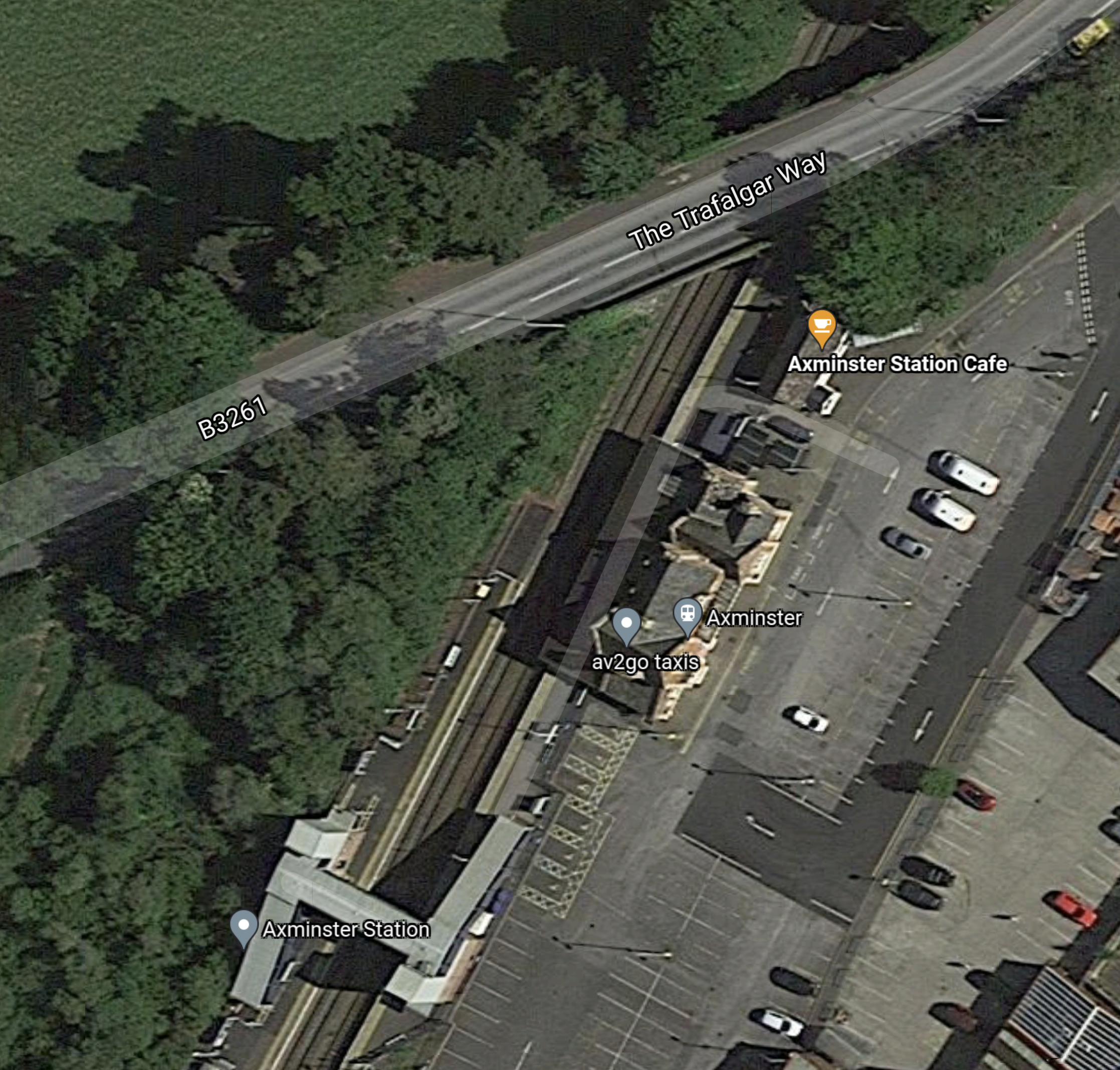
Note.
- The station has two platforms.
- The station appears to have a bridge with lifts.
- The station has a good road connection and the parking could probably be extended.
Axminster station could certainly handle a fast train between London and Exeter, a stopping train to Barnstaple and all the passengers.
Devon Metro
It does appear that the services of the Devon Metro are coming together.
- Paignton and Exmouth is already running.
- Barnstaple and Exeter Central is already running.
- Okehampton and Exeter Central has just started.
- Exeter St. Davids and Taunton via new stations at Collumpton and Wellington is being planned.
- Barnstaple and Exeter Central needs to be extended to Axminster.
How many other cities in the UK could benefit from a metro of this quality?
Bere Alston And Tavistock
The Modern Railways article also says this.
Meanwhile, further west on the former Southern network, restoration of services from Bere Alston to Tavistock has long been proposed, giving Tavistock a rail link to Plymouth. Christian Irwin, Network Rail’s Industry Programme Manager (South West), who oversaw the Okehampton reopening that came in early and underbudget, says he is keen to repeat the trick on the Tavistock route.
It is probably more difficult than at Okehampton.
- The trackbed is mainly intact, but the track has been lifted.
- The track to be laid is shorter than at Okehampton.
- Two structures at the Southern end need to be replaced.
- A new station needs to be built at Tavistock.
Devon County Council seems to be in control of the land needed.
Proposed services seem to be as follows.
- Plymouth and Gunnislake via Bere Alston – One train per two hours (tp2h)
- Plymouth and Tavistock via Bere Alston – One tph
Overall it looks like the Tavistock project will be more expensive than that at Okehampton, but there would appear to be more contributions from developers.
Devon County Council are hoping that the Tavistock link could be build in the next decade.
Tavistock And Okehampton
After the reconnection of Tavistock to the National Rail network, the council would hope to complete the link between Tavistock and Okehampton.
This would give the following benefits.
- Improved public transport connectivity in West Devon and North Cornwall.
- Improve revenue potential at Okehampton and Tavistock stations.
- Create an easier freight route.
- Create an alternative route, if the coastal route is closed.
It is a challenging project, but I feel it will be possible by perhaps 2035.
Headbolt Lane Station Tipped For Go-Ahead
The title of this post, is the same as that of this article on Place North West.
This is the first paragraph.
Knowsley Council’s December planning committee is expected to approve Network Rail’s plans for a new station in Kirkby.
The article also says that the station could open by Spring 2023.
I wonder, if Liverpudlians will create Headbolt Lane station in record time, as they did a few miles down the line at Maghull North station, which I wrote about in How To Build A Station In Nine Months.
If they do open in early 2023, it is likely to be the first new rail line in the UK, that has been designed to be run by battery-electric trains.
As Liverpudlians like to be first, I would expect that this station will open by Spring 2023. Judging by Network Rail’s performance on bringing the Dartmoor Line to Okehampton station back into service, I don’t suspect it is an impossible dream.
A Few Hours In Okehampton
Today, I took a trip by train to Okehampton and spent a couple of hours in the town.
I took the 10:04 from Paddington and after changing at Exeter St. Davids, I arrived in Okehampton at 13:11
Coming back, I took the 15:24 from Okehampton and arrived in Paddington at 18:24.
So the journeys took about three hours.
These pictures show Okehampton station.






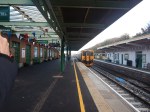
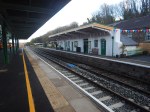

Note.
- The train was two Class 150 trains coupled together.
- I suspect the platform is long enough to take a GWR Castle train
- The bus in the pictures is the 118, of which more later.
- It looked like a buffet was under construction.
- The new train information displays.
I took the bus down to Okehampton, where I took these pictures, as I walked around.












Note, that the first three pictures show the museum and the cycle works cafe, where I had a coffee and a delicious gluten-free flapjack.
I have a few thoughts on my journey, both now and in the future.
The 118 Bus
The 118 bus runs between Tavistock and Okehampton station.
- It serves the villages in between.
- It meets the trains from Exeter and takes them to Okehampton Town Centre.
- It picks people up from Okehampton Town Centre and takes them to the station just before the trains leave for Exeter.
- It accepts contactless payment.
It is a well-designed bus route that links passengers with the trains to and from Exeter.
Many other towns could follow Okehampton’s lead.
Walking Between Station And The Town Centre
I could certainly walk down the hill, but one of the locals said that it rather a stiff walk up the hill that takes about fifteen minutes, if you’re up to it. He also felt a taxi would be about a fiver.
Could A Battery Train Work The Service between Exeter And Okehampton Station?
Consider.
- It is 24.8 miles between Exeter St. David and Okehampton stations.
- It is a rise of under 200 metres.
- The Class 150 trains climbed the hill at around 30 mph, but in places it was lower.
- Hitachi, Stadler and Vivarail are talking about battery-electric trains with a range of fifty miles.
- I was talking to one of the Great Western Railway staff and he said in the days of steam, the trains used to roll down the hill into Exeter.
- There is the 18 MW Den Brook Wind Farm close to Okehampton.
- With regenerative braking rolling down would recharge the batteries.
I suspect, that designing a battery-electric train to climb the hill is possible.
My rough estimate says that a battery of around 500 KWh could be enough.
Are The People Of Devon Going To Use The Train?
I took these pictures as I joined the train back to Exeter.



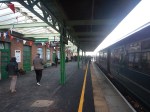
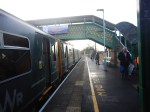


The people were a mixture of those arriving from Exeter and those returning to Exeter, but most seats were taken on the way back.
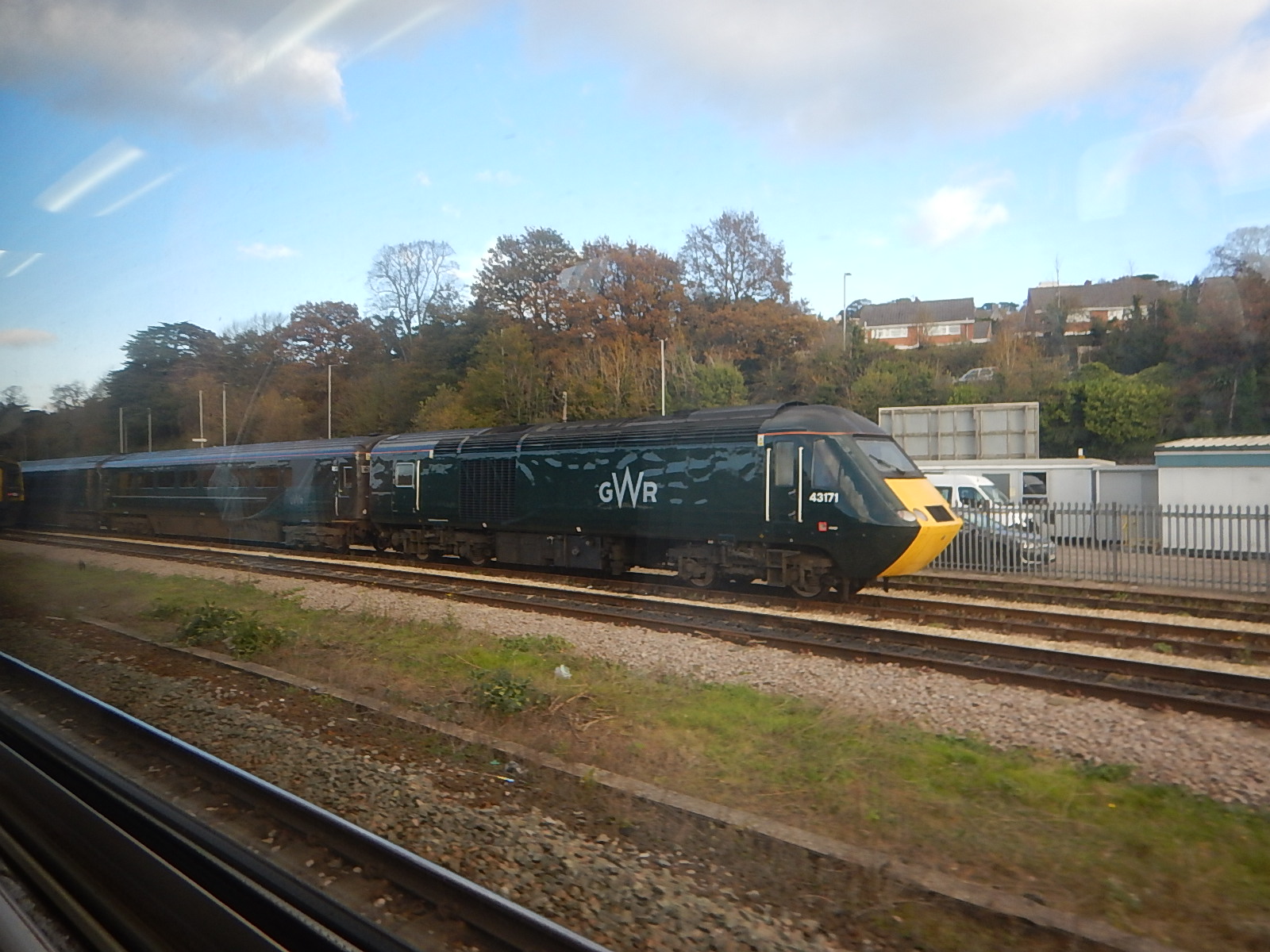
I can see Great Western Railway running Castles, like the one in the picture, for services on this route in the Summer, both to attract passengers and to cope with their numbers.
Local Reaction
I talked to several local people and they were all pleased that the service has been reinstated.
The only complaint was that it should have happened sooner.
Is A Day Trip Possible?
Suppose you live in London and your mother or other close relative lives in Okehampton.
Would it be possible to be able to visit them on their birthday for a good lunch?
Consider.
- At the present time, trains from London, connect to the Okehampton service about every two hours.
- The first connecting service leaves Paddington at 08:04.
- Trains take around three hours between Paddington and Okehampton.
- From probably May 2022, there will be hourly connections to Okehampton.
- The last London train leaves Exeter at 20:46.
If you wanted to be a real hero, you could always take the Night Riviera back to London, which leaves Exeter at 0100.
I would say that if they planned it properly, a day trip from London to Okehampton by train, is feasible for a special occasion.
Will Great Western Railway Ever Run Direct Trains Between London Paddington And Okehampton?
I doubt this would be a regular service but I do believe that it is technically feasible.
- Trains would need to reverse at Exeter St. Davids.
- Trains would probably be limited to five car Class 802 trains.
- Okehampton station could probably accommodate a five-car Class 802 train.
- I estimate that the journey time would be a few minutes under three hours.
It should be noted that Paignton gets around three trains per day (tpd) from Paddington.
It might be that if the demand was there, a few trains per day could be run to and from London, by splitting and joining with the Paignton service at Exeter St. Davids.
- If both services were run by five-car trains, there would be a ten-car service to and from London.
- It certainly looks that GWR wouldn’t have to spend a great deal to implement the service.
- The extra capacity of the five-car train might help commuters into Exeter.
It is likely that this service wouldn’t run until Okehampton Parkway station is opened, which would attract travellers from the West, who would arrive at the station along the A 30 dual-carriageway
I can certainly see a service leaving Okehampton at around seven in the morning and getting into London about ten, paired with a late afternoon/evening train home.
It should be noted, that First Group with their Lumo service between London and Edinburgh, seem to negotiate for paths that create revenue.
But I do wonder, if one of the reasons , that Great Western Railway, Network Rail, Devon County Council, the Department of Transport and the Government were all very much in favour of reopening this route, is that it creates a valid alternative route between London and Plymouth and all places to the West, should the main route via Dawlish be breached again by the sea.
Okehampton station and the future Okehampton Parkway station are both close to the A30 which would allow express coaches to Plymouth and all over West Devon and Cornwall to bypass the trouble.
Hopefully, because the alterative route has been enabled the worst won’t happen.
Conclusion
Exeter and Okehampton is a well-thought out reopening, that will be welcomed in the South West of England.
The Dartmoor Line Is Back: ‘I Can’t Imagine Why Anyone Would Want To Arrive On The Moor Any Other Way’
The title of this post, is the same as that of this article in The Times.
The article is in the travel section and describes what you might do if you took a train to Okehampton.
I wondered how many of the other Saturday papers and web sites have got articles about Okehampton and the railway.
So I searched and found these.
- The Guardian talks of Devon joy and a financial boost for the town.
- ITV says it will boost tourism and give access to education and work for local people.
- Devon Live also talks of joy and a feat of engineering.
- The Tavistock Times Gazette talks of a new bus service between Tavistock and the railway at Okehampton.
It’s a much more optimistic situation compared to that portrayed in this article in The Times from 2011, which was entitled Okehampton Workers Living On Food Parcels After Business Closures.
Trains Restart On Dartmoor Rail Line After 49 Years
The title of this post, is the same as that of this article on the BBC.
This shows what Network Rail can do, if they pull out all the stops.
I have said this before in Railway Restored: Regular Trains To Run On Dartmoor Line For First Time In 50 Years.
Network Rail have set themselves a good precedent to open the line in nine months and £10 million under budget.
But it could turn out to be one of the most significant days in the development of the railways of the UK.
Well done! Network Rail!
Here’s to the next reopening!
Railway Restored: Regular Trains To Run On Dartmoor Line For First Time In 50 Years
The title of this post is the same as that of this press release from Network Rail.
These are the three main points of the press release.
- First passenger train on the first Restoring Your Railway reopening will run on Wednesday 17 November, ahead of public services resuming on Saturday 20 November
- Restored in just nine months, and delivered £10m under budget, transforming a mothballed former freight railway to regular services.
- Reopening is the first of the Government’s Restoring Your Railway schemes to return to service, fulfilling a manifesto commitment.
This Network Rail picture shows the first train.
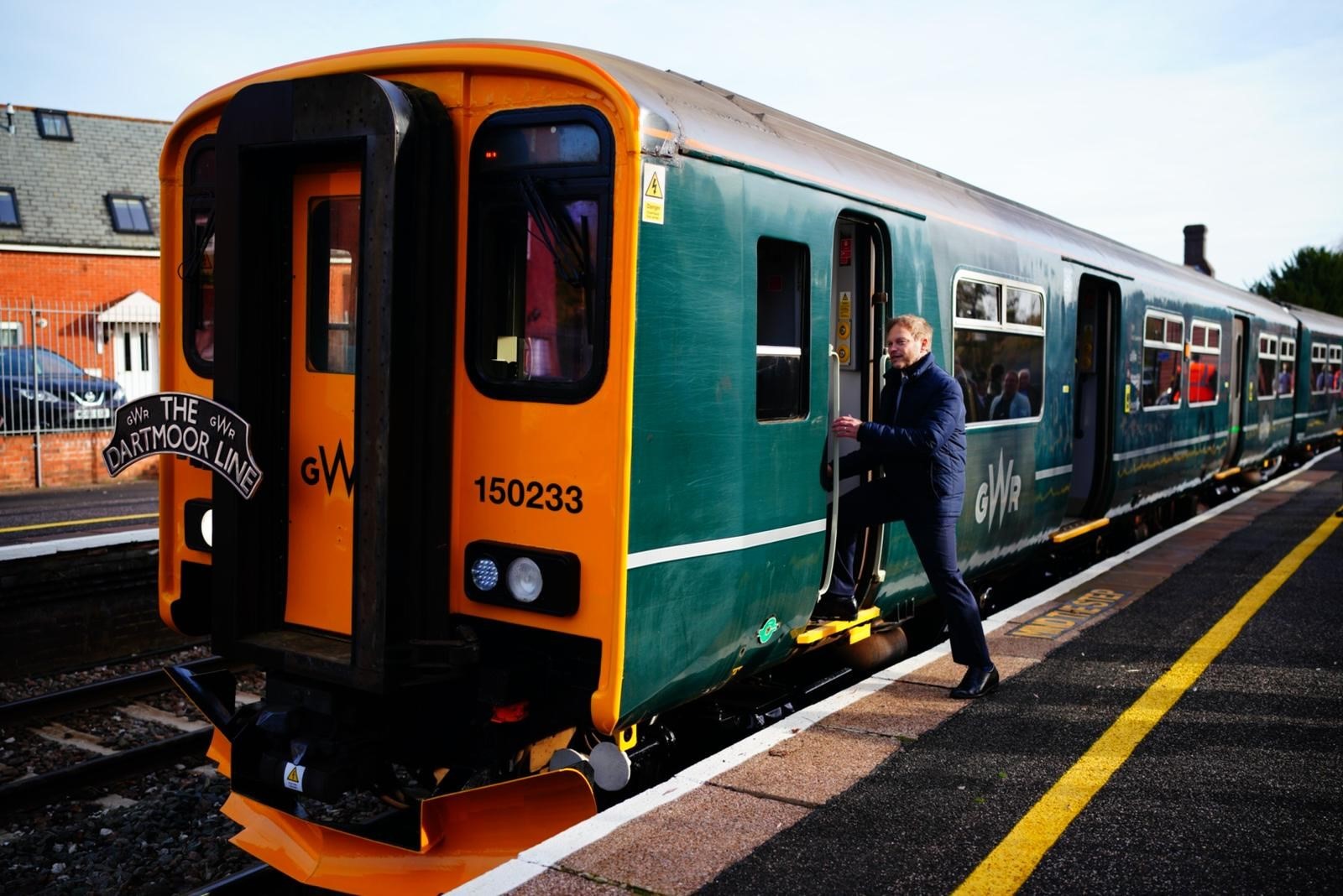
It’s good to see, GWR made a name plate.
Network Rail have set themselves a good precedent to open the line in nine months and £10 million under budget.
Let’s hope they repeat this performance on other reopened lines.
Reinstating The Line Between Tavistock And Bere Alston And Providing New Services To And From Plymouth
On October 27th this Beeching Reversal Project was given £50,000 to build a case for reinstating.
This project finally seems to be getting going.
The complete reinstatement between Exeter and Plymouth seems to be developing into a three-phase project.
- Phase 1 – Exeter and Okehampton – This is now complete and trains are test running, with services due to start on the 20th November.
- Phase 2 – Tavistock And Bere Alston – This section is being planned and if approved could be the next section to be opened.
- Phase 3 – Tavistock and Okehampton – This would complete the reinstatement of the route between Exeter and Plymouth.
These are my thoughts.
The Completion Of Phase 1
Trains are now test running to between Exeter and Okehampton.
The full service starts on the 20th November.
- On that day, there will be eight trains per day (tpd) in both directions.
- Trains will leave Exeter at 06:32, 08:41, 10:36, 12:37, 14:38, 16:36, 18:48 and 21:00.
- Trains will leave Okehampton at 07:39, 09:45, 11:39, 13:39, 15:39, 17:46, 19:51 and 22:34.
- Trains are times to take around forty minutes for each trip.
- The service is pathed as a Class 150/153/155/156 DMU
- The service is planned for a maximum speed of 75 mph.
Note.
- This is approximately one train per two hours (tp2h).
- It looks like the service could be worked by a single train shuttling all day.
The Wikipedia entry for Okehampton station says this.
The service will increase to hourly towards the end of 2022.
It has been a very smooth restoration of service.
Okehampton Parkway Station
Okehampton Parkway station is to be built to the East of Okehampton at Stockley Hamlet.
- It will be close to a junction with the A30 dual-carriageway, which links London and Penzance.
- The A30 connects to the Cornish Main Line in Cornwall at Bodmin, Redruth and Penzance.
It looks like it could be a very useful Park-and-Ride station for Exeter and Okehampton.
Could The Okehampton Stations Be Used To By-Pass Dawlish?
In 2014, the sea breached the sea wall and the railway at Dawlish, on the Great Western Main Line between Exeter and Plymouth. Trains couldn’t run past Exeter.
I very much feel that with global warming and seemingly increasingly bad weather that we can’t say that a breach won’t happen again.
Could it be possible to use the one of the Okehampton stations, as a terminal for a Rail Replacement service that connected to Plymouth and Cornwall?
The Gap Between Okehampton And Bere Alston
This Google Map shows the gap between Okehampton and Bere Alston stations.
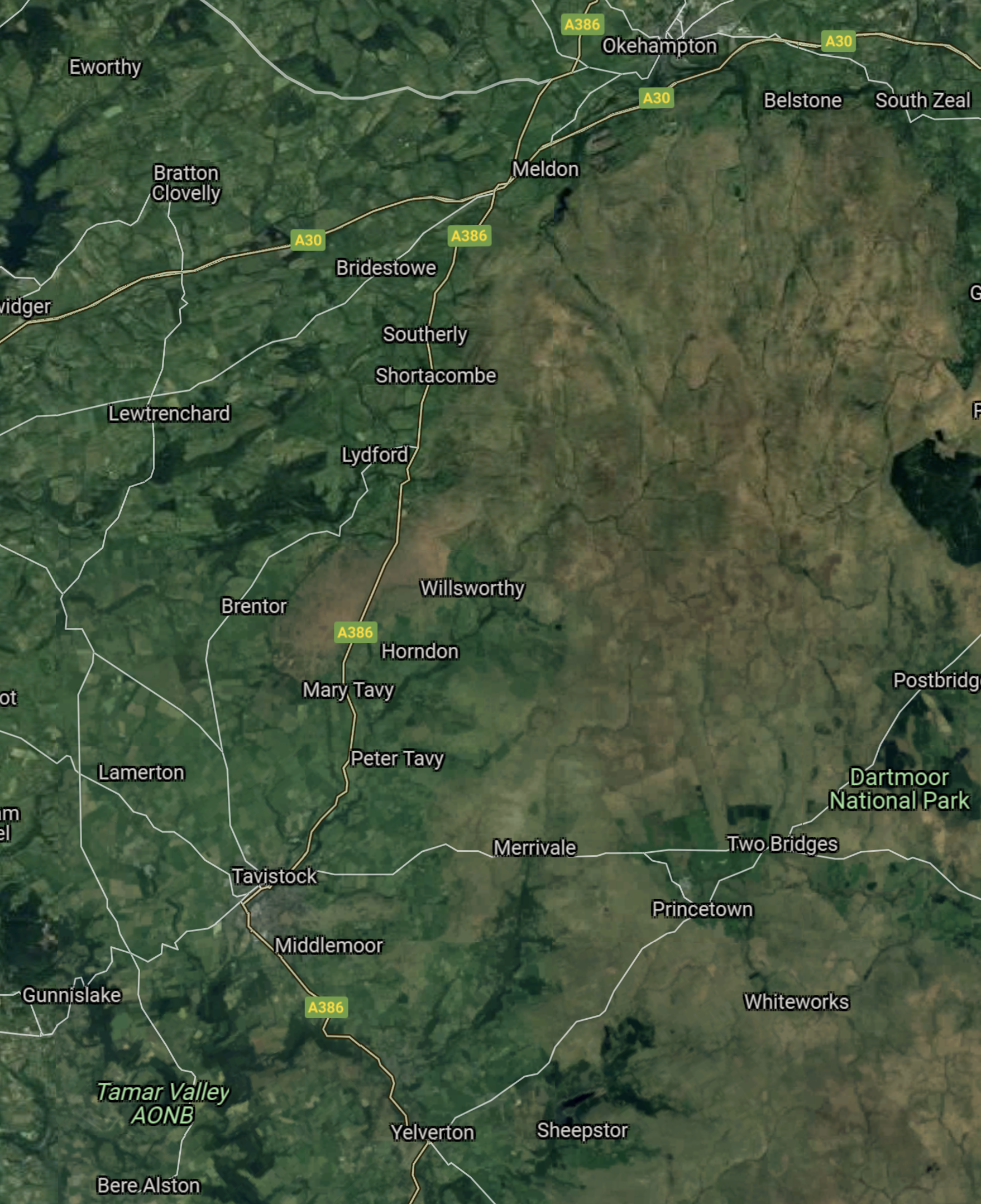
Note.
- Okehampton is at the top of the map between the three green rectangles which mark the main roads.
- Bere Alston is in the South-West corner of the map.
- Tavistock is North of Bere Alston.
- The three places are connected by the A 386 road.
Is there a bus between Okehampton and Bere Alston, that serves Tavistock and the major villages?
Phase 2 – Tavistock And Bere Alston
This Google Map shows between Tavistock and Beer Alston station.

Note.
- Tavistock is in the North-East corner of the map.
- Bere Alston is in the South-West corner of the map.
- I estimate that about six miles of new track will have to be laid.
This Google Map shows Bere Alston station, which is to the North-West of the village.
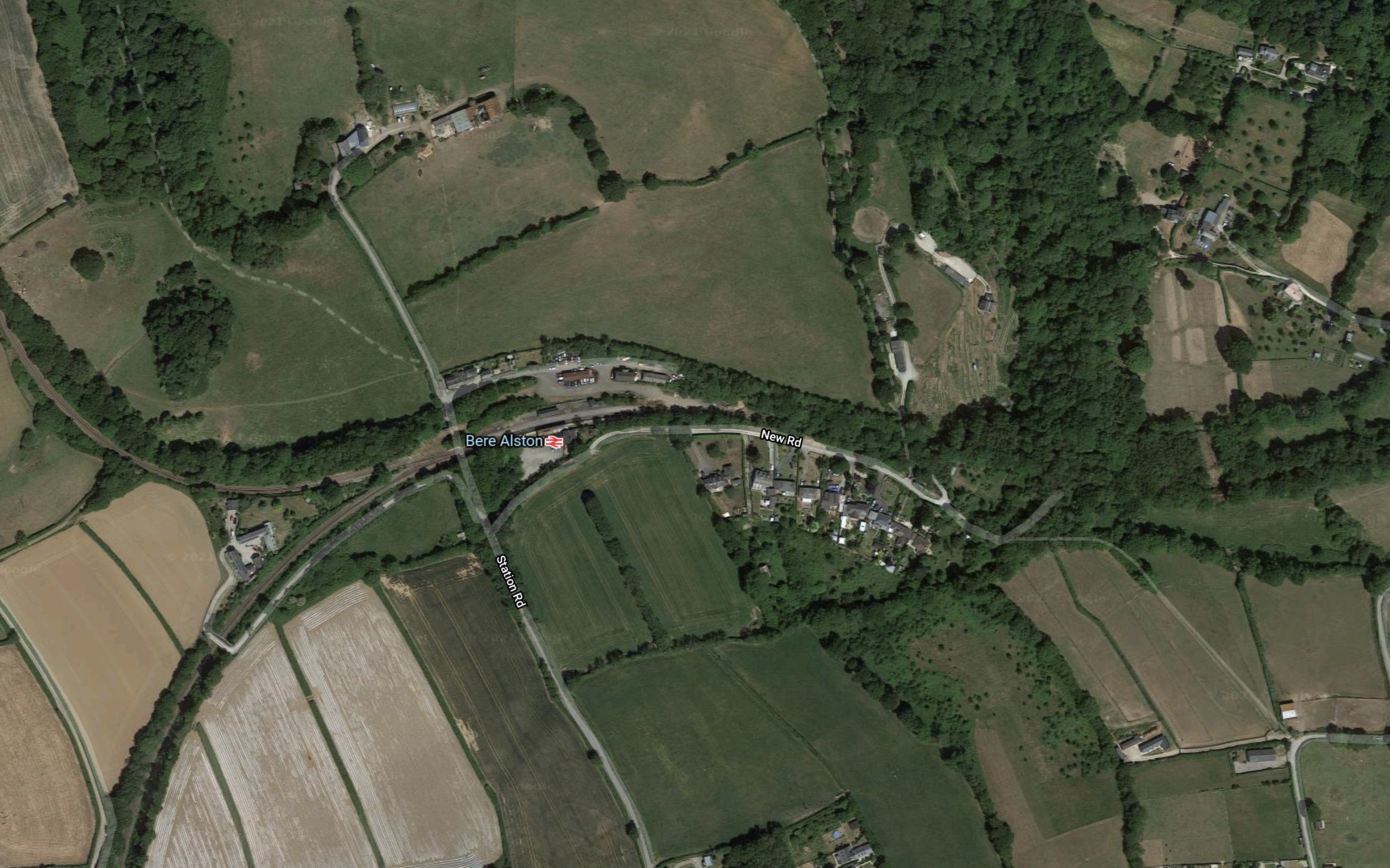
Note.
- Bere Alston station is on the Tamar Valley Line.
- The Tamar Valley Line is all single-track.
- Trains to and from Gunnislake station use the Northbound track at the junction to the West of the station.
- Trains to and from Plymouth use the Southbound track at the junction to the West of the station.
- Trains between Gunnislake and Plymouth reverse at Bere Alston station.
It would appear that the route to Tavistock continued to the East.
This Google Map clearly shows the route of the disused railway as it runs North-East from Bere Alston station.

Note.
Bere Alston station is the South-West corner of the map.
The dark green line of the railway runs to the North-East corner of the map.
As all the railways in the area seem to have been single-track, I would suspect that any rebuilt railway on this route will be single track.
I have followed the dark green line through to Tavistock which is shown in this Google Map.

As the Department of Transport are prepared to finance a study for reinstatement of the route, I would suspect that there is a feasible route between Bere Alston and Tavistock.
- There would appear to be no bridges or viaducts between Bere Alston and the outskirts of Tavistock.
- Before closure, there no stations between Bere Alston and Tavistock North stations.
- Bere Alston station would need to be rebuilt.
The Wikipedia entry for Tavistock North station, says this about the condition of the line.
The station building has been restored and converted into three self-catering cottages. The stationmaster’s house is being restored as a private dwelling, while the goods yard, now known as Kilworthy Park, houses the offices of West Devon Borough Council. The track bed for about one mile (1.6 km) south of Tavistock North station is open to the public as a footpath and nature reserve, and it is possible to walk across the viaducts that overlook the town.
The rest of the track bed south of Tavistock is almost intact to Bere Alston, where it joins the present-day Tamar Valley Line. There has been discussion regarding the re-opening of a rail link for a number of years. Engineering assessment has shown that the track bed, and structures such as bridges and tunnels, are in sound condition.
I can foresee some problems, in what might not be one of the most challenging of projects.
- Claiming back the railway from the walkers and cyclists.
- The ownership of the stationmaster’s house.
Unlike Scotland, England didn’t make sure that rail routes could be converted back to railways if needed.
My project management knowledge leads me to agree with what appears to be a decision to do this part of the route next.
Phase 3 – Okehampton And Tavistock
The title of this project as given in the Railway Gazette article is as follows.
Reinstating The Line Between Tavistock And Bere Alston And Providing New Services To And From Plymouth
If you read this literally, it doesn’t mention anything about connecting to Okehampton and Exeter.
- Looking at maps and reading up on the line, it does appear that the route may be more challenging.
- The route also contains the Meldon Viaduct, which is a scheduled monument.
Until a viable plan is developed, it might be better and more affordable to run zero-carbon buses between Tavistock and Okehampton.
Opening Date Announced For Dartmoor Line
The title of this post, is the same as that of this article on Railnews.
This is the first couple of sentences.
Full train services will return to the Dartmoor Line in Devon on 20 November. The Department for Transport said the DfT and its partners had ‘accelerated’ the reopening of the railway, because passenger services will now be launched only nine months since funding was approved.
It also says that the initial service between Exeter and Okehampton will be two-hourly, until May 2022, when it will be hourly.
I have looked up the Great Western Railway timetable and there are two sensible morning trains between Paddington and Okehampton on the 24th of November.
- 08:04 – Arrives at 11:18
- 10:04 – Arrives at 13:17
Returning there are two sensible afternoon/evening trains.
- 15:24 – Arrives at 18:24
- 18:20 – Arrives at 21:36
It looks like it would be possible to go from London and Okehampton and return in the same day.
No Trains Out Of Cornwall Until The Weekend After Lorry Hits Plymouth Bridge
The title of this post, is the same as that of this article on The Times.
A few points from the article.
- It was a Tesco truck.
- It took twenty-four hours to extract.
- The accident happened on Ashford Hill in Plymouth.
I found the bridge on Google Maps.
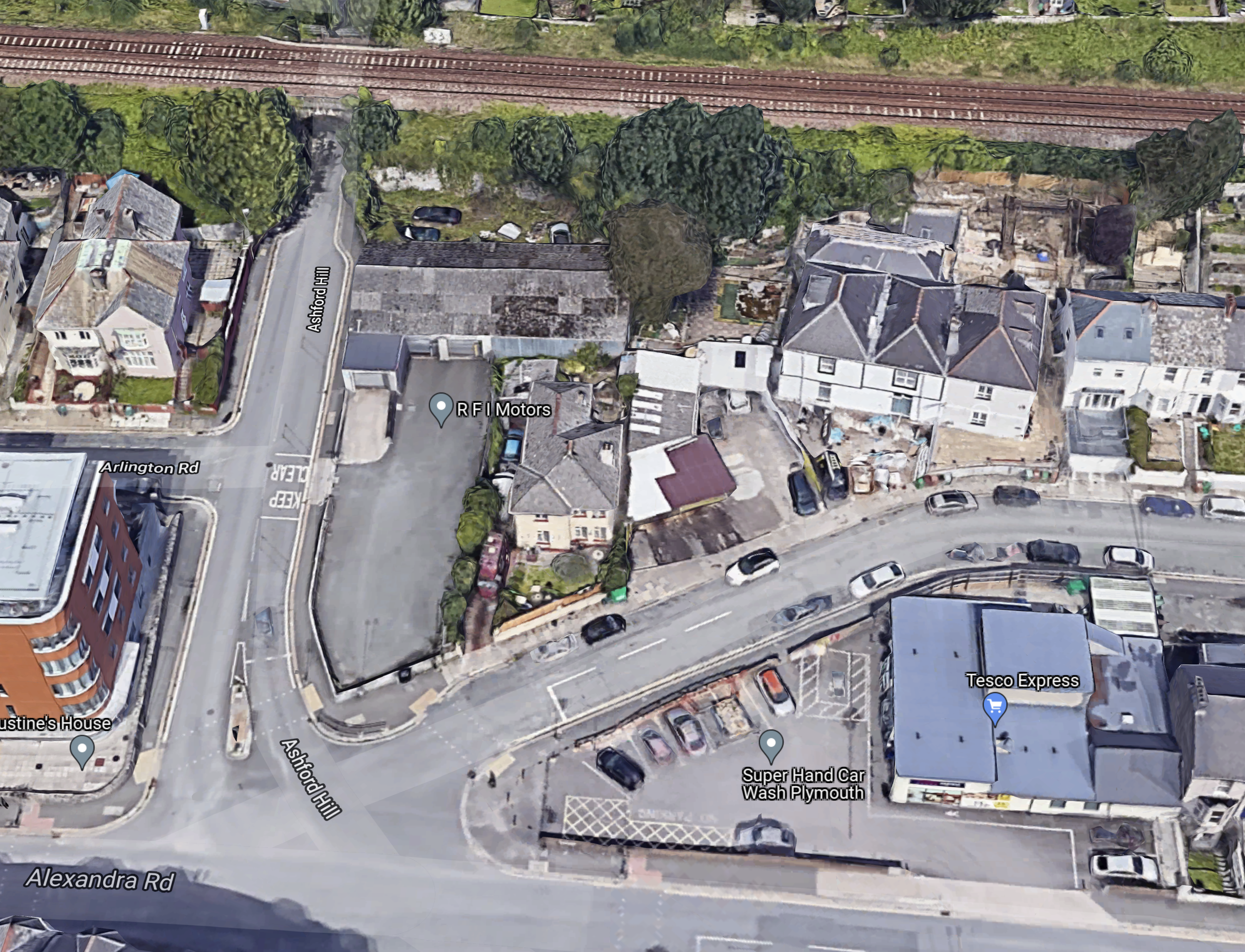
Note.
- The railway and the bridge are at the top of the map.
- My eyesight isn’t good, but I can see the warning signs on the bridge.
- There is a TescoExpress in the bottom right corner of the map.
It can’t be a lot more than a hundred metres between the bridge and the TescoExpress.
To make matters worse for the train operators, the accident site is to the East of Plymouth station, which means trains can’t run to Plymouth.
Will GWR Use Okehampton?
Network Rail have already re-laid the track to Okehampton, prior to opening an hourly service between Exeter and Okehampton later this year.
Okehampton station is close to the A30 and I suspect that GWR would have little difficulty running a five-car Hitachi train to Okehampton from London with a reverse at Exeter. At Okehampton, they could use coaches to serve Cornwall by running to Bodmin Parkway.
If I was the CEO of GWR, I’d see if it could be arranged, as what good publicity they’d get for the new Okehampton service.

