What Will Be The Range Of A Hitachi Class 800 Battery Train?
I feel now, I have enough information to make an educated, at what the distance a five-car Class 800 or Class 802 train will travel on batteries.
Previous Battery-Electric Trains
These are examples of previous distances.
- A Bombardier engineer told me eight years ago, that the battery-electric Class 379 had a range of sixty miles.
- Stadler’s FLIRT Akku has a Guinness world record of 139 miles on one battery charge. See this page on the Stadler web site.
- Even Stadler’s Class 777 trains for Merseyrail have a range of 84 miles on battery power. See New Merseyrail Train Runs 135 km On Battery.
It does appear that five-car battery-electric trains will have ranges in excess of a hundred miles.
Engineering Ambition
Several times in my life, I’ve got fired up about engineering or software projects and I like to think, I’ve produced the best and fastest solution.
For this reason, I believe that Hyperdrive Innovation, who are now part of Turntide Technologies, and Hitachi will set themselves three objectives with the design of the the battery packs for the Class 800 or Class 802 train.
- The battery-electric Class 802 will outperform the Stadler FLIRT Akku in terms of speed and distance.
- The battery packs will be plug-compatible with the diesel engines, so there will only be minor software modification to the trains.
- The train will be able to be handle all Great Western Railway’s routes without using diesel.
- I wouldn’t be surprised that on many routes the train will cruise at over 110 mph on batteries.
I also suspect they want the Akku’s Guinness world record, which will mean the range will be in excess of 139 miles.
More On LNER’s Ten New Bi-Modes
I wrote about these trains in LNER Seeks 10 More Bi-Modes.
This was my conclusion.
There is a lot of scope to develop LNER’s services.
I think it is likely that the order will go to Hitachi.
But as I indicated, I do believe that there is scope for a manufacturer to design a zero-carbon train, that was able to serve Aberdeen and Inverness.
- I suspect a fleet of ten trains would be sufficient.
- Trains would use the 25 KVAC overhead electrification, where it exists and hydrogen or battery power North of the wires.
The trains would also be capable of being upgraded to higher speeds, should the East Coast Main Line be turned into a High Speed Line.
I also think, that whatever trains are bought, there will be a large upgrading of the existing Hitachi fleet, which will add batteries to a lot of trains.
In the July 2023 Edition of Modern Railways, there is an article, which is entitled LNER Embraces Pioneering Spirit, which takes the form of an interview with LNER’s Managing Director; David Horne.
In a section, which is entitled ‘225’ Replacement, this is said.
Meanwhile, Mr Horne is looking to what might replace the InterCity 225 fleet, now smartly repainted in a scheme which pays homage to the original ‘Swallow’ livery. While there were fears this fleet may be withdrawn as an economy measure, the ‘225s’ are now on lease until at least next summer.
But Mr Horne says obsolescence issues are a real challenge and LNER will struggle to maintain the fleet beyond 2025, and from the May 2023 timetable change the number of daily diagrams was reduced from five to four to conserve the fleet’s mileage. Much of the heavy maintenance work had previously been carried out at Wabtec’s Doncaster site, but this facility is no longer available, and while a recent reliability improvement programme is bearing fruit, the challenges remain. The crunch point comes with the transition to ETCS at the southern end of the ECML as part of the East Coast Digital Programme – Mr Horne says LNER does not want to fit cab signalling on the ‘225s’.
The solution to this issue is to procure additional trains to run alongside the 65 Azumas, and LNER went out to tender in October 2020 for a fleet of 10 trains with self-power capability.
While a preferred bidder has been identified, the business case to proceed with the procurement is awaiting approval, but Mr Horne is still hopeful this project can be progressed.
The current plan envisages the new trains broadly replacing the ‘225s’ on Leeds and York diagrams, but a major benefit with the new fleet would be during engineering work – at present LNER has to withdraw services to places such as Harrogate and Hull to concentrate its bi-mode Azumas on services using non-electrified diversionary routes, and having more stock with self-power capability would ease the issue.
Currently, LNER has these Azumas and InterCity 225s in its fleet.
- Five-car bi-mode Class 800 trains – 10
- Nine-car bi-mode Class 800 trains – 13
- Five-car electric Class 801 trains – 12
- Nine-car electric Class 801 trains – 30
- Nine-car electric ImterCity 225 trains – 8
Note.
- There are 23 bi-mode trains and 50 electric trains.
- There are 167 bi-mode carriages and 302 electric carriages.
- Currently 31.5 % of the trains are bi-mode.
- With ten new bi-mode trains and no InterCity 225 trains, 44 % of the fleet will be bi-mode.
Is this increase in the percentage of the fleet, that are bi-mode acceptable?
LNER’s Two Needs
Let’s look at LNER’s needs, which are actually two separate sub-needs.
- There is a need for ten new trains to replace the InterCity 225 trains.
- There is a need to increase the size of the bi-mode fleet to be able to use the Great Northern and Great Eastern Joint Line and other non-electrified routes to by-pass engineering works.
Note.
- I suspect that as Mr Horne explained, there are only five or possibly four InterCity 225s diagrammed on a particular day, then perhaps ten five-car bi-mode Class 800 trains, might be able to cover for the retirement of the InterCity 225s.
- These trains would work as pairs to Leeds and York to replace the InterCity 225 capacity.
- If required they could split and join at Leeds and York to serve other destinations.
- The diversion route of the Great Eastern Joint Line has an unelectrified distance of 93.7 miles and the route is electrified at both ends.
- Would a battery-electric Class 800 train handle this distance? I suspect if Stadler can do it, then Hitachi and Turntide Technology will be able to do it too!
LNER will have replaced the InterCity 225s and acquired ten new five-car blockade runners.
As an order for ten new five-car battery-electric trains, is not to be sneezed at, I suspect Hitachi will make sure that their new battery-electric variants have enough range.
So this would mean that the range of a five car battery-electric Class 800 train, should be in excess of 93.7 miles.
Advantages Of Converting Class 800 and Class 802 Trains To Battery-Electric Operation
It should be noted that the five-car and nine-car Class 800 and Class 802 trains have specific advantages when it comes to converting them to battery-electric operation.
- They are modern trains, that are still in production, so every bit of information about the train is known down to the last nut, bolt and plastic clip.
- Like most modern trains, hey have a sophisticated computer system controlling the train.
- They have spaces for three, four or maybe even five diesel engines under the floor, which could be used for a battery-pack in every car designed to hold a diesel engine.
- The train has an electric bus between nose and tail.
- As is shown, when the trains change between diesel and electric, the pantograph can go up and down with all the alacrity of a whore’s drawers.
- The trains can be converted between bi-mode and electric, by adding or removing diesel packs. I doubt this feature will be removed, as batteries replace diesels.
With my Electrical and Control Engineer’s hard hat on, I doubt there is anything to stop a Class 800 or Class 802 train being fitted with three or more batteries to create a 125 mph train, with a range approaching two hundred miles on battery power.
The initial name of these Hitachi trains was the Hitachi Super Express. Is this train the Hitachi Super Battery Express?
But it would appear, that for their initial needs, LNER, just need a range to handle the near hundred miles of the Great Northern and Great Eastern Joint Line.
Inverness and Aberdeen will come later.
Conclusion
The first version of the battery-electric train will have a range of around a hundred miles, so that they can handle the Great Northern and Great Eastern Joint Line diversion, which is 93.7 miles on battery power.
But fairly soon after introduction into service, I will be very surprised if they don’t claim the Guinness world record by running farther than the Stadler FLIRT Akku’s 139 miles.
No-one likes being second!
A Fraught Journey Between Worcester Shrub Hill And Reading Stations
My train home from Worcester Shrub Hill station didn’t make the most impressive of starts to my journey back to Reading.
- The five-car train was supposed to leave at 15:15.
- It was also supposed to arrive in Reading at 16:58.
- But the relief driver was delayed.
Eventually, we left at 15:31.
The train didn’t appear to be running at full speed and around Moreton-in-Marsh, staff started distributing water, which in my view is always a sign that all is not well.
I measured the temperature and humidity at 26.7 °C and 40% respectively, so the water was welcome.
I asked one of the staff what was up and was informed, that two of the engines were overheating because of the heat, so were we effectively running on the remaining cool engine?
Eventually, we were informed that the train would terminate at Charlbury station, where we would all be picked up by the following train, which would have nine cars.
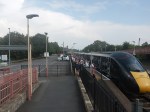
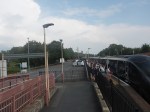
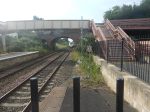
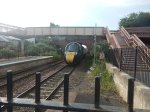
After Charlbury, things didn’t get much better.
- The rescue train eventually left Charlbury at 17:38, which was twenty-six minutes late.
- The train wasn’t full and I had a table to myself, but after Oxford, there wasn’t a seat anywhere.
- We missed out the stop at Didcot Parkway station because of flooding, caused because of a violent thunder storm.
- The rescue train didn’t even make Paddington and it was terminated short in the bi-directional Platform 7 at Reading, because of an unwell passenger.
Eventually, when I arrived in Reading station at 18:55, the rescue train was fifty-five minutes late.
As my original train, should have arrived at 16:58, I was actually, three minutes short of two hours late.
By the time, I got to Platform 14 for the 16:59 Elizabeth Line train to Central London, it had gone, so I had another thirty minute wait.
I finally arrived home at 21:00, after a nearly 5¾ hour journey.
I have a few thoughts.
Changing At Reading
Part of the reason, that I missed my Elizabeth Line train, was that the escalators to Platform 14 were out of action and I had to wait for the lift, as I don’t trust myself going down stairs.
I have said before that if you need a ticket in your change a Reading, there should be a ticket machine on the bridge.
As Reading station is managed by Network Rail, perhaps, they should examine the operation of the station with a good dose of old-fashioned time and motion in more detail.
The Elizabeth Line Frequency To London
The Elizabeth Line only runs two trains per hour (tph) between London and Reading.
This may be fine when everything is going well, but on days like Sunday, when trains aren’t performing well and the weather is not behaving itself, would four tph be better?
Perhaps, the two extra trains would run between Reading and Abbey Wood, and only stop at say Twyford, Maidenhead, Slough, Hayes & Harlington, Southall, Ealing Broadway, Old Oak Common, Paddington, Bond Street, Tottenham Court Road, Farringdon, Liverpool Street, Whitechapel, Canary Wharf, Custom House and Woolwich.
Great Western Railway Trains Between Oxford, Reading and Didcot Parkway and London
The three terminals get the following services to and from London
- Didcot Parkway – 4 tph
- Oxford – 4 tph
- Reading – 11½ tph – 8½ fast and 3 slow
Consider these questions.
- How many travellers between Didcot Parkway, Oxford and Reading and Paddington, now use the Elizabeth Line for onward travel from Paddington?
- How many of the endless visitors to Oxford start their journey on the Elizabeth Line?
- How many visitors to Oxford combine a trip with one to Bicester Village?
- How many travelling by train between Oxford and Cambridge will use part of the Elizabeth Line for the journey?
- Is it fair, that Cambridge is connected to four London rail terminals; King’s Cross, Liverpool Street, London Bridge and St. Pancras and Oxford is connected to just two; Marylebone and Paddington?
I suspect there’s considerable scope to reorganise services between the three stations and London to provide a better service.
GWR’s Paddington and Didcot Parkway service, which has a frequency of two tph, could be moved to the Elizabeth Line and possibly extended to Oxford, once Didcot Parkway and Oxford is electrified.
This would give.
- Didcot Parkway would have two fast tph to Paddington and two stopping tph on the Elizabeth Line with all its connectivity and delights.
- Oxford would have two fast tph to Paddington and two stopping tph on the Elizabeth Line.
- Reading will have a much-needed Elizabeth Line frequency of four tph.
Note.
- Terminating the Elizabeth Line at Oxford, means that there are services connecting Oxford and Cambridge, with a single change at either Farringdon or Liverpool Street.
- Oxford would also get one change connectivity to Gatwick, Heathrow and Stansted Airports.
- The slow lines between Oxford and Maidenhead typically have operating speeds of 90-100 mph. So if the Class 345 trains on the Elizabeth Line and the track were upgraded to 100 mph, this might save a few minutes in the outer reaches of the Elizabeth Line.
- The Elizabeth Line could terminate in one or two South-facing bay platforms on the East side of the station. This position would reduce passenger traffic on the crowded footbridge.
- If all the bay platforms were on the same East side of the station, this would simplify and ease passenger flows.
- Chiltern and East West Railway services could be timed for an easy interchange.
- The proposed Cowley Branch could also use the South-facing bay platforms.
The more I look at it, the more I like the idea of running the Elizabeth Line to Oxford.
The Heat Problem On The Class 800 Trains
The Wikipedia entry for the Class 800 trains has this paragraph on the overheating of the engines or generator units (GUs) on the trains.
The GU is installed on vibration-isolating mountings, and fitted with side-mounted cowls to reduce external noise. Heat management measures include thermal insulation around key areas such as cable ducts. According to Modern Railways magazine, the limited space available for the GUs is responsible for them being prone to overheating. It claimed that, on one day in summer 2018, “half the diagrammed units were out of action as engines shut down through overheating”.
That was in 2018, which was five years ago. But it appears to be still happening.
Would Overheating Happen With Battery Units?
One of the reasons, I went to Worcester was to assess the feasibility of battery-electric trains on the route.
This article from EV-Lectron is entitled Electric Cars in Hot Weather – What You Need To Know, gives a detailed set of answers.
But it probably comes to the conclusion, that cold weather with the extra heating load might be more of the problem.
I suspect, that if you were running battery electric trains on a route of over fifty miles, the best thing would be to have electrification at both ends of the route.
If, as I have calculated in Reading And Oxford – 10th June 2023, that to run battery-electric trains to Hereford needs a length of electrification between Worcester Shrub Hill and Great Malvern stations, then when they leave the electrification, they should have the interiors at the right temperature for staff and passengers.
I also suspect that battery-electric trains need to be well insulated to cope better with cold weather.
Devizes Station Would Need To Be Part Of Wider Rail Plan
The title of this post, is the same as that of this article on Railway Gazette.
These two paragraphs outline the current status.
The construction of a Devizes Gateway station at Lydeway is unlikely to represent value for money as a standalone project, but it could be viable as part of a wider rail improvement programme, a study has concluded.
The feasibility study undertaken by Wiltshire Council, Devizes Development Partnership, GWR and Network Rail built on a strategic outline business case submitted to the Department for Transport under the Restoring Your Railway Fund programme in November 2021.
The Department for Transport will now decide what to do next.
I think there are other issues on the route between Reading and Taunton.
The Current Train Service
The only passenger services using the Reading and Taunton route are these three trains, which all have a frequency of one train per two hours (tp2h).
- London Paddington and Exeter St. Davids – Calling at Reading, Newbury, Hungerford, Pewsey, Westbury, Castle Cary, Taunton and Tiverton Parkway
- London Paddington and Plymouth – Calling at Reading, Taunton, Tiverton Parkway and Exeter St Davids
- London Paddington and Penzance – Calling at Reading, Taunton, Tiverton Parkway and Exeter St Davids
Note.
- London Paddington and Exeter St. Davids takes a few minutes over two hours.
- London Paddington and Plymouth takes a few minutes over three hours.
- London Paddington and Penzance takes a few minutes over five hours.
- The Reading and Taunton route is a double-track railway with a 110 mph operating speed.
- London Paddington and Newbury is electrified.
- The last two trains alternate to give Plymouth an hourly service.
- After Exeter St. Davids, trains have a sophisticated stopping pattern to give all stations served a good service.
From several trips along the line, I have the impression, that it’s a route, where drivers can get the best out of the trains.
Electrification
The line would benefit from electrification, in terms of journey times and decarbonisation.
But could this route be run by battery-electric trains?
- It is 89.7 miles between Newbury and Taunton.
- It is 120.4 miles between Newbury and Exeter St. Davids.
- It is 52.1 miles between Exeter St. Davids and Plymouth.
- It is 79.4 miles between Plymouth and Penzance.
- London Paddington and Newbury is electrified.
- Taunton, Exeter St. Davids, Plymouth and Penzance stations could have a charging system of some sort.
This Hitachi infographic shows the specification of the Hitachi Intercity Tri-Mode Battery Train.

Consider.
- Two trains go between Newbury and Taunton without stopping.
- The Exeter St. Davids service stops three times.
- Newbury and Taunton non-stop took 75 minutes at an average speed of 72 mph
- Newbury and Taunton with three stops took 78 minutes.
- All trains currently appear to be nine cars.
I suspect that Hitachi’s Intercity Tri-Mode Battery Train could go between Newbury and Taunton with a great deal of ease.
How many diesel engines and batteries would the train have?
Normally, nine-car Class 800/802 trains have five diesel engines.
So how many will be replaced by batteries?
The infographic says one engine will be replaced, so if that is a five-car train, it looks likely that a nine-car train could have two batteries.
But Hitachi could be playing a long game!
In Stadler FLIRT Akku Battery Train Demonstrates 185km Range, I wrote about how the FLIRT Akku has a range of 115 miles.
If Hitachi can squeeze 125 miles out of a nine-car Class 800 with two or three battery packs, they will outrange the FLIRT Akku and be able to run between London Paddington and Penzance on batteries, with some topping up on the way.
We mustn’t forget the engineers at Hyperdrive Innovation, who are designing and building Hitachi’s battery packs.
They will be ultracompetitive and know the range required to get battery-electric trains to Penzance.
I suspect that when the range of the nine-car battery-electric Class 800/802 is revealed, it will astonish everybody!
Bedwyn Station
Bedwyn station is served by an hourly shuttle train to and from Newbury, run by a diesel train.
The station used to have a direct service from London, but now passengers change at Newbury.
A Station For Marlborough
I investigated this in A Station For Marlborough, where this was my conclusion.
With the next generation of electric train with onboard energy storage or IPEMUs, a Marlborough station on a new Marlborough Branch Line can be used to create a two tph service to and from Paddington to replace the current one tph service from Bedwyn.
So a new Marlborough station would be a win for all those using stations on the Reading to Taunton Line to the East of Pewsey.
I also wonder how many other similar services can be developed by extending a service past a main line terminal to a new or reopened branch line, which is built without electrification and run using trains with onboard energy storage.
In answer to my posed question in the last paragraph, I suspect it is quite a few!
Devizes Gateway Station At Lydeway
I wrote about this proposed Devizes Gateway station in Reinstatement Of Rail Access To Devizes Via A New Station At Lydeway.
After writing Was Baldrick An Essex Man? about the building of an avoiding line at the new Beaulieu Park station North of Chelmsford, I do wonder, if it would be an idea to incorporate one in this proposed station, if there is a need to increase capacity.
This Google Map shows the station site, where the A342 crosses the railway.
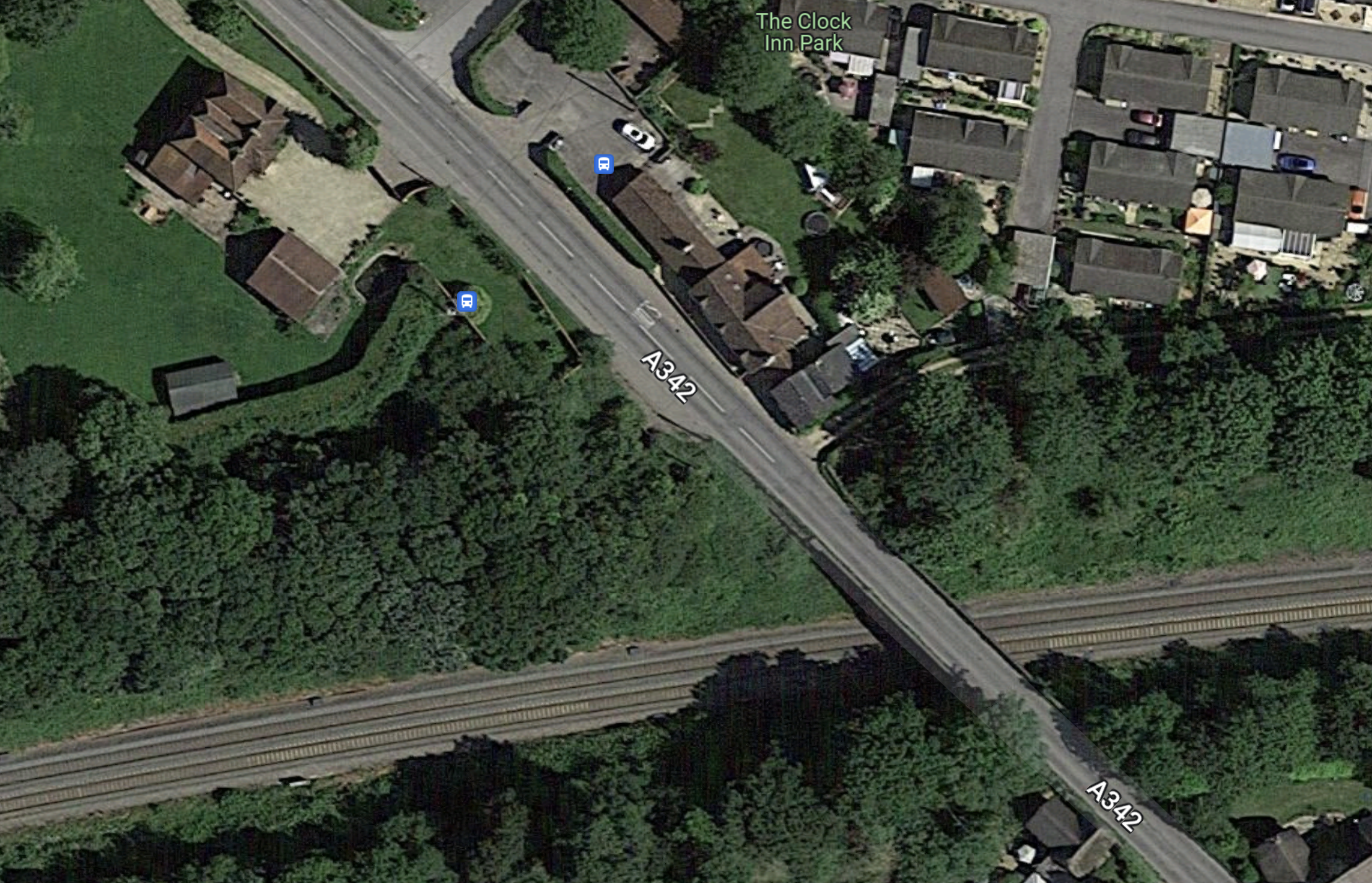
I suspect a third track can be squeezed in.
Westbury Station
Westbury station is a busy station, where the Reading and Taunton Line crosses the Wessex Main Line.
This map from OpenRailwayMap shows the lines in the station.
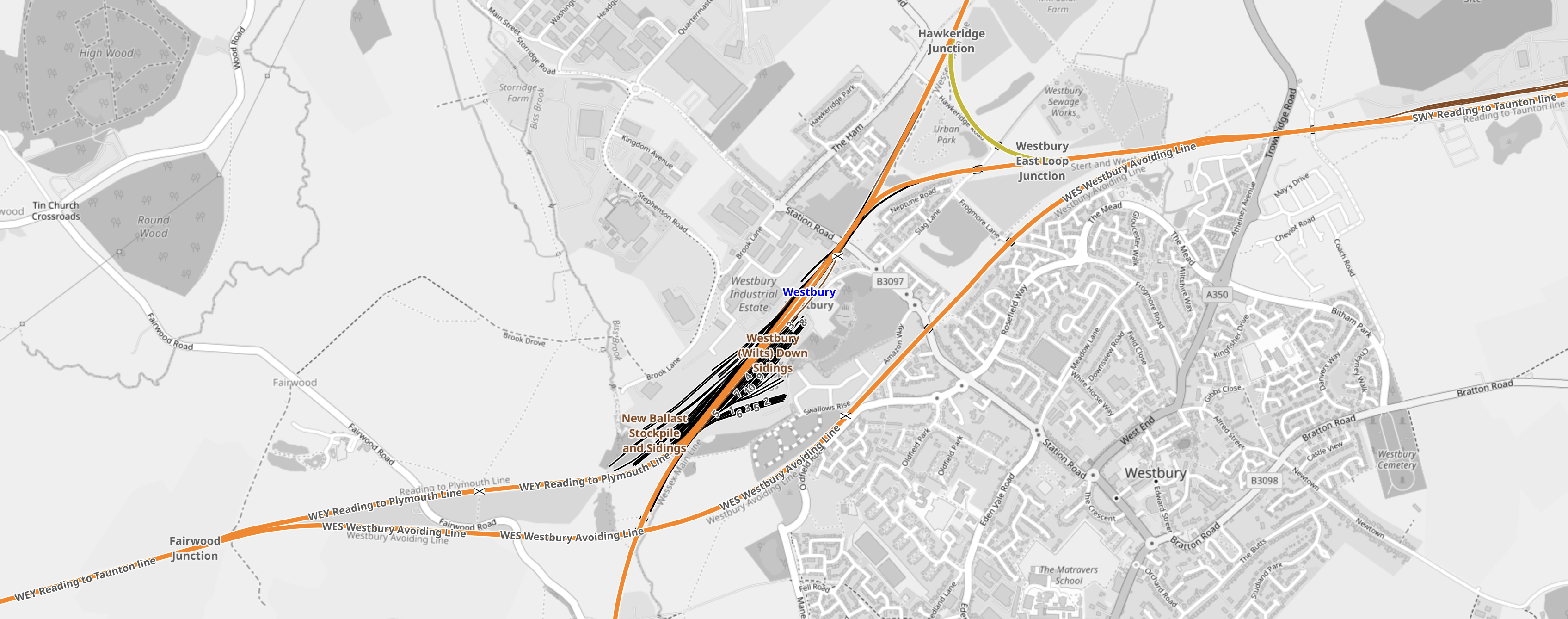
Note.
- The blue lettering indicates Westbury station.
- The two major rail routes are shown in orange.
- The Reading and Taunton Line goes East-West across the map.
- Note the avoiding line South of Westbury station.
- Reading is in the East and Taunton is in the West.
- The Wessex Main Line goes North-South across the map.
- Bristol is in the North.
- Salisbury and Southampton is in the South.
In Westbury Station – 30th July 2020, there are some pictures I took of Westbury station.
This section in Wikipedia says this about the Future of Westbury station.
The line to Westbury is not due to be electrified as part of the 21st-century modernisation of the Great Western Main Line. Although local councillors support it, the extension of electrification beyond Newbury to Westbury was assessed as having a benefit–cost ratio of only 0.31.
On the other hand this document on the Network Rail web site, which is entitled the Devizes Gateway Interim
Feasibility Study, suggests that another platform might be added at Westbury station.
Castle Cary Station
Castle Cary station doesn’t seem to have any well-publicised problems, so please tell me if you know of any.
Frome Station
Frome station is described in its Wikipedia entry as an unusual station and one that is Grade II Listed.
I suspect, it could do with some more services.
Somerton Station
I wrote about a new Somerton station in Somerset: Plans For New Railway Station On Levels.
Track Improvements
I suspect if Network Rail were improving the route between Reading and Taunton, they know of some places, where they could do some work.
Service Improvements
Consider.
- There is probably a need for a stopping train between Newbury and Taunton, which calls at all stations.
- It might terminate at the London end, at either London Paddington or Reading.
- It might be a battery-electric train.
- An hourly frequency would be ideal, if the track and signalling could handle it.
- Charging systems would be positioned as needed.
The train would interface with other Great Western services to Bristol, London Paddington, Gloucester, Salisbury, Southampton and Weymouth.
Oy could also interface with the Transwilts services.
Conclusion
This could be developed into a very useful network for Wessex.
‘Castle’ HSTs To Be Withdrawn By Great Western Railway
The title of this post, is the same as that of this article on Rail Advent.
This quote from a GWR spokesman, sums up the action that will be taken.
The Castles were always designed to be a temporary measure on the Cardiff to Penzance route. We expect to replace the Castle Class trains on a phased basis over the next couple of years, bringing customers the benefit of more modern trains that will reduce both cost and carbon emissions across the route.
These are my thoughts.
Could The Engines In The Power Cars Be Replaced With Modern Carbon-Neutral Engines?
This would be an alternative way to solve the decarbonisation problem.
It would also mean that other applications of the Class 43 power cars, like ScotRail’s Inter7City trains, Cross Country’s HSTs and Network Rail’s New Measurement Train would have a decarbonisation route,
In Rolls-Royce Releases mtu Rail Engines For Sustainable Fuels, Rolls-Royce mtu outline their route to decarbonise rail engines using sustainable fuels.
This was the first paragraph of my conclusion in the linked article.
Rolls-Royce and Cummins seem to be doing a thoroughly professional job in decarbonising the diesel engines they have made in recent years.
The Class 43 power cars have Rolls-Royce mtu Series 4000 engines, which will soon be available to run on sustainable fuel.
I think as a possible fall-back, one Class 43 power car should be converted to carbon neutral.
Could The Engines In The Power Cars Be Replaced With Modern Hydrogen Engines?
I looked at this in Will We See Class 43 Power Cars Converted To Hydrogen?.
I came to the conclusion, that this might be possible and said this.
It would be the ultimate Roller.
But then Rolls-Royce know about winning battles with large internal combustion engines.
The Option Of New Trains
This quote from a GWR spokesman was fairly definite about new trains, when they said.
The Castles were always designed to be a temporary measure on the Cardiff to Penzance route. We expect to replace the Castle Class trains on a phased basis over the next couple of years, bringing customers the benefit of more modern trains that will reduce both cost and carbon emissions across the route.
What trains could replace the Castles?
- The Cardiff and Penzance route is just short of 250 miles or roughly 400 kilometres.
- Only about 30 miles at the Cardiff end is electrified.
- Trains would need to be able to handle 25 KVAC overhead electrification.
- 125 mph trains will be needed at the Cardiff end.
- Four or five passenger cars will be needed.
- Currently, there are twelve Castles, so I will assume twelve new trains.
As these trains will be lasting up to forty years, they must be zero-carbon, which must mean battery-electric or hydrogen.
Charging Battery-Electric Trains
Consider
- Bristol Temple Meads, Exeter St. Davis and Plymouth are large stations with several platforms. I suspect that a number of Furrer + Frey’s charging stations can be installed along the route.
- The timetable would be adjusted to allow trains to be charged as they stopped to set down and pick up passengers.
- Trains would dwell in the station and then use their 125 mph performance to regain the time.
- I’ve also found a Penzance to Cardiff service, that stopped at Plymouth for fourteen minutes, which is more than enough to charge the batteries.
- Regenerative braking to the batteries would further eke out the range.
- There might also be some extra electrification around Bristol or Exeter.
- Some form of charging would be needed at Penzance.
Note.
- Putting up electrification may mean that it will delay the new trains for a few years.
- Charging stations along the route could probably be installed to a tight timetable.
I believe that with some top-class work, by battery and charger manufacturers, that a battery-electric train could be developed that could run between Cardiff and Penzance.
Thoughts On Hydrogen
Consider.
- The Alstom Coradia iLint train has a range of about 1,000 km. on hydrogen.
- Companies like Airbus, Boeing and a host of rocket makers will improve the storage and safety of hydrogen.
- A range of a 1,000 km. would allow refuelling at one end of the route.
- Trains could be multiple units or a hydrogen-electric locomotive pulling a rake of coaches with a driving van trailer.
I feel that hydrogen would be very feasible as a power source.
Alstom Could Offer A Hydrogen Aventra
Consider.
- Alstom are developing a hydrogen-powered Aventra.
- Bombardier were offering a 125 mph Aventra.
- A typical Aventra like a Class 720 train seats a hundred passengers a car.
A hydrogen Aventra would be feasible.
Hitachi Could Offer A Battery-Electric Or Hybrid AT-300
In 2021, in Hitachi And Eversholt Rail To Develop GWR Intercity Battery Hybrid Train – Offering Fuel Savings Of More Than 20%, I wrote about the announcement of the Hitachi Intercity Tri-Mode Battery Hybrid Train, which is shown in this Hitachi infographic.
Note.
- Batteries replacing an engine to cut fuel usage and reduce carbon emissions.
- First time a modern UK intercity train, in passenger service, will use alternative fuel.
- These Hitachi trains use mtu engines, so I suspect they will be switched to sustainable fuel like HVO.
- The trains are 125 mph and 140 mph with the latest digital signalling.
- Great Western Railway already have 58 five-car Class 800/802 trains and 35 nine-car 800/802 trains.
- They would not need any changing stations or other infrastructure changes.
- Staff retraining would be minimal.
Testing of the prototype of these trains must be getting very close or even underway.
Stadler Could Offer A Battery-Electric Flirt Akku
Consider
- Stadler have run a Flirt Akku on batteries for 243 km.
- Flirt Akkus will go into service soon.
- Flirts have been designed for 125 mph running.
With charging at Cardiff, Bristol, Exeter, Plymouth and Penzance, I believe a Flirt Akku could handle the route.
Are Hitachi Home And Hosed?
I have a feeling that the announcement has been made about retiring the Castles as the prototype Hitachi Intercity Tri-Mode Battery Hybrid Train is under test and is performing well.
So I wouldn’t be surprised to see an order for twelve more Class 802 trains soon.
The Hour Change Has Completely Knocked Me Out
Last Saturday, the 29th of October, the clocks went back and I’ve not had a totally good week.
On Tuesday, I couldn’t get dressed, as my gammy left arm and hand didn’t work.
- I also felt a bit unsteady, as if I’d had a couple of whiskies. But then, I never drink anything more alcoholic, than 0.0% real ale.
- As there was no-one else, I dialled 999.
- An ambulance came and took me to the Royal London Hospital, where nothing was found.
- But as my body responded to the hospital’s superb air-conditioning, I was allowed to go home.
- T think the hospital thought I took a taxi, but in reality I took the Overground to Dalston Junction station.
They had suggested, that I should take my planned trip to Doncaster. Which I did!
- I took a Hitachi Class 800 train to the North.
- And I took an InterCity225 train home.
Both have air-conditioning that only affects me positively, unlike Class 390 trains, which have put me in hospital before.
On Thursday, I wrote up my trip, or at least the ticketing in An Affordable Trip To Doncaster.
On Friday, I fell asleep on the floor and missed a friend bringing round my washing.
On Saturday, I woke late, went out for lunch and then watched the television.
In the evening, I was tired so went to bed at nine, which is unusual for me.
I got up at nine and did my trip on the Elizabeth Line, which I wrote about in Taking A Train Between Abbey Wood And Ilford Stations On The Lizzie Line.
As a Control Engineer, I tend to believe that the loss of the hour a week ago, has been the cause of my erratic sleeping.
- I should also note, that as a child, I dreaded the clock changes.
- I was also a strong supporter of the Daylight Saving Bill and wrote a post called An Open Letter to my MP About Changing to Central European Time.
I’ve also got a strange skin that I wrote about in My Strange Skin.
The TruckTrain
Note that I first came across the TruckTrain, when I wrote Innovative Composite Masts Look To Reduce Cost And Increase Efficiency Of Rail Electrification.
I have now decided that the concept could be so revolutionary, that it needs its own post.
The TruckTrain
TruckTrain is a concept with roots in Coventry University that could be off-beam enough to become a new normal.
The TruckTrain Web Site
The TruckTrain web site is the main source of information for the TruckTrain.
A sales leaflet for the TruckTrain can be accessed from the Home page.
The About page on the web site, gives this description of the TruckTrain.
TruckTrains® are short, fast, bi-directional self-propelled fixed freight train formations able to operate at passenger train speeds. Train sets can work in multiple in response to operational and commercial imperatives. Each vehicle is powered and all axles are powered to deliver the acceleration and braking required to achieve and to sustain this demanding level of performance. The initial configuration will use diesel-electric power to ensure freedom of operation over the national network. A hybrid design able to operate on electrified lines has also been developed together with an all-electric variant capable of extremely high-speed performance.
The Specifications page on the web site gives a detailed specification of the TruckTrain.
These are my thoughts.
The Basic Design Concept
The leaflet on their web site describes the concept.
This visualisation at the bottom of the leaflet shows four TruckTrains forming a train carrying twelve intermodal containers, each of which I suspect are 20 feet long.

Note.
- Each of the four TruckTrains appears to be carrying three intermodal containers.
- A 20 foot container is 6.096 metres long, so three are 18.288 metres long.
- Each TruckTrain has two bogies and four axles.
- The cabs at the two ends of each TruckTrain are different sizes.
- The longest carriages in use on the UK rail network are the 26 metre carriages used by Hitachi in their Class 800 and other trains.
I can deduce that with a twenty metre load space, a TruckTrain would accommodate any of the following.
- Three twenty-foot containers.
- A forty foot container and a twenty foot container.
- Large numbers of pallets.
- Ability to handle roll-cages as regularly used by supermarkets.
- A curtain-sided load space.
Any of these would give six metres for the two cabs.
This should be enough space for two cabs, but there are other possibilities.
- The longer cab could have a pantograph on the roof to use 25 KVAC electrification.
- The space behind the driver cab in the longer cab could be used for power-train gubbins.
- There must also be space under the load space for more power-train gubbins.
I feel certain, that an electrically-powered TruckTrain is more than a possibility.
The Width And Height Of A TruckTrain
This sentence from the Wikipedia entry for intermodal container, says this about their size.
Intermodal containers exist in many types and a number of standardized sizes, but ninety percent of the global container fleet are so-called “dry freight” or “general purpose” containers – durable closed rectangular boxes, made of rust-retardant Corten steel; almost all 8 feet (2.44 m) wide, and of either 20 or 40 feet (6.10 or 12.19 m) standard length, as defined by International Organization for Standardization (ISO) standard 668:2020. The worldwide standard heights are 8 feet 6 inches (2.59 m) and 9 feet 6 inches (2.90 m) – the latter are known as High Cube or Hi-Cube (HC / HQ) containers.
The Specifications page for the TruckTrain says this.
2-7 car Freight multiple unit capable of carrying combinations of 6 to 21 TEU of ISO containers, Hi-cube containers or swap bodies or 175 cubic meters of palletised cargo per vehicle with refrigeration available for both variants.
And the sales leaflet for the TruckTrain says this.
Performance and train path profile similar to a Turbostar passenger DMU.
Does that also mean that the width and height of a TruckTrain are no greater than that of a Class 170 train, which are respectively 2.69 and 3.77 metres?
It appears that international standards allow for a wagon floor height of 0.94 metres, which gives the following train heights to the top of the container.
- Standard container – 3.53 metres
- High Cube container – 3.84 metres
It will be a tight fit, but companies like Stadler use smaller wheels on some of their UK trains, which also have a height of 3.95 metres
I suspect that with a bit of selective bridge-raising TruckTrains will be able to go anywhere a Turbostar can go.
Connecting TruckTrains Together
The pictures of the TruckTrain on the web-site and the leaflet appears to show a standard multiple unit coupler like a Dellner.
The Specifications page for the TruckTrain says this.
2-7 car Freight multiple unit capable of carrying combinations of 6 to 21 TEU of ISO containers.
Is seven the maximum or just a marketing limit?
The technology and software to connect the trains and run them as a formation has been well and truly tested in many multiple units.
Motive Power Of TruckTrains
The About page for the TruckTrain says this.
The initial configuration will use diesel-electric power to ensure freedom of operation over the national network. A hybrid design able to operate on electrified lines has also been developed together with an all-electric variant capable of extremely high-speed performance.
As I said earlier, the pantograph could go on the roof of the longer cab for electric operation and the diesel engine could go under the load, as it does on most diesel multiple units.
I would think though, that one of the best variants would mount batteries under the load space.
Hydrogen would probably be a no-no, as this would limit the availability of the train to serve certain routes.
Performance Of TruckTrains
The Specifications page for the TruckTrain says this.
Maximum speed 140 kph for the inter-modal version, 160 kph for the pallet carrier.
As some of the routes, where these trains would be used is out of Felixstowe, where there is a 100 mph operating speed on the Great Eastern Main Line, I suspect that TruckTrains will sell better with a 100 mph (160 kph) operating speed on electric power.
125 mph Truck Trains
If they were running on a fully electrified route, I suspect the technology is available to run TruckTrains at 125 mph, which would make them ideal for parcels and light freight.
Manufacture Of TruckTrains
I don’t see that there would be many problems in manufacturing TruckTrains.
- 100 mph (160 kph) bogies are readily available for freight trains.
- A wagon manufacturer would probably be happy to design and build the chassis.
- The cabs could possibly be a standard multiple unit design.
- There shouldn’t be any problems with the power-train.
- Multiple running and splitting/joining technology is very much proven.
Certified rail components would probably be available for other parts and uses.
Combi TruckTrains
Combi Aircraft is defined in Wikipedia like this.
Combi aircraft in commercial aviation are aircraft that can be used to carry either passengers as an airliner, or cargo as a freighter, and may have a partition in the aircraft cabin to allow both uses at the same time in a mixed passenger/freight combination.
Would a Combi TruckTrain have applications on some routes in the world, where a passenger route carries the occasional container up and down the route?
Several ideas might be possible.
- The simplest would probably to have a twenty or forty foot passenger module, which could be lifted in and out like a standard intermodal freight container.
- TruckTrains could also be built with the load space fitted out for passengers, so they became a Class 153 replacement, that could be coupled to a freight TruckTrain.
- Could a TruckTrain be fitted out as a specialised work train to take workers and equipment to a work site, which had difficult road access?
It could almost be like a rail equivalent of Thunderbird 2.
Point-To-Point TruckTrains
The classic point-to-point train, could be run by someone like Toyota, where the engines for their cars are made in North Wales and the cars are assembled at Burnaston near Derby. I know there is a doubt over the future of Toyota’s engine plant, due to the stopping of manufacture of cars running on fossil fuels, but surely, an appropriate number of TruckTrains shuttling on the route would give advantages over a fleet of trucks, like, speed and reliability.
In the leaflet, they mention that the TruckTrain has been designed to use single-track short-terminals. These would surely be ideal for a company that decides to use TruckTrain as a point-to-point train between an important supplier and their main factory or distribution centre.
TruckTrains Could Use Stations
There has been a lot of talk recently about using major stations as freight terminals at night.
I doubt that a TruckTrain would have any problems using stations.
International TruckTrains
Why not? In Kraft Heinz And Freight Innovation, I talked about an international freight movement, that would be ideal for TruckTrains.
TruckTrains And Ferries
Could we even see the revival of train ferries?
Imagine a terminal at a port in Ireland, which could load and unload containers between standard gauge TruckTrains and trucks.
- A short length of standard gauge track would lead from the terminal to the quay, so that the TruckTrains could be driven on and off the ferry, either using a shunter or the TruckTrains’ own battery or diesel power.
- On the other side of the water, the TruckTrain would use the UK railways to get to its destination.
This concept would allow freight to go between most of Western Europe and Ireland with only a transfer to and from trucks at both ends.
It could even be improved with dual-gauge TruckTrains, which might be able to run between Ireland and Spain, through the Channel Tunnel.
Conclusion
I like the concept and I can’t see why it would not be successful worldwide.
A Special Weekend Timetable Has Been Put In Place For Lincoln Christmas Market
The title of this post, is the same as that of this article on Rail Advent.
This is the first paragraph.
The timetable has been put in place for Lincoln Christmas Market with direct services from Leeds, Newcastle, Edinburgh, Aberdeen and Inverness.
It looks to be a clever piece of planning, whilst work is carried out on the East Coast Main Line between Doncaster and Peterborough.
- Services will be diverted onto the Great Northern and Great Eastern Joint Line though Spalding, Sleaford and Lincoln.
- Will the trains be using the new tracks at the Werrington dive-under.
- Nine-car Class 800 bi-mode trains will be used.
- On the Saturday, there will be two trains per hour (tph) in both directions.
- Of these trains, five trains per day (tpd) in both directions will stop at Lincoln Central station.
It does appear that LNER are making the best of a difficult situation.
Passengers going to Lincoln for the Christmas Market will not be disappointed.
Grand Central Trains
Grand Central Trains are also using the diversion route.
Hull Trains
Hull Trains are also using the diversion route.
On the Saturday, there will be five tpd in both directions.
These can be doubled up to ten-car trains if the demand is there.
Lumo Trains
Lumo trains don’t appear to be running.
Conclusion
Network Rail seem to have done a cunning piece of timetabling.
There’ll be trainspotters galore in the centre of Lincoln.
The Northern Ends Of The Platforms At Kings Cross Station
These pictures show the Northern ends of the platforms at Kings Cross station.
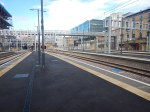
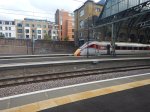
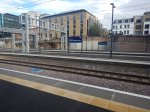
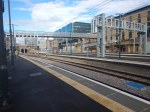
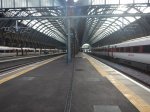
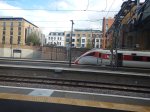
The two trains are both nine-car Hitachi Class 800 or Class 801 trains and I was standing in line with their noses.
I wonder what is the maximum length of trains that can be handled in these platforms.
- They can certainly handle ten-car trains, as LNER run these to Leeds.
- Hitachi have designed the trains, so they can be up to twelve-cars, which are 312 metre long trains.
- Looking at maps, I suspect that eleven-car trains would be the largest that can be handled.
But surely to maximum the number of passengers handled in the station, the platforms should be able to handle the longest Hitachi trains.
- Unless, the capacity of an individual train is limited by the gate-lines and Network Rail have said that ten-car trains are the longest allowed.
- Or would twelve-car trains be two far to walk with lots of luggage.
But ten-car trains would allow Lumo to double-up trains to increase capacity selectively, when perhaps, there is an important sporting event.
So when say the Culcutta Cup is taking place, an early morning train to the match and a late evening return could be doubled to add another four hundred seats.
But the current Lumo timetable only shows just two trains on a Saturday.
- London King’s Cross – Edinburgh, which leaves at 10:25 and arrives at 14:57.
- Edinburgh – London King’s Cross, which leaves at 08:49 and arrives at 13:17.
Not very good to go to the rugby or a birthday lunch with your mum.
But realtimetrains reveals two early morning paths allocated to Lumo.
- London King’s Cross – Edinburgh, which leaves at 05:45 and arrives at 10:06.
- Edinburgh – London King’s Cross, which leaves at 05:36 and arrives at 10:04.
So you can get to the other capital, but is there a later last train back?
Oh! Yes there is! And again they are revealed by realtimetrains.
- London King’s Cross – Edinburgh, which leaves at 18:27 and arrives at 22:56.
- Edinburgh – London King’s Cross, which leaves at 17:56 and arrives at 22:29.
Is the Southbound service earlier, as Murrayfield is closer to Waverly station, than Twickenham is to King’s Cross?
If the return was fifty pounds and the trains were doubles, that could be revenue of around £ 40,000. There would be more electricity and track access charges, and they’d need extra train crew, but Lumo would surely be quids in!
Lumo’s financial model has several nice little earners.
LNER’s Middlesbrough And London Service Starts On December 13th
Tucked at the bottom of the article entitled LNER Tickets For Christmas Getaway in Edition 939 of Rail Magazine, there is this paragraph separated from the article by a sole bullet point.
LNER has confirmed that from December 13 it will run a new weekday service between London King’s Cross and Middlesbrough.
It has already made an appearance on Real Time Trains and I can find the following details.
- There will be one train per day (tpd)
- Intermediate stops will be at Thornaby and York.
- The Middlesbrough and London service will leave Middlesbrough from Platform 1 at 07:08 and arrive in King’s Cross at 10:22.
- The London and Middlesbrough service will leave King’s Cross at 15:25 and arrive in Middlesbrough in Platform 2 at 18:18.
These are my thoughts.
Trains Per Day
One train per day, is obviously an introductory service and like services to Harrogate and Lincoln, the number of services will ramp up to perhaps four or five tpd, if the demand is there and the paths and trains are available.
Journey Times
Consider
- The Southbound journey takes three hours and fourteen minutes with a time of two hours and nine minutes between York and King’s Cross
- The Northbound journey takes two hours and fifty-three minutes with a time of one hour and fifty-six minutes between King’s Cross and York.
- Some services between King’s Cross and York are as fast as one hour and forty-eight minutes.
- Middlesbrough and York seems to take around 52-58 minutes.
- These Middlesbrough and York timings are consistent with TransPennine Express.
- Digital signalling could offer savings in journey time between York and London.
I think it is very likely as the timetable improves, that timings between Middlesbrough and London could be around two hours and forty minutes.
Electrification
The route is fully electrified except for between Middlesbrough and Longlands Junction, where it joins the electrification of the East Coast Main Line, which is a distance of twenty-two miles.
Hitachi are developing a battery-train, which they call the Hitachi Intercity Tri-Mode Battery Train, which is described in this Hitachi infographic.
Note.
- LNER’s current Class 800 trains will probably be able to be converted to this train.
- A range on battery power of upwards of forty miles would be expected.
If the range on battery-power can be stretched to perhaps sixty miles, this train should be capable of serving Middlesbrough without the need for any extra charging at the terminus.
I am sure Hitachi would like to see their battery-electric trains running between King’s Cross and Middlesbrough, as it would be an ideal route on which to show the trains to prospective customers, given that their factory is at Newton Aycliffe.
Conclusion
This could be good demonstration battery-electric service for Hitachi and LNER.
LNER To Serve Cleethorpes
Under the proposed new LNER timetable, which will start in May 2022, there will be a new train service between London Kings Cross and Cleethorpes.
According to this article on the Lincolnite, which is entitled Direct Cleethorpes To London Rail Link ‘Close’ To Getting Go Ahead, there will be one service per day.
It will leave Cleethorpes at 06:24 and Grimsby Town at 06:32 before arriving at King’s Cross at 09:25.
The return will leave King’s Cross at 16:10 and arrive in Grimsby Town at 19:05 and Cleethorpes at 19:20.
The August 2021 Edition of Modern Railways makes these points about the service.
- The larger Azuma fleet makes this extension possible.
- ,A more regular service would require additional trains.
- LNER is examining whether other intermediate stations east of Lincoln could be served.
I would have thought, that Market Rasen station could be a possibility for an intermediate stop.
I have a few thoughts.
Extra Services
This single service is ideal for though living in Lincolnshire, but it doesn’t suit those people, who perhaps need to go to the area from London for business or family reasons.
- Lincoln appears to get around five or six trains per day in each direction to and from King’s Cross.
- Services are roughly one train per two hours.
- I suspect the Lincoln service can be run by a single train, that shuttles between King’s Cross and Lincoln stations.
I believe, that Cleethorpes needs at least a pair of services to and from London, so that travellers can spend a day in North-East Lincolnshire.
- This would probably need more trains.
- Services would go via Lincoln and Lincoln may get extra services to London.
- Selected services could stop at intermediate stations, like Market Rasen.
There are surely possibilities for a integrated timetable between King’s Cross and Lincoln, Market Rasen, Grimsby Town and Cleethorpes.
Battery-Electric Operation
Consider.
- LNER’s Class 800 trains are prime candidates for conversion to Hitachi Intercity Tri-Mode Battery Trains, so they can run away from the overhead wires of the East Coast Main Line to places like Lincoln, by the use of battery power.
- These battery trains could charge using the electrification between King’s Cross and Newark North Gate stations.
- The distance between Lincoln Central station and the East Coast Main Line is 16.6 miles.
- In Plans To Introduce Battery Powered Trains In Scotland, I quote Hitachi, as saying they expect a sixty mile range for battery trains.
I am sure, that these trains would have sufficient range on battery to be able to work King’s Cross and Lincoln services without using diesel.
But could the Hitachi trains reach Cleethorpes with some well-positioned charging?
- The distance between Lincoln and Cleethorpes stations is 47.2 miles.
- In Solving The Electrification Conundrum, I describe Hitachi’s solution to running battery-electric trains, by using well-placed short lengths of 25 KVAC overhead electrification controlled by an intelligent power system.
With a range of sixty miles on batteries and charging at Lincoln and Cleethorpes stations, it would appear that battery electric operation of Class 800 trains between King’s Cross and Cleethorpes is a distinct possibility.
Lincoln Station
Lincoln station has three operational through platforms and I suspect all would need to be electrified, so that trains could be charged as they passed through.
These are distances from Lincoln station.
- Cleethorpes – 47.2 miles
- Doncaster – 36.9 miles
- Nottingham – 33.9 miles
- Peterborough – 56.9 miles
- Sheffield – 48.5 miles
It does appear that if Lincoln station were to be electrified, most services from the city could be run using battery-electric trains.
Cleethorpes Station
This picture shows Cleethorpes station with two TransPennine Express Class 185 trains in the station.
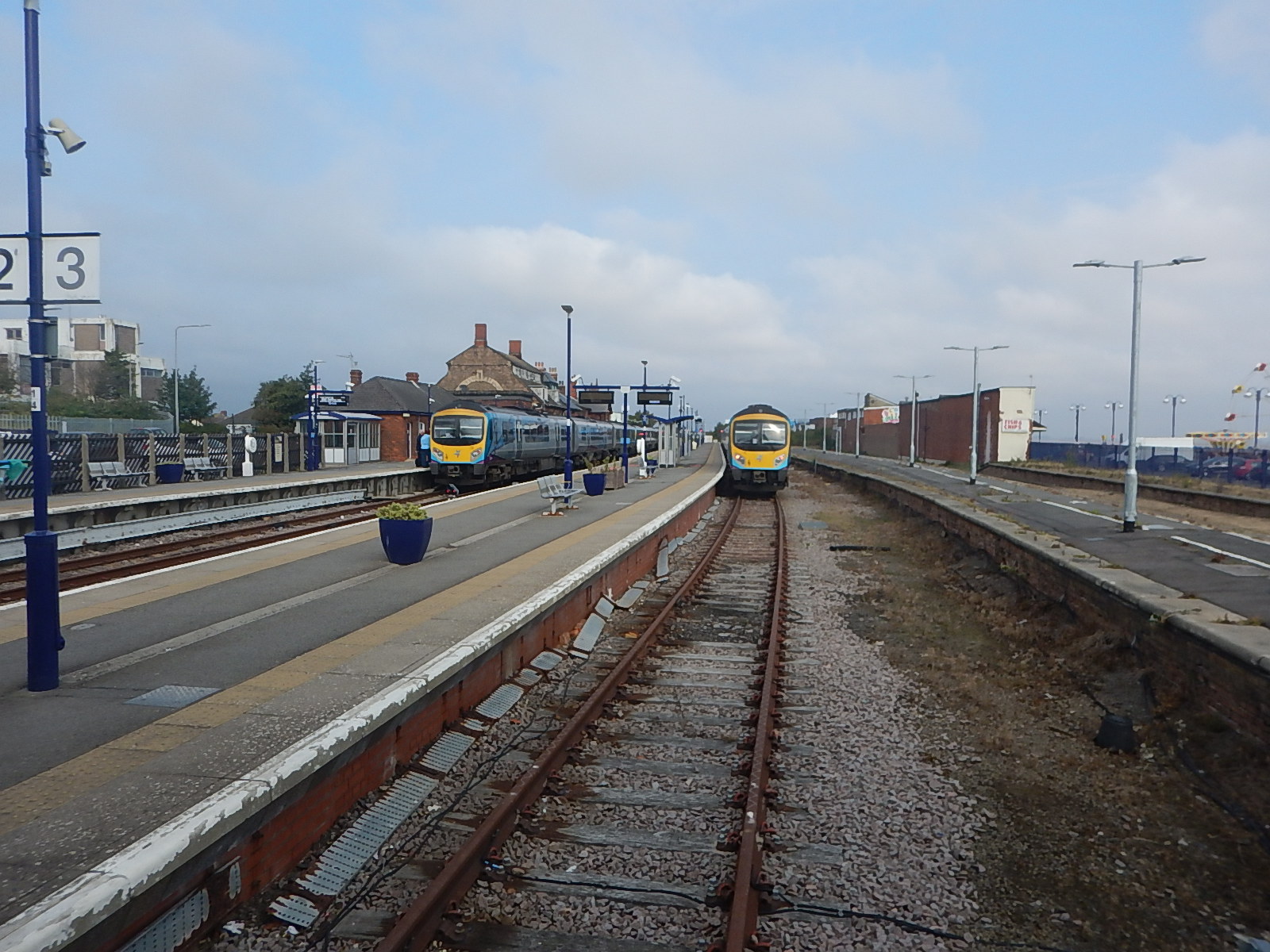
Note.
- The Class 185 trains are diesel, but could be replaced by Hitachi Class 802 trains, which could be converted to battery-electric operation.
- Cleethorpes and Doncaster are 52.1 miles apart, which could be in range of Hitachi’s battery-electric trains.
- It doesn’t look to be too challenging to electrify a couple of platforms to charge the battery-electric trains.
- Cleethorpes station could surely charge both the LNER and the TransPennine Express trains.
- The Cleethorpes and Barton-on-Humber service which is under fifty miles for a round trip could also be replaced with battery-electric trains.
Cleethorpes station could be totally served by battery-electric trains.
Battery-Electric Trains For Lincolnshire
At the present time, there is a surplus of good redundant electrical multiple units and the rolling stock leasing companies are looking for places where they can be used.
Porterbrook are already looking to convert their fleet of Class 350 trains to battery-electric operation and I am certain, that now that Hitachi and others have solved the charging problem, a lot more trains will be converted.
Most would appear to be four-car 100 mph trains, which will be very convenient and should fit most platforms.
Conclusion
Running battery-electric Class 800 trains to Lincoln, Grimsby Town and Cleethorpes could be the start of decarbonisation of Lincolnshire’s railways.
What would battery-electric trains do for the economy of Lincolnshire?

