Major Boost For Hydrogen As UK Unlocks New Investment And Jobs
The title of this post, is the same as that of this press release from the Government.
These three bullet points, act as sub-headings.
-
Eleven new production projects will invest around £400 million up front over the next 3 years, growing the UK’s green economy
-
More than 700 jobs to be created, representing the largest number of commercial scale green hydrogen production projects announced at once anywhere in Europe
-
New certainty for industry as government sets out hydrogen ambitions, including future production, transport and storage rounds
These two paragraphs outline the investment.
Over 700 jobs will be created across the UK in a world-leading hydrogen industry from the South West of England to the Highlands of Scotland, backed by £2 billion in government funding over the next 15 years.
Energy Security Secretary Claire Coutinho today (Thursday 14 December) announced backing for 11 major projects to produce green hydrogen – through a process known as electrolysis – and confirmed suppliers will receive a guaranteed price from the government for the clean energy they supply.
Note.
- This represents the largest number of commercial scale green hydrogen production projects announced at once anywhere in Europe.
- It is green hydrogen produced by electrolysis.
- The projects appear to be distributed around the UK.
- 125 MW of new hydrogen for businesses will be delivered.
I detailed the shortlist in Hydrogen Business Model / Net Zero Hydrogen Fund: Shortlisted Projects Allocation Round 2022, which used this press release from the Government as source.
Projects And Topics
This notice from the Government lists the eleven successful projects.
Projects and topics mentioned in the notice include.
Bradford Low Carbon Hydrogen
I was very impressed, when I went to see the public exhibition of this project.
- One of the reasons for building the electrolyser, is that Bradford has too many steep hills for electric buses, so will have to use more powerful hydrogen buses.
- I also got talking to a Bradford councillor, who said that they were going to use hydrogen to attract businesses to the city.
- It’s also rather large with a capacity of 24.5 MW.
The press release also gives this comment from Gareth Mills, Managing Director at N-Gen who said.
This is an important and exciting project, not just for Bradford, but also for the wider area and the community that lives here, so we are delighted to now have financial backing from government to allow us to start work on the site.
Bradford Council declared a climate emergency in 2019 and we believe this facility will play an important role in helping the area deliver on its climate change ambitions.
We know hydrogen can support decarbonising all energy types including transport, and producing green hydrogen is central to this, so we’re really excited to work with Hygen to deliver this development.
I very much feel that other large towns and cities will follow Bradford’s example.
Carlton Power
Carlton Power is a developer, who have been successful with bids for three hydrogen production projects.
- Barrow Green Hydrogen – 21 MW
- Langage Green Hydrogen – 7 MW
- Trafford Green Hydrogen – 10.5 MW
The links go to the respective web sites.
The press release also gives this comment from Eric Adams, Carlton Power’s Hydrogen Projects Director who said.
We are delighted with today’s announcement from the Department for Energy Security and Net Zero (DESNZ). Securing contracts for each project – totalling 55MW of capacity and an investment of c£100 million, and each with planning consent – is a major achievement and places Carlton Power among the leading British companies that are helping to build the hydrogen economy in the UK.
The press release also gives this comment from Keith Clarke, Founder and Chief Executive of Carlton Power who said.
We are supporting UK industry to decarbonise their operations, supporting the UK’s efforts to reach net zero and we are a catalyst for green investment and jobs into the UK regions. Working with our financial partners, Schroders Greencoat, we can now work towards Final Investment Decisions for each scheme in the early part of next year and thereafter work to have the 3 enter commercial operation within 2 years.
Carlton Power seem pleased, they got all the projects, they wanted.
Cromarty Hydrogen Project
The Cromarty Hydrogen Project has a web site, where this is said about the background of the project.
This Proposed Development would form part of the North of Scotland Hydrogen Programme recognised in the Scottish Government’s Hydrogen Action Plan1 The North of Scotland Hydrogen Programme is a strategic programme in line with the Scottish Government’s resolve to achieve Net Zero greenhouse gas (GHG) emissions by 2045 and the UK Government’s ambition by 2050. The programme is aimed at developing hydrogen production hubs across the North of Scotland to supply hydrogen, initially to meet industrial and heavy goods vehicle (HGV) transport demand in the near term and then expand to cater to additional hydrogen demands in the future.
The Cromarty Hydrogen Project is the first project in the Scotland Hydrogen Programme. It originated from a collaboration between the Port of Cromarty Firth, ScottishPower, Glenmorangie, Whyte & Mackay and Diageo and the project originator, Storegga during the feasibility stage. This project is looking to develop a green hydrogen production hub in the Cromarty Firth region and revolves around the local distilleries forming the baseload demand for early phases of the project, which would enable them to decarbonise in line with their own ambitions and sector targets.
Note.
- In Cromarty Firth And Forth To Host First Green Freeports, I talk about how Cromarty Firth is going to be a green freeport.
- The electrolyser is a medium-sized one at 10.6 MW.
- Initially HGVs will take a large part of the output.
The distillers seem to be playing a large part. I assume it it’s because distilling needs a lot of heat to boil off all the water from a spirit.
The press release also gives this comment from Sarah Potts, Storegga’s Hydrogen Managing Director, who said.
After a lot of hard work by the integrated Storegga and ScottishPower project team, particularly over the past 18 months since the UK government launch of HAR1, I’m delighted that Cromarty has been selected by the UK government Department of Energy Security and Net Zero as one of 11 projects to be awarded a funding support contract. As an SME originating from North East Scotland, I believe Storegga is able to bring a unique perspective and ambition to deliver decarbonisation solutions for Scottish industry. We look forward to now being able to take the project forward to a final investment decision in 2024, with first production in 2026 and continuing to grow our hydrogen investments in the region.
The Cromarty Hydrogen Project appears to be a local project developed to satisfy a local need, but within Government policy.
Green Hydrogen 3
I wrote about this project in Government Hydrogen Boost To Help Power Kimberly-Clark Towards 100% Green Energy Target.
It is being developed by HYRO at Northfleet for Kimberly-Clark.
The press release also gives this comment from Alex Brierley, co-head of Octopus Energy Generation’s fund management team, who said.
This is a major milestone as this funding will enable HYRO to roll out green hydrogen projects at scale in hard-to-electrify industrial processes. Our first project will be working with Kimberly-Clark to flush away fossil fuels when manufacturing Andrex and Kleenex. We’ve got a big pipeline of projects to help even more industrial businesses decarbonise – and we’re on track to invest billions in this sector.
Note.
- Will Andrex become the bog-roll of choice for the supporters of Extinction Rebellion and Just Stop Oil?
- Octopus Energy seem to be getting their fingers into lots of projects.
- I suspect that Octopus Energy will need billions.
I very much like the way that Kimberly-Clark are going and it will be interesting, if they bring out a sales philosophy based on low-carbon manufacture.
Hydrogen Blending
The press release talks of hydrogen blending.
Ministers have also announced their decision to support hydrogen blending in certain scenarios – subject to an assessment of safety evidence and final agreement.
Currently, less than 1% of the gas in distribution networks is hydrogen. Under proposals, hydrogen could be blended with other gases in the network as an offtaker of last resort, working to reduce costs in the hydrogen sector by helping producers, and to support the wider energy system.
Hydrogen blending may help achieve the UK’s net zero ambitions, but would have a limited and temporary role as the UK moves away from the use of natural gas.
When I was a wet-behind-the-ears young engineer working on ICI’s hydrogen plant at Runcorn in the 1960s, one of the topics over coffee was how can ICI find more markets for the hydrogen they produce. I suspect a lot of the excess hydrogen went to raise steam in ICI’s power station. That wasn’t very efficient or profitable.
But suppose it is deemed safe to have up to 5 % of hydrogen in the natural gas supply. Then an electrolyser operator, would know they have an offtaker of last resort, which would in effect set a minimum price for the hydrogen.
- I believe this could help their sales of hydrogen to heavy gas users, within easy reach by pipeline or truck of the electrolyser.
- It might also attract businesses with a heavy energy usage or large carbon emissions to relocate close to an electrolyser.
Allowing hydrogen blending will also mean that no expensive hydrogen is wasted.
The government’s proposal on hydrogen blending is very sensible.
Hydrogen In Home Heating
The press release says this about using hydrogen for home heating.
Ministers have decided not to proceed with a hydrogen trial in Redcar, as the main source of hydrogen will not be available. The government recognises the potential role of hydrogen in home heating and will assess evidence from the neighbourhood trial in Fife, as well as similar schemes across Europe, to decide in 2026 whether and how hydrogen could help households in the journey to net zero.
I believe the ideal way to heat homes and other buildings depends on what is available at the building’s location.
Promising ideas are coming through, but I haven’t seen one that will suit my circumstances.
But something will come through and my engineering instinct says it will be powered by natural gas and the carbon will be captured. The system would probably work on a district-wide basis.
HyMarnham
HyMarnham is probably the most unusual of the projects.
It is a collaboration between J G Pears and GeoPura.
J G Pears describe themselves like this on their web site.
JG Pears is one of the UK’s leading processors of animal by-products and food waste. Pioneering environmentally-aware practices since we started out in 1972, we play a vital role in the agricultural and food industries.
GeoPura has this mission statement on their web site.
GeoPura has a totally zero-emissions answer to how we’re going to generate, store and distribute the vast amount of energy required to decarbonise our global economies. Clean fuels. Green fuels. We believe that renewable energy is the future.
It appears that a 9.3 MW electrolyser will be built on the site of the demolished High Marnham coal-fired power station, which is shown on this Google Map.
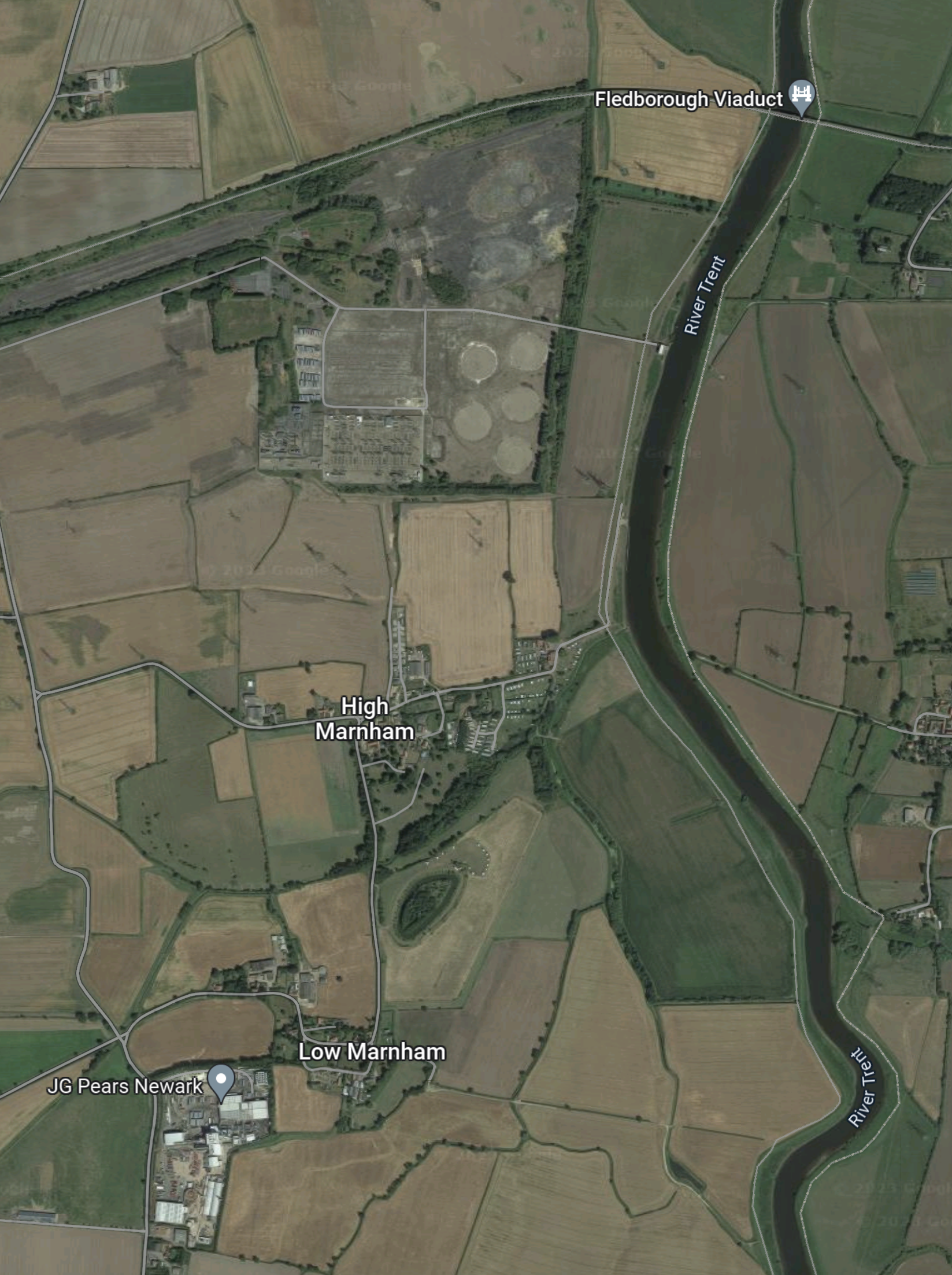
Note.
- The River Trent runs North-South across the map.
- There are two villages of High and Low Marnham in the middle of the map.
- The circles at the top of the map indicate the cooling towers of the demolished High Marnham power station.
- The High Marnham power station site is now owned by J G Pears.
- J G Pears Newark site is to the West of Low Marnham village.
- In the North-East corner of the map is the Fledborough viaduct, which crosses the River Trent.
- Network Rail’s High Marnham Test Track runs East-West across the map and uses the Fledborough viaduct to cross the Trent.
This second Google Map shows a close up of the former power station site.
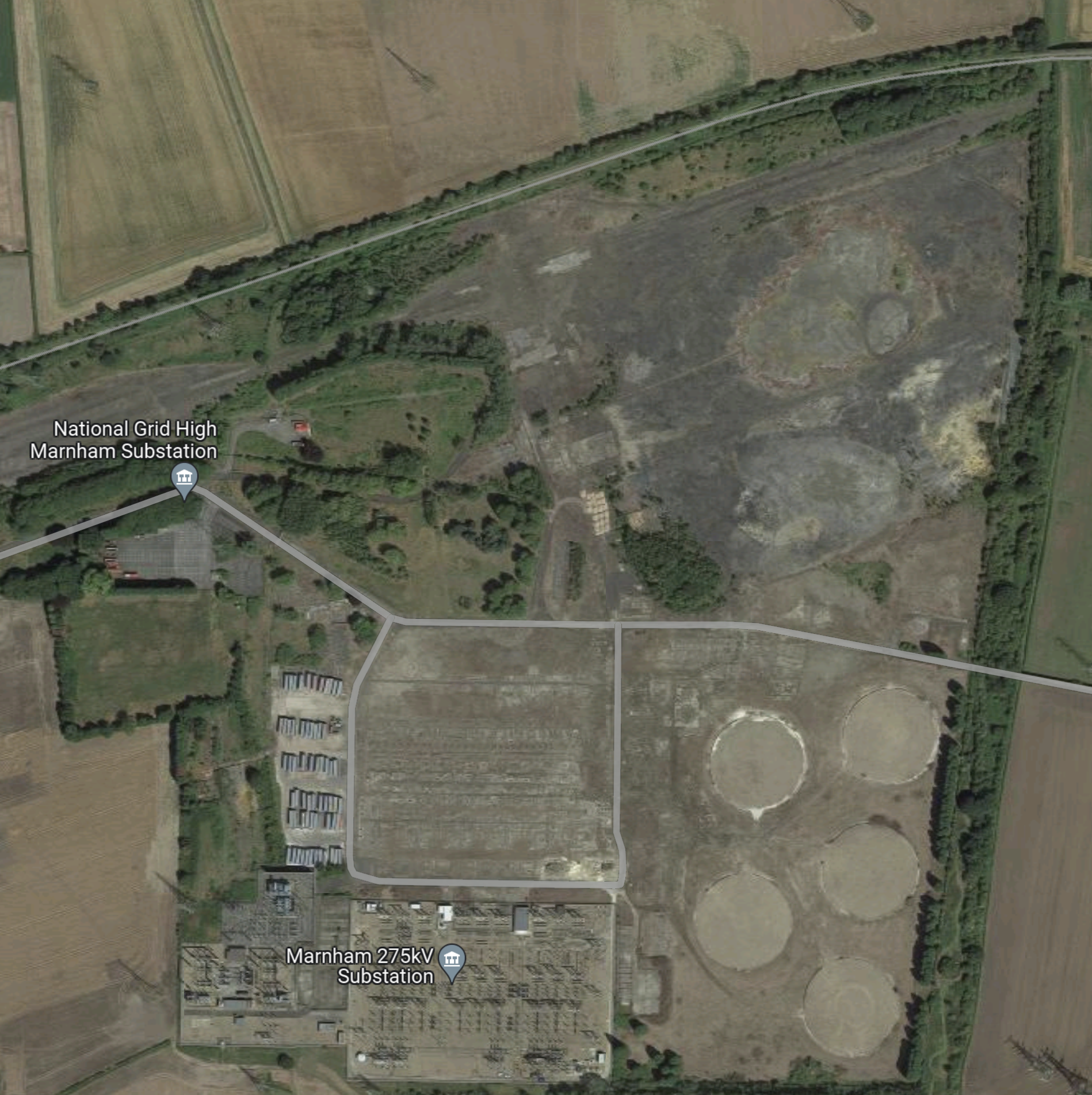
Note.
- Network Rail’s High Marnham Test Track runs East-West across the map at the top.
- The remains of High Marnham power station can be clearly seen.
- The sub-stations that connected the power station to the grid are still in place.
This article on Energy-Pedia is entitled UK: HyMarnham Power’s Green Hydrogen Project Shortlisted for UK’s Net Zero Hydrogen Fund and contains this paragraph.
Harnessing the expertise of GeoPura and JG Pears, the site will be powered by 43 MW of new solar energy and utilises 8MW of electrolysers; establishing a long-term supply of low carbon hydrogen in the region.
Note that the electrolysers are now sized at 9.3 MW.
It looks to me like one or both companies wanted an electrolyser and J G Pears had the site, so engineers and executives of the two companies got together in a decent real ale pub, started thinking and the result is HyMarnham.
- Electricity can come from the solar panels or the National Grid.
- Excess solar electricity can be exported through the National Grid.
- There is plenty of space on the site for a hydrogen filling station for vehicles.
- There could even be a filling point for refueling hydrogen-powered trains on the High Marnham Test Track.
The Energy-Pedia article indicates that GeoPura and JG Pears would like to get started this year.
Could the partners install a small electrolyser linked to the National Grid, initially, so that Network Rail has the ability to test hydrogen trains?
InchDairnie Distillery In Scotland
I have just looked at the InchDairnie Distillery web site.
- It looks a high class product.
- The company is best described as Scotch Whisky Reimagined.
- The company is based in Fife near Glenrothes.
- They appear to have just launched a rye whisky, which they are aiming to export to Canada, Japan and Taiwan.
The press release says this about InchDairnie.
InchDairnie Distillery in Scotland, who plan to run a boiler on 100% hydrogen for use in their distilling process.
That would fit nicely with the image of the distillery.
I suspect the hydrogen will be brought in by truck.
But would a zero-carbon whisky be a hit at Extinction Rebellion and Just Stop Oil parties?
PD Ports In Teesside
The press release says this about PD Ports.
PD Ports in Teesside, who will use hydrogen to replace diesel in their vehicle fleet, decarbonising port operations from 2026
I’ve felt for some time, that ports and freight interchanges, where you have lots of cranes, trucks and other diesel-powered equipment running hither and thither, is a good application for hydrogen, as not only does it cut carbon-emissions, but it also provides cleaner air for the workforce.
PD Ports have a Wikipedia entry, where this is said about their operations.
As of 2013 PD Ports owns and operates the Ports of Tees and Hartlepool under the name Teesport. The company also operates the Hull Container Terminal at the Port of Hull, and provides stevedoring and warehousing services at the Port of Immingham; logistics and warehousing at the Port of Felixstowe, Scunthorpe, and Billingham; and operates a wharf on the Isle of Wight. The company also owns the short sea ports in Scunthorpe (Groveport), Howden (Howdendyke, River Ouse, Yorkshire), and Keadby (River Trent).
The company appears to be bigger, than just Teesport and this project could grow.
The hydrogen for this project in Teesport appears to come from Tees Green Hydrogen, which will be a 5.2 MW facility developed by EDF Renewables Hydrogen.
The press release also gives this comment from Sopna Sury, Chief Operating Officer Hydrogen RWE Generation, who said.
Today’s announcements on the first 2 hydrogen allocation rounds mark a significant milestone in the development of the UK hydrogen economy. They represent a shift from policy development to project delivery, giving industry more clarity on the route to final investment decisions. Alongside the wider policy publications, this demonstrates that the UK wants to be a leader in delivering the clean energy transition.
These early projects are vital not only in driving the production of electrolytic hydrogen but also in signalling the need to build-out the T&S infrastructure for its wider distribution.
As a company with ambitions to develop approximately 2 gigawatts of green hydrogen projects across all our markets, and to invest around 8 billion euros net in green technologies in the UK between 2024-2030, RWE looks forward to being part of building a thriving hydrogen ecosystem in the UK.
These are positive words from the German energy company; RWE.
Sofidel In South Wales
The press release says this about Sofidel.
Sofidel in South Wales, who will replace 50% of their current gas boiler consumption with hydrogen at their Port Talbot paper mill.
The Wikipedia entry for the Sofidel Group has this first paragraph.
Sofidel is an Italian multinational producer of tissue paper for sanitary and domestic use. The Sofidel Group was founded in 1966. It is one of the world leaders in the tissue paper market and the second largest producer in Europe behind Essity. The privately held company is owned by the Stefani and Lazzareschi families, has subsidiaries in 13 countries and more than 6,600 employees.
Note.
- From the Wikipedia entry, it looks like the company has a good record on sustainability and has set itself good objectives.
- Sofidel are nor far from Tata Steel, who could be another large hydrogen user.
- Port Talbot will be a support port for the wind farms in the Celtic Sea.
- This is a typical hydrogen application, which reduces emission of carbon dioxide.
- But like me, have the Italian owners of the company been impressed with some of the Italian food, I’ve eaten in South Wales?
- Are British sweeteners better than Italian ones?
- The hydrogen for this project appears to come from HyBont Bridgend, which will be a 5.2 MW facility developed by Marubeni Europower.
The press release also gives this comment from Mr Tomoki Nishino, President and CEO of Marubeni Europower Ltd, who said.
Marubeni team is very honoured to be selected as a recipient of Hydrogen Allocation Round 1. Recently in October 2023, Marubeni signed an MoU with the UK government whereby we have shown our plan to invest £10 billion (along with our partners) into UK green business. We truly hope that a combination of HAR1 funding and Marubeni’s investment help decarbonize UK through HyBont, especially in the South Wales region.
It all seems to be happening in Port Talbot.
Tees Green Hydrogen
Tees Green Hydrogen is a 5.2 MW project being developed by EDF Renewables on Teesside.
The project has a web site, which has this project description on the home page.
Tees Green Hydrogen, will be a pioneering project, using the green electricity from nearby Teesside Offshore Wind Farm along with a new solar farm, which EDF Renewables UK intends to construct near Redcar, to power its hydrogen electrolyser.
The press release also gives this comment from Tristan Zipfel, Director of Strategy and Analysis at EDF Renewables UK, who said.
Today’s announcement is a huge leap forward for green hydrogen innovation which has the capacity to guarantee the long-term sustainability of industry in the North East. We are delighted that the government has given this vote of confidence in both EDF Renewables UK, Hynamics and the capacity of the region to be a world-leader in green technology and innovation.
The press release also gives this comment from Pierre de Raphelis-Soissan, CEO at Hynamics UK, who said.
This is a very important step towards realising the potential of Tees Green Hydrogen and making a ground breaking contribution to decarbonisation in the Tees Valley. The project is uniquely placed to be scalable in order that future demand can be met as hydrogen-based technology becomes the industrial norm.
Note.
- The project will be powered by both wind and solar.
- Hynamics is a subsidiary of EDF.
- I suspect that this project will supply PD Ports with hydrogen.
This project looks like it could be just a starter for 5.2 MW.
West Wales Hydrogen
West Wales Hydrogen is a 14.2 MW project being developed by H2 Energy and Trafigura in West Wales.
The best source of information is this must-watch Youtube video.
- The company appears to be able to lease you a hydrogen truck on a pay per mile basis, at the same price as a diesel truck.
- Get the finance right for your customers and yourself and everybody will be happy.
I know it will work, as I used to own half a company that leased a lot of trucks in Ipswich.
- My experience, also says the model would work with taxis, Transit-sized vans, company cars and vehicles like Defenders.
- It would also work very well around Ipswich, like my company did.
The press release also gives this comment from Julien Rolland, CEO of H2 Energy Europe, who said.
We are very grateful for the support that the UK government has announced for our 20MW electrolytic hydrogen production facility, marking a significant milestone in our journey to develop South Wales’s first large-scale green hydrogen production plant. The facility will enable industry in South Wales to transition to using green hydrogen produced from renewable energy sources.
The green hydrogen produced at Milford Haven will be used to displace natural gas and other fossil fuels in industrial and chemical processes and contribute to the decarbonisation of the local industry. The interest that we’ve already received from local industry means we are already reviewing the opportunity to scale up the facility.
I can see this model being applied all over the UK.
Whitelee Green Hydrogen
Whitelee Green Hydrogen is a 7.1 MW project being developed by Scottish Power close to the Whitelee Wind Farm.
The Whitelee Wind Farm has a comprehensive Wikipedia entry, where this is said about the future of the wind farm.
In May 2009, the Scottish Government granted permission for an extension to the wind farm to produce up to a further 130 megawatts of power, which would increase the total generating capacity of Whitelee to 452 MW.
In 2010 a 75 turbine extension commenced, adding an additional 217 MW of capacity, enough to power the equivalent of over 124,000 homes. This brought the total generating capacity of the wind farm up to 539 MW. Additionally, the extension added a further 44 km of trails to the site. John Sisk and Son Limited and Roadbridge were jointly appointed as Principal Contractors for the site during construction with Alstom Limited erecting and commissioning the wind turbines.
In August 2012 Scottish Power announced that it was applying for a further small extension of five turbines on the west of the existing site, adding 12 MW of capacity. This was refused by the DPEA on 19 Oct 2016.
A £21 million (US$29.35 million) 50MW/50MWh grid battery is being added to improve resource utilization, with plans for a 40 MW solar farm and a 20 MW hydrogen electrolyzer.
The press release also gives this comment from Peter Jones, Director of ScottishPower Green Hydrogen Business, who said.
The first wave of production facilities like Whitelee and Cromarty will demonstrate that zero-emission hydrogen can be delivered at commercial scale and drive the development of a viable market for the green fuel.
It will also create highly skilled green jobs across the UK and quickly support a world leading supply chain.
It’s early days for this burgeoning market and government support is to be welcomed to help deliver a future green hydrogen economy.
With 539 MW of wind, 40 MW of solar and a 50MW/50MWh grid battery to drive a 7.1 MW electrolyser, this should prove to be a reliable source of green hydrogen.
My Thoughts
I have a few extra thoughts.
Coverage Is Rather Patchy
Some areas of the UK don’t seem to be well-served with green hydrogen from this funding.
- East Suffolk with all those trucks going to and from the Port of Felixstowe. There’s certainly no lack of renewable energy.
- Humberside with all its energy-hungry industries. There’s certainly no lack of renewable energy.
- Hampshire with all those trucks going to and from the ports of Portsmouth and Southampton. But there is a lack of renewable energy.
- Lincolnshire with all those trucks going to and from Immingham. There’s certainly no lack of renewable energy.
- London with all those local trucks delivering building materials to sites all over the capital. But then the current Mayor doesn’t have a hydrogen policy.
I would assume, that some of these areas will be funded for hydrogen in the second round.
Set Back As Badgers Undermine 11 km Of Railway
The title of this post, is the same as that of this article on Railway Gazette International.
These four paragraphs outline the problems.
Deutsche Bahn reports that burrowing badgers have undermined about 11 km of embankment on the Fröndenberg – Unna railway, and repairs are likely to be very expensive and take a long time as the damage is more extensive than expected.
In some places the repairs will be equivalent to new construction, and DB says the planning and approval phase alone could take several years as the route passes through protected environments. Local media reports that the financial viability of reopening is being questioned.
DB first discovered the damage in 2022, and initiated repairs using a concrete spraying process. It also began to examine the rest of the route and 140 sett entrances have now been discovered, leading to an extensive tunnel system which is believed to have a total length of around 1 500 m spread over the entire length of the embankment.
The line runs through a nature reserve, so investigations had to be suspended over the summer until a special permit was obtained. Trees and bushes also needed to be cut back. Regional train service RB54 remains suspended between Unna and Fröndenberg and replaced by buses, extending journey times by 7 min.
Note.
- The railway appears to be only single-track from Google Maps.
- Unna station is the Easternmost station of the Rhine-Ruhr S-Bahn.
- The RB 54 – Hönnetal-Bahn runs between Fröndenberg and Unna.
I wouldn’t be surprised that this serious problem will be resolved by either closing the railway permanently or by using an expensive rebuild.
How Network Rail Deal With Badgers
I did find this document on the Network Rail web site, which appears to be part of a Safety Course.
There is this page on the Network Rail web site, which is entitled Badgers Sett To Keep Their Homes As Railway Works Around.
Unfortunately for the Germans, they seem to have whole armies of badgers, whereas we seem to have just a couple of families in the second document.
It does look like in the video in the second example, that a certain amopunt of psychology is used to persuade the badgers to do, what Network Rail wants them to do.
Sheep And The M62
When I was at Liverpool University in the 1960s, the Veterinary Department had a contract to design fencing to keep the hardy Pennine sheep off the motorway.
They found that the sheep had little difficulty climbing over a six foot high wire mesh fence.
Perhaps DB should ask Liverpool, if they have any tips!
A Community Engagement App For The Hope Valley Line Upgrade
The Hope Valley Line Upgrade has its own web site.
This is the sub-heading.
We’re upgrading the railway between Manchester and Sheffield to provide more reliable and faster journeys for passengers
The first paragraph gives the project timeline.
The project started in Spring 2021 and is due to be completed in Spring 2024.
There is also a section, that is entitled Community Engagement, where this is said.
Communication is very important to us and we will be writing to local residents with plenty of notice before work starts, as well as holding public engagement events throughout the project to keep the local community informed on its progress.
For regular updates on the main improvement work, you can also download the Hope Valley Railway Upgrade community engagement app, which will contain details of upcoming work activities, news, and initiatives and events for the local community.
That is new territory for Network Rail or at least the first time, I’ve seen one.
Until proven otherwise, it looks like it could be a good idea.
Severn Valley Railway Announces Network Rail Partnership
The title of this post, is the same as that of this article on the BBC.
This is the sub-heading.
A heritage railway is to work in partnership with Network Rail to share expertise and resources.
These are the first two paragraphs.
Severn Valley Railway, which runs trains between Kidderminster and Bridgnorth, said it would receive spare materials, trackside equipment and track components.
In exchange, Network Rail will be able to train its teams on the railway.
This sounds like the sort of sensible deal, that was negotiated in a real ale pub, by engineers from both parties.
The article also has this paragraph.
The railway said this contract was the first of its kind in Britain and could become a model for other heritage railways to adopt.
I certainly agree with that statement.
I have also written two posts about co-operation with the Mid-Norfolk Railway.
- Aerial Pictures Show New Trains Housed In Mid-Norfolk.
- Mid Norfolk Railway Completes Work On ‘First For UK’ Railway Level Crossing.
It also appears from its Wikipedia entry that the Mid-Norfolk Railway, is regularly used to load freight for transport out of Norfolk. Items moved include Army vehicles and damaged rolling stock.
High Speed Two To Liverpool
There has been a lot of speculation about the Northern end of High Speed Two, so I might as well add sort out a few facts and add a bit of speculation of my own.
The Current Liverpool Service
I shall look at the 08:43 train on the 18th September 2023.
- It was a nine-car Class 390 train or Pendolino, which left on time.
- Euston and Liverpool Lime Street are 193.7 miles apart.
- The train called at Milton Keynes Central, Crewe and Runcorn
- The train arrived at Crewe at 10:24 and left at 10:26.
- The train arrived at Runcorn at 10:43 and left at 10:44.
- The train arrived at Liverpool Lime Street at 11:04 on time.
- The journey took two hours and 21 minutes
- The average speed was 82.4 mph.
- The Crewe and Liverpool Lime Street section is 39.7 miles and the train is scheduled to take forty minutes.
- The average speed between Crewe and Liverpool Lime Street is almost exactly 60 mph.
- The slower average speed is because the train is slowing for a gradual stop in Liverpool and the only fast section is the 110 mph section between Crewe and Weaver Junction, where the Liverpool Branch leaves the West Coast Main Line.
- There is one train per hour (tph).
There are probably only limited ways that time can be saved between Crewe and Liverpool Lime Street.
- The West Coast Main Line between Crewe and Weaver Junction takes twelve minutes and has an operating speed of 110 mph, so saving a few minutes might be possible, by upgrading the speed on this line with digital signalling to allow 140 mph running.
- It might be possible to save a couple of minutes at the Runcorn stop by using the superior performance of the new Class 807 or High Speed Two trains.
- The slowing down into and accelerating out of Liverpool might be improved by digital signalling and trains with better performance.
It should be noted that Liverpool Lime Street station was recently remodelled to improve operation of the station and the tracks connecting it to Runcorn.
I would be fairly sure that Network Rail and Avanti West Coast have got Crewe and Liverpool Lime Street times to a minimum. As this route will become part of High Speed Two, I suspect that Network Rail/Avanti have done extensive computer simulations of the route, to make sure they get it as quick and efficient as possible.
The New Class 807 Trains
The Class 807 trains, which enter service this year or early next, are the Lotuses in Hitachi’s AT 300 family of high speed trains.
- They are electric only and have no heavy diesel engines or traction batteries.
- They don’t even have emergency batteries for when the catenary fails.
- They have a redesigned nose. Is it more aerodynamic?
- As with all the other Hitachi high speed trains, they are capable of 125 mph, or 140 mph if the signalling permits.
These trains will undoubtedly have faster acceleration and deceleration and could probably knock minutes off the timings at all the stops.
A Second Hourly Train To Liverpool
Tucked away beside the Grand Union Sets Out Stirling Ambitions article in the December 2022 Edition of Modern Railways is a report on Avanti West Coast’s application for a second service between Euston and Liverpool.
This is said.
Avanti West Coast has applied for access rights for its second hourly Euston to Liverpool service, starting from December 2023, although a phased introduction of the new service is likely. This would make use of Avanti’s new fleet of 10×7-car Class 807 Hitachi EMUs, which are expected to enter service from Autumn 2023. The ‘807s’ would be deployed on the current hourly Liverpool service, on which a call at Liverpool South Parkway would be added. (provision is made for this in the December 2022 timetable.).
Pendolinos would then operate the second service each hour, calling at Lichfield Trent Valley and Tamworth.
A linespeed project is in progress to raise the permissible speed for non-tilting trains on the West Coast Main Line, and Avanti’s new Hitachi trains will take advantage of this.
Note.
- The current Liverpool service stops at Milton Keynes Central, Crewe and Runcorn.
- Liverpool South Parkway station is too short for the longest Pendolinos or Class 390/1 trains.
- When the second service is implemented will it stop at Milton Keynes Central, Crewe, Runcorn and Liverpool South Parkway?
- Will the Pendolinos only stop at Lichfield Trent Valley and Tamworth?
Will Avanti West Coast use the trains to take advantage of their strengths?
- The new lighter Class 807 trains will use their superior acceleration and deceleration to execute fast stops at more stations.
- The shorter Class 807 trains will call at Liverpool South Parkway.
- The current Pendolinos will use their tilt to run as fast as possible between London Euston and Liverpool.
I also suspect that Avanti West Coast will adjust the stopping pattern to attract passengers. I read somewhere, that a stop at Nuneaton to connect to Leicester, Peterborough, Cambridge and Stansted Airport, was a possibility.
More Details Of A Second Hourly Train To Liverpool – 30th September 2023.
Real Time Trains is now showing the details of the second service between London Euston and Liverpool.
These are the future timings of the 09:13 train from Liverpool.
- Liverpool – Leave at 09:13
- Runcorn – Arrive at 09:28 and leave at 09:29½
- Crewe – Arrive at 09:49 and leave at 09:56
- Stafford – Arrive at 10:14½ and leave at 10:16½
- Lichfield Trent Valley – Arrive at 10:29½ and leave at 10:31½
- Tamworth – Arrive at 10:36½ and leave at 10:38½
- Nuneaton – Arrive at 10:49 and leave at 10:51
- Milton Keynes Central – Arrive at 11:21 and leave at 11:23
- Euston – Arrive at 11.59
Note.
- This service has not been activated yet.
- It is pathed for a Class 80x train.
- There are seven stops.
- It will take two hours and 46 minutes.
- Liverpool and Crewe will take 36 minutes.
- There are two other inactivated services like this running through Birmingham and Northampton.
Could these services have been timetabled to test connectivity?
High Speed Two Classic Compatible Trains
These High Speed Two Classic Compatible trains are to be built for High Speed Two.
- They will be able to run on both High Speed Two and current high speed lines like the East Coast Main Line and the West Coast Main Line.
- They will have an operating speed of 205 mph on High Speed Two.
- They will be able to operate at appropriate speeds on existing high speed lines. Typically, that is 125 mph, but with full digital signalling that is 140 mph.
- They are two hundred metres long and are sixty metres shorter than an eleven-car Pendolino.
- They are being built by a Hitachi-Alstom joint venture.
This document on the Government web site is the Train Technical Specification for High Speed Two Classic-Compatible Trains.
Introducing The High Speed Two Classic Compatible Trains Into Service
Consider.
- London Euston and Liverpool Lime Street services can be run by eleven-car Pendolinos.
- It looks like after the introduction of the second service between London Euston and Liverpool Lime Street is introduced, it will be run by Pendolinos and it could be a two-stop service.
- The High Speed Two Classic Compatible trains should be able to run any service currently run by an eleven-car Pendolino.
So will Avanti West Coast use this second hourly London Euston and Liverpool Lime Street service to introduce the new High Speed Two Classic Compatible trains into public service?
- It would make sure the trains and existing track and signals were fully debugged.
- It would inform the public that High Speed Two is on its way.
- It would be good marketing for High Speed Two.
- They might shave a few minutes off journey times.
- It could use all the existing infrastructure.
- It will provide work for Alstom in Derby.
I feel Avanti West Coast just might!
London Euston And Liverpool Lime Street Before Phase 2a Of High Speed Two Opens
According to the Wikipedia entry for High Speed Two, these are the fastest timings.
- London Euston and Crewe – One hour and 30 minutes
- London Euston and Runcorn – One hour and 53 minutes
- London Euston and Liverpool Lime Street – Two hours and 3 minutes
Currently, the fastest London and Liverpool Lime Street trains take two hours and 21 minutes, so are the Class 807 trains going to be eighteen minutes faster?
From these figures and the times of the 0843, I can deduce these journey times.
- Currently, Crewe and Runcorn takes 17 minutes and the Class 807 train will take 23 minutes
- Currently, Runcorn and Liverpool Lime Street takes 20 minutes and the Class 807 train will take 10 minutes
- Currently, Crewe and Liverpool Lime Street takes 38 minutes and the Class 807 train will take 33 minutes
It looks like there may be slight problems with Wikipedia’s figures. But they were published before Avanti West Coast had run a Class 807 train between Crewe and Liverpool Lime Street. I think we’ll have to wait and see what turns up on Saturday, the 9th of December 2023, when the timetables change.
But I do feel now that the Class 807 trains will achieve London Euston and Liverpool Lime Street in two hours and three minutes.
London Euston And Liverpool Lime Street After Phase 2a Of High Speed Two Opens
According to the Wikipedia entry for High Speed Two, these are the timings.
- London Euston and Crewe – 56 minutes
- London Euston and Runcorn – One hour and 14 minutes
- London Euston and Liverpool Lime Street – One hour and 32 minutes
From these figures and the times of the 0843, I can deduce these journey times.
- Currently, Crewe and Runcorn takes 17 minutes and High Speed Two will take 18 minutes
- Currently, Runcorn and Liverpool Lime Street takes 20 minutes and High Speed Two will take 18 minutes
- Currently, Crewe and Liverpool Lime Street takes 38 minutes and High Speed Two will take 36 minutes
There doesn’t seem to be much of a saving between today’s Pendolino and High Speed Two between Crewe and Liverpool Lime Street.
Could it be that the work to improve Liverpool Lime Street station and its approaches a few years ago sorted out a lot of problems and Crewe and Liverpool Lime Street is now almost to the standard needed for High Speed Two?
If savings are made anywhere by High Speed Two, it could be between Runcorn and Liverpool Lime Street.
Looking at the operating speeds on OpenRailwayMap, there appears to be a 30 mph section of track for a couple of miles out of Liverpool Lime Street, which includes a sharp curve.
This Google Map shows the approaches to Lime Street station.
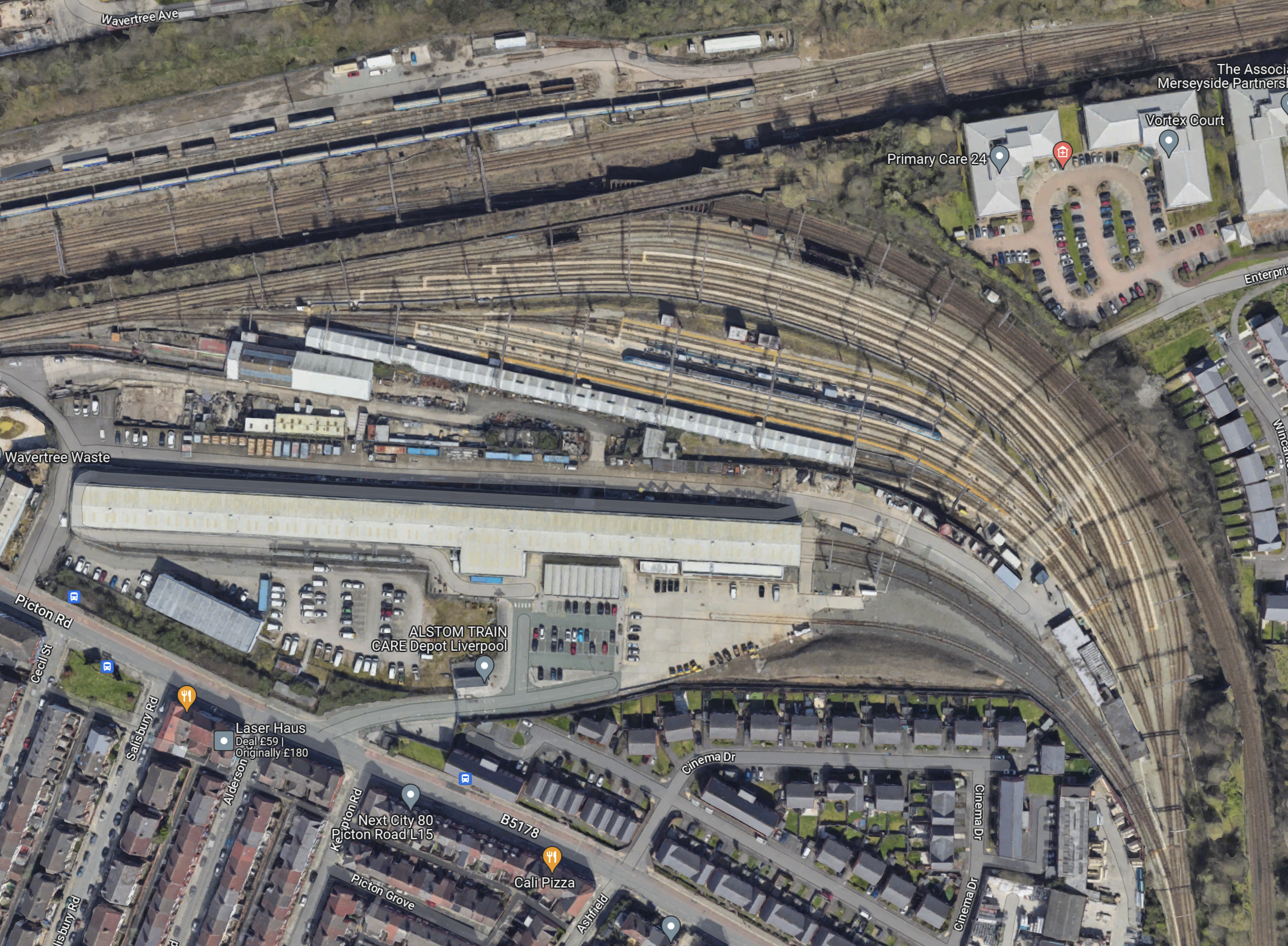
Note.
- The tracks across the top of the map are the main electrified Liverpool and Manchester tracks.
- The building in the middle is Alstom Traincare’s Liverpool Depot.
- The line to Runcorn enters the map in the South-East corner and curves around the depot to join the tracks into Lime Street station.
- The operating speed gradually reduces from 30 mph on this map to less than 15 mph in Lime Street station.
Perhaps, this 30 mph section is to be improved to gain the couple of minutes.
I also think, that savings could be possible at Runcorn station.
If when the second service starts, the Pendolinos don’t stop at Runcorn, that would save a few minutes.
The Class 807 and the High Speed Two Classic Compatible trains with their superior acceleration and deceleration could save a couple of minutes in the stop at Runcorn.
I very much feel that as the Pendolinos manage to achieve Crewe and Liverpool Lime Street in 38 minutes, that Pendolinos on the second service, Class 807 and the High Speed Two Classic Compatible trains, will all manage 36 minutes or less on the route.
London Euston And Liverpool Lime Street After Phase 2b Of High Speed Two Opens
There will be no changes as the full-size High Speed Two trains are not planned to run into Liverpool Lime Street.
Conclusion
It looks to me, that the Crewe and Liverpool Lime Street leg of High Speed Two is more or less complete.
Times between London and Liverpool will be as follows.
- Before High Speed Two Phase 2a – 2 hours and 3 minutes
- After High Speed Two Phase 2a – 1 hour and 32 minutes
- After High Speed Two Phase 2b – 1 hour and 32 minutes
I believe that for many this will be fast enough, especially as it’s nearly complete.
See Also
Could High Speed Two Finish At Lichfield?
Northumberland Line Station Contracts Are Signed
The title of this post, is the same as that of this news item from Nexus.
These are the first three paragraphs.
The signs are good for the new Northumberland rail line after the green light was given for construction to get underway on three new stations.
Contracts have been exchanged for principal contractor Morgan Sindall Infrastructure to formally start work on Bedlington, Blyth Bebside and Seaton Delaval stations.
Main construction works are progressing at pace, with station works well underway at Newsham and works approaching completion in Ashington, and 21km of new track is already installed.
It certainly looks like it’s all systems go.
I hope Network Rail have the next reopening ready to go!
London North Eastern Railway Runs Trial Train To Liverpool Street
The title of this post, is the same as that of this article on Rail Advent.
These two paragraphs, describe why this was done.
In an effort to mitigate the effect on passengers during disruption to services, London North Eastern Railway (LNER) ran one of its Azuma trains from Finsbury Park to London Liverpool Street during the early hours of this morning, Friday, 14th July.
The trial run took place to determine the long-term feasibility of diverting services during periods of planned disruption or when significant engineering works were taking place.
There doesn’t seem to have been any problems.
- The route in from Finsbury Park station went through Canonbury, Dalston Kingsland, Hackney Central, Homerton, Hackney Wick, Stratford and Bethnal Green stations, which was a distance of 9.6 miles.
- The route out to Finsbury Park station went through Bethnal Green, Cambridge Heath, London Fields, Dalston Kingsland and Canonbury, what was a distance of 5.8 miles.
Note.
- Two different routes were checked.
- The Class 800 train had five cars.
- Platform 4 at Liverpool Street station was used, which is normally used by London Overground and Cambridge services.
As this comes so soon after the test run to Cleethorpes, that I wrote about in Azuma Test Train Takes To The Tracks As LNER Trials Possible New Route, I wonder if Network Rail and the train operating companies are planning for some worst case scenario, where the two or more of the West Coast Main Line, Midland Main Lone and East Coast Main Line are blocked.
LNER and Network Rail have shown the following.
- Azumas can use Cleethorpes station.
- Azumas can use Liverpool Street station.
We also know that Cleethorpes has a direct TransPennine train service across the North of England to Doncaster, Sheffield, Manchester and Liverpool.
So if say Euston has to be shut for perhaps fourteen days during the construction of High Speed Two, a service between Liverpool Street and Cleethorpes via Colchester, Ipswich, Cambridge, Peterborough and Lincoln could be used to get some passengers to and from the North.
The other big problem is the removal of the problems of the Newark Crossing, which if it results in a long blockade of the East Coast Main Line, might need services to go into an alternative London terminal.
The Powerhouse In The East
Consider.
- The importance of Cambridge to the economy of the UK is growing fast.
- The city suffers from a shortage of commercial premises, housing and staff at all levels.
- I have just looked at the non-passenger traffic on the West Anglia Main Line for all of yesterday and there were just six freight trains through Bishop’s Stortford.
I wonder, if it would be possible to run a Liverpool Street and Cleethorpes service via Cambridge, Ely, Peterborough, Spalding, Sleaford, Lincoln, Market Rasen, Barnetby and Grimsby Town?
- The service avoids the East Coast Main Line, except through Peterborough, where it would use the separate Werrington lines.
- Liverpool Street is in the heart of one of the world’s major financial centres.
- Liverpool Street is on the Elizabeth Line.
- The service could call at Stansted Airport, but a reverse would be needed.
- Peterborough is sometimes promoted in Cambridge as a city, that could be developed, to provide support for Cambridge.
- A reverse would be needed at Lincoln.
- Lincoln is developing as a university city with character.
- Grimsby and Cleethorpes are close to the fast expanding Humberside renewable energy and hydrogen cluster.
The service could be paired with a Liverpool Street and Norwich service, via Ely, Thetford, Attleborough and Wymondham.
The services could alternate every half hour or perhaps leave London as a pair and split and join at Cambridge.
Platform Availability At Kings Cross And Liverpool Street
Consider.
- Digital signalling on the East Coast Main Line will increase the number of possible trains between London and the North.
- LNER have said they want to increase services to the North and have identified a possible service to Cleethorpes.
- Grand Central would like to increase services to Bradford.
- Lumo have started services to Newcastle and Edinburgh from Kings Cross.
- The Elizabeth Line now runs less services into Liverpool Street station.
- The Elizabeth Line connects to Liverpool Street, but doesn’t connect to King’s Cross.
- Liverpool Street is to undergo a major refurbishment, which should increase the overall passenger capacity of the station.
Would it be sensible to move a small number of services from King’s Cross to Liverpool Street?
Surely, the logical service to move to Liverpool Street would be the new Cleethorpes service.
- It would route via Cambridge, Cambridge North, Ely, Peterborough, Spalding, Sleaford, Lincoln, Market Rasen, Barnetby and Grimsby Town.
- It would use the Werrington Lines through Peterborough.
- It would not need a path on the East Coast Main Line.
- The service would provide a much needed direct link between Cambridge and Lincoln via Peterborough.
- The service could also be hourly or two-hourly.
I also believe that a Liverpool Street and Cleethorpes service could be run by a battery-electric Azuma.
- The route is electrified between Liverpool Street and Ely and through Peterborough.
- Ely and Peterborough is 30 miles.
- Peterborough and Lincoln is 56.9 miles.
- Lincoln and Cleethorpes is 47.2 miles.
- There would need to be a charging station or a few miles of electrification at Cleethorpes.
- There may be 134.1 miles of unelectrified track, but there can be a Splash and Dash at Peterborough.
A Stadler Akku would be able to handle this route, so I suspect that a similar-sized battery-electric Azuma should also be able to handle the route.
Cleethorpes Station – 28th June 2023
I took these pictures at Cleethorpes station yesterday.









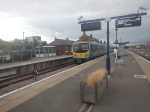



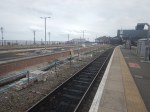






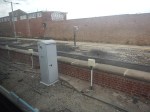



Compare them with this one taken three years ago.
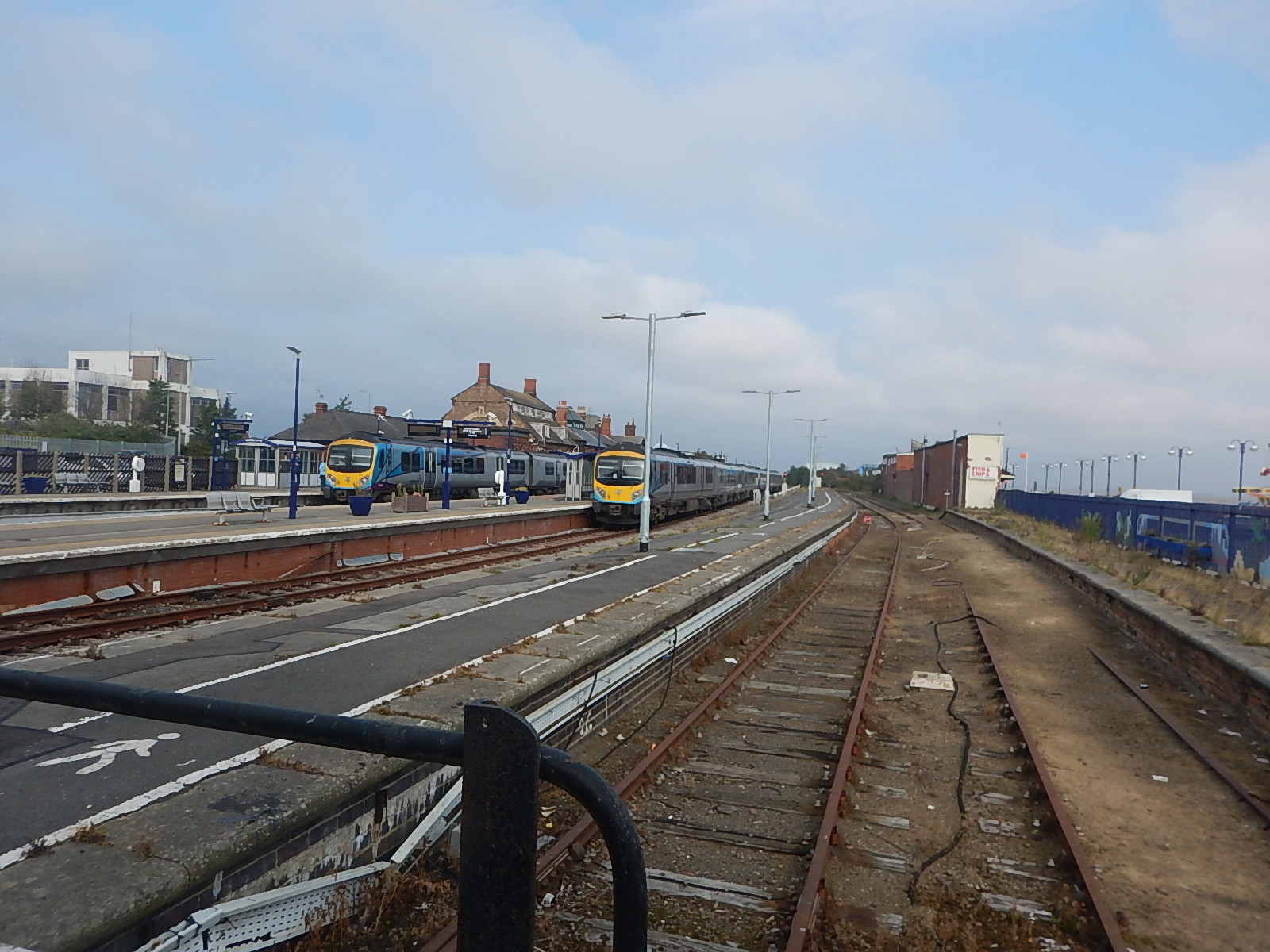
Note.
- It appears a Platform 4 has been created on the seaward side of the station.
- The track in Platform 4 in yesterday’s pictures appears to be newly-ballasted, whereas three years ago it had an air of dereliction.
- There is now a smart blue wooden fence separating the tracks from the station concourse.
- Strangely, the lighting between Platforms 3 and 4 had been installed three years ago.
- There are different types of lighting on the two islands. Could this be because Network Rail are looking for the lights that perform best in a seaside environment?
This Google Map shows Cleethorpes station.
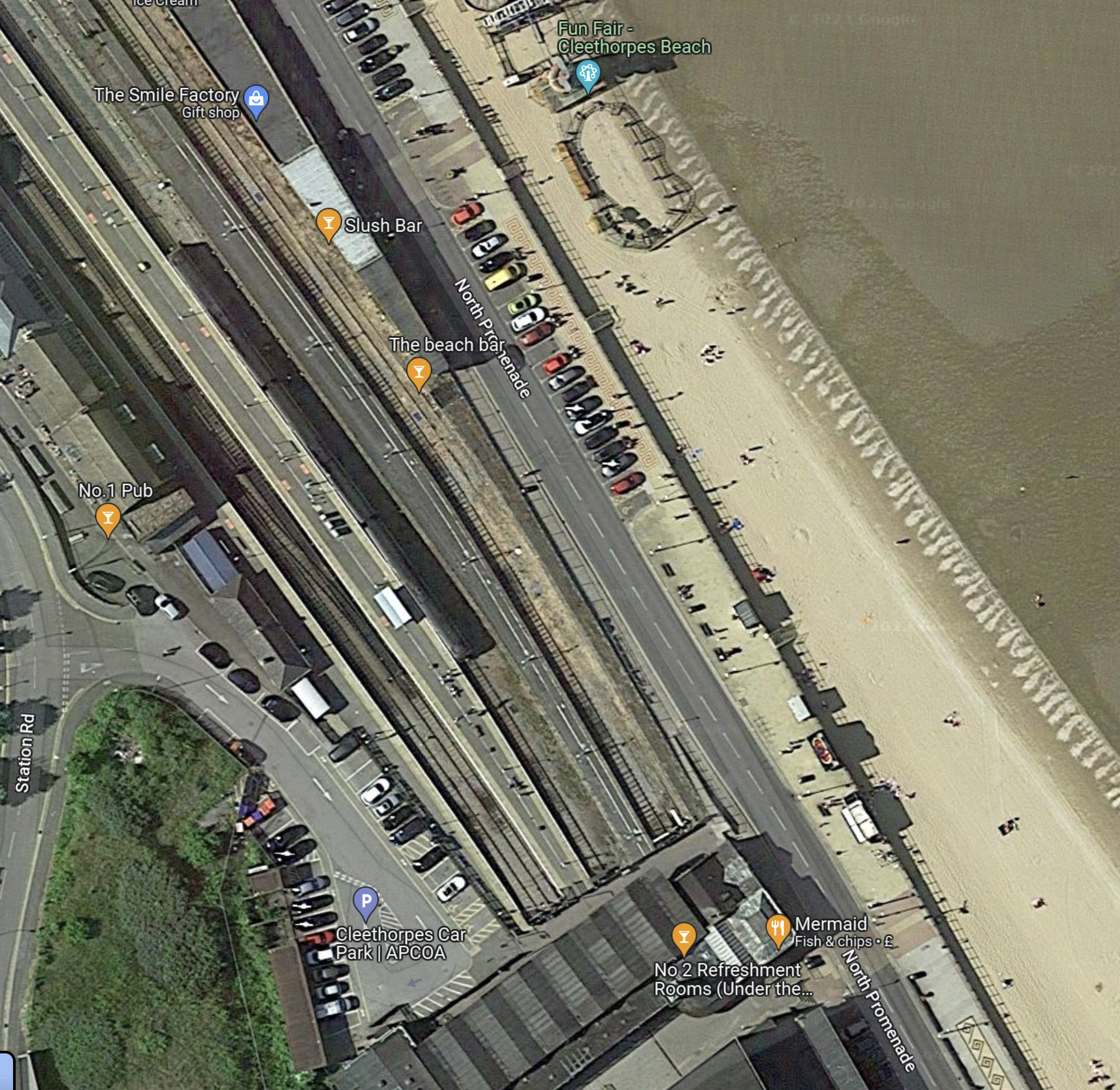
Note.
- The track in Platform 4 appears to be complete.
- The station is very handy for the beach.
In Azuma Test Train Takes To The Tracks As LNER Trials Possible New Route, I said this.
It looks like three platforms 2, 3 and 4 at Cleethorpes station were checked.
I think it is possible to say, that once Network Rail’s brickies and paviours have tidied up, that Cleethorpes station will be LNER-ready and could accept a service from London via Lincoln, Market Rasen, Barnetby and Grimsby Town.
What Will Be The Initial Service Of The London and Cleethorpes Service?
The Wikipedia entry for Cleethorpes station, says this about the London service.
In the 1970s Cleethorpes had a twice daily return service to London King’s Cross, typically hauled by a Class 55 Deltic.
Three people, I spoke to about the possible service, mentioned that two trains per day would be the frequency.
I certainly think, that this frequency, could be a sensible initial frequency.
If it worked in the 1970s, I can see why it might work in the 2020s.
- Kids still like to go to the seaside and the station is close.
- This area of North-East Lincolnshire, is getting increasingly important as an energy and hydrogen powerhouse.
- Cleethorpes station has the space to handle more train services.
- Cleethorpes station has a small depot nearby, which could ease train operations, by stabling a train overnight for an early start in the morning.
But there is one factor that could attract passengers to use the train between King’s Cross and Cleethorpes. I believe that the soon-to-be-announced Hitachi battery-electric Class 800 trains could be able to handle the route without using a drop of fossil fuel.
Running Battery-Electric Class 800 trains Between King’s Cross And Cleethorpes
Consider.
- Cleethorpes and Lincoln is 47.2 miles with three stops.
- Lincoln and Newark Northgate, where the electrification starts is 16.7 files.
- Cleethorpes and Newark Northgate is 63.9 miles, with an out-and-back trip being 127.8 miles.
- Battery-electric trains would do most of their charging between King’s Cross and Newark Northgate.
- Full or partial charging should be possible at both Cleethorpes and Lincoln.
- Battery-electric trains could give help, in cases of catenary failure on the East Coast Main Line.
- In What Will Be The Range Of A Hitachi Class 800 Battery Train?, I said that I believed a Class 800 battery train would eventually have a battery range in excess of the Stadler FLIRT Akku’s 139 miles, as no-one likes being second.
I believe these strategies are possible.
Charge A Round Trip At Cleethorpes
Consider.
- This is a range of just 63.9 miles.
- The service would use Platform 4 at Cleethorpes station.
- Charging at Cleethorpes could be by a short length of overhead electrification in Cleethorpes station or a specialist charger in the small depot.
- Charge time would be around 15 minutes.
- If charging were in the station, there would be no shunting of trains around.
This could be a simple and efficient way to run the service.
A Battery Round Trip To Cleethorpes
- This is a range of 127.8 miles.
- The service would use Platform 4 at Cleethorpes station.
- I believe that this service would need a simple charger at Cleethorpes station, as trains do get delayed and these delays on a battery-electric train, may increase the need for charging.
- Also what would happen in Grimsby Town were at home to a London club in the FA Cup?
This could be a reliable way to run the service, but I believe drivers need a charging facility at Cleethorpes as a fail-safe backup.
Electrification Between Grimsby Town And Cleethorpes
In Between Lincoln And Cleethorpes – 28th June 2023, I said this.
3.3 miles between Grimsby Town and Cleethorpes took just ten minutes.
All trains terminating at Cleethorpes would get at least twenty minutes of charging, every time, they turned round at the station.
Much of the route between Grimsby Town and Cleethorpes is only single-track, so this could be a very affordable option.
I don’t think there would be many objectors to electrifying between Grimsby Town and Cleethorpes.
An hourly train would use twenty minutes in ever hour between Grimsby Town and Cleethorpes, it looks like the limit would be three trains per hour terminating at Cleethorpes.
So could the three trains be the following?
- One train to Liverpool Lime Street.
- One train to Lincoln, with alternate trains continuing to Nottingham, Loughborough and Leicester and some trains to Kings Cross.
- One train to Barton-on-Humber.
Note.
- The Liverpool Lime Street train, would use batteries between Grimsby Town and Hazel Grove, which is 101.4 miles.
- A London King’s Cross train, would use batteries between Grimsby Town and Newark Northgate, which is 60.6 miles.
- A Leicester train, could use batteries between Grimsby Town and Leicester, which is 105.3 miles. Nottingham and Grimsby Town is 77.8 miles.
- Leicester and Nottingham services would need electrification at the Western end.
- King;s Cross, Leicester and Nottingham services would be arranged so Lincoln and Cleethorpes was an hourly service.
- A Barton-on-Humber train, would use batteries between Grimsby Town and Barton-on-Humber , which is 19.6 miles or 39.2 miles for a round trip.
Cleethorpes station could be at the centre of its own battery-electric train network, with all trains powered by just 3.3 miles of single-track electrification.
A Fraught Journey Between Worcester Shrub Hill And Reading Stations
My train home from Worcester Shrub Hill station didn’t make the most impressive of starts to my journey back to Reading.
- The five-car train was supposed to leave at 15:15.
- It was also supposed to arrive in Reading at 16:58.
- But the relief driver was delayed.
Eventually, we left at 15:31.
The train didn’t appear to be running at full speed and around Moreton-in-Marsh, staff started distributing water, which in my view is always a sign that all is not well.
I measured the temperature and humidity at 26.7 °C and 40% respectively, so the water was welcome.
I asked one of the staff what was up and was informed, that two of the engines were overheating because of the heat, so were we effectively running on the remaining cool engine?
Eventually, we were informed that the train would terminate at Charlbury station, where we would all be picked up by the following train, which would have nine cars.




After Charlbury, things didn’t get much better.
- The rescue train eventually left Charlbury at 17:38, which was twenty-six minutes late.
- The train wasn’t full and I had a table to myself, but after Oxford, there wasn’t a seat anywhere.
- We missed out the stop at Didcot Parkway station because of flooding, caused because of a violent thunder storm.
- The rescue train didn’t even make Paddington and it was terminated short in the bi-directional Platform 7 at Reading, because of an unwell passenger.
Eventually, when I arrived in Reading station at 18:55, the rescue train was fifty-five minutes late.
As my original train, should have arrived at 16:58, I was actually, three minutes short of two hours late.
By the time, I got to Platform 14 for the 16:59 Elizabeth Line train to Central London, it had gone, so I had another thirty minute wait.
I finally arrived home at 21:00, after a nearly 5¾ hour journey.
I have a few thoughts.
Changing At Reading
Part of the reason, that I missed my Elizabeth Line train, was that the escalators to Platform 14 were out of action and I had to wait for the lift, as I don’t trust myself going down stairs.
I have said before that if you need a ticket in your change a Reading, there should be a ticket machine on the bridge.
As Reading station is managed by Network Rail, perhaps, they should examine the operation of the station with a good dose of old-fashioned time and motion in more detail.
The Elizabeth Line Frequency To London
The Elizabeth Line only runs two trains per hour (tph) between London and Reading.
This may be fine when everything is going well, but on days like Sunday, when trains aren’t performing well and the weather is not behaving itself, would four tph be better?
Perhaps, the two extra trains would run between Reading and Abbey Wood, and only stop at say Twyford, Maidenhead, Slough, Hayes & Harlington, Southall, Ealing Broadway, Old Oak Common, Paddington, Bond Street, Tottenham Court Road, Farringdon, Liverpool Street, Whitechapel, Canary Wharf, Custom House and Woolwich.
Great Western Railway Trains Between Oxford, Reading and Didcot Parkway and London
The three terminals get the following services to and from London
- Didcot Parkway – 4 tph
- Oxford – 4 tph
- Reading – 11½ tph – 8½ fast and 3 slow
Consider these questions.
- How many travellers between Didcot Parkway, Oxford and Reading and Paddington, now use the Elizabeth Line for onward travel from Paddington?
- How many of the endless visitors to Oxford start their journey on the Elizabeth Line?
- How many visitors to Oxford combine a trip with one to Bicester Village?
- How many travelling by train between Oxford and Cambridge will use part of the Elizabeth Line for the journey?
- Is it fair, that Cambridge is connected to four London rail terminals; King’s Cross, Liverpool Street, London Bridge and St. Pancras and Oxford is connected to just two; Marylebone and Paddington?
I suspect there’s considerable scope to reorganise services between the three stations and London to provide a better service.
GWR’s Paddington and Didcot Parkway service, which has a frequency of two tph, could be moved to the Elizabeth Line and possibly extended to Oxford, once Didcot Parkway and Oxford is electrified.
This would give.
- Didcot Parkway would have two fast tph to Paddington and two stopping tph on the Elizabeth Line with all its connectivity and delights.
- Oxford would have two fast tph to Paddington and two stopping tph on the Elizabeth Line.
- Reading will have a much-needed Elizabeth Line frequency of four tph.
Note.
- Terminating the Elizabeth Line at Oxford, means that there are services connecting Oxford and Cambridge, with a single change at either Farringdon or Liverpool Street.
- Oxford would also get one change connectivity to Gatwick, Heathrow and Stansted Airports.
- The slow lines between Oxford and Maidenhead typically have operating speeds of 90-100 mph. So if the Class 345 trains on the Elizabeth Line and the track were upgraded to 100 mph, this might save a few minutes in the outer reaches of the Elizabeth Line.
- The Elizabeth Line could terminate in one or two South-facing bay platforms on the East side of the station. This position would reduce passenger traffic on the crowded footbridge.
- If all the bay platforms were on the same East side of the station, this would simplify and ease passenger flows.
- Chiltern and East West Railway services could be timed for an easy interchange.
- The proposed Cowley Branch could also use the South-facing bay platforms.
The more I look at it, the more I like the idea of running the Elizabeth Line to Oxford.
The Heat Problem On The Class 800 Trains
The Wikipedia entry for the Class 800 trains has this paragraph on the overheating of the engines or generator units (GUs) on the trains.
The GU is installed on vibration-isolating mountings, and fitted with side-mounted cowls to reduce external noise. Heat management measures include thermal insulation around key areas such as cable ducts. According to Modern Railways magazine, the limited space available for the GUs is responsible for them being prone to overheating. It claimed that, on one day in summer 2018, “half the diagrammed units were out of action as engines shut down through overheating”.
That was in 2018, which was five years ago. But it appears to be still happening.
Would Overheating Happen With Battery Units?
One of the reasons, I went to Worcester was to assess the feasibility of battery-electric trains on the route.
This article from EV-Lectron is entitled Electric Cars in Hot Weather – What You Need To Know, gives a detailed set of answers.
But it probably comes to the conclusion, that cold weather with the extra heating load might be more of the problem.
I suspect, that if you were running battery electric trains on a route of over fifty miles, the best thing would be to have electrification at both ends of the route.
If, as I have calculated in Reading And Oxford – 10th June 2023, that to run battery-electric trains to Hereford needs a length of electrification between Worcester Shrub Hill and Great Malvern stations, then when they leave the electrification, they should have the interiors at the right temperature for staff and passengers.
I also suspect that battery-electric trains need to be well insulated to cope better with cold weather.
Trains Back On Track After Repairs To Unsafe Nuneham Viaduct
The title of this post, is the same as that of this article on the BBC.
This is the sub-heading.
Rail services between Didcot and Oxford have resumed after a two-month line closure caused by an unsafe viaduct.
These are the first two paragraphs.
Services had been expected to resume on Saturday but the first passenger train ran on the line earlier.
Nuneham Viaduct, which crosses the River Thames near Abingdon, was declared unsafe on 3 April.
It looks like it was a job well done.

