Grand Central DMU To Be Used For Dual-Fuel Trial
The title of this post, is the same as that of this article on Railway Gazette.
This is the first two paragraphs.
An Alstom Class 180 Adelante diesel-hydraulic multiple-unit is to be converted to run on a combination of diesel and liquefied natural gas in a dual-fuel technology demonstration project.
One car of the DMU which Arriva-owned open access inter-city operator Grand Central leases from Angel Trains is to be equipped with dual-fuel technology company G-volution’s Optimiser system, which is used in the road sector. The modifications are expected to be straightforward, enabling trials on the national network to start later this year.
The article dates from May 2019 and I suspect the small matter of the pandemic and Grand Central’s resulting three closures due to lockdowns are the reason this development hasn’t been heard of since.
But this was the London end of the Class 180 train, that I rode from Mirfield to King’s Cross.
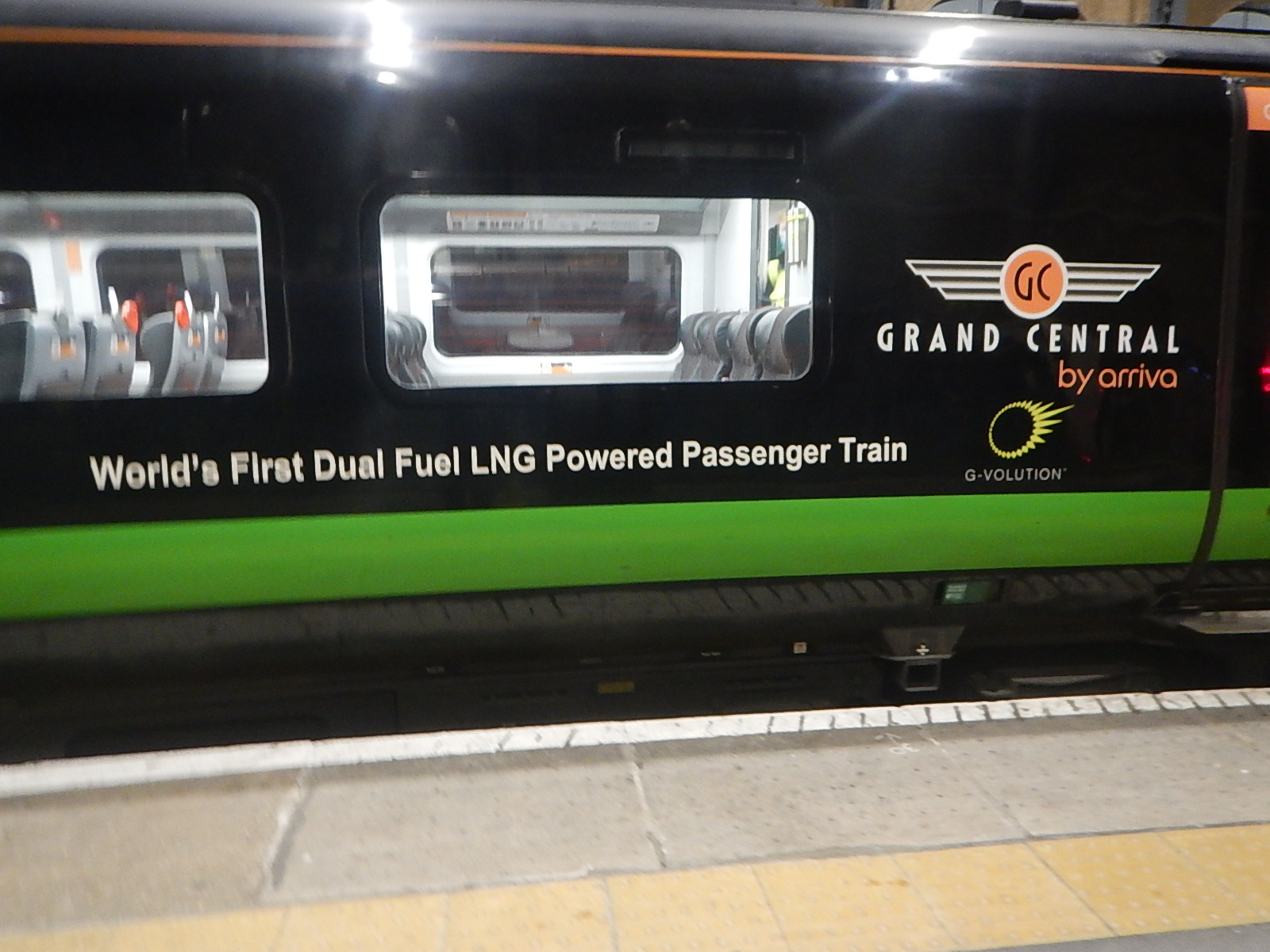
I haven’t ridden in a Class 180 train for some years and there was nothing to indicate from the performance, that it was not a standard train.
There are fourteen of these 125 mph trains.
This explanatory video of G-volution’s technology is on the G-volution web site.
Note that in the video, one of G-volution’s Managing Director; Chris Smith says that the technology is fuel agnostic and will work with a range of fuels including ammonia, biodiesel, bio-LPG, hydrogen and methanol.
Conclusion
It will be very interesting to see what is decided to be the ideal fuel-combination and how much reduction is possible for the various emissions.
I’ll end with two questions.
Will Passengers Like The New Trains?
What is there not to like! Same train and performance with lower emissions.
Will Cummins Like What G-volution Have Done To Their Engines?
Cummins might be a bit miffed, as they built the QSK19 engines for the Class 180 trains and may have their own plans for them. But they are a pragmatic and flexible company in my experience and generally they do what the customer needs or wants. Decarbonisation is surely in everybody’s interest.
Incidentally, the same Cummins diesel engines are used in the TransPennine Express, Class 185 trains, I’ve been riding in most of today.
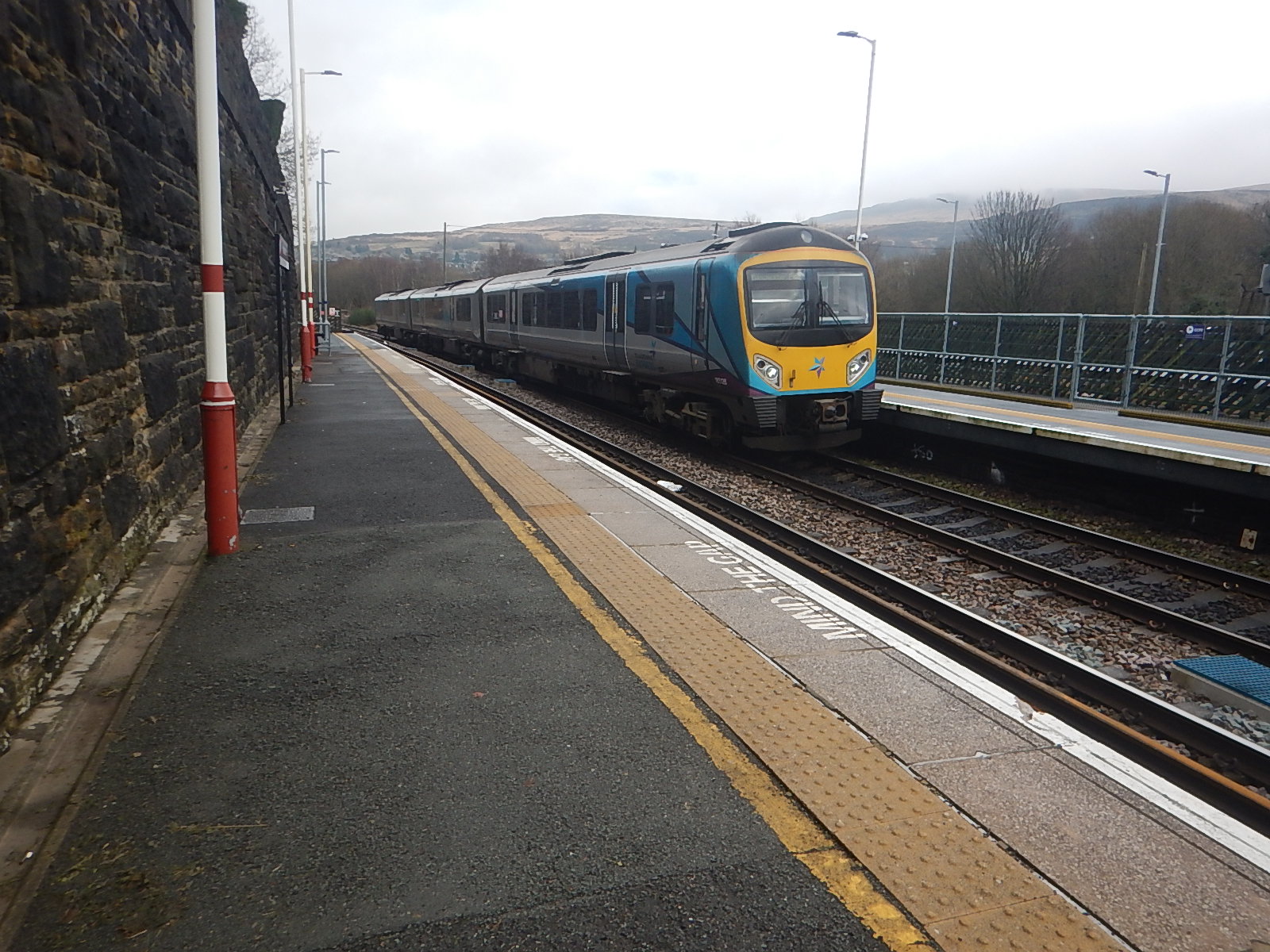
There are fifty-one of these 100 mph trains in use in the UK. They could be ideal for some long routes, if they could be converted to low-emission.
Would A Lumo-Style Service Work Between King’s Cross And Norfolk?
This is a bit of a fantasy and you’ll never know the real reason why I have written it!
With the upgrade of the East Coast Main Line to full digital signalling, there will be a problem South of Hitchin with 140 mph Azumas and Hitachi Class 802 trains and similar from Grand Central , Hull Trains and Lumo hogging the fast lines to and from King’s Cross. I first wrote about it in Call For ETCS On King’s Lynn Route.
One solution would be to replace the current Class 387 trains with a 140 mph train , such as a Hitachi Class 802 variant. This would enable these fast King’s Lynn and Cambridge trains to join the 140 mph trains on a fast run to and from King’s Cross.
The Future Of Cambridge
Cambridge is one of the UK’s four world cities, with its heritage and lately its high position in any technology league table.
The Current Rail Service Between London And Cambridge
Currently, it has a good service into King’s Cross, Liverpool Street and St. Pancras.
- Great Northern – two tph to King’s Cross – A stopping train using Class 700 or Class 387 trains.
- Great Northern – one tph between Ely and King’s Cross – A fast train using Class 387 trains.
- Great Northern – one tph between King’s Lynn and King’s Cross – A fast train using Class 387 trains.
- Thameslink – two tph to Brighton – A semi-fast train using Class 700 trains.
- Greater Anglia – two tph to Liverpool Street – A semi-fast train using Class 720 or Class 379 trains.
Note.
- tph means trains per hour.
- The similar Class 387 and Class 379 trains are both late-model Bombardier Electrostars with sensible seats and a large number of tables. Both train types can or could be modified to run at 110 mph.
- The Class 700 trains are unsuitable for the route, as they have ironing-board seats and no tables. These are only 100 mph trains.
- The Queen’s bottom doesn’t like the Class 700 trains.
A large proportion of the passengers and commuters between to and from Cambridge work in high-tech or information-rich businesses and I believe if the trains were more geared to this market they would attract passengers away from the roads.
The Cambridge Employment Problem
Fast-growing Cambridge is taking over the region and it is always looking for towns and villages to develop as places for dormitories and to build premises for the hundreds of high-tech businesses.
This is one of the reasons why Greater Anglia acquired new Stadler Class 755 trains to run services from Cambridge to Bury St. Edmunds, Ipswich, Norwich, Peterborough and Stansted Airport.
If you’re going to lure Cambridge’s well-paid high-tech commuters out of their cars, you must give them an equivalent seat to their car. The Class 379, 387 and 755 trains do this.
Living In Norfolk And Suffolk And Working In Cambridge
This has always been the choice of many who work in Cambridge, but using rail into Cambridge didn’t really take-off seriously until modern three-car Class 170 trains replaced the single-car Class 153 trains.
Greater Anglia have followed the upward trend in passenger numbers, by running hourly four-car Class 755 trains from Cambridge to both Ipswich and Norwich.
Before the pandemic, it was starting to look like Norwich and Cambridge would soon need a second service, especially with the planned opening of the new Cambridge South station in 2025.
Addenbrooke’s Hospital And The Cambridge Biomedical Campus
Cambridge South station is being built to serve Addenbrooke’s Hospital and Cambridge Biomedical Campus, which intend to be create the foremost medical research cluster in the world.
Staycations And Holiday Homes In East Anglia
Life is changing because of the covids and more people are taking staycations or buying holiday homes.
And many are following the example of the Queen and going to Norfolk for their relaxation.
The Undoubted Need To Improve Rail Services Between London King’s Cross And Norfolk Via Cambridge
These factors convince me that there is a need for a new or repurposed rail service between London King’s Cross and Norfolk via Cambridge.
- The need to provide a high-class commuter service between London and Cambridge.
- The need to bring workers into Cambridge from Norfolk.
- The need to provide a fast high-class rail link to Cambridge South station with all its medical research.
- The need to provide a comprehensive working environment on the trains.
- The need to cater for all those people relaxing in Norfolk after a hard week in London.
It is my view, that a radical design of train is needed for this route.
- It would need to have a high-class interior.
- It would need at least a 125 mph capability, so that it can use the fast lines between Hitchin and King’s Cross.
- The train may need the ability to split and join.
- It would need an independent power capability for running on the Breckland Line between Ely and Norwich.
- Because of Cambridge and because East Anglia is easy country for cycling, it would need a sensible capacity for cycles.
I also believe that because of the need to decarbonise, the train should be zero-carbon.
These are my thoughts.
Operating Speed
Because of running on the fast lines between Hitchin and King’s Cross with the 140 mph trains from the North, I suspect that an operating speed of at least 125 mph is needed. But if the Hitachi trains of LNER, Hull Trains, Lumo and in the future possibly other operators like Grand Central, will be capable of 140 mph, this speed could be desirable.
Speed limits once the trains have left the East Coast Main Line at Hitchin North junction are as follows.
- Hitchin and Cambridge – 90 mph
- Cambridge and King’s Lynn – 90 mph
- Ely and Norwich – 75-90 mph
I can see Network Rail using their expertise to raise the speed limit on sections of these lines.
Flighting Of Trains On The East Coast Main Line
To increase capacity on the East Coast Main Line, I believe that at some point in the not too distant future that trains will be flighted. This will involve two or more trains leaving King’s Cross in a sequence and proceeding with all trains at a safe distance from each other.
I can envisage a flight like this from King’s Cross.
- An Edinburgh train with York as the first stop – Leaves at XX.00
- A Leeds train with Doncaster as the first stop – Leaves at XX.03
- A Lincoln train with Peterborough as the first stop – Leaves at XX.06
- A Cambridge train with Stevenage as the first stop – Leaves at XX.09
Note.
- The Edinburgh train would set the speed.
- Trains would maintain their time behind the lead train.
- Everything could be controlled by the digital signalling.
- Gaps between the trains would be sufficient for a safe stop.
- No train in the flight would make a station stop unless it was the last train in the flight.
- The last train in the flight would drop off and go to their destination.
As there are at least two tph to Edinburgh, Leeds and Cambridge, there would be two main flights per hour leaving King’s Cross, with the second flight perhaps incorporating a service to Hull.
Digital signalling and precise driving would enable the flights to be built in the opposite direction into King’s Cross.
The big advantage would be that instead of needing eight paths per hour on the East Coast Main Line, only two would be needed.
All trains would need to have similar performance, so this is another reason why the Cambridge trains need to be at least 125 mph trains.
Train Interiors
Lumo has broken new ground in train interiors.
- It is one class.
- Everybody gets a decent seat.
- Everybody gets good legroom.
- Everybody gets some form of table.
- There are decent-sized overhead racks for hand-baggage and coats.
- There is space for bicycles and heavy luggage appropriate to the route.
This can be built on to provide a good working and playing environment suited to the passengers who would use a fast King’s Cross and Norfolk service via Cambridge.
- Lots of tables for four, as in the high-class Electrostars.
- Better bicycle storage.
- Better alignment of seats with windows.
Hitachi could obviously produce a train to this specification.
But what about other manufacturers.
Stadler’s Class 755 trains are surely a possibility.
- A senior driver from Greater Anglia told me that the design speed for a Class 755 train is 200 kph or 125 mph.
- They have good seats.
- They have flat floors.
- They have large windows.
- They have step-free access between train and platform.
- Like the Hitachi trains, they are in service.
I believe the closely-related Class 745 trains are probably the best commuter trains in the UK and are the only alternative to the Hitachi trains on a125 mph fully-electrified route.
Bridging The Electrification Gap Between Ely And Norwich
Between Norwich and Ely stations is 53.8 miles and this section is not electrified, although both stations have full electrification.
The line is not heavily used with typically only two passenger trains and the occasional freight trains in each direction in an hour.
This Hitachi infographic describes the Hitachi Regional Battery Train.

A 90 km. range could be sufficient to cover the gap between Norwich and Ely.
Could Hitachi build a Class 802 train or similar with a battery range of 90 km or 56 miles?
Certainly, a speed of 100 mph would probably be sufficient to bridge the gap in a decent time.
Improving The Breckland Line
The Breckland Line is the route between Cambridge and Norwich.
- Cambridge and Norwich is 68.5 miles
- Only the sixteen miles between Cambridge and Ely North junction is electrified.
- There are thirteen stops between the two cities.
- A typical time is 79 minutes
- This is an average speed of just 52 mph.
- The operating speed is 75-90 mph.
I am sure that Network Rail can squeeze a few minutes here and there to get the operating speed up to the 100 mph of the Great Eastern Main Line.
But the big problem at Norwich is the Trowse swing bridge.
It is only single track and it is likely that this bridge will be replaced soon.
This Google Map shows Trowse junction, a short distance South of the swing bridge.
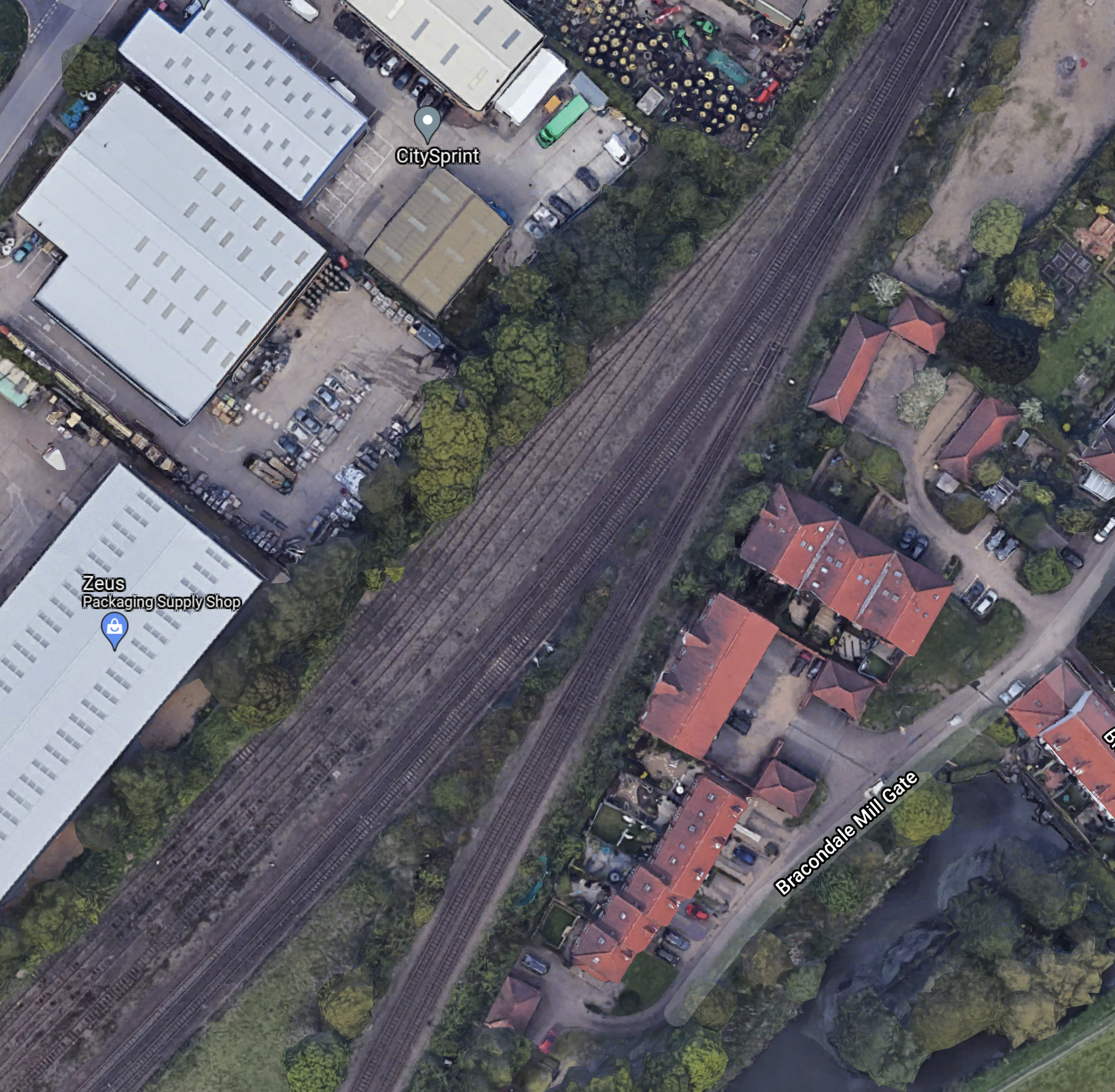
Note.
- The electrified double-track of the Great Eastern Main Line goes across the map from North East to South West.
- The double-track railway to the East of the main line is the unelectrified Breckland Line to Cambridge, which turns West and goes under the main line.
- On the West of the main lines are the Victoria sidings that I wrote about in Greater Anglia Completes Directly-Managed Norwich Victoria Sidings Project.
As the replacement of the swing bridge will require some work to be done to the electrification, I wonder if at the same time Network Rail would electrify the Norwich end of the Breckland Line.
There must be a balance point adding electrification or batteries to the trains.
As the Breckland Line has few freight trains, electrification is not needed for freight.
Ticketing
A high-speed high-capacity service as I’m proposing must be easy to use.
It is a classic route, where nothing short of London-style contactless ticketing will do, as I’m certain this encourages people to use the trains.
As East Anglia is self-contained and has few services that don’t terminate in the area or in London, I am certain that this could be achieved.
If you remove First Class as Greater Anglia has done on many services, you actually simplify the ticketing, so a Lumo-style mid-class is ideal.
High Speed Train Services
Currently Great Northern run two tph from King’s Cross to Ely via Cambridge.
- One service is extended to King’s Lynn.
- I could see the second service extended to Norwich.
Both services would need to be run by 125 mph trains because of the speed of other trains on the East Coast Main Line.
Conclusion
I think duch a system would be possible.
Are Grand Central Going To Order Some Hitachi Intercity Battery Hybrid Trains?
I ask this question because I’ve just looked at the Hitachi infographic for the Hitachi Intercity Battery Hybrid Train, that I wrote about in Hitachi Rail And Angel Trains To Create Intercity Battery Hybrid Train On TransPennine Express
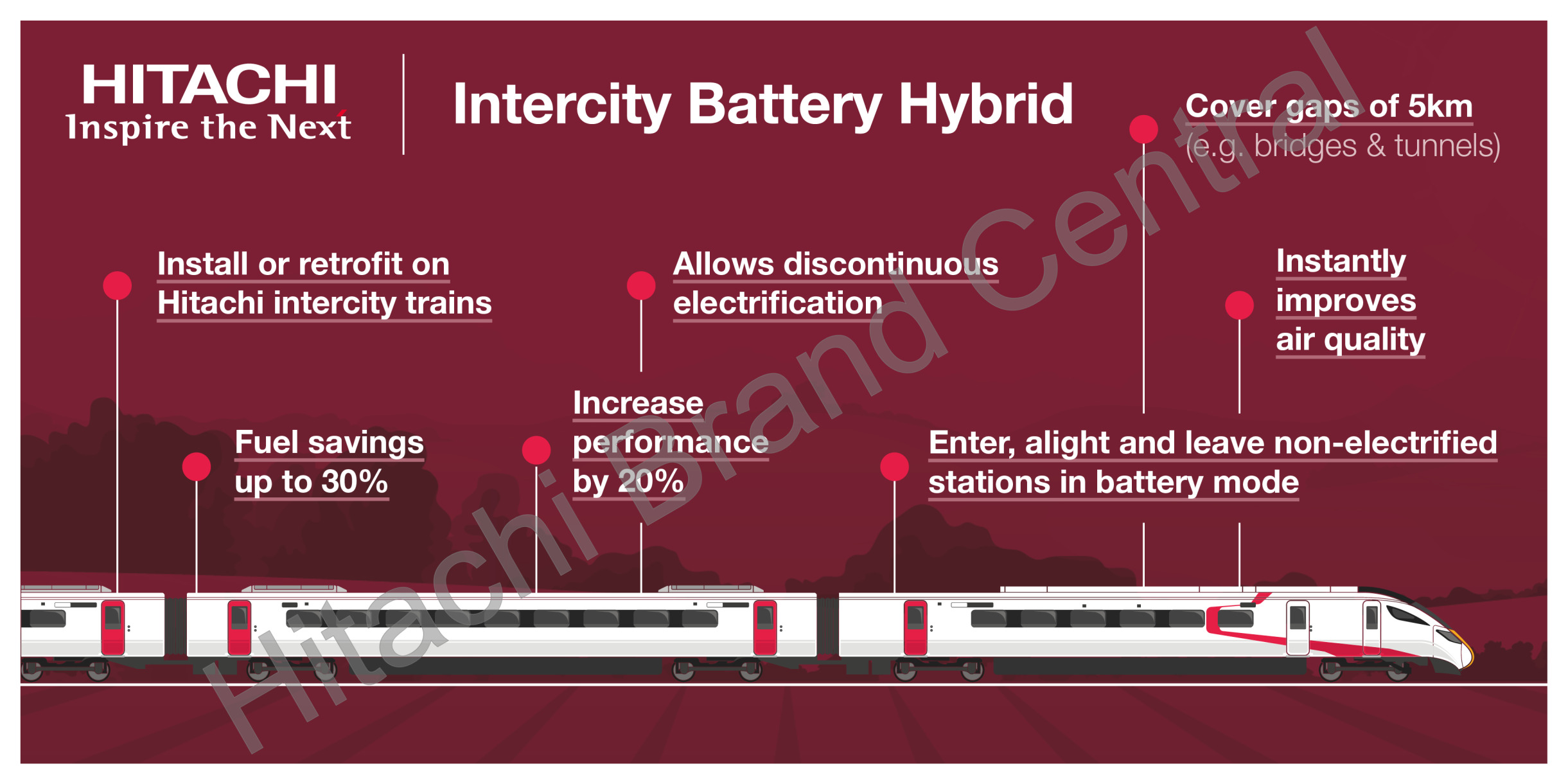
Note that in the background of the image Hitachi Grand Central can be seen.
Looking at Grand Central‘s routes I can say the following.
- The Sunderland service uses the fully-electrified East Coast Main Line to the South of Northallerton.
- The Bradford service uses the East Coast Main Line to the South of Shaftholme Junction.
- The Sunderland service runs for 47.4 miles on lines without electrification.
- The Bradford service runs for 47.8 miles on lines without electrification.
- The trains run at 125 mph on East Coast Main Line.
- Each service has around half-a-dozen stops, most of which are on lines without electrification.
Grand Central run the services using Class 180 diesel trains.
I think there are two possibilities for new trains.
Hitachi Intercity Battery Hybrid Train
This train would be similar to the Hitachi Intercity Battery Hybrid Train shown in the infographic.
- It would be designed to run efficiently on diesel.
- The train could run at 140 mph on electricity and with a signalling update.
- The claimed extra performance could speed up the services.
- Batteries would be used in stations.
There would be a worthwhile saving in fuel and less carbon emissions.
Hitachi Intercity Battery Hybrid Train With A Larger Battery
This would be similar to the standard train, but with a larger battery.
- Battery range would be sufficient to cover the lines without electrification.
- Charging would need to be installed at Bradford Interchange and Sunderland stations.
- The other two diesel engines might be replaced with batteries.
- No diesel would be used.
- The train could run at 140 mph on electricity and with a signalling update.
- The claimed extra performance could speed up the services.
- Batteries would be used in stations.
There would be no fuel costs and zero emissions.
In Grand Central Opts For Split And Join, I wrote about Grand Central’s application to run more services that had been reported in the April 2018 Edition of Modern Railways in an article that is entitled Grand Central Applies For Extra Services.
If Grand Central are still interested in expanding and splitting and joining, then the Hitachi trains, which have a proven ability in this area would fit the requirement.
In
A Special Weekend Timetable Has Been Put In Place For Lincoln Christmas Market
The title of this post, is the same as that of this article on Rail Advent.
This is the first paragraph.
The timetable has been put in place for Lincoln Christmas Market with direct services from Leeds, Newcastle, Edinburgh, Aberdeen and Inverness.
It looks to be a clever piece of planning, whilst work is carried out on the East Coast Main Line between Doncaster and Peterborough.
- Services will be diverted onto the Great Northern and Great Eastern Joint Line though Spalding, Sleaford and Lincoln.
- Will the trains be using the new tracks at the Werrington dive-under.
- Nine-car Class 800 bi-mode trains will be used.
- On the Saturday, there will be two trains per hour (tph) in both directions.
- Of these trains, five trains per day (tpd) in both directions will stop at Lincoln Central station.
It does appear that LNER are making the best of a difficult situation.
Passengers going to Lincoln for the Christmas Market will not be disappointed.
Grand Central Trains
Grand Central Trains are also using the diversion route.
Hull Trains
Hull Trains are also using the diversion route.
On the Saturday, there will be five tpd in both directions.
These can be doubled up to ten-car trains if the demand is there.
Lumo Trains
Lumo trains don’t appear to be running.
Conclusion
Network Rail seem to have done a cunning piece of timetabling.
There’ll be trainspotters galore in the centre of Lincoln.
Reopening The Askern Branch
On October 27th this Beeching Reversal Project was given £50,000 to build a case for reopening.
These are my thoughts.
The Askern Branch Line
This description of the Askern Branch Line is from Wikipedia.
The Askern branch line is a railway line which runs in North, South and West Yorkshire in England. The stretch of track runs from Shaftholme Junction north of Doncaster (on the East Coast Main Line between Doncaster and York), via Askern, Norton and Womersley to Knottingley, where it joins the Pontefract Line.
This map was also clipped from Wikipedia.
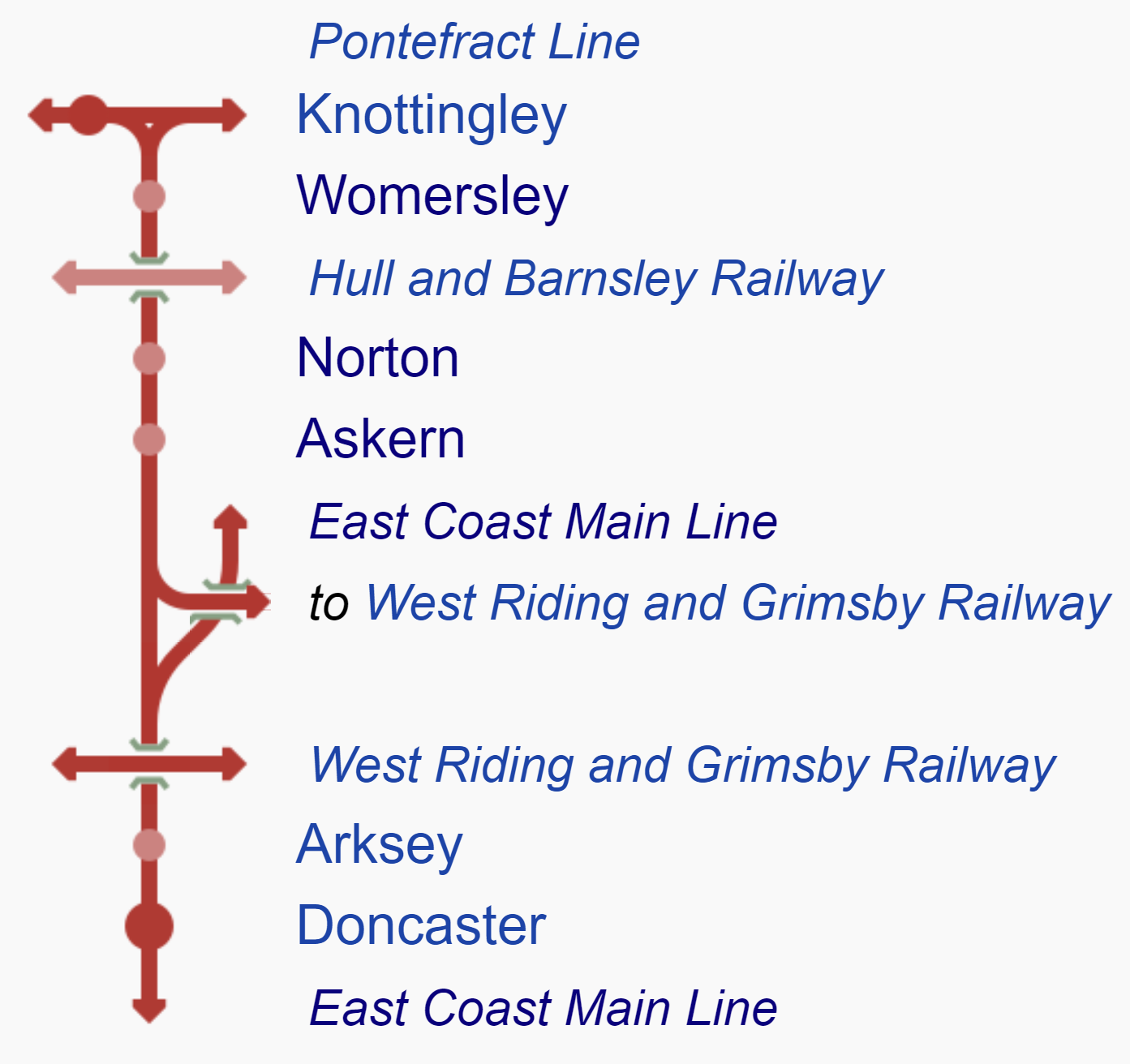
Note.
- Shaftholme junction is where the Askern Branch splits from the East Coast Main Line.
- There are three closed stations on the Askern Branch; Askern, Norton and Womersley.
- Between Shaftholme junction and Knottingley West junction, on the Pontefract Line is 10.7 miles.
- The operating speed of the line is between twenty and fifty mph.
Unbelievably, in those 10.7 miles there are nineteen level crossings.
Current Passenger Services
The only passenger services on the line are Grand Central‘s services between London King’s Cross and Bradford Interchange.
- Grand Central are an open-access operator.
- Grand Central ran the first service in 2007.
- There are four trains per day (tpd) in both directions.
- They call at Doncaster, Pontefract Monkhill, Wakefield Kirkgate, Mirfield, Brighouse, Halifax and Low Moor.
Perhaps, if they stopped at a station on the Askern Branch Line, it would give their finances a lift.
Freight Services
There are up to four freight services per hour on the line.
Askern Station
Askern station used to serve the village of Askern.
- Askern has a population of about 6,000.
- Askern used to be a spa town.
- But then coal was discovered and it became a mining village.
- Do spas and coal mining make a good mix? I doubt it.
- Eventually the station closed in September 1948.
- There is a level crossing at the station.
The village is now developing and there is pressure for the reopening of the station.
Railfuture has backed the reopening.
Norton Station
Norton station used to serve the village of Norton.
- Norton has a population of about 5,000.
- The station closed in September 1948.
- There is a level crossing at the station.
There appears to be no pressure to reopen the station, although the site is protected.
Womersley Station
Womersley station used to serve the village of Womersley.
- Womersley has a population of a few hundred.
- The station closed in September 1948.
- There is a level crossing at the station.
There appears to be no pressure to reopen the station.
Would This Project Be Better Described As Reopening Askern Station?
I can’t find any reference to reopening Norton and Womersley stations, so perhaps Reopening Askern Station would be closer to the reality.
A New Askern Station
This Google Map shows the site of the former station.
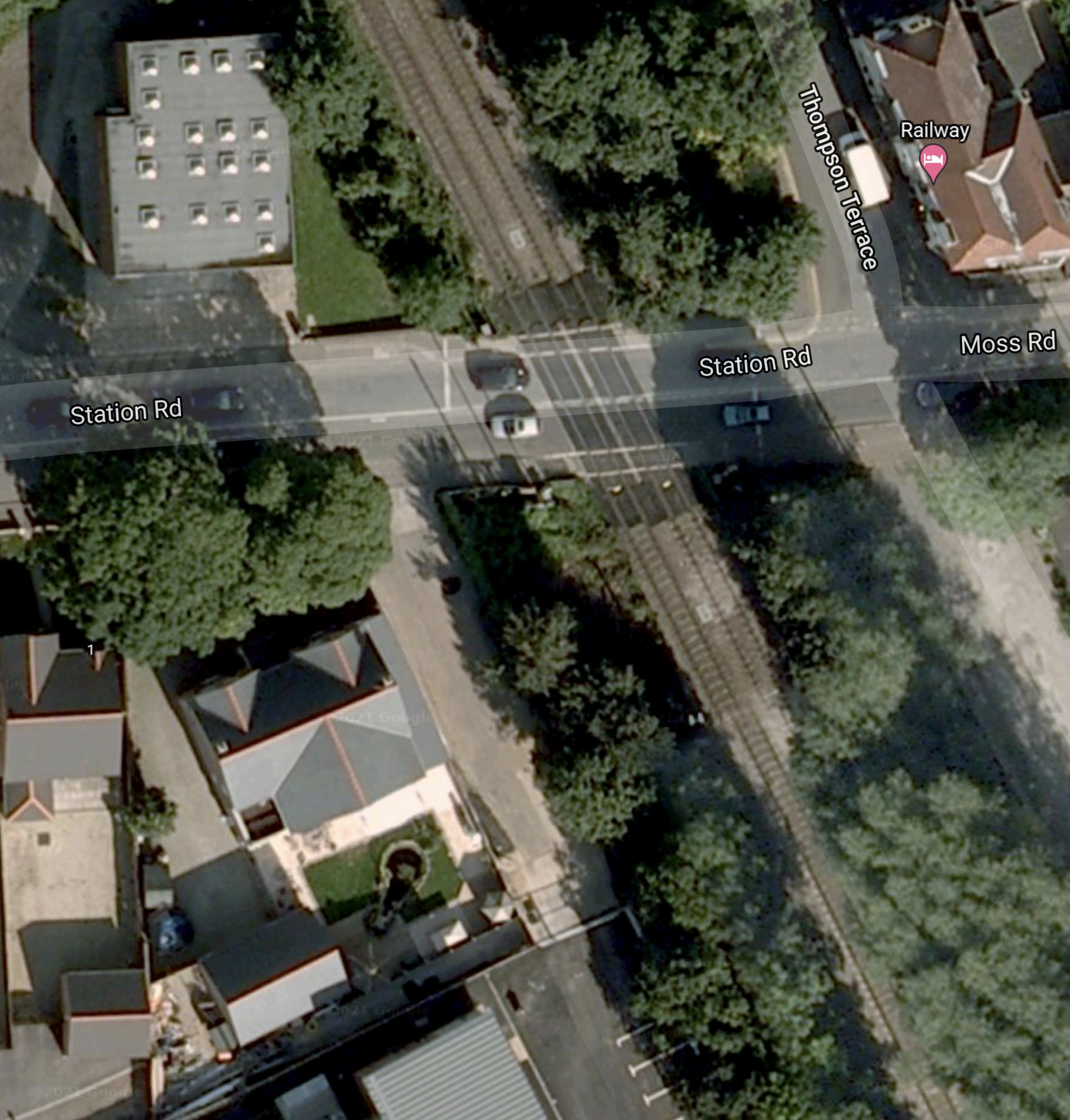
This could be a challenging station to design depending on the brief.
Services At A New Askern Station
I suspect that some or perhaps all of Grand Central’s Kings Cross and Bradford Interchange services will call.
But these don’t go to Leeds and I suspect that a service is needed to and from Leeds.
Will The Askern Line Be Electrified?
Who knows?
London To Edinburgh On Lumo
Yesterday, I took the 10:45 Lumo service from King’s Cross to Edinburgh.
I took some pictures on the way.
I have split them into sepate topics.
Lumo’s Class 803 Train Arrives

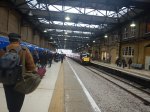
Note.
- The train is in Platform 10 in the old suburban station.
- This has now been reduced to just two platforms.
- In the other platform is a Grand Central service to Bradford Interchange station.
At least it appears, that there could be space to reinstate a third platform, if it should prove necessary.
Seating On Lumo
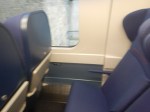

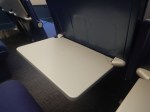
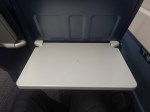

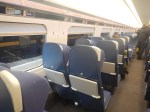
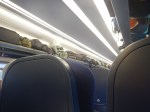
Note.
- I didn’t get a seat with a proper window.
- The seat-back table is generously-sized.
- There is a light over the table.
- The luggage racks were well used.
- There is more than normal leg-room. My neighbour, who was taller than my 1.70 metres, also liked the leg-room.
Both of us, thought the seats were more comfortable than LNER.
I have a spine that curves outwards at the bottom and it often objects to train and car seats. But after four-and-a-half hours on Lumo, it wasn’t protesting.
York to Church Fenton Improvement Scheme
When the York To Church Fenton Improvement Scheme and the closely related Huddersfield To Westtown (Dewsbury) Upgrade are completed, the TransPennine route between Huddersfield and York will be fully-electrified.
These pictures show the electrification is underway.
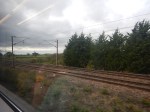
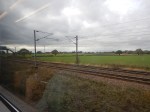




York to Huddersfield will be over forty miles of electrified line, with a remaining gap of just eighteen miles to the electrification being installed between Stalybridge and Manchester Victoria.
Work At Reston Station
Reston station is being built North of Berwick-on-Tweed. I took these pictures as we passed through.
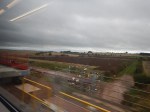
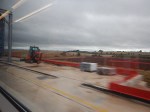
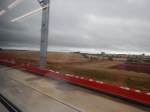
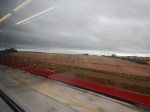
I describe the station in a post called A New Reston Station.
Arrival In Edinburgh
I took these pictures when we arrived in Edinburgh.
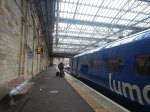

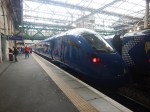
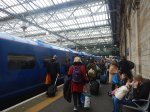
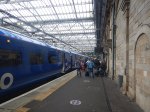
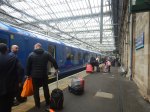
Note Edinburgh is not short of platforms that can take five- and ten-car trains.
These are a few other thoughts about the journey.
Non-Stop Between King’s Cross And Newcastle
It seemed to me, that a lot of passengers left the train at Newcastle.
- Times between King’s Cross And Newcastle are comparable betyween LNER and Lumo.
- Lumo is non-stop until Newcastle.
- Lumo is probably more affordable.
I can see Lumo picking up a lot of business on this leg.
Football At Newcastle
I have come across several Newcastle United season ticket holders in London.
Looking at Lumo’s full timetable, there are these two trains on a Saturday.
- A train leaves King’s Cross at 10:25 and arrives in Newcastle at 13:25.
- A train leaves Newcastle at 19:35 and arrives in King’s Cross at 22:29.
These could be ideal to see the match and get back to London.
Food
The full food service isn’t in operation yet, but we the trolley did come through twice.
Passenger Loading
Most seats were taken, as we left King’s Cross, but due to high number, who left at Newcastle, there were a few gaps as we ran between Newcastle and Edinburgh.
But then this is a shorter leg and perhaps travellers are more likely to drive.
I suspect that Lumo can’t wait to build up their service to the full five trains per day, as it does look like the demand is there.
Morpeth Station
There wasn’t many boarders and leavers at Morpeth station, but as services build up and travellers realise the system is there, will business increase?
Conclusion
I shall take another trip in the New Year, when the full service is implemented.
Open Access Operators And The Lumo Model
In the UK, there are only three established Open Access operators, who run UK train services.
- Grand Central
- Heathrow Express
- Hull Trains
From the 25th of October, they will be joined by Lumo.
We probably don’t think of Heathrow Express as an Open Access operator and as it is effectively a short distance special service with new trains between Heathrow and Paddington, it has its own business model, that may or may not survive.
But how will Lumo and their bold new business model affect Grand Central, Hull Trains and any future Open Access operators?
Grand Central Trains
Grand Central is a well-established Open Access operator.
- They run services between London King’s Cross and Bradford Interchange, Sunderland and several other convenient en-route stations.
- They are owned by Deutsche Bahn.
- They also regularly seem to apply for new routes and extra services.
But they have a big problem fast catching up on them; they have a diesel-only fleet and need to decarbonise.
I also think that all express passenger services on the East Coast Main Line will at some date need to be run by 140 mph trains capable of running with full digital signalling and a degree of Automatic Train Operation.
In Lumo: Why Won’t The New Train Service Stop At Yorkshire Stations?, I said that to continue to be successful, they probably need to embrace the Lumo model and acquire new trains.
I will repeat what I said in the related post.
This would entail.
- The ten diesel Class 180 trains would be replaced by new electric trains.
- The trains would need a 140 mph capability under digital signalling to fit in with the plans of Network Rail, LNER and Lumo to create a top-class high-speed high-capacity East Coast Main Line.
- The trains would need a battery capability as Grand Central’s routes are not fully electrified.
- They could copy Lumo’s green marketing philosophy, ticketing and catering offering.
As to the trains, I’m sure that Hitachi could offer a version of their Intercity Tri-Mode Battery Train, the specification of which is shown in this Hitachi infographic.

The trains would need a range of fifty miles on battery-power.
I have some other thoughts.
Financing
If you look at the finances of decarbonising Grand Central, they would need a new fleet of ten trains, which as Lumo’s fleet of five trains are reported to be costing £100 million, so that figure can be at least doubled.
There would also be costs for the two charging systems at Bradford Interchange and Sunderland. But at least there are several possible solutions for charging systems, so the price will probably not be more than a few million, if that.
Will Deutsche Bahn be prepared to stump up the extra finance?
A Service To Cleethorpes
In the Wikipedia entry for Grand Central, there is a section which is entitled London Kings Cross to Cleethorpes, which outlines a proposed service.
- It would split and join with the London King’s Cross and Bradford service at Doncaster.
- It would call at Crowle, Scunthorpe, Barnetby, Habrough and Grimsby.
- Doncaster and Cleethorpes is 52.1 miles and should be in range of a Battery-electric train with a charging system at Cleethorpes.
Using current times from LNER and TransPennine Express, I estimate that Hitachi Intercity Tri-Mode Battery Trains could travel between London and Cleethorpes in around two hours and twenty minutes.
With digital signalling on the East Coast Main Line to the South of Doncaster, the overall time could be much closer to two hours.
This could be a very viable service with battery-electric trains capable of running at 140 mph on the East Coast Main Line and for sixty miles at 100 mph on battery power.
Maximising The Use Use Of Train Paths By The Use Of Splitting And Joining
The proposed service to Cleethorpes is a classic use of splitting and joining, which enables two separate services to run a large part of their routes together.
- On the East Coast Main Line, it means that maximum use can be made of the paths available.
- Splitting and joining is part of the specification for the Hitachi trains and they do it automatically in under two minutes.
- LNER are already talking about using the technique to serve various destinations from Leeds.
I wouldn’t rule out Grand Central’s two services working as a pair between London King’s Cross and Doncaster, where they would split and join.
Conclusion On Grand Central Trains
Decarbonisation with high-speed battery-electric trains could ensure the future of Grand Central Trains.
Hull Trains
Hull Trains is another well-established Open Access operator.
- They run services between London King’s Cross and Hull and Beverley.
- They have a fleet of five bi-mode Class 802 trains.
- The company is part of First Group.
Hull Trains don’t have the decarbonisation problem of Grand Central Trains, as I suspect Hitachi will come up with a solution to turn Class 802 trains into a battery-electric train with a range of perhaps seventy miles on battery power.
- Beverley and Temple Hirst junction is a distance of 44.3 miles and is the only section of the route without electrification.
- Charging of the batteries will be needed at the Eastern end and probably would be best handled by a short length of electrification in Hull station or between Hull and Brough stations.
The Class 802 trains are also ready for updating to run under the new digital signalling of the East Coast Main Line.
First Harrogate Trains
First Harrogate Trains was a subsidiary of Hull Trains, which hoped to run the following services.
- London King’s Cross and Harrogate via York
- London King’s Cross and Cleethorpes via Peterborough, Spalding and Lincoln
Both these services could be run in conjunction with the current service with an appropriate split and join.
Conclusion On Hull Trains
As both Hull Trains and Lumo share London King’s Cross and are both owned by First Group, I would expect that both train operators would share some services, methods and ideas.
There may be advantages if Hull Trains’s Class 802 trains and Lumo’s Class 803 trains could run each other’s services.
Grand Union
Grand Union is a prospective open access operator who are proposing to operate train services from England to Wales and Scotland.
They are proposing two services.
London Paddington and Cardiff Central via Reading, Bristol Parkway, Severn Tunnel Junction, Newport and Cardiff Parkway, with a possible extension later to Swansea andLlanelli or Carmarthen.
London Euston and Stirling via Milton Keynes Central, Nuneaton, Crewe, Preston, Carlisle, Lockerbie, Motherwell, Whifflet, Greenfaulds and Larbert.
Note.
- London Paddington and Cardiff Central is fully electrified, but there is no electrification West of Cardiff Central.
- Cardiff Central and Swansea are 45.7 miles apart.
- London Euston and Stirling is fully electrified.
Currently, the rolling stock for both services is proposed to be a tri-mode Class 93 locomotive hauling a rake of Mark 4 coaches and a driving van trailer.
The locomotive should be capable of handling the routes to Stirling and Cardiff using the electrification alone.
When the Cardiff route is extended, Grand Union would intend to use Class 802 trains, which could be fitted with batteries to serve Swansea, where the batteries would be charged.
There is no sign as yet, that the Office of Rail and Road have approved any of their possible services, but both services might be improved with some Lumo-style thinking.
Alliance Rail Holdings
Alliance Rail Holdings, which is a sister company to Grand Central, is ultimately owned by Deutsche Bahn, seems to have several ideas for new services, but only seems to have got approval to one.
They were given approval some years ago to run a service between London Euston and Blackpool North.
- Calls would be made at Poulton-le-Fylde, Kirkham and Wesham, Preston, Nuneaton and Milton Keynes Central.
- There will be six trains per day.
- Trains would be InterCity 225 trains.
- The approval is for seven years from 2018.
But because of the pandemic it hasn’t run.
Conclusion
The Lumo model will affect all these services.
Lumo: Why Won’t The New Train Service Stop At Yorkshire Stations?
The title of this post, is the same as that of this article on the Yorkshire Post.
This is the first article, I’ve found about Lumo, that has a negative headline.
The reason is probably very simple, in that most Lumo services are planned to stop at only at Newcastle and Morpeth, with two services having an extra stop Stevenage.
They are intending to run the service in as short a time as possible between London King’s Cross and Edinburgh.
As each stop has a time penalty, not stopping in Yorkshire will give potential to go cut the journey time.
But the positive message that comes from the writer of the Yorkshire Post article is that Yorkshire likes the concept.
This paragraph is their take on the service.
The goal is to encourage a more environmentally friendly mode of transportation and affordable travel. Lumo will provide low-carbon emissions, affordable long-distance travel for more than one million passengers every year.
Perhaps they would like their own Yorkshire flyer.
The obvious way for this to happen would be for the Open Access operator; Grand Central to convert themselves into a train operator like Lumo.
- The ten diesel Class 180 trains would be replaced by new electric trains.
- The trains would need a 140 mph capability under digital signalling to fit in with the plans of Network Rail, LNER and Lumo to create a top-class high-speed high-capacity East Coast Main Line.
- The trains would need a battery capability as Grand Central’s routes are not fully electrified.
- They could copy Lumo’s green marketing philosophy, ticketing and catering offering.
As to the trains, I’m sure that Hitachi could offer a version of their Intercity Tri-Mode Battery Train, the specification of which is shown in this Hitachi infographic.
The trains would need a range of fifty miles on battery-power.
Charging facilities wold be needed at Bradford Interchange and Sunderland stations, as neither has suitable 25 KVAC overhead electrification.
Conclusion
The conversion of Grand Central to work on the Lumo model is possible and as the trains will need to be changed to zero-carbon ones soon to meet decarbonisation objectives, I would suspect that at least that will happen.
Thoughts On Faster Trains On Thameslink
The Class 700 trains used by Thameslink only have an operating speed of 100 mph.
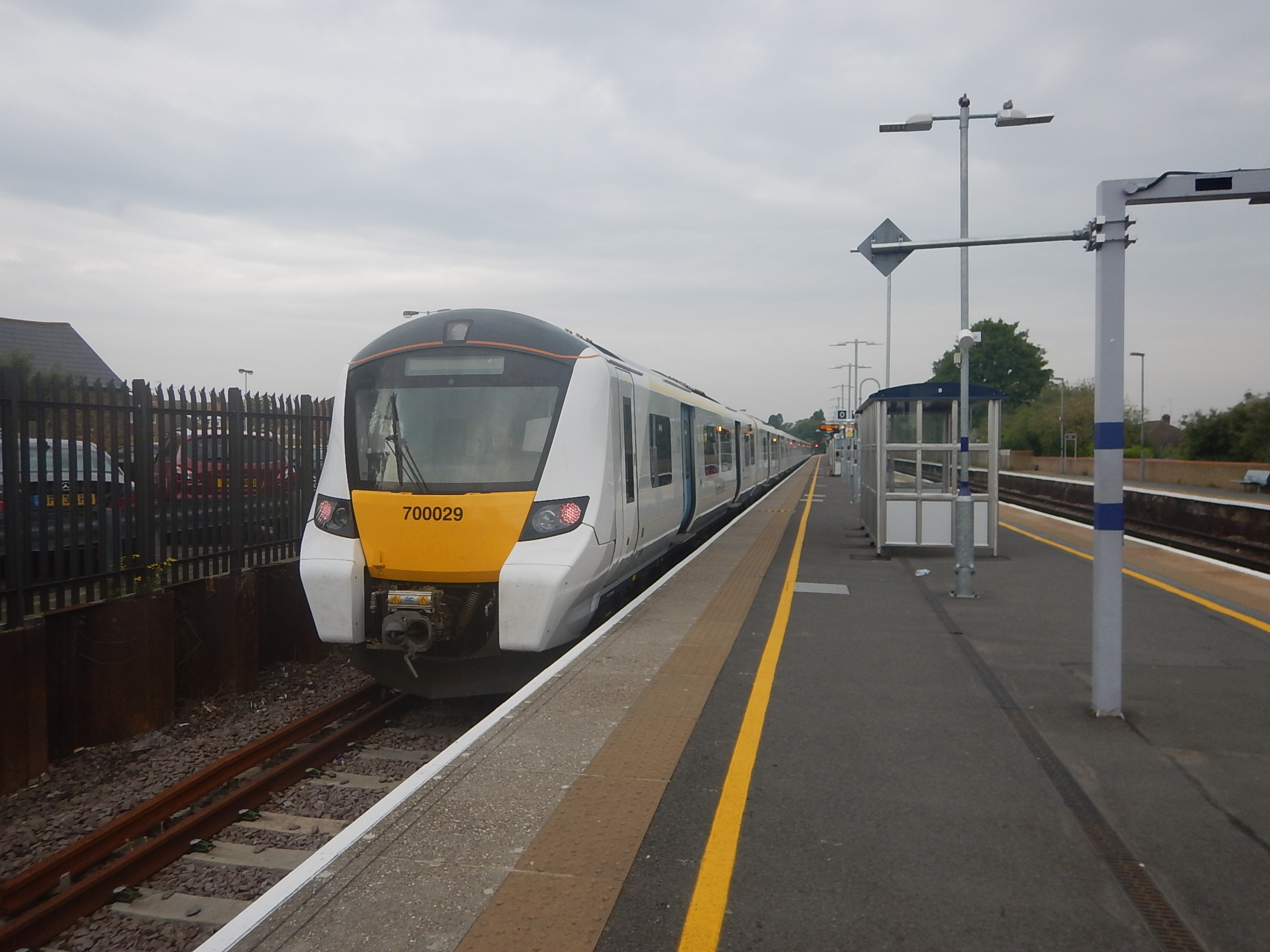
I do wonder, if that is a fast enough operating speed for all Thameslink routes.
Sharing The Midland Main Line With 125 mph Trains
A couple of years ago, I travelled back into St. Pancras with a group of East Midlands drivers in a Class 222 train.
They told me several things about the route including that the bridge at the South of Leicester station would be difficult to electrify, as it was low and the track couldn’t be lowered as one of Leicester’s main sewers was under the tracks at the bridge. Perhaps, this is one place, where discontinuous electrification could be used on the Midland Main Line.
They also told me, that sometimes the Thameslink trains were a nuisance, as because of their 100 mph operating speed, the 125 mph Class 222 trains had to slow to 100 mph.
Upgrading Of The Midland Main Line South Of Bedford
The electrification of the Midland Main Line South of Bedford is being updated, so that it is suitable for 125 mph running.
An Analysis Of Services On The Midland Main Line South Of Bedford
The current Class 222 trains are capable of 125 mph and will be replaced by Class 810 trains capable of the same speed on both diesel and electricity.
Currently, a Class 222 train is capable of doing the following on a typical non-stop run between St. Pancras and Leicester.
- Covering the 30 miles between St. Albans and Bedford in 17 minutes at an average speed of 106 mph.
- Covering the 50.3 miles between Bedford and Leicester in 30 minutes at an average speed of 100.6 mph.
- Maintaining 125 mph for long stretches of the route, once the trains is North of London commuter traffic at St. Albans
I can estimate the timings on the 79.2 miles between Leicester and St. Albans, by assuming the train runs at a constant speed.
- 100 mph – 47.5 minutes
- 110 mph – 43.2 minutes
- 125 mph – 38 minutes
- 140 mph – 34 minutes
Note.
- I have done the calculation for 140 mph, as that is the maximum operating speed of the Class 810 train with full in-cab digital signalling.
- Trains have been running at 125 mph for a couple of decades on the Midland Main Line.
- To get a St. Pancras and Leicester time add another 14 minutes, which is the current time between St. Pancras and St. Albans of a Class 222 train.
- Some Off Peak trains are timed at 62-63 minutes between St. Pancras and Leicester.
- A time of under an hour between St. Pancras and Leicester might be possible and the Marketing Department would like it.
- As Thameslink trains between Bedford and St. Albans stop regularly, they are on the slow lines of the four-track railway, to the North of St. Albans.
- South of St. Albans, Thameslink trains often run on the fast lines.
I can expect that East Midlands Railway will want to be running their new Class 810 trains as far as far South as they can at 125 mph, to speed up their services. When the signalling allows it, they’ll want to run at 140 mph.
So they won’t want to see Thameslink’s slow trains on the fast lines.
- But if you look at the Thameslink trains that do run on the fast lines between St. Albans and St. Pancras, they appear to be the four trains per hour (tph) that run to and from Bedford.
- Of these trains, two tph terminate at Brighton and two tph terminate at Gatwick Airport.
- The average speed of a Class 222 train between St. Albans and St. Pancras assuming 14 minutes for the 19.7 miles is 84.4 mph.
So it looks to me that a 100 mph Thameslink train could be able to get away without slowing the East Midland Railway expresses.
But then that is not surprising, as for many years, the Class 222 trains worked happily with 100 mph Class 319 trains.
Is There Scope For Extra And Faster Services Into St. Pancras?
I have only done a simple calculation, but I do wonder if there is scope for the following.
- Increasing the frequency of trains for both Thameslink and East Midlands Railway.
- Saving a few minutes on East Midlands Railway services.
Consider.
- The new Class 810 electric trains will probably have better acceleration and deceleration than the current Class 222 diesel trains, when working using electric power.
- East Midlands Railway is introducing Class 360 trains that were built as 100 mph trains by Siemens, who are now upgrading them to 110 mph trains.
- Can Siemens do the same for the Class 700 trains and create a sub-fleet capable of 110 mph running?
- All trains will be running under full in-cab digital signalling with a large degree of automatic train control.
I feel that if the Class 700 trains had the extra speed, they would make the planning of services South of St. Albans easier and allow the Class 810 trains to both run faster and provide more services.
Sharing The East Coast Main Line With 125 mph Trains
The following Thameslink services run up the East Coast Main Line past Stevenage.
- Cambridge And Brighton – Two tph – Stops at Royston, Ashwell and Morden (1 tph), Baldock, Letchworth Garden City, Hitchin, Stevenage, Finsbury Park, London St Pancras International, Farringdon, City Thameslink, London Blackfriars, London Bridge, East Croydon, Gatwick Airport, Three Bridges, Balcombe, Haywards Heath and Burgess Hill
- Cambridge and Kings Cross – Two tph – Stops at Foxton, Shepreth, Meldreth, Royston, Ashwell and Morden, Baldock, Letchworth Garden City, Hitchin, Stevenage, Knebworth, Welwyn North, Welwyn Garden City, Hatfield, Potters Bar and Finsbury Park
- Peterborough and Horsham – Two tph – Stops at Huntingdon, St Neots, Sandy, Biggleswade, Arlesey, Hitchin, Stevenage, Finsbury Park, London St Pancras International, Farringdon, City Thameslink, London Blackfriars, London Bridge, East Croydon, Coulsdon South, Merstham, Redhill, Horley, Gatwick Airport, Three Bridges, Crawley, Ifield, Faygate (limited) and Littlehaven
Note.
- Services are generally run by Class 700 trains, although lately the Kings Cross service seems to use Class 387 trains, which have a maximum speed of 110 mph and a more comfortable interior with tables.
- It is intended that the Cambridge and Kings Cross service will be extended to Maidstone East by 2021.
In addition there are two Cambridge Express and Fen Line services.
- Kings Cross and Ely – One tph – Stops at Cambridge and Cambridge North.
- Kings Cross and King’s Lynn – One tph – Stops at Cambridge, Cambridge North, Waterbeach, Ely, Littleport, Downham Market and Watlington
Note.
- These services are generally run by Class 387 trains.
- Cambridge and King’s Cross is timetabled at around fifty minutes.
Adding all of this together means that slower services on the East Coast Main Line are comprised of the following in both directions.
- Three tph – 110 mph – Class 387 trains
- Four tph – 100 mph – Class 700 trains
These seven trains will have to be fitted in with the 125 mph trains running services on the East Coast Main Line, for LNER, Grand Central, Hull Trains and East Coast Trains.
There are also the following problems.
- All trains must navigate the double-track section of the East Coast Main Line over the Digswell Viaduct and through Welwyn North station.
- The King’s Cross and Cambridge service stops in Welwyn North station.
- Full in-cab digital signalling is being installed on the East Coast Main Line, which could increase the speed of the expresses through the double-track section.
Could the introduction of the Class 387 trains on the Cambridge and King’s Cross service have been made, as it easier to fit in all the services if this one is run by a 110 mph train?
However, the full in-cab digital signalling with a degree of automatic train control could be the solution to this bottleneck on the East Coast Main Line.
- Trains could be controlled automatically and with great precision between perhaps Hatfield and Stevenage.
- Some expresses might be slowed to create gaps for the Cambridge and Peterborough services.
- The Hertford Loop Line is also getting full in-cab digital signalling, so will some services be sent that way?
In Call For ETCS On King’s Lynn Route, I talked about a proposal to improve services on the Fen Line. This was my first three paragraphs.
The title of this post, is the same as that on an article in Edition 849 of Rail Magazine.
The article is based on this document on the Fen Line Users Aoociation web site, which is entitled Joint Response To Draft East Coast Main Line Route Study.
In addition to ETCS, which could improve capacity on the East Coast Main Line, they would also like to see journey time reductions using trains capable of running at 125 mph or faster on the King’s Lynn to Kings Cross route.
My scheduling experience tells me that a better solution will be found, if all resources are similar.
Hence the proposal to run 125 mph trains between King’s Cross and King’s Lynn and probably Ely as well, could be a very good and logical idea.
If the Class 700 trains were increased in speed to 110 mph, the trains through the double-track section of the East Coast Main Line would be.
- One tph – 110 mph – Class 387 trains
- Four tph – 110 mph – Class 700 trains
- Two tph – 125 mph – New trains
Note.
- This would probably be an easier mix of trains to digest with the high speed services, through the double-track section.
- I like the idea of extending the Ely service to Norwich to give Thetford, Attleborough and Wymondham an improved service to London, Cambridge and Norwich.
The new trains would probably be a version of Hitachi’s Regional Battery Train.
- It would need to be capable of 125 mph on the East Coast Main Line.
- If the Ely service were to be extended to Norwich, this section would be on battery power.
There are certainly a lot of possibilities.
But as with on the Midland Main Line, it looks like for efficient operation, the operating speed of the Class 700 trains on the route needs to be increased to at least 110 mph.
Could Faster Class 700 trains Improve Services To Brighton?
These are the Thameslink services that serve Bedford, Cambridge and Peterborough, that I believe could be run more efficiently with trains capable of at running at speeds of at least 110 mph.
- Bedford and Brighton – Two tph
- Bedford and Gatwick Airport – Two tph
- Cambridge and Brighton – Two tph
- Cambridge and Maidstone East – Two tph
- Peterborough and Horsham – Two tph
Note.
- I have assumed that the Cambridge and King’s Cross service has been extended to Maidstone East as planned.
- Eight tph serve Gatwick Airport.
- Four tph serve Brighton.
The Gatwick Express services have a frequency of two tph between London Victoria and Brighton calling at Gatwick Airport is already run by 110 mph Class 387 trains.
It would appear that if the Bedford, Cambridge and Peterborough were run by uprated 110 mph Class 700 trains, then this would mean that more 110 mph trains would be running to Gatwick and Brighton and this must surely improve the service to the South Coast.
But it’s not quite as simple as that, as the Cambridge and Maidstone East services will be run by eight-car trains and all the other services by twelve-car trains.
Conclusion
There would appear to be advantages in uprating some or possibly all of the Class 700 trains, so that they can run at 110 mph, as it will increase capacity on the Brighton Main Line, East Coast Main Line and Midland Main Line.
Approaching Kings Cross – 6th January 2021
I took these pictures approaching Kings Cross.

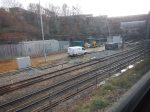
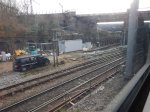
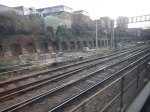
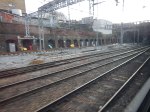

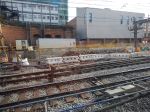
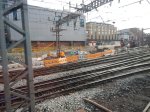
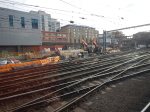
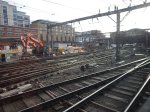
Note.
- There is still track to be laid.
- The electrification is still to be erected.
But everything seems to be getting there.
This Google Map shows the section between the two tunnels.
- Copenhagen Tunnel is North of this map.
- Gasworks Tunnel lies between this map and Kings Cross station.
Both tunnels have three double-track bores, where in this massive project, the Eastern bores are being brought back into use to add capacity to Kings Cross station.

Note.
- The East Coast Main Line runs North-South across the map.
- The quadruple track crossing East-West at the top of the map is the North London Line.
- Below it, is the Channel Tunnel Rail Link into |St. Pancras.
- The link to the Canal Tunnels take Thameslink trains to the deep level platforms in St. Pancras.
- The two new tracks will be on the Eastern side of the East Coast Main Line.
This second Google Map shows the track and platform layout at Kings Cross station.
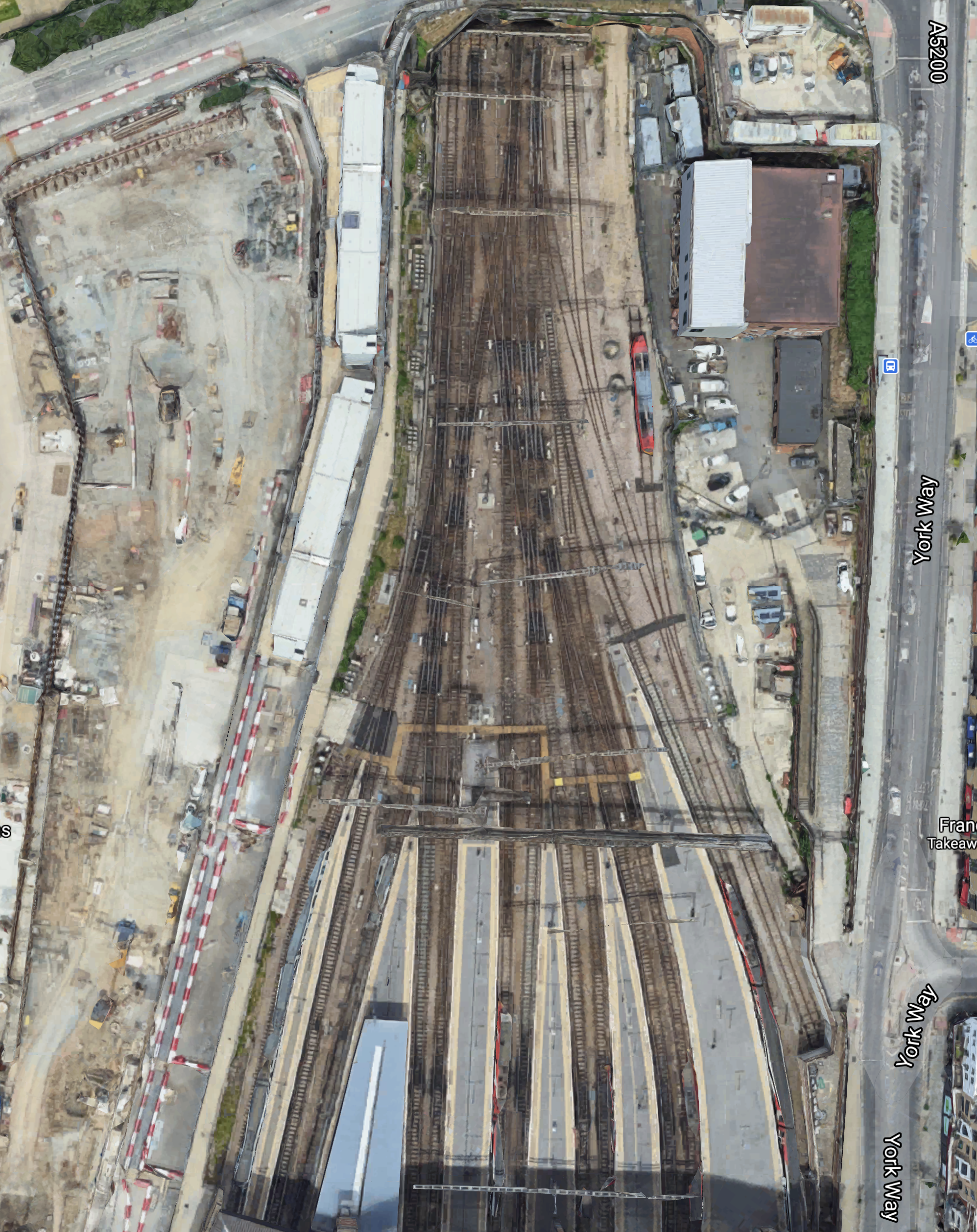
Note.
- There are twelve platforms, which are numbered from 0 to 11, with Platform 0 in the East.
- The various islands are numbered as follows from East to West; 0/1, 2/3, 4/5, 6/7, 8/9 and 10/11.
- The six tracks through the tunnels may be bi-directional, so will each track be linked to a pair of platforms?
- Platforms 0 to 4 are in the Eastern half of the station
- Platforms 5 to 0 are in the Western half of the station
- Platforms 9, 10 and 11 are short platforms in the old suburban station, which is mainly used by suburban services to Cambridge and Kings Lynn.
When I arrived there was a five-car Azuma in Platform 9, as these pictures show.

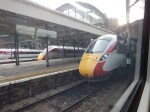
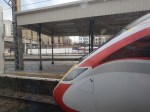
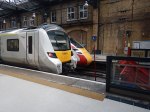
I’ve seen Grand Central’s Class 180 trains in these short platforms before, so is this going to be a regular occurrence.
Services Into Kings Cross
When the remodelling at Kings Cross is complete, current plans say the following trains will be running into Kings Cross station.
- LNER – Two tph – Edinburgh – Long train
- LNER – Two tph – Leeds – Long train
- LNER – One tph – Lincoln or York – Long or short train
- Great Northern – Two tph – Cambridge (stopping) – Short train
- Great Northern – Two tph – Cambridge (fast) – Short train
- Hull trains – Seven tpd – Hull and Beverley – Short train
- East Coast Trains – Five tpd – Edinburgh – Short train
- Grand Central – Four tpd – Bradford Interchange – Long or short train
- Grand Central – Five tpd – Sunderland – Long or short train
Note,
- tph is trains per hour and tpd is trains per day.
- There is a mixture of short and long trains.
- Short trains can fit all platforms, but long trains can only use platforms 0-8.
- There are nine tph and a total of 21 tpd in various less-frequent services.
My scheduling experience in other fields, says that ten platforms will be needed for a full service, with each of the ten platforms handling just one tph.
Conclusion
Wjen all the work is completed, Kings Cross station will have room for a few extra trains.

